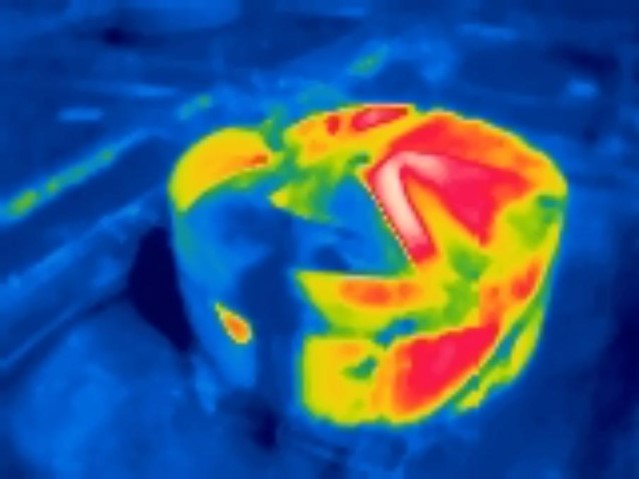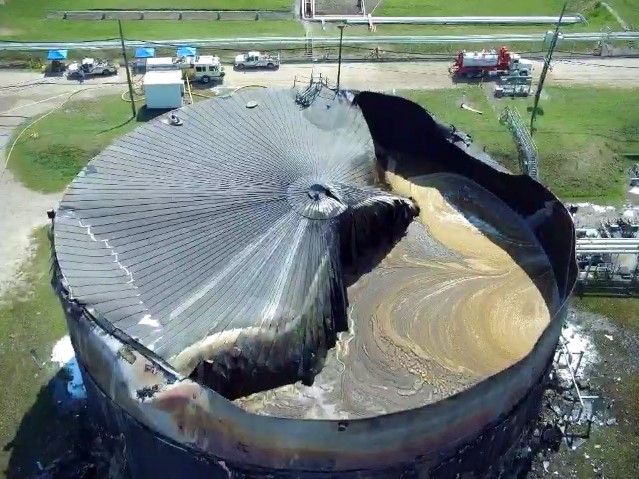
“Coast Guard drones can see underwater and inside vessels during response to hurricanes and extreme weather events” –MyCG

US Coast Guard Photo

US Coast Guard photo

These two photos which accompany the post appear to be of the same tank but taken from opposite sides. 

MyCG has as post about the increasing use of Unmanned Air Systems. In this case primarily concerning the use of small commercially available systems. Take a look.

Thailand Buys AT-6 for Coast Guard Type Missions

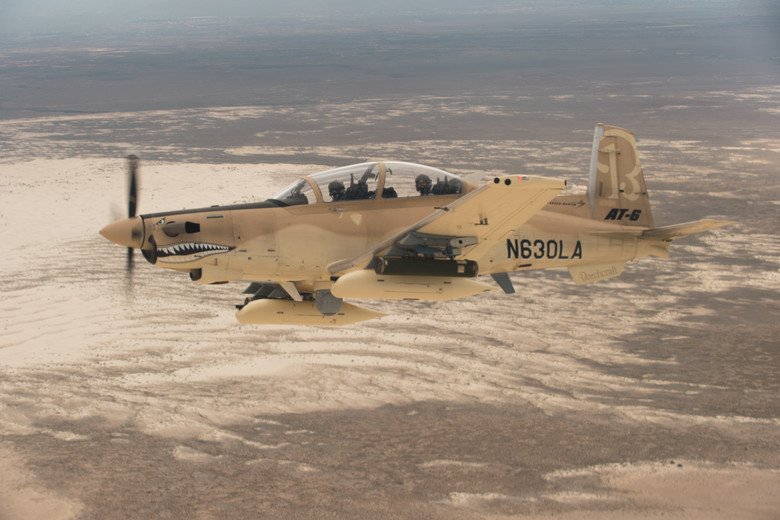
Defense News reports that Thailand has become the first international customer for the Textron Beechcraft AT-6 light attack aircraft.

Thomas Hammoor, president and CEO of Textron Aviation Defense, said in a statement that the Royal Thai Air Force selected the Beechcraft AT-6 to conduct a broad array of missions in support of border security as well as anti-smuggling, counternarcotics and anti-human trafficking operations.

This is basically the same aircraft Coast Guard aviators train on before they get their wings, but with upgrades. I can’t help but think something like this or the similar Embraer A-29 Super Tucano could handle a lot of ISR missions more economically than what we are using now.

They could be used to scout for D7 Webber class FRCs doing drug or migrant interdiction and provide shots across the bow and over-watch in lieu of a helicopter.

The Washington DC air intercept mission in particular comes to mind. Local searches for overdue boats is another possibility. As you can see these aircraft support integrated electro-optical sensors.

An AT-6 Beechcraft is on display at the 2021 Dubai Airshow. (Agnes Helou/Staff)

Armed, these could also provide a response to terrorist attacks. My earlier ramblings on Coast Guard aircraft missions here.

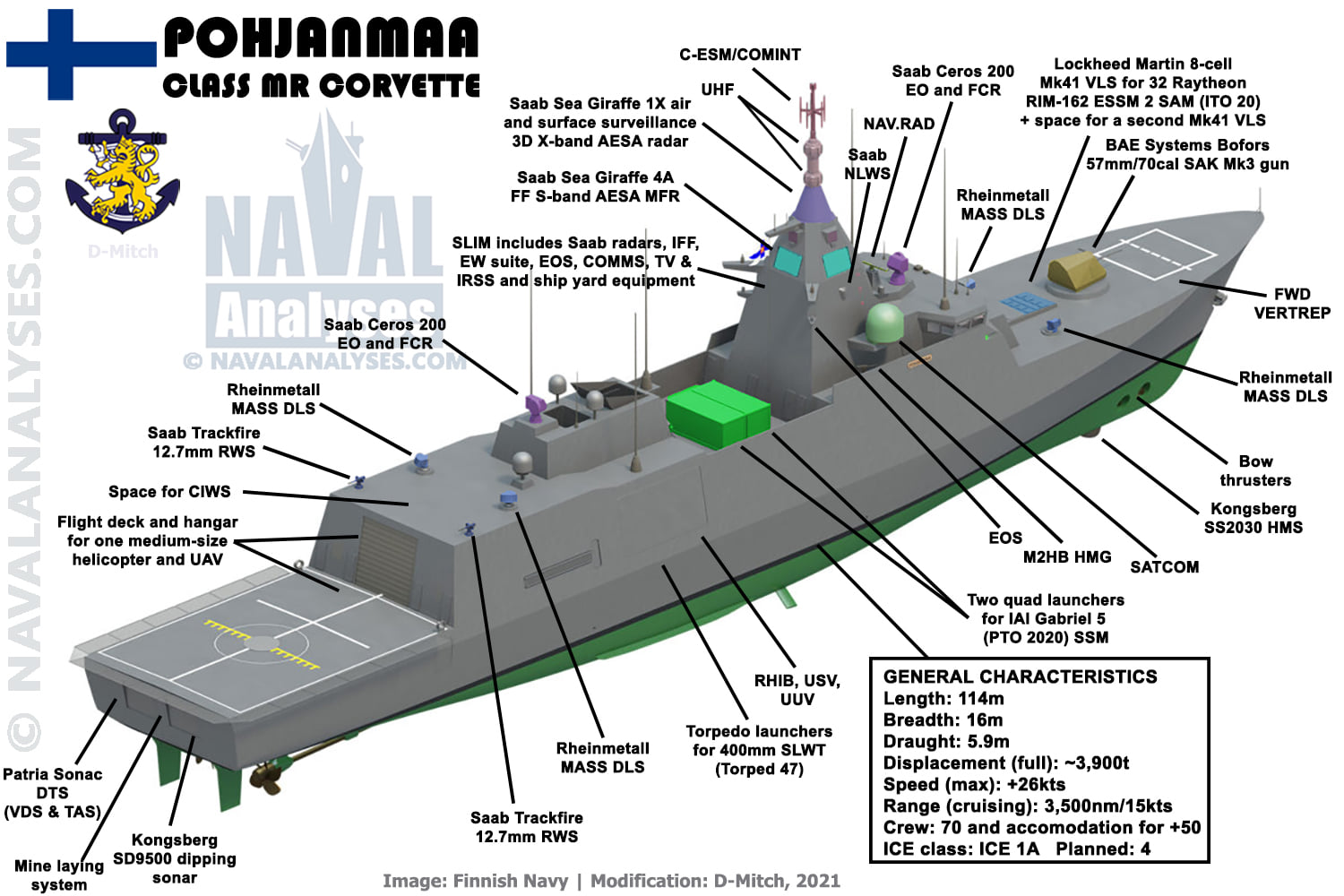
Finnish Navy Ice Strengthened Corvette

We began talking about this class of rather unique warships about six years ago. Since then, a lot of comments have been added. I wanted to pass along this info graphic.

What makes these really unique, and perhaps of interest to the USCG, is the Ice Class requirement which translates to non-consolidated (refrozen) ice channels with a thickness of 1.0 meter (3.3 ft) in the middle.

Compared to the Offshore Patrol Cutters, these ships will be a little longer (374 feet vice 360), but also a little lighter displacement (3900 tons vs 4500). They will have a much shorter range (3500 nautical miles vs over 10,000) and a much smaller crew (70 vs over 100), although the total accommodations are similar.

Predictably the Finnish ship is much more heavily armed.

“Mind the Gap: How the U.S. Coast Guard Can Navigate the Window of Vulnerability in the Indo-Pacific” –RealClearDefense

RealClearDefense has a post that offers some suggestions as to how the Coast Guard might contribute to a more positive relationship with China.

To be clear, such a partnership is not a naïve panacea; it must be implemented within a whole-of -government framework, including more forceful military approaches to withstand the “window of vulnerability.” A viable path forward sees the U.S. Coast Guard being used to forge partnerships in the maritime domain, as a powerful element of a more holistic solution. By partnering with the Chinese naval apparatus in new and unfamiliar missions, the Coast Guard can be used as an effective agent of change and diplomacy to help stabilize an intractable geopolitical problem.

One of the principles I have come to believe in strongly, is that even in conflict we should never stop talking. The other side of that is, that when you are engaged in conflict, a ceasefire as a precondition for discussion is not only unnecessary, it is frequently counter productive.

“Coast Guard, Partners Complete Cooperative Pacific Surveillance Operation” –Seapower

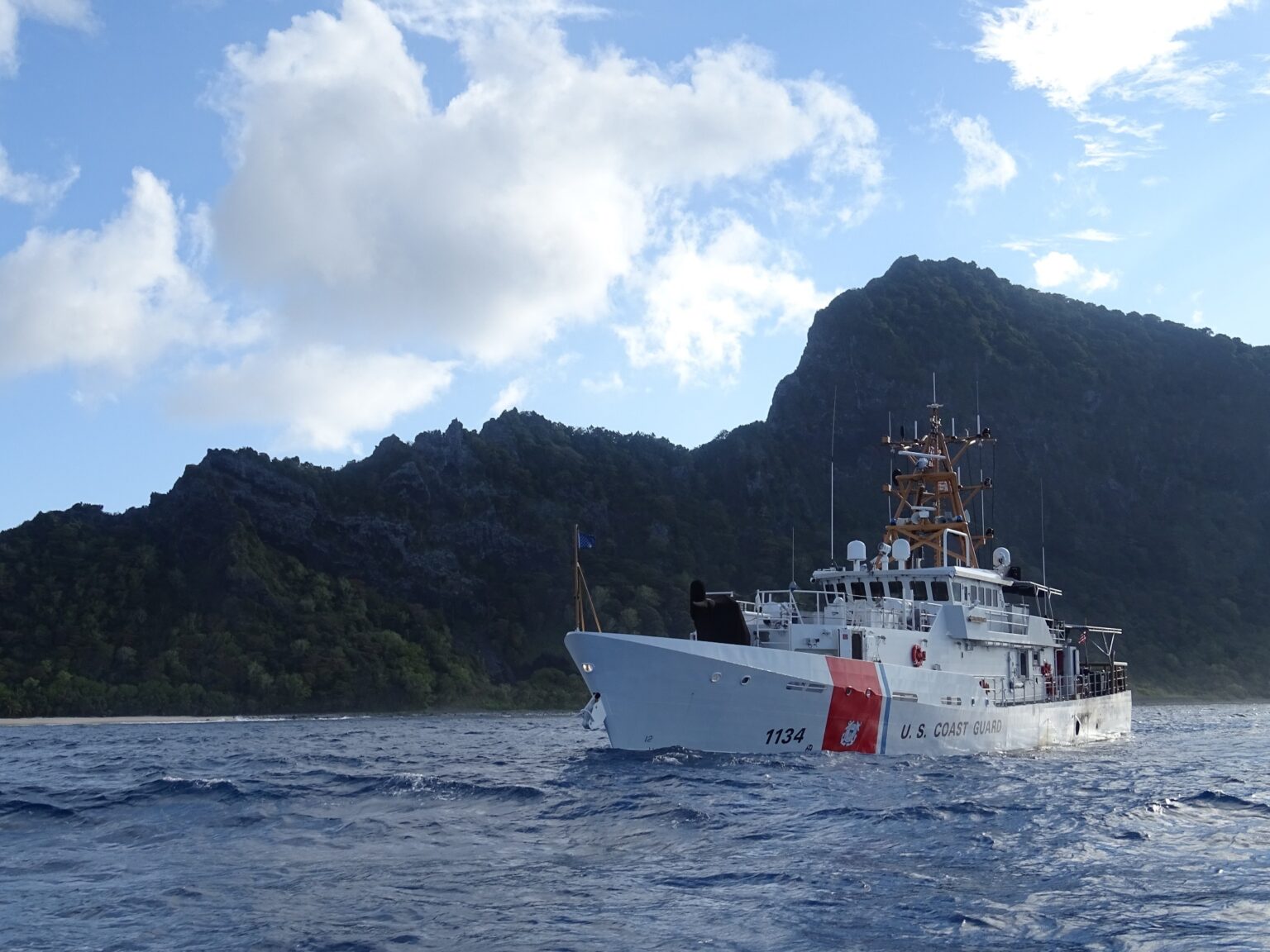
The Coast Guard Cutter William Hart participates in the Pacific Islands Forum Fisheries Agency’s (FFA) Operation Kurukuru off American Samoa, Oct. 29, 2021.
Operation Kurukuru is an annual coordinated maritime surveillance operation with the goal of combating illegal, unreported, and unregulated (IUU) fishing. (U.S. Coast Guard photo courtesy of the Coast Guard Cutter William Hart/Released)

Seapower magazine has a report on the recently completed, 12 day, Pacific Islands Forum Fisheries Agency’s (FFA) Operation Kurukuru in the Pacific, intended to counter Illegal, Unreported, and Unregulated (IUU) fishing.

“The operation included 15 Guardian Class and Pacific Patrol Boats from Pacific nations operating alongside five Australian Navy, French Navy and United States Coast Guard vessels,” said Allan Rahari, the FFA Director Fisheries Operations. “Seven aircraft from the FFA, quadrilateral and regional partners provided air surveillance, as well as satellite surveillance and use of other emerging technologies.”

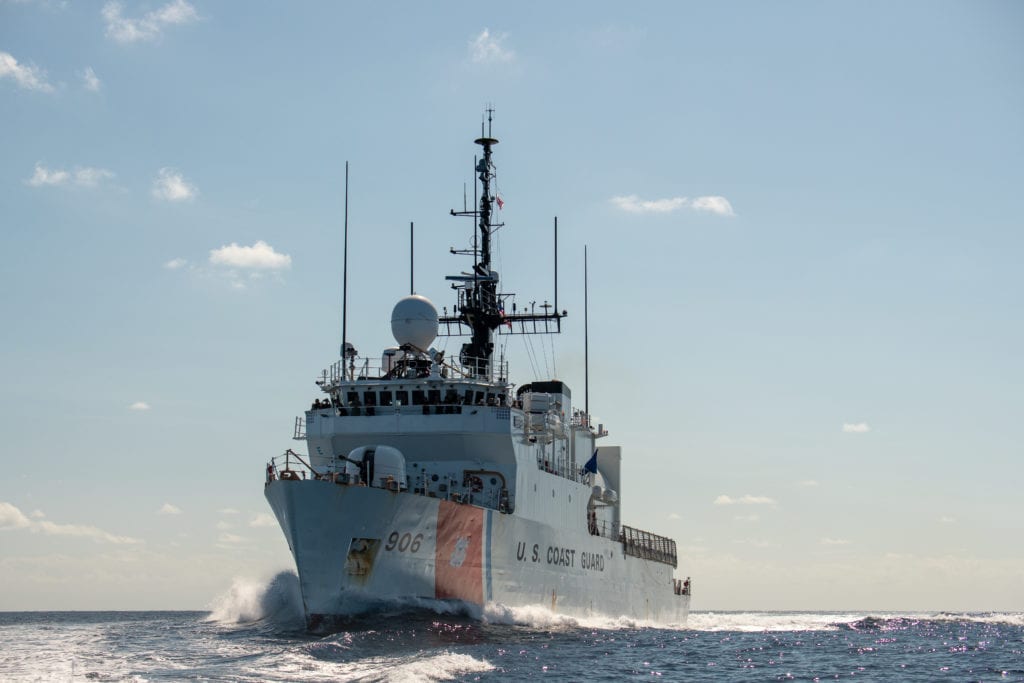
US Coast Guard participants include two Webber class WPCs, USCGC William Hart, operating out Hawaii, and  USCGC Myrtle Hazard, operating out of Guam, and a CGAS Barbers Point C-130.

The Pacific class patrol boats and their Guardian class replacements were donated by Australia help Pacific Island nations police their Exclusive Economic Zones.

Panorama of three Guardian class patrol boats at Austal shipyards in Henderson, Western Australia. The ships are, from left to right, the Teanoai II (301)‎, the PSS Remeliik II‎ and the VOEA Ngahau Siliva (P302). Photo by Calistemon via Wikipedia.

“The Pacific Islands Forum‘s Forum Fisheries Agency maintains a Regional Fisheries Surveillance Centre in Honiara, Solomon Islands.”

Polar Star to Depart for Antarctica Saturday, Nov. 13 –News Release

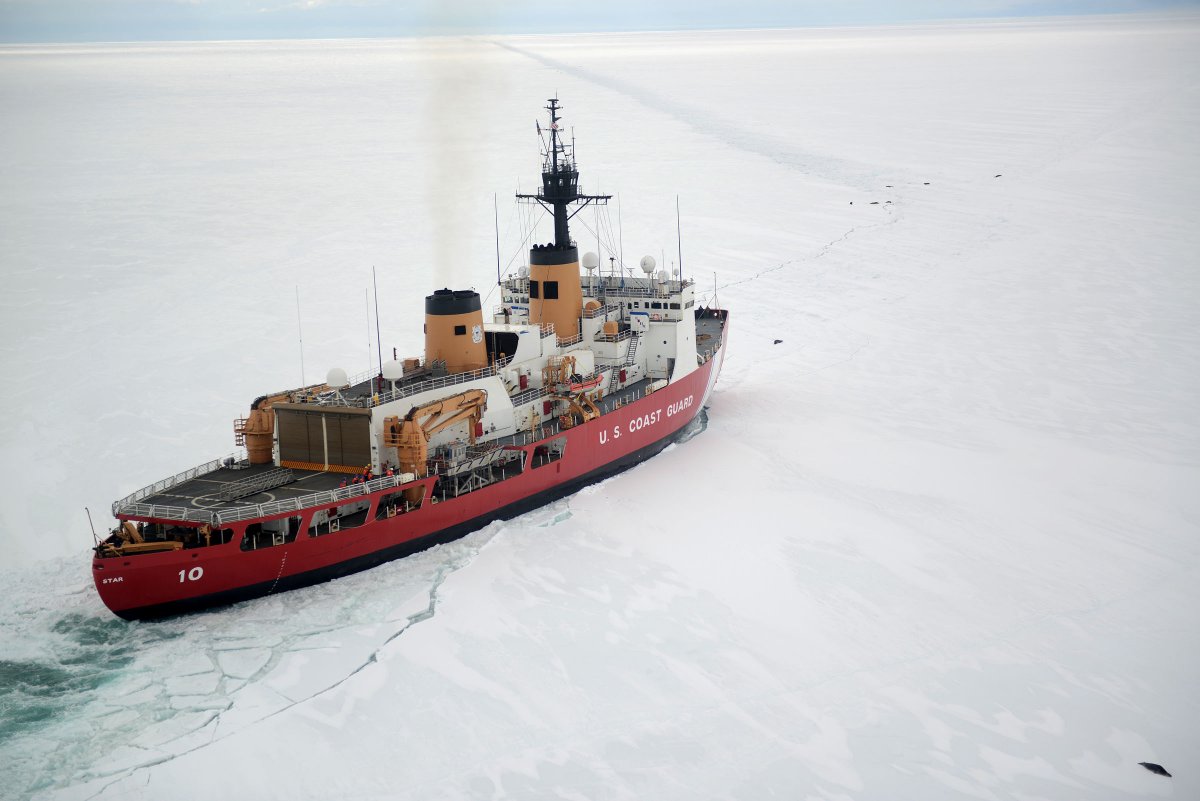
The Coast Guard Cutter Polar Star cuts through Antarctic ice in the Ross Sea near a large group of seals as the ship’s crew creates a navigation channel for supply ships, January 16, 2017. The resupply channel is an essential part of the yearly delivery of essential supplies to the National Science Foundation’s McMurdo Station.US Coast Guard photo by Chief Petty Officer David Mosley

united states coast guard

Media Advisory U.S. Coast Guard 13th District Pacific Northwest

MEDIA ADVISORY: America’s only heavy icebreaker departs Seattle homeport Saturday; bound for Antarctica

Nation's only heavy icebreaker reaches fast ice of Antarctica

Editors’ Note: Click on images to download high resolution version.

Who: U.S. Coast Guard Cutter Polar Star (WAGB-10) with crew and numerous scientists

What: Departing Seattle, en route to Antarctica in support of Operation Deep Freeze

When: Departing 1 p.m. Saturday, Nov. 13, 2021

Where: U.S. Coast Guard Base Seattle

SEATTLE — The United States’ only heavy icebreaker, Coast Guard Cutter Polar Star (WAGB-10), is scheduled to depart its homeport in Seattle Saturday.

This annual journey to Antarctica is conducted in support of Operation Deep Freeze, a joint military service mission to resupply the United States Antarctic stations of the National Science Foundation, the lead agency for the United States Antarctic Program.

The women and men aboard the Polar Star conduct this essential mission to create a navigable path through ice as thick as 21 feet, to allow refuel and resupply ships to reach McMurdo Station, the largest Antarctic station and the logistics hub of the U.S. Antarctic Program.

The U.S. Coast Guard is recapitalizing its polar icebreaker fleet to ensure access to the Polar Regions, project U.S. sovereignty, and to protect the country’s economic, environmental and national security interests. To support this endeavor, the U.S. Coast Guard is exploring options to expand Base Seattle infrastructure to support the growing icebreaker fleet.

Media are encouraged to contact Coast Guard public affairs at 206-251-3237 to arrange an escort at Base Seattle to attend the ship’s departure. The commanding officer of the Polar Star, Capt. Willaim Woityra, may be available for virtual interview on Friday morning and in-person at 11 a.m. Saturday prior to the 1 p.m. departure.

“2021 CAPTAIN FRANK ERICKSON AND COMMANDER ELMER STONE AWARD RECIPIENTS” –ALCOAST

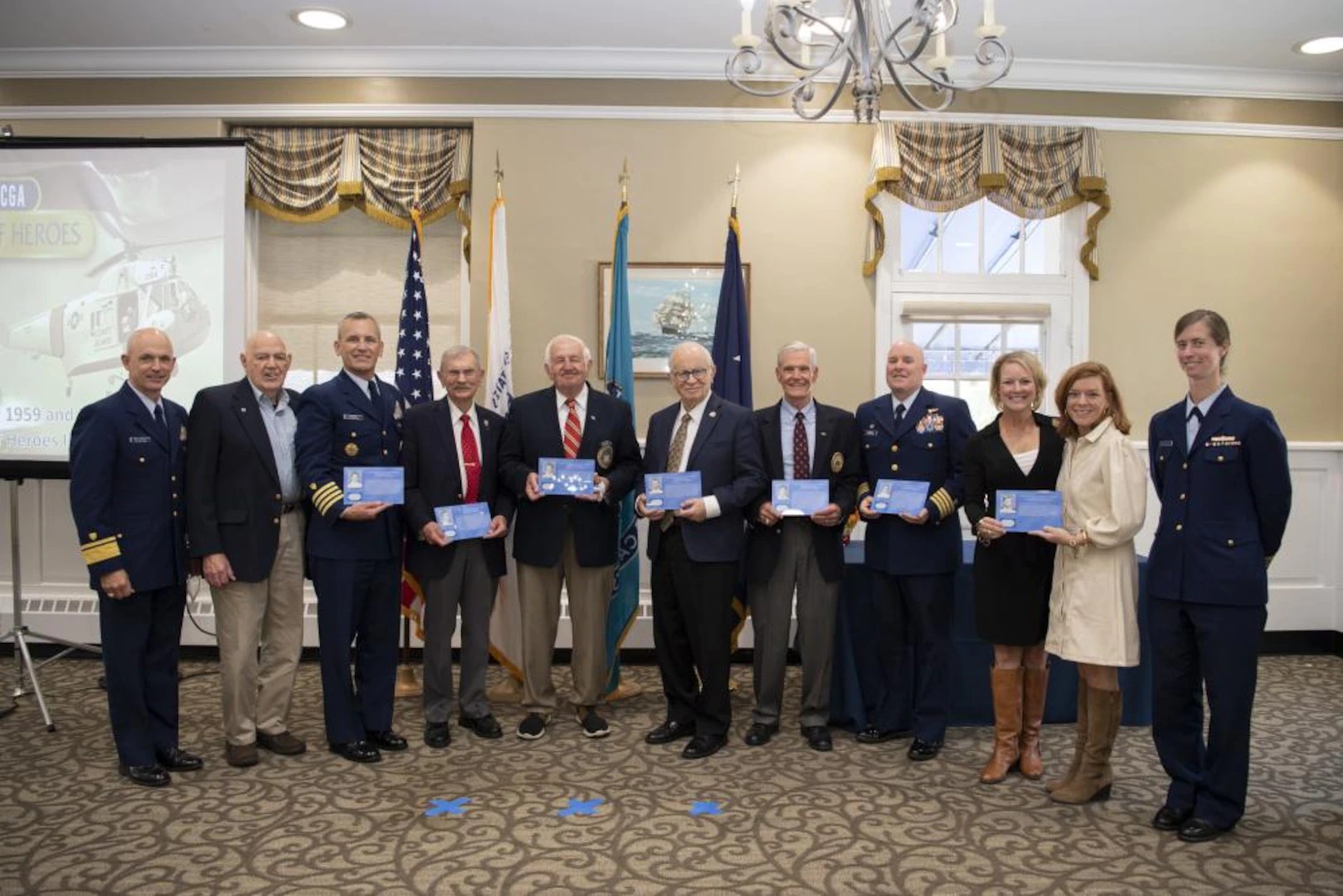
U.S. Coast Guard Cutter Seneca returns to homeport. U.S Coast Guard

Stories that make you proud to have been associated with the Coast Guard.

united states coast guard

R 101555Z NOV 21
FM COMDT COGARD WASHINGTON DC
TO ALCOAST
BT
UNCLAS
ALCOAST 414/21
SSIC 1650
SUBJ: 2021 CAPTAIN FRANK ERICKSON AND COMMANDER ELMER STONE AWARD
RECIPIENTS

1. COMDT (CG-7) is honored to announce the recipients of the Captain
Frank A. Erickson and Commander Elmer F. Stone Aviation Awards for
2021. The Coast Guard Aviation Association sponsors these annual
awards to recognize Coast Guard rotary-wing and fixed-wing aircrews
who have demonstrated exceptional performance while engaged in
Search and Rescue operations.

2. The Captain Frank A. Erickson Award is presented to the HITRON
crew of CGNR 6606, LCDR Jesse Keyser, LT Rachel Rychtanek, and AET1
James Mann, in recognition of their heroic efforts during deployment
aboard USCGC SENECA. On 08 November 2020, Hurricane ETA ravaged
Central America with concentrated destruction and damage in
Honduras, causing at least 58 deaths and over $5 billion in damage
to critical infrastructure, affecting a population of 2.9 million.
Attached to USCGC SENECA, the crew of CGNR 6606 reacted quickly and
effectively in assisting the Honduran people from 11-13 November
2020. USCGC SENECA was diverted to the eastern coast of Honduras for
Hurricane Aid/SAR support following the impact of Hurricane ETA.
TACON was shifted to US Naval Forces Southern Command/US Fourth
Fleet, and SENECA received tasking and operated under Joint Task
Force-Bravo (JTF-B) and Command Task Force-45 (CTF-45). SENECA was
the first maritime asset to reach the eastern side of Honduras,
with CGNR 6606 as the first and sole air asset on-scene in eastern
Honduras. CGNR 6606 led response operations across a 60-square
nautical mile area, from the Honduran shoreline south to the
Honduras-Nicaragua border. CGNR 6606 identified and overcame the
challenges of operating in an unfamiliar, rural area in foreign
airspace, including inadequate and outdated charts, no air traffic
control, and a substantial language barrier. CGNR 6606 acquired
internet-based DoD Joint Operations Grapic (JOG) charts, assisted
in reconnaissance of critical infrastructure in the region, and
helped develop a working air rescue plan for relocation of trauma
patients and supply aid. This important work was pivotal in laying
the groundwork for sustained multi-service air support in the
eastern Honduras operating area over the coming weeks. JTF-B tasked
CGNR 6606 for a MEDEVAC at a remote, inland location south of Puerto
Lempira near the Honduras-Nicaragua border. The aircrew successfully
navigated 60 miles of unfamiliar mountainous terrain, and flew under
and around low ceilings and thunderstorms with dangerous updrafts
and downdrafts. CGNR 6606 located the village, reported severe
flooding, and observed significant damage to the village structures
and limited infrastructure. CGNR 6606 identified a small patch of
farmland as the primary landing zone and conducted a confined area
landing to survivors waiving frantically for assistance. CGNR 6606
was met by two military officers in uniform escorting a third
uniformed officer in evident pain. CGNR 6606 ensured the patient was
ready for transport and executed low-power margin takeoff, clearing
dust and debris for a rapid climb above the surrounding village
obstacles. CGNR 6606 proceeded back northbound through precipitation
and around localized thunderstorms to transfer the patient.
CGNR 6606 was then tasked to proceed to a remote coastal village
approximately 30 NM Northwest of Puerto Lempira for an urgent
MEDEVAC. Once on scene, CGNR 6606 displayed ingenuity by orbiting
around the village church to direct citizens to congregate there.
CGNR 6606 performed a confined area landing adjacent to the church
and identified an elderly, diabetic, double amputee in need of
immediate higher medical care. Low on fuel, CGNR 6606 departed to
CGC SENECA offshore for refuel and subsequent return. While en route
back to the village, CGNR 6606 experienced an Automatic Flight
Control System (AFCS) yaw system failure, which significantly
increased the difficulty and risk of confined area landings. CGNR
6606 elected to proceed on its assigned mission, conducted another
confined area landing, and embarked the wheelchair-bound survivor.
CGNR 6606 departed scene facing inclement weather and began to weigh
the risks of continued confined area landings with the onset of
fatigue and a degraded aircraft. CGNR 6606 identified a primitive
dirt strip at the Puerto Lempira Airfield for landing and survivor
transfer to an awaiting vehicle. The crew of CGNR 6606’s bravery and
aeronautical skill resulted in two lives saved with several hundreds
more saved and assisted through delivery of lifesaving supplies and
forward operating location establishment for medical and military
personnel. Leading the rescue efforts during the critical first few
days of the aftermath of Hurricane ETA, the crew of CGNR 6606
demonstrated unwavering dedication to the Coast Guard’s humanitarian
life-saving mission. CGNR 6606 confronted flight in an unfamiliar
mountainous region with navigation hazards and landed safely in
multiple unprepared confined areas. Furthermore, the aircrew
leveraged local military and government officials’ expertise while
managing “fog-of-war” complexities following a destructive Category
4 hurricane in a third-world country. CGNR 6606’s exceptional
actions and heroism undoubtedly advanced rescue efforts for eastern
Honduras for response to Hurricane ETA, as well as Hurricane IOTA,
which struck the same area just ten days later.

3. The following nominees were also recommended for this award and
deserve honorable mention for their heroic actions:
Air Station Houston, CGNR 6501 – M/T CHRYSANTHEMUM
CG SECTOR North Bend, CGNR 6032 – Greyback Mountain Rescue
CG SECTOR San Diego, CGNR 6014 and CGNR 6003 – Disabled Adrift
Rescue

4. The Commander Elmer F. Stone Award is presented to the Air
Station Barbers Point crew of CGNR 1720, LCDR Tucker Rodeffer,
LT Jack Emmons, AMT2 Jacob Desmarais, AET3 Anders Forsberg,
AEMT2 Charles Camarda, AET2 Trenton Garza, and AET3 Clinton
Carpenter, in recognition of their heroic efforts on 22 December
2020, District 14 received a request from the island nation of
Kiribati for assistance with Search and Rescue (SAR). A fisherman
from Betio Temakin, Tarawa, had disembarked three friends at an
atoll to go spearfishing. When he did not return in his 20 ft
wooden skiff, they notified the authorities. Since all possible
staging locations for the case were closed due to COVID-19, the
Air Station Barbers Point duty crew worked with State Department
officials and the Republic of the Marshall Islands to secure
Kwajalein Atoll, the first time a Coast Guard crew had been allowed
landing access since the pandemic began. After arriving in
Kwajalein, the CGNR 1720 crew was placed in strict quarantine when
not in flight and subject to daily screenings involving twice daily
temperature and blood oxygen checks, a protocol and operational
template which has since been implemented to enable numerous SAR
crews to operate from this location. The search effort involved five
days deployed away from home station and consisted of 29.4 hours of
searching and a total of 45.2 hours flown. During three days of
searching, the crew flew four hours round-trip from Kwajalein and
navigated more than 500 NM through convective activity, embedded
thunderstorms, and turbulence to reach the search area. On the final
day of the search and in the last search box, the Basic Aircrewman
sighted an object in the water from the left hand scanner window.
The Sensor System Operator quickly identified the object as the
missing skiff. The survivor was clearly emaciated from spending
five days at sea without food or water. The Navigator detected a
fishing vessel 25 NM north of the skiff, but a language barrier
prevented effective communication. Working with a translator at
District 14, the Radio Operator vectored a good-Samaritan vessel,
the F/V JABUUK, toward the skiff. After two hours on-scene, the
Flight Engineer of CGNR 1720 noticed an unidentified, co-altitude
helicopter en-route to their position. CG-1720 quickly maneuvered
to de-conflict with the other aircraft and assisted with expediting
the rescue. The helicopter had launched from the F/V JABUUK.
CGNR 1720 remained on-scene and served as cover while the good-
Samaritan and the helicopter rescued the emaciated fisherman.
Superior airmanship, comprehensive aircraft and procedural
knowledge, well-veiled operational risk management, and exceptional
crew coordination all combined to successfully complete the unit’s
most complex rescue of 2020 resulting in one life saved.

5. I extend my personal congratulations to the award winners, and
to each of the nominated aircrews. Through your actions, you
demonstrated the highest levels of courage and professionalism.
Your efforts are in keeping with the highest traditions of our
service.

6. RDML Todd C. Wiemers, Assistant Commandant for Capability
(CG-7), sends.

7. Internet release is authorized.

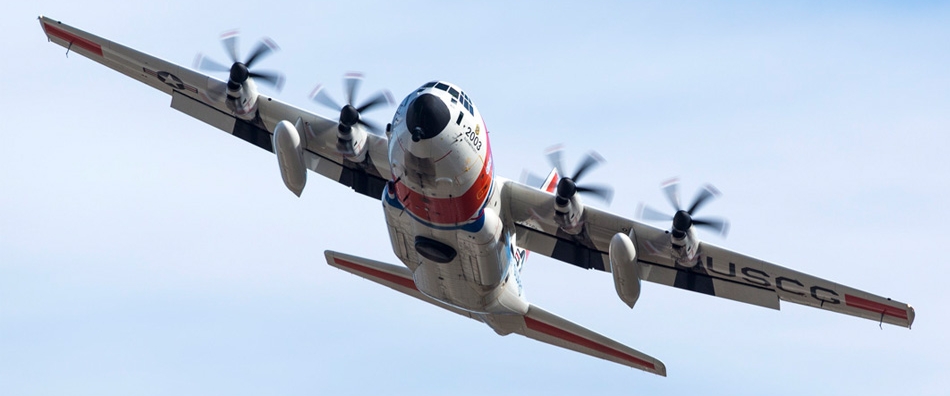
Coast Guard C130J

“Video Shows U.S. Destroyer’s Very Intimate Standoff With Iranian Vessels Over Seized Oil Tanker” –Cutter there too

The Drive–War Zone has a post about an incident that reportedly occurred on October 24. The Iranian Revolutionary Guard Corp seized a Vietnamese flagged tanker in the Gulf of Oman and escorted it into an Iranian port.

The Iranian claim is that the tanker was carrying oil from a tanker the US had seized and they only boarded the vessel to protect it, and their oil, from being seized by the US.

Three short videos, published by the Iranians, accompany the post. The third clearly shows a Webber class cutter in the vicinity of the tanker.

In viewing the videos, I would note that, when the tanker is seized, no US assets are visible in the vicinity. The initial boarding is by troops with weapons at the ready, landed by helicopter–not normally the sort of boarding that would be used if their presence was welcomed. When additional Iranian personnel board by boat, again no US assets are visible in the area.

The videos only prove that at some point during the transit from the time of the seizure to the Iranian port, two US destroyers and the cutter closed with the tanker and its Iranian escort.

Hopefully the tanker and crew will be released in the near future. It will be interesting to hear their perspective on what occurred.