“SOVEREIGN IMMUNITY POLICY” and a Bad Example

1970 – editorial cartoon run during the Kudirka Incident. Credit New York Times

A recent ALCOAST restates the Sovereign Immunity Policy with regard to Coast Guard vessels and aircraft. This is particularly relevant for units operating in the Persian Gulf and South China Sea, but it applies everywhere.

Since we operate mostly in US waters or nearby high seas, application may seem unlikely to most, but this is not just academic. For a real world example that caused the Coast Guard great embarrassment, let’s not forget the Simonas “Simas” Kudirka incident.

united states coast guard

R 061626Z OCT 21
FM COMDT COGARD WASHINGTON DC
TO ALCOAST
BT
UNCLAS
ALCOAST 370/21
SSIC 3128
SUBJ: SOVEREIGN IMMUNITY POLICY
A. U.S. Navy Sovereign Immunity Policy, NAVADMIN 165/21
B. The United Nations Convention on the Law of the Sea
C. The Commanders Handbook on the Law of Naval Operations,
COMDTPUB P5800.7 (series)
D. United States Coast Guard Regulations 1992, COMDTINST M5000.3
(series)
E. Foreign Port Calls, COMDTINST 3128.1 (series)
1. This ALCOAST restates U.S. Coast Guard sovereign immunity
policy. The policies reflected in this document are based on
longstanding principles of international law. Accommodating
foreign State demands that undermine these policies not only erodes
protections in that particular situation but also risks establishing
precedent that may have long-term and wide-ranging negative effects.
Therefore, commanders, commanding officers, officers-in-charge, and
aircraft commanders must adhere to the policies outlined in this
message. This message echoes policies outlined in REF (A), U.S.
Navy’s sovereign immunity policy, given the sovereign immune status
shared by vessel and aircraft of both services.
2. Under customary international law, and consistent with REFs
(A)-(E), manned and unmanned vessels and aircraft owned or
operated by a State, and used, for the time being, only for
government non-commercial service, are entitled to sovereign
immunity. Accordingly, such vessels and aircraft, wherever located,
are immune from arrest, search, and inspection by foreign
authorities, including inspections by or under the supervision of a
competent authority of areas, baggage, containers, conveyances,
facilities, goods or postal parcels, and relevant data and
documentation thereof for most purposes. Moreover, such vessels and
aircraft are exempt from certain foreign taxes, duties, or fees, as
well as foreign regulations that require flying a foreign State’s
flag or setting a compulsory pilotage requirement. Customary
international law further grants to commanding officers, officers-
in-charge, aircraft commanders, and masters the right to protect the
identity of personnel, stores, weapons, and other property aboard a
sovereign immune vessel or aircraft, as well as exclusive control
over any person aboard a sovereign immune vessel or aircraft
concerning acts performed aboard.
3. Although immune from arrest by foreign authorities, U.S. Coast
Guard vessels and aircraft shall comply with host country
requirements regarding traffic control, health, customs, and
immigration, to the extent such requirements do not contravene U.S.
Coast Guard sovereign immunity policy. In many instances, this
message and its references dictate how the U.S. Coast Guard complies
with such requirements. Noncompliance with any such requirement may
be subject to diplomatic complaint or host country orders to leave
its internal waters, territorial sea, or national airspace, but does
not change this policy’s requirements. Because adhering to this
policy may result in a country’s refusal or expulsion of an aircraft
or vessel, commanders must work with their legal counsel and embassy
teams early to understand port and airfield requirements including
international agreements or other arrangements which may apply.
4. Asserting sovereign immunity is a privilege of the U.S.
Government. Thus, waiver is not within the discretion of a
officer, officer-in-charge, or aircraft commander. An officer
exercising Tactical Control (TACON) is delegated authority to
interpret sovereign immunity policy consistent with overarching U.S.
Government policies and shall be notified by lower echelons via the
chain-of-command regarding challenges to asserting sovereign
immunity that cannot be resolved in favor of the policies set forth
in this message. Where TACON can execute this policy without
conflict with this message, no waiver is required. However, except
as provided herein, any action that may constitute a waiver or
potential waiver of sovereign immunity must be coordinated with
COMDT (CG-5R) in advance.
5. It is U.S. Government policy to assert full sovereign immunity
for U.S. Coast Guard manned and unmanned vessels, including cutters
and small boats, and aircraft. In addition to the general
privileges and obligations discussed in paragraphs 2 and 3 of this
message, which apply in full, the following guidance also applies:
   a. Searches, Inspections, and Requests for Information.
Per REF (D), paragraphs 4-1-28, and 4-2-10, and REF (E), commanding
officers, officers-in-charge, and aircraft commanders must not
permit a vessel or aircraft under their command to be searched or
inspected on any pretense whatsoever by foreign authorities or
organizations, nor permit any person within their vessel or
aircraft’s confines to be removed by foreign authorities. U.S.
authorities may themselves conduct consent, command authorized, or
other lawful searches or inspections and preserve evidence without
foreign officials being present, but evidence seized must not be
turned over to foreign authorities absent specific direction by
higher authority. Commanding officers, officers-in-charge, and
aircraft commanders must not provide vessel or aircraft documents
or other vessel- or aircraft-specific information (excluding a
vessel’s public characteristics for purposes of appropriate pilotage
or berthing) to foreign authorities and organizations without the
approval of higher authority via the chain-of-command.
   b. Taxes and Fees. Payment of fines or taxes is prohibited
regardless of reasons offered for imposition. Appropriate charges
for pilots, tugboats, sewer, water, power and other required goods
or services may be paid.
     (1) Unless there is an international agreement to the
contrary, commanding officers, and officers-in-charge must refuse
to pay any tax or revenue-generating fee imposed on a U.S. Coast
Guard vessel or aircraft by a foreign sovereign. These taxes,
including port taxes, port tariffs, port tolls, port security
surcharges, port dockage fees, and other similar taxes or fees, are
impermissible. Commanding officers and officers-in-charge may pay
reasonable charges for goods and services requested and received,
less taxes and similar charges. If requested to pay an
impermissible tax or fee, commanding officers and officers-in-charge
should request an itemized list of all charges, pay reasonable
charges for goods and services requested and received, and explain
that under customary international law, sovereign immune vessels are
exempt from foreign taxes and fees.
     (2) If port authorities directly insist on payment of an
impermissible tax or fee, commanding officers and officers-in-charge
should seek assistance from higher authority and U.S. Embassy via
the chain-of-command. Whether the U.S. Coast Guard will directly
pay an impermissible tax or fee is a matter of overarching U.S.
Government policy. This decision may be based on other concerns
such as operational needs, contracting principles, and potential
fiscal liability.
     (3) If such taxes or fees are levied indirectly through a
Husbanding Service Provider (HSP) as part of a foreign fixed price
contract, such tax or fee may be paid as part of the contract price.
   c. Crew Lists
     (1) Commanding officers and officers-in-charge must not
provide a list of crew members (military and/or nonmilitary) or
passengers aboard a vessel to foreign officials under any
circumstances. In response to a crew list request, the host nation
should be informed that the United States exempts foreign sovereign
immune vessels visiting the United States from the requirement to
provide crew lists in accordance with (IAW) the same sovereign
immunity principles claimed by United States sovereign immune
vessels. When a host country maintains a demand for a crew members
list as a condition of entry into a port or to satisfy local
immigration officials upon arrival, seek guidance from higher
authority via the chain-of-command.
     (2) Absent an international agreement, a commanding officer
or officer-in-charge of a vessel may provide information about
personnel going ashore for a temporary time and for unofficial
purposes (e.g. liberty) to comply with a host country’s immigration
laws. However, if information is provided, it should include the
minimum amount of information required to comply with the host
country’s laws, and include no more than names (without rank), place
of birth, date of birth, and sex. A commanding officer should not
provide foreign officials with other sensitive or personal
information, such as social security numbers, rank, addresses, or
other specific information. Such liberty lists are not the same as
crew lists, even though they may contain the names of all
crewmembers.
   d. Quarantine and Health Information Requirements
     (1) Under REFs (D) and (E), commanding officers, officers-
in-charge, and aircraft commanders must comply with all domestic or
foreign State quarantine regulations for the port within which the
vessel is located that do not contravene this sovereign immunity
policy.
     (2) IAW REFs (C) and (D), while commanding officers,
officers-in-charge, and aircraft commanders must not permit
inspection of their vessel or aircraft, they must afford every
other assistance to health officials, U.S. or foreign, and must
give all information required, insofar as permitted by military
necessity and security requirements. To avoid restrictions imposed
by quarantine regulations, the commanding officer should request
free pratique (clearance granted a ship to proceed into a port after
compliance with health or quarantine regulations) IAW that port’s
sailing directions.
   e. Flying Foreign State Flags. While sovereign immune vessels
are exempt from foreign regulations that require flying a foreign
State flag, U.S. Coast Guard sovereign immune vessels may fly
State flags to render honors IAW REF (D). Regional practices to
display marks of respect for host nations vary, and commanding
officers and officers-in-charge must consult with the operational
chain-of-command, theater- and fleet-specific guidance, and local
embassies for further guidance if host nation officials raise the
issue.
   f. Environmental Mishaps in Foreign Waters. If, after an oil
or hazardous substance spill in foreign territorial or internal
waters, a commanding officer or officer-in-charge determines foreign
authorities need more information to properly respond to the spill
and prevent serious environmental damage, the commanding officer or
officer-in-charge may release information similar to that releasable
to U.S. authorities. Before releasing spill-related information to
foreign authorities, the commanding officer or officer-in-charge
must seek guidance from higher authority via the chain-of-command
and, if release is deemed appropriate, inform the foreign
authorities that the ship or vessel is a sovereign immune vessel of
the United States and that spill-related information is being
voluntarily provided to help minimize environmental damage.
   g. Compulsory Pilotage. Article 4-2-3 of REF (D) authorizes
commanding officers and officers-in-charge of vessels to employ
pilots when, in the commanding officer’s or officer-in-charge’s
judgement, such employment is necessary. Inherent in such
discretion is the authority to refuse use of a pilot or to disregard
such pilot’s advice regarding a vessel’s safe navigation.
Accordingly, U.S. vessels may, but are not required to, employ
pilots as prudent. Except as provided in article 4-2-4 of REF (D),
commanding officers may, but are not required to, allow a pilot
onboard. If a nation sets pilot employment as a condition for
entering port or transiting their waters contrary to REF (D),
commanding officers must inform foreign authorities that the ship
or vessel is a sovereign immune vessel of the United States and
that pilotage services are being accepted voluntarily and not as
a condition of entry.
6. Commanders, commanding officers, officers-in-charge, and
aircraft commanders must adhere to the policies outlined in this
message and seek guidance from higher authority via the chain of
command in the event of ambiguity or prior to taking any action
that might constitute a waiver of sovereign immunity.
7. POC: CDR J. R. Styron, COMDT (CG-LMI-R), phone (202) 372-3798,
or by global email.
8. RDML Scott R. Clendenin, Assistant Commandant for Response Policy
(CG-5R), sends.
9. Internet release is authorized.

“Coast Guard releases request for information for boats to support waterways commerce cutters” –CG-9

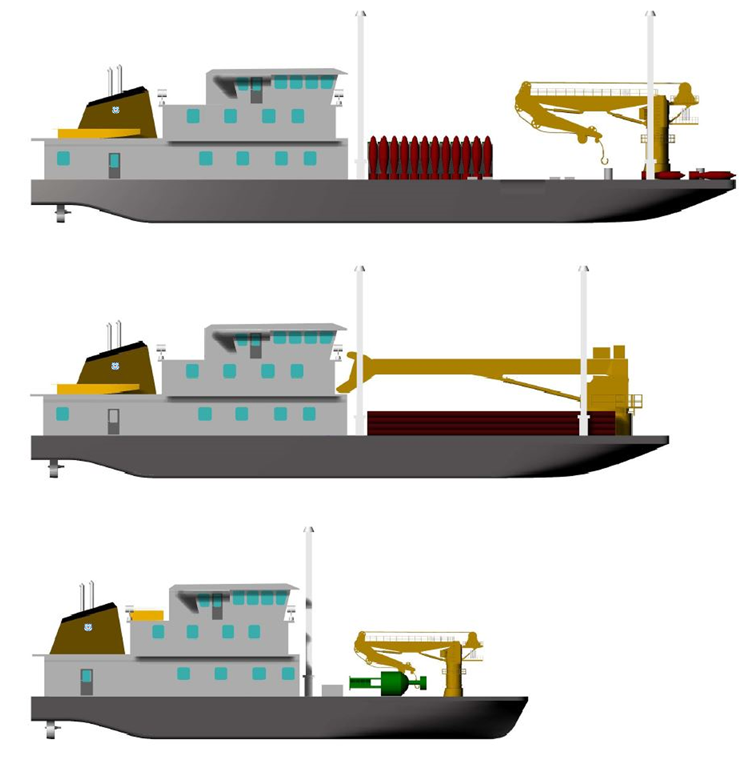
Shown above are Coast Guard indicative designs of a river buoy tender, inland construction tender and inland buoy tender.

The Coast Guard seems to be taking a real interest in new boats recently. This from the Acquisitions Directorate (CG-9).

The boats are expected to be a maximum of 21’6″ length over all and powered by two outboards

Coast Guard releases request for information for boats to support waterways commerce cutters

The Coast Guard released a request for information (RFI) on Sept. 29 to gather information about state-of-the-market and current industrial capabilities to support cutter boats for the waterways commerce cutter (WCC).

A single-design cutter boat is needed to support the 30 new WCCs. The WCC fleet will consist of river buoy, inland construction and inland buoy tenders. The Coast Guard intends to outfit each river buoy tender with two cutter boats and each inland construction tender and inland buoy tender with one cutter boat, totaling up to 56 cutter boats including spare hulls, over approximately 10 years.

The Coast Guard is seeking information about domestic firms’ capabilities and experience in designing and building boats that meet the top-level WCC cutter boat requirements provided in the RFI.

The full RFI is available here. Responses are due at 11 a.m. Eastern time Nov. 1, 2021.

For more information: Waterways Commerce Cutter Program page

“Royal Canadian Navy ship completes Northwest Passage journey for first time since 1954” –CBCNEWS

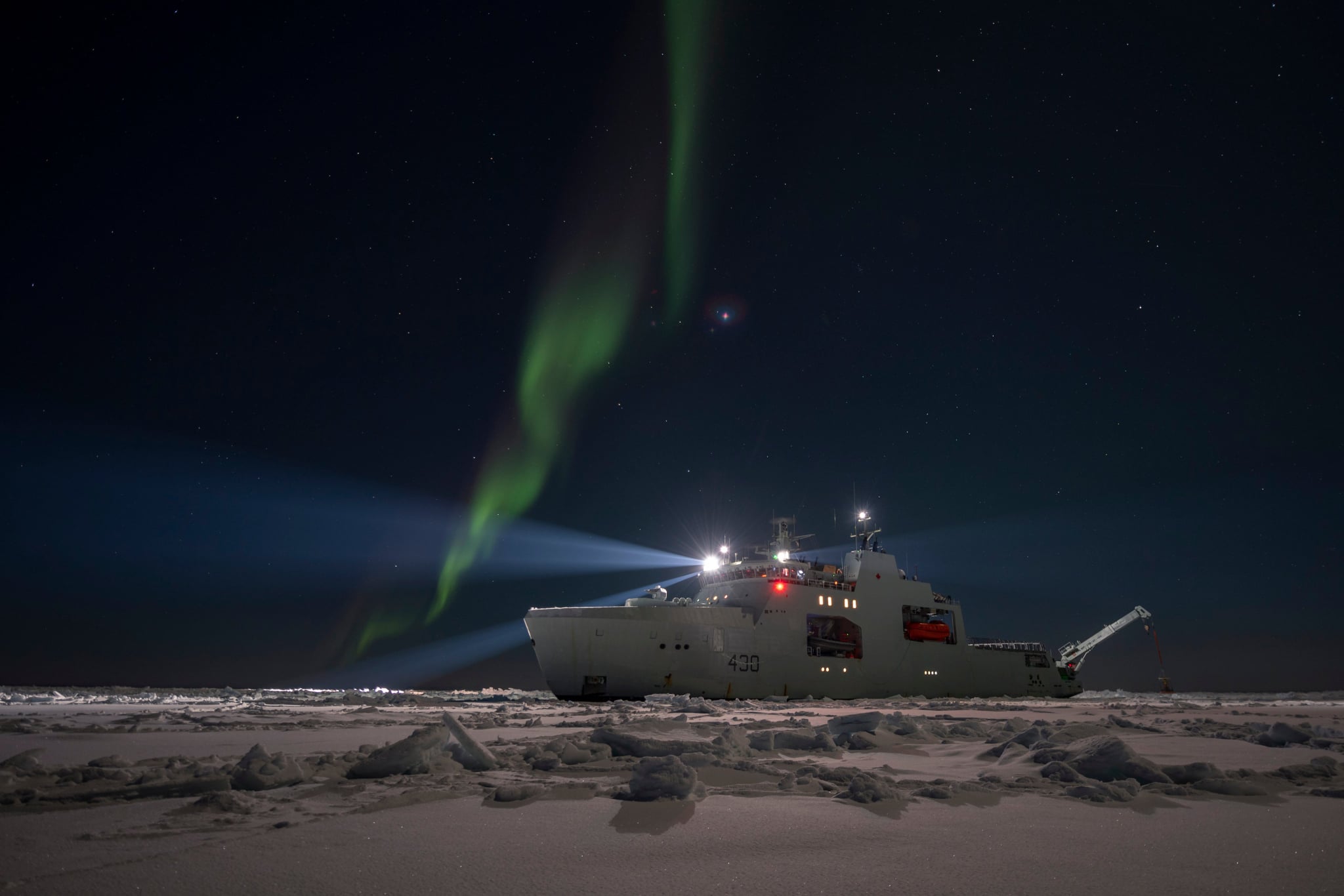
HMCS Harry DeWolf

CBCNews reports that the Canadian Navy Artic and Offshore Patrol Ship HMCS Harry DeWolf has completed its East to West transit of the Northwest Passage as part of a planned circumnavigation of North America.

For the first time since 1954, a Royal Canadian Navy ship has completed the journey through the Northwest Passage.

“It was the longest time a Canadian navy ship has operated in the Arctic in consecutive days in more than 50 years,” said Cmdr. Corey Gleason, commanding officer of HMCS Harry DeWolf.

USCGC Healy is also conducting a similar circumnavigation of North America, but moving clockwise, while the Canadian vessel is moving counter-clockwise. If they get together, they should have some interesting stories to exchange.

I would think the Canadian experience with this class is also informing the Coast Guard’s acquisition process for the “Arctic Security Cutter,” our planned medium icebreaker.

There is also this D17 report of her PassEx with USCGC Kimball near Dutch Harbor.

united states coast guard

News Release

U.S. Coast Guard 17th District Alaska

U.S. Coast Guard Kimball, Royal Canadian Navy crews conduct joint exercise near Dutch Harbor

Harry DeWolfe

The Coast Guard Cutter Kimball crew and a Royal Canadian Navy crew, aboard the military vessel Harry DeWolf, transit alongside one another off the coast of Dutch Harbor, on Sept. 23, 2021. The crews exchanged radio communications after rendering honors along the ship railings. U.S. Coast Guard photo.

JUNEAU, Alaska – U.S. Coast Guard Cutter Kimball and Royal Canadian Navy (RCN) crews conducted a joint exercise off the coast of Dutch Harbor, Alaska, on Sept. 23, 2021.

The Coast Guard Cutter Kimball crew and an RCN crew, aboard the military vessel Harry DeWolf, operated alongside one another to exchange radio communications after both crews lined their respective ship’s port railings to properly salute in formation, rendering honors.

The joint exercise was a significant opportunity that allowed the crews to demonstrate international operability and reaffirms the longstanding relationship between the U.S. and Canada. The mutually beneficial alliance between the two Arctic nations continues to contribute to maritime security in this increasingly critical region.

“Our exercise with the Harry DeWolf is just the latest in a long history of maintaining a strong bond with our close friend, Canada, as well as our commitment to work with all the Arctic nations,” said Capt. Thomas D’Arcy, the Kimball’s commanding officer. “The maritime partnership between the United States and Canada enhances each nation’s regional stability, while providing mutually beneficial economic opportunities. With the increased importance of the Arctic and activity in the region, our trust and partnership in the maritime domain will promote each nation’s interests and provide opportunities to protect the environment.”

The Coast Guard provides a continuous physical presence in the Bering Sea and throughout Alaska to carry out search and rescue and law enforcement missions and to conduct interagency and international cooperation, building on current regional partnerships.

The Bering Sea, considered the gateway to the Arctic, encompasses 900,000 square miles of the U.S. exclusive zone off the Alaskan coast. The joint operations conducted by the U.S. Coast Guard and the Royal Canadian Navy bolster the ability to operate in this critical region at a time when the Arctic is becoming increasingly accessible.

The Kimball, homeported in Honolulu, Hawaii, is one of the Coast Guard’s newer 420-foot Legend-class National Security Cutters and boasts a wide array of modern capabilities helping the crew to complete their varied missions.

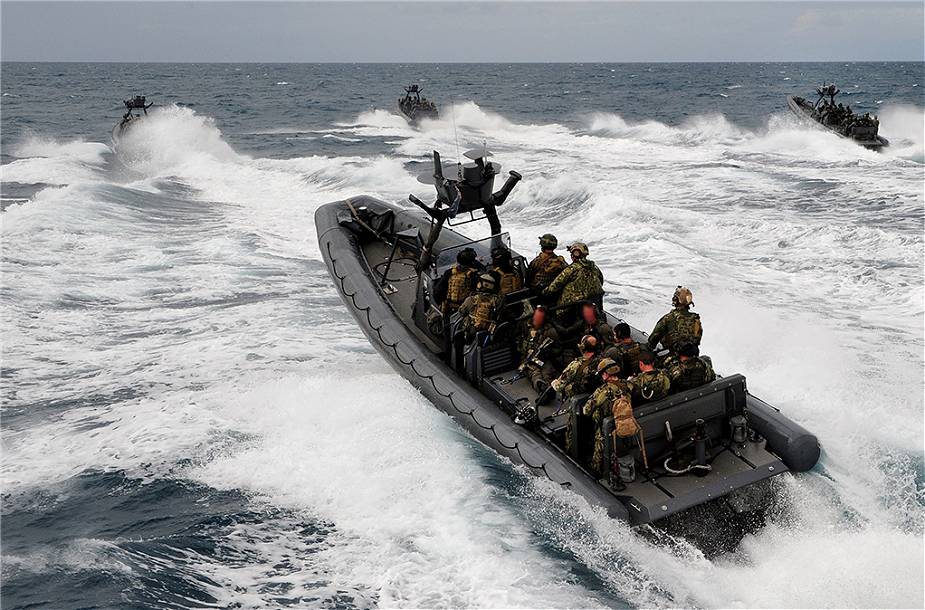
“US Navy has ordered up to 35 11-meter Navy Special Warfare Rigid Inflatable Boats” –Eight for the Coast Guard?

11-meter Navy Special Warfare Rigid Inflatable Boat. (Picture source USMI Boats)

Navy Recognition reports,

The 11-meter Naval Special Warfare Rigid Inflatable Boats (11m NSW RIBs) are constructed of composites with an inflatable tube gunwale made of reinforced fabric. They can operate in heavy seas and winds of 45 knots. The 11m NSW RIB carries a crew of three and a SEAL element (eight passengers) in its Naval Special Warfare role and is used increasingly by Naval Expeditionary Warfare in a marine interdiction/visit board search and seizure (VBSS) role, organic to LPD 17-class ships, with a Navy crew of three and a Marine Corps boarding team. The Navy VBSS variant includes a lifting bail for launch and retrieval from LPD 17-class ships.

There was a bit of a surprise in report,

This contract combines purchases for the Coast Guard (23%) (Emphasis applied–Chuck) and foreign governments as assigned by the Defense Security Cooperation Agency in accordance with Building Partnership Capacity and Foreign Military Sales programs.

I am just guessing, but 23% of 35 boats would be eight. I might also point out that the Bertholf class National Security Cutters can launch 11 meter boats from their stern ramps. They could probably carry two.

Of course this does not mean SEAL teams will be operating from Coast Guard Cutters. We should not assume that. Its a boat, probably a good boat.

These could also be going to security teams

“The Case for Stock Boats” –Marine Link

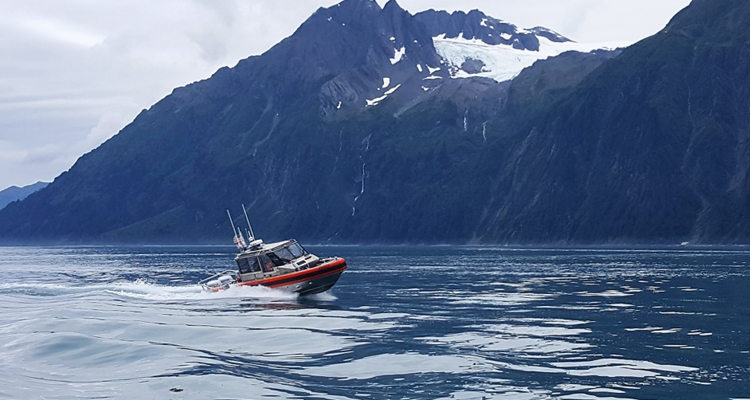
A boat crew from Station Valdez, Alaska, conducts underway training near the station Aug. 18, 2018, in a new 29-foot response boat-small II (RB-S II). The Coast Guard placed a delivery order for 20 additional RB-S IIs Feb. 4, 2019. U.S. Coast Guard photo.

If we want good quality boats built in the US, delivered on time and on budget, our partners in the boat building industry need to be successful.

MarineLink brings us an industry report of the experience of Metal Shark, builder of the Coast Guard’s 29 foot second generation Response Boat, Small (RB-S II).

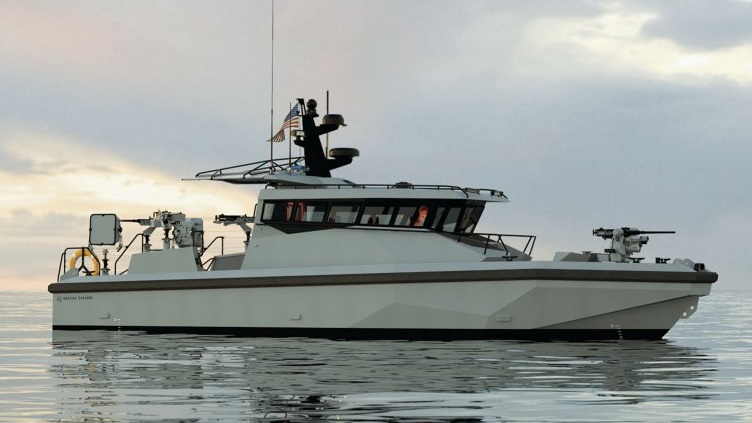
In addition to the Coast Guard boats mentioned, Metal Shark is also building the Navy’s “Defiant” 40 foot force protection patrol boat.

Metal Shark’s winning PB(X) design, dubbed 40 PBX, is a 40 ft, welded-aluminum pilothouse patrol boat that can achieve sprint speeds in excess of 35 kt. Source: Metal Shark

“Airbus showcases DeckFinder technology during COMPASS2020” –NavyRecognition

Original caption, “When landing on small or moving helidecks, a difference of a few centimeters can compromise and endanger a whole mission. To avoid such risk, DeckFinder provides a 3-dimensional image of the RPASs relative position, aiding in landing the aerial vehicle safely (Picture source: Airbus)”

NavyRecognition reports on an interesting innovation for landing Vertical Take-off and Landing (VTOL) aircraft, manned or unmanned, on small moving platforms.

“DeckFinder is a local positioning system that lets manned and remotely piloted aerial vehicles (RPAS) determine their relative position in the harshest environmental conditions. The independent navigation system contributes to easier and safer take-off and landing procedures in GPS-shaded environments that lack reference points or visual cues.”

The maximum range is relatively short, “up to 300 metres,” but the claimed precision is high, “positioning accuracy of more than 20 cm,” about 8 inches.

“DeckFinder excels at aiding rotorcraft landings on moving ship decks, as during offshore operations. For landings involving a pitching and rolling ship deck, DeckFinder’s system of reference points integrated on the ship deck itself provides a crucial advantage to safe navigation.”

Such a system might allow us to operate VTOL UAS from the Webber class.


“PORT CYBERSECURITY: INCORPORATING THE IAPH’S NEW GUIDELINES INTO THE ISPS CODE” –CIMSEC

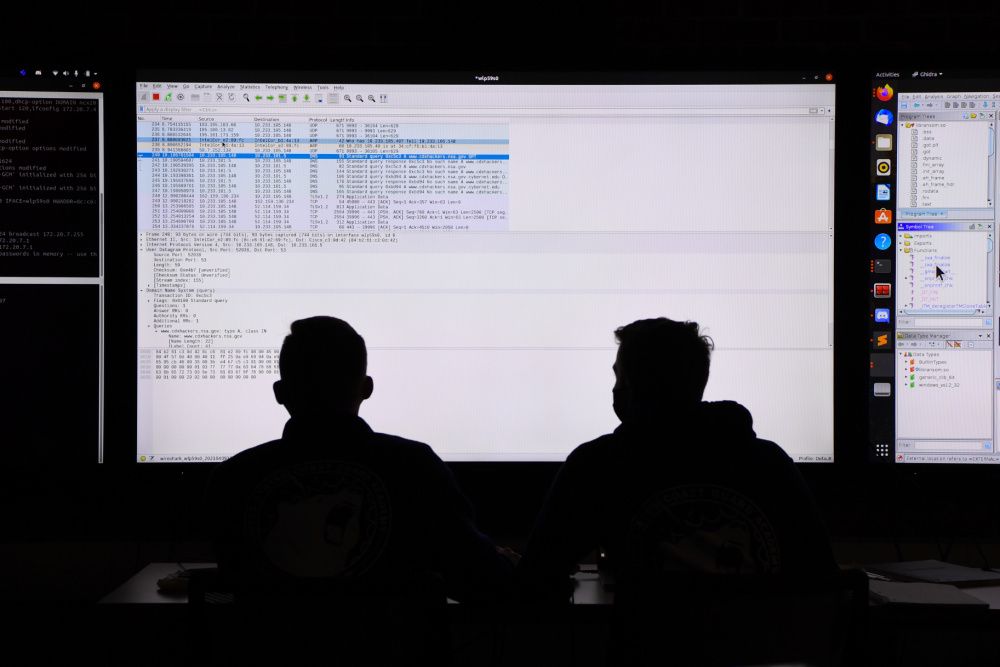
A team from the U.S. Coast Guard Academy participated in the National Security Agency’s 20th annual National Cyber Exercise (NCX), a three-day cyber competition that tests the offensive and defensive cybersecurity skills virtually, April 8-10, 2021. The Coast Guard Academy recently instituted a Cyber Systems degree to meet the needs of the services cyber security strategy of defending cyber space, enabling operations, and protecting infrastructure. (U.S. Coast Guard photo by Petty Officer 2nd Class Hunter Medley)

I can’t even spell cyber, but it is obviously important. This post is about a different kind of Port Security, and it is written by a serving Coast Guard officer, “Commander Michael C. Petta, USCG, is the Deputy Chair, the Director for Maritime Operations, and a professor of international law at the Stockton Center for International Law at the U.S. Naval War College.”

I found this statement particularly interesting,

Within the past few weeks, subversive actors backed by a foreign nation, according to the testimony of the Director of the U.S. Cybersecurity and Infrastructure Agency, breached servers and planted malicious code at a port facility in Houston, Texas.

“Coast Guard Booth Presentations at Sea Air Space 2021” –CG-9

22 meter saildrone Ocean Mapping UAS

The Acquisitions Directorate (CG-9) has provided media used in the Coast Guard’s presentation booths at Sea Air Space 2021, August 2 and 3. While certainly not a substitute for being there, they do provide insights into programs and concerns.

Coast Guard Booth Presentations at Sea Air Space 2021

  • Blue Technology Center of Expertise (BTCOE)
    Overview Blue Technology Center of Expertise presentation
    Ms. Jennifer Ibaven and Dr. Peter Vandeventer, BTCOE Program Managers, Office of Research, Development, Test & Evaluation and Innovation (CG-926)
    Tuesday, Aug. 3, 2021, 3-3:30p.m.
  • Coast Guard Detachment at DOD’s Defense Innovation Unit
    DIU & USCG Overview presentation
    Cmdr. Michael Nordhausen, Liaison Officer to Defense Innovation Unit
    Tuesday, Aug. 3, 2021, 4-4:30p.m.
  • Unmanned Systems
    U.S. Coast Guard Unmanned Systems presentation
    Capt. Thom Remmers, Assistant Commandant for Capabilities Unmanned Systems Cross-Functional Team Lead
    Monday, Aug. 2, 2021, 2:30-3p.m.
  • The Future of the Arctic
    U.S. Coast Guard Arctic Policy presentation
    Mr. Shannon Jenkins, Senior Arctic Policy Advisor
    Tuesday, Aug. 3, 2021, 11-11:30a.m.
  • Illegal, Unreported and Unregulated Fishing
    U.S Coast Guard IUU Fishing Strategic Outlook presentation
    Cmdr. James Binniker, Office of Law Enforcement Policy, Living Marine Resources and Marine Protected Resources Enforcement Division
    Tuesday, Aug. 3, 2021, 2:30-3p.m.