
MyCG has an interesting interview with the new Coast Guard Attaché to Denmark. A lot of the interest there is really about Greenland. It is a good short read.

MyCG has an interesting interview with the new Coast Guard Attaché to Denmark. A lot of the interest there is really about Greenland. It is a good short read.
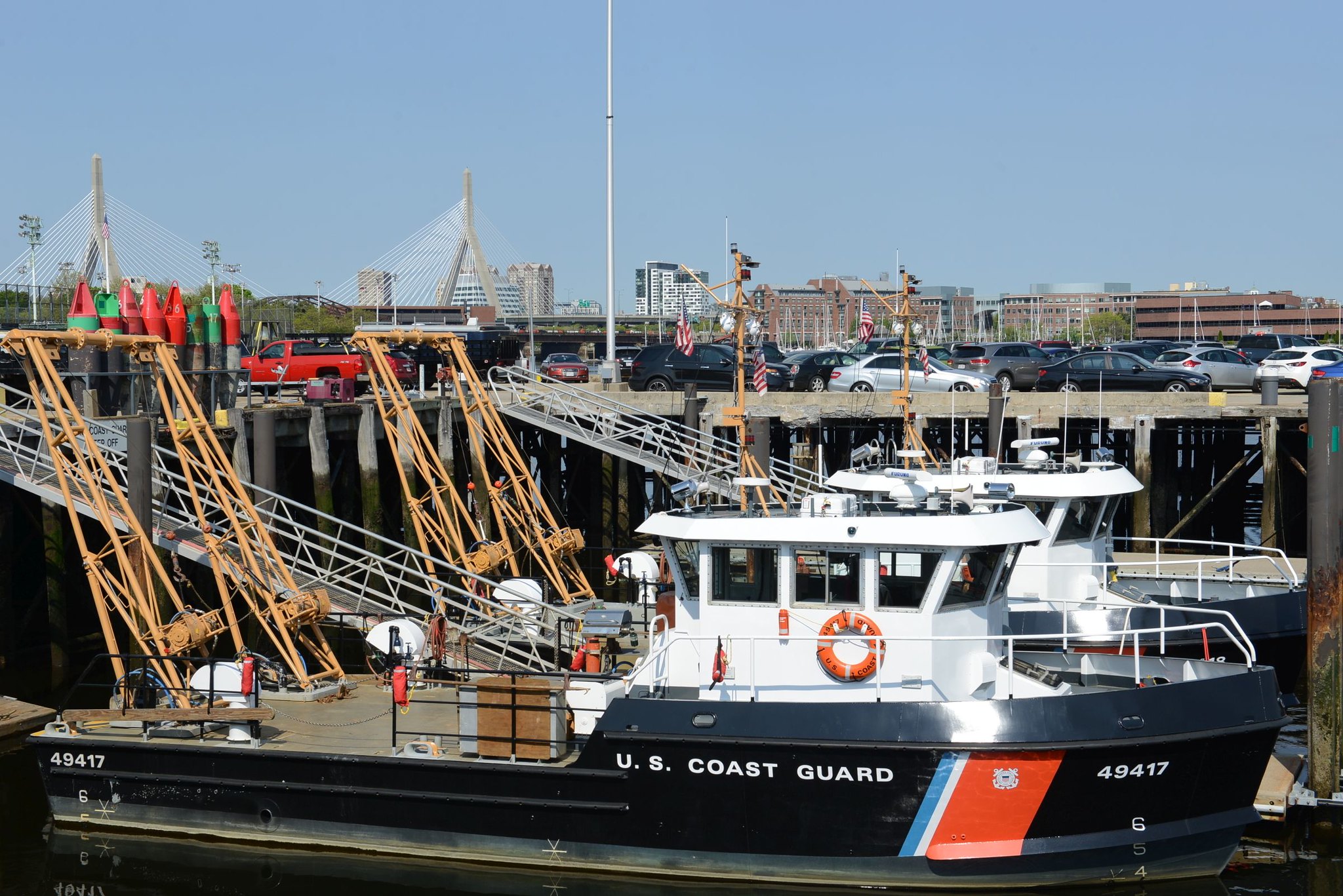
49 foot ANB, Boston
The Navy League’s magazine “Seapower” reports,
“We’re going to do a detailed design and construction award in the spring of 2022 to replace our half-centurion working aids-to-navigation boats,” said Adm. Karl Schultz, the Coast Guard commandant, speaking 28 Sept. at a webinar of the Heritage Foundation.
Shultz said the service plans to procure about 35 new ANBs, “but I believe we will be able to shrink down to about 30 really capable boats,” although he did not specify the type or types of ANBs to be replaced.
We currently have seven types of aid to navigation boats, as described in the link:
My Combat Fleets of the World, still the latest edition, copyright 2013, lists three 64 foot WYGL, 17 55ft, 26 49ft BUSL (Boat, Utility, Stern Load), 90 26ft tailerable WYGL, 48 (+47 additional planned) 20ft ANB,S (aids to navigation, small), and 30 (+30 additional planned)16ft aids to navigation skiffs (WYTL). The numbers quoted in the article are only different with regard to the 55ft boats.
As of last year, the Coast Guard operated a fleet of ANBs that included three 64-foot and four 55-foot ANB, 26 49-foot stern-loading buoy-servicing boats, 90 26-foot and five 17-to-23-foot transportable ANBs, as well as numerous smaller skiffs.
Apparently we have already ditched 13 of the 55ft boats. Presumably the older ones.
Sounds like the intention is to replace all the 49, 55, and 64 foot boats.
Not quite as old as the Commandant seems to indicate, but definitely time to start replacement. It appears all the smaller AtoN boats entered service in the last 15 years.
Thanks to Lee for bringing this to my attention.

160523-N-TC720-274 USS Donald Cook (DDG 75) underway May 23, 2016. (U.S. Navy photo by Mass Communication Specialist 2nd Class Mat Murch/Released)
US Naval Institute reports that the Navy is doing something new in the Atlantic. They are establishing an on call Surface Action Group (SAG) “Navy Creates New Atlantic Destroyer Task Group to Hunt Russian Submarines.”
To me this highlights a couple of things. First apparently there is no comparable group in the Pacific. Second there is only one group to cover the entire East Coast and Gulf of Mexico. So if the Coast Guard calls on the Navy for assistance, its likely there will be a long wait.

A pile of seized drugs, estimated to be $96 million, is transfered off the Coast Guard Cutter Forest Rednour in San Diego, Sept. 24, 2021. The seizure and bullet-ridden boat engine cover were processed and transferred to federal authorities. U.S. Coast Guard photo by Petty Officer 1st Class Adam Stanton.
Another news release highlighting the surprising capability of the Webber class cutters.

LA-based cutter returns home after 32-day deployment, drug offload in San Diego SAN PEDRO, Calif. – The Coast Guard Cutter Forrest Rednour returned home on Sept. 26, following a 32-day patrol. The crew disrupted illegal narcotics smuggling, seizing more than 5,000 pounds of cocaine that was offloaded in San Diego, Friday. The drugs, worth an estimated $96 million, were seized in international waters of the Eastern Pacific Ocean off the coast of Mexico. “The crew excelled during this patrol; their hard work and skill was apparent and allowed the cutter to weather a hurricane, conduct international engagements, and stop a vessel carrying approximately two metric tons of cocaine, all while in a 154-foot ship, 1,800 nautical miles and two time zones from home,” said Lt. Drew Ferraro, commanding officer of the Rednour. During the Rednour’s deployment, the crew participated in a passing exercise with the Monte Albán, an Armada de México vessel, off the coast of Mexico. “This deployment tested crew endurance and provided the same level of logistics challenges normally faced by much larger ships, but the Rednour crew navigated each obstacle with their usual dedication, professionalism, and teamwork,” Ferraro said. “Thank you to our outstanding logistics and finance team, and the shore-side coordinators that made this patrol successful. Lastly, thank you to the families and loved ones back home who supported us during this patrol and held down the home front during our absence.” On April 1, 2020, U.S. Southern Command increased counter-narcotics operations in the Western Hemisphere to disrupt the flow of drugs. Numerous U.S. agencies from the Departments of Defense, Justice, and Homeland Security cooperated in the effort to combat transnational organized crime. The Coast Guard, Navy, Customs and Border Protection, Federal Bureau of Investigation, Drug Enforcement Administration, and Immigration and Customs Enforcement, along with allied and international partner agencies, play a role in counter-drug operations. The fight against drug cartels in the Eastern Pacific Ocean and the Caribbean Sea requires unity of effort in all phases from detection, monitoring, and interdictions, to criminal prosecutions for these interdictions by United States Attorney’s Offices from the Middle District of Florida, the Southern District of Florida and the Southern District of California. The law enforcement phase of counter-smuggling operations in the Eastern Pacific Ocean is conducted under the authority of the Eleventh Coast Guard District, headquartered in Alameda, CA. The interdictions, including the actual boardings, are led and conducted by members of the U.S. Coast Guard. The Forrest Rednour is a 154-foot fast response cutter, commissioned in 2018 and homeported in San Pedro, California. |

The crew of the U.S. Coast Guard Cutter Oliver Berry (WPC 1124) Sept. 22, 2017. The Oliver Berry was the first of three 154-foot fast response cutters to be stationed in Hawaii. (U.S. Coast Guard photo by Petty Officer 3rd Class Amanda Levasseur/Released)
Below is a 14th District news release, reporting an unusual deployment of a Webber class WPC to aid Samoa in monitoring their Exclusive Economic Zone. The crew must have crossed both the International Date Line and the Equator, so they have some serious bragging rights. This is not Oliver Berry’s first very long deployment (and here), nor the first time a Hawaii based FRC has visited these waters. There is no indication that Oliver Berry was escorted by a larger cutter.
Samoa is a long way from Oliver Berry’s homeport of Hawaii, but it is pretty close to American Samoa.

Samoa Islands. From US National Park Service circa 2002. (Note these are statute miles.)
There have been suggestions that American Samoa needs more Coast Guard presence. American Samoa’s EEZ is 156,136 square miles, larger than the state of Montana, and 3.56% of the entire US EEZ.
Generally speaking, American Samoa has been out of sight and out of mind for most Americans and the people there seem to have been neglected. American Samoa is the only inhabited unorganized unincorporated territory of the United States. Despite the fact that American Samoans serve in the American Armed Forces at higher rates than any other US state or territory, American Samoans are United States Nationals, but not citizens. 2021 population is estimated to be 46,366.
The neighboring Independent State of Samoa has a larger population, 202,506 according to their 2020 census.
The waters around the islands of the two Samoas provides a rich harvest of Tuna. If the islands are to remain economically viable, we need to prevent Illegal, Unregulated, Unreported fishing in the area. To do that, we need a good cooperative relationship with the Independent State of Samoa and Coast Guard assets closer than Hawaii. The area is also subject to earthquakes so there is the potential need for disaster response.
What kind of assets? Two or three FRCs would probably work well. Ideally three as that would generally allow one vessel on patrol, one on standby, and the third in maintenance. Some Coast Guard Auxiliary air assets would also help a lot.

| News Release |
U.S. Coast Guard 14th District Hawaii and the Pacific |
U.S. Coast Guard patrols international waters in an effort to strengthen maritime governance and foreign partnerships
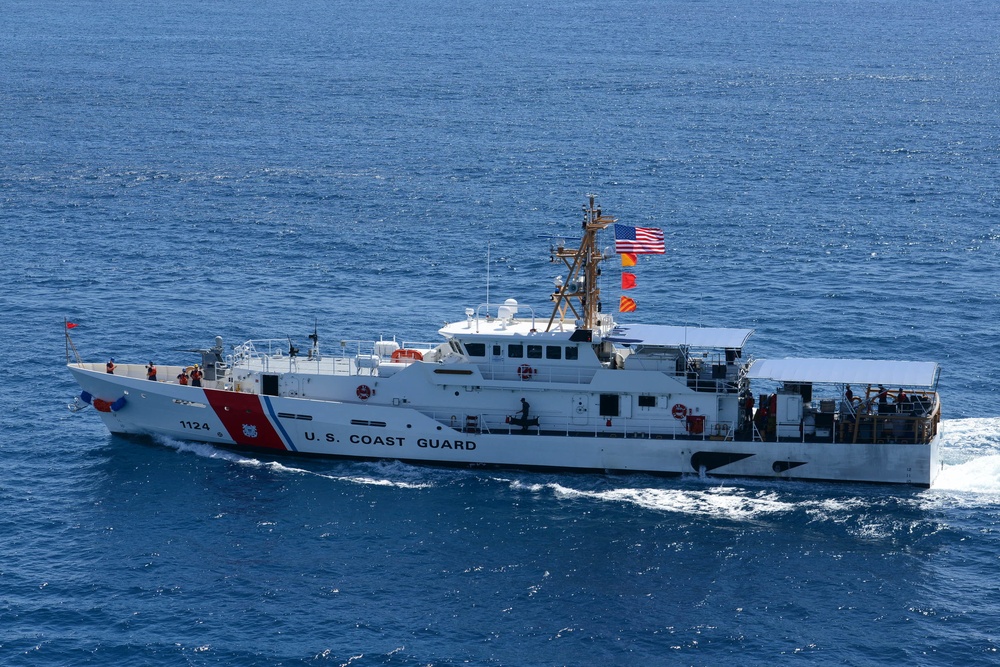
Editors’ Note: Click on Coast Guard stock image to download a high-resolution version.
HONOLULU — The Coast Guard Cutter Oliver Berry crew conducted patrol operations in Samoa’s exclusive economic zone in September 2021, deepening our close partnership with Samoa and promoting resource security within the area.
The Oliver Berry’s crew helped to fill the policing gap for illegal, unreported, and unregulated fishing while Samoa’s Nafanua II patrol boat was out of service.
“The United States offered to assist the Government of Samoa by providing security and sovereignty operations in Samoan waters due to the absence of their patrol boat,” said Cmdr. Jeff Bryant, the 14th District’s chief of enforcement. “It was a pleasure to support Samoa in enforcing their laws to protect fisheries and other natural resources within their EEZ.”
The U.S. and its allies are trusted partners in the region. The U.S. Coast Guard employs 11 bilateral shiprider agreements with Pacific Island Forum nations, including Samoa, to help them ensure their resource security and maritime sovereignty. Pursuant to those agreements, host government officials generally join Coast Guard patrols. Due to COVID-19 protocols, in this instance the Oliver Berry did not make any shore visits or host Samoan government officials aboard.
“The Oliver Berry’s patrol operations highlighted the close U.S.-Samoa partnership and our shared commitment to ensuring security and freedom of navigation in the Pacific,” said Acting Chargé d’Affaires Mark Hitchcock. “We look forward to working with the Samoan Government and Coast Guard to facilitate additional patrols in the near future.”
The U.S. Coast Guard and the Government of Samoa have a history of partnership. In 2019, the Coast Guard Cutters Walnut and Joseph Gerczak visited Apia Harbor and conducted patrol operations with officials from Samoa’s Ministry of Police and Ministry of Fisheries aboard. Crew from the Coast Guard Cutters also visited Lufilufi Primary School on Upolu Island to donate books, stationary, and sports gear and met with the Samoa Victim Support Group, a non-profit organization that specializes in providing shelter for domestic abuse victims, to donate children’s clothes, baby bottles, toddler blankets and reading materials.
The goal of the Coast Guard remains supportive and responsive to our international partners as they seek to improve the daily lives of their people and contribute to a free and open Indo-Pacific.
Oceania covers an area of 3.3 million square miles and has a population of 40 million people; it is a melting pot of culture and diversity and each of those cultures has a dependency on living marine resources and maritime commerce to allow their people to thrive.
The video above has a segment, beginning about time 4:55 to 5:25, that may be of particular interest to the Coast Guard. It appears that the Navy may finally be moving from the 25mm gun to the 30mm in their next iteration of the Mk38 mount.
We have known all along that the 30mm is more effective for Coast Guard type missions. Apparently the Mk38 mod2 was adaptable enough to accept the 30mm but the Navy did not seem interested. Despite earlier indications the Mk38 mod 3 would be significantly different, including use of the 30mm, when it emerged, it retained the 25mm.
I suspect the combination of the UAS threat and the availability of a programable air burst round may be what has gotten the Navy’s attention.
For our purposes, in addition to the air burst round, the 30mm does have a greater selection of projectile type including “swimmer round” designed specifically to counter Fast Inshore Attack Craft (FIAC).

This is just a couple of select paragraphs from a longer Bollinger press release. Good news, apparently no delays expected in delivery of Webber class WPCs.
“Bollinger Shipyards Resumes Operations at All Facilities Following Hurricane Ida
“LOCKPORT, La., ‐‐ (September 24, 2021) – Bollinger Shipyards LLC (“Bollinger”) today announced that all 11 of its facilities are now open and operational following Hurricane Ida’s landfall last month near Port Fourchon, Louisiana as a powerful Category 4 storm. Bollinger’s facilities in Port Fourchon, Larose, Lockport and Houma suffered significant damage as a result of the storm, which tied with last year’s Hurricane Laura and the Last Island Hurricane of 1856 as the strongest on record in Louisiana.
“In advance of the storm, Bollinger took steps to mitigate potential damages to its facilities and any resulting delays to its production schedules. Despite damages sustained to Bollinger’s Lockport facility, the 650‐man production line for the U.S. Coast Guard Fast Response Cutter program has resumed operations and Bollinger is on track to deliver the next vessel ahead of schedule.”
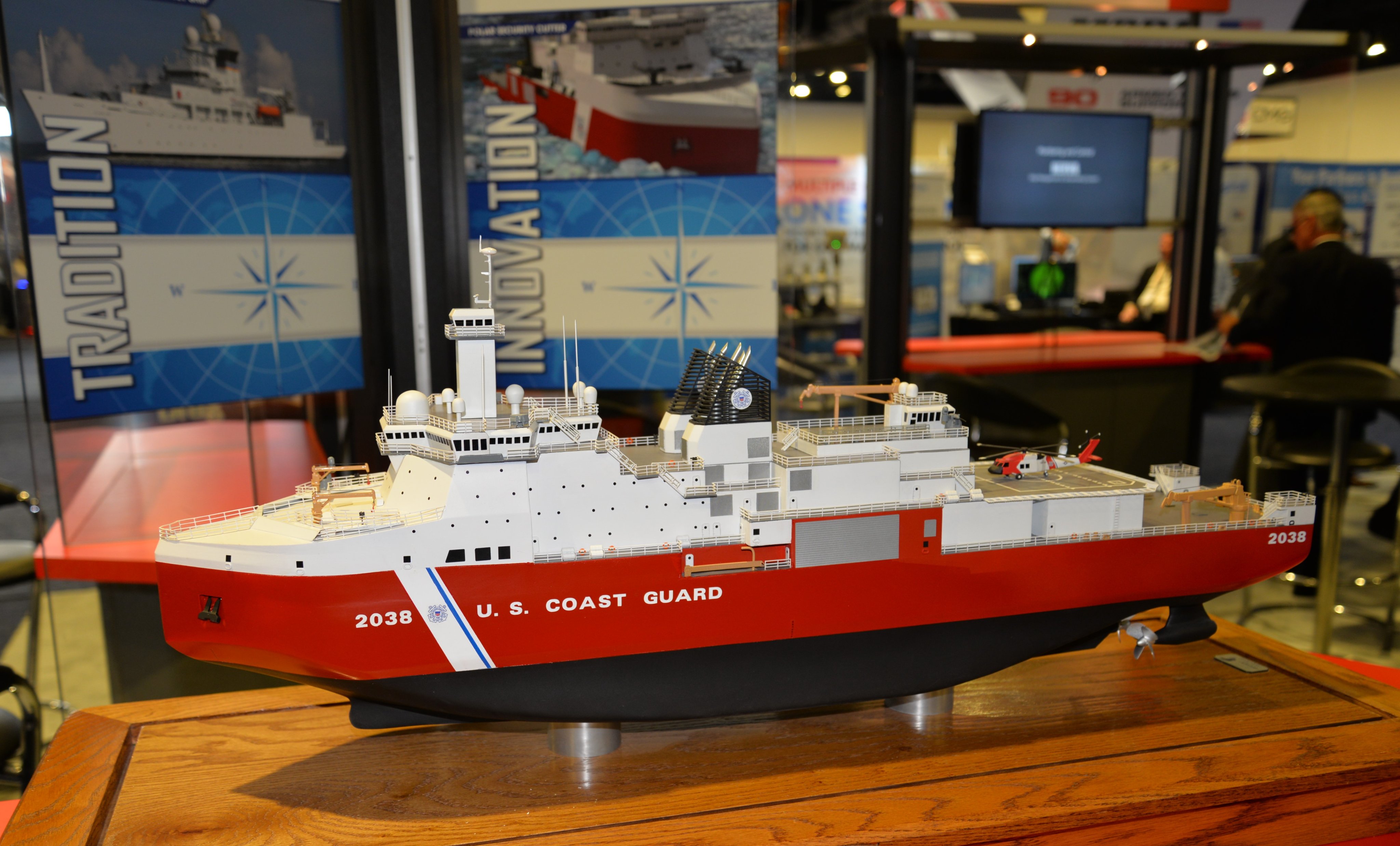
Photo of a model of Halter Marine’s Polar Security Cutter seen at Navy League’s Sea-Air-Space Exhibition have surfaced. Photo credit Chris Cavas.
The Congressional Research Service has once again updated their look at the Polar Security Cutter (heavy icebreaker) program. (See the latest version here.) My last look at this evolving document was in regard to the August 31, 2021 revision.
I will reproduce the one page summary below but first I will point out what appears to be new. From page 29-32:
FY2022 National Defense Authorization Act (H.R. 4350)
House
Section 5301 of H.R. 4350 as reported by the House Armed Services Committee (H.Rept. 117-118 of September 10, 2021) states:
SEC. 5301. GREAT LAKES WINTER SHIPPING.
(a) SHORT TITLE.—This section may be cited as the ‘‘Great Lakes Winter Shipping Act
of 2021’’.
(b) GREAT LAKES ICEBREAKING OPERATIONS.—
(1) GAO REPORT.—
(A) IN GENERAL.—Not later than 1 year after the date of the enactment of this Act, the Comptroller General of the United States shall submit to the Committee on Commerce, Science, and Transportation of the Senate and the Committee on Transportation and Infrastructure of the House of Representatives a report on Coast Guard icebreaking in the Great Lakes.
(B) ELEMENTS.—The report required under subparagraph (A) shall—
(i) evaluate—
(I) the economic impact related to vessel delays or cancellations associated with ice
coverage on the Great Lakes;
(II) the impact the standards proposed in paragraph (2) would have on Coast Guard operations in the Great Lakes if such standards were adopted;
(III) the fleet mix of medium ice breakers and icebreaking tugs necessary to meet the standards proposed in paragraph (2); and
(IV) the resources necessary to support the fleet described in subclause (III), including
billets for crew and operating costs; and
(ii) make recommendations to the Commandant for improvements to the Great Lakes icebreaking program, including with respect to facilitating shipping and meeting all Coast Guard mission needs.
(2) PROPOSED STANDARDS FOR ICEBREAKING OPERATIONS.—The proposed standards, the impact of the adoption of which is evaluated in subclauses (II) and (III) of paragraph (1)(B)(i), are the following:
(A) Except as provided in subparagraph (B), that ice-covered waterways in the Great Lakes shall be open to navigation not less than 90 percent of the hours that vessels engaged in commercial service and ferries attempt to transit such ice-covered waterways.
(B) In a year in which the Great Lakes are not open to navigation as described in subparagraph (A) because of ice of a thickness that occurs on average only once every 10 years, ice-covered waterways in the Great Lakes shall be open to navigation at least 70 percent of the hours that vessels engaged in commercial service and ferries attempt to transit such ice-covered waterways.
(3) REPORT BY COMMANDANT.—Not later than 90 days after the date on which the Comptroller General submits the report under paragraph (1), the Commandant shall submit to the Committee on Commerce, Science, and Transportation of the Senate and the Committee on Transportation and Infrastructure of the House of Representatives a report that includes the following:
(A) A plan for Coast Guard implementation of any recommendation made by the Comptroller General under paragraph (1)(B)(ii) with which the Commandant concurs.
(B) With respect to any recommendation made under paragraph (1)(B)(ii) with which the Commandant does not concur, an explanation of the reasons why the Commandant does not concur.
(C) A review of, and a proposed implementation plan for, the results of the fleet mix
analysis under paragraph (1)(B)(i)(III).
(D) Any proposed modifications to current Coast Guard Standards for icebreaking operations in the Great Lakes.
(4) PILOT PROGRAM.—During the 5 ice seasons following the date of enactment of this Act, the Coast Guard shall conduct a pilot program to determine the extent to which the current Coast Guard Great Lakes icebreaking cutter fleet can meet the proposed standards described in paragraph (2).
(c) DATA ON ICEBREAKING OPERATIONS IN THE GREAT LAKES.—
(1) IN GENERAL.—The Commandant shall collect, during ice season, archive, and
disseminate data on icebreaking operations and transits on ice-covered waterways in the Great Lakes of vessels engaged in commercial service and ferries.
(2) ELEMENTS.—Data collected, archived, and disseminated under paragraph (1) shall
include the following:
(A) Voyages by vessels engaged in commercial service and ferries to transit ice-covered waterways in the Great Lakes that are delayed or cancelled because of the nonavailability of a suitable icebreaking vessel.
(B) Voyages attempted by vessels engaged in commercial service and ferries to transit ice covered waterways in the Great Lakes that do not reach their intended destination because of the nonavailability of a suitable icebreaking vessel.
(C) The period of time that each vessel engaged in commercial service or ferry was delayed in getting underway or during a transit of ice-covered waterways in the Great Lakes due to the nonavailability of a suitable icebreaking vessel.
(D) The period of time elapsed between each request for icebreaking assistance by a vessel engaged in commercial service or ferry and the arrival of a suitable icebreaking vessel and whether such icebreaking vessel was a Coast Guard or commercial asset.
(E) The percentage of hours that Great Lakes ice-covered waterways were open to
navigation, as defined by this section, while vessels engaged in commercial service and
ferries at tempted to transit such waterways for each ice season after the date of enactment of this section.
(F) Relevant communications of each vessel engaged in commercial service or ferry with the Coast Guard or commercial icebreaking service providers with respect to
subparagraphs(A) through (D).
(G) A description of any mitigating circumstance, such as Coast Guard Great Lakes
icebreaker diversions to higher priority missions, that may have contributed to the amount of time described in subparagraphs (C) and (D) or the percentage of time described in subparagraph (E).
(3) VOLUNTARY REPORTING.—Any reporting by operators of commercial vessels
engaged in commercial service or ferries under this Act shall be voluntary.
(4) PUBLIC AVAILABILITY.—The Commandant shall make the data collected, archived
and disseminated under this subsection available to the public on a publicly accessible
internet website of the Coast Guard.
(5) CONSULTATION WITH INDUSTRY.—With respect to the Great Lakes icebreaking operations of the Coast Guard and the development of the data collected, archived, and disseminated under this subsection, the Commandant shall consult operators of vessel engaged in commercial service and ferries.
(6) DEFINITIONS.—In this subsection:
(A) VESSEL.—The term ‘‘vessel’’ has the meaning given such term in section 3 of title 1, United States Code.
(B) COMMERCIAL SERVICE.—The term ‘‘commercial service’’ has the meaning given
such term in section 2101(4) of title 46, United States Code.
(C) GREAT LAKES.—The term ‘‘Great Lakes’’—
(i) has the meaning given such term in section 118 of the Federal Water Pollution Control Act (33 U.S.C. 1268); and
(ii) includes harbors adjacent to such waters.
(D) ICE-COVERED WATERWAY.—The term ‘ice-covered waterway’’ means any portion of the Great Lakes, as defined by subparagraph (C), in which vessels engaged in commercial service or ferries operate that is 70 percent or greater covered by ice, but does not include any waters adjacent to piers or docks for which commercial icebreaking services are available and adequate for the ice conditions.
(E) OPEN TO NAVIGATION.—The term ‘‘open to navigation’’ means navigable to the extent necessary to meet the reasonable demands of shipping, minimize delays to passenger ferries, extricate vessels and persons from danger, prevent damage due to flooding, and conduct other Coast Guard missions as required.
(F) REASONABLE DEMANDS OF SHIPPING.—The term ‘‘reasonable demands of shipping’’ means the safe movement of vessels engaged in commercial service and ferries transiting ice-covered waterways in the Great Lakes to their intended destination,
regardless of type of cargo.
(d) GREAT LAKES ICEBREAKER ACQUISITION.—Of the amounts authorized to be
appropriated under section 4902(2)(A)(ii) of title 14, United States Code—
(1) for fiscal year 2022, $350,000,000 shall be made available to the Commandant for the acquisition of a Great Lakes icebreaker at least as capable as Coast Guard Cutter Mackinaw (WLBB–30); and
(2) for fiscal year 2023, $20,000,000 shall be made available to the Commandant for the design and selection of icebreaking cutters for operation in the Great Lakes, the Northeastern United States, and the Arctic, as appropriate, that are at least as capable as the Coast Guard 140-foot icebreaking tugs.
(e) PROHIBITION ON CONTRACT OR USE OF FUNDS FOR DEVELOPMENT OF COMMON HULL DESIGN.—Section 8105 of the William M. (Mac) Thornberry National Defense Authorization Act for Fiscal Year 2021 (Public Law 116–283) is amended by striking subsection (b) and inserting the following:
‘‘(b) REPORT.—Not later than 90 days after the date of the enactment of this subsection, the Commandant shall submit to the Committee on Commerce, Science, and Transportation of the Senate and the Committee on Transportation and Infrastructure of the House of Representative a report on the operational benefits and limitations of a common hull design for icebreaking cutters for operation in the Great Lakes, the Northeastern United States, and the Arctic, as appropriate, that are at least as capable as the Coast Guard 140-foot icebreaking tugs.’’.
H.Rept. 117-118 states:
Report on Need for Additional Ice Breakers in the Great Lakes Region
The committee directs the Secretary of Defense to submit a report to the congressional defense committees by March 1, 2022 on whether additional ice breaking vessels are necessary in the Great Lakes region. The report must include an analysis on the necessity for ice breaking vessels in the St. Clair River. (Page 223)
Summary
The Coast Guard Polar Security Cutter (PSC) program is a program to acquire three new PSCs (i.e., heavy polar icebreakers), to be followed years from now by the acquisition of up to three new Arctic Security Cutters (ASCs) (i.e., medium polar icebreakers). The PSC program has received a total of $1,754.6 million (i.e., about $1.8 billion) in procurement funding through FY2021, including $300 million that was provided through the Navy’s shipbuilding account in FY2017 and FY2018. With the funding the program has received through FY2021, the first two PSCs are now fully funded.
The Coast Guard’s proposed FY2022 budget requests $170.0 million in procurement funding for the PSC program, which would be used for, among other things, procuring long leadtime materials (LLTM) for the third PSC.
The Navy and Coast Guard in 2020 estimated the total procurement costs of the PSCs in then year dollars as $1,038 million (i.e., about $1.0 billion) for the first ship, $794 million for the second ship, and $841 million for the third ship, for a combined estimated cost of $2,673 million (i.e., about $2.7 billion). Within those figures, the shipbuilder’s portion of the total procurement cost is $746 million for the first ship, $544 million for the second ship, and $535 million for the third ship, for a combined estimated shipbuilder’s cost of $1,825 million (i.e., about $1.8 billion).
On April 23, 2019, the Coast Guard-Navy Integrated Program Office for the PSC program awarded a $745.9 million fixed-price, incentive-firm contract for the detail design and construction (DD&C) of the first PSC to VT Halter Marine of Pascagoula, MS, a shipyard owned by Singapore Technologies (ST) Engineering. VT Halter was the leader of one of three industry teams that competed for the DD&C contract. The first PSC is scheduled to begin construction in 2021 and be delivered in 2024, though the DD&C contract includes financial incentives for earlier delivery.
The DD&C contract includes options for building the second and third PSCs. If these options are exercised, the total value of the contract would increase to $1,942.8 million (i.e., about $1.9 billion). The figures of $745.9 million and $1,942.8 million cover only the shipbuilder’s costs; they do not include the cost of government-furnished equipment (GFE), which is equipment for the ships that the government purchases and then provides to the shipbuilder for incorporation into the ship, post-delivery costs, costs for Navy-specific equipment, or government program-management costs.
The operational U.S. polar icebreaking fleet currently consists of one heavy polar icebreaker, Polar Star, and one medium polar icebreaker, Healy. In addition to Polar Star, the Coast Guard has a second heavy polar icebreaker, Polar Sea. Polar Sea, however, suffered an engine casualty in June 2010 and has been nonoperational since then. Polar Star and Polar Sea entered service in 1976 and 1978, respectively, and are now well beyond their originally intended 30-year service lives. The Coast Guard plans to extend the service life of Polar Star until the delivery of at least the second PSC. The Coast Guard is using Polar Sea as a source of spare parts for keeping Polar Star operational
We have talked about “Switchblade” loitering munition before. I will not repeat the earlier discussion, but recently found this video and wanted to pass it along.
The systems are still out there and making news.
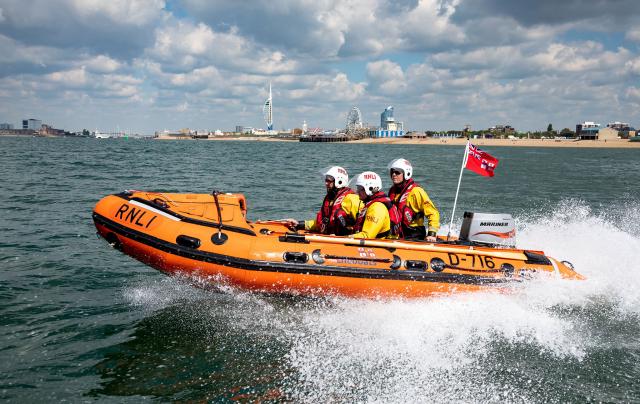
The Royal National Lifeboat Institution’s “class D lifeboats” are an example of the kind of inflatable boats the U.S. Coast Guard could operate from its larger response boats to reach remote shallow waters, shoals, and beaches. (RNLI)
The US Naval Institute Proceedings has a short article addressing a perceived gap in our SAR capability. His suggested solution is a smaller boat capable of operating in very shallow water, carried by our Response Boats.
Even if it is not possible to carry the smaller lifeboat aboard the Response Boat, it might be possible tow one astern, if it is clear that the case is in shallow water.
We might also be able to develop something using a line throwing gun and a float or special lifejacket.
In any case, this is excellent feedback from operator and probably deserves some consideration.
 Chuck Hill's CG Blog