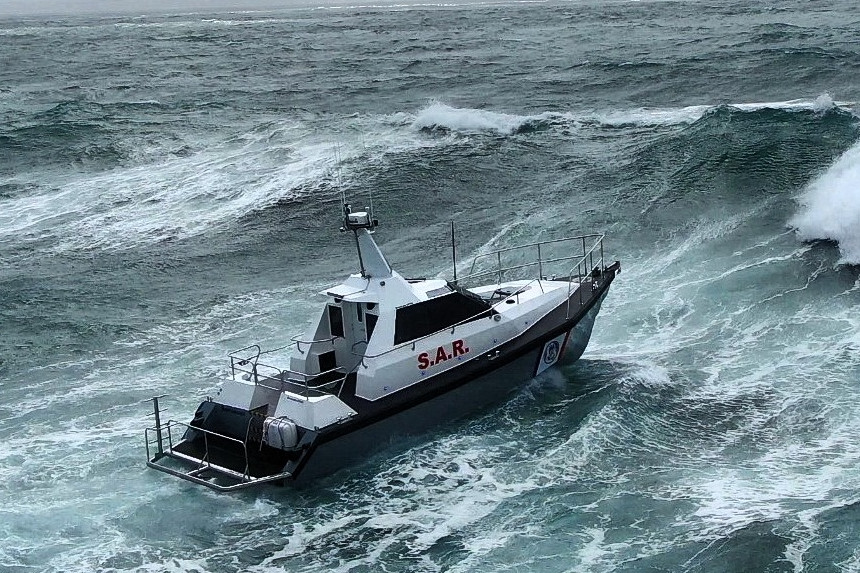
“VESSEL REVIEW | SELF-RIGHTING PATROL AND SAR CRAFT FOR FUTURE DEFENSE USA” –Baird Maritime

“Irish builder Safehaven Marine has handed over a new coastal patrol and search and rescue (SAR) craft to Future Defense USA.”

Baird Maritime has a review of a new 45 foot self-righting patrol and SAR boat.

It is reportedly considerably faster than the USCG 47 foot motor lifeboat, has a longer range and an active stabilization system. I does not seem to have the space for survivors the 47 foot MLB provides nor the step-down cut the side of the hull that facilitates pulling survivors out the water. It does have a platform at the stern.

You can see the builder’s story about this boat, including a video, here.

“An integral transom platform and dive ladder allows for dive operations from a spacious aft deck.”

“Report to Congress on Coast Guard Cutter Procurement” –CRS, Updated September 15, 2021″ –CRS

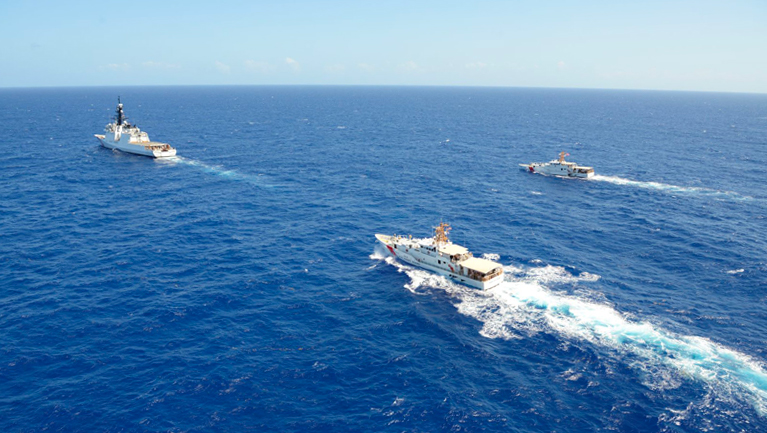
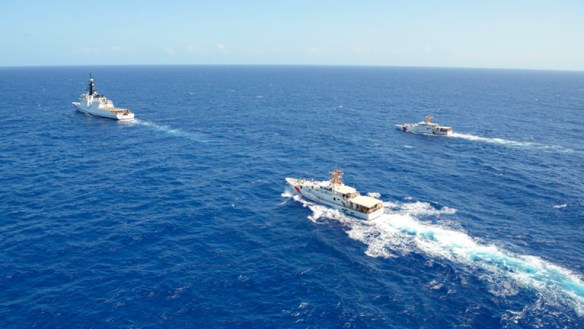
“Coast Guard Cutter Hamilton leads the way for cutters Robert Goldman and Charles Moulthrope as they depart Puerto Rico April 1. National security cutter Hamilton is escorting the two fast response cutters (FRCs) across the Atlantic to Rota, Spain. From there, the FRCs will continue to their homeport of Manama, Bahrain.” U.S. Coast Guard photo by Petty Officer 3rd Class Sydney Phoenix.

The Congressional Research Service has again updated their “Report to Congress on Coast Guard Cutter Procurement”. (This link will always take you to the most recent edition of the report.) My last post on this evolving document was in reference to a 17 August, 2021 update. I have reproduced the one page summary in full below. But first,

I missed this addition in my last look at the report. From page 22/23:

August 2021 House Committee Request for GAO Review

In a letter dated August 16, 2021, the House Transportation and Infrastructure Committee requested GAO to review the management of the OPC program and the Coast Guard’s efforts for managing its existing medium endurance cutters. The letter stated:

Initially projected to cost about $12 billion over its 30-year life cycle, the [OPC] program recently experienced significant cost and schedule delays….

In addition to construction of the OPC, the Committee continues to remain concerned about the operational gap between the end of service life for the aging Medium Endurance Cutters and the delayed delivery of the OPCs….

Given the significant budgetary commitment that the Congress, DHS, and Coast Guard have made for the OPC program to date, continued oversight is necessary to ensure the OPC program does not continue to experience cost growth or additional schedule delays. As such, the Committee requests that the Government Accountability Office (GAO) review the management of the OPC and Medium Endurance Cutters acquisition programs including, but not limited to:

  • The status of the Phase 1 (the first four hulls) and Phase 2 (hulls 5 through 25) OPC acquisition programs, including what steps are being taken to manage the program within the revised cost and schedule commitments; and
  • The status of the Medium Endurance Cutters and level of maintenance needed to keep the fleet operating to minimize the operational gap until the OPCs are incrementally delivered.

This is new. From page 27:

FY2022 National Defense Authorization Act (H.R. 4350) House
The House Armed Services Committee’s report (H.Rept. 117-118 of September 10, 2021) on H.R. 4350 states:

Sentinel-class Fast Response Cutter

The committee looks forward to reviewing the Navy’s updated force structure assessment and shipbuilding plan. The committee understands the Navy intends to change the fleet architecture reflected in the 355-ship force-level goal to reflect a more distributed fleet mix with a smaller proportion of larger ships and a larger proportion of smaller manned ships as well as unmanned vessels. The committee supports incorporating a mix of smaller manned ships into the fleet and encourages the Navy to consider the capabilities the U.S. Coast Guard’s Sentinel-class Fast Response Cutter could provide to the fleet and the concept of operations and associated requirements that would support acquisition of these vessels.

Further, the committee is aware the U.S. Coast Guard has contract options for 12 additional Sentinel-class Fast Response Cutters with firm fixed pricing in place until May of 2023. Exercising these contract options in advance of their expiration would lock in favorable pricing on Sentinel-class Fast Response Cutters should the Navy determine that they add value to the fleet.

Given the successes of the U.S. Coast Guard’s Sentinel-class Fast Response Cutter in support of the Navy’s Fifth Fleet as a part of Patrol Forces Southwest Asia, the committee believes there are similar roles for Sentinel-class Fast Response Cutters in other areas of responsibility. Therefore, the committee directs the Secretary of the Navy to submit a report to the congressional defense committees not later than February 1, 2022, that details the current mission sets and operating requirements for the Sentinel-class Fast Response Cutter and expands on how successes in the U.S. Central Command area of responsibility would translate to other regions, including the U.S. Indo-Pacific Command. Further, the committee directs the Secretary of the Navy to assess the requisite upgrades to the Sentinel class Fast Response Cutter required to meet Navy standards and evaluate the concept of operations for employing these vessels in Southeast Asia. This report should be unclassified but may include a classified annex. (Page 21)

The Summary page is reproduced below:


Summary

The Coast Guard’s program of record (POR), which dates to 2004, calls for procuring 8 National Security Cutters (NSCs), 25 Offshore Patrol Cutters (OPCs), and 58 Fast Response Cutters (FRCs) as replacements for 90 aging Coast Guard high-endurance cutters, medium-endurance cutters, and patrol craft. The Coast Guard’s proposed FY2022 budget requests a total of $695.0 million in procurement funding for the NSC, OPC, and FRC programs, including $597 million for the OPC program.

NSCs are the Coast Guard’s largest and most capable general-purpose cutters; they are replacing the Coast Guard’s 12 Hamilton-class high-endurance cutters. NSCs have an estimated average procurement cost of about $670 million per ship. Although the Coast Guard’s POR calls for procuring 8 NSCs to replace the 12 Hamilton-class cutters, Congress through FY2021 has fully funded 11 NSCs, including the 10th and 11th in FY2018. In FY2020, Congress provided $100.5 million for procurement of long lead time materials (LLTM) for a 12th NSC, so as to preserve the option of procuring a 12th NSC while the Coast Guard evaluates its future needs. The Coast Guard’s proposed FY2022 budget requests $78.0million in procurement funding for activities within the NSC program; this request does not include further funding for a 12th NSC. The Coast
Guard’s proposed FY2022 budget also proposes rescinding $65.0 million of the $100.5 million in FY2020 funding for LLTM for a 12th NSC, “allowing the Coast Guard to focus investments on building, homeporting, and crewing Polar Security Cutters and Offshore Patrol Cutters.” The remaining $35.5 million appropriated in FY2020 for LLTM would be used to pay NSC program costs other than procuring LLTM for a 12th NSC. Nine NSCs have entered service; the ninth was commissioned into service on March 19, 2021.

OPCs are to be less expensive and in some respects less capable than NSCs; they are intended to replace the Coast Guard’s 29 aged medium-endurance cutters. Coast Guard officials describe the OPC and PSC programs as the service’s highest acquisition priorities. OPCs have an estimated average procurement cost of about $411 million per ship. The first OPC was funded in FY2018. The Coast Guard’s proposed FY2022 budget requests $597.0 million in procurement funding for the fourth OPC, LLTM for the fifth, and other program costs. On October 11, 2019, the Department of Homeland Security (DHS), of which the Coast Guard is a part, announced that DHS had granted extraordinary contractual relief to Eastern Shipbuilding Group (ESG) of
Panama City, FL, the builder of the first four OPCs, under P.L. 85-804 as amended (50 U.S.C. 1431-1435), a law that authorizes certain federal agencies to provide certain types of extraordinary relief to contractors who are encountering difficulties in the performance of federal contracts or subcontracts relating to national defense. The Coast Guard is holding a full and open competition for a new contract to build OPCs 5 through 15. On January 29, 2021, the Coast Guard released a Request for Proposals (RFP) for this Stage 2 contract, as it is called. Responses to the RFP were due by May 28, 2021. The Coast Guard plans to award the Stage 2 contract in the second quarter of FY2022.

FRCs are considerably smaller and less expensive than OPCs; they are intended to replace the Coast Guard’s 49 aging Island-class patrol boats. FRCs have an estimated average procurement cost of about $65 million per boat. A total of 64 have been funded through FY2021, including four in FY2021. Six of the 64 are to be used by the Coast Guard in the Persian Gulf and are not counted against the 58-ship POR quantity for the program, which relates to domestic operations. Forty-four of the 64 have been commissioned into service. The Coast Guard’s proposed FY2022 budget requests $20.0 million in procurement funding for the FRC program; this request does not include funding for any additional FRCs

“U.S. Coast Guard cutter trains with Indonesia’s Maritime Security Agency” –News Release

Members onboard U.S. Coast Guard Cutter Munro man the rails during a maritime engagement with the Indonesia Maritime Safety Agency in the Singapore Straight, Sept. 20, 2021. Coast Guard Cutter Munro is currently deployed to the Western Pacific to strengthen alliances and partnerships, and improve maritime governance and security in the region. (U.S. Coast Guard photo by Marine Corps Sgt. Kevin G. Rivas)

Below is a Pacific Area News release, more of USCGC Munro’s adventures in the Western Pacific. You can also see the four accompanying photos here.

Indonesia has a unique organization that includes two coast guard like institutions,

The relationship between the two agencies seems to have been in flux. The Indonesian Navy also has a number of patrol boats that would correspond to US Coast Guard patrol boats. The Indonesian Navy is also constructing Offshore Patrol Vessels comparable to large Coast Guard Cutters.

The Indonesian ship seen in the photographs is KN Dana (323), a 80 meter Offshore Patrol Vessel, one of a class of three Damen designed vessels of the Bakamla. There is also a larger 110 meter OPV, all are relatively new.

united states coast guard

News Release

U.S. Coast Guard Pacific Area
September 21, 2021
Contact: Coast Guard Pacific Area Public Affairs
Office: (510) 437-3375
D11-DG-M-PACAREA-PA@uscg.mil
Pacific Area online newsroom

U.S. Coast Guard cutter trains with Indonesia’s Maritime Security Agency

U.S. Coast Guard and Indonesian Coast Guard U.S. Coast Guard Captain Novak waves to Indonesian Coast Guard vessel U.S. Coast Guard and Indonesian Coast Guard

Editors’ Note: Click on images to download high resolution version.

ALAMEDA, Calif. — The U.S. Coast Guard Cutter Munro (WMSL 755) conducted operations and exercises with the Indonesian Maritime Security Agency and coast guard, the Badan Keamanan Laut (known as BAKAMLA), September 20, in the Singapore Strait.

 Together, the crews participated in ship-to-ship communications drills, multi-unit maneuvering and maritime domain awareness while at sea.

 “These maritime exercises with our Indonesian partners forge a stronger relationship, allowing our respective crews to work together and build on each others’ strengths,” said Munro’s Commanding Officer Capt. Blake Novak. “Strengthening our alliances and partnerships fosters our unified commitment to a free and open Indo-Pacific and promotes peace, security, prosperity and the sovereign rights of all nations.”

 The U.S. Coast Guard partnership with Indonesia continues to grow stronger. In 2019, the Coast Guard Cutter Stratton conducted engagements with BAKAMLA as part of the Western Pacific deployment, including a port call in Batam and an exercise in the Riau Islands Province. The Stratton also participated in Cooperation Afloat Readiness and Training with the Indonesian Navy in 2019.

Munro, a 418-foot national security cutter, departed its home port of Alameda, California, in July for a months-long deployment to the Western Pacific. Operating under the tactical control of the U.S. Navy’s 7th Fleet, the cutter and crew are engaging in professional exchanges and capacity-building exercises with partner nations and patrolling and conducting operations as directed. National security cutters like Munro feature advanced command and control capabilities, aviation support facilities, stern cutter boat launch, and increased endurance for long-range patrols, enabling the crews to disrupt threats to national security further offshore.

“The U.S. Coast Guard is proud to operate with the Indonesian Maritime Security Agency and coast guard to enhance capabilities, strengthen maritime governance, security and promote rules-based international order,” said Vice Adm. Michael F. McAllister, commander U.S. Coast Guard Pacific Area. “Strengthening partnerships contributes to the region’s maritime common good in search and rescue, law enforcement, marine environmental response and other areas of mutual interest.” 

As both a federal law enforcement agency and an armed force, the USCG is uniquely positioned to conduct defense operations in support of combatant commanders on all seven continents. The service routinely provides forces in joint military operations worldwide, including the deployment of cutters, boats, aircraft, and deployable specialized forces.

More photos from Munro’s Western Pacific deployment are available here. Subscribe here to receive notifications when new photos are added.


Three Part Webinar Follows USCGC Healy

A three part Webinar will discuss USCGC Healy’s transit of the Arctic Ocean and North Atlantic. I have reproduced most of the information below. The original is here.


Marine ecosystems don’t start and stop at international borders, so when it comes to the effects of climate change on the ocean, we’re all in the same boat. An effective response requires teamwork.

To that end, NERACOOS and CIOOS Atlantic have teamed up to host a three-part webinar series featuring discussions with local experts on scientific, economic, and policy issues facing coastal communities spanning the Arctic to the Northeastern seaboard of the United States.

Each of the three seminars will coincide with part of the voyage of the U.S. Coast Guard Cutter Healy, which has partnered with Canada to undertake a research cruise circumnavigating North America. As the Healy passes through the Arctic, Newfoundland and Labrador, Nova Scotia and the Gulf of Maine, experts in a variety of subjects will speak about the challenges they’re encountering, and how we can come up with solutions that transcend borders.
Use the links below to register for each webinar
Sign up to receive event updates and reminders
(You will only receive emails related to these webinars; this is not a newsletter subscription)

Email Address

Speaker Lineup for September 22nd: The Arctic
Agenda

(All times are Eastern, GMT-5; agenda subject to change)

  • 12:00-12:05- Welcome, review agenda
  • 12:05-12:15- Opening remarks by Melanie Zimmerman, U.S. Consul General
  • 12:15-12:25- Update from USCGC Healy from Bob Pickart, Senior Scientist
  • 12:25-13:10- Panel #1: State of the Science
    • 12:25-12:50-
      • Christina MacDonald, Arctic Eider Society
      • Kristin Schild, University of Maine
      • Lorenz Meire, Greenland Climate Research Centre
      • Mark Patterson, Northeastern University
    • 12:50-13:10- Discussion & audience Q&A
  • 13:10-13:55- Panel #2: Policy, Economic & Community Perspectives
    •  13:10-13:35-
      • Andrew Arreak, SmartICE
      • Chris Flanagan, Baffin Fisheries
      • Michael Sfraga, Wilson Center Polar Institute
    •  13:35-13:55- Discussion & audience Q&A
  • 13:55-14:00- Wrap-up & adjourn

“Migrants flown out of Texas border city after thousands cross Rio Grande” –Reuters

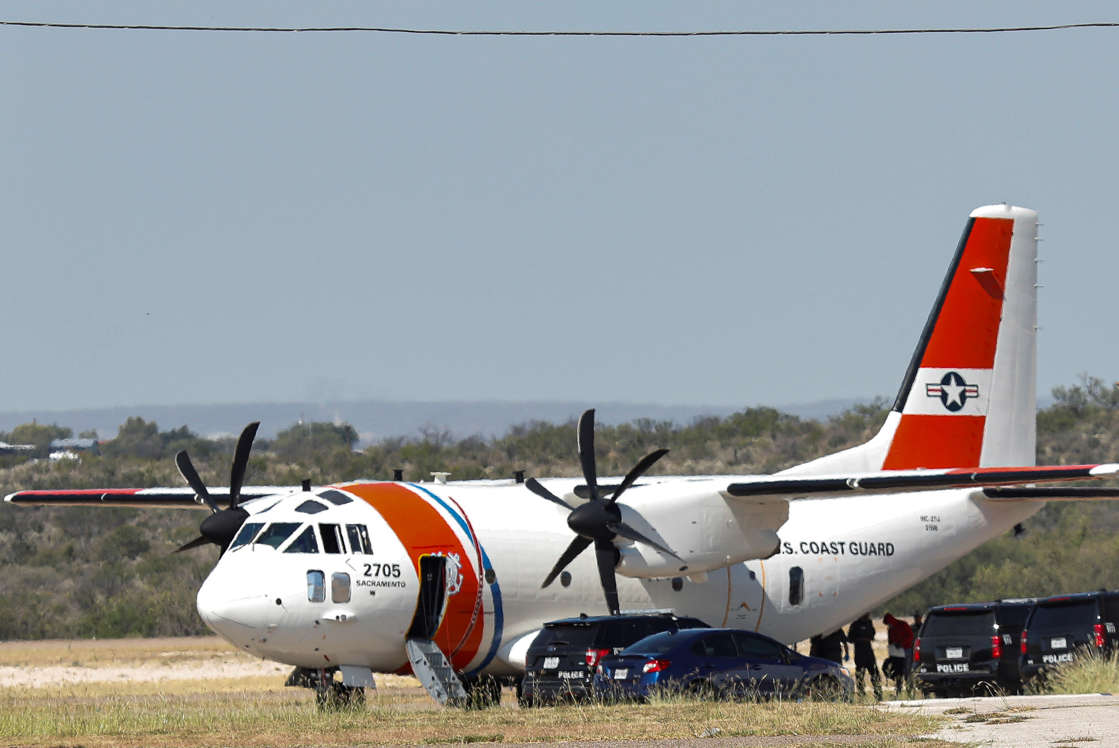
© Reuters/MARCO BELLO People board an U.S. Coast Guard airplane at the Del Rio International Airport as U.S. authorities accelerate removal of migrants at border with Mexico, in Del Rio

Reuters reports that,

“Reuters journalists saw a white bus escorted by U.S. Customs and Border Protection (CBP) agents enter the Del Rio airport, then a group boarding a Coast Guard plane. A police source said the people were migrants and a source familiar with airport operations said the aircraft was heading to El Paso, Texas.”

Coast Guard vessels have routinely been to forcibly return migrants to their home countries. Its one of the more distasteful tasks that come with the job. This is the first time I have heard of our aircraft being used for that purpose (not to say it has never happened before, I don’t know).

This is a C-27J out of CGAS Sacramento. I can almost hear the air crew members saying, “This is not what I signed up for!”

Incidentally, any partisan political statements in the comments will be deleted. Take it somewhere else. 

“Coast Guard Pacific Area hosts North Pacific Coast Guard Forum Summit” –News Release

Winkel Tripel projection, WGS84 datum, central meridian : 150°E. Source Wikipedia Commons, Author: Eric Gaba

PACAREA news release.

united states coast guard

News Release

U.S. Coast Guard Pacific Area
September 17, 2021

Coast Guard Pacific Area hosts North Pacific Coast Guard Forum Summit

Admiral McAllister

Editors’ Note: Click on images to download high resolution version.

ALAMEDA, Calif. – The commander of U.S. Coast Guard Pacific Area, an Alameda-based unit that oversees U.S. Coast Guard activities from the U.S. western states to Asia and from the Arctic to Antarctica, hosted an annual forum summit with coast guard counterparts from five countries Tuesday through Thursday.

During this year’s North Pacific Coast Guard Forum Summit, forum members gathered virtually over the course of three days to discuss topics such as challenges in the North Pacific, the need for coordinated responses to those challenges, and Japan Coast Guard’s best practices and lessons learned while supporting the Tokyo Olympics. 

The North Pacific Coast Guard Forum formed in 2000, and it comprises the coast guard and maritime law enforcement agencies of Canada, China, Japan, South Korea, Russia, and the United States. Its six main areas of focus are combating illegal trafficking, combined operations, emergency response, fisheries enforcement, information exchange, and maritime security. A non-binding memorandum of cooperation all participating nations signed governs it.

“I am thrilled that coast guard leaders from six nations with common maritime interests made time to come together for three days to discuss our countries’ shared challenges in the North Pacific region,” said Vice Adm. Michael F. McAllister, commander, U.S. Coast Guard Pacific Area and U.S. Coast Guard executive agent for the forum. “The forum presents us the invaluable opportunity to communicate best practices, learn from each other and share information on myriad topics including search and rescue, counterdrug, pollution response, illicit trafficking, and illegal, unreported and unregulated fishing, among others.”

By the conclusion of the summit, forum members prepared a renewed memorandum of cooperation for signature by the heads of the delegation and completed many of the final plans for this year’s multi-mission multilateral exercise, which the Canadian Coast Guard plans to host virtually in October.

On a rotating basis, each forum nation hosts two annual weeklong multi-lateral meetings. The first is an experts meeting held each spring and the second is the summit meeting in the fall.  The multi-mission multilateral exercise is the exercise component of the forum. At the conclusion of this year’s summit, South Korea assumed the host nation duties for 2022. 

,

USCGC Munro trains with Royal Australian Navy

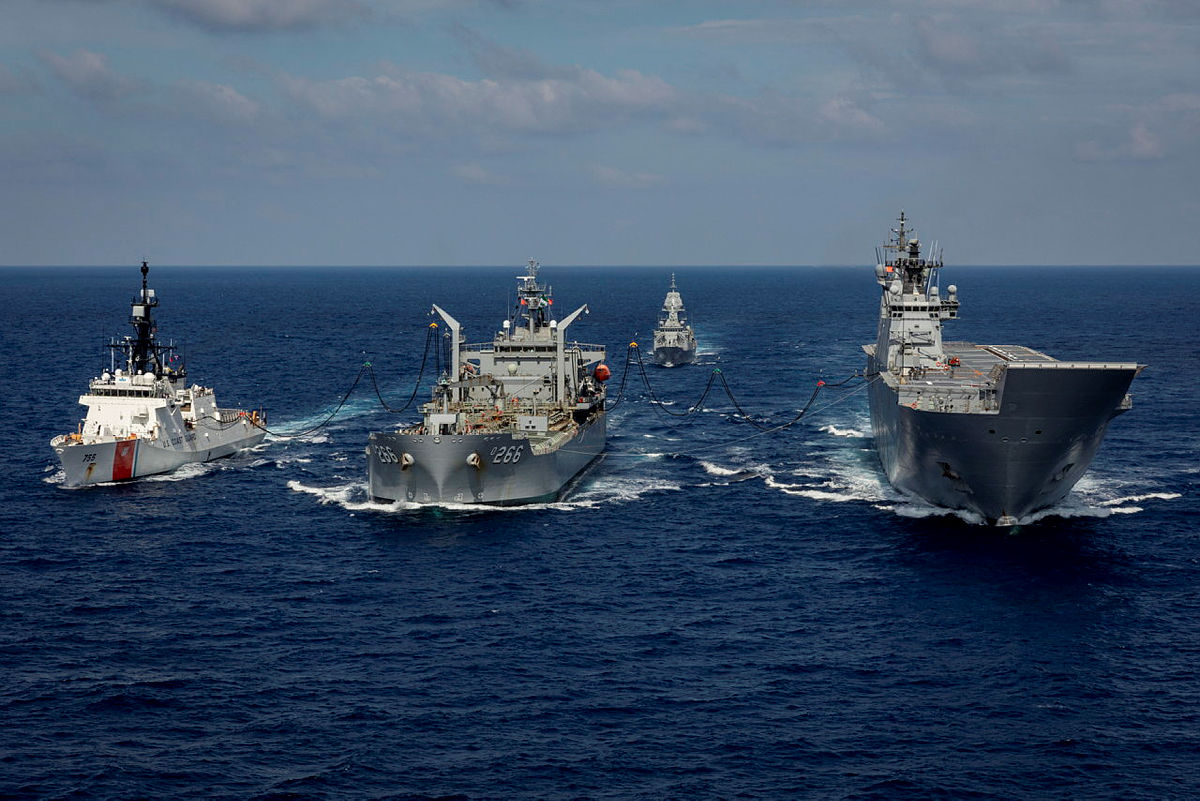
HMAS Sirius conducts a dual replenishment at sea with HMAS Canberra and USCG Cutter Munro as HMAS Anzac sails behind, during Indo-Pacific Endeavour 2021.

Sounds like Munro is having an interesting and unusual deployment, though these WestPac deployments are getting more common. Below is a Pacific Area news release.

united states coast guard

News Release

U.S. Coast Guard Pacific Area
Sept. 16, 2021

U.S. Coast Guard cutter engages in maritime training with Royal Australian Navy

Photo of USCG Munro and Royal Australian Navy Photo of USCG Munro and Royal Australian Navy
Photo of USCGC Munro and Royal Australian Navy Photo of USCGC Munro and Royal Australian Navy

Editors’ Note: Photos courtesy of Royal Australian Navy. Click on images to download high resolution versions.

ALAMEDA, Calif. — U.S. Coast Guard members aboard the Alameda-based Coast Guard Cutter Munro (WMSL 755) participated in a cooperative three-day at-sea exercise with the Royal Australian Navy in the South China Sea Saturday through Monday.

The joint training engagement included joint operations, professional exchanges, and multi-unit maneuvering at sea to strengthen interoperability between the U.S. Coast Guard and Royal Australian Navy.

“These at-sea engagements with our long-standing partners in the Indo-Pacific region provided an excellent joint training opportunity for the crew,” said Munro’s Commanding Officer Capt. Blake Novak. “Enhancing cooperation and building trust strengthens our relationship with the Royal Australian Navy while expanding our regional security cooperation initiatives.”

The U.S. Coast Guard has a long history of cooperation with the Royal Australian Navy. The U.S. and Australia, along with New Zealand and France, make up the Pacific Quadrilateral Defense Coordinating Group or P-QUAD. P-QUAD endeavors to enhance maritime security in the Western and Central Pacific Ocean in partnership with the Pacific Island Countries through organizations such as the Fisheries Forum Agency.

“The United States and Australia have deep and abiding interests throughout the Pacific,” said Vice Adm. Michael F. McAllister, commander, U.S. Coast Guard Pacific Area. “As leaders in maritime safety and security, our forces are dedicated to upholding regional sovereignty, stability and security. Through joint operations with Australia, we strengthen our interoperability with an ally deeply committed to promote international rules and norms within the Indo-Pacific.”

“The Royal Australian Navy has enjoyed multiple opportunities throughout the year to work with the United States in the Indo-Pacific,” said Capt. David Teitzel, Royal Australian Navy, Commander Task Group 635.3. “Being able to operate with a United States Coast Guard cutter like USCGC Munro has strengthened how we interoperate and boosts how we work together in the interest of regional security. I thank Munro for their time in-company and we look forward to sailing with the United States Coast Guard again.”

Munro, a 418-foot national security cutter, departed its homeport of Alameda in July for a months-long deployment to the Western Pacific. Operating under the tactical control of the U.S. 7th Fleet, the cutter and crew are engaging in professional exchanges and capacity-building exercises with partner nations, patrolling and conducting operations as directed.

National security cutters like Munro feature advanced command and control capabilities, aviation support facilities, stern cutter boat launch and increased endurance for long-range patrols, enabling the crews to disrupt threats to national security further offshore.

As both a federal law enforcement agency and an armed force, the U.S. Coast Guard is uniquely positioned to conduct defense operations in support of combatant commanders. The service routinely provides forces in joint military operations worldwide, including the deployment of cutters, boats, aircraft and deployable specialized forces.

Additional photos of the exercise provided courtesy of the Royal Australian Navy are available here.

“‘Great News’ For Great Lakes as House Transportation and Infrastructure Committee Approves $1 Billion for U.S. Coast Guard Infrastructure, Heavy Icebreaker” –gCaptain

Launch of USCGC Mackinaw (WLBB-30) on April 2, 2005. Photo by Peter J. Markham.

gCaptain reports,

The U.S. House Transportation and Infrastructure Committee on Tuesday approved $1 billion for U.S. Coast Guard shore side infrastructure nationwide and $350 million for a heavy icebreaker for the Great Lakes.

The funds were approved as part of its budget reconciliation bill, an action that the Great Lake Maritime Task Force (GLMTF) called “great news for the Great Lakes.”

Its probably too early to assume this will actually happen, but so far, so good, particularly with regard to the infrastructure portion.

As for the Icebreaker, what it is talking about is an icebreaker at least as capable a USCGC Mackinaw. What we might get is a second Mackinaw, but we could do better. This might be an opportunity to prototype the Arctic Security Cutter.

The Great Lakes contingent in Congress don’t seem to want any connection between the “Heavy” (really light) Great Lakes Icebreaker and the Artic Security Cutter, but they would be smart to consider the benefits.

First USCGC Mackinaw was commissioned in 2006. That may look pretty new now, but by the time the new Great Lakes Icebreaker is completed, it will be 20 years old. Looking further down the timeline, it will need to be replaced long before this second Great Lakes breaker. So some time in the future they will, presumably, have to again seek funding for a one-off unique design for the Lakes.

If the Arctic Security Cutter can transit the locks into the Great Lakes, they could supplement icebreaking in the Lakes and provide a ready replacement when the Mackinaw inevitably reaches the end of it life.

Combining the programs would also reduce the average unit price and would probably mean a more capable breaker for the Lakes than might otherwise have been possible.

“Smugglers Fake Ship Identities to Evade North Korea Sanctions” –MarineLink

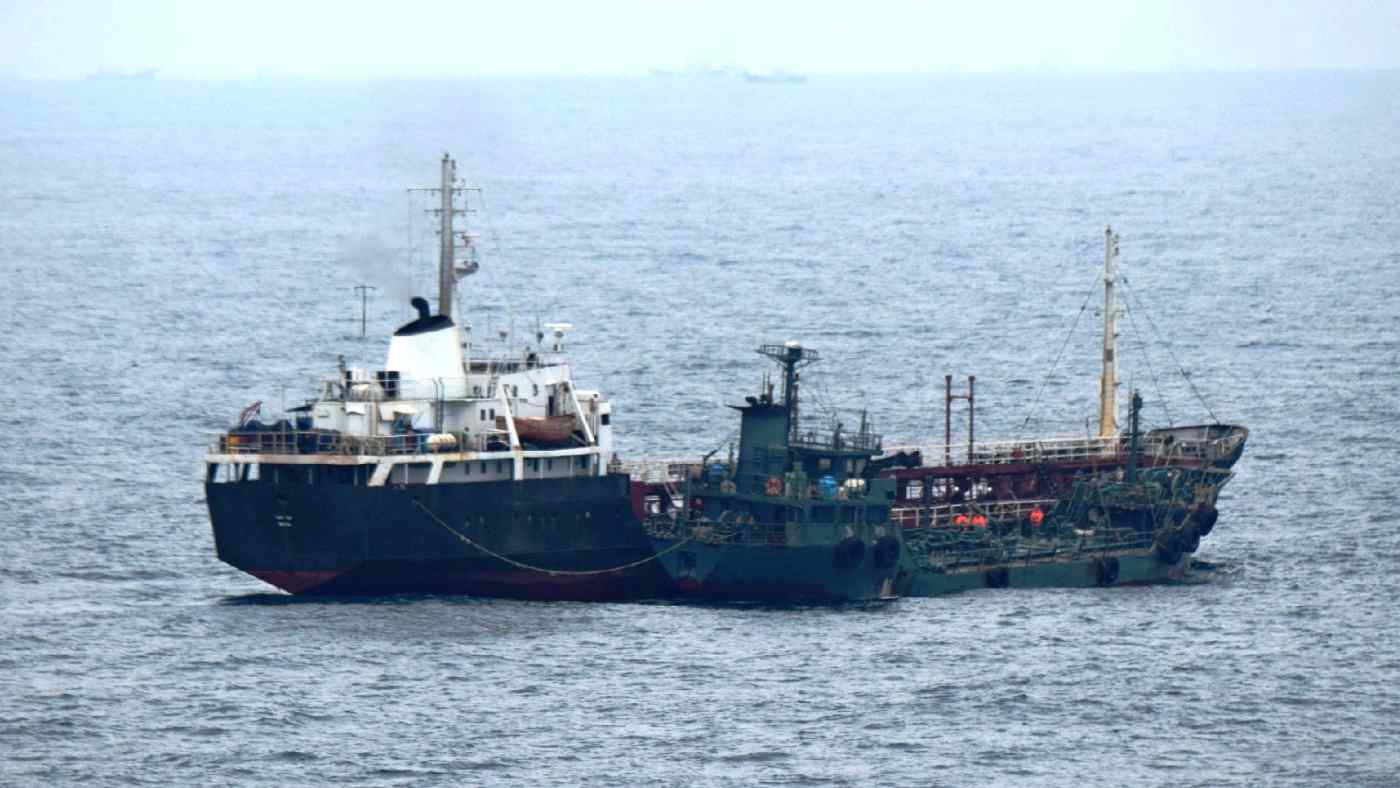
This photo provided by Japan’s Maritime Self-Defense Force shows an apparent ship-to-ship transfer involving a North Korean tanker in the East China Sea.

MarineLink reports on a study that found that,

“Smugglers suspected of evading sanctions on North Korea have turned to schemes to create fraudulent identities for sanctioned ships…the group’s case studies of two ships allegedly involved in evading North Korea sanctions show how the IMO registration process can be hijacked to issue a registered identity to a non-existent vessel, which in turn can be used to disguise the identity of other ships, the report said.”