“Sea Buoys: Solid Templates In Navy’s Hyped Race For Maritime Autonomy” –Forbes

Forbes brings us a reality check on the future of Unmanned Surface and Subsurface systems, including considerations that apply to the Coast Guard as well as the DOD.

At sea, robots certainly offer the potential for lots of new and exciting capabilities. But that will mean nothing, if, in the race to chase new capabilities, the Pentagon overlooks the harsh operational realities facing any brave robot sent out to cruise our big and increasingly contested oceans all alone.

This is probably less of a problem for the Coast Guard, because as a very conservative and tight fisted organization, it is less inclined to overreach, and tends to allow other services to go through the development process before jumping in. We really have a very small R&D budget.

There is a lot of information in the article about the successes and failures (that we don’t hear so much abour) of the Saildrone program. A program the author holds in high regard.

As the principle support organization for buoys, our own and NOAA’s, perhaps the Coast Guard has experience that the Navy might benefit from.

I do have one question. If the Navy has engines that can run a Large Unmanned Surface Vessel for months without anyone on watch and without maintenance, why haven’t they put them on manned vessels?

Perhaps a second question. I was surprised to see that vandalism was such a problem for our buoys. If we have warships with no one on board, what is to stop the many bored Chinese fisherman from vandalizing our unmanned warships?

“PteroDynamics Secures Contract with US Navy to Deliver Cargo VTOL Aircraft” –News Release

Below is a news release from PteroDynamics.

This looks like it might be an interesting aircraft type to operate from cutters. If it can carry cargo it can also carry sensors.

A small, unmanned version might provide patrol boats with search and identification capabilities currently available only to much larger cutters.

A larger version might replace helicopters while providing greater range and speed.

An even larger version, operating from shore or the largest cutters, might combine both search and rescue functions now provided by fixed wing search aircraft and rotary wing rescue aircraft. Combining those functions probably should be a long term Coast Guard objective. Not that the Coast Guard can fund manned aircraft development, but it seems likely the capability will be developed.

Apparently the Navy thinks the concept is promising enough to put at least some money into small prototypes.

COLORADO SPRINGS, Colo.–PteroDynamics, an aircraft design and manufacturing company that develops innovative vertical take-off and landing (VTOL) aircraft, is today announcing it has secured a contract with Naval Air Warfare Center Aircraft Division (NAWCAD) to deliver 3 VTOL prototypes for the Blue Water Maritime Logistics UAS (BWUAS) program.

“Our design is well suited for operations on ships where windy conditions and tight spaces challenge other VTOL aircraft during takeoffs and landings.”

In 2018, Military Sealift Command and Fleet Forces Command identified a need for the United States Navy to develop a capability to autonomously deliver cargo with an unmanned aerial system (UAS) to and from ships at sea. Their analysis found that 90% of critical repair cargo delivered at sea by helicopters and V-22 aircraft weighed less than 50 pounds. A VTOL UAS can fill this critical need and free the manned aircraft to perform other higher priority missions.

“We are honored to be selected for this important project,” said Matthew Graczyk, PteroDynamics’ CEO. “This contract is the start of an important partnership, and we look forward to delivering the prototypes to NAWCAD.”

“This is an exciting milestone for our distinctive VTOL aircraft,” added Val Petrov, PhD, PteroDynamics’ founder and CTO. “Our design is well suited for operations on ships where windy conditions and tight spaces challenge other VTOL aircraft during takeoffs and landings.”

“Using unmanned, autonomous aircraft for delivery of these critical payloads is an important capability for the Navy to have,” said Blue Water’s project lead, Bill Macchione. “The innovative design of PteroDynamics offers significant potential for both military and civilian missions.”

About PteroDynamics

PteroDynamics is an aircraft design and manufacturing company that has developed a novel VTOL aircraft design that folds its wings during flight to transition between rotorcraft and fixed-wing configurations. Protected by three issued and five pending U.S. and international patents, Transwing® aircraft have improved controllability in takeoff and landing and typically require 1/3 of the ground footprint as compared to other aircraft with the same wingspan. Transwing®’s clean aerodynamic shape also allows it to fly faster and further than competitive designs. PteroDynamics is venture-backed by Kairos Ventures.

About NAWCAD

NAWCAD conducts research, development, test, evaluation, and sustainment for all United States Navy and United States Marine Corps aircraft and aircraft systems. Its diverse workforce of more than 10,000 military, civilian, and contractor engineers, scientists, testers, and other professionals support an evolving battlespace through research, development, test, and evaluation of both fielded and not-yet fielded naval and marine corps platforms and technology. Headquartered in Patuxent River, Maryland, the warfare center collaborates across its sites in St. Inigoes, Maryland; Lakehurst, New Jersey; and Orlando, Florida to ensure America’s warfighter always goes into conflict with significant advantage.

Contacts

Kayla Jones
Media@PteroDynamics.com


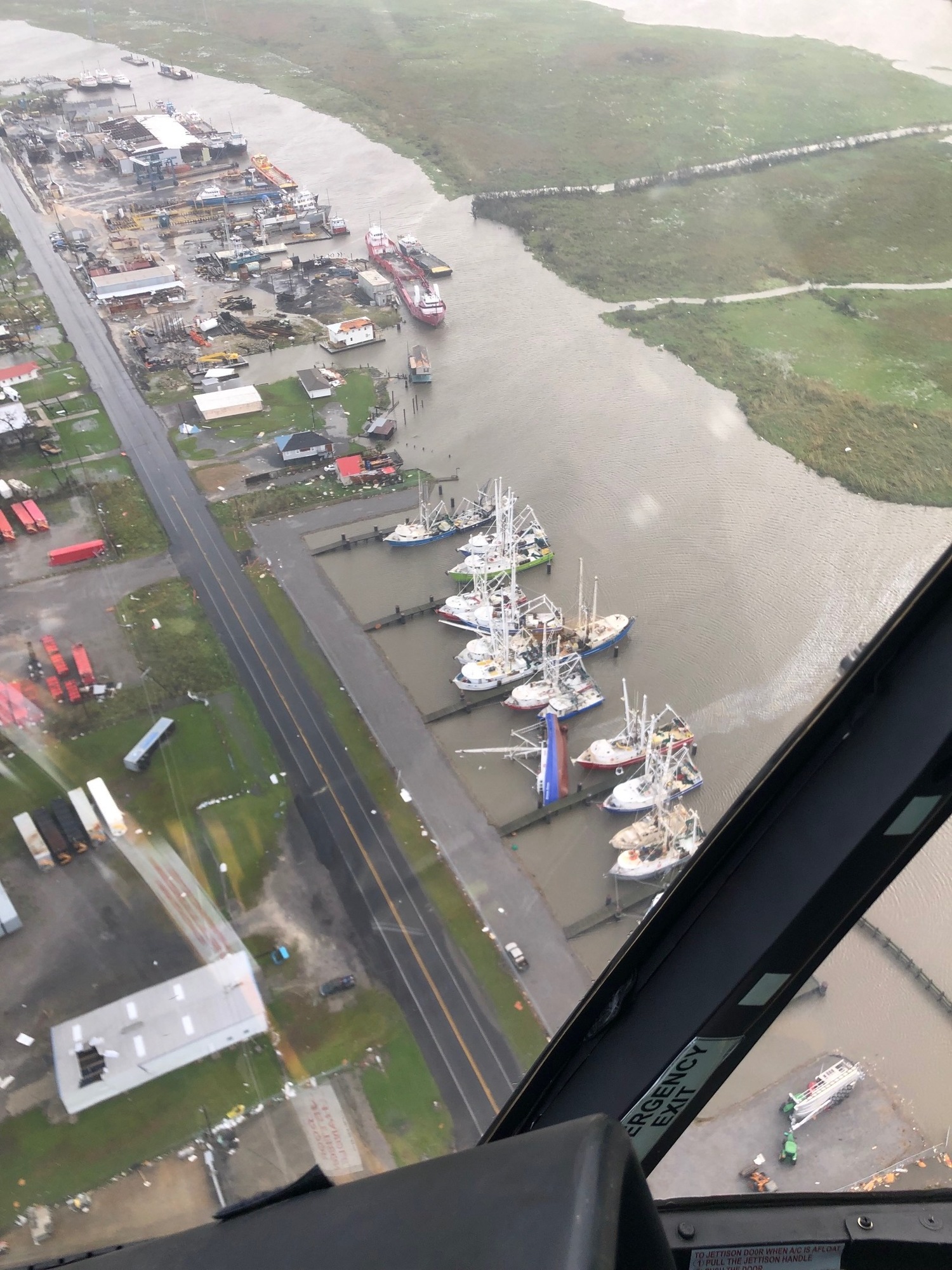
“Coast Guard conducts Hurricane Ida post-storm overflights along the Gulf Coast” –D8

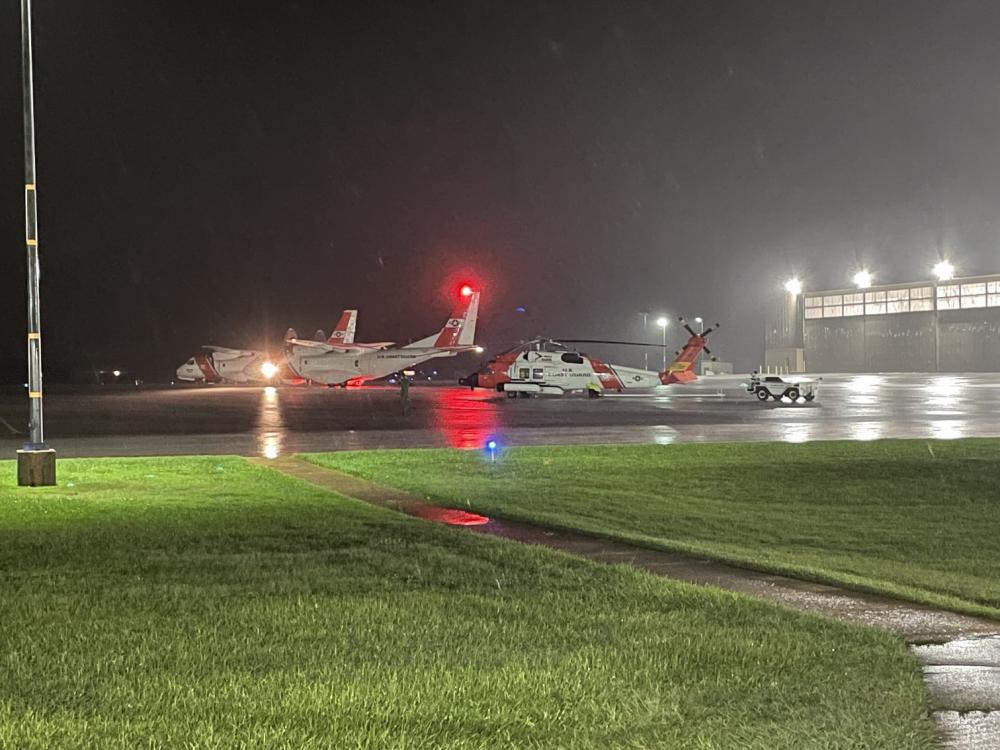
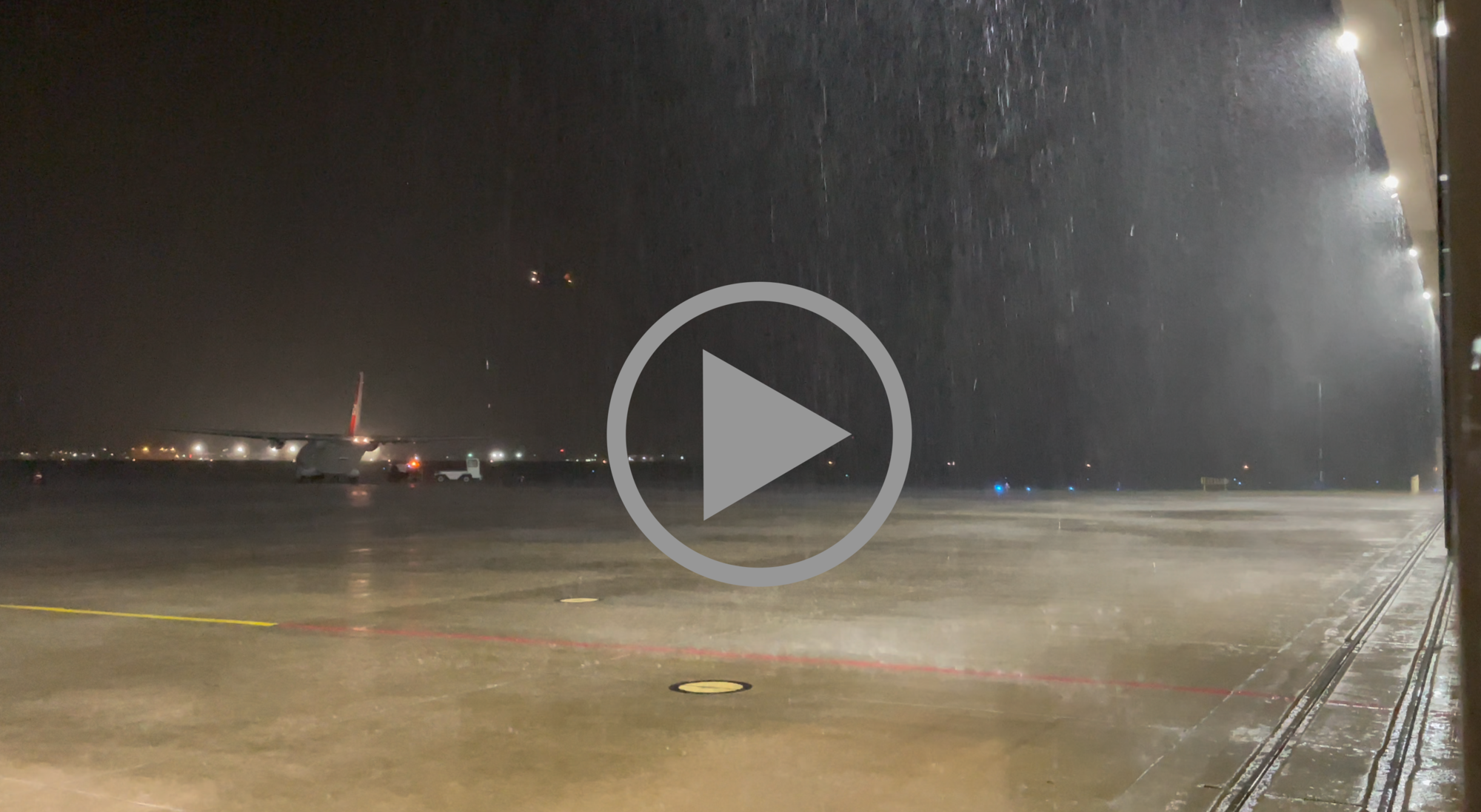
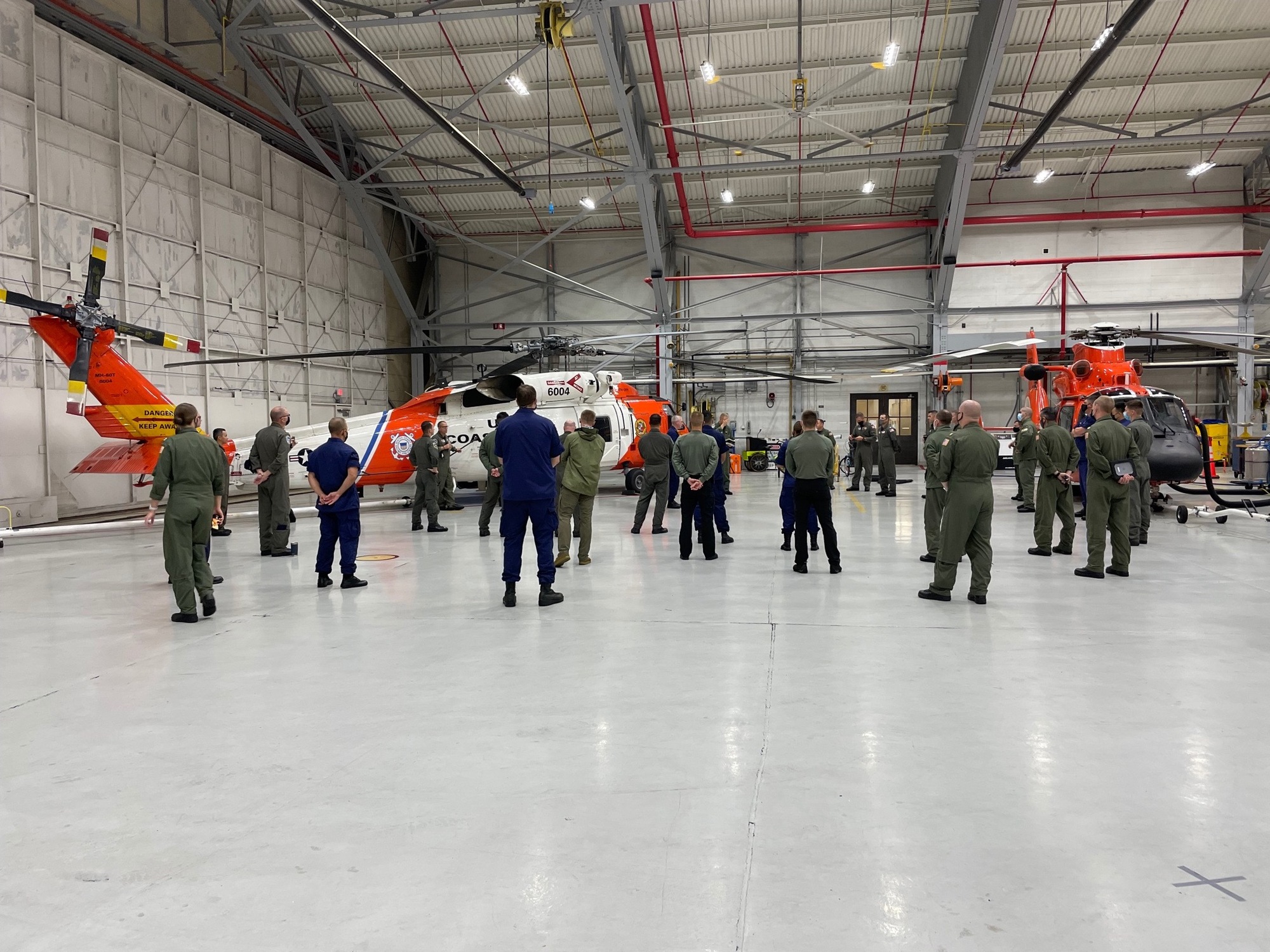
The Coast Guard conducts Hurricane Ida post-storm overflights along the Gulf Coast on August 30, 2020. Assets conducted critical incident search and rescue overflights and assessing for damage along the Gulf Coast Region of Louisiana following Hurricane Ida. (U.S. Coast Guard courtesy photo)

Passing along a Coast Guard District 8 news release.

united states coast guard


News Release

U.S. Coast Guard 8th District Heartland

Coast Guard conducts Hurricane Ida post-storm overflights along the Gulf Coast Image

Image Image 

Image Image 

Editors’ Note: Click on images to download high-resolution versions. 

NEW ORLEANS —The Coast Guard is conducting critical incident search and rescue overflights and assessing for damage Monday along the Gulf Coast Region of Louisiana following Hurricane Ida.

The Coast Guard has brought to bear more than 28 aviation assets and nearly 21 shallow-water response assets to respond to flooded and damaged areas.

“The Coast Guard will continue to provide search and rescue capabilities, assess the damage done by Hurricane Ida, repair aids-to-navigation, and ensure the ports along the Gulf Coast can be safely reopened for the flow of maritime commerce,” said Capt. Tracy Phillips, area commander for the Ida response. 

For more information follow us on Facebook and Twitter.

“U.S., Japan Coast Guards train together in East China Sea” –Pacific Area

U.S. Coast Guard Cutter Munro and Japan Coast Guard Patrol Vessel Large Aso, transit together in formation during a maritime engagement in the East China Sea Aug. 25, 2021. U.S. Coast Guard members aboard the Munro deployed to the Western Pacific Ocean to strengthen alliances and partnerships and improve maritime governance and security in the region. (Photo courtesy of Japan Coast Guard)

Information on the Japanese Cutter, Aso (PL-41), referenced in the PACAREA news release below is available here. Aso is larger than a 210 but smaller than a 270, probably about 1,200 tons full load.  She is propelled by four diesels and four water jets and capable of over 30 knots. She is armed with a 40mm/70 and has a crew of 30. Reportedly Japan is building six similar but slightly larger vessels for the Vietnamese Coast Guard.

united states coast guard

News Release

U.S. Coast Guard Pacific Area

U.S., Japan Coast Guards train together in East China Sea

Photo of Coast Guard ships Photo of Coast Guard ships Photo of Coast Guard ships

Editors’ Note: Click on images to download high resolution versions.

YOKOSUKA, Japan — U.S. Coast Guard members aboard the Alameda-based Coast Guard Cutter Munro (WMSL 755) participated in a cooperative two-day deployment with Japan Coast Guard members aboard the Japan Coast Guard ship Aso in the East China Sea Tuesday and Wednesday.

The engagement followed Munro’s port visit in Sasebo, Japan, Aug. 20-24, and included crew exchanges; two-ship communication, formation, maneuvering and navigation exercises; joint and cooperative maritime presence; maritime law enforcement training and exercises; and several variations of large ship and small boat operations.

“These at-sea engagements with one of our longest-standing partners in the Indo-Pacific region provided excellent opportunities for our crews to train together and learn from each other, further strengthening our alliances and maritime partnerships,” said Munro‘s Commanding Officer Capt. Blake Novak. “Conducting operations and exercises leverages our strong and trusted relationships while expanding our regional security cooperation initiatives and bolstering collaboration in the Indo-Pacific.”

The U.S. and Japan Coast Guards have a long history of cooperation and several recent engagements. In June 2021, the sea services conducted search and rescue training together in Honolulu before teaming up to search for a missing free diver off Kauai, Hawaii. Earlier this year, the U.S. Coast Guard Cutter Kimball and Japan Coast Guard Ship Akitsushima conducted drills together near the Ogasawara Islands of Japan alongside helicopters and unmanned aerial vehicles to practice interdicting simulated foreign vessels operating illegally inside Japanese waters.

“Partnering with like-minded maritime forces to cross train and expand multi-nation expertise in search and rescue, maritime environmental protection and maritime law enforcement allows our nations to promote regional stability, confront malign activities and threats, and uphold the international rules-based-order underpinning our shared security and prosperity,” said Vice Adm. Michael F. McAllister, commander U.S. Coast Guard Pacific Area.

Munro, a 418-foot national security cutter, departed its homeport of Alameda for a months-long deployment to the Western Pacific. Operating under the tactical control of U.S. 7th Fleet, the cutter and crew are engaging in cooperative maritime activities, professional exchanges, and capacity-building exercises with partner nations and will patrol and conduct operations as directed.

As both a federal law enforcement agency and an armed force, the U.S. Coast Guard routinely deploys worldwide its cutters, boats, aircraft and deployable specialized forces.

The Naval Service does not compete, deter, or fight alone. The Navy, Marine Corps and Coast Guard team are an integral part of the Joint Force and work closely with allies, partners, and other government agencies.

More photos from Munro’s Western Pacific deployment are available here. Subscribe here to receive notifications when new photos are added.


Remember the ALaMO?

We have been following the development of the ALaMO guided round for the 57mm Mk110 for some time. This round is expected to equip the National Security Cutters and Offshore Patrol Cutters in addition to the Littoral Combat Ships.

MilitaryLeak.Com reports on the progress of the program. 

“The MK 332 Mod 0 High Explosive 4 Bolt Guided (HE-4G) is a low-cost 57 mm guided smart ammunition intended for use on the Navy’s Littoral Combat Ship and new Fast Frigate, as well as the U.S. Coast Guard’s National Security and Offshore Patrol Cutters. The ALaMO Program qualifies the 57 mm MK 332 Mod 0 High Explosive, 4-Bolt Guided (HE-4G) Cartridge for the United States Navy (U.S. Navy ). Completion of the (Critical Design Report) (CDR) phase allows the program to progress to qualification testing, munition certification and transition to production. L3 Mustang was competing against BAE Systems and its ORKA 57 mm guided smart ammunition.”

The video above accompanied the report. It is from 2018, but still provides good information. Notably the company representative makes no claims for the ALaMO round as an anti-aircraft round, although I have seen claims for its use against UAS. It is primarily intended as an anti-surface round, particularly for use against swarming surface craft.

“Taming Atalanta” –US Naval Institute, Naval History Magazine

Rum Runner Atalanta and Coast Guard Destroyer Ericsson (CG-5)

The US Naval Institute has a nice piece of Coast Guard history available from the latest Naval History magazine. It concerns a very fast, armored rum runner, and how it was ultimately brought to heal.

There is also a story in the same issue of Naval History about Alaska Patrol fisheries enforcement by USCGC Confidence in the 1970s, probably 1975-77. I had left Confidence in 1974.

USCGC Confidence (WMEC619) on Alaska Patrol. Photo by Commander Tom Martin, U.S. Coast Guard (Retired)

Two stories from the “Old Days.”

“SOLVING COMMUNICATIONS GAPS IN THE ARCTIC WITH BALLOONS” –CIMSEC

A NASA long duration balloon is prepared for launch on Antarctica’s Ross Ice Shelf near McMurdo Station in 2004. (NASA photo)

CIMSEC provides a discussion of the possibility of using high altitude balloons as communications links in the Arctic.

Even if balloons are not the answer, the article at least does an excellent job of outlining the difficulties of communicating in the Arctic (or Antarctic).

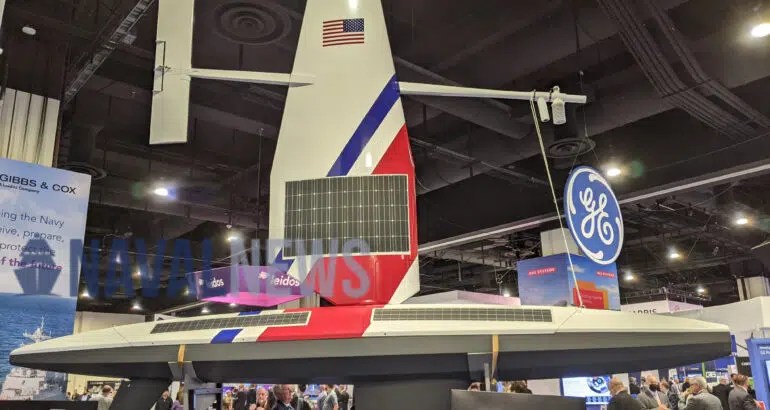
“Saildrone Showcased Its USVs At Sea Air Space 2021 For The First Time” –Naval News

Saildrone is a company that provides Unmanned Surface Vessels, powered primarily by wind and solar. The Coast Guard has already been experimenting with some of the these to provide Maritime Domain Awareness.

Naval News reports on their presence at Sea Air Space 2021, including a new, much larger, 72 foot long class of saildrones.

Meanwhile the US Naval Institute News Service reports these “Uncrewed” surface vessels might be used for ASW, towing passive sensors.

Video: Northrop Grumman Showcases Very Light Weight Torpedo At Sea Air Space 2021″ –Naval News

Our friends at Naval News have an update on the Very Light Weight Torpedo program. It seems to be progressing rapidly. Apparently this is seen as an urgent requirement.

The discussion in the video talked about the anti-torpedo and anti-submarine capabilities, but no discussion of use against surface targets. I suspect this is because those capabilities are the primary selling points for the Navy. It may not be that it is incapable of attacking surface vessels, which should be easier targets.

We talked about this weapon earlier, in greater depth, including potential Coast Guard use.

Full scale production should drive to price down to a point, it might even find its way into the Coast Guard.

(There does seem to be an error in the written portion of the Naval News post in that it says the diameter of the weapon is 121 mm while the video discussion indicates 171 mm. The figures I had seen earlier were:  6.75″ in diameter (171.45mm), about 85″ in length, and weighs about 220 pounds or about 100 kilos).