CRS’s “Coast Guard Cutter Procurement: Background and Issues for Congress” –an Update

US Capital West Side, by Martin Falbisoner

It has been seven months since we last looked at this Congressional Research Service document. (Clicking on this link will always take you to the latest version of the report). Since then, there have been six revisions, with the latest Oct. 14, 2020.

Notable changes include report of the issuance of a draft RFP for the follow-on Offshore Patrol Cutter competition (page 12)

There is no report of any action by the Senate, but the House has been working on two bills that could effect Cutter procurement, the FY2021 DHS Appropriations Act (H.R. 7669) (page 23) and the FY2021 National Defense Authorization Act (H.R. 6395) (pages 23-26)

H.R. 7669, if made into law, would add four Fast Response Cutters to the FY2021 budget, bumping the FRC line item from $20M to $260M and would not include the proposed rescission of $70,000,000 of the $100,500,000 provided in fiscal year 2020 for the acquisition of long lead time materials for the construction of a twelfth National Security Cutter, leaving the door open for NSC#12.

Division H of H.R. 6395 is the Elijah E. Cummings Coast Guard Authorization Act of 2020:

  • Section 8004 (page 23) would authorize NSC #12,
  • Section 8012 (page 24) would authorize four Webber class Fast Response Cutters (page 24)
  • SEC. 9211 (page 24) addresses modification of acquisition process and procedures, specifically the “Extraordinary relief” granted Eastern.
  • SEC. 9422 (page 25) requires a report on the combination of Fast Response Cutters, Offshore Patrol Cutters, and National Security Cutters necessary to carry out Coast Guard missions not later than 90 days after the date of the enactment of this Act. Sounds like a revisit to at least parts of the “Fleet Mix Study.”
  • SEC. 11301. Directs that the Coast Guard better align its mission priorities  to direct more effort to the Arctic and develop capabilities to meet the growing array of challenges in the region; including providing a greater show of Coast Guard forces capable of providing a persistent presence. Additionally it directs that the Coast Guard must avoid overextending operational assets for remote international missions at the cost of dedicated focus on this domestic area of responsibility (meaning the Arctic).

“SEA CONTROL 210 – THE SPACE FORCE AND THE COAST GUARD WITH DR. STEVE GOFF” –CIMSEC

Just passing this along for anyone who might be interested. 

SEA CONTROL 210 – THE SPACE FORCE AND THE COAST GUARD WITH DR. STEVE GOFF

By Andrea Howard

Sea Control welcomes Dr. Steve Goff, an Emergency Management Specialist for the United States Coast Guard, to discuss the maritime forces’ budding relationship with the newest arm of the Department of Defense: the Space Force!

Sea Control 210 – The Space Force and the Coast Guard with Dr. Steve Goff

Links

The U.S. Coast Guard and the U.S. Space Force: An Essential Partnership in Maritime Security,” Dr. Steven Goff, U.S. Naval Institute Blog, October 13, 2020.
The Guardians of Space: Organizing America’s Space Assets for the Twenty-First Century,” Cynthia McKinley, Aerospace Power Journal, January 2000.
Andrea Howard is a Co-Host of the Sea Control podcast. Contact the podcast team at Seacontrol@cimsec.org.

Shed the Freedom Class LCS, Build FFGs and Navalized Webber Class?

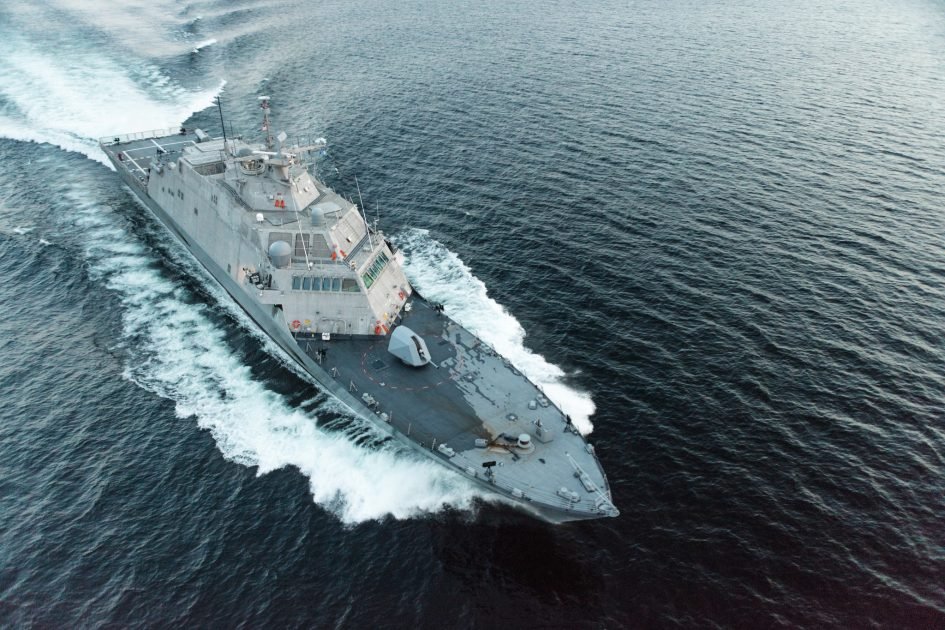
Littoral combat ship Little Rock (LCS 9) is underway during a high-speed run in Lake Michigan during acceptance trials. Lockheed Martin Photo

Not that I think it is going to happen, but Forbes has a proposal, “Now Is The Perfect Time To Sink The Freedom Class Littoral Combat Ship,” by Craig Hooper. He suggests the Navy end its long embarrassing association with the Freedom class LCS, handing them over to Foreign Navies who might be able to use them. The Navy could then accelerate introduction of the new FFG that are to be built at Marinette which is currently building the Freedom class. If we really need more LCS, we could continue construction of Austal’s more successful Independence class. or

“Alternatively, the Navy could fund a smaller, simpler patrol boat. The U.S. Coast Guard’s cost-effective Sentinel class Fast Response Cutter is already in the field, demonstrating value every day—with about 40 already in service, these reliable, 154-foot ships are doing everything that the Freedom class vessels are not. Sentinel class Fast Response Cutters are deploying throughout the Pacific, forward-basing in Hawaii and Guam, and 6 of the ultimately 64-hull fleet will soon operate out of Bahrain. They may even be based in deepest parts of the American Pacific, operating out of American Samoa. A navalized version of this useful patrol ship—potentially leveraging the powerful F-35 radar system and other useful, off-the-shelf systems—can be whipped up in almost no time, quickly replacing the Freedom class ships currently based in Mayport Florida with a lower-cost, more functional and more strategically-useful platform.”


“Coast Guard accepts ninth national security cutter” –CG-9

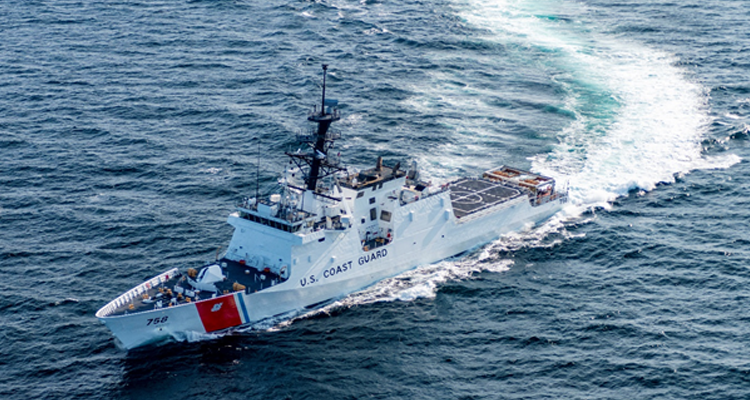
Ingalls Shipbuilding successfully completed acceptance trials for the Coast Guard’s ninth national security cutter (NSC), Stone, in October 2020. NSC Stone was accepted Nov. 9, 2020, by the Coast Guard in a socially distanced ceremony. Photo by Lance Davis of Huntington Ingalls Industries.

The Acquisitions Directorate (CG-9) reports that the ninth Bertholf class cutter has been accepted.

“Stone is scheduled for commissioning in February 2021 at its Charleston, South Carolina, homeport, also home to cutters Hamilton and James.”

“PROMULGATION OF THE COAST GUARD CUTTER SEAMANSHIP MANUAL” –Commandant Note

CARIBBEAN SEA
09.04.2019
Courtesy Photo
U.S. Coast Guard District 7 PADET Jacksonville
Subscribe 19
The Coast Guard Cutter James conducts Hurricane Dorian relief operations alongside the Coast Guard Cutter Paul Clark in the Caribbean Sea, Sept. 6, 2019. During their 62-day counter-drug patrol, the James’ crew, along with members from Tactical Law Enforcement Team-South, Helicopter Interdiction Tactical Squadron, Cryptologic Direct Support Element and multiple partner agencies, contributed to the interdiction of 7 drug-smuggling vessels and were responsible for the seizure of more than 12,677 pounds of cocaine and 4,085 pounds of marijuana bound for the United States. (U.S. Coast Guard photo courtesy of Coast Guard Cutter James)

Below is a Commandant Notice promulgating a new publication, the “COAST GUARD CUTTER SEAMANSHIP MANUAL”. The link to the internet version only takes you to a catalog of publications and it takes some effort to actually find the manual, so I am providing a direct link

The manual is quite comprehensive, 93 pages, and covers a lot and is searchable. “Control F” is your friend.

united states coast guard

ALCOAST COMMANDANT NOTICE                           CANCEL DATE  08 NOV 2021

R 091334 NOV 20
FM COMDT COGARD WASHINGTON DC//CG-7//
TO ALCOAST
UNCLAS //N03120//
ACN 131/20
SUBJ:  PROMULGATION OF THE COAST GUARD CUTTER SEAMANSHIP MANUAL
A. Coast Guard Astern Fueling At Sea (AFAS), COMDTINST M3120.8
B. Shipboard Launch and Recovery Procedures Manual, COMDTINST M3120.6
C. Cutter Surface Swimmer Program, COMDTINST 16134.2D
D. Coast Guard Cutter Seamanship Manual, COMDTINST M3120.9
1. This ACN announces the cancellation of REFs (A) through (C), and the
promulgation of REF (D).
2. REF (D) prescribes policy and doctrine for cutter seamanship. Corresponding
Tactics, Techniques and Procedures (TTP) are listed throughout as references. 
3. No paper distribution will be made of this Manual. This Manual is available
on CGPortal: https://cg.portal.uscg.mil/library/directives/SitePages/Home.aspx
and the Internet at: http://www.dcms.uscg.mil/directives/.
4. For recommendations of changes to this Manual, contact the Office of Cutter
Forces (CG-751) via email: HQS-SMB-CG-751-CMD@USCG.MIL.
5. Released by RDML John W. Mauger, Assistant Commandant for Capability.
6. Internet release is authorized.

“Rare Fully-Submersible Narco Submarine Captured In Colombia” –Covert Shores

Apparently fully submersible narco-sub. Source: Covert Shores

H. I. Sutton’s “Covert Shores” reports discovery of an apparently fully submersible narco-sub.

 “Early indications are that it is a fully-electric device. It may have been intended to be towed some of the way.”

The Covert Shores post has some original art work that better reveals the configuration along with more photos.

Bulgaria Selects Lürssen to Provide OPV with ASW and ASuW Capability

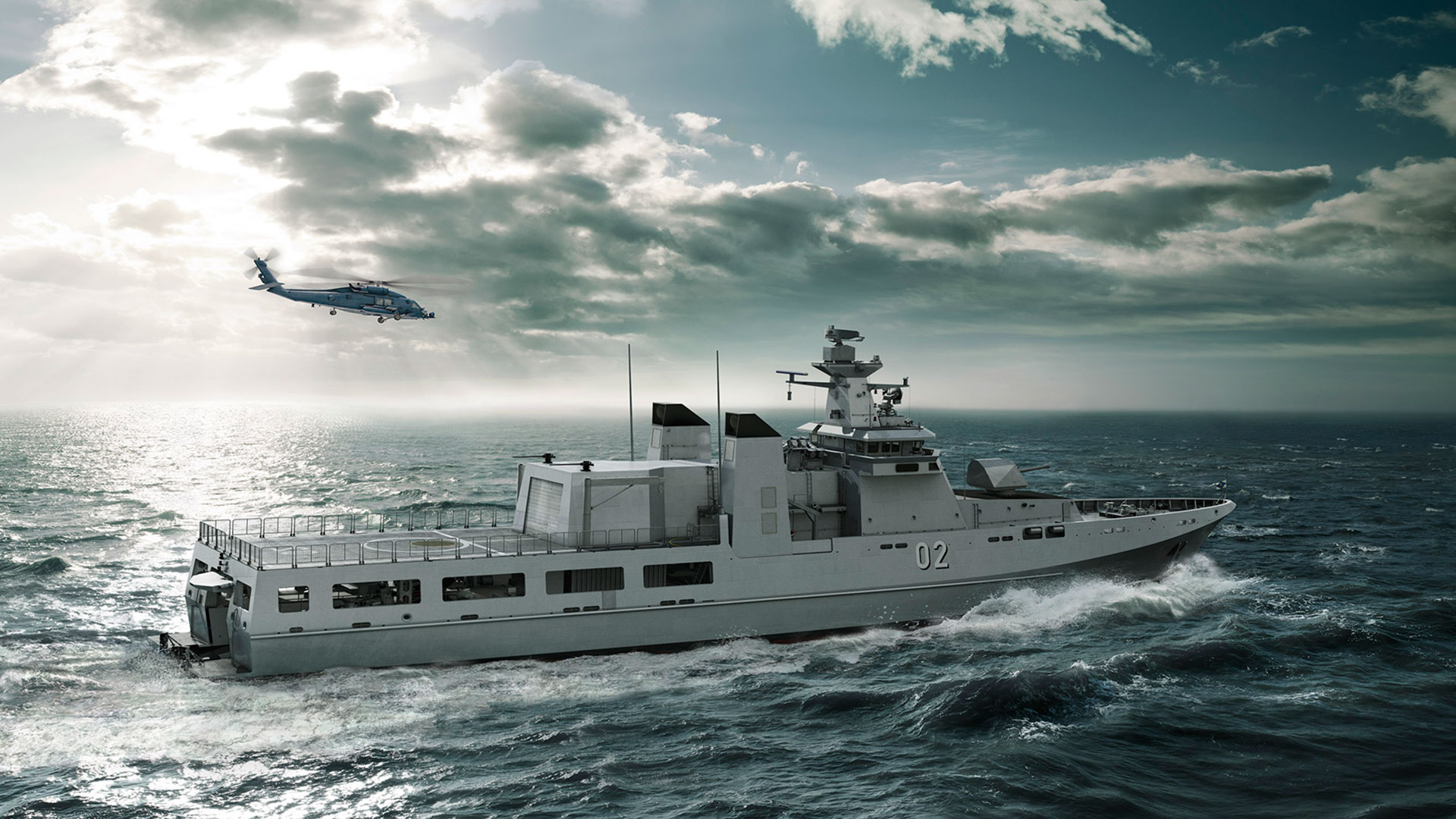
Lürssen 90 meter OPV

NavyRecognition reports that Bulgaria has approved the purchase of two Offshore Patrol Vessels (OPV) from the German firm Lürssen. This is the same company that designed OPVs for Australia and Brunei, but these will be different from the earlier ships.

“…the Bulgarian Navy has a requirement for two modular, multi-role patrol vessels, which would be capable of performing various types of tasks, such as anti-submarine and anti-surface warfare.”

“According to local media, the Bulgarian Ministry of Defense (MoD) has requested a ship that will be armed with one 76mm naval gun, anti-ship and surface-to-air missiles, lightweight torpedos and close-in weapon systems for self-defence. The ship will also have a flight deck to accommodate a medium-sized helicopter.”

Lürssen’s descriptions of their OPV offerings make no mention of an ASW capability, but they do have space for containerized systems that might include some type of towed array sonar. Because of the capabilities required, along with the larger crew required to support them, I would assume that the chosen design is based on the larger 85 or 90 meter offerings. According to the company web site the 90 meter OPV is typically equipped with:

  • 1 X 76/62 COMPACT OR 1 X BOFORS 57 MK3
  • 4 X MM40 EXOCET OR 4 X RBS 15 MK3 OR 4 X NSM
  • 1 VLS MK56 OR RIM-116 RAM
  • 2 X DECOY (E.G. MASS OR SWKS)
  • 2 X 20MM REMOTE CONTROLLED
  • 2 X .50 M2HB MACHINE GUNS
  • 1 X 3D SEARCH RADAR
  • 1 X FIRE CONTROL RADAR
  • 2 X NAV RADAR
  • EO/IR SENSORS
  • 1X HELICOPTER
  • GUIDANCE RADAR
  • ESM / ESM
  • IFF
  • LINK 11/16
  • HELICOPTER HANGAR
  • HELICOPTER LANDING DECK (11T)
  • 2 X 9 M RIB
  • 2 X 5,5 M RIB
  • STERN RAMP
  • 2 CONTAINER SPACES

(Bulgaria does already have Exocet and Sea Sparrow missiles in their inventory.)

Physical Characteristics are:

  • DISPLACEMENT: 2,100 T
  • LENGTH: 90 M (295 ‘)
  • BEAM: 14 M (46′)
  • DRAUGHT: 3.5 M (11.5′)
  • CREW: 86 (+4 EMBARKED)
  • TWO DIESEL ENGINES
  • 6,300 KW  (8448 HP) (That should result in 21-22 knots–Chuck)

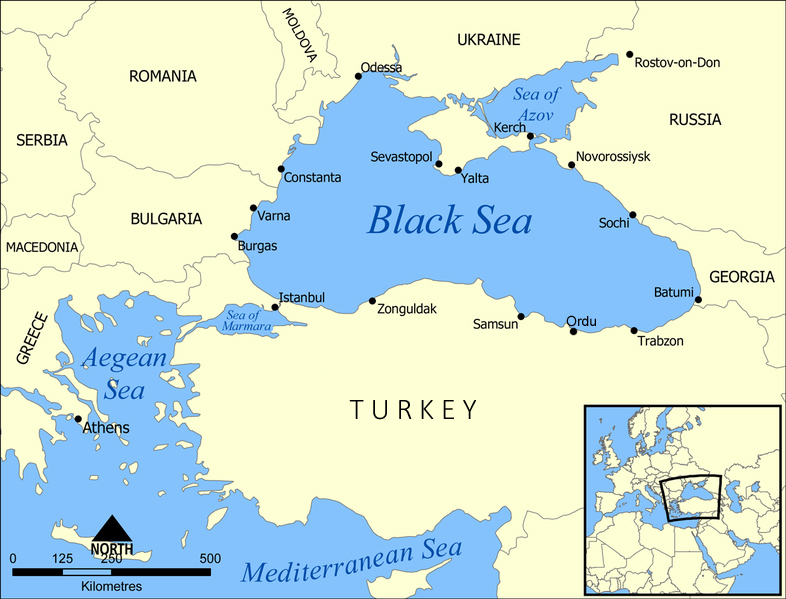
Bulgaria’s Navy is small but growing. They still have a lot of Soviet/Eastern Block equipment. Bulgaria’s coast is on the Black Sea. Other nations bordering the Black sea are Georgia, Romania, Russia, Turkey, and Ukraine. Of these Russia has the strongest naval presence.

No indication yet where the ships will actually be built.

A map showing the location of the Black Sea and some of the large or prominent ports around it. The Sea of Azov and Sea of Marmara are also labelled. Created by User:NormanEinstein, Wikipedia

USCGC Legare Participates in UNITAS LXI

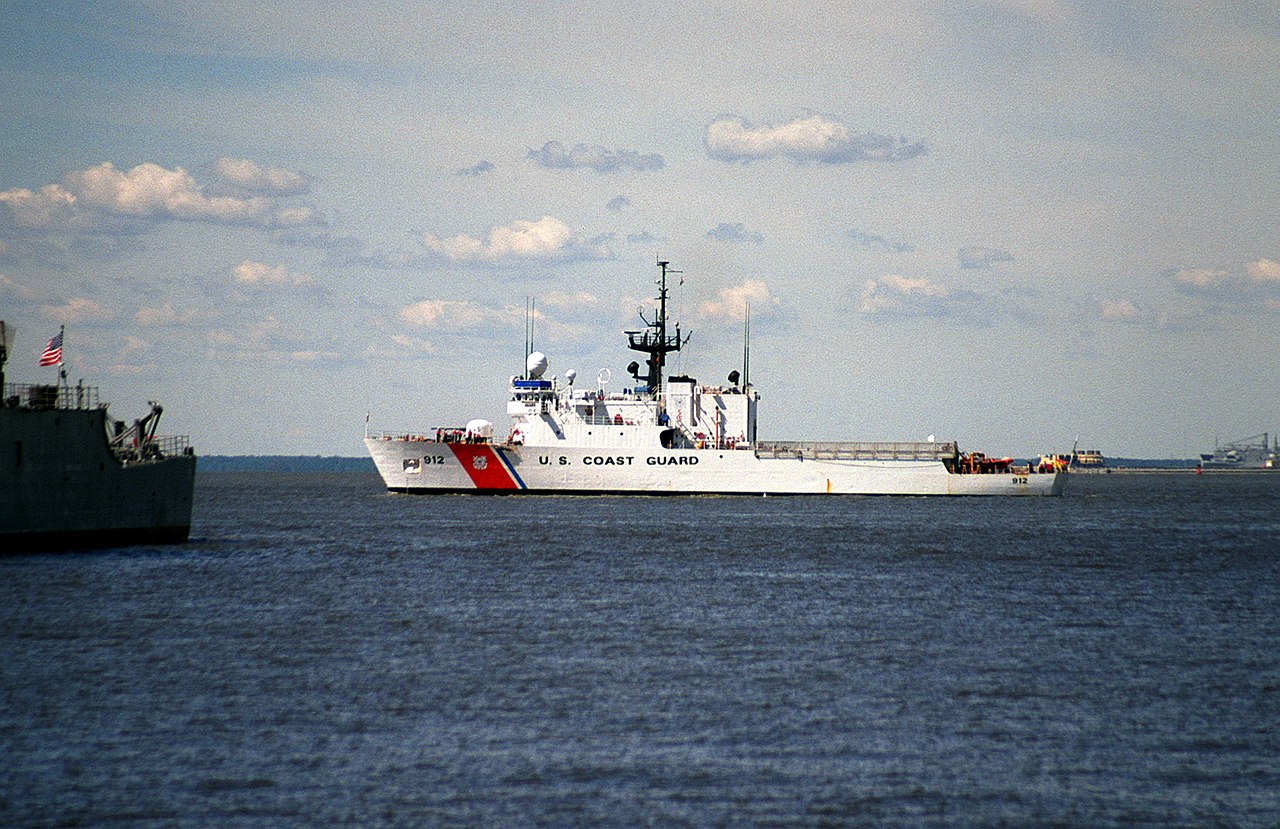
USCG LEGARE (WMEC 912) passing by pier No. 9 at the Norfolk Naval Base. Returning to port after the passage of Hurricane Floyd up the east coast. Location: HAMPTON ROADSTEAD, VA, Photo credit: Don S. Montgomery, USN (RET)

UPI is reporting that, beginning this week, USCGC Legare (WMEC-912) will be participating in this year’s UNITAS exercise along with USS Gabrielle Giffords (LCS-10), USNS Burlington (T-EPF-10), Helicopter Sea Combat Squadron 23 Detachment 9 (which flies MH-60S and MQ-8B drones), Patrol Squadron 9, Patrol Squadron 26 (both VP-9 and VP-26 fly the P-8 Poseidon Maritime Patrol Aircraft) and the U.S. Army Vessel Chickahominy (LCU-2011).

Other participants include representatives form Argentina, Brazil, Chile, Colombia, Dominican Republic, Ecuador, Peru and Uruguay for a total of 13 ships.

“Stop Calling It a Patrol Boat” –USNI

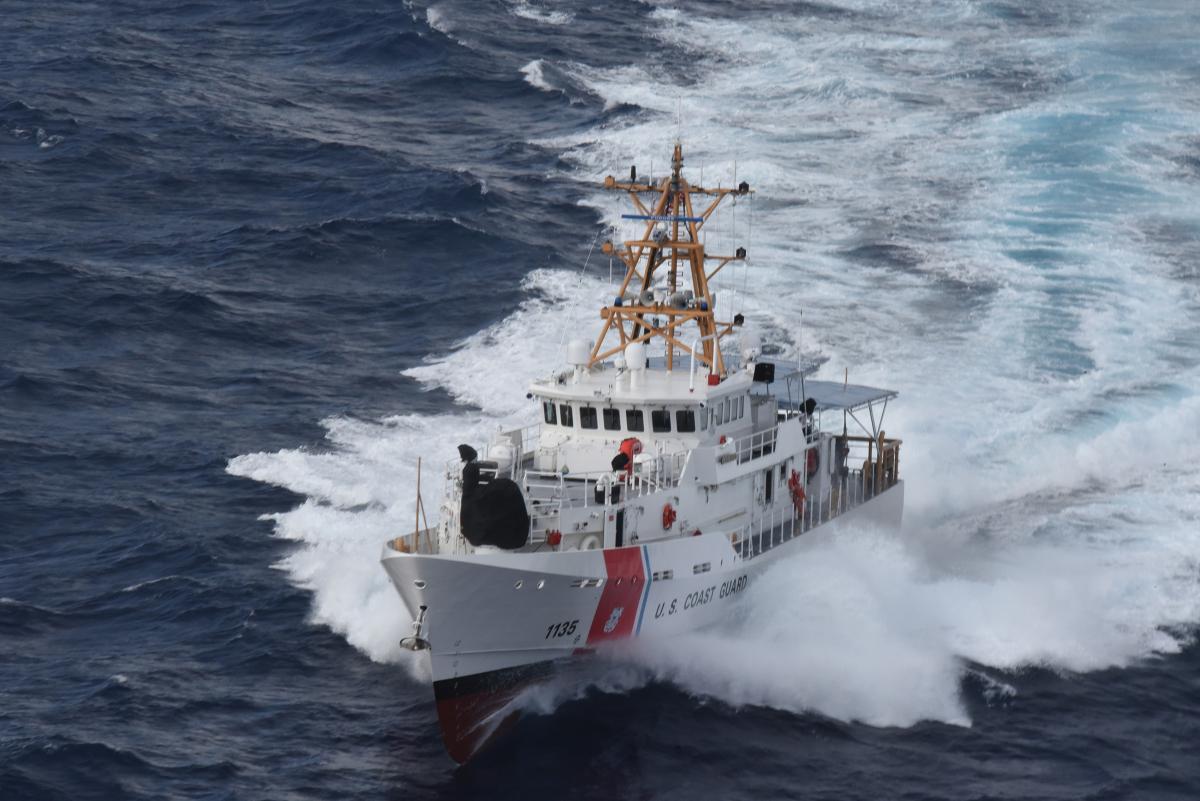
USCGC Angela McShan (WPC-1135), The Coast Guard’s fast response cutters (FRCs) are replacing its Island-class patrol boats, but the FRCs have far greater capabilities than the platform they are replacing. U.S. COAST GUARD (BRANDON MURRAY)

The November 2020 edition of the US Naval Institute Proceedings has an absolutely dynamite article about the current organization of support for the Webber class WPCs. Unfortunately it is member only content. (If you spend time on this website, you really should also be a USNI member.)

He rightly points out that while these ships are being used like WMECs and they are essentially as capable as a 210 other than the flight deck, they have only a third of the crew. Short tours due to promotions often leave the ships without critical skills. Training is problematic. Crew burnout is a problem. Meanwhile they are frequently viewed as “only a patrol boat” and given support similar to that of the preceding 87 and 110 foot patrol boats, in spite of much more sophisticated system.

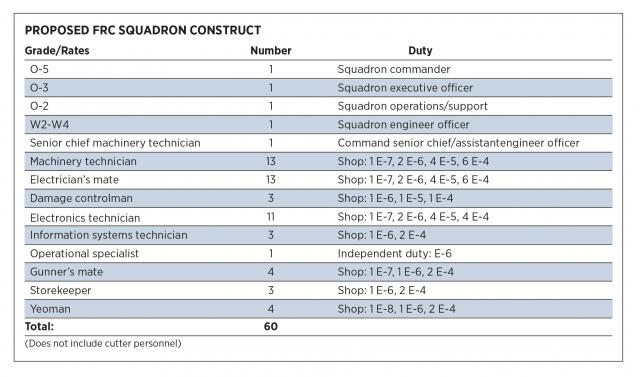
His solution is a squadron organization that would consolidate administrative control of the assets, provide senior leadership and resident expertise for the various ratings, and provide a source for backfill of short term personnel shortfalls, similar to what has been done with PATFORSWA, at least in Miami, San Juan, Key West, and San Pedro where four or more Webber class are based together.

The Coast Guard, District Seven in particular, should really take a serious look at this proposal.

I made a similar proposal for 19 divisions of three cutters each back in 2011. It included a slow crew rotation process as a sort of proof of concept when we were still considering the “Crew Rotation Concept” for the larger cutters.

I might add, stop calling them “Fast Response Cutters.” It leaves the wrong impression of how they are used and their capability.