
A couple of reports of a nasty incident that culminated in the seizure of three Ukrainian naval vessels. This may be worth watching. It is another assault on Freedom of Navigation.
“Tension escalates after Russia seizes Ukraine naval ships”

A couple of reports of a nasty incident that culminated in the seizure of three Ukrainian naval vessels. This may be worth watching. It is another assault on Freedom of Navigation.
“Tension escalates after Russia seizes Ukraine naval ships”
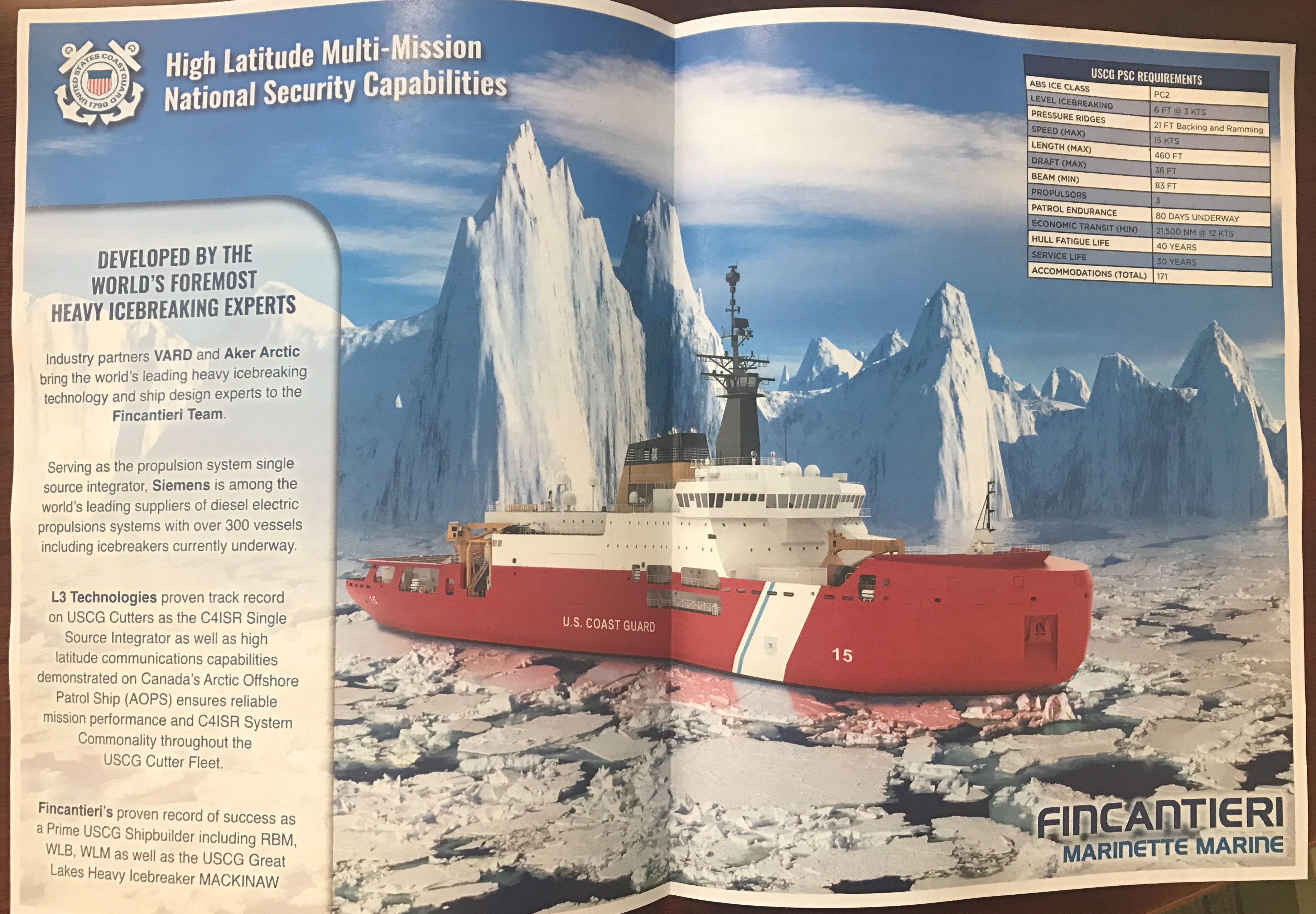
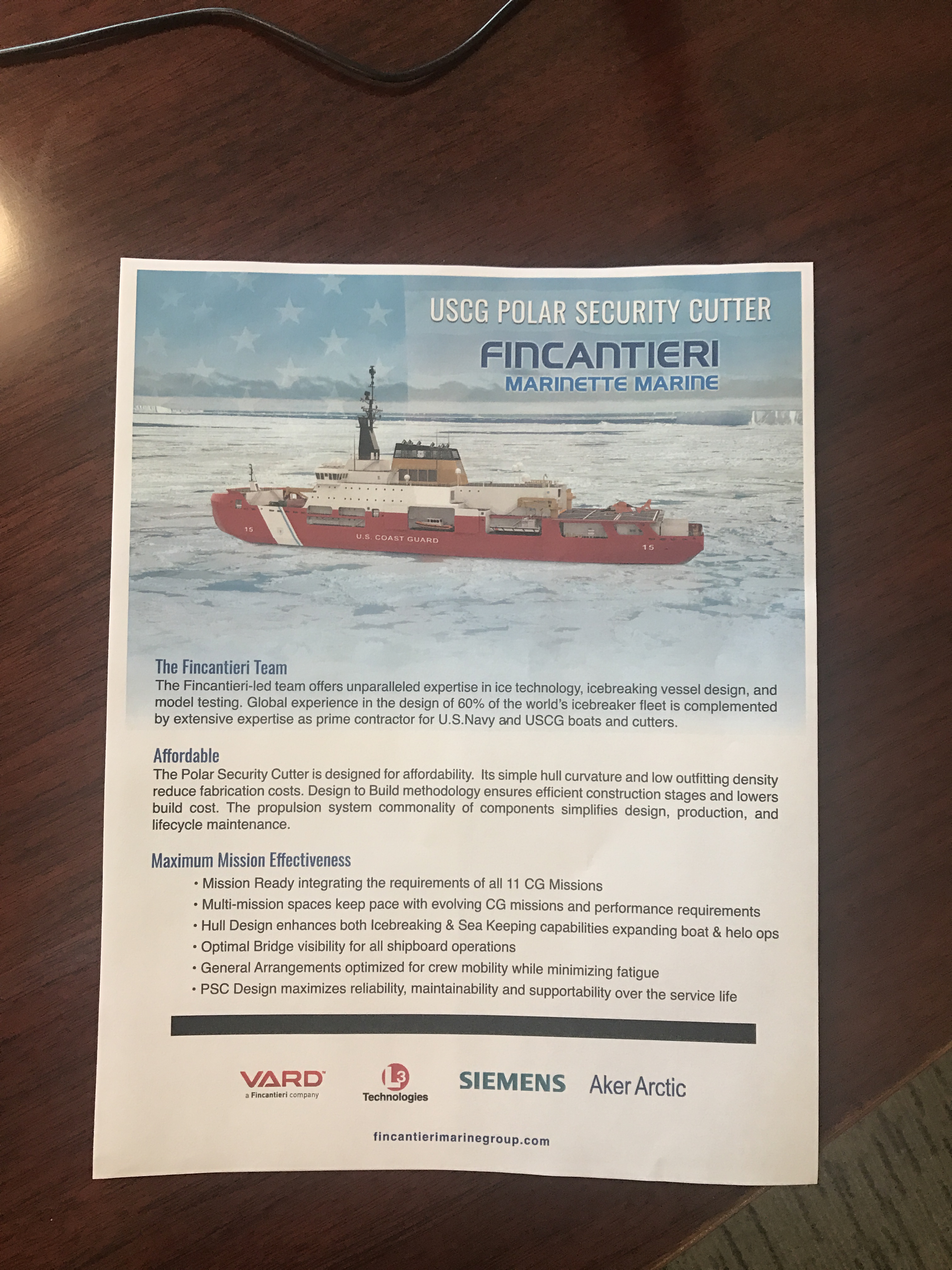
Finally seeing some information on proposed Polar Security Cutter/Icebreaker designs. Got photos of this brochure (above and below) from a classmate. If you click on the photos you should be able to read them, but I’ve tabulated some information below.
Fincantiari is teamed with VARD and AKER Arctic. This is certain to be a major contender because VARD designed the Offshore Patrol Cutter, Fincantiari’s Marinette Marine built the Great Lakes icebreaker, Mackinaw, as well as several other Coast Guard progects, and AKER Arctic is a leader in icebreaker design. Siemens is planning the propulsion and L3 the C4ISR.
Compared to the Polar Star, beam is essentially the same. Length is 61 ft greater. Draft is five feet greater. Presumably displacement will be greater than that of either Polar Star or Healy, probably close to 20,000 tons full load.
Accommodations (171) are fewer than provided on the Polar Star, but more than provided in Healey. Presumably the crew will be smaller than Polar Star, more in line with Healy. Assuming 50+ scientist and an Aviation Detachment, the crew is likely about 100.
Nominal range (21,500@12) is less than Polar Star (28,275@13), but still generous. This probably reflects provision of segregated ballast in the new ship. Max Speed is less than either Polar Star (18) or Healy (17), but probably adequate.
As expected, no armament will be provided as built. Significantly it appears the design will provide adaptable space to meet future requirements.
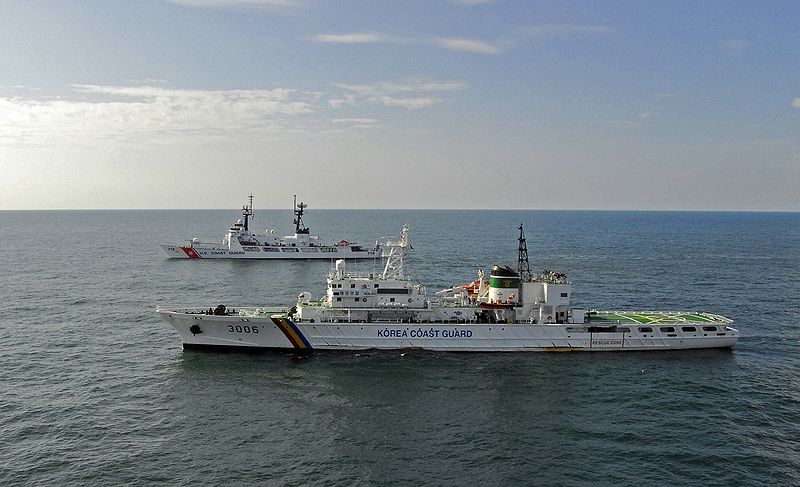
Republic of Korea Coast Guard vessel #3006 in company with U.S. Coast Guard cutter USCGC Boutwell (WHEC-719) during the North Pacific Coast Guard Forum in August 2007. This forum was created to increase international maritime safety and security in the Northern Pacific Ocean and its borders. The Boutwell worked with the Korean coast guard while on their way to Yokosuka, Japan. The Japanese coast guard is one of the six nations involved in the forum.
The Coast Guard has issued a new Strategic Plan for the next five years. It is an amplification of the new Commandants mantra “Ready, Relevant, Responsive.” I’m always a little dubious about these sorts of document since, frequently they look more like public relations documents than real plans, but this may have some actual clues that point to changes of emphasis and direction.
The plan continues the previous Commandant’s intention to counter Transnational Criminal organizations, but there seems to be an increasing emphasis on the Coast Guard’s role in emerging great power competition.
Another shift in the strategic environment is the return to great-power competition. Rival powers, such as China and Russia, are challenging rules-based international order through inter-state aggression, economic coercion, maritime hybrid warfare, gray zone activities, and overreaching territorial claims. Through their actions, they are attempting to diminish American and partner-nation influence abroad. By exploiting pockets of weak governance, these near-peer competitors could undermine democratic institutions, escalate conflict, poach maritime resources, jeopardize access to critical sea lanes, and ultimately disrupt peaceful regions
There is again emphasis on cyber.
The security environment is also affected by the rising importance of the cyber domain – where adversarial nation states, non-state actors, and individuals are attacking our digital infrastructure and eroding the protections historically provided by our geographic borders. At the stroke of a key, rivals in remote regions of the world can attack, disable, and alter our critical infrastructure and financial networks. These bad actors can unleash volatile malware that could have devastating consequences worldwide. While improved interconnectivity expands our capabilities, we must be wary of the corresponding increase in risk
There is recognition that our disaster response role has now become increasingly routine.
The increasing severity and scale of catastrophic incidents is another reality. Coastal regions are densely populated, and ports have become heavily developed. Catastrophic events, whether man-made or natural, can have enormous consequences to our coastal communities and disrupt regional and global commerce. Recent hurricanes, floods, and other maritime disasters have reinforced the Nation’s need to prepare for the size and impact of such incidents.
This is reflected in an objective on page 24:
3.1.1. Lead in Crisis
Whether a maritime disaster or catastrophic event, the Coast Guard is a leader of the integrated response. Drawing on our vast organizational experience, we will:• Cultivate crisis leadership as a core competency;
• Be the Nation’s premier incident management experts for complex maritime disasters; and
• Enhance the management of surge capabilities and the mobilization of adaptive force packages
There is recognition of increasingly global deployment of Coast Guard assets.
The Coast Guard is deployed globally to promote peace, fortify alliances, attract new partners, and challenge threats far from U.S. soil. For example, we provide United States Southern Command (USSOUTHCOM) detection, monitoring, and response capability in the Western Hemisphere to combat transnational crime in the Transit Zone while building the interdiction and crisis response capabilities of our partner nations. In United States Northern Command (USNORTHCOM), our Rotary Wing Air Intercept assets and Maritime Security Response Teams rapidly deploy as singular elements or as a supplement to joint- force packages in support of Homeland Defense missions. As the Federal surface presence in the Arctic, we advance safe, secure, and environmentally-responsible maritime activity by improving awareness, modernizing governance, and broadening partnerships. In the Indo-Pacific, we are actively building partner capacity and theater security cooperation throughout the region to enhance maritime governance and bolster stability in collaboration with United States Indo-Pacific Command (USINDOPACOM). In United States Central Command (USCENTCOM), our patrol boats and advanced interdiction teams conduct maritime security operations in the Arabian Gulf. Along the West African coast, we support United States Africa Command (USAFRICOM) to strengthen partner-nation capability for self-policing in order to thwart transnational threats such as piracy, illegal fishing, and contraband trafficking.
Among the many bulleted action items there are a few that might indicate change of direction.
• Preserve maritime norms and influence acceptable behavior to facilitate the unimpeded flow of lawful maritime commerce;
• Create opportunities and build avenues for regional information sharing;
Are these looking perhaps at the South China Sea or the West Africa’s Gulf of Guinea?
There were a couple of items that emphasized improved working relations with DHS and DOD:
2.2.1. Strengthen Integration with DHS The Coast Guard employs both distinct and complementary capabilities to help DHS and its components meet their strategic objectives. To maximize our value to the Department, we will:
• Enhance integration with DHS at the strategic, operational, and tactical levels;• Implement DHS best practices across the Service including joint requirements management, acquisition processes, research and development, and IT solutions; and
• Connect our capabilities with other DHS components to further DHS strategic priorities.
2.2.2. Leverage Joint Capabilities and Authorities to Complement DOD Our unique authorities, specialized capabilities, and established relationships will complement DOD to provide an agile response to contingencies, address sources of maritime discord, and deter threats to our national interests. To better integrate capabilities for national defense, we will:
• Employ our authorities to support National Defense Strategy (NDS) objectives;• Synchronize engagement, operations, and capacity-building efforts to strengthen maritime governance around the world;
• Leverage DOD to field interoperable equipment and reduce redundancies in the acquisition of new capabilities; and
• Target interoperability with the U.S. Navy and other maritime services to include the National Oceanic and Atmospheric Administration (NOAA) and the U.S. Maritime Administration (MARAD)
Looks like generally, continuity with long established priorities, and recognition of some new unfortunate realities.
What is missing is the hard decision to reinstate the Coast Guard’s ASW mission.

Would like to recommend a series of posts that appeared in the US Naval Institute Blog. They are written specifically for a Navy audience, but there is probably a lot here that also applies to the Coast Guard. They are written by LCdr Jimmy Drennan, a surface warfare officer and Vice President of the Center for International Maritime Security (CIMSEC), though all but the last were written under the pseudonym, the Salty Millennial.
They are funny, irreverent, and revealing. I have listed them below in the order they appeared, but If you are pressed for time, particularly read the last one. Even if the first few piss you off, read the last one. It is a voice we don’t often hear, but we need to.
The DOD’s Policy on Marijuana Finally Makes Sense Because I am Way High

Coast Guard Cutter John F. McCormick (WPC 1121) crew transits through the San Francisco Bay, Saturday, March 4, 2017, during their voyage to homeport in Ketchikan, Alaska. Coast Guard photo by Petty Officer 2nd Class Loumania Stewart
The US Naval Institute has a short post that proposes a new type of combatant, and it could potentially be based on the Webber class Fast Response Cutter, or as it is referred to in the post, the Sentinel class.
The author suggests some relatively straight forward upgrades for dealing with low-end (swarming) threats, but the heart of the proposal is to think about arming and equipping them much like the FA-18 Hornet including link 16, cooperative engagement capability, and electronic warfare equipment.
“To create the best system, get past the question of the hull; start with weapons and sensors and ask what they can do. A good starting place might be, “Can we accomplish anti-surface warfare (ASuW) if we put Super Hornet capabilities onto a patrol boat?” … the boat should employ a small unmanned aerial vehicle (UAV) such as the Boeing RQ-21 Blackjack to give it extended sensing for independent operations. “
All the basic weapons upgrades suggested and a UAS are probably feasible without making serious changes to the Webber class’s basic configuration. The next step up is going to require some compromises.
The author suggests a four-cell Mk-57 vertical-launch system (VLS) which would weigh about 20 tons. This would likely replace the 8 meter over the horizon boat on the stern. That is a lot of weight to be positioned that far aft, but there are alternatives. Inclined deck launchers using the MK41 VLS system have been proposed and would be lighter. Dedicated launchers for Harpoon and particularly NSM would be a lot lighter. All these missiles are shorter than the over the horizon boat.
The Naval Strike Missile certainly seems the most likely since in has been chosen for the Navy’s small combatants, including all LCSs. Because of its smaller size it might be possible to carry more missiles than would be possible with the larger weapons.
Keep in mind that the Navy is going to have to replace it Cyclone class patrol craft. the oldest of the thirteen is now over 25 years old.
It the Navy chose to replace the Cyclone class with modified Webber class, while the over the horizon boat is certainly useful, they could find a lot of potential alternative uses for the stern ramp other than a place for missile launchers including:
In reading over the comments on the USNI post there was a good question, forgive me for paraphrasing,
Since the price is about the same why not just buy strike aircraft? The aircraft can get there, release its weapons, return, rearm and strike again.
All true, but total costs are not the same. The aircraft operating and support cost are much higher, including the aircraft carrier, big deck amphib, or airfield it operates from.
A patrol craft has can remain on station much longer than an aircraft.
A group of patrol craft can be spread out in ways a group of aircraft tied to its base afloat or ashore cannot.
Yes, these patrol craft would be easy to kill, but they can only be killed one at a time, and may not be that easy to find. On the other hand, if an anti-ship cruise missile hits a carrier, it may still kill more people than the crew of a patrol craft and when it leaves the theater for months to have the damage repaired, she also takes those 70 or so $100M airplanes with her. If the carrier is sunk, we may lose not only a 7-12 billion dollar carrier, but also the 70 or so $100M aircraft aboard are likely to go down with it. The actual survivability of small warships is usually understated, not because they can take a hit, but because they are usually never hit at all, while the survivability of large warships is overstated, because there is always a huge effort to find, fix, and destroy them. Also the opportunity costs when large ships are taken out of the fight for repairs is often over looked.
Patrol craft are the Naval equivalent of boots on the ground. They see things those flying at 25,000 feet cannot. You don’t try to fight a land war without infantry. You can’t fight a naval war without the small boys.

McIntyre Bay and Pachena Bay loaded on the Atlantic Raven
The Canadian Coast Guard is getting some new assets. They are getting two new 62 foot Motor Lifeboats that will be stationed at Port Hardy BC, on the NE tip of Vancouver Island, and Bella Coola, about half way up the British Columbia coast.
They are being transported on the newly leased Atlantic Raven, seen above, which will join its sister, the Atlantic Eagle. They will serve as Emergency towing vessels.
The two larger vessels are expected to be homeported in British Columbia. The Atlantic Eagle in Victoria and the Atlantic Raven in Prince Rupert near the border with SE Alaska
One will patrol a northern area in Canadian waters between Alaska and the northern tip of Vancouver Island, and the other a southern area including the west side of Vancouver Island and the Strait of Juan de Fuca. They will also be available to conduct search and rescue operations and support environmental responses, when required.
Canada has dispatched a RCAF C-146 search and rescue helicopter to assist local authorities in dealing with the fires in California.

Thanks to Ken for bringing these two developments to my attention
Late note: CCGS Corporal McLaren, a 140 foot cutter similar to the Webber class, slid from it cradle into the water at Sambro, Nova Scotia shipyard. The stern is under water. Vandalism is suspected.
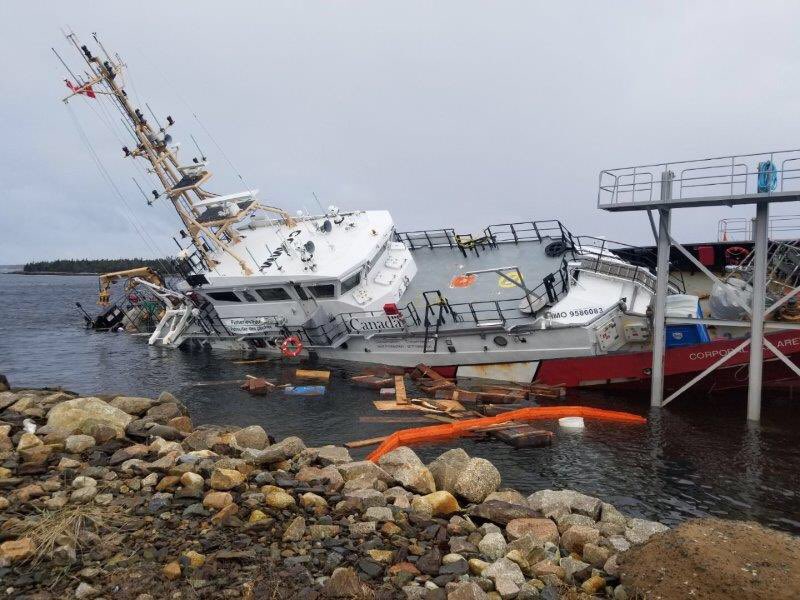
Thanks to Walter Y. for bringing this to my attention.
I am passing this along from the Navy League. The Senate has completed their mark up of the Coast Guard Authorization, and it looks like they have indeed left off funding for the new Polar Icebreaker (Polar Security Cutter). We really should have funded these a decade ago, so any delay is at the very least unwise if not irresponsible.
|
|||
|
|||
|

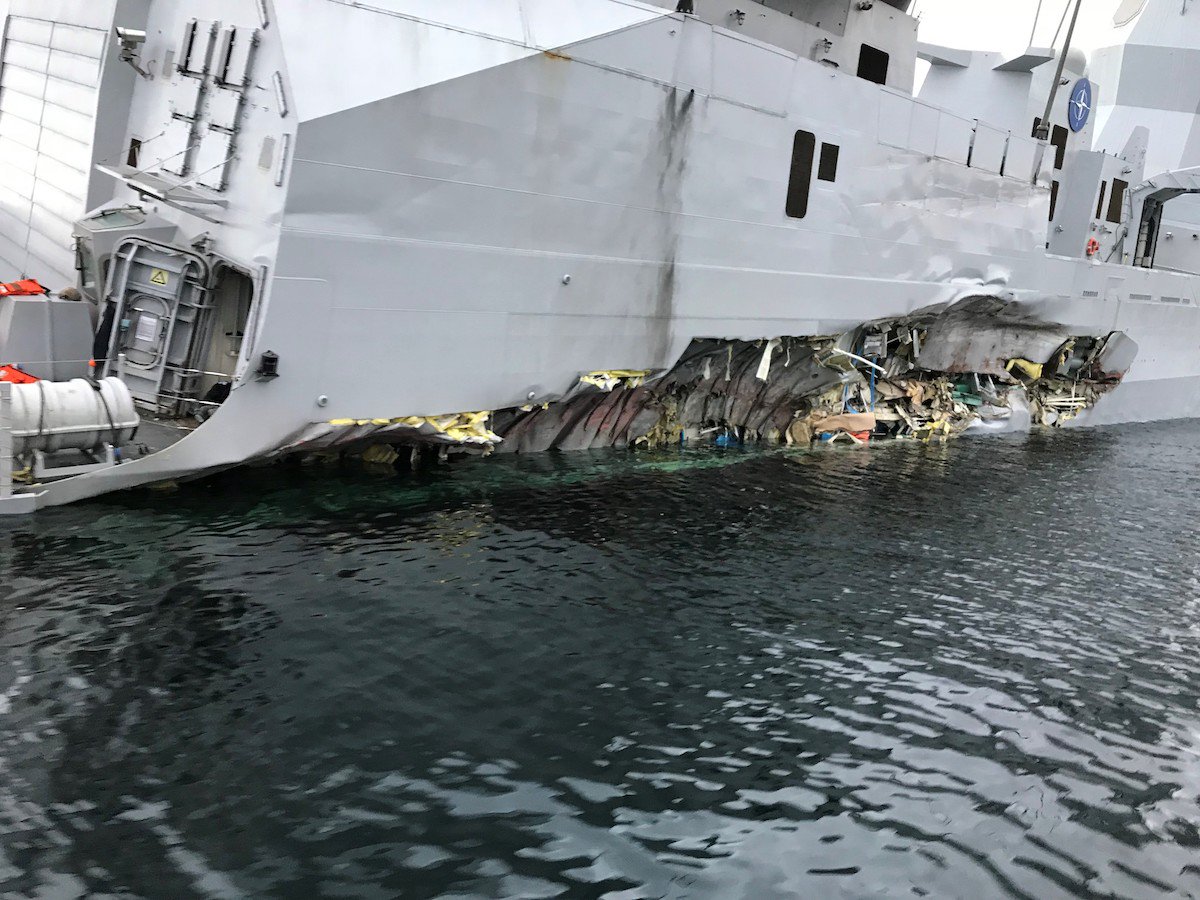
Wrecked Norwegian navy frigate “KNM Helge Ingstad” is seen in this Norwegian Coastal Administration handout picture in Oygarden, Norway, November 13, 2018. Jakob Ostheim/Norwegian Coastal Administration/Handout vis REUTERS
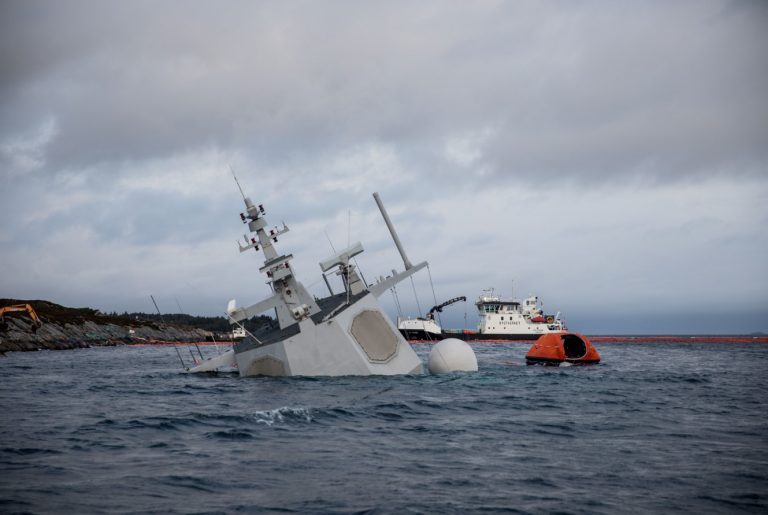
More here, here, here. and here.
Below: Photos of the damage to the KNM Helge Ingstad after its collision with a tanker in a Norwegian fjord. Credit: @Forsvaret_no
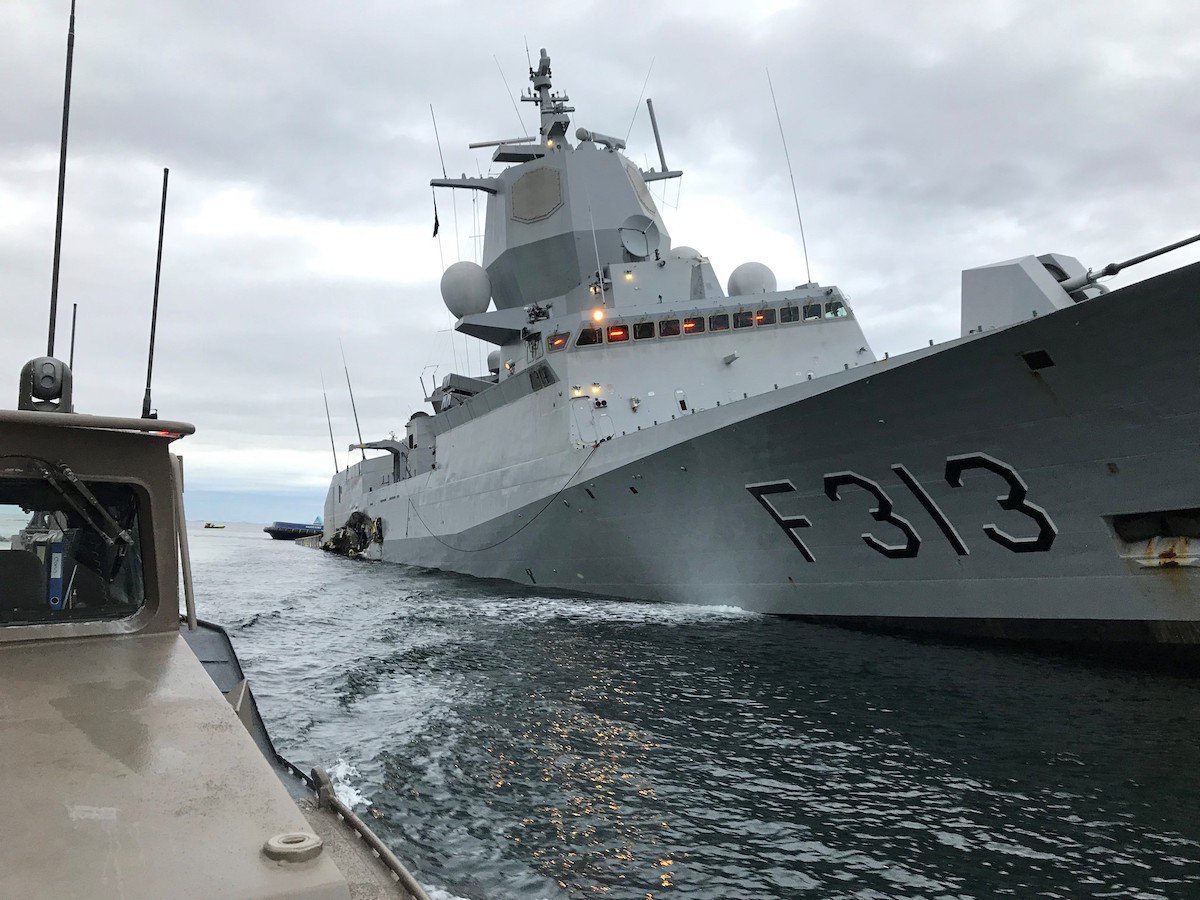
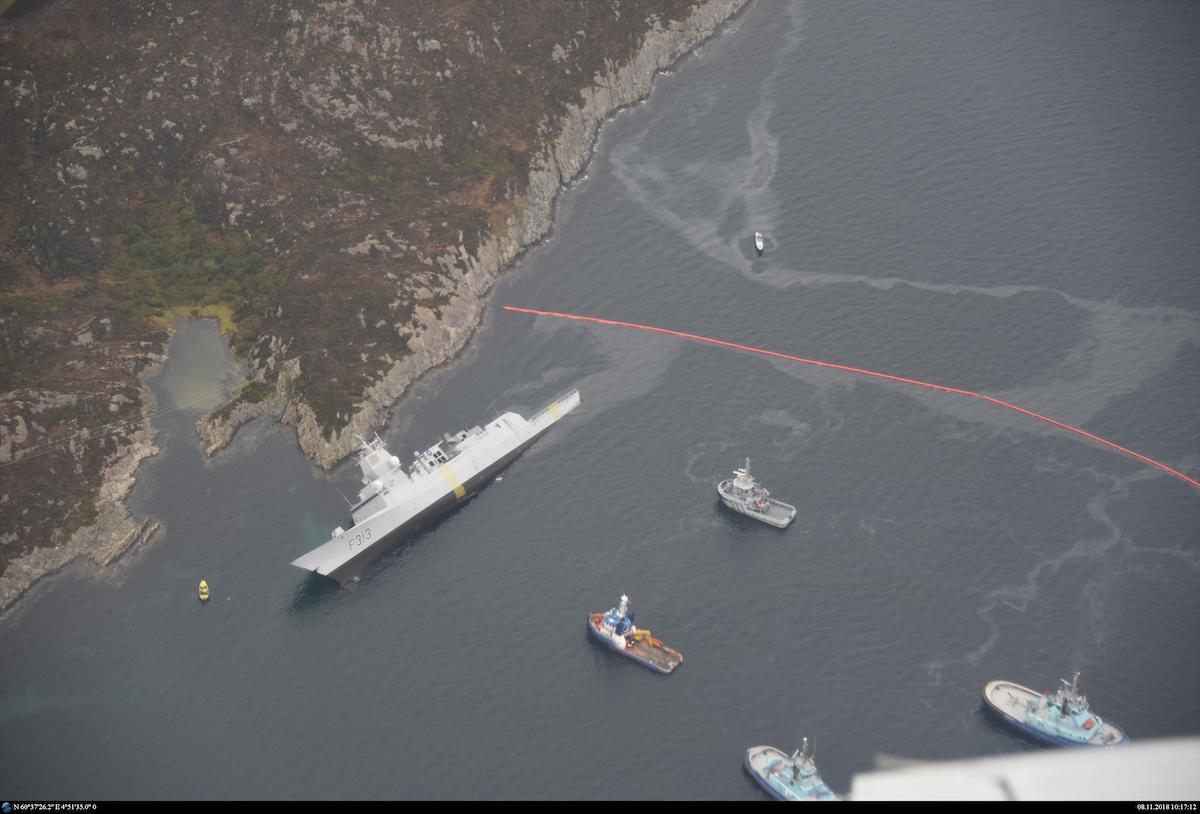
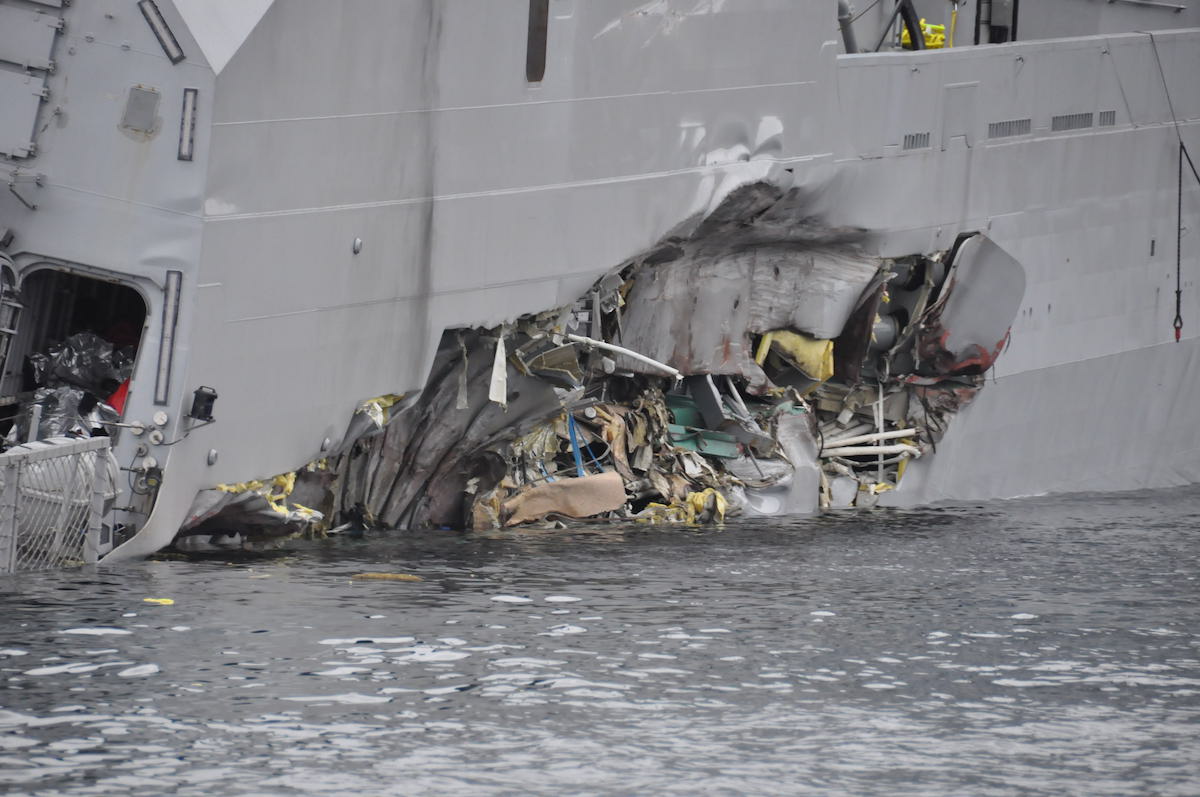
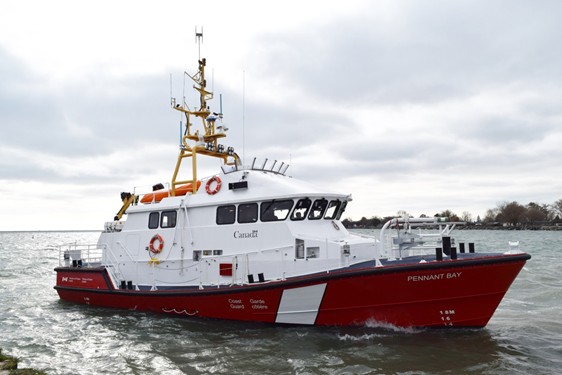
Canada is building twelve large, relatively fast, self-righting Motor Lifeboats. These are the “Bay” class and the first are now making an appearance.
Reportedly they will be “capable of safe operation in extreme weather up to Beaufort Force 12 conditions and are able to survive in 12 meter (40 foot) seas.”
This again brings to mind the fact that at some point we will need to replace the four 52 foot MLBs and we may also want to use the replacement class in other areas where exceptional seakeeping and longer range than the 47 footers is desirable. We did discuss this possibility earlier including some other alternatives and got lots of comments.
These self-righting, 20-meter (65.6 ft–Chuck) boats are powered by a pair of MTU 1600 HP marine Diesel engines providing a speed of up to 24 knots in extreme weather conditions. These vessels are primarily a day boat and will be operated by a crew of up to five Coast Guard seamen.
The vessel’s particulars are as follows:
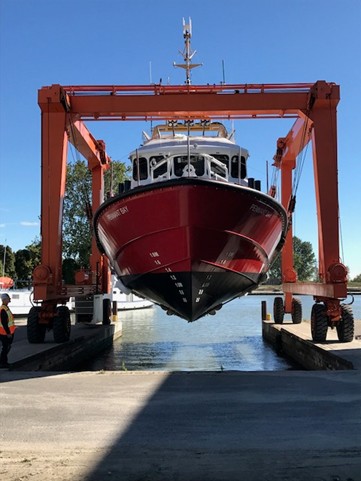
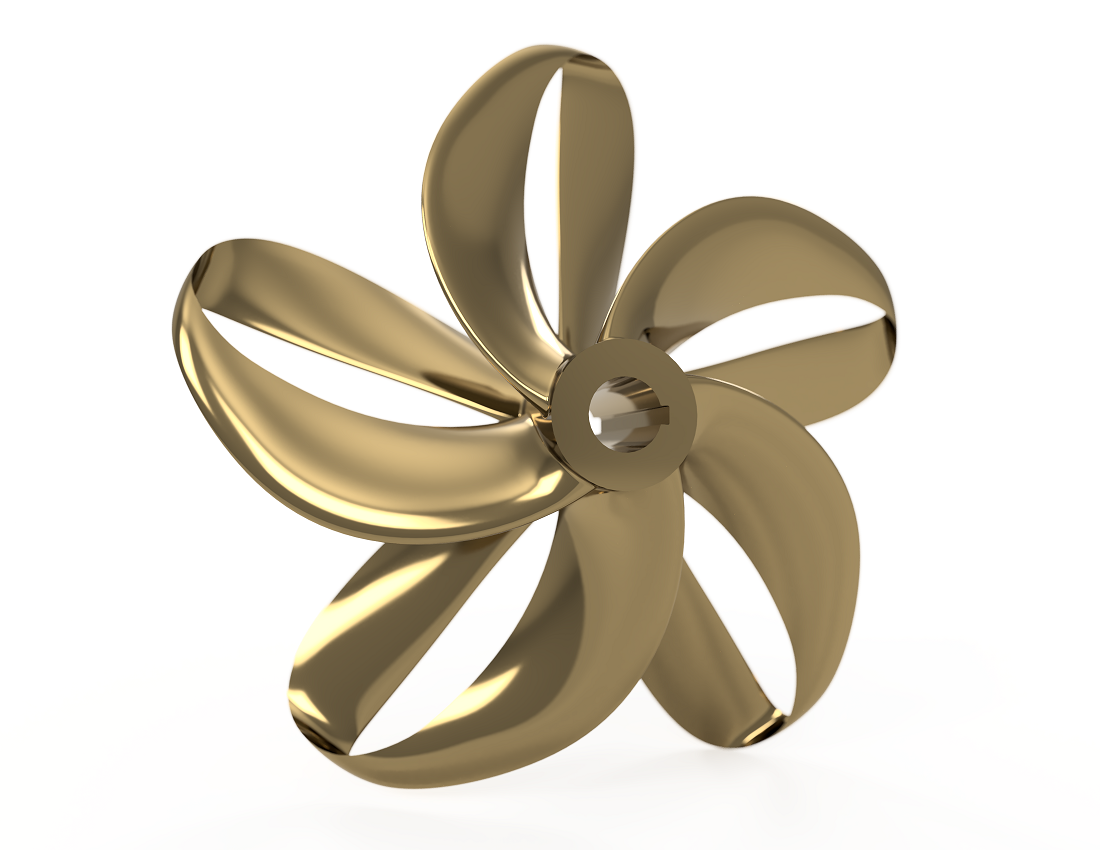 Photo: Sharrow Engineering
MarineLink has a report on a new propeller design claimed to be “9-15 percent more efficient than the industry standard Wageningen B-series design” It is also claimed that new design can be “manufactured to meet a comparable price point to standard propellers.”
“Sharrow’s propeller product provides a wider peak efficiency curve for greater utility over a wide scope of operational ranges, and a 17 percent reduction in torque while accelerating. “
Fuel is a major part of Coast Guard operating costs. That degree of increased efficiency would make a huge difference in fuel economy. .
Looks like each blade consist of two parts connected at root and tip, with a gap in between. Visualizing the fluid flow over the blades is quite intriguing. I presume the gap allows accelerated flow over the forward face of the following blade half and that the joined tip prevents some loss of efficiency by decreasing span wise flow on the underside of the leading blade half and on the upper surface of the following blade half.
Could these be applied to the same effect to Variable Pitch propellers?
Makes me wonder if a similar design might not work on an airplane as well, both as a propeller and perhaps as a wing.



 Chuck Hill's CG Blog