Surface Navy Association Symposium 15-17 January, Crystal City

HMAS Success (AOR-304) refuelling probe goes in for a hook-up with the US Coast Guard Cutter USCGC Waesche (WMSL-751) as the Royal Australian Navy Auxilliary Oiler Replenishment Ship conducts a dual RAS (Replenishment at Sea) off the coast of Hawaii during the Sea Phase of Exercise RIMPAC 2014, 19 July 2014. (RAN Photo by Leading Seaman Brenton Freind RAN)

The annual Surface Navy Symposium is scheduled for 15-17 January in Crystal City. Active Duty and Reservists in uniform along with government civilian employees (excluding contractors) can register at no charge, but others can save up to $120 by registering early. I received the following by email.

—–

Ready, Agile, Focused:  Own the Fight!

Registration is open for the 31st Annual National Symposium that will be held at the Hyatt Regency Crystal City, 15-17 January 2019.  Please note that there is a FEE increase on 19 December 2018 that raise all the prices to those under Tier 3.  Register and pay now to avoid these increases!  Complete pricing information can be found at https://navysnaevents.org/national-symposium/pricing.html

The link for more information, the up-to-date schedule of events and to register is http://navysnaevents.org/national-symposium/

SURFACE NAVY ASSOCIATION
6551 Loisdale Court, Suite 222
Springfield, VA 22150
Phone: 703-960-6800
www.navysna.org
communications@navysna.org

New Base at Port Clarence?

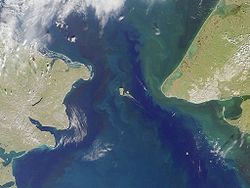
Bering Strait. Port Clarence bay is the large bight in the southeast.

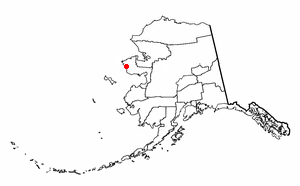
Adapted from Wikipedia’s AK borough maps by Seth Ilys.

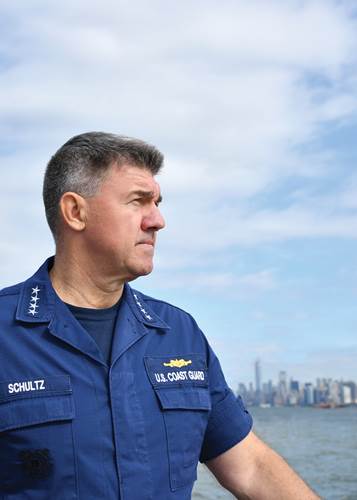
At the National Press Club Headliners Luncheon on Thursday, Dec. 6, the Commandant discussed the Coast Guard’s Arctic presence. We noted the Commandant’s remarks on the Polar Security Cutter earlier, that he was guardedly optimistic, but the US Naval Institute report on the same presentation, brings us more information about the possibility of a new port facility in Western Alaska.

Long-term, Schultz said it’s possible the Coast Guard would look to create a permanent presence in the Arctic. Most likely, Schultz said, the Coast Guard would look for a sea base, possibly in the far northern Port Clarence area. One option, Schultz said, is for the Coast Guard to install moorings to provide a safe haven. Port Clarence, Alaska, had a population of 24, according to the 2010 Census.

Port Clarence was at one time a LORAN Station, and it appears it may still have a substantial runway, so it might also develop into a seasonal air station.

The Secretary of the Navy has already expressed an interest in having a strategic port in Alaska. From the Navy’s point of view it is near the potentially strategically important Bering Strait.

Coast Guard Commandant Adm. Karl Schultz meets with Secretary of the Navy Richard V. Spencer and Alaska Sen. Dan Sullivan in Nome and Port Clarence, Alaska to discuss the construction of deep draft ports in western Alaska, Aug. 13, 2018. This would allow the Coast Guard and Navy to have a strong presence in the U.S. Arctic. U.S. Coast Guard photo by Petty Officer 1st Class Jetta Disco.

Paying More Attention to the Western Pacific

Fijian navy Sub-Lt. Opeti Enesi looks out from an Air Station Barbers Point HC-130 Hercules over the Fijian Islands, Dec. 8, 2018. The Hercules aircrew was providing support for a Fijian navy patrol boat during law enforcement operations. (U.S. Coast Guard photo by Petty Officer 3rd Class Matthew West/Released)

Was pleasantly surprised to see that the Coast Guard seems to be paying more attention to the Western Pacific, where the US has a huge part of its Exclusive Economic Zone. (More than the entire Atlantic and Gulf coasts.) Additionally it is an area where Illegal Unreported, and Unregulated (IUU) fishing threatens to destabilize local economies, and where our frenemy China is attempting a neo-colonialism that could turn smaller Pacific nations into vassal states.

The cutter Munro visited Fiji and the Solomon Islands on its first operational patrol. A shiprider agreement was concluded on Nov. 12 during the visit to Suva, Fiji, and a Fijian naval officer flew aboard a Barber’s Point C-130 coordinating operations with a Fijian patrol boat.

This is after the USCGC Oliver F. Berry (WPC-1124) completed a mission to conduct operations in the Republic of the Marshall Islands, 2,200 miles from her homeport over the last summer.

“Coast Guard Seeks Information to Support Over The Horizon Cutter Boats” –CG-9

BM2 Dale Veverka, a boatswains mate, Seaman George Degener, and MK2 Joshua Post  conduct maneuvers on the Coast Guard Cutter Northland’s “over-the-horizon” small boat during transit to Rio De Janeiro, Brazil, April 9, 2008. for UNITAS exercise. U.S. Coast Guard photo by PA2 Nathan Henise.

The following is a release from the Acquisition Directorate (CG-9)  Apparently they plan to procure a fifth generation over the horizon cutter boat.

The Coast Guard released a request for information (RFI) Dec. 7 to gather information in preparation for the Over the Horizon V cutter boat acquisition.

The planned vessel is a standard configuration boat up to 26 feet long, which is capable of performing missions that require projection of Coast Guard capabilities beyond the parent cutter. It will operate in day and night; in a spectrum of climates, weather conditions and sea states.

The anticipated scope of the contract is near 200 boats delivered over a 10-year-period.

The RFI is available here. The deadline to submit responses is Dec. 14 at 12 p.m. EST.

For more information: Cutter Boats program page   

This is probably the answer to a comment question on an earlier post about a new 7 meter RHIB, that ask what boat would be used on the Offshore Patrol Cutter (OPC).

From the RFI:

Approximate OTH-V Characteristics:
Length: 26 feet (maximum extreme dimensions)
Beam: 9.0 feet (maximum extreme dimensions)
Weight: ~7500 lbs (full fuel, no personnel)
Comms: HF, UHF, VHF, DSC, AIS
Navigation: Scalable Integrated Navigation System-2 with radar
Seating: Shock Mitigating for five, designated for eight additional
Stability: ISO 12217-1
Structure: ISO 12215-5
Propulsion: Diesel Engine with Waterjet propulsion
Top Speed: 40 knots
Range: 200 NM (with 10% fuel reserve)
Interface: Dual Point Davit, Single Point Davit with Sling, Stern Notch

“Investigation blames Air Force and Navy for systemic failures in fatal Marine Corps C-130 crash that killed 16” –Military Times

MilitaryTimes reports, 

“The horrific KC-130T plane crash that killed 15 Marines and a sailor last summer was caused by a deteriorating propeller blade that was corroded when it entered an Air Force maintenance depot in 2011, but workers there failed to fix it and sent it back to the fleet unrepaired.”

Reportedly this was not an isolated problem.

The investigation’s report and nearly 2,000 pages of supplementary records portray an endemic level of neglect by the Air Force, which maintains C-130 propeller blades for the Navy.

and I would presume possibly also for the Coast Guard which is still flying the C-130H.

The exact maintenance failures that took place at Warner Robins Air Logistics Complex back in 2011, and who was responsible, will likely never be known.

Before the crash, it was Air Force policy to throw out such maintenance records after two years, according to the report.

The US Naval Institute News Service has the video above and the full text of the investigation (which I must admit, I did not read). This video has a bit more detail than the one accompanying the MilitaryTimes post.

“U.S. Coast Guard chief optimistic about icebreaker ship funding” –Reuters

USCGC Polar Sea

Reuters reports that the Commandant again used the phrase “guardedly optimistic” regarding FY2019 funding for the first new Polar Security Cutter when addressing a National Press Club event.

Perhaps key here is that the Congress will attempt to pass a budget before the Dec. 21 expiration of the continuing resolution.

December 7th, 1941/1968

It is of course the anniversary of the Attack on Pearl Harbor that brought America into World War II. Last year Coast Guard Compass published this story of the Coast Guard’s actions on that day and the conflict that followed.

But the Coast Guard has another reason to remember December 7, the loss of the White Alder, along with 17 of her crew of 20. From the Coast Guard Compass, “The Long Blue Line: Buoy Tender White Alder—lost 50 years ago, but not forgotten”

Waterways Commerce Cutter

a music video dedicated to the men of USCGC BLUEBELL, a “hidden jewel” in the coast guard. the black hull sailors who got things done, “if we go unnoticed then it just simply means we’ve done our job right”.

If you haven’t seen it yet, the Acquisitions Directorate has some excellent graphics on the current and future inland and river tender fleet, or as the program is now known, the Waterways Commerce Cutter.

If you would like to take a look start here, and check out the “Resources” and “In the News” tabs at the bottom of the page.

USCGC Wyaconda stationed out of Dubuque, IA

“Interview: Admiral Karl Schultz, Commandant, United States Coast Guard” –MarineLink

Coast Guard Commandant Adm. Karl Schultz visits with Coast Guard crews stationed in New York City. U.S. Coast Guard photo illustration by Petty Officer 1st Class Jetta Disco.

MarineLink has a wide ranging interview with the Commandant dated 4 Dec., 2018. The interview is from a Marine Industry prospective, so the flavor is a bit different from what we see from Defense oriented interviewers, more about the prevention side, still a lot of interest in the Polar Security Cutter program. Perhaps the most informative section concerns cyber and what the Coast Guard is doing about cyber threats.

“Coast Guard, DHS S&T Venture into Space with Polar Scout Launch” –CG-9

The Coast Guard Research, Development, Test, and Evaluation Program, in partnership with the Department of Homeland Security Science and Technology Directorate, launched two 6U CubeSats from Vandenberg Air Force Base, California, as part of the Polar Scout project. Photo courtesy of SpaceX.

The following is a release from the Acquisitions Directorate

Coast Guard Research, Development, Test, and Evaluation (RDT&E) Program, in partnership with the Department of Homeland Security (DHS) Science and Technology Directorate (S&T), today launched two 6U CubeSats from Vandenberg Air Force Base, California. The launch is part of the Polar Scout project to evaluate the effectiveness of space-based sensors in support of Arctic search and rescue missions. Knowledge gained from this demonstration will be used to inform satellite technology recommendations for many potential applications within the Coast Guard and across DHS.

Jim Knight, the Coast Guard deputy assistant commandant for acquisition, said in ceremonies leading up to the launch, “The Polar Scout project presents an opportunity to evaluate the most efficient way to ensure that the United States can project surface presence in the Arctic when and where it is needed while filling an immediate Search and Rescue capability gap in these remote areas.”

The CubeSats, dubbed Yukon and Kodiak, were launched into a low-earth polar orbit on a rideshare with other spacecraft from 17 different countries. This economical alternative to a costly single-mission launch ensured dozens of spacecraft from various organizations reached orbit. Success of the mission was due to public and private sector collaboration throughout the process, from developing the CubeSats to propelling them into space.

“In order to demonstrate, test and evaluate the viability and utility of CubeSats for Coast Guard missions, the Coast Guard RDT&E Program has partnered with DHS S&T to conduct on-orbit testing of CubeSats using the Mobile CubeSat Command and Control (MC3) ground network,” said Holly Wendelin, command, control, communications, computers, intelligence, surveillance and reconnaissance domain lead.

Developed as a potential capability bridge between the current 20-year-old international search-and-rescue architecture and its future successor, “CubeSats serve as a much smaller, more cost-efficient solution that can be easily implemented over a short period of time. Each are only about the size of a shoebox,” said John McEntee, director of Border Immigration and Maritime at S&T.

In the 18 months leading up to the launch, DHS S&T handled the fabrication of Yukon and Kodiak, which are tailored specifically to detect 406 MHz emergency distress beacons. At the same time, the Coast Guard Research and Development Center (RDC) deployed two ground stations – one at the Coast Guard Academy in New London, Connecticut, and one at University of Alaska Fairbanks – using the MC3 architecture and network. The ground stations will receive all of the signals from the CubeSats during the demonstration.

DHS will begin testing and demonstrations using emergency distress beacons in the Arctic beginning in early 2019 and continuing through the summer. “The demonstrations will include downlinking 406 MHz emergency distress beacon data from the CubeSats using the deployed MC3 ground stations,” Wendelin said. “We will set the beacons off, the satellite should detect it and send signals back to the ground station.” The testing period is expected to provide critical knowledge on how CubeSat technology can be used to enhance Coast Guard and DHS mission performance.

The Polar Scout project is providing valuable insight on the process, cost and feasibility of acquiring and using organic satellites. The Coast Guard and DHS will use the knowledge gained from Polar Scout and the MC3 installs, market research and space mission design and assessments to develop satellite technology recommendations.

As Coast Guard missions become more challenging and complex, the use of small and inexpensive satellites has the potential for great impact. Potential uses for satellites include improving communication in the arctic environment, monitoring large areas for illegal activity and helping to locate persons lost at sea. Additionally, the use of satellites has the potential to reduce the time and resources spent on intensive aircraft searches as well as the risks associated with placing personnel in hazardous situations that only need sensors and communications on scene.

“Undoubtedly, the results and knowledge gained by the Polar Scout Satellite Project will lead to force-multiplying solutions for the Department, which is a big priority in this age of complex threat cycles,” said Bill Bryan, senior official performing the duties of undersecretary for the Science and Technology Directorate.

Through Polar Scout’s robust search-and-rescue satellite solution, the Coast Guard may be empowered to respond to maritime disasters with unprecedented speed, preserving lives and even cargo, along trade routes in the Arctic Circle.