FY2017 Budget Priorities–Commandant

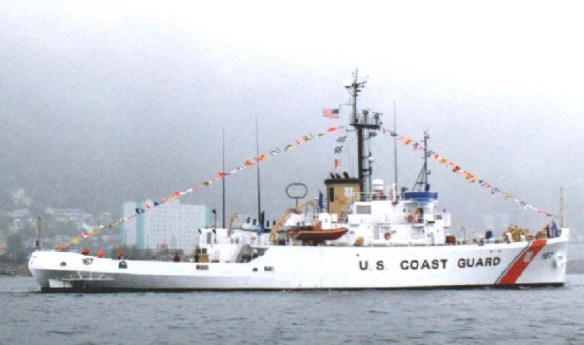
Photos: Eastern’s proposal for the Offshore Patrol Cutter (left), We still have not seen much of Bollenger’s proposal, but I suspect it may look something like the photo on the right, but with  a more conventional mast. 

US Naval Institute News reports on the Commandant’s testimony before the House Appropriations Homeland Security Sub-committee.

“Adm. Paul Zukunft said the service will be looking again at its force-mix analysis, taking into account the money appropriated for a ninth national security cutter for this fiscal year. He said he had “the utmost confidence” the Coast Guard will down-select to one shipbuilder this year for the offshore patrol cutter.

The budget request for Fiscal Year 2017 includes $100 million for long-lead procurement for the offshore patrol cutter program.

I am a little concerned to see the statement below. Note shipbuilder (singular, not plural).

“Zukunft said that the Coast Guard is in “very emotional discussions” with the shipbuilder over the contracts for the last of the fast response cutters. “We need to come to closure on this” in the next few months to clear the way for the construction of the offshore patrol cutters.”

I was under the impression we were to have a competition for construction of the remaining ships. The Coast Guard paid for the design rights so that we could put the remained out for competitive bids. This should have happened a couple of years ago. What happened? And why is this not a multi-year buy?

There is also $150M in the budget for long lead time items for the new Icebreaker. This seems a bit odd, since the builder has not been selected, although I suppose Huntington Ingalls is the foregone conclusion.

————————————————————————–

For more on the previous Force Structure (Fleet Mix) Studies:


North Korea Embargo

From the German Navy blog, Marine Forum, “2 Mar., The UN Security Council unanimously (!) decided on new sanctions on North Korea … a.o.t. closing gaps in the arms embargo that had allowed small arms and light weapons to be sent to North Korea; now full embargo on all weapons as well as any items that could directly support the North Korean armed forces (e.g. trucks that could be modified for military purposes) … all (not just suspicious) ships coming from or going to a North Korean port have to be inspected for embargoed materials.“

While CG LEDETs will probably be involved, I cannot help but think that if we had enough ships, this would be a job better done by cutters than the Navy.

Distributed Lethality–CIMSEC

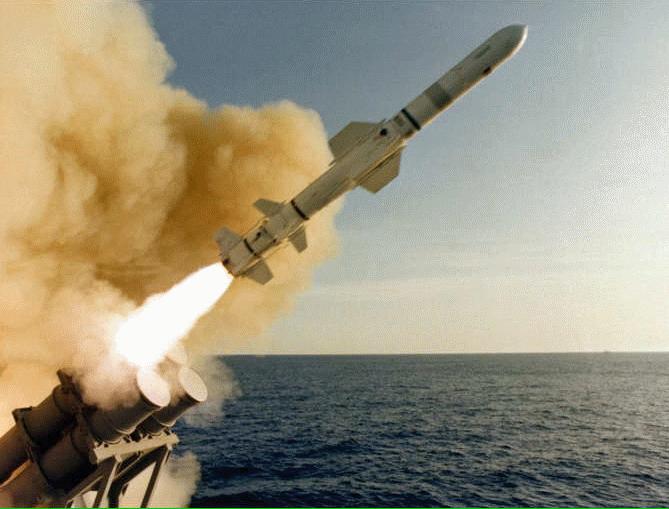
harpoon-dvic426

Our friends at CIMSEC have had a week long look at the concept of Distributed Lethality, the Navy Surface Warfare Community’s concept of wide distribution of offensive anti-ship and possibly land attack systems, commonly summarized as, “If it floats, it fights.”

The Coast Guard does not appear to have been included in any of the discussion of this concept, but perhaps it should be.

CIMSEC has collected their recent posts on the subject. There is an intro and background information here, or you can just download the entire collection as a pdf here.

Thoughts on State of the CG, 2016

You can read the Commandant’s State of the Coast Guard speech here (pdf). It is only eight pages.

The Commandant continues to hammer on themes he has addressed in the past–the Arctic Strategy in response to the opening of a new ocean and the Western Hemisphere Strategy in response to lawlessness in Central America and the resulting immigration crisis (plus the ships needed to employment the strategies–OPCs and Icebreakers in particular), and duty to our people (the Human Capital Strategy). While the topics are familiar, his tone is more optimistic.

The Coast Guard budget for FY2016 included the largest acquisitions, construction, and improvements (AC&I) budget in its history and the Commandant appears to believe this will not be a flute.

The Commandant has chosen his battles and is doing well in terms of conveying what he sees as the critical narrative. Now it sounds like he is about to expand his objectives.

The Commandant has promised an analysis of Coast Guard personnel requirements.

Most people have seen the great American cinema classic Jaws. In it, Police Chief Brody, when he first lays eyes on the 30-foot Great White shark attacking New England beachgoers, says to his colleague, “You’re going to need a bigger boat.” It is a great line that lives on as an expression to state the obvious.
We’ll let me nuance that a bit. Looking at the challenges we’re facing in the world today: ladies and gentlemen, you’re going to need a bigger Coast Guard….As required by our 2015 Authorization Act, I am directing a Coast Guard Manpower Requirements Plan to formally establish a force size informed by strategy, analysis and risk management.

Allow me to look even further down the road,

The world seems to becoming an increasingly dangerous place. The brief window when the US ruled a mono-polar world is closed. It may be time for the Coast Guard to reemphasize its military character. If you look at long term trends, the size of the Coast Guard, in terms of personnel has generally been stable or growing, while the still much larger, Navy has continued to shrink. When I was commissioned in 1969, the Navy was about 21 times larger than the Coast Guard and the Marine Corps was over eight times as large. Now the Navy is less than eight times the size of the Coast Guard, and the Marine Corps is less than five times as large. In terms of personnel the Coast Guard is already larger than the British or French Navy. This suggest that its potential as a significant naval force should not be ignored. 

The Coast Guard now seems poised to have a future fleet of nine frigate sized National Security Cutters and 25 corvette (or light frigate) sized Offshore Patrol Cutters. That is 34 surface combatants, not an insignificant number when you consider the Navy has and will have only about 120 cruisers, destroyers frigates and LCS. While the cutters quality as warships is far below that of DDG, they are not far removed from that of an LCS and in some respects, particularly endurance, they are superior. We really need to look at what we could do, for relatively small marginal costs, to make these ships effective contributions to the National Fleet. In a similar fashion we need to look at how other elements of the Coast Guard could strengthen national defense.

The Coast Guard may be the US’s secret naval edge, unrecognized by our enemies and by our own government, the Navy and many of our own people, but risking the stealthy nature of our contribution to national defense, a more formalized and recognized military tasking could justify continued expansion that could also improve performance in other mission areas, and give us the bigger Coast Guard the Commandant think we need.


CG Sink-EX?

Coast Guard coordinates removal of sunken tug near Juneau, Alaska

https://www.dvidshub.net/image/2420118/coast-guard-coordinates-removal-sunken-tug-near-juneau-alaska#.Vs0c6YRWu20

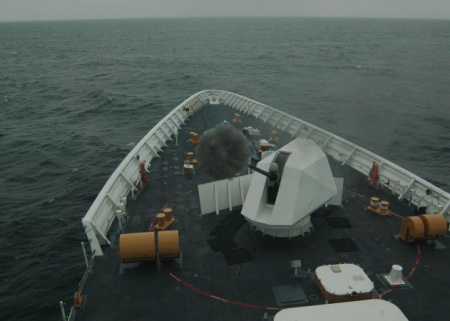
This looks like it might be an opportunitiy to test the lethality of our 57mm guns. We have a tug that needs to be disposed of. Let’s see how well a Bertholf’s 57mm Mk110 does against this small target.

NSCfires57mm

In April 2012 we had an opportunity to exercise our weapons against a derilect Japanese fishing vessel that had been adrift since the Tsunami of 11 March 2011. USCGC Anacapa let loose with her 25mm and probably scored over a hundred hits, but ultimately had to use fire hoses to sink the little ship. I used this as an example of how hard it is to sink a ship with gunfire. 

To be fair lets make sure that all the tugs few bulkheads are watertight; you would want to make sure they were before towing it anyway. To make it interesting, start shooting from between 10,000 and 12,000 yards, and fire say 20 rounds at that range. Then close to about 7,000 and shoot another 20. If the tug hasn’t sunk, close to no less than 4,000 and try to finish it off.

Would be very interested to see the results, including how long it takes to sink the ship? How many hits at what ranges? It would be good for an aircraft to get some video of the damage, as it progresses too. The Navy might also be interested in the results.

Document Alert: The Trans-Pacific Partnerships: Strategic Implications–CRS

There is a new and interesting product from the Congressional Research Service, “The Trans-Pacific Partnership: Strategic Implications.” 

Growth in trade naturally grows the Coast Guard’s responsibilities. This, unlike NAFTA would impact primarily the marine transportation system.

Congress still has to approve implementing legislation. Would be interesting to know how the presidential candidates feel about this agreement.