Sonar Systems for Vessels as Small as Webber Class WPCs

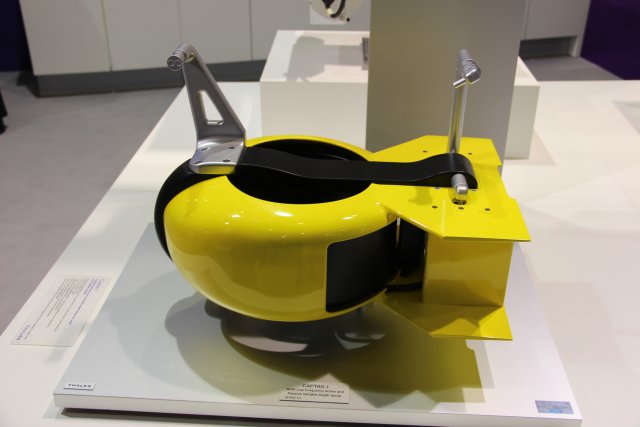
ThalesCAPTAS1
Photo credit: NavyRecognition. Thales CAPTAS 1

As expected, the EuroNaval 2014 trade show is offering some interesting products. This one might be of interest if the Coast Guard ever decides to get back into the ASW mission. Thales, maker of some of the most highly respected sonars in the world, is offering both hull mounted and towed active/passive sonars for vessels as small as 300 tons. The towed sonar is the CAPTAS 1, joining two previous members of a family of systems that share common technology. The Largest of these, the CAPTAS 4 is being evaluated for the ASW module for the LCS.

Italy to build National Security Cutters

DefenseNews is reporting Italy will soon award a contract for new Patrol Ships.

While a bit longer, 135 meters in length compared to 127 for the NSC, the Italian ships will be the same displacement as the Bertholf class, 4,500 tons.

The initial contract will be for five ships in a “light” (patrol) configuration and one in “heavy” (frigate) configuration, with an option for four additional heavy versions.

There are a number of interesting things about this class.

The ships were designed in-house (I assume to the preliminary level) which appears to have it made quicker to get the ships into production. They expect to launch the first ships in 2016 or early 2017.

They are expected to have a top speed of 34 to 35 knots, so I presume they will have two gas turbine while the NSC has one. It is not clear if they will have a single complex gearbox like the NCSs that all allows any or all of her engines to power both screws or if they will go with a simpler arrangement with separate gear boxes for each shaft. It is also unknown how powerful their diesel cruise engines will be.

The radar will be fixed units. According to the manufacturer, Selex, “The KRONOS radar exploits Selex ES’s advanced Active Electronic Scanning Array (AESA) technology. It is able to perform surveillance, tracking, threat evaluation and fire control against multiple threats, simultaneously and automatically, at all altitudes.”

Even the “light” ships carry both a 5″ forward and a 76mm on the roof of the hangar. I would like to think that they have the 5″ for the reasons I outlined here, but the Italian 5″/64 has additional capability, the Volcano round. The two medium caliber guns also gives them a degree of redundancy.

They also have a degree of modularity.

“Both versions will offer two modular zones, one in the center of the deck and one underneath the rear flight deck. The central zone will be able to host vehicles or cargo containers that can be lifted aboard by on-board cranes. In a combat situation, that space can be used to carry large rigid-hull inflatable boats for special operations, the source said.”

Even the financing arrangements are innovative with bank loan to be repaid over 20 years.

Coast Guard Yard Gets Navy 76mm Guns

76mmMk75
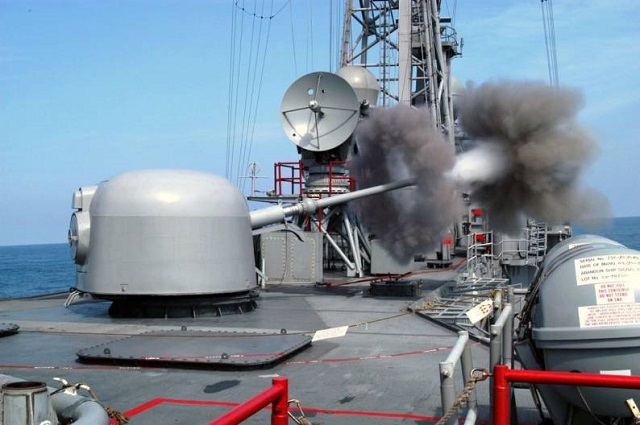
Photo: Mk-75 3”/62 caliber naval gun aboard USS Curts (FFG-38). U.S. Navy photograph

NavyRecognition is reporting that the Navy and Coast Guard are in the process of stripping five FFGs of weapons components that will be used to support Coast Guard Mk75 gun systems on Bear Class WMECs that are expected to be in service into the 2030s. It is not apparent from the post if Mk92 fire control system parts were also scavenged.

It is clear that soon virtually all US expertise in the Mk75 gun will reside in the Coast Guard. We can expect that some of those nations that have received (or will receive) former USCG 378s are likely to ask for help with these system for both training and maintenance.

Imbalance in the Arctic?

gCaptain reports a Reuters interview with former Commandant Admiral Papp, now U.S. special representative for the Arctic Region, on the need for a heavy icebreaker and additional infrastructure in the Arctic. We are much less capable there than we were in the 1950s.

Meanwhile on the other side of the pole, the Russians are investing heavily, if perhaps not wisely.

On 23 Oct. the German Navy blog Marine Forum reported, “Baltic Shipyard plans to complete the world’s first floating nuclear power plant AKADEMIK LOMONOSOV in September 2016 … expected to provide power to Arctic cities.”

And the Russians tell us there is no need for NATO in the Arctic while reactivating Soviet era bases in the Arctic.

The Finest Hours–The Movie

Cape Cod Times, via Military.com, talks about the upcoming movie version of the Book “The Finest Hours.”

The Finest Hours,” which is based off Casey Sherman’s and Michael J. Tougias’ best-selling book with the same title, will star Chris Pine, Academy Award and Golden Globe nominee Casey Affleck and Holliday Grainger, according to a statement from Disney.

This is the story of how Bernard C. Webber, coxswain of motor lifeboat CG-36500, from Station Chatham, Massachusetts, and his pickup crew of three (EN3 Andrew Fitzgerald; SN Richard Livesey; and SN Irving Maske) rescued 32 of 33 crewmembers trapped on the stern of the tanker Pendleton, one of two Tanker that broke in half in a deadly storm on 18 February 1952 off the coast of Massachusetts.

The book also talks about the other rescue efforts underway at the same time. Hopefully the movie will at least touch on these as well.

Apparently there is also a mid-grade telling of the story for younger readers.

TheFinestHours

Gulf Cooperative Council to Form Joint Coast Guard Command

DefenseNews is reporting the Gulf Cooperative Council has announced their intention to form a joint naval command to be called Maritime Security Group 81.

“The force, Attar said, is expected to mainly conduct naval interdiction missions, stopping illegal drugs and weapons shipment.

“’It will consist mainly of interdiction vessels and patrol vessels and will be more of a coast guard than a real blue water navy, I expect,’ he said.”

“…The announcement of the command was backed by US President Barack Obama who issued a directive to Congress to facilitate GCC defense article sales and defense services under the Foreign Assistance Act of 1961 and the Arms Export Control Act.”

The USCG may be involved in at least three ways. (1) There may be sales through the Coast Guard’s Foreign Military Sales organization. (2) There may be training administered by Coast Guard teams. (3) The six WPCs still in the area, operate out of Bahrain, a council member, so USCG vessels may actually be incorporated in the organization in some way.

I also wonder if this might become a model for similar organizations in the South China Sea or the Caribbean.

Euronaval 2012 in Pictures–NavyRecognition

Our friend at NavyRecognition is preparing to cover the EuroNaval 2014 trade show, 27-31 Oct. In prep, he has linked to his coverage of the 2012 show. I’m not sure I ever referenced this, but it is a very complete photo essay. It includes 178 photos of the models and 56 of full size displays. The models include both concepts and completed ships including a number of Coast Guard sized patrol vessels (even the NSC). The full sized displays include a number of weapon systems, including some we have talked about here. It may be two years old but I think it is still worth a look.

Looking forward to the coverage of the 2014 show.

Time to Ditch the 57mm?

120307-N-PB383-565

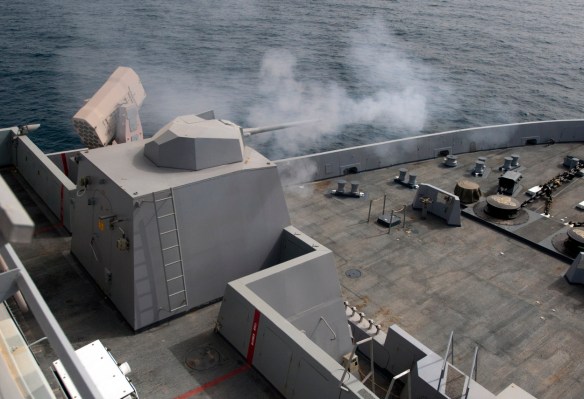
The MK46 Mod 1 weapon system fires a round during a live-fire qualification exercise aboard the amphibious transport dock ship USS New Orleans (LPD-18). US NAvy Photo

DefenseNews reports on the controversial decision to replace the planned installation of the 57mm Mk110 on the DDG-1000s with the smaller, lighter 30mm Mk46.

The remarks by the project manager in defense of the decision seem to raise questions regarding the Coast Guard’s choice of the 57mm Mk110.
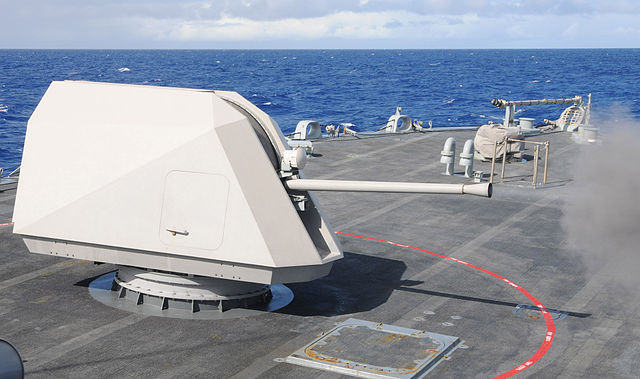
640px-US_Navy_100622-N-7058E-161_The_littoral_combat_ship_USS_Freedom_(LCS_1)_fires_its_MK_110_57mm_gun_during_a_surface_gunnery_test
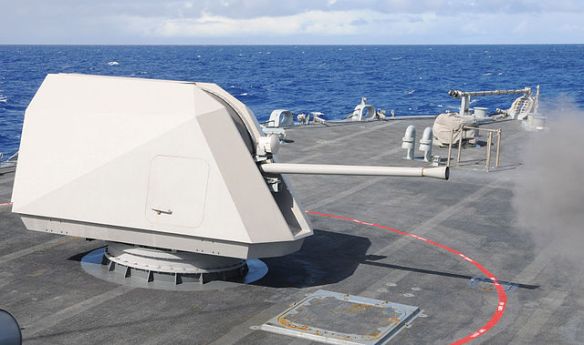
Photo: Mk110 57mm gun on USS Freedom (LCS-1) during surface gunnery test firing

The Mark 110 57mm gun, “was nowhere near meeting the requirements,” said Capt. Jim Downey, program manager for the DDG 1000 Zumwalt class.

In fact, Downey said, the 57mm gun — selected years ago for the DDG 1000 as a close-in weapon and in service as the primary gun for the littoral combat ship and Coast Guard national security cutters — is overrated.

“They were significantly over-modeled on the lethality,” he said. “The results of the actual live test-fire data was that the round was not as effective as modeled.”

For the DDG 1000’s particular requirements, however, Downey said the 30mm met more overall performance points than the 76mm or 57mm guns. All three guns were part of his program review, with the 30 coming in just ahead of the 76 and significantly ahead of the 57.

The program manager also contends the lighter weight of the Mk46 was not a consideration.

“That is absurd, the fact that we changed the guns for weights,” he said in a September interview. “The weight had zero, absolutely, 100 percent nothing to do with the decision on the guns.”

Still it is hard not to believe the choice was a result of a misguided, overly restricted decision criteria. Surely the criteria had to focus on effectiveness against swarms of small fast surface vessels, because the Mk46 has no AAW capability. Even this scenario has to be called into question because of the short effective range of the 30mm.

One retired senior surface warfare officer questioned the choice of the 30mm, which, he said, was effective only to about 2,200 yards.

“If they’re going to use the 30mm as the answer, they’re going to let some ships get in pretty close,” he said.

“When you look … at engaging swarm boats, [the 30mm] can’t even begin to engage effectively until they’re about a mile from the ship, and by then you’re in rocket-propelled grenade range,” the retired senior officer said. “The 57,” he added, “has an effective range of about two to three miles.”

Even if the criteria are flawed, the DDG-1000 program manager seems to know something about the 57mm that the Coast Guard does not. We probably should look at his team’s data.

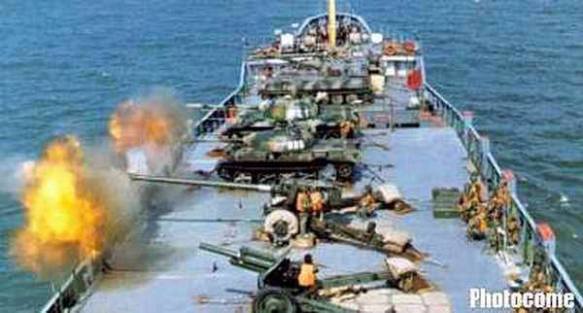
As I have stated before, in order to minimize the probability that extemporized weapons could disable a cutter, the Coast Guard needs a standoff range of at least 4,000 yards so I cannot see how the 30mm is a good choice.

Still, if the 30mm more effective than the 57mm in the anti-surface mission, perhaps it is time to reconsider the choice of primary weapons for the OPCs? Should we go back to the 76mm or perhaps consider the 5″. Or should we dispense with a medium caliber gun entirely in favor of small guided missiles, with perhaps a weight/space/moment reservation for later installation if we become engaged in a prolonged major conflict?

The Coast Guard must also consider countering small fast surface craft but only in small numbers, with the likely complication that they would likely attempt to avoid the cutter rather than closing the range to attack it, and for that I believe small guided missiles are a better choice than any gun.

Earlier we talked about how the OPC might be designed for wartime, but built for peacetime. Recently I have come to believe the peacetime weapons outfit of virtually all cutters, WPC (perhaps WPB) and above, should include a stabilized heavy machinegun mount like the Mk38, some small precision guided weapons (like SeaGriffin, Hellfire, or Brimstone), and light weight anti-surface torpedoes (not to say they should not have other systems). This would allow all these cutters to fire warning shots (with the Mk38), destroy small, fast targets (using the guided weapons), and immobilize even large ships from outside the effective range of extemporized weapons (using the torpedoes). Right now, I don’t believe there is a light weight torpedo with an anti-surface capability in the US inventory, so we need some other system to provide this capability, until we can get the Navy to provide an appropriate torpedo, and we need to have it on relatively small cutters because when the need is recognized the NSCs and OPCs are not likely to be available.
improvised weapons
Photo: Extemporized weapons–actually a Chinese test