This Day in Coast Guard History, October 3

Based on the Coast Guard Historian’s timeline, https://www.history.uscg.mil/research/chronology/
With inspiration from Mike Kelso

October 3

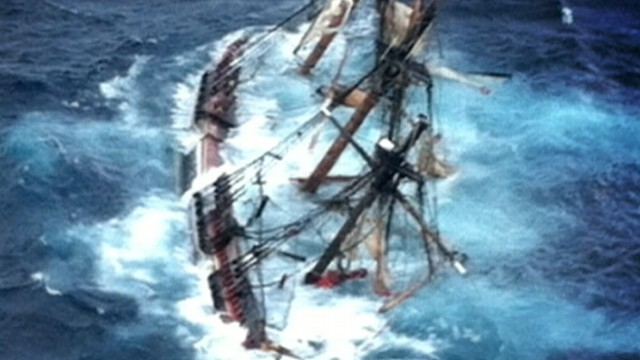
1898  The American barkentine, Wanderinq Jew lost her sails and sprung a leak during the severe hurricane of October 2, approximately 11 miles east by south from the station at Sullivans Island, South Carolina.  On account of distance and frequent heavy rain squalls, she was not sighted by station lookout until 3:30 pm on the following day.  A surfboat was launched and the ship was found abandoned by her crew.

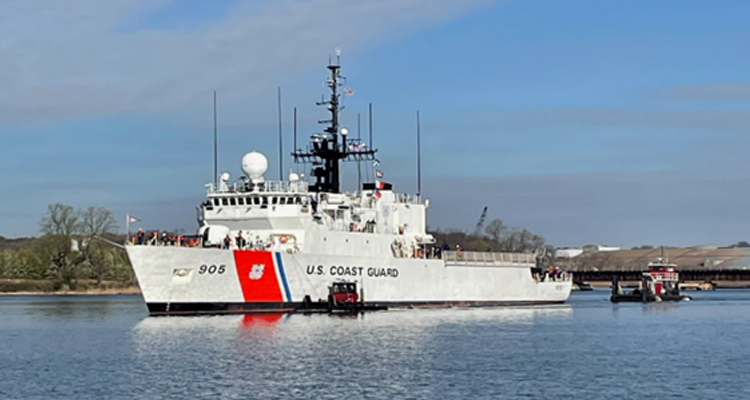
USCGC Valiant (WMEC-621)

2014  CGC Valiant returned to their homeport Friday at Naval Station Mayport, in Jacksonville, Florida.  During the 52-day deployment, Valiant sailed throughout the Windward Passage and the North Caribbean Sea in support of Operation Southeast Watch.  One port call was made at Port-au-Prince, Haiti. While anchored, Valiant crew hosted the U.S. Ambassador to Haiti, the Honorable Pamela White; the Deputy Chief of Mission to the U.S. Embassy in Haiti, the Honorable Brian Shukan; the Chief of the Haitian Coast Guard, Commissaire Joseph Jean-Marie Wagnac; and other government representatives.  Valiant also responded to a search and rescue case involving a 55-foot fishing vessel, which was adrift and taking on water in the Old Bahama Channel. Valiant escorted the vessel over 100 nautical miles to Ragged Island, Bahamas where it transferred the vessel to a Royal Bahamian Defense Force patrol vessel.  Valiant repatriated 24 Haitian migrants to Cap Haitien, Haiti, and embarked 11 Cuban migrants that had been rescued by the crew of the cruise ship Carnival Liberty. The cutter also patrolled the Windward Passage to prevent overloaded Haitian migrant vessels from taking to sea.

“Coast Guard to send 3 more cutters to Guam, has no plans to escort Philippine ships” –Stars and Stripes

A U.S. Coast Guard boat crew and boarding team from U.S. Coast Guard Cutter Oliver Berry (WPC 1124) approaches a foreign fishing vessel to conduct a joint boarding inspection with members of the Western and Central Pacific Fisheries Commission on the high seas in Oceania, Sept. 22, 2024. U.S. Coast Guard Cutter Oliver Berry’s crew recently completed a 45-day patrol in Oceania in support of Operation Blue Pacific, promoting security, safety, sovereignty, and economic prosperity in the region.

Stars and Stripes reports,

The Coast Guard will double its Guam fleet to six cutters but doesn’t plan to accompany the Philippine coast guard as it struggles to maintain territorial claims in the South China Sea, the service’s Pacific-area commander said Friday.

This is based on a video news conference by Pacific Area Commander Vice Adm. Andrew Tiongson speaking from Japan.

“The Coast Guard will not escort Philippine resupply missions to the BRP Sierra Madre, a grounded warship garrisoned by Filipino troops at the Second Thomas Shoal in the South China Sea, according to Tiongson.”

The Philippines has not asked for escorts, Tiongson said. “We do advise, and we do assist,” he said. “We provide what we would do in this situation.”

He also said, “It’s possible we may get another Indo-Pacific support cutter,” using the description applied to USCGC Harriet Lane, recently arrived in the Pacific Area to support operations in the Western Pacific.

There is more in the article.

“U.S. Coast Guard encounters joint Chinese Coast Guard, Russian Border Guard patrol in Bering Sea” –Coast Guard News

Russian Okean class Patrol Ship. This is the larger of the two Russian ships. “An HC-130J Super Hercules airplane crew from Coast Guard Air Station Kodiak observes two Russian Border Guard ships and two Chinese Coast Guard ships approximately 440 miles southwest of St. Lawrence Island Sept. 28, 2024. This marked the northernmost location where Chinese Coast Guard vessels have been observed by the U.S. Coast Guard. (U.S. Coast Guard courtesy photo)”

Below is a CG news release, presumably from District 17 (Alaska).

An earlier post reported joint Russian/Chinese Coast Guard exercises and the formation of this four-ship combined task force.

They are in the Bering Sea. Will be interesting to see if they go up into the Arctic. It is a period of near minimal ice.

There is an interesting contrast between the two Russian ships and the two Chinese ships. In spite of the fact that this is happening in Russia’s back yard, the Chinese ships clearly outclass the Russian ships, being newer, larger, and faster.
China Coast Guard type 818 cutter like the two deployed with the Russian Coast Guard

Why four ships hanging together when the US Coast Guard does Alaska Patrols in the Bering with only one ship? The Chinese tend to operate in groups. We haven’t seen this with the Russian Coast Guard, but I really haven’t seen much from them anyway.

Could the Chinese be teaching the Russians how to do gray zone operations, or is it just that totalitarian regimes need someone to do the work and someone to watch them?

On the other hand, the China Coast Guard has lots of ships but relatively few aircraft, and they operate primarily in two heavily trafficked, contested areas, the South and East China Seas.

News Week also has a good report on this.


Oct. 1, 2024

JUNEAU, Alaska – The U.S. Coast Guard located four vessels from the Russian Border Guard and Chinese Coast Guard conducting a joint patrol in the Bering Sea, Saturday.

While patrolling the maritime boundary between the United States and Russia on routine patrol in the Bering Sea, a HC-130J Super Hercules airplane crew from Coast Guard Air Station Kodiak observed two Russian Border Guard ships and two Chinese Coast Guard ships approximately 440 miles southwest of St. Lawrence Island.

The vessels were transiting in formation in a northeast direction, remaining approximately five miles inside the Russian Exclusive Economic Zone. This marked the northernmost location where Chinese Coast Guard vessels have been observed by the U.S. Coast Guard.

 “This recent activity demonstrates the increased interest in the Arctic by our strategic competitors,” said Rear Adm. Megan Dean, commander of the 17th Coast Guard District. “The demand for Coast Guard services across the region continues to grow, requiring continuous investment in our capabilities to meet our strategic competitors’ presence and fulfill our statutory missions across an expanding operational area.”

The HC-130 aircrew operated under Operation Frontier Sentinel, an operation designed to meet presence with presence when strategic competitors operate in and around U.S. waters. The Coast Guard’s presence strengthens the international rules-based order and promotes the conduct of operations in a manner that follows international law and norms.

This Day in Coast Guard History, October 2

Based on the Coast Guard Historian’s timeline, https://www.history.uscg.mil/research/chronology/
With inspiration from Mike Kelso

Revenue Cutter Thomas Jefferson captures three Royal Navy barges and personnel in Hampton Roads. US Coast Guard Collection.

1789  Secretary of the Treasury Alexander Hamilton asked collectors of customs to report on expediency of employing boats for the “security of the revenue against contraband.”  Hamilton’s interest in such vessels led to his request to Congress to fund the construction of 10 such revenue “boats” the following year, leading to the creation of what is now the U.S. Coast Guard.

2014  The Coast Guard launched several assets in response to a report of a fire on board a natural gas drill platform in Cook Inlet, Alaska.  The Coast Guard diverted a Coast Guard Hercules HC-130 crew and an MH-60 Jayhawk helicopter crew to conduct an overflight of the Baker Platform in Cook Inlet, near Nikiski.  The Coast Guard also launched the CGC Mustang and the diverted CGC SPAR to the location.  A five-mile, no-fly safety zone at 5,000 feet and a two-mile safety zone were established around the platform.  All four people aboard the platform were safety evacuated.

This Day in Coast Guard History, October 1

Based on the Coast Guard Historian’s timeline, https://www.history.uscg.mil/research/chronology/
With inspiration from Mike Kelso


These are the remnants of Transcontinental Air Mail Route Beacon 37A, which was located atop a bluff in St. George, Utah, U.S.A. With concrete arrows indicating the direction to the next beacon, a rotating light tower, and a shed that usually held a generator and fuel tanks, these beacons were once situated every 10 miles on air routes across the United States beginning around 1923.

1926  An airways division, headed by a chief engineer, was set up as a part of the Lighthouse Service, its work covering the examination of airways and emergency landing fields and the erection and maintenance of aids to air navigation.

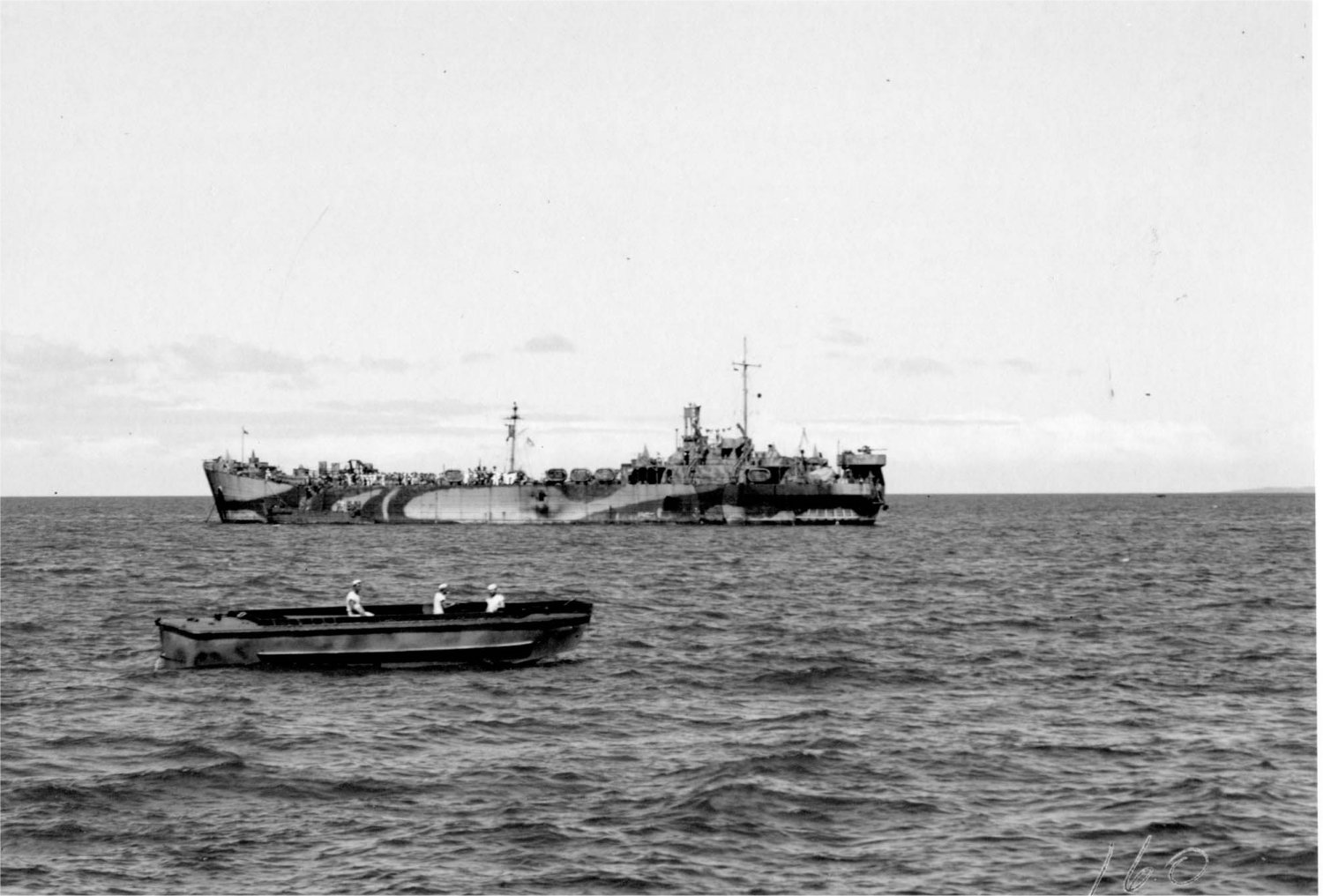
1943  Coast Guard-manned USS LST-203 was stranded in Southwest Pacific but there were no casualties. While on the beach, a storm caused her to broach. Declared total loss. Struck from the Naval Register, 6 March 1944.

1976  Coast Guard personnel were required to change to the new “Bender Blues” uniforms by this date.

USCGC Storis (WMEC-38)

1991  CGC Storis became the oldest commissioned cutter in the Coast Guard when the CGC Fir was decommissioned.  Storis‘s crew painted her hull number “38” in gold in recognition of her status.

1996  Operation Frontier Shield commenced. It was the largest counter-narcotics operation in Coast Guard history to date.

HH-60J Air Station Astoria

2009  The U.S. Coast Guard Acquisition Directorate’s HH-60 Conversion Project held a ribbon cutting ceremony at Coast Guard Air Station Elizabeth City, North Carolina, in honor of the Medium Range Recovery Helicopter achieving Initial Operational Capability (IOC).

2015  El Faro, a 735-foot ro-ro cargo ship, was en-route to San Juan, Puerto Rico, from Jacksonville, Florida with a crew of 33 on board. At approximately 0730, watchstanders at the Coast Guard Atlantic Area command center in Portsmouth, Virginia, received an Inmarsat satellite notification stating El Faro was beset by Hurricane Joaquin, had lost propulsion and had a 15-degree list.  The crew reported the ship had previously taken on water, but that all flooding had been contained.  Watchstanders at CG 7th District command center in Miami immediately launched an HC-130 out of Air Station Clearwater to search for El Faro while two Hurricane Hunter aircrews attempted to locate and establish communications with the merchant vessel on October 2.   Ultimately, Coast Guard assets used in the search included aviation assets from Air Stations Clearwater and Elizabeth City, CGC NorthlandResolute, and Charles Sexton, along with Navy and Air Force assets and three commercial tugboats.  The search was called off on October 7 after search crews located a deceased person in a survival suit in the water and a heavily damaged lifeboat with markings consistent with those on board El Faro. Additional items located by search crews included a partially submerged life raft, a survival suit, life jackets, life rings, cargo containers, Styrofoam, packaged food, and an oil sheen.

Fisheries Enforcement from a Littoral Combat Ship

PACIFIC OCEAN – Sailors from USS Omaha (LCS 12), along with five U.S. Coast Guard law enforcement members, transit in a rigid-hull inflatable boat to a foreign flagged fishing vessel in support of the Oceania Maritime Security Initiative (OMSI) in the Pacific Ocean, Sept. 12. Omaha, assigned to U.S. 3rd Fleet, is operating in support of OMSI in the Indo-Pacific region. A U.S. Coast Guard law enforcement detachment from the Pacific Tactical Law Enforcement Team embarked aboard Omaha is supporting maritime fishery law enforcement operations for U.S. and Pacific Island nations in Oceania. OMSI is a Secretary of Defense program that leverages Department of Defense assets to increase U.S. Coast Guard maritime security and maritime domain awareness support in Oceania through operations in remote U.S. Exclusive Economic Zones and bilateral maritime law enforcement agreements with Pacific Island nations. (U.S. Navy photo by Hospital Corpsman First Class Weiju Lai)

Below is a news release from 3rd Fleet. TACLET taking the opportunity to use a Navy unit’s transit time to do some fisheries enforcement. Photo below for reference.

PACIFIC OCEAN (Aug. 8, 2021) The Independence variant littoral combat ship USS Omaha (LCS 12) simulates a refueling-at-sea with the aircraft carrier USS Abraham Lincoln (CVN 72). (U.S. Navy photo by Mass Communication Specialist 3rd Class Javier Reyes)


Sept. 20, 2024

USS Omaha participates in Oceania Maritime Security Initiative

By Commander, Littoral Combat Ship Squadron 1

The Independence-variant littoral combat ship USS Omaha (LCS 12), with an embarked detachment from Helicopter Maritime Strike Squadron (HSM) 35 and a law enforcement detachment from U.S. Coast Guard Tactical Law Enforcement Team Pacific, began operations in support of Oceania Maritime Security Initiative (OMSI) Sept. 8.

A Secretary of Defense program, OMSI is aimed at diminishing transnational illegal activity on the high seas in the Pacific Island nations of Oceania’s Exclusive Economic Zones (EEZ), as well as increasing interoperability with partner nations.

Omaha’s range and capabilities allow the embarked U.S. Coast Guard law enforcement detachment the ability to access the remote U.S. and Pacific Island nations’ EEZs.

“We embrace the opportunity to work closely with the U.S. Coast Guard as we help enforce economic policies among some of our closest partners in the Western and Central Pacific,” said U.S. Navy Cmdr. Kevin Smith, commanding officer of Omaha. “It is rewarding to work with these island nations to patrol their waters, maintaining a free and open region.”
The objective of OMSI is to reduce and eliminate illegal, unregulated and unreported fishing, combat transnational crimes in EEZs of the Western and Central Pacific region and enhance regional security.

“The partnership between the U.S. Navy and U.S. Coast Guard plays an integral role in the OMSI mission,” said Coast Guard Chief Maritime Enforcement Specialist Kyle Smouse. “Deploying U.S. Coast Guard law enforcement detachments aboard U.S. Navy vessels allows the Coast Guard to have a greater presence and impact in enforcing Western and Central Pacific Fisheries Commission (WCPFC) regulations. These areas of operation would be difficult to reach without the support of the U.S. Navy.”

The WCPFC international fisheries agreement focuses on the long-term conservation and sustainable use of fish stocks in the Western and Central Pacific Ocean. The WCPFC seeks to address problems in the management of the high seas fisheries in the Western and Central Pacific Ocean, where there is unregulated fishing and vessel re-flagging to evade controls.

Omaha, homeported in San Diego and assigned to U.S. 3rd Fleet, is on a scheduled deployment in the Pacific Ocean. Littoral combat ships are fast, optimally manned, mission-tailored surface combatants that operate in near-shore and open-ocean environments, winning against 21st-century coastal threats.

This Day in Coast Guard History, September 30

Based on the Coast Guard Historian’s timeline, https://www.history.uscg.mil/research/chronology/
With inspiration from Mike Kelso.

Twin Lights of the Navesink

1899  First Navy wireless message was sent via the Lighthouse Service Station at Highlands of Navesink, New Jersey.

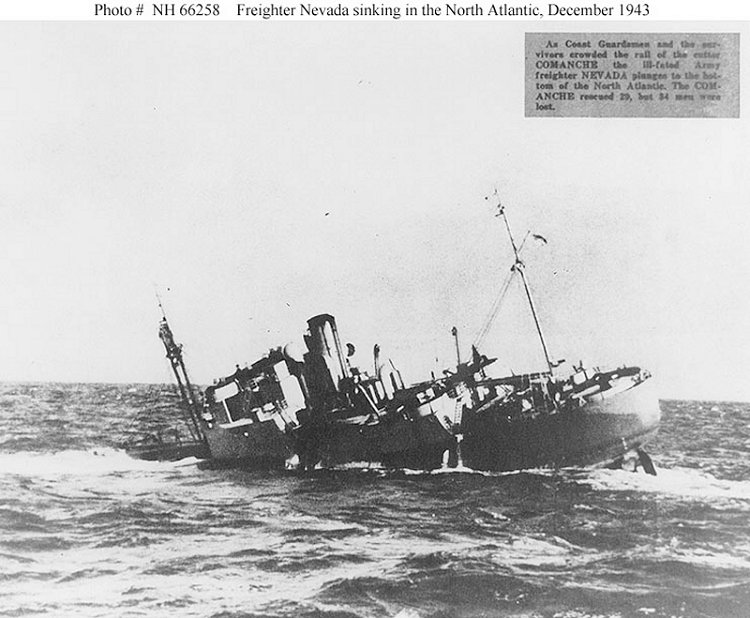
1943  CGC E.M. Wilcox foundered off Nags Head, North Carolina. One crewman was lost.

1949  The rank of commodore, established in 1943 as a wartime measure, was terminated by the President under the provisions of an Act of Congress approved July 24, 1941.

Former USCGC Taney now a Museum Ship in Baltimore

1977 CGC Taney departed Ocean Station (OWS) Hotel on September 30, 1977 when the station was closed and replaced by a buoy.  This was the final ocean station patrolled by a Coast Guard cutter.  OWS Hotel, located 200 miles east of the Maryland/Virginia coast was first established in 1970 as part of a supplemental weather warning program for the tracking and improved forecasting of East Coast storms and hurricanes.  OWS Hotel was manned by the Coast Guard from August 1st through April 15th each year.  The termination of OWS Hotel marked the end of the Coast Guard’s participation in the manned ocean station program which began on February 10, 1940 when CGCs Bibb and Duane occupied stations Number 1 and 2 in the North Atlantic and continued through the end of the U.S. participation in the North Atlantic Ocean Station Program of the World Meteorological Organization and the International Civil Aviation Organization in 1974.

Marcus Island

1994  The crew of Coast Guard LORAN Station Marcus Island decommissioned their station and turned it over to the Japanese Maritime Safety Agency.  This was the last station in the Northwest Pacific LORAN chain to be decommissioned and turned over to the Japanese under a 1992 agreement between the two countries.

1997  Omega Navigation Station Hawaii ceased operation, coinciding with the end of worldwide Omega transmissions.

Coast Guardsmen from Port Security Unit 307 conduct seaward security for Department of Defense assets and personnel at Naval Station Guantanamo Bay, Cuba, April 25, 2022. During the nine-month deployment, unit operations focused on maritime defense, providing more than 30,000 hours of around-the-clock waterside and shore side anti-terrorism and force protection. U.S. Coast Guard by photo by Lt. Cmdr. Glenn Sanchez.

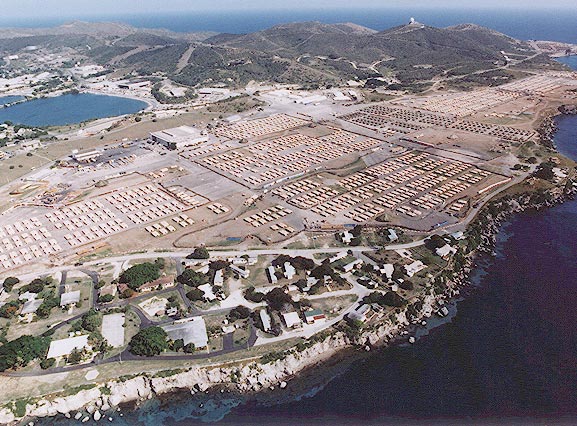
2015  Coast Guard Port Security Unit 308, based in Kiln, Mississippi, returned home from a nine-month deployment to Guantanamo Bay, Cuba in support of Operation Enduring Freedom and the Global War on Terrorism.  During the deployment, PSU 308 members maintained a continuous maritime anti-terrorism/force protection presence in the Naval Defensive Sea Area of Guantanamo Bay, Cuba, directly supporting the commander of Joint Task Force Guantanamo Bay Naval reservation and adjoining waters.  PSU 308 was commissioned September 16, 1998.  It has been mobilized five times to this point since its inception, twice to Kuwait in 2003 and 2010, once to Bahrain in 2002, and once previously to Guantanamo in 2007.  It was compromised of 142 selected reservists and six active duty personnel.  PSU 308 was an expeditionary warfare unit specializing in maritime anti-terrorism/force protection and port security in support of military or humanitarian operations worldwide.  PSU 308 maintained garrison facilities as a tenant command of Coast Guard Pacific Area Command in Kiln.

New Offshore Patrol Vessels for Italy

Below is a Fincantieri news release reporting steel has been cut for the first of a new class of Offshore Patrol Vessels for the Italian Navy.

Unlike the US, France, and the UK, Italy has no overseas territories. Their Exclusive Economic Zone is less than 1/22 the size of that of that of the US or France. Even so, they have 13 ships they classify as Offshore Patrol Vessels. Three of them are large at over 5,800 tons full load. (Seven more of these are planned.) In most navies they would be classified as frigates. The other ten are very different, about 1500 tons full load, and 80 (262′) to 89 meters (291′) in length, displacing about 300 tons less than a WMEC270.

Global data reports, “These four new OPVs will replace numerous warships still in service; some, such as the Lerici-class minehunters, have been in use for nearly 40 years…” There are twelve Lerici class, divided into two groups. The first four were commissioned in 1985, about seven years earlier than the remaining eight. Two of the first four were placed in reserve in 2012. Are the minehunters being used as patrol vessels or will the new ships have a minehunting capability? It is not clear if the new OPVs have provision for a stern ramp or for containerized mission modules.

The new ships are 2,400 tons full load and about 95 meters (312′), in length overall, so about 60% larger than what we might see as their existing medium endurance OPVs. Army Recognition’s Navy News reports that the new class is “equipped with a CODLAD (Combined Diesel-electric and Diesel) propulsion system, enabling speeds over 24 knots, with a range of 3,500 nautical miles at 14 knots.

The range is short by US Coast Guard standards, but Italian vessels don’t have the long transits US Coast Guard cutters have going to Alaska, the Eastern Pacific drug transit zone, or to the Western Pacific, and it might not be that bad after all. The Coast Guard gets a lot of long distance work out of the 154 foot fast response cutters that have a range of only 2,500 miles. 3500 miles at 14 knots suggests a 5,000 mile range at ten knots. A CODLAD power plant means these ships are likely to be very fuel efficient at slow speeds.

These ships, like the much larger Thaon di Revel class will have an “Integrated Naval Cockpit” in which the pilot and copilot (I think that means Officer of the Decky and Quartermaster of the Watch) have seated positions from which to control helm, throttles, and other systems including some forms of radar, navigation, communications and combat system functions. The captain will have a similar position behind the pilot and copilot.

Naval Cockpit, Commander sits behind the Pilot and Copilot. Source: Leonardo.

Notably, this class is being built by Fincantieri, owner of Fincantieri Marinette Marine which is currently building the new Constellation class FFGs for the Navy. They also built the Freedom class LCSs, the Juniper class WLBs, the Keeper class WLMs, and USCGC Mackinaw.


Fincantieri: works start on the first next-generation Offshore Patrol Vessel for the Italian Navy

24 September 2024

The steel cutting ceremony for the first of four next-generation Offshore Patrol Vessels (OPVs) that Fincantieri will build for the Italian Navy took place today at the Riva Trigoso shipyard (Genoa).

The ceremony was attended, among others, by the General Manager of Fincantieri’s Naval Vessels DivisionDario Deste, the Director of the Naval Armaments Directorate – NAVARMAdmiral Chief Inspector Giuseppe Abbamonte, and the CEO of Orizzonte Sistemi NavaliGiovanni Sorrentino.

This program, put in place to contribute to the modernization and renewal of the Italian Navy’s units, envisages the construction of four vessels, with an option for additional two, with the first delivery scheduled for 2027. The overall value of the first four ships, contracted by Orizzonte Sistemi Navali (OSN), a joint venture owned by Fincantieri (51%) and Leonardo (49%), is approximately 1.2 billion euros, including the related logistical support.

The OPV program responds to the need to ensure adequate capabilities for presence and surveillance, maritime patrolling, merchant traffic control, protection of lines of communication and the exclusive economic zone, as well as operations to protect against threats derived from marine pollution, such as toxic liquid spills.

With a length of about 95 meters long, a displacement of 2,400 tons and the capacity to accommodate 97 crew members on board, these new patrol vessels will be marked by a package of technological solutions, as well as standards of excellence in automation and maneuverability, that will make them suitable for operating in a wide range of tactical scenarios and weather conditions.

Among the most innovative features is the integrated naval cockpit, developed for the Italian Navy’s Multipurpose Offshore Patrol Vessels (PPAs), co-produced by Fincantieri NexTech and Leonardo. This represents a generational leap, allowing the control of engines, rudders, and platform systems, as well as some combat system functions, by just two operators – pilot and co-pilot – thus optimizing efficiency and safety.

The OPV program marks a major achievement for Fincantieri, further strengthening its position as a global leader in naval defense with its FCX product range, which includes these new patrol vessels. This project not only reinforces the company’s strategic role as a partner of the Italian Navy, but also deepens its collaboration with Leonardo through Orizzonte Sistemi Navali, showcasing Italy’s expertise in defense and in advanced naval integration.

This Day in Coast Guard History, September 29

Based on the Coast Guard Historian’s timeline, https://www.history.uscg.mil/research/chronology/
With inspiration from Mike Kelso

1898  The American steamer, Toledo with the barge Shawnee in tow, became water-logged 25 miles southwest of the station at Ship Canal, Michigan.  Her crew boarded Shawnee and sailed to the canal. There they engaged the steamer D. F. Rose to tow Toledo in and the surfmen assisted to lay her on the beach near the piers.  The keeper then telephoned for a tug and lighter, and upon their arrival all hands set to work until 11 p.m. saving about 1,000 feet of lumber. At this hour the wind came out west and the work had to be abandoned. Toledo broke up and became a total wreck on the 30th.

USCGC Flagstaff (WPBH 1) Undergoing Coast Guard evaluations. U.S. Coast Guard photo

1976  The Coast Guard accepted the hydrofoil USS Flagstaff from the U.S. Navy on this date in 1976 for operational testing.  The hydrofoil was based out of Station Woods Hole during the testing.  It was capable of speeds in excess of 45-knots and carried a crew of 13.

HH-60J Air Station Astoria

1986  Coast Guard officials signed the contract papers to acquire the Sikorsky H-60 series helicopter to replace the venerable HH-3F Pelicans.

LORAN STATION IWO JIMA

1994  The crew of Coast Guard LORAN Station Iwo Jima decommissioned their station and turned it over to a crew from the Japanese Maritime Safety Agency.  The turnover of all of the Northwest Pacific LORAN chain stations was arranged under a 1992 agreement between the U.S. and Japan.

2014  CGC Rush returned to its homeport of Honolulu, Hawaii, following a successful 72-day deployment in the Central and Western Pacific.  Rush departed in July 2014 and spent two months conducting operations in the Central and Western Pacific.  During the deployment, Rush’s crew coordinated with multiple countries and partner agencies to conduct fisheries boardings in support of the Coast Guard’s living marine resources mission.  Rush also participated in international engagement activities in American Samoa, the Republic of the Marshall Islands, Palau, and the Federated States of Micronesia.  To enhance detection of fishing vessels, Rush embarked a helicopter and aviation detachment from Coast Guard Air Station Barbers Point.  Rush’s crew participated in several community outreach and volunteer events during their patrol that included delivering hygiene and first aid supplies, in support of the U.S. Navy’s Project Handclasp, to several Pacific Island Nations.  Rush’s crew also built a garden to support an abused children’s shelter in Samoa and played sports and games with disabled children in Majuro, Republic of the Marshall Islands.

160730-N-KM939-031 PACIFIC OCEAN (July 30, 2016) – Coast Guardsmen, assigned to U.S. Coast Guard cutter Stratton (WMSL 752), make their way to the guided-missile destroyer USS Stockdale (DDG 106) for a rescue and assistance exercise during Rim of the Pacific 2016. Twenty-six nations, 40 ships and submarines, more than 200 aircraft and 25,000 personnel are participating in RIMPAC from June 30 to Aug. 4, in and around the Hawaiian Islands and Southern California. The world’s largest international maritime exercise, RIMPAC provides a unique training opportunity that helps participants foster and sustain the cooperative relationships that are critical to ensuring the safety of sea lanes and security on the world’s oceans. RIMPAC 2016 is the 25th exercise in the series that began in 1971. (U.S. Navy photo by Mass Communication Specialist 3rd Class David A. Cox)

2016  CGC Stratton returned to its homeport of Alameda after a 114-day deployment spanning the Pacific Ocean from Hawaii to the Arctic.  “Our crew logged more than 19,500 miles during this deployment,” said U.S. Coast Guard Captain Nate Moore, the Commanding Officer of Stratton.  “Their participation in a major international military exercise, support of the Coast Guard’s expanding role in the Arctic domain, and commitment to pursue excellence in mission execution has made this an extremely successful deployment.”  The crew of Stratton participated in two high profile exercises during this deployment: the Rim of the Pacific 2016 (RIMPAC) military exercises and Operation Arctic Shield 2016. Stratton was the third consecutive National Security Cutter to serve as commander of the Combined Task Force 175, a multinational task force comprised of nine ships and 13 aircraft from the United States, China, France, and Indonesia.  Participation in RIMPAC 2016 highlighted the Coast Guard’s unique capabilities and partnerships with Department of Defense entities and international partners along the Pacific Rim.  Stratton participated in training evolutions that included complex ship formations, joint flight operations with the U.S. Navy MH-60S Helicopter Sea Combat Squadron (HSC-21), an aviation detachment from San Diego; live fire exercises; personnel and logistics transfers, and maritime interdiction operations.  Successfully completing this integrated training with HSC-21 and deploying together for RIMPAC 2016 represent the first extended Navy aviation deployment aboard a Coast Guard cutter.  As part of Arctic Shield 2016, the Coast Guard deployed cutters, aircraft, and personnel to northern Alaska to engage in operations encompassing a variety of Coast Guard missions across the North Slope.

A response boat crew member steers toward the Coast Guard Cutter Reliance during a 52-day patrol in the Atlantic Ocean, Jan. 13, 2021. During the patrol, the crew traveled over approximately 8,631 miles, assisted in the transference of more than 12,564 lbs. of narcotics with an estimated combined street value of $250 million, intercepted 157 undocumented migrants and transferred eight suspected narcotics smugglers from other U.S. Coast Guard cutters operating in the region. (U.S. Coast Guard courtesy photo)

2021  The crew of CGC Reliance (WMEC 615) returned to homeport in Pensacola 29 September, after a 63-day Caribbean Sea patrol. Reliance crew supported the U.S. Coast Guard 7th District throughout their patrol, aiding in missions to interdict and disrupt the flow of illegal drugs and migrant trafficking while supporting national security and strengthening relationships with regional partners throughout the Caribbean.  “I am extremely proud of our crew for their adaptability and professionalism throughout the patrol. Regardless of the mission set, whether that was responding immediately to the aftermath of the devastating earthquake in Haiti by conducting critical port assessments or stopping the flow of illegal narcotics, Reliance was always ready to respond to the needs of our Service and our Nation,” said CDR Robert Hill, commanding officer. Significantly, the crew supported the relief efforts in response to the earthquake in Haiti in August, conducting two separate port assessments on Haitian ports to ensure the harbors were safe for vessels to deliver vital aid and assistance to the region following the disaster. During the patrol, Reliance’s crew intercepted one vessel attempting to smuggle approximately 1,132 lbs. of cocaine and detained a total of four suspected smugglers. Additionally, Reliance received more than 4,291 lbs. of cocaine, ten suspected smugglers, and 96 migrants from other U.S. Coast Guard cutters operating in the region. The crew also rescued 50 Dominican nationals from an unseaworthy vessel off the coast of Puerto Rico and repatriated 158 migrants to the Dominican Republic’s navy. The 63-day patrol was critical in allowing the cutter crew to work on shipboard training, qualifications, and proficiency to maintain operational readiness. This training enabled Reliance’s team to complete a five-day major shipboard training exercise in Mayport, which tested their readiness in all aspects of damage control, seamanship, and navigational procedure.

This Day in Coast Guard History, September 28

Based on the Coast Guard Historian’s timeline, https://www.history.uscg.mil/research/chronology/
With inspiration from Mike Kelso

Coast Guard Cutter Aspen crew reestablishes a buoy while conducting Aid to Navigation operations off the coast of Humboldt Bay. The crew of the Aspen traveled to Humboldt Bay to recover displaced aids to navigation and attempted to restore missing navigational aids to assist mariners in transiting the Humboldt Bay entrance in Samoa, California. (U.S. Coast Guard photo by Seaman Ryan Estrada /Released)

1850  An Act of Congress (9 Stat. L., 500, 504) provided for a systematic coloring and numbering of all buoys for, prior to this time, they had been painted red, white, or black, without any special system.  The act “prescribed that buoys should be colored and numbered so that in entering from seaward red buoys with even numbers should be on the starboard or right hand; black buoys with odd numbers on the port or left hand; buoy with red and black horizontal stripes should indicate shoals with channel on either side; and buoys in channel ways should be colored with black and white perpendicular stripes.”

1850  An Act of Congress (9 Stat. L., 500, 504) gave legal authority for the first time for the assigning of collectors of customs to lighthouse duty. Section 9 of this act authorized the Secretary of the Treasury to assign to any of the collectors of customs, the superintendence of such lighthouses, beacons, lightships, and buoys as he might deem best. The act also stipulated that no collector of customs whose annual salary exceeded $3,000 a year should receive any compensation as disbursing officer in the Lighthouse Establishment and, in no case, was the compensation of the collectors of customs for disbursements in the Lighthouse Service to exceed $400.00 in any fiscal year.

The Coast Guard cutter Boutwell,’ foreground, is seen escorting the Liberian-flagged vessel ‘Command’ Tuesday, Oct. 6, 1998, in international waters. AP Photo by US Coast Guard

1998  An oil spill along the coast of California off San Francisco was traced to the 717-foot Liberian-flagged tanker Command.  A Coast Guard boarding team took samples of her cargo and matched it to that found along the coast.  A Coast Guard spokesman noted: “This is the first time the Coast Guard has pursued an oil spill investigation into the international arena to the extent of stopping and boarding a vessel on the high seas, with permission of the vessel’s flag state.” (“Coast Guard investigators tracked the 717-foot ship and boarded it off the coast of Central America. They allegedly matched the chemical fingerprinting to oil collected from the first fuel leak with the slick that reached the San Mateo coast.”)