Zukunft to Congress: U.S. Must be Serious About Icebreaker Acquisition–USNI

The US Naval Institute News service has a report on the Commandant’s appearance before Congress, Tuesday, apparently April 17. (The Commandant did not wait until the last minute to prepare his taxes like I did.)

The commentary seems to suggest there is the possibility of a block buy for all three Heavy Polar Icebreakers.

He discusses not only the Icebreakers but also the budget in general, importation of narcotics, both cocaine and other types, and the need to restore the strength of the Coast Guard Reserve.

The Commandant also reportedly put in a plug for ratification of the UN Convention of Law of the Sea (UNCLOS).

There is a misstatement in the report. ” He said Russia is now building two corvettes for its navy to add to the far northern operations of its Border Guard’s 44 icebreakers already in operation, giving it the largest maritime presence in the north.” However it was originally stated, the Russians may have 44 icebreakers, but they do not all belong to the Border Guards–the Russian equivalent of the Coast Guard. I doubt the Commandant would have made that mistake.

GAO Document Alert: Coast Guard Acquisitions: Status of Coast Guard’s Heavy Polar Icebreaker Acquisition

The GAO has issued a report on the progress of the Coast Guard and Navy’s joint efforts to procure new Heavy Polar Icebreakers.

The format seems to be a little different. This is a pdf, but instead of scrolling down, you page right (or left) at the edge of the screen. All total there are 41 pages, but most of it is in, what looks like, PowerPoint format.

Thanks to Bryant’s Maritime Blog for bringing this to my attention. 

Coast Guard Floor Presentations at Sea-Air-Space 2018

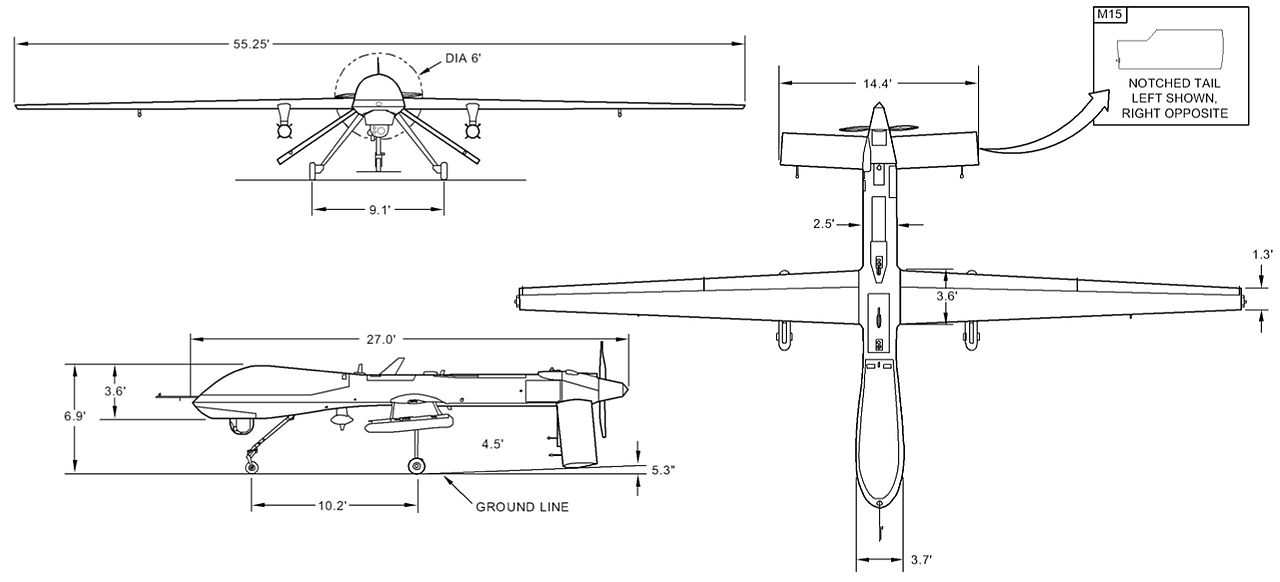
3-View line drawing and dimensions of MQ-1B Predator UAV, – Department of the Air Force, Engineering Technical Letter (ETL) 09-1: Airfield Planning and Design Criteria for Unmanned Aircraft Systems (UAS), 28 Sept 2009

The Acquisitions Directorate (CG-9) web site has three links that provide information presented at the Navy League’s 2018 Sea-Air-Space Symposium.

Ready for Combat SAR?

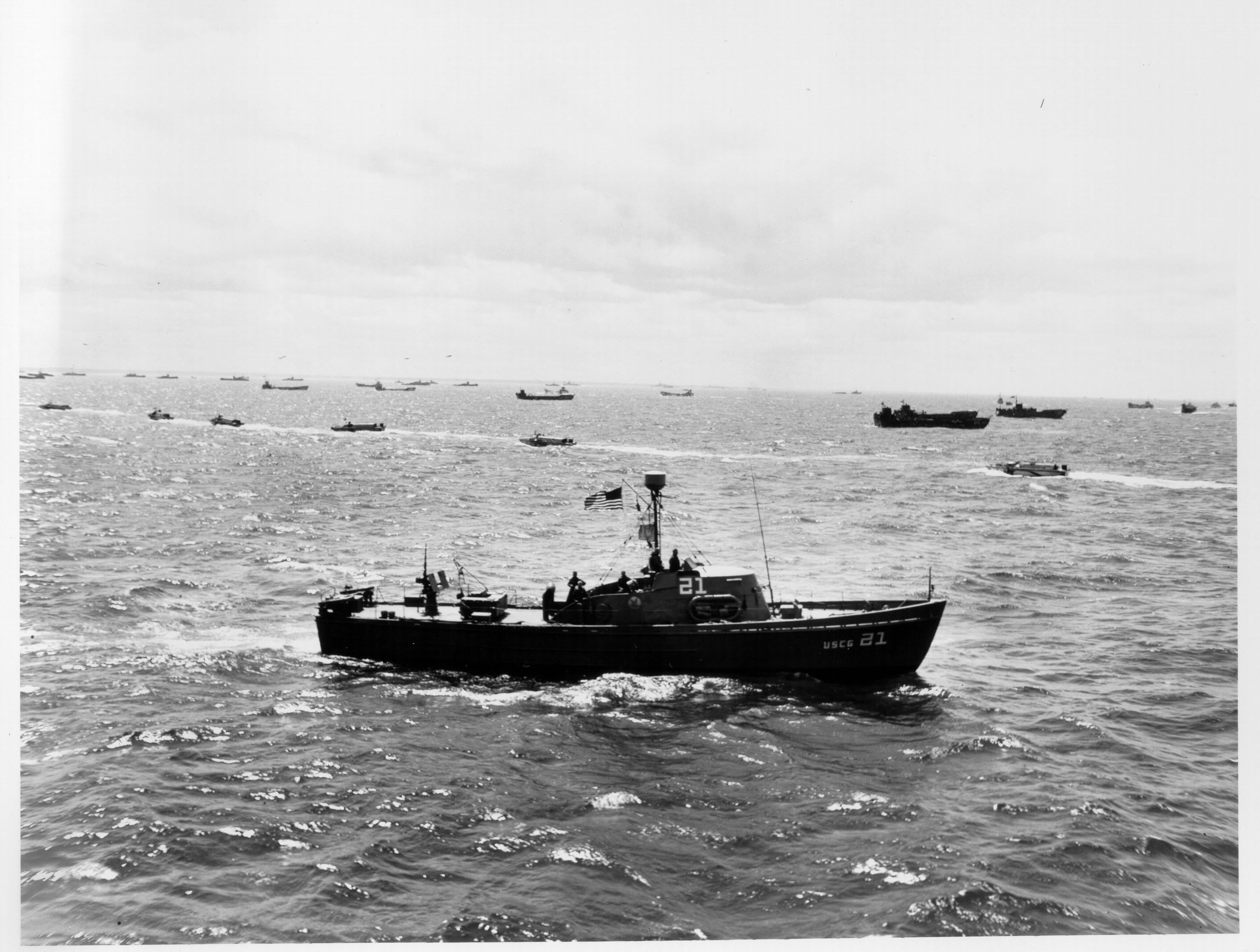
USCG 83 ft patrol boat, probably June 1944. Photographer unknown.

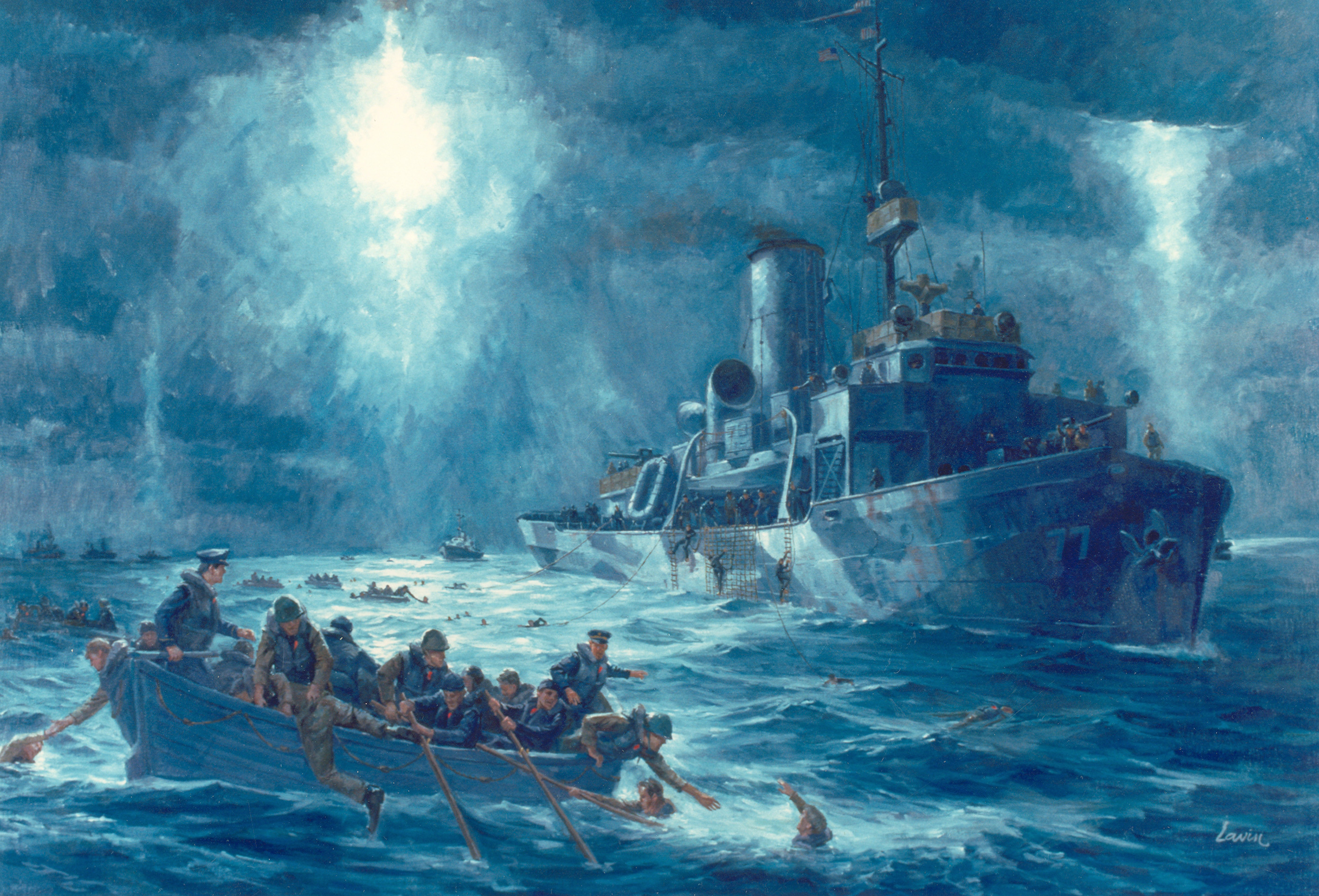
The April issue of the US Naval Institute (USNI) Proceedings has an article that contends “Combat Rescue Needs a Renaissance.” The Coast Guard has had some experience with Combat SAR. It has been decades, but if we are ever in an extended conflict with one or more near peer nations, you can be sure we will be doing it again.
Not that this could ever be exclusively a Coast Guard mission, but perhaps we ought to aggressively acknowledge a role in this mission. Make sure we are equipped for it, and train for it. Perhaps occasionally deploy with an Amphibious Ready Group and exercise the role.
Long term we might ensure that the H-60 replacement can operate from our ships in this role.
The USNI article noted:
“…all our surface vessels need a combat survivor evader locater (CSEL) radio on the bridge, so there is no delay in reporting the need for rescue. Ideally, all surface vessel lifeboats should be equipped with a CSEL as well. Even without new combat rescue aircraft, we need to start training better with the ones we have and incorporate assets such as the LCS, ESB, and EPF into fleet combat rescue events.”
Perhaps we should consider this as well.

“Coast Guard Fears Two-Year Budget Boost Just A Blip: Adm. Zukunft”–Breaking Defense

Coast Guard Commandant Adm. Paul Zukunft at the Senate Committee on Commerce, Science, and Transportation. U.S. Coast Guard photo by Petty Officer 1st Class Patrick Kelley.

BreakingDefense brings a report of the Commandant’s remarks at the Defense Writers’ Breakfast. He expresses concern that the budget success for FY 2018 and 2019 may be an anomaly.

If you think the competition for budget dollars is intense today, Zukunft warned reporters at a Defense Writers’ Group breakfast, “it’s going to be even more competitive tomorrow.”

There is discussion of shortages of Operations and Maintenance funding, the shore side facilities backlog, and the icebreaker program.

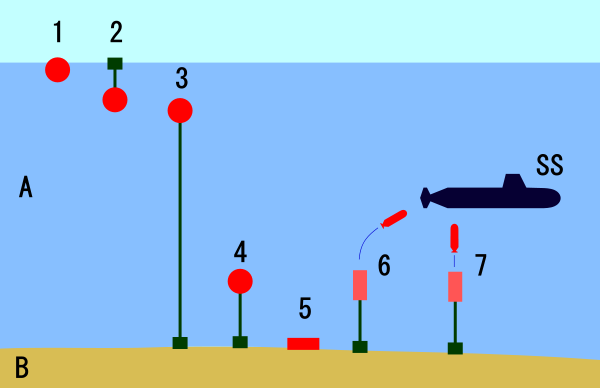
Mine Countermeasures Modular Mission Packages for Cutters

Types of Naval mine.A-underwater,B-bottom,SS-Submarine. 1-Drifting mine,2-Drifting mine,3-Moored Mine,4-Moored Mine(short wire),5-Bottom Mines,6-Torpedo mine/CAPTOR mine,7-Rising mine–by Los688

Earlier I suggested that LCS Modules, manned my Navy Reservists, might provide a mechanism that could cut mobilization time for Cutters from months to weeks. I also noted, 

There are very few Navy mine counter measures assets in the US and those we have are not spread out geographically. If there were to be a peacetime mining incident in US waters, it might be possible to airlift an MCM module to the nearest cutter to allow the problem to be dealt with more quickly.

The US Naval Institute News Service has provided access to the “Littoral Combat Ship Mission Package Annual Report, and there is a note included that addresses this possibility. Nine Mine Countermeasures Mission Packages (MCM MP) are to be provided “for use on other Vessels of Opportunity (V OOs) to meet the warfighting capability requirements and account for MCM maintenance cycles.”

If there is a mining incident at a US port, the air and, in some cases, the unmanned surface vessel portion of the package could be operated from shore. Those portions that might need to operate from a ship could possibly be operated from buoy tenders or other cutters, not just the large patrol cutters.

We probably ought to be exercising this once the MCM MPs become available.


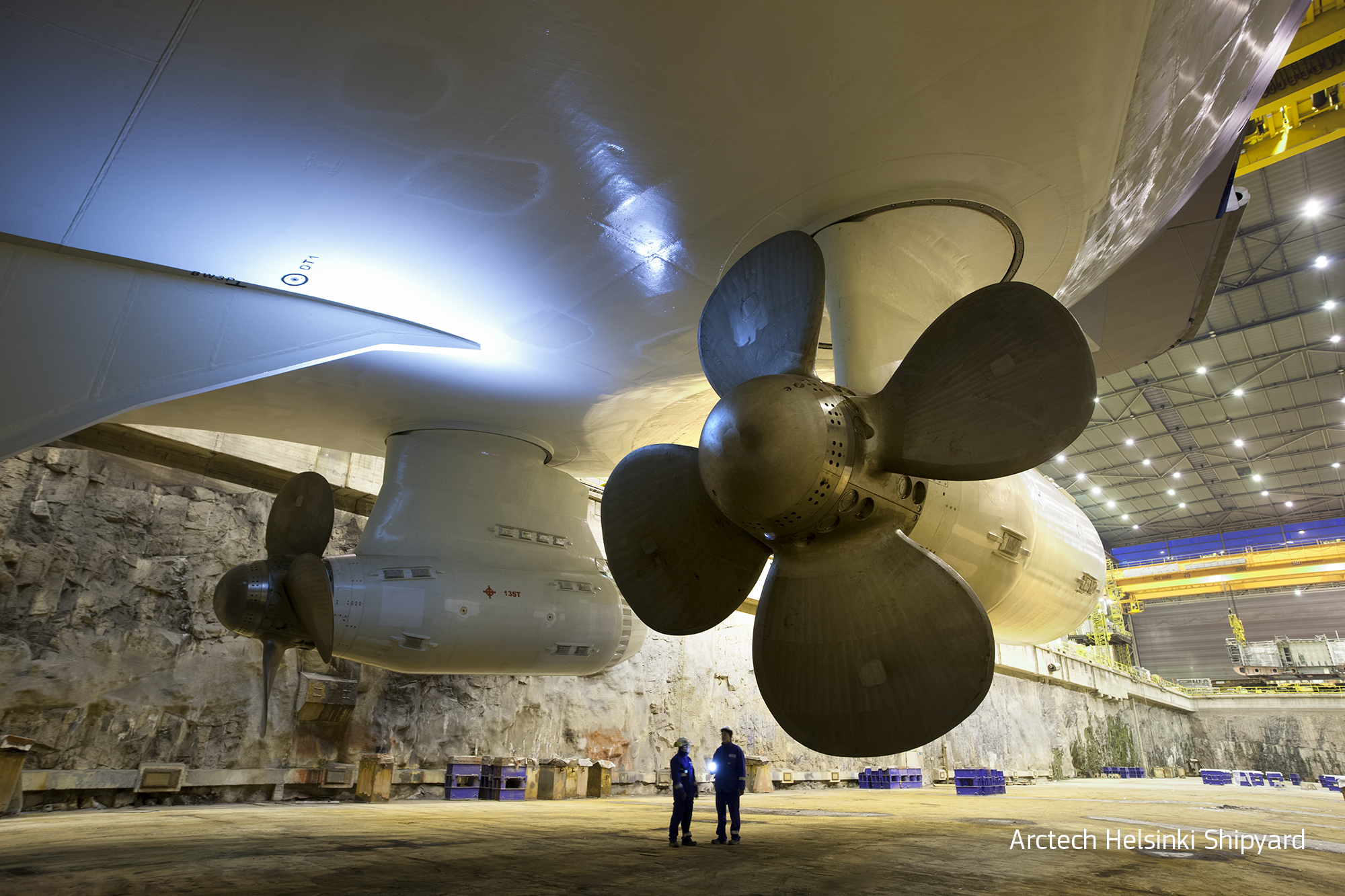
Fincantieri Builds Medium Icebreaker for Norway

MarineLog brings us some details of the new Norwegian Icebreaker/Research vessel Kronprins Haakon which has been moved from Fincantieri’s Integrated shipyard of Riva Trigoso and Muggiano, Italy, where the bulk of the construction took place, to  Fincantieri Group member Vard’s Langsten shipyard in Norway, where it will be completed. Apparently it is behind schedule.

Full technical data is here.

It may not look like it, but it has a hangar for two medium size helicopters.

Length over all (LOA): 100,0m (328′)
Breadth: 21,0m (69′)
Draft: 8.5 m (28′)
Gross tonnage: 10900T

Maximum cruising range of approx. 15.000 nautical miles
Endurance 65 days at cruising speed
Designed to operate in winter ice with pressure ridges and multi-year ice
Accommodation for 55 persons in 38 cabins (15-17 crew).

There is space for 20 containers (20′)

“…project was said to have a total value of about 175 million Euros” ($215M–Chuck)

This looks like something that might evolve into our medium icebreaker. Might also make a pretty good Great Lakes icebreaker. 10,000 KW propulsion makes it about 50% more powerful than the USCGC Mackinaw (WLBB-30). Of course Marinette Marine, which is also a division of Fincantieri, and the yard that built the Mackinaw, would probably be happy to build one or more–and the ship is narrow enough to pass the Saint Lawrence Seaway locks. .

“Charting the Course: the U.S. Needs an Arctic Fleet”–USNI/Why We Never See the Navy In Alaska

The US Naval Institute Proceedings has a short article that is available on line here. It not only advocates for an Arctic Fleet, but also explains why it has not happened, but suggests the operation of the 4th Fleet as an organizational model.

“…While naval forces are not permanently assigned to Fourth Fleet, the organizational structure remains in place both to support force assignment and to represent Navy interests in the region. The same can be true in the Arctic.

“This new Arctic Fleet can be established in a step-wise fashion, tailored across time and married to changing force structure. A sensible first step would be to augment the small Navy staff assigned to AlCom (Alaska Command–Chuck). Subsequently, in the mid-term, a joint inter-agency task force (JIATF) could be established out of the AlCom office, as resources and activity grew. Certainly, this JIATF would include the Coast Guard, but it also should include liaison officers from Canada, Norway, and other key allies. Ultimately this fleet would be stood up and merged with the NorthCom’s NCC. The Arctic Fleet could be commanded by, for example, either a Navy reserve admiral or a Coast Guard admiral.”

If we could get it to work:

This might end up looking a lot like 4th Fleet where the COCOM says all my ships are white with a racing stripe.

I would suggest that the Fleet would need much more than token Canadian representation. Ultimately any Arctic fleet is likely to have substantial Canadian representation.

Why the 4th Fleet Model probably will not work:

The proposed inclusion of “Norway and other key allies” seems to suggest that the author sees a single fleet working out Alaska Command (ALCOM), but while NORTHCOM includes Arctic waters as far east as the West coast of Greenland (which is a “constituent country” of the Kingdom of Denmark), realistically, there will be ships based in the Atlantic, and ships based in the Pacific, and the two are unlikely to have much interaction. Arctic waters that connect to the Atlantic are closely connected to NATO and LANTFLT operations. Operations in those areas would not logically come under the control of a small Naval staff in Alaska. Our Arctic Fleet would mostly be needed for the Pacific/Arctic/Alaska. The proximity of Russia and China reinforce the point.

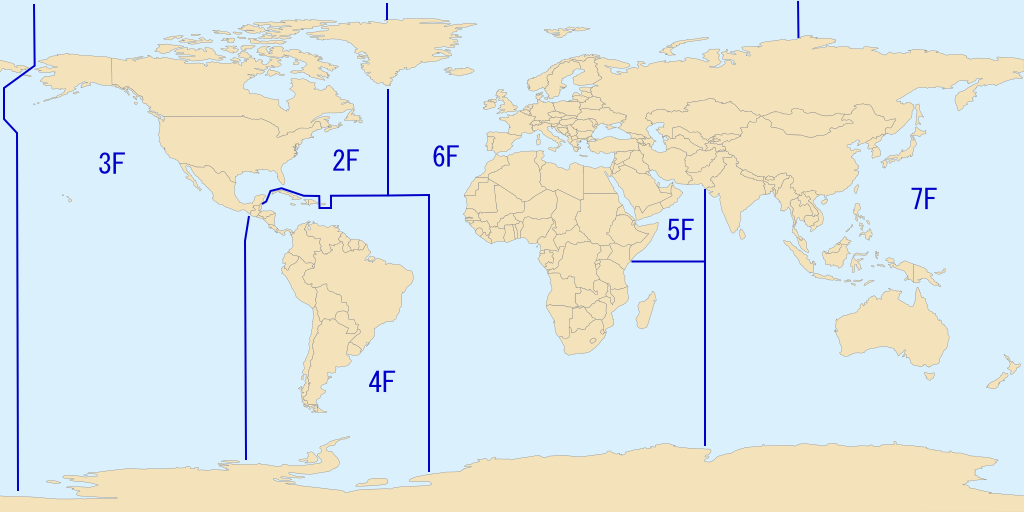
The 4th Fleet model works because their AOR is part of the Atlantic Fleet AOR and Fleet Forces, as Atlantic Fleet, sees 4th Fleet as one of their responsibilities, all be it a minor one. Pacific Fleet does not see sending forces to answer to NORTHCOM as part of their responsibility.

The Bureaucratic Hurdles:

There are at least two major problems in overcoming “the way we have always done things” in making this happen.

  • There is a mismatch between who is in charge of the area and who is in charge of the ships that are needed.
  • There is a mismatch between the resources needed and the way the Navy packages its forces.

Areas of Responsibility:

The Arctic, note the US includes the Aleutians and the Bearing Sea as part of the Arctic even though they are below the Arctic Circle

U.S. Fleet Forces (USFF) Command serves as the supporting Navy commander to Commander, U.S. Northern Command (USNORTHCOM) and USFF also serves as the Joint Forces Maritime Component Commander (JFMCC) to U.S. Northern Command (including AlaskaCommand), but they are also Commander Atlantic Fleet. Notably for our purposes Commander, Pacific Fleet is someone different with a different set of priorities.

These are the Unified Combatant Commander’s Areas of Responsibility. Note Alaska in the extreme upper left
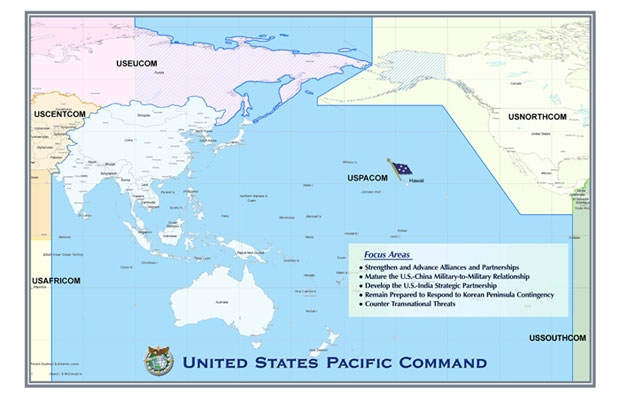
PACOM Area of Responsibility. Note all of Alaska is outside PACOM AOR, even though they are nominally 3rd Fleet waters.

The most likely areas of operation for an Arctic Fleet, the Bearing Sea and the Chukchi Sea, are split between PACOM and NORTHCOM. The most critical choke point in the entire area, Bearing Strait, is similarly split.
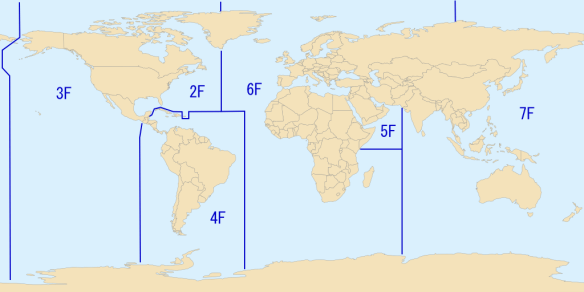
US Navy Fleet Organization. Note 2nd Fleet has now been subsumed into 6th Fleet.

Tactical Organization:

Another potential hang up is that the Navy has three primary organizational subsets.

  • Carrier Strike Groups (CSG)
  • Amphibious Ready Groups (ARG)
  • Submarines

Carrier strike groups and amphibious ready groups are in high demand and are rotated through customary assignments to 5th, 6th, and 7th Fleet. If you look at the USNI fleet tracker reports on a regular basis, you will see that there is never a sufficient number of Navy ships deployed to Fleet Forces, 3rd Fleet, or 4th Fleet to actually constitute a “fleet.”

Only submarines operate normally as single units and even they are frequently assigned to support CSGs.

Rarely, the Navy has dispatched groups of destroyers and frigates (when they had them) as “Surface Action Groups” (SAG) but generally these are fully committed to support of carrier strike groups.

Suggestion: 

Make Alaska part of USPACOM. It is the only way to rationalize this as an area of potential Combat.