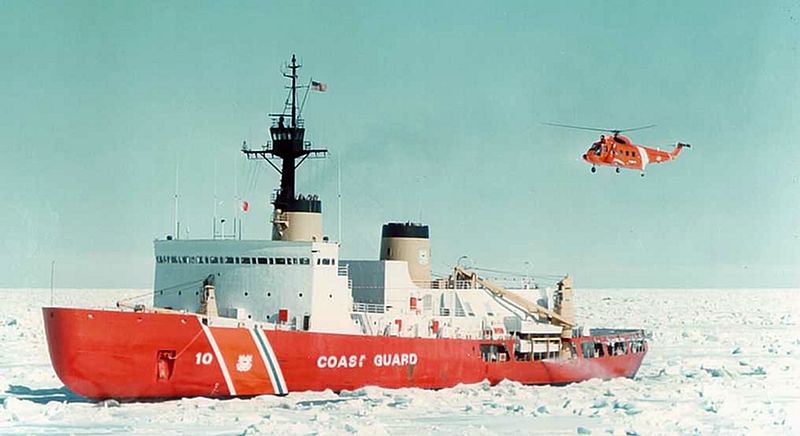
USCGC Polar Star. An old USCG photo, note the HH-52.
The Congressional Research Service has issued a new edition of its Report to Congress on U.S Coast Guard Polar Icebreaker Program by specialist in naval affairs Ronald O’Rourke, this one dated July 9, 21018. You can see it here.
I have reproduced the summary immediately below.
The Coast Guard polar icebreaker program is a program to acquire three new heavy polar icebreakers, to be followed years from now by the acquisition of up to three new medium polar icebreakers. The Coast Guard wants to begin construction of the first new heavy polar icebreaker in FY2019 and have it enter service in 2023. The polar icebreaker program has received about $359.6 million in acquisition funding through FY2018, including $300 million provided through the Navy’s shipbuilding account and $59.6 million provided through the Coast Guard’s acquisition account. The Coast Guard’s proposed FY2019 budget requests $750 million in Coast Guard acquisition funding for the program.
The acquisition cost of a new heavy polar icebreaker had earlier been estimated informally at roughly $1 billion, but the Coast Guard and Navy now believe that three heavy polar icebreakers could be acquired for a total cost of about $2.1 billion, or an average of about $700 million per ship. The first ship will cost more than the other two because it will incorporate design costs for the class and be at the start of the production learning curve for the class. When combined with the program’s $359.6 million in prior-year funding, the $750 million requested for FY2019 would fully fund the procurement of the first new heavy polar icebreaker and partially fund the procurement of the second.
The operational U.S. polar icebreaking fleet currently consists of one heavy polar icebreaker, Polar Star, and one medium polar icebreaker, Healy. In addition to Polar Star, the Coast Guard has a second heavy polar icebreaker, Polar Sea. Polar Sea, however, suffered an engine casualty in June 2010 and has been nonoperational since then. Polar Star and Polar Sea entered service in 1976 and 1978, respectively, and are now well beyond their originally intended 30-year service lives. The Coast Guard has used Polar Sea as a source of spare parts for keeping Polar Star operational.
A Department of Homeland Security (DHS) Mission Need Statement (MNS) approved in June 2013 states that “current requirements and future projections … indicate the Coast Guard will need to expand its icebreaking capacity, potentially requiring a fleet of up to six icebreakers (3 heavy and 3 medium) to adequately meet mission demands in the high latitudes….”
The current condition of the U.S. polar icebreaker fleet, the DHS MNS, and concerns among some observers about whether the United States is adequately investing in capabilities to carry out its responsibilities and defend its interests in the Arctic, have focused policymaker attention on the question of whether and when to acquire one or more new heavy polar icebreakers as replacements for Polar Star and Polar Sea.
On March 2, 2018, the U.S. Navy, in collaboration with the U.S. Coast Guard under the polar icebreaker integrated program office, released a request for proposal (RFP) for the advance procurement and detail design for the Coast Guard’s heavy polar icebreaker, with options for detail design and construction for up to three heavy polar icebreakers.
Issues for Congress for FY2019 for the polar icebreaker program include, inter alia, whether to approve, reject, or modify the Coast Guard’s FY2019 acquisition funding request; whether to use a contract with options or a block buy contract to acquire the ships; whether to continue providing at least some of the acquisition funding for the polar icebreaker program through the Navy’s shipbuilding account; and whether to procure heavy and medium polar icebreakers to a common basic design.
Brymar-Consulting.com noted, Senator Capito (R-WV) introduced an original bill (S. 3109) making appropriations for the Department of Homeland Security for the fiscal year ending September 30, 2019, and for other purposes. (6/21/18) [https://www.gpo.gov/fdsys/pkg/BILLS-115s3109pcs/pdf/BILLS-115s3109pcs.pdf].
Looking at the bill, proposed appropriations include
Operations and Support: $7,792,409,000
Environmental Compliance and Restoration: $13,429,000
Procurement, Construction, and Improvements: $2,169,260,000
Research and Development: $20,109,000
Retired Pay: $1,739,844,000
If enacted, this will be a $282.51M increase in Procurement, Construction, and Improvement over the budget request. If memory serves $2,169,260,000 would be a record.
You can see the FY 2016 and 2017 enacted and the 2018 proposed budgets here. There is a comparison between the FY2017 enacted and the FY2019 budget request here. There is a good short overview of the FY2019 request here. Strangely, I have been unable to find a final FY2018 appropriations report other than the top line amount. If you know where I can find one, please include in the comments section.
He acknowledged that the timing of ship maintenance availabilities are prone to change, as deployments are extended, one ship is swapped for another to meet a warfighter need, and so on. But while the planning is complex, he said, “the only thing I know is, the best way to start getting after a complex issue is laying out at least what you know and laying that out as a baseline, so then when you do have to do – whether it’s for operational reasons or whatever – have to do changes, you’re changing from a known baseline and you can more quickly understand what the second- and third-order effects are.”
I still don’t think the Coast Guard has ever submitted their 20 year plan as mandated by GAO and Congress. We have discussed the need for a long term shipbuilding plan numerous times. These are only two:
I suspect the 20 year plan was stalled in the Department.
It is really important to build an understanding of future needs. It seems this was a part of the problem in getting a realistic shipbuilding budget. We should anticipate replacing all our ships when they reach 30 years of age. As that time approaches we can reevaluate and perhaps delay replacement if they are holding up well, and we will be heroes.
We really have to tell the administration and the Congress what we need. To do that I would reiterate the need to periodically redo the Fleet Mix simulation and study. The last one was done about ten years ago and still assumed multiple crewing of the Bertholf Class NSCs and Offshore Patrol Cutters. (Crew Rotation Concept).
Mr. O’Rourke has been busy, in addition to the report on Icebreakers, the latest edition of the Congressional Research Service report on Coast Guard Cutter Procurement, also by Ronald O’Rourke, was also published on 23 May, 2018. You can see it here.
I have reproduced the summary immediately below. Note that the price for the OPCs is already surprisingly low.
The Coast Guard’s acquisition program of record (POR) calls for procuring 8 National Security Cutters (NSCs), 25 Offshore Patrol Cutters (OPCs), and 58 Fast Response Cutters (FRCs) as replacements for 90 aging Coast Guard high-endurance cutters, medium-endurance cutters, and patrol craft. The Coast Guard’s proposed FY2019 budget requests a total of $705 million in acquisition funding for the NSC, OPC, and FRC programs.
NSCs are the Coast Guard’s largest and most capable general-purpose cutters; they are intended to replace the Coast Guard’s 12 aged Hamilton-class high-endurance cutters. NSCs have an estimated average procurement cost of about $682 million per ship. Although the Coast Guard’s POR calls for procuring a total of 8 NSCs to replace the 12 Hamilton-class cutters, Congress through FY2018 has funded 11 NSCs, including two (the 10th and 11th) in FY2018. Six NSCs are now in service, and the seventh, eighth, and ninth are scheduled for delivery in 2018, 2019, and 2020, respectively. The Coast Guard’s proposed FY2019 budget requests $65 million in acquisition funding for the NSC program; this request does not include additional funding for a 12th NSC.
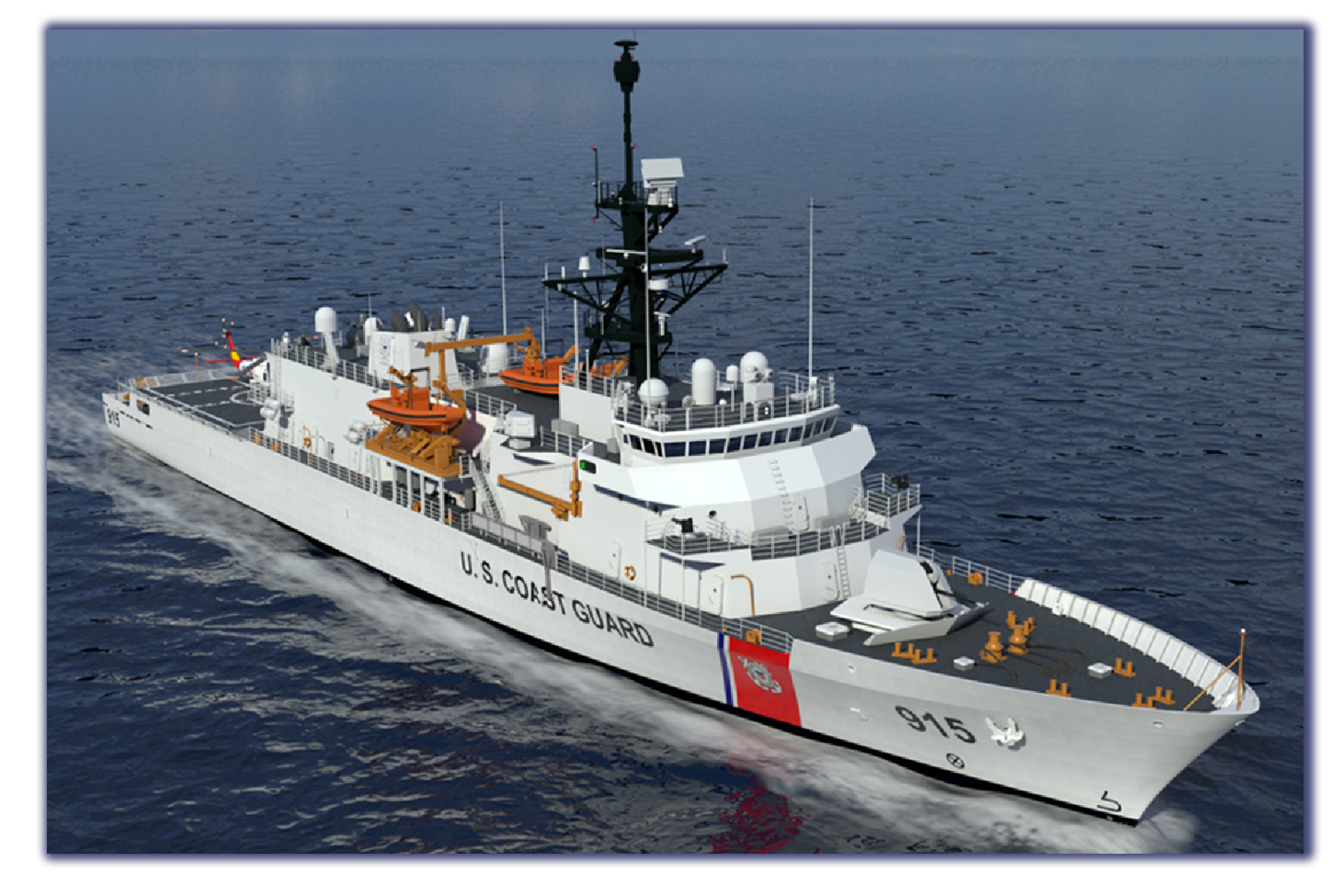
OPCs are to be smaller, less expensive, and in some respects less capable than NSCs; they are intended to replace the Coast Guard’s 29 aged medium-endurance cutters. Coast Guard officials describe the OPC program as the service’s top acquisition priority. OPCs have an estimated average procurement cost of about $391 million per ship. On September 15, 2016, the Coast Guard announced that it was awarding a contract with options for building up to nine ships in the class to Eastern Shipbuilding Group of Panama City, FL. The first OPC was funded in FY2018 and is to be delivered in 2021. The Coast Guard’s proposed FY2019 budget requests $400 million in acquisition funding for the OPC program for the construction of the second OPC (which is scheduled for delivery in 2022) and procurement of long leadtime materials (LLTM) for the third OPC (which is scheduled for delivery in 2023).
FRCs are considerably smaller and less expensive than OPCs; they are intended to replace the Coast Guard’s 49 aging Island-class patrol boats. FRCs have an estimated average procurement cost of about $58 million per boat. A total of 50 have been funded through FY2018. The 27th was commissioned into service on April 20, 2018. The Coast Guard’s proposed FY2019 budget requests $240 million in acquisition funding for the procurement of four more FRCs.
The NSC, OPC, and FRC programs pose several issues for Congress, including the following:
whether to fully or partially fund the acquisition of a 12th NSC in FY2019;
whether to fund the acquisition of four FRCs in FY2019, as requested, or some other number, such as six, which is the maximum number that has been acquired in some prior fiscal years;
whether to use annual or multiyear contracting for procuring OPCs;
the procurement rate for the OPC program;
planned procurement quantities for NSCs, OPCs, and FRCs; and
initial testing of the NSC.
Congress’s decisions on these programs could substantially affect Coast Guard capabilities and funding requirements, and the U.S. shipbuilding industrial base.
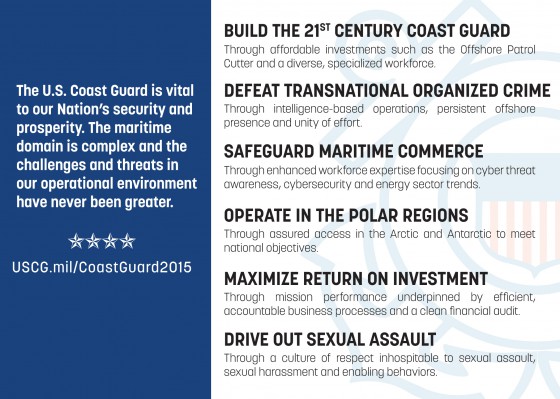
I have been impressed with the Commandant’s ability to stay on message. He has been very consistent in repeatedly hitting the same points which were highlighted in his 2015 State of the Coast Guard address. I only hope the new Commandant will be as successful in presenting the case for the Coast Guard.
The National Defense Authorization Act for Fiscal Year 2019 (H.R. 5515) has been reported in the House of Representatives. The bill incorporates the Maritime Administration (MARAD) Authorization Act and the US Coast Guard (USCG) Authorization Act. (5/15/18) [https://www.gpo.gov/fdsys/pkg/BILLS-115hr5515rh/pdf/BILLS-115hr5515rh.pdf].
It is a huge document. The Coast Guard sections, 3521-3539, are on pages 942 to 961. It doesn’t really look like a new authorization bill to me, just changes to the existing 2010 authorization.
There was one particular requirement included that I applaud.
‘‘Not later than the date on which the President submits to Congress a budget pursuant to section 1105 of title 31, the Commandant of the Coast Guard shall make available on a public website and submit to the Committee on Transportation and Infrastructure of the House of Representatives and the Committee on Commerce, Science, and Transportation of the Senate an update on Coast Guard mission performance during the previous fiscal year.’’
Our reports of mission effectiveness, goals vs actual, have been sporadic at best. We should want to do this to tout our achievements and to identify where we need more resources to accomplish statutory missions.
The most significant part of the post appears to me to be that this concept has been put forward by Representative Duncan Hunter (R-CA), who is the Chair of the Sub-Committee that has oversight of the Coast Guard. Representative Hunter is a Marine Reserve Major who served two tours in Iraq and one in Afghanistan. Having watched him perform in several sub-committee meetings, I have a great deal of respect for his opinions. He would like to see a stronger and better armed Coast Guard.
Personally I see still unrealized potential for the Coast Guard in the Department of Homeland Security and potential problems as well as opportunities in the Department of Defense.
How would the Coast Guard be funded within the DOD? Would it be a separate agency or would it be budgeted with the Department of the Navy?
The Department of Defense (DoD) is responsible for providing the military forces needed to deter war and protect the security of the United States (U.S.). The major elements of these forces are the Army, Navy, Air Force, and Marine Corps. The President is the Commander-in-Chief, while the Secretary of Defense exercises authority, direction, and control over the Department. This includes the Office of the Secretary of Defense, Organization of the Chairman of the Joint Chiefs of Staff, the three Military Departments, the Combatant Commands, the Office of the Inspector General, 17 Defense Agencies, 10 DoD Field Activities, and other organizations, such as the National Guard Bureau (NGB) and the Joint Improvised Explosive Device Defeat Organization (JIEDDO)., Department of Defense organizational chart (December 2013)
Within the DHS budget, the Coast Guard is the third largest component behind FEMA and Customs and Border Protection. It has significant visibility.
In the DOD organization above, I cannot even find the National Guard Bureau. We might do well because we would be a very small part of the overall budget, or we might simply be too small to attract any attention. I think there is a real possibility that if we were transferred into the Navy Department, the Coast Guard might end up as little more than a Master at Arms Corps.
We can talk about how the Congress has not been kind to us, but at least funding has been relatively consistent, and of late there seems to be a recognition of greater need for capital improvements.
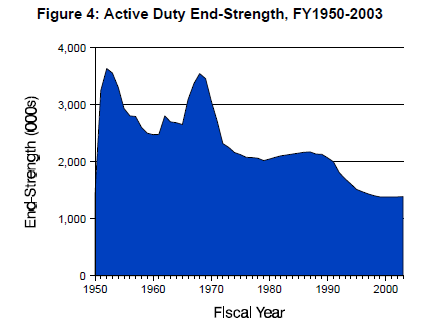
If our personnel end strength had followed the trend of the DOD we would now have fewer than 20,000 active duty rather than over 40,000.
Coast Guard Commandant Adm. Paul Zukunft at the Senate Committee on Commerce, Science, and Transportation. U.S. Coast Guard photo by Petty Officer 1st Class Patrick Kelley.
BreakingDefense brings a report of the Commandant’s remarks at the Defense Writers’ Breakfast. He expresses concern that the budget success for FY 2018 and 2019 may be an anomaly.
If you think the competition for budget dollars is intense today, Zukunft warned reporters at a Defense Writers’ Group breakfast, “it’s going to be even more competitive tomorrow.”
There is discussion of shortages of Operations and Maintenance funding, the shore side facilities backlog, and the icebreaker program.
Note the video does not really start until approximately time (17m08s).
This is going to be a hodgepodge, but it is all about the 2019 budget. There is a video above. There will be my own observations on the video. There will be a brief outline of the Procurement, Construction, and Improvement (formerly AC&I) portion of the budget copied from the “Summary of Subject Matter.” At the tail end I have reproduced the Commandant’s prepared statement that was presented at the hearing
You can look here for the FY2018 budget request. I haven’t found the actual final FY2018 as enacted.
ABOUT THE VIDEO
Above is a video of a 14 March, 2018, House Coast Guard and Maritime Transportation Subcommittee. The commandant testified as well as Master Chief Steven W. Cantrell, Master Chief Petty Officer of the Coast Guard, United States Coast Guard, Rear Admiral Mark H. Buzby, USN, Ret., Administrator, Maritime Administration, and The Honorable Michael A. Khouri, Acting Chairman, Federal Maritime Commission
You can find more information including all the prepared statements and the subcommittee chairman’s opening remarks here.
MY OBSERVATIONS
This subcommittee has been highly supportive of the Coast Guard, and we see the same in this hearing. The chairman, Duncan Hunter (R, CA), (17m30s) expressed his opinion that the Coast Guard was not fairing well under the Department of Homeland Security (DHS). He also noted the apparent obstruction of measures of effectiveness by DHS.
Ranking member, John Garamendi (D, CA), (22m) noted that there had been a welcomed significant bump in Coast Guard funding, but questioned if this would continue or would it prove an anomaly. He noted that attempting to stop drug trafficking would be better served by putting more money into the Coast Guard than by building a border wall.
(29m30s) The Coast Guard’s unfunded priority list, submitted long ago is still hung up in the administration.
(33m30s) MCPO Cantrell addressed quality of life concerns.
(55m30) Ranking member Garamendi noted the addition of $720M added to the budget for Heavy Polar Icebreaker(s) (HPIB) in addition to $30M already in the budget, and stated that he saw this as money for the second icebreaker because the DOD was not relieved of their obligation to fund a HPIB.
(1h03m) Commandant expressed his confidence in the helicopter life extension programs expected to keep them in operation until 2033 when the Coast Guard would be able to join in the Army lead Future Vertical Lift program. He suggested that a single helicopter type might be able to replace both the MH-65 and MH-60s.
(1h07m) Commandant answering a question about AMIO in the Caribbean noted that the Webber class Fast Response Cutters (FRC) we working well in this role, but there is a shortage of ISR assets that he believed might be addressed by land based unmanned air systems (UAS).
(1h17m) In answer to a question about replacement of the Island Class six 110 foot Island class cutters currently assigned to CENTCOM as PATFORSWA, the Commandant, noting the 110s would time out in 2022, said this has been discussed at the highest levels with the Navy and there was a possibility that Webber class replacements could be funded by the Navy. Interestingly, he also noted that the Navy’s Cyclone class patrol craft would time out in 2023 suggesting to me perhaps he believes the Navy is considering a version of the Webber class.
(1h39m) Concern was expressed that while the Commandant has consistently expressed a need for $2B annual in the AC&I account (now PC&I) and $1.8B was provided in FY2018 and $1.9B in FY2019, that the current projection is only $1.4B in FY2020.
There is also a note on a change in accounting procedure.
In FY 2019, the Coast Guard will transition to the DHS Common Appropriations Structure (CAS). Accordingly, activities funded through the previous Operating Expenses, Reserve Training, Environmental Compliance and Restoration, and Medicare Eligible Retiree Health Care Fund Contribution are included as part of the new Operations and Support (O&S) account. In addition, acquisition personnel costs previously funded through the Acquisition, Construction, and Improvements account ($118.2m in the FY2018 budget request–Chuck) are included as part of the O&S account. The Acquisition, Construction, and Improvements account transitions into the Procurement, Construction, and Improvements account and the Research, Development, Test and Evaluation account becomes the new Research and Development account.
Below is the summary information on the PC&I section that replaces the AC&I portion of the budget.
Procurement, Construction, and Improvements (previously Acquisitions, Construction, and Improvements)The President requests $1.89 billion for the Procurement, Construction, and Improvements (PC&I) account, a $516.7 million (or 37.7 percent) increase over the FY 2017 enacted level. The PC&I account funds the acquisition, procurement, construction, rebuilding, and physical improvements of Coast Guard owned and operated vessels, aircraft, facilities, aids-to-navigation, communications and information technology systems, and related equipment.The FY 2019 budget request includes $1.76 billion for the acquisition of aircraft, vessels, and the continued build-out of Command, Control, Communications, Computer, Intelligence, Surveillance, and Reconnaissance (C4ISR) systems. This represents an increase of $597.1 million (or 51.7 percent) from the FY 2017 enacted level. The budget request includes:$30 million for the construction of a Heavy Polar Icebreaker. The FY 2019 Budget Addendum included an additional $720 million, for a total of $750 million;
$65 million to conduct Post Delivery Activities on National Security Cutters (NSC) 7 through 9;
$240 million for the production of four Fast Response Cutters (FRC);
$400 million for the construction of the second Offshore Patrol Cutter (OPC) and to facilitate evaluation of the Long Lead Time Materials for OPC 3. The OPCs will replace the Service’s aging 210-foot and 270foot Medium Endurance Cutters (MEC);
$80 million to fund the requirement to establish logistics for 14 newly acquired HC-27J aircraft. The request funds HC-27J Asset Project Office activities, logistics, training, and engineering studies to assess and resolve aircraft obsolescence issues;
$20 million for the continued modernization and sustainment of the HH-65 Dolphin helicopter fleet;
$23.3 million for C4ISR design, development, and integration; and
No funding for the Alteration of Bridges program in FY 2019. The program did not receive funding in FY 2017 or FY 2016. Established by the Truman-Hobbs Act of 1940 (33 U.S.C. 511 et. seq.), the Alteration of Bridges program authorizes the Coast Guard to share with a bridge’s owner the cost of altering or removing privately or publicly owned railroad and highway bridges that are determined by the Service to obstruct marine navigation.
The budget requests $135 million to construct or renovate shore facilities and aids-to-navigation. This request is a $35.5 million (or 26.3 percent) increase over the FY 2017 enacted level. The Coast Guard currently has a backlog of 95 prioritized shore facility improvement projects with an estimated combined cost of over $1.5 billion
____
THE COMMANDANT’S PREPARED TESTIMONY
Below you will find “TESTIMONY OF ADMIRAL PAUL F. ZUKUNFT COMMANDANT, U.S. COAST GUARD ON “THE COAST GUARD’S FISCAL YEAR 2019 BUDGET REQUEST” BEFORE THE HOUSE COAST GUARD AND MARITIME TRANSPORTATION SUBCOMMITTEE” which I have copied in full.
Introduction
Mr. Chairman and distinguished members of the Committee, I appreciate the opportunity to testify today. Thank you for your enduring support of the United States Coast Guard, particularly the significant investments provided in the FY 2017 Consolidated Appropriations Act, recent Hurricane Supplemental, and ongoing deliberations to support our FY 2018 and FY 2019 President’s Budget requests.
As the world’s premier, multi-mission, maritime service, the Coast Guard offers a unique and enduring value to the Nation. The only branch of the U.S. Armed Forces within the Department of Homeland Security (DHS), a federal law enforcement agency, a regulatory body, a first responder, and a member of the U.S. Intelligence Community – the Coast Guard is uniquely positioned to help secure the maritime border, combat transnational criminal organizations (TCO), and safeguard commerce on America’s waterways.
The Coast Guard’s combination of broad authorities and complementary capabilities squarely aligns with the President’s national security and economic prosperity priorities; furthermore, it offers an agile toolset to address the Nation’s most pressing challenges. Appropriately positioned in DHS, the Coast Guard is a military service and a branch of the Armed Forces of the United States at all times.1 We are also an important part of the modern Joint Force2 and currently have forces assigned to each of the five geographic Combatant Commanders, as well as Cyber Command.
As demonstrated in the 2017 record hurricane season, the Coast Guard is the Nation’s “maritime first responder” and plays a leading role in executing the National Response Plan (NRP) for disaster situations. Our ability to rapidly surge in response to emerging threats or contingencies are critical to success across the spectrum of missions we prosecute.
We live in an increasingly volatile, uncertain, complex, and ambiguous world. Rapid technological advancement, increasing globalization, and intensifying threats from state and nonstate actors alike challenge international norms and threaten global governance.
To ensure we meet the demands of today while preparing for tomorrow, the Coast Guard is guided by a five-year Strategic Intent and suite of regional and functional strategies that drive our Service’s operations and investments.
These strategic efforts are informed by the National Security Strategy and applicable DHS strategies, and are coordinated to augment Department of Defense (DoD) priorities. Using these strategies as guideposts, leveraging the intelligence community, and employing a risk-based approach to focus our limited resources allows us to address maritime threats with the greatest precision and effect.
Strategic Effects
Fueled by the Service’s unique authorities and capabilities, our Western Hemisphere Strategy continues to yield large-scale successes in our counter-drug mission. The Coast Guard’s persistent offshore presence and associated interdiction efforts sever the supply lines of criminal networks where they are most vulnerable—at sea. Leveraging over 30 multilateral and bilateral agreements with a host of government organizations, the Coast Guard’s long-term counter-TCO efforts promote stability and strengthen the rule of law throughout these regions. Working with interagency partners, the Coast Guard seized 223 metric tons of cocaine and detained and transferred 606 smugglers for criminal prosecution in FY 2017. Highlighting our record-breaking mission performance for drug interdiction was the STRATTON’s offload of over 50,000 pounds of illicit narcotics, with an estimated street value of over $6.1 billion. This was a result of collaborative efforts between four U.S. Coast Guard cutters, DHS maritime patrol aircraft, and a U.S. Navy ship in over 25 separate interdictions. Beyond the important task of removing cocaine from the illicit system that gets it to U.S. streets, prosecuting smugglers facilitates deeper understanding of TCOs and ultimately helps our unified efforts to dismantle them.
Without question, National Security Cutters (NSC) have been a game-changer not only for our drug interdiction and counter-TCO operations in the southern maritime transit zone, but also in contributing to other national security priorities, such as supporting DoD Combatant Commander requirements across the globe and projecting sovereign rights in the Arctic.
Looking forward, the Offshore Patrol Cutter (OPC) will provide the tools to more effectively enforce Federal laws, secure our maritime borders, disrupt TCOs, and respond to 21st century threats. Continued progress on this acquisition is absolutely vital to recapitalizing our aging fleet of Medium Endurance Cutters (MECs), some of which will be over 55 years old when the first OPC is delivered in 2021. In concert with the extended range and capability of the NSC and the enhanced coastal patrol capability of the Fast Response Cutter (FRC), OPCs will be the backbone of the Coast Guard’s strategy to project and maintain offshore presence.
As one of the five Armed Forces, the Coast Guard deploys world-wide to execute our statutory Defense Operations mission in support of national security priorities. On any given day, 11 cutters, two maritime patrol aircraft, five helicopters, two specialized boarding teams, and an entire Port Security Unit are supporting DoD Combatant Commanders on all seven continents. In the Middle East, our squadron of six patrol boats continues to police the waters of the Northern Arabian Gulf in close cooperation with the U.S. Navy, promoting regional peace and stability. Likewise, as one of the principal Federal agencies performing detection and monitoring in the southern maritime transit zone, the Coast Guard provides more than 4,000 hours of maritime patrol aircraft support and 2,000 major cutter days to DoD’s Southern Command each year.
In the high latitudes, the Arctic region is becoming increasingly accessible at a time when global interests in energy, clean water, and subsistence continue to intensify. The Coast Guard is committed to the safety, security, and environmental stewardship of the Arctic, and we will remain closely engaged with our partners, including Russia, via the Arctic Coast Guard Forum. By focusing on collaboration over conflict, we are promoting governance and building a shared approach to prevention and response challenges in the region.
Meanwhile, the 42-year old POLAR STAR recently completed another Operation DEEP FREEZE patrol in Antarctica. Just one major casualty away from leaving the Nation without any heavy icebreaking capability, POLAR STAR supported U.S. strategic interests and the National Science Foundation by breaking a navigable shipping lane to deliver fuel and critical supplies to the U.S. base at McMurdo Sound.
I appreciate your support for the $150 million appropriated in Shipbuilding and Conversion, Navy (SCN) funding in the FY 2017 Omnibus. This is a great step forward to secure our future in the Polar Regions and finally recapitalize the Nation’s icebreaker fleet. This funding coupled with the $750 million in the FY 2019 President’s Budget, would enable the Coast Guard to award a contract for detail design and construction and deliver the first new heavy polar icebreaker in 2023. These critical investments reflect our interests and standing as an Arctic Nation and affirm the Coast Guard’s role in providing assured access to the Polar Regions.
At the same time the Service was conducting counter-drug missions in the Eastern Pacific and projecting sovereign rights in the Arctic, the Coast Guard also launched one of the largest responses in history during a historic 2017 hurricane season. Over a five week period, Hurricanes HARVEY, IRMA, MARIA, and NATE impacted over 2,540 miles of shoreline3, and Coast Guard men and women in helicopters, boats, cutters, vehicles and on foot rescued over 11,300 people and over 1,500 pets.
During our 2017 hurricane response, the Coast Guard resolved over 1,269 aids to navigation discrepancies, handled 290 pollution cases, located and assessed more than 3,623 grounded vessels, with more than 1,585 removed to date. Within hours after each storm’s passage, Coast Guard damage and recovery assessment teams were on-scene determining the status of ports and waterways, leveraging electronic aids to navigation when feasible to facilitate the rapid reopening of key ports and waterways, and assessing impacts to Coast Guard facilities and capabilities. This enabled a vital portion of the country’s waterways to reopen, helping maintain our Maritime Transportation System (MTS) which contributes $4.6 trillion annually to our Gross Domestic Product.
The daily activities of Coast Guard men and women are heroic, as they support nearly every facet of the Nation’s maritime interests, protect our homeland, and secure our economic prosperity. In addition to the hurricane responses, the Coast Guard prosecuted over 16,000 search-and-rescue cases and saved more than 4,200 lives; interdicted more than 2,500 undocumented migrants; completed over 9,100 Safety of Life at Sea safety exams on foreign vessels; and responded to over 12,200 reports of pollution incidents.
Beyond operations, we earned our fifth consecutive clean financial audit opinion – the only Armed Service that can make such a claim. Further, our major acquisition programs and product lines are delivering new assets on schedule and on budget that have proven to meet our operational requirements. To better guide our modernization, we developed a Long Term Major Acquisitions Plan (LTMAP), a roadmap to field modern platforms to address 21st century threats. We have been working with the Administration to finalize the details of the LTMAP and are committed to delivering this report to Congress as soon as possible.
Our greatest strength is undoubtedly our people. Coast Guard operations require a resilient, capable workforce that draws upon the broad range of skills, talents, and experiences found in the American population. In FY 2019, the Coast Guard will maintain a proficient, diverse, and adaptable workforce that responds effectively to changing technology, an increasingly complex operating environment, and dynamic partnerships. Together, modern platforms and a strong, resilient workforce will maximize the Coast Guard’s capacity to meet future challenges.
Conclusion
History has proven that a responsive, capable, and agile Coast Guard is an indispensable instrument of national security. Funding 21st century Coast Guard platforms and people are especially prudent investments given today’s challenging fiscal environment. I firmly believe no other investment will return more operational value on every dollar than the extraordinary men and women of the U.S. Coast Guard—which includes 48,000 Active Duty and Reserve members, 8,500 civilians, and over 27,000 volunteer members of the Coast Guard Auxiliary. As illustrated by our sustained response to an historic hurricane season, another record year removing illicit narcotics from the maritime approaches, and unique support to Combatant Commanders around the globe; our ability to rapidly surge resources to emerging threats continues yield unprecedented results for the Nation.
With the continued support of the Administration and Congress, the Coast Guard will continue to live up to our motto – Semper Paratus – Always Ready. Thank you for all you do for the men and women of the Coast Guard.
The Modern War Institute at West Point has an excellent exploration of what the new National Security Strategy could mean to the Coast Guard, written by Cdr. Kevin Duffy, USCG. It says everything I had hoped to say about this new direction and more.
“With the release of the 2017 National Security Strategy, however, the Coast Guard has been presented with an opportunity to maximize its value to a government that appears to be taking a different view on which activities and capabilities should be emphasized in the national security realm.
“…As the NSS indicates that such activities in support of its homeland and border security goals will receive “advanced technology [and] the employment of additional personnel,” smart adjustments by the Coast Guard could well bolster the case for force expansion and increased interagency support in order to continue and expand its efforts.
“…Under this same homeland umbrella, the NSS likewise stresses the importance of transportation security and domestic resilience—both areas in which the Coast Guard can embrace leadership roles.”
“…In terms of domestic resilience, the Coast Guard has expansive disaster response and incident command capabilities and responsibilities for maritime incidents, and would be a natural leader in working with industry and state and local partners to enhance capabilities in the NSS’s identified areas of risk management, planning, preparedness, and information sharing.
“… The fact that this NSS explicitly acknowledges the links between terrorist networks and criminal, drug, and “other irregular threats” should not go unnoticed: it gives the Coast Guard the opportunity to emphasize its unique capabilities, partnerships, and successes in this realm. References to threats and operations “below the level of conventional military conflict” or “below the threshold of military conflict” appear four times in this strategy. If that’s a niche that the government now wants to emphasize, the Coast Guard needs to be in the vanguard of associated efforts.
“…Specifically, the idea of a squadron of Coast Guard patrol boats dedicated to operations in Central America has been favored by Coast Guard leadership in recent years. Perhaps the initiatives that this NSS envisions as being necessary to disrupt criminal networks (and, by extension, illicit actors including terrorists) will provide the needed justification to make it a reality.
“…There has perhaps never been a better opportunity for the Coast Guard to assert itself in terms of its national security roles, whether in protecting the nation’s borders or operating in the cyber realm, in protecting maritime infrastructure or safeguarding the domestic energy sector, in leading the effort to make ports resilient or disrupting criminal and terrorist networks throughout the Western Hemisphere. With this in mind, the service should intelligently respond to the 2017 NSS by reforming and articulating the impact of current efforts and refocusing or innovating in areas that it did not previously emphasize. In this way, the Coast Guard can usher in an era of more robust and effective operations in the national security sphere, making the most of its unique nature in order to protect the country on a host of important fronts.
I have picked out on a small part of this post. Please take a look.
It seems, after a rocky start, the Coast Guard has gotten the President’s attention, and I don’t think he will listen blindly to GAO’s preconceptions of the Coast Guard’s place in the National Security apparatus. It truly may be time to take the Homeland Security missions seriously.




 Chuck Hill's CG Blog