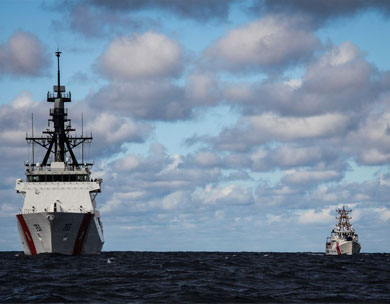
Administration Considers Cancelling NSC#9

Stratton_111031-D-0193C-002

Stars and Stripes reports,

“President Donald Trump’s budget would eliminate a $600 million-plus state-of-the-art Coast Guard cutter that’s a priority of the powerful Republican chairman of the Senate Appropriations Committee.

“The proposal by Office of Management and Budget Director Mick Mulvaney is included in draft documents of the White House budget request. The documents, obtained by The Associated Press, ask the Department of Homeland Security to cancel its contract with Ingalls Shipbuilding, which is to construct the national security cutter at its shipyard in Pascagoula, Mississippi.”

This is of course the ninth Bertholf National Security Cutter. When funded, there was a loud outcry that the Coast Guard did not ask for it, which, because the Coast Guard leadership “supported the administration budget,” and failed to provide a list of unfunded priorities, was true, but the implication that we did not need it was not.

The unfunded priorities list has long been a sore point with me, here, here, here, and here. The Navy does one of these every year. The Congress asked for one from the Coast Guard every year. We can’t seem to get off our ass and provide one, or is it that the leadership is so cowed by the department that they are afraid to say what is needed?

The “Fleet Mix Study” showed the Coast Guard needed a ninth NSC to meet its statutory obligations and with its fleet rapidly aging and the Offshore Patrol Cutter program long-delayed, the Coast Guard is desperately in need of new ships. Terminating this ship at this stage would be very disappointing and a poor decision. But perhaps we have only ourselves to blame.

My Unfunded Priority List

An earlier post reported a plea by Representative Duncan Hunter, Chair of the Transportation Subcommittee on Coast Guard and Maritime Transportation, for the Coast Guard to provide an unfunded priority list to include six icebreakers and unmanned Air System.

Thought perhaps I would list my own “unfunded priorities.” These are not in any particular order.

PLATFORM SHORTFALLS

Icebreakers: We have a documented requirement for three heavy and three medium icebreakers, certainly they should be on the list. Additionally they should be designed with the ability to be upgraded to wartime role. Specifically they should have provision for adding defensive systems similar to those on the LPD–a pair of SeaRAM and a pair of gun systems, either Mk46 mounts or Mk38 mod 2/3s. We might want the guns permanently installed on at least on the medium icebreakers for the law enforcement mission. Additionally they should have provision for supporting containerized mission modules like those developed for the LCS and lab/storage space identified that might be converted to magazine space to support armed helicopters.
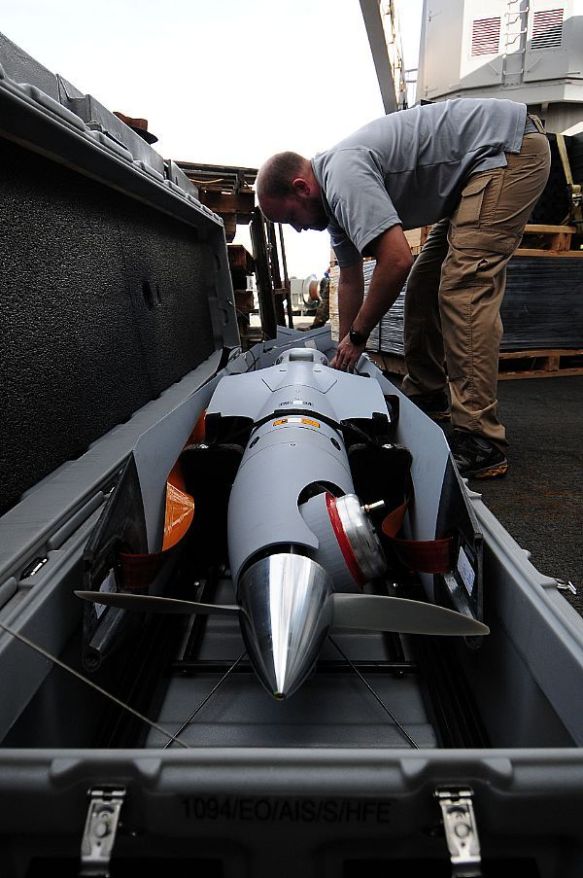
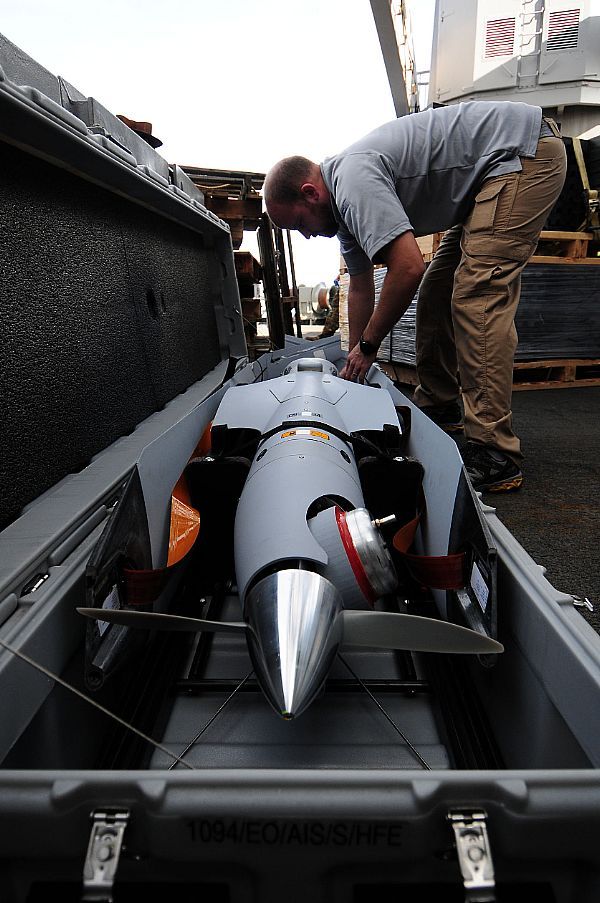
110225-N-RC734-011 PACIFIC OCEAN (Feb. 25, 2011) Guy Mcallister, from Insitu Group, performs maintenance on the Scan Eagle unmanned aerial vehicle (UAV) aboard the amphibious dock landing ship USS Comstock (LSD 45). Scan Eagle is a runway independent, long-endurance, UAV system designed to provide multiple surveillance, reconnaissance data, and battlefield damage assessment missions. Comstock is part of the Boxer Amphibious Ready Group, which is underway in the U.S. 7th Fleet area of responsibility during a western Pacific deployment. (U.S. Navy photo by Mass Communication Specialist 2nd Class Joseph M. Buliavac/Released)

110225-N-RC734-011
PACIFIC OCEAN (Feb. 25, 2011) Guy Mcallister, from Insitu Group, performs maintenance on the Scan Eagle unmanned aerial vehicle (UAV) aboard the amphibious dock landing ship USS Comstock (LSD 45). Scan Eagle is a runway independent, long-endurance, UAV system designed to provide multiple surveillance, reconnaissance data, and battlefield damage assessment missions. Comstock is part of the Boxer Amphibious Ready Group, which is underway in the U.S. 7th Fleet area of responsibility during a western Pacific deployment. (U.S. Navy photo by Mass Communication Specialist 2nd Class Joseph M. Buliavac/Released)

Unmanned Air Systems (UAS): We seem to be making progress on deploying UAS for the Bertholf class NSCs which will logically be extended to the Offshore Patrol Cutters. So far we see very little progress on land based UAS. This may be because use of the Navy’s BAMS system is anticipated. At any rate, we will need a land based UAS or access to the information from one to provide Maritime Domain Awareness. We also need to start looking at putting UAS on the Webber class. They should be capable of handling ScanEagle sized UAS.

File:USCGC Bluebell - 2015 Rose Festival Portland, OR.jpg

Photo: The Coast Guard Cutter Bluebell sits moored along the Willamette River waterfront in Portland, Ore., June 4, 2015. The Bluebell, which celebrated its 70th anniversary this year, is one of many ships participating in the 100th year of the Portland Rose Festival. (U.S. Coast Guard photo by Chief Petty Officer David Mosley.)

Recapitalize the Inland Tender Fleet: This is long overdue. The program was supposed to begin in 2009, but so far, no tangible results. It seems to have been hanging fire for way too long.

Expand the Program of Record to the FMA-1 level: The Fleet Mix Study identified additional assets required to meet the Coast Guard’s statutory obligations identifying four asset levels above those planned in the program of record. Lets move at least to first increment.

Alternative Fleet Mix Asset Quantities

————–POR       FMA-1      FMA-2      FMA-3       FMA-4
NSC                8             9                 9                 9                  9
OPC              25           32               43                50               57
FRC              58           63               75                80               91
HC-130         22            32               35                44               44
HC-144A       36            37               38                40               65
H-60              42            80               86                99             106
H-65             102         140             159              188            223
UAS-LB           4            19                21                21              22
UAS-CB        42            15                19               19               19

At the very least, looks like we need to add some medium range search aircraft (C-27J or HC-144).

Increase Endurance of Webber Class Cutters: The Webber class could be more useful if the endurance were extended beyond five days (currently the same as the 87 cutters, which have only one-third the range). We needed to look into changes that would allow an endurance of ten days to two weeks. They already have the fuel for it.

MISSION EQUIPMENT SHORTFALLS

Seagull_torpedo_trial_1

Ship Stopper (Light Weight Homing Torpedo): Develop a system to forcibly stop even the largest merchant ships by disabling their propulsion, that can be mounted on our patrol boats. A torpedo seems the most likely solution. Without such a system, there is a huge hole in our Ports, Waterways, and Coastal Security mission.
121211-N-HW977-692

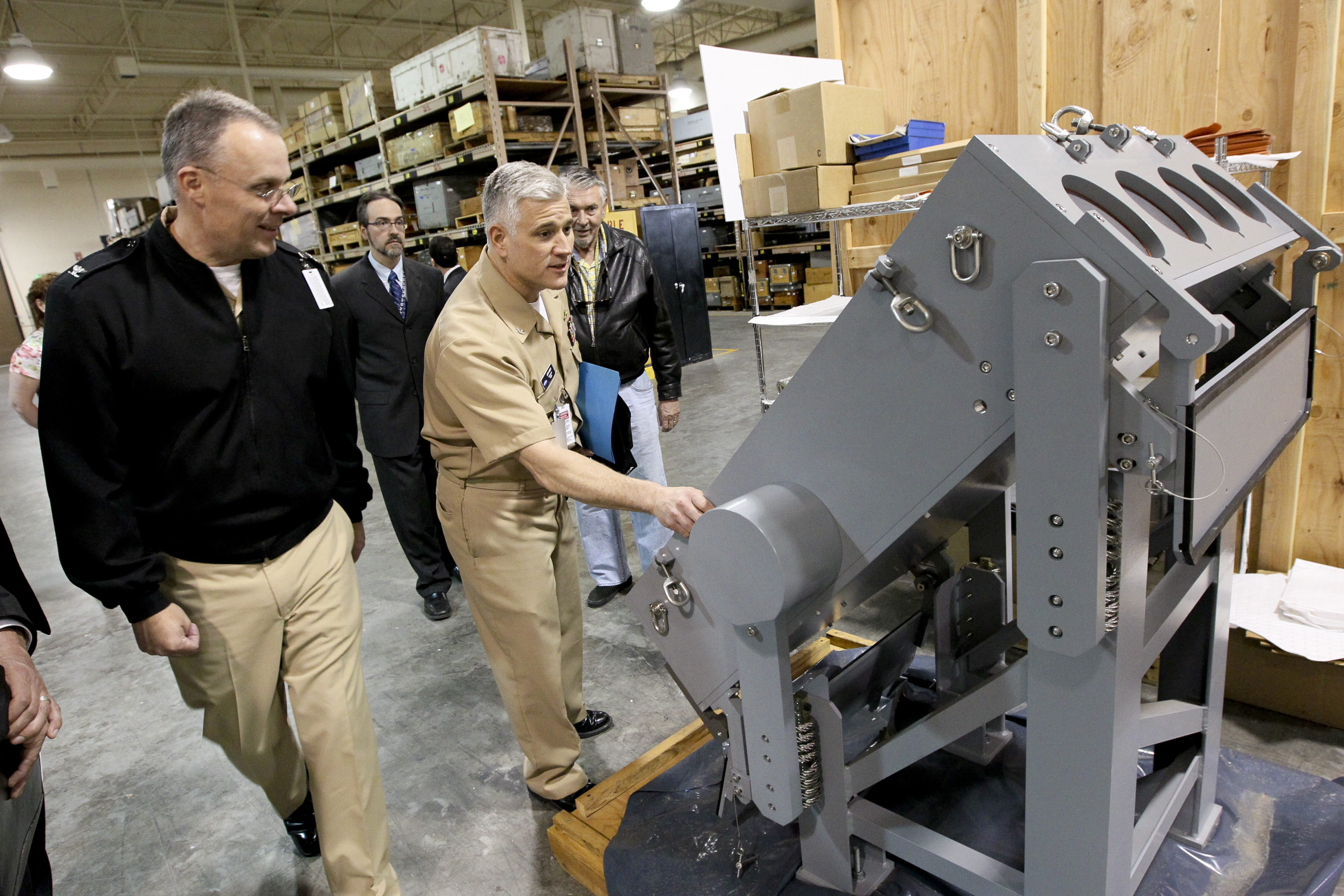
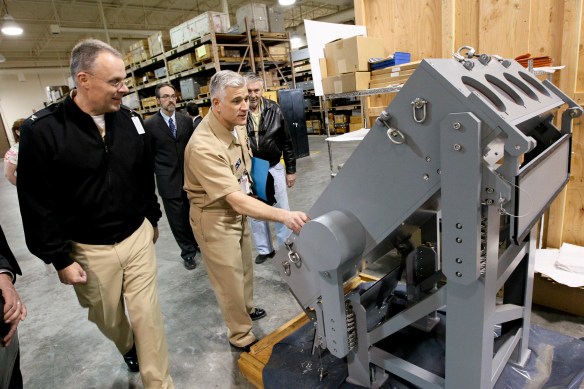
Photo: SeaGriffin Launcher

Counter to Small High Speed Craft (Small Guided Weapon): Identify and fit weapons to WPB and larger vessels that are capable of reliably stopping or destroying small fast boats that may be used as fast inshore attack craft and suicide or remote-controlled unmanned explosive motor boats. These weapons must also limit the possibility of collateral damage. Small missiles like SeaGriffin or Hellfire appear likely solutions.
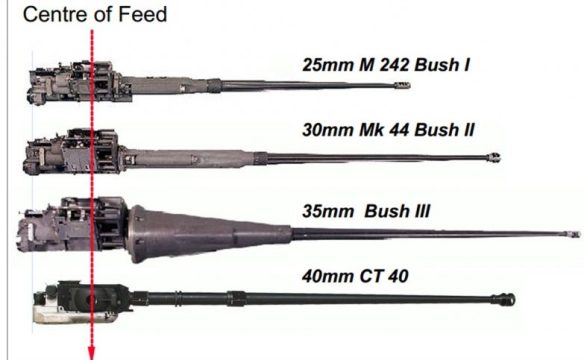
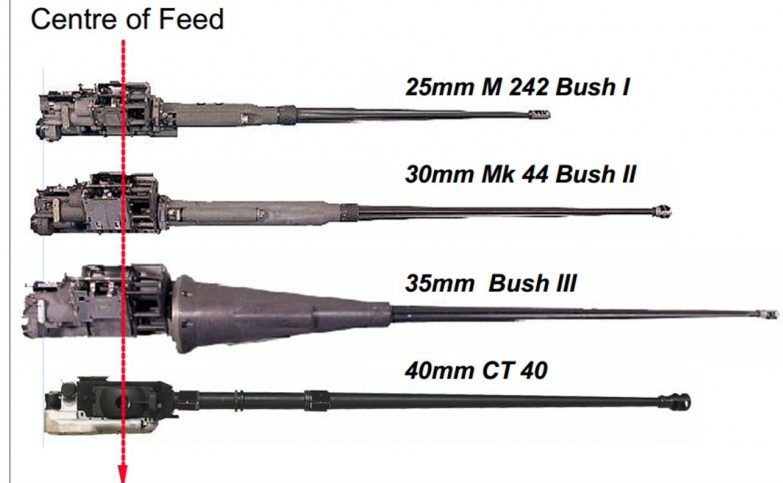
40 mm case telescoped gun (bottom) compared to conventional guns.

40 mm case telescoped gun (bottom) compared to conventional guns.

Improved Gun–Penetration, Range, and Accuracy: The .50 cal. and 25mm guns we have on our WPBs and WPCs have serious limitations in their ability to reach their targets from outside the range of weapons terrorist adversaries might improvise for use against the cutters. They have limited ability to reach the vitals of medium to large merchant vessels, and their accuracy increases the possibility of collateral damage and decreases their probability of success. 30, 35, and 40 mm replacements for the 25 mm in our Mk38 mod2 mounts are readily available.

Laser Designator: Provide each station, WPB, and WPC with a hand-held laser designator to allow them to designate targets for our DOD partners.

CONTINGENCY PLANNING SHORTFALLS

Vessel Wartime Upgrades: Develop plans for a range of options to upgrade Coast Guard assets for an extended conflict against a near peer.


Changes Ahead, Acquisition, Organization? and Again, Where is the Damn Unfunded Priority List?

Two new posts regarding the Coast Guard’s future, both from Defense News.

The first, “Commentary: US Coast Guard deserves military level funding,” by Representative Duncan D. Hunter (R-CA) is a plea for better funding of the Coast Guard. Its significance is less what it says, than who is saying it.

The second, “US Coast Guard urged to step up requirements,” by Christopher P. Cavas, quotes Representative Hunter and his chief of staff, Joe Kasper. It primarily encourages the Coast Guard to provide a comprehensive unfunded priority list, primarily with regard to icebreakers, Unmanned Air Systems, and, some what obliquely, the inland tender fleet, but it goes further, indicating Hunter will attempt to have the Coast Guard moved into the DOD and have our larger cutters better armed.

So who is Representative Hunter?  He is the son of long serving representative Duncan L. Hunter. He serves on the Armed Services, Education and the Workforce and Transportation and Infrastructure committees, and most importantly for us, he chairs the Transportation Subcommittee on Coast Guard and Maritime Transportation. He is a Marine Reserve Major. The day after the September 11 attacks, Hunter quit his job and joined the Corps. He served two tours in Iraq as an artillary officer and was recalled to duty for a tour in Afghanistan.

Perhaps significantly he and Rep. Chris Collins (R-NY) were the first members of Congress to endorse Trump.

I first became aware of him watching the video you can see here, “Coast Guard and Maritime Transportation Subcommittee Hearing on Coast Guard Arctic Implementation Capabilities 7/12/16.” I should have been paying more attention earlier when I included another video of a subcommittee hearing here, “Subcommittee on Coast Guard and Maritime Transportation: Examining Cutter, Aircraft, and Communications Needs.”

If you look, particularly at the first video from 2016, you will see his frustration with the Coast Guard leadership. This call for an “expansive” unfunded priority list seems to be an effort to teach the Coast Guard leadership how to “play the game.”

“We’re trying to instill some courage in the Coast Guard,” he added. “They’re taking on a bigger role, doing more things. We’re talking about the Arctic, about inland waterways. Until you ask for it, it is going to be increasingly difficult for us on the Hill to sound the need. There is no confusion around the Navy’s fleet size, there’s good awareness on where the Navy needs to be. The Navy knows how to play this game, to advocate for its needs.  Until you start getting out in front and making the case for where you need to be and not worrying about the effect on your budget, you’re never going to get what you need.”

I have expressed my own inability to understand why the Coast Guard will not provide an unfunded priorities list even when it is requested by Congress. Here in 2013, and again in 2014.

Hopefully we will see one this year.

Thanks to Luke for bringing these to my attention.


“Congress Must Re-Set Department of Homeland Security Priorities: American Lives Depend on It”–Heritage Foundation

US Capital West Side, by Martin Falbisoner

US Capital West Side, by Martin Falbisoner

The influencial Conservative think tank, Heritage Foundation, has issued a report on the Department of Homeland Security that will likely strongly influence the incoming administration and Congress.

It does not call for any radical increase in the Coast Guard budget for FY2017 ($10.85B). In fact it calls of less funding than was enacted in 2016 ($11.112B), but more than the current administration has requested ($10.322B).

It does support the Offshore Patrol Cutter (OPC) and Polar Icebreaker (PIB) programs and continued procurement of six Webber class (FRC) rather than the four currently requested.

For the future, it appears they support a more stable AC&I budget of at least $1.5B. To me it appears likely the AC&I budget will go higher as both the OPC and PIB enter the construction phase, and they spoke against imposition of a defacto ceiling.

The most significant new direction, seemed to be strong support for Unmanned Air Systems.

Unmanned Aerial Systems. The Coast Guard would also benefit greatly from procuring UASs to support NSC operations. According to the GAO, “Coast Guard officials acknowledged that the lack of [cutter-based] unmanned aircraft would create a gap between the NSC’s actual and planned capabilities.” Dr. William Posage, program manager for the Coast Guard Research and Development Center, explained that the lack of cutter-based UAS technologies “left the NSC with an enormous surveillance gap in her ability to perform her mission.” Notably, the operational effectiveness of the NSC without a UAS component would “be comparable to that of the 378-foot Hamilton class high-endurance cutter,” the very program it was designed to replace with capability enhancements.

The Coast Guard has successfully tested the FireScout and ScanEagle UAS platforms, both of which would significantly amplify the NSC’s surveillance, detection, classification, and prosecution capabilities. Widely used for similar naval operations, they have successfully contributed to a handful of at-sea Coast Guard demonstrations. According to an assessment by the Coast Guard Office of Aviation Forces, the presence of two vertical take-off FireScout UASs aboard an NSC would enable the cutter to cover three times the presence radius of an NSC without them. Similarly, according to a Senate Appropriations Committee report, “[t]he Coast Guard has reported…that its long standing plan to add vertical take-off unmanned aircraft systems to the National Security Cutters would result in an estimated 95- to 225-percent increase in surveillance coverage within an 800 nautical mile radius of the cutter and an estimated 95-percent increase in the number of prosecutions achieved by the cutter.”

The Coast Guard’s FY 2017 budget justification states that funding for the NSC program will in part “establish sUAS [small UAS] capability aboard one NSC, to include engineering analysis, non-recurring engineering, procurement and installation of sUAS components, and system testing and certification.” Admiral Zukunft testified before the House Transportation Committee in March 2016 that this activity would involve a “down select” for a sUAS capability “that will go on board” the NSC. The NSC will amplify its aerial ISR capabilities dramatically with the longer-term integration of sUAS, while the sea service should continue to evaluate the vertical unmanned aerial vehicle (VUAV) platform.

This seems to indicate a two pronged approach, first a small UAS (Scan Eagle or something similar) in the near future and a continued interest in evaluating a vertical takeoff unmanned system like Firescout or potentially DARPA’s TERN.

All the UAS discussion centers on the National Security Cutters. There is no discussion of the possibility of using UAS on any other classes.

Commandant Talks Prospects for Next Administration

Defense & Aerospace Report Editor Vago Muradian interviews the Commandant, Adm. Paul Zukunft, at the 2016 Reagan National Defense Forum.

The Commandant hit many of themes we have heard him discuss before, but there was also mention of beginning to replace the inland Aids to Navigation fleet. We were supposed to have had a joint program with the Corp of Engineers to develop a common design, but I haven’t heard anything about that for several years now. They are certainly due for replacement. It almost sounds like they just realized they needed to do something about this.

Where is that 30 year shipbuilding plan?

Commandant’s Strategic Intent, Mid-Term Report

Coast Guard Capt. Douglas Nash, commanding officer of Coast Guard Air Sation Sacramento, salutes a Coast Guard C-27J pilot during a change of watch ceremony at Air Station Sacramento's hanger in McClellan Park, Thursday, July 1, 2016. The ceremony marked the final day that an HC-130 Hercules crew stood the watch at Air Station Sacramento and introduced the newest aircraft. Coast Guard photo by Petty Officer 3rd Class Loumania Stewart

Procurement of 14 C-27J aircraft was one of the achievements sited. C-27Js replace C-130s at CGAS Sacramento. 

The Commandant has issued a mid-term update on his earlier published “Strategic Intent, 2015-2019” (pdf). The new document is available in pdf format. You can find it here: “United States Coast Guard Commandant’s Strategic Intent, 2015-2019, Mid-Term Report.”

It is relatively short and readable at 21 pages. The recurring themes of the Commandant’s administration are all there, starting with TOC (transnational organized crime) and its deleterious effect on Western Hemisphere governance and prosperity. It does read a little like an Officer Evaluation Report input.

There is nothing particularly surprising here, but even for me, the enumeration of the scope the Coast Guard’s authorities, responsibilities, and international contacts is still mind boggling.

I am not going to try to summarize the report, but there were a few things that struck me.

The Commandant mentions service life extension programs for the seagoing buoy tenders (already begun), the 47 foot MLBs, and the 87 foot WPBs (in the future), but there is no mention of what we will do about the inland tender fleet. There will also be a life extension program for helicopters before they are finally replaced.

“Extend the service life of our rotary wing assets and align with DOD’s Future Vertical Lift initiative.”

There is mention of a program I was not aware of, the “Defense Threat Reduction Agency National Coast Watch System project.” The Defense Threat Reduction Agency attempts to track and reduce the WMD threat. It is not really clear what our role is here. We know about the container inspection programs in foreign ports. Is that it, or is there more to this? (that can be discussed at an unclassified level.)

Alaska, FY2017 Budget, Homeports

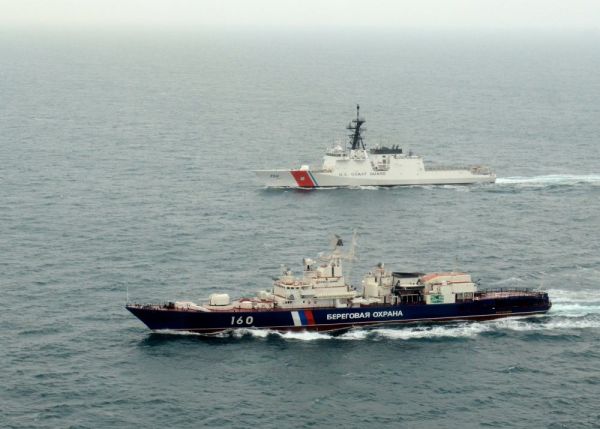
Bertholf-and-Vorovsky

Some interesting little notes from Alaska Dispatch News here and http://politicalnews.me/ here.

From the first:

“…in the appropriations bill passed out of committee Thursday, Murkowski secured language directing the Coast Guard to consider basing a national security cutter near the Arctic. The bill also directs the Coast Guard to station two offshore patrol cutters in Kodiak and appropriated $325 million for fast-response cutters, two of which are scheduled to be stationed in Ketchikan in 2017.”

From the second:

  • CG Base Kodiak: Murkowski secured $22 million for upgrades to CG Base Kodiak to support future OPC homeporting and current NSC operations.

  • Search and Rescue: Murkowski secured language directing the Secretary of Homeland Security to report on the plans of the Coast Guard to ensure long-term search and rescue capabilities in the Arctic.

  • Response Capabilities: Murkowski inserted an amendment directing the Secretary of Homeland Security to report on the Coast Guard’s plans to ensure it is capable of conducting its response missions throughout the Bering Sea and Arctic Ocean.

I think we could make a good case for homeporting two or even three OPCs in Kodiak, but don’t think we will see any NSCs homeported in Alaska.

Replacing the 110s in Alaska with the more seaworthy Webber class as quickly as possible also makes a lot of sense. We might want to put a couple at Dutch Harbor as well.

Thanks to Daniel for bringing this to my attention. 


FY2017 Budget

NSC&FRC

It is still a long way from being a law, but you can see the bill as it currently stands here.

I would like to note that while the FY2017 budget bill includes $95M for  long lead time materials for the tenth National Security Cutter, most of the cost will fall in FY2018 when we will also be funding the OPC and FRC programs, and maybe an icebreaker.

Are they really thinking ahead? If they are going to fund a 10th NSC, they need to do it this year.

Senate Homeland Security Appropriations–Plus Up

MarineLog is reporting:

The homeland security measure provides $10.4 billion for the d Coast Guard, an increase of $292 million above the FY2017 requested level.

“This level supports a robust USCG operating expenses budget, including a grant program for commercial fishing safety, purchase of additional response boats, and funds for the National Coast Guard Museum,” says the Committee. “This bill also provides necessary increases for acquisitions, including funding long lead time materials for a tenth National Security Cutter, continuing activities associated with the Offshore Patrol Cutter, two additional Fast Response Cutters (for six total), and support for multiple sustainment efforts and program offices such as the C-130J, C-27J, and HH-65. The measure also includes program management and personnel costs associated with the Polar Icebreaker Recapitalization Project in addition to funding in the Senate FY2017 Department of Defense Appropriations Bill.”

The Defense Appropriations Bill includes $1B for the Navy to build a new Icebreaker for the Coast Guard. We will have more to say about this later.

Commandant, “Bullish”

IMG_4135

Following from the Navy League magazine, “Seapower.” It is from an article, “Service Chiefs Stress Partnerships, Need to Accelerate Acquisition,” by Otto Kreisher:

Zukunft was surprisingly “bullish” on the Coast Guard’s condition, noting that his procurement budget doubled in the current year, enabling the service to expand its National Security Cutter program to nine ships, to build 58 Fast Response Cutters and upgrade its command-and-control and fixed-wing aircraft systems. He said the Coast Guard this summer would award the biggest ship construction program in its history, for the Offshore Patrol Cutters.

Nice to see the Offshore Patrol Cutters getting closer, but it has taken a long time. We should note that this summer’s award for the OPC is not that big a contract, but it is a start.

We have had one good year. Congress’ largess (it certainly was not the executive) appears due mostly (but not entirely) to Huntington Ingalls Industries’ influence. Still it does create a precedence for larger, more reasonable, AC&I appropriations. Hopefully we will see the same sort of funding in FY2017. A tenth Bertholf is a possibility, If not, maybe we can move some of the OPC funding forward. Perhaps selection of the OPC builder will give us another strong advocate in Congress. I would hate to see funding levels go back to where they were before. Even $2B annually is not really anything like generous.

Thanks to Daniel for bringing this to attention.