“Trump Administration Opens Pacific Remote Islands Marine Monument to Commercial Fishing” –gCaptain

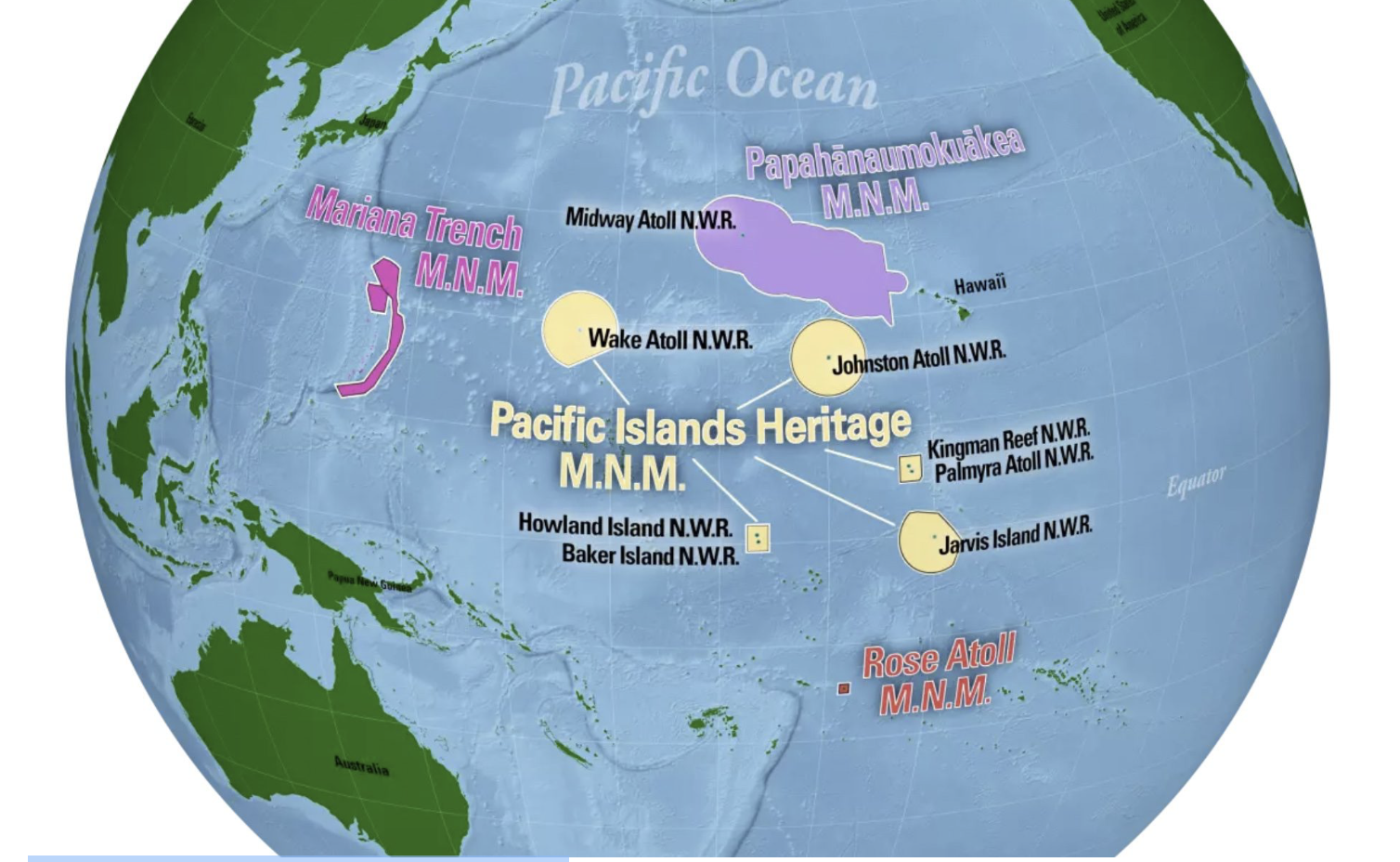
Pacific Remote Islands Marine Monument. Map courtesy U.S. Fish and Wildlife Service

gCaptain reports,

President Donald Trump signed a proclamation on Thursday opening the Pacific Remote Islands Marine National Monument (PRIMNM) to commercial fishing, marking a substantial change in U.S. fishing policy.

The proclamation specifically permits U.S.-flagged vessels to conduct commercial fishing operations within 50 to 200 nautical miles of the PRIMNM’s boundaries. This decision affects an expansive marine protected area spanning approximately 495,189 square miles in the central Pacific Ocean – a region nearly five times the size of all U.S. National Parks combined.

This would seem to provide additional justification for a Coast Guard base and cutters (presumably Webber class WPCs) in American Samoa to provide additional safety for US fishermen and to keep unwelcome foreign fishermen out.

“U.S. Coast Guard cutter arrives in Papua New Guinea, embarks law enforcement officers to conduct joint maritime patrol” –News Release

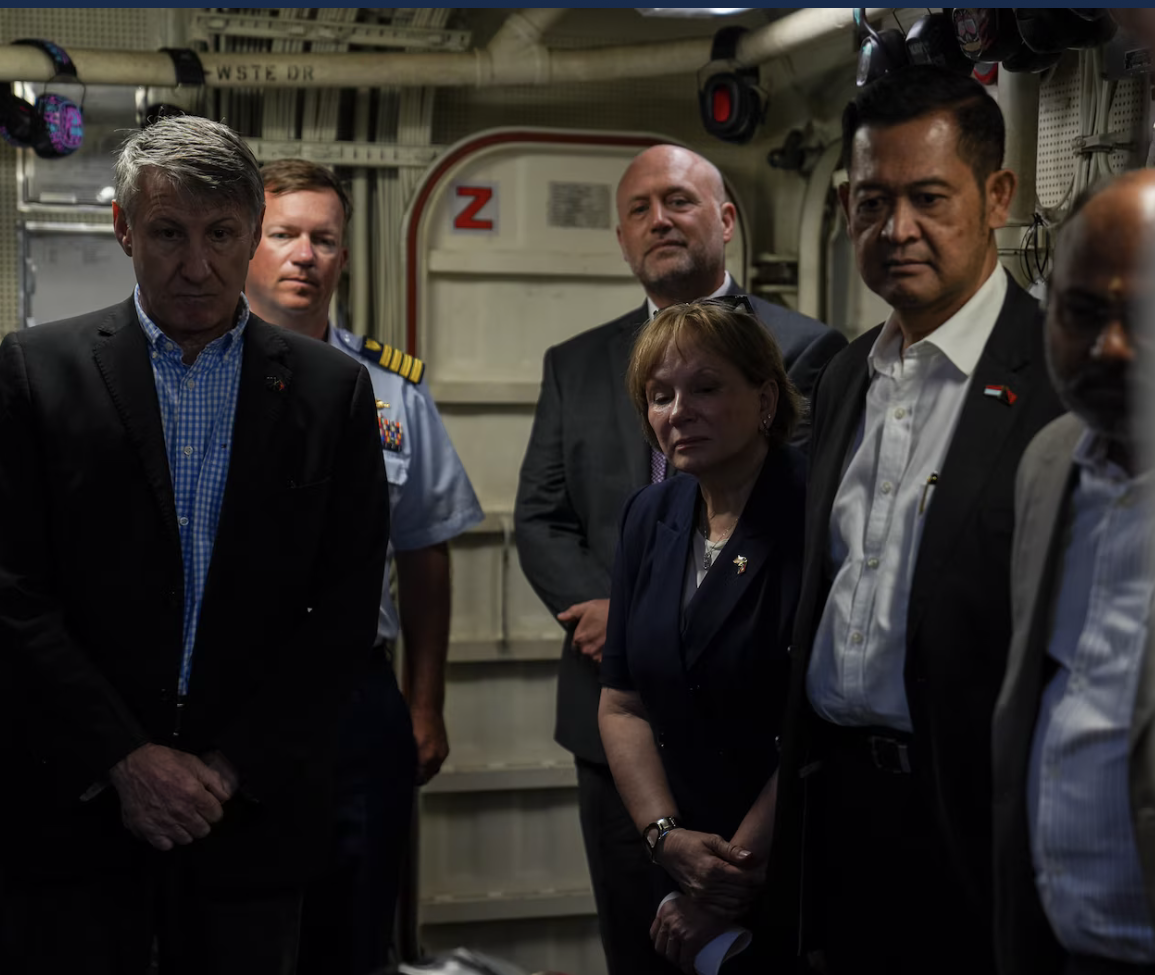
Officials from multiple agencies stand in the engine control room of the Coast Guard Cutter Midgett (WMSL 757) in Papua New Guinea Mar. 6, 2025. Papua New Guinea lies in the heart of key shipping routes, where freedom of navigation for the transport of global goods and fisheries and deep-sea resources abounds. The Coast Guard and Papua New Guinea collaborate to mitigate shared maritime challenges and threats, promoting regional security and stability within Oceania. (U.S. Coast Guard photo by Petty Officer 3rd Class Jennifer Nilson)

Below is a Coast Guard news release.

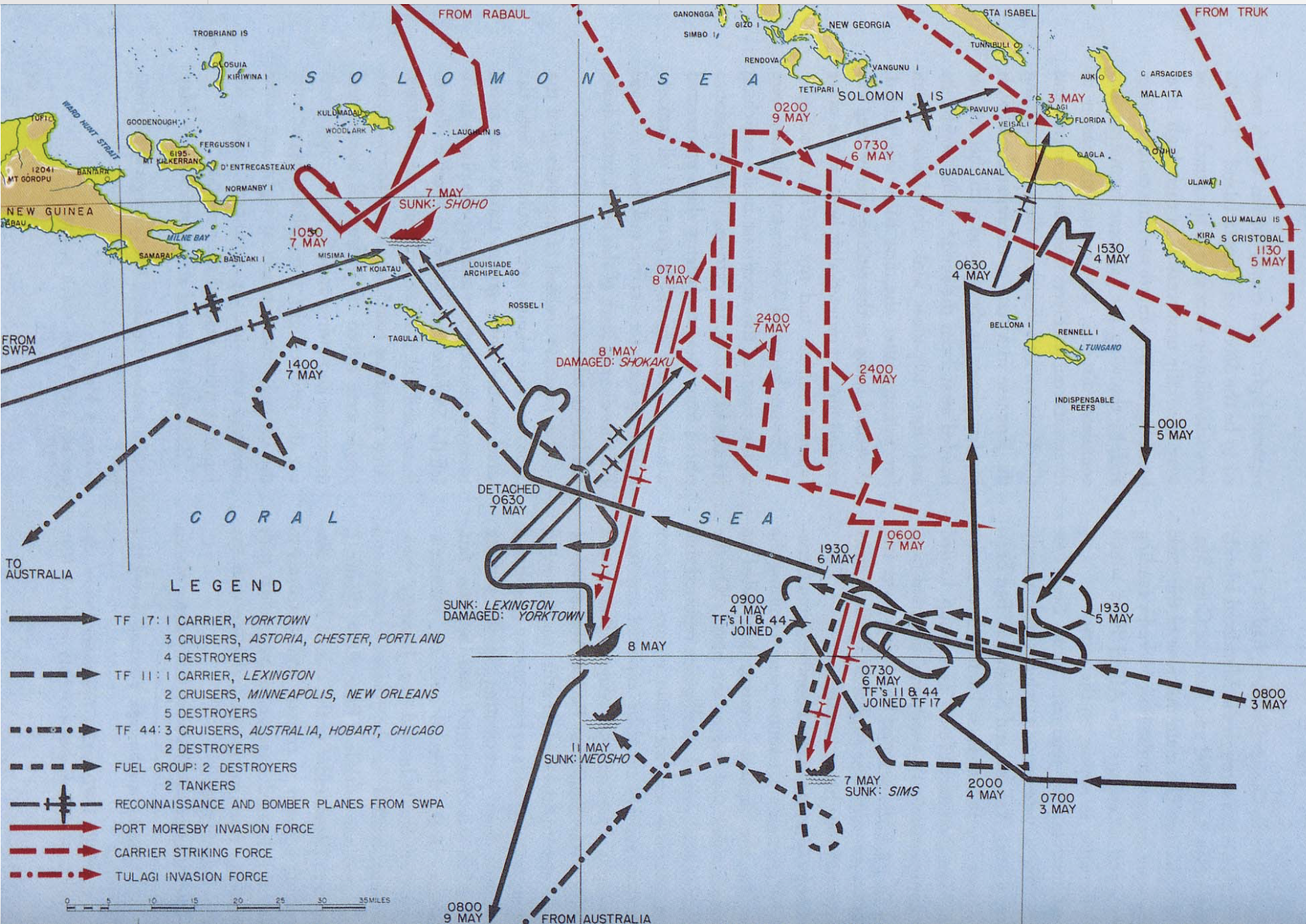
For those with an interest in World War II history. The Battle of the Coral Sea turned back a Japanese force that had planned to attack Port Moresby on the East end of New Guinea.

Battle of Coral Sea. United States Army Center of Military History. The Campaigns of MacArthur in the Pacific, Volume I. Reports of General MacArthur., p. 48, Plate 14. Port Moresby, NewGuinea is in the upper left; Guadalcanal, Tulagi and other Solomon Islands in the upper right; Australia to the South and West

March 12, 2025

U.S. Coast Guard cutter arrives in Papua New Guinea, embarks law enforcement officers to conduct joint maritime patrol

PORT MORESBY, Papua New Guinea — At the invitation of the Papua New Guinea government, the U.S. Coast Guard Cutter Midgett (WMSL 757) arrived in Port Moresby, Thursday, to embark Papua New Guinean law enforcement officers. This visit directly supports Papua New Guinea’s leadership in the Pacific Islands and its commitment to maritime security, specifically in combatting illegal, unreported, and unregulated fishing.

Midgett’s presence reinforces the U.S. Coast Guard’s commitment to deeper relations with Pacific Island nations and regional stability. This collaborative effort marks the first time a national security cutter, the U.S. Coast Guard’s most capable law enforcement cutter, will conduct bilateral maritime law enforcement operations in Papua New Guinea’s Exclusive Economic Zone (EEZ), under the existing bilateral agreement that was singed in May 2023.

This joint patrol will represent a tangible demonstration of the bilateral agreement between the United States and Papua New Guinea, strengthening maritime governance within the Pacific and deterring illegal activities within Papua New Guinea’s EEZ to promote the sustainable use of marine resources.

Midgett, commissioned in 2019 and homeported in Honolulu, is the eighth Legend-class national security cutter. These 418-foot vessels are equipped with advanced technology and a range of capabilities, making them ideally suited to support a wide range of missions, including maritime security, law enforcement, and search and rescue operations. Midgett’s deployment to Oceania highlights the United States’ enduring commitment to promoting a peaceful, secure, prosperous, and resilient Pacific Islands region.

“Sails on an OPV? Vessel Design, with French Flair” –MarineLink

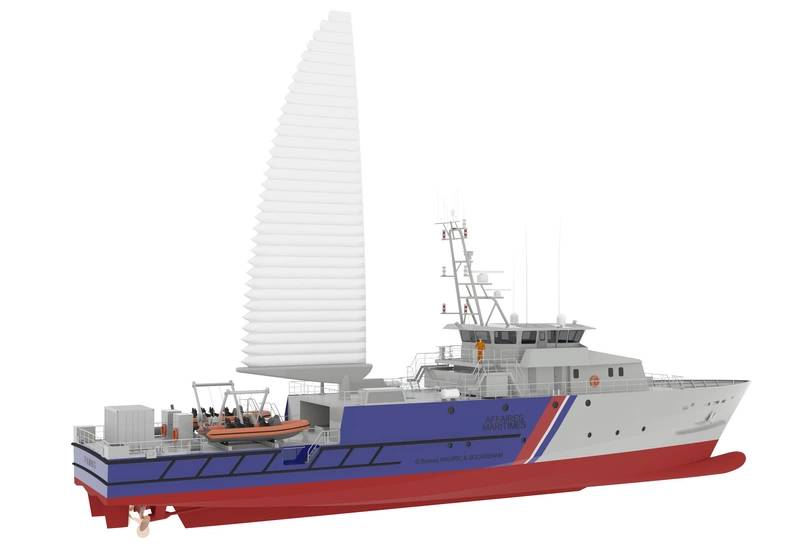
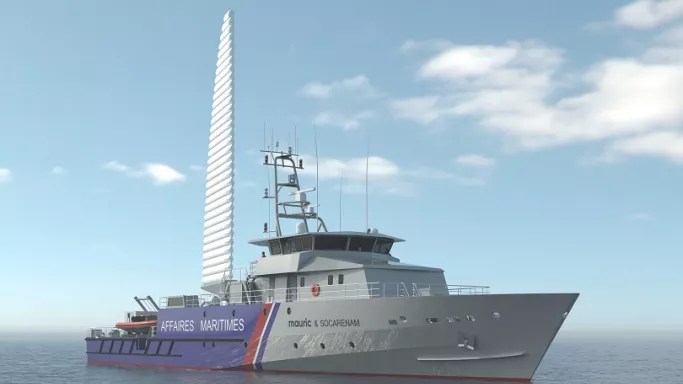
3D rendering of the PAMNG. Image ©MAURIC

Marine Link reports a contract for construction of a small Offshore Patrol Vessel (OPV) for the French Directorate General for Maritime Affairs, Fisheries and Aquaculture (DGAMPA).

I have been seeing reports of sails of various sorts being added to merchant vessels in order to reduce fuel consumption, but this is the first time I have seen this applied to a modern OPV.

It is just part of their efforts to make the ships fuel efficient while minimizing emissions,

The wind-assisted propulsion solution, combined with diesel-electric hybrid propulsion and IMO TIER III compliant engines, are designed to position the vessel “at the forefront of maritime ecological transition,” wrote DGAMPA.

As with all vessel designs, there is not a silver-bullet solution to increased efficiency, and this vessel will also have a hull design optimized through computational fluid dynamics, enhanced insulation with optimized energy management, photovoltaic panels, and an active trim control system.

Based on some modest experience with sailing craft, the sail may also have the effect of steadying the ship, slowing the roll and making it more comfortable as well. In addition, with the mast apparently stepped a bit aft of amidships, and the sail aft of that, it appears that the ship would drift with its head into the wind and seas rather than broadside as most ships do.

Rendering of the PAMNG. Image ©MAURIC

54m OPV Main Particulars

  • Crew: 16 persons
  • Duration: 12 days, up to 200 days at sea per year
  • Length: 53.7 m
  • Construction: Steel hull, aluminum superstructure
  • Propulsion: Diesel-electric hybrid system with wind assisted propulsion
  • Maximum speed: 17 kts
  • Endurance: 3,600 nm at 12 kts
  • Nautical equipment: 2 semi-rigid boats of 6.50m (speed: 35 kts)

Main Missions

  • Protection of national interests
  • Maritime fisheries surveillance and control
  • Environmental regulations compliance
  • Pollution and navigation monitoring
  • Assistance to persons
  • Public service missions and representation of French Maritime Affairs Administration

USINDOPACOM Exercises & Engagements

INDOPACOM Defense Forum Special Features has a post that includes the map above that shows where “Exercise, Joint Combined Exchange or Training Teams” are located.

On the linked post, you can hover over the dots, and it will list activities in that location. Coast Guard is associated with dots identified as Solomon Islands, Federated States of Micronesia (FSM), Guam, Palau, Papua New Guinea, and Australia. It should have included the Marshall Islands as well. All these are also associated with Operation Blue Pacific.

Federated States of Micronesia, the Marshall Islands, and Palau are Compact of Free Association states. Guam and the Northern Mariana Islands are US territory.

The same post also has a different map that shows the location of DOD units normally located in the AOR (area of operations) that may be of interest.

“Chinese Warships, Cutters Harass Philippine Patrol Near Scarborough Shoal, Say Officials” –USNI

US Naval Institute’s news service reports on the latest incident between China and the Philippines.

Units involved were:

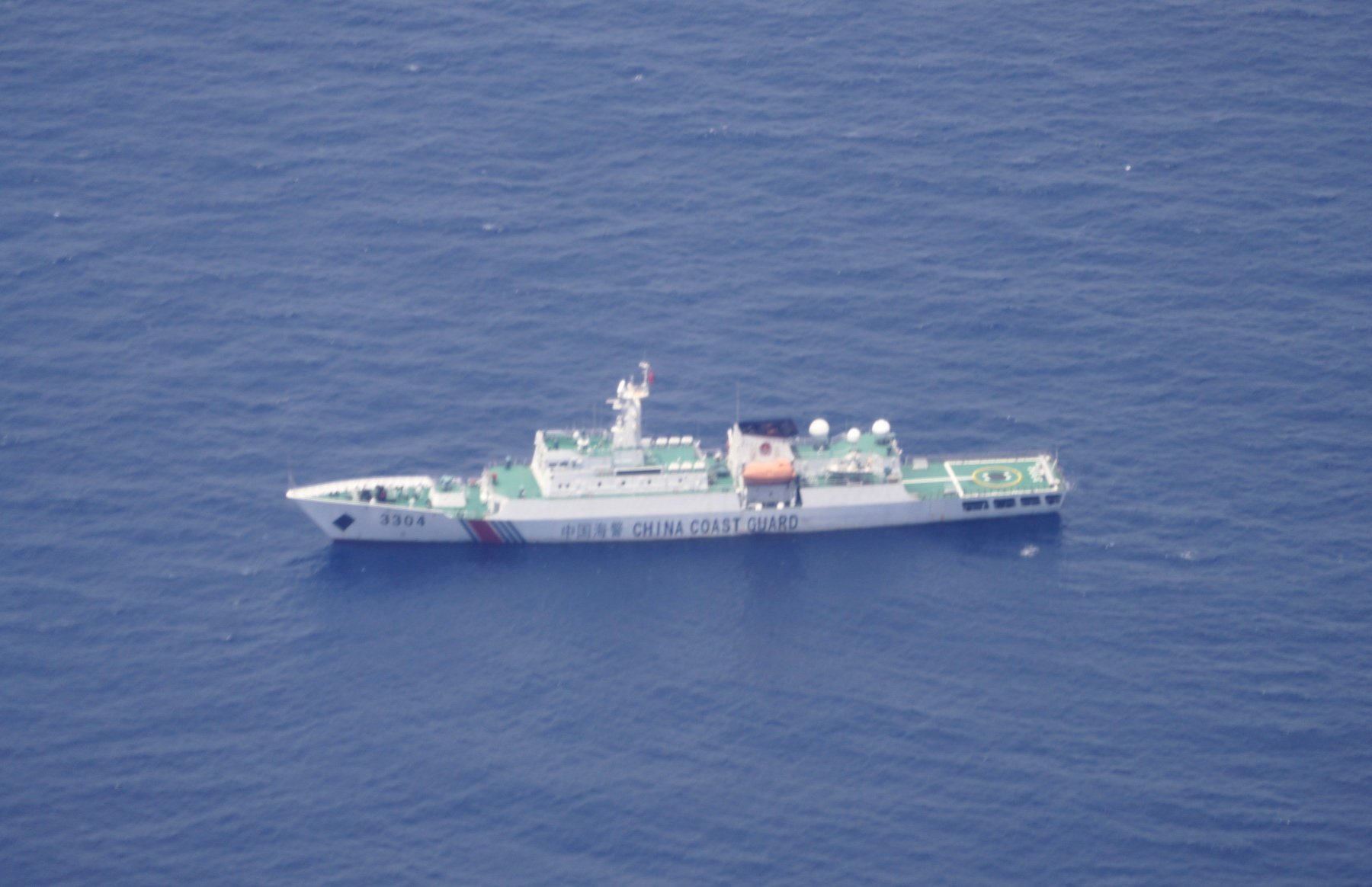
China Coast Cutter 3304 in the Philippine EEZ. Philippine Coast Guard Photo

  • Four China Coast Guard cutters hull numbers 5303, 3302, 3104, 3304
  • Two Chinese Navy Type 054A frigates Xianning (500) and Yuncheng (571)  

Type 054A FFG Hengshui (Source: Seaforces.org)

The Chinese have typically had their navy backing up their coast guard in these confrontations, but it appears a frigate was more directly involved than in previous similar confrontations. Still, it was the China Coast Guard that played bumper-boats and water cannoned the Philippine ships.

Generally, the Philippine Navy has not been present during these confrontations. The Philippines seems to want to make sure it is clear, who is the bully here. None of the Philippine ships involved even have deck guns.

The Philippine ships were there to protect Philippine fishermen who are being deprived of their livelihood by the Chinese.

With more direct involvement of PLAN frigates, the Philippine Navy may start making an appearance, perhaps over the horizon, but within ASCM range.


“Chinese Maritime Safety Officers Beat Vietnamese Fishermen During South China Sea Interdiction, Say Officials” –USNI

Personnel from the China Maritime Safety Administration board and attack the crew of the Vietnamese fishing vessel QNg 95739 TS. Screenshot of a Maritime Safety Administration video released by SCSPI on Sept. 29, 2024. 

The US Naval Institute News Service reports an incident in which personnel of the China Maritime Safety Agency boarded a Vietnamese fishing vessel. The boarding was resisted by the Vietnamese fishermen (see the video below) and when the Chinese agents came aboard, they severely beat the fishermen with metal rods.

This is just another example of the Chinese attempting to intimidate their perceived enemies by using brutal, but usually less than deadly force. There have been conflicts with India and the Philippines at similar levels of violence. Chinese fishermen have also responded with similar levels of violence when being boarded by South Korean Coast Guard.

I am surprised this was done by the China Maritime Safety Agency rather than by the China Coast Guard. This may reflect an attempt by the Maritime Safety Agency to enhance its status in the Chinese government, perhaps even an effort to prove its continued relevance.

Where this happened is not stated. Presumably it was inside China’s self-declared Nine Dash Line, but outside China’s internationally recognized Exclusive Economic Zone (EEZ) and probably within Vietnam’s EEZ.


“Coast Guard to send 3 more cutters to Guam, has no plans to escort Philippine ships” –Stars and Stripes

A U.S. Coast Guard boat crew and boarding team from U.S. Coast Guard Cutter Oliver Berry (WPC 1124) approaches a foreign fishing vessel to conduct a joint boarding inspection with members of the Western and Central Pacific Fisheries Commission on the high seas in Oceania, Sept. 22, 2024. U.S. Coast Guard Cutter Oliver Berry’s crew recently completed a 45-day patrol in Oceania in support of Operation Blue Pacific, promoting security, safety, sovereignty, and economic prosperity in the region.

Stars and Stripes reports,

The Coast Guard will double its Guam fleet to six cutters but doesn’t plan to accompany the Philippine coast guard as it struggles to maintain territorial claims in the South China Sea, the service’s Pacific-area commander said Friday.

This is based on a video news conference by Pacific Area Commander Vice Adm. Andrew Tiongson speaking from Japan.

“The Coast Guard will not escort Philippine resupply missions to the BRP Sierra Madre, a grounded warship garrisoned by Filipino troops at the Second Thomas Shoal in the South China Sea, according to Tiongson.”

The Philippines has not asked for escorts, Tiongson said. “We do advise, and we do assist,” he said. “We provide what we would do in this situation.”

He also said, “It’s possible we may get another Indo-Pacific support cutter,” using the description applied to USCGC Harriet Lane, recently arrived in the Pacific Area to support operations in the Western Pacific.

There is more in the article.

“U.S. Coast Guard encounters joint Chinese Coast Guard, Russian Border Guard patrol in Bering Sea” –Coast Guard News

Russian Okean class Patrol Ship. This is the larger of the two Russian ships. “An HC-130J Super Hercules airplane crew from Coast Guard Air Station Kodiak observes two Russian Border Guard ships and two Chinese Coast Guard ships approximately 440 miles southwest of St. Lawrence Island Sept. 28, 2024. This marked the northernmost location where Chinese Coast Guard vessels have been observed by the U.S. Coast Guard. (U.S. Coast Guard courtesy photo)”

Below is a CG news release, presumably from District 17 (Alaska).

An earlier post reported joint Russian/Chinese Coast Guard exercises and the formation of this four-ship combined task force.

They are in the Bering Sea. Will be interesting to see if they go up into the Arctic. It is a period of near minimal ice.

There is an interesting contrast between the two Russian ships and the two Chinese ships. In spite of the fact that this is happening in Russia’s back yard, the Chinese ships clearly outclass the Russian ships, being newer, larger, and faster.

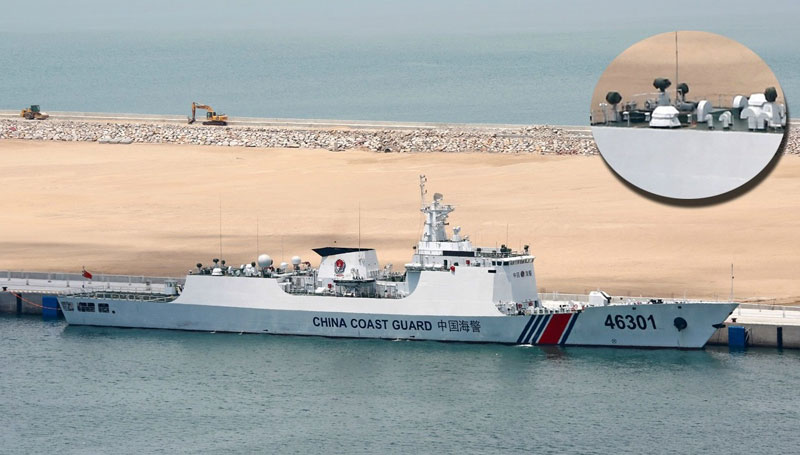
China Coast Guard type 818 cutter like the two deployed with the Russian Coast Guard

Why four ships hanging together when the US Coast Guard does Alaska Patrols in the Bering with only one ship? The Chinese tend to operate in groups. We haven’t seen this with the Russian Coast Guard, but I really haven’t seen much from them anyway.

Could the Chinese be teaching the Russians how to do gray zone operations, or is it just that totalitarian regimes need someone to do the work and someone to watch them?

On the other hand, the China Coast Guard has lots of ships but relatively few aircraft, and they operate primarily in two heavily trafficked, contested areas, the South and East China Seas.

News Week also has a good report on this.


Oct. 1, 2024

JUNEAU, Alaska – The U.S. Coast Guard located four vessels from the Russian Border Guard and Chinese Coast Guard conducting a joint patrol in the Bering Sea, Saturday.

While patrolling the maritime boundary between the United States and Russia on routine patrol in the Bering Sea, a HC-130J Super Hercules airplane crew from Coast Guard Air Station Kodiak observed two Russian Border Guard ships and two Chinese Coast Guard ships approximately 440 miles southwest of St. Lawrence Island.

The vessels were transiting in formation in a northeast direction, remaining approximately five miles inside the Russian Exclusive Economic Zone. This marked the northernmost location where Chinese Coast Guard vessels have been observed by the U.S. Coast Guard.

 “This recent activity demonstrates the increased interest in the Arctic by our strategic competitors,” said Rear Adm. Megan Dean, commander of the 17th Coast Guard District. “The demand for Coast Guard services across the region continues to grow, requiring continuous investment in our capabilities to meet our strategic competitors’ presence and fulfill our statutory missions across an expanding operational area.”

The HC-130 aircrew operated under Operation Frontier Sentinel, an operation designed to meet presence with presence when strategic competitors operate in and around U.S. waters. The Coast Guard’s presence strengthens the international rules-based order and promotes the conduct of operations in a manner that follows international law and norms.

“Head of Royal Canadian Navy Outlines Ottawa’s Pacific Strategy” –USNI

This is starting to get a little old, but I am trying to catch up.

US Naval Institute reports on a Center for Strategic and International Studies (CSIS) interview with Vice Adm. Angus Topshee, Commander, Royal Canadian Navy, Chief of the Naval Staff, that discusses their Navy’s increased emphasis on the Pacific.

I have included the video of the interview above.

Three AOPSs at pier before the commissioning ceremony for HMCS Margaret Brooke (AOPV-431). Canadian Navy photo

He discusses operating with the Coast Guard for drug interdiction, icebreaking, and fisheries beginning about time 9:00. The new Arctic Offshore Patrol Ships are expected to play important roles in these activities.

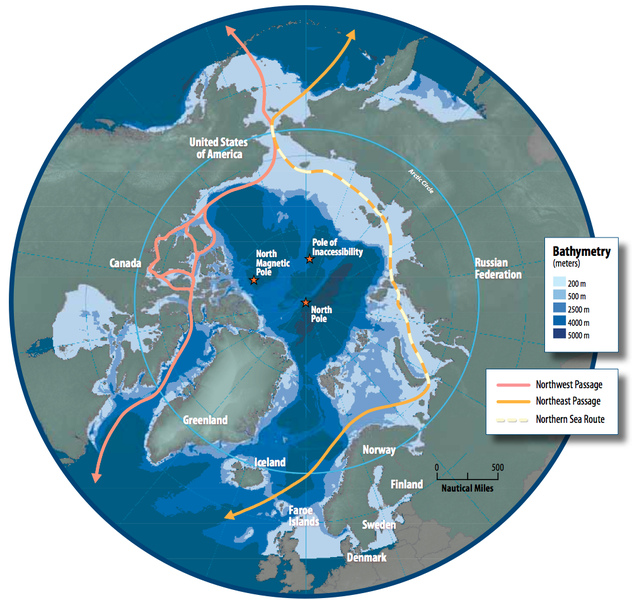
Map of the Arctic region showing shipping routes Northeast Passage, Northern Sea Route, and Northwest Passage, and bathymetry, Arctic Council, by Susie Harder

He explains why he does not see the NW Passage (which includes Alaskan waters) as a future international trade route (12:30).

He anticipates an end to the moratorium on fishing in the Arctic (14:30).

Discusses response to “Gray Zone” threats to undersea infrastructure (15:30).

Discussed war in Ukraine (19:00). Re sinking of Moskva, “Cruise missiles should not sink ships” (20:30). Drones (21:00). AI (24:50).

Where will they concentrate their efforts–Indo-Pacific (27:00). AOPS will be used for Fisheries in the Western Pacific.

Artic is an expeditionary theater, you have to bring everything with you, because there are no port facilities (29:00). Looking to create dual use facilities.

Recruiting (31:30). National Shipbuilding program (35:30), Technology sharing.

“Coast Guard hosts Pacific Quadrilateral Coordinating Group on Oahu” –CG News

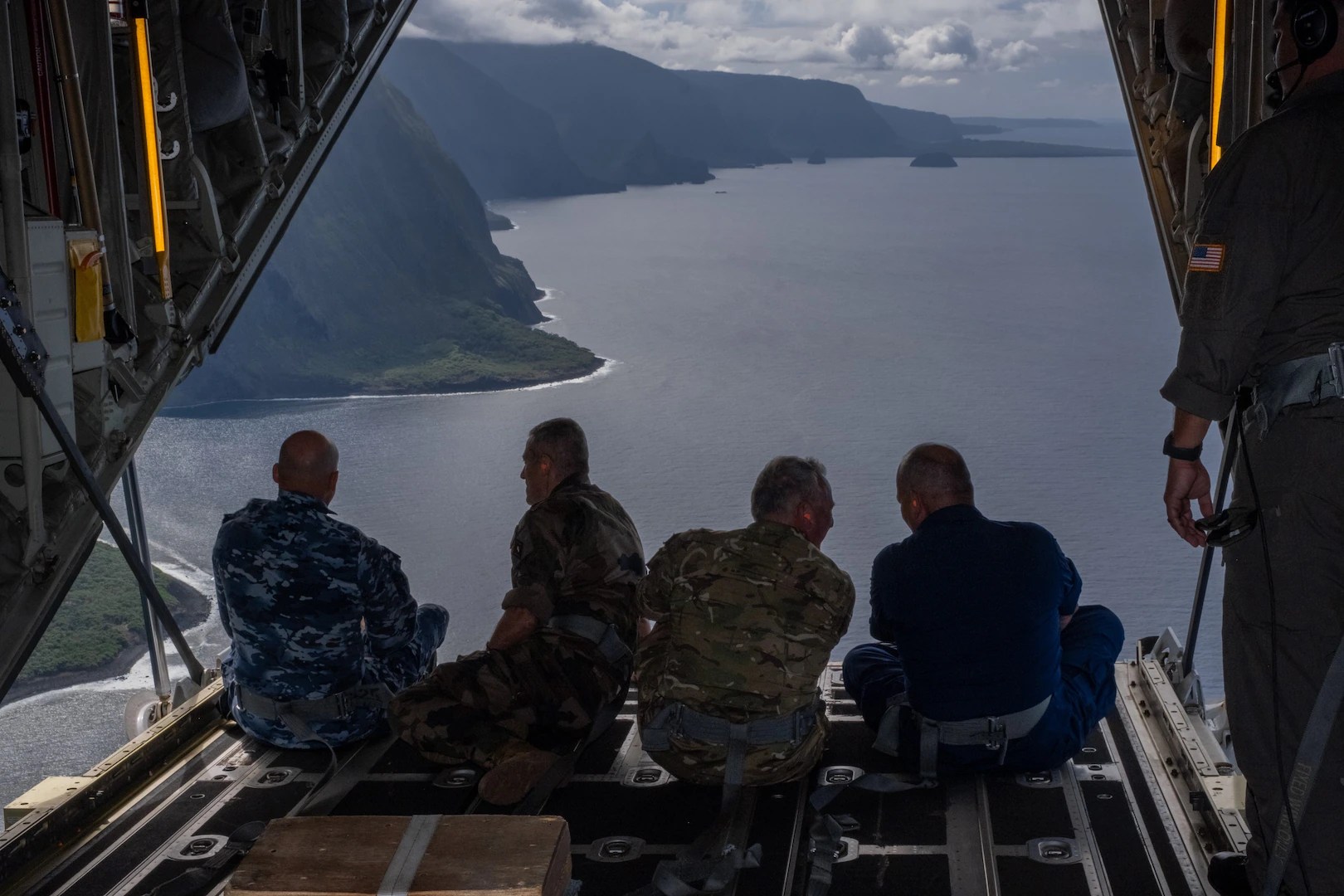
Below is a news release from Coast Guard News. Looks like Western Pacific fisheries is finally getting the attention it has deserved. The “Pacific Quad” mentioned here (Australia, France, New Zealand, and the US) should not be confused with “The Quad” (Australia, India, Japan, and the US) which is an informal military association.

I am still hoping to see my “Combined Maritime Security Task Force, Pacific” formed.

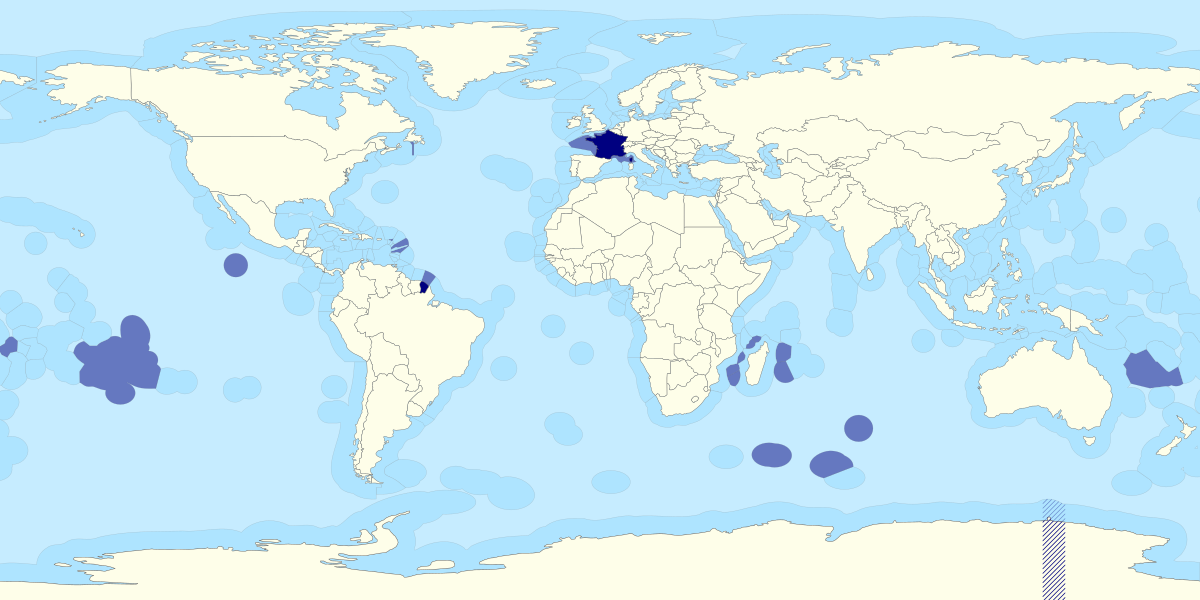
Territory of France and its Exclusive Economic Zone. (Antarctic territorial claims in lighter tone). Credit B1mbo via Wikipedia.

If you are wondering why France is in this group, take a look at their Exclusive Economic Zone, above.


Nov. 3, 2023

Coast Guard hosts Pacific Quadrilateral Coordinating Group on Oahu

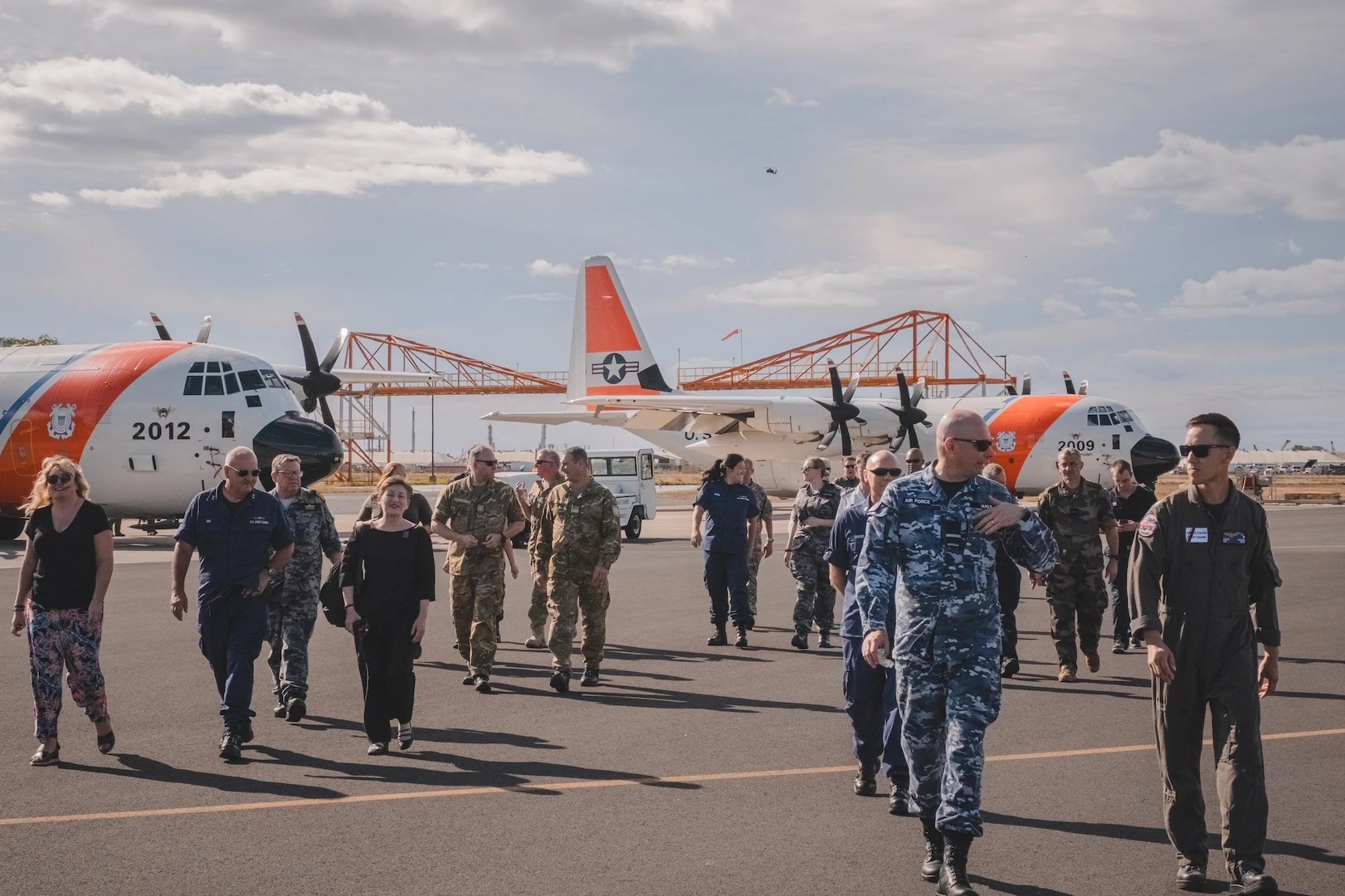
HONOLULU — The U.S. Coast Guard recently hosted the Pacific Quadrilateral Defense Coordinating Group from Oct. 9 to 11, 2023, focusing on enhancing maritime security in the Pacific.

The meeting gathered leaders from Australia, France, New Zealand, the United States, and the Forum Fisheries Agency. Rear Adm. Michael Day, U.S. Coast Guard District 14 commander, emphasized the importance of this collaboration, particularly in the context of regional challenges such as climate change and security.

“These face-to-face meetings and continued cooperation among our nations are not just strategic imperatives; they are lifelines to the people of the Blue Pacific,” said Day.

He further highlighted the impact of this collaboration, emphasizing the human element and recognizing the responsibilities of the larger nations in the Pacific, “We acknowledge the historical context, and while we do not seek to rewrite the past, we are committed to a future where the sovereignty and livelihoods of Pacific Island Countries are safeguarded. Climate change, followed by regional tensions, looms large as challenges we all face, and our shared responsibility is to address these threats. Our commitment to combating illegal fishing and ensuring maritime safety is not just about security; it’s about ensuring a sustainable and secure future for the communities who call the Pacific home.”

The Pacific QUAD was established in 1998, and brings together defense and security agencies from Australia, France, New Zealand and the United States in a mutual commitment to partnering with the Pacific Island countries to collectively enhance regional security.

During the meeting, discussions covered various topics, including their annual report, training programs, tactical calendar, information sharing and support for the Forum Fisheries Agency operations. Additionally, three new principals joined the group. Brig. Gen. Yann Latil (France), Air Comm. John Haly (Australia), and Brig. Gen. Andy Shaw (Aotearoa New Zealand).

The Pacific QUAD’s mission is to combat illegal fishing in the Southwest Pacific and collaborate closely with Pacific Island nations. The group operates at both a strategic and operational level, with annual and biannual meetings, respectively.

This year, examples of their collaboration included: an agreement with New Zealand, joint gatherings and strengthening cooperation with Australian Maritime Security Advisors, a successful search and rescue operation, and an international mass rescue exercise, highlighting the positive impact of their efforts on regional stability and maritime safety.

The Pacific QUAD, consisting of New Zealand, the United States, France, and Australia, annually rotates its principal chairmanship position as part of its collaborative approach. Last year, Air Commodore Darryn Robert Webb of New Zealand handed over the role to Rear Adm. Michael Day, who has now passed it to Brig. Gen. Yann Latil, the commander of French Forces New Caledonia. Latil is expected to transfer the responsibility to Air Commodore John Haly, the Australian Joint Operations Command, Director General Operations and Plans (J3), next year. This rotation underscores the ongoing commitment of the Pacific QUAD nations to regional stability and cooperation.

“After a very successful meeting in Honolulu this year, I am happy to take over the American coordination of the Pacific Quad’s work and I look forward to hosting my fellow principals and their teams in Noumea next year,” said Brig. Gen. Yann Latil, the commander of French Forces New Caledonia.

U.S. Coast Guard District 14, covering a vast area in the Central and Western Pacific, plays a crucial role in maritime safety, resource protection, security and national defense through partnerships and international engagement.