Document Alert: Cutter Procurement–Another Report to Congress

Once again, the Congressional Research Service’s Ronald O’Rourke has revised his “Coast Guard Cutter Procurement: Background and Issues for Congress” with the new edition issued April 15. This has got to be a hot topic because previous revisions were issued March 22, January 27, and December 14, 2015. That is four revisions in four months, on average every six weeks, but the latest is only 24 days after the previous edition. I have begun to sense, we may have turned a corner. The tone of the reports has changed over these four months, from, how long will it take us to reach the “Program of Record” (POR), to consideration of, if we should perhaps go beyond the POR.

The NSC, OPC, and FRC programs pose several issues for Congress, including the following:

“whether to fund the acquisition of a 10th NSC in FY2017;

“whether to fund the acquisition of four FRCs in FY2017, as requested, or some other number, such as six, which was the number projected for FY2017 under the Coast Guard’s FY2016 budget submission;

“whether to use annual or multiyear contracting for procuring FRCs;

“whether to use annual or multiyear contracting for procuring OPCs;

“planned procurement quantities for NSCs, OPCS, and FRCs;

“the cost, design, and acquisition strategy for the OPC;

“initial testing of the NSC; and

“rotational crewing of the NSC.”

The latest revision includes three substantial Appendices:

  • Appendix A. Planned NSC, OPC, and FRC Procurement Quantities (pp 17-22)
  • Appendix B. Funding Levels in AC&I Account (pp 23-26)
  • Appendix C. Additional Information on Status and Execution of NSC, OPC, and FRC Programs from March 2016 GAO Report (pp 27-34)

Appendix C is entirely new and appears to have been the reason for the revision.

Appendix A (p. 17-22) is a fairly detailed discussion of the results of the Fleet Mix Study and asks why we so seldom hear that the program of record is not enough to assure the Coast Guard to successfully accomplish its assigned missions.

The Fleet Mix Study was made public in 2012 long after its completion in 2009. It is due for a reexamination and the Commandant has said another will be done. When that happens, we seriously need to look at more than just more of the same assets. We need to look at additional technology, equipment, and weapons that might allow us to accomplish these missions without a major increase in personnel.

Looking at “Table A-3. Force Mixes and Mission Performance Gaps” (document page 18) I would note that if we get to Fleet Mix Analysis Phase 1 (FMA-1, an increase over the POR including 9 Bertholf class NSCs, 32 OPCs and 63 Webber Class FRCs, for a total of 104 vessels), we will have addressed all the “Very High Risk Gaps” found in the Fleet Mix Study that included SAR capability, “Defense Readiness Capacity,” and “Counter Drug capacity.” What will remain are “High” or lower risks in Ports, Waterways, and Coastal Security (PWCS) and Living Marine Resources (LMR), and a low to very low risk to the Alien Migrant Interdiction Operations (AMIO) mission. This total of more than 40 NSCs and OPCs certainly should not be out of the question, after all the Coast Guard has included over 40 ships larger than a thousand tons for the last several decades.

Still, I would note that, no matter how many ships we have, the Ports, Waterways, and Coastal Security (PWCS) mission will always be at risk, unless weapons are available to quickly and reliably stop terrorists’ exploitation of a larger merchant vessel to make an attack. Guns alone are simply not up to the task. I have identified two weapons that might address this threat, (1) equipping our WPCs and possibly WPBs with light weight torpedoes that target a ships propellers or (2) equipping our larger ships with the Long Range Anti-Ship Missile (LRASM) which might allow our larger cutter to effectively support our smaller cutters and respond to an attack, even if the large cutter 200 miles from the targeted port. Either would also make our ships much more capable of making a meaningful contribution to Defense Readiness.
A Billion Dollar, Once in a Lifetime Opportunity

IMG_4128

I have been reading over Congressional Research Service’s Specialist in Naval Affairs Ronald O’Rourke’s prepared statement before the House Transportation and Infrastructure Committee’s Coast Guard and Maritime Transportation Subcommittee Hearing on The Status of Coast Guard Cutter Acquisition Programs, February 3, 2016. The implications are a bit startling.

By using Block Buy Contracting (BBC) and Multi-Year Procurement (MYP), the Coast Guard might save as much as $1.2B. This is an opportunity that may not come again for at least 30 years.  

This breaks down to about $100M on contracting for the remaining 26 Fast Response Cutters, $100M on a contract for two heavy icebreakers, and a whopping $1B over the life of the Offshore Patrol Cutter procurement.

We have never used these contracting methods before, but the Navy has with great success in their Burke class DDG, Virginia class submarine, and LCS programs.

The Congress has already granted authority to use Multi-Year Procurement (MYP) for the Offshore Patrol Cutter program, but because of the requirement of the law covering MYP a contract under these provisions probably could not be negotiated until at least FY2022 by which time the first five ships would have already been contracted for. Block Buy Contracting would require specific enabling legislation but could allow additional savings beginning in FY2018.

I would encourage reading the entire statement. There are only seven pages of testimony and ten pages of background appendices, but I’ll provide a “Reader’s Digest” version. Hopefully the author will forgive me for re-editing his work.

“The Coast Guard has used contracts with options in cutter acquisition programs. A contract with options may look like a form of multiyear contracting, but operates more like a series of annual contracts. Contracts with options do not achieve the reductions in acquisition costs that are possible with MYP and BBC.

“MYP can reduce the unit procurement costs of ships by roughly 10%, compared to unit procurement costs under the standard or default approach of annual contracting. BBC can reduce the unit procurement costs of ships by amounts comparable to those of MYP, if the authority granted for using BBC explicitly includes authority for making economic order quantity (EOQ) purchases (i.e., up-front batch purchases) of components. If the authority granted for using BBC does not explicitly include authority for making EOQ purchases, then the savings from BBC will be less—in the range of roughly 5%. EOQ authority comes automatically with MYP authority, but must be explicitly included in legislation granting BBC authority.

BBC, unlike MYP, can be used at the outset of a shipbuilding program, starting with the lead ship in the class. (emphasis applied–Chuck) MYP, in contrast, cannot be used until the lead ship has completed construction. Thus, for a class of ships that is procured at a rate of one ship per year and in which each ship takes five years to build, BBC can be a contracting option starting with the first ship in the class, and MYP can become a contracting option starting with the fifth or sixth ship in the class. This difference is due to the requirement under the statute governing MYP (10 U.S.C. 2306b) that a program must demonstrate design stability to qualify for MYP. In a shipbuilding program, design stability is typically demonstrated by completing the construction of the lead ship in the class.

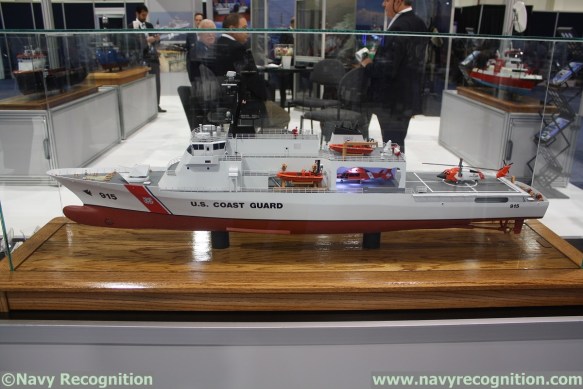
“The Coast Guard wants to procure a total of 25 OPCs, and currently plans to use a contract with options for acquiring the first 9 to 11 ships in the program. The OPC program can be viewed as a candidate for instead using BBC for the initial ships in the program, and either BBC or MYP for later ships in the program. If using BBC and MYP were to reduce the acquisition costs of OPCs by about 10% (compared to costs under a contract with options), the savings would amount to roughly $1 billion. An alternate way to characterize such savings would be to say that using BBC or MYP would enable the Coast Guard to get about two and a half of the 25 OPCs for “free,” or to pay for the acquisition of a polar icebreaker.

“The Coast Guard plans to soon award a contract with options for acquiring the final 26 ships in the 58- ship FRC program. The final 26 ships in the program can be viewed as a candidate for instead using either MYP or BBC. If using MYP or BBC were to reduce the acquisition costs of OPCs by about 10% (compared to costs under a contract with options), the savings would amount to more than $100 million. An alternate way to characterize such savings would be to say that using MYP or BBC could enable the Coast Guard to get about two and a half of the 26 FRCs for “free.”

“The Offshore Patrol Cutter (OPC) program and the polar icebreaker (PIB) program can be viewed as candidates for using BBC, and the Fast Response Cutter (FRC) program can be viewed as a candidate for using either MYP or BBC. Using MYP and BBC for all three of these programs might produce savings totaling about $1.2 billion, an amount roughly equivalent to the average annual funding level in the Coast Guard’s Acquisition, Construction, and Improvements (AC&I) account. In considering whether to grant authority for using MYP or BBC for these programs, Congress may weigh the potential savings of these contracting mechanisms against the tradeoffs…From a congressional perspective, tradeoffs in making greater use of MYP and BBC include the following:  reduced congressional control over year-to-year spending, and tying the hands of future Congresses;  reduced flexibility for making changes in Coast Guard acquisition programs in response to unforeseen changes in strategic or budgetary circumstances (which can cause any needed funding reductions to fall more heavily on acquisition programs not covered by MYP or BBC contracts);  a potential need to shift funding from later fiscal years to earlier fiscal years to fund EOQ purchases of components;  the risk of having to make penalty payments to shipbuilders if multiyear contracts need to be terminated due to unavailability of funds needed for the continuation of the contracts; and  the risk that materials and components purchased for ships to be procured in future years might go to waste if those ships are not eventually procured.”

There seems little doubt we will need all the ships currently planned. The commitment is only a minuscule percentage of the Federal Budget, and therefore constitutes an extremely small risk. Use of Block Buy and Multi-Year Procurement could bring stability to the Coast Guard’s AC&I funding and result savings equal to an entire year’s worth of AC&I funding.

Navy PCs Support Operation Martillo, WPCs Next?

USS_Hurricane_(PC-3),_USS_Typhoon_(PC-5)_and_USS_Chinook_(PC-9)_underway_in_March_2015

Navy photo: The U.S. Navy Cyclone-class coastal patrol ships assigned to Patrol Coastal Squadron 1 (PCRON 1), USS Hurricane (PC-3), USS Chinook (PC-9) and USS Typhoon (PC-5), transit in formation during a divisional tactics exercise in the Persian Gulf.

The Navy has announced they have three 387 ton (fl) Cyclone class patrol craft based in Mayport, rotating through the 4th Fleet’s area in support of Operation Martillo, the counter drug operation off Central America.

We know there are not enough ships to respond to all the intelligence we have on drug trafficing in SouthCom’s area of responsibility.

These little ships are considerably smaller than those we normally send South, but they are very similar in size to the new 353 ton Webber class WPCs. We have six Webber class in Miami, six in Key West, and will soon have six in Puerto Rico. If we could rotate some of these through the Transit zones, they might make a difference.

Thanks to Lee for bringing this to my attention.


Possible New Sonar for Even Small Cutters

NavyRecognition reports the Navy has selected the sonar for their Anti-Submarine Warfare Continuous Trail Unmanned Vessel.(ACTUV). Since this vessel is quite small at 140 tons and 132 feet long, there is a good chance the sonar would fit nicely on cutters as small as the Webber class, and certainly on the Offshore Patrol Cutter.

“MS3 (Modular Scalable Sonar System–Chuck) marks an improvement in the performance and reliability of proven sonar technologies. It performs active and passive search and tracking; incoming torpedo warning; and small-object avoidance for safer navigation.”

Maybe it is time to “Bring Back the Coast Guard ASW Mission.”