“USCG Report: Small Cutters Prove They Can Patrol a Big Ocean” –Marine Link

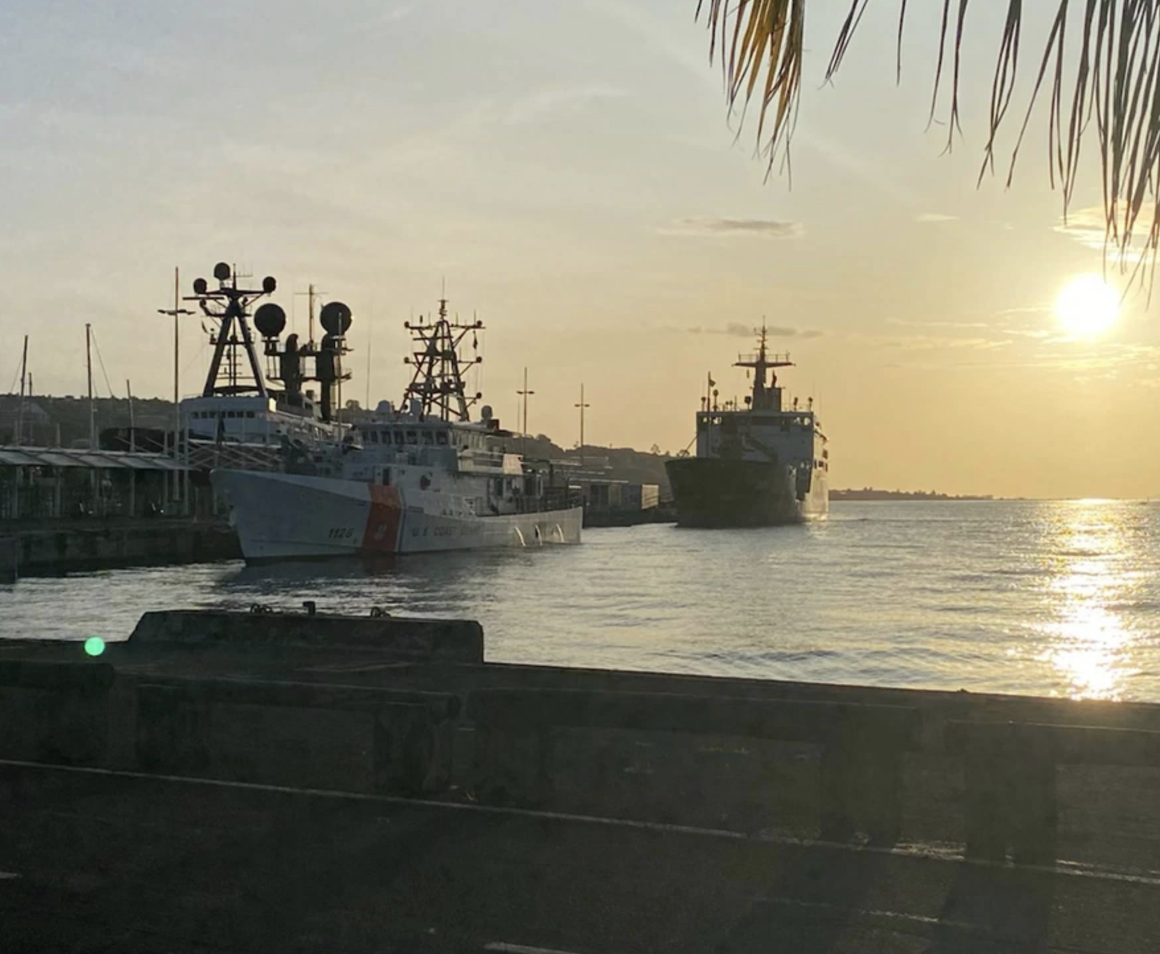
Cutters Joseph Gerczak and Juniper refuel in Papeete, Tahiti, while underway during Operation Aiga, February 6, 2022. The two cutters were in the region combating illegal, unreported, and unregulated fishing and other maritime threats on the high seas throughout the Pacific. (U.S. Coast Guard photo courtesy of the USCGC Juniper)(cropped)

Marine Link has an interesting article that recounts the methods that allow the 154 foot Webber “Sentinel” class WPCs “Fast Response Cutters, FRCs”with a nominal endurance of only five days and a range of 2500 nautical miles at 14 knots to deploy well beyond that distance.

Issues that must be dealt with other than limited storage and fuel include lack of an independent duty corpsman and carbon build-up in the engines due to operating at lower than design RPM.

When we go to Tahiti or American Samoa, there’s nothing in between. We’ll usually travel with a ‘black hull’ buoy tender in case we need to take on fuel at sea. But we have to be very careful with our fuel, and how we run our engines, and balance the need to have enough provisions for the trip and arrive safety with at least 20 percent fuel on board with the need to get down there so we can get to work.”

Sea State can also make it difficult to do a Replenishment at Sea (RAS).

The article does not reflect the current number of FRCs planned–77 rather than the 64 indicated in the article. It appears likely that the number of FRCs in Guam will increase from three to six and that additional FRCs (probably three) will be based in American Samoa.)

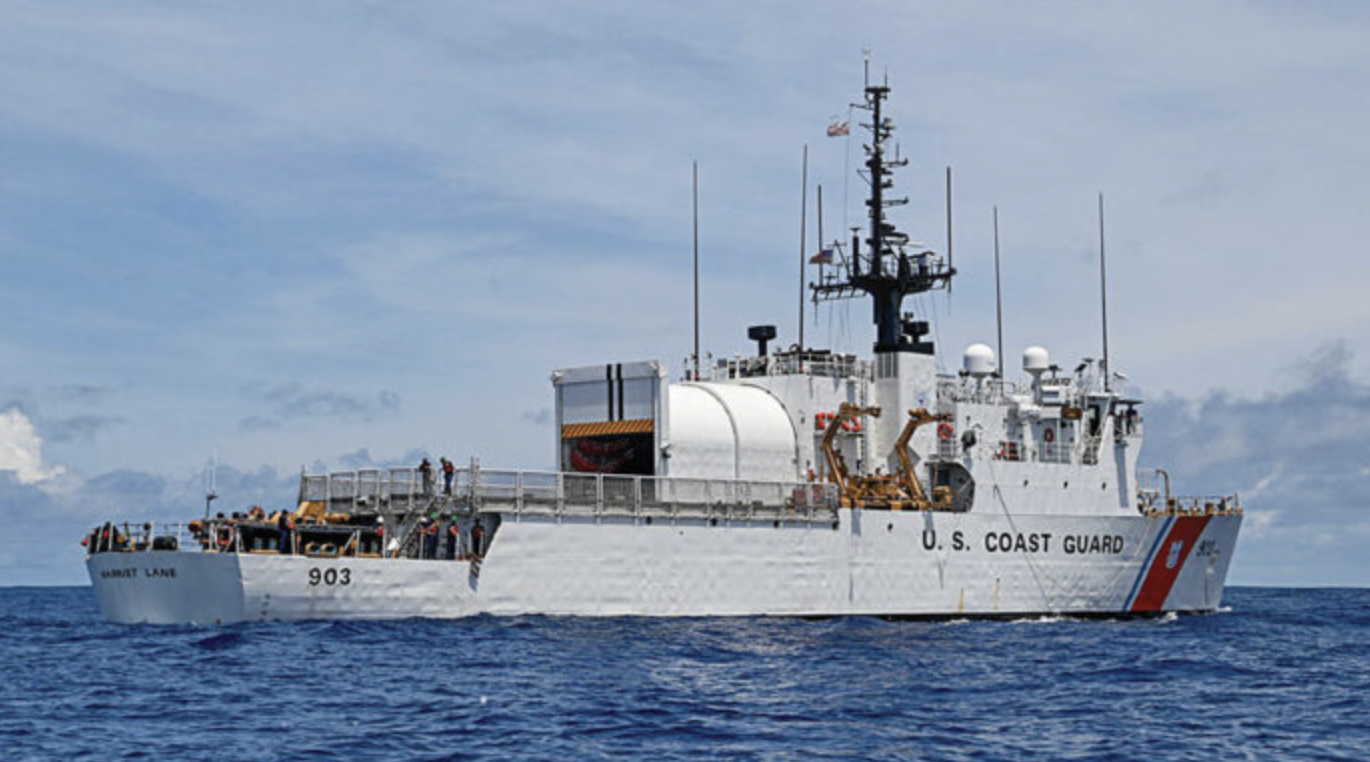
The article talks about future OPCs allowing National Security Cutters to spend more time in the Western Pacific but makes no mention of USCGC Harriet Lane, currently based in Oahu, or other WMECs that might be based in the Pacific in the Future.

“…in the absence of the perfect asset, the FRCs are the right asset for the job right now. “We’re making it work.”

“Charting a Course U.S., Partners increasing engagements throughout Pacific” –Indo-Pacific Defense Forum

The U.S. Coast Guard cutter Harriet Lane conducts a February 2024 patrol for Operation Blue Pacific, which included combating illegal fishing with local partners. SENIOR CHIEF PETTY OFFICER CHARLY TAUTFEST/U.S. COAST GUARD

The Indo-Pacific Defense Forum has a nice overview of Coast Guard cooperative operations in the Western Pacific.

The significance, for me, is that the article is published by the Indo-Pacific Combatant Commander, and is intended for an international audience. This is affirmation of the importance of the effort.

“U.S. Coast Guard cutter arrives in Papua New Guinea, embarks law enforcement officers to conduct joint maritime patrol” –News Release

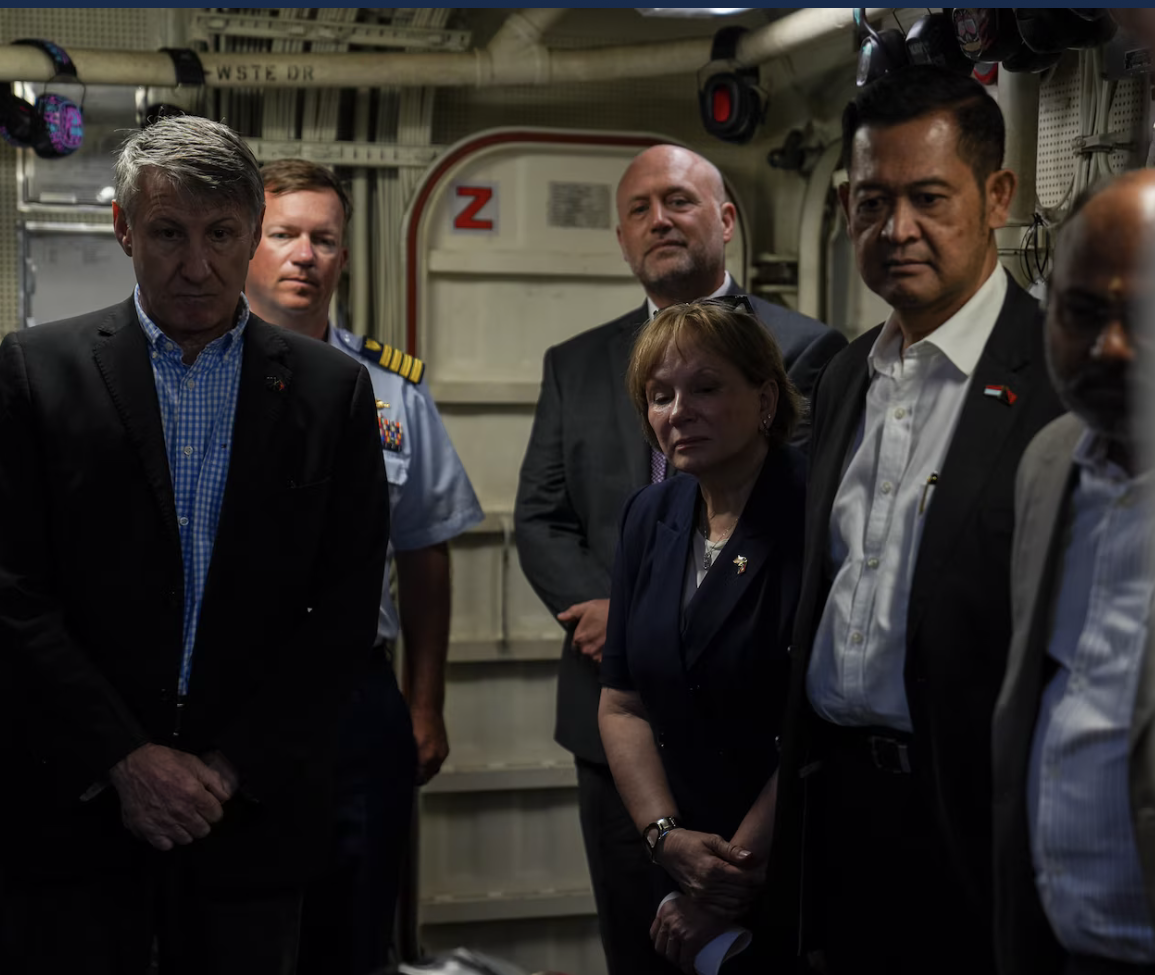
Officials from multiple agencies stand in the engine control room of the Coast Guard Cutter Midgett (WMSL 757) in Papua New Guinea Mar. 6, 2025. Papua New Guinea lies in the heart of key shipping routes, where freedom of navigation for the transport of global goods and fisheries and deep-sea resources abounds. The Coast Guard and Papua New Guinea collaborate to mitigate shared maritime challenges and threats, promoting regional security and stability within Oceania. (U.S. Coast Guard photo by Petty Officer 3rd Class Jennifer Nilson)

Below is a Coast Guard news release.

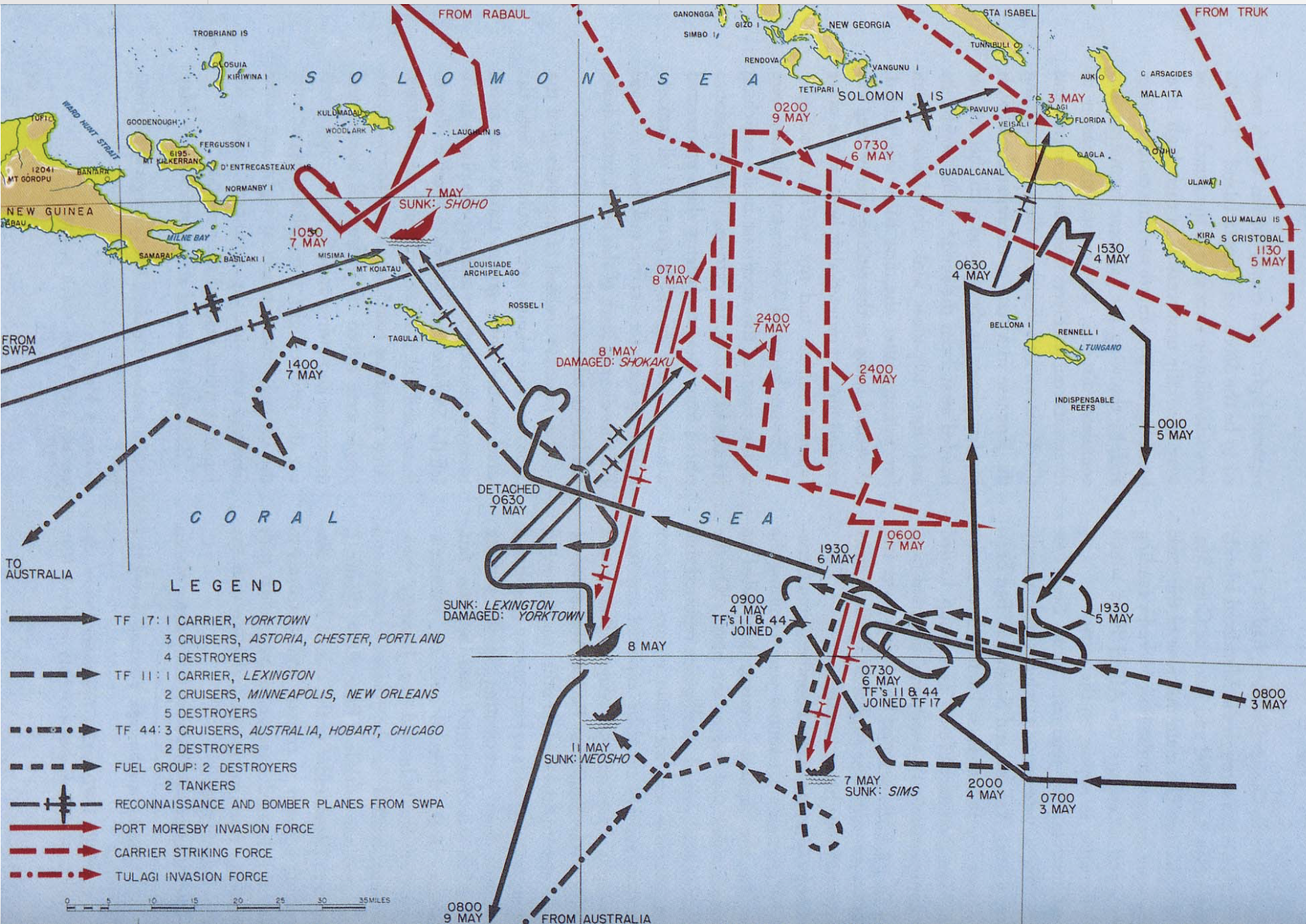
For those with an interest in World War II history. The Battle of the Coral Sea turned back a Japanese force that had planned to attack Port Moresby on the East end of New Guinea.

Battle of Coral Sea. United States Army Center of Military History. The Campaigns of MacArthur in the Pacific, Volume I. Reports of General MacArthur., p. 48, Plate 14. Port Moresby, NewGuinea is in the upper left; Guadalcanal, Tulagi and other Solomon Islands in the upper right; Australia to the South and West

March 12, 2025

U.S. Coast Guard cutter arrives in Papua New Guinea, embarks law enforcement officers to conduct joint maritime patrol

PORT MORESBY, Papua New Guinea — At the invitation of the Papua New Guinea government, the U.S. Coast Guard Cutter Midgett (WMSL 757) arrived in Port Moresby, Thursday, to embark Papua New Guinean law enforcement officers. This visit directly supports Papua New Guinea’s leadership in the Pacific Islands and its commitment to maritime security, specifically in combatting illegal, unreported, and unregulated fishing.

Midgett’s presence reinforces the U.S. Coast Guard’s commitment to deeper relations with Pacific Island nations and regional stability. This collaborative effort marks the first time a national security cutter, the U.S. Coast Guard’s most capable law enforcement cutter, will conduct bilateral maritime law enforcement operations in Papua New Guinea’s Exclusive Economic Zone (EEZ), under the existing bilateral agreement that was singed in May 2023.

This joint patrol will represent a tangible demonstration of the bilateral agreement between the United States and Papua New Guinea, strengthening maritime governance within the Pacific and deterring illegal activities within Papua New Guinea’s EEZ to promote the sustainable use of marine resources.

Midgett, commissioned in 2019 and homeported in Honolulu, is the eighth Legend-class national security cutter. These 418-foot vessels are equipped with advanced technology and a range of capabilities, making them ideally suited to support a wide range of missions, including maritime security, law enforcement, and search and rescue operations. Midgett’s deployment to Oceania highlights the United States’ enduring commitment to promoting a peaceful, secure, prosperous, and resilient Pacific Islands region.

USCGC Midgett Visits Australia

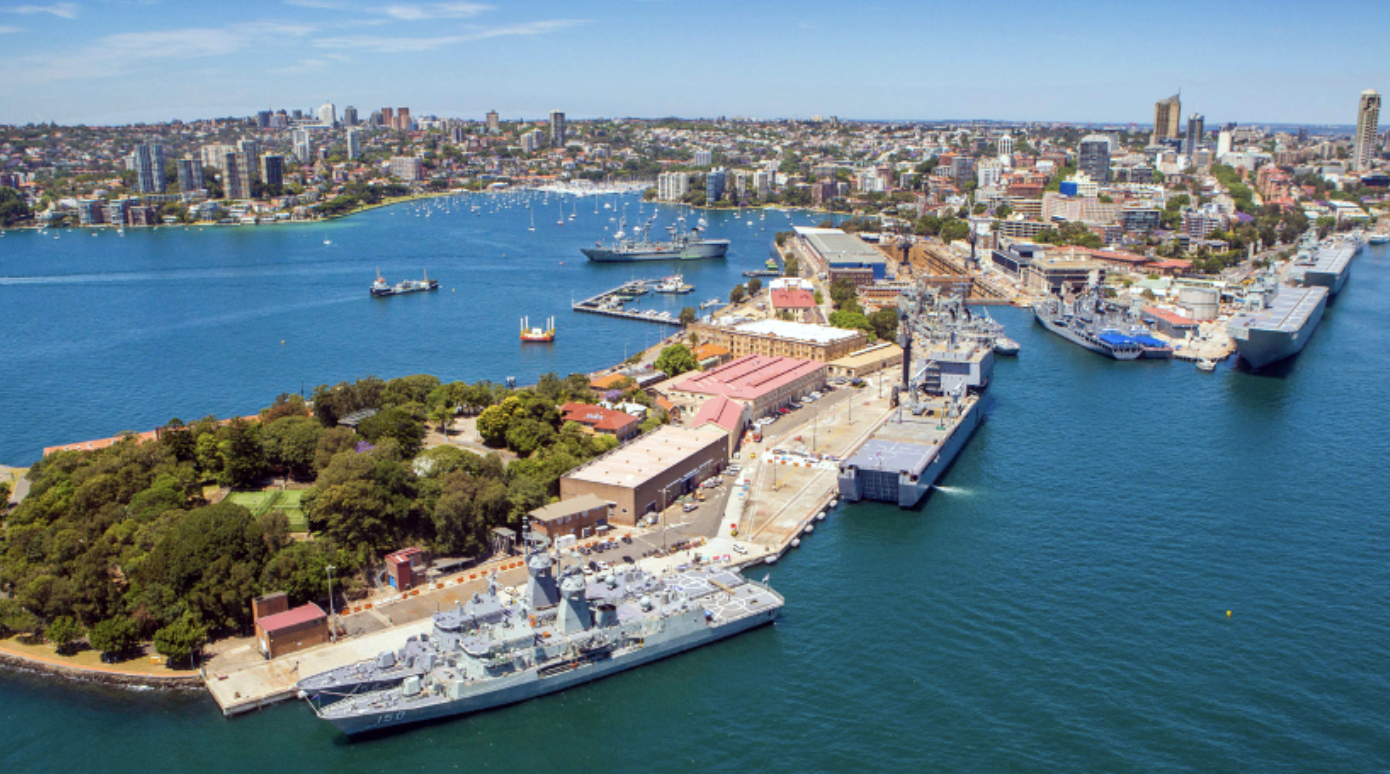
Aerial view of His Majesty’s Australian Station, HMAS Kuttabul. Note the very large dry dock between the island and the city. I was not able to identify all the Australian Navy ships in the photo, but there appear to be eleven Visible in the photo are both Canberra class helicopter dock landing ships (LHD, uppep right); two ANZAC class frigates (FFG, foreground), HMAS Choules (L100, center fight). The photo was probably taken between 2015 and 2018–the ship anchored in the center appears to be HMAS Tobruk which was scuttled in 2018.

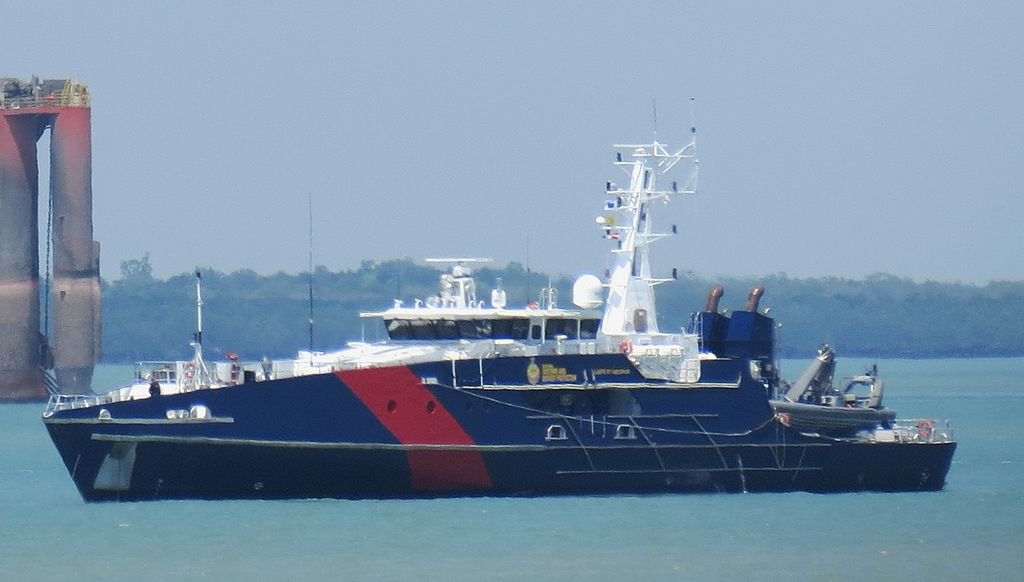
The Australian Customs patrol boat ACV Cape St George on Darwin Harbour in 2014, Photo by Ken Hodge

Below is a news release. The linked news release includes several photos of the people involved. Midgett was hosted by the Australian Navy but also interacted with the Marine Unit of the Australian Border Force, which performs some Coast Guard type missions. The Border Force was formed in 2015, the Marine Unit having come from their Customs service. Currently the Marine Unit includes one large former Offshore Support Vessel and eleven patrol craft.

There are suggestions that they may be given the Arafura class OPVs being built for the Australian Navy.

The Australian Border Force also has an aviation Coast Guard component operating a fleet of ten privately contracted Dash 8 aircraft which operate alongside the Royal Australian Air Force (RAAF) in the Maritime Border Command (a joint Border Force, Navy, and Air Force command under a Navy flag officer–Chuck).

Notably the Marine Unit of the Australian Border Force is not a SAR agency, but given the nature of their assets and patrols, they will be doing some SAR, just as the Revenue Cutter service did.

It seems probable the Marine Unit of The Australian Border Force will evolve in the direction of the USCG model.


March 4, 2025

U.S. Coast Guard cutter visits Australia, furthers collaboration and maritime security

SYDNEY – The U.S. Coast Guard Cutter Midgett (WMSL 757) recently completed a port call in Sydney, Feb. 25, 2025, conducting several engagements with Australian partners that strengthened ties and furthered collaborative maritime security throughout Oceania. Reflecting the spirit of the Pacific Quadrilateral Defense Coordinating Group (Australia, India, Japan, and the US–Chuck), the U.S. Coast Guard continues its vital collaboration with Australian law enforcement to identify maritime vulnerabilities and cooperate on solutions that reduce risks to safety, health, and security throughout the region.

While in Sydney, Midgett hosted a law enforcement partnership event with Australian and United States stakeholders. Participants, including U.S. Consul General in Sydney Christine Elder, U.S. Coast Guard Attaché Capt. Amanda Ramassini, representatives from U.S. Homeland Security Investigations, U.S. Secret Service, and Australian law enforcement and maritime security partners, joined the crew for breakfast and roundtable discussions in the wardroom, followed by a tour of the cutter. Law enforcement partners received a briefing on Midgett’s capabilities and its current mission in the Pacific. Highlighting the close bond between the two nations and their agencies, Midgett’s Lt. Jake Behne recently deployed to the Torres Strait as an observer with the Australian Border Force (ABF) Fast Response Boat unit, and now an ABF Officer in Charge is set to sail aboard Midgett as an observer.

Separately, Sydney media outlets were invited aboard with the assistance of U.S. Consulate Sydney; the subsequent reporting on partnerships reached more than a million Australians.

Beyond official engagements, the crew of Midgett embraced the opportunity to experience Australian culture and history during a visit to the Australian National Maritime Museum.

“This visit to Sydney was more than just a port call; it was a chance to reinforce the vital link between the U.S. Coast Guard and our Australian counterparts,” said Capt. Matthew Rooney, Midgett’s commanding officer. “The support we received from HMAS Kuttabul was first rate and the warm welcome from our Royal Australian Navy shipmates made our time here truly memorable.”

The United States’ alliance with Australia remains a cornerstone of peace and stability in the Indo-Pacific region. The U.S. Coast Guard looks forward to continuing partnerships with Australia’s maritime and border forces to ensure a connected, prosperous, secure, and resilient Pacific.

Midgett, commissioned in 2019 and homeported in Honolulu, is the eighth Legend-class national security cutter. These 418-foot vessels are equipped with advanced technology, making them ideally suited to support a wide range of missions, including maritime security, law enforcement, and search and rescue operations.

Coast Guard teams deploy to American Samoa to patrol border, conduct boardings” –News Release

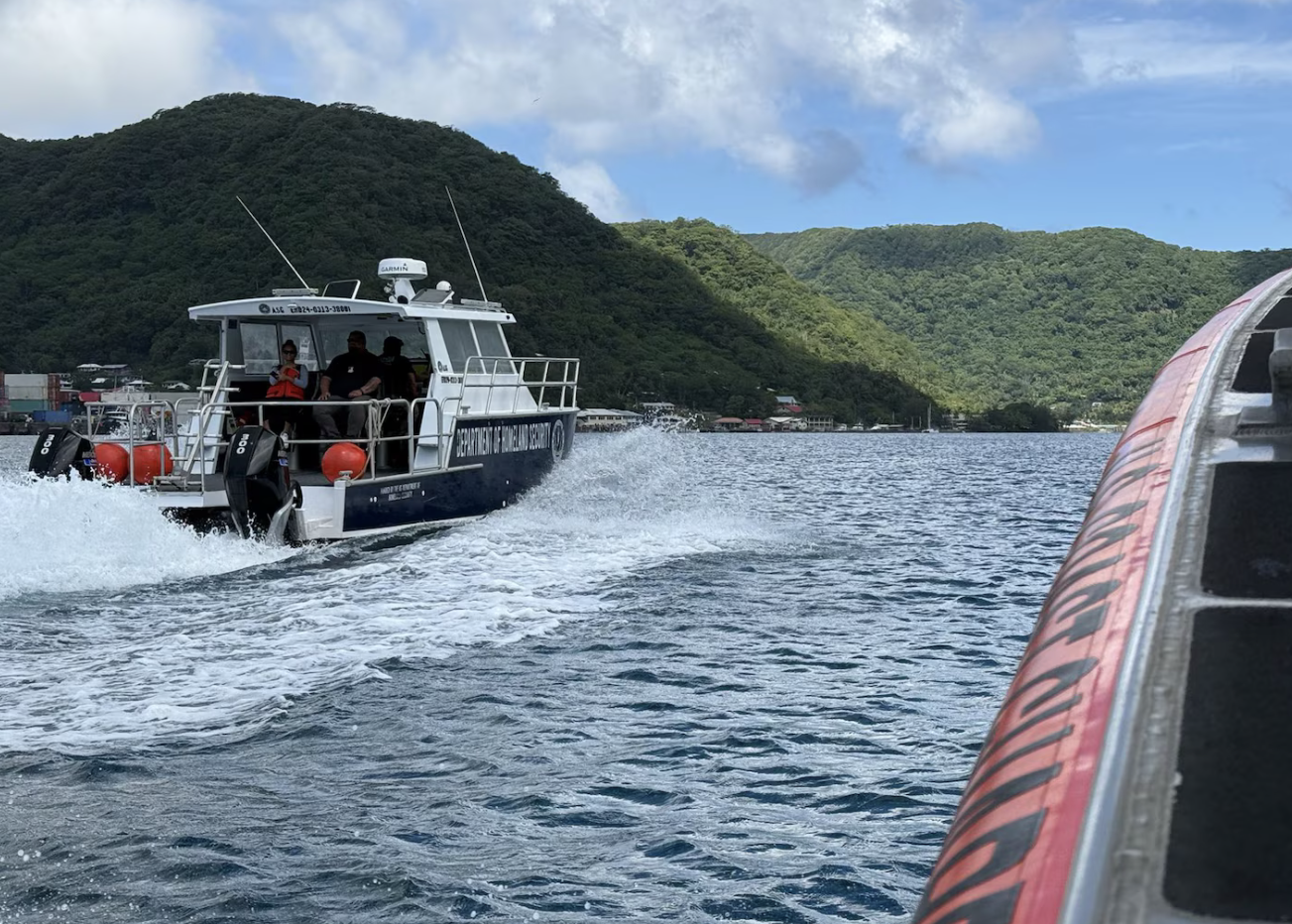
A boat crew assigned to U.S. Coast Guard Maritime Safety and Security Team Honolulu gets underway alongside an American Samoa Department of Homeland Security boat crew to conduct search and rescue training offshore Pago Pago, American Samoa, Feb. 24, 2025. MSST Honolulu and Coast Guard Sector Honolulu personnel deployed to American Samoa to train alongside agency partners, patrol the U.S. maritime border, and enforce U.S. laws and regulations. (U.S. Coast Guard photo, courtesy Maritime Safety and Security Team Honolulu)

Below is a District 14 news release. Link has short video of boats underway and a additional photo.

The long term answer to providing Coast Guard services to this part of the United States is to have a Coast Guard base in American Samoa. There are indications this will happen. I think we will ultimately base three Webber class WPCs there.


March 4, 2025

Coast Guard teams deploy to American Samoa to patrol border, conduct boardings

HONOLULU – Coast Guard Maritime Safety and Security Team Honolulu personnel and a boarding team from Coast Guard Sector Honolulu deployed to American Samoa from Feb. 10-27 to protect the U.S. maritime border, enforce U.S. laws and regulations, enhance maritime domain awareness and coordinate with agency partners.

During the deployment, team members boarded six U.S.-flagged commercial fishing vessels, six foreign-flagged commercial fishing vessels, and five recreational boating safety boardings, resulting in the termination of one recreational voyage due to deficient safety equipment.

Crews patrolled the U.S. territorial maritime border and the U.S. Exclusive Economic Zone surrounding American Samoa, which extends up to 200 miles offshore.

Additionally, MSST Honolulu and Sector Honolulu personnel conducted over 26 hours of training with the American Samoa Department of Homeland Security and American Samoa Marine Patrol, a law enforcement unit within the American Samoa Department of Marine and Wildlife Resources. Training primarily focused on boarding procedures and weapons proficiency.

“Working closely with partners in American Samoa heightens our awareness of any illicit activities in the area and hones our combined ability to safeguard the maritime border,” said Lt. Cmdr. Nic Iannarone, enforcement division chief, Sector Honolulu. “Teamwork is a key component of taking a stand against threats to our ports and waterways.”

In accordance with the President’s Executive Orders and direction from Adm. Kevin Lunday, the acting commandant of the Coast Guard, the Coast Guard is increasing cutter patrols and operations in American Samoa. The Coast Guard is surging assets to increase presence in key areas to protect America’s maritime borders, territorial integrity, and sovereignty.

Maritime Safety and Security Team Honolulu is a specialized unit of the Coast Guard dedicated to enhancing maritime security and safety in the Pacific region. With a highly trained personnel team equipped to conduct law enforcement operations, port security assessments, and emergency response activities, MSST Honolulu collaborates closely with local, state, and federal agencies to safeguard vital maritime infrastructure and natural resources.

Sector Honolulu serves a broad expanse of the Pacific that includes 200 nautical miles surrounding the State of Hawaii, the islands and atolls of the Hawaiian Island Chain and American Samoa. The sector’s primary missions include ensuring maritime security, conducting search and rescue operations, enforcing environmental protection laws, and facilitating law enforcement activities.

Cutter Midgett has been busy in the Western Pacific

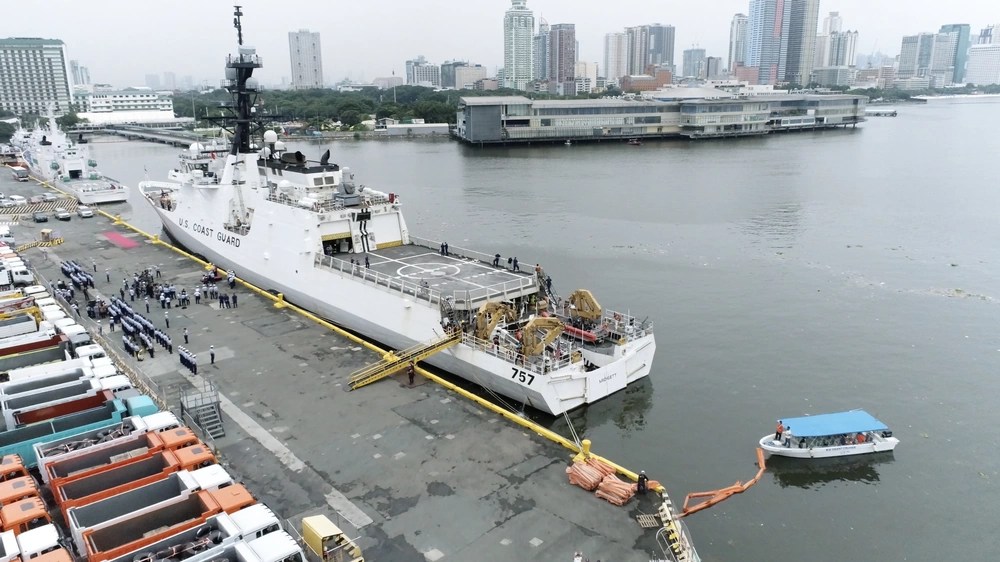
The U.S. Coast Guard Cutter Midgett (WMSL 757) moors in Manila, Philippines, Aug. 30, 2022. Midgett’s crew will engage in professional exchanges and capacity building exercises with the Philippine Coast Guard, and partner nations, and will patrol and conduct operations as directed while deployed on a months-long Western Pacific patrol under the tactical control of Commander, U.S. 7th Fleet. Philippine Coast Guard photo

Two news releases for Coast Guard News, “U.S. Coast Guard cutter visits New Zealand, conducts training and promotes maritime governance” and “U.S. Coast Guard cutter visits Tuvalu, strengthens partnerships and promotes regional security.”


Feb. 21, 2025

U.S. Coast Guard cutter visits New Zealand, conducts training and promotes maritime governance

WELLINGTON, New Zealand – U.S. Coast Guard Cutter Midgett (WMSL 757) recently concluded a month-long engagement with New Zealand, strengthening ties with the Royal New Zealand Navy (RNZN) and reinforcing the U.S. Coast Guard’s commitment to Oceania. The engagements included professional exchanges, bilateral maritime law enforcement trainings, and enhanced cooperation between the two nations in support of a peaceful, secure, prosperous, and resilient region.

During Midgett’s transit from Honolulu to Wellington, three RNZN members experienced operations aboard the cutter as part of an exchange program with the Coast Guard.

While in Wellington, Midgett’s crew participated in several events with the RNZN, the Rescue Coordination Centre New Zealand (RCCNZ), the New Zealand Maritime Police, and members of the local community. These events included a reception hosted by the RNZN, visits to the RCCNZ and the Maritime Police Base, a community event with Waka Ama’s outrigger canoes, and ship tours for more than 200 people.

The Coast Guard is an instrument of national power that bridges the divide between defense, diplomacy, and law enforcement, and creates opportunities to further national objectives and priorities. These engagements provided invaluable opportunities for personnel from both nations to interact, discuss experiences, and learn about roles in their services and communities. “The integration of our New Zealand partners into our crew was seamless and highly beneficial,” said Capt. Matthew Rooney, commanding officer of Midgett. “The professional exchanges and shared experiences, along with the friendships forged and sea stories shared, will undoubtedly enhance our ability to operate together in the future.”

The Coast Guard values New Zealand’s active engagement in international security efforts. This partnership is vital to countering destabilizing behavior in the Pacific that undermines mutual prosperity, economic well-being, and the health of the marine ecosystem. This visit builds on the Memorandum of Agreement signed with the RNZN in 2023, allowing both nations to share experiences and knowledge to cultivate best practices. The Coast Guard looks forward to continuing this partnership, based on mutual respect and shared values, to promote security and prosperity in the Indo-Pacific region.

Commissioned in 2019, Midgett is the eighth Legend-class national security cutter and is homeported in Honolulu. National security cutters are 418-feet long, 54-feet wide, and have a 4,600 long-ton displacement. They have a top speed of more than 28 knots, a range of 12,000 nautical miles, an endurance of up to 90 days and can hold a crew of up to 170.


Feb. 21, 2025

U.S. Coast Guard cutter visits Tuvalu, strengthens partnerships and promotes regional security

FUNAFUTI, Tuvalu – The U.S. Coast Guard Cutter Midgett (WMSL 757) recently concluded a successful engagement in Tuvalu, conducting joint bilateral maritime law enforcement shiprider operations and strengthening partnerships to combat illegal, unreported, and unregulated fishing in the region. This partnership underscores the U.S. Coast Guard’s unwavering commitment to maintaining a secure and prosperous Indo-Pacific, leveraging its operational expertise to enhance cooperation and strengthen its trusted partnership with Tuvalu.

During the three-day operation, Midgett participated in three at-sea boardings, including two bilateral inspections within Tuvalu’s exclusive economic zone, the first in over a decade, and one Western and Central Pacific Fisheries Commission high-seas inspection. Midgett also deployed its ScanEagle unmanned air system to enhance maritime domain awareness and support the joint effort. These joint operations provided valuable opportunities for both Tuvalu and U.S. Coast Guard personnel to exchange expertise, share best practices, and strengthen interoperability. Following the shiprider operations, Midgett hosted 13 distinguished visitors from Tuvalu, including representatives from the Fisheries Department, Maritime Police, and the Tuvalu government. Discussions focused on the positive impact of the joint boardings, emphasizing the importance of maritime security cooperation in the region.

“This operation was a tremendous success on multiple levels,” said Capt. Matthew Rooney, commanding officer of Midgett. “Not only did we work alongside our partners in Tuvalu to conduct critical maritime law enforcement operations, but the experience also provided invaluable training for our crew. From the deck plate level all the way up to command and control, integrating with our Tuvaluan counterparts was seamless and incredibly beneficial for all involved. We learned a great deal from each other, and this experience will undoubtedly pay dividends in future operations.”

The partnership between Midgett and Tuvalu underscores the U.S. Coast Guard’s commitment to supporting Pacific Island nations in their efforts to safeguard their sovereignty and manage their maritime resources effectively. A secure and prosperous Indo-Pacific requires working closely with partners such as Tuvalu to promote maritime governance.

Bilateral maritime efforts enhance governance among regional partners, improving interoperability, and strengthening readiness.

Midgett, commissioned in 2019 and homeported in Honolulu, Hawaii, is the eighth Legend-class National Security Cutter. These 418-foot vessels are equipped with advanced technology and a range of capabilities, making them ideally suited to support a wide range of missions, including maritime security, law enforcement, and search and rescue operations. Midgett’s deployment to Oceania highlights the United States’ enduring commitment to promoting a peaceful, secure, prosperous, and resilient Pacific Islands region.


U.S. Coast Guard wraps up support for Operation Kurukuru 2024, joins Niue in celebrating 50th Constitution Day –USINDOPACOM

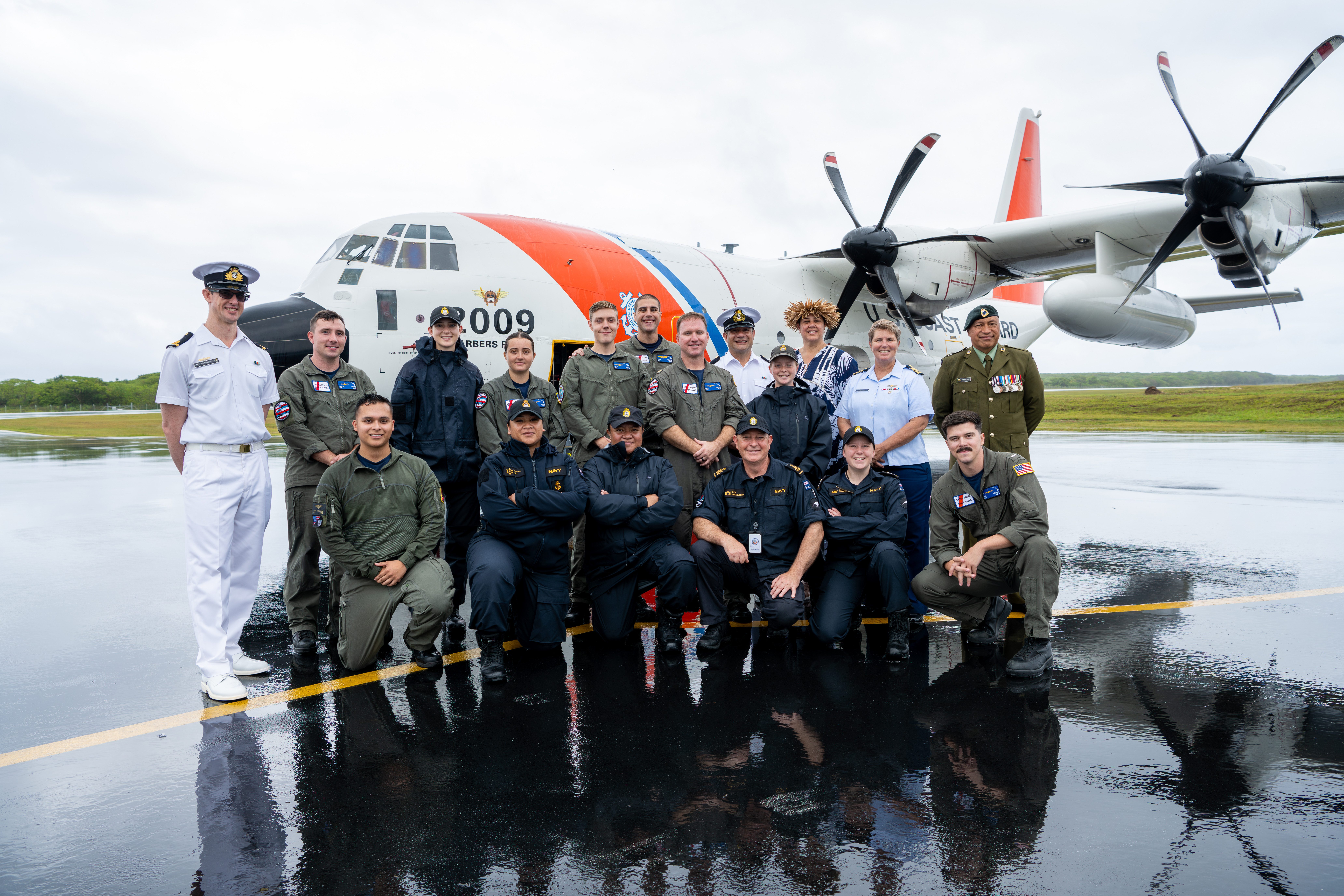
Members of an HC-130J Hercules airplane crew from Coast Guard Air Station Barbers Point and Coast Guard Fourteenth District staff pose for a photo with members of the Royal New Zealand Navy at Hanan Niue International Airport in Alofi, Niue, Oct. 19, 2024. The U.S., New Zealand, Australia, the Cook Islands, Fiji, France and Japan were among the countries represented at Niue’s 50th Constitution Day celebration. (U.S. Coast Guard photo, courtesy U.S. Embassy New Zealand)

Below is a news release from USINDOPACOM. I was a little surprised this was not on the Coast Guard News website, but maybe it will show up after the long weekend.

The country in whose waters this operation took place, Niue, is an independent nation in free association with New Zealand.

The population was reported as 1681 in 2022. Niue is considered part of the Realm of New Zealand. They have no armed forces of their own, but their people have New Zealand citizenship and have served in the New Zealand armed forces.

I was not able to find the size of Niue’s exclusive economic zone, but it should be close to the area enclosed by a circle with a radius of 200 nautical miles, or 125,664 sq nautical miles (431,015.5 sq. km) or about 1600 times the land area. Wikipedia notes,

“In 2022, Niue declared its entire EEZ to be a marine park, though enforcement of that declaration would be a challenge. The entire Fisheries Division was reported to have only five staff and there were no locally based patrol boats. Enforcement would depend on stronger support from the New Zealand Defence Forces, though its ability to maintain a continuous presence was limited.”

Since some fish are migratory, protecting their fish from illegal, unregulated, and unreported (IUU) fishing, also protects our fish so we have an interest.

Thanks to Paul for bringing this to my attention.


Nov. 9, 2024

U.S. Coast Guard wraps up support for Operation Kurukuru 2024, joins Niue in celebrating 50th Constitution Day

By Chief Warrant Officer Sara Muir, U.S. Coast Guard Forces Micronesia / Sector Guam

The U.S. Coast Guard recently concluded its support for the Pacific Islands Forum (PIF) Forum Fisheries Agency’s (FFA) Operation Kurukuru, a vital annual operation led by Pacific Island countries across the region’s vast maritime territory from Oct. 21 to Nov. 1, 2024.

This coordinated effort, conducted over two weeks, covered approximately 23.3 million square kilometers, reinforcing regional resilience and promoting sustainable fisheries management across the Pacific. The Coast Guard’s support underscores the United States’ enduring commitment to its Pacific partners, who rely on these rich marine resources for economic stability and food security.

“Our role in Operation Kurukuru is supporting our Pacific neighbors in protecting what matters most to their communities,” said Capt. Jennifer Conklin, lead for Operation Blue Pacific. “From coordinating patrols to participating in Niue’s 50th Constitution Day celebration, the Coast Guard is here to lend our expertise and resources wherever we can make a positive impact. It’s also a chance to celebrate each Pacific Island country’s unique culture and proud sovereignty. By working together, we strengthen regional bonds and show our commitment to supporting a Pacific that thrives on its own terms.”

Throughout the operation, the USCGC Frederick Hatch (WPC 1143) crew from Guam and an HC-130 Hercules aircrew from Air Station Barbers Point, Hawai’i, worked alongside Pacific Island countries’ personnel, strengthening capabilities through patrols, data sharing, and shiprider operations. In Palau’s exclusive economic zone (EEZ) and despite heavy weather, Frederick Hatch conducted a bilateral patrol with a Palau Marine Law Officer aboard under the Palau-U.S. bilateral agreement, building on previous efforts to enhance enforcement and address local maritime challenges and discussing plans for future joint steaming with Palau’s patrol boat crew PSS H.I. Remeliik II. The team also completed inspections of two fishing vessels on the high seas under the Western and Central Pacific Fisheries Council (WCPFC) authority, identifying potential violations and gathering critical data that enables targeted enforcement of sustainable fishing practices.

“Working alongside Palau and our Pacific partners, we build skills together, ensuring a secure and sustainable future,” said Lt. Niki Kirchner-Hope, commanding officer of USCGC Frederick Hatch, who helped lead coordination efforts in Palau. “When we team up with Palauan shipriders, it’s not just about enforcement—it’s about trust, shared responsibility, and protecting the ocean for everyone.”

The U.S. Coast Guard’s HC-130 aircrew conducted extensive aerial surveillance throughout the high seas pockets off the Federated States of Micronesia, key fishing zones. It delivered valuable data to help guide surface assets across the region. The aircrew logged over 45 flight hours and flew more than 11,400 nautical miles, monitoring for illegal fishing activities while also standing by to assist with search and rescue (SAR) operations when needed.

“The HC-130 is truly a workhorse for our missions in the Pacific,” said Conklin. “With its incredible range and versatility, it allows us to cover immense distances, monitor vast areas, and respond quickly to emerging needs, whether that’s surveillance or search and rescue. It’s the ideal aircraft for supporting our partners in this part of the world, where a single search or patrol can span thousands of miles of open ocean.”

This dual role is an example of the U.S. Coast Guard’s unique mission profile in the Pacific, where cooperation and responsiveness are crucial to supporting isolated communities across immense distances.

Both the Hercules and the Frederick Hatch crews were diverted during the operation to support the Chuuk Disaster Control Office’s (DCO) request for assistance in searching for three men reported overboard from a small vessel in Chuuk Lagoon. The crews searched for three days before the DCO suspended efforts.

As part of the operation, the U.S. Coast Guard team joined Niue’s Constitution Day celebrations, marking 50 years of self-governance and deepening diplomatic ties. U.S. Coast Guard representatives met with Niue’s leaders to discuss advancing maritime law enforcement collaboration and future cooperation. The Coast Guard’s Hercules aircrew also hosted a static display for local students, allowing over 100 visitors to learn about the United States’ commitment to Pacific maritime security and environmental protection.

Niue, often called the “Rock of Polynesia,” is a small island country in the South Pacific known for its dramatic limestone cliffs, lush coral reefs, and warm, clear waters. With a population of just over 1,500, Niue is one of the world’s largest coral islands and boasts a rich Polynesian heritage. Despite its remote location, Niue has established itself as a leader in marine conservation, with 40 percent of its EEZ designated as a protected area.

“During Niue’s Constitution Day, our crew had a fantastic time hosting the static display,” added Conklin. “The local students were full of excitement and curiosity—seeing their enthusiasm up close was a special reminder of why we’re here. Moments like these show the importance of the connections we build, not just through our missions but by being part of these communities.”

Participation in the FFA operations is a critical element of the Coast Guard’s Operation Blue Pacific and Operation Rematau initiatives, which aim to strengthen maritime security across Oceania, foster regional partnerships, and counter illegal activities threatening Pacific Island countries’ well-being. By supporting the PIF and working with partners to detect, deter, and disrupt illegal fishing, the U.S. Coast Guard helps ensure Pacific Island communities can continue to benefit from the ocean’s resources. The efforts conducted at sea with partners from the Freely Associated States also build on relationships strengthened under Operation Irensia in Guam in June, which brought together maritime personnel from the Republic of Palau, the Federated States of Micronesia, the Republic of the Marshall Islands, the Royal Australian Navy and Australian Defence Force Pacific Maritime Security Program.

“As the Coast Guard, we have a unique role here, helping build resilience against maritime threats while respecting the lead of our Pacific Island partners,” said Conklin. “By working together, we’re making the region safer, stronger, more secure and more prosperous.”

-USCG-

About Operation Kurukuru
Conducted in the combined area of the 15 participating PIF members’ EEZ and the adjacent high seas pockets, Operation Kurukuru emphasized boarding activities at sea and in port, cooperative surveillance engagements, the utilization of remote sensing data to drive intelligence-led operations, and the use of all available Maritime Domain Awareness (MDA) tools to provide timely and effective MDA information to members. These members include Australia, Cook Islands, Fiji, Federated States of Micronesia, Kiribati, Nauru, Niue, Palau, Papua New Guinea, Nauru, New Zealand, Republic of the Marshall Islands, Solomon Islands, Tuvalu, and Vanuatu. The operation also saw active participation from the Pacific Quadrilateral Defense Coordination Group (Pacific QUADs) countries—Australia, France, New Zealand, and the United States, demonstrating international collaboration in the fight against IUU fishing.

About USCGC Frederick Hatch
The Frederick Hatch is the 43rd 154-foot Sentinel-class fast response cutter named for a surfman and lighthouse keeper who was a two-time Gold Life Saving Medal recipient. They are also the 2023 Hopley Yeaton Award winners for small cutter excellence.

About U.S. Coast Guard Air Station Barbers Point
U.S. Coast Guard Air Station Barbers Point provides critical air support across the Pacific, enhancing maritime safety, security, and environmental protection. Located on the western tip of Oahu, Hawaii, the air station conducts search and rescue, law enforcement, and disaster response missions over vast and remote areas, including the Hawaiian Islands, American Samoa, and the Western Pacific.

About Operation Blue Pacific
Operation Blue Pacific is the U.S. Coast Guard’s strategic effort to support a peaceful, secure, inclusive, and prosperous Pacific region. Focused on partnership, capacity-building, and enhancing maritime governance, the operation emphasizes collaboration with Pacific Island countries to address shared challenges such as illegal fishing, search and rescue, environmental protection, and regional security.

For further details on the U.S. Coast Guard efforts, please contact District 14 Public Affairs at hawaiipacific@uscg.mil.

For further details about FFA or Operation Kurukru, please contact Ernest Ta’asi, FFA Communications Officer, at ernest.ta’asi@ffa.int.

“Coast Guard to send 3 more cutters to Guam, has no plans to escort Philippine ships” –Stars and Stripes

A U.S. Coast Guard boat crew and boarding team from U.S. Coast Guard Cutter Oliver Berry (WPC 1124) approaches a foreign fishing vessel to conduct a joint boarding inspection with members of the Western and Central Pacific Fisheries Commission on the high seas in Oceania, Sept. 22, 2024. U.S. Coast Guard Cutter Oliver Berry’s crew recently completed a 45-day patrol in Oceania in support of Operation Blue Pacific, promoting security, safety, sovereignty, and economic prosperity in the region.

Stars and Stripes reports,

The Coast Guard will double its Guam fleet to six cutters but doesn’t plan to accompany the Philippine coast guard as it struggles to maintain territorial claims in the South China Sea, the service’s Pacific-area commander said Friday.

This is based on a video news conference by Pacific Area Commander Vice Adm. Andrew Tiongson speaking from Japan.

“The Coast Guard will not escort Philippine resupply missions to the BRP Sierra Madre, a grounded warship garrisoned by Filipino troops at the Second Thomas Shoal in the South China Sea, according to Tiongson.”

The Philippines has not asked for escorts, Tiongson said. “We do advise, and we do assist,” he said. “We provide what we would do in this situation.”

He also said, “It’s possible we may get another Indo-Pacific support cutter,” using the description applied to USCGC Harriet Lane, recently arrived in the Pacific Area to support operations in the Western Pacific.

There is more in the article.

“U.S. Coast Guard Cutter Munro holds a change of command ceremony” –News Release

Royal Navy vessel HMS Spey (P234) (foreground) conducts coordinated ship maneuvers with U.S. Coast Guard Cutter Munro (WMSL 755) Sept. 17, 2023, in the South China Sea. Munro is deployed to the Indo-Pacific to advance relationships with ally and partner nations to build a more stable, free, open and resilient region with unrestricted, lawful access to the maritime commons. (U.S. Navy photo by Chief Petty Officer Brett Cote)

Below is a news release. Routine change of command, but the Munro’s recent activities are interesting for their variety, three very different activities in widely dispersed areas, Eastern Pacific, Western Pacific, and far Northern Pacific. More info in these earlier news releases:


 May 31, 2024

U.S. Coast Guard Cutter Munro holds a change of command ceremony

SAN DIEGO — The U.S. Coast Guard Cutter Munro (WMSL 755) held a change of command ceremony Thursday in San Diego.

Vice Adm. Andrew J. Tiongson, Commander, U.S. Coast Guard Pacific Area, presided over the ceremony in which Capt. James O’Mara IV relieved Capt. Rula Deisher as Munro’s commanding officer.

Deisher served as Munro’s commanding officer from May 2022 to May 2024, sailing over 73,000 nautical miles to 17 ports, including eight foreign countries during patrols in the Bering Sea, Western Pacific, and Eastern Pacific.

Most recently, Munro and the crew were responsible for the interdiction and seizure of illegal narcotics worth an estimated $460 million in wholesale value and over $2 billion in street value while patrolling the Eastern Pacific Ocean in support of the Joint Interagency Task Force-South. Munro’s crew also supported Operation Southern Shield during their recent patrol by conducting 16 fisheries boardings in the Southern Pacific Regional Fisheries Management Organization convention area, upholding the maritime rules-based order.

During Munro’s Western Pacific patrol, the cutter and crew hosted multiple engagements with foreign partners, including a discussion about the SAPPHIRE agreement with Japanese Coast Guard officers, a subject matter expert exchange, an at-sea engagement with the Korea Coast Guard, and participated in CARAT Brunei, where Munro worked alongside the Royal Brunei Navy in professional subject matter expert exchanges, leadership conferences, and an at-sea engagement.

While patrolling the Bering Sea, Munro conducted 24 fisheries boardings and two search-and-rescue cases, including the medical evacuation of a critical patient from Dutch Harbor, Alaska, to Anchorage, Alaska.

“To the crew of Munro, thank you,” said Deisher. “I am so proud of your endless dedication and care toward each other and our mission. This crew is phenomenal, and it has been an honor and privilege to sail with them and learn from them.”

Deisher’s next assignment is to serve as the Seventeenth District’s Response Division chief.

O’Mara, the incoming commanding officer, brings a wealth of experience to Munro.

Reporting from the Coast Guard’s Eleventh District as the Enforcement Branch chief, O’Mara oversaw assets across 1,000 miles of shoreline from the California-Oregon state line to the Mexico border and 73 federal waterways. He also worked closely with the Department of Defense Joint Interagency Task Forces and the Department of Homeland Security Joint Task Force West to conduct effective drug and law enforcement interdiction efforts across the Eastern Pacific.

Munro will be O’Mara’s seventh ship and fourth command, following previous commands aboard the Coast Guard Cutters Active (WMEC 618), Farallon (WPB 1301), Monomoy (WPB 1326), and Narwhal (WPB 87335).

The change of command ceremony, a time-honored tradition, is a significant event conducted before the assembled company of a command. It confirms to the unit’s men and women that the authority of command is maintained. The ceremony symbolizes a transfer of total responsibility, authority, and accountability from one individual to another, marking a new chapter in the command’s history.

Commissioned in 2017, Munro is one of four Coast Guard Legend-class national security cutters homeported in Alameda. National security cutters, measuring 418 feet long and 54 feet wide, boast a top speed of over 28 knots, a range of 12,000 nautical miles, endurance of up to 90 days, and can hold a crew of up to 170. The advanced technologies of the national security cutter class ships support the national objective of maintaining the security of America’s maritime boundaries and providing long-range search and rescue capabilities.

“U.S., Japan, Korea Coast Guards sign trilateral agreement to increase maritime cooperation” –News Release

U.S., Japan, Korea coast guards sign trilateral agreement to increase maritime cooperation
Mr. Kishimori Hajime, deputy Consul General of Japan (left), Japan coast guard Vice Adm. Watanabe Yasunori, Japan coast guard vice commandant for operations, U.S. Coast Guard Vice Adm. Andrew Tiongson, commander, U.S. Coast Guard Pacific Area, and Hyunchul Kang, deputy Consul General of the Republic of Korea, pose with a signed trilateral agreement at Coast Guard Island, Alameda, Calif., May 9, 2024. Japan, Republic of Korea and U.S. coast guards gathered to finalize a trilateral letter of intent, which will drive the three nations to work together to advance maritime safety, security and prosperity in the Indo-Pacific. (U.S. Coast Guard photo by Master Chief Petty Officer Charly Tautfest)

Below is a PACAREA news release.

Like the US Coast Guard, Japan and South Korea have been attempting to help SE Asian nations strengthen their maritime security and law enforcement organizations so that they can deal with what is essentially state supported, state sponsored, and state coordinated theft of their resources.

This should at least allow better coordination and avoid unnecessary duplication. The Philippines and Vietnam are likely to be primary beneficiaries.

We probably have things to learn too. The Japanese and S. Korean Coast Guards are both large and have a lot of experience countering violent resistance.

A picture taken on November 16, 2011 from a South Korean helicopter shows Chinese fishermen wielding sticks to stop an attack by South Korean coastguard commandoes armed with clubs aboard rubber boats during a crackdown on alleged illegal fishing in South Korean waters in the Yellow Sea off the southwestern coast county of Buan. South Korea’s coastguard mobilised 12 ships, four helicopters and commandoes for a special three-day crackdown on illegal fishing by Chinese boats this week. REPUBLIC OF KOREA OUT AFP PHOTO / DONG-A ILBO (Photo credit should read DONG-A ILBO/AFP/Getty Images)

Thanks to Paul for bringing this to my attention. 


May 12, 2024

U.S., Japan, Korea Coast Guards sign trilateral agreement to increase maritime cooperation

ALAMEDA, Calif – U.S. Coast Guard, Japan Coast Guard and Korea Coast Guard representatives displayed continued commitment to enhance maritime expertise and promote regional cooperation by signing a trilateral letter of intent, Thursday.

This agreement aligns trilateral cooperation between Japan, the Republic of Korea and the United States to include capacity-building efforts to Association of Southeast Asian Nations and Pacific Island countries. The letter of intent advances a joint statement between the three nations’ leaders, which was held at Camp David in August 2023.

U.S. Coast Guard Vice Adm. Andrew Tiongson, Commander, U.S. Coast Guard Pacific Area, met Japan Coast Guard Vice Adm. Watanabe Yasunori, Japan Coast Guard Vice Commandant for Operations, to finalize a trilateral letter of intent, which was previously signed by Korea Coast Guard Oh Sang Kwon, Deputy Commissioner of the Korea Coast Guard. Oh signed the letter of intent in April with the understanding that the agreement would be finalized upon Watanabe’s May visit to U.S. Coast Guard Pacific Area command.

Mr. Hyunchul Kang, Deputy Consul General of the Republic of Korea, attended the trilateral signing on behalf of the Korea coast guard, and Mr. Kishimori Hajime, Deputy Consul General of Japan, presented brief remarks as well.

“This trilateral agreement between U.S., Japan and Korea Coast Guards is the lynchpin that will drive our coast guards to work together to advance maritime safety, security, and prosperity in the Indo-Pacific,” said Tiongson. “It will enhance our multilateral operations with each other, as well as other trusted partners in the region.”

The agreement specifically recognizes the important of efforts to conserve maritime resources, combat illegal, unreported and unregulated fishing and search and rescue response efforts.