What About Drones?

You may have heard about an incident where a 47 foot MLB was tracked by 12 to 30 objects that were thought to be Unmanned Air Systems.

The War Zone has a post that talks about this and other recent incidents, reports, and conspiracy theories that involve drone, “Coast Guard Ship Stalked by Unidentified Aircraft, Iran Drone Mothership Claim Shot Down by DoD.” More here and here.

Drones are hot sellers. There are a lot of them, and there will be many more after Christmas. With the reports of use of drones in the war between Ukraine and Russia, activities involving drones are starting to receive a lot of public attention, and it is not surprising that many see them as potentially dangerous or at least a threat to privacy. Drones flown at night have probably also resulted in a number of UFO sighting reports. Plus, a lot of drone operators are not aware or ignore FAA regulations that apply to them.

Opinions about the size and speed of drones seen at night are extremely unreliable, but there are ways to identify drones that are operating legally. I will try to provide some basic information and point toward the current regulations.

Why are they hard to track? Large drones are not hard to track if they are operated at altitude. On the other hand, small drones operated at low altitudes are very hard to pick up on radar. They are down in the clutter. Virtually all of these sightings are probably small drones of less than 55 pounds, the vast majority less than five pounds.

Air search radars frequently exploit doppler effect to pick moving targets out of the clutter, but most drones are slower than the speeds necessary to trigger a detection by doppler–they are close to the ground and move at speeds similar to that of millions of cars.

In addition to being small, most drones are made of non-radar reflective materials like foam and plastic. There is very little that would return a radar signal other than the motors and wires.

Why don’t the operators show up electronically? Most radios used to control drones now are frequency agile and relatively short range so they may be difficult to recognize. They have to be frequency agile because they use the same radio frequencies common in household electronics, so short bursts on a 2.4 GHZ frequency are indistinguishable from thousands of others. Also, drones may fly a preprogrammed route with no additional radio frequency required. Drones can also be programmed to follow a person or presumably any moving object.

Are they doing anything illegal? FAA Regulations Part 107 applies to both recreational and commercial use of small, civil, unmanned aircraft systems–small meaning 55 pounds (25 kg) or less. As the operator of remote-control model airplanes that are, like multi-rotors, considered drones, I am somewhat familiar with the issues.

Some things are specifically illegal without a specific waiver or exemption. Waivers may be relatively easy to obtain. I regularly get one where I fly.

  • Flying a UAS beyond the line of sight of the person or team controlling the drone
  • Flying more than 400 feet above ground level.
  • A single pilot operating more than one aircraft simultaneously
  • Flying at night or during twilight without required lighting.
  • Operating in restricted air space. (Restricted areas may be temporary like over sporting events or effectively permanent like around airports and over Washington DC.)

Flying or hovering over your house at less than 400 feet is probably not illegal, but flying over people exposed on the ground may be. Harrasing people on the ground with a drone is definitely illegal.

How can they be detected and identified? Perhaps most relevant is the requirement to have a remote ID module if flown outside of a “Federally Recognized Identification Area (FRIA)” (typically a defined area around a remote-controlled model airfield registered and approved by the FAA).

So that solves the problem, right? No! The ID modules are short range, I have heard 2 miles or less. Operated low or where terrain blocks the signal, it is going to be less, so to even detect the signal you have to be relatively close. There are applications for smart phones that allow anyone to access the ID module signal, but generally law enforcement has received no training and in fact has no knowledge that these are available.

So, what should we do? We are in a transition period. Going from a time when drone sightings were rare, to a time when they will be routine. Amazon is planning on using drones to drop packages. Drones are useful. They are not going away. Seeing lights in the night sky that move irregularly and that you cannot identify is probably not a reason for concern. We really don’t want people shooting at lights in the sky.

Irresponsible drone operation may require enforcement. FAA’s stated enforcement strategy is first to try to educate before moving on to fines. There no specific acts identified as felonies under part 107 but negligent operation causing significant damage or violation of restricted airspace would certainly be covered by other laws including laws applied to operation of larger aircraft.

Perhaps Coast Guard units need to be trained in the use of drone ID applications.

Use of Force: As we know, drones can be used as weapons and as they become more common place, there is more likelihood the Coast Guard will need to take them down for force protection, defense readiness, and Ports, Waterways, and Coastal Security. The cutters of Patrol Forces Southwest Asia (PATFORSWA) have been fitted with short range, high resolution, drone detection radars and what appear to be electronic countermeasures, so are getting some experience with drone detection, passive countermeasures, and possibly hard kill countermeasures as well.

The Coast Guard’s missions may require use of force. In some cases, electronic warfare may be sufficient. Directed energy weapons seem to hold promise, but 30mm guns with air burst ammunition and APKWS 70mm guided rockets have proven capability and provide additional capability against other threats.

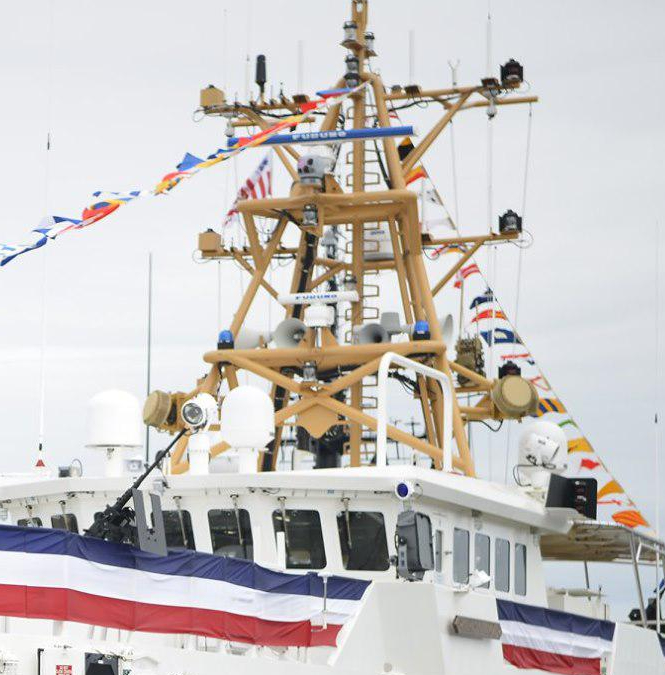
  • USCGC Charles Moulthrope (WPC-1141) prior to departure for PATFORSWA. Small drone detection radars are visible low on the mast. 
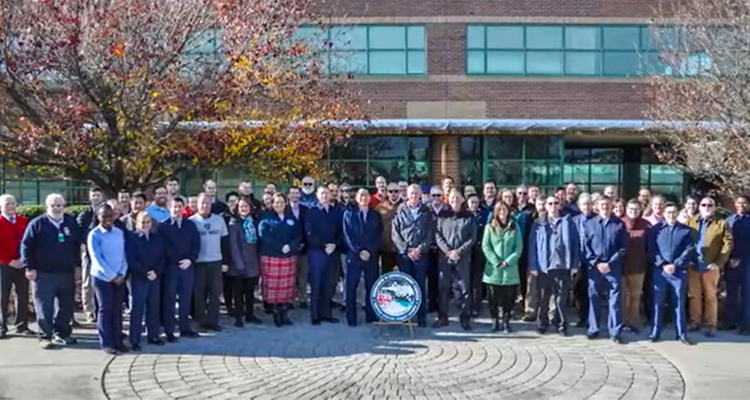
“Research and Development Center projects continue to enhance Coast Guard mission success” –CG-9

The Coast Guard Research and Development Center workforce is based in New London, Connecticut. U.S. Coast Guard photo.

Below is a news release from the Acquisitions Directorate (CG-9). If you follow the links there is a huge amount of information.

There is a lot of ongoing work, including cooperation with 4th Fleet in their efforts to operationalize unmanned systems. I had hoped the Coast Guard was doing that, and it’s gratifying to see they in fact are.

The projects listed are wide ranging and may potentially impact every mission area.

Perhaps the biggest surprise was that they are working on detect and avoid systems for small UAS. It appears they are looking at beyond visual line of sight UAS that could be used by the Fast Response Cutters and other vessels that do not have a flight deck. Apparently, they are also looking at using Unmanned Surface Vessels (USVs) to fire warning shots, presumably to stop drug runners. Would that mean they would also use USVs for disabling fire?

They are also looking at counter UAS alternatives, at ways to operate more effectively in polar regions, maritime domain awareness, and a lot more. It’s very impressive, especially when you consider how little the Coast Guard spends on R&D.


In fiscal year 2023, the Coast Guard Research and Development Center in New London, Connecticut, supported a research portfolio of 54 projects, covering the full scope of the Coast Guard’s missions. This video highlights a few of those projects, including beyond visual line of sight unmanned aircraft system detect and avoid technology, cutter-based unmanned systems integration with the Ship Control and Navigation Training System, International Maritime Organization polar code validation through advanced simulation modeling, and laser corrosion removal.

View video here.

Related: FY24 RDT&E Project Portfolio

For more information: Research and Development Center page and Research, Development, Test & Evaluation and Innovation Program page


Group 2 VTOL UAS

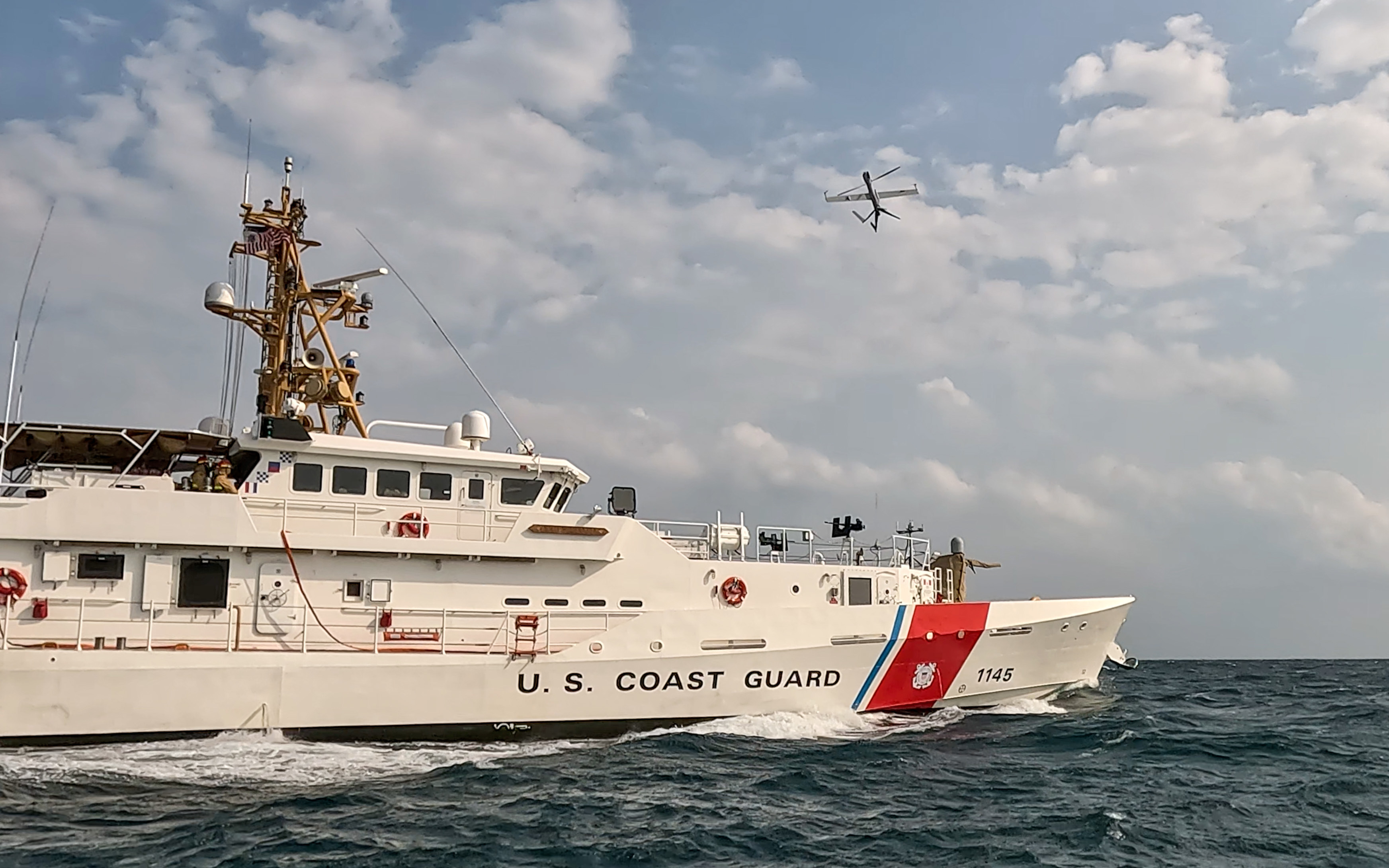
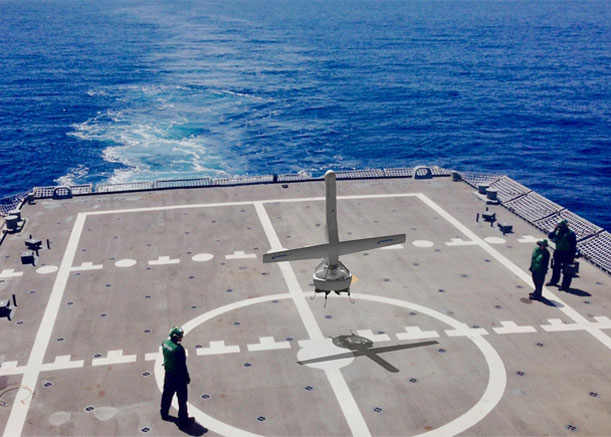
221207-N-NO146-1001 ARABIAN GULF (Dec. 7, 2022) An Aerovel Flexrotor unmanned aerial vehicle (UAV) takes off from U.S. Coast Guard fast response cutter USCGC Emlen Tunnell (WPC 1145) transiting the Arabian Gulf, Dec. 7. U.S. 5th Fleet’s Task Force 59 launched the UAV during Digital Horizon, a three-week event focused on integrating new unmanned and artificial intelligence platforms, including 10 that are in the region for the first time. (U.S. Navy photo)

We have begun to see very capable, vertical takeoff and landing (VTOL) unmanned air systems that fall into the DOD Group Two standard.

  • Weight: 21 to 55 pounds (10 to 25 kg)
  • Nominal operating altitude: <3500 feet or 1 km above ground level.
  • Speed: <250 knots

Recently Elbit Systems reported they would be providing a Group 2 VTOL to the Israeli Army, and we have the photo above of an Aerovel Flexrotor taking off from a Webber class patrol craft,

These small, unmanned air systems (UAS), which can combine sophisticated sensors and endurance of four to over 24 hours, may be better search platforms than our H-65 helicopters.

Group 2 UAS are even smaller than the Martin V-Bat. It appears, they might be able to operate from Webber class cutters. Operating UAS from the Webber class on a regular basis would provide them much of the air search advantage of larger flight deck equipped cutters.

Below is a news release on another aircraft in this class, the Edge Autonomy VXE30. The VIDAR sensor referred to in the news release, is also used on the Scan Eagle (a catapult launched Group 2 UAS) used on National Security Cutters. There is more on the unmanned VXE30 here.


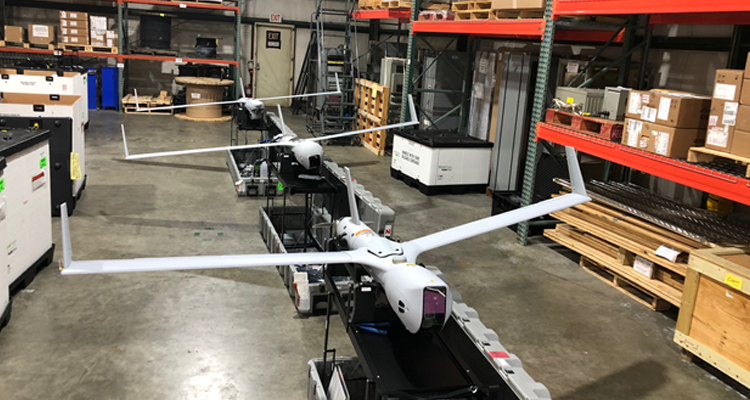
Edge Autonomy’s VXE30 UAS. The VXE30 vertical take-off and landing (VTOL) solution is the latest and most advanced version of the “Stalker” series of small uncrewed aerial systems (sUAS) from Edge Autonomy.


Sentient’s AI-enabled ViDAR optical sensors soar on Edge Autonomy’s VXE30 “Stalker” UAS in successful live demonstrations

ViDAR – Sentient’s AI-enabled wide area motion imagery deployed for real-time maritime surveillance at the edge

VIRGINIA BEACH, Va. (Aug 29, 2023) – Sentient Vision Systems (Sentient) has successfully completed live demonstrations of its AI-enabled ViDAR (Visual Detection and Ranging) payload deployed on Edge Autonomy’s VXE30 UAS. The VXE30 vertical take-off and landing (VTOL) solution is the latest and most advanced version of the “Stalker” series of small uncrewed aerial systems (sUAS) from Edge Autonomy. When coupled with Sentient’s ViDAR, the VXE30 provides a passive, wide area search capability, enabling it to serve a myriad of maritime operations. The joint capability will be on display at DSEI 2023, 12-15 September in London.

ViDAR, developed by Sentient, utilizes AI; Computer Vision, and Machine Learning integrated with Electro-Optic and Infrared (EO/IR) sensors to passively detect objects that are difficult to spot by the human eye or recognize on a conventional radar. With these enhanced capabilities, Stalker will be more capable of accurately detecting and locating people, objects, and vessels (day and night) far from the operator.

ViDAR has been deployed on intelligence, surveillance, and reconnaissance missions (ISR), maritime patrol and border protection, as well as search and rescue missions since 2015. ViDAR is proven to be effective in challenging maritime conditions up to Sea State 6 (very rough with waves 13 to 20 feet high/ 4 to 6 meters).

Sentient has successfully evolved ViDAR into a compact, lightweight, low power form factor—low SWaP (size, weight, and power) — suitable for deployment on small Group 2 / NATO Class 1 UAS such as the VXE30. Its successful integration onto the VXE30 demonstrates its broad operating envelope and ability to provide unprecedented long-endurance imaging capability in contested environments all around the world.

Joshua Stinson, Edge Autonomy’s Chief Growth Officer said, “The integration of ViDAR onto the VXE30 is an essential part of our UAS deployment program. ViDAR’s passive detection system will further the VXE30’s capabilities to remain undetected in a contested environment while carrying a powerful maritime detection sensor that provides a real-time picture of the maritime domain. This capability could make all the difference in a mission’s success.”

Paul Harris, Sentient’s VP of Business Development agreed and said, “We are delighted to be working with Edge Autonomy to demonstrate how effective ViDAR is at increasing the utility of the small and agile VXE30 for the challenges of the modern battlespace. We look forward to displaying our joint capabilities at DSEI.”

With close to 4,500 systems deployed, Sentient’s AI-enabled sensor edge solutions for wide area motion imagery are proven for detection in missions worldwide.

——–ends——–

About Sentient Vision Systems www.sentientvision.com

Sentient Vision Systems specializes in passive, modular optical sensors for persistent, wide area motion imagery. Sentient’s artificial Intelligence (AI)-enabled edge solutions better detect and identify small objects in real time, on land and at sea. With more than 20 years of development in moving target indication, AI computer vision and machine learning, Sentient has deployed thousands of systems worldwide in the field of Intelligence, Surveillance, Search and Rescue, enhancing situational awareness, accelerating informed decisions, and saved numerous lives. Follow Sentient on LinkedIn , VimeoYouTube and Twitter

About Edge Autonomy www.edgeautonomy.io

Edge Autonomy is a leader in providing innovative autonomous systems, advanced optics, and resilient energy solutions to the U.S. Department of Defense, the U.S. Federal Civilian Agencies, allied governments, academic institutions, and commercial entities. Edge Autonomy draws on a 34+ year history of aerospace engineering, advanced manufacturing expertise, and technologically advanced manufacturing. With headquarters in San Luis Obispo, CA, and key production capabilities abroad, Edge Autonomy’s 400+ team members deliver results in multiple markets. Follow Edge Autonomy on LinkedInFacebook and Twitter.

Two About Puma sUAS

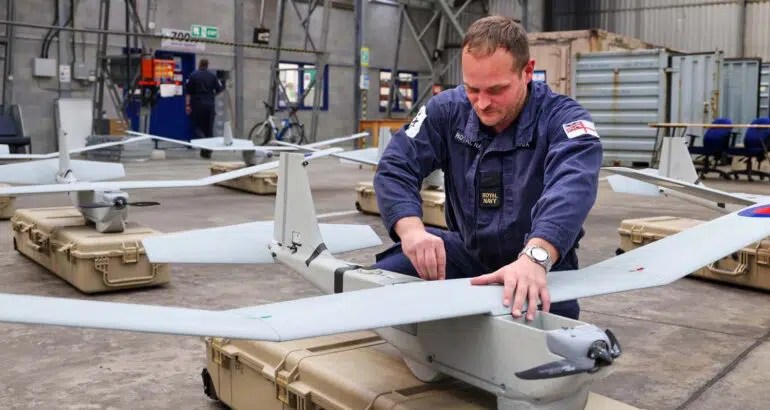
Royal Navy Photo

Naval News reports on the Royal Navy’s increasing use of the Puma small Unmanned Air System (sUAS).

And we have this from Seapower, regarding a new night time imaging system.

The Puma is a system the Coast Guard has experimented with more than once, and the Canadians have also adopted it. My last look at this small UAS with comments on its suitability and links to previous posts here.

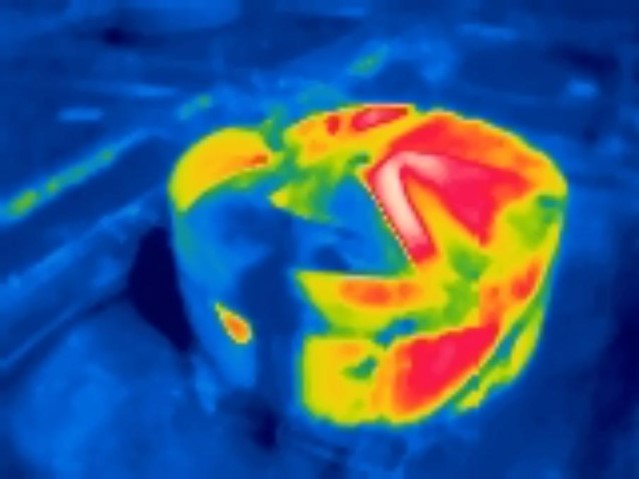
“Coast Guard drones can see underwater and inside vessels during response to hurricanes and extreme weather events” –MyCG

US Coast Guard Photo

US Coast Guard photo

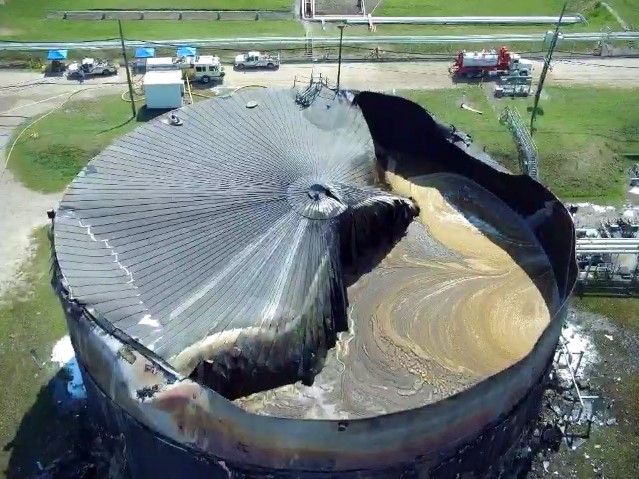
These two photos which accompany the post appear to be of the same tank but taken from opposite sides. 

MyCG has as post about the increasing use of Unmanned Air Systems. In this case primarily concerning the use of small commercially available systems. Take a look.

“sUAS for NSC continues accelerated production schedule” –CG-9

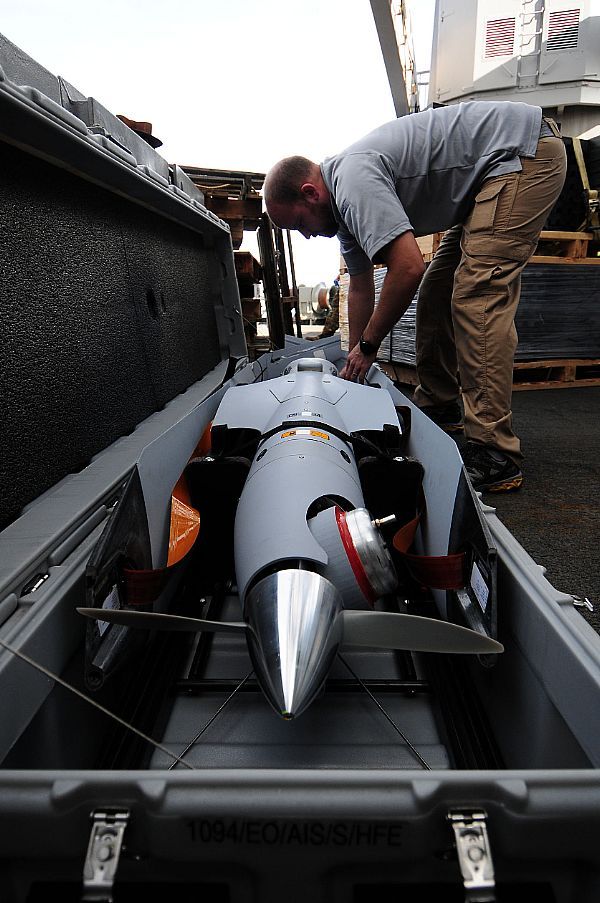
110225-N-RC734-011
PACIFIC OCEAN (Feb. 25, 2011) Guy Mcallister, from Insitu Group, performs maintenance on the Scan Eagle unmanned aerial vehicle (UAV) aboard the amphibious dock landing ship USS Comstock (LSD 45). Scan Eagle is a runway independent, long-endurance, UAV system designed to provide multiple surveillance, reconnaissance data, and battlefield damage assessment missions. Comstock is part of the Boxer Amphibious Ready Group, which is underway in the U.S. 7th Fleet area of responsibility during a western Pacific deployment. (U.S. Navy photo by Mass Communication Specialist 2nd Class Joseph M. Buliavac/Released)

Below is a story from the Acquisitions Directorate (CG-9) updating the Coast Guard’s acquisition of small Unmanned Air Systems (sUAS), with particular focus on those being used on the Bertholf class cutters.

“,,,2,600 flight hours on 14 NSC patrols” as mentioned below translates to about 186 flight hours per patrol. As I recall, when we were using an attached helicopter for searches, four hours per day was about the best we could expect. It appears that, for the search function, the sUAS at least approximates that of a manned helicopter.

Hopefully, when on interdiction missions, we are using the Operations Research derived search patterns for detecting a non-cooperative moving target, rather than the typical SAR search patterns which assume a non-moving cooperative target.

I have to question the description “narco-terrorists” for those captured. Narcotics trafficers certainly, terrorists, maybe not.


sUAS for NSC continues accelerated production schedule

The unmanned aircraft sensor payload capability is varied based on the Coast Guard’s desired mission and search conditions: MWIR 3.5 is a mid-wave infrared for thermal imaging capability, for use at night or periods of low visibility; EO-900 is a high-definition telescopic electro-optical (EO) imager to zoom in on targets at greater distance; and ViDAR is a visual detection and ranging wide-area optical search system that is a comprehensive autonomous detection solutions for EO video. Courtesy Photo.


The Coast Guard small unmanned aircraft system for the national security cutter (NSC) program recently completed the system operation verification test for the unmanned aircraft system (UAS) installation on Coast Guard Cutter Bertholf, the sixth NSC to be equipped with UAS capability. This milestone is the latest in a series of key acquisition program activities to accelerate the scheduled for equipping the first eight NSCs with UAS capability. Installations underway on Coast Guard cutters Hamilton and Midgett have expected completions in January 2021 and March 2021, respectively.

Since the first installation, the UAS capability has completed more than 2,600 flight hours on 14 NSC patrols. Since their deployment, UAS platforms have supported 53 interdictions, assisted in the seizure of 48 tons of illicit narcotics worth over $1.2 billion and helped facilitate the capture of 132 narco-terrorists.

The UAS capability on the NSCs has also been used to:

  • Provide real-time damage assessments of the Bahamas in the aftermath of Hurricane Dorian in September 2019. This event was the first time the Coast Guard used UAS overland for humanitarian relief efforts; the added surveillance capability allowed the service to focus recovery assets on emergent search and rescue and critical infrastructure needs.
  • Aid a medical evacuation off a container ship in the Bering Sea, saving one life.
  • Aid in a person-in-the-water search and rescue case off Hawaii in September. Work groups are underway to determine how to use UAS for search and rescue in the future.
  • Identify more than 35 Chinese vessels illegally fishing by sorting through 150+ Automatic Identification System contacts in a fishing fleet off the coast of the Galapagos Islands.

The deployment of an UAS-enabled NSC and its comprehensive sensor suite packages can support day and night operations. UAS capability can conduct surveillance, detection, classification and identification of a wide range of targets, and is capable of up to 18+ hours of continuous flight time per day.

The Coast Guard is deploying a contractor-owned, contractor-operated solutions to provide UAS capability onboard the NSCs; the current contract includes options that could extend service through June 2026. The Coast Guard is also conducting preliminary efforts to explore the potential benefits of deploying UAS across several surface, and potentially land-based, platforms.

For more information: Unmanned Aircraft Systems program page

“MARTIN UAV PARTNERS WITH SOUTHCOM ON ENHANCED COUNTER NARCOTICS OPERATIONS” –Press Release

V-Bat from Martin UAV

Below is a press release about a vertical take-off Small Unmanned Air System (sUAS) that we discussed earlier, after it was flown from USCGC Harriet Lane August 13-14, 2020. The deployment reported below occurred shortly before the demonstration on the Harriet Lane.  

We have no indication of how many of the airframes and how many people were people were involved in the demonstration, but the sortie rate appears impressive. Over a 300 day period, the system(s) flew 273 sorties for a total of 1340.7 flight hours. Given that the ship was probably not underway all 300 days, looks like they got at least one sortie per day with an average of 4.9 hours per sortie.


PLANO, Texas, November 10, 2020 – Martin UAV successfully demonstrated the shipboard integration of its V-BAT as well as its impressive maritime capabilities in support of United States Southern Command’s counter-narcotics operations in the Eastern Pacific from October 6, 2019, to July 31, 2020.

Support for the mission included the highly visible Enhanced Counter Narcotics Operations that began April 1 and was kicked off by the President of the United States.

The 10-month mission started with a demonstration of the V-BAT’s small footprint, quick set-up, rapid deployment, and true Vertical Takeoff and Landing (VTOL) capabilities. Upon successful completion, a technology assessment to support the USSOUTHCOM Exercises and Coalition Affairs Directorate, Long Duration, Long Dwell (LD2) started upon successful completion of the shakedown.

By leveraging commercial off-the-shelf technologies, LD2’s goal is to enhance the execution of the Department of Defense’s strategic objectives. Over the course of the demonstration, the V-BAT flew an unprecedented 273 sorties for a total of 1340.7 flight hours.

“This mission helped catapult Martin UAV’s V-BAT into the maritime environment, showcasing its ability to withstand and perform in tropical conditions, including strong crosswinds and unexpected storms with rain exceeding 10mm per hour,”

– Heath Niemi, VP of Global Sales & Development.
Night Landing with Martin UAV’s V-BAT

About Martin UAV:

Martin UAV is a private, advanced technology company based in Plano, TX. The company specializes in building wholly-unique, unmanned aircraft systems and associated flight control software. The company’s systems are commercially developed to fill critical operational needs in tactical & confined operational environments. Its V-BAT series aircraft is the only single-engine ducted fan VTOL that has the ability to launch & recover from a hover, fly 8+ hours in horizontal flight, and make mid-flight transitions to “hover & stare” at any time throughout a given mission set.

Small Unmanned Systems Used in Response to Hurricane Sally

Below is a news release from the Eighth district. The thing I found surprising, was that in the video below, it reports that three USCG drone pilots flew 95 flights totaling 16 hours and 34 minutes (about 10.5 minutes per flight). You will see some of the drone video below. Above is a better look at the equipment being used.

united states coast guard


Video Release

U.S. Coast Guard 8th District Heartland
Contact: 8th District Public Affairs
Office: 504-671-2020
After Hours: 618-225-9008
Eighth District online newsroom

Coast Guard ends 37-day response to Hurricane Sally aftermath on Gulf Coast

This video highlights the Coast Guard's role in marine environmental response operations after Hurricane Sally. Hurricane Sally made landfall in Alabama on Sept. 16, 2020. Coast Guard video by Petty Officer 2nd Class Edward Wargo 

Editors’ Note: Click on image to download high-resolution version.

MOBILE, Ala. — The Coast Guard Sector Mobile Incident Command has concluded a 37-day coordinated response effort to Hurricane Sally along the Gulf Coast, Thursday.

Many parts of Alabama and the Florida Panhandle sustained damage during Hurricane Sally when it made landfall September 16th as a Category 2 hurricane. Since then, 1,132 vessels have been assessed for potential pollution threat to the environment. All sources of pollutants have been mitigated and contractors continue to conduct salvage operations in Escambia, Santa Rosa, and Baldwin Counties. 

The Coast Guard federal on-scene coordinator and the state on-scene coordinator from the Florida Department of Environmental Protection coordinated efforts to remove weathered oil, discovered on a half-mile area of Johnson Beach, Florida, in consultation with Federal Trustees:

  • Department of Interior’s U.S. Fish and Wildlife Service
  • National Oceanic & Atmospheric Administration’s National Marine Fisheries Service
  • National Park Service

The impacted area was located on federally designated, critical habitat and marine protected areas as well as being designated as culturally significant to federally recognized tribes.

Coast Guard Sector Mobile Sally Marine Environmental Response (MER) partnered with wildlife response specialists to save the life of a brown pelican. It was found heavily oiled at Day Break Marina in Pensacola, Florida. After a three-week rehabilitation process, it was safely released into the Northwest Florida Wildlife Sanctuary.

“The Coast Guard concluded its response to Hurricane Sally well ahead of our anticipated timeline, ” said Cmdr. Kelly Thorkilson, Coast Guard Hurricane Sally MER incident commander. “Coast Guard members deployed from across the nation, collaborated with our partner agencies, and quickly integrated new technologies which greatly enhanced frontline operations resulting in a more efficient response.” 

There were 148 Coast Guard responders whose combined efforts totaled an estimated 17,630 work hours. Members managed logistics, resources, and operations including; vessel assessments and facilitating the deployment of 11,650 feet of containment boom. Additionally, three drone pilots flew a total of 95 unmanned aerial system flights to pinpoint pollution along the Gulf Coast. 

Any additional pollution incidents should be reported to the National Response Center at 1-800-424-8802.

For more information follow us on Facebook and Twitte


“Defense Unit Certifies Five Small Commercial UAS for Government Use” –Seapower

Puma LE (long endurance) unmanned aircraft. Photo from Aerovironment

Come September you will be able to get your small unmanned air system off the GSA schedule.

The Navy Leagues magazine Seapower reports that,

“The Defense Innovation Unit (DIU), a Department of Defense organization that accelerates commercial technology for national defense, announced the availability of five U.S.-manufactured drone configurations to provide trusted, secure small Unmanned Aircraft Systems (sUAS) options to the U.S. government, the Pentagon said in an Aug. 20 release. “

All Currently Commissioned NSC to Have Small Unmanned Air Systems by the End of the Year

A small unmanned aircraft system operator recovers an sUAS (Scan Eagle–Chuck) after a flight from Coast Guard Cutter Stratton in the South China Sea Sept. 16, 2019. The sUAS is capable of flying for more than 20 hours and has a maximum speed of about 60 mph. U.S. Coast Guard photo by Petty Officer 1st Class Nate Littlejohn.

The Acquisitions Directorate (CG-9) has announced that all eight currently commissioned National Security Cutters should have small unmanned aircraft systems but the end of the calender year (quoted below). Presumably these will be Scan Eagle systems. Intention is to have these on the Offshore Patrol Cutters as well. 

“The Coast Guard’s small unmanned aircraft system (sUAS) for national security cutter (NSC) program reached a milestone March 4 when Rear Adm. Michael Johnston, assistant commandant for acquisition and chief acquisition officer, approved a move to full production, called ADE-3. This allows the program to move forward with outfitting the remainder of the Service’s operational NSCs with sUAS capability.

“The Coast Guard awarded a contract June 6, 2018, to Insitu for the procurement of sUAS capability on three NSCs and options to outfit the rest of the NSC fleet in future years. In 2019, the Commandant expressed the service’s intent to accelerate delivery of the capability. The sUAS program office, aided by Naval Information Warfare Center-Atlantic, developed an aggressive strategy to install and employ the sUAS capability onboard all operational NSCs by the end of calendar year 2020. The ADE-3 approval allows the newly implemented schedule to continue as set. The program is currently on track to meet guidance to double installation rates by the end of calendar year 2020.

“Coast Guard Cutters Stratton, James, Munro, Kimball and Waesche are fully outfitted with sUAS capability. Coast Guard Cutters Bertholf, Hamilton and Midgett are all currently being outfitted with the sUAS capability. Coast Guard Cutter Bertholf is scheduled to be fully mission capable in summer 2020 with Hamilton and Midgett on track to be completed before the end of the calendar year.

“A UAS consists of an unmanned aircraft, its mission payloads, launch and recovery equipment, ground support equipment, and data and control links. The Coast Guard requires a UAS that can remain on station for extended periods, expand maritime domain awareness and disseminate actionable intelligence on maritime hazards and threats.

“For more information: Unmanned Aircraft Systems program page”

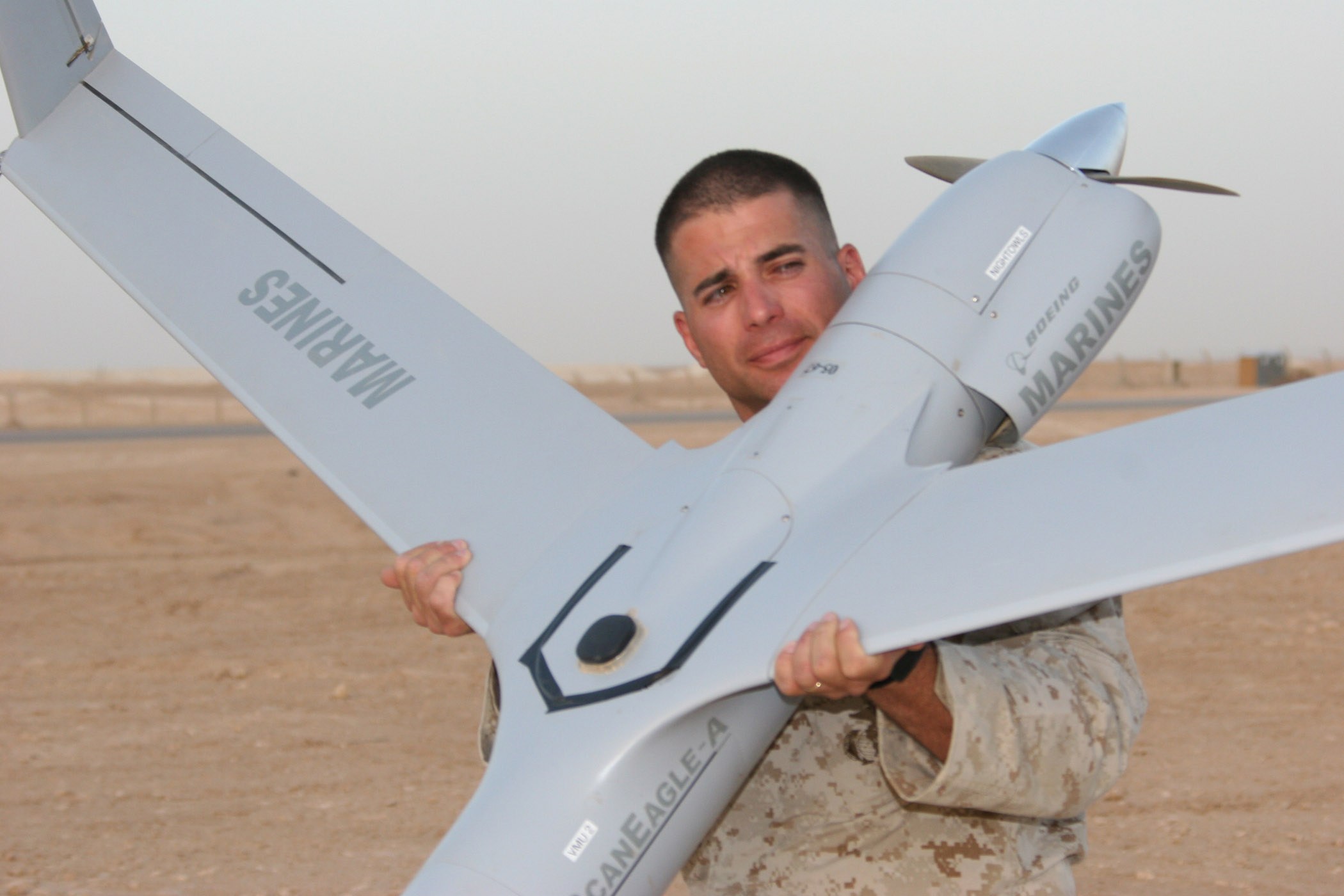
Insitu ScanEagle small Unmanned Air System (sUAS)