USCGC Harriet Lane Headed for Service Life Extension Program

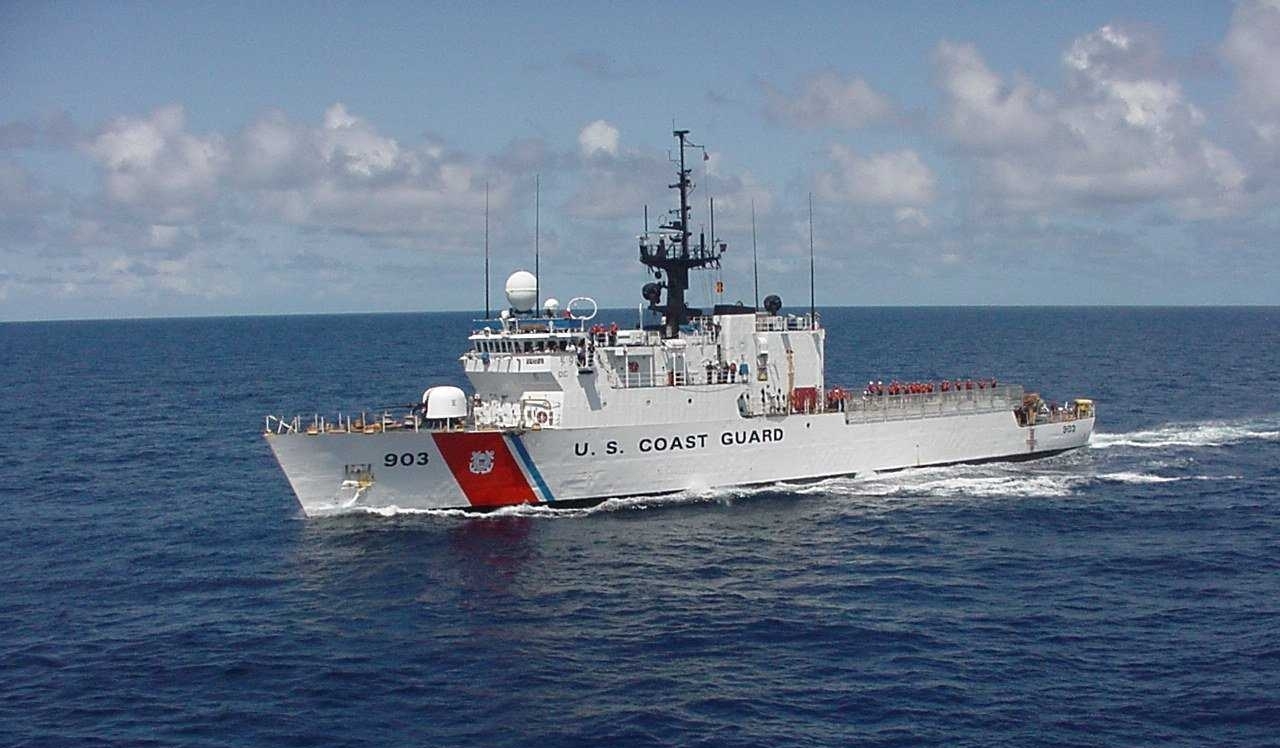
USCGC Harriet Lane (WMEC-903), March 17, 2009. US Coast Guard photo.

Below is an Atlantic Area news release. It is about a relatively routine patrol by USCGC Harriet Lane, but there is a bit of news here.

“The crew shifted gears upon return to homeport and met the next challenge of readying Harriet Lane for an important maintenance upgrade cycle…Following this patrol, the vessel will undergo a nine-month planned maintenance and upgrade period at the Coast Guard Yard in Baltimore.”

It is not apparent from the text of the news release, but apparently the cutter arrived in Curtis Bay to be SLEP on March 28. Got that from a photo caption. Sorry no idea when she returned to Portsmouth after the patrol or when she departed for the Yard.

—-Wish these news releases included departure and arrival dates—
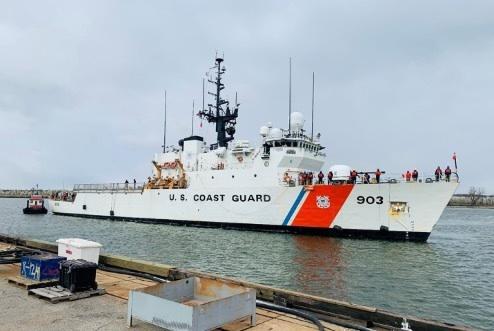
The U.S. Coast Guard Cutter Harriet Lane arrives at the Coast Guard Yard for a service life extension in Baltimore, March 28, 2022. The cutter will remain in Baltimore without the crew for approximately nine months during the overhaul project.

It appears Harriet Lane will be the first of six WMEC-270s to undergo the Service Life Extension Program (SLEP) that will keep ships of the class in service until the Offshore Patrol Cutter construction program is expected to be completed in 2038.

“WMEC SLEP includes electrical system upgrades, remanufactured main diesel engines, structural renewal for stern tube and piping, and installation of a new gun weapon system supplied by the U.S. Navy. “

There are still some unanswered questions as to what will be included in the “upgrade.” We know they will loose the 76mm Mk75 gun, replaced by a 25mm Mk38, and presumably the M92 “mini-combat” firecontrol system that also provides the ships an airsearch capability that can be used for helicopter control. Will there be a replacement multi-mode radar? Will they get only one or perhaps two Mk38 guns? Will the ships retain their electronic warfare equipment that can be use in law-enforcement operations? Will they get an Unmanned Air System? Will there be changes to the aviation support equipment to better handle the larger MH-60, as it becomes the shipboard helo of choice? Maybe CG-9 will give us an update in the not too distant future.

Harriet Lane is one of the oldest 270s, commissioned in 1984. (The newest was commissioned in 1991.) She was one of four built by Tacoma Boatbuilding, before the program was switched to Robert Derecktor Shipyard, where the last nine were built. Will all four of the Tacoma Boat built cutters go through the program?

As I noted earlier, assuming the Mk38 gun will be on the bow, it probably should be mounted on a raised platform, with a breakwater, to better protect it from water coming over the bow. It would also allow the weapon to engage targets at closer range.

News Release

USCGC Harriet Lane returns home following 50-day patrol

USCGC Harriet Lane returns home following 50-day patrolUSCGC Harriet Lane returns home following 50-day patrol
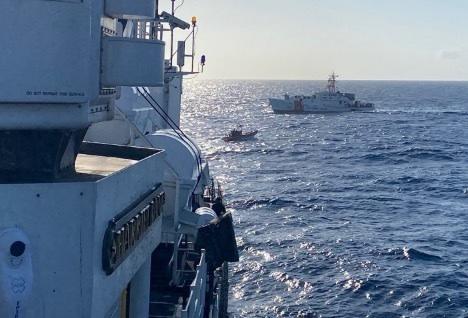
USCGC Harriet Lane returns home following 50-day patrolUSCGC Harriet Lane returns home following 50-day patrolUSCGC Harriet Lane returns home following 50-day patrol
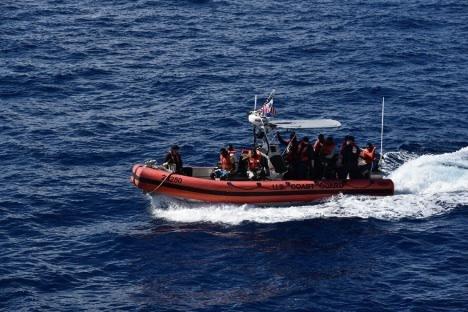
Editors’ Note: To view more or download high-resolution imagery, click on the photos above.

PORTSMOUTH, Va. — The crew of USCGC Harriet Lane (WMEC 903) returned to homeport in Portsmouth on Monday, following a 50-day patrol in the North Atlantic Ocean.

While on patrol, the Harriet Lane crew navigated over 6,559 miles along the southeastern coast of the United States, extending as far south as the northern coast of Cuba and east to The Bahamas, performing migrant interdiction and search and rescue operations in support of the U.S. Coast Guard Seventh District.

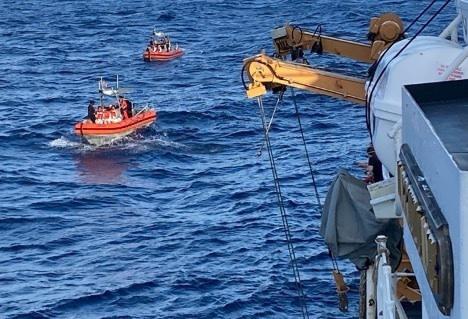
The Harriet Lane patrolled the Florida Straits to aid with a recent surge in unsafe and illegal migration by sea. The crew interdicted six unseaworthy vessels carrying approximately 467 individuals of Cuban or Haitian origin and cared for more than 520 migrants aboard the cutter during a four-week time span while awaiting logistics for repatriation.

The crew also assisted in two search and rescue cases after receiving notification of an individual stranded on Anguilla Cay, Bahamas and another case where several people were stranded in the water near Cuban territorial waters.

“I remain in awe of this steadfast crew. They answered the call on multiple occasions during our patrol, ensuring safety of life at sea while preventing illegal entry into the United States,” said Cmdr. Ben Goff, commanding officer of the Harriet Lane. “This mission can take an emotional toll, but our team stuck together and persevered through every challenge and adversity presented. The crew shifted gears upon return to homeport and met the next challenge of readying Harriet Lane for an important maintenance upgrade cycle with aplomb. We are forever grateful for the outstanding support we receive across the Coast Guard and from our loved ones at home. I’m looking forward to getting our crew well-earned downtime with friends and family.”

Following this patrol, the vessel will undergo a nine-month planned maintenance and upgrade period at the Coast Guard Yard in Baltimore.

The Harriet Lane is a 270-foot medium endurance cutter responsible for a variety of missions, including search and rescue, drug interdiction, migrant interdiction, other law enforcement and marine environmental protection.

The U.S. Coast Guard national security and medium endurance vessels homeported on the East Coast operate under the ultimate authority of the U.S. Coast Guard Atlantic Area commander located in Portsmouth, Virginia, overseeing all Coast Guard operations east of the Rocky Mountains to the Arabian Gulf.
Naval News at DIMDEX2022

Naval News provides a review of some of the presentations made at the very first DIMDEX show in Qatar. Day One above.

Day Two looks at the Pakistani naval defense plans and industry and at a compact combined active/passive variable depth sonar and towed array system from Finland’s Patria.

There is also this video of ships that attended the show.

Naval News also provided this post about a new class of cutter sized (3,000 ton) corvettes for the Pakistani Navy, based on Turkey’s MILGEM project Ada class corvettes and Istanbul class frigates.  These are significant both because of the growth of Turkey’s defense industry and because most of Pakistan’s recent naval acquisition have been from China. Significantly none of the planned systems are Chinese except the helicopter. Here are some links to information about the weapons to be mounted on the corvette:

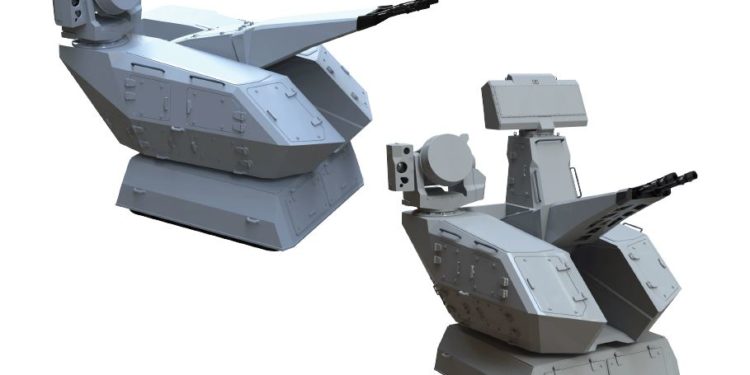
ASELSAN GOKDENIZ twin 35mm CIWS

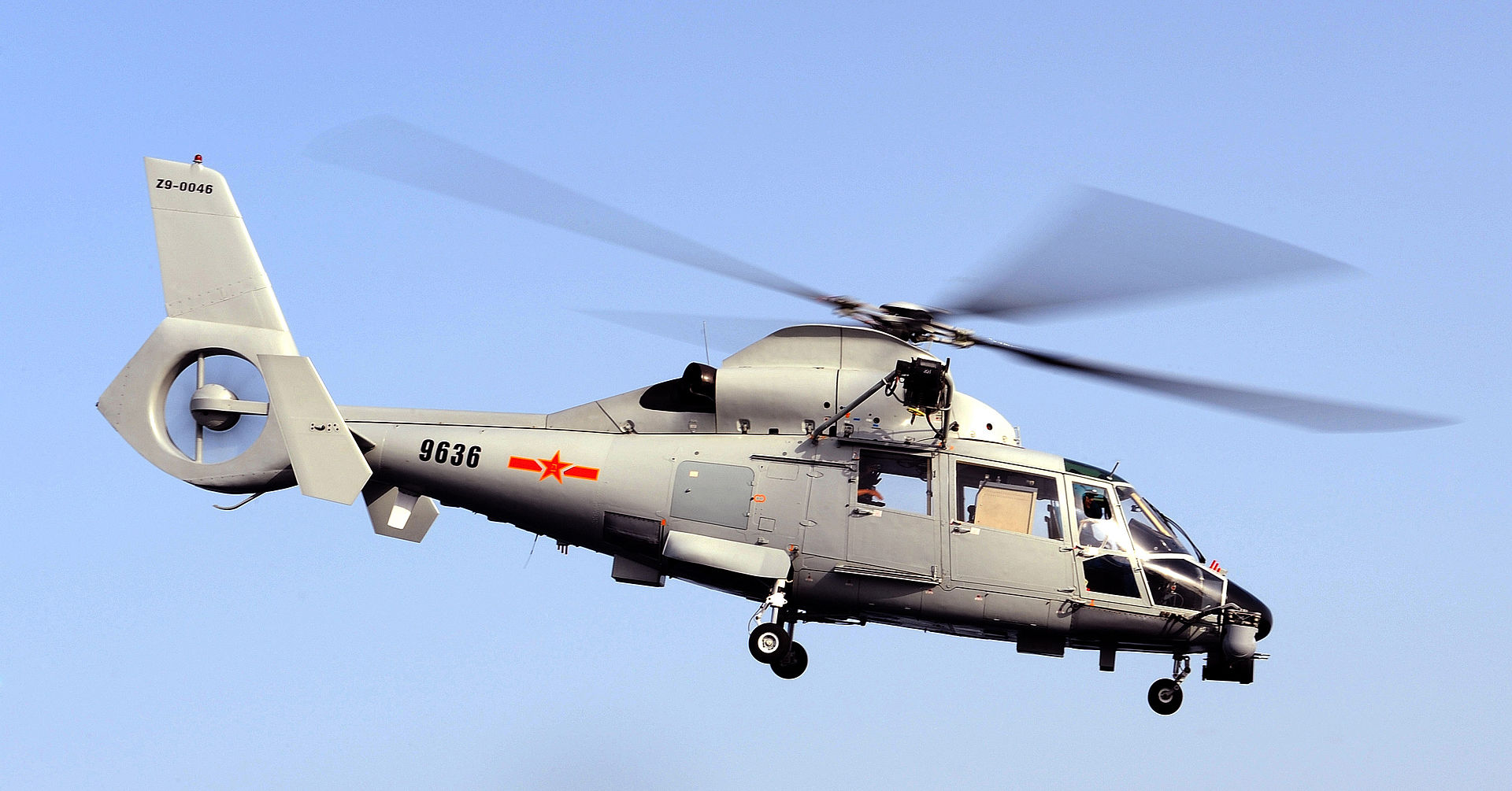
A Chinese Haifan II helicopter from the missile frigate ‘Zhoushan’ leaves the flight deck of HMS Cornwall. Members of the Chinese Public Liberation Army Navy (PLAN) were visiting the Type 22 frigate to discuss anti-piracy operations in the Gulf of Aden. Organization: Royal Navy Object Name: FB09002219

“Remembering Coast Guard Cutter Cushing” –MyCG

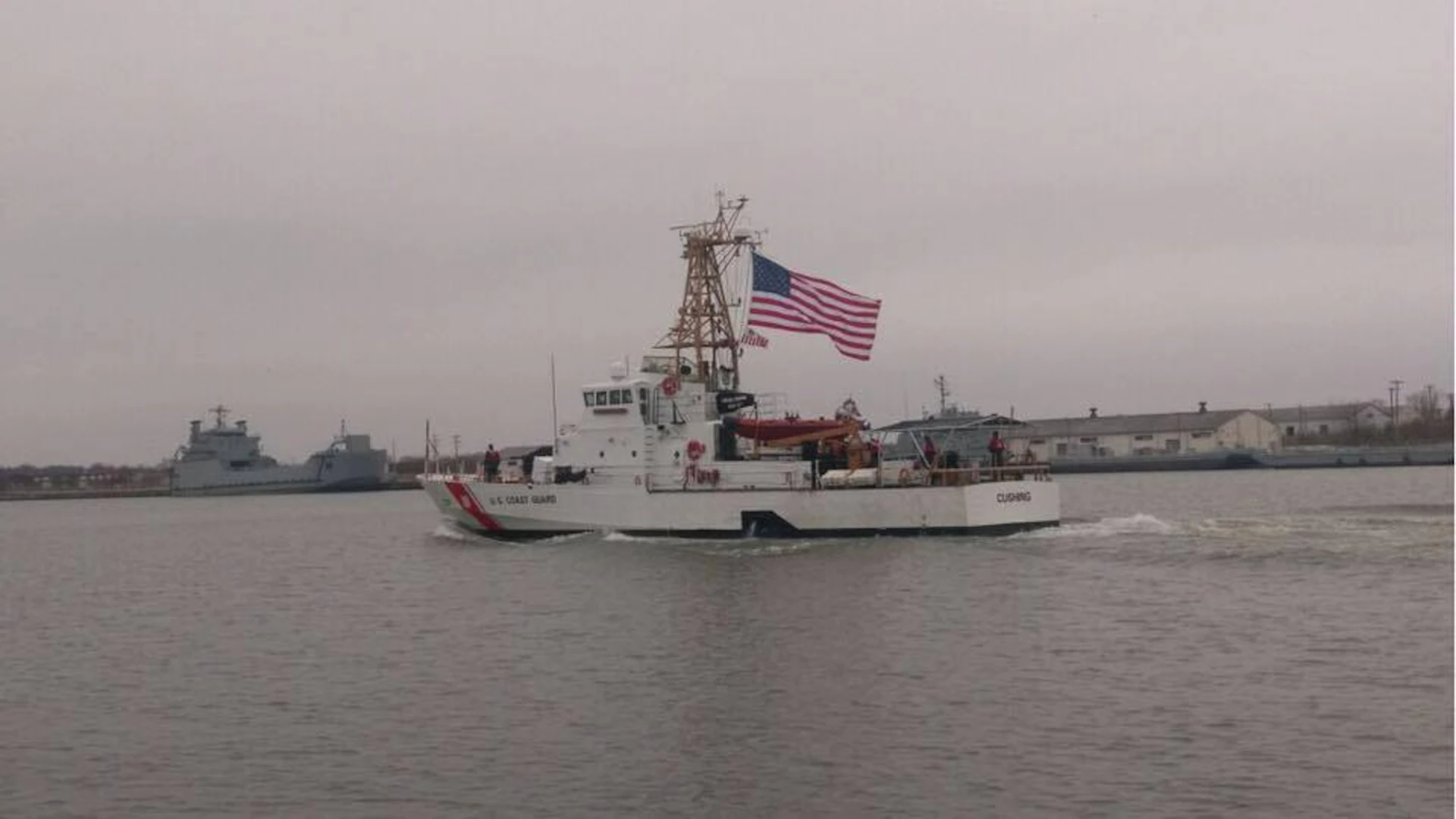
USCGC Cushing sails past the Statue of Liberty

MyCG has a retrospective on the USCGC Cushing, a WPB lost with all hands in action against Russia, after being transferred to Ukrainian Navy, apparently in an effort to lure a Russian corvette within range of shore batteries.

USCGC Cushing sails for her final Coast Guard mission before being decommissioned in 2017

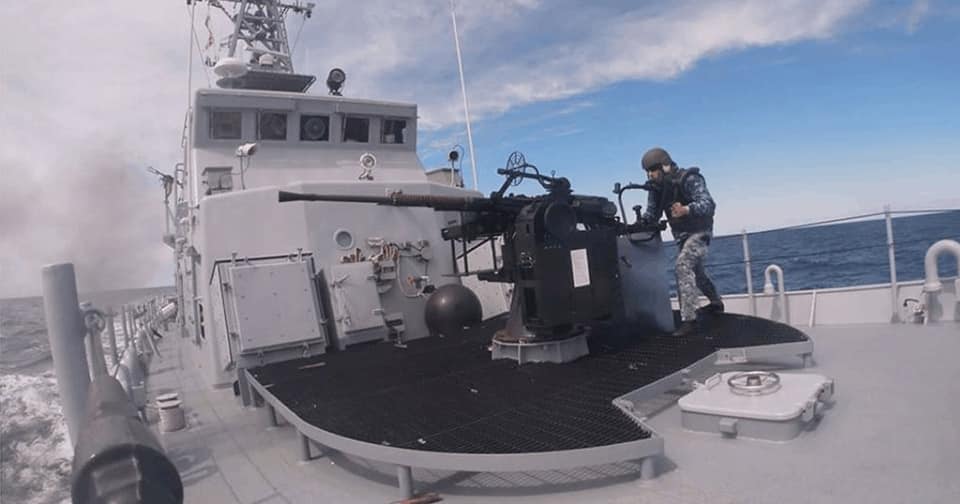
This was how she was armed in Ukrainian service.

Soviet era 25mm gun, the 110 PM.

Marines’ Next-gen Handheld Targeting System (NGHTS)–Naval Today

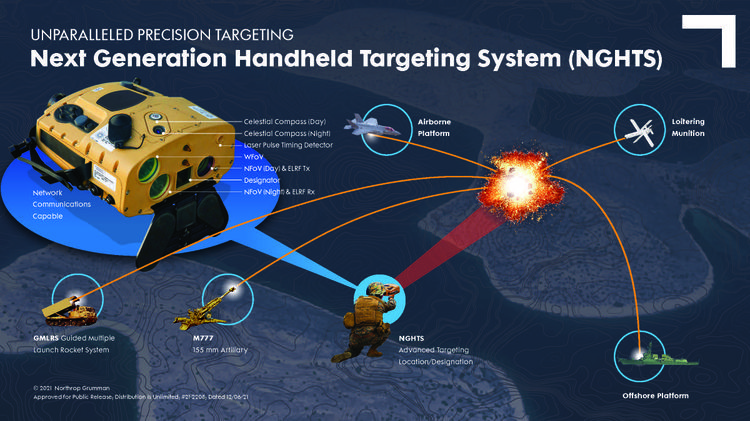
Next Generation Handheld Targeting System (NGHTS) Photo by: Northrop Grumman. 

Naval Today reports,

“US-based aerospace company Northrop Grumman Corporation has been selected to provide the US Marine Corps with the next-generation handheld targeting system (NGHTS).”

As disclosed, NGHTS is capable of performing rapid target acquisition, laser terminal guidance operation and laser spot imaging functions. Its high-definition infrared sensors provide accuracy and grid capability over extended ranges.

So, what does this have to do with the Coast Guard?

If the Coast Guard is to respond to a terrorist attack using a medium to large ship, we have to respond in one of two ways. We either have to stop the ship with Coast Guard systems, or we have to call in help from other armed forces. Either way, something like this could help.

Plus, the device seems to have additional capabilities that might be useful.

In what is likely to be a rapidly developing threat situation, I have little faith, that we can get help in time, but if we do, we are going to need to quickly and effectively identify the target. This can be a lot more difficult than you might think. Army and Air Force pilots are not trained in ship recognition. They are unlikely to be able to recognize a particular ship based on a description. Using a laser designator insures there would be no misunderstanding about which ship is their target.

If Coast Guard are going to forcibly stop a terrorist-controlled vessel, we need accurate weapons that will not result in collateral damage. Laser guided weapons can fill this role.

These systems seem to have capabilities beyond laser designation. Looking at the illustration above, it appears it also can serve as a compass, perhaps capable of taking bearings day or night, and of providing low probability of intercept, line of sight communications.

This could even be used on smaller units like the response boats. Large cutters are getting the Mk20 Electro-Optic Sensor System (It is still not clear to me, if that includes a laser designator but it does seem likely). On a rolling ship we would probably rather have a mounted rather than handheld system, but some kind of mount would probably not be too difficult. Since it is supposed to be network capable, presumably its imaging could be remoted to command positions.


“Want to stop a Drug Smuggling Boat? Try out a High Power Microwave Weapon Systems” –Marine Link

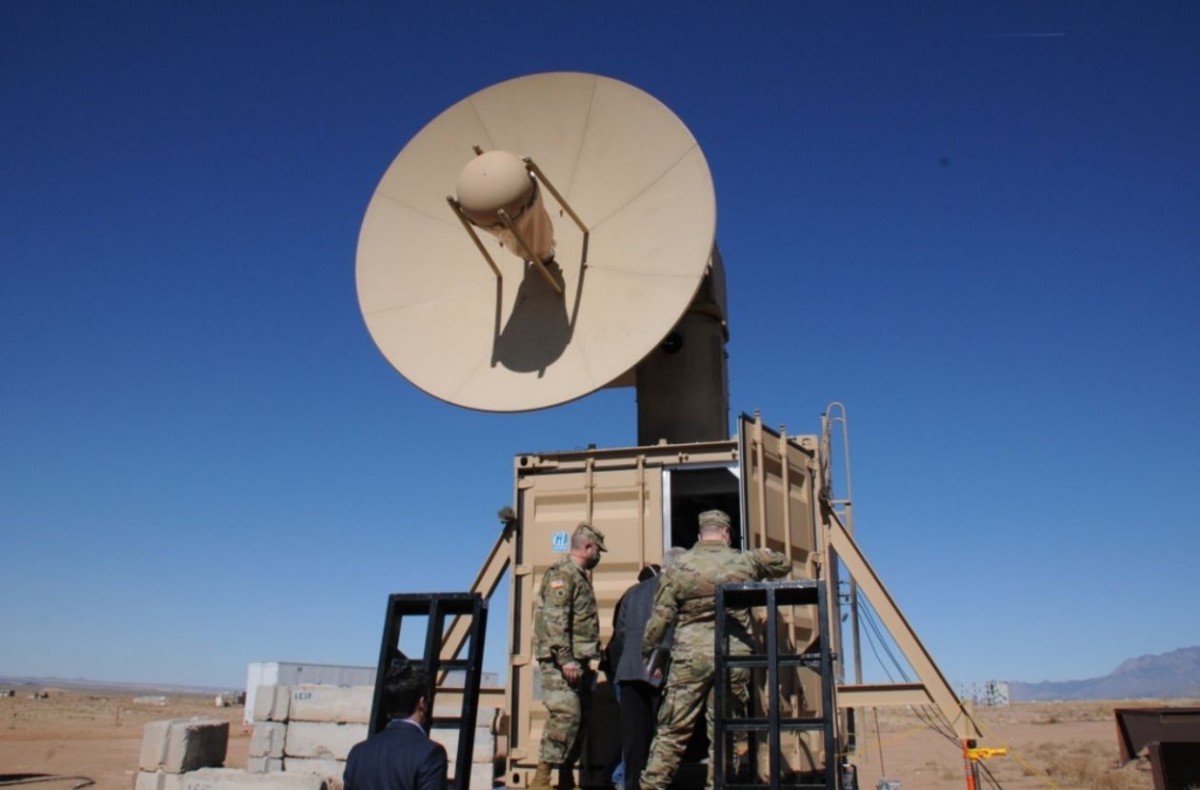
MarineLink reports that the Naval Surface Warfare Center Dahlgren Division has been working on high power microwave systems as a way to stop no compliant vessels, and they want the Coast Guard to try it out.

“We are looking to provide the U.S. Coast Guard with an HPM system for a one-year operational utility assessment,” said Pete Cacciola, a project lead for vessel stopping efforts in the HPM Weapon Systems Division. “Our goal is to give them another tool in their toolbox for noncompliant vessel interdiction.”…HPM weapon systems, a type of directed energy weapon system, operate by generating and transmitting extremely high electrical power levels, focused on specific frequencies and directed by steerable antenna systems. The result to a target is disruption or destruction of key components, rendering the target inoperable with little or no effect on personnel.

Such systems are also likely to be useful against unmanned air systems (drones), also an emerging Coast Guard concern.

“USCG Provides Information on OPCs’ Speed and Machine Gun Armament” by Peter Ong

Comments on an earlier post here, “Updated: “U.S. Coast Guard Provides Information On The Offshore Patrol Cutter” –Naval News” prompted friend and journalist Peter Ong, author of the referenced Naval News story, to enquire further. Results below: 


The comments posted on Chuck Hill’s CG Blog in response to my story published 13 January 2022 on Naval News about the U.S. Coast Guard’s Offshore Patrol Cutter (OPC) had a running discussion as to the maximum speed of the OPCs and how many .50 caliber M2HB heavy machine gun mounts the OPCs will be outfitted with.

Some commentators believe that the OPCs can sail faster than 22.5 knots, which according to specifications is the sustained speed of the OPCs.  Furthermore, the number of .50 caliber (12.7mm) M2HB mounts is relatively unknown with some believing that the mounts will be a mixture of remote weapons stations and handheld crew-served pedestal mounts.  (The OPCs are armed with a Mark 110 57mm turret cannon at the bow and a Mark 38 MOD 3 with 7.62mm coaxial chaingun over the hangar).

I inquired to the U.S. Coast Guard’s Public Affairs Department seeking more information on the maximum OPC’s speed and the quantity of small caliber weapon mounts.  Brian Olexy, Communications Manager with the U.S. Coast Guard Acquisition Directorate, replied via email at the end of January 2022.

Question: Some believe that the OPC’s maximum sprint speed, or emergency Flank Speed, is more than 22.5 knots as rated by the specifications.  Can the USCG settle this dispute and provide the maximum “all engines at 100% or more” speed that the OPCs can safely sail at?

Brian: “The contract requires the [Offshore Patrol] cutter to be capable of maintaining a sustained speed through the water of 22 knots in full load condition at delivery.  Sustained speed is not “flank speed,” but rather the speed that the cutter can maintain in trial conditions. While the cutter design is required to meet the capability requirement of 22 knot sustained speed, the Coast Guard expects to obtain greater clarity on the actual speed range of the vessel during pre-acceptance sea trials.”

Question: How many 7.62mm M240 or 12.7mm M2HB mounts will the OPCs have in total?

Brian: “Final armament of the cutter will not be determined until the Coast Guard takes delivery, but the cutter has been designed with six different small caliber weapon mounts.”

Thanks to Peter for the follow-up.

Coyote Counter UAS

The Drive reports on tests of the Coyote Block 2 counter to Unmanned Air Systems (cUAS). This is apparently derived from the earlier Coyote Block 1 system. I may be guessing, but I presume they use the same controls and the Block 2’s launcher would be backwardly compatible.

These are specs for the earlier Block 1 as reported in Wikipedia:

  • Airspeed: 55 knots (102 km/h) cruise, 70 knots (130 km/h) kts dash
  • Deployment altitude (air launch): up to 30,000 feet (9,100 m) MSL (in non-icing conditions)
  • Comms range: 50 nautical miles (93 km) (May 2016); 70 nautical miles (130 km) (ground test October 2016)
  • Endurance: 1 hr+ @ cruise (May 2016); 2h (2017)
  • Weight: 13 pounds (5.9 kg)
  • Length: 36 inches (0.91 m) [20]
  • Wingspan: 58 inches (1.5 m)

The Block 2 appears to be similar in length and probably in weight, but it is a very different kind of loitering munition since it is jet powered.  Reportedly it is four times faster than the propeller driven Block 1 meaning capable of at least 220 knots and perhaps as much as 280 knots. The block 2 is also claimed to have a longer loiter time and to be more maneuverable. There is also a block 3 version.

“Raytheon announced in August 2021 that a demonstration of the Block 3 in an air intercept test had used a non-kinetic warhead to defeat a swarm of 10 drones. This type of payload reduces potential collateral damage and enables the variant to be recovered and reused.”

The Coyote Block 2 is not a possible future system, it has already been cleared for foreign military sales and,

“According to the company, Raytheon expects to achieve full-rate production of Coyote Block 2 in 2020.”

Iranians and their proxies appear to be stepping up the use of UAS. Breaking Defense reports,

“What is different… is a dramatic uptick in the UAV activity in the region, both in terms of their capability, their profiles, and the density of activity,” Vice Adm. Brad Cooper said.

The July 2021 fatal UAS attack on the M/V Mercer Street provides ample evidence that defenses like the Coyote Block 2 are needed to protect shipping in the 5th Fleet Operating Area.

Having seen the upgrades to the Webber class FRCs going to PATFORSWA, it may be that they are being fitted with essentially the same systems as the Light Marine Air Defense Integrated System. If that is the case, they may be equipped with the Coyote counter UAS system.

I also have to wonder if such a system could provide a close in weapon system to intercept at least sub-sonic cruise missiles. As a self-defense system, it would not have to be as fast as the incoming missile, it would just have to affect an intercept at some distance from the targeted ship.

Presumably these might also be useful against swarming fast attack craft.

Updated: “U.S. Coast Guard Provides Information On The Offshore Patrol Cutter” –Naval News

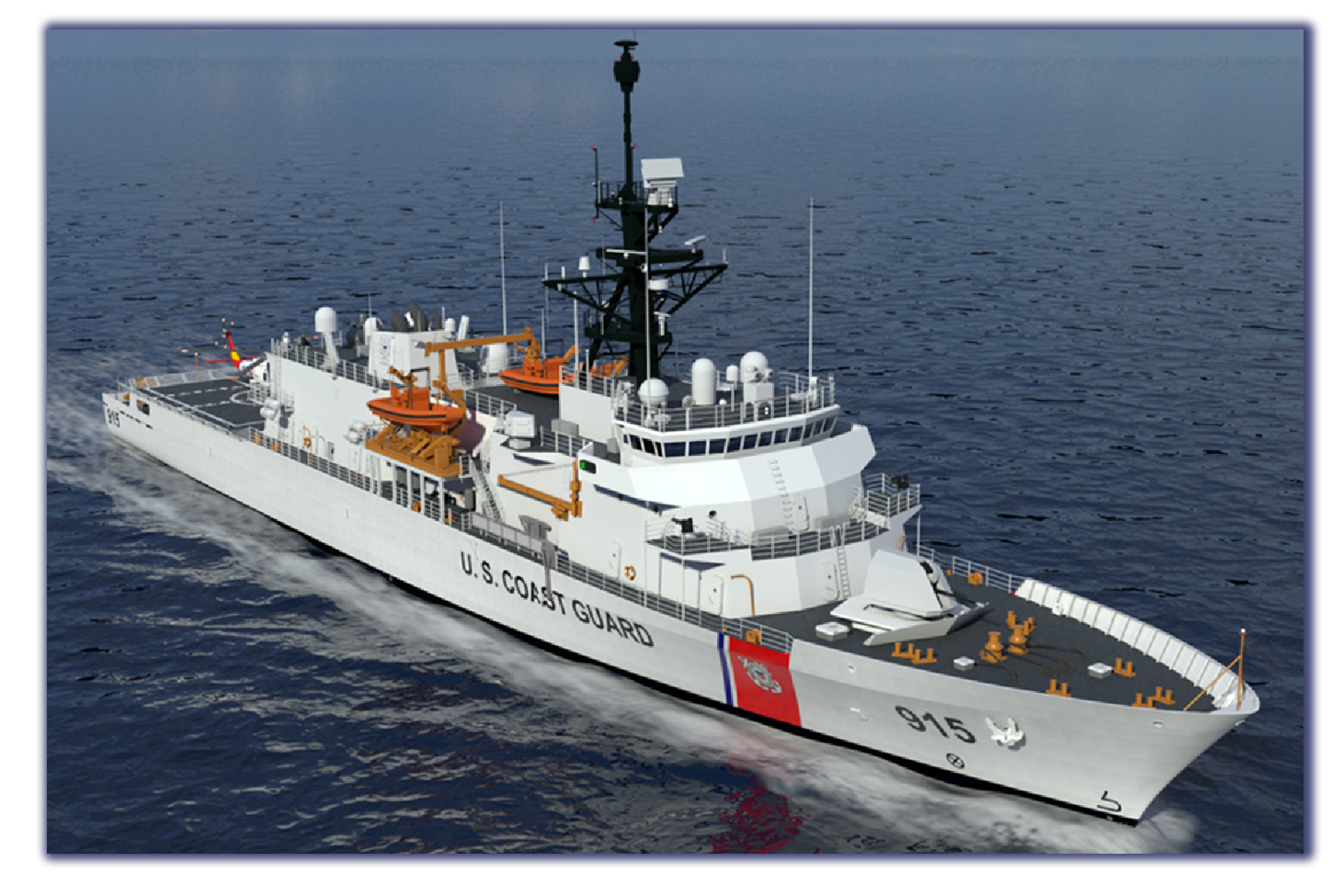
OPC “Placemat,” Notice planned delivery has slipped considerably from 2021 to 2023. 

Naval News and writer Peter Ong bring us an update on the status of the Offshore Patrol Cutter Program.

I did not see any particular surprises, but there may be a hint of how the 30mm Mk38 Mod4 is viewed in this question and answer.

Naval News: Will the Mark 38 MOD2 be changed out now that the US Navy is planning for Mark 38 MOD4s with 30mm?

Brian Olexy: The OPC program includes each cutter receiving one MK 38 MOD 3 with 7.62 mm co-axial gun. There is no plan at this time to change to a MK 38 MOD 4d for UAS operations. (emphasis applied–Chuck)

My immediate reaction was–what did the gun have to do with UAS operations? There was nothing about UAS in the question. Then I recognized a possible connection. The 30mm has a demonstrated counter-UAS capability using air burst ammunition that the 25mm does not have. The response may reflect the author’s comments that were not recounted in the post, or it may be that the Coast Guard has recognized the use of the 30mm as a counter UAS weapon.


UPDATE: I was contacted by the author and informed that an error had occurred in the publication of his story and that the correct quotation included no reference to UAS. It should have read.

7. Will the Mark 38 MOD2 be changed out now that the US Navy is planning for Mark 38 MOD4s with 30mm?

A. The OPC program includes each cutter receiving one MK 38 MOD 3 with 7.62 mm co-axial gun. There is no plan at this time to change to a MK 38 MOD 4. 

“BAE Systems Delivers 50th Mk 110 Gun For U.S. Naval Operations” –Naval News

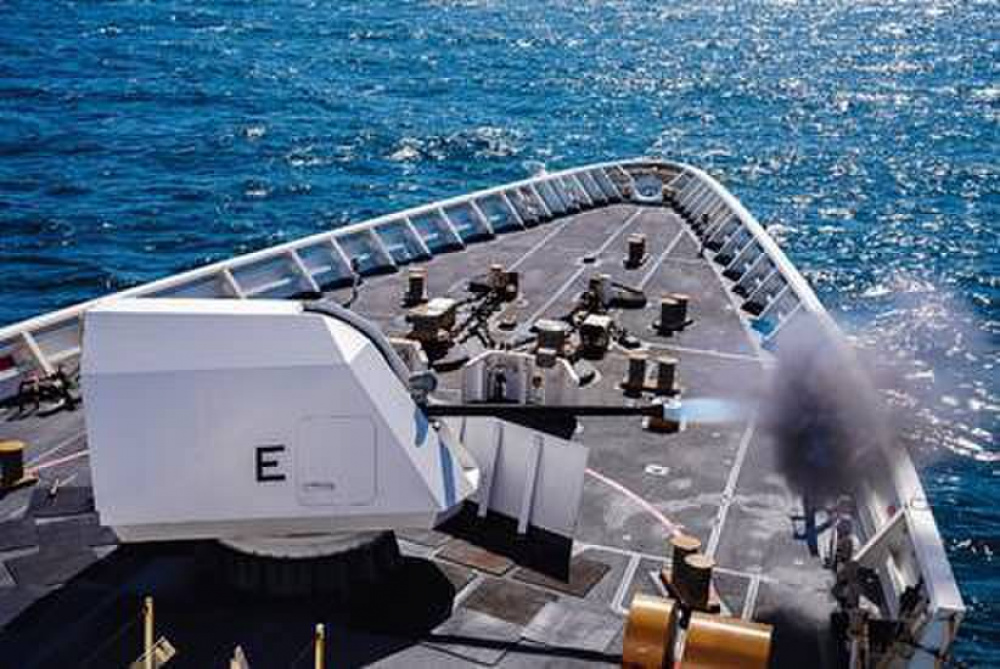
Coast Guard Cutter Stratton fires its MK 110 during a gunnery exercise in the Bering Sea April 28, 2021. Routine training and live-fire exercises provide opportunities to evaluate and improve procedures, test capabilities and maintain proficiency. U.S. Coast Guard photo courtesy Ensign Molly Dolan.

Naval News reports BAE has delivered their 50th 57 Mk110 gun system for use on US warships. In this case, that gun will go to a US Coast Guard Cutter, almost certainly OPC #3 or #4. Significantly the first US Mk110 installation was on USCGC Bertholf, commissioned Coast Guard Day, 2008, three months before the first Littoral Combat Ship, USS Freedom (now already decommission).

Fifty guns is really not a lot compared to the number of Oto Melara 76mm or the 5″ Mk 45, but it is on a lot of ships, and the fact that it is expected to equip 20 new FFGs and 25 OPCs in addition to, still yet to be delivered NSCs and LCSs, seems to guarantee long term US Navy interest in the system. Current plans call for a total of 87 ships equipped with the Mk110, 51 Navy and 36 Coast Guard (excluding the first four LCS which are being decommissioned).

We are seeing that interest in development of the ALaMO and MAD-FIRES rounds.

I still think, because of the Coast Guard’s missions and the lack of alternative anti-surface weapons on cutters, that our large cutter should have 5″ Mk45 weapon systems (even if only recycled 5″/54s).  After all, any improvements you could make to a 57mm round, you could also make to a 5″ (127mm) round, but it is encouraging to see new more capable and more accurate rounds being developed for the gun we do have.

Potential Terrorist Threat Weapons

Regular readers know I have long been concerned that our cutters may not be adequately armed, if they are placed in a situation where they need to forcibly stop almost anything larger than a large cabin cruiser. It is not just that larger vessels are hard to sink. They may shoot back.

While I regard this as possible, but unlikely to occur in US waters (sort of like 9/11 was unlikely), it’s even more of concern, for countries with ongoing insurgencies, like the Philippines. Still, I don’t want to see the Coast Guard tested and found unprepared.

It becomes more likely to affect USCG personnel if they are overseas, doing counter piracy, doing counterinsurgency as we did in Vietnam, looking for weapons smugglers, or if we just stumble across terrorists enroute to their target and mistake them for drug smugglers. It also might be the work of an overconfident, vengeful drug lord.

In all probability, the situation will begin with an attempt to board a vessel of interest. It is probably most dangerous if they feign compliance, and the cutter comes close alongside. If the cutter sends a boarding party, it may be ambushed while they also attempt to disable the cutter. They would almost certainly make an effort to kill any exposed gunners.

That we might encounter small arms is a given, but I will look at other weapons, that might give them an edge, particularly if the cutter is surprised.

Any weapon that is man-portable, can be mounted on a pickup truck, or can be towed by one, can certainly be mounted on a vessel.

An aviation overwatch–fixed wing, helicopter, or UAV–could help us detect the presence of weapons, but it is not too hard to conceal weapons behind crates, in containers, or under canvas.

The most likely candidates are rocket propelled grenades, recoilless rifles/guns, heavy machine guns and autocannon, and Anti-Tank Guided Missiles (ATGM).

I will be using primarily Wikipedia and NavWeaps for reference. First, I will talk about the weapon type in general and then offer examples. Most of the examples are of Russian/Soviet or Chinese origin. They were chosen because these types seem very widely distributed and frequently fall into the hands of non-state actors.

Many of these weapons go back many decades, but that does not make them any less effective. Remember, we are still using the .50 caliber, a design that goes back to WWI.

As you go through the examples, I think you will see why I have advocated for weapons that can engage effectively from at least 4,000 yards.

Rocket Propelled Grenades:

From Wikipedia:

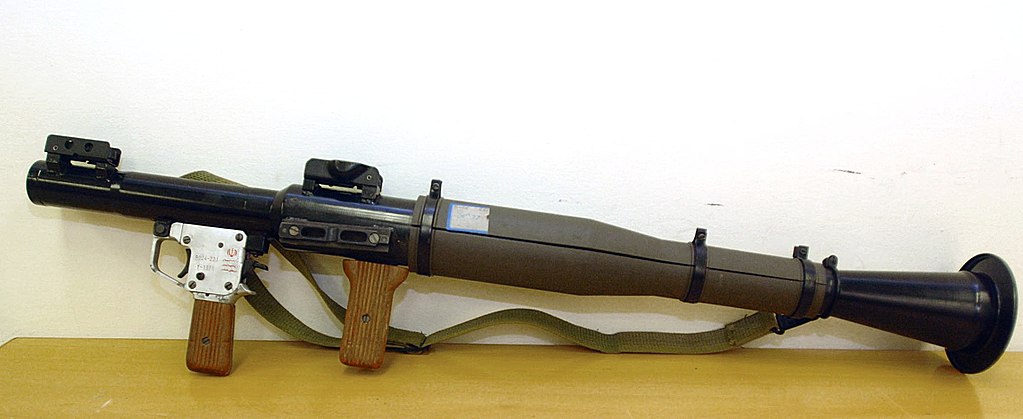
rocket-propelled grenade (often abbreviated RPG) is a shoulder-fired missile weapon that launches rockets equipped with an explosive warhead. Most RPGs can be carried by an individual soldier and are frequently used as anti-tank weapons. These warheads are affixed to a rocket motor which propels the RPG towards the target, and they are stabilized in flight with fins. Some types of RPG are reloadable with new rocket-propelled grenades, while others are single-use.”

These were initially designed as anti-tank weapons but there are warheads optimized for other targets as well. Reportedly fifteen different countries have made dozens of different weapons of this type.

An RPG missile found in Lebanon with a manufacturing symbol of the Iranian Army displayed by the IDF intelligence branch. Photo: Israeli Defense Force

The RPG-7

The ruggedness, simplicity, low cost, and effectiveness of the RPG-7 has made it the most widely used anti-armor weapon in the world. Currently around 40 countries use the weapon; it is manufactured in several variants by nine countries. It is popular with irregular and guerrilla forces. The RPG has been used in almost all conflicts across all continents since the mid-1960s from the Vietnam War to the ongoing Syrian Civil War.

Reportedly 9,000,000 of these have been produced. After the AK-47, it may be the most ubiquitous weapon in the world. A version is even made in the US. Different projectiles are available with different warheads. Projectile weight varies from 2 kg (4.4 pounds) for the fragmentation round to 4.5 kg (9.9 pounds) for those with a thermobaric warhead. Effective range is 300 meters or about 330 yards. Accuracy is affected significantly by crosswind.

The weapon has been used by ISIS and Al Qaeda.

Recoilless Rifles/Guns: 

recoilless riflerecoilless launcher or recoilless gun, sometimes abbreviated “RR” or “RCL” (for ReCoilLess) is a type of lightweight artillery system or man-portable launcher that is designed to eject some form of countermass such as propellant gas from the rear of the weapon at the moment of firing, creating forward thrust that counteracts most of the weapon’s recoil. This allows for the elimination of much of the heavy and bulky recoil-counteracting equipment of a conventional cannon as well as a thinner-walled barrel, and thus the launch of a relatively large projectile from a platform that would not be capable of handling the weight or recoil of a conventional gun of the same size. Technically, only devices that use spin-stabilized projectiles fired from a rifled barrel are recoilless rifles, while smoothbore variants (which can be fin-stabilized or unstabilized) are recoilless guns. This distinction is often lost, and both are often called recoilless rifles.

These weapons have generally been replaced by ATGMs except in the case of the Carl Gustaf, which is now being assigned, one to every US Marine infantry squad, and one to every US Army infantry platoon. Still, there are many of these weapons in circulation and they are commonly used mounted on the technicals of various non-state actors.

Forces belonging to the Iranian Navy using SPG-9. Velayat 94 Military exercise that held in February 2016 in the range of Strait of Hormuz and northern Indian Ocean. Tasmin News Agency.

The SPG-9:

“The SPG-9 Kopyo (Spear) is a tripod-mounted man-portable, 73 millimetre calibre recoilless gun developed by the Soviet Union. It fires fin-stabilised, rocket-assisted HE and HEAT projectiles similar to those fired by the 73 mm 2A28 Grom low pressure gun of the BMP-1 armored vehicle. It was accepted into service in 1962, replacing the B-10 recoilless rifle.”

Wight of the projectile is from 3.2 to 6.9 kg and range is reported up to 7500 meters, but effective range is 700 to 1300 meters. Rate of fire is 5-6 rounds per minute.

Heavy Machine Guns and Autocannon:

The modified pick-up truck, or “technical,” is a trademark of modern, unconventional warfare. Both rebels and government forces have used them extensively during the conflict. This one is carrying an anti-aircraft gun, ammunition, and petrol stored in plastic barrels. Photo Ajdabiya technical – Flickr – Al Jazeera English.jpg
Created: 23 April 2011

Moroccan ZPU-2, April 2006, Photo credit: Dieter Vogeler via Wikipedia

The ZPU-2 (more here) was developed as an antiaircraft mount and entered service in 1949. Projectile weight is 2.08 to 2.25 oz (64.0 gms), It has a range of 8,000 meters and an effective range of 1.4 km or about 1,500 yards (also reported as 2,400 yards). Each of its KPV heavy machine guns has a cyclical rate of fire of 600 rounds per minute and a practical rate of about 150 rpm.  “Muzzle energy of the KPV reaches 31 kJ (for comparison, the 12.7 mm Browning M2HB machine gun has 17 kJ…)” .

Reportedly, in 2007 ammunition for the weapon was still being produced in Bulgaria, Egypt, People’s Republic of China, Poland, Romania and Russia.

The ZU-23-2 was developed as an anti-aircraft gun, first deployed in 1960. It fires a 186 g (6.27 oz) projectile to an effective range of 2-2.5 km or 2200 to 2750 yards. The cyclical rate of fire is 2,000 rounds per minute, but the practical rate is 400 rpm. It is employed by over 70 users including Boko Harum.
“In the Soviet Union, some 140,000 units were produced. The ZU-23 has also been produced under licence by Bulgaria, Poland, Egypt and the People’s Republic of China.”

Soviet S-60 57 mm AA gun at Muzeyon Heyl ha-Avir, Hatzerim airbase, Israel. 2006. This gun was sold to 37 different countries during the Soviet era and has been used by “Islamic State of Iraq and the Levant.” Photo credit Bukvoed via Wikipedia.

The 57mm S-60 goes back to the World War II. The gun was manufactured in the USSR, China, Poland, and Hungary. Reportedly it is still used by 35 nations and was previously operated by many more.
The projectile weighs 6.17 lbs. Rate of fire is 120 rounds per minute cyclic, but 70 rpm sustained.
The Islamic State allegedly shot down a Cessna 208 Caravan operated by the Iraqi Air Force near Hawija, Iraq on 16 March 2016 with a truck-mounted S-60.
There are a huge number of Anti-Tank Guided Missiles (ATGM) available, any of which could ruin your entire day. “As of 2016, ATGMs were used by over 130 countries and many non-state actors around the world.” I’ll just talk about a couple.

9K111 Fagot in Polish service. Photo credit: Ministerstwo Obrony Narodowej

The missile weighs 12.5 kg (28 lbs) and the warhead is 1.7 kg or 3.7 lbs. It has an effective range of 70-2500 meters, about 77 to 2750 yards.
IDEF ’07, Baktar Shikan, original Wikipedia upload by KIZILSUNGUR at Turkish Wikipedia,1 June 2007.
The HJ-8 or Hongjian-8 (Chinese Red Arrow-8) and Bhaktar Shikan (Pakistani version) was developed in China. This tube-launched, optically tracked and wire-guided missile weighs 24.5 kg, has a range of up to 4,000 meters (one version reportedly 6,000 meters). It entered mass production in 1984 and has been operated by 21 countries and by non-state actors including ISIS. There is even a variant (HJ-8S) with an anti-ship warhead. Versions are also made in Pakistan and Sudan. Reportedly, in 2009, the Sri Lankan Army used these weapons against fast attack craft of the Tamil separatist LTTE’s Sea Tigers naval wing.