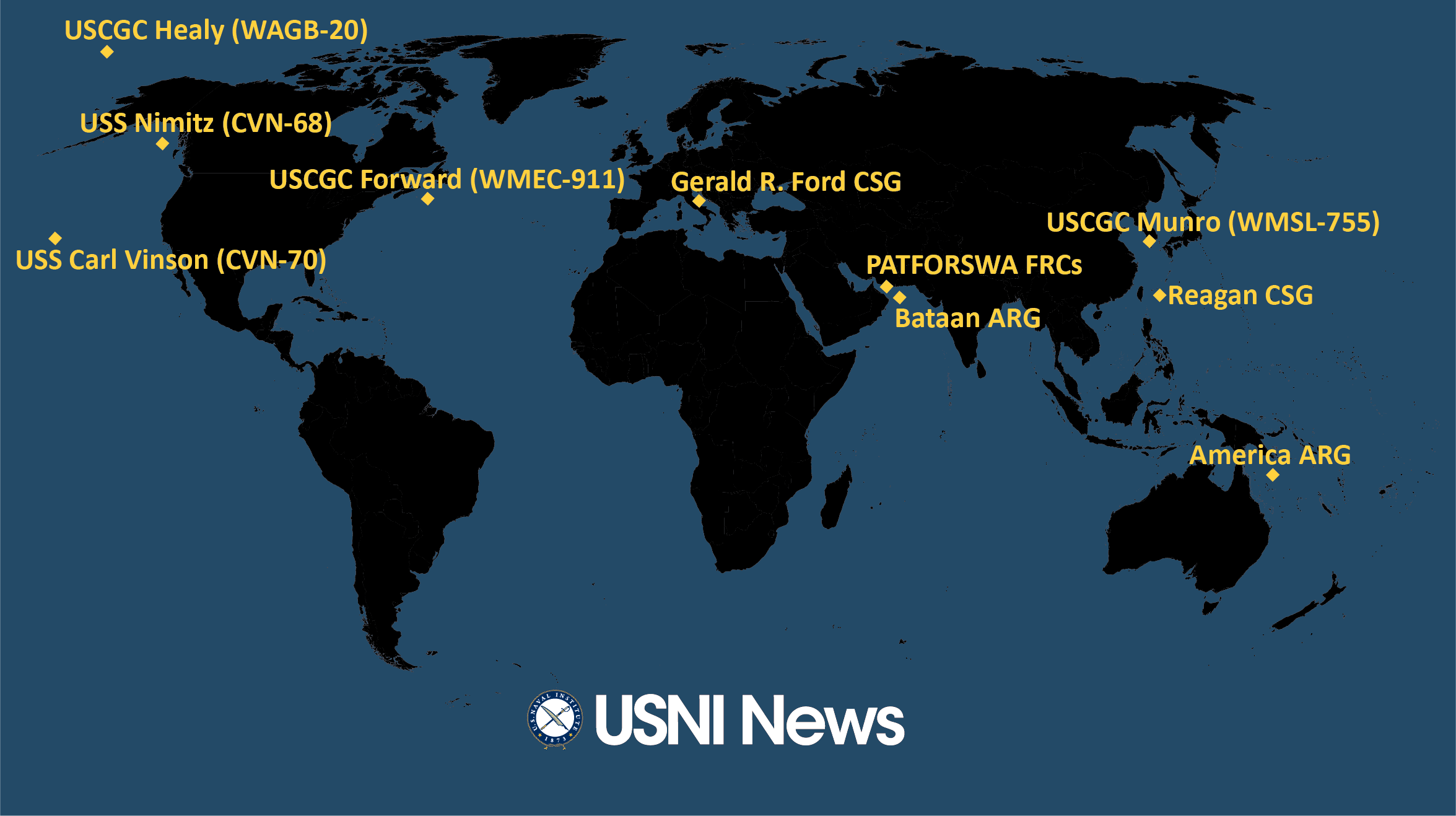
“USNI News Fleet and Marine Tracker: Aug. 21, 2023”

USCGC Munro (WMSL-755) escorts USNS Fisher (T-AKR-301) in the East China Sea on Aug. 12, 2023. US Navy Photo

Looking at the latest US Naval Institute “Fleet and Marine Tracker,” I am a bit surprised to see there are still 3 Navy ships operating under 4th Fleet, presumably doing drug interdiction. This is an uptick.

Again, they report on atypical Coast Guard operations:

  • Legend-class National Security Cutter USCGC Munro (WMSL-755) departed South Korea last week and is in the Korea Strait. (As I mentioned earlier, there is a possibility, cutters may encounter the new North Korean corvettes.)
  • Coast Guard Cutter USCGC Healy (WAGB-20) continues its work in the Beaufort Sea. Healy is on a five-month deployment in partnership with ONR and the National Science Foundation.
  • Coast Guard Cutter USCGC Forward (WMEC-911) is currently supporting Operation Nanook. Operation Nanook is an annual Canadian-led exercise that fosters international cooperation and shared responsibility in the Arctic and the northern Atlantic Regions. The cutter recently made a port call in Nuuk, Greenland.

You can use Control F “USCGC” if you want to quickly find the Coast Guard cutters mentioned in the USNI posts.

PATFORSWA is mentioned again.

The link in the Healy entry, “U.S., Canadian Icebreakers Conduct Operation, Rendezvous en Route to Arctic Ocean” is interesting, plus there is more in the USNI post including an “adorable” polar bear photo.

“Coast Guard completes work on service life extension program prototype” –CG-9

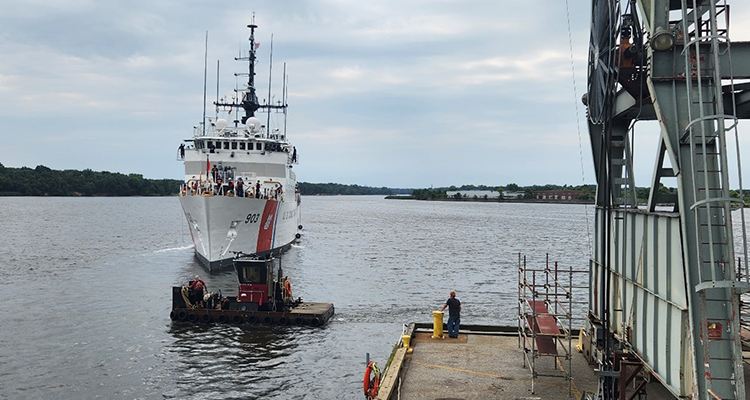
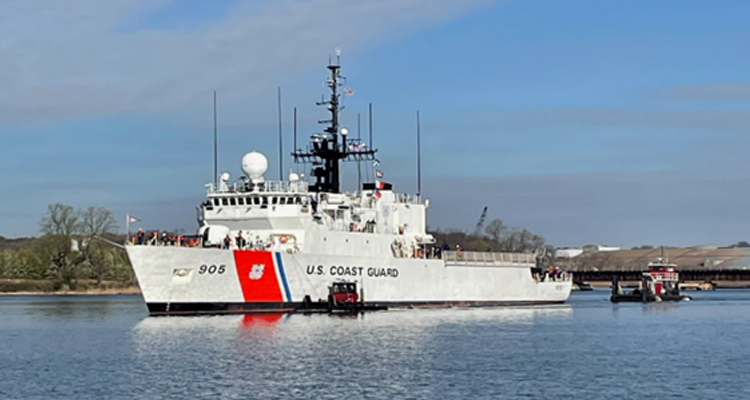
Coast Guard Cutter Harriet Lane departs Coast Guard Yard in Baltimore Aug. 3, 2023, after undergoing 15 months of In-Service Vessel Sustainment Program production work. The service life extension program for this cutter entailed 113 work items, worth $21 million, which included a new electrical system and an MK38 Mod 3 gun weapon system, a first for the medium endurance cutter class. Both Coast Guard Cutters Seneca and Harriet Lane served as medium endurance cutter prototypes for new electrical and structural work and Harriet Lane served as the gun weapons systems prototype.

For more information: In-Service Vessel Sustainment Program page


Above is an announcement by the Acquisitions Directorate (CG-9). As I noted in a July post about the WMEC270 Service Life Extension program, there are still some unknowns regarding the program. The photo above may answer some of those questions.

As expected, a Mk38 gun mount has replaced the 76mm Mk75. The CG-9 post indicates the installed mount is the 25mm Mk38 Mod3, and that there is one and only one mount. The Mk92 fire control system has apparently been removed and I see no apparent new radar that would replace its air search and approach control capability. It also appears the SLQ-32 has been removed.

It appears the Mk38 Mod3 is mounted on an elevated platform about four feet above the foc’sle deck. This should provide both a better field of fire and a degree of protection from green water coming over the bow, though I felt it should have been raised a full deck.

Harriet Lane was a prototype, but it wasn’t one of the six to get the complete SLEP. They are to be Spencer, Legare, Campbell, Forward, Escanaba and Tahoma.

Harriet Lane is expected to change homeports to the Pacific and be dedicated to operations in the Western Pacific.

I think it perhaps unfortunate, that the ship that may be placed in a position where it will need to face down China Coast Guard cutters armed with 76mm guns has lost hers. Perhaps it should not matter, but it may be more difficult to act boldly when your adversary can hurt you badly, from a distance, with impunity.

“USNI News Fleet and Marine Tracker: Aug. 14, 2023” –USNI

The US Naval Institute News Service “Fleet Marine Tracker” continues to report atypical Coast Guard activities. It continued to report on USCGC Healy’s Arctic deployment and mentioned PATFORSWA as they have since they have since they began including Coast Guard units in May.

This week, they included some activity I have not seen reported elsewhere.

“Legend-class National Security Cutter USCGC Munro (WMSL-755) departed Fleet Activities Yokosuka (CFAY) and is now in South Korea.”

“Coast Guard Cutter Forward (WMEC-911) is currently supporting Operation Nanook. Operation Nanook is an annual Canadian-led exercise that fosters international cooperation and shared responsibility in the Arctic and the northern Atlantic Regions.”

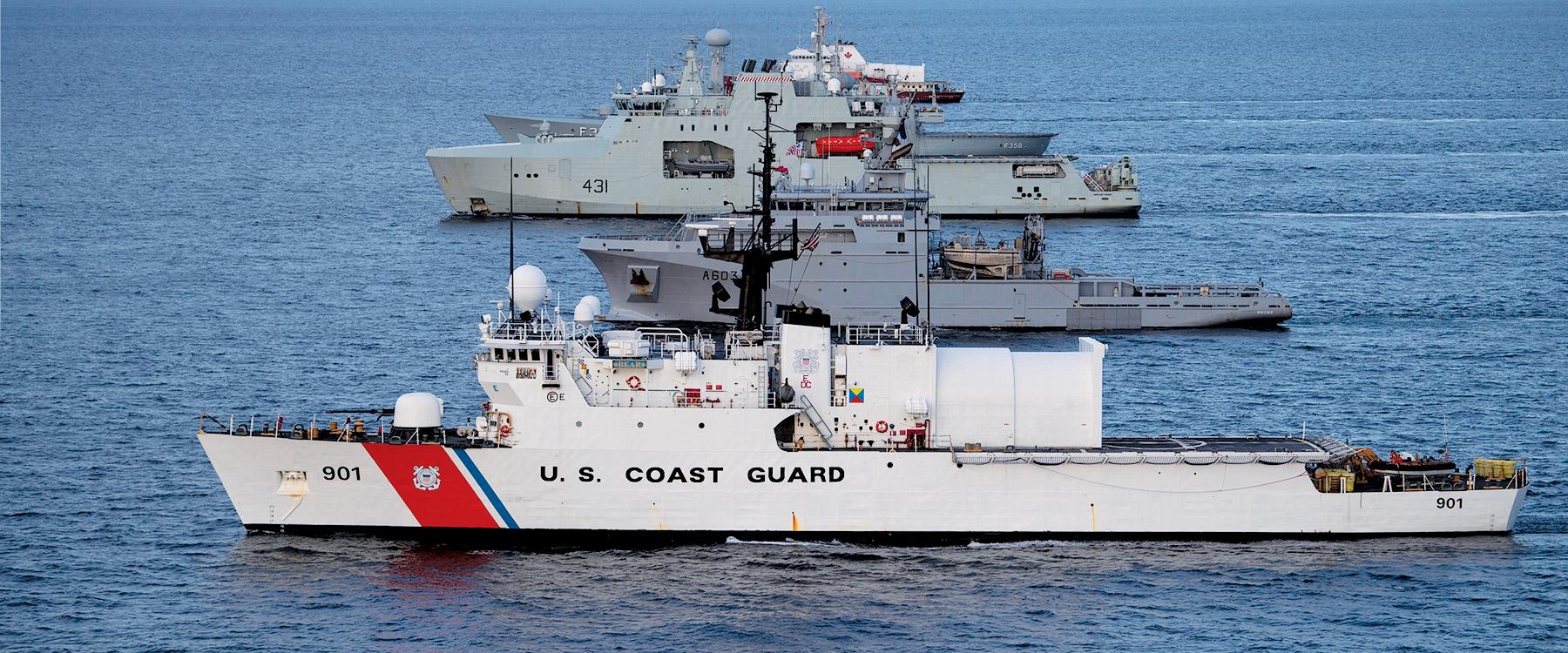
The USCGC Bear (WMEC-901) and allied ships from Canada, Norway, France, and Denmark steam in formation in the North Atlantic Ocean during last year’s Operation Nanook in August 2022. 

WMEC 210 Makes Three Drug Busts, Seizing 11,550 Pounds of Cocaine–Additional Observations on Eastern Pacific Drug Interdiction

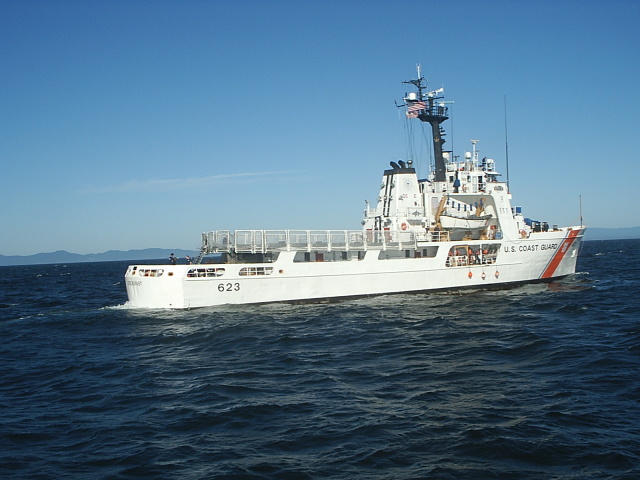
USCGC Steadfast (WMEC-623)

Below is a Coast Guard News Release. It is in fact a pretty typical news release. There are lots of these, and I usually don’t bother to publish them, but this one has prompted me to make some observations.

USCGC Steadfast had a very successful patrol. In fact, she did as well as any National Security cutter might have done despite the fact, she is less than a quarter the size of an NSC. Despite her age, size, and relatively slow speed, she has the critical assets necessary for success–good boats, an airborne use of force helicopter, and a crew that knew how to use them. Conclusion: It is a numbers game. Not every cutter needs to be 4500 tons, because we need numbers and smaller cutters can do the job. (I do like the fact that the newer cutters are faster.)

Looking back on six months’ worth of Coast Guard News reports (60 pages) it looks like a disproportionate part of the Eastern Pacific drug interdiction patrols are being done by PACAREA cutters. It is counter intuitive, but LANTAREA ships are actually much closer to the patrol areas and LANTAREA has many more large patrol cutters (NSCs and MECs: LANT 25 / PAC 9).

PACIFIC AREA CUTTERS: 

ATLANTIC AREA CUTTERS:

LANT Cutters do all the drug interdiction in the Caribbean and Migrant interdiction as well but, in addition to the 25 large ships, LANTAREA also has something like 35 Webber class cutters (in addition to the six in PATFORSWA), with 19 or 20 in the 7th District alone. By comparison, PAC AREA, with 84% of the entire US EEZ, has only 13 Webber class, four in the 11th District, six in the geographically huge 14th District that must also assist the nations of the Compacts of Free Association, and three in the 17th District (Alaska). The 13th District, where PACAREA’s three 210s, that are apparently doing most of the Eastern Pacific drug interdiction work are based, has not a single Webber class. Conclusion: PACAREA needs more ships than currently assigned or planned. The Webber class have probably made it possible to move more MECs to the Pacific. In the meantime, LANTAREA should be sending more ships to the Eastern Pacific drug transit zone.


July 23, 2023

U.S. Coast Guard Cutter Steadfast returns home after 70-day counternarcotics patrol in Eastern Pacific

ASTORIA, Ore. – The U.S. Coast Guard Cutter Steadfast (WMEC 623) and crew returned to homeport, Friday, after a 70-day counternarcotics patrol in the Eastern Pacific.

Steadfast’s crew disrupted the flow of illegal narcotics on three separate occasions during their patrol, preventing a combined total of more than 11,550 pounds of cocaine from reaching the U.S.

The crew steamed more than 16,000 nautical miles conducting training, law enforcement missions, providing search-and-rescue coverage, and conducting helicopter operations while patrolling the waters between their Astoria homeport and the international waters off the coasts of Central and South America.

While patrolling in the Eastern Pacific, June 9, Steadfast’s cutter boat crew detected a suspected narcotics-smuggling panga-style vessel. Coast Guard personnel conducted a boarding on the vessel, resulting in the interdiction of 2,200 pounds of cocaine.

On June 18, Steadfast was notified by a Customs and Border Protection Maritime Patrol Aircraft and crew (MPA) of another suspected narcotics-smuggling vessel. Steadfast personnel launched the helicopter, which was able to visually detect the target. Steadfast’s boarding team interdicted the 50-foot low profile vessel (LPV), a type of vessel specifically designed for avoiding radar detection, which make them difficult to detect. Steadfast personnel were able to interdict and seize 6,864 pounds of cocaine from the vessel.

During routine operations on July 9, Steadfast personnel were notified by MPA crew of a suspected narcotics-smuggling vessel transiting international waters. Steadfast launched a cutter boat with a boarding team and HITRON helicopter and aircrew to interdict the vessel. The target vessel attempted to evade the pursuit crew and began jettisoning suspected packaged narcotics overboard. The gunner aboard the HITRON helicopter used disabling fire to stop the engines of the smuggling vessel, ending the pursuit. Steadfast personnel recovered the jettisoned contraband, resulting in the seizure of another 2,464 pounds of cocaine.

The seized contraband was offloaded in San Diego during Steadfast’s transit home.

The ongoing battle against drug cartels in the Eastern Pacific theater demands united efforts on all fronts. Between initial detection, gathering intelligence, interdiction, and case prosecution, the Coast Guard works closely with partner nations and other U.S. agencies to interrupt the flow of illegal narcotics and chip away at the influence of cartels.

“This patrol marked another epic adventure for the crew of Steadfast,” said Cmdr. Brock Eckel, Steadfast’s commanding officer. “The crew’s teamwork and dedication were key to our operational success and their camaraderie made memories of a lifetime at sea and in exotic foreign ports. In keeping with the traditions of the sea services, I am also proud to have inducted 55 pollywogs into the glorious realm of Neptunus Rex’s Kingdom as Honorable Shellbacks.”

Notably, Steadfast became the second known U.S. military vessel to cross the equator on the 4th of July, earning 55 crew members the title of “Star-Spangled Shellbacks.” Steadfast’s crew was able to participate in a line crossing ceremony that solidified crew camaraderie and upheld the long-practiced traditions of seagoing services.

In addition to the ship’s successes in the counternarcotics arena, Steadfast and crew enjoyed several new and exciting experiences in other areas. During their port call in Panama City, Steadfast crew members spent time bolstering relationships with the Panamanian Navy, participating in a volleyball tournament and a barbeque. One of the ship’s small boat crews also rescued a sea turtle that had been entangled in fishing gear, cutting it free and releasing it back to the sea.

Commissioned in 1968, Steadfast is a 210-foot Reliance-class medium endurance cutter homeported on the Oregon coast. The cutter and crew deploy along the western seaboard from North America to South America conducting missions such as living marine resource law enforcement, counter-narcotics and migrant smuggling, and search-and-rescue operations.

“Coast Guard begins production phase of medium endurance cutter service life extension program” –CG-9

Coast Guard Cutter Spencer approaches the pier at Coast Guard Yard in Baltimore. Service life extension program work on the medium endurance cutter will last 15 months. U.S. Coast Guard photo.

Below is a release from the Acquisitions Directorate, CG-9.

I would note that all six ships getting this service life extension are “B class” 270s, built by Robert Derecktor Shipyard, Middletown, RI, numbers 905, 907, 908, 909, 911, and 912. Unlike the first four “A class,” these have a stronger flight deck, capable of supporting H-60s.

This release clarifies a lot about the SLEP program, but there are still some unknowns.

Reportedly the 76mm Mk75 gun and presumably the associated Mk92 firecontrol system will be removed. A Mk38 gun mount would presumably replace the 76mm, but it is not clear if any additional radar would be added to replace the air search and approach control functions that were provided by the Mk92. “Harriet Lane served as the gun weapons system prototype,” but I have not seen any post conversion photos of Harriet Lane that might show us the new sensor/weapon combination. Harriet Lane is expected to change homeports from Norfolk to Honolulu early in FY2024. Harriet Lane is an “A class” 270.

I also wonder if the SLQ-32 electronic warfare systems will be retained? Will the gun be the same 25 mm we have on the Webber class, or will at least some get the 30mm Mk38 mod4?


Coast Guard begins production phase of medium endurance cutter service life extension program

July 14, 2023

The service life extension program (SLEP) for the 270-foot Famous-class medium endurance cutters (MECs) moved to the production phase July 1 with the start of industrial work on Coast Guard Cutter Spencer.

Four main areas are being addressed during this SLEP, encompassing electrical, weapons system, engine and structural areas. Coast Guard Cutters Seneca and Harriet Lane served as prototypes for the electrical and structural work; Harriet Lane served as the gun weapons system prototype. Work on Seneca ran from July 2021 to March 2022; Harriet Lane work began March 2022 and is scheduled to be completed in August 2023.

Spencer will be the first hull to receive all major work items, including new main diesel engines. The work is scheduled to last 15 months.

SLEP work on the 270-foot MECs is planned through spring 2028 on five additional hulls: Legare, Campbell, Forward, Escanaba and Tahoma. The work involves targeted system replacement to address system reliability, supportability and obsolescence. SLEP work is completed at Coast Guard Yard concurrently with regular maintenance activities to achieve overall schedule and cost savings. The work will facilitate continued MEC operations during the service’s transition to the future offshore patrol cutter class.

In-Service Vessel Sustainment is the Coast Guard’s strategic class-by-class evaluation of its vessels to determine what major maintenance and upgrades are necessary for them to reach or extend their service lives.

For more information: In-Service Vessel Sustainment Program page

New Units for Alaska, the Haley, and Nome

Northeast Russia and Alaska. Photo: Shutterstock

One of our readers sent me an article from the Alaska Beacon about the need for additional housing for the military that includes some insight into the Coast Guard’s future in Alaska.

The information about the Coast Guard is toward the end of the article. This seems to be confirmation that the two FRCs in Ketchikan will be joined by four more, two in Kodiak and one each in Sitka and Seward, and that their additional supporting infrastructure is being provided.

We already knew the third and fourth OPCs, Ingham (917) and Rush (918), will be going to Kodiak.

What About USCGC Alex Haley?:

The crew of the USCGC Alex Haley (WMEC 39) transfers custody of the detained fishing vessel Run Da to a People’s Republic of China Coast Guard patrol vessel in the Sea of Japan, June 21, 2018. The Alex Haley and PRC Coast Guard crews detained the Run Da suspected of illegal high seas drift net fishing. U.S. Coast Guard photo. Petty Officer 1st Class William Colclough

The Alex Haley is currently homeported in Kodiak. When I saw that two OPCs were to be homeported in Kodiak, my first assumption was that they would replace the Haley as well as USCGC Douglas Munro also based there, but perhaps that assumption was unwarranted.

Alex Haley is nominally a medium endurance cutter, but with a 10,000 nautical mile range and a 3,484 tons full load displacement, she is more of a high endurance cutter with the crew of a 270 foot WMEC.

She is an old ship, having been originally commissioned in 1971, but still younger than any of the 210 and considerably more capable. She is well suited to the Alaskan environment, so I don’t see her being moved outside the 17th District (Alaska). She is simple, meaning she is relatively easy to maintain, but with twin shafts and four engines, she also has redundancy.

She was extensively renovated, and her engines replaced before she was recommissioned into the Coast Guard in 1999, more than eight years after the last 270 was commissioned.

The second OPC to be based in Kodiak probably will not arrive before 2028. The last 210 will probably not be decommissioned until about 2033.

If the intention is to ultimately have three OPCs in Kodiak, as I believe may be the case, there is a good possibility that the Haley could hang on until that ship arrives.

What about Nome?:

USCGC Alex Haley moored in Nome, AK.

There is also mention of the planned port expansion in Nome with a suggestion that the Coast Guard may have units there.

One tight spot may be Nome, where there are plans to expand the city port into a deepwater, Arctic-service port which Moore called a “fantastic opportunity” for Coast Guard operations.

I don’t think we will see either large patrol cutters (unless it is the Alex Haley) or FRCs based there, but moving one of the Juniper class seagoing buoy tenders there, with its light icebreaking capability might make sense. I suppose a medium icebreaker might be a possibility, but that is a very long shot.

There will probably be a seasonal air detachment stationed in Nome.

Thanks to Paul for bringing this to my attention.

“Coast Guard to Send Additional Cutter to Hawaii” –Military.com

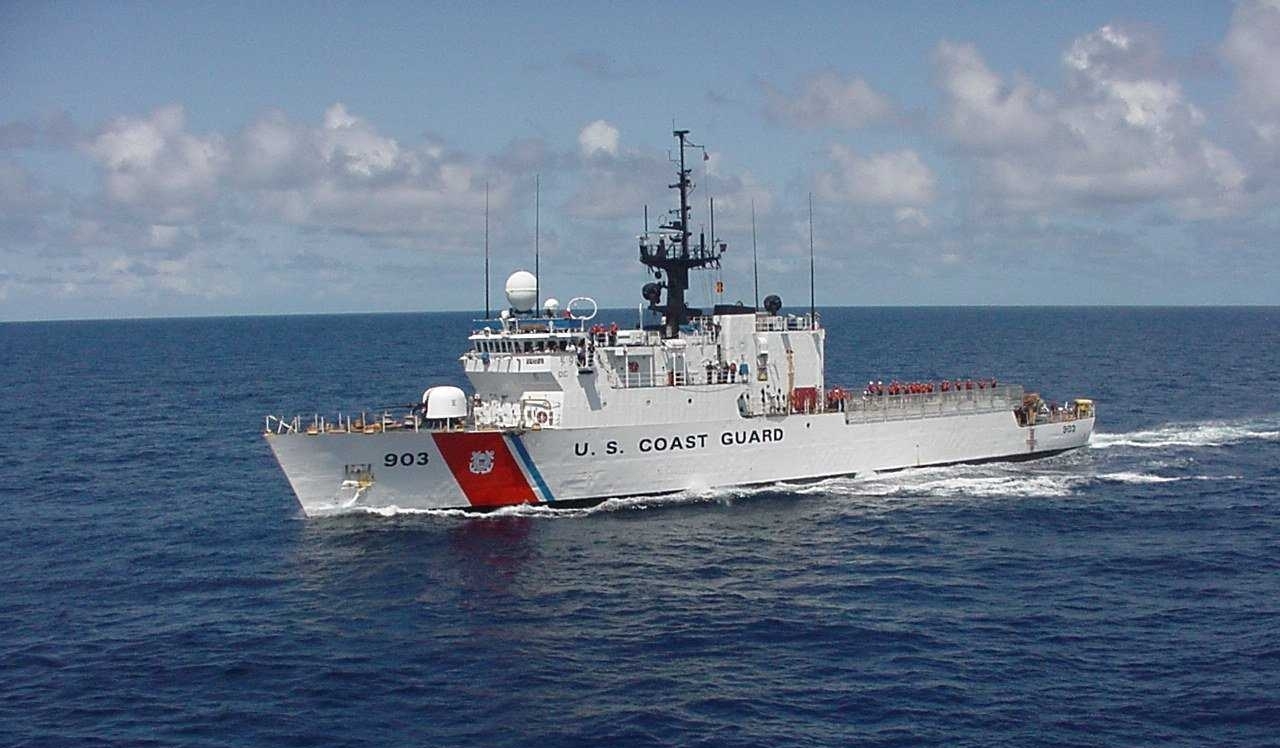
USCGC Harriet Lane (WMEC-903), March 17, 2009. US Coast Guard photo. She may look a little different now having gone through the Service Life Extension Program.

Military.com reports USCGC Harriet Lane is to be the new “Indo-Pacific Support Cutter,” and that she will be based in Honolulu beginning early FY2024. This is a change of homeport from Portsmouth, VA.

We knew this was coming, and Harriet Lane was the likely candidate. She will be the only WMEC 270 in the Pacific and will be used to counter Illegal, Unregulated, Unreported (IUU) fishing in the US EEZ and that of our friends and allies. They will also probably do a lot of training with friendly maritime law enforcement agencies. Her capabilities are a good match for the role. WMEC270s have been doing similar tasks off West Africa for years.

Thanks to Walter, a former dirt dart, for bringing this to my attention.

“USCGC Decisive decommissioned after 55 years of service” –LANTAREA

Let’s not forget that Decisive was one of the newest WMEC210s, 15th in the class of 16. We still have not seen the first OPC and unless they are decommissioned without replacement, we can expect to have 210s around for the next ten years.–Chuck

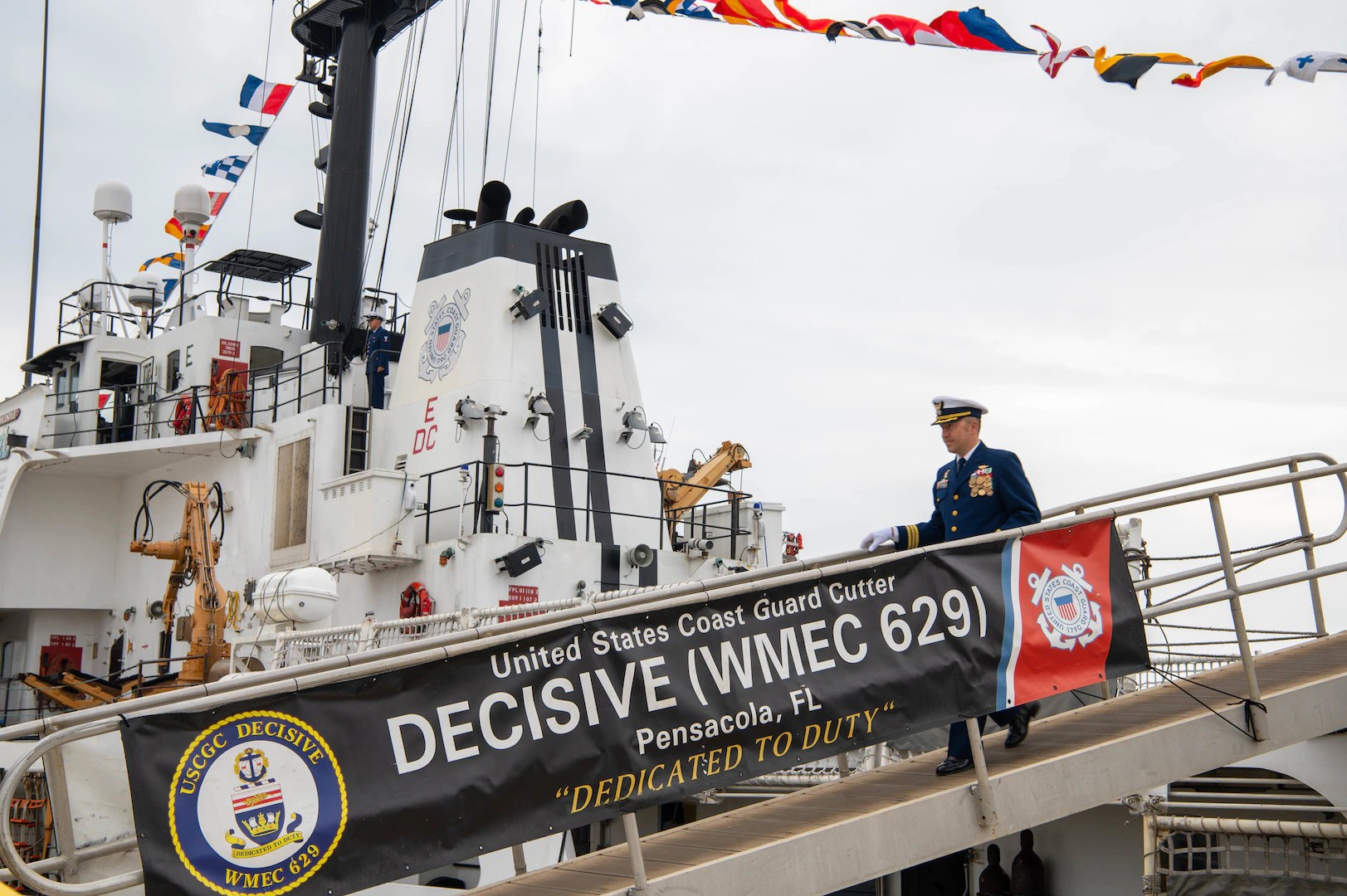
USCGC Decisive decommissioned after 55 years of service

PENSACOLA, Fla. — The Coast Guard decommissioned USCGC Decisive (WMEC 629) during a ceremony at Naval Air Station Pensacola, Thursday.

Vice Adm. Kevin E. Lunday, commander of Coast Guard Atlantic Area, presided over the ceremony honoring the 55 years of service Decisive and its crews provided to the Coast Guard.

Commissioned in 1968, Decisive was the 15th of 16 Reliance-class medium endurance cutters built for search and rescue, drug and migrant interdiction. It is the first 210-foot cutter to be decommissioned since USCGC Courageous (WMEC 622) and USCGC Durable (WMEC 628) in 2001.

“Decisive is a special ship that has served many districts throughout its history,” said Cmdr. Aaron Delano-Johnson, commanding officer of Decisive. “With a variety of high-performing Coast Guard members with distinguished careers, Decisive boasted some of the finest crews throughout its tenure. Decisive has been a fixture in all four of its homeports, remaining durable and dependable throughout history. I personally want to thank the crew for their dedication and service to our great nation as they were instrumental to upholding the cutter’s motto of being dedicated to duty.”

Decisive’s keel was laid on May 12, 1967, at the Coast Guard Yard in Baltimore, Maryland. Decisive was launched Dec. 14, 1967, and commissioned Aug. 23, 1968. Following its commissioning in 1968, the ship was homeported in New Castle, New Hampshire. The cutter moved homeports several times during its tenure, including St. Petersburg, Florida and Pascagoula, Mississippi before its final assignment to Pensacola.

During the cutter’s last year of service, the sunset crew of 12 officers and 62 enlisted members conducted high profile operations including assistance in the repatriation of over 400 migrants in a week’s time while patrolling the South Florida Straits. Decisive’s crew assisted with a 200 person mass migrant transfer, the largest single repatriation effort at the time since the 1980 Mariel Boatlift.

“I am immensely honored being the final commanding officer of Decisive,” said Delano-Johnson. “As I pause and reflect, remembering the first time I saw the ship as a junior officer aboard a patrol boat in the Straits of Florida, the pride I feel commanding this ship is indescribable. To lead this sunset crew and watch them grow over the past year has been humbling and rewarding. I am grateful for their dedication and service and look forward to staying in touch and following their careers. While our business here is done, we will proudly carry on Decisive’s legacy of hard work and reliability.”

Decisive was one of the Coast Guard’s 14 remaining 210-foot, Reliance-class medium endurance cutters. As part of the Coast Guard’s acquisition program, the 360-foot Heritage-class offshore patrol cutters will replace the Coast Guard’s 270-foot and 210-foot medium endurance cutters. The offshore patrol cutters will provide the majority of offshore presence for the Coast Guard’s cutter fleet, bridging the capabilities of the 418-foot national security cutters, which patrol the open ocean, and the 154-foot fast response cutters, which serve closer to shore.

For information on how to join the U.S. Coast Guard, visit GoCoastGuard.com to learn about active duty and reserve, officer and enlisted opportunities. Information on how to apply to the U.S. Coast Guard Academy can be found here.

“Coast Guard to hold decommissioning ceremony for USCGC Decisive Thursday” –LANTAREA

The Reliance-class medium endurance cutter USCGC Decisive (WMEC 629) conduct at sea engagements with the navy of Guatemala in the territorial seas of Guatemala on Oct. 25 – 26, 2021. The U.S. Coast Guard conducts routine deployments in the Southern Command area of responsibility, works alongside partners, builds maritime domain awareness, and shares best practices with partner nation navies and coast guards. (U.S. Coast Guard photo)

Below is a news release from Atlantic Area. 

Feb. 27, 2023

Coast Guard to hold decommissioning ceremony for USCGC Decisive Thursday

PENSACOLA, Fla— The Coast Guard is scheduled to decommission USCGC Decisive (WMEC 629), a 210-foot, Reliance-class medium endurance cutter during a ceremony 10 a.m. Thursday, March 2, 2023, at Naval Air Station Pensacola.

WHO: Vice Adm. Kevin Lunday, commander, Coast Guard Atlantic Area; Cmdr. Aaron W. Delano-Johnson, commanding officer of Decisive; and the Decisive crew.

WHAT: A decommissioning ceremony to honor the legacy of Decisive and the Coast Guard members who served as part of its crew during its 55 years of service.

WHEN: Thursday, March 2, at 10 a.m. Media must arrive at the front gate no later than 9:00 a.m.

WHERE: Naval Air Station Pensacola, 211 South Ave, Pensacola, Florida 32508.

Media must RSVP no later than 12 p.m. Wednesday by calling (757) 202-3448 or emailing uscglantarea@gmail.com.

Decisive is the third Coast Guard 210-foot, Reliance-class medium endurance cutter to be decommissioned since 2001 as part of modernization efforts across the fleet. Decisive has primarily performed fishery patrols, search and rescue, law enforcement and migrant interdiction operations. Notably, the cutter assumed tactical command of Mississippi Coastal Recovery Base Gulfport after Hurricane Katrina and responded to the largest oil spill in American history— Deepwater Horizon.

“Discover the French Navy’s New OPV for the Indo-Pacific” –Naval News

The video above is from Naval News via YouTube. Below is the information provided on the YouTube page.

Presentation of the first POM (Patrouilleur Outre-Mer or Offshore Patrol Vessel – OPV – for the overseas territories), the “Auguste Bénébig”, by its commander. This new French Navy (Marine Nationale) vessel will be based in Noumea, New Caledonia, in the Southern Pacific Ocean.

This new class of modern OPVs marks the renewal of the assets of the French Navy based overseas to protect French interests in the Indo-Pacific.

The increased autonomy (endurance–Chuck) of the patrol boat and its state-of-the-art equipment give it the capacity to operate far and for a long time in the wide French maritime zones in the Indo-Pacific.

This class of ships was designed by SOCARENAM. It can implement the SMDM drone. The POM vessel are 79.9 meters long and 11.8 meters wide, with a draft of 3.5 meters for a displacement of 1,300 tons at full load.

We have looked at the UAS these ships will deploy with here, “First Three SMDM Fixed-Wing UAS Delivered To The French Navy” –Naval News.

We talked about these ships in regard to how similar their missions are to those of Coast Guard cutters here, “SOCARENAM Shipyard Selected to Deliver 6 French Navy OPVs for Overseas Territories” –Naval News.

And about how close these were to my concept of Cutter X here, “France confirms order for six new POM Offshore Patrol Vessels” –Naval News, Another Cutter X

Like an FRC:

I always thought these looked like oversized Webber class, the proportions are similar and the much larger POM is not much more complicated than the Webber class. The crew of the POM is 30, only six more than that of the FRC. Both have a bridge with a 360-degree view positioned well aft, minimizing vertical acceleration. Both have an 8 meter boat in a stern ramp. The armament is similar with four .50 cal. machine guns and a single medium caliber gun in the bow, a 20mm on the POM and a 25mm on the FRC. The POM has a diesel electric and diesel powerplant but despite its much greater displacement, I doubt it has any more horsepower than the FRC (I have not been able to find a figure for the POM). With similar crew and systems, they should not cost much more than the FRCs to operate.

Unlike an FRC:

It appears the thinking was that they wanted a ship to do the same sorts of missions the Webber class Fast Response cutters (FRC) are doing out of Guam, but they also recognized that these ships would be far from any major naval base and that they would need to travel great distances and would be exposed to extreme weather conditions, so they needed to be larger (1300 tons vs 353 tons) and have greater endurance (30 days vs 5 days). Their range is 5500 nmi compared to 2500 for the FRC.

Having chosen a larger hull, they took advantage of the greater volume and deck space to add a second RHIB, a multimode radar, space for 29 passengers (roughly a platoon of Marines), a sickbay, a dive locker, space for a 20 foot containerized mission module, a flight deck and hangar for a 700-kilogram-class rotor-blade drone (not yet deployed), and a holding area for up to six prisoners.