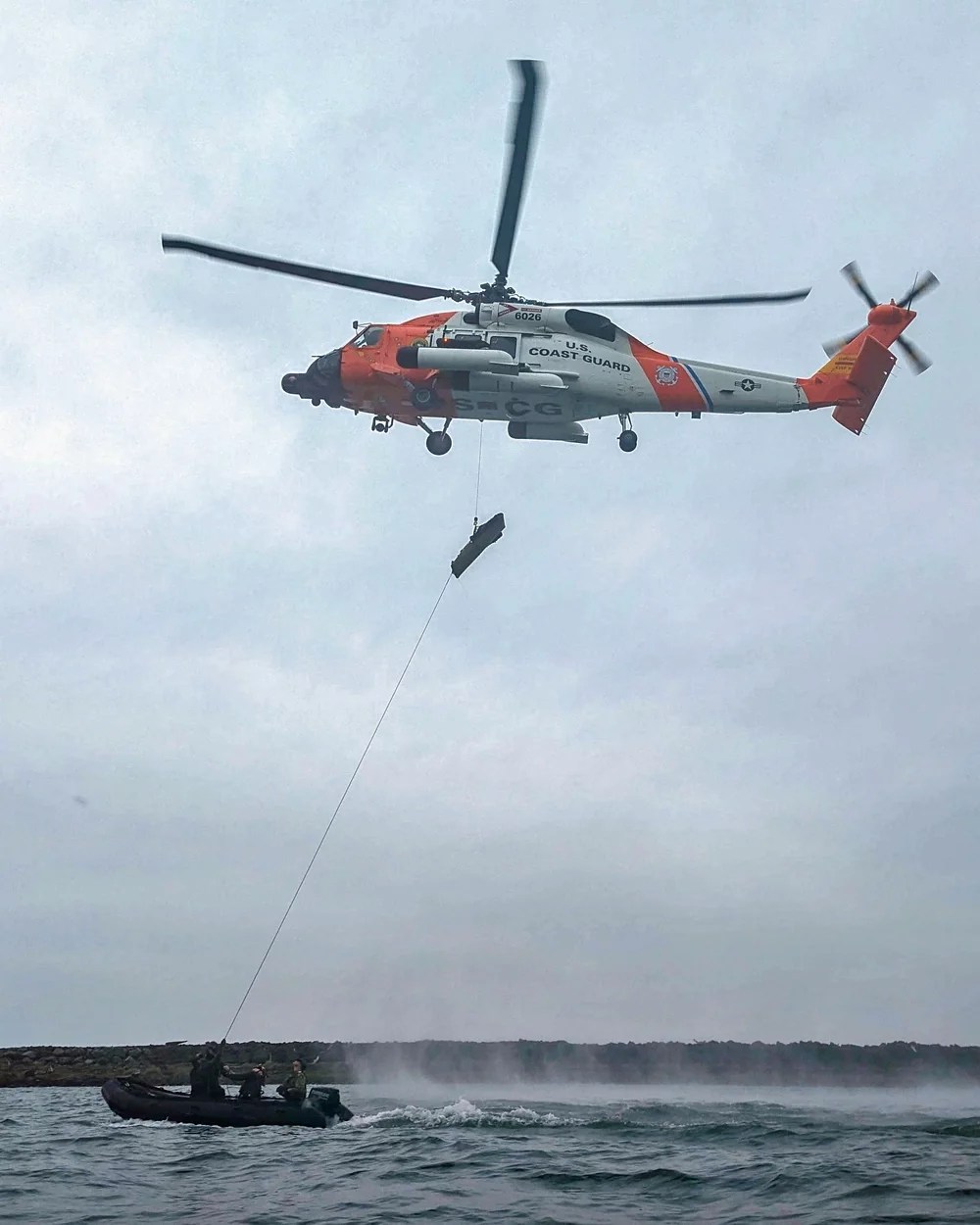
“Combat Divers assigned to the 10th Special Forces Group (Airborne) conducted maritime training in Astoria, Oregon, Oct. 30, 2023. The Green Berets partnered with Coast Guard Air Station Astoria and Coast Guard Station Cape Disappointment for multiple training events, preparing them for a two-week long scenario-based exercise.”
“The Philippines opens a new monitoring base on a remote island in the disputed South China Sea” –AP

Thitu Island, where the Philippine Coast Guard recently opened a monitoring station. AP photo/Aaron Favila
“THITU ISLAND, South China Sea (AP) — The Philippines inaugurated a new coast guard monitoring base Friday on an island occupied by Filipino forces in the disputed South China Sea and plans to expand joint patrols with the United States and Australia to counter China’s “pure bullying” in the strategic waterway, a Philippine security official said.”
The AP story includes 17 additional photos.
Thitu is the second largest of the naturally occurring island in Spratly Islands and has a civilian population of about 200.
Thitu lies about 500 kilometers (310 mi) west of Puerto Princesa on the larger Island of Palawan so it is outside the larger contiguous Philippine EEZ.
Ownership of the Spratly Islands is disputed, not only between the Philippines and China, but also by Taiwan, Vietnam, Malasia, and Brunei.
Thanks to David S. for bringing this to my attention.
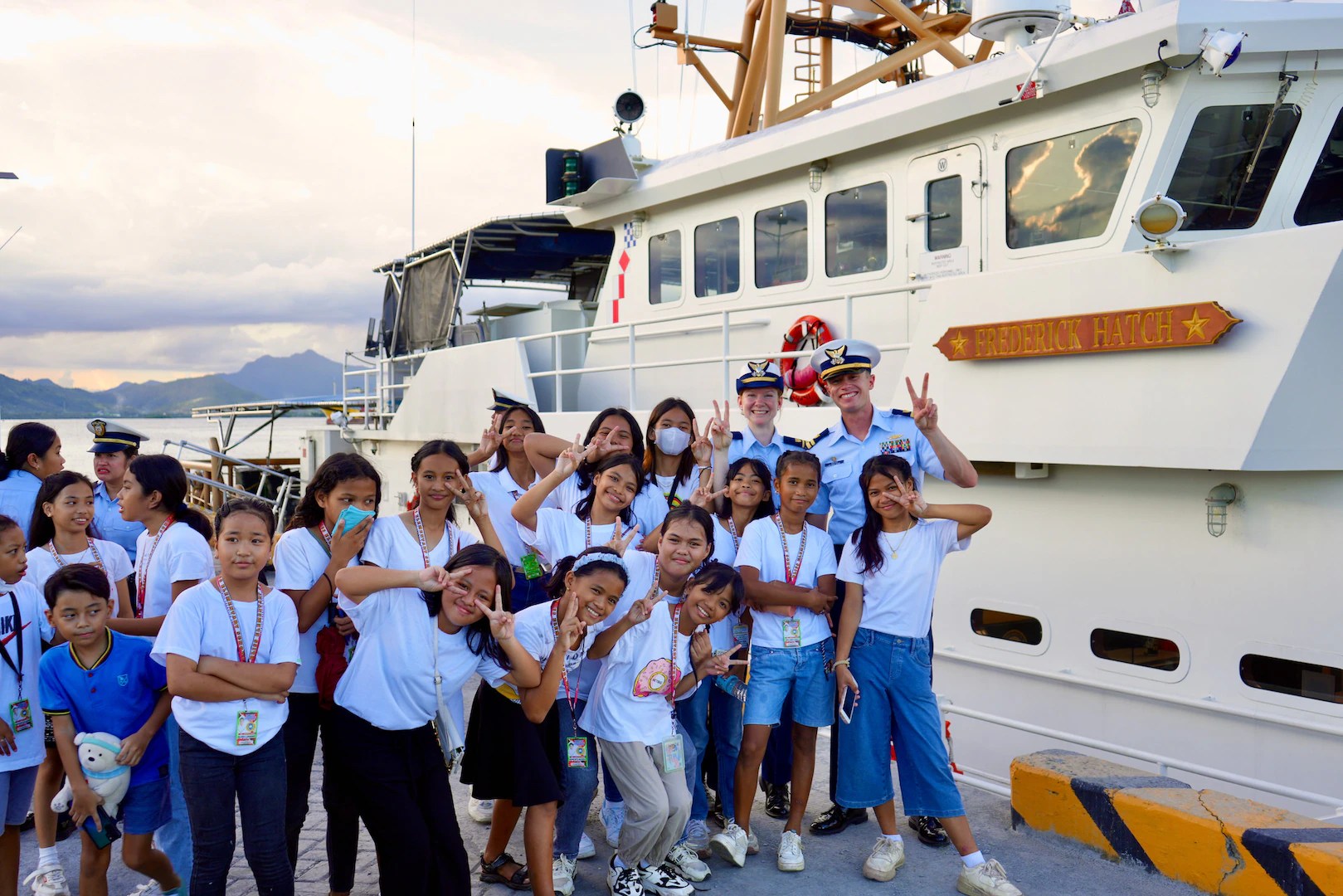
“USCGC Frederick Hatch concludes historic patrol with engagements in the Philippines, fisheries enforcement in Republic of Palau, Papua New Guinea” –Forces Micronesia
USCGC Frederick Hatch concludes historic patrol with engagements in the Philippines, fisheries enforcement in Republic of Palau, Papua New Guinea
SANTA RITA, Guam — The USCGC Frederick Hatch (WPC 1143) successfully concluded a routine 47-day expeditionary patrol covering more than 8,200 nautical miles under Operation Blue Pacific, returning to Guam on Thanksgiving, distinguished by a series of historic and strategic engagements across the Western Pacific and Oceania.
“USCGC Frederick Hatch’s highly successful patrol is a testament to the diligence and expertise of the crew onboard, always remaining positive and overcoming numerous challenges to continually set the standard for Coast Guard operations in the Pacific. Their efforts to keep our equipment functioning properly, go over the rail regularly for boardings, and cook meals in heavy seas is what makes the U.S. Coast Guard’s commitment to the Indo-Pacific region so strong. Our people are the best at what they do and always ready to go above and beyond when asked, which is the basis for being a trusted partner and fostering strong international alliances,” said Lt. Patrick Dreiss, commanding officer of the Frederick Hatch.
Historic First Visit to Tacloban, Philippines
A highlight of the patrol was Frederick Hatch’s historic visit to Tacloban, Philippines, in mid-October, marking a significant milestone in U.S.-Philippines relations. The visit coincided with the 79th anniversary of the Battle of Leyte Gulf. In addition to the commemoration observance, the crew engaged in various activities, including a maritime law enforcement exchange supported by U.S. Coast Guard Maritime Security and Response Team West, community interactions, including a visit with the mayor, and cultural immersion.
Maritime Security and Fisheries Patrol
The second half of the patrol focused on countering illegal fishing and enhancing partnerships in the Republic of Palau and Papua New Guinea. While en route to Palau, the crew conducted critical observation reports highlighting potential threats to maritime governance and fishery management. These reports included observations of four Philippine-flagged fishing vessels at the boundary of Palau’s Exclusive Economic Zone (EEZ) and the high seas, with one vessel within the Palauan EEZ when detected. Notably, these vessels needed permits to operate under the Western and Central Pacific Fisheries Commission (WCPFC) on the high seas or Palau EEZ, and their Philippine permits expired. Their presence and activities represent potential serious violations under the WCPFC regulations.
The following day, the crew reported two additional Philippine-flagged vessels fishing without permits in WCPFC-governed waters again near the Palau EEZ, adding to the count of serious violations. Following a port call in Palau on a subsequent patrol of the Palau EEZ, the crew identified only one vessel actively fishing, recently boarded, and detected no further unauthorized incursions. In response to a request from the Palau Joint Operations Center, the crew also disposed of two fish aggregating devices found within the Palau EEZ, addressing concerns over illegal local fishing practices.
While en route to Papua New Guinea (PNG), Frederick Hatch’s crew conducted one boarding on the high seas under WCPFC authority, reporting three potential violations. The crew then welcomed two PNG boarding officers, one from the Customs Services and one from the National Fisheries Authority, and together, they conducted nine additional PNG-led boardings within their EEZ under the bilateral maritime law enforcement agreement. These boardings undertaken in the eastern EEZ resulted in 16 issued violations and two warnings, addressing a range of issues such as exceeding crew occupancy limits based on available berthing, improper crew compositions due to a lack of required PNG crew expired seafarers’ credentials, and poor vessel markings. The vessels’ flags include the People’s Republic of China, Vanuatu, and the Philippines.
“This proactive enforcement and monitoring underscore the importance of upholding good maritime governance and preserving sustainable fishing practices, critical for the ecological and economic health of the region,” said Capt. Nick Simmons. “The relationships we’re building in Oceania and the Western Pacific are crucial for our continued commitment to our allies. This patrol exemplifies our dedication to maintaining stability and security in these waters.”
Engagement and Cooperation in Papua New Guinea
Frederick Hatch’s visit to Papua New Guinea (PNG) exemplified increased bilateral defense and security cooperation, as highlighted by the recent signing and ratification of the Defense Cooperation Agreement. The crew’s interactions with PNG fisheries, customs officers, and the local community underscore the ongoing effort to strengthen regional relationships.
“This patrol was our crew’s first time working with PNG Customs and Fisheries, and we look forward to working with them again in the future. Thank you to our two shipriders, Mr. Roger Sivlanduo and Mr. Jeremy Nelson, both skilled professionals and great people to have onboard to enrich the relationship between our agencies. It was an important opportunity to learn from each other and develop new tactics to address the IUU-F threat throughout Melanesia in the future while also carrying out several very successful boardings counteracting those threats in the present,” said Dreiss.
Support from DOL-X Team
The U.S. Coast Guard’s newly created DOL-X team was pivotal in supporting the Frederick Hatch’s logistics, including repairs and maintenance, ensuring the cutter’s operational readiness throughout the patrol. The team met the cutter during two port calls, hand-carrying critical parts to address casualties and augmenting the cutter’s engineers to repair the issues.
-USCG-
About the U.S. Coast Guard in the Pacific Region:
The U.S. Coast Guard is vital to ensuring maritime safety, security, and stewardship across a vast Pacific expanse, spanning six continents, 71 countries, and 74 million square miles of ocean. U.S. Coast Guard Pacific Area leads coordination and integration efforts in this vast region, promoting collaboration with partners through the actions of the U.S. Coast Guard 14th District and U.S. Coast Guard Forces Micronesia/Sector Guam teams.
The Frederick Hatch is the 43rd 154-foot Sentinel-class fast response cutter named for a surfman and lighthouse keeper who was a two-time Gold Life Saving Medal recipient. They regularly patrol Oceania, fostering international cooperation and supporting maritime safety, security, and stewardship.
“Three Improved Interior Features the New Offshore Patrol Cutters Have Over the Medium Endurance Cutters” — by Peter Ong
Friend and contributing author Peter Ong provides us a bit of information about the interior of the Offshore Patrol Cutter.
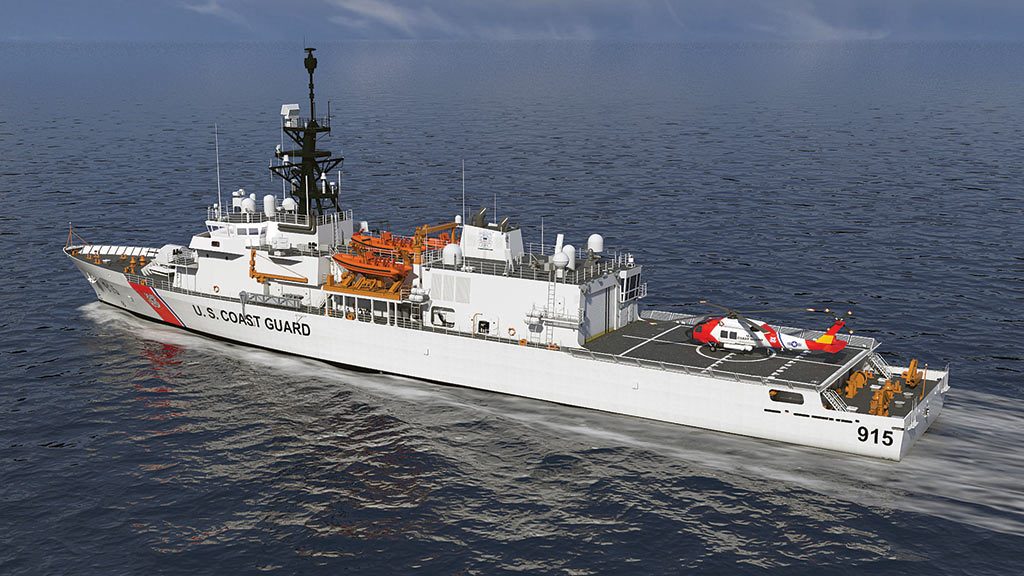
While the exterior details of the OPCs are generally known among readers, what about the OPC’s interior features, and how are three OPC’s interior features improved over the 270-foot and 210-foot Medium Endurance Cutters (MECs) that have served for 30 to 55 years, respectively?
The USCG Office of Public Affairs, Coast Guard Headquarters, Washington, DC, replied to my inquiry in late November 2023.
“Like the National Security Cutters, the Offshore Patrol Cutters (OPC) will have smaller berthing areas to accommodate mixed-gender crews, crew lounges, training rooms, and a gym. What makes the OPCs unique is that the cutter’s design is focused on improving flow (i.e., how the crew can go about their day-to-day routine as easily as possible). Here are a few examples:
- Mixed-gender Locker Room between Combat Information Center (CIC) and the Boat Deck: The OPC will have an actual locker room, similar to shore-based boat stations, that allows personnel to change into and out of their law enforcement and boat gear attire. It will also be adjacent to the CIC and boat deck and co-located with a small arms locker/weapons issue station and a dedicated washer/dryer.
- Food/Stores Flow: OPC reefers and dry stores are located on the same deck and immediately adjacent to the galley and mess deck. There is also an elevator large enough to hold a standard-sized pallet going from the flight deck straight to dry stores (and vice versa).
- Berthing/Stateroom Flow: Berthing areas and staterooms are more spread out than the Medium Endurance Cutters (MECs) but are also located near key watch areas for quick emergency response. Additionally, watchstanders will not have to transit through berthing areas during their rounds, unlike on the 210’ MECs.”
With an endurance of 60 days, the OPCs have the interior design improvements to accommodate a better operational and crew flow environment compared to the WMECs.
“U.S. Navy Seizes Attackers Who Held Israel-Linked Tanker” –Real Clear Defense

In an undated photo released by Zodiac Maritime, the tanker Central Park is seen. Attackers seized the tanker linked to Israel off the coast of Aden, Yemen, on Sunday, Nov. 26, 2023, authorities said. While no group immediately claimed responsibility, it comes as at least two other maritime attacks in recent days have been linked to the Israel-Hamas war. (Zodiac Maritime via AP)
“Armed assailants seized and later let go of a tanker linked to Israel off the coast of Yemen on Sunday before being apprehended by the United States Navy, officials said. Two ballistic missiles fired from Houthi-controlled Yemen then landed near a U.S. warship aiding the tanker in the Gulf of Aden, raising the stakes amid a series of ship attacks linked to the Israel-Hamas war.”
“Hybrid Fleet Campaign Event Evaluates Technology For Future Operations” –4th Fleet

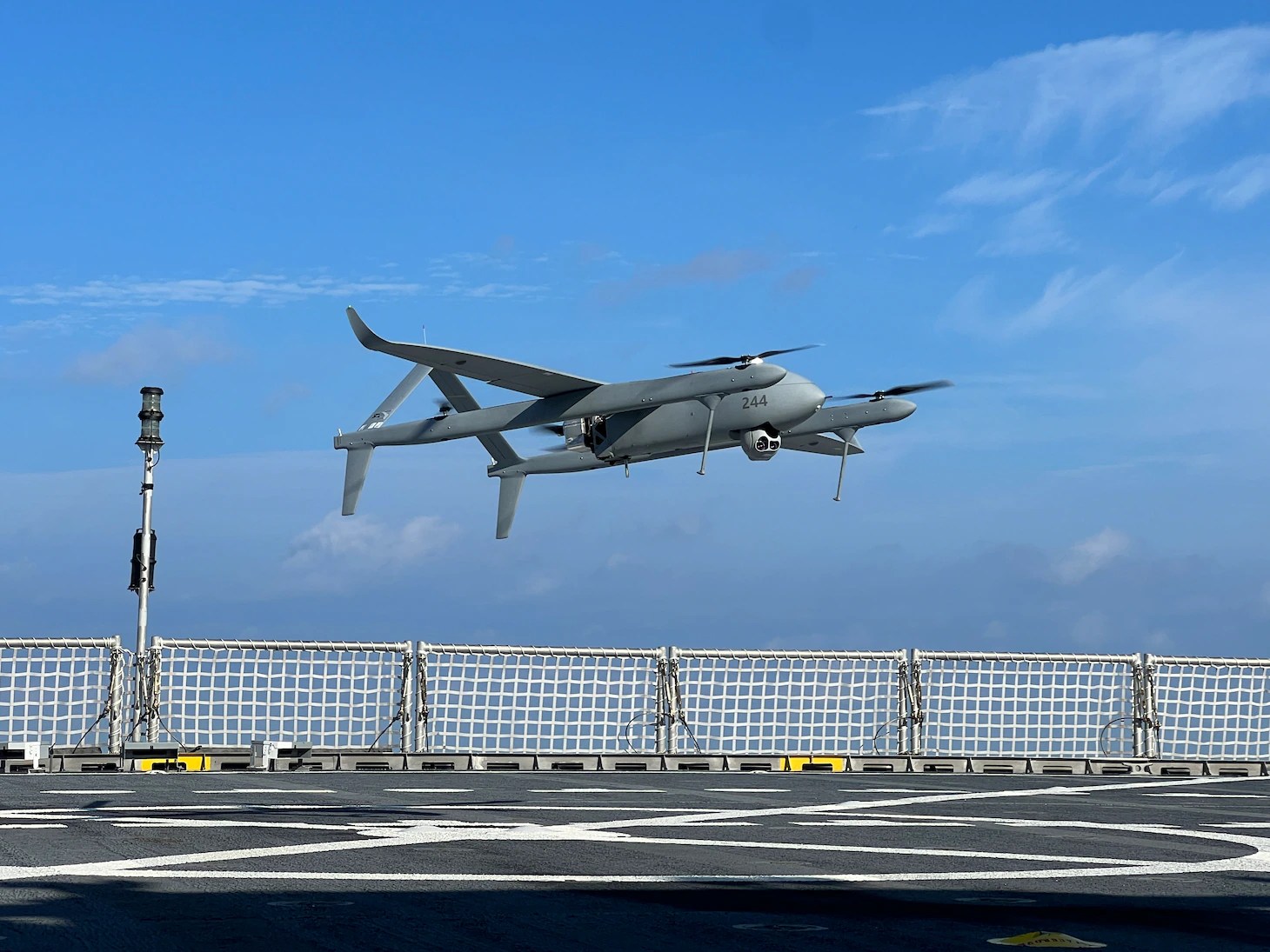
U.S. Naval Forces Southern Command/U.S. 4th Fleet demonstrated unmanned air and surface capabilities from expeditionary fast transport USNS Burlington (T-EPF 10) during the command’s Hybrid Fleet Campaign Event (HFCE) in Key West Oct. 4-13, 2023.
Below is a news release from 4th Fleet. Notably, 4th Fleet is approaching the problem of operationalizing unmanned systems in a different way from that of 5th Fleet.
“A key detail in SECNAV and CNO’s vision was that 4th Fleet would not stand up a separate task force like U.S. 5th Fleet did in Bahrain in 2021, but would develop the hybrid fleet from inside the staff already in place.”
Hybrid Fleet Campaign Event Evaluates Technology For Future Operations
By USNAVSOUTH/4TH FLEET PUBLIC AFFAIRS
KEY WEST, Florida – U.S. Naval Forces Southern Command/U.S. 4th Fleet demonstrated unmanned air and surface capabilities from expeditionary fast transport USNS Burlington (T-EPF 10) during the command’s Hybrid Fleet Campaign Event (HFCE) in Key West Oct. 4-13, 2023.
This is the most recent event in U.S. 4th Fleet’s campaign to operationalize cutting edge technologies. After successful rollout of the Campaign at UNITAS in July 2023 and the beginning of operation WINDWARD STACK in September, the Science and Technology event in Key West this past week focused on the evaluation of unmanned systems in advanced kill chains, contested littoral operations, survivability, and sustainment at sea. It served as both a proving ground for emerging technologies and an opportunity for senior leaders to see for themselves the capabilities of systems that could support the hybrid fleet.
“One of the best ways to change our force is to rapidly operationalize new technologies, new systems, and new tactics, techniques, and procedures,” said Adm. Lisa Franchetti, Vice Chief of Naval Operations. “Whether you’re talking about artificial intelligence, cyber, unmanned platforms, directed energy, or hypersonic missiles, we are on the cusp of technological breakthroughs that are going to define future conflict.”
“This week’s technology evaluation event will push boundaries and risk failure in order to allow us to evaluate unmanned technology and then move to operationalize that technology to inform the hybrid fleet,” Rear Adm. Jim Aiken, Commander U.S. Naval Forces Southern Command (USNAVSOUTH) & U.S. 4th Fleet, said in advance of the event. “We have many events scheduled and in some of those events we will win, and in some of them we will learn. In both cases, the Hybrid Fleet will be informed, and the Navy will continue to push forward at the speed of technology.”
The campaign to inform the hybrid fleet calls for the combination of manned and unmanned systems to allow U.S. 4th Fleet to execute its larger missions of defending the southern approaches to the United States, countering malign activity in the region with our partners, and supporting the detection and monitoring of illicit trafficking in the region.
“Broad partnership across DoD and industry partners has allowed 4th Fleet to mature operational capabilities rapidly fostering innovation and providing informed recommendations to the parties involved in creating the Disruptive Capabilities Office,” said Dr. Chris Heagney, the Naval Air Systems Command Fleet/Force Advisor to USNAVSOUTH/4th Fleet.
In April 2023 at the Navy League of the United States’ annual Sea Air Space Symposium, Secretary of the Navy (SECNAV) Honorable Carlos Del Toro and then Chief of Naval Operations Adm. Michael Gilday announced that USNAVSOUTH/4th Fleet would operationalize hybrid fleet operations. A key detail in SECNAV and CNO’s vision was that 4th Fleet would not stand up a separate task force like U.S. 5th Fleet did in Bahrain in 2021, but would develop the hybrid fleet from inside the staff already in place.
“This technology evaluation event is a continuation of the campaign we began in April,” said Cmdr. David Edwards, USNAVSOUTH/4th Fleet’s technology and innovation director. “We evaluate these technologies in focused events like this, then operationalized the technology quickly to fulfill operational requirements in the U.S. Southern Command Area of Responsibility (AOR). While we operate these systems to fulfil the 4th Fleet mission, the evaluation continues over months and years, not just hours and days. Those operational evaluations inform future acquisitions to ensure the Navy is ready to fight and win with these technologies.
HFCE was 4th Fleet’s largest technology event yet with 305 participants including VCNO and Master Chief Petty Officer of the Navy James Honea and 26 other U.S. government distinguished visitors, 10 foreign partners, 18 industry partners, and 47 Department of Defense Commands participating.
U.S. Naval Forces Southern Command/U.S. 4th Fleet supports U.S. Southern Command’s joint and combined military operations by employing maritime forces in cooperative maritime security operations to maintain access, enhance interoperability, and build enduring partnerships in order to enhance regional security and promote peace, stability, and prosperity in the Caribbean, Central and South American region.
“Combined Maritime Forces, U.S. Coast Guard Make $21 Million Drug Seizure in the Gulf of Oman” –NAVCENT

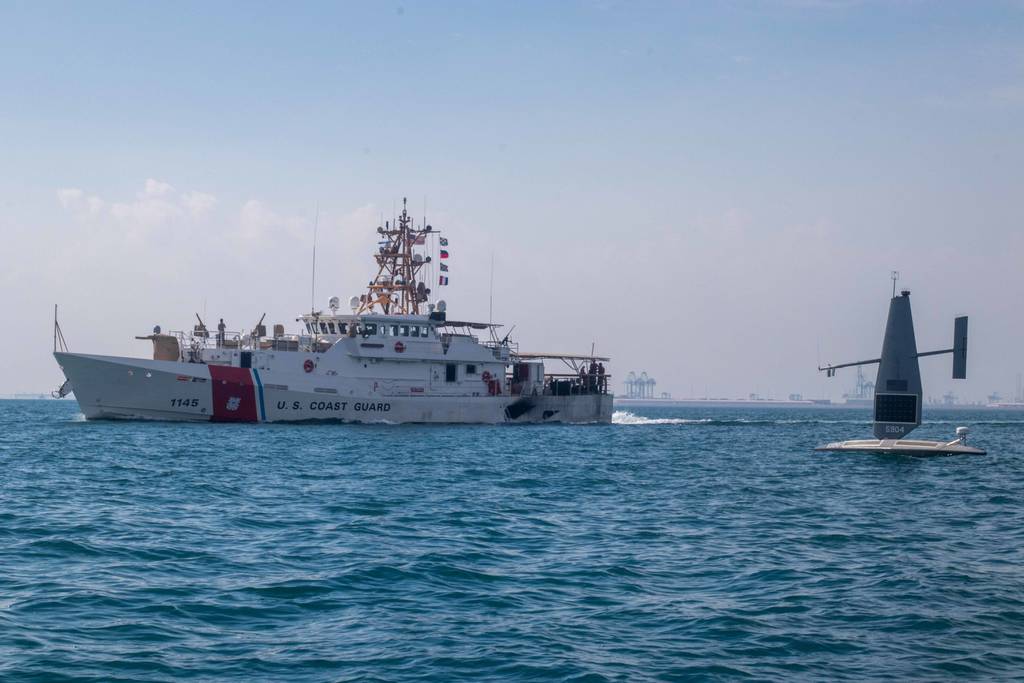
GULF OF OMAN (Nov. 14, 2023) Illegal narcotics seized from a stateless vessel are stacked on the deck of the U.S. Coast Guard Sentinel-class fast response cutter USCGC Emlen Tunnell (WPC 1145) in the Gulf of Oman, Nov. 14. Emlen Tunnell was operating under Combined Task Force 150, one of five task forces under Combined Maritime Forces, the largest multinational naval partnership in the world. CTF 150 focuses on maritime security operations in the Gulf of Oman, Arabian Sea and Indian Ocean. (Photo by U.S. Coast Guard courtesy photo)
Below is a NAVCENT news release.
Combined Maritime Forces, U.S. Coast Guard Make $21 Million Drug Seizure in the Gulf of Oman
By U.S. Naval Forces Central Command Public Affairs | November 20, 2023
MANAMA, Bahrain —
A U.S. Coast Guard cutter crew seized about $21 million worth of illegal drugs from a stateless vessel while operating in the international waters of the Gulf of Oman, Nov. 14.
Coast Guardsmen from the Sentinel-class fast response cutter USCGC Emlen Tunnell (WPC 1145), working under the command of Combined Maritime Forces’ Combined Task Force (CTF) 150, seized 2,000 kilograms of hashish and 384 kilograms of methamphetamine from the vessel during an interdiction operation.
“This new seizure shows once again the operational effectiveness of Combined Maritime Forces assets and nations,” said French navy Capt. Yannick Bossu, CTF 150 commander. “It illustrates that nations from all around the world are committed to regional maritime security in the Indian Ocean alongside their regional partners.”
This event marks the fifth time in recent months the French-led CTF 150 has interdicted illicit narcotics at sea. In those previous operations, CTF ships seized more than 4,522 kilograms of methamphetamine, heroin, and hashish from stateless vessels during interdiction operations, with a street value of more than $94 million.
CTF 150 is one of five task forces under Combined Maritime Forces, the largest multinational naval partnership in the world. CTF 150 focuses on maritime security operations in the Gulf of Oman, Arabian Sea and Indian Ocean.
Since 2021, Combined Maritime Forces has seized more than $1 billion in illegal drugs while patrolling waters across the Middle East.
The 38-nation naval partnership upholds the international rules-based order by promoting security and stability across 3.2 million square miles of water encompassing some of the world’s most important shipping lanes.
“C4F’s Hybrid Fleet Completes Target Detection Test” –4th Fleet

A Saildrone Explorer unmanned surface vessel operates alongside U.S. Coast Guard fast response cutter USCGC Emlen Tunnell (WPC 1145) in the Arabian Gulf, Nov. 29, during Digital Horizon 2022. (Sgt. Brandon Murphy/US Army)
Below is a 4th Fleet News Release. This development will have obvious impact on Coast Guard drug and alien migrant interdiction efforts. This is a result of extending experimentation with unmanned systems to 4th Fleet in much the same way it was done in 5th fleet.
C4F’s Hybrid Fleet Completes Target Detection Test
By USNAVSOUTH/4TH FLEET PUBLIC AFFAIRS
Part of U.S. 4th Fleet’s campaign to inform the hybrid fleet, the evaluation looked at how many Saildrones the fleet would need to cover a given area of water and optimize the probability that the Saildrones would detect suspected drug runners at sea.
“This successful detection test is the completion of one small step in our campaign to inform the hybrid fleet,” said Capt. David Fowler, U.S. 4th Fleet’s Maritime Operations Center Director. “This is the type of testing and development that we can conduct even as we move toward continuous hybrid operations in the Caribbean.”
Right now continuous operations are underway with Operation Windward Stack. The U.S. 4th Fleet operation deploys long-dwell Saildrone unmanned surface vessels (USVs) to the Windward Passage in the Caribbean order to operationalize the combination of unmanned and manned systems in normal day-to-day operations.
In the coming months, other long-dwell USVs, interceptor USVs, long range UAVs, and VTOL UAVs will join the Saildrones in Operation Windward Stack. These systems will combine with traditional naval surface vessels to expand maritime domain awareness (MDA) and define combinations of unmanned and manned forces that work best for specific operations.
U.S. Naval Forces Southern Command/U.S. 4th Fleet supports U.S. Southern Command’s joint and combined military operations by employing maritime forces in cooperative maritime security operations to maintain access, enhance interoperability, and build enduring partnerships in order to enhance regional security and promote peace, stability and prosperity in the Caribbean, Central and South American region.
Learn more about USNAVSOUTH/4th Fleet at https://www.fourthfleet.navy.mil, https://www.facebook.com/NAVSOUS4THFLT and @NAVSOUS4THFLT.
“France’s DGA Orders 7 New OPV For The French Navy” –Naval News
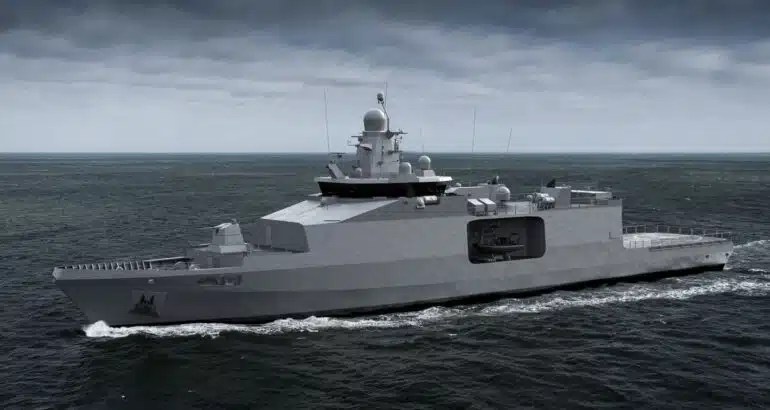
The French defense procurement agency (DGA) ordered on 17 November 2023 seven new offshore patrol vessels (OPV) as part of the “Patrouilleurs Hauturiers” program for the French Navy (Marine Nationale).
These “second rank” ships will have missions similar to USCG cutters. We heard about the requirement for these ships and the vessels they would replace three years ago. At that time ten ships were expected. Since then, the requirement was reduced to six and now seven. France has been building several different classes of large patrol vessels (here, here, and here).
This new class of Patrouilleurs Hauturiers (offshore patrol vessels) are expected to displace 2400 tons full load, have a range of 6,000 miles, and have accommodations for up to 84 personnel (passengers and crew). They are expected to mount the new 40mm gun.
New PLAN Corvette? –Naval News
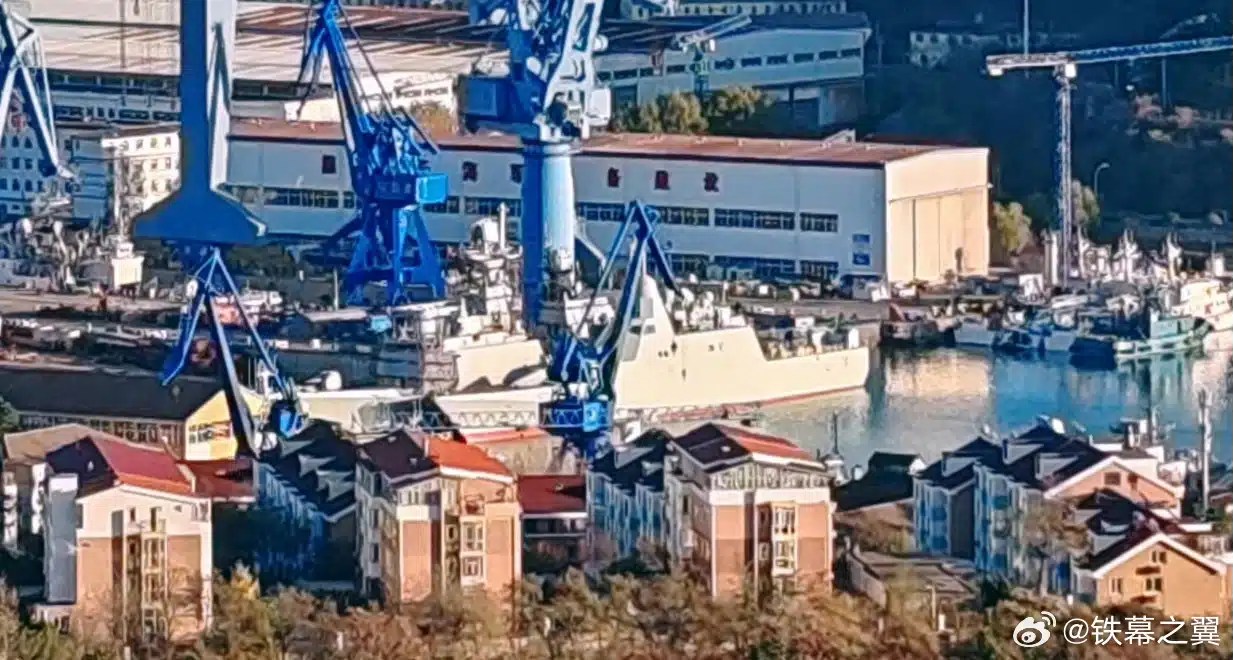
Naval News reports initial information on a new design stealthy small surface combatant, estimated to be 97 meters (318′) in length with a beam of 14 meters (46′). The report suggests the vessel will be 2,000 to 3,000 tons.