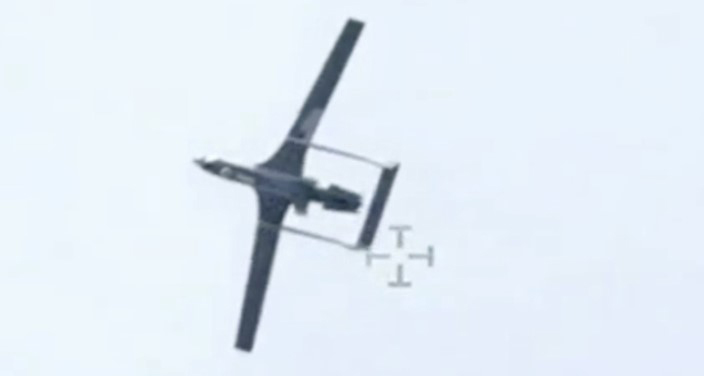
“Ukraine hits Russian Buyan cruise missile carrier and Pavel Derzhavin vessel with drones” –Ukrainska Pravda

©Sea Baby dron. screenshot.
© Ukrainska Pravda

Ukrainska Pravda reports,

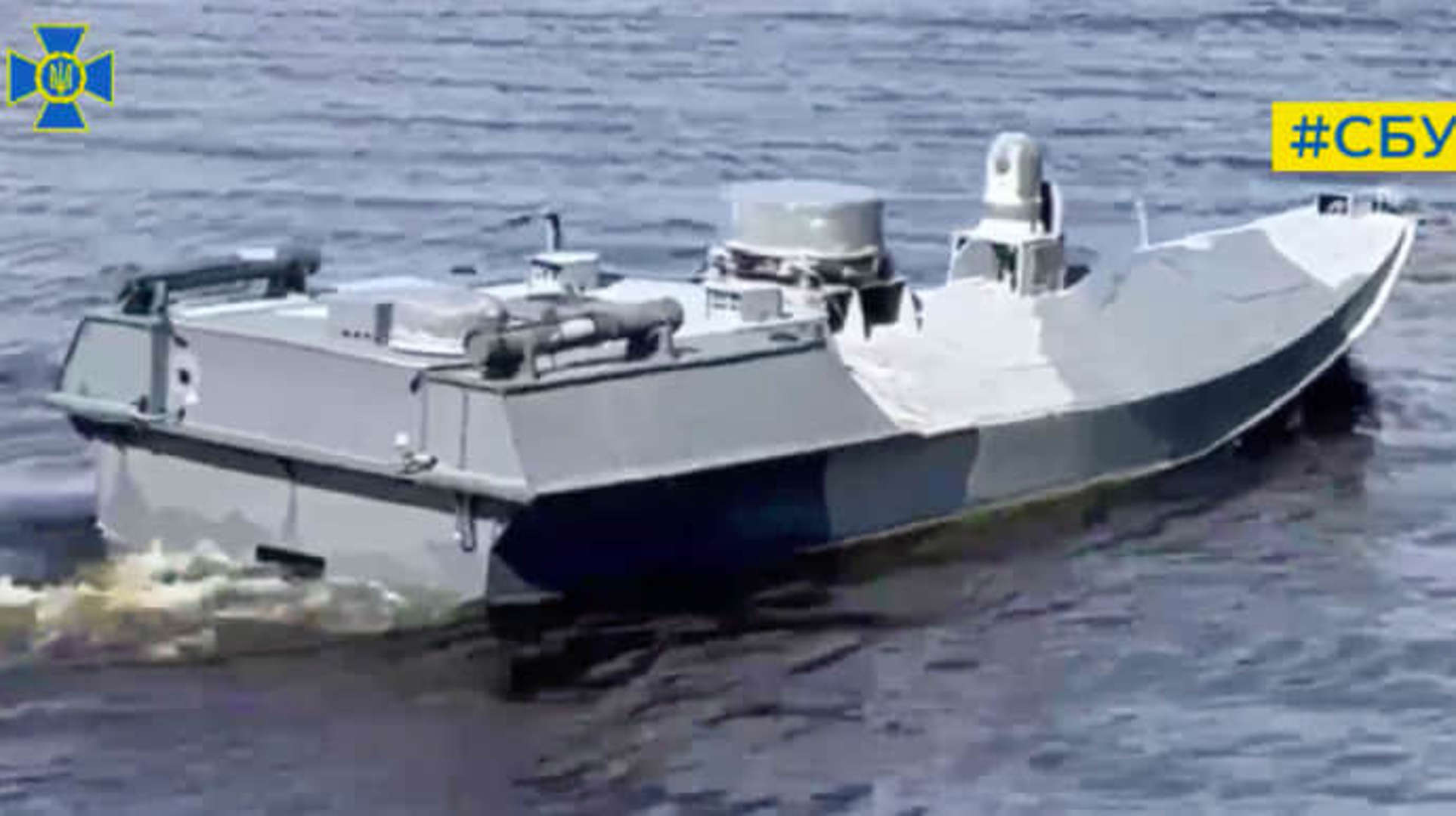
The Security Service of Ukraine, together with the Ukrainian Navy, has attacked the Buyan cruise missile carrier and the ship Pavel Derzhavin using experimental weapons on uncrewed surface vessels…both vessels were hit by Sea Baby drones with experimental weapons.

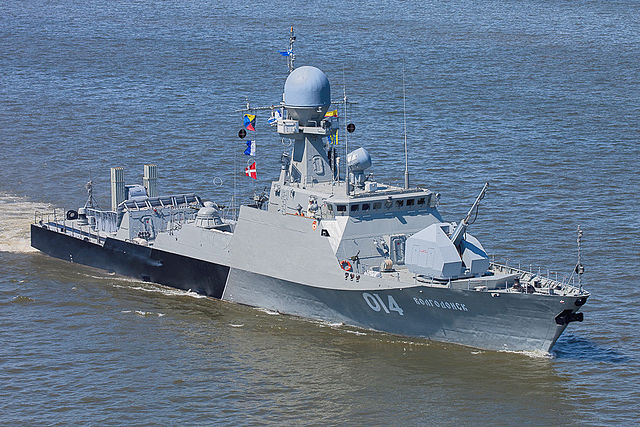
The Buyan cruise missile carrier or Buyan-M (that is the name of the class, not a specific ship) is a small, 949 ton full load, 75 meter (246′) corvette armed with up to eight cruise missiles similar in capability to the American Tomahawk.

Buyan-M class corvette, Volgodonsk in Astrakhan. Author Anton Blinov, via Wikipedia.

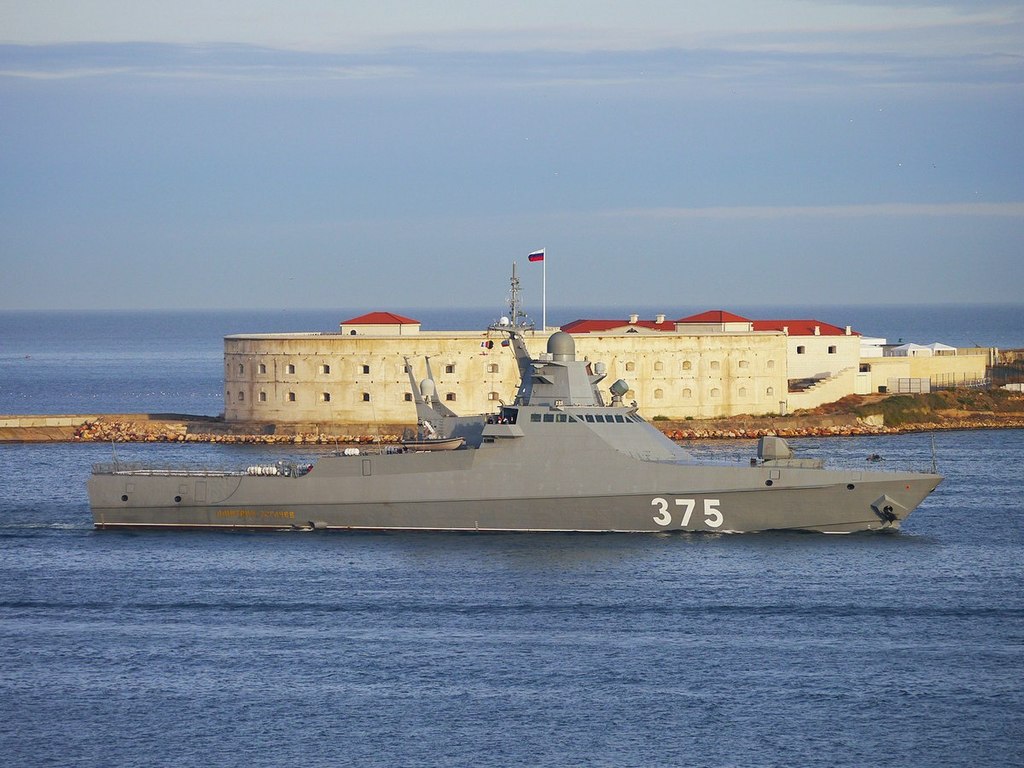
Pavel Derzhavin is a Project 22160 class patrol ship, a bit bigger than the Buyan-M at 94 meters (308 ft) in length, but not as heavily armed.

Russian Project 22160 Patrol Ship Dmitriy Rogachyov in Sevastopol, 12 April 2019. Photo from Ministry of Defence of the Russian Federation.

I found the reference to “Sea Baby drones with experimental weapons” interesting, not that the Sea Baby drone was experimental, so I presume the warhead was experimental. Various reports seem to indicate the explosion was extremely loud and created a great deal of smoke. This could have been the result of secondary explosions.

It is not clear if the two ships were sunk.

Information about the source here.

“CTF 150, U.S. Coast Guard Seize $25 Million in Illegal Drugs” –NAVCENT

A U.S. Navy L3 Harris Arabian Fox MAST-13 drone boat and the U.S. Coast Guard cutters USCGC John Scheuerman and USCGC Charles Moulthrope transit the Strait of Hormuz on Wednesday, April 19, 2023. (Information Systems Technician 1st Class Vincent Aguirre/U.S. Coast Guard)

Below is a news release by U.S. Naval Forces Central Command Public Affairs, October 11, 2023.


MANAMA, Bahrain —

The U.S. Coast Guard Sentinel-class fast response cutter USCGC John Scheuerman (WPC 1146) seized about $25 million worth of illegal drugs from a stateless vessel while operating in the international waters of the Gulf of Oman, Oct. 3.

The cutter, working under the command of Combined Task Force (CTF) 150, seized 360 kilograms of methamphetamines, 107 kilograms of heroin and 1,961 kilograms of hashish from the vessel during an interdiction operation.

This event marks the second time in a month that CTF 150 has interdicted illicit narcotics at sea. Last month, the Royal Navy frigate HMS Lancaster (F229) seized more than 450 kilograms, or approximately $9.5 million, of illegal drugs including heroin and hashish during a CTF 150 operation in the Arabian Sea.

“This new seizure, the second since the French Navy took command of CTF 150 last July, again shows the commitment of Combined Maritime Forces working together to enhance maritime security in the Arabian Sea and Indian Ocean,” said French Navy Capt. Yannick Bossu, commander of CTF 150.

CTF 150 is one of five task forces under Combined Maritime Forces, the largest multinational naval partnership in the world. CTF 150 focuses on maritime security operations outside the Arabian Gulf.

Since 2021, Combined Maritime Forces has seized more than $1 billion in illegal drugs while patrolling waters across the Middle East.

The 38-nation naval partnership upholds the international rules-based order by promoting security and stability across 3.2 million square miles of water encompassing some of the world’s most important shipping lanes.

The Photo is Wrong but “US Naval Ship Fires Warning Shots at Iranian Boats: A Dangerous Encounter in the Strait of Hormuz” –BNN

US Naval Ship Fires Warning Shots at Iranian Boats: A Dangerous Encounter in the Strait of Hormuz

BNN reports,

“On Monday…According to reports, the Iranian boats approached the U.S. ship at a high speed, coming within 300 yards before the warning shots were fired. This incident was described by the former commander of the U.S. Navy’s Fifth Fleet as ‘startling’ and ‘incredibly dangerous.’”

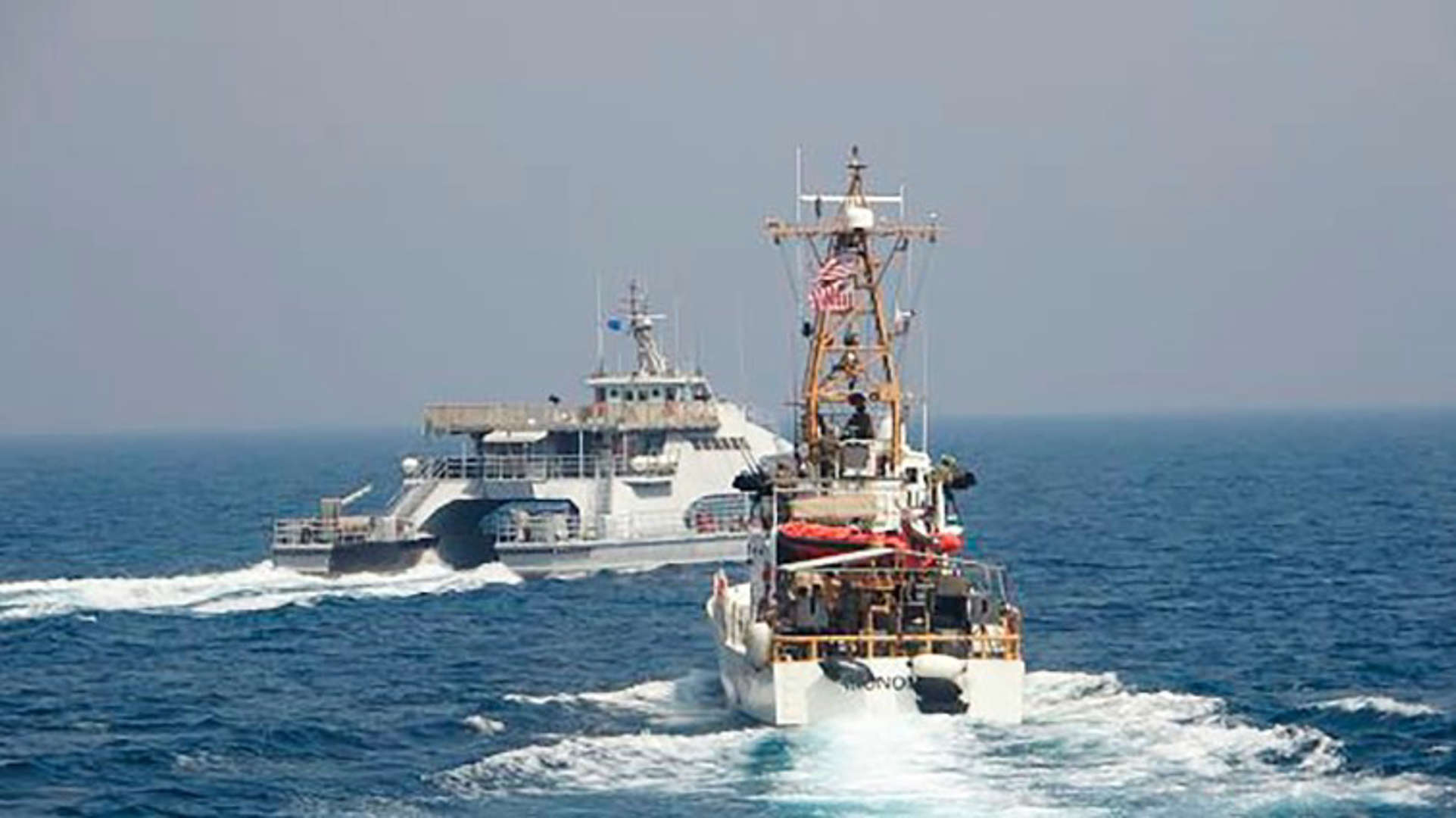
MSN passed the story along, but while I suspect the US ship may have been a Coast Guard cutter, since it is described as a “US naval ship” rather than a US Navy ship, the photo accompanying the story (above) is from an April 2, 2021, incident. The cutter in the photo is USCGC Monomoy (WPB-1326), decommissioned in March 2022. I looked for a news release from 5th Fleet but found none.

Similar incidents are not that unusual:

“USNI News Fleet and Marine Tracker: Oct. 10, 2023” –USNI

A U.S. Coast Guard Cutter Healy (WAGB 20) crew member looks at Tromsø, Norway as the cutter departs Tromsø, Oct. 5, 2023. U.S. Coast Guard Photo

The US Naval Institute’s Fleet and Marine Tracker for 10 October again reports only two Navy ships operating with 4th Fleet.

I find their statistical information interesting. For instance, 23.1% of the Navy’s ships are underway and 33.1% are deployed. The fleet includes both regular Navy (USS) and Military Sealift Command (USNS) ships. 27.7% of regular Navy ships are deployed, while 54.2% of MSC ships are deployed. 33% of the fleet deployed are MSC even though MSC is only 20.3% of the total fleet. There is no USS/USNS breakdown for ships underway, but I would bet the MSC ships are disproportionately more likely to be underway than the regular Navy ships so probably less than 23% of regular Navy commissioned ships are underway. These numbers are pretty typical.

I would really like to see some comparable figures for US Coast Guard ships. I think we would look pretty good.

We frequently hear that the US Navy ships are overworked, and I would not say that they are not, but I don’t think it is because they are underway too much. Other things must be the problem.

USCGC Munro is wrapping up her 7th Fleet deployment, stopping in Honolulu before returning to homeport, Alameda, CA. Icebreaker USCGC Healy (WAGB-20) is in Copenhagen, a long way from her Seattle homeport.

Why Russia Should be Worried, “ARCTIC PRC’s 13th Arctic expedition creating concerns for Russia” –The Watch

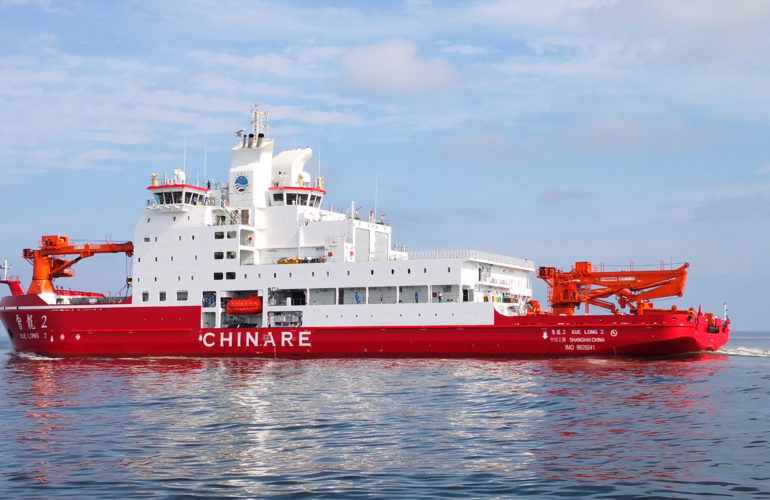
Xue Long 2 on sea trials. Photo by PRIC.

NORTHCOM’s online magazine, “The Watch,” gives us a balanced, non-alarmist, look at Chinese Arctic activity, but also tells us why maybe Russia should be worried.

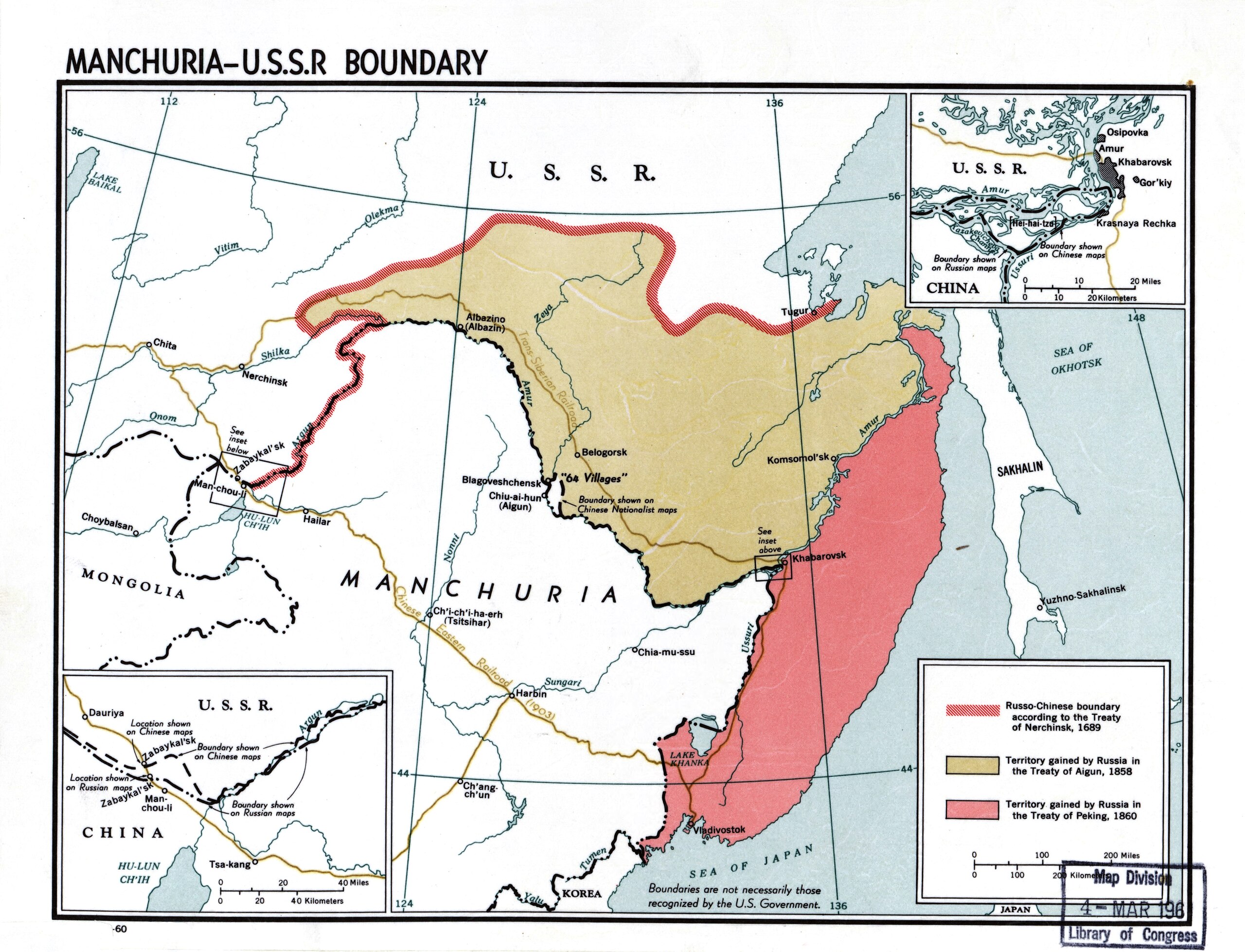
I have contended for a long time that sometime in the future, China will turn on Russia and recover those parts of China ceded to Russia as a result of unequal treaties (and here) in the 19th Century, during what China calls the Century of Humiliation, and while they are at it, maybe a bit more. They have neither forgotten nor forgiven.  

Library of Congress Geography and Map Division Washington, D.C. 20540-4650 USA
DIGITAL ID g7822m ct002999 http://hdl.loc.gov/loc.gmd/g7822m.ct002999

China and Russia have a long history of conflict (here, here, here and here), There was a border conflict between China and Russia (then the Soviet Union) in 1969, when China was clearly the weaker of the two, that lead to China opening to the West and Nixon’s trip to China.

Russia and China’s current partnership has mostly benefited China. China benefited from technology transfers and reverse engineered Soviet and Russian weapon systems.

Now China is clearly stronger than Russia in just about everything except nuclear weapons, and they are now rapidly growing their nuclear capability.

If China should decide retaking Taiwan, which has 215,000 active military and 2,310,000 reservists, a tech savvy population of about 24 million, and is protected by the 100-mile-wide Taiwan Strait and has potential help from powerful allies, may be too risky, they may decide recovery of Outer Manchuria is a good consolation prize.

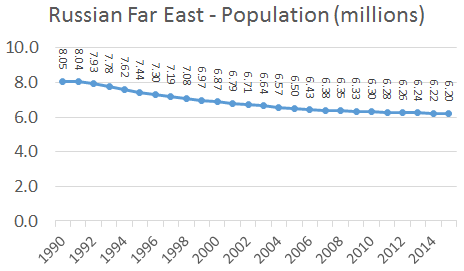
Population of the Russian Far East, 1990-2015 Data source: Fedstat. Author: Underlying lk. (About four million of these live in former Chinese territory.)

The Russian population in the Far East is small and declining. Russian infrastructure connecting industrialized European Russia with the FarEast is weak. Most of the Russian military is in Europe, and their weakness has been exposed in Ukraine.

If China attempted to retake land formerly part of China, they would want to cut Russia’s East/West logistics links. Taking out the few railroad links using airpower would be relatively easy. Air links can’t carry much in the way of heavy equipment. Most Russian supplies and material reinforcements would have to come by sea. Even if the Chinese did not interdict Russian traffic on the Norther Sea Route as suggested in the linked post, China’s Navy and Air Force could dominate Russian access to the Sea of Japan, including the primary Russian Pacific Fleet base in Vladivostok. Chinese submarines and their rapidly expanding force of aircraft carriers could probably cut off access to the Sea of Okhotsk and Petropavlovsk.

From a Chinese point of view recovery would be justified and perhaps far less costly than an amphibious invasion of Taiwan.

If the Russians can be made to see the righting on the wall, they might even be willing to sell the territory back to their friend at wholesale.

“Inside the U.S. Navy’s Cutting-Edge Drone Boat Tech”–WSJ

A reader brought the video above to my attention, recognizing the significant Coast Guard participation in the program. 

Below I have reproduced the text that accompanied the video on YouTube. 


Drone boats appear to be on the cusp of a revolution. The U.S. Navy’s Task Force 59 has been pairing cutting-edge unmanned surface vehicles with artificial intelligence to expand the military’s eyes and ears in the Middle East. Now, similar efforts will be rolled out in the Pacific and Central and South America. The military’s objective is to leverage machine learning to detect and anticipate threats before they occur. Experts say the U.S. is currently the leader in this field, but competitors like China and Russia are racing to catch up. I traveled to Manama, Bahrain to see the high-tech drones in action and speak to officials about how they’re preparing for a future with robots in the world’s waters. 0:00 A rare look at the U.S. Navy’s drone boat operation 0:30 Meet the Navy’s Task Force 59 2:14 Drone boat capabilities 4:05 How artificial intelligence is layered with the drone boats 5:11 The global race to advance unmanned marine vehicles 7:23 What’s next for the U.S. military? Check out more from my exclusive interview with Vice Admiral Brad Cooper, commander of U.S. Naval forces in the Middle East, about unmanned vessels and the Navy’s future fleet:    • Drone Boats, AI and the Future of Mar…   I’m Shelby Holliday, a reporter for WSJ. Subscribe to join me as I explain some of today’s most pressing geopolitical events, from superpower showdowns and conflicts to supply chain snarls and natural resource struggles.


The link embedded above was to this video. 

Thanks to David for bringing this to my attention.

“U.S. 5th Fleet Enhances Middle East Maritime Security with Unmanned Capabilities” –NAVCENT

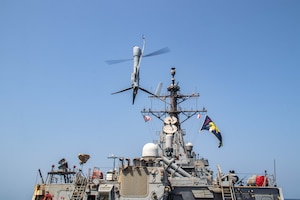
GULF OF OMAN, An Aerovel Flexrotor unmanned aerial vehicle launches from the deck of the Arleigh Burke-class guided-missile destroyer USS McFaul (DDG 74) in the Gulf of Oman, in an image released Oct. 6. US Navy photo.

Below is a 6 October news release from U.S. Naval Forces Central Command Public Affairs. It notes Coast Guardsmen were involved, presumably PATFORSWA, but no details of how. All the photo here accompanied the release.


MANAMA, Bahrain —

Last month, naval forces in the Middle East region successfully integrated unmanned platforms with traditionally crewed ships and aircraft to conduct enhanced maritime security operations in the waters surrounding the Arabian Peninsula.

Seven task forces falling under U.S. 5th Fleet integrated 12 different unmanned platforms with manned ships for “manned-unmanned teaming” operations, tracking Iranian Navy and Islamic Revolutionary Guard Corps Navy (IRGCN) ships and small boats over several days during routine patrols in and around the Strait of Hormuz.

This operation bolstered presence in and around a critical chokepoint that in recent months has seen Iran unlawfully seize internationally flagged merchant ships.

Unmanned underwater vehicles (UUVs), unmanned surface vehicles (USVs) and unmanned aerial vehicles (UAVs) were involved in the operation.

“We have been operating UAVs and UUVs in the region for years,” said Capt. Joe Baggett, Director of Maritime Operations for U.S. Naval Forces Central Command and U.S. 5th Fleet. “Adding our new USVs, and then integrating all of these platforms into fleet operations, is how we expect to fly and sail well into the future.”

Sailors, Marines, Coast Guardsmen, ships and aircraft from Task Force 51/5 (Amphibious/Marine), Task Force 52 (Mine Countermeasures), Task Force 53 (Logistics), Task Force 55 (Surface Warfare), Task Force 56 (Expeditionary), Task Force 57 (Patrol/Reconnaissance) and Task Force 59 (Unmanned/Artificial Intelligence) conducted the operations.

“The integration of new, multidomain unmanned platforms into routine fleet operations provides more ‘eyes on the water,’ enhancing maritime domain awareness and increasing deterrence in the region,” said Vice Adm. Brad Cooper, Commander, U.S. Naval Forces Central Command and U.S. 5th Fleet.

Cooper added that collectively, these platforms support the safe navigation and free flow of commerce through vital regional chokepoints, particularly around the Strait of Hormuz.

“This enhanced maritime security serves as a deterrent against malign activity and strengthens regional stability, which is good for everybody,” he said.

U.S. Naval Forces Central Command/U.S. 5th Fleet’s area of operations encompasses about 2.5 million square miles of water area and includes the Arabian Gulf, Red Sea, Gulf of Oman, Gulf of Aden, Arabian Sea and parts of the Indian Ocean. This expanse, comprising 21 nations, includes three critical choke points at the Strait of Hormuz, the Suez Canal and the Strait of Bab al Mandeb.
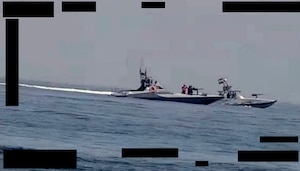
STRAIT OF HORMUZ (Oct. 6, 2023) An undated still image released on Oct. 6 from video taken by an Arabian Fox MAST-13 unmanned surface vessel of two Islamic Revolutionary Guard Corps Navy patrol speedboats in the Strait of Hormuz.
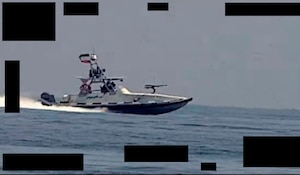
STRAIT OF HORMUZ (Oct. 6, 2023) An undated still image released on Oct. 6 from video taken by an Arabian Fox MAST-13 of an Islamic Revolutionary Guard Corps Navy patrol speedboat in the Strait of Hormuz.
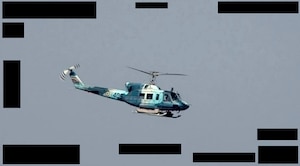
STRAIT OF HORMUZ (Oct. 6, 2023) An undated still image released on Oct. 6 from video taken by an Arabian Fox MAST-13 unmanned surface vessel of an Iranian Navy AB-212 helicopter in the Strait of Hormuz.
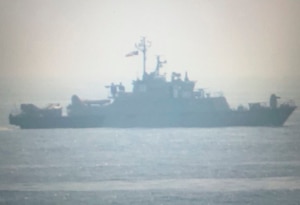
STRAIT OF HORMUZ (Oct. 6, 2023) A undated still image released on Oct. 6 from video taken by a MARTAC T-38 Devil Ray unmanned surface vessel of an Islamic Revolutionary Guard Corps Navy warship in the Strait of Hormuz.
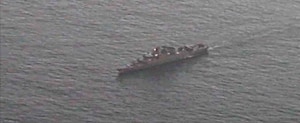
STRAIT OF HORMUZ (Oct. 6, 2023) An undated still image released on Oct. 6 from video of an Iranian Navy frigate taken by an Aerovel Flexrotor unmanned aerial vehicle (AAV) in the Strait of Hormuz.(U.S. Navy photo)
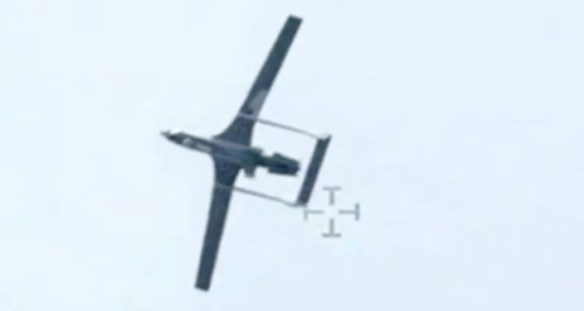
STRAIT OF HORMUZ (Oct. 6, 2023) An undated still image released on Oct. 6 from video taken by an Arabian Fox MAST-13 unmanned surface vessel of an Iranian unmanned aerial vehicle in the Strait of Hormuz.

“U.S., Canada Coast Guards, Royal Canadian Air Force conduct search and rescue exercise near Herschel Island, Yukon” –D17

Herschel Island in the arctic, location circled. Basic map is NASA Blue Marble image, with the circle drawn in Inkscape. via NASA World Wind

Below is a press release from District 17 (Alaska). Except for the mention of the Arctic, this sounds like a pretty routine SAR exercise but look at the map above. This was more than 150 miles north of the Arctic Circle, on the Northwest Passage, North of the Canadian mainland. The helicopter would have deployed from Kodiak on the South side of Alaska more than 800 miles South. Click on the link above to see the video.

Oct. 3, 2023

(VIDEO AVAILABLE) U.S., Canada Coast Guards, Royal Canadian Air Force conduct search and rescue exercise near Herschel Island, Yukon

ANCHORAGE, Alaska – The U.S. Coast Guard and Canada Coast Guard conducted a cooperative search and rescue training exercise near Herschel Island, Yukon, Canada, on Saturday.

The exercise centered around the French cruise ship Le Commandant Charcot, whose crew simulated an onboard fire with severe personal injuries and a complete evacuation of the vessel.

The crew of a U.S. Coast Guard HC-130 aircraft from Air Station Kodiak were first to respond to the simulated distress call and acted as the on-scene commander for the exercise, coordinating response efforts and relaying communications.

Later a Royal Canadian Air Force HC-130 crew responded to drop medical supplies and response personnel onto Herschel Island where exercise participants that were acting as injury victims awaited treatment.

A U.S. Coast Guard MH-60 Jayhawk helicopter crew from Air Station Kodiak also responded by lowering a rescue swimmer onto the deck of the cruise ship to hoist mannequins acting as injured crew members.

“The increase in human activity in the arctic means there may be a potential for increased Search & Rescue response there as well,” said Captain Brian McLaughlin, Chief of Incident Management at U.S. Coast Guard District Seventeen. “Exercising the Coast Guard’s capabilities to operate in one of the most demanding and remote regions in the world, while simultaneously identifying the associated challenges, highlights the critical importance of these joint exercises and their influence on future operational success along our shared maritime border with Canada.”

The exercise, which took more than a year to plan, is part of the Coast Guard’s ongoing commitment to a safe and secure arctic.

Correction: The title of this press release was changed to reflect all entities involved.


“‘Blue Africa’ Partnership Seeks to Curb Annual $10B Loss from Illegal Fishing” –USNI

Comparison of Africa size with other continents. From Wikipedia, by Jacopo Bertolotti.

The US Naval Institute News Service reports

“Faced with an annual $10 billion loss from Illegal, unreported and unregulated fishing, West African nations are moving to work together to better understand and police their exclusive economic zones as a group, the head of U.S. Naval Forces in Europe and Africa told USNI News last month.”

Not surprisingly the Coast Guard was involved.

The idea for a combined push emerged at the first African Maritime Forces Summit held in March at Cabo Verde organized by NAVEUR. Navy Secretary Carlos Del Toro and Coast Guard Commandant Adm. Linda Fagan represented the U.S. along with 80 other countries.

Fisheries management in African waters requires regional cooperation. As I noted in a 2014 post, among other problems, there are so many countries in Africa (54 countries, at least 32 with coastlines) that their individual EEZs are too small to manage fishing stocks. If one country attempts to rebuild stocks by reducing fishing, a neighboring country may take advantage of their sacrifice and undo their efforts.

The USNI post talks about replicating something like Joint Interagency Task Force South in U.S. Southern Command. The NAVCENT sponsored Combined Maritime Forces might also serve as a model. There is also the South Pacific Regional Fisheries Management Organisation that might also serve as a model. Bilateral shiprider agreements could also be useful.

The Coast Guard has been working with African Nations for some time now.

“Northrop Grumman to Develop New Guided Ammunition for the US Navy” (57mm) –News Release

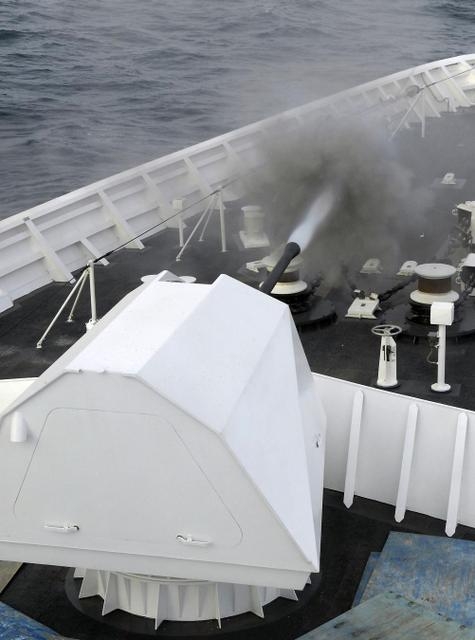
Test firing of the 57mm Bofors aboard USCGC Bertholf, photo by MMagaro

Below is a news release from Northrop Grumman. I have to ask what is going on? The L3 developed 57MM MK 332 Mod 0 (ALaMO) guided round, meant to address the same type targets the Northrop Grumman news release talks about, is already in service and available for export. Additionally, Raytheon was developing MAD-FIRES as a guided round to engage the more difficult cruise missile threat. I still have not heard anything that would indicate MAD-FIRES is in service.

Is this Northrop Grumman round cheaper? More capable? Or is the Navy just diversifying sources? The news release below does claim, “Utilizing seekers and an aft-maneuver system, the round provides continuous trajectory guidance no matter how often the target may pivot. (emphasis applied) That might be a difference.

My last post on ALaMO here.

(The 57mm Mk110 is mounted on both types of LCS, the National Security Cutters and will be mounted on the Offshore Patrol Cutters and the Navy’s new frigate)


PLYMOUTH, Minn. – Oct. 4, 2023 – The U.S. Navy has awarded Northrop Grumman Corporation (NYSE: NOC) a development contract for the company’s newly designed 57mm guided high explosive ammunition. Designated for use with the Mk110 Naval Gun Mount, the company will test and mature the munition for qualification.

The 57mm guided high explosive ammunition has the unique ability to continuously maneuver in-flight as it moves toward a designated target. Designed to defend against fast moving surface threats, drones and swarming threats, the guided 57mm ammunition features an on-board seeker to acquire moving targets and a fuze with the ability to self-select for either proximity or point-detonation mode to best engage and defeat the intended target.

“Our new 57mm guided ammunition is truly innovative in its ability to identify, track and guide itself to a target,” said Dave Fine, vice president, armament systems, Northrop Grumman. “The Navy will gain a greater capability to defend against moving threats and a new level of accuracy to defeat them.”

As the newest addition to Northrop Grumman’s advanced ammunition portfolio, the 57mm round leverages the company’s expertise in guided munitions, such as the Precision Guidance Kit. Utilizing seekers and an aft-maneuver system, the round provides continuous trajectory guidance no matter how often the target may pivot. This new guided ammunition will give the Navy greater stand-off range and a cost-effective solution against small, fast-moving threats, without any weapon system modifications.

Northrop Grumman is a leading global aerospace and defense technology company. Our pioneering solutions equip our customers with the capabilities they need to connect and protect the world, and push the boundaries of human exploration across the universe. Driven by a shared purpose to solve our customers’ toughest problems, our 98,000 employees define possible every day.