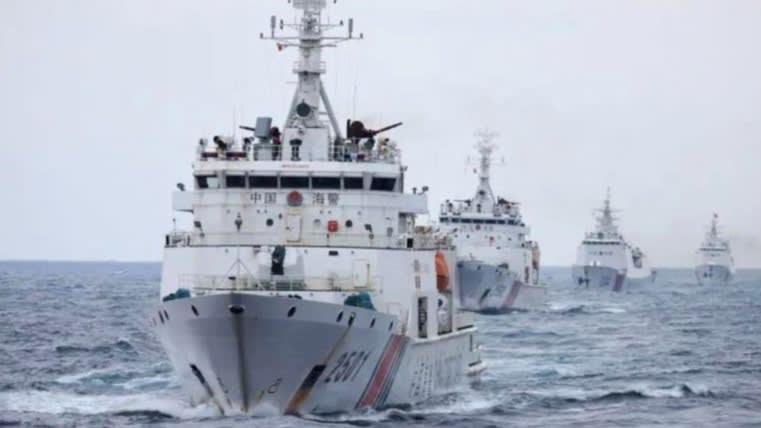
China is building up several unoccupied land features in the South China Sea, according to Western officials, which they said was part of Beijing’s long-running effort to strengthen claims to disputed territory and potentially bolster its military presence in a region critical to global trade.
Apparently, China is not satisfied with the military outposts they have created in the South China Sea and are in the process of creating more. These actions may be taken by the Chinese both in support their systematic theft of EEZ resources from other nations and as support for a future blockade of Taiwan.
Certainly, these will be upgraded to military installations just as has been done with other artificial islands.
The nations whose EEZs are being violated by these activities have an opportunity to put a stop to it, while they are being done by fishing vessels, before there is a Chinese military presence, if they act quickly and aggressively to stop this illegal activity.
Marine Link reports that a 270 foot WMEC has been fitted with an artificial intelligence recognition and identification system (AI-ris) computer vision product by Sea Machines.
“AI-ris uses artificial intelligence to identify and track visual targets of interest. Installation on the cutter was made possible under an ongoing Cooperative Research and Development Agreement (CRADA) between Sea Machines Robotics and the USCG Research and Development Center in an effort to evaluate how computer vision systems can be utilized for autonomous navigation, collision avoidance, and target detection. The deployment of AI-ris provides the USCG a new tool for maritime domain awareness and allows Sea Machines to refine its computer vision technology with feedback from the USCG across a range of environmental conditions and operational scenarios.”
No idea why the report did not name the cutter that got the system. Even the photo that accompanied the report has no hull number.
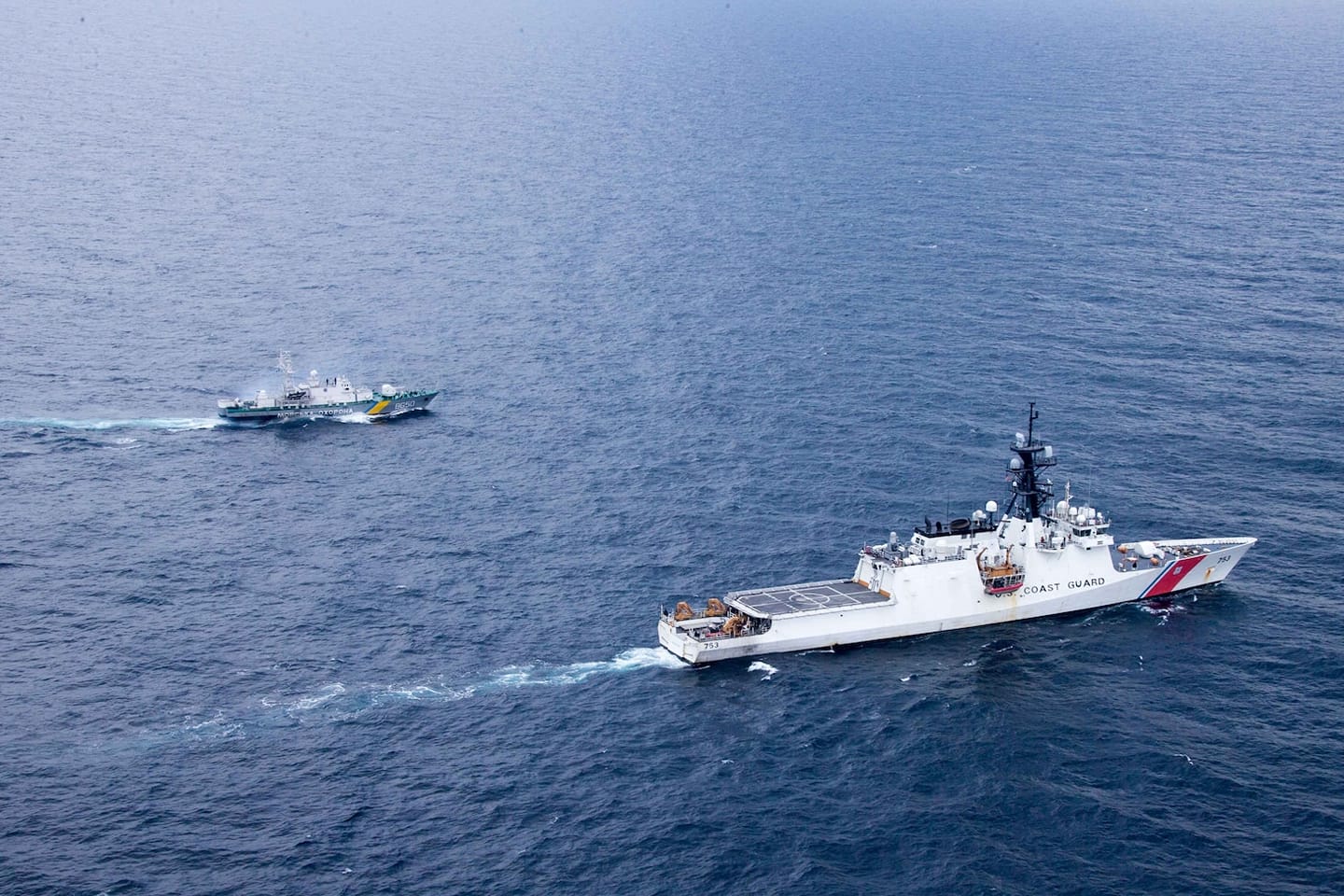
USCGC Hamilton and Ukraine CG during a previous European deployment, May, 2021
Below is an Atlantic Area news release reporting a very non-traditional deployment, but it is not the first time Hamilton has been deployed in support of 6th Fleet.
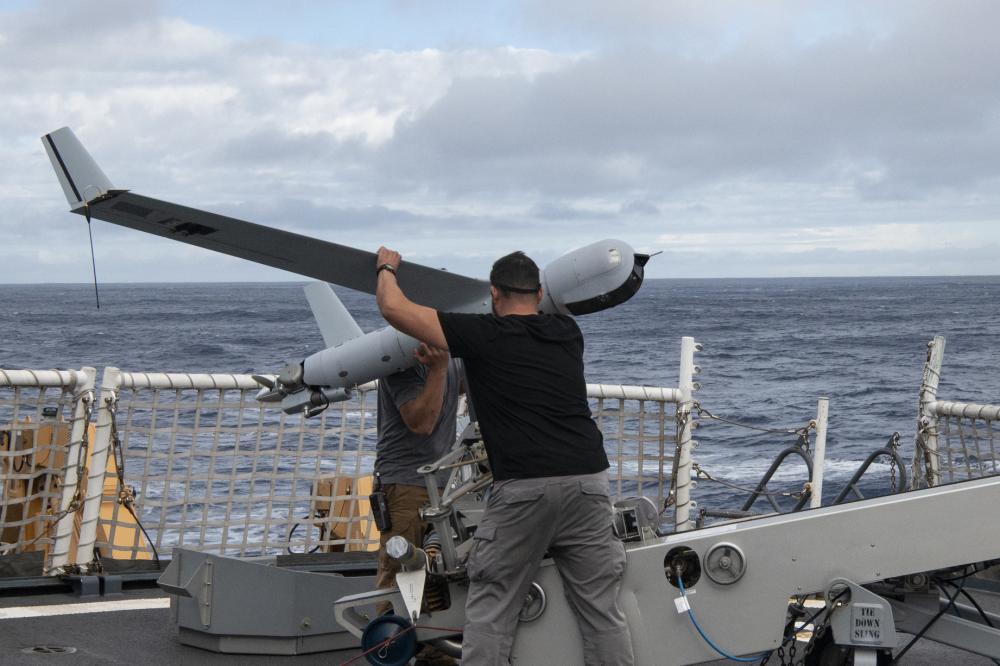
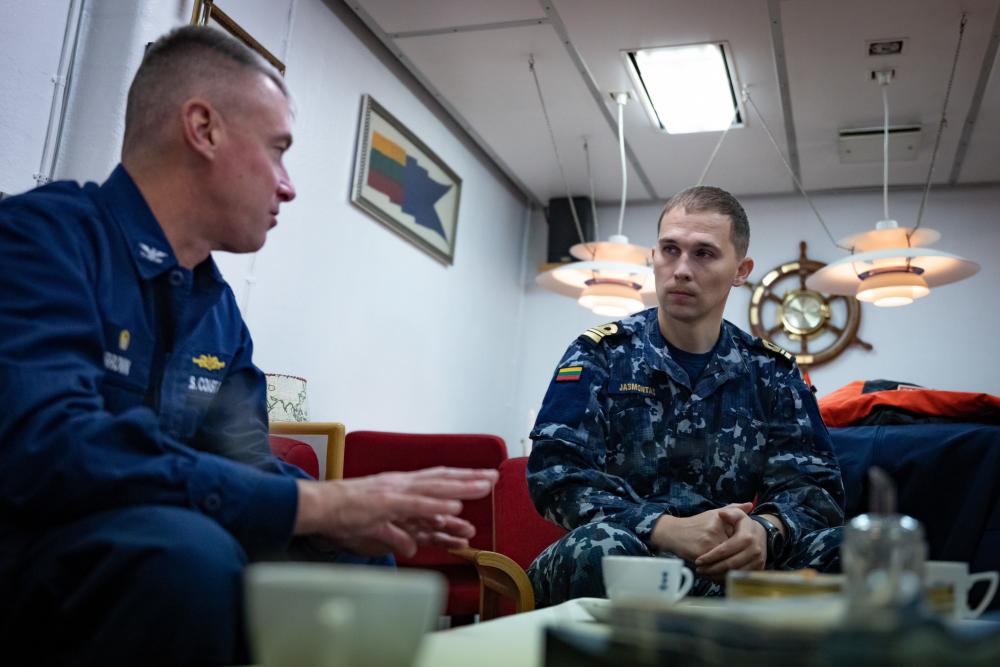
If you click on each of the photos below, each will allow you to see other photos from the deployment. Altogether, there are 26 photos.
Media Advisory
U.S. Coast Guard Atlantic Area
USCGC Hamilton to return home following historic transatlantic deployment to Baltic Sea
Editors’ Note: To view more or download high-resolution imagery, click on the photos above.
NORTH CHARLESTON, S.C. — The crew of the USCGC Hamilton (WMSL 753) is scheduled to return to their homeport in North Charleston Wednesday following a 94-day deployment in the U.S. Naval Forces Europe – Africa area of operations in support of U.S. Sixth Fleet.
WHO: Capt. Matthew Brown, commanding officer of Hamilton, and members of the crew
WHAT: Hamilton’s commanding officer and crew members will be available for interviews with interested media after they return home following 94-day Baltic Sea deployment in support of U.S. Sixth Fleet
WHEN: 2 p.m. Wednesday
WHERE: Federal Law Enforcement Center, 2000 Bainbridge Ave., North Charleston, South Carolina, 29405
Editors’ Note: Interested media are requested to RSVP by emailing a list of members’ names to ensure base access at D05-SMB-LANT-092P@uscg.mil or call PA2 Brandon Hillard at (757)-614-9755 no later than 2 p.m. Tuesday. Credentialed media are asked to arrive no later than 1 p.m. Wednesday with a driver’s license and proof of insurance in order to be processed through security.
While deployed, Hamilton conducted at-sea exchanges with naval, coast guard and border guard forces of multiple Baltic Sea Allies and partners, including Sweden, Finland, Estonia, Latvia and Lithuania. Each engagement was oriented to support either traditional Coast Guard missions, or in combination with defense readiness exercises, used to enhance interoperability between the U.S. and NATO partners.
Hamilton’s deployment demonstrated the strategic value of conducing meaningful at-sea engagements, subject matter exchanges and port visits with Allies and partners in the high northern latitudes and Baltic Sea region. The U.S. maritime services regularly operate with partner nations to cultivate a cohesive force to maintain freedom of the seas, ensure free economic exchange and maintain maritime security.
Hamilton is a 418-foot, Legend-class national security cutter. With its robust command, control, communication, computers, intelligence, surveillance and reconnaissance equipment, the NSC is the most technologically advanced ship in the Coast Guard’s fleet. NSCs are a worldwide deployable asset that supports the Department of Homeland Security, Department of Defense and national objectives to include drug interdiction, migrant interdiction, national defense, search and rescue, fisheries enforcement and national intelligence collection.
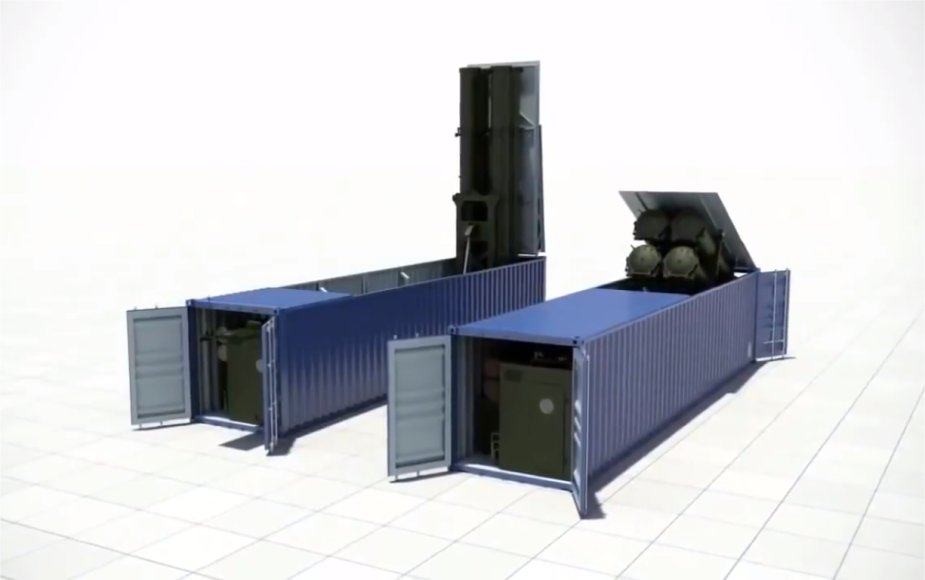
“Artist rendering of containerized missile system for the Indian Navy. (Picture source: Defence Decode)” Note this same illustration was used to portray a Russian system and later a Chinese system.
“According to information published by the Indian MoD on December 17, 2022, containerised missile systems are being inducted by the Indian Navy to enhance operational capability and augment flexibility in operations.”
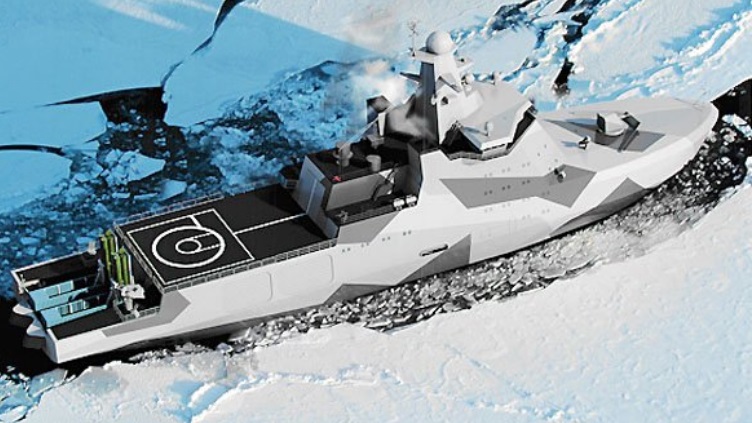
We have seen reports of similar containerized weapon systems before from China and Russia. We have seen artist concepts (and here) of containerized missile systems on Russia’s new Navy and Coast Guard icebreaker class (below), but we have not actually seen them mounted.
Project 23550, Ivan Papanin class icebreaking patrol vessel with towing capability and containerized cruise missiles.
This is the first time I have actually seen a Navy actually state explicitly that such a system was being procured.
Why should this be of interest to the Coast Guard?
Terrorist might use a similar system.
We have to worry that in the opening round of a near peer conflict, cruise missiles might be launched from apparently innocent looking container ships.
Containerized weapon systems might be a way to quickly improve the weapons capability of Coast Guard cutters should the need arise.
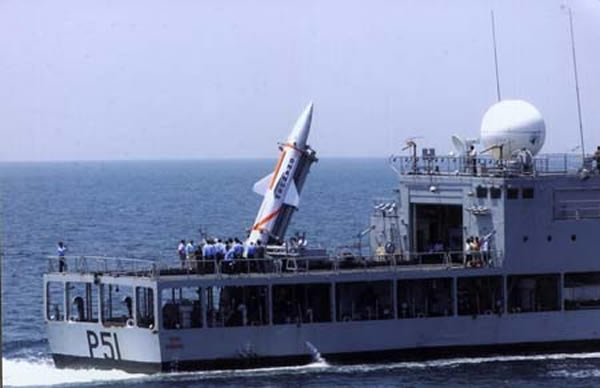
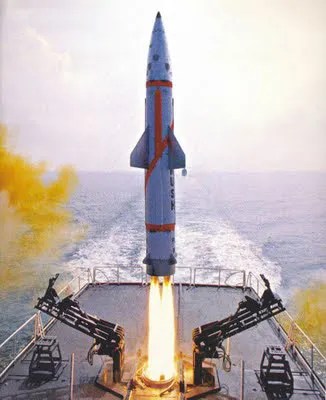
India has already demonstrated a willingness to mount missiles on their offshore patrol vessels, although it was essentially only a test.
There have been some posts that may be of interest published recently that I will point to below, with only brief comments.
“The New Coast Guard Funding Bill Is Really Good For The USCG” –Forbes There is a lot here, but you should recognize that this is the National Defense Authorization Act (NDAA), not an actual budget. It is not uncommon to have items in the authorization that are not included in the corresponding budget, so we have to wait a little longer to see what is actually funded.
The Coast Guard is directed to complete a number of studies. I hope they will be completed and delivered to Congress, but they may not be and if they are, we may never know. I have been told, a lot of reports get delivered late, because there is little penalty, and the committees don’t need to inform anyone else of whether they have received a report they requested.
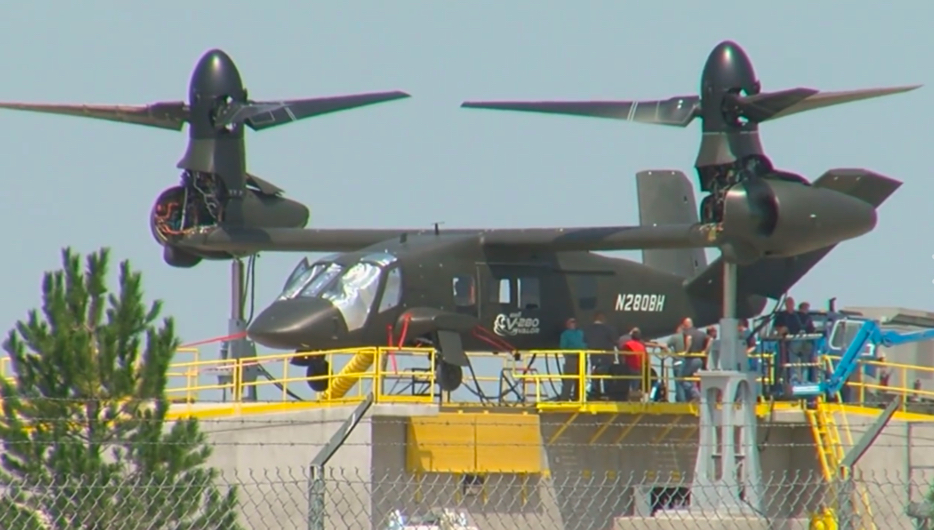
“Some Fun Coast Guard Reads In Forbes” –Next Navy: This talks about the post above and a second post that suggests that the Coast Guard replace the C-27 with the Army’s recently selected V-280. I think the production version of the V-280 has a good chance of finding a place in the Coast Guard. Ultimately it might even replace all our land-based helicopters and all the fixed wing aircraft except the C-130, but that is many years in the future. It’s premature to consider replacing the C-27. (Thanks to Walter for bringing this to my attention.)
“MOAA Interview: Coast Guard Commandant Charts the Path Forward” Admiral Zukunft emphasized the Cutter recapitalization. Admiral Schultz spent a lot of time talking about shoreside infrastructure. Admiral Fagan’s emphasis is on personnel issues, e.g., recruiting, incentives for afloat billets, afloat billets for women, and women the Coast Guard in general. There is also a nod to the Arctic.
The US Naval Institute’s News Service reports the availability of a new document, “Office of Naval Intelligence’s Chinese People’s Liberation Army Navy, Coast Guard. and Government Maritime Forces 2022-2023 Recognition and Identification Guide.
You cannot actually read much of it on the USNI site, but you can download a copy here. You’ll need to expand it to read much of the information.
From a Coast Guard perspective, there are a couple things to note.
First is the sheer number of China Coast Guard cutters. China’s internationally recognized EEZ is less than 8.5% that of the US. Even if their expansive unrecognized claims were included, their total EEZ would be less than 20% that of the US. But according to the guide, they have over 200 cutters of 60 meters (197 feet) in length or greater (225 by my quick count). The US Coast Guard by comparison has 57: 37 patrol cutters, three icebreakers, 16 buoy tenders, and the barque Eagle.
Second, China has other agencies that apparently do coast guard work, that also have their own ships including the Sansha City Patrol, China, and the Maritime Safety Agency which, alone, has over 40 ships 60 meters or greater in length.
The Coast Guard had only a minor role in this incident, but it does concern deck seamanship.
It also seems, the Navy is not holding itself to Coast Guard established industry standards and consequently may be putting the passengers, staff, and crew in unnecessary danger.
The commentator on the video is well qualified so his comments should be taken seriously.
This class is now very old. It is probably time for it to be replaced with ships that are better thought out.
This weapon might have a place as a replacement for the big guns that once provided Naval Gun Fire Support. It also has potential as an anti-ship weapon.
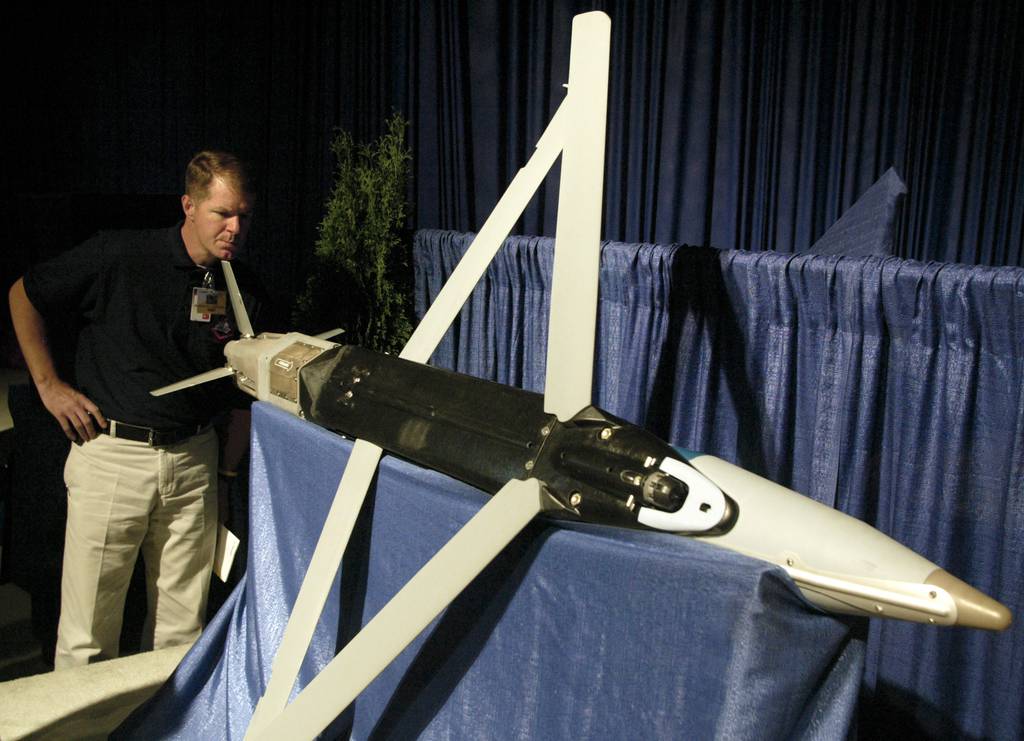
The system consists of a hybrid of a normally air launched, precision guided, winged bomb, the “small diameter bomb,” flung into the air by a rocket booster used in an early Multiple Launch Rocket System (MLRS) munition, the M26.
The M26 was the first rocket developed for the Multiple Launch Rocket System (MLRS). It is spin-stabilized by 4 fins, has a range of 32 km (20 miles) and is armed with 644 bomblets, anti-personnel/anti-materiel grenades. These bomblets have fallen out of favor because the dud rate creates potential for collateral damage that may occur long after the conflict that prompted their use. To create the Ground Launched Small Diameter Bomb, the grenades are replaced by a Small Diameter Bomb.
A guest inspects a new Boeing small-diameter bomb (SDB) in it’s flight configuration at the roll-out ceremony Monday, May 22, 2006, in St. Charles, Mo. (Tom Gannam/AP)
Small Diameter Bombs:
There are four different “Small Diameter Bombs”:
The Boeing GBU-39B which is guided to a known geographic location by a GPS-aided inertial navigation system. Weight: 285 lb (129 kg). Length: 70.8″ (1.8 m). Width: 7.5″ (190 mm). Cost: $39,000 (2021)
The GBU-39B/B Laser SDB which adds semi-active laser homing, the ability to home on a target identified by a laser designator.
The Raytheon GBU-53B SDB II “StormBreaker” which also includes a tri-mode seeker (millimeter wave radar, infrared homing, and semiactive laser guidance) that allows it to be used against moving targets in any weather. Weight: 204 lb (93 kg). Length: 69″ (1.76 m). Diameter 7″ (180 mm). Cost $195,000 (2021).
“The bomb can use GPS/INS to guide itself into the general vicinity of a moving target during the initial search phase, with course correction updates provided using a Link 16 over UHF data link…The weapon is capable of fusing the information from the sensors to classify the target and can prioritize certain types of targets as desired when used in semi-autonomous mode.”
How does it compare to Naval Guns?:
These are small bombs, developed to increase the number of precision munitions an aircraft can carry in a single sortie. Four of these replace a single 2,000 pound bomb.
SDBs are small bombs but compared to most naval guns, they pack a pretty big punch. Because of their precision, the relatively small bomb is still adequate to destroy many targets including tanks, aircraft shelters, bunkers, and strong points.
“Warhead penetration is 3 ft (1 m) of steel reinforced concrete under 3 ft of earth and the fuze has… selectable functions, including air burst and delayed options.”
The GBU-39’s 36 pound bursting charge is 50% larger than that of the last 8″ projectiles used by the US Navy and more than four and half times that of current 5″ projectiles. (The bursting charge in the 16″ High Cap projectiles fired by Iowa class battleships was only 153.6 lbs. (69.67 kg)).
Perhaps most importantly, this weapon out-ranges all existing naval guns with a range of 150 km / 81 nautical miles.
Why it will be difficult and expensive to shoot down:
Now anything can be shot down, from artillery and mortar rounds to ICBMs. Because these are glide bombs it might be assumed they would be easy to shoot down, but that is not necessarily the case. Their small size means they have a small radar cross section. Because they are a glide bomb, unlike aircraft or cruise missiles, they have little or no IR signature. That means they are not good targets for IR homing missile such as man portable air defense systems (MAPADS). Because the round is maneuverable, there may be opportunities to avoid heavy concentrations of AA.
It is probably going to require high quality AAW missiles to bring one of these down, meaning the cost exchange is likely to be favorable for the SDB. Being cheap they can be traded off against the more expensive missiles required to bring them down, depleting the enemies air defenses. That could result in making it safer for our manned aircraft.
Why not let Naval Air just drop the Small Diameter Bombs:
That is certainly an option, but if surface launched Small Diameter Bombs are available it can free aircraft for more demanding missions like air superiority and suppression of air defenses. Surface launched SDBs and aircraft could be complementary,
There is also the possibility that the carrier(s) may be called away or their flight deck might be damaged precluding air ops.
Where could we mount them?:
The video shows a six-tube launcher inside what is almost certainly a 20x8x8 foot container. That suggests that there are many options available including multiple launcher installations on Offshore Support Vessels, either manned or unmanned as well as many existing vessels.
As defensive weapons, the widespread use of 20x8x8 containers means that it is going to be very hard to single out those that mount these weapons. A “shell game” can make them very difficult to recognize and neutralize.
The Cost Exchange Ratio:
What makes these a game changer? It is the precision and range combined with its low price. The War in Ukraine has shown the rapid expenditure of munitions. There is a need for weapons with longer range and greater survivability, but they will cost much more. We cannot afford to expend weapons that cost millions on every target. There are times when it is necessary to expend an expensive weapon on a far less expensive target, but that can’t become the norm. We need weapons that can be produced in huge numbers at a reasonable cost.
Now About Taiwan:
If the Chinese are to invade Taiwan, it will be comparable in scope to the Normandy Invasion. The Chinese Navy can transport only a small percentage of the troops that would need to land on the first day of the invasion. They will need to mobilize a very large number of civilian craft including ferries and fishing boats to transport the number of troops that will be required.
If the Taiwanese are to stop the invasion, they are going to have to sink a very large number of craft as they transit the Taiwan Strait. (The Strait is 130km wide at its narrowest point.) Most of these craft will be relatively small and have little or no self-defense capability.
Using the GBU-53B, with its tri-mode seeker, the Ground Launched Small Diameter Bomb appears ideal for this purpose. Given the bombs, the Taiwanese could probably quickly devise an even longer-range booster and launcher.
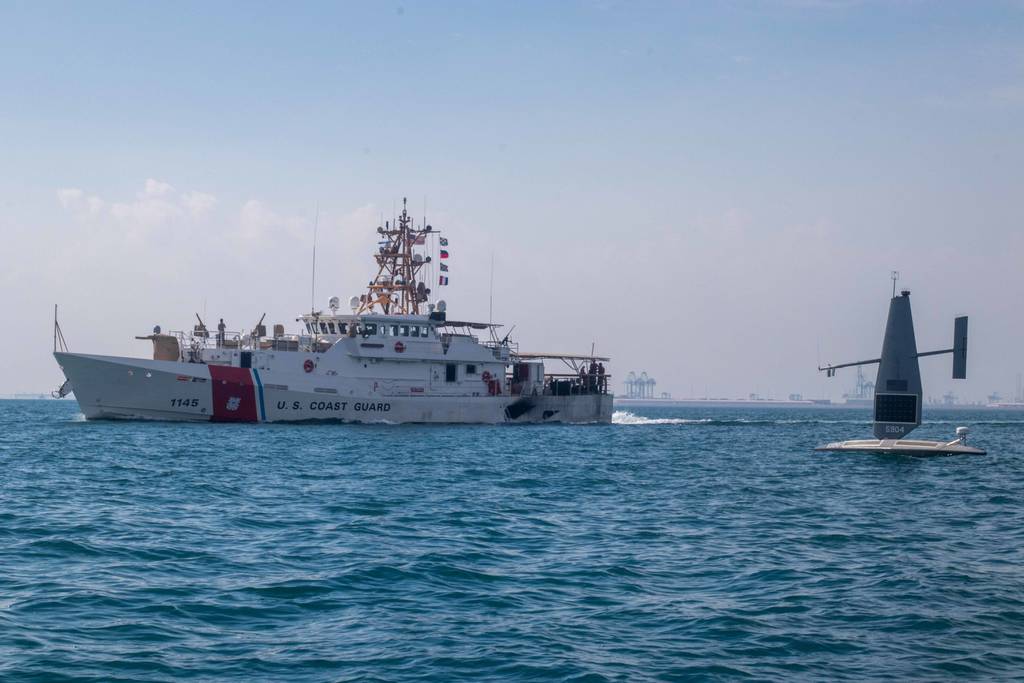
A Saildrone Explorer unmanned surface vessel operates alongside U.S. Coast Guard fast response cutter USCGC Emlen Tunnell (WPC 1145) in the Arabian Gulf, Nov. 29, during Digital Horizon 2022. (Sgt. Brandon Murphy/US Army)
“We have done a lot of work with AI previously, and we’ve done computer vision, we’ve done anomalous behavior detection, we’ve done AI-enabled [command and control], but we’ve done all of those separately,” the commodore explained. “At Digital Horizon, for the first time ever, we did that together on a single stack, and that’s all integrated on a single pane of glass.”
There is also confirmation here that a similar effort will be going into 4th Fleet (Latin American/Caribbean Waters); that it will involve partner nations; and that it will look at IUU fishing as well as drug interdiction.
Fortunately, it looks like Coast Guard personnel and assets have been intimately involved in this effort and it looks like it will benefit our Maritime Domain Awareness (MDA) efforts.
(Will the Coast Guard’s next class of ships be USV tenders?)
U.S. Coast Guard Cutter Munro and Japan Coast Guard Patrol Vessel Large Aso, transit together in formation during a maritime engagement in the East China Sea Aug. 25, 2021. U.S. Coast Guard members aboard the Munro deployed to the Western Pacific Ocean to strengthen alliances and partnerships and improve maritime governance and security in the region. (Photo courtesy of Japan Coast Guard)
“…With the Gray Zone, you can’t have enough [U.S.] Coast Guard forward,” said VADM Thomas responding to a question regarding partnering the U.S. Coast Guard with the U.S. Navy. “They’ve been great partners [the U.S. Coast Guard] and they’ve been pushing forward as much as they can, and I think it’s a capacity issue (but the right tool for the job)” since the U.S. Coast Guard works with the INDO-PACOM ally nations’ coast guards.








 Chuck Hill's CG Blog