“Navy to establish additional unmanned task forces inspired by Task Force 59” –Defense Scoop

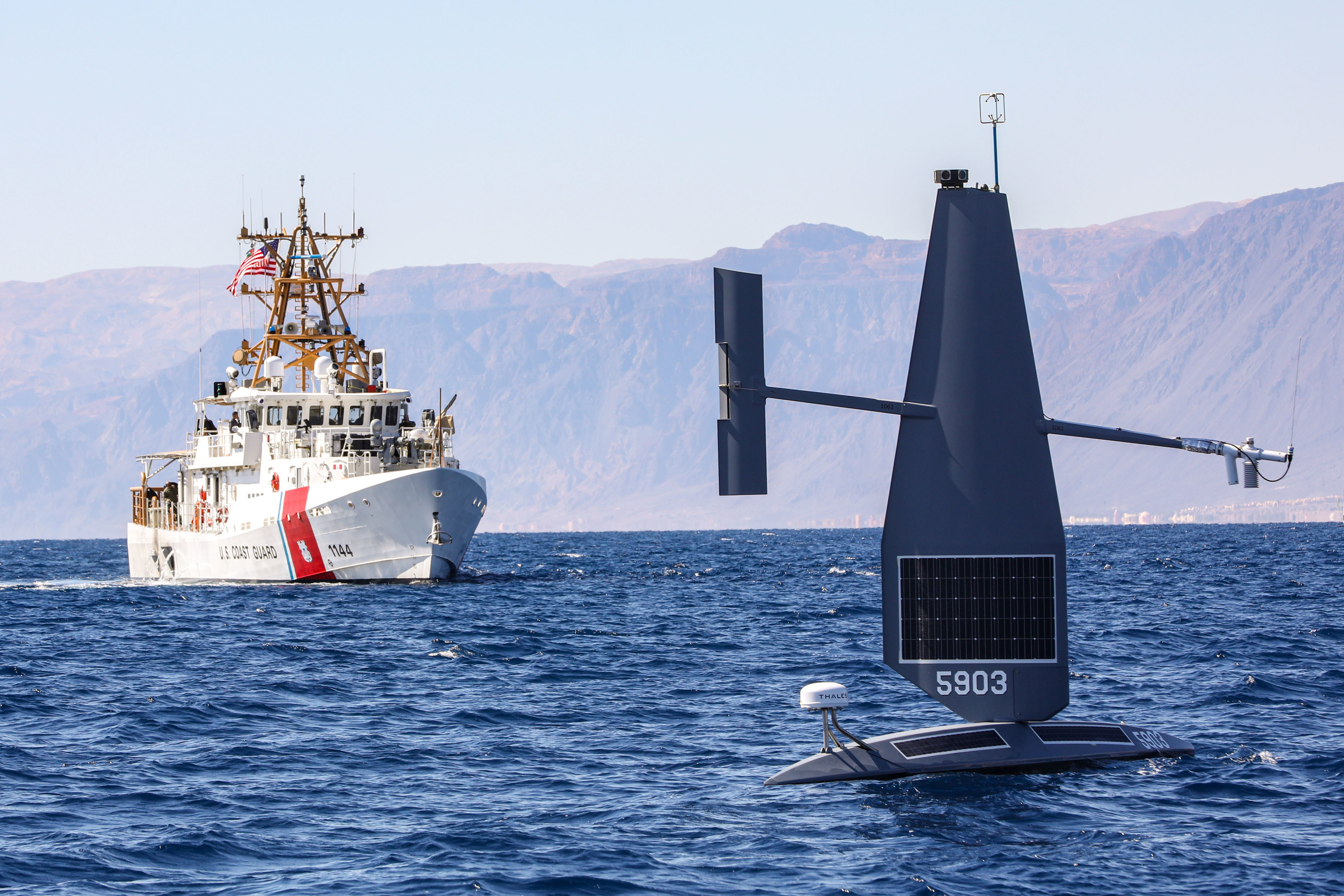
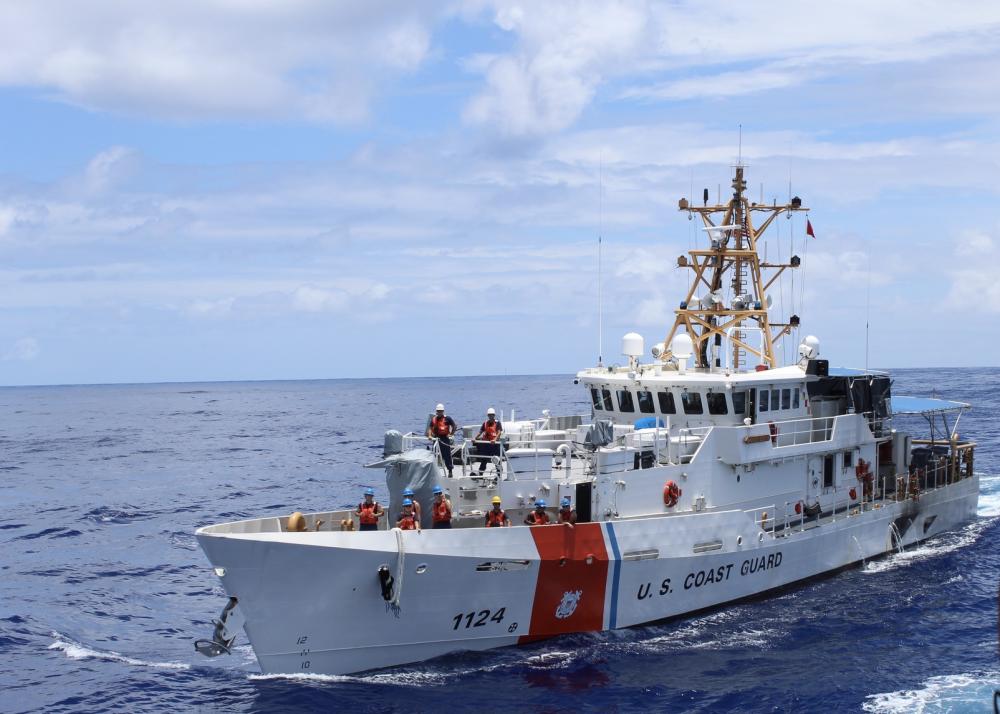
GULF OF AQABA (Feb. 13, 2022) The U.S. Coast Guard Sentinel-class cutter USCGC Glen Harris (WPC 1144) sails near a U.S sail drone explorer during the International Maritime Exercise/Cutlass Express (IMX) 2022, Feb. 13, 2022. IMX/CE 2022 is the largest multinational training event in the Middle East, involving more than 60 nations and international organizations committed to enhancing partnerships and interoperability to strengthen maritime security and stability. (U.S. Army photo by Cpl. DeAndre Dawkins)

Defense Scoop reports:

“The Navy plans to stand up additional unmanned task forces around the globe modeled after Task Force 59 in the Middle East, Navy Secretary Carlos Del Toro told reporters Saturday…“We’ve demonstrated with Task Force 59 how much more we can do with these unmanned vehicles — as long as they’re closely integrated together in a [command and control] node that, you know, connects to our manned surface vehicles. And there’s been a lot of experimentation, it’s going to continue aggressively. And we’re going to start translating that to other regions of the world as well,” Del Toro said during a media roundtable at the Reagan National Defense Forum.”

The report goes on to mention 4th Fleet and Oceana specifically, both regions of intense interest to the Coast Guard in regard to drug interdiction and Illegal, Unregulated, Unreported (IUU) fishing respectively.

This could be a big boost to our Maritime Domain Awareness. In the Eastern Pacific Drug Transit Zone we might need uncrewed surface vessels with passive acoustic sensors since the targets of interest are poor targets for radar and optical sensors. That could lead to practical experience that could improve our ASW capability.

“US Navy seizes massive shipment of ammo, explosive material in Gulf of Oman” –Task and Purpose

The U.S. Navy released photos of a fishing trawler it says carried more than 50 tons of ammunition rounds, fuses and propellants for rockets when it was boarded Dec. 1., 2022 in the Gulf of Oman. (U.S. Navy 5th Fleet via Stars and Stripes)

Task and Purpose reports,

“For the second time in less than a month, the U.S. Navy intercepted a ship passing through the Gulf of Oman and seized a large shipment of illicit weapons bound for Yemen..The Navy made the interception on Thursday, Dec. 1. Sailors with the Navy’s 5th Fleet stopped a fishing trawler in the gulf. During a flag verification boarding, they found a large cargo of munitions and chemical propellant. The sailors seized 1.1 million rounds of 7.62mm ammo, as well as an additional 25,000 12.7mm rounds. The trawler also was carrying almost 7,000 rocket fuses and more than 2,000 kilograms of a propellant used in rocket propelled grenades. The cargo totaled more than 50 tonnes.”

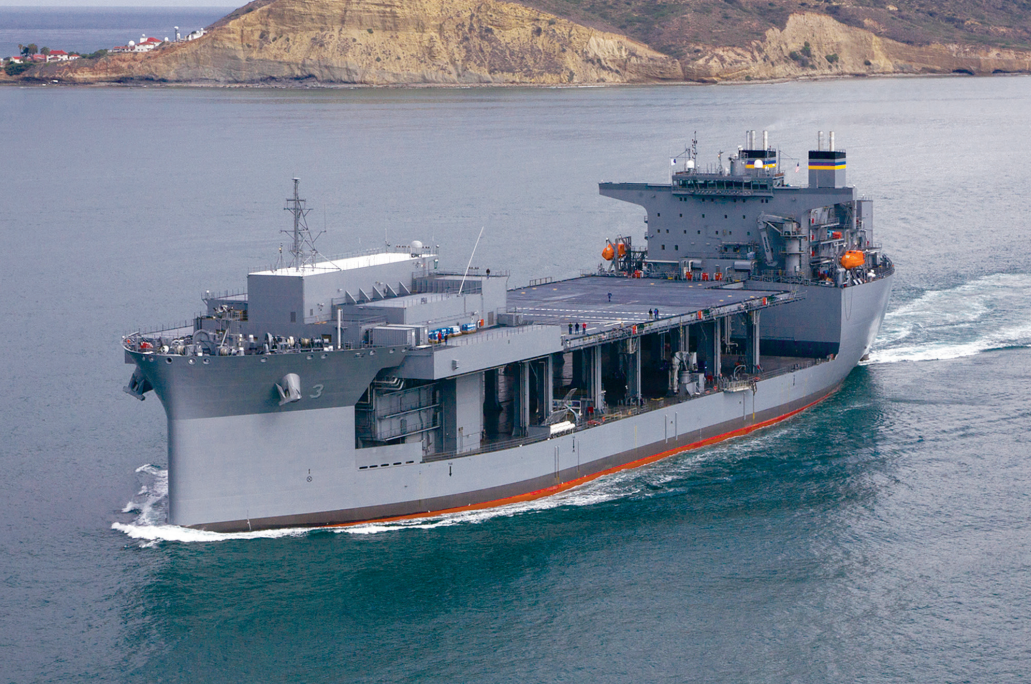
The boarding party came from the expeditionary sea base USS Lewis B. Puller, but I think it is a safe bet Coast Guard personnel were involved in the boarding.

USS Lewis B. Puller (ESB-3)


Fast Response Cutter / Navy MkVI Patrol Boat –Peter Ong

Today we have a guest author, Peter Ong. This is Peter’s sixth post on this blog, and he is now a regular contributor to Naval News. In this post, he reports a conversation with Coast Guard Cutter Forces about why the success of the Coast Guard’s Fast Response Cutter program has allowed  the Navy to cancel their MkVI patrol boat program that at one time was expected to produce 48 patrol boats.

The MkVI had only very austere galley and messing facilities, a Microwave and MREs. They were not expected to be underway more than 24 hours. The FRCs endurance, allowing days, rather than hours, on station to intercept drug and arms smugglers and their abilitiy to support counter UAS systems may be providing capabilities the MkVI simply could not have.
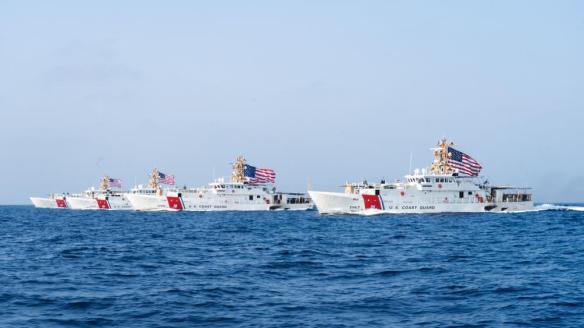
220822-A-KS490-1182 STRAIT OF HORMUZ (Aug. 22, 2022) From the left, U.S. Coast Guard fast response cutters USCGC Glen Harris (WPC 1144), USCGC John Scheuerman (WPC 1146), USCGC Emlen Tunnell (WPC 1145) and USCGC Clarence Sutphin Jr. (WPC 1147) transit the Strait of Hormuz, Aug. 22. The cutters are forward-deployed to U.S. 5th Fleet to help ensure maritime security and stability across the Middle East. (U.S. Army photo by Spc. Noah Martin)

When is a ship a boat and when is a boat a ship? When is an apple an orange and when is an orange an apple? Answer: they are not as these are two different and distinct things when it comes to comparing the warships of the U.S. Coast Guard to the MkVI patrol boats of the U.S. Navy.

A U.S. Navy Mark VI patrol boat with Maritime Expeditionary Security Squadron TWO moves through the water prior to a live fire exercise in the Philippine Sea, Feb. 27, 2021. (U.S. Marine Corps photo by 1st Lt. Stephanie Murphy).

The U.S. Navy is divesting of their 12 in-service Mark VI Patrol Boats, which at the Surface Navy Association 2021, Major General Tracy King, USMC, Director, Expeditionary Warfare (N95) stated that the twelve Mark VIs “Were very expensive to maintain.” However, many critics and pundits of the Mark VIs’ early retirement cite that the Mark VIs still have a lot of life left in them and that their high speeds and heavy armament makes them an asset to special forces, Marines, and Navy SEALs. Mark VIs also perform capital ship escort screenings and contribute to Distributed Lethality and Distributed Maritime Operations by having a smaller vessel signature that might help U.S. Marines move around and slip ashore undetected.

In a phone interview on September 29, 2022 with United States Coast Guard (USCG) Captain John J. Driscoll, Office of Cutter Forces (CG-751), the U.S. Coast Guard captain made a comment about the Sentinel-class Fast Response Cutters (FRC) substituting for the U.S. Navy’s Mark VI Patrol Boats in the Patrol Forces Southwest Asia (PATFORSWA) region and other parts of the globe.

The U.S. Navy plans to replace the Mark VIs and the aging Patrol Coastal boats in the PATFORSWA region with USCG FRCs. When asked how the cutter fleet is integrated with the U.S. Navy and the Department of Defense, the captain replied that the cutter fleet is built into different operational security plans within the U.S. Department of Defense, but these plans are not discussable.

Captain Driscoll said that the Coast Guard’s Fast Response Cutters and the Mark VI are different assets and have different capabilities. The 65 planned FRCs have much greater range and greater endurance (5 days, 2,500 nautical miles (4,600 km; 2,900 mi) and are designed to be on patrol 2,500 hours per year) than the U.S. Navy’s Mark VI Patrol Boats (750 nautical miles (860 mi; 1,390 km) at 25 knots; 690 nautical miles (790 mi; 1,280 km) at 30 knots).

The captain mentioned that the FRC is tremendously capable and different in how it integrates with the Department of Defense and one can’t make comparisons between the Navy’s Mark VI and the USCG’s Fast Response Cutters because the FRC is a commissioned warship of the United States with an assigned crew whereas the Mark VI is just a patrol boat—a ship versus a boat—the ship is larger. The FRC is 154-feet long (46.9 m) with a beam of 25-feet (7.6 m) whereas the Mark VI Patrol Boat is 84.8-feet (25.8 m) long with a beam of 20.5-feet (6.2 m).

Armament is about the same between the two vessels (a Mark 38 MOD 2 25mm autocannon forward with crew-served 12.7mm heavy machine guns and grenade launcher(s) aft) with the Mark VI sporting more armament (another potential Mark 38 25mm autocannon aft and potential crew-served 40mm automatic grenade launchers or 12.7mm heavy machine guns. Some PATFORSWA FRCs will receive the Mark 38 MOD 3 with a 7.62mm coaxial chaingun to the bow 25mm autocannon and a 40mm automatic grenade launcher).

Nonetheless, one can see the huge difference in operational range. Furthermore, the success of the 65 planned Coast Guard FRCs eclipses the 12 Mark VI U.S. Navy Patrol Boats in terms of production numbers. Furthermore, the Mark VI is propelled by waterjets to 45 knots (52 mph; 83 km/h) whereas the FRC has propellers that drive it at 28+ knots. Repeated requests to the U.S. Navy asking for explanation on “[The Mark VIs are] very expensive to maintain” were not answered, but one can assume that it takes a lot of time, labor, and money to clean out the Mark VI’s waterjet intakes and impellers compared to the more easily accessible external shaft and propellers on the Fast Response Cutters when operating in littoral waters potentially teeming with flotsam and seaweed.

FRC range and endurance are important. Captain Driscoll stated that the FRCs are working in the Papua New Guinea and Indonesian region to combat Illegal, Unreported and Unregulated (IUU) fishing and are working with partner nations to address the competition for maritime resources.

As for possible up-arming of the FRCs with the Mark 38 MOD 4 30mm autocannon, that is a retrofit possibility, noted the captain, although the upcoming Polar Security Cutter (PSC) heavy icebreakers will receive the 30mm autocannons first, two on each PSC. Captain Driscoll mentioned that the 30mm autocannon is in the U.S. Navy acquisition system and that the USCG and U.S. Navy both decide on future cutter armament. Programmable and airbursting 30mm ammunition options are not discussable although if the U.S. Navy has the specialized and advanced 30mm ammunition in its inventory, the USCG can also use it depending on the cutter’s mission parameters.

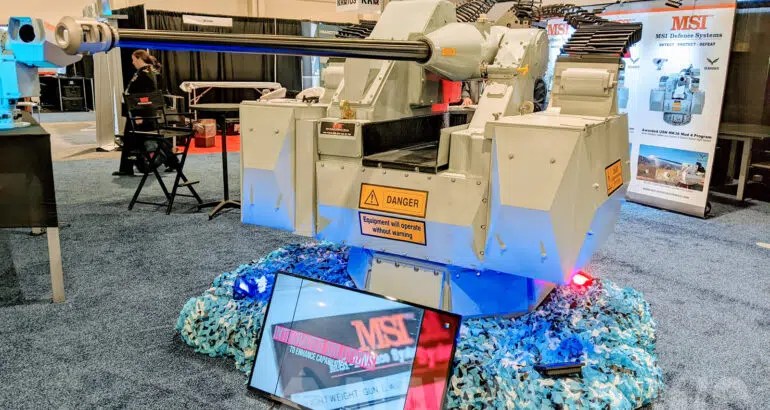
The new Mark 38 Mod 4 30mm naval gun system on display on MSI Defence stand at Sea Air Space 2022. It can, in theory and with funding, be retrofitted aboard existing USCG cutters if agreed upon between the U.S. Navy and the U.S. Coast Guard. Photo: NavalNews

Antarctic Support Ship “Almirante Saldanha” for Brazil

SeaWaves reports,

After research and studies conducted by the Brazilian Navy (MB), the future Antarctic Support Ship (NApAnt) had its name chosen: “Almirante Saldanha”. TheNApAntwill reduce the refueling time of the Comandante Ferraz Antarctic Station (EACF), due to cranes with greater load and maneuverability, and will be better equipped for the launch of camps and will have greater autonomy to expand support for research.

The new ship will replace the Oceanographic Support Ship “Ary Rongel” and will have more modern technical resources such as the navigation and control system, which will allow closer approach of the ship to the beach for landing personnel and material, safely.

There is no indication that the ship is an icebreaker, but it will certainly be ice strengthened. According to Janes, the ship will be delivered in 2025 and,

“The ship will displace approximately 5,880 tonnes for a length of 93.9 m, a width of 18.5 m, a draught of 6 m, cruising speed of 12 kt, endurance of 70 days, and a crew of 95, including 26 researchers.”

This is the ship being replaced:

Oceanographic support vessel ‘Ary Rongel’. Marinha do Brasil picture


Maybe Another Reason to Look at APKWS

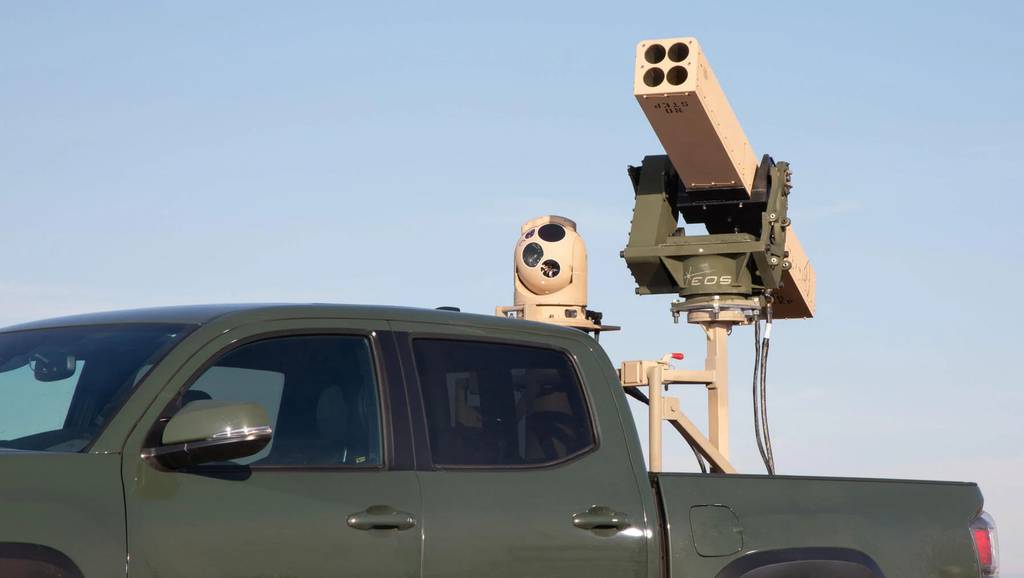
The VAMPIRE system can fit in almost any pickup or vehicle with a cargo bed. (Courtesy of L3Harris)

The Navy League’s on-line magazine, Seapower, reports,

BAE Systems completed additional ground-to-air test firings to prove the effectiveness of 70mm rockets guided by APKWS guidance kits against Class-2 unmanned aerial systems (UAS) that weigh roughly 25-50 pounds and can travel at speeds exceeding 100 miles per hour, the company said in a Nov. 29 release…During the demonstration in Southern Arizona, five APKWS-guided counter-UAS rockets were fired from a containerized weapon system and destroyed all targets, including fast-moving drones.

APKWS  info.

“Coast Guard Cutter Oliver Berry Returns Home Following 7,000-Nautical-Mile Patrol in South Pacific” –Military.Com

From a previous patrol. The Coast Guard Cutter Oliver Berry conducts a patrol in and around American Samoa, covering 8,169 nautical miles. The crew sought to combat illegal, unregulated, and unreported fishing and other maritime threats across the Pacific to protect the United States and our partner’s resource security and sovereignty. (U.S. Coast Guard photo courtesy of the CGC Juniper)

Military.com reports,

The U.S. Coast Guard Cutter Oliver Berry returned home to Honolulu this week in time for holiday festivities following a 38-day expeditionary fishery patrol in the South Pacific.

The Oliver Berry’s crew conducted 12 fisheries boardings, identified 16 fishery and safety violations and completed 18 community relation events while sailing from Honolulu to Kiribati, Samoa, the kingdom of Tonga and American Samoa during the 7,000-nautical-mile patrol before returning to its homeport on Tuesday, according to a news release.

These extraordinary voyages by these little ships are becoming routine. Also an indication of how difficult it is to prosecute IUU.

“US gov’t pledges more capacity-building programs for PCG” –Manila Bulletin

Certainly this will involve more “capacity building” and possibly more equipment transfers, but, perhaps more importantly, the US is sharing intelligence with the Philippines and other SE Asian nations to enhance maritime domain awareness.

I hope this will be another step toward a law enforcement alliance, a “Combined Maritime Security Task Force, Pacific,” perhaps following the model of the “Combined Maritime Force” in SW Asia.

Thanks to Xavier Ng for bringing this to my attention. 

Another Gun/Missile Remote Weapon Station Suitable for Patrol Boats

Navy Recognition reports,

At Euronaval 2022, a naval defense exhibition that was held in Paris, French Company Nexter unveils the latest generation of its NARWHAL 20mm remote-controlled turret which is now armed with one 20mm automatic cannon and the MBDA’s AKERON guided missile launch pod.

I am not a fan of this particular system. I would like to see at least a 30mm gun, but it is more evidence of the practicality and desirability of combining small missiles with a gun mounted on a remote weapon station.

Would really like to see the Coast Guard push for an upgrade of their Mk38 gun mounts to incorportate either APKWS or Hellfire / JAGM.

USV Attacks on Sevastopol and Novorossiysk

I certainly applaud the exploits of the Ukrainian Navy in taking the fight to the Russians using innovative means, here and here, but let us look at this from the prospective of the defender.

Naval Blogger Cdr Salamander offers some thoughts on the lessons of the recent attack on the Russian Navy Base in Sevastopol, but I think he may be selling the Russians short, under estimating the effort they put forth and suggesting that we would have done much better.

Quite properly he puts the attack in a historical context and calls for the US to be ready for similar attacks on US assets in US ports, but I have to take issue with his apparent belief that the Russian did not attempt to prepare for this type of attack.

This is another demonstration that the military culture of Russia is broken. The human element in the Sevastopol was manifested in the complete lack of preparation for the attack in spite of the warnings so clearly provided in September.

The Russians have a history of their ships being attacked in port that goes back to at least the Russo-Japanese war when the Japanese opened the war with a torpedo attack on the Russian fleet inport in Port Author. The unpleasant experience was repeated in WWI and WWII. As a result they have a relatively robust coastal and harbor defense organization, maybe better than ours.

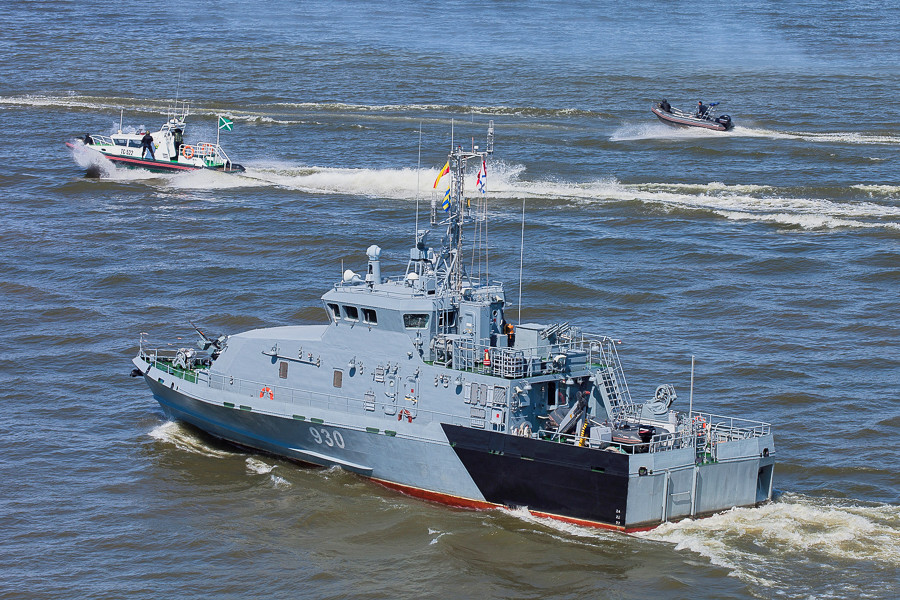
Grachonok class anti sabotage ship P-351 in Astrakhan. Photo credit Mil.Ru

The Russians have built a number of “anti-sabotour” boats that are equipped with DP-64 anti-sabotage grenade launchers and DP-65 remotely-controlled rocket grenade launcher system, a type of weapon I don’t believe we have in the US inventory. Reportedly there are ten of these anti-sabotour boats stationed in the Black Sea.

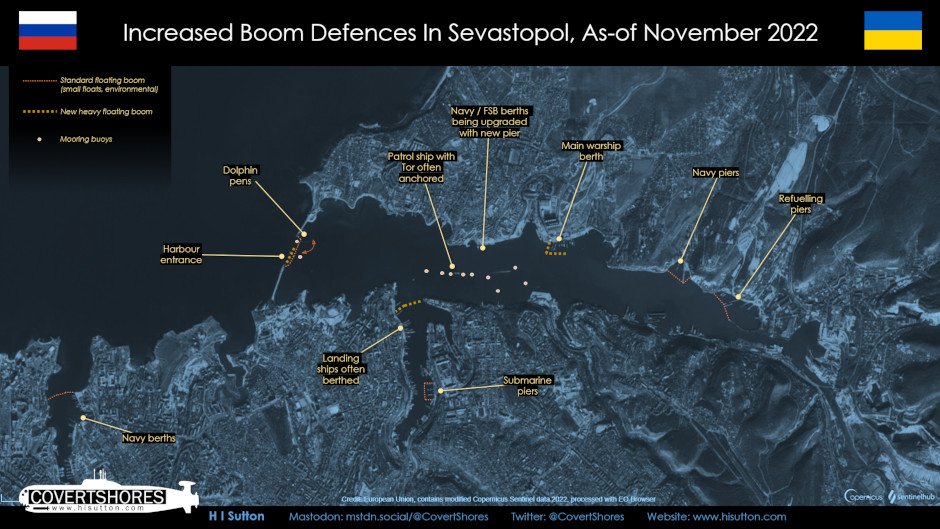
The Russians do not appear to have taken the most obvious and immediate steps to address this cheap, low-tech threat. They did not have significant barriers in place at the entrance to their harbors or around their ships’ berths. They did not have Sailors on watch with weapons at the ready.

Actually the Russians did have a physical barrier, probably a net. The shape of the bow, the shallow draft, and waterjet propulsion of the Ukrainian USVs may have allow them to jump the net.

The video above, taken by one of the attacking craft, shows an armed helicopter shooting at the craft. It seems likely this helicopter was there and airborne when the attack occured because it was part of a defense plan.

The Ukrainians applied the “quantity has a quality of its own” principle. I believe I saw a report that nine USVs were used in the attack. If only three ships were damaged, then it appears the Russians successfully countered 67% of the threat. Additionally the response might have resulted in the Ukrainians damaging easier targets, closer at hand, rather than the ones they had originally intended. From the Ukraininan point of view, the damage may have been less than they had expected or hoped for, nevertheless we see it as a success. Unfortunately for the defenders, anything less than 100% success is a failure.

Achieving 100% success is not as easy as the referenced post seems to suggest. Crew served Ma Duce .50 cal. are not adequate weapons. If the Russians had had something like APKWS, in the right places, I doubt those ships would have been damaged.

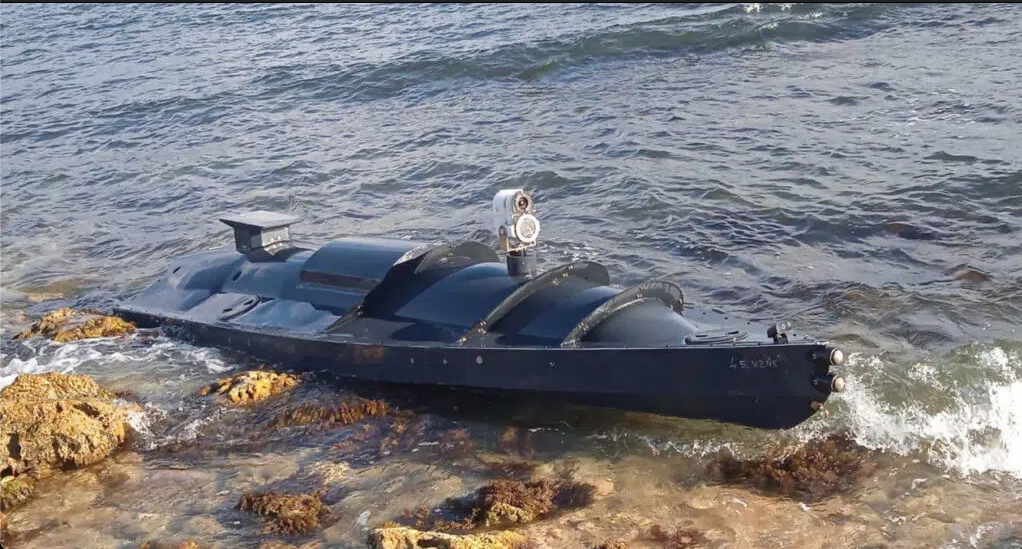
An Observation on the Ukrainian Attack Craft: 

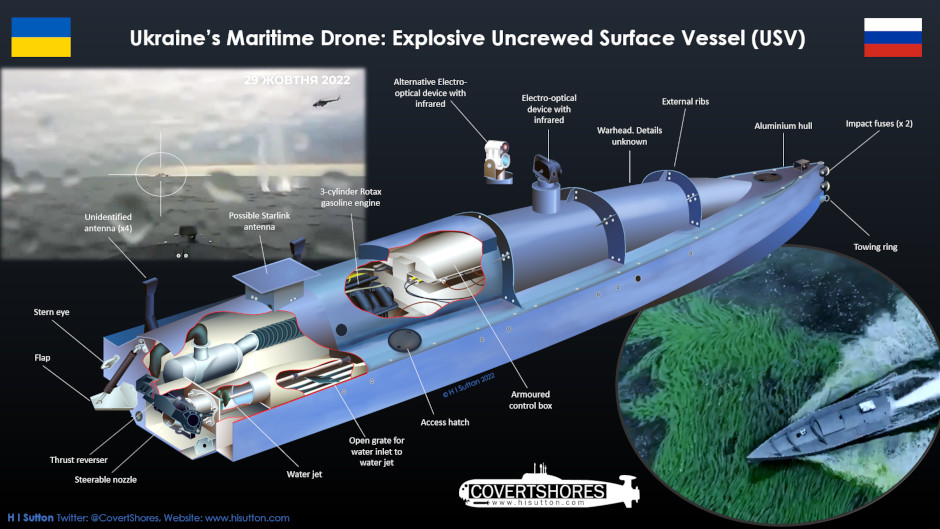
Since our first glimpse of these Ukrainian suicide drone boats, I have wondered about the “external ribs” as they are labeled above. Certainly they could be structural, but that seemed unlikely.

The most likely way to detect these craft at night is by their IR signature or seeing their wake. If the craft is pointed at you, those “ribs” might obstruct the view of the hot portions of the craft and its wake. They would also minimize light reflected from the inevitably wet top portion of the craft.

Image of the suspected Ukrainian USV circulating on Russian social media. Image via Naval News