“Loitering Munition Strikes Ukrainian Gunboat, A First In Naval Warfare” –Naval News

Naval News reports a Ukrainian Gyruza-M-class patrol boat

Gyurza-M-class gunboat. Photo: Ministry of Defense of Ukraine

has been hit by a Russian Lancet Loitering Munition.

ZALA Lancet, side view, Photo by Nickel nitride

The Ukrainian gunboat seems to have been pretty well armed.

We have talked about Loitering Munitions before:

These could be the answer to the Coast Guard’s need to be able to defeat small, highly manueverable, high speed surface threats.

They also extend the range at which non-state actors might be able to engage Coast Guard units.

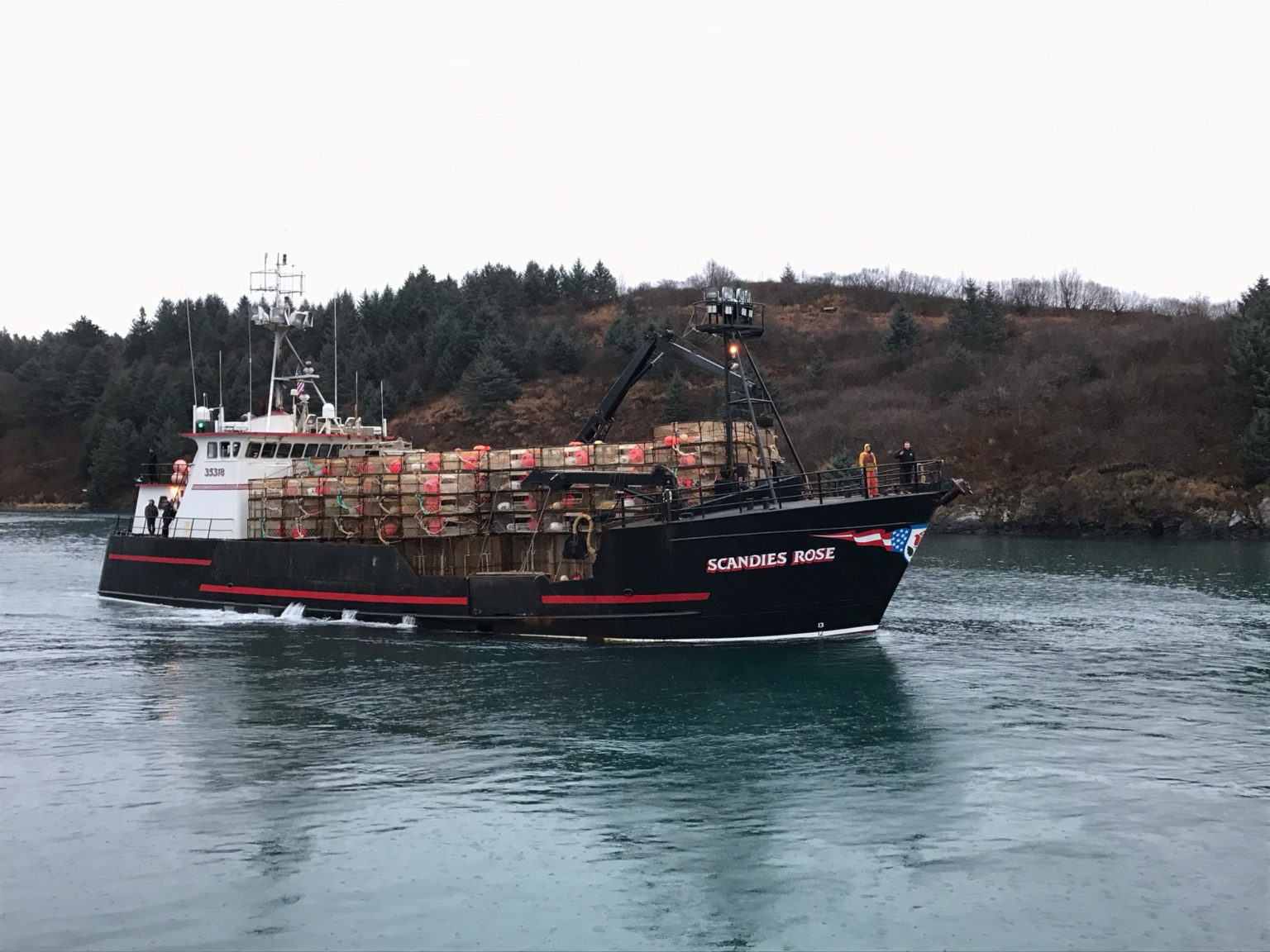
“Report: Additional Actions Needed to Improve Coast Guard’s Commercial Fishing Vessel Safety Efforts” –GAO, Report by gCaptain

The FV Scandies Rose arriving in Kodiak, Alaska, in an undated photo. The fishing vessel sank off Alaska’s Sutwik Island in 2019, with the loss of five of seven crew members. Source: Gerry Cobban Knagin via NTSB

gCaptain reports,

The GAO report concluded that the while the Coast Guard does make efforts to promote commercial fishing vessel safety, including through conducting dockside exams, engaging with industry, and collaborating with other federal agencies, it has yet to fully implement 17 of 22 statutory requirements enacted over the 10-year timeframe.

Plus there is a lot more.

“Ukraine’s New U.S. Supplied Combat Boats Already Patrolling Black Sea” –Naval News

Metal Shark 40 Defiant

Naval News reports,

6 U.S. Navy type patrol vessels have recently been supplied to Ukraine. These are already active in the Black Sea where they face a much more powerful adversary in the Russian Navy. But the Ukrainian Navy is building a reputation as an effective asymmetric force.

These are the same 44 foot patrol boats the Navy has been buying.

Previous discussion of other boats being transferred to Ukraine here.

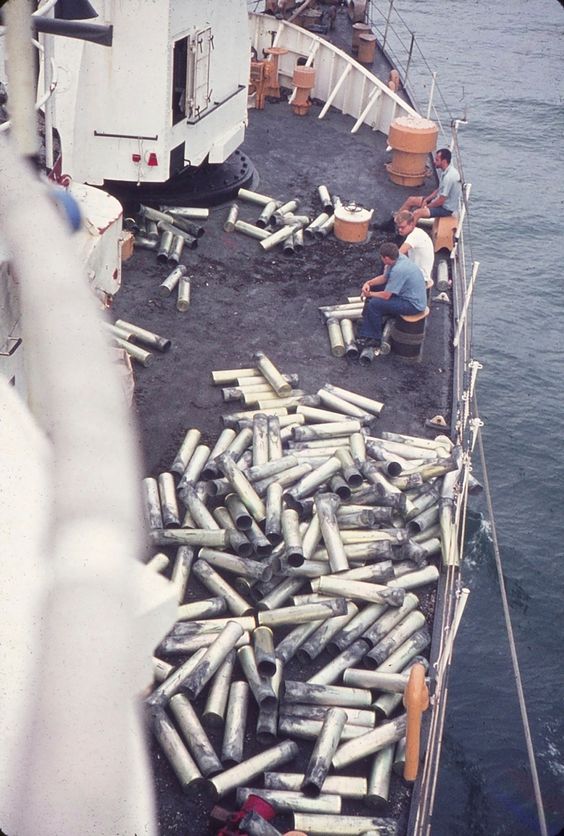
How Hard Is It to Sink a Ship With Gunfire?

I have made a point of trying to illustrate how hard it is to sink a ship, even a small ship, with gunfire. My most popular post, “What Does It Take to Sink a Ship?,” takes a statistical look at the USN WWII combat losses, and I have published other posts that have looked at this question.

This was to show how inadequate the armament of Coast Guard cutters is, if they are ever called upon to forcibly stop a mediium or large vessel with a determined crew.

What we have, in the video above, is an illustration of the damage that was done to a very tough, but relatively small US Navy destroyer, with a determined crew, that fought agressively against Japanese destroyers, cruisers, and battleships including the Yamato with its 18″ guns which hit the little ship three times.

In this battle, despite very long odds, actually more than half of the small ships survived. Of the six escort carriers (CVEs), three destroyers (DDs), and four destroyer escorts (DEs), five CVEs, one DD, and three DEs survived the assault by four battleships, six heavy cruisers, two light cruisers, and eleven destroyers.

For comparison, Fletcher class destroyers like USS Johnston typically had a full load displacement of 2,924 tons, less than two thirds the size of the NSCs and OPCs or about 50% larger than a 270.


Chinese F/V Attempts to Ram USCGC James –AP

In this photo made available by the U.S. Coast Guard, guardsmen from the cutter James, seen at background right, conduct a boarding of a fishing vessel in the eastern Pacific Ocean, on Aug. 4, 2022. During the 10-day patrol for illegal, unreported or unregulated fishing, three vessels steamed away. Another turned aggressively 90 degrees toward the James, forcing the American vessel to maneuver to avoid being rammed. (Petty Officer 3rd Class Hunter Schnabel/U.S. Coast Guard via AP)

The Associated Press is reporting,

“…a heavily-armed U.S. Coast Guard cutter sailed up to a fleet of a few hundred Chinese squid-fishing boats not far from Ecuador’s Galapagos Islands. Its mission: inspect the vessels for any signs of illegal, unreported or unregulated fishing…But in this case, the Chinese captains of several fishing boats did something unexpected. Three vessels sped away, one turning aggressively 90 degrees toward the Coast Guard cutter James, forcing the American vessel to take evasive action to avoid being rammed.”

Of course there is much more to the story.

“HMS Medway, U.S. Coast Guard Law Enforcement Detachment Seize Cocaine in Caribbean” –Seapower

HMS MEDWAY and her embarked US Coastguard Law Enforcement team interdicted a vessel carrying over 400kg of cocaine in the Caribbean Sea, 29 Sep 22. Initially spotted by a US Maritime Patrol Aircraft, the ship chased down the boat before the Coastguard boarding team discovered the drugs and detained three individuals. The operation, which lasted overnight, then concluded with the vessel being sunk by Medway’s weapons systems.

A hat tip to our Royal Navy friends. The Navy League’s on line magazine, Seapower, reports,

A Royal Navy ship and U.S. Coast Guard boarding team seized more than 400 kilograms of cocaine worth around £24m on Britain’s streets from a boat in the Caribbean, the U.K. Ministry Of Defence said in an Oct. 28 release.

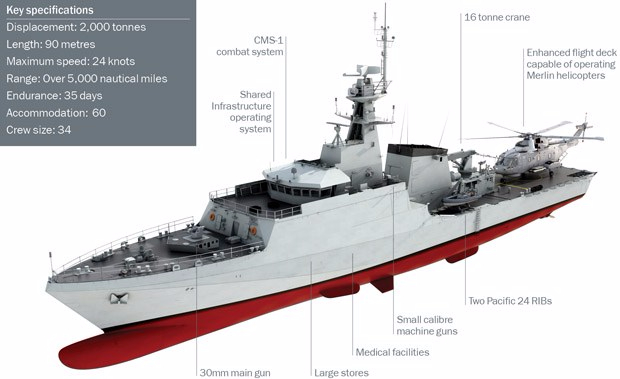
HMS Medway is a River Class Batch II Offshore Patrol Vessel. The Coast Guard would probably call her a medium endurance cutter. They have a relatively small crew and are faster than Coast Guard WMECs or the Offshore Patrol Cutters currently building.

There is no indication they operated with an embarked helicopter. Operating in the Caribbean they would have had adequate fixed wing support. They have a large helicopter landing area but no hangar. The helicopter in the illustration is a very large one, a Merlin, with a max take off weight of over 32,000 pounds.

The gun on these ships is the same gun and mount as the new Mk38 Mod4.

Former USCGC Douglas Munro Makes Its Way to Sri Lanka

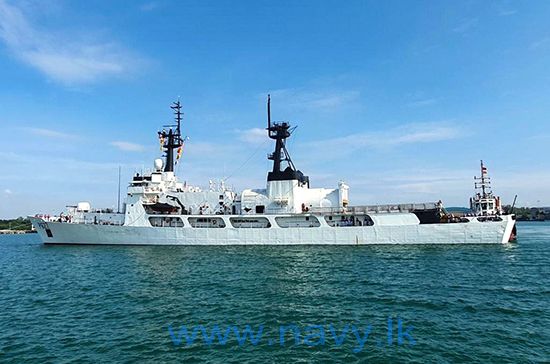
Seawaves reports on the delivery voyage of the former USCGC Douglas Munro on its way to Sri Lanka. As in previous cases you can see that the air-search radar, Phalanx CIWS, and 25mm guns have been removed while the 76mm Mk75 gun and Mk92 fire control system remain.

As reported by Wikipedia, this is the 11th  of the 12 ships of the class to be handed over to a foreign navy or coast guard. In most cases, they are the largest units in their new parent organization. Using their former names, their distribution is as follows:

Philippine Navy:

  • Hamilton
  • Dallas
  • Boutwell

Nigerian Navy:

  • Chase
  • Gallatin

Sri Lankan Navy:

  • Sherman
  • Douglas Munro

Vietnam Coast Guard:

  • Morgenthau
  • John Midgett

Bangladesh Navy:

  • Rush
  • Jarvis

The only one of the class that remains is Mellon which is expected to go to Bahrain.

Sri Lanka has also been operating the former 210 foot, Medium Endurance Cutter USCGC Courageous since 2005.

“Ukraine Unleashes Mass Kamikaze Drone Boat Attack On Russia’s Black Sea Fleet Headquarters” –The Drive

Russian frigate Admiral Makarov

The Drive reports, it appears Ukraine made a mass attack of unmanned air and surface craft on Russia’s primary naval base in the Black Sea, Sevastopol (Ukraine is not claiming responsibility). There seems to be confirmation from Russia that minor damage was done to a minesweeper, but other reports indicate a relatively new frigate, the Admiral Markarov, serving as flagship of the Black Sea Fleet, may also have been damaged. Video in the report shows a very close approach to a frigate of the same class, apparently by an unmanned surface craft before the video ends abruptly.

Russia is also claiming that the UK was involved in the planning of the attack.

While unlikely, how to defend against such  attacks probably should be in the Coast Guard’s skill set. Force protection and harbor defense are potential missions.

I MEF, USCG Pacific Area, U.S 3rd Fleet Sign Tri-Service Memorandum of Understanding
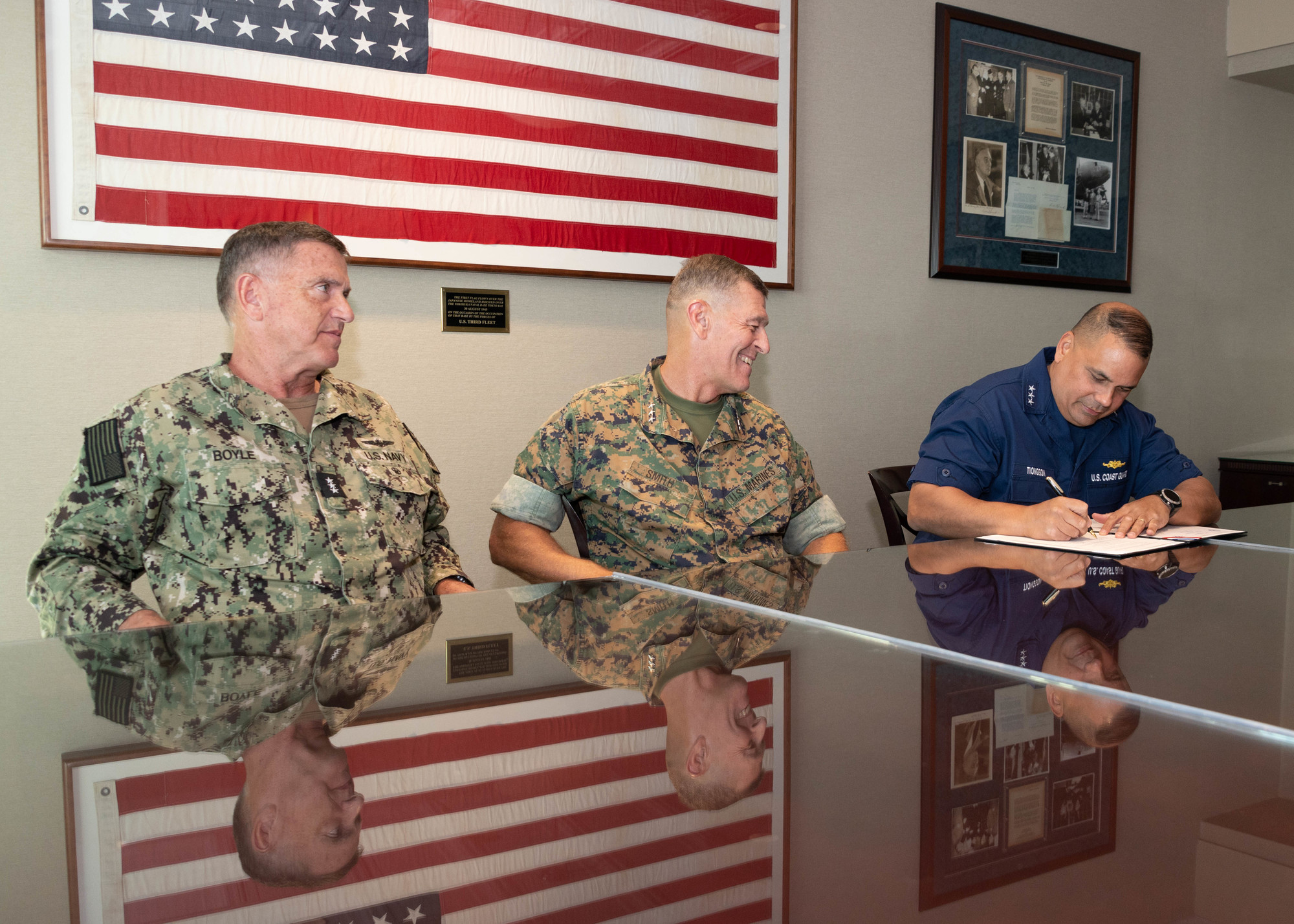
Below is a Pacific Area news release. Apparently it adds the Coast Guard to an existing memorandum of understanding between 3rd Fleet and I MEF (“I” pronounced “One”) .

By expanding the memorandum of understanding to include U.S. Coast Guard Pacific Area of Command further solidifies the full maritime approach at the operational and tactical levels.

It may be noteworthy that the agreement is with 3rd Fleet, not Pacific Fleet. Both 3rd Fleet and 1 MEF have homeland defense and Disaster Response/Humanitarian Assistance missions for the West Coast and Alaska. Both have their headquarters in Southern California.

It may signal greater Navy/Marine interest in Alaska and the Arctic

Hopefully this agreement will work in both directions. The Coast Guard will be more ready to execute wartime missions, while the Navy and Marines will be more ready to help in cases of a terrorist attack, natural disaster, or a massive SAR case.

News Release Oct. 28, 2022
U.S. Coast Guard Pacific Area
Pacific Area online newsroom

I MEF, USCG Pacific Area, U.S 3rd Fleet Sign Tri-Service Memorandum of Understanding

Vice Admiral Tiongson signs MOU

Editor’s Note: Click on image above to download high resolution version. 

SAN DIEGO – Commanding General, I Marine Expeditionary Force, Commander, U.S. Coast Guard Pacific Area, and Commander, U.S. 3rd Fleet signed a tri-service maritime strategy memorandum of understanding, Wednesday, at U.S. 3rd Fleet Headquarters. 

The memorandum formalizes the implementation of strategic guidance by developing a predictable framework for integrated exercise design, planning, experimentation and execution, and ensure interoperability between the services and readiness at all levels and across all domains.

“This memorandum solidifies our commitment to training, learning, and adapting as a collective team to meet current and future challenges,” said Lt. Gen. George W. Smith Jr., commanding general, I MEF. “As the largest Marine Air-Ground Task Force assigned to U.S. Indo-Pacific Command, I Marine Expeditionary Force is inextricability linked to the maritime domain. Our work with U.S. 3rd Fleet and U.S. Coast Guard Pacific Area Command is critical to generating, employing, and modernizing a true tri-maritime force capable of responding across the spectrum of contingencies at home and abroad.”

Leveraging the complementary capabilities of the U.S. Marine Corps, U.S. Coast Guard and U.S. Navy has the ability to generate integrated all-domain maritime power. By expanding the memorandum of understanding to include U.S. Coast Guard Pacific Area of Command further solidifies the full maritime approach at the operational and tactical levels.

“Bringing to bear unique capabilities and broad authorities as both a military, maritime service and a federal law enforcement and regulatory agency, the Coast Guard strives to remain a trusted partner in bolstering safety and security in a free and open, connected, prosperous and resilient Indo-Pacific,” said Vice Adm. Andrew J. Tiongson, commander, U.S. Coast Guard Pacific Area.  “We look forward to joining together with U.S. 3rd Fleet and the 1st Marine Expeditionary Force as we campaign to enhance readiness and exercise shared operational capabilities in response to common threats and challenges.”

In addition to integrating live, virtual and constructive training capabilities inside of a predictable framework, the memorandum also outlines information-sharing practices and allows for the development of options for staffs to engage in cross-training opportunities and other coordination forums between the services.

“Navy, Marine Corps, Coast Guard; we each bring unique capabilities to the fight and we have a longstanding history of working together,” said Vice Adm. Michael E. Boyle, commander, U.S. 3rd Fleet. “Formalizing the integration of our services increases our ability to overcome any conflict, issue, or adversary across the maritime domain; whether its command and control of maritime forces, maritime homeland defense, or defense support to civil authorities.  We are strongest as a Tri-service team.”

An integral part of U.S. Pacific Fleet, U.S. 3rd Fleet leads naval forces in the Indo-Pacific and provides the realistic, relevant training necessary to flawlessly execute our Navy’s role across the full spectrum of military operations—from combat operations to humanitarian assistance and disaster relief. U.S. 3rd Fleet works together with allies and partners to advance freedom of navigation, the rule of law, and other principles that underpin security for the Indo-Pacific region.

Pacific Area Command is the Coast Guard’s regional command element and force provider for maritime safety, security and stewardship throughout the Pacific. The command’s area of responsibility encompasses six continents, 71 countries and more than 74 million square miles of ocean.