“Coast Guard FRC Seizes Illegal Narcotics in Gulf of Oman” –Seapower/Same Job, Different Hemisphere

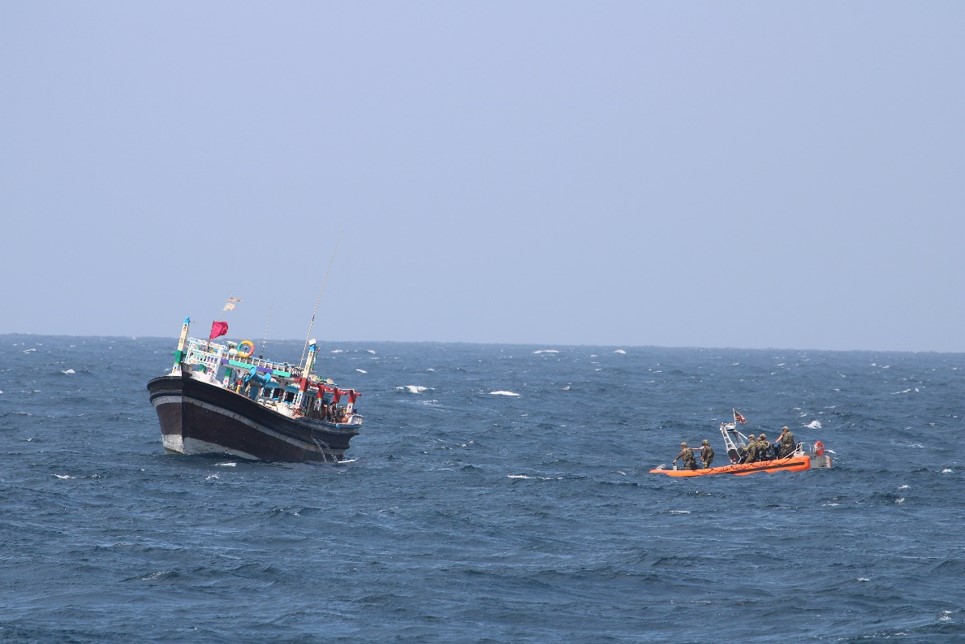
Personnel from U.S. Coast Guard fast response cutter USCGC Glen Harris (WPC 1144) interdict a fishing vessel smuggling illegal narcotics in the Gulf of Oman, Aug. 30, 2022. U.S. COAST GUARD

The Navy League’s on-line magazine, Seapower, reports,

A U.S. Coast Guard fast response cutter interdicted a fishing vessel smuggling illegal drugs worth an estimated U.S. street value of $20 million while patrolling the Gulf of Oman, Aug. 30, NAVCENT Public Affairs said Aug. 31.

USCGC Glen Harris (WPC 1144) seized 2,980 kilograms of hashish and 320 kilograms of amphetamine tablets during operations in support of Combined Task Force (CTF) 150.

This is USCGC Glen Harris’ third drug bust since joining Patrol Forces SW Asia in January.

“Coast Guard, other agencies to remove 2 abandoned vessels from Columbia River in Portland, Ore.” –One of Them Is a Former US Coast Guard Cutter

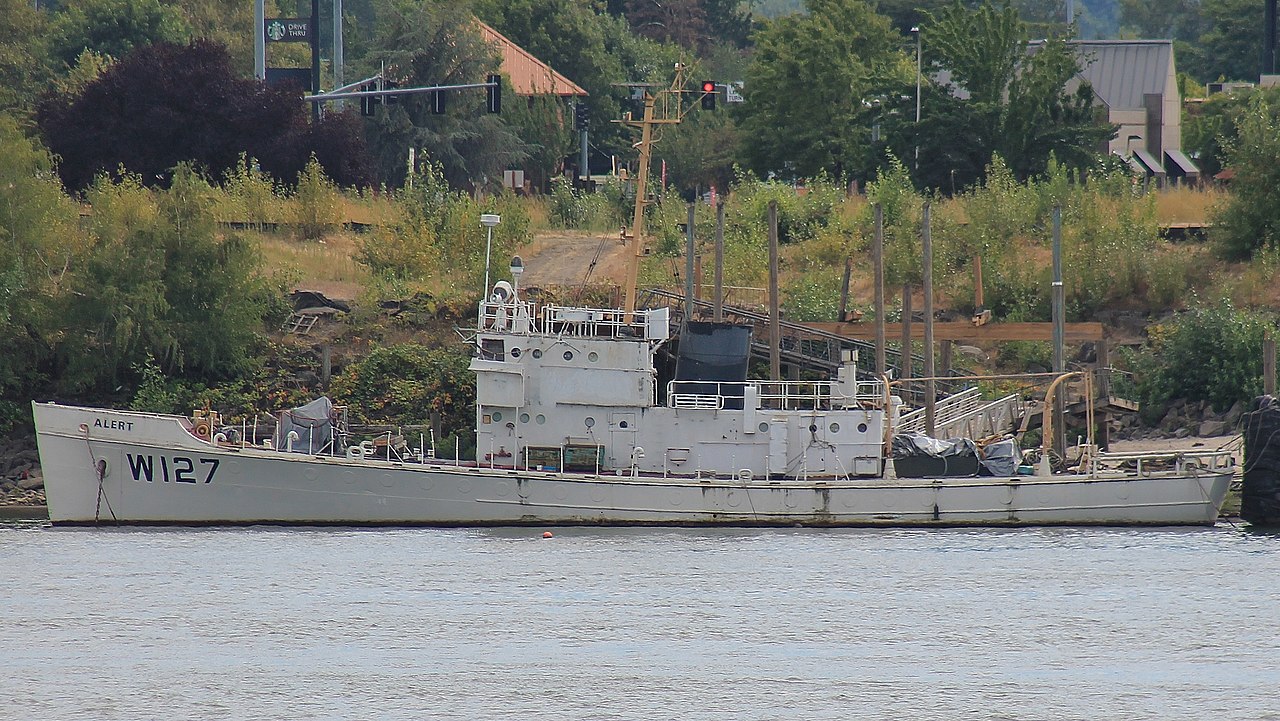
The Active-class cutter USCGC Alert (WMEC-127) moored on the Columbia River, by Hayden Island in Portland, Oregon. Seen on 14 August 2019. Photo from Wikipedia by godsfriendchuck.

Just saw this news release and realized they were talking about the former USCGC Alert (WMEC-127). We talked about this ship and its unfortunate post Coast Guard history earlier including a lot of information in the comments.

Since this was what passed for a WMEC when I entered the academy in 1965, you can see why I sometimes see the Webber class FRCs as MECs. The FRCs have more freeboard.

News Release

U.S. Coast Guard 13th District PA Detachment Astoria

Coast Guard, other agencies to remove 2 abandoned vessels from Columbia River in Portland, Ore.

PORTLAND, Ore. – The Coast Guard and other agencies have approved a plan Wednesday to remove two abandoned vessels from the Columbia River in Portland.

The vessels Alert, a 125-foot vessel, and Sakarissa, a 100-foot vessel, are currently sunk off Hayden Island. They are adjacent to the Interstate 5 Bridge and a mile upriver from the Burlington Northern Santa Fe (BNSF) railroad bridge.

Due to hull deterioration and oil saturation of the vessels’ interiors, they have been discharging a sheen into the waterway. They also pose a collision hazard for vessels operating outside the navigation channel.

“Even though the Coast Guard oversaw the removal of thousands of gallons of diesel and oily water from these vessels in 2020, they still pose a risk,” said L.t. Lisa Siebert, the Incident Management Division Supervisor at Coast Guard Sector Columbia River – Detachment Portland. “We have worked closely with our State and local partners to develop an integrated plan to remove these vessels and protect the public and the environment.”

This project will be funded in two phases. During the first phase, the Coast Guard plans to use the Oil Spill Liability Trust Fund (OSLTF) to raise the vessels and transport them to a facility in order to safely pump any remaining oil waste product from the vessels. During the second phase, the Oregon Department of State Lands, with funding support from Metro, is scheduled to assume custody of the vessels for final disposal.

The Coast Guard was granted authorization to access the OSLTF for $1 million for its phase of the project. There is currently a ceiling amount of $500,000 for each vessel. This amount is determined for the response based on anticipated obligations. Since this is just an estimate, this ceiling is subject to change during the response.

The Coast Guard plans to begin operations in early September, starting with dive assessments to determine the safest way to raise and transport the two vessels. The Coast Guard plans to conduct operations to raise the vessels throughout the month of September. 

“These plans are preliminary and we will continuously assess our plan and make adjustments if needed,” Siebert said. “Throughout this response, the safety of the public and responders will remain our top priority.”

During project activities, the immediate vicinity of the area will be closed to public access.

“I’m incredibly happy our partnerships and hard work resulted in a much-needed plan to remove these vessels,” Siebert said. “This project is truly a team effort and we can’t do it alone.”

Involved in developing the plan were the Coast Guard, Oregon Department of State Lands, Metro, Oregon Department of Environmental Quality, and the National Oceanic and Atmospheric Administration.

For the most up-to-date information about this project, follow us on Twitter at @USCGPacificNW.

“Coast Guard carves out strategic niche in Africa” –Stars and Stripes

USCGC Mohawk manns the rail as she sails alongside a Nigerian navy ship in the Atlantic Ocean, Aug. 22, 2022. Mohawk is on a scheduled deployment in the U.S. Naval Forces Africa area of operations. (Jessica Fontenette/U.S. Coast Guard)

Stars and Stripes reports on the Coast Guard’s latest capacity building and counter IUU efforts in West African waters.

Previous related reports:

The second link immediately above includes additional links regarding previous similar efforts.

“Coast Guard, North Slope Borough Search and Rescue to conduct exercise near Utqiagvik, Alaska” –D17

Utqiagvik, the city formally know as Barrow, AK (File photo courtesy of Wikipedia)

This may look like a routine announcement, but I found it interesting because of where it is, and the fact that it will include “Coast Guard helicopters, and Coast Guard cutters” –both plural. Utqiagvik, Alaska, formerly Barrow, is the Northern most city in Alaska, 71°17′26″N, 284 nautical miles above the Arctic Circle. The helicopters will probably come with the cutters (maybe not?), but what cutters? USCGC Healy, an icebreaker, seems likely, but there has got to be at least one more. Maybe Alex Haley, out of Kodiak, or a Bertholf class NSC on Alaska Patrol?

Hopefully we will hear more.

News Release

U.S. Coast Guard 17th District Alaska

Coast Guard, North Slope Borough Search and Rescue to conduct exercise near Utqiagvik, Alaska

JUNEAU, Alaska – The 17th Coast Guard District and North Slope Borough Search and Rescue are scheduled to conduct an exercise near Utqiagvik, Alaska, August 31, 2022 through September 3, 2022.

The exercise is a small-scale search and rescue mission offshore of Utqiagvik named Operation Itqanaiyaq, meaning Get Ready or Get Prepared in Iñupiaq. The purpose of the exercise is for the Coast Guard and North Slope Borough Search and Rescue to practice procedures for maritime distress response.

The public will notice an increase in emergency responder and military presence in the vicinity of Utquiagvik during the exercise dates. The increased presence will consist of Coast Guard helicopters, and Coast Guard cutters.

“This search and rescue exercise provides a great opportunity for the Coast Guard to train alongside the North Slope Borough in an Arctic environment,” said Lt. Lindsay Wheeler from the 17th Coast Guard District. “We never know when we will need to respond with our aerial or surface assets to help find and rescue missing or injured people.”

“Coast Guard Cutter Midgett arrives in the Western Pacific” –PacArea

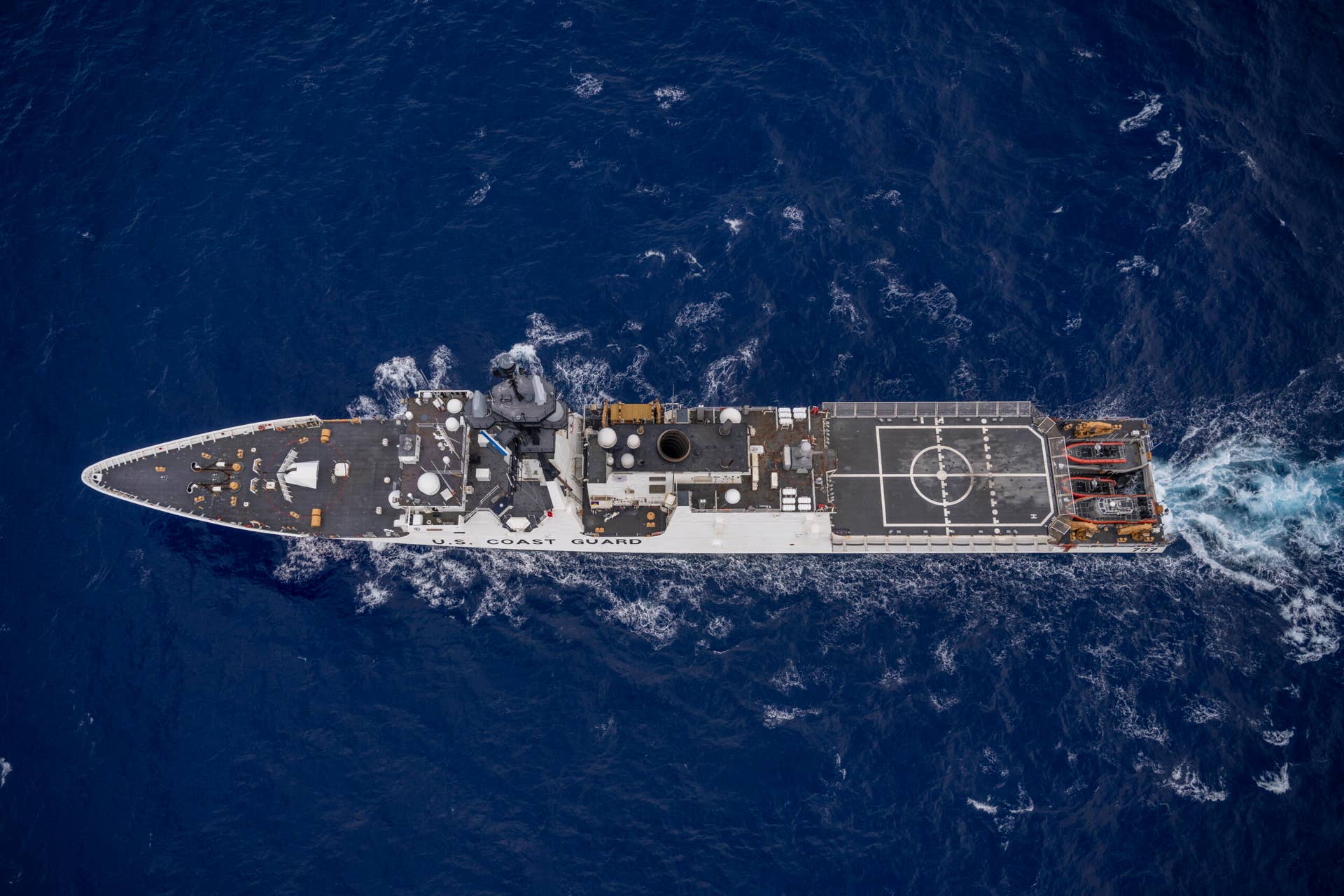
PACIFIC OCEAN (July 30, 2022) U.S. Coast Guard Legend-class cutter USCGC Midgett (WMSL 757) transits the Pacific Ocean during Rim of the Pacific (RIMPAC) 2022. Twenty-six nations, 38 ships, three submarines, more than 170 aircraft and 25,000 personnel are participating in RIMPAC from June 29 to Aug. 4 in and around the Hawaiian Islands and Southern California. The world’s largest international maritime exercise, RIMPAC provides a unique training opportunity while fostering and sustaining cooperative relationships among participants critical to ensuring the safety of sea lanes and security on the world’s oceans. RIMPAC 2022 is the 28th exercise in the series that began in 1971.(U.S. Coast Guard photo by Petty Officer 3rd Class Taylor Bacon)

Only weeks after having completed participation in RIMPAC2022, Honolulu based USCGC Midgett begins a “months-long” deployment in the Western Pacific.

News Release

August 31, 2022
U.S. Coast Guard Pacific Area

Coast Guard Cutter Midgett arrives in the Western Pacific
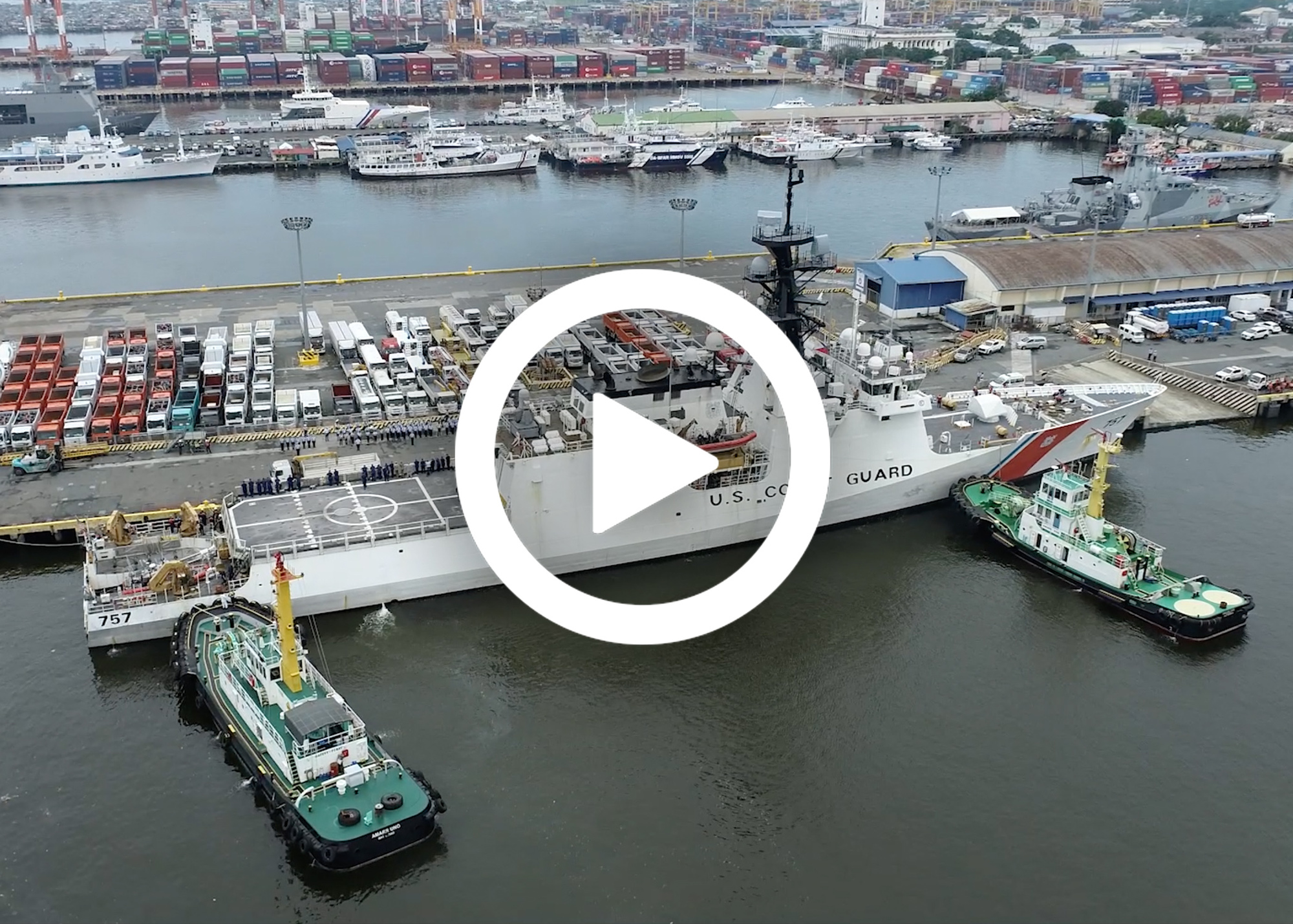
VIDEO: Coast Guard Cutter Midgett arrives in the Western Pacific

Coast Guard Cutter Midgett arrives in Manila, Philippines Coast Guard Cutter Midgett arrives in Manila, Philippines Coast Guard Cutter Midgett arrives in Manila, Philippines

Editors’ Note: Click on images to download high resolution version.

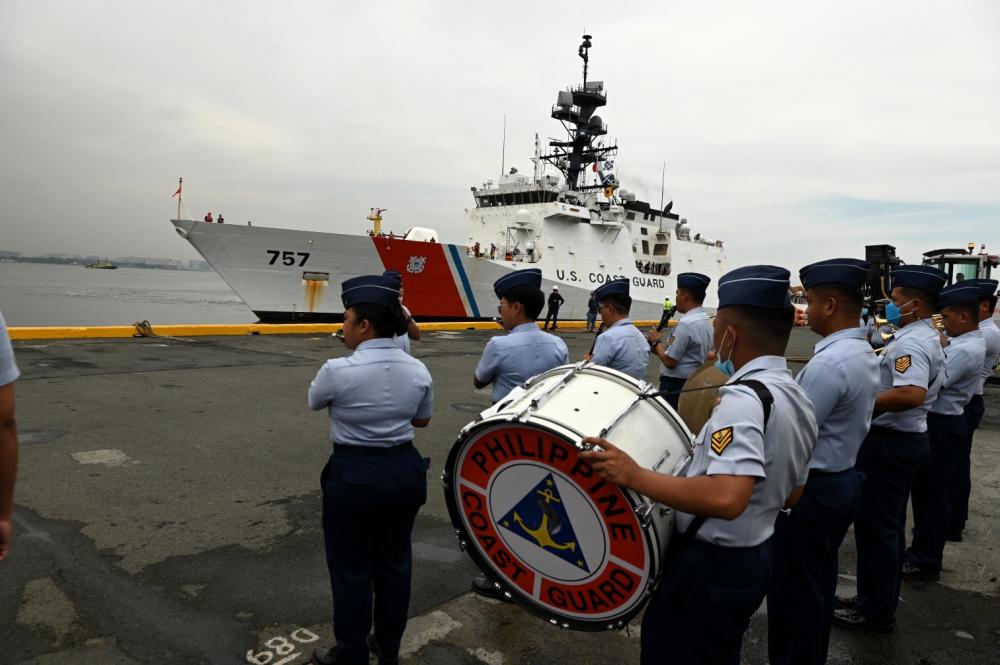
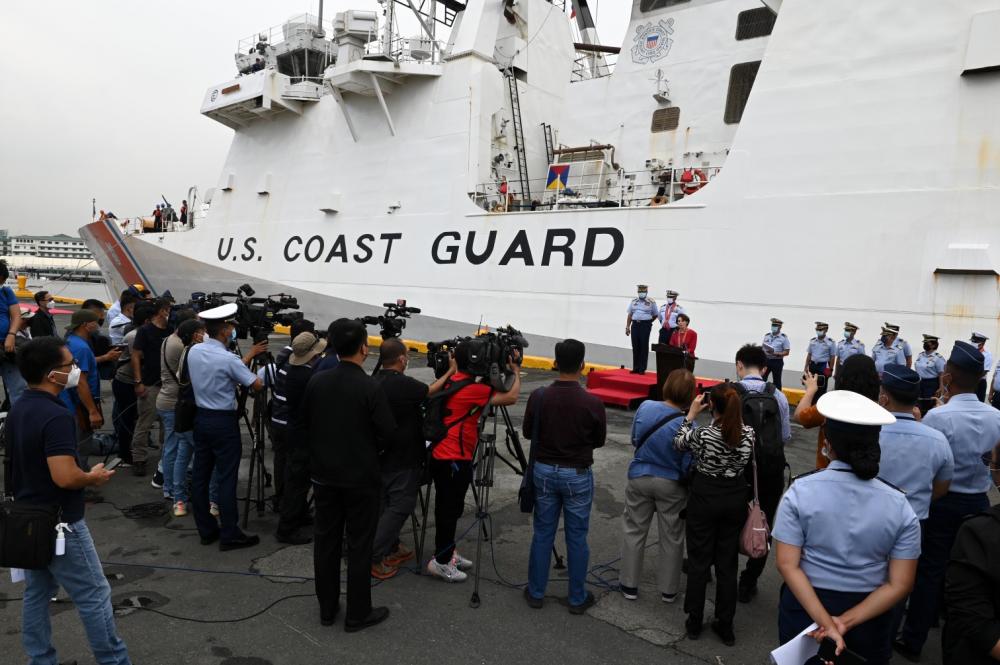
MANILA, Philippines – The U.S. Coast Guard Cutter Midgett (WMSL 757) arrived in Manila Tuesday for its first international port call during the crew’s months-long Western Pacific deployment to the region.

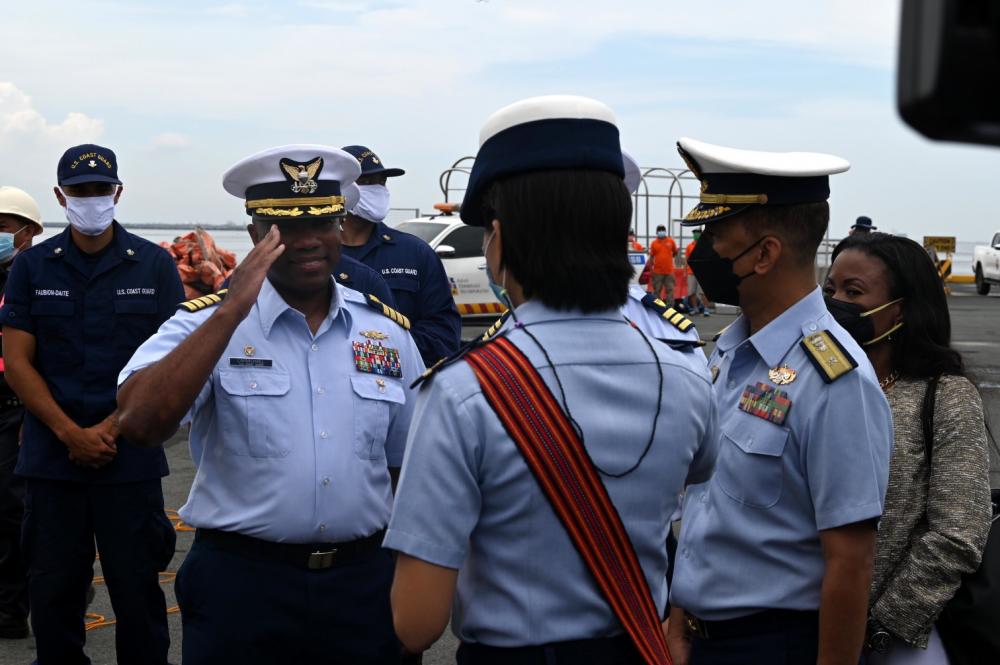
Midgett’s crew will conduct professional exchanges and operate with the Philippine Coast Guard as part of an at-sea search-and-rescue exercise while in Manila, building upon the strong partnership between the two nations.

Midgett is operating in support of United States Indo-Pacific Command, which oversees military operations in the region.

Operating under the tactical control of Commander, U.S. 7th Fleet, the cutter’s crew plans to engage in professional and subject matter expert exchanges with regional partners and allies and will patrol and operate as directed during their Western Pacific deployment.

The Coast Guard provides expertise within the mission sets of search and rescue; illegal, unreported and unregulated fishing; maritime environmental response; maritime security; maritime domain awareness; aviation operations; interoperability; and humanitarian assistance and disaster relief.

As both a federal law enforcement agency and a branch of the armed forces, the Coast Guard is uniquely positioned to conduct non-escalatory defense operations and security cooperation in support of combatant commanders on all seven continents. The service routinely provides forces in joint military operations worldwide, including the deployment of cutters, boats, aircraft and deployable specialized forces.

“Engaging with our Philippine Coast Guard partners is truly an honor,” said U.S. Coast Guard Capt. Willie Carmichael, commanding officer of the Midgett. “Together we will continue to build strong relationships and learn from each other. Our deep-rooted partnership will combine the best of both our Coast Guards and the planned search-and-rescue exercise and professional exchanges are a great opportunity for us keep the Indo-Pacific region open and free.”

The U.S. Coast Guard has a 150-year enduring role in the Indo-Pacific. The service’s ongoing deployment of resources to the region directly supports U.S. foreign policy and national security objectives in the Indo-Pacific Strategy and the National Security Strategy.

Since 2019, the Coast Guard Cutter Bertholf (WMSL 750), Stratton (WMSL 751), Waesche (WMSL 751) and Munro (WMSL 755) have deployed to the Western Pacific.

Commissioned in 2019, Midgett is one of two Coast Guard legend-class national security cutters homeported in Honolulu. National security cutters are 418-feet long, 54-feet wide, and have a 4,600 long-ton displacement. They have a top speed in excess of 28 knots, a range of 12,000 nautical miles, endurance of up to 90 days and can hold a crew of up to 170.

Midgett is the second cutter named after Rear Admiral John Midgett, whose family has a long legacy in the Coast Guard and our services precursor – the U.S. Life Saving Service.

National security cutters feature advanced command and control capabilities, aviation support facilities, stern cutter boat launch and increased endurance for long-range patrols to disrupt threats to national security further offshore.

“Iranian ship intercepted while trying to detain American drone” –Breaking Defense

USS Thunderbolt, seen here in both Coast Guard and Navy markings during its period of service in the USCG. U.S. Coast Guard photo by David Schuffholz

Breaking Defense reports,

The US Navy’s 5th Fleet today announced it thwarted an attempt by an Iranian ship to seize an American unmanned surface vessel operating in the Arabian Gulf.

(See the video below.)

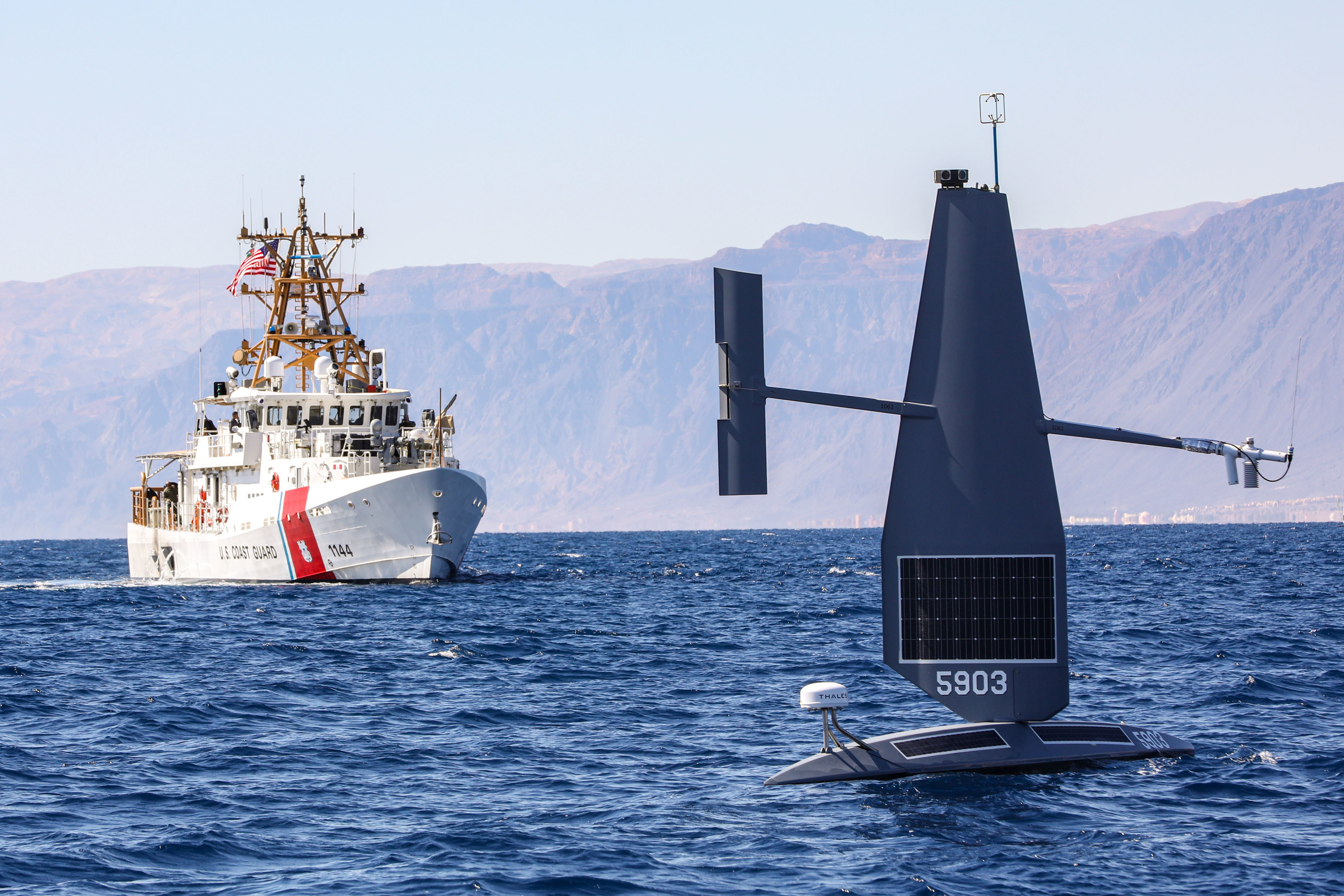
The unit that stopped this Iranian vessel from making off with the Saildrone was USS Thunderbolt (PC-12), supported by a helicopter of Helicopter Sea Combat Squadron 26, presumably an MH-60S. Vessels of this class are in the process of being decommissioned from the US Navy. Most of their functions will be performed USCG Webber class WPCs of Patrol Forces SW Asia.

This incident does seem to highlight a, not unexpected, aspect of Unmanned Surface Vessel (USV) deployment. Rogue nations and even non-state actors may try to steal them. As we see here, there may be little or no consequences if they are caught in the act, so there is little to deter a repeated attempt.

Next time it happens, it is likely that a Coast Guard cutter will be sent to retrieve it.

Wikipedia provides this information on the Saildrone Explorer.

“The Saildrone Explorer is a 23-foot-long (7.0 m) USV that can sail at an average speed of 3 knots (5.6 km/h; 3.5 mph) (depending on the wind) and stay at sea for up to 365 days. The Explorer is designed for fisheries missions, metocean data collection, ecosystem monitoring, and satellite calibration and validation missions.”

Bigger, more expensive and more capable Saildrones are on the way.

The US Coast Guard has been experimenting with Seadrones of this class, and has supported 5th Fleets experiments with them.

GULF OF AQABA (Feb. 13, 2022) The U.S. Coast Guard Sentinel-class cutter USCGC Glen Harris (WPC 1144) sails near a U.S sail drone explorer during the International Maritime Exercise/Cutlass Express (IMX) 2022, Feb. 13, 2022. IMX/CE 2022 is the largest multinational training event in the Middle East, involving more than 60 nations and international organizations committed to enhancing partnerships and interoperability to strengthen maritime security and stability. (U.S. Army photo by Cpl. DeAndre Dawkins)

Thanks to Walter for bringing this to my attention.

“South Korea Unveils High-Speed Interceptor Craft – HSIC” –Naval News

Naval News reports,

South Korea’s Defense Acquisition Program Administration (DAPA) developed a “high speed interceptor craft” (HSIC) dubbed “Phantom” capable of reaching a top speed of 60 knots.

Specifications include:

  • Displacement: 20 tons
  • Length: 20 meters (65.6′)
  • Beam: 4 meters (13.1′)
  • Range: 300 nautical miles
  • Crew of up to 12 plus 2 ton payload

Apparently, the  high performance is made possible by carbon fiber composite construction. The US Coast Guard really doesn’t have anything of comparable length  that I can compare it to, but we have had much smaller 35 foot “Long Range Interceptor” alluminum hull cutter boats that displaced 12 tons and 45 foot “Response Boat, Medium” boats that displaced 18.4 tons (light). (I don’t have current specs. This information from my nine year old Combat Fleets of the World.)

Bet the Vampire APKWS guided rocket system would fit on the cabin roof in place of the remote weapon station with 12.7 to 30mm gun.

“‘Vampire’ to transform Ukraine pickups into deadly missile launchers” –Defense News

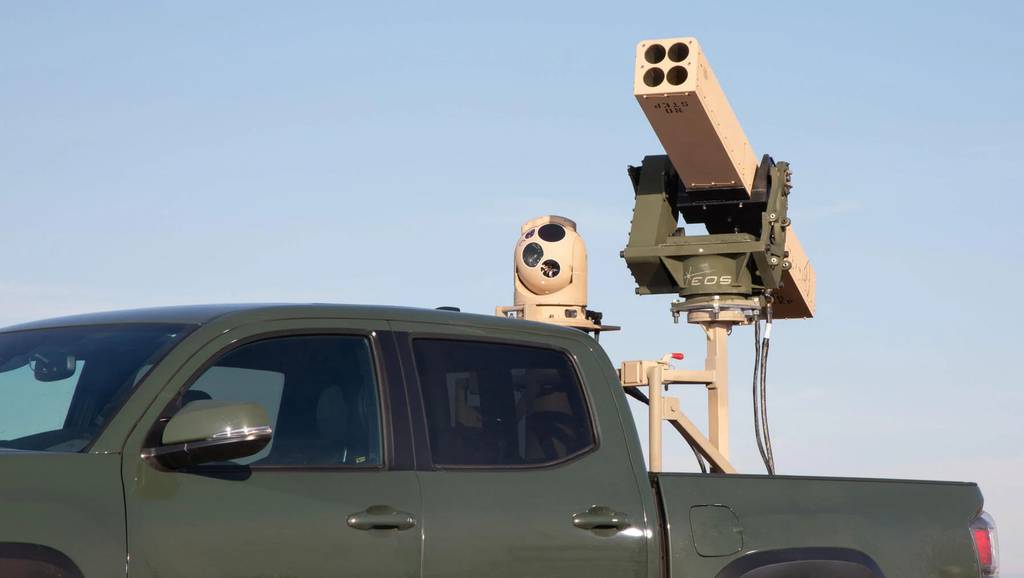
The VAMPIRE system can fit in almost any pickup or vehicle with a cargo bed. (Courtesy of L3Harris)

Defense News reports,

The U.S. is sending Ukraine “Vampire” kits that transform pickup trucks and other non-tactical vehicles into highly portable missile launchers...The L3Harris-made weapon ― a small, four-barreled rocket launcher and sensor ball ― can be mounted in two hours and operated by a single person, the company said. It can be equipped with missiles to hit ground or air targets including unmanned aircraft systems.

Gee, that sounds like something the Coast Guard could use, first and foremost on the Webber class FRCs of PATFORSWA, but really on virtually all cutters. It could be almost a ubiquous as the .50 caliber machine gun. Good for use against drones and swarming small craft, even small ships, and a bigger single round punch than any weapon in the current Coast Guard inventory.

The weapons expected to be used by the VAMPIRE (Vehicle-Agnostic Modular Palletized ISR Rocket Equipment) system are the AGR-20 APKWS II (Advanced Precision Kill Weapon System), 70mm (2.75″) rockets with a semi-active laser homing guidance kit added.

This is not an expensive, exotic, limited production weapon. It is used in the thousands by the Army, Air Force, Navy, and Marines. It is combat proven. As we noted earlier, in “More on Surface Launch Application of APKWS,

“… the U.S. military has a lot of 70mm rockets and buys thousands more every year. The Army alone plans to buy 60,000 unguided rockets in fiscal 2023 alone. BAE Systems, which builds the APKWS II seeker kit, is tooled to build 25,000 of them per year and is expanding production, according to its website. It has already delivered 37,000 units in six years of production.”

As I have contended,

This is a weapon the Coast Guard could add, relatively painlessly, that could deal with a range of threats including:

  • Drones/Unmanned Air Systems
  • Small, fast, highly maneuverable surface threats
  • Small ships

With the right choice of ammunition type, it might provide a degree of effectiveness against larger ships, all while doing so with great precision and minimal chance of collateral  damage.

It is an easy fix, at least for the lower end of target set. If we can’t mount APKWS launchers on the 25mm Mk38, on the Webber class, we could mount it on the deck immediately above and behind the gun.

That the VAMPIRE system includes a laser designator also means that it can be used to identify targets for supporting units, particularly attack aircraft, something else I think we need.

“Singapore’s Police Coast Guard deploys multilayered tactics to defend coastline” –Indo-Pacific Defense Forum

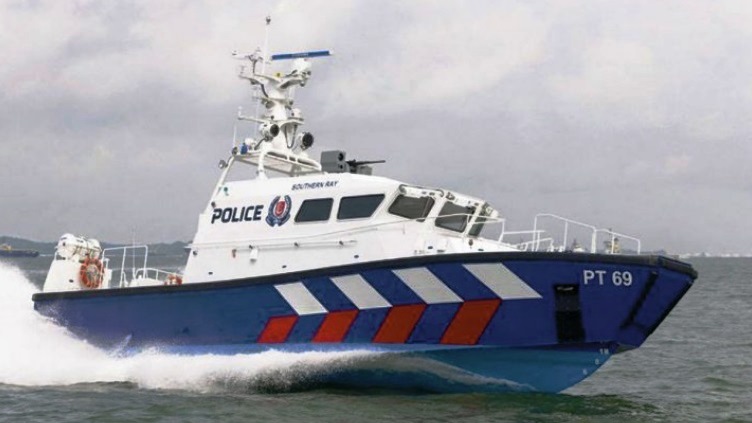
Indo-Pacific Defense Forum takes a look at Singapore’s Police Coast Guard, apparently prompted by a July 2022 report commissioned by the Korea Institute for Maritime Strategy and titled “Second Amongst Equals? The Police Coast Guard within Singapore’s Maritime Security Architecture.” Wikipedia has a more detail.

(They have a very different sort of “racing stripe” to identify their vessels, apparently replacing a more conventional white/red/white stripe on blue hull about a decade ago.)

Singapore has a very small EEZ, 1,067 sq.km. That of the US is 10,638 times larger, but those waters are extremely important, highly congested, and have had a long history of piracy. IUU, terrorism, and particularly illegal imigration are continuing concerns.

The largest Singapore Police Coast Guard vessels are similar in size to the 110 foot WPBs. Most of their vessels are relatively fast (35 to 55 knots) and for a “police” organization, well armed. The Singapore Navy handles some missions that we would consider Coast Guard missions, including operation of Offshore Patrol Vessels.

“Solomon Islands doesn’t answer US Coast Guard’s request for port visit, US says” –CNN/Reuters

The USCGC Oliver Henry (WPC 1140) crew arrives in Manus, Papua New Guinea, on Aug. 14, 2022, from Guam as part of a patrol headed south to assist partner nations in upholding and asserting their sovereignty while protecting U.S. national interests. The U.S. Coast Guard is participating with partners to support the Pacific Islands Forum Fisheries Agency-led Operation Island Chief and the larger Operation Blue Pacific through patrols in the Western Pacific in August and September 2022. (U.S. Coast Guard photo by USCGC Oliver Henry)

CNN reports,

A United States Coast Guard vessel was unable to enter Solomon Islands for a routine port call because the Solomon Islands government did not respond to a request for it to refuel and provision, a US official said.

The vessel was USCGC Oliver Henry, hardly a symbol of American hegemony. HMS Spey, a larger offshore patrol vessel, was also reported to have had difficulty arranging a replenishment stop. Both were operating in support of the fisheries agency for the Pacific Islands Forum.

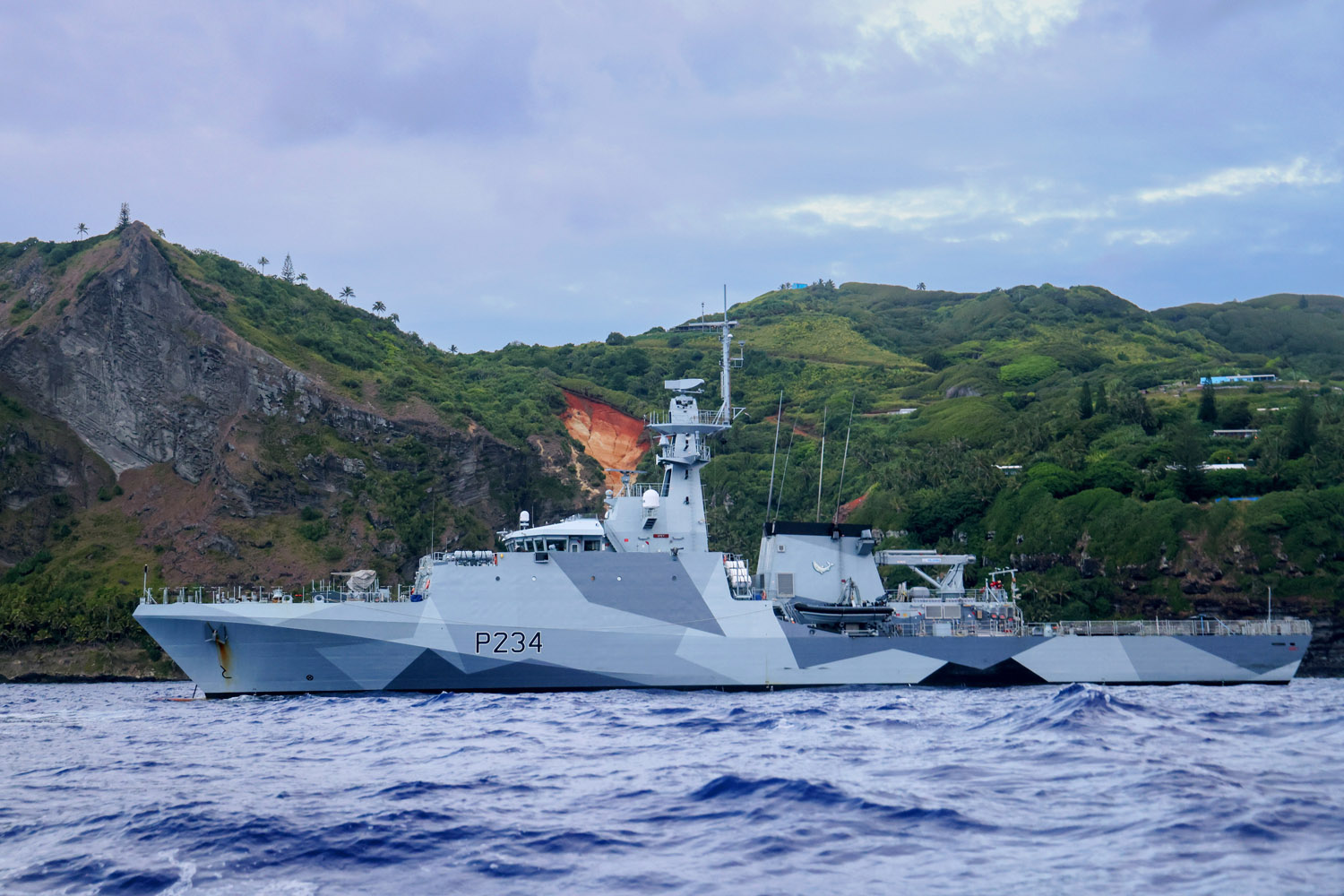
HMS Spey, River class Batch2 OPV

The difficulties may have been resolved,

“The U.S. Department of State is in contact with the Government of the Solomon Islands and expect all future clearances will be provided to U.S. ships”

Still it appears to be a symptom of growing Chinese influence in the Western Pacific.