“USCG Report: Small Cutters Prove They Can Patrol a Big Ocean” –Marine Link

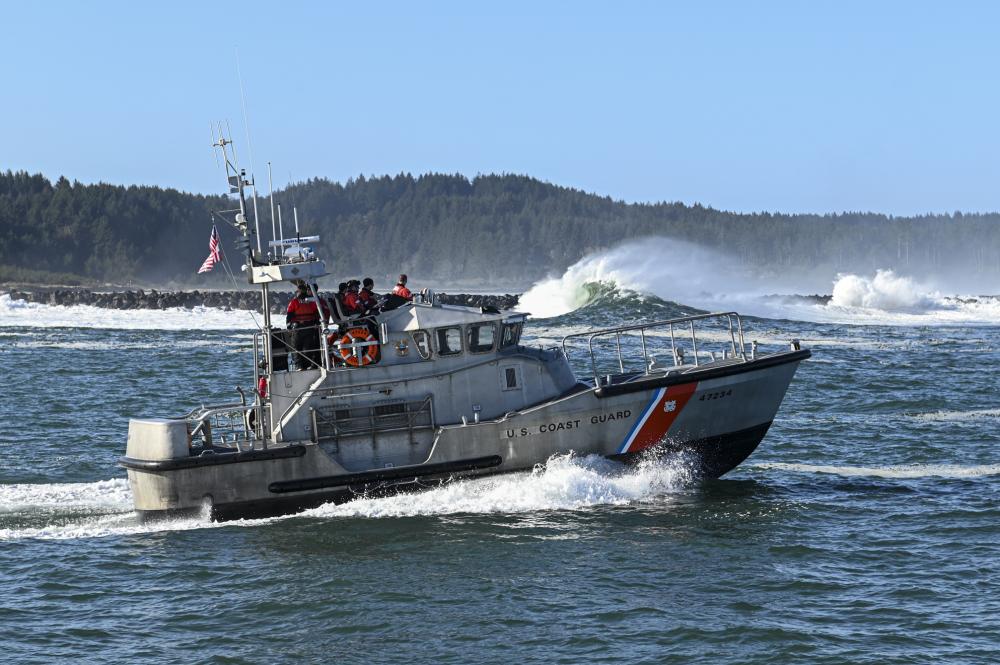
We have noted before, that the Coast Guard is using Webber class WPCs more like Medium Endurance Cutters than like “Fast Response Cutters” here, here, and here. No where have their capabilities been pushed harder than in the 14th District in the Central and Western Pacific.

Increased illegal, unreported, unregulated (IUU) fishing in US and neighboring island EEZs, US obligations under the Compact of Free Association, and desire to avoid the destruction of fisheries resources essential to the properity of the region has resulted in a need to push these little ships into remote areas of the Pacific.

Marine Link has a report about the use of Webber class FRCs for long distance patrols in the Western Pacific. This is a particularly good report in that it records not only the successes, but also the limitations that worry the crews on these demanding deployments.

Food and Fuel are major concerns

The nominal range for the Webber class WPCs is 2500 nautical miles (nmi) at 14 knots. Attempting to stretch that range requires some compromises. Fuel margins have proven adequate, but they are thin and running engines at their most economical speed takes a toll. The need to minimize fuel consumption to make the great distancces requires running the engines at low RPM,

Sabatini said that the lower speed poses some other problems for the engines. “The diesels are really designed to operate at higher RPMs. When we were going for a week to ten days at a relatively slow speed, the carbon isn’t getting blown out. So, I was worried about that build up, and concerned about replacing injectors at a high rate than normal.”

It also means that almost any diversion, weather avoidance, or even adverse weather will cut into that margin.

The nominal endurance is five days. As built there is simply not enough storage space for food.

“We had extra freezers and reefers on the bridge and out of the mezzanine deck.”

I presume the mezzanine deck is the clear area between the bridge and the Mk38 gun mount that is marked for vertical replenishment. When I got to tour the Bailey Barco (WPC-1122) while it was enroute to Alaska, there was a lot of gear stowed on deck in that area. Apparently that worked, but I can imagine situations where the seas might wash some gear stowed there over the side.

I have also heard that the on-board laundery facilities are inadequate for prolonged patrols.

So far, most of these long Webber class deployments seem to have been accompanied by a larger cutter, but I got the impression from the post that that may be changing since the Webber class have proven their ability to make the voyages unsupported.

Medical Facilities

The lack of any onboard medical assistance is also worrysome. The report notes this as a danger to the crewmembers, but it also means the ship is not well equipped to provide medical assistance if required in a SAR case. The possible distance from shoreside medical facilities may also mean they would have to maintain a 10 knot economical speed rather than being able to go to speed to the nearest shore facility.

The Future

That the Webber class have proven capable of doing these missions comes as a pleasant surprise because they would not normally be our first choice for covering these great distances. What might we do to make these missions less challenging?

We might base some of the OPCs in the Hawaii or Guam. This may be possible specifically because the Webber class have proven capable of performing missions previously handled by Atlantic Area WMECs. That is probably desirable in the long term, but there is a more immediate solution. Base two, or preferably three, Webber class in American Samoa.

A base in Pago Pago, American Samoa would make unneccessary any routine transits longer than the nominal five day endurance and more than 2000 nmi that are now required to reach parts of the US EEZ and Western Pacific Island nations. A base in Pago Pago would put these ships within less than five days and less than 1500 nmi of Samoa, the Cook Islands, Tahiti, Fiji, Vanuatu (1260 nmi), Tarawa (1373 nmi) and New Caladonia (1416 nmi).

“Atlantic Area visits Coast Guard World War II heroes in Belgium” –LANTAREA News Release

Coast Guard manned Destroyer Escort USS Menges, victim of a German Acoustic Homing Torpedo, May, 1944

Just passing this along.


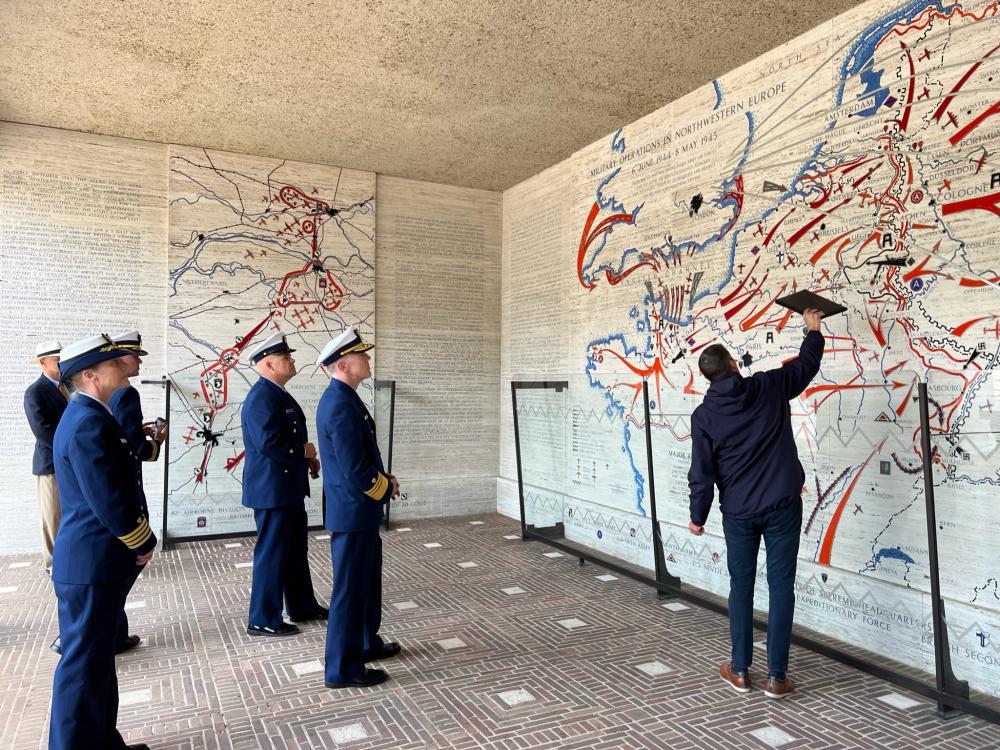
Atlantic Area visits Coast Guard World War II heroes in Belgium

Walking the field Touring Ardennes Cemetery and viewing the European campaign Rendering honors at Ardennes AS Elaman 

Editors’ Note: To view more or download high-resolution imagery, click on the photos above.

NEUPRé, Belgium — Vice Adm. Kevin Lunday, commander of U.S. Coast Guard Atlantic Area, and Command Master Chief Jeremy DeMello, also of Atlantic Area, with Capt. Gretchen Bailey, the new commanding officer of U.S. Coast Guard Activities Europe, visited the Ardennes American Cemetery in Belgium on Monday.

Lunday and DeMello were in Europe to oversee the transfer of command of Activities Europe from Capt. Ryan Manning to Bailey.

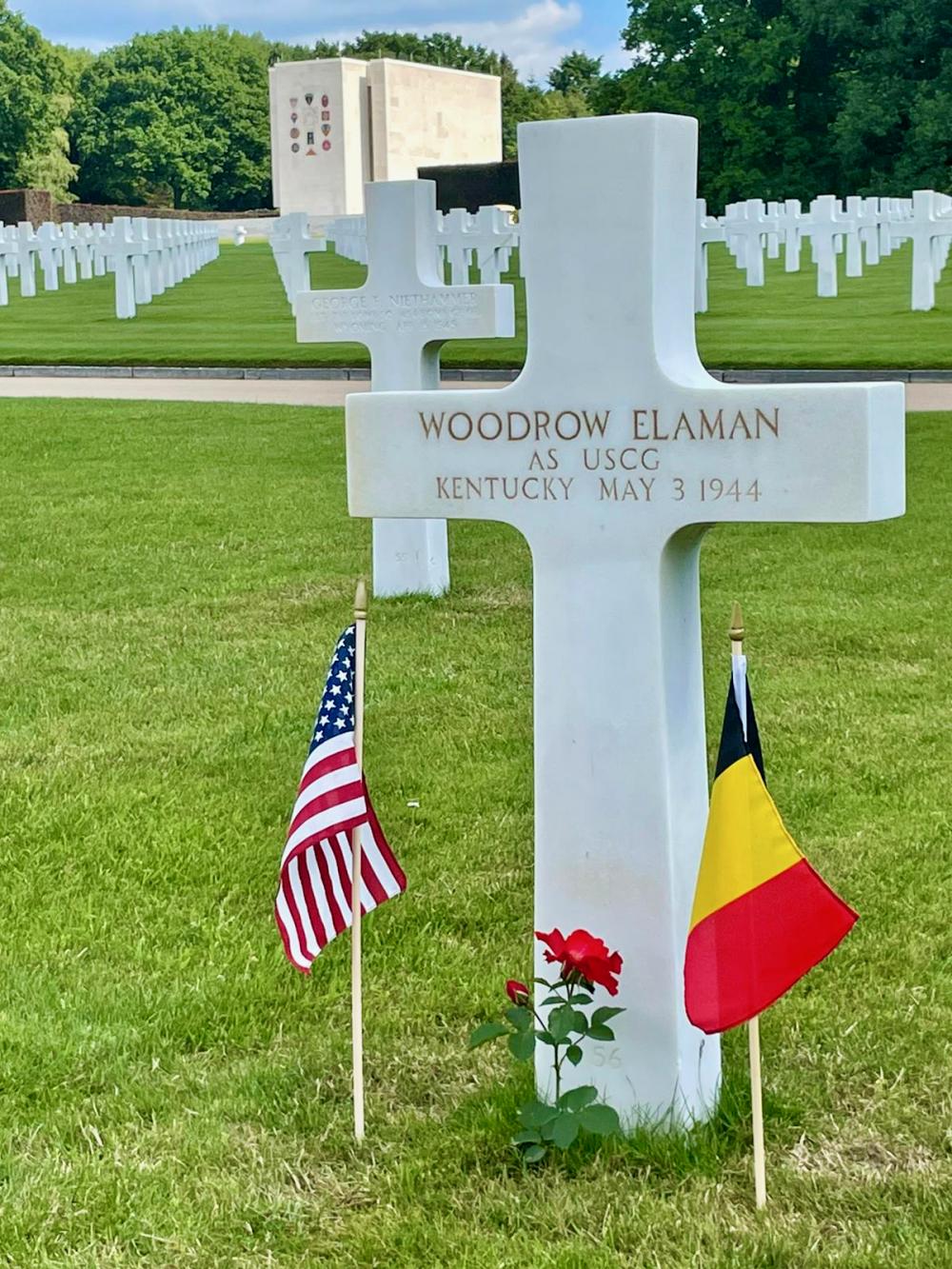
“Command Master Chief DeMello and I were joined by Capt. Gretchen Bailey, the new commanding officer of Activities Europe, as we rendered honors at the gravesite of Seaman Apprentice Woodrow Elaman, U.S. Coast Guard at Ardennes American Cemetery in Belgium,” said Lunday. “Our Coast Guard men and women have proudly served our Nation in every war and conflict since the creation of these United States. Woodrow Elaman was from Tennessee and joined the Service in Kentucky. Even far from home all these years later, the history of his heroic sacrifice inspires us. As we visited his final resting place, we will always remember his sacrifice as part of our history and ethos.”

On May 3, 1944, the USS Menges (DE-320), an Edsall-class destroyer, was just over 15 miles astern of a convoy chasing a radar contact when it was hit at 0118 hours by a G7es acoustic torpedo from U-371. The explosion was so violent it destroyed the aft third of the ship, killing 31 men and wounding 25.

Elaman was the most junior casualty of the torpedo attack. He arrived at the Ardennes Cemetery after his death for identification. Due to the efforts of the cemetery’s identification team, his family and friends back home were given the gift of knowing where their loved one rested–a small but meaningful solace that so many others in the war never had. We thank the American Battle Monuments Commission for hosting us and their work in looking after our heroes and returning them home when appropriate.

Although nearly eight decades have passed since Woodrow Elaman lost his life in service in the Mediterranean, his shipmates have not forgotten him. U.S. Coast Guard Activities Europe members, based in the Netherlands, frequently visit. Created to help re-establish merchant shipping in Europe at the end of the Second World War, Activities Europe conducts vessel inspections, incident investigations, and international port security engagements in Europe, Africa, and the Middle East.

On the heels of the 78th anniversary of D-Day and the Normandy landings, June 6, it is humbling to pay our respects to the legacy of our members and their sacrifices. These actions are a legacy that lives on in our adaptability and resilience. We delivered mission excellence on D-Day as Coast Guardsmen alongside our sister services, planning the invasion, crewing the assault transport ships, and driving the LSTs seen famously in photos from Omaha Beach.

The American Battle Monuments Commission is an independent agency of the United States government that administers, operates, and maintains permanent U.S. military cemeteries, memorials, and monuments primarily outside the United States.

U.S. Coast Guard Atlantic Area and its units conduct operations around the globe, emphasizing the region from the Rocky Mountains to the Middle East. The Area is responsible for deploying U.S. Coast Guard forces to protect the homeland and mariners, supporting surge operations in crisis, building enduring relationships with regional partners, synchronizing efforts, and augmenting combatant commanders.

“Ukraine Claims Strike on Russian Naval Tug with Harpoon Missiles Supplied By West” –gCaptain

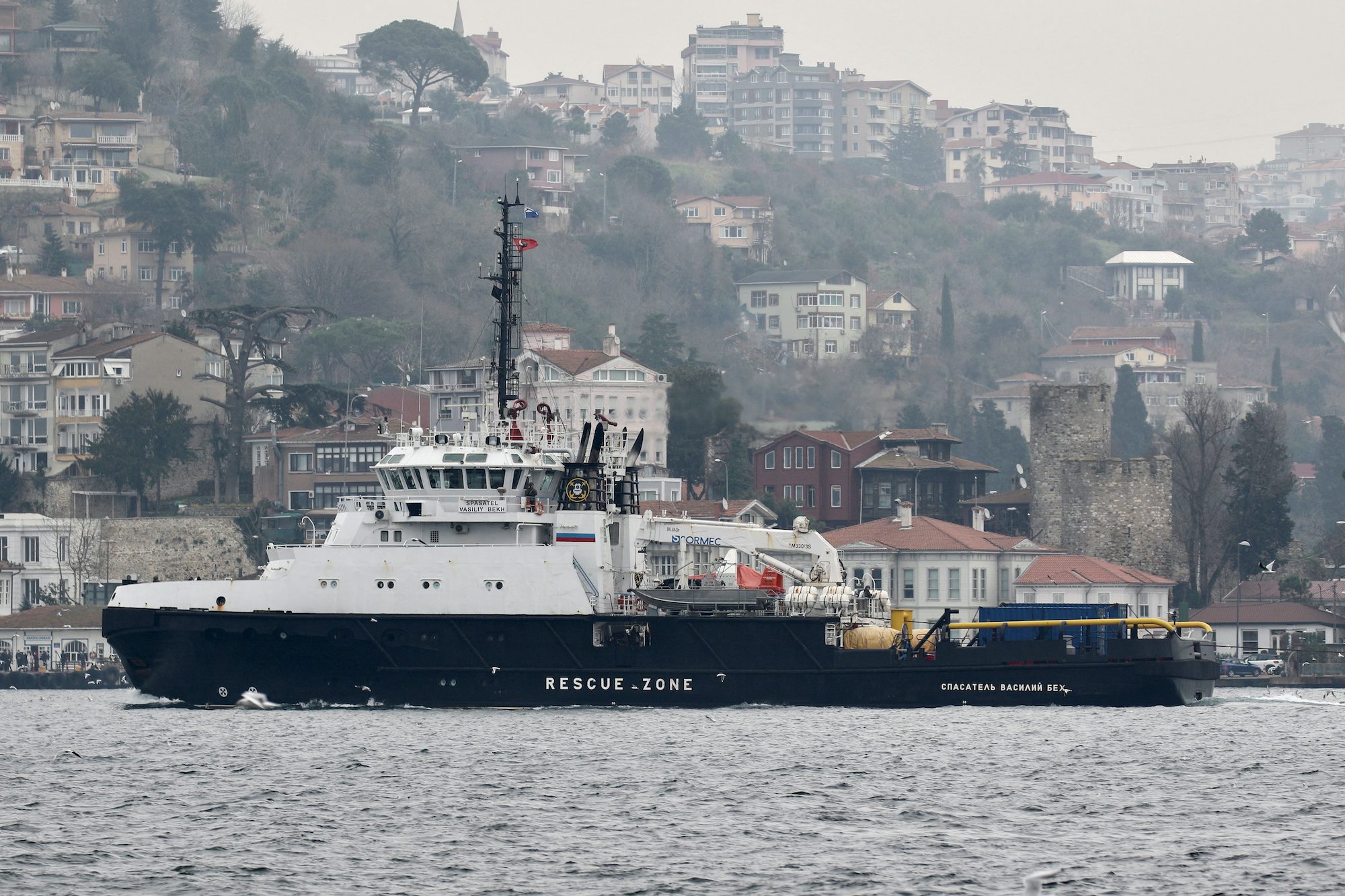
I have seen several reports that Ukraine claims to have sunk a Russian vessel here and here. and here, using Harpoon missiles transferred from Denmark.

The tugboat, identified as the Vasiliy Bekh by Odesa region’s governor, had been transporting soldiers, weapons and ammunition to the Russian-occupied Zmiinyi (Snake) Island in the Black Sea, the Ukrainian navy said.

Reportedly the vessel had been equipped with a TOR AAW missile system. that theoretically could have defended the vessel from an ASCM attack.

According to Wikipedia, Zmiinyi (Snake) Island is well within Harpoon range of the Ukrainian coast.

The nearest coastal location to the island is Kubanskyi Island on the Ukrainian part of the Danube Delta, located 35 km (22 mi) away between the Bystroe Channel and Skhidnyi Channel…The closest Ukrainian city is Vylkove, 50 km (31 mi); however, there also is a port Ust-Dunaisk, 44 km (27 mi) away from the island.

“Lockheed may repurpose its Joint Air-to-Ground Missile for air defense” –Defense News

I have suggested numerous times that the Hellfire missile and its replacement the JASM (Joint Air to Surface Missile) could give even small cutters an effective weapon to counter small, fast, highly maneuverable surface threats and might even be effective to a degree against larger vessel threats.

But before it can be mounted on cutters, the missile and an appropriate launcher have to be in the Navy Department inventory, since all Coast Guard heavy weapons come from the Navy Department.

The Navy and Marine Corps have or will have these missiles in their inventory. They are used from helicopters. The Navy is also already using surface launched Longbow Hellfire missiles as part of the Anti-Surface mission module being used on Littoral Combat Ship. There was a recent test of the missile launched by an Independence class LCS against land targets.

PACIFIC OCEAN (May, 12, 2022) – An AGM-114L Longbow Hellfire missile launches from the Surface-To-Surface Missile Module (SSMM) aboard Independence-variant Littoral Combat Ship USS Montgomery (LCS 8). The missile exercise was the first proof of concept launch of the Longbow Hellfire missile against land-based target. (U.S. Navy photo by Lt.j.g. Samuel Hardgrove)

These missiles are produced in large numbers. In 2019 it was reported,

“Lockheed is increasing production of Hellfire missiles, weapons widely associated with drone strikes, from 7,000 per year to about 11,000 per year, CEO Marillyn Hewson said in May.”

From the Coast Guard perspective, the missing element is a launcher suitable for patrol boats and particularly for the numerous Webber class.

Greater range and an AAW/counter UAS capability could prompt mounting the weapon on a wider variety of Navy and Marine platforms including unmanned surface vessels and the Light Amphibious Warship.

Increased range would certainly be welcomed. There are several similar non-US systems that offer greater range than the current approximate 8 km range of surface launched Hellfire and JASM. 16 km is very close to the maximum range of the 57mm Mk110 and the 76mm Mk75 guns and well beyond their effective range.

JAGM is too heavy to replace Stinger as a man portable system, but as a potential replacement for vehicle mounted Stinger missiles, JASM potentially provides much greater range than the Stinger and is a more versatile weapon.

The Marines are fielding MADIS (Marine Air Defense Integrated System) which currently includes a remote weapon station armed with a 30mm cannon, a 7.62 mm machine gun and Stinger short range anti-air missiles. If JASM should replace the Stinger it would give these small vehicles, not only more range against air targets but also an additional anti-surface/anti-armor capability. The combination of greater range and an additional anti-surface capability might be an incentive.

We may see JASM in the service of the Navy or Marine Corps on Unmanned Surface Vessels (USV). We have already seen a launcher on a USV.

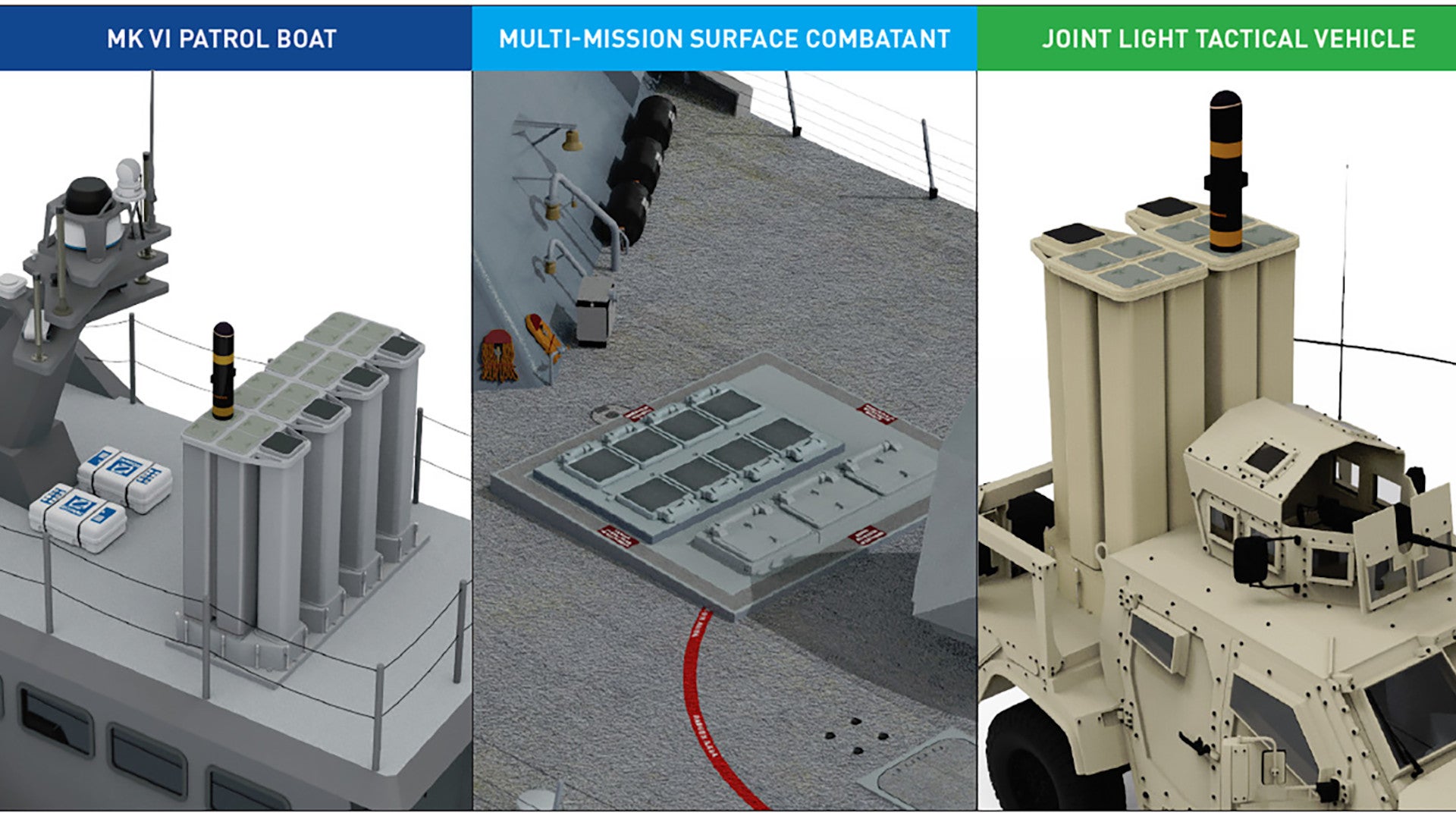
In 2020 Lockheed circulated a proposal for a four round vertical launch system that included an illustration of a 16 missile launch system in a 4×4 configuration mounted on a Navy MkVI patrol boat.

The JAGM Quad Launcher (JQL) leverages technology from Lockheed Martin’s existing Vertical Launch System (VLS) designs, which include the popular Mk 41 VLS found on numerous warships in the U.S. Navy and other navies around the world. It also uses the same Launcher Electronics Assembly (LEA) from the M299 launcher, a four-rail design for helicopters most commonly associated with the AH-64 Apache. All of this combined with an open-architecture Launcher Management Assembly (LMA) designed to help speed up the integration of updated hardware and software as time goes on to improve the JQL’s capabilities and add new functionality.

The system illustrated as applicable to a “Multi-Mission Surface Combatant” appears to be a replacement for the 24 round launch system currently being deployed on LCS but could house 32 missile.

Perhaps the way we may see these systems more widely mounted would be by mounting the missiles alongside the gun on the new 30mm Mk38 Mod4 mount.

JASM could provide Coast Guard vessels as small as patrol boats, with a much more accurate, more powerful, and longer ranged response to the need to be able to forcibly stop vessels both small and large, while also providing counter UAS, a degree of anti-aircraft protection, and should it ever be required, a naval fire support ashore capability.

RSV NUYINA – AUSTRALIA’S ANTARCTIC ICEBREAKER

Bairdmaritime provides a review of Australia’s new icebreaking research and supply vessel.

Looking for more information, I found a very extensive description here (click on the menu tab on the upper right). This is a big, powerful, very versitile ship, but I wonder about the choice of propulsion and hope our resident icebreaker expert, Tups, will comment.

First, at 25,500 tons, it is much larger than either Healy (16,000) or Polar Star (13,623 tons). It is way longer as well at 160.3 m (526 ft), compared to Healy (420 ft / 128 meters) and Polar Star (399 ft / 122 meters). She is even larger than the Polar Security Cutter PSC (22,900 tons and 460 ft / 140 meters in length).

A good part of the ship’s size is due to the fact that this ship is more than an icebreaker. While a typical US support mission to Antarctic would envolve three ships, an icebreaker, a supply ship, and a tanker, this ship is a combined icebreaker, dry cargo ship, tanker, and research vessel. The crew is small, 32, but there are accommodations for an additional 117 expeditioners plus 1200 tonnes of cargo and 1.9 million litres of fuel.

Aviation facilities are generous. The hangar can accommodate four small AS350 B3 helicopters or two Sikorsky S-92 that are larger than the H-60s.

It has a large number of boats including a pair of barges. Each barge has two 448 kilowatt (600 horsepower) engines and a water jet propulsion system that provides greater manoeuvrability than propellers. The barges carry general cargo from ship to shore in Antarctica.

On the cargo hatch covers near the bow of RSV Nuyina are two 16.3 metre-long, 6.2 metre-wide barges, each capable of carrying more than 45 tonnes of cargo.

The aluminium barges can operate in calm seas and up to 50 knots of wind, at a speed of eight knots.

Propulsion: 

What I found most surprising was the choice of propulsion systems. This is a seriously powerful icebreaker, but unlike most modern icebreakers, it does not use steerable podded diesel electric systems (such as Azipods). Instead all power goes through two shafts to controlable pitch propellers. Both the sources reported power comes from two V16 diesel engines (19,200 kW each) geared diesels and 4 diesel generators (7,400 kW each) powered by diesel generators. From the https://www.antarctica.gov.au/ site which Bairdmaritime seems to have copied.

RSV Nuyina can cruise efficiently in open water, operate silently (in ‘Silent R’ mode) during scientific operations, or continuously break ice up to 1.65 metres thick.

RSV Nuyina has a diesel-electric propulsion system that provides different levels of power depending on the task.

In icebreaking mode RSV Nuyina uses its full propulsion system – two V16 diesel engines (19,200 kW each), and 4 electric motors (7,400 kW each) powered by diesel generators.

In its 12–14 knot cruising mode, the ship relies on the electric motors.

There are two engine rooms to provide an enhanced level of safety and redundancy. Each room houses a V16 diesel engine and two diesel generators.

That seemed like an awful lot of power for the modest maximum and cruising speed reported. The descrtiption sounded like a total of 68,000 KW total (about 92,000 HP) but that seemed unlikely.

Wikipedia indicates they max total power is a still very respectable 26,600 KW or 35,657 HP (confirmed here). This would make her slightly more powerful than Healy (2 × 11.2 MW (15,000 hp).

Something did not sound right.

Looking up the MAN 16V32/44CR engines reportely installed I found that they were rated at 9600 KW not 19,200 each, rather that would be the total for the two. Given a total output in the icebreaking mode, of 26,600 KW, 19,200 of which comes from the two main diesels, that means the electric motors would provide an additional 7400 KW total, or probably 3700 KW each which be enough for a 12 knot cruise. That makes sense.

“Coast Guard holds change of command for husband and wife” –D13

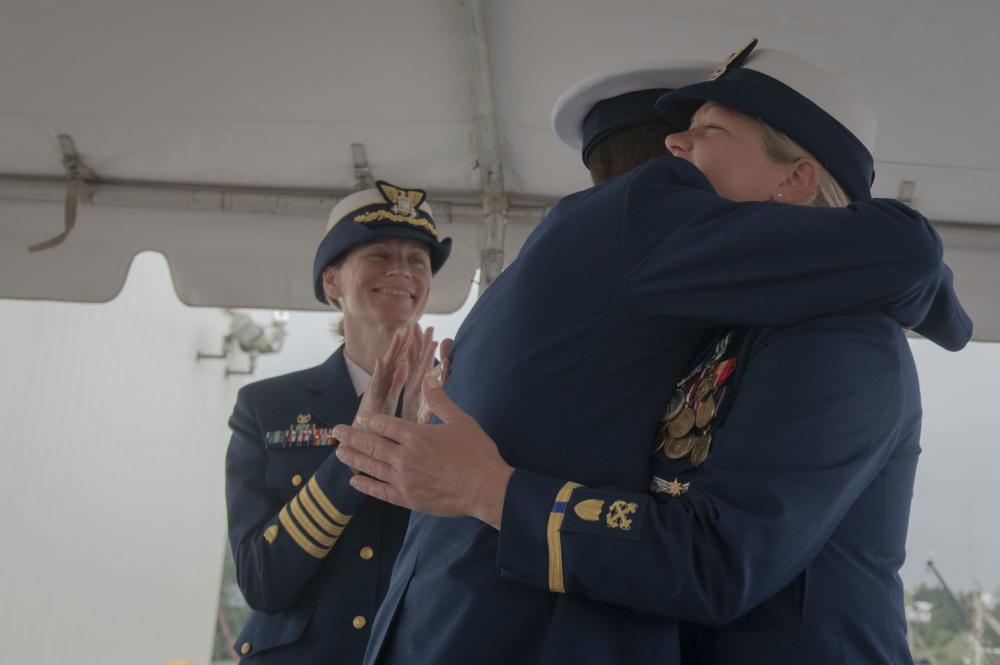
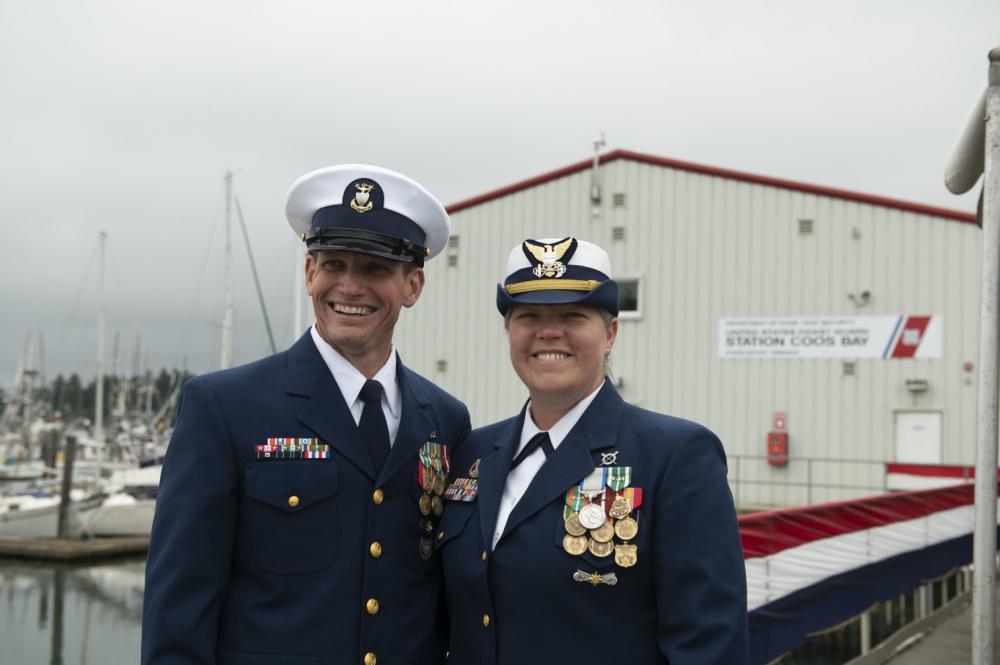
Capt. Breanna Knutson (left), commander, Coast Guard Sector North Bend, claps as Master Chief Scott Slade (middle) embraces his wife Chief Warrant Officer Beth Slade (right) during a change of command ceremony at Coast Guard Station Coos Bay in Coos Bay, Oregon, June 10, 2022. The Coast Guard spouses are both surfmen. (U.S. Coast Guard Photo by Petty Officer 3rd Class Diolanda Caballero)

Just passing this along because it is so remarkable. Only in the Coast Guard.

News Release

U.S. Coast Guard 13th District PA Detachment Astoria

Coast Guard holds change of command for husband and wife

Coast Guard spouses transfer command Coast Guard spouses transfer command Coast Guard spouses transfer command Coast Guard Station Coos Bay Training

Editors’ Note: Click on images to download high resolution version

NORTH BEND, Ore. — Coast Guard Station Coos Bay held a change of command ceremony Friday morning at the rescue station in Charleston, Ore.

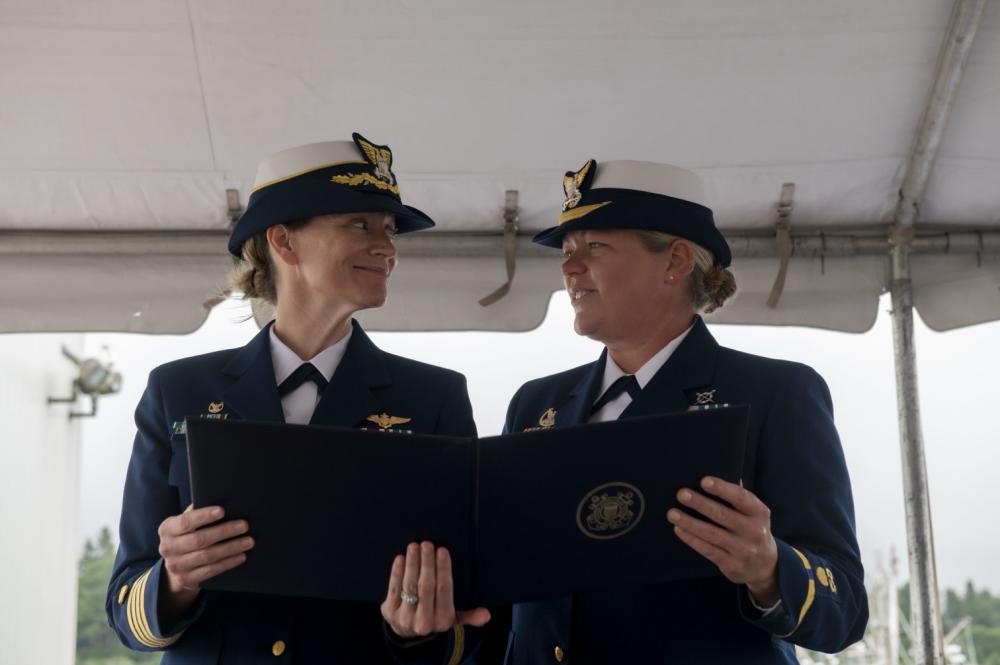
It was a unique ceremony where Master Chief Scott Slade assumed command of Station Coos Bay from his wife, Chief Warrant Officer Beth Slade.

Capt. Breanna Knutson, commander, Coast Guard Sector North Bend, presided over the event.

Master Chief Slade will now oversee the operations of the 45 crew members stationed at the rescue boat unit in Charleston. He will also oversee Station Coquille River, a seasonal station located in Bandon.

CWO Slade is slated to assume command of Coast Guard Station Yaquina Bay during a ceremony scheduled later this month in Newport. Master Chief Slade was previously the Officer in Charge at Station Umpqua River in Winchester Bay.

“They are an amazing crew,” said CWO Slade. “And this was probably the easiest change of command since we are both so familiar with everyone and they already know their new commanding officer. I’m glad to be handing off such a top-notch crew because I fully believe they are at their best right now.”

Both Beth and Scott Slade enlisted in the Coast Guard nearly 25 years ago. Almost all of their time in the Coast Guard so far has been spent at units on either the Oregon or Washington Coast.

The Slade’s honed their boat-handling skills here in the Pacific Northwest and trained at the National Motor Lifeboat School at Cape Disappointment. Beth and Scott both received the distinguished title of Surfman, #321 and #324 respectively. CWO Slade received her commission as an officer in 2013.

“It’s so special to be taking over the crew from my wife,” said Master Chief Slade. “The expectation is high and the crew is ready. It’s amazing what Beth has done and built here. Sort of intimidating taking over after someone who is so squared away but I am so excited to see what the future has to offer.”

A Coast Guard rescue unit has been present in the Coos Bay area since 1878 when the first life-saving station was located at Cape Arago.

The change of command ceremony is a time-honored military tradition that marks a transfer of total responsibility and authority from one individual to another. The ceremony is conducted to formally demonstrate the continuity of authority within a U.S. military command.

Philippine 378 Upgrade

BRP Ramon Alcaraz sporting her new Sea Giraffe radar in Cebu.

When the US Coast Guard Hamilton class 378 foot WHECs were decommissioned and transferred to other nations, the AN/SPS-40 air search radars were removed, along with the Phalanx close in weapon system. At least one of the three former cutters, in service with the Philippine Navy, has been upgraded with the addition of a Sea Giraffe multi-mode radar and a pair of 25mm Mk38 guns as can be seen on these photos of BRP Ramon Alcaraz (former USCGC Dallas). There were plans to acquire at least two Sea Giraffe radars. I can’t say how far they have gotten.

The Sea Giraffe, USN designation AN/SPS-77, is the radar that will equip the Argus class OPCs. It is also currently installed on Independence class LCS.

I found these on Facebook, but apparently they came from Daryll Evan Mancao’ Flickr page.

BRP Ramon Alcaraz (former USCGC Dallas) equipped with new Sea Giraffe multi-mode radar in Cebu.

“Japanese PM Kishida Lays Out Indo-Pacific Strategy in Shangri-La Speech” –USNI

Japanese built Philippine CG cutter BRP Teresa Magbanua during sea trials off Japan (Photo: Philippine Coast Guard)

The US Naval Institute News Service reports on a speech by Japan’s Prime Minister Fumio Kishida before the Strategic Studies Shangri-La Dialogue forum in Singapore.

During his speech, Kishida also spoke about Japan’s planned efforts to strengthen nations in the Indo-Pacific both in security and economic aspects. The security side will include transferring patrol boats in the region, strengthening regional maritime law enforcement capabilities (emphasis applied–Chuck) and providing defense equipment and technology transfers. Singapore is one of the countries that will sign a defense equipment and technology transfer agreement with Japan.

As China has become more agressive in its behavior, Japan has been a lot more active in reaching out to help friendly nations. It appears they have decided to provide an Asian nation alternative to Chinese hegemony. One of the ways they have done this is transfer of vessels to conduct coast guard functions on favorable terms. We have already seen this with the Philippines (and here), Indonesia, Malaysia, and Vietnam.

We have also seen increased interaction between the Japan Coast Guard and the USCG here, here, here, and here. Japan seems to be promoting coast guards as a way to maintain rules based international norms and may be looking to create an international consensus on coast guard behavior to promote cooperation and interoperability. They are looking at their own Coast Guard’s role as well. They seem to be looking to the USCG as an allied, internationally recognized example of proper coast guard functions to help achieve this consensus.

“Hull Vane To Be Fitted On Royal Netherlands Navy OPV” –Naval News

Hull Vane hydrofoil solution integrated on a Holland-class OPV model (Credit: Dutch Ministry of Defense)

Naval News reports that,

Today, June 8th, the first Hull Vane for the Royal Netherlands Navy has been delivered in Den Helder. This Dutch invention consists of a submerged transom wing which renders ships more efficient and quieter, while improving their seakeeping.

This Hull Vane will be installed in early 2023 on the aft ship of the HNLMS Groningen, an ocean-going patrol vessel of 108 meter, pertaining to the Holland Class.

This decision is a strong endorsement for an innovation that appears directly applicable to US Coast Guard cutters. The Holland class Offshore Patrol Vessels are similar in size, power, speed, and hull form to the Bertholf class NSCs and particularly to the Argus class Offshore Patrol Cutters.

The hull vane reportedly recovers some of the energy that would normally be lost in creation of the wake. Fuel savings of 10% or more are reported. It also is reported to reduce pitch make for improved boat and helicopter operations.

Besides energy saving, which automatically leads to a reduction of CO2 emissions, the Hull Vane® also offers many tactical advantages for the ship. Due to the suppressed stern wave, the vessel leaves much less visible wake, making her less visible to satellites, drones and even certain types of torpedoes. Helicopter landings will be safer in rough weather, and it is expected that the slipway in the stern can be used more frequently to launch and recover the FRISC, a fast daughter craft. The ship will have a higher top speed, and will be able to cross a long distance faster, e.g. when being deployed for calamities. But above anything else, the goal is to reduce the dependency on diesel fuel. That is valuable in peace time, but even more so during war.

“Wake behind transom on patrol boat at 11 kn without Hull Vane® (left) and with Hull Vane® (right), leading to 25% lower fuel consumption”

We have been following this promising innovation for the last seven years. Previous posts on this topic were:

Results of a 2018 test on the 172 foot, 409 ton French patrol vessel Themis, a vessel similar to the Webber class FRCs, included a “comparison with the benchmark sea trials – conducted in January in exactly the same conditions – by CMN’s sea trial team showed a reduction in fuel consumption of 18% at 12 knots, 27% at 15 knots and 22% at 20 knots. The top speed increased from 19.7 knots to 21 knots.”