“U.S., Japan Coast Guards conduct joint counter-narcotics exercise in the Pacific” –D14

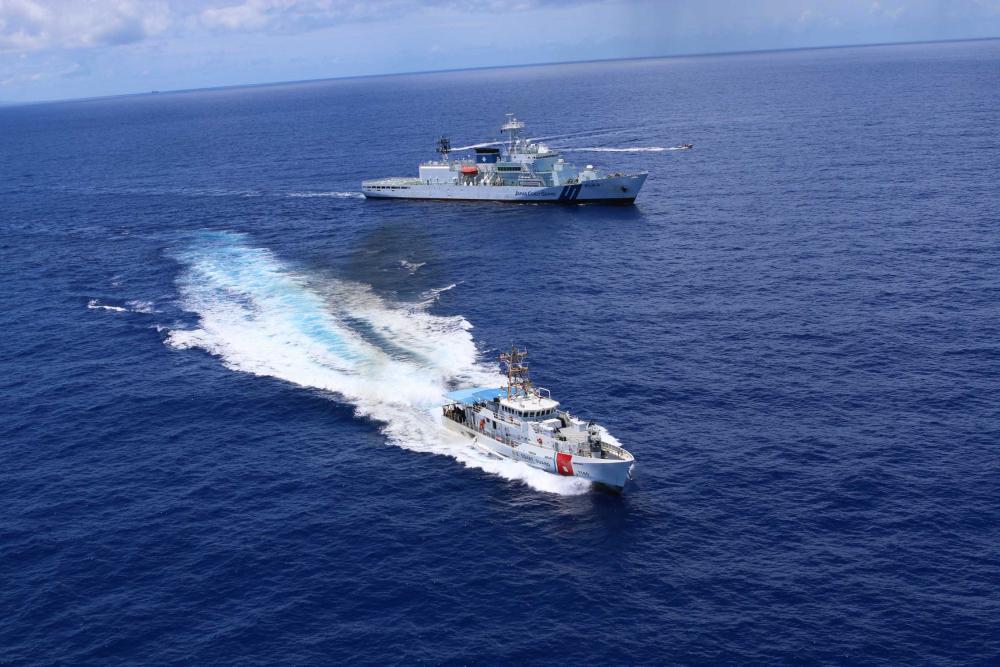
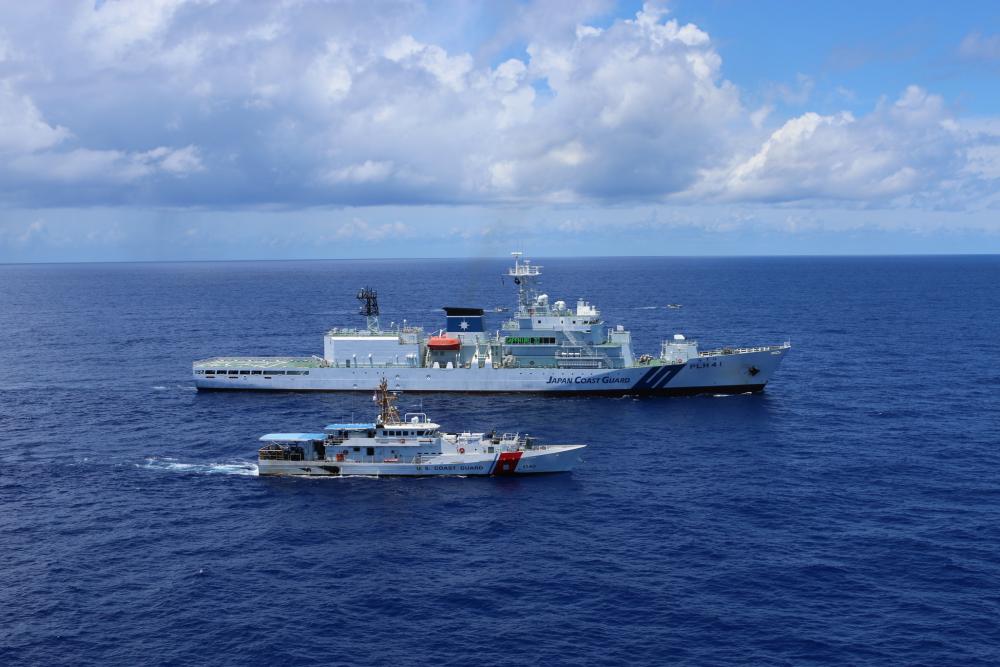
The U.S. Coast Guard Cutter Oliver Henry sails alongside the Japan Coast Guard patrol vessel Mizuho during an exercise off Guam, June 7, 2022. The U.S. Coast Guard and Japan Coast Guard completed the joint counter-narcotics exercise SAPPHIRE which stands for Solid Alliance for Peace and Prosperity with Humanity and Integrity on the Rule-of-Law Based Engagement 2022. (U.S. Coast Guard photo courtesy of U.S. Coast Guard Forces Micronesia/Sector Guam)

An interesting development in US and Japanese Coast Guard cooperation. This is apparently the first implementation of Operation SAPPHIRE announced in May.

This exercise does not seem to be an end in itself. It seems more like a tune-up for follow-on operations.

News Release

U.S. Coast Guard 14th District Hawaii and the Pacific

U.S., Japan Coast Guards conduct joint counter-narcotics exercise in the Pacific
Joint exercise Joint exercise Joint exercise  

Editors’ Note: Click on images to download a high-resolution version.

SANTA RITA, Guam — The U.S. Coast Guard and Japan Coast Guard completed a joint counter-narcotics exercise off Guam, Tuesday. 
 
The exercise was the first operational exchange between U.S. Coast Guard Forces Micronesia/Sector Guam and the Japan Coast Guard and was designed to promote cooperation between the partners in areas of mutual interest including maritime security and counter-smuggling operations.  
 
“What an incredible opportunity to conduct joint training with the Japan Coast Guard and be able to share law enforcement capabilities which will enhance future joint mission planning,” said Capt. Nicholas Simmons, commander of Coast Guard Forces Micronesia/Sector Guam. “These exercises further solidify our great maritime relationship and will prove to be invaluable during future missions.” 
 
The exercise was conducted between the crews of the Japan Coast Guard patrol vessel Mizuho, U.S. Coast Guard Cutter Oliver Henry, and U.S. Coast Guard Forces Micronesia/Sector Guam. 
 
On Monday, the participants met at Coast Guard Forces Micronesia/Sector Guam for tours of the participating vessels and tabletop discussions to plan the at-sea exercise the next day. 
 
“Conducting exercises based off of real-world scenarios will boost opportunities to respond more effectively,” said Lt. Jack Hamel, the commanding officer of the Oliver Henry. “The cohesion and teamwork on display showcased that both Coast Guards have mutual interest in keeping the maritime commons safe and secure.” 
 
On Tuesday, the crews deployed for the at-sea exercise consisting of two counter-narcotics drills where the crews simulated locating and boarding a target of interest fishing vessel suspected of drug smuggling. 
 
The drills focused on methods of information sharing, vessel tracking, stopping measures, and inspection procedures for greater interoperability between the partners in the future. 
 
The two crews also conducted a personnel exchange and rendered passing honors between the vessels. 
 
The exercise was a part of the Japan Coast Guard and U.S. Coast Guard Operation SAPPHIRE 2022, which stands for Solid Alliance for Peace and Prosperity with Humanity and Integrity on the Rule-of-Law Based Engagement 2022, and was the second such operation held between the U.S. Coast Guard and the Japan Coast Guard, the first being held in San Francisco in May. 
 
SAPPHIRE was created during a joint document signing ceremony and celebration at Japan Coast Guard Headquarters earlier this year and was an annex to a memorandum of cooperation between the sea services which has existed since 2010. 
 
The purpose of Operation SAPPHIRE is to standardize operating procedures for combined operations, training and capacity building, and information sharing between the partners. 
 
The U.S. Coast Guard and Japan Coast Guard have been bolstering each other’s capabilities and effectiveness since the founding of the Japan Coast Guard in 1948. The agencies work together to counter illegal maritime activity and assist foreign maritime agencies in the Indo-Pacific region in improving their own capabilities necessary for maritime law enforcement.

“A Community at Sea: Building Up the Cuttermen” –USNI

Masked members of the cutter James crew and Commandant Adm. Karl L. Schultz (front, center), along with interagency partners, stand among interdicted narcotics at Port Everglades, Florida, on June 9. U.S. COAST GUARD / Petty Officer 3rd Class Brandon Murray

The US Naval Institute Proceedings June 2022 issue includes an article that looks at how the retention and training of afloat personnel might be improved. There are a number of suggestions here including ending the up or out convention, lessons from the CG aviation community, and maritime credentialing.

Uniforms for Underway

Naval News reports,

Royal Navy sailors are getting new uniforms that are more practical, cooler and fire-resistant as a prelude to a £78 million revamp of their clothing.

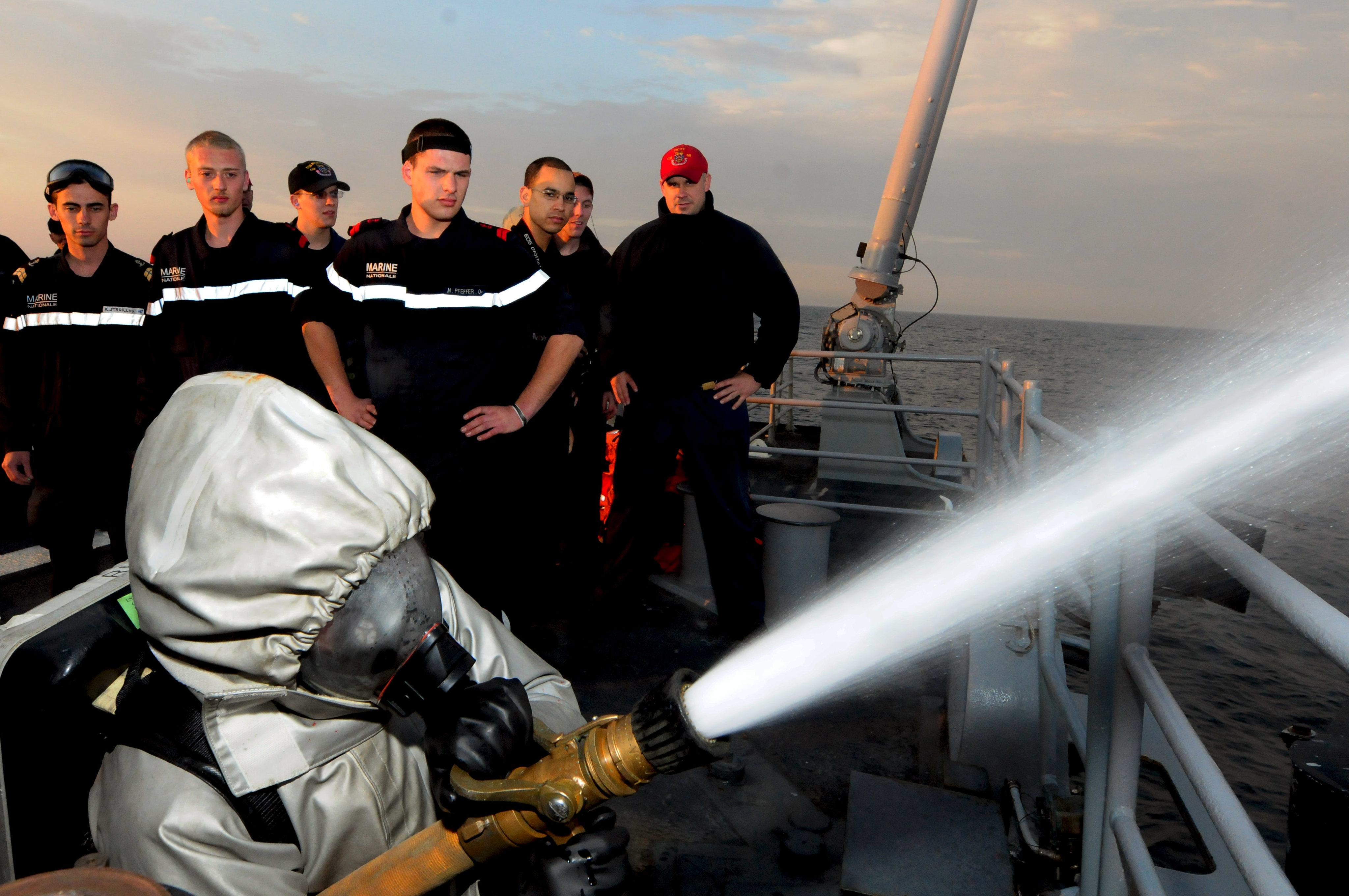
Those are certainly laudible goals. Having served in uniforms what were more fire friendly than fire resistant (double knit), I like these ideas. This appears to be a progressive improvement over the 2015 uniform change (seen in the photo above).

Generally, it appears that the Coast Guard has been more successful with their work uniforms than the USN. Thankfully the Navy “Blueberries” were never a common sight on cutters. Still the current uniform appears heavy for work in hot environments. I can’t speak from personal experience, but I would be happy to hear feedback from those who have had experience with the current uniform. (Complaints and suggestions about the Navy work uniform here.)

Still there is a good possibility there is something we can learn from the Royal Navy’s research into new working uniforms. We might want to look at their conclusions. In addition to HQ to HQ contact on the subject, we currently have Coast Guard enlisted seconded to service with the Royal Navy. Some of them will probably see this new uniform. They are a resource. We ought to debrief them when they return, not just about the uniforms, but about what we might learn from our Old World cousins.

Apparently the new RN uniform will include Goretex and Nomex uniform items. They are likely to be expensive, but worth the cost. That could put a burden on our personnel, particularly junior personnel. The aviation community recognizes the need for special clothing for their special environment. The afloat environment, where you are the fire department, is also much different from that ashore.  It may be appropriate to provide an additional clothing allowance if additional expensive clothing items are required for service afloat, or otherwise provide specialized clothing.

Thinking about uniforms, I would like to point out a feature I like, on the French Navy’s work uniform. That is the bright stripe that appears to be reflective on the upper part of the uniform. In the case of a man over board or an abandon ship, this could mean the difference between being found or missed. It is also probably more visible in a smoke filled compartment.

RIMPAC 2022

From RIMPAC 2018: USS Sterett (DDG-104), front, participates in a photo exercise with Chilean Frigate Almirante Lynch (FF-07), second, Royal Canadian Navy Halifax-class frigate HMCS Ottawa (FFH-341), third, French Navy Floreal-class frigate FS Prairial (F-731), fourth, United States Coast Guard Cutter USCHC Bertholf (WMSL-750), fifth, the dry cargo and ammunition ship USNS Charles Drew (T-AKE 10), sixth, and Royal Canadian Navy commercial container ship Asterix. US Navy Photo

Below is the Navy’s News Release outlining the RIMPAC 2022 exercise. The Coast Guard normally participates in this exercise. Hopefully we will hear more about the Coast Guard participation.

U.S. Navy Announces 28th RIMPAC Exercise

31 May 2022

From Commander, U.S. 3rd Fleet Public Affairs

SAN DIEGO – Twenty-six nations, 38 surface ships, four submarines, nine national land forces, more than 170 aircraft and approximately 25,000 personnel will participate in the biennial Rim of the Pacific (RIMPAC) exercise scheduled June 29 to Aug. 4, in and around the Hawaiian Islands and Southern California.

RIMPAC 2022 is the 28th exercise in the series that began in 1971.

As the world’s largest international maritime exercise, RIMPAC provides a unique training opportunity designed to foster and sustain cooperative relationships that are critical to ensuring the safety of sea lanes and security on the world’s interconnected oceans.

The theme of RIMPAC 2022 is “Capable, Adaptive, Partners.” Participating nations and forces will exercise a wide range of capabilities and demonstrate the inherent flexibility of maritime forces. These capabilities range from disaster relief and maritime security operations to sea control and complex warfighting. The relevant, realistic training program includes amphibious operations, gunnery, missile, anti-submarine and air defense exercises, as well as counter-piracy operations, mine clearance operations, explosive ordnance disposal, and diving and salvage operations.

This year’s exercise includes forces from Australia, Brunei, Canada, Chile, Colombia, Denmark, Ecuador, France, Germany, India, Indonesia, Israel, Japan, Malaysia, Mexico, Netherlands, New Zealand, Peru, the Republic of Korea, the Republic of the Philippines, Singapore, Sri Lanka, Thailand, Tonga, the United Kingdom, and the United States.

Hosted by Commander, U.S. Pacific Fleet, RIMPAC 2022 will be led by Commander, U.S. 3rd Fleet, who will serve as Combined Task Force (CTF) commander. Royal Canadian Navy Rear Adm. Christopher Robinson will serve as deputy commander of the CTF, Japan Maritime Self-Defense Force Rear Adm. Toshiyuki Hirata as the vice commander, and Fleet Marine Force will be led by U.S. Marine Corps Brig. Gen. Joseph Clearfield. Other key leaders of the multinational force will include Commodore Paul O’Grady of the Royal Australian Navy, who will command the maritime component, and Brig. Gen. Mark Goulden of the Royal Canadian Air Force, who will command the air component.

During RIMPAC, a network of capable, adaptive partners train and operate together in order to strengthen their collective forces and promote a free and open Indo-Pacific. RIMPAC 2022 contributes to the increased interoperability, resiliency and agility needed by the Joint and Combined Force to deter and defeat aggression by major powers across all domains and levels of conflict.

Media interested in covering the exercise should contact the C3F Public Affairs Office at (619) 524-9868 or C3F.PAO@navy.mil. Contact information for the RIMPAC Combined Information Bureau will be made available prior to the beginning of the exercise.

D-Day, Normandy, 6 June 1944

A convoy of Landing Craft Infantry (Large) sails across the English Channel toward the Normandy Invasion beaches on D-Day, 6 June 1944. Each of these landing craft is towing a barrage balloon for protection against low-flying German aircraft. Among the LCI(L)s present are: LCI(L)-56, at far left; LCI(L)-325; and LCI(L)-4. Photograph from the U.S. Coast Guard Collection in the U.S. National Archives.

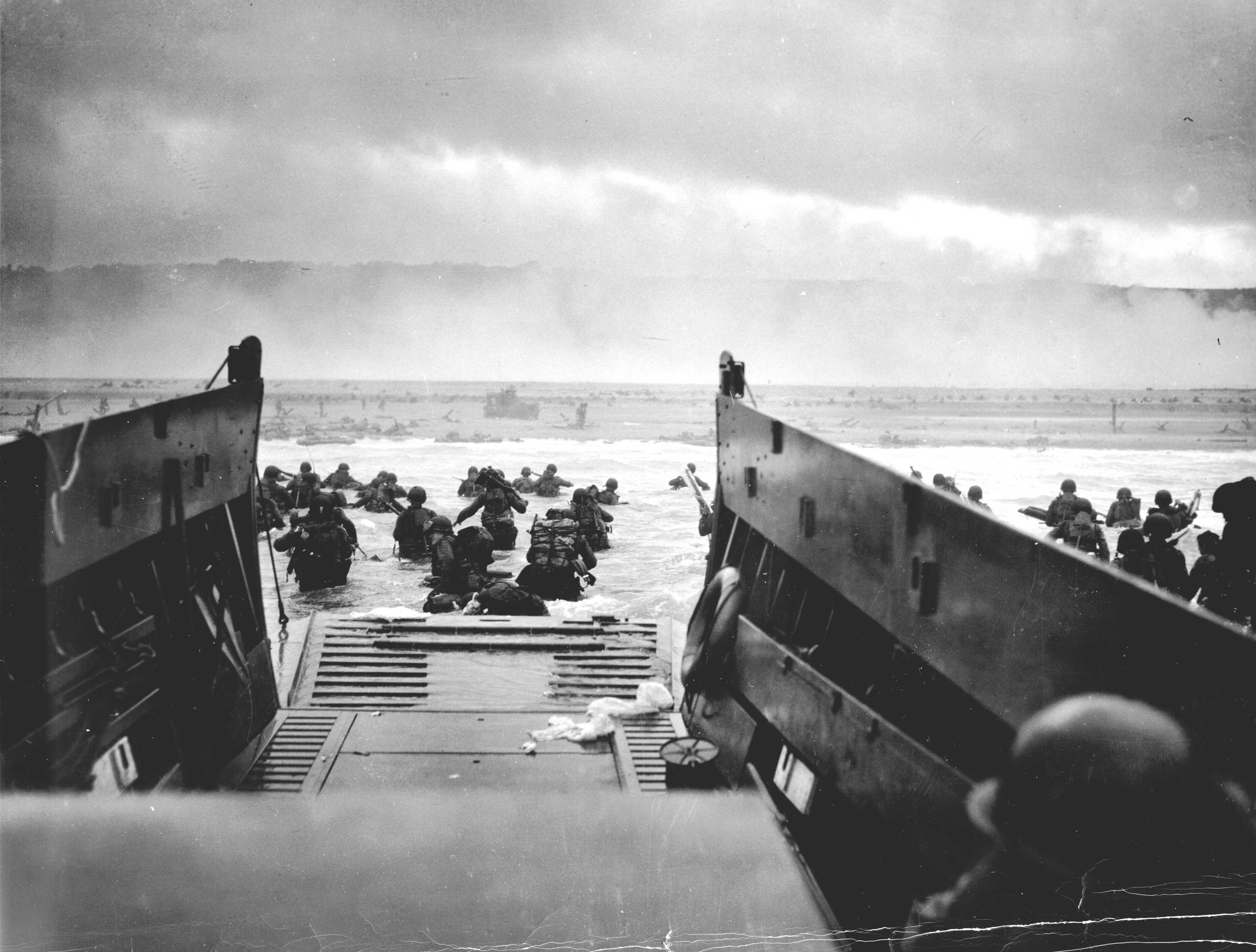
Allied troops storm Utah Beach under heavy German artillery and machine gun fire in Normandy, France, June 6, 1944. More than 23,000 men of the U.S. 4th Infantry Division landed on Utah Beach, the westernmost of the assault beaches. (U.S. Coast Guard photo)

The Normandy invasion maked an important day in the history of the World, but also in the history of the Coast Guard. If you would like to look back on this event, here are some Coast Guard stories pulled from my Heritage Page.

D-Day, 6 June 1944

U.S. Coast Guard Rescue Flotilla One at Normandy

D-Day, Normandy Remembered

The Long Blue line: “Lucky Ox”—surviving the killing fields of D-Day

LCI(L) 85: The Four- Leaf Clover

“Coast Guard veteran turns 100, reflects on ‘scary days’ and ‘unbelievable sights’ of D-Day invasion” –D8 Press Release

The Long Blue Line: Seaman First Class Fletch Burton—he went in harm’s way so others might live free

A LCVP (Landing Craft, Vehicle, Personnel) from the U.S. Coast Guard-manned USS Samuel Chase disembarks troops of Company E, 16th Infantry, 1st Infantry Division (the Big Red One) wading onto the Fox Green section of Omaha Beach (Calvados, Basse-Normandie, France) on the morning of June 6, 1944. American soldiers encountered the newly formed German 352nd Division when landing. During the initial landing two-thirds of Company E became casualties.

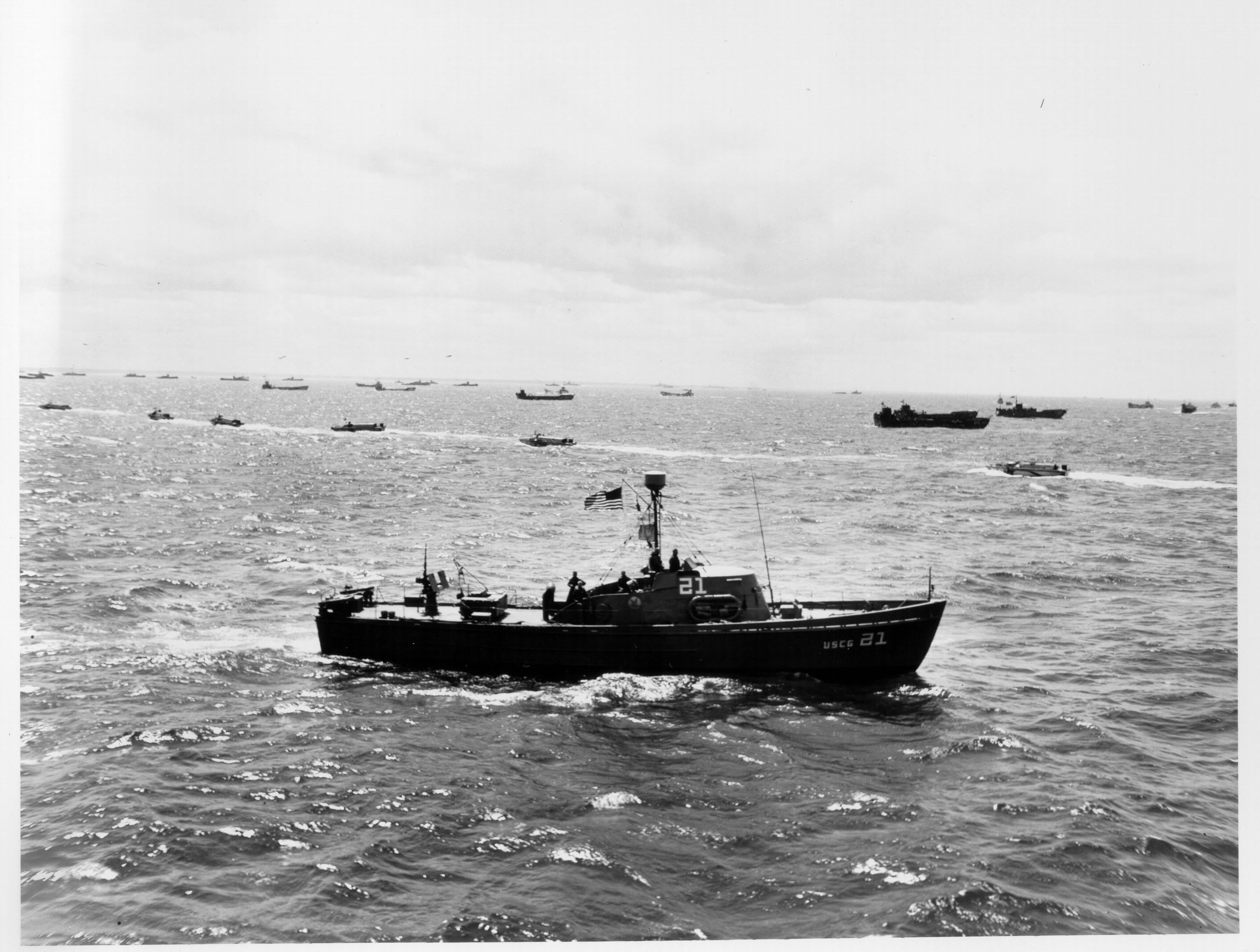
USCG 83 ft patrol boat, probably June 1944. Photographer unknown.

“While China makes Pacific islands tour, US Coast Guard is already on patrol” –CNN

U.S. Coast Guard Cutter Munro is tied up in Suva, Fiji, during a visit to the port city April 22, 2022.  The port call was part Operation Blue Pacific, that aims to counter illegal, unreported and unregulated fishing, and strengthen relationships to enhance maritime sovereignty and security throughout the Indo-Pacific. (U.S. Coast Guard photo courtesy of Office of the FMSRCC, Republic of Fiji Navy)

The Coast Guard got some national recognition for its work in the Western Pacific from CNN. It is being recognized as a counter to increasing Chinese influence in the region.

The Coast Guard’s website shows cutters have spent hundreds of days and steamed thousands of miles in the past two years helping Pacific island nations.

I have not seen this website, but I would like to. I found this one, but it is not a Coast Guard website.

The story mentions the Coast Guard’s role in the administration’s Indo-Pacific Strategy, which goes well beyond fisheries. The Strategy was discussed here.

“U.N. campaign targets illicit fishing” –Indo-Pacific Defense Forum

A picture taken on November 16, 2011 from a South Korean helicopter shows Chinese fishermen wielding sticks to stop an attack by South Korean coastguard commandoes armed with clubs aboard rubber boats during a crackdown on alleged illegal fishing in South Korean waters in the Yellow Sea off the southwestern coast county of Buan. South Korea’s coastguard mobilised 12 ships, four helicopters and commandoes for a special three-day crackdown on illegal fishing by Chinese boats this week. REPUBLIC OF KOREA OUT AFP PHOTO / DONG-A ILBO (Photo credit should read DONG-A ILBO/AFP/Getty Images)

The Indo-Pacific Defense Forum reports that today is the United Nations’ “International Day for the Fight Against Illegal, Unreported and Unregulated Fishing.”

The humanitarian and economic fallout of illicit fishing is significant in the Indo-Pacific and elsewhere. Each year it deprives the world’s oceans of 11 million to 26 million metric tons of fish and other seafood worth an estimated U.S. $10 billion to $23 billion.

IUU fishing accounts for 1 in 5 fish caught worldwide, the U.N. Food and Agriculture Organization (FAO) reports.

The short report provides an overview of the problem, identifies the Chinese fishing fleet and the most agrediuous perpetrator, and discusses what is being done to address the problem.

One of the recent steps taken is the Indo-Pacific Partnership for Maritime Domain Awareness (IPMDA) discussed here. Perhaps an additional step could be something like my proposal for a Combined Maritime Security Task Force.

“USCG Discloses 90% Interdiction Success Rate For Pursuits Over The Last Three Years” –Naval News

A low-profile go-fast vessel is shown next to the Coast Guard Cutter James in mid-May, 2020 in the Pacific Ocean off the coast of Central America. The James’ crew interdicted 3,100 pounds of cocaine and four suspected smugglers aboard the boat. (U.S. Coast Guard photo.)

Naval News reports the Coast Guard’s response to a question regarding, how the U.S. Coast Guard tackles the problem of high speed pursuits?

Not surprisingly the response pointed out that “… it’s their smaller RHIBs, the Long-Range Interceptor II and the Cutter Boat Over-the-Horizon IV, that often pursue and come close to the (small) high-speed targets.” I might add that includes the 22 foot Cutter Boat Large on WMEC 210s that are not equipped with the larger 26 and 35 foot boats and air-borne use of force is sometimes require to provide disabling fire.

The new information, I had not seen before was, the 90% interdiction rate sited in the title. Of course, as noted, this refers to success once pursuit is initiated. Gross interdiction rates are much much lower.

Each maritime pursuit chase is unique, and factors such as ambient lighting and sea state, target speed and actions, and the target’s proximity to land directly influence interdiction results. Despite these myriad factors, the Coast Guard has an approximately 90% interdiction success rate, once starting pursuit operations, over the last three years. (emphasis applied–Chuck) Enhanced pursuit capabilities, including unmanned aerial surveillance, in combination with changes in pursuit tactics, like airborne use of force, and refinement of tactical geometry assessments may have increased the recent level of interdiction success,” Lieutenant Kneen said.

“Coast Guard accepts delivery of 49th Fast Response Cutter Douglas Denman” –D17 Press Release

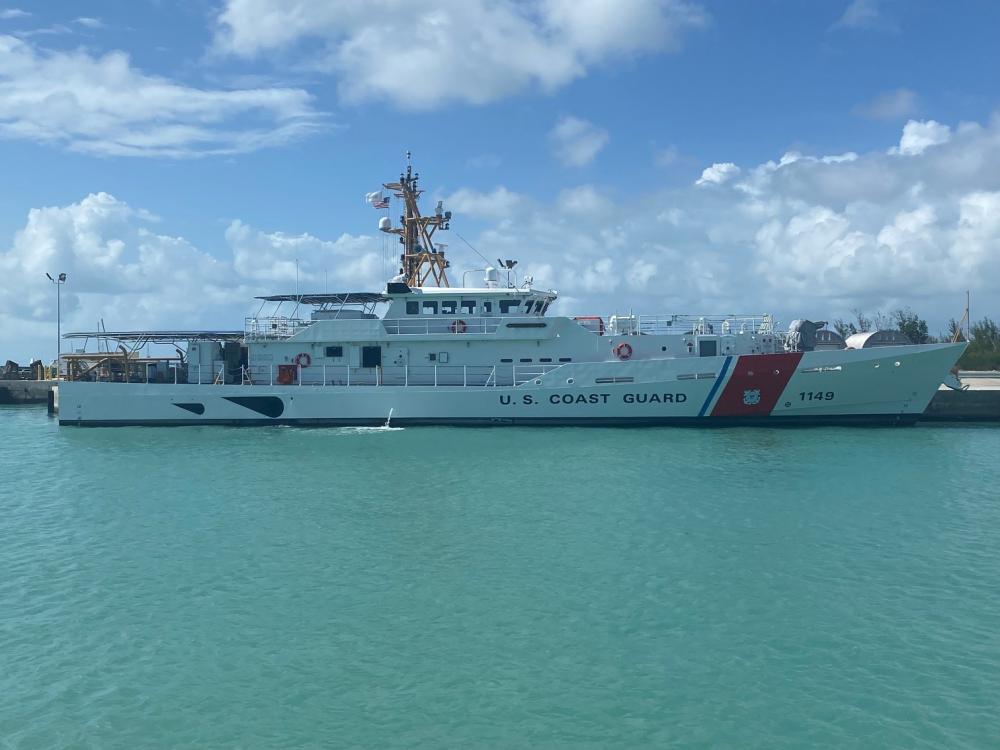
The Coast Guard accepts delivery of 49th Fast Response Cutter Douglas Denman, in Key West, Florida, May 26, 2022. The cutter will be homeported in Ketchikan, Alaska. (U.S. Coast Guard photo)

Below is a press release reporting the acceptance of the 49th Webber class Fast Response Cutter. (There is an error in that this is reported to be the “24th Fast Response Cutter built by Bollinger Shipyards” while all 49 have been built by Bollinger)

This will be the third FRC based in Ketchikan. Normally I would simply add this news as a comment on a previous post, but there is news here that I had not picked up on previously.

Earlier this year, President Joe Biden signed the Consolidated Appropriations Act for Fiscal Year 2022, which included a $130 million increase for two additional FRCs, continuing the program beyond its 64-vessel program of record. This is the second time Congress has added FRCs beyond the original 58 vessel program of record.

Bollinger typically delivers five FRCs a year, so we can expect the 17 additional FRCs to be delivered for over the next three and a half years.

The additional cutters now make it almost certain we will see FRCs based in America Samoa. Additionally we may see them in a second additional new Western Pacific base.

Photo Release

U.S. Coast Guard 17th District Alaska

Coast Guard accepts delivery of 49th Fast Response Cutter Douglas Denman

The Coast Guard accepts delivery of 49th Fast Response Cutter Douglas Denman, in Key West, Florida, May 26, 2022. The cutter will be homeported in Ketchikan, Alaska. (U.S. Coast Guard photo)

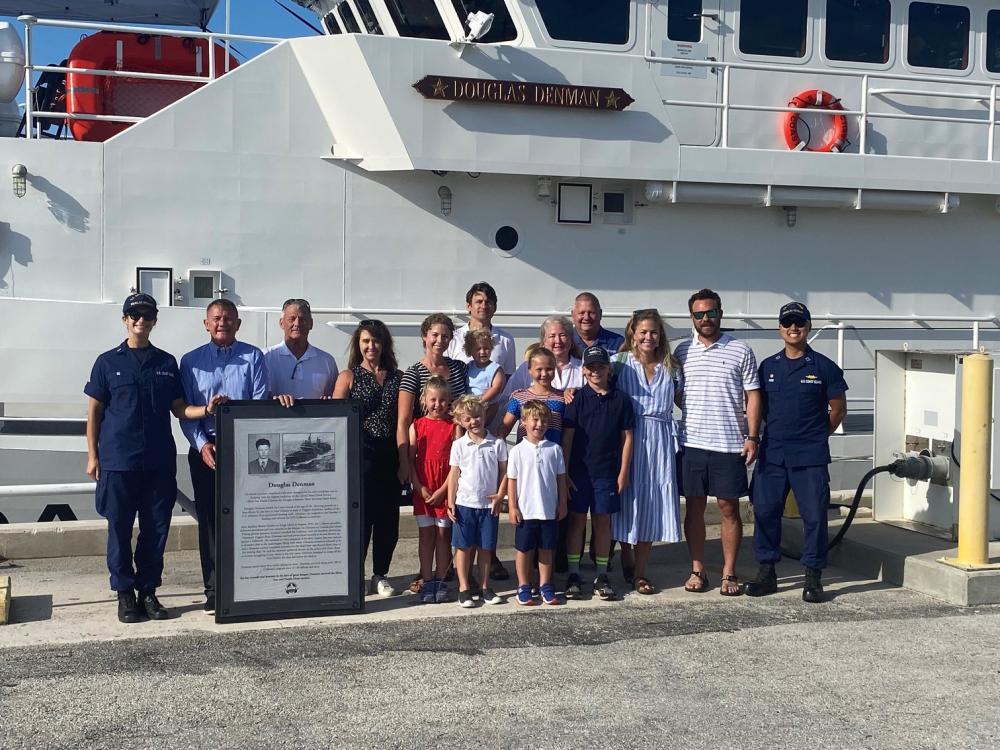
The Coast Guard accepts delivery of the 49th Fast Response Cutter Douglas Denman, in Key West, Florida, May 26, 2022, alongside the Denman family. The cutter will be homeported in Ketchikan, Alaska. (U.S. Coast Guard photo)

Editors’ Note: Click on images to download high resolution version.

 KEY WEST, Fla. — The Coast Guard accepted the Coast Guard Cutter Douglas Denman (WPC 1149), the 24th Fast Response Cutter built by Bollinger Shipyards, during a May 26 ceremony at Coast Guard Sector Key West.

“We were honored to have Douglas Denman’s son, Doug Jr. and daughter, Karen there for the momentous occasion,” said Lt. Paul Kang, commanding officer of the cutter. “In addition to that, two of Douglas Denman’s granddaughters drove down from Georgia with their families.”

The cutter, which is 154-feet long and has a crew complement of 24, will be homeported in Ketchikan, Alaska.

The Douglas Denman is scheduled for commissioning in September in Ketchikan. It is the third Fast Response Cutter to be stationed in the Coast Guard’s 17th Coast Guard District, which covers the state of Alaska and the North Pacific. The Denman will join the John McCormick (WPC 1121) and the Bailey Barco (WPC 1122), which arrived in Alaska in 2016 and 2017.

Born in Tallapoosa, Georgia, the cutter’s namesake joined the U.S. Coast Guard in 1940 and was eventually assigned as a coxswain to the USS Colhoun (DD-85), a Wickes-class destroyer in the U.S. Navy during World War I and later re-designated APD-2 in World War II. On Aug. 30, 1942, the Colhoun was positioned off the coast of Guadalcanal when it was attacked by hostile aircraft. Denman was seriously wounded during the attack but remained at his duty station. When the order was given to abandon ship, Denman and another crew member helped evacuate the crew and get life jackets to those already in the water. Because of Denman’s selfless actions, 100 of the 150 officers and staff survived the attack and sinking of Colhoun. Denman received the Silver Star and Purple Heart medals for his heroic efforts. He served for 20 years in the Coast Guard, retiring as a senior chief petty officer in 1961.

The Fast Response Cutter is replacing the aging Island-class 110-foot patrol boats and features advanced command, control, communications, computers, intelligence, surveillance, reconnaissance equipment, and an over-the-horizon cutter boat. The cutter features advanced seakeeping capabilities and can achieve more than 32 mph (28 knots). The cutter has an endurance of five days. The Coast Guard is in the middle of the FRC acquisition program.

Earlier this year, President Joe Biden signed the Consolidated Appropriations Act for Fiscal Year 2022, which included a $130 million increase for two additional FRCs, continuing the program beyond its 64-vessel program of record. This is the second time Congress has added FRCs beyond the original 58 vessel program of record.

Douglas Denman is designed for multiple missions, including law enforcement, fisheries enforcement, waterways and coastal security, search and rescue, and national defense.

For more information about this cutter, please contact 17th District Public Affairs at D17-DG-PublicAffairs@uscg.mil or Douglas Denman’s executive officer at Alicen.T.Re@uscg.mil.

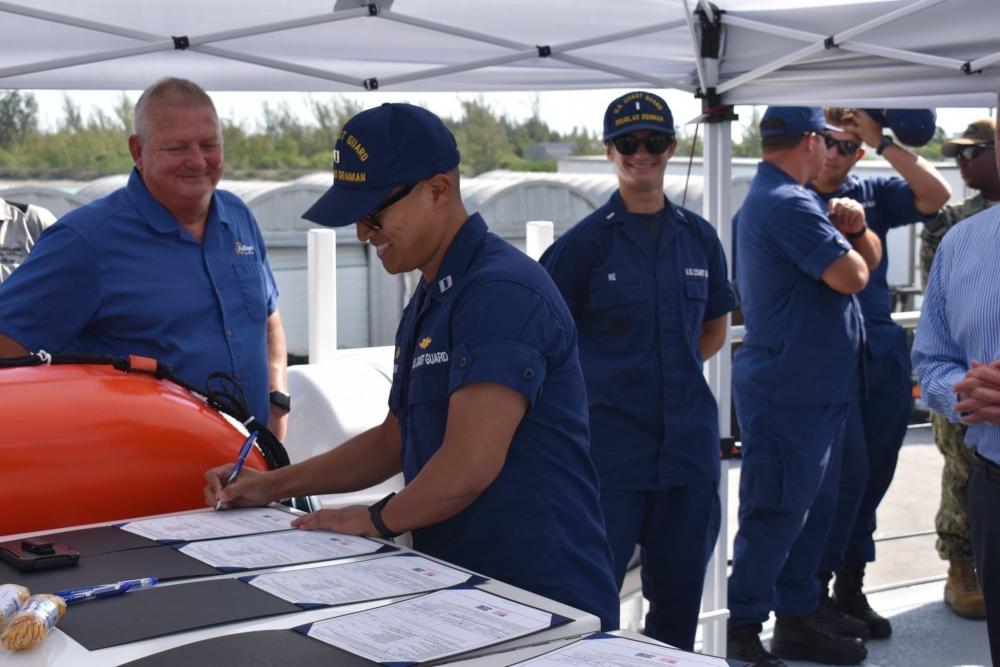
Coast Guard Lt. Paul Kang, commanding officer of Cutter Douglas Denman, accepts delivery of the 49th Fast Response Cutter Douglas Denman, in Key West, Florida, May 26, 2022. The cutter will be homeported in Ketchikan, Alaska. (U.S. Coast Guard photo)