“HHI To Build Six New OPVs For The Philippine Navy” –Naval News

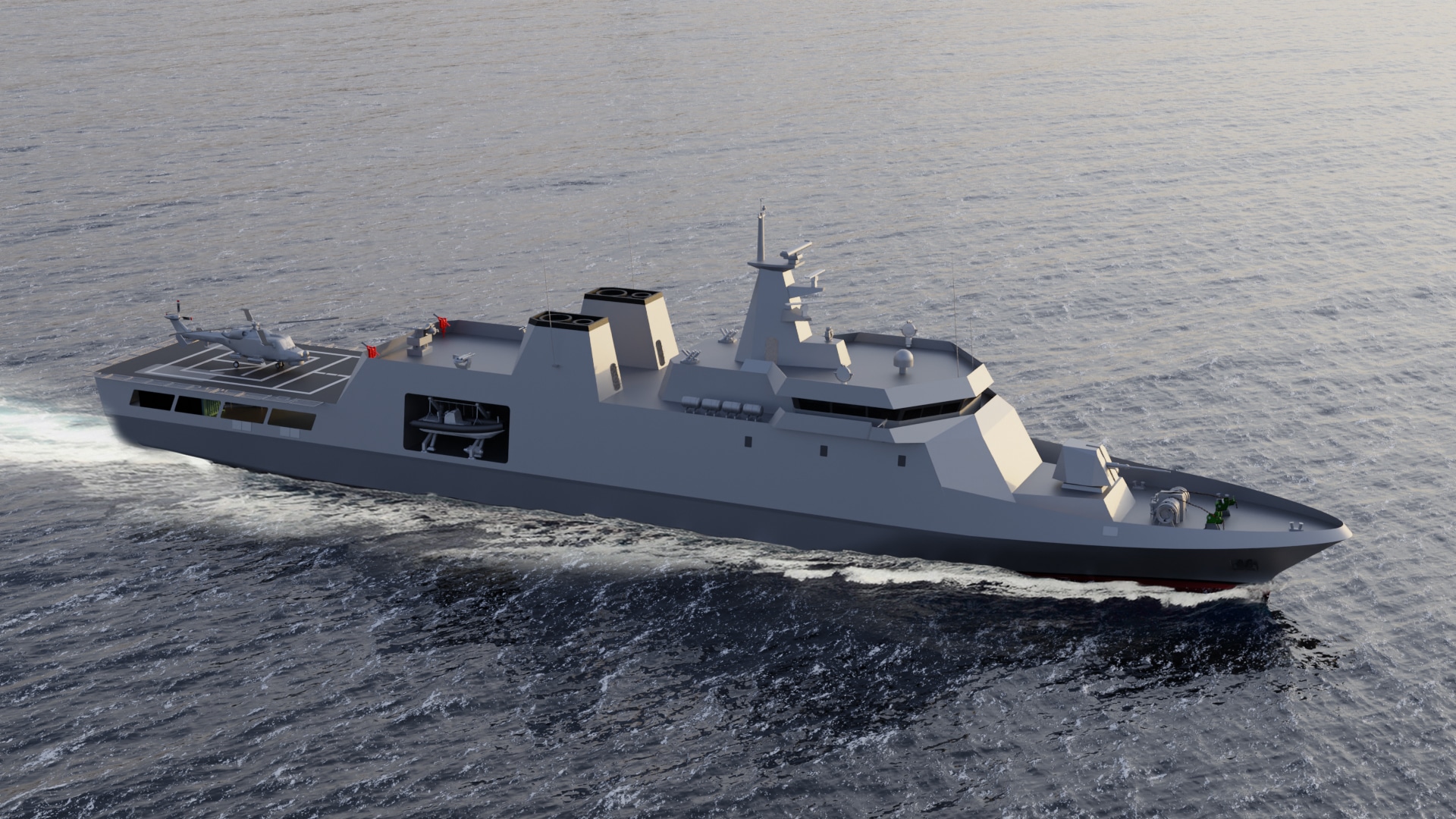
Philippine Navy OPV to be built by HHI in S. Korea. HHI image.

Naval News reports,

Hyundai Heavy Industries (HHI) signed a contract with the Philippine Department of National Defense on June 27th to construct six units of new build 2,400 ton Offshore Patrol Vessels (OPV) worth USD 573 million.

They provide this description,

The Philippine Navy OPV has a displacement of 2,400 tons, a length of 94.4 meters, a width of 14.3 meters, a maximum speed of 22 knots, a cruising speed of 15 knots, a range of 5,500 nautical miles and will be built at HHI’s Ulsan shipyard until 2028. The vessel is to be equipped with a 76mm main gun, two 30mm secondary guns, a helideck capable of operating a helicopter and unmanned aerial vehicles.

That is 310 ft in length, 47 ft beam. In terms of displacement they will be a third larger than the Bear class 270 foot WMECs.

Looking at the artist concept, I see only one 30mm, but I also see fire monitors on the corners fo the hangar roof and decoy launchers between the bridge and funnels. There seems to be considerable open space under the flight deck. There may be provision for a stern launch ramp.

Also, the illustration shows the ships equipped with a pair of Simbad-RC for short range Mistral fire-and-forget, IR homing Missiles, mounted on either side of the hangar roof between the funnels and the 30mm. Inclusion on this class appears likely and logical because the system was also included on the BRPJose Rizal class frigates built for the Philippine Navy by HHI. This system is also reported to be effective against small high speed surface craft.
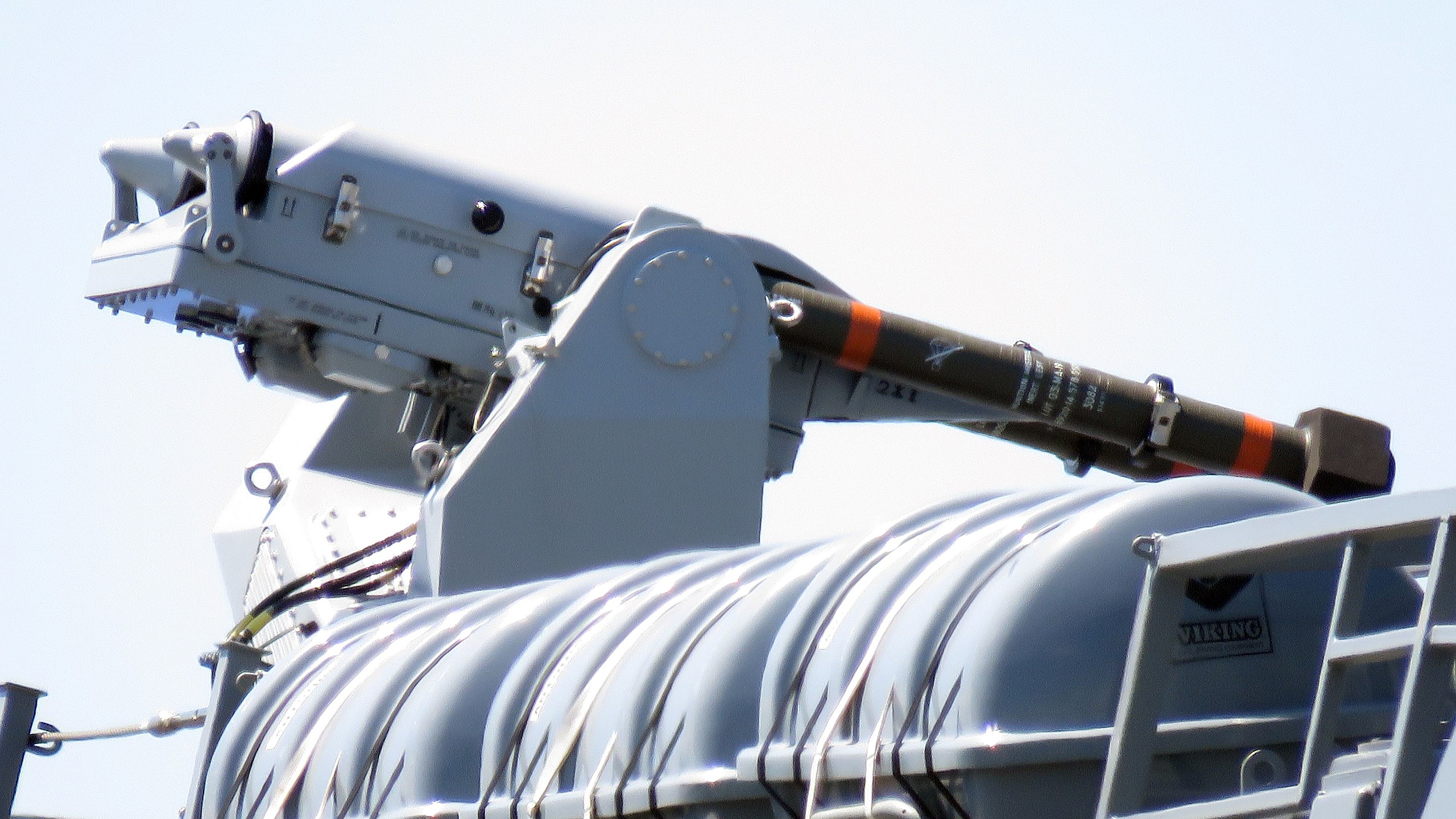
A Simbad-RC with Mistral Missiles on the BRP Antonio Luna (FF-151) Frigate of the Philippine Navy (PN)

The helicopter depicted in the illustration is a Westland Wildcat AW159. The Philippine Navy recently aquired two of these and will presumably add more to their fleet as more flight decks join the Navy. With a max take off weight of 13,228 lb it is larger than an MH-65 but considerably smaller than an MH-60. This aircraft can have both an Anti-Submarine and an Anti-Surface capability. It appears unlikely the ships themselves will have either a ASW mission or capability as built. The Wildcat can launch light weight torpedoes and reportedly the S. Korean and Philippine aircraft can launch Spike NLOS. This is a 70 kg (150 lb) anti-surface missile with man-in-the-loop guidance and a claimed maximum range of 25 km (16 mi). The range may actually be considerably greater. From Wikipedia,

“In 2020 the US Army announced its intention to procure Spike NLOS missiles to be mounted on Apache helicopters. A test was conducted in March 2021 where an AH-64E fired a Spike NLOS at a target 32 km (20 mi) away and scored a direct hit.

“In June 2022, Rafael unveiled the Spike NLOS 6th generation with range increased to 50 km (31 mi), a salvo feature which can launch up to four missiles at a time, and the ability to hand over control after firing to another platform. It also has a Target Image Acquisition capability that can prioritize important targets for strike…”

These ships could considerally strengthen the Philippines’ hand in dealing with Chinese gray zone operations, if the Philippines could get over their apparenent reticence in using their Navy to police their EEZ. Maybe they could just paint them white and add law enforcement stripes while still labeling them Philippine Navy and let embarked Philippine Coast Guard ride-alongs do actual law enforcement.

“These Are The Riverine Patrol Boats Ukraine Is Getting From The U.S.” –The Drive

Riverines attached to Riverine Squadron 2 in a SURC at Haditha Dam Forward Operating Base conduct a patrol in Haditha, Iraq, December 20, 2007. Members of RIVRON 2 patrol Haditha’s dam and surrounding waterways, denying their use by insurgents, which in turn provides security to local fisherman. Location: Haditha Dam FOB, Anbar Province Iraq. (United States Navy, MC2 Kirk Worley) The package includes two of these.

The Drive/The War Zone has the best expanation I have seen so far as to the 18 boats that are to be transferred to Ukraine as part of the latest aid package.

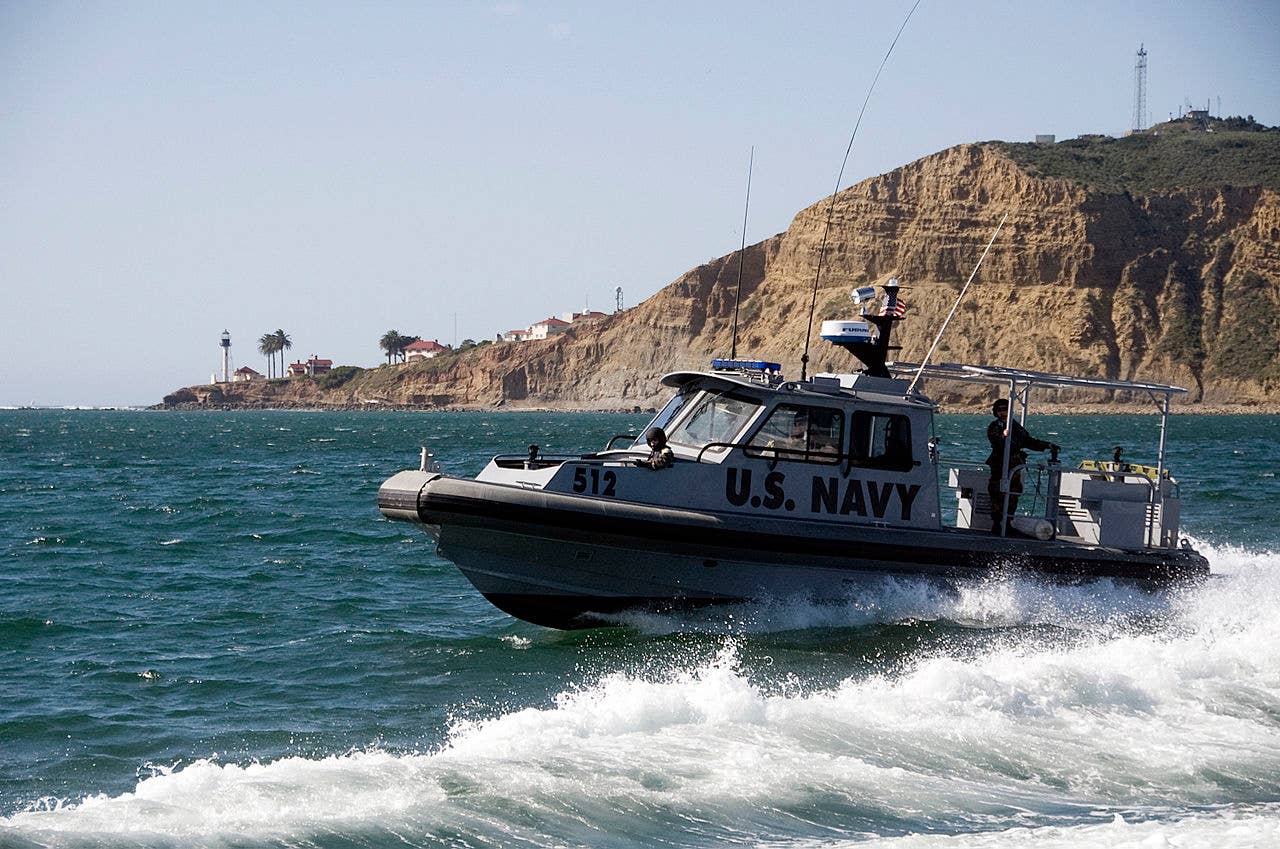
A Sea Ark Dauntless patrol boat operating in San Diego. The type has been a very common sight at locales where U.S. Navy ships operate from for years now. U.S. Navy photo by Mass Communication Specialist 1st Class Michael Moriatis/Released. Ten of these 34 foot boat are included in the aid package. 

While the 35 and 34 foot boats have been identified as to type, the six 40 foot boat have not. The post speculates that these may be of a type exported under Foreign Military Sales in 2020. I think, it is not unlikely these may be the new Navy 40 foot force protection patrol boats. They are an improvement on the 34 foot Sea Ark boats. They can be armored. They have an electro-optic system on the mast. They would be particularly useful if they had the remote weapon system on the bow they were designed to carry.

“U.S. Navy’s New 40-Foot Defiant Patrol Boat” –Naval News, Plus FMS Patrol Boat

The 40PB shows its speed in this photo and is armed with a .50cal M2 heavy machine gun at the bow, 7.62mm miniguns and acoustic devices amidships, and a M240B at the stern. The radar, electro-optical camera, and FLIR are visible on the short mast above the cabin. Metal Shark photo.

Naval News brings us a bit more informaton about the Navy’s new 40 foot force protection patrol boat. Most significantly,

NAVSEA: A total of 56 [40-foot Patrol] boats have been awarded to Metal Shark Boats and as of 9 May 2022, 20 boats have been delivered to the U.S. Navy.

In 2017 we discussed the program here and revisited it in 2019 here. The last indicated boats were being delivered at a rate of one every four weeks, meaning Metal Shark will likely be building these boats through early 2025.

Metal Shark calls this model the “40 Defiant” although it is actually 44 foot. Their description is here.

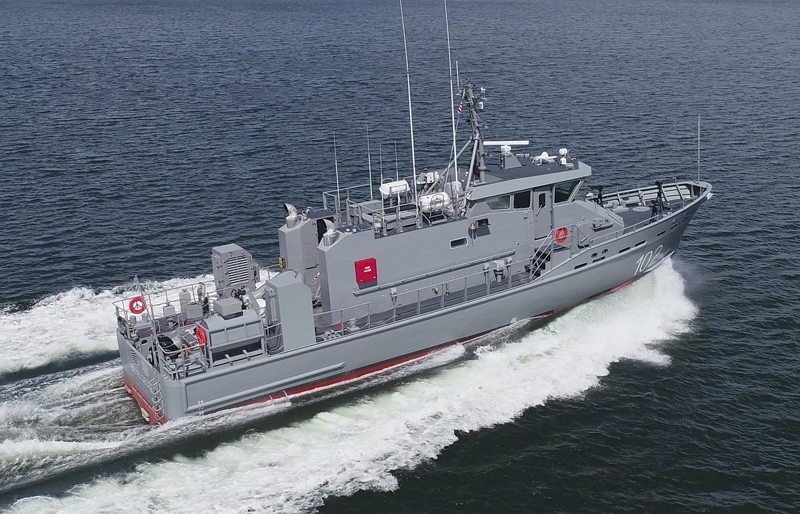
The 85-foot Defiant-class Near Coastal Patrol Vessel (NCPV) is being acquired by NAVSEA for Foreign Military Sales. Metal Shark photo.

There is also a some discussion of the Metal Shark “85 Defiant” patrol boat that is being produced for Foreign Military Sales. This is an evolution of the same design that gave the US Coast Guard its 87 foot “Marine Protector” WPBs (it too is actually 87 foot loa). The Navy calls this class Near Coastal Patrol Vessels or NCPV. We discussed this class in 2017. We noted at the time that Metal Shark had been award a contract,

“…potentially worth upwards of $54 million, Metal Shark will build up to thirteen 85-foot Defiant-class welded aluminum cutters for the Dominican Republic, El Salvador, Honduras, Costa Rica, Guatemala, and other United States partner nations. Additionally, Metal Shark will supply electro-optical infrared sensors, diagnostic equipment, in-country reactivation, crew familiarization, and test support to NCPV operators.

Metal Shark’s website has a description of the vessel here.

“Southeast Asian partners enhancing trilateral maritime patrols” –Indo-Pacific Defense Forum

Law Breakers frequently attempt to exploit divisions of jurisdiction. How to deal with this? The Indo-Pacific Defense Forum contributor Gusty Da Costa reports from Indonesia (reproduced in full below),

IMAGE CREDIT: INDONESIAN DEFENSE MINISTRY

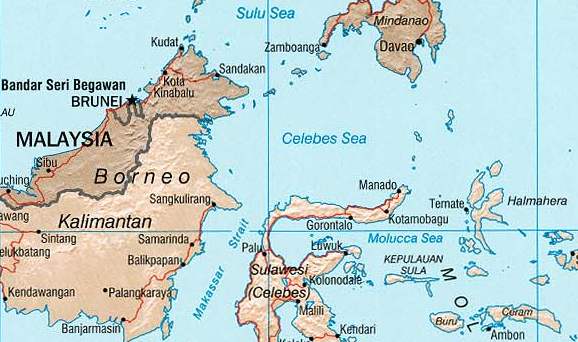
The launch about five years ago of maritime patrols in the Sulu and Celebes seas involving the armed forces of Indonesia, Malaysia and the Philippines have corresponded with a sharp drop in piracy and terrorism, officials and analysts said. The three nations plan to enhance the patrols with improved surveillance, intelligence and communication to boost security and economic stability.

The INDOMALPHI patrols, a moniker that combines the names of the partner nations, began in 2017 as a result of the Trilateral Cooperative Arrangement (TCA) signed a year earlier by the three governments. Security challenges are “especially daunting” in the seas, where the three nations’ maritime borders converge in an area “with a complex political history and a long legacy of illicit maritime activity,” according to Stable Seas, a nonprofit research initiative.

“The main objective is to enhance security in the Sulu and Sulawesi [Celebes] seas,” Indonesian Army Col. Kurniawan Firmizi, a senior official at the Indonesian Defense Ministry, told FORUM. “A high level of protection with all parties can be beneficial. It can increase the economy, facilitate traffic flows between countries adjacent to the Sulu Sea area, and improve border security and international cooperation. The goal is to secure the Sulu Sea and maritime border waters for all three countries.”

Since their launch, the INDOMALPHI patrols have deterred and defended against attacks on vessels at sea by pirates and violent extremist organizations such as the Abu Sayyaf Group, Kurniawan said. According to Indonesia’s Defense Ministry, known as Kemhan, there were no reports of piracy for ransom in the patrolled waters in 2021. As recently as 2017, there were 99 reports of piracy and armed robbery in the area, according to the Regional Cooperation Agreement on Combating Piracy and Armed Robbery against Ships in Asia.

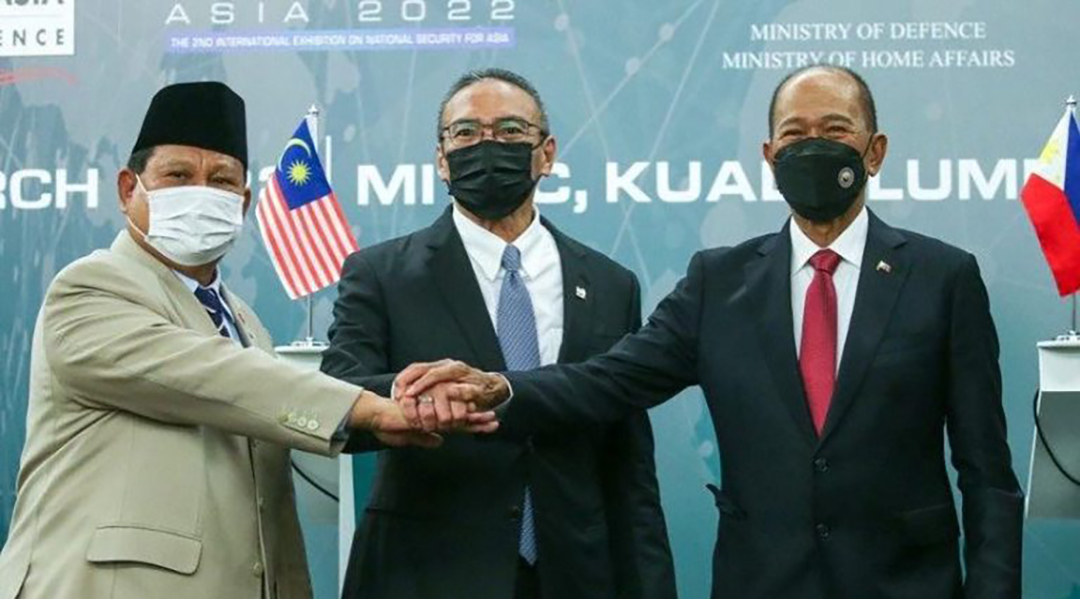
Four categories of patrol enhancements were announced at the TCA Ministerial Meeting in Kuala Lumpur, Malaysia, in late March 2022, Kemhan reported. They are: optimizing communication by deploying a liaison officer from each partner nation to each country’s maritime command center; conducting trilateral maritime exercises; adopting an intelligence-led approach to surveillance operations; and improving the TCA structure, communication and coordination to increase partners’ participation and commitment. (Pictured, from left: Indonesian Defense Minister Prabowo Subianto, Malaysian Senior Defence Minister Hishammuddin Tun Hussein and Philippine National Defense Secretary Delfin Lorenzana attend the Trilateral Cooperative Arrangement Ministerial Meeting in Kuala Lumpur, Malaysia, in March 2022.)

“There has been an increase in surveillance technology, including drones and satellite systems,” Kurniawan said.

The INDOMALPHI patrols demonstrate the expansive benefits of multilateralism, Connie Rahakundini Bakrie, a defense analyst and the author of “Defending Indonesia,” told FORUM.

“These countries will undoubtedly increase their cooperation with other regions, such as Europe, by securing their maritime areas,” she said. “The reason is that trading traffic will be smoother since it is safe, so the risk-cost will be lower.”

She recommended two additional improvements: increase patrol frequency in the Sulu Sea; and supplement patrols with “additional aircraft such as reconnaissance aircraft, close air support or attack aircraft, commandos from helicopters, etc.”

“Can France’s Military Live Up to Its Ambitions in the Indo-Pacific?” –The Diplomat

French EEZ, from Wikipedia, by B1mbo

The Diplomat notes,

France has sovereignty, citizens, and broader interests at stake in the region, but its military presence remains small and outdated.

Most of the French military’s missions in the Indian and Pacific Oceans look a lot like Coast Guard missions.

Like the US they have vast holdings of EEZ in the Pacific that have been lightly patrolled and are now subject to the effects of Illegal, Unregulated, Unreported fishing. These include territory both East and West of American Samoa.

I would note that during World War II, New Caledonia was a very important logistical hub in the Pacific War. France does not have a lot of military assets in the Pacific, but they do have several strategically placed islands with port facilities and airports.

It looks like there are opportunities here for cooperation and mutual support between the US Coast Guard and French forces.


Previous reports with news effecting French forces in the IndoPacific:

European Patrol Corvette / “Spain seen joining Greece, France, Italy on European Patrol Corvette program” –DefenseNews

“France confirms order for six new POM Offshore Patrol Vessels” –Naval News, Another Cutter X

French Building OPVs D’Entrecasteaux-class patrol ship

Whiskey Wars End

HansIslandLocator.png

MSN reports,

“Denmark and Canada have decided to formally end their “light-hearted” dispute that spanned over 50 years over an uninhabited Arctic island.”

Like King Solomon, they are going to split the baby.

“It was dubbed as “Whisky War” due to military ships visiting the island and planting flags and bottles of Canadian whiskey or Danish schnapps to mark their territory.”


BRIDGING THE GAP: HOW THE UNITED STATES CAN IMMEDIATELY ADDRESS ITS ARCTIC CAPABILITY LIMITATIONS –Modern War

The Modern War Institute at West Point published an article that suggests that NOAA ships can help provide presence in the Arctic and that this will contribute to the defense of the Homeland.

Looks like NOAA has about 16 active ships. None are very large and I don’t think any of them are ice rated.

Certainly, NOAA has business in the Arctic, understanding the oceans is an essential part of readiness for conflict, but I don’t see them as any sort of deterrant. On the other hand I don’t see Russia’s large number of icebreakers as adding significant additional threat to US or Canadian security. They simply need a lot of icebreakers to support their economic operations in the Arctic.

Which Arctic are we talking about?

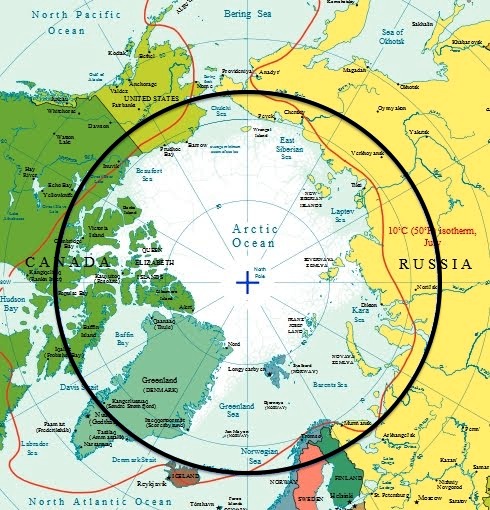
For most of the world, the Arctic is the region North of the Arctic Circle. For some reason the US defines the Arctic as including the Bering Sea and the Aleutians. That does include some pretty cold territory but really, it is not the Arctic, and there is no reason the US Navy should not be operating surface ships there, but they don’t.

I am talking about the Arctic North of the Arctic circle.

What are the military threats to North America that might come across the Arctic Ocean?

While the Russian Arctic build-up threatens Norway, maybe Iceland, and perhaps Greenland, let’s consider only North America.

Much of the Russian build up in the Arctic is defensive, and this is understandable. They have a lot of assets in the Arctic. Much of their national income comes from the Russian Arctic.

There is absolutely no chance the Russians are going to attempt to land an army in the North American Arctic as an overland invasion. It would be too difficult to move and virtually impossibe to resupply. They would be under constant attack by US and Canadian Aircraft. As a Canadian Officer once noted, if Russia landed troops in the Canadian Arctic they would need to be rescued. The most we are likely to see from the Russian Army is Special Forces assaults on sensor and associated communication  systems in the Arctic.

The largest portion of the Russian Naval fleet (30-35%) is based in the Arctic, but not because it is intended to operate exclusively in the Arctic. Much of it is based there because they don’t have better choices. The Northern Fleet has their only relatively unrestricted access to the Atlantic. Even Northern Fleet units have to transit the Greenland-Iceland-UK (GIUK) Gap (or the English Channel) to make it into the Atlantic Sea Lanes, The Baltic Fleet is surrounded by potential adversaries and would have to exit through the Danish Straits. The Black Sea Fleet is bottled up behind the Turkish straits and even after exit would have to cross the Mediterranean and through the Straits of Gibralter.

Russian Submarines do operate under the ice and may launch missiles or conduct commando raids in the Arctic.

The serious threats that could come across the Arctic Ocean will be in the air or in space–aircraft and ballistic and cruise missiles including the new hypersonics.

Coast Guard icebreakers could have a role in facilitating deployment and continuing support of sensor systems in the Arctic.

Gray Zone threats to Sovereignty

The more probable near term threats to the US come in the form of Gray Zone Ops that are intended to reshape the World’s view of normal. We have seen this with China’s Nine Dash Line and their attempts to recast rights associated with the Exclusive Economic Zone.

It appears Russia is trying to do the same. We have seen it in the Black Sea, and we are likely to see it in the Arctic.

The extent of Russia’s continental shelf is as yet undecided, but their claims are expansive.

Looks like China intends to do some resource extraction and fishing in the Arctic and they have not been particularly respectful of the rights of others.

The US Coast Guard will need to do fisheries protection inside the US Arctic EEZ and the Canadian CG inside theirs. There are probably going to be opportunities for cooperation and synergy between the two coast guards in the high North.

With the increase in traffic as ice melts, NOAA probably needs to do a lot of oceanographic research and survey work in the Arctic, but they are probably going to need to either build their own icebreakers or ride Coast Guard icebreakers to do it.

“US, Iran in Tense Sea Incident; Tehran Preps New Centrifuges” –Military.Com

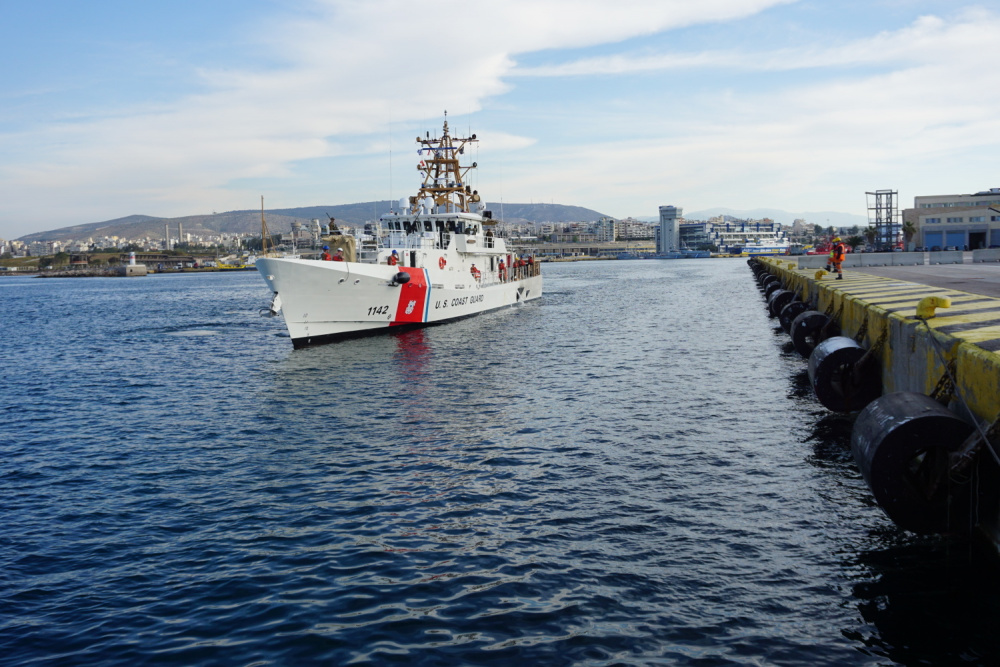
USCGC Robert Goldman (WPC-1142)

As part of a new report of harassment of a US warship by Iranian Islamic Revolutionary Guard Forces, we get a belated report of an even closer incident that involve a Webber class cutter.

On March 4, three Guard ships had a tense encounter for over two hours with Navy and U.S. Coast Guard vessels as they traveled out of the Persian Gulf through the strait, the Navy said. In that incident, the Guard’s catamaran Shahid Nazeri came within 25 yards (22 meters) of the USCGC Robert Goldman, the Navy said.

This is not the first time a cutter has had a run-in with this particular IRGC vessel.

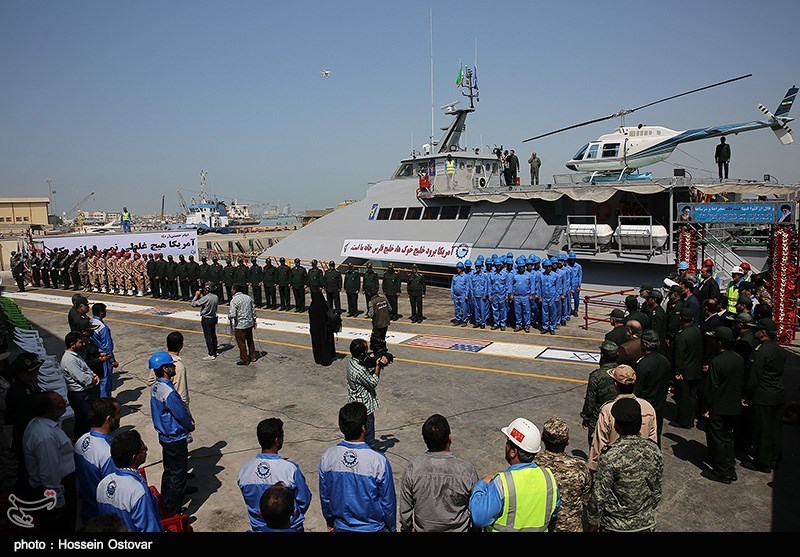
Islamic Revolutionary Guard Corps Catamaran Shahid Nazeri

Late addtition

Iran’s Islamic Revolutionary Guard Corps Navy (IRGCN) Harth 55 conducts an unsafe and unprofessional maneuver while operating in close proximity to USCGC Robert Goldman (WPC 1142) as it transits the Strait of Hormuz, March 4. U.S. Navy Photo

“NUWC & USCG Evaluate Underwater Threat Detection” –SeaWaves

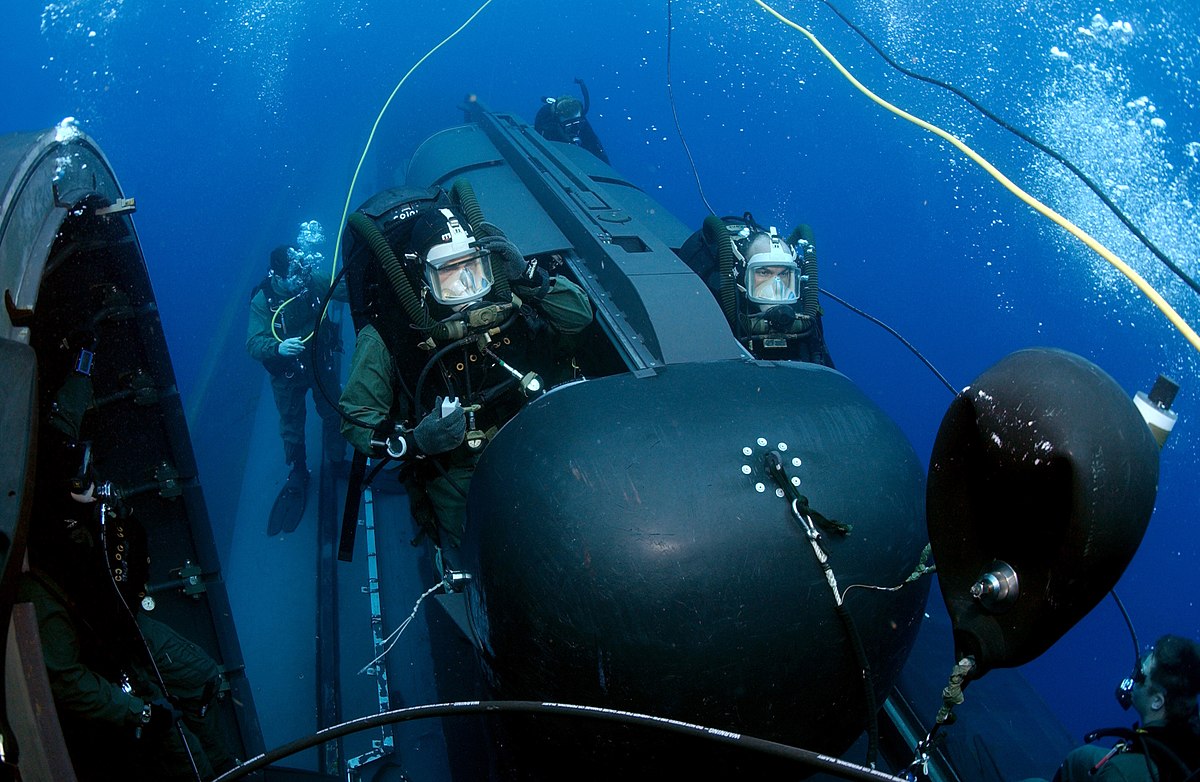
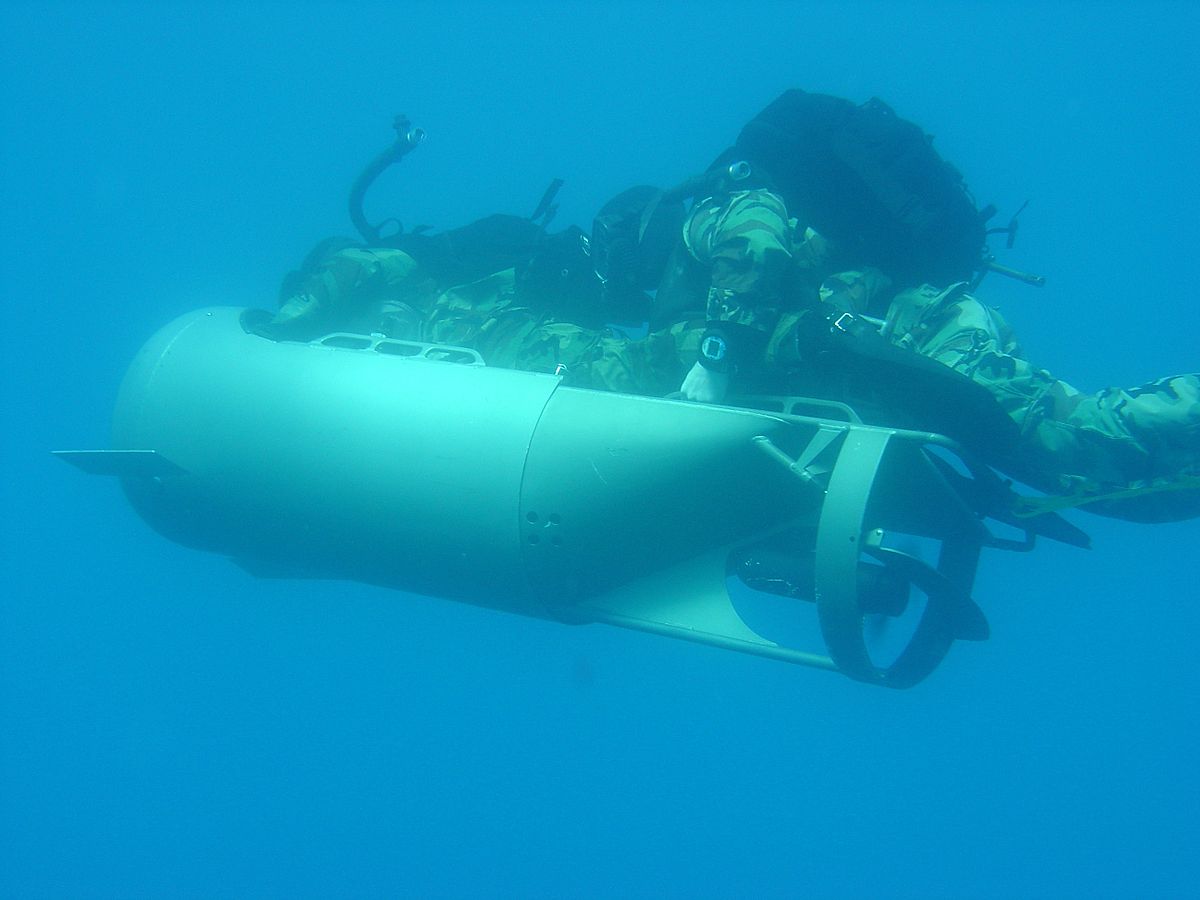
Atlantic Ocean (May 5, 2005) – Members of SEAL Delivery Vehicle Team Two (SDVT-2) prepare to launch one of the team’s SEAL Delivery Vehicles (SDV) from the back of the Los Angeles-class attack submarine USS Philadelphia (SSN 690) on a training exercise. The SDVs are used to carry Navy SEALs from a submerged submarine to enemy targets while staying underwater and undetected. SDVT-2 is stationed at Naval Amphibious Base Little Creek, Va., and conducts operations throughout the Atlantic, Southern, and European command areas of responsibility. U.S. Navy photo by Chief Photographer’s Mate Andrew McKaskle (RELEASED)

SeaWaves reports,

Naval Undersea Warfare Center (NUWC) Division Newport’s Argus Expeditionary Maritime Defense System team recently partnered with the U.S. Coast Guard Research and Development Center to evaluate capabilities that could aid the Coast Guard’s detection efforts, particularly with counter-unmanned undersea vehicle missions.

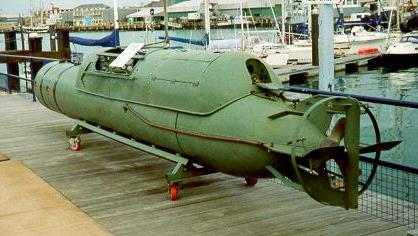
Italian Manned Torpedo. Photographed 1998, Submarine Museum, Gosport.

Countering Unmanned Underwater Vehicles is perhaps a new area of interest for the Coast Guard, but underwater threats to shoreside facilities and harbors are not new. The most successful of the threat organizations was Italy’s 10th Assault Vehicle Flotilla, Decima Flottiglia MAS. They used a variety of surface and subsurface craft, including the one pictured above, in more than a dozen operations, to sank or damaged five warships (totalling 72,000 tons) and 20 merchant ships (totalling 130,000 GRT). These included the Heavy Cruiser HMS York (lost after being wrecked and run aground to keep her from sinking) and severe damage to battleships HMS Valiant (out of service for seven months) and HMS Queen Elizabeth (out of service for a year and a half).

There are lots of successor organizations out there including all of the “axis of evil” usual suspects. After all, swimmer delivery vehicles are a lot easier to build than submarines and diver propulsion devices are available commercially.

The increased challenge presented by UUVs is that they may be harder to detect, and once you identify a threat, how do you eliminate it?

2 United States Marines Cpt.Lawrence R Gentile and Ssgt Robert Romito Maritime Special Purpose Force (MSPF) with a Diver Propulsion Vehicle, or Device (DPD).

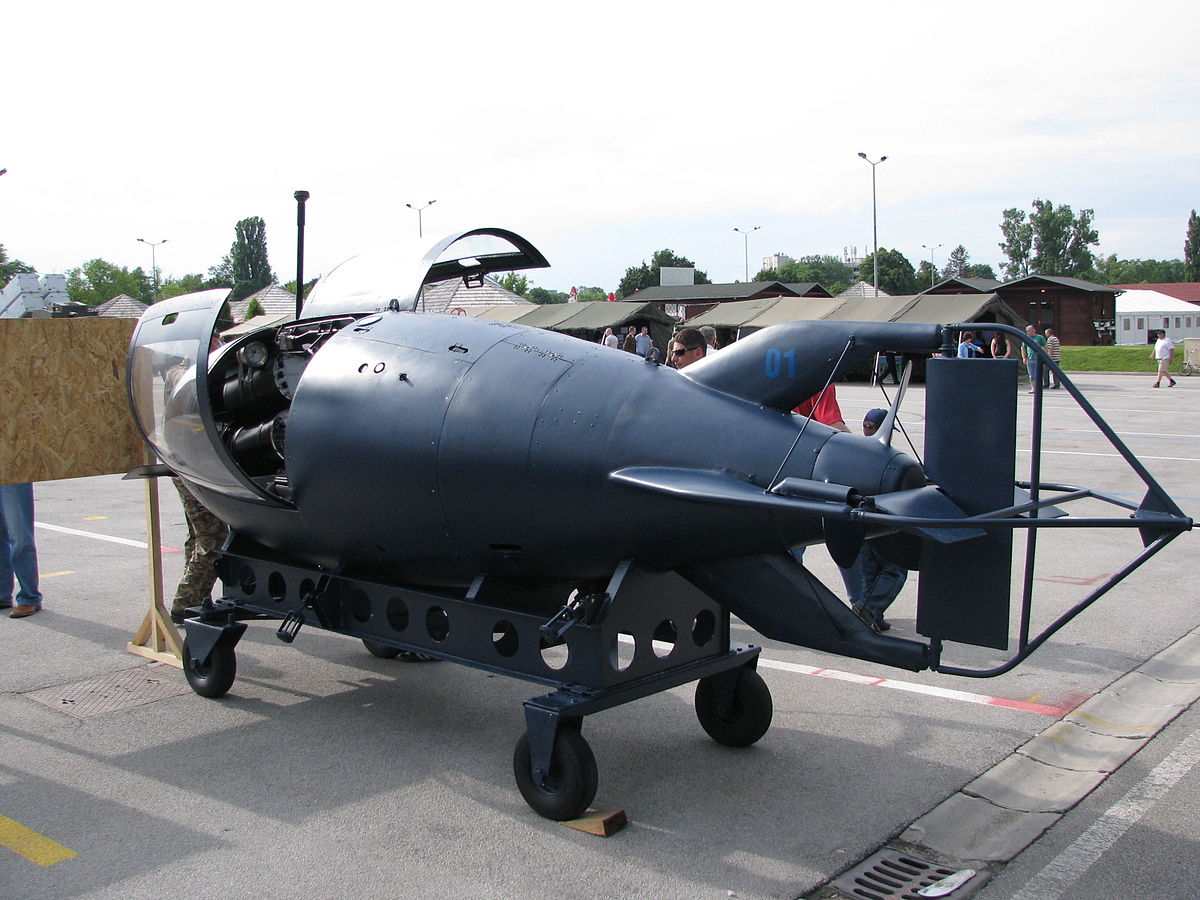
Croatian R-2M submersible, Photo by Ex13 via Wikipedia, 2010

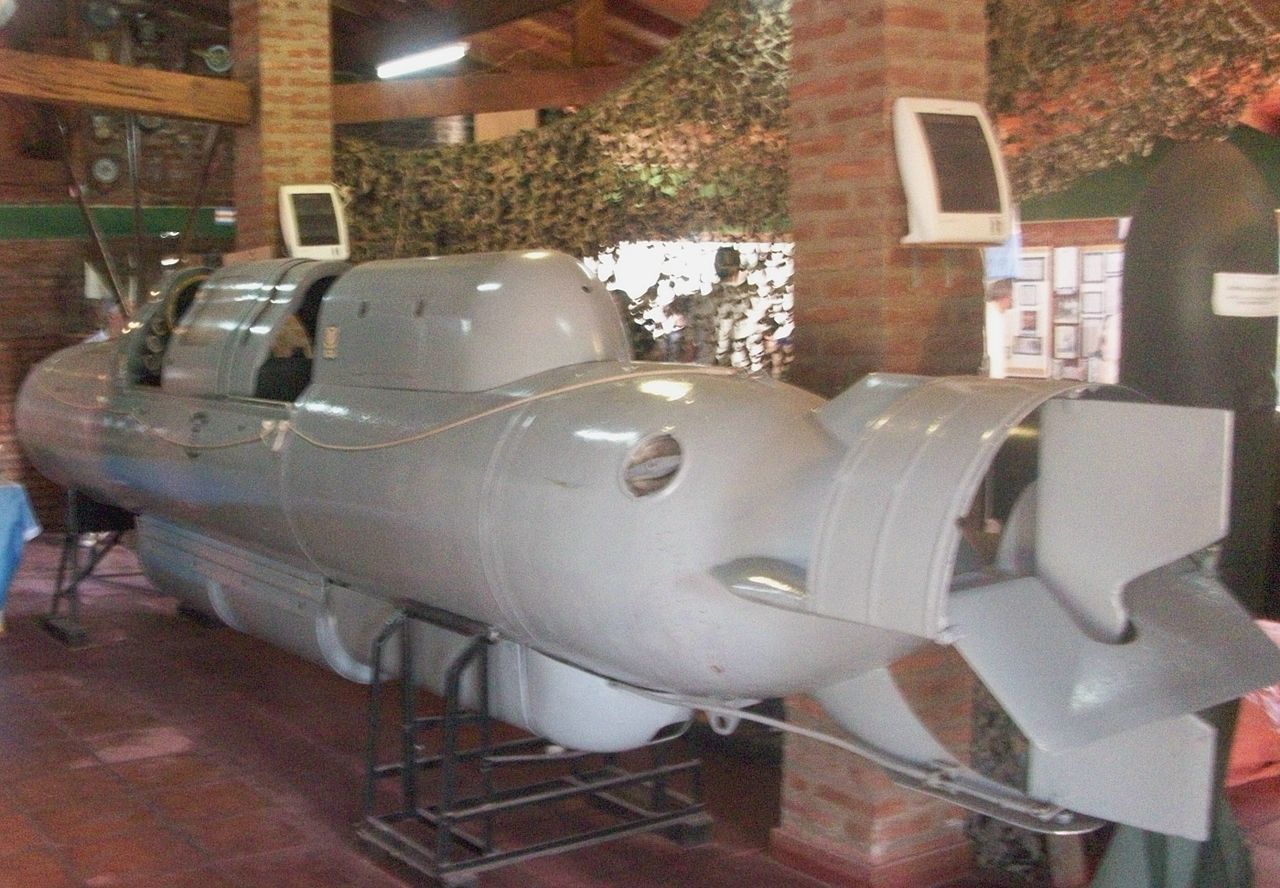
Manned torpedo used by the Argentine Navy, especially built for operations in cold waters. Photo by DagosNavy via Wikipedia, 25 February 2010

Thanks to Paul for bringing this to my attention.