Cdr Salamander posted the video above with comments. I felt I had to share it.
Victory Day Address from Ukraine
2

Cdr Salamander posted the video above with comments. I felt I had to share it.
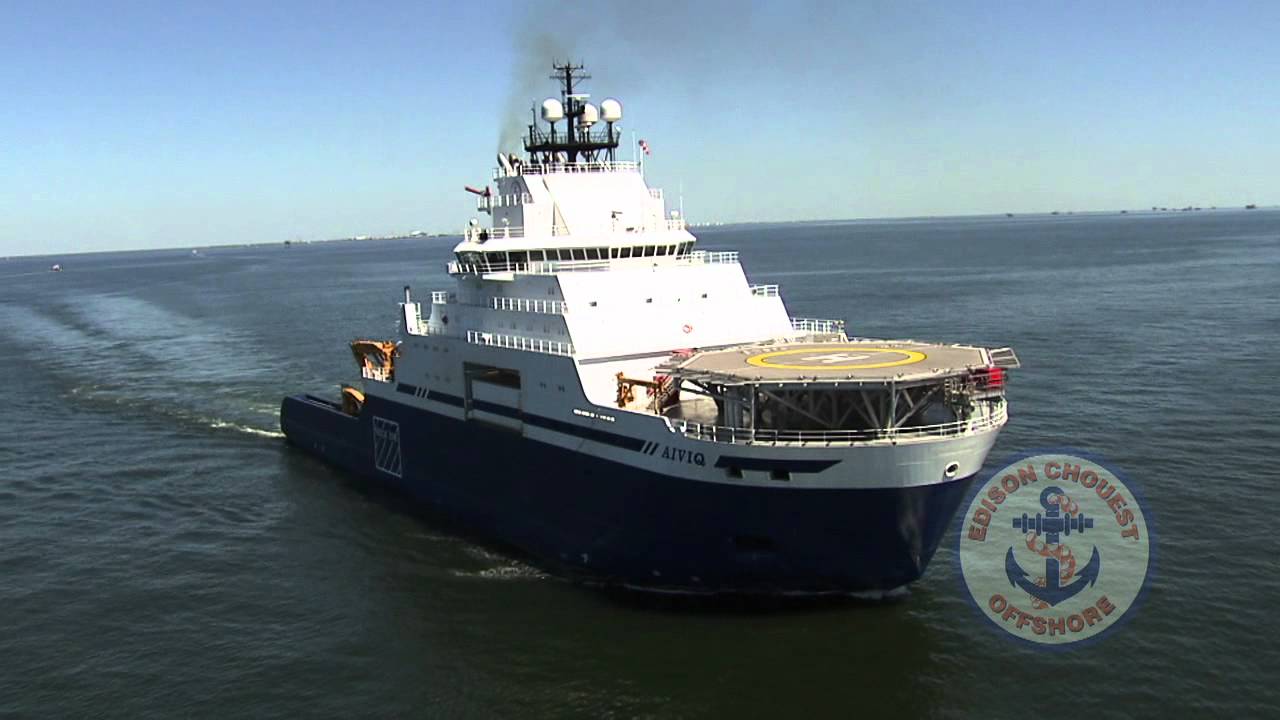
Icebreaking Anchor Handling Vessel Aiviq
The U.S. Coast Guard released a formal request for information seeking to identify U.S.-built commercial icebreakers that might be available for purchase. With promises of funding from the Biden Administration and the U.S. Congress, the Department of Homeland Security published on May 3, the request for information as the first step in the possible purchase of a vessel to bridge the gap until the newly built polar security cutters, which are behind schedule, are commissioned and available for service late this decade.
We knew there would be such an attempt to find an available icebreaker, but look at the specs.
“…USCG is now seeking to identify commercial vessels that are available for purchase in 2023 or 2024. To meet the request the vessels must not only have been built in a U.S. shipyard but must have PC3 or higher classification and the capability of breaking at least three feet of ice ahead at a continuous speed of three knots. Further, it must have at least 15 years of original design service life remaining and be capable of operations for a minimum of 60 days without resupply. Other specifications include a maximum draft of 29 feet and a landing area of Coast Guard helicopters.”
There cannot be many, there may be only one, there may be none.
If we do find such a vessel, it will probably take some work to bring it up to Coast Guard standards for communications and helicopter operations.
If nothing else, it might fill the perceived need for a second Great Lakes Icebreaker.
Thanks to Paul for bring this to my attention.
The Drive/The Warzone has a post “What Will Fire The Laser-Guided Rockets Donated To Ukraine Is Still A Mystery,” discussing how Advance Precision Kill Weapon System (APKWS) laser guided rockets might be used by Ukrainian Armed Forces. Apparently the US is providing $22.6M worth of the systems.
We have discussed possible Coast Guard use of this weapons system several times, here, here, here, here, here, and here.
The weapon is ideal for engaging small, fast, highly maneuverable surface targets, but its warhead is large enough that several hits could seriously damage larger targets. It has also been tested successfully against Unmanned Air Systems. There seems to be some indication APKWS might be mounted alongside the gun on the Mk38 mounts.
The post includes several videos including the one above that shows at least a couple of mounts including a simple ring mount and a remote weapon station. These demonstrate how small the footprint of this weapon can be.
Perhaps more importantly, it reports current and planned production figures for this weapon, that clearly show it to be common, proven, and widely available.
“… the U.S. military has a lot of 70mm rockets and buys thousands more every year. The Army alone plans to buy 60,000 unguided rockets in fiscal 2023 alone. BAE Systems, which builds the APKWS II seeker kit, is tooled to build 25,000 of them per year and is expanding production, according to its website. It has already delivered 37,000 units in six years of production.”
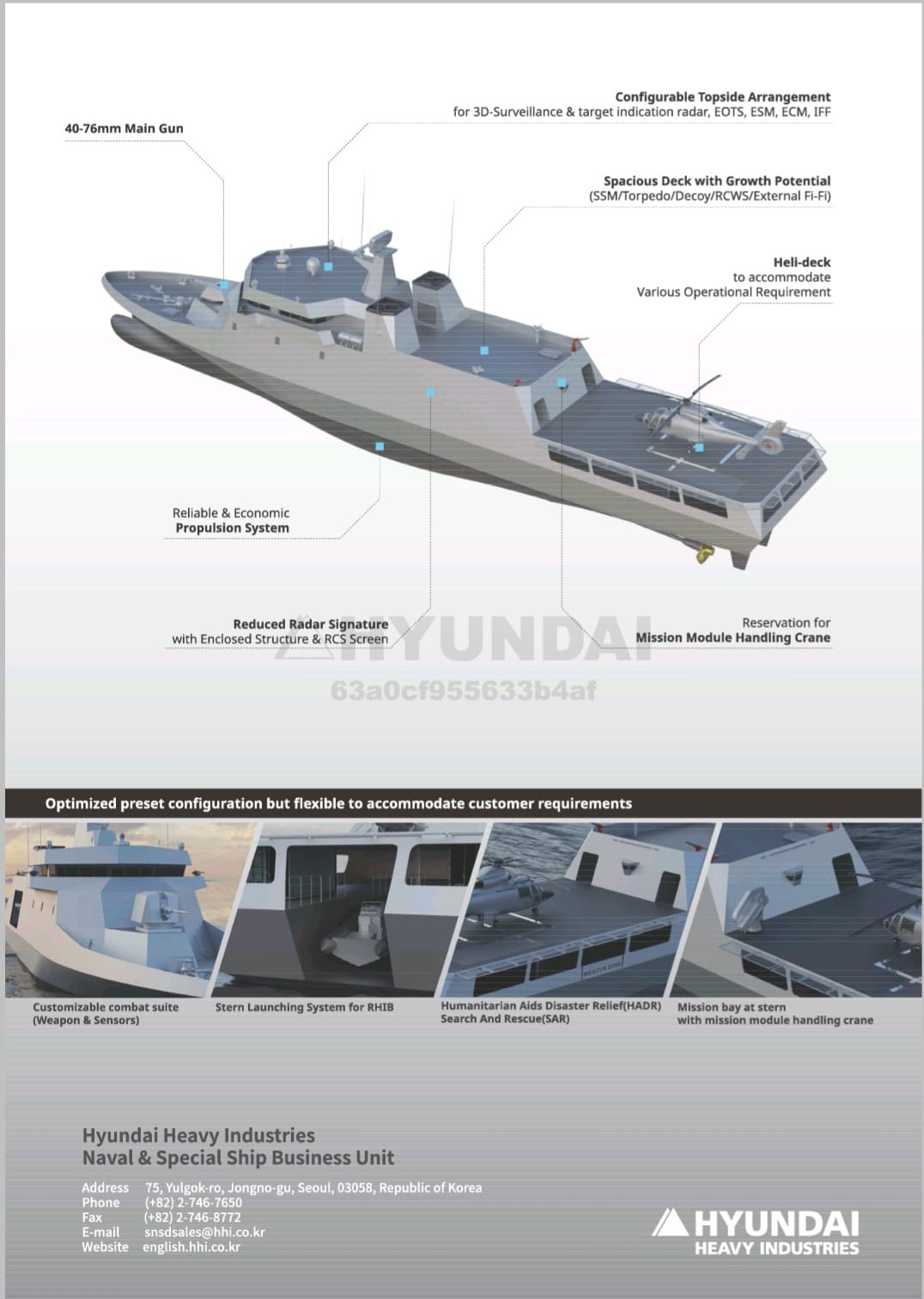
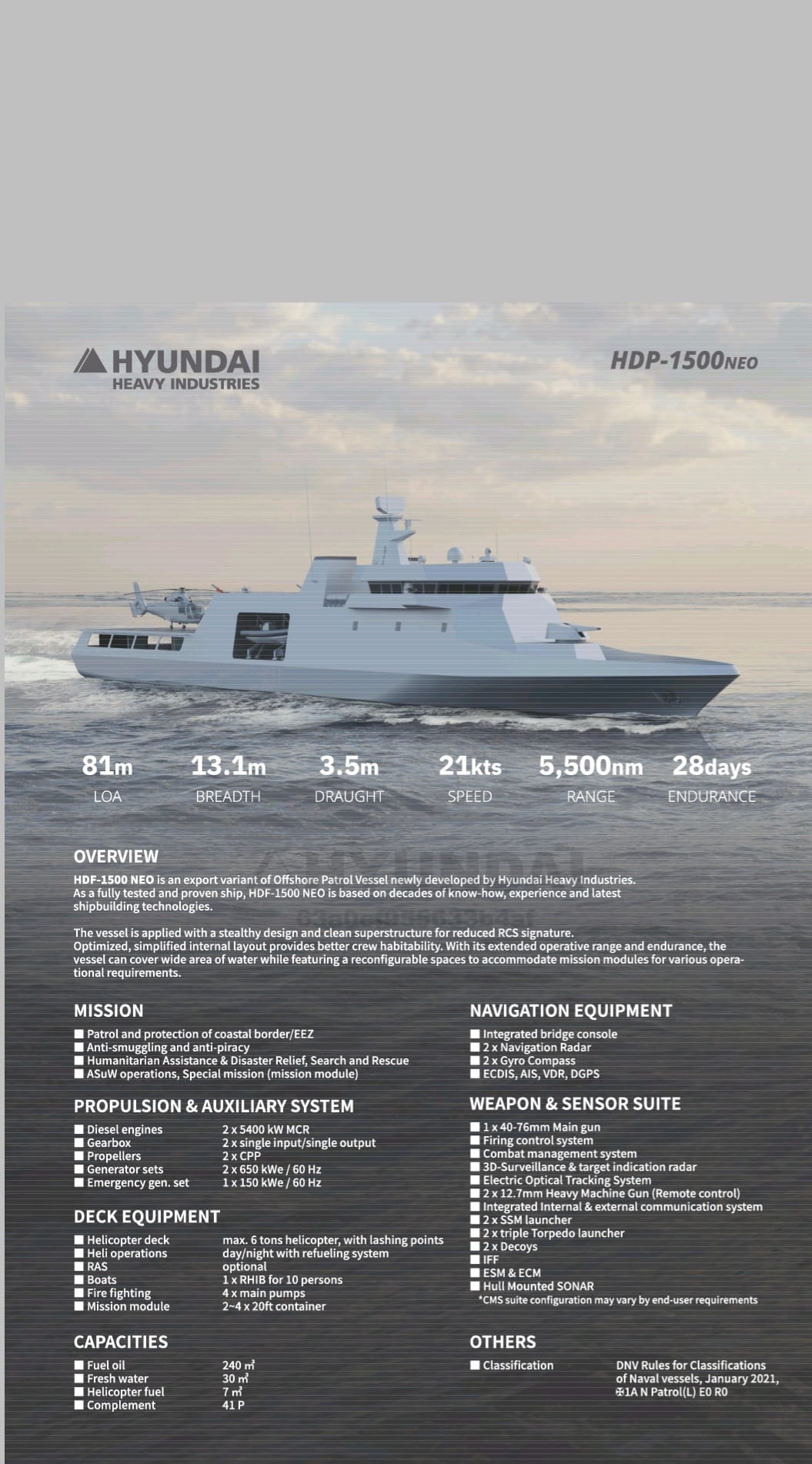
The Philippine News Agency has announced that Hyundai has been selected to build six Offshore Patrol Vessels for the Philippine Navy. There isn’t much detail about how they are to be equipped. The list below are just options. A length of 81 meters works out to 266 feet.
This does mean Turkey will not be building OPVs for the Philippines. The acquisition process does seem to have been a bit convoluted. Initially Austal in the Philippines was expected to build this class.

Members of the U.S. Navy share critical care techniques with the Senegalese Navy during Obangame Express 2022. U.S. NAVY
I got a reminder that the Obangame Exercise 2022 had concluded (Brazil sent an OPV), so I went looking for some information about possible Coast Guard participation. I found none, although I feel sure at least some special teams were involved.
This report from AFRICOM’s African Defense Forum does include an interesting note,
One important element of the exercise is practicing the use of SeaVision, a maritime domain awareness tool that helps professionals in the operations center track vessels at sea. Created in 2012 by the U.S., this tool is used by about 25 African countries to monitor their waters.
Is this system system something the Coast Guard uses? Is it used by our friends in Latin America? SE Asia? Sounds interesting.
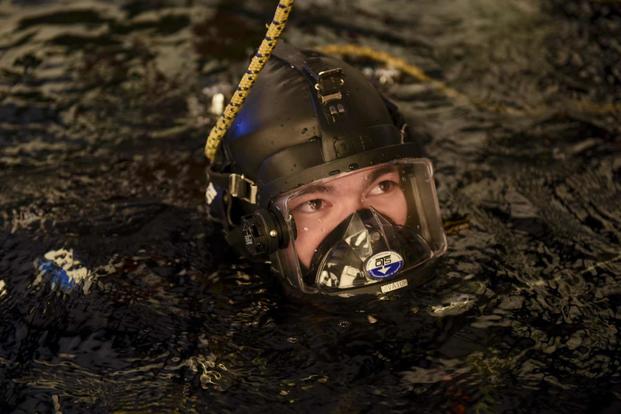
U.S. Coast Guard Petty Officer 2nd Class Ryan McManus, a student in the Cold Water Ice Diving (CWID) course, treads water on Ferrell Lake, located on Camp Ripley, Feb. 3, 2022. (U.S. Coast Guard photo by Petty Officer 3rd Class Jessica Fontenette)
Military.com has a story about the Coast Guard’s “Cold Water Ice Diving” (CWID) training program, which is also used by DOD divers, that may be of interest.
Thanks to Paul for bringing this to my attention.
Naval News brings us a report of the destruction of two small Russian patrol boats by small guided weapons launched from an unmanned aircraft.
This should not come as a surprise to anyone. The Ukrainians have been attacking Russian vehicles with guided weapons, launched from UAS since the invasion began. Hitting a boat, is, if anything, easier than hitting a particular moving vehicle on a landscape cluttered with other vehicles, buildings, trees, and various heat sources.
But perhaps for those who have not been paying attention this may be a wakeup call. I happy to be able to say it looks like the Coast Guard has recognized this as a threat to our boats in PATFORSWA.
But maybe we need to look beyond the threat of nation states. Like other effective, but relatively cheap weapons, UAVs, and particularly suicide drones, are likely end up in the hands of non-state actors, including criminal and terrorist organizations.
After a long history of importing warships, about three decades ago, Turkey began to develop their indigenous defense industry, first with European assistance but now increasingly they handle all phases from design to fitting out. They are currently building corvettes and frigates and an LHD with assistance from Spain’s Navantia. They plan to build destroyers in the near future.
Turkey has begun exporting defense products. Their armed drones have become famous in the conflict in Ukraine. They are exporting corvettes to Pakistan.
Naval News reports Turkey has begun a program to build ten offshore patrol vessels (OPVs) for the Turkish Navy (video above). While the illustrations show a heavily armed vessel, the actual armament is not reported and these ships will reportedly be fitted for but not with some of these systems. Key data:
Naval News reports that Turkey is expected to build six 283 foot, 2,000 ton Offshore Patrol Vessels for the Philippines. (video above)
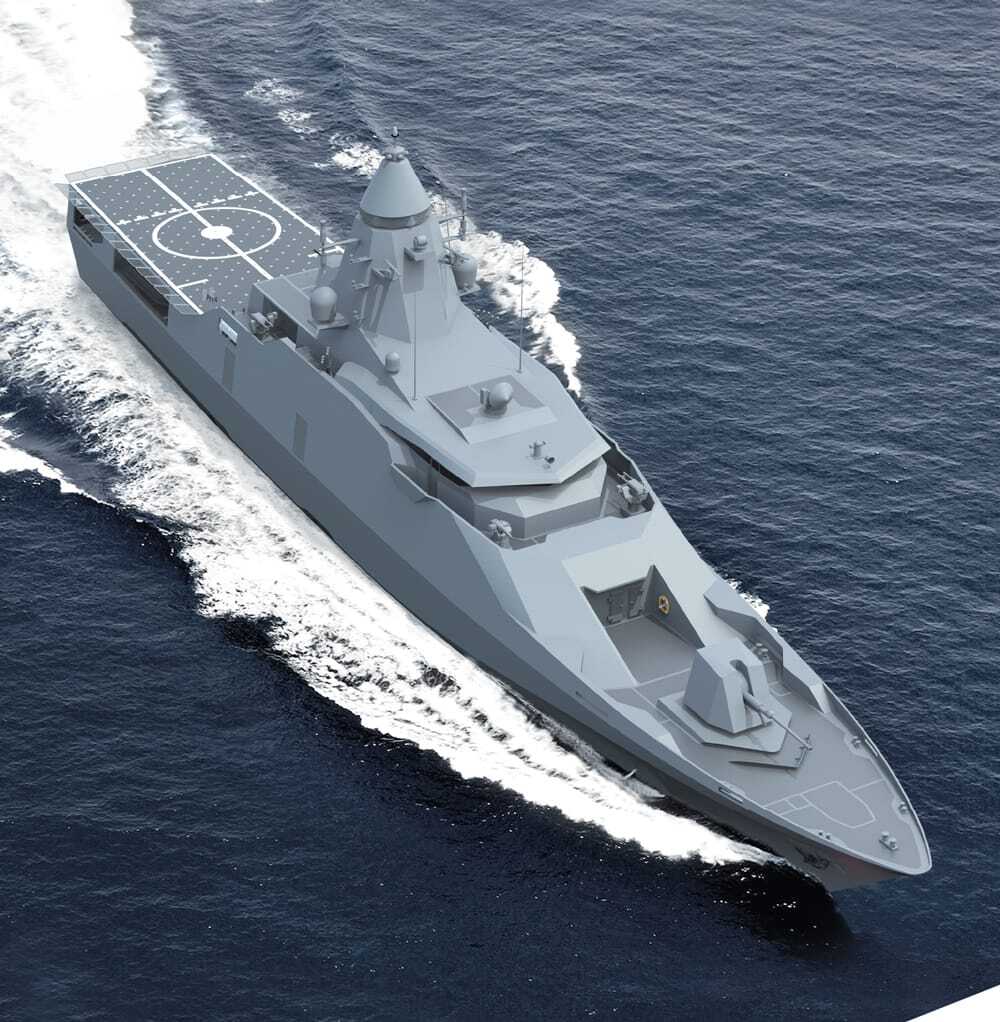
The Offshore Patrol Vessel (OPV) 76 / From the official website of Dearsan Shipyard
In November 2021, Overt Defense reported, this contract with Nigeria.
According to a statement released by the Nigerian Navy on November 3, a contract was struck with the Turkish Dearsan Shipyard for the purchase of two OPV 76 Class Offshore Patrol Vessels to meet the Nigerian Navy’s needs…The Offshore Patrol Ship 76 has a length of 76.80m (252′–Chuck), a width of 11m and a draft of 2.9m. The OPV is equipped with a 76mm Leonardo Super Rapid Gun, a 40mm Leonardo Light Marine Gun, two 12.7mm Stabilized Automatic Machine Guns, two 12.7mm Manual Operation Machine Guns, and two SAM SIMBAD RC short-range, anti-air self defence systems, and has a top speed of 28 knots and a range of 3,000 nautical miles.

HMAS Maitland conducts a passage exercise with USCGC Kimball during Operation Solania. Photo: Seaman Isaiah Appleton
Baird Maritime reports, the Australian Navy is retiring one of their Amidale class patrol boats, HMAS Maitland. The vessel is relatively young by USCG standards, having been commissioned in 2006. It seems the class was stressed by high tempo, long distance, alien migrant interdiction deployments. This is the third of the original 14 vessels of the class to be decommissioned. One was as a result of a fire in 2014. The second was decommissioned March 2021.
These vessels are to be replaced by a class of 12 much larger OPVs, but in the meantime, the Australian Navy is also procuring, in many ways similar, 190 foot Cape Class patrol boats. The decommissioning follows closely on the delivery of the first of these “evolved” Cape class.
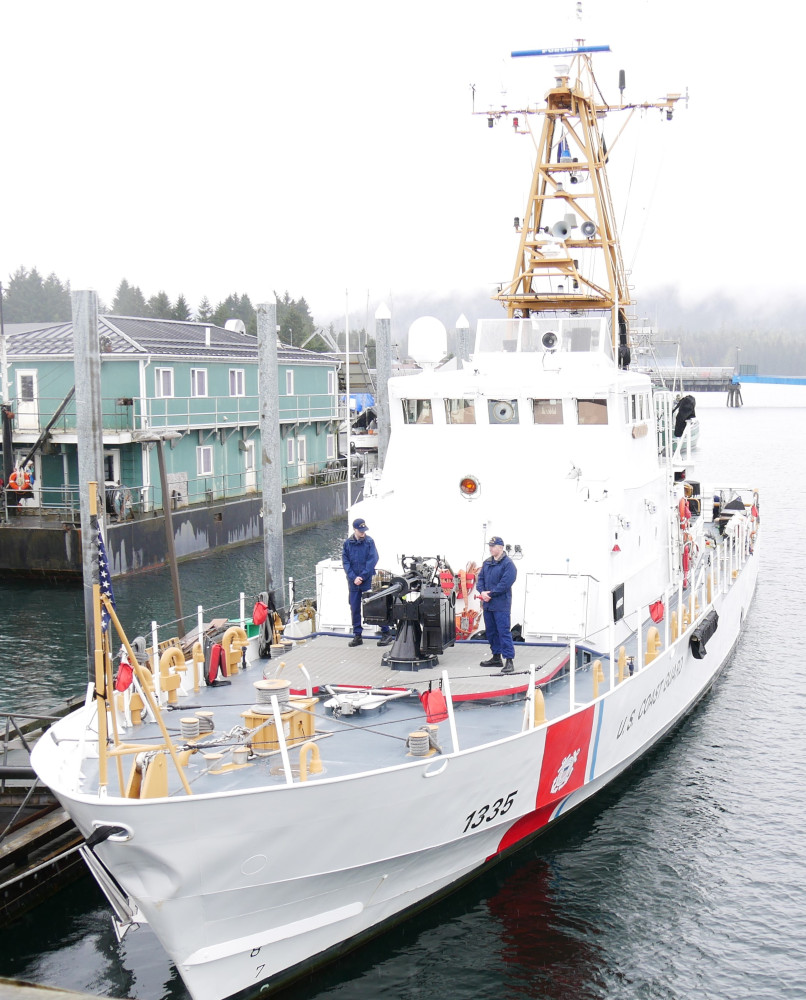
The cutter Anacapa tied up at the Coast Guard’s mooring in Petersburg (Joe Viechnicki/KFSK)
There is a very nice story by local media about the departure of USCGC Anacapa from Petersburg, AK. The 110 is not being decommissioned. She is changing homeport to Port Angeles, WA, where there will be a crew turn-over.
The Anacapa’s replacement in Petersburg is an 87-foot San Francisco-based Marine Protector class cutter called the Pike, built in 2005.
Anacapa’s engines and generators are being replaced, so looks like she will be retained a few more years.
There was an earlier post that featured Anacapa, “What Does It Take to Sink a Ship, Illustrated,” when she was tasked with sinking a derelict Japanese fishing vessel, back in 2012.
 Chuck Hill's CG Blog