“Coast Guard Academy Cadets Prepare to Join the Fleet” –Seapower

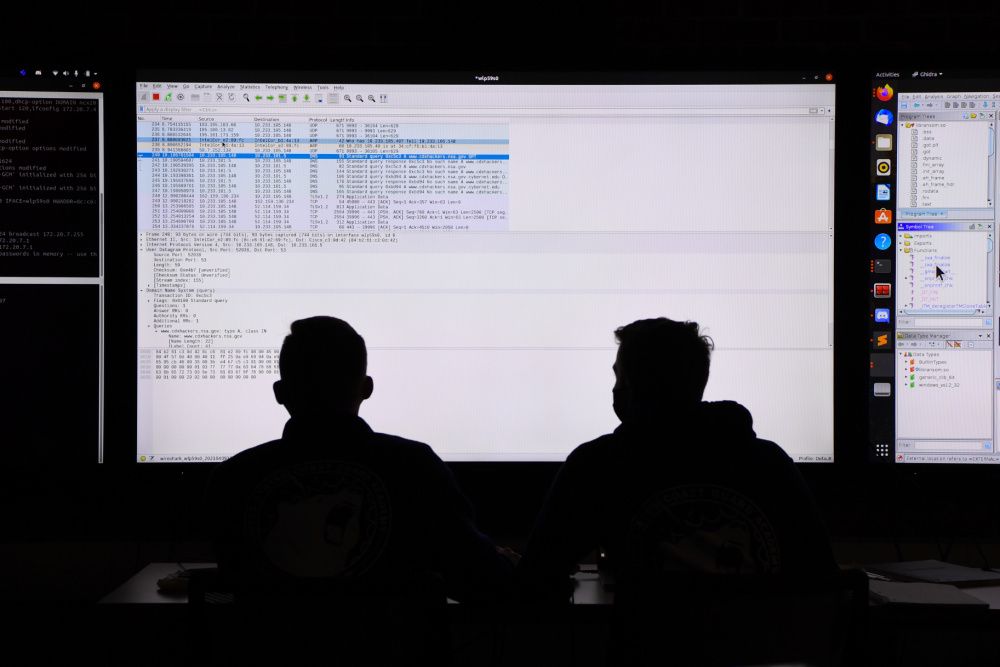
A team from the U.S. Coast Guard Academy participated in the National Security Agency’s 20th annual National Cyber Exercise (NCX), a three-day cyber competition that tests the offensive and defensive cybersecurity skills virtually, April 8-10, 2021. The Coast Guard Academy recently instituted a Cyber Systems degree to meet the needs of the services cyber security strategy of defending cyber space, enabling operations, and protecting infrastructure. (U.S. Coast Guard photo by Petty Officer 2nd Class Hunter Medley)

The Navy League’s on-line magazine “Seapower” reports on “Billet Night” at the Coast Guard Academy, when cadets learn where they will be going after graduation.

The significant news in the report is that while over 200 will go to afloat units and 20 will go directly to flight school,

The remaining graduates will report to various shore units, including the first graduates of the Academy’s Cyber Systems program. The newly established Cyber Systems degree provides graduates with the skills and ability to defend cyberspace, enable operations, and protect critical maritime infrastructure.

“Indonesia spearheading regional cooperation in South China Sea” –Indo-Pacific Defense Forum

Indonesian Maritime Security Agency vessel KN Tanjung Datu, left, sails alongside U.S. Coast Guard Cutter Stratton during joint exercises in the Singapore Strait in August 2019. IMAGE CREDIT: PO1 LEVI READ, USCG

The Indo-Pacific Defense Forum reports,

Indonesia is reaching out to its South China Sea neighbors to foster harmony on maritime sovereignty issues and enhance cooperation among regional coast guards, analysts say. The nation engaged closely with Vietnam in late 2021 and plans to add five countries to the collaborative effort in 2022.

It appears Indonesia is working with its SE Asian neighbors to resolve their bilateral maritime territorial disputes based on UNCLOS and develop multi-lateral agreement.

This would allow the ASEAN nations to present a united front, to push back against China’s expansive claims. It might even lead to something like my proposed Combined Maritime Security Task Force.

“First full rate production cutter boat large delivered to Coast Guard fleet” –CG-9

The first full rate production cutter boat large, hull 22335, is delivered to Coast Guard Cutter Dauntless in Pensacola, Florida, Feb. 7, 2022. U.S. Coast Guard photo.

The Acquisitions Directorate (CG-9) reports,

The Coast Guard accepted the first full rate production cutter boat large (CB-L) with delivery of 22335 to Coast Guard Cutter Dauntless in Pensacola, Florida, Feb. 7.

This is the fifth CB-L delivered. The first four were used to refine the design and configuration and for operational test and evaluation to validate that the vessel meets Coast Guard operational demands. An additional 17 CB-Ls are on order. The program of record is for up to 36 CB-Ls.

These 36 boats are intended to operate from the USCGC Alex Haley (WMEC-39), USCGC Mackinaw (WLBB-30), 14 Reliance class 210-foot medium endurance cutters, 16 Juniper class 225-foot seagoing buoy tenders for a total of 32 ships. So, looks like the intention is to provide only one per ship, even for those that have two ship’s boats positions. Sounds like some ships will end up operating two different types of boats.

We talked about this new boat a couple of times back in 2018 when the contract was initiated, here and here.

It appears this boat is closely related to “The Watcher” unmanned surface vessels that the Coast Guard evaluated.

Marines’ Next-gen Handheld Targeting System (NGHTS)–Naval Today

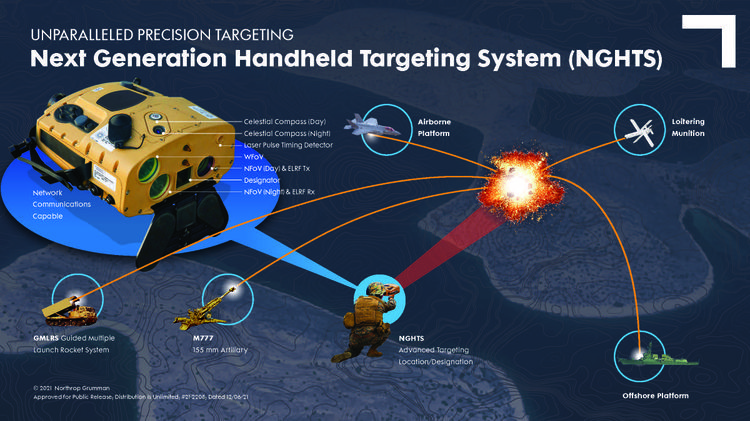
Next Generation Handheld Targeting System (NGHTS) Photo by: Northrop Grumman. 

Naval Today reports,

“US-based aerospace company Northrop Grumman Corporation has been selected to provide the US Marine Corps with the next-generation handheld targeting system (NGHTS).”

As disclosed, NGHTS is capable of performing rapid target acquisition, laser terminal guidance operation and laser spot imaging functions. Its high-definition infrared sensors provide accuracy and grid capability over extended ranges.

So, what does this have to do with the Coast Guard?

If the Coast Guard is to respond to a terrorist attack using a medium to large ship, we have to respond in one of two ways. We either have to stop the ship with Coast Guard systems, or we have to call in help from other armed forces. Either way, something like this could help.

Plus, the device seems to have additional capabilities that might be useful.

In what is likely to be a rapidly developing threat situation, I have little faith, that we can get help in time, but if we do, we are going to need to quickly and effectively identify the target. This can be a lot more difficult than you might think. Army and Air Force pilots are not trained in ship recognition. They are unlikely to be able to recognize a particular ship based on a description. Using a laser designator insures there would be no misunderstanding about which ship is their target.

If Coast Guard are going to forcibly stop a terrorist-controlled vessel, we need accurate weapons that will not result in collateral damage. Laser guided weapons can fill this role.

These systems seem to have capabilities beyond laser designation. Looking at the illustration above, it appears it also can serve as a compass, perhaps capable of taking bearings day or night, and of providing low probability of intercept, line of sight communications.

This could even be used on smaller units like the response boats. Large cutters are getting the Mk20 Electro-Optic Sensor System (It is still not clear to me, if that includes a laser designator but it does seem likely). On a rolling ship we would probably rather have a mounted rather than handheld system, but some kind of mount would probably not be too difficult. Since it is supposed to be network capable, presumably its imaging could be remoted to command positions.


“Captain’s Errors Led to Collision Between Offshore Supply Vessel and Coast Guard Cutter: NTSB Report” –gCaptain

Oct. 11, 2020, collision between the offshore supply vessel Cheramie Bo-Truc No. 33 and the Coast Guard cutter Harry Claiborne. NTSB Photo

gCaptain reports the results of an NTSB investigation into collisions (yes two) between an offshore supply vessel and USCGC Harry Claiborne (WLM-561) that resulted in injuries to three Coast Guardsmen and provides a link to the 15 page report.

Spoiler alert, primary fault lies primarily with the OSV skipper, but the cutter was not totally blameless.

New Orleans, LA (Jan. 26, 2013)–A photo of the CGC Harry Claiborne (WLM 561). The Claiborne was in New Orleans for a port call while on its way to its new homeport of Galveston, Texas. USCG photo by PA2 Mark Mackowiak

“Coast Guard Cutter Polar Star reaches southernmost navigable waters on Earth” –News Release

USCGC Polar Star, despite her age is still doing the job.

News Release

March 1, 2022
U.S. Coast Guard Pacific Area


Coast Guard Cutter Polar Star reaches southernmost navigable waters on Earth

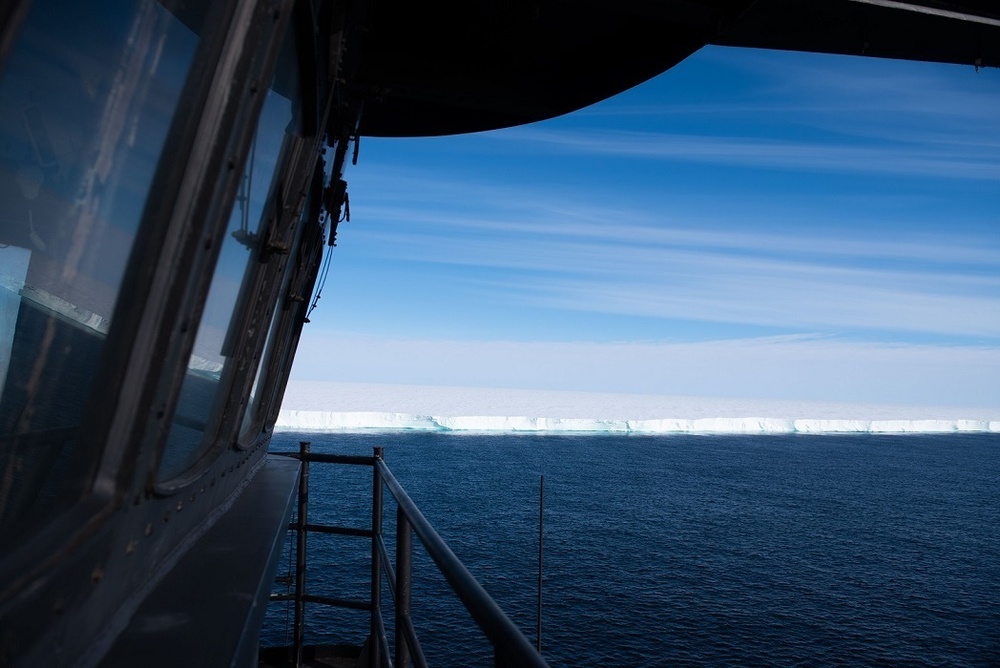
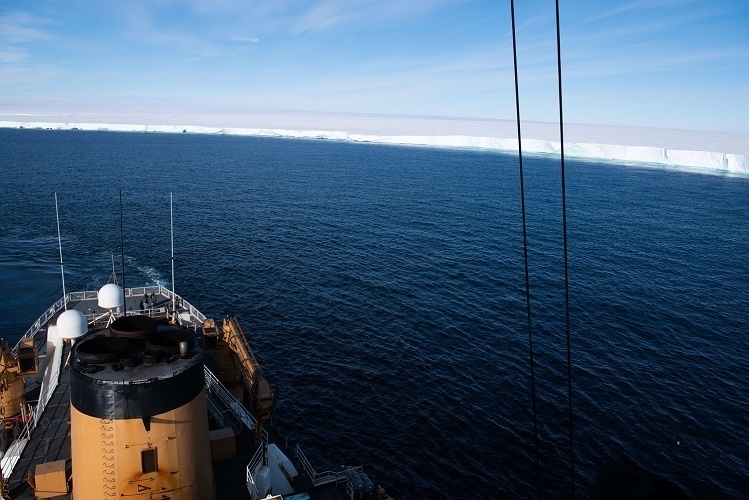
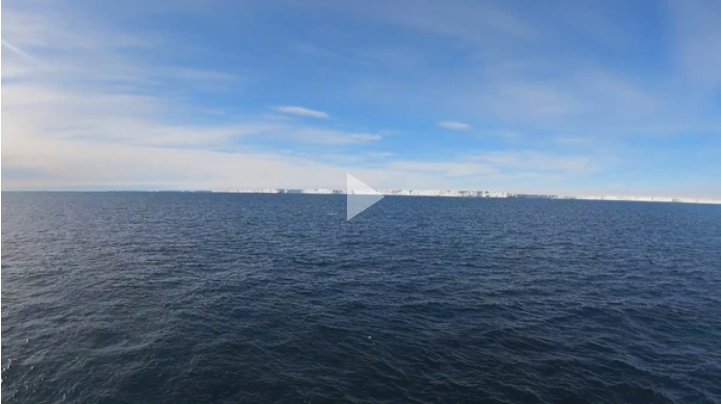
Photo of Ross Ice Shelf Photo of Ross Ice Shelf Video of Ross Ice Shelf

Editors’ Note: Click on images above to view and download photos and video.

MCMURDO STATION, Antarctica — U.S. Coast Guard Cutter Polar Star (WAGB 10) reached the southernmost navigable waters on the planet Feb. 17 while underway in the Bay of Whales, Antarctica.

Polar Star reached a position of 78 degrees, 44 minutes, 1.32 seconds south latitude at 12:55 p.m. New Zealand time, holding a distance of approximately 500 yards from the edge of the Ross Ice Shelf, further south than the current Guinness World Record holder.

While underway, Polar Star sailed in waters previously charted as part of the ice shelf that are now navigable waters. Today, portions of the Ross Ice Shelf deviate approximately 12 nautical miles from the positions depicted on official charts.

During Polar Star’s transit to and from the Bay of Whales, Polar Star surveyed 396 nautical miles of the ice shelf for potential future navigational use.

Crewmembers aboard the cutter are working with the staff at Guinness World Records to officially become the new record holders.

Feb. 7, 1997, U.S. Coast Guard Cutter Polar Sea (WAGB 11), Polar Star’s sister ship, reached 78 degrees, 29 minutes south latitude.

In 1908, Ernest Shackleton gave the Bay of Whales its name during the Nimrod Expedition on the basis of the numerous whales he and his crew sighted. Three years later, Roald Amundsen established a base camp in the bay, from which he set out on his successful endeavor to become the first person to reach the South Pole. Years later, U.S. Navy Rear Adm. Richard E. Byrd established Little America in the Bay of Whales during his first, second, and third Antarctic Expeditions, exploring more than 60% of the Antarctic continent.

“The crew of Polar Star is proud to follow in the footsteps of legendary Antarctic explorers like Shackleton, Amundsen, and Byrd,” said Capt. William Woityra, commanding officer of Polar Star. “Even today, more than a century later, we carry on that legacy of exploration, reaching new places, and expanding human understanding of our planet.”

Ukraine Conflict Related Incidents

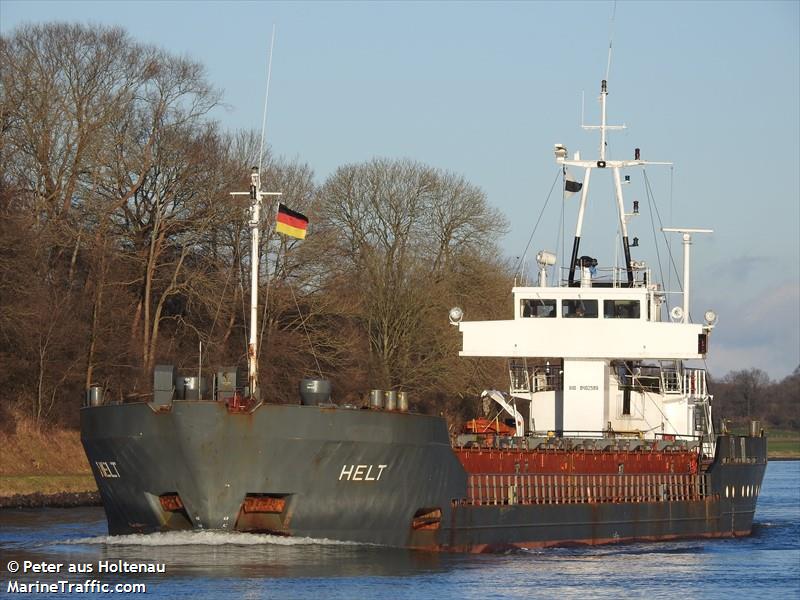
Cormoran (P677), a French navy ship. Brest, Finistère, Bretagne, France. Photo by Gary Houston

I really would like to know the basis of this seizure: French Navy Flamant-class OPV Cormoran seizes Russian cargo ship.

And then there are these seizures of Ukrainian flag ships by the Russians: Russian Navy seized two Ukrainian civilian vessels near Snake Island. If one or both of these ships was seized in Romania’s territorial sea, it would be a violation of international law

“U.S. Coast Guard Patrols EEZ in partnership with Samoa” –News Release

Below is a D14 news release regarding another South Pacific patrol by a pairing of a buoy tender and a Webber class WPC, both based in Honolulu. The pairing is necessary because we don’t have bases in the vicinity that can provide support for the WPC. This pair may in some respects be better than sending a single larger cutter, but the notable missing element is air support, e.g., no embarked helicopter or Unmanned Air System.

News Release

U.S. Coast Guard 14th District Hawaii and the Pacific

U.S. Coast Guard Patrols EEZ in partnership with Samoa

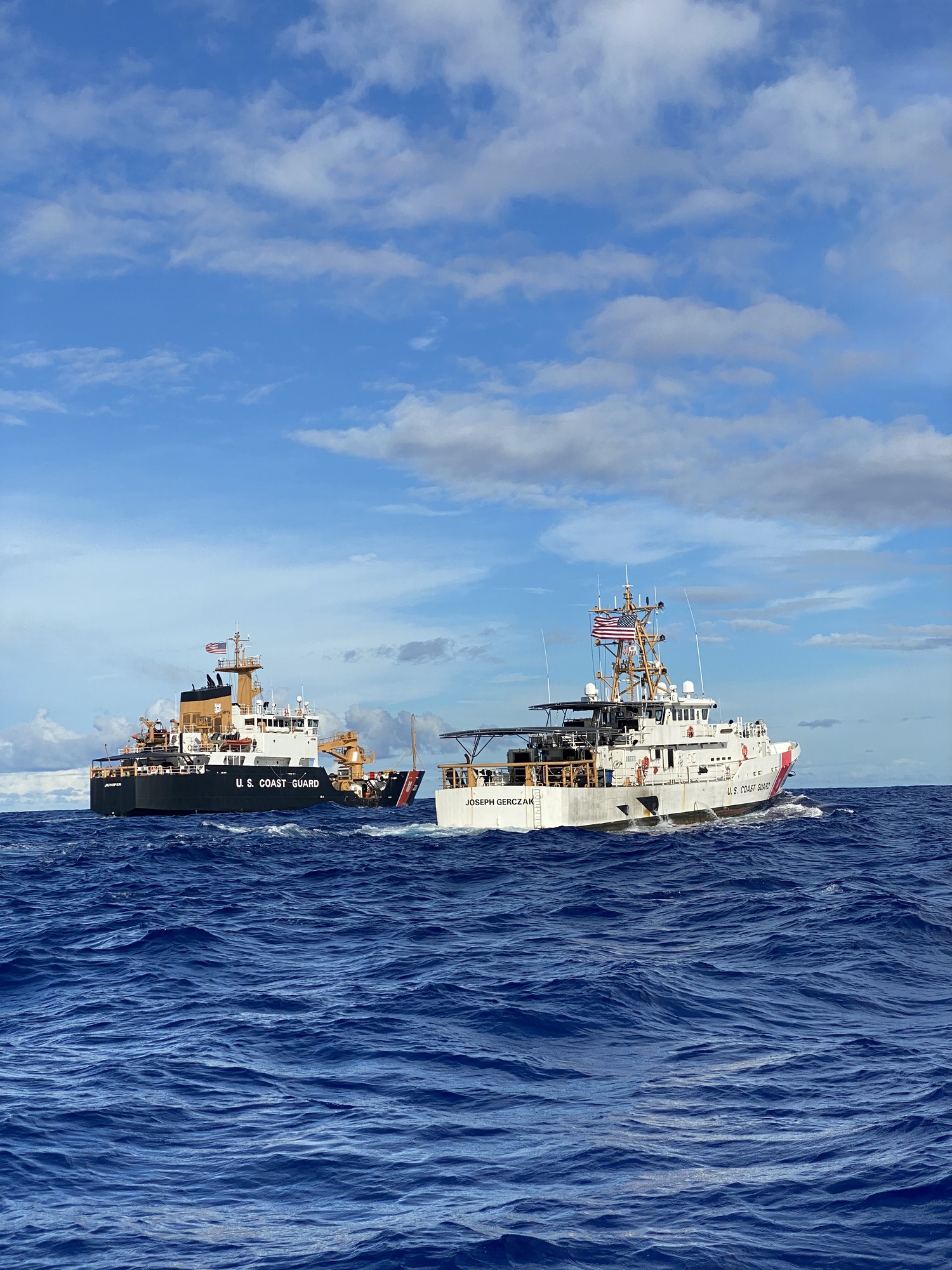
JG and Juniper

Editors’ Note: Click on images to download a high-resolution version.

HONOLULU — Working with the Government of Samoa, crews from the U.S. Coast Guard Cutter Juniper (WLB 201) and USCGC Joseph Gerczak (WPC 1126) conducted security patrol operations in Samoa’s exclusive economic zone throughout February 2022, to protect fisheries and other natural resources.

The Juniper and Joseph Gerczak crews helped fill the operational presence needed to deter illegal, unreported, and unregulated fishing while Samoa’s Nafanua II patrol boat is down.

“We always look forward to assisting our partners in the region,” said Cmdr. Jeff Bryant, the 14th District’s chief of enforcement. “The United States offered to assist the government of Samoa by providing security and sovereignty operations in Samoan waters due to the absence of their patrol boat.”

The cutters have been underway in Oceania supporting Operation Aiga, designed to integrate Coast Guard capabilities and operations with the United States’ Pacific Island Country partners in order to effectively and efficiently protect shared national interests, combat IUU fishing and strengthen maritime governance on the high seas.

As a trusted partner in the Pacific, the Coast Guard employs 11 bilateral shiprider agreements with Pacific Island Forum nations, like Samoa, to support resource security and fisheries enforcement. These agreements enabled the Coast Guard to aid host-nation sovereignty while patrolling Samoa’s EEZ.

The United States Coast Guard and the Government of Samoa have a history of partnership; in 2019, the Coast Guard cutters Walnut and Joseph Gerczak visited Apia Harbor and conducted patrol operations with officials from Samoa’s Ministry of Police and Ministry of Fisheries on board. In 2021, the crew of the CGC Oliver Berry conducted similar patrols while Samoa’s patrol boat underwent repairs.

“Operation Aiga is named that for a reason. Aiga means family in Samoan and that’s how we view our Pacific neighbors,” says U.S. Ambassador to Samoa, Ambassador Udall. “This is real partnership. Together we can stop those who seek to steal valuable resources that simply don’t belong to them.”

With a population of approximately 40 million people covering an area of 3.3 million square miles, the Coast Guard and its international partners regularly patrol Oceania to protect and support those who call it home.