“2021 CAPTAIN FRANK ERICKSON AND COMMANDER ELMER STONE AWARD RECIPIENTS” –ALCOAST

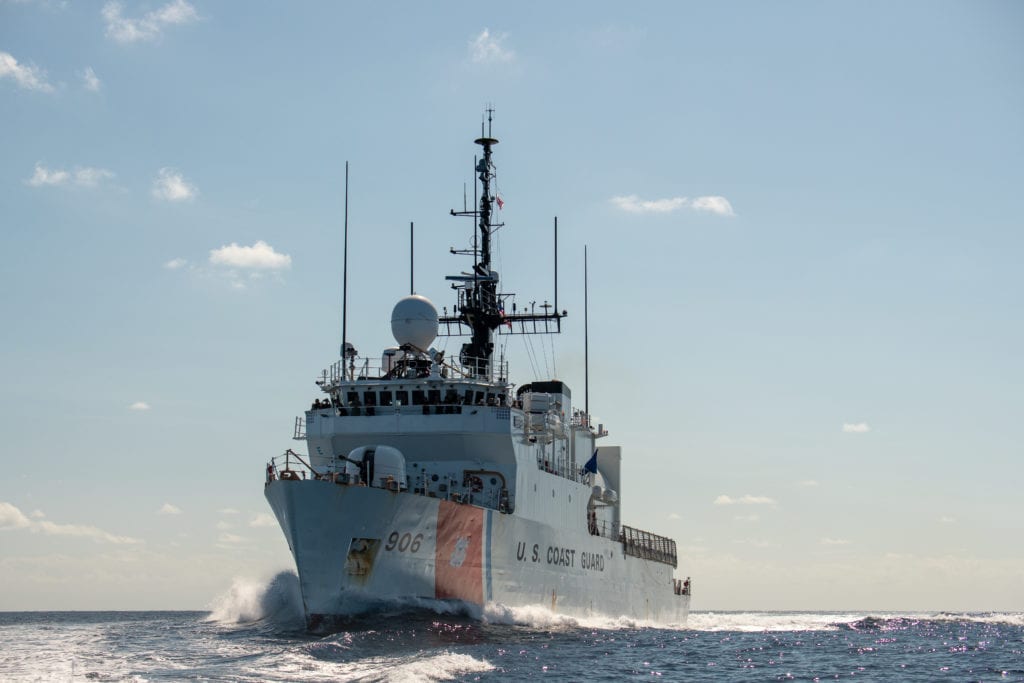
U.S. Coast Guard Cutter Seneca returns to homeport. U.S Coast Guard

Stories that make you proud to have been associated with the Coast Guard.

united states coast guard

R 101555Z NOV 21
FM COMDT COGARD WASHINGTON DC
TO ALCOAST
BT
UNCLAS
ALCOAST 414/21
SSIC 1650
SUBJ: 2021 CAPTAIN FRANK ERICKSON AND COMMANDER ELMER STONE AWARD
RECIPIENTS

1. COMDT (CG-7) is honored to announce the recipients of the Captain
Frank A. Erickson and Commander Elmer F. Stone Aviation Awards for
2021. The Coast Guard Aviation Association sponsors these annual
awards to recognize Coast Guard rotary-wing and fixed-wing aircrews
who have demonstrated exceptional performance while engaged in
Search and Rescue operations.

2. The Captain Frank A. Erickson Award is presented to the HITRON
crew of CGNR 6606, LCDR Jesse Keyser, LT Rachel Rychtanek, and AET1
James Mann, in recognition of their heroic efforts during deployment
aboard USCGC SENECA. On 08 November 2020, Hurricane ETA ravaged
Central America with concentrated destruction and damage in
Honduras, causing at least 58 deaths and over $5 billion in damage
to critical infrastructure, affecting a population of 2.9 million.
Attached to USCGC SENECA, the crew of CGNR 6606 reacted quickly and
effectively in assisting the Honduran people from 11-13 November
2020. USCGC SENECA was diverted to the eastern coast of Honduras for
Hurricane Aid/SAR support following the impact of Hurricane ETA.
TACON was shifted to US Naval Forces Southern Command/US Fourth
Fleet, and SENECA received tasking and operated under Joint Task
Force-Bravo (JTF-B) and Command Task Force-45 (CTF-45). SENECA was
the first maritime asset to reach the eastern side of Honduras,
with CGNR 6606 as the first and sole air asset on-scene in eastern
Honduras. CGNR 6606 led response operations across a 60-square
nautical mile area, from the Honduran shoreline south to the
Honduras-Nicaragua border. CGNR 6606 identified and overcame the
challenges of operating in an unfamiliar, rural area in foreign
airspace, including inadequate and outdated charts, no air traffic
control, and a substantial language barrier. CGNR 6606 acquired
internet-based DoD Joint Operations Grapic (JOG) charts, assisted
in reconnaissance of critical infrastructure in the region, and
helped develop a working air rescue plan for relocation of trauma
patients and supply aid. This important work was pivotal in laying
the groundwork for sustained multi-service air support in the
eastern Honduras operating area over the coming weeks. JTF-B tasked
CGNR 6606 for a MEDEVAC at a remote, inland location south of Puerto
Lempira near the Honduras-Nicaragua border. The aircrew successfully
navigated 60 miles of unfamiliar mountainous terrain, and flew under
and around low ceilings and thunderstorms with dangerous updrafts
and downdrafts. CGNR 6606 located the village, reported severe
flooding, and observed significant damage to the village structures
and limited infrastructure. CGNR 6606 identified a small patch of
farmland as the primary landing zone and conducted a confined area
landing to survivors waiving frantically for assistance. CGNR 6606
was met by two military officers in uniform escorting a third
uniformed officer in evident pain. CGNR 6606 ensured the patient was
ready for transport and executed low-power margin takeoff, clearing
dust and debris for a rapid climb above the surrounding village
obstacles. CGNR 6606 proceeded back northbound through precipitation
and around localized thunderstorms to transfer the patient.
CGNR 6606 was then tasked to proceed to a remote coastal village
approximately 30 NM Northwest of Puerto Lempira for an urgent
MEDEVAC. Once on scene, CGNR 6606 displayed ingenuity by orbiting
around the village church to direct citizens to congregate there.
CGNR 6606 performed a confined area landing adjacent to the church
and identified an elderly, diabetic, double amputee in need of
immediate higher medical care. Low on fuel, CGNR 6606 departed to
CGC SENECA offshore for refuel and subsequent return. While en route
back to the village, CGNR 6606 experienced an Automatic Flight
Control System (AFCS) yaw system failure, which significantly
increased the difficulty and risk of confined area landings. CGNR
6606 elected to proceed on its assigned mission, conducted another
confined area landing, and embarked the wheelchair-bound survivor.
CGNR 6606 departed scene facing inclement weather and began to weigh
the risks of continued confined area landings with the onset of
fatigue and a degraded aircraft. CGNR 6606 identified a primitive
dirt strip at the Puerto Lempira Airfield for landing and survivor
transfer to an awaiting vehicle. The crew of CGNR 6606’s bravery and
aeronautical skill resulted in two lives saved with several hundreds
more saved and assisted through delivery of lifesaving supplies and
forward operating location establishment for medical and military
personnel. Leading the rescue efforts during the critical first few
days of the aftermath of Hurricane ETA, the crew of CGNR 6606
demonstrated unwavering dedication to the Coast Guard’s humanitarian
life-saving mission. CGNR 6606 confronted flight in an unfamiliar
mountainous region with navigation hazards and landed safely in
multiple unprepared confined areas. Furthermore, the aircrew
leveraged local military and government officials’ expertise while
managing “fog-of-war” complexities following a destructive Category
4 hurricane in a third-world country. CGNR 6606’s exceptional
actions and heroism undoubtedly advanced rescue efforts for eastern
Honduras for response to Hurricane ETA, as well as Hurricane IOTA,
which struck the same area just ten days later.

3. The following nominees were also recommended for this award and
deserve honorable mention for their heroic actions:
Air Station Houston, CGNR 6501 – M/T CHRYSANTHEMUM
CG SECTOR North Bend, CGNR 6032 – Greyback Mountain Rescue
CG SECTOR San Diego, CGNR 6014 and CGNR 6003 – Disabled Adrift
Rescue

4. The Commander Elmer F. Stone Award is presented to the Air
Station Barbers Point crew of CGNR 1720, LCDR Tucker Rodeffer,
LT Jack Emmons, AMT2 Jacob Desmarais, AET3 Anders Forsberg,
AEMT2 Charles Camarda, AET2 Trenton Garza, and AET3 Clinton
Carpenter, in recognition of their heroic efforts on 22 December
2020, District 14 received a request from the island nation of
Kiribati for assistance with Search and Rescue (SAR). A fisherman
from Betio Temakin, Tarawa, had disembarked three friends at an
atoll to go spearfishing. When he did not return in his 20 ft
wooden skiff, they notified the authorities. Since all possible
staging locations for the case were closed due to COVID-19, the
Air Station Barbers Point duty crew worked with State Department
officials and the Republic of the Marshall Islands to secure
Kwajalein Atoll, the first time a Coast Guard crew had been allowed
landing access since the pandemic began. After arriving in
Kwajalein, the CGNR 1720 crew was placed in strict quarantine when
not in flight and subject to daily screenings involving twice daily
temperature and blood oxygen checks, a protocol and operational
template which has since been implemented to enable numerous SAR
crews to operate from this location. The search effort involved five
days deployed away from home station and consisted of 29.4 hours of
searching and a total of 45.2 hours flown. During three days of
searching, the crew flew four hours round-trip from Kwajalein and
navigated more than 500 NM through convective activity, embedded
thunderstorms, and turbulence to reach the search area. On the final
day of the search and in the last search box, the Basic Aircrewman
sighted an object in the water from the left hand scanner window.
The Sensor System Operator quickly identified the object as the
missing skiff. The survivor was clearly emaciated from spending
five days at sea without food or water. The Navigator detected a
fishing vessel 25 NM north of the skiff, but a language barrier
prevented effective communication. Working with a translator at
District 14, the Radio Operator vectored a good-Samaritan vessel,
the F/V JABUUK, toward the skiff. After two hours on-scene, the
Flight Engineer of CGNR 1720 noticed an unidentified, co-altitude
helicopter en-route to their position. CG-1720 quickly maneuvered
to de-conflict with the other aircraft and assisted with expediting
the rescue. The helicopter had launched from the F/V JABUUK.
CGNR 1720 remained on-scene and served as cover while the good-
Samaritan and the helicopter rescued the emaciated fisherman.
Superior airmanship, comprehensive aircraft and procedural
knowledge, well-veiled operational risk management, and exceptional
crew coordination all combined to successfully complete the unit’s
most complex rescue of 2020 resulting in one life saved.

5. I extend my personal congratulations to the award winners, and
to each of the nominated aircrews. Through your actions, you
demonstrated the highest levels of courage and professionalism.
Your efforts are in keeping with the highest traditions of our
service.

6. RDML Todd C. Wiemers, Assistant Commandant for Capability
(CG-7), sends.

7. Internet release is authorized.

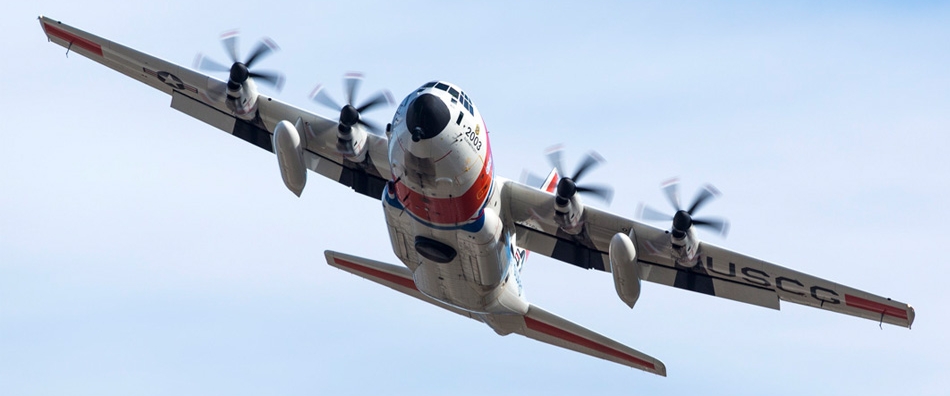
Coast Guard C130J

“Video Shows U.S. Destroyer’s Very Intimate Standoff With Iranian Vessels Over Seized Oil Tanker” –Cutter there too

The Drive–War Zone has a post about an incident that reportedly occurred on October 24. The Iranian Revolutionary Guard Corp seized a Vietnamese flagged tanker in the Gulf of Oman and escorted it into an Iranian port.

The Iranian claim is that the tanker was carrying oil from a tanker the US had seized and they only boarded the vessel to protect it, and their oil, from being seized by the US.

Three short videos, published by the Iranians, accompany the post. The third clearly shows a Webber class cutter in the vicinity of the tanker.

In viewing the videos, I would note that, when the tanker is seized, no US assets are visible in the vicinity. The initial boarding is by troops with weapons at the ready, landed by helicopter–not normally the sort of boarding that would be used if their presence was welcomed. When additional Iranian personnel board by boat, again no US assets are visible in the area.

The videos only prove that at some point during the transit from the time of the seizure to the Iranian port, two US destroyers and the cutter closed with the tanker and its Iranian escort.

Hopefully the tanker and crew will be released in the near future. It will be interesting to hear their perspective on what occurred.

“Coast Guard veteran turns 100, reflects on ‘scary days’ and ‘unbelievable sights’ of D-Day invasion” –D8 Press Release

A great personal story.

Coast Guard Cutter 16, an 83-foot wooden patrol boat assigned to Coast Guard Rescue Flotilla One, sits out of the water in Poole, England, in 1944. On D-Day, the crew of CGC-16 saved the lives of 126 Allied troops, more lives than any other vessel present that day. (U.S. Coast Guard photo)

 Feature Release U.S. Coast Guard 8th District Public Affairs Detachment Texas

Coast Guard veteran turns 100, reflects on ‘scary days’ and ‘unbelievable sights’ of D-Day invasion

Official headshot of Michael J. Swierc, who enlisted in the Coast Guard on Aug. 11, 1942, and trained as a motor machinist’s mate before deploying overseas for the first wave of the D-Day invasion. Swierc, who turned 100 years old on Nov. 6, 2021, received the Bronze Star Medal for helping save 126 Allied troops from drowning in the English Channel on June 6, 1944. (U.S. Coast Guard photo, courtesy Pam Manka)

Story by Petty Officer 1st Class Corinne Zilnicki

Nearly 80 years have passed since Mike Swierc vaulted over the side of a ship hundreds of yards off Utah Beach during the first wave of the D-Day invasion. But for Swierc, a 100-year-old Coast Guard veteran, the memories of those fateful days and nights have not faded from his mind.

“The night of the invasion was unbelievable,” said Swierc. “There was a continuous flash of lightning in the sky and we could hear the bombs. It was nonstop fire.”

Facing off against 28 German heavy artillery batteries and multiple 88 mm machine guns was not exactly what Swierc had expected upon enlisting in the Coast Guard. He and his younger brother had preemptively joined the service in 1942 hoping to protect domestic waterways and scour eastern U.S. coastlines for enemy submarines.

Instead, the farmer’s son found himself weaving through the frigid waters of the English Channel more than 5,000 miles from his hometown of Falls City, Texas.

A natural and seasoned mechanic, Swierc had spent the first 22 months of his Coast Guard service swept up in a whirlwind of basic training and diesel engine schools before deploying overseas for the Normandy invasion.

The 31-day journey from Bayonne, New Jersey, to Ireland was fraught with difficulty. Swierc passed the days aboard his transport ship peeling potatoes, scrubbing dishes and wincing at the sound of the wind lashing against the bulkhead.

“Somehow, I never got seasick,” Swierc marveled. “But we faced the most terrible storm when we crossed the Atlantic.”

The 500 destroyers, escort ships, battleships and aircraft carriers in Swierc’s convoy kept their bows pointed doggedly into the fierce wind and arrived overseas on schedule. Upon reaching Ireland, the Coast Guardsmen joined U.S. Navy sailors in joint training sessions, honing their skills in small-boat handling, ship-to-shore movement, beach landings and general maintenance. As D-Day loomed closer, Coast Guard, Navy, and British Royal Navy personnel prepared their ships for the channel crossing.

Swierc’s cutter, an 83-foot, wooden patrol boat called Coast Guard Cutter 16, was assigned to Rescue Flotilla One, a collection of 60 ships that had been hastily summoned only a few weeks prior. Although the wooden cutters of “the matchbox fleet” were initially designed to hunt submarines, their crews were now charged primarily with rescuing Allied soldiers during the invasion.

“The name of the game was search and rescue,” Swierc said. “I think we did our fair share.”

At around 4 a.m. on June 6, 1944, the Allied assault force departed from the rendezvous point and headed for the coast of France. Heavy seas battered the boats and soaked the men, many of whom were desperately seasick. Bullets and shellfire roared to life overhead and pummeled the water all around the convoy as it approached Utah Beach.

“We didn’t really have time to be scared,” explained Swierc. “We got in there and got after it.”

As soon as CGC-16 arrived off the beachhead, Swierc and his crew dove into action and began plucking survivors from the water around the USS PC-1261, the first ship sunk on D-Day. The submarine chaser had led the first wave of landing craft toward Utah Beach and was obliterated when an artillery shell slammed into its starboard side, instantly killing nearly half the crew.

With shellfire peppering the water around them and the explosions of nearby mines rattling the deck beneath their feet, the Coast Guard crew calmly began extracting shipwreck survivors from the oil-slicked waves.

Upon spotting two injured Allied soldiers in the water, Mike Swierc leaped off the cutter, swam 40 yards through enemy gunfire and fastened a rescue line around the men.

“The one guy said, ‘Don’t worry about me, just get my buddy,’” recalled Swierc. “But I looked at his buddy, and he was bleeding with his head in the water. He had already passed away.”

Unflinchingly, the CGC-16’s head mechanic swam back through the 54-degree water as crew members aboard the cutter reeled in the two soldiers. This was only one of many daring plunges Swierc took into the water that day.

“We were out there swimming our hearts out,” said Swierc. “That water was icy cold but you just didn’t pay attention to it, you just swam.”

With 90 rescued troops safely aboard, the CGC-16 crew sped away from the PC-1261 wreckage site and delivered the survivors to the USS Joseph T. Dickman, a nearby transport ship-turned-hospital platform.

Immediately after handing over the last survivor, the CGC-16’s skipper, Coast Guard Lt. j. g. R. V. McPhail, maneuvered the cutter back into the line of fire to recover more wounded soldiers and sailors from another damaged landing craft. The vessel had struck a mine and was listing on its side, threatening to trap more than 30 stranded crew members underwater. Swierc and his shipmates tossed lines to the men and hoisted them aboard only seconds before the landing craft completely capsized, narrowly avoiding crushing CGC-16 in its rapid descent.

Undeterred, the CGC-16 crew rushed to rescue survivors from a third landing craft decimated by artillery shells less than a mile offshore, nosing past mines and through unceasing shellfire to reach the men.

“The whole deck was completely covered with survivors, most of them traumatically injured,” Swierc said. “It was a sad situation, but we were sent there to do it, and we did it the best we knew how.”

Despite having little formal medical training, Swierc found himself administering first aid to those sprawled across the decks of his ship. Hands that had spent countless hours picking cotton and repairing tractors now steadily injected morphine into the veins of wounded Allied soldiers and marked each man’s forehead with an “X” to record the dosage. After dulling the survivors’ pain, Swierc and his shipmates secured them in baskets and passed them to personnel aboard the Dickman.

All told, the crew of CGC-16 rescued 126 men on June 6, more than any other ship present that day. Along with his shipmates, Swierc earned both the Navy and Marine Corps and Bronze Star Medals for his gallantry and lifesaving actions.

Although his award citation lauds his “cool courage” and “devotion to duty,” Swierc said he was merely doing what he was supposed to do.

The achievements of Swierc and the CGC-16 crew aligned with the overall efforts of Coast Guard Rescue Flotilla One, which saved more than 400 men on D-Day alone and rescued 1,438 Allied troops before the end of June.

Even when the D-Day invasion ended and Allied forces gained a firm foothold in France, Swierc’s commitment and loyalty did not waiver. Along with most of his fellow CGC-16 crewmen, he eagerly volunteered to deploy to the Pacific theatre.

However, the war ended before he got the chance to make the journey.

In September of 1945, the head mechanic of the CGC-16 boarded a transport ship and headed back across the Atlantic with a souvenir tucked in his bag: a set of wrenches from his cutter, which along with 58 other ships of the matchbox fleet had been sunk, burned or cut up for scrap.

Although he was proud to have served his country, Swierc was eager to return to Falls City and reunite with his family. As though flipping back to a page in a familiar book, Swierc resumed helping his father on the farm, picking cotton and shucking corn with the same hands that had pulled wounded, waterlogged soldiers out of the English Channel.

Shortly after returning home from the war, Swierc began working at his brother’s grocery store, where he soon met and inadvertently annoyed his future wife. Despite a rocky start, the two eventually went on their first date at a local cafe, got married in 1948 and had eight children. Swierc, who turned 100 years old on Nov. 6, 2021, and is now surrounded by 44 grandchildren and six great-grandchildren, described his life since D-Day as “rich in love.”

“It’s my family’s love that keeps me going,” he explained with a chuckle and a smile. “This is just the first hundred years of my life. Now I’m going to start on my second hundred.”

Allied troops storm Utah Beach under heavy German artillery and machine gun fire in Normandy, France, June 6, 1944. More than 23,000 men of the U.S. 4th Infantry Division landed on Utah Beach, the westernmost of the assault beaches. (U.S. Coast Guard photo)

Members from Coast Guard Sector/Air Station Corpus Christi attend a birthday celebration for Michael J. Swierc, a Coast Guard veteran who turned 100 years old, Nov. 6, 2021, in Falls City, Texas. Swierc was presented with a hand written letter from the Commandant, as well as a Coast Guard ensign signed by members of Sector/Air Station Corpus Christi and a unit ball cover. (U.S. Coast Guard photo, courtesy Sector/Air Station Corpus Christi)

A socket wrench set originally kept on board Coast Guard Cutter 16, an 83-foot wooden patrol boat whose crew saved the lives of 126 Allied troops on June 6, 1944. Michael J. Swierc, 100-year-old Coast Guard veteran and head mechanic aboard the cutter, kept the set of tools as a souvenir from his service during WWII. (U.S. Coast Guard photo, courtesy Pam Manka)


“VESSEL REVIEW | NORVEZHSKOYE MORE – ICE-CLASS TRAWLER TO OPERATE IN RUSSIA’S NORTHERN FISHERY BASIN” –Baird Maritime

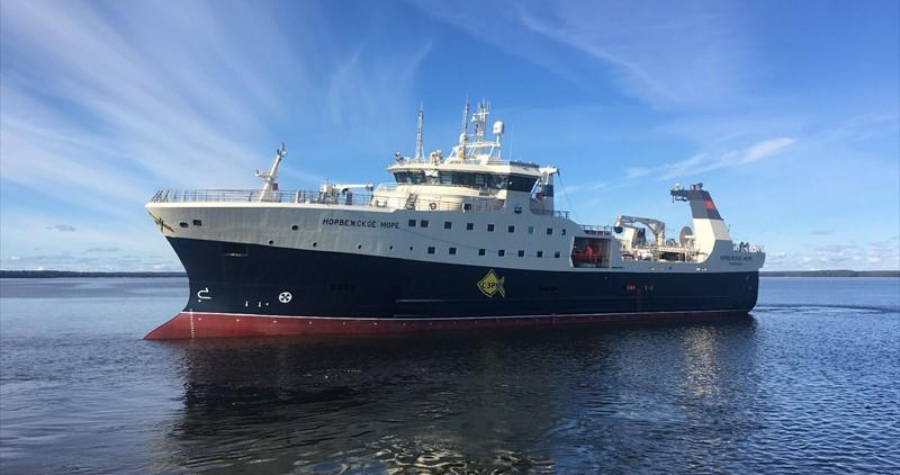
Photo: MarineTraffic.com/Ivan Filatov

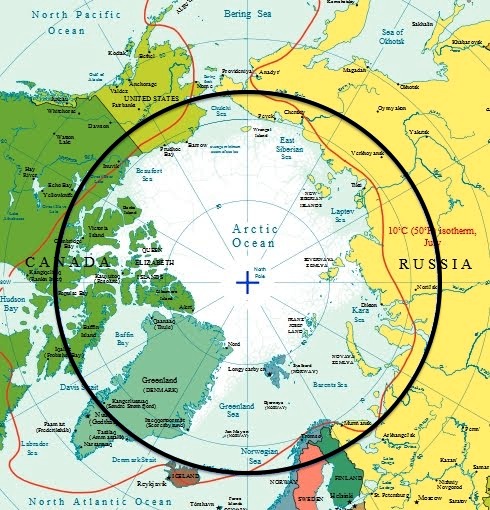
If you have any doubt, that there will be fishing in the Arctic, take a look at this report from Baird Maritime, about an Ice3 class trawler, second of a class of four, built in Russia, which is expected to operate in the “Northern Fishery Basin just off Norway’s Svalbard archipelago.”

According to Wikipedia, “Svalbard…is a Norwegian archipelago in the Arctic Ocean. North of mainland Europe, it is about midway between the northern coast of Norway and the North Pole. The islands of the group range from 74° to 81° north latitude…”

The Point Barrow, the Northern most point in the US extends to 71°23′20″N.

The Arctic Circle currently runs 66°33′48.8″ north of the equator, so the Southern most islands of the Svalbard archipelago are about 446 nautical miles (826 kM) North of the Arctic Circle. Other islands in the archipelago extend about 866 nautical miles (1604 kM) North of the Arctic Circle.

“The Coast Guard Must Stop Diluting Maritime Search and Rescue Expertise” –USNI

The US Naval Institute Proceeding November 2021 issue has an article that argues

While command center staffing only marginally increased, the creation of sectors diluted SAR expertise by increasing watchstander knowledge and training requirements to include those necessary for all Coast Guard missions. In particular, the operations specialist (OS) rating has endured the lion’s share of changes to core watchstander roles and responsibilities. As a result, the entire enlisted rating—which performs critical functions in the SAR chain of command—is at risk of collapse.

I was a district watch stander back in the stone age, before we had software to help planning, and before the Sector reorganization. I stood a 24 hour watch with an enlisted assistant and even then we did more than SAR. While I have not seen any indication his conclusions are valid, I am too far removed to trust my own opinion. I would welcome comments.

A Cutter X for Nigeria Built in Turkey

Dearsan OPV 76 design

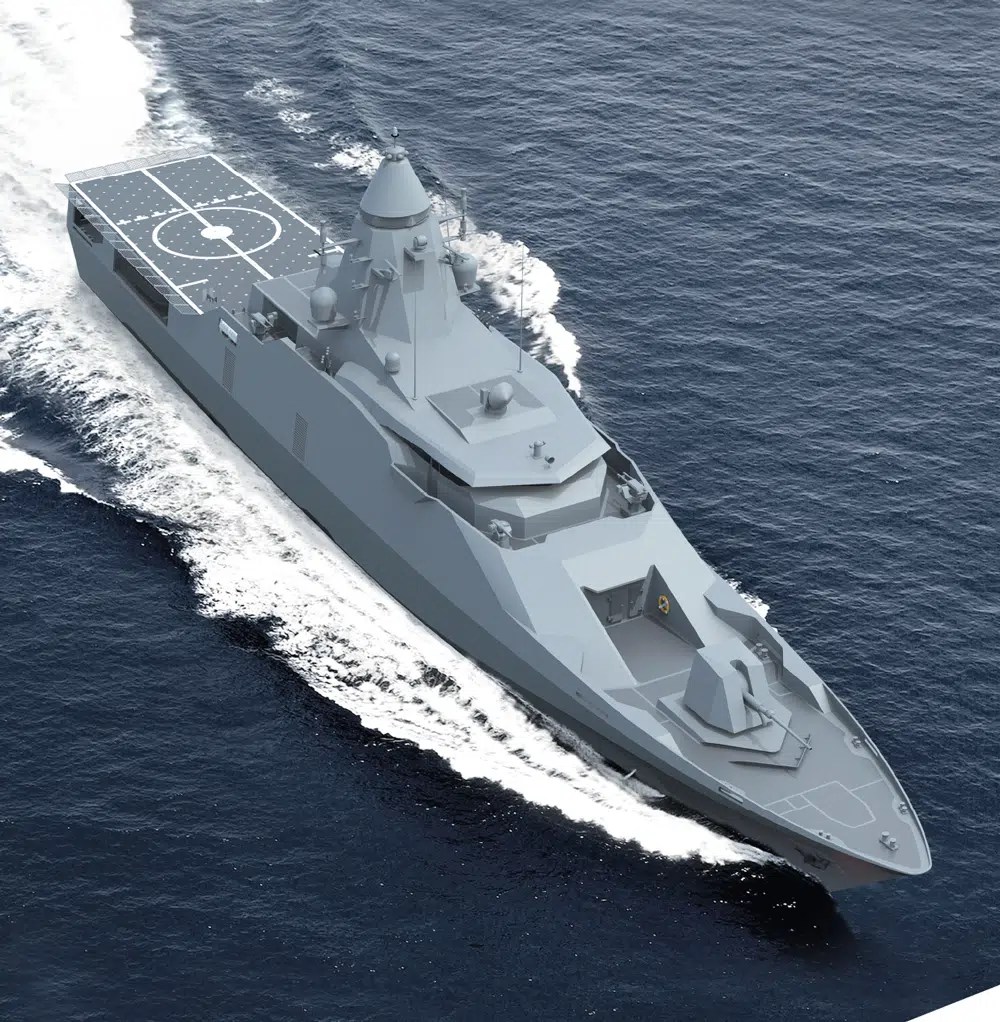
Naval News reports a contract has been reached for Turkish shipbuilder Dearsan to construct two offshore patrol vessels for the Nigerian Navy.

The OPV 76 is 78.6 meters long and 11 meters wide. The draft of the ship is 2.9 meters and the displacement is about 1200 tons. It can reach a top speed of 26 knots, and has a range of 3000 nautical miles with economical speed. The ship can be operated by a crew of 46.

These are pretty close to what I envisioned as Cutter X, but with more weapons.

They are attractive little ships, and better armed than most. You can see the 76mm gun on the bow. The 40mm gun is sited on the aft end of the superstructure. MBDA Simbad RC launch systems for Mistral short range surface to air missiles are positioned on the starboard aft and port forward corners of the superstructure. .50 caliber machine guns mounted in remote operating stations occupy the other two corners.

If my research is correct, the four diesel engines will provide at least 16,000 HP (12,000 kW).

I don’t see davits, so I presume it will have a stern ramp for launching boats. The flight deck appears to be raised enough to allow “garage” space for boats and perhaps other systems.

None of the photos provide a good view from aft looking forward, but it appears unlikely to include a hangar for an embarked helo. There might be room for a UAS hangar.

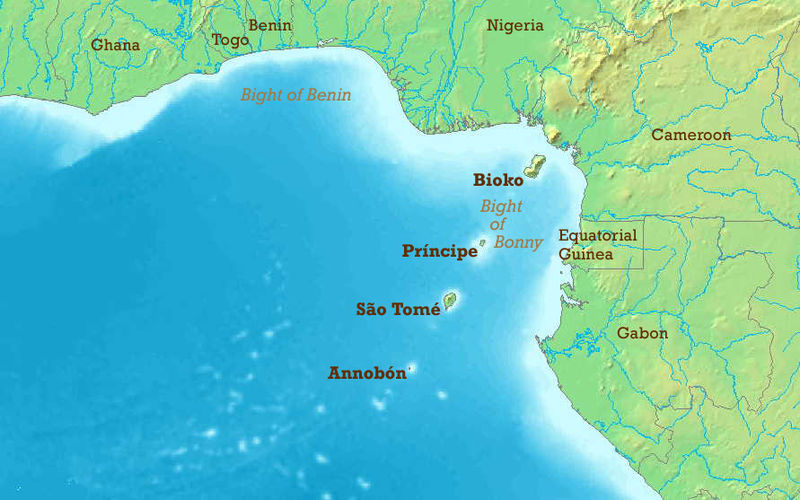
Within the context of Nigeria’s neighborhood, the Gulf of Guinea, these will be seen as relatively powerful warships. They will join two former USCG 378s and two Chinese built corvettes as the principle combatants of the Nigerian Navy. The area has had a history of piracy and maritime robbery, but Nigeria has been making progress in curbing the problem. Nigeria is the most populous nation in Africa, a nation with huge potential, and it has demonstrated regional leadership in participating in UN peacekeeping missions. The US Coast Guard has been making an effort to help, and it appears to paying off.

I see that the Nigerian Navy also operates four former USCG 180 foot buoy tenders.

a Gulf of Guinea, from Wikipedia

“Military Planners Should Map Out Operations in Warming Arctic Waters, Expert Says” –USNI

Map of the Arctic region showing shipping routes Northeast Passage, Northern Sea Route, and Northwest Passage, and bathymetry, Arctic Council, by Susie Harder

A reminder from the US Naval Institute of an issue that Russia and Canada share in opposition to the US–passage through Arctic Straits.

Let’s not forget that, when the US Navy wants to do “Freedom of Navigation” Exercises through the Northern Sea Route, there will be a Coast Guard icebreaker leading them.

“SOLICITATION FOR 270′ WMEC SUBJECT MATTER EXPERTS (SME)” –ALCOAST

“Coast Guard Cutter Forward and Coast Guard Cutter Bear, homeported in Portsmouth, Virginia, finish an at-sea transfer while underway on a two-month patrol. Coast Guard Cutter Forward returned to homeport on April 10, 2021.” (U.S. Coast Guard photo)

This caught my attention, because I was not sure if the SLEP for 270s had begun. Apparently we are still in the planning stage.

Good to see deck plate users are being asked their opinion.

Maybe questions like the need for an multifunction radar, electronic warfare systems, and type and number of weapons are still open. See “Don’t Neuter the Medium-Endurance Cutter Fleet” –USNI

It would be nice if these ships came out of SLEP with some enhancements, not just reduced capabilities. The ability to operate UAS and enhanced EO/IR capabilities come to mind.

united states coast guard

R 051250Z NOV 21
FM COMDT COGARD WASHINGTON DC
TO ALCOAST
BT
UNCLAS
ALCOAST 406/21
SSIC 5102
SUBJ: SOLICITATION FOR 270′ WMEC SUBJECT MATTER EXPERTS (SME)
1. This ALCOAST solicits volunteers to participate in a three-day
270′ Medium Endurance Cutter (WMEC) Service Life Extension Project
(SLEP) Operational Assessment (OA) in Portsmouth, VA from 25-27
January 2022. The OA is a review and analysis of intended work
items to determine the operational capability and effectiveness
expected to be delivered during the upcoming WMEC 270 SLEP. The
OA will be used to identify equipment or process discrepancies that
may degrade mission efficiency, and assesses the effectiveness and
suitability of a system or service during the WMEC 270 SLEP.
2. Background: The WMEC 270 SLEP is essential to maintaining viable
platforms while OPCs are being constructed so as not to have a gap
in offshore operational capacity.
3. The OA is a tabletop documentation review by experienced active
duty members who are currently serving, or have recently served on
WMEC 270s. SMEs will assist the Operational Test Director (OTD) in
determining suitability of system changes during the WMEC 270 SLEP.
An OA report will be submitted to the Vice Commandant and DHS’
Office of Test and Evaluation to assess the WMEC 270 SLEP proposal.
4. The OA mission areas are grouped below.
    a. Operations. Comprised of CO/XO, OPS, ET, and OS. This group
will focus on mobility, command and control, and launch and recovery
of cutter boats and helicopters.
    b. Deck. Comprised of 1LT, GM with Mk 38 Mod 2/3 experience, and
Deck BM. This group will focus on anchoring, launch and
recovery of cutter boats and helicopters, and employment of
the new 270 SLEP weapon suite.
    c. Engineering. Comprised of EO, AUXO, ENG, MK, and EM. This
group will focus on launch and recovery of cutter boats, the new
SLEP Electrical Power System, equipment and machinery maintenance
and repair, reliability, maintainability, and engineering casualty
control.
    d. Support. Comprised of F&S, and SK. This group will focus on
logistics supportability.
    e. Aviation. Comprised of helicopter pilots with ship deployment
experience. This group will focus on helicopter launch and recovery.
5. Personnel required.            Rate/Rank         Required Experience
CO                  1                     O-5/O-6               270′ WMEC CO
XO                  1                     O-4/O-5               270′ WMEC XO
EO                  2                     O-3/O-4               270′ WMEC EO
OPS                1                     O-3/O-4               270′ WMEC OPS
AUXO              2                     O-1/O-2              270′ WMEC AUXO
HH-65 PILOTS  2                     O-3/O-4              270′ WMEC Deployed
ENG                2                      CWO                   NESU/MPA
F&S                 1                      CWO                   SUPPO
BM (Deck)        2                      E-5/E-6               270′ WMEC
EM                   2                     E-5/E-6                270′ WMEC
ET                    1                     E-5/E-6                270′ WMEC/ESU
GM                   2                     E-5/E-6                MK38 Mod 2/3
MK                   2                     E-5/E-6                 270′ WMEC/MAT
OS                   1                      E-6/E-7                 270′ WMEC
SK                   1                      E-5/E-6                  270′ WMEC
6. Volunteers must be available for the entire three-day event.
SMEs will be provided read-ahead documents in preparation for
their role to ensure the OA is completed within the allotted
time. A detailed schedule of events will be provided via email
after participants have been identified.
7. Interested participants should contact the 270′ WMEC SLEP
Sponsor’s Representative, LTJG Louie Wu, by 10 December 2021 via
email. Member must include a copy of their employee summary sheet
from CGBI in-board view as an attachment and desired mission area
from paragraph 4. Email must be forwarded from your unit CO or XO
to demonstrate command approval for participation. COMDT (CG-9322)
will issue travel orders to members selected to participate.
8. Point of contact: LTJG Louie Wu, COMDT (CG-751), 202-372-2360,
Louie.Wu@uscg.mil.
9. RDML Todd C Wiemers, Assistant Commandant for Capability
(CG-7), sends.
10. Internet release is authorized.

“Eastern Shipbuilding looks to win Coast Guard cutter contract — again” –Defense News

Defense News has a report of Eastern Shipbuilding’s hopes and efforts regarding phase two of the Offshore Patrol Cutter program.

“the Coast Guard expects to award the OPC second stage detail design and construction contract in spring 2022.”

I am a little surprised, it is taking as long as it is, to make a decision, two years after award of contracts to nine ship builder for industry studies (March 20, 2020), and about a year after the deadline for submission of proposals (May 28, 2021), but it certainly is an important choice.

Start of the OPC program contract was too long delayed in the first place. Then a hurricane delayed Eastern’s efforts about a year, and raised the cost. The decision to recompete the contract resulted in more delays, in that previous plans to move to funding two OPCs a year were pushed even further into the future. Instead of delivering the first three OPCs, one per year 2021-2023 and delivering two per year beginning 2024 through 2034; the current notional deliver schedule is one per year 2022-2028 and then two per year 2029-2037.

One potential benefit, if Eastern should be chosen for Phase II, is that they might be able to transition more quickly to building two ships per year. To some extent, that may be true of other yards as well, but Eastern’s product will presumably remain the same and a decision about its suitability to proceed to full rate production can be made years before the same is true of OPCs produced by other yards that will not be built to the same detail plans.

European Patrol Corvette

European Patrol Corvette

Defense News reports on the status of the European Patrol Corvette program.

We did talk about this program earlier. France, Italy, and Spain are already committed for a total of 20 ships and Greece is also expected to participate. It seems likely other will join the program.

These ships will perform many of the functions we associate with Coast Guard cutters, particularly in the case of the French Navy. The ships are close in size and general characteristics to the Offshore Patrol Cutters but will be better armed and slightly faster.

If the program continues to grow, this will be a relative large class and will all most certainly will be exported.

“Between 2009 and 2018, China produced 136 military ships, of which 11 were exported, he said, while two U.S. shipbuilders built 78 ships, of which six were exported. Twelve European yards produced 80 ships, of which 49 were for the export market…”

This is part of a movement to “rationalize” the European shipbuilding industry. Recently we have seen a move by Fincantieri and Navantia to increase cooperation. Ultimately this may effect US shipbuilding. Fincantieri owns Marinette Marine that builds the Freedom class LCS and that built USCGC Mackinaw, the 16 Juniper class WLBs, and the 14 Keeper class WLMs. Navantia has partnered with Bath Iron Works, to among other things offer a candidate for the Offshore Patrol Cutter.