“Airbus showcases DeckFinder technology during COMPASS2020” –NavyRecognition

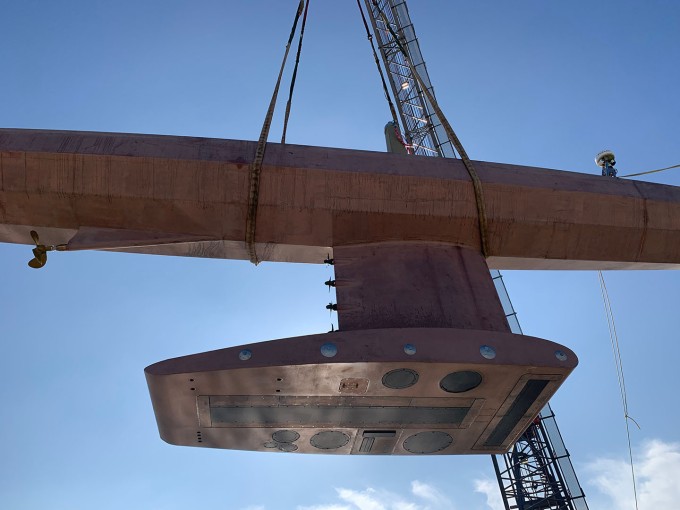
Original caption, “When landing on small or moving helidecks, a difference of a few centimeters can compromise and endanger a whole mission. To avoid such risk, DeckFinder provides a 3-dimensional image of the RPASs relative position, aiding in landing the aerial vehicle safely (Picture source: Airbus)”

NavyRecognition reports on an interesting innovation for landing Vertical Take-off and Landing (VTOL) aircraft, manned or unmanned, on small moving platforms.

“DeckFinder is a local positioning system that lets manned and remotely piloted aerial vehicles (RPAS) determine their relative position in the harshest environmental conditions. The independent navigation system contributes to easier and safer take-off and landing procedures in GPS-shaded environments that lack reference points or visual cues.”

The maximum range is relatively short, “up to 300 metres,” but the claimed precision is high, “positioning accuracy of more than 20 cm,” about 8 inches.

“DeckFinder excels at aiding rotorcraft landings on moving ship decks, as during offshore operations. For landings involving a pitching and rolling ship deck, DeckFinder’s system of reference points integrated on the ship deck itself provides a crucial advantage to safe navigation.”

Such a system might allow us to operate VTOL UAS from the Webber class.


“PORT CYBERSECURITY: INCORPORATING THE IAPH’S NEW GUIDELINES INTO THE ISPS CODE” –CIMSEC

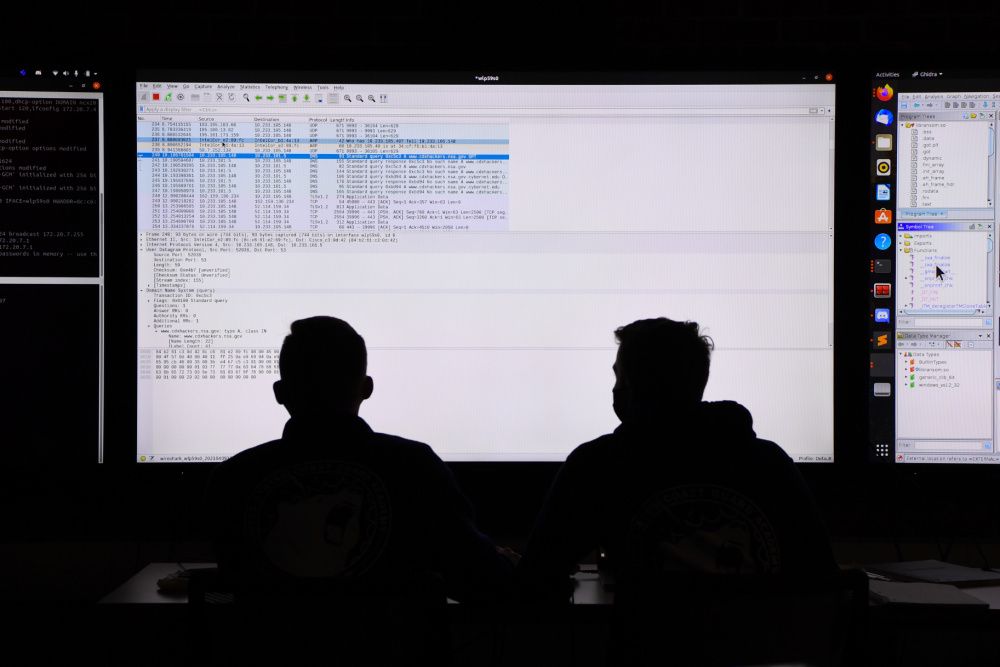
A team from the U.S. Coast Guard Academy participated in the National Security Agency’s 20th annual National Cyber Exercise (NCX), a three-day cyber competition that tests the offensive and defensive cybersecurity skills virtually, April 8-10, 2021. The Coast Guard Academy recently instituted a Cyber Systems degree to meet the needs of the services cyber security strategy of defending cyber space, enabling operations, and protecting infrastructure. (U.S. Coast Guard photo by Petty Officer 2nd Class Hunter Medley)

I can’t even spell cyber, but it is obviously important. This post is about a different kind of Port Security, and it is written by a serving Coast Guard officer, “Commander Michael C. Petta, USCG, is the Deputy Chair, the Director for Maritime Operations, and a professor of international law at the Stockton Center for International Law at the U.S. Naval War College.”

I found this statement particularly interesting,

Within the past few weeks, subversive actors backed by a foreign nation, according to the testimony of the Director of the U.S. Cybersecurity and Infrastructure Agency, breached servers and planted malicious code at a port facility in Houston, Texas.

“Coast Guard Booth Presentations at Sea Air Space 2021” –CG-9

22 meter saildrone Ocean Mapping UAS

The Acquisitions Directorate (CG-9) has provided media used in the Coast Guard’s presentation booths at Sea Air Space 2021, August 2 and 3. While certainly not a substitute for being there, they do provide insights into programs and concerns.

Coast Guard Booth Presentations at Sea Air Space 2021

  • Blue Technology Center of Expertise (BTCOE)
    Overview Blue Technology Center of Expertise presentation
    Ms. Jennifer Ibaven and Dr. Peter Vandeventer, BTCOE Program Managers, Office of Research, Development, Test & Evaluation and Innovation (CG-926)
    Tuesday, Aug. 3, 2021, 3-3:30p.m.
  • Coast Guard Detachment at DOD’s Defense Innovation Unit
    DIU & USCG Overview presentation
    Cmdr. Michael Nordhausen, Liaison Officer to Defense Innovation Unit
    Tuesday, Aug. 3, 2021, 4-4:30p.m.
  • Unmanned Systems
    U.S. Coast Guard Unmanned Systems presentation
    Capt. Thom Remmers, Assistant Commandant for Capabilities Unmanned Systems Cross-Functional Team Lead
    Monday, Aug. 2, 2021, 2:30-3p.m.
  • The Future of the Arctic
    U.S. Coast Guard Arctic Policy presentation
    Mr. Shannon Jenkins, Senior Arctic Policy Advisor
    Tuesday, Aug. 3, 2021, 11-11:30a.m.
  • Illegal, Unreported and Unregulated Fishing
    U.S Coast Guard IUU Fishing Strategic Outlook presentation
    Cmdr. James Binniker, Office of Law Enforcement Policy, Living Marine Resources and Marine Protected Resources Enforcement Division
    Tuesday, Aug. 3, 2021, 2:30-3p.m.

“Coast Guard to Recapitalize Aids-to-Navigation Boats” –Seapower

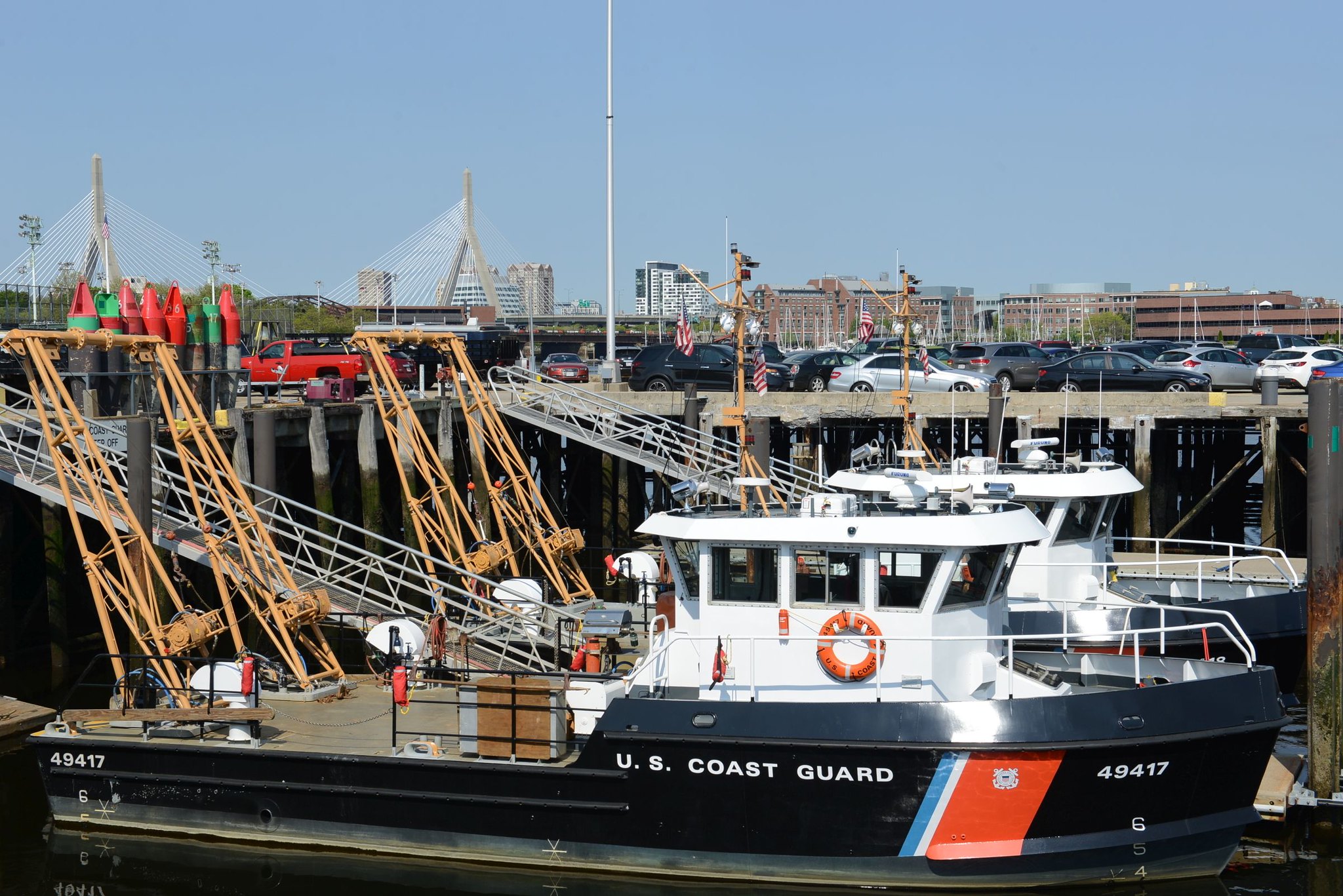
49 foot ANB, Boston

The Navy League’s magazine “Seapower” reports,

“We’re going to do a detailed design and construction award in the spring of 2022 to replace our half-centurion working aids-to-navigation boats,” said Adm. Karl Schultz, the Coast Guard commandant, speaking 28 Sept. at a webinar of the Heritage Foundation.

Shultz said the service plans to procure about 35 new ANBs, “but I believe we will be able to shrink down to about 30 really capable boats,” although he did not specify the type or types of ANBs to be replaced.

We currently have seven types of aid to navigation boats, as described in the link:

  • The 18-foot aids to navigation-medium cutter boat is used by the Keeper Class Coastal Buoy Tenders to transport equipment to a construction site and also used at small boat stations for emergency response to floods or areas where a shallow water response is necessary.
  • The 20-foot aids to navigation boat-small and 16-foot aids to navigation boat-skiff primarily aid to navigation servicing, construction, repair and discrepancy response.
  • The 26-foot trailerable aids to navigation boat serves as the workhorse for aids to navigation teams.
  • The 49-foot stern loading buoy boat supports the short-range aids to navigation missions.
  • The 55-foot aluminum hull can operate in moderately rough weather in coastal and inland waters.
  • The 64-foot self-propelled barge primarily operates on the protected rivers and protected waters

My Combat Fleets of the World, still the latest edition, copyright 2013, lists three 64 foot WYGL, 17 55ft, 26 49ft BUSL (Boat, Utility, Stern Load), 90 26ft tailerable WYGL, 48 (+47 additional planned) 20ft ANB,S (aids to navigation, small), and 30 (+30 additional planned)16ft aids to navigation skiffs (WYTL). The numbers quoted in the article are only different with regard to the 55ft boats.

As of last year, the Coast Guard operated a fleet of ANBs that included three 64-foot and four 55-foot ANB, 26 49-foot stern-loading buoy-servicing boats, 90 26-foot and five 17-to-23-foot transportable ANBs, as well as numerous smaller skiffs.

Apparently we have already ditched 13 of the 55ft boats. Presumably the older ones.

Sounds like the intention is to replace all the 49, 55, and 64 foot boats.

  • The 64ft self propelled barges entered service 1996-97.
  • The 55ft boats, built by the Coast Guard Yard, entered service 1977-1988.
  • The 49ft boats, built by the Coast Guard Yard, entered service 1997-2000.

Not quite as old as the Commandant seems to indicate, but definitely time to start replacement. It appears all the smaller AtoN boats entered service in the last 15 years.

Thanks to Lee for bringing this to my attention. 

Navy Creates an On Call Task Force

160523-N-TC720-274 USS Donald Cook (DDG 75) underway May 23, 2016.  (U.S. Navy photo by Mass Communication Specialist 2nd Class Mat Murch/Released)

US Naval Institute reports that the Navy is doing something new in the Atlantic. They are establishing an on call Surface Action Group (SAG) “Navy Creates New Atlantic Destroyer Task Group to Hunt Russian Submarines.”

To me this highlights a couple of things. First apparently there is no comparable group in the Pacific. Second there is only one group to cover the entire East Coast and Gulf of Mexico. So if the Coast Guard calls on the Navy for assistance, its likely there will be a long wait.

More Webber Class WMEC

A pile of seized drugs, estimated to be $96 million, is transfered off the Coast Guard Cutter Forest Rednour in San Diego, Sept. 24, 2021. The seizure and bullet-ridden boat engine cover were processed and transferred to federal authorities. U.S. Coast Guard photo by Petty Officer 1st Class Adam Stanton.

Another news release highlighting the surprising capability of the Webber class cutters.

Photos here.

united states coast guard

News Release

U.S. Coast Guard 11th District PA Detachment LA/LB

LA-based cutter returns home after 32-day deployment, drug offload in San Diego

SAN PEDRO, Calif. – The Coast Guard Cutter Forrest Rednour returned home on Sept. 26, following a 32-day patrol.

The crew disrupted illegal narcotics smuggling, seizing more than 5,000 pounds of cocaine that was offloaded in San Diego, Friday. The drugs, worth an estimated $96 million, were seized in international waters of the Eastern Pacific Ocean off the coast of Mexico.

“The crew excelled during this patrol; their hard work and skill was apparent and allowed the cutter to weather a hurricane, conduct international engagements, and stop a vessel carrying approximately two metric tons of cocaine, all while in a 154-foot ship, 1,800 nautical miles and two time zones from home,” said Lt. Drew Ferraro, commanding officer of the Rednour.

During the Rednour’s deployment, the crew participated in a passing exercise with the Monte Albán, an Armada de México vessel, off the coast of Mexico.

“This deployment tested crew endurance and provided the same level of logistics challenges normally faced by much larger ships, but the Rednour crew navigated each obstacle with their usual dedication, professionalism, and teamwork,” Ferraro said. “Thank you to our outstanding logistics and finance team, and the shore-side coordinators that made this patrol successful. Lastly, thank you to the families and loved ones back home who supported us during this patrol and held down the home front during our absence.”

On April 1, 2020, U.S. Southern Command increased counter-narcotics operations in the Western Hemisphere to disrupt the flow of drugs. Numerous U.S. agencies from the Departments of Defense, Justice, and Homeland Security cooperated in the effort to combat transnational organized crime. The Coast Guard, Navy, Customs and Border Protection, Federal Bureau of Investigation, Drug Enforcement Administration, and Immigration and Customs Enforcement, along with allied and international partner agencies, play a role in counter-drug operations.

The fight against drug cartels in the Eastern Pacific Ocean and the Caribbean Sea requires unity of effort in all phases from detection, monitoring, and interdictions, to criminal prosecutions for these interdictions by United States Attorney’s Offices from the Middle District of Florida, the Southern District of Florida and the Southern District of California. The law enforcement phase of counter-smuggling operations in the Eastern Pacific Ocean is conducted under the authority of the Eleventh Coast Guard District, headquartered in Alameda, CA. The interdictions, including the actual boardings, are led and conducted by members of the U.S. Coast Guard.

The Forrest Rednour is a 154-foot fast response cutter, commissioned in 2018 and homeported in San Pedro, California.

The Samoas

The crew of the U.S. Coast Guard Cutter Oliver Berry (WPC 1124) Sept. 22, 2017. The Oliver Berry was the first of three 154-foot fast response cutters to be stationed in Hawaii. (U.S. Coast Guard photo by Petty Officer 3rd Class Amanda Levasseur/Released)

Below is a 14th District news release, reporting an unusual deployment of a Webber class WPC to aid Samoa in monitoring their Exclusive Economic Zone. The crew must have crossed both the International Date Line and the Equator, so they have some serious bragging rights. This is not Oliver Berry’s first very long deployment (and here), nor the first time a Hawaii based FRC has visited these waters. There is no indication that Oliver Berry was escorted by a larger cutter.

Samoa is a long way from Oliver Berry’s homeport of Hawaii, but it is pretty close to American Samoa.

Samoa Islands. From US National Park Service circa 2002. (Note these are statute miles.)

There have been suggestions that American Samoa needs more Coast Guard presence. American Samoa’s EEZ is 156,136 square miles, larger than the state of Montana, and 3.56% of the entire US EEZ.

Generally speaking, American Samoa has been out of sight and out of mind for most Americans and the people there seem to have been neglected. American Samoa is the only inhabited unorganized unincorporated territory of the United States. Despite the fact that American Samoans serve in the American Armed Forces at higher rates than any other US state or territory, American Samoans are United States Nationals, but not citizens. 2021 population is estimated to be 46,366.

The neighboring Independent State of Samoa has a larger population, 202,506 according to their 2020 census.

The waters around the islands of the two Samoas provides a rich harvest of Tuna. If the islands are to remain economically viable, we need to prevent Illegal, Unregulated, Unreported fishing in the area. To do that, we need a good cooperative relationship with the Independent State of Samoa and Coast Guard assets closer than Hawaii. The area is also subject to earthquakes so there is the potential need for disaster response.

What kind of assets? Two or three FRCs would probably work well. Ideally three as that  would generally allow one vessel on patrol, one on standby, and the third in maintenance. Some Coast Guard Auxiliary air assets would also help a lot.

united states coast guard

News Release

U.S. Coast Guard 14th District Hawaii and the Pacific

U.S. Coast Guard patrols international waters in an effort to strengthen maritime governance and foreign partnerships
 

Editors’ Note: Click on Coast Guard stock image to download a high-resolution version.

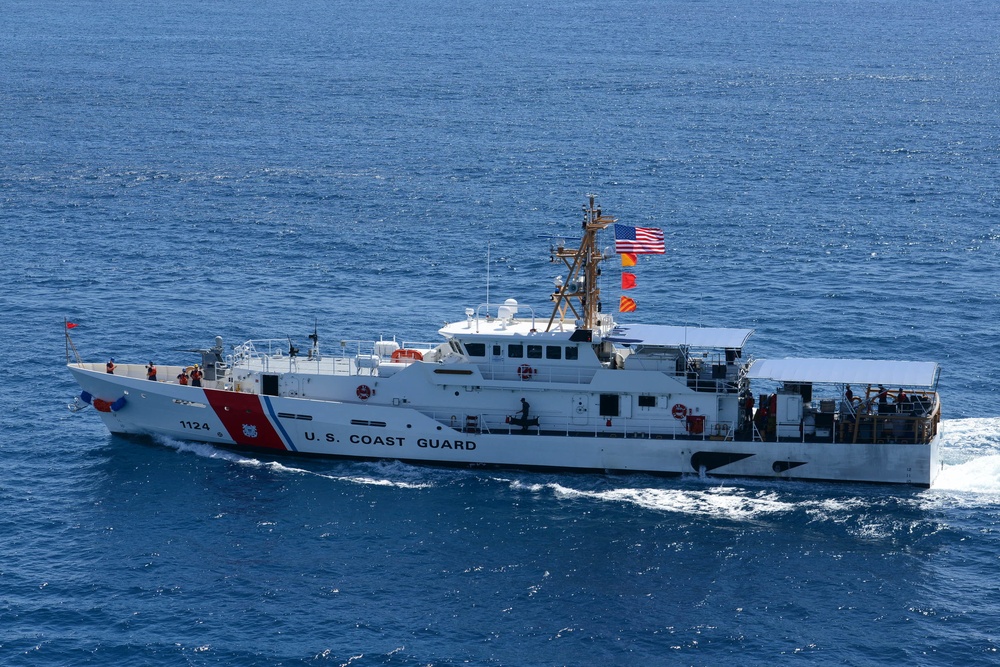
HONOLULU — The Coast Guard Cutter Oliver Berry crew conducted patrol operations in Samoa’s exclusive economic zone in September 2021, deepening our close partnership with Samoa and promoting resource security within the area.

The Oliver Berry’s crew helped to fill the policing gap for illegal, unreported, and unregulated fishing while Samoa’s Nafanua II patrol boat was out of service.

“The United States offered to assist the Government of Samoa by providing security and sovereignty operations in Samoan waters due to the absence of their patrol boat,” said Cmdr. Jeff Bryant, the 14th District’s chief of enforcement. “It was a pleasure to support Samoa in enforcing their laws to protect fisheries and other natural resources within their EEZ.”

The U.S. and its allies are trusted partners in the region. The U.S. Coast Guard employs 11 bilateral shiprider agreements with Pacific Island Forum nations, including Samoa, to help them ensure their resource security and maritime sovereignty.  Pursuant to those agreements, host government officials generally join Coast Guard patrols.  Due to COVID-19 protocols, in this instance the Oliver Berry did not make any shore visits or host Samoan government officials aboard.

“The Oliver Berry’s patrol operations highlighted the close U.S.-Samoa partnership and our shared commitment to ensuring security and freedom of navigation in the Pacific,” said Acting Chargé d’Affaires Mark Hitchcock. “We look forward to working with the Samoan Government and Coast Guard to facilitate additional patrols in the near future.”

The U.S. Coast Guard and the Government of Samoa have a history of partnership.  In 2019, the Coast Guard Cutters Walnut and Joseph Gerczak visited Apia Harbor and conducted patrol operations with officials from Samoa’s Ministry of Police and Ministry of Fisheries aboard. Crew from the Coast Guard Cutters also visited Lufilufi Primary School on Upolu Island to donate books, stationary, and sports gear and met with the Samoa Victim Support Group, a non-profit organization that specializes in providing shelter for domestic abuse victims, to donate children’s clothes, baby bottles, toddler blankets and reading materials.

The goal of the Coast Guard remains supportive and responsive to our international partners as they seek to improve the daily lives of their people and contribute to a free and open Indo-Pacific.

Oceania covers an area of 3.3 million square miles and has a population of 40 million people; it is a melting pot of culture and diversity and each of those cultures has a dependency on living marine resources and maritime commerce to allow their people to thrive.

New 30mm Mk38 mod4?

The video above has a segment, beginning about time 4:55 to 5:25, that may be of particular interest to the Coast Guard. It appears that the Navy may finally be moving from the 25mm gun to the 30mm in their next iteration of the Mk38 mount.

We have known all along that the 30mm is more effective for Coast Guard type missions. Apparently the Mk38 mod2 was adaptable enough to accept the 30mm but the Navy did not seem interested. Despite earlier indications the Mk38 mod 3 would be significantly different, including use of the 30mm, when it emerged, it retained the 25mm.

I suspect the combination of the UAS threat and the availability of a programable air burst round may be what has gotten the Navy’s attention.

For our purposes, in addition to the air burst round, the 30mm does have a greater selection of projectile type including “swimmer round” designed specifically to counter Fast Inshore Attack Craft (FIAC).

Despite Hurricane Ida, Bollinger Says On Track to Deliver the Next FRC Ahead of Schedule

This is just a couple of select paragraphs from a longer Bollinger press release. Good news, apparently no delays expected in delivery of Webber class WPCs.


“Bollinger Shipyards Resumes Operations at All Facilities Following Hurricane Ida

“LOCKPORT, La., ‐‐ (September 24, 2021) – Bollinger Shipyards LLC (“Bollinger”) today announced that all 11 of its facilities are now open and operational following Hurricane Ida’s landfall last month near Port Fourchon, Louisiana as a powerful Category 4 storm. Bollinger’s facilities in Port Fourchon, Larose, Lockport and Houma suffered significant damage as a result of the storm, which tied with last year’s Hurricane Laura and the Last Island Hurricane of 1856 as the strongest on record in Louisiana.

“In advance of the storm, Bollinger took steps to mitigate potential damages to its facilities and any resulting delays to its production schedules. Despite damages sustained to Bollinger’s Lockport facility, the 650‐man production line for the U.S. Coast Guard Fast Response Cutter program has resumed operations and Bollinger is on track to deliver the next vessel ahead of schedule.”