“RDC concludes Low Cost Maritime Domain Awareness Pilot Study” –CG-9

The 29RDC autonomous vessel underway during the Coast Guard’s unmanned surface vehicle demonstration Oct. 7 through Nov. 5 off the coast of Oahu, Hawaii.

Below is a story from the CG-9 website. It provides more specifics on the results than did my earlier post.

  • “…proved their capability to detect vessels in excess of a mile and in certain situations in excess of 4 miles.” That sounds a little disappointing, I would have expected more range, at least against larger targets.
  • “…the 29RDC was operated by RDC watchstanders in New London, Connecticut, demonstrating the vessel’s ability to be controlled from 5,000 miles away utilizing cellular service.” That would tend to indicate they were operated relatively close to shore.

Sounds like they learned a lot. The potential is there. It seems the Coast Guard spends very little on R&D. We probably ought to do more.


The Coast Guard Research and Development Center (RDC) Nov. 5 concluded a month-long evaluation of unmanned surface vehicles (USVs) to determine their ability to provide persistent maritime domain awareness (MDA) in remote areas of the ocean.

The focus of the evaluation was to explore how current and emerging technologies might support the Coast Guard’s many missions around the globe. The project showed that USVs with assorted sensor capabilities may be useful to complement organic Coast Guard aviation and surface assets in performing key operations in these regions, ranging from combatting illegal, unreported and unregulated (IUU) fishing to conducting search and rescue and a full range of law enforcement missions.

Initial results revealed that commercially available USVs are capable of delivering some level of daytime MDA and can conduct 30-day endurance missions. Two USVs used for this evaluation – the wind-propulsion Saildrone and Watcher, a diesel/solar-powered cutter boat from Spatial Integration Systems – proved their capability to detect vessels in excess of a mile and in certain situations in excess of 4 miles.

This demonstration also highlighted the importance of developing and incorporating artificial intelligence and machine learning into future USVs. The sensors used in this demonstration captured significant amounts of data. To speed processing and limit expensive bandwidth consumption, it is invaluable for the USV to conduct onboard processing to the greatest possible extent, limiting transmitted data to only that which is actionable to operators, according to Cmdr. Blair Sweigart, the RDC researcher who served as the demonstration director. He said this ability is critical to USVs’ success in long endurance and MDA missions.

“This evaluation showed that using autonomous USVs for future persistent MDA efforts will likely require a layered solution. USVs like Saildrone are capable of performing MDA missions for up to a year without maintenance, but their low transit speed does not allow them to pursue a target of opportunity to collect more information,” said RDC researcher Scot Tripp, who served as project manager. “In contrast, the Watcher is only capable of 30 days endurance but has the capability of traveling at speeds over 30 knots. It can also be instructed to pursue a target upon detection for better imagery. A system where these USVs worked together could prove to be a valuable tool for future MDA capabilities,” Tripp explained.
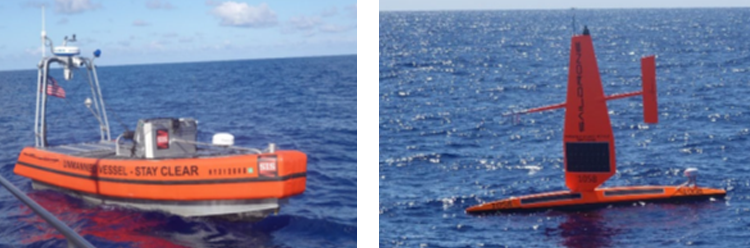

The Watcher (left) and Saildrone in the operation area. U.S. Coast Guard photos.


Two of the USVs used in this demonstration were contractor-owned/contractor-operated, which is only one of the potential procurement models available for these types of vessels. The type of vessel and how it is being used may best dictate which acquisition mode is most efficient, Tripp said. The Saildrone routinely operates on a service-provider model, for example, but government-owned/government-operated USVs might also be used effectively.

The RDC pursued the efficacy of a government-owned/government-operated USV with the 29RDC, a 29-foot autonomous vessel based on the Coast Guard response boat-small II. With the 29RDC, service operators from junior enlisted boat drivers to senior officers were able to interactively plan and execute their own missions in real time. Additionally, the 29RDC was operated by RDC watchstanders in New London, Connecticut, demonstrating the vessel’s ability to be controlled from 5,000 miles away utilizing cellular service. These demonstrations provided exceptional feedback regarding potential operations using USVs: in concert with cutters and other boats as a force multiplier; performance of reconnaissance missions; search and rescue augmentation through autonomously executed search patterns; and screening recreational and commercial vessel traffic.

This demonstration also reaffirmed a whole-of-government interest in enhancing MDA. Participants included U.S. Immigration and Customs Enforcement, U.S. Customs and Border Protection, Navy Research Laboratory, Office of Naval Research, National Oceanic and Atmospheric Administration, Scientific Advisors for the U.S. Navy, The President’s Intelligence Advisory Board and Congressional staffers.

The Coast Guard is also interested in USV testing to help better inform policy decisions as these vehicles become more numerous in the marine environment.

This demonstration was part of the Coast Guard’s pilot study of low-cost commercially available technologies that can enhance maritime domain awareness in Pacific regions, with the primary focus of monitoring (IUU) fishing.  A quick look report summarizing preliminary results from the demonstration can be found here. A full report is scheduled for completion mid-2021.

For more information: Research, Development, Test and Evaluation program page and Research and Development Center page.

EU’s Maritime Domain Awareness Information Exchange

Below is a post by a friend I have never actually met, Przemyslaw Krajewski. We worked on a CIMSEC project in 2013. As you might have guest he is Polish and in fact lives in Poland. He is an avid skier. We had a short discussion about MARSUR after I published this very short post about its existence. I told him I felt we needed to know more about the system and asked if he could help. He very quickly came back with the post below. 

Actually I see a need for international exchange of Maritime Domain Awareness data in several parts of the world. Europe is well along in developing the protocols and mechanisms for such a system. It is badly needed in West Africa, in Central and South America. the South China Sea, and probably numerous other locations. If the US Coast Guard could join this effort, an international standard might result. 

Przemyslaw apologized for his English, but I think he did a fine job.


This post intention is to elaborate a bit more on what MARSUR is and how it works. Maritime Surveillance project is initiative of European Defense Agency, established in 2006 and aiming at

“Technical solution that allows dialog between European maritime information systems. Containing 19 Member States plus Norway, the project aims to improve the common “Recognized Maritime Picture” by facilitating exchange of operational maritime information and services such as ship positions, tracks, identification data, chat or images.” [1]

Beyond member states actually participate also EDA itself and EU Satellite Centre (EU SATCEN).

Twenty members sounds scary and indeed it intuitively shows level of complexity. Just to give broader picture or background. Europe consists of 46 states plus 2 de facto independent but as eastern border of geographical Europe are a bit fuzzy, some sources counts 50 countries. 26 of them are members of European Union (as 27th by some is counted in Asia) and 27 are NATO members…but these are not the same countries.

If we quote Carl von Clausewitz the most famous statement that war is the continuation of politics by other means, so how EU could have one army without common political goal?

As a consequence most of military cooperation in European Union focuses on procurement efficiency. Obvious obstacles to overcome are differing political objectives, technical standards, organizational solutions within national security establishemnts, legal issues individual to participating states, semantics and many others. All of this is nicely and elegantly hidden in two words „facilitating exchange”. On the other hand there is comparatively little controversies around the project as overwhelming need to act upon reliable information is common for all states and institution involved.

Using more technical language MARSUR is decentralized network linking national systems via VPN using common semantics applied in software called Marsure Exchange System or MEXS. MEXS represents local national hub fed with information voluntarily shared by governments or more specifically by governmental agencies. In theory it could fuse data from military and civilian institutions/agencies and make it public or limit to specific user community like naval, border control, fisheries and so on. As infromation provides ranges in sensitivity from public to secret, both distribution and level of commitment could differ from country to country. Common mechanism would be multilateral or bilateral agreement on government level.

System entered demonstration phase in October 2011 followed by MARSUR Live Phase using prototype software. While Basic Level obligatory for all participant relied on manual exchange of information, Advanced Level is automated and set in 2016 as a goal to pursue as fast as possible.

MARSUR doesn’t exist in vacuum and represent military layer for broader initiative called EU Common Information Sharing Environment (CISE) integrating member states systems related to customs, fisheries control, marine pollution, border control, law enforcement, maritime safety & security and finally defense. MEXS 3.0 which represent the latest upgrade aims exactly at linking as much as possible of security and defense related systems to general framework of CISE. In parallel exist also geographically focused and similar systems – SUCBAS [3] and SUCFIS, effect of cooperation of Baltic Sea states (except Russia) and between Finland and Sweden.

MARSUR begins to show some practical results. In May 2017 was used in support of Italian Navy and EUNAVFOR operation Sophia in Mediterranean.[2] System has been installed both in Rome headquarter as well as a mobile component afloat. This year it was used in live demonstration of Ocean 2020 consortium of european technology businesses nad navies conducted in Mediterranean Sea with next exercise planned in Baltic Sea [4].

[1] https://www.eda.europa.eu/what-we-do/activities/activities-search/maritime-surveillance-(marsur)

[2] https://www.eda.europa.eu/docs/default-source/eda-factsheets/2020-09-11-factsheet-support-to-csdp-operations.pdf

[3] https://sucbas.now.sh

[4] https://ocean2020.eu/sea-trials/

Other useful links:

EDA_ESI_BSSAR.pdf

https://www.hsdl.org/?view&did=710109

“Schultz: Upcoming Coast Guard Budget Has ‘Dollars For People’ Focus” –USNI

The US Naval Institute’s news service has an excellent article about the Commandant’s recent remarks on the budget.

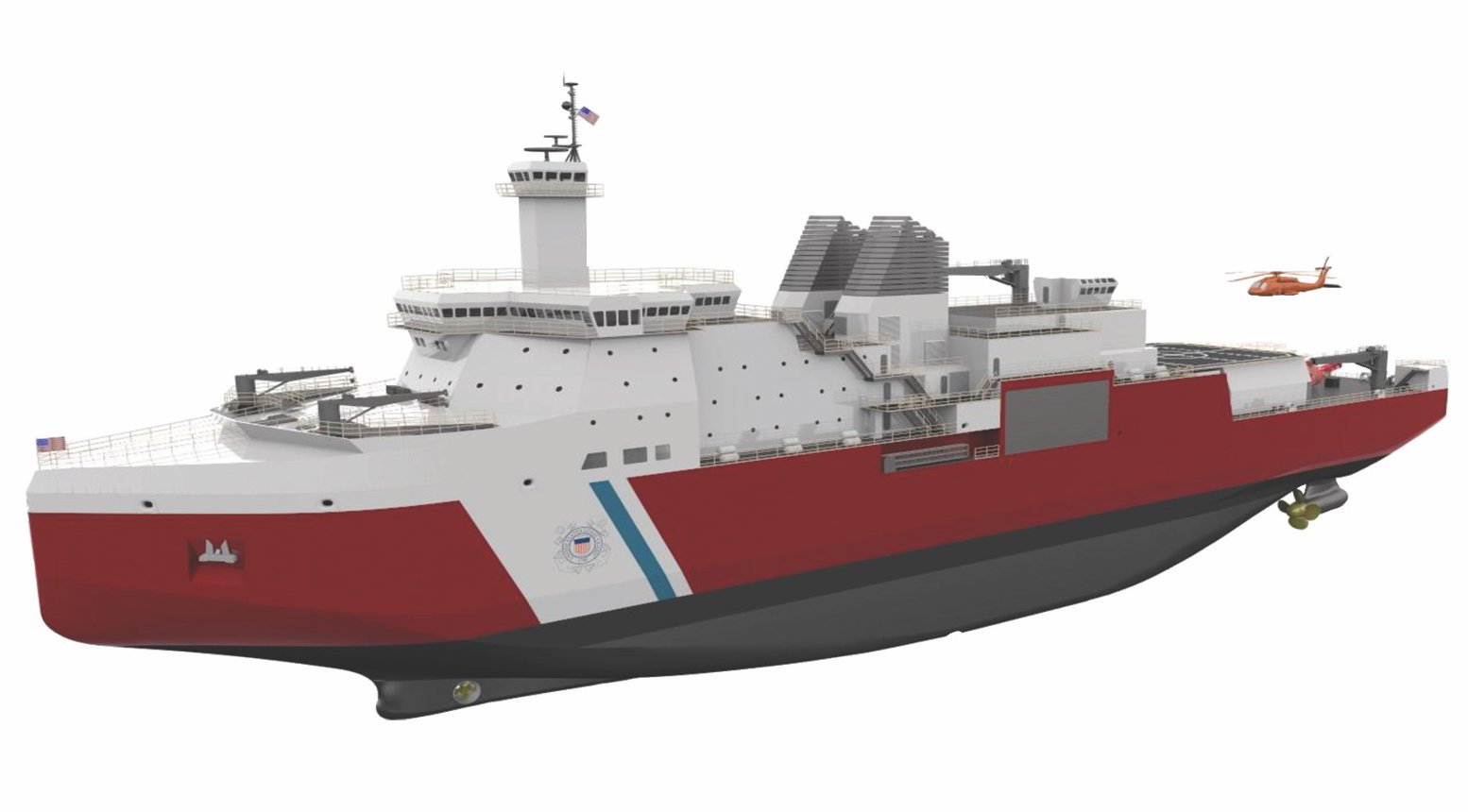
It is wide ranging. I will not try to outline it, but there was one particularly interesting discussion on the coming icebreaker fleet that suggest we may ultimately see more than six icebreakers. 

“There’s been conversation” in the administration and with Congress about expanding upon his plan for to have six icebreakers in the fleet to meet missions in the polar regions.”

Take a look, its well worth the read.

“Coast Guard Cutter to Deploy to U.S. 5th Fleet; Escort New FRCs to Bahrain” –Seapower

CARIBBEAN SEA
09.04.2019
Courtesy Photo
U.S. Coast Guard District 7 PADET Jacksonville
Subscribe 19
The Coast Guard Cutter James conducts Hurricane Dorian relief operations alongside the Coast Guard Cutter Paul Clark in the Caribbean Sea, Sept. 6, 2019. During their 62-day counter-drug patrol, the James’ crew, along with members from Tactical Law Enforcement Team-South, Helicopter Interdiction Tactical Squadron, Cryptologic Direct Support Element and multiple partner agencies, contributed to the interdiction of 7 drug-smuggling vessels and were responsible for the seizure of more than 12,677 pounds of cocaine and 4,085 pounds of marijuana bound for the United States. (U.S. Coast Guard photo courtesy of Coast Guard Cutter James)

The Navy League’s on line magazine, Seapower, reports that a Bertholf class cutter will escort two Webber class WPCs when they transit to Bahrain to begin the replacement of the six 110 foot WPBs that are currently there. Presumably this will be happening a couple of additional times, as the new ships are commissioned. Since typically, about 5 cutters are completed annually, deployments will likely be four to six months apart. It will be interesting to see how long the larger cutters remain in 5th Fleet’s AOR.

It would not be surprising to see them doing some “capacity building” in East Africa before returning home.

47 Foot MLB Service Life Extension Program

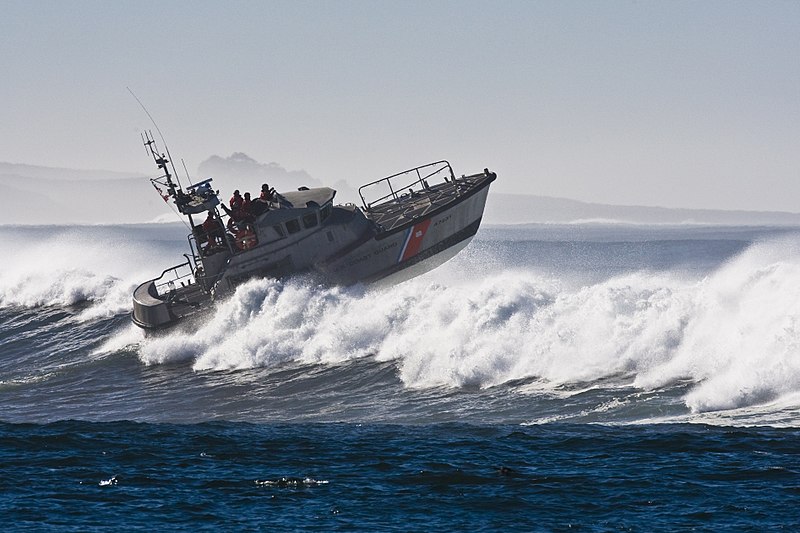
47-Foot Motor Life Boat (MLB) 47231 from Station Morrow Bay, 4 Dec 2007. Photo by Mike Baird

MarineLink reports on the Coast Guard’s service life extension program for the 47 foot motor life boats.

“In the summer of 2020, Birdon America delivered the first of the upgraded 47 MLBs which was accepted by the U.S. Coast Guard. It had passed or exceeded all the U.S. Coast Guard requirements under the contract. Birdon will now proceed with the service life extension of over 100 of these vessels built between 1997 and 2003. Work on the first boat was completed at the All-American Marine yard in Bellingham, Wash. Other west coast boats will follow. The 47 MLBs on the east coast will be upgraded at an east coast yard beginning in 2022…a pair of US-built, 6-cylinder, Cummins QSC8.3-M engines were chosen for the repower as part of the MLB Service Life Extension Program (SLEP). These EPA3-rated engines have four valves per cylinder and produce 530 BHP each at 2,600 RPM. They replace the original 435-hp Detroit 6V92TA mains. The new engines exceed the contracted requirements in terms of noise reduction and fuel economy.”

Thanks to Lee for bringing this to my attention. 

New Suppressor Allows M240 Machine Gunners to Hear Orders

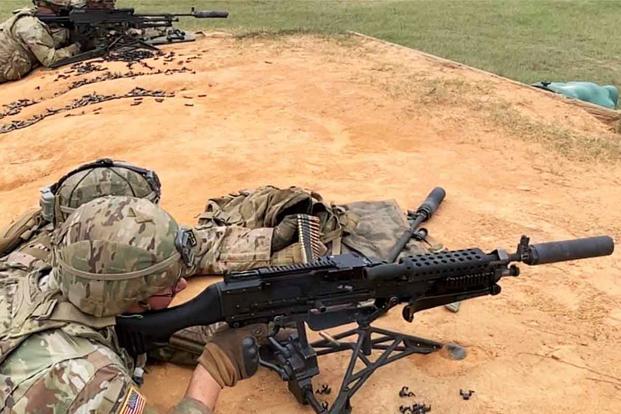
Soldiers at Fort Benning, Georgia live-fire testing a new suppressor from Maxim Defense on M240 Machineguns during Army Expeditionary Warrior Experiment (AEWE) 2021 which began in late October. (U.S. Army)

Military.com reports that the Army is testing a new suppressor for the M240 machine gun that appears both durable and effective.

“This may be one that we recommend that a unit buy and do some sort of evaluation long-term,” Davis said. “We do know that with the gun firing, it brings the noise down. … You can fire the M240 and have a conversation right next to it.”

Webber Class in Guam Making an Impact

The crew of the Coast Guard Cutter Myrtle Hazard (WPC 1139) rescued two fishermen aboard a 21-foot fishing vessel 128-miles west of Tinian, Dec. 1, 2020. The crew of the Myrtle Hazard successfully transferred the two fishermen from their boat, verified their health, and gave them food and water. (U.S. Coast Guard photo courtesy of the Navy/Released)

Guam’s newly arrived Webber class WPCs are already making an impact.

“Coast Guard rescues 2 fishermen off Northern Mariana Islands”

“Guam’s second Fast Response Cutter arrives in Apra Harbor” –D14

Below is a D14 news release. Congratulations to the crew of the Oliver Henry. 10,620 nautical miles, a drug seizure, and a SAR case enroute. Sounds like quite an adventure. I’m sure CWO Henry would be proud. 

united states coast guard

News Release

U.S. Coast Guard 14th District Hawaii and the Pacific
Contact: 14th District Public Affairs
Office: (808) 535-3230
After Hours: HawaiiPacific@uscg.mil
14th District online newsroom

Guam’s second Fast Response Cutter arrives in Apra Harbor

USCGC Oliver HenryUSCGC Oliver HenryUSCGC Oliver Henry

Editors’ Note: Click on images to download a high-resolution version.

SANTA RITA, Guam — The Coast Guard Cutter Oliver Henry (WPC 1140) arrived at its new homeport in Santa Rita, Guam on Monday, following a 10,620 nautical mile journey from Florida.

During the voyage to its new homeport the crew of the Oliver Henry participated in drug interdiction operations in the Eastern Pacific while also assisting in a search for an overdue fishing vessel off Saipan.

“I am extremely proud of the crew, who did an exceptional job preparing and sailing the cutter nearly 11,000 nautical miles from Key West, Florida, to Santa Rita, Guam, during the global COVID-19 pandemic,” said Lt. John Hamel, the Oliver Henry’s Commanding Officer. “Not only did we deliver the highly capable Fast Response Cutter to our new operational area in the Western Pacific but we also conducted operations while transiting the Eastern Pacific, seizing a cocaine shipment worth $26.7M in support of the United States Southern Command’s Operation Martillo.”

The Oliver Henry is the second of three scheduled Fast Response Cutters (FRC) to be stationed in Guam. The FRCs are replacing the 30-year old 110-foot Island Class Patrol Boats and are equipped with advanced command, control, communications, computers, intelligence, surveillance, and reconnaissance systems and boast greater range and endurance.

Like the Island Class Patrol Boats before them the FRC’s are designed as multi-mission platforms ranging from maritime law enforcement to search and rescue. The new cutters represent the Coast Guard’s commitment to modernizing service assets to address the increasingly complex global Maritime Transportation System.

“Oliver Henry will significantly increase the capabilities of the Coast Guard throughout the region,” said Capt. Christopher Chase, commander, Coast Guard Sector Guam. “I am excited to welcome the crew of the Oliver Henry home and look forward to them conducting operations with our partners in the near future.”

The cutter is named after Oliver T. Henry, Jr., an African American Coast Guardsman who enlisted in 1940 and was the first to break the color barrier of a then-segregated Service. During World War II, Henry served under Lt. Cmdr. Carlton Skinner who later became the first civilian Governor of Guam and played a critical role in developing the Organic Act in 1950. Henry blazed a trail for minorities in the U.S. military as he climbed from enlisted ranks while serving on 10 different Coast Guard cutters, finally retiring as a Chief Warrant Officer in 1966.

Each FRC has a standard 24-person crew. This will bring over 70 new Coast Guard members to Guam, along with a projected 100 family members. In addition to the crews of the three ships additional Coast Guard support members and their families will also be in Guam.