Contract awarded for FRC #45-50

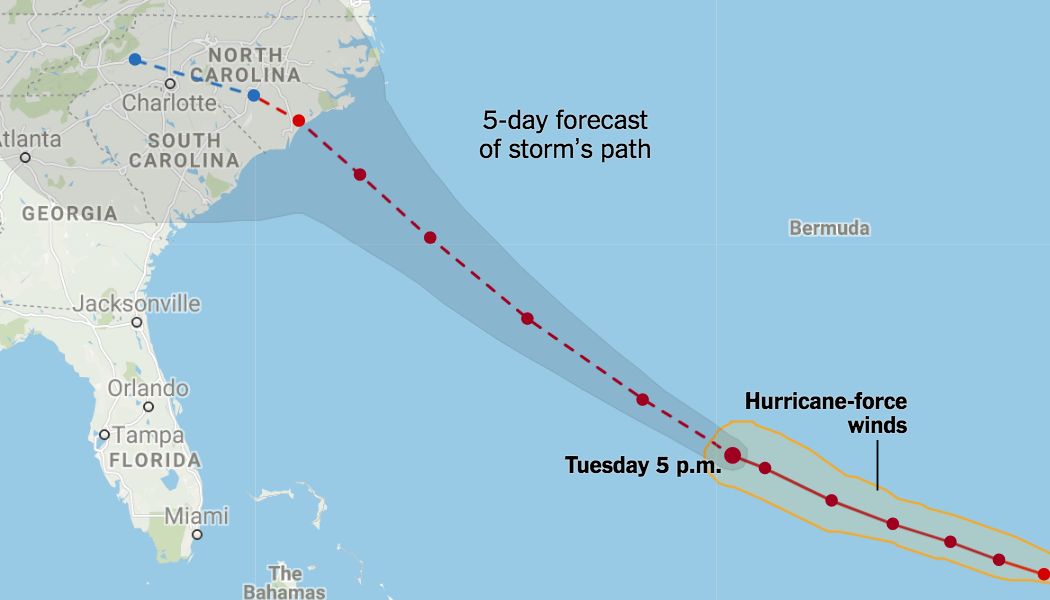
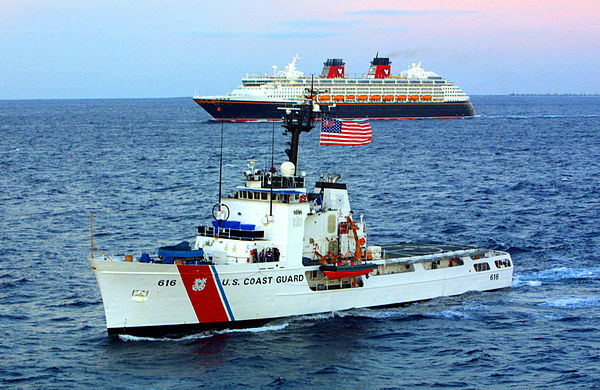
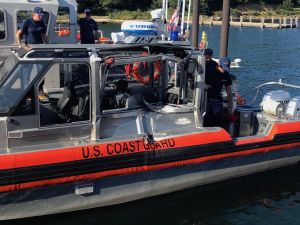
The primary thrust of the Acquisitions Directorate post is on what Webber class WPCs are doing in response to recent hurricanes, but it also mentions that a contract option for six more has been exercised bringing the program to 50 cutters.

The service exercised a contract option on Aug. 9 worth just over $294.4 million with Bollinger Shipyards of Lockport, Louisiana, for production of six more Sentinel-class FRCs and eight shipsets of rudders as spares. Keeping spares on hand enables greater mission readiness by minimizing operational downtime in the event that some systems need repair or replacement.

This option brings the total number of FRCs under contract with Bollinger to 50 and the total value of the contract to nearly $929 million. The contract has a potential value of $1.42 billion if options to procure all 58 cutters are exercised.

SOUTHCOM Mothership?

HOS Mystique, 250 foot Multi-Purpose Support Vessel being chartered by the Navy for SOUTHCOM

Marine Link is reporting that the Navy has awarded a $7.4M charter to Hornbeck Offshore with the work expected to be completed 14 June 2019.

“The DOD says the multi-mission support vessel will be chartered to provide proof of concept for a single vessel to meet various training, exercise, experimentation, and operational mission support requirements.”

I am going to speculate that the intent is to support the operation of Cyclone class patrol craft in the Eastern Pacific transit zone. Perhaps Webber class WPCs as well?

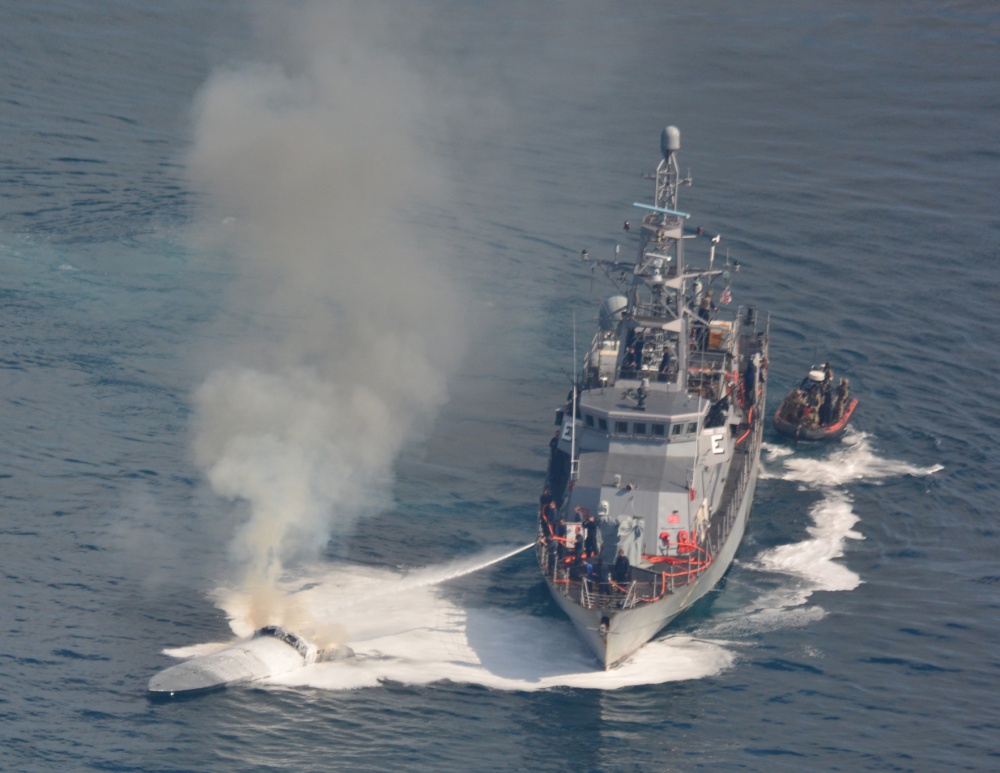
Cyclone-class patrol coastal USS Zephyr (PC 8) crew conducts ship-to-ship firefighting to extinguish a fire aboard a low-profile go-fast vessel suspected of smuggling in international waters of the Eastern Pacific Ocean April 7, 2018. Photo by Petty Officer 1st Class Mark Barney

Midshipmen and Cadets Essay Contest–USNI

In hopes I have at least one cadet (academy or OCS) in the readership, I have duplicated the following from a US Naval Institute web site

The Challenge:

This new Contest encourages Navy, Marine, and Coast Guard midshipmen, cadets, and officer candidates (Naval Academy, NROTC, Coast Guard Academy, Kings Point and State Maritime Academies, and Officer Candidate Schools) to think and write about the challenges that face the Sea Services today and in the coming decade. Some questions to consider include: What is the right mix of forces? How can the different services partner in new ways to enhance national security? How will peer competition with China and Russia impact your Navy, Marine Corps, Coast Guard, and Merchant Marine? What capabilities will tomorrow’s forces require that are not yet in the force? What could the Academies learn from NROTC or OCS and vice versa? Are naval commissioning sources preparing future officers well for what lies ahead? And what lessons from the past should guide your futures?

Prior Publication: Your essay must be original and not previously published (online or in print) or being considered for publication elsewhere.

Submission Guidelines:

  • Email essay as a Microsoft Word attachment to essay@usni.org by 31 October 2018.
  • Include Midshipmen and Cadets Essay Contest on subject line of email.
  • Include word count on title page of essay but do not include your name on title page or within the essay.
  • Provide a separate attachment to include biography and compete contact information — i.e., work, home, and cell phone numbers; and home mailing address.

Selection Process: The Proceedings staff members will evaluate every essay and screen the top essays to a special Essay Selection Committee of at least six members who will include two member’s of the Naval Institute’s Editorial Board and four subject experts.  All essays will be judged in the blind — i.e., the Proceedings staff members and judges will not know the authors of the essays.

Announcement of the Winners: The top three winners will be published in Proceedings magazine.

About Naval Institute Essay Contests

Essay contests have been central to the work of the Naval Institute for more than 130 years. They directly fulfill the Institute’s educational mission by encouraging writing on issues of concern to the Sea Services. They provide thought-provoking articles that spur ongoing discussion of these same issues, not only in Naval Institute media, print and digital, but also in other leading defense and national security forums.

  • Essay Publication: The top three winners will be published in Proceedings
  • Essay Awards: First Prize: $5,000; Second Prize: $2,500; Third Prize: $1,500
  • Essay Length: 2,000 word maximum (excludes endnotes/resources).
  • Essay Year: 2018

2018 Aviation Order of Battle–USNI

Would like to point to a nice summary of aviation assets that is available on line from the US Naval Institute (USNI, unfortunately behind the pay wall–see late addition below). It is the work of a friend, Jim Dolbow, who many years ago encouraged me to blog. He now works for the USNI and is responsible for the two latest editions of the Coast Guardsman’s Manual.

Included are aircraft of the Marine Corps, Navy, Coast Guard, U.S. Customs and Border Protection’s (CBP) Air and Marine Operations, and NOAA as of 31 July, 2018

Navy and Marine units list aircraft type, squadron, and base but don’t actually list numbers of aircraft.

Coast Guard aircraft numbers, by type, are listed below, but the article goes on to identify number and type at each CG air station. It also notes there are 160 civilian CG Aux. aircraft.

Coast Guard aviation as of 31 July 2018 consisted of 7 different types of aircraft representing 207 airframes based at 27 different locations, including:

(17)     HC-130H Hercules

(9)       HC-130J Super Hercules long range surveillance aircraft

(18)     HC-144 Ocean Sentry medium range surveillance aircraft

(14)     HC-27J Spartan medium range surveillance aircraft

(2)       C-37A Gulfstream V

(45)     MH-60T Jayhawk medium range recovery helicopter

(102)   MH-65D/E Dolphin short range recovery helicopter

I was a bit surprised to find the U.S. Customs and Border Protection’s (CBP) Air and Marine Operations had more aircraft than the Coast Guard, 97 fixed wing and 128 helicopters (vs 60 fixed wing and 147 helos for the CG). Numbers of each type is provided but no information on basing.

NOAA has nine manned fixed wing aircraft, identified by number and type, all operated out of NOAA’s Aircraft Operations Center at Lakeland Linder Regional Airport, FL.


Late addition:

Just realized the USNI post is only available to USNI members (You really should be a member). Hopefully they will forgive me if I copy and paste a good chunk of the CG portion below.

Current Asset Laydown of USCG Aircraft:

USCG Air Station Cape Cod, MA

(3) HC-144A

(3) MH-60T

USCG Air Station Atlantic City, NJ

(11) MH-65D

USCG Air Station Washington, DC

(2) C-37A

USCG Air Station Elizabeth City, NC

(6) HC-130J

(3) MH-60T

(5) HC-27J

USCG Aviation Logistics Center, Elizabeth City, NC

Aircraft undergoing depot maintenance/support:

(4) HC-130H

(3) HC-130J

(3) HC-144

(2) HC-27J

(6) MH-60T

(10) MH-65D

(2) MH-65E

USCG Air Station Savannah, GA

(5) MH-65D

USCG Helicopter Interdiction Tactical Squadron Jacksonville, FL

(10) MH-65D

USCG Air Station Miami, FL

(5) MH-65D

(5) HC-144A

USCG Air Station Clearwater, FL

(4) HC-130H

(10) MH-60T

USCG Air Station Borinquen, PR

(4) MH-65D

USCG Aviation Training Center Mobile, AL

(3) HC-144A

(4) MH-60T

(9) MH-65D/E

USCG Air Station New Orleans, LA

(5) MH-65D

USCG Air Station Houston, TX

(3) MH-65D

USCG Air Station Corpus Christi, TX

(3) HC-144A

(3) MH-65D

USCG Air Station San Diego, CA

(3) MH-60T

USCG Air Station San Francisco, CA

(7) MH-65D

USCG Air Station Humboldt Bay, CA

(3) MH-65D

USCG Air Station Sacramento, CA

(6) HC-27J

USCG Air Station North Bend, OR

(5) MH-65D

USCG Air Station Astoria, OR

(3) MH-60T

USCG Air Station Port Angeles, WA

(3) MH-65D

USCG Air Station Detroit, MI

(5) MH-65D

USCG Air Station Traverse City, MI

(3) MH-60T

USCG Air Station Sitka, AK

(3) MH-60T

USCG Air Station Kodiak, AK

(5) HC-130H

(6) MH-60T

(4) MH-65D

USCG Air Station Barbers Point, HI

(4) HC-130H

(3) MH-65D


Coast Guard Awards Contract For Cutter Boats

The following is a quoted from the Acquisitions Directorate (CG-9) web site. The boats referred to here do not seem to be the same as the Over the Horizon Boats currently being used on Bertholf class NSCs and Webber class FRCs discussed on the linked page. An earlier release available here outlines the Request for Proposal, indicating an intent to replace an existing fleet of 36 boats, with total procurement of up to 46 boats over the next five years.


The Coast Guard awarded a firm-fixed price indefinite delivery, indefinite quantity contract Aug. 30, to MetalCraft Marine U.S. Incorporated of Cape Vincent, New York, for a fleet of cutter boats-large (CB-L).

The contract has a maximum value of $20 million and allows for the acquisition of more boats over an ordering period of five years. The initial delivery order for two CB-Ls, trailers, delivery, training and associated logistics documentation was placed for approximately $590,000.

The CB-L will replace the current fleet of 24-foot cutter boats in service onboard 210-foot medium endurance cutters, 225-foot seagoing buoy tenders, and Coast Guard Cutters Alex Haley and Mackinaw. The boats will support operations on the East, West, and Gulf Coasts, as well as in Hawaii, Guam and Alaska.

“We are very excited about getting this asset out to the fleet,” said Cmdr. David Obermeier, deputy program manager for boats acquisition. “A single boat class for multiple cutter classes will provide enhanced operational flexibility.”

For more information: Cutter Boats program page

“Brandish America’s ‘Small Stick’”–USNI

These are the Unified Combatant Commander’s Areas of Responsibility. 

It starts like this:

“Congress and the Trump administration could do far worse than double or triple the size of the U.S. Coast Guard fleet. (Let’s hear no more about drastic cutbacks.) Last month Military Times reported that the Coast Guard leadership has entered talks with the U.S. Indo-Pacific Command to send a cutter to the region to help “temper” Chinese influence while “building partner capacity” with friendly African navies and coast guards. The troubling thing about the report is the definite article the reporter deploys: the coast guard will dispatch “a” ship if the talks with IndoPaCom bear fruit. A = 1.”

The US Naval Institute blog has a small post,  ‘Brandish America’s ‘Small Stick’

The author of the piece is significant. James R. Holmes , currently professor of strategy at the Naval War College, one of the most prominent naval thinkers of the 21st century. It would be hard to find a more influential voice in support of a more international role for the Coast Guard.

If we really want to do something like this, I will insert a shameless plug for my idea of a “Combined Maritime Security Task Force Pacific.”

While we are building a Webber class replacements for the 110s assigned to PATFORSWA under CENTCOM perhaps we should be building a batch to be based in Guam or Singapore for INDO-PACOM. Maybe some for SOUTHCOM and maybe AFRICOM too.

Some previous articles along these lines:

Four Coasties Injured in Training Accident

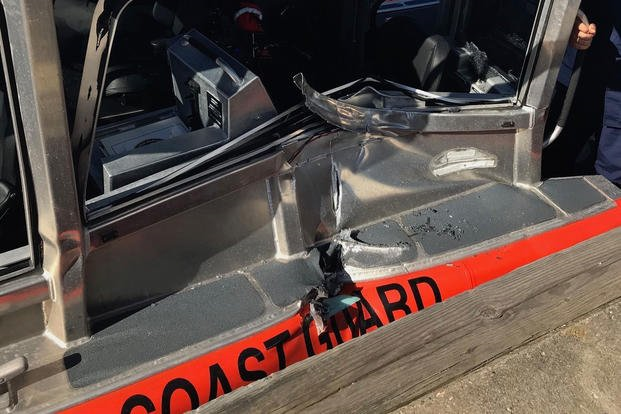
This is a damaged 29-foot response boat small from Maritime Safety and Security Team Cape Cod located on Air Station Cape Cod on Wednesday, Sept. 5, 2018. Two tactical boat crews collided during training off Falmouth, Massachusetts. (U.S. Coast Guard photo)

We have a report four members of Martime Safety and Security Team Cape Cod were injured when two 29 foot boats collided during a training exercise, Wednesday, Sept. 5, 2018. Reportedly none of the injures are life threatening.  

Close up view of the damage of a 29-foot response boat small after it collided with another 29-foot response boat during training off Falmouth, Massachusetts, Wednesday, Sept. 5, 2018. (U.S. Coast Guard photo)

DHS, Coast Guard Launch $255K ‘Ready for Rescue Challenge’ to develop new boater safety solutions

This is a news release, quoted in full. 

Sept. 5, 2018

DHS Science & Technology Press Office: John Verrico, (202) 254-2385

USCG RDC Press Representative: Loretta Haring (202) 475-5523

DHS, Coast Guard Launch $255K ‘Ready for Rescue Challenge’ to develop new boater safety solutions

WASHINGTON – Today, the U.S. Department of Homeland Security (DHS) Science and Technology Directorate (S&T), in collaboration with the U.S. Coast Guard Research and Development Center (RDC), launched the U.S. Coast Guard Ready for Rescue Challenge, a $255,000 prize competition that seeks boater safety solutions that will help make it easier to find people in the water.

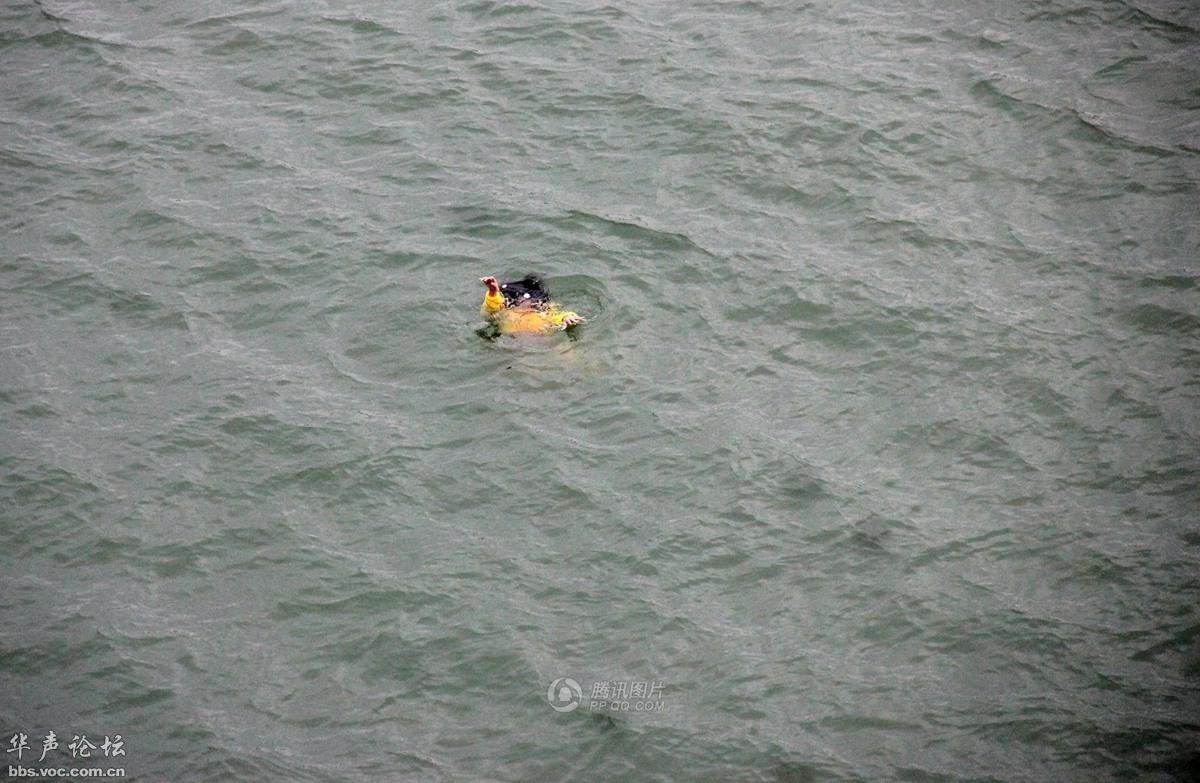
When a person is separated from their boat or other watercraft, they can be left isolated in open waters. A life jacket or personal flotation device (PFD) keeps a person afloat while they seek safety. However, a person in the water is a small, moving target, and even in a successful rescue mission, locating the person can take hours.

“Boater safety solutions that harness new designs and technologies can improve the chance of a successful rescue,” said William N. Bryan, DHS Senior Official Performing the Duties as Under Secretary for Science and Technology. “New, innovative solutions are critical. We are proud to support our nation’s maritime first responder with this important, life-saving effort.”

This call for concepts is the first phase of an anticipated three-phase prize competition. Phase I concepts could include a new or updated life jacket or PFD, an attachment to a life jacket or PFD, or an additional device for boaters. The best concepts will be effective, affordable, and hold the potential for wide adoption by recreational boaters.

Those interested in participating in the Challenge should submit their concept by 4:59 p.m., ET, Monday, Oct. 15, 2018. The judges will evaluate the submissions and will select up to five monetary prize winners and up to five non-monetary honorable mention award winners. A total of $25,000 will be distributed evenly among each of the Phase I monetary prize winners.

“The U.S. Coast Guard is devoted to helping boaters in distress,” said Bert Macesker, RDC Executive Director. “One critical challenge is finding people in the water. Partnering with DHS S&T allows us to increase the Coast Guard’s access to innovations that make people in the water more detectable. We hope to build off of the success of our previous prize competition partnership for environmentally friendly mooring.”

In Phase II, selected participants from Phase I will participate in a “Piranha Pool” to pitch their solution and compete for a total prize pool of $120,000. This prize will assist each monetary prize winner in developing their concept into a working prototype. In Phase III, the Coast Guard will field test prototypes alongside standard Coast Guard approved safety equipment. At the conclusion of Phase III, the judging panel may award a total $110,000 in additional monetary prizes.


For more information about the Coast Guard Ready for Rescue Challenge, visit readyforrescuechallenge.com.

“Moving North–Arctic Capable Ships Enable Navies, Coast Guard to Patrol Extreme Latitudes”–Seapower

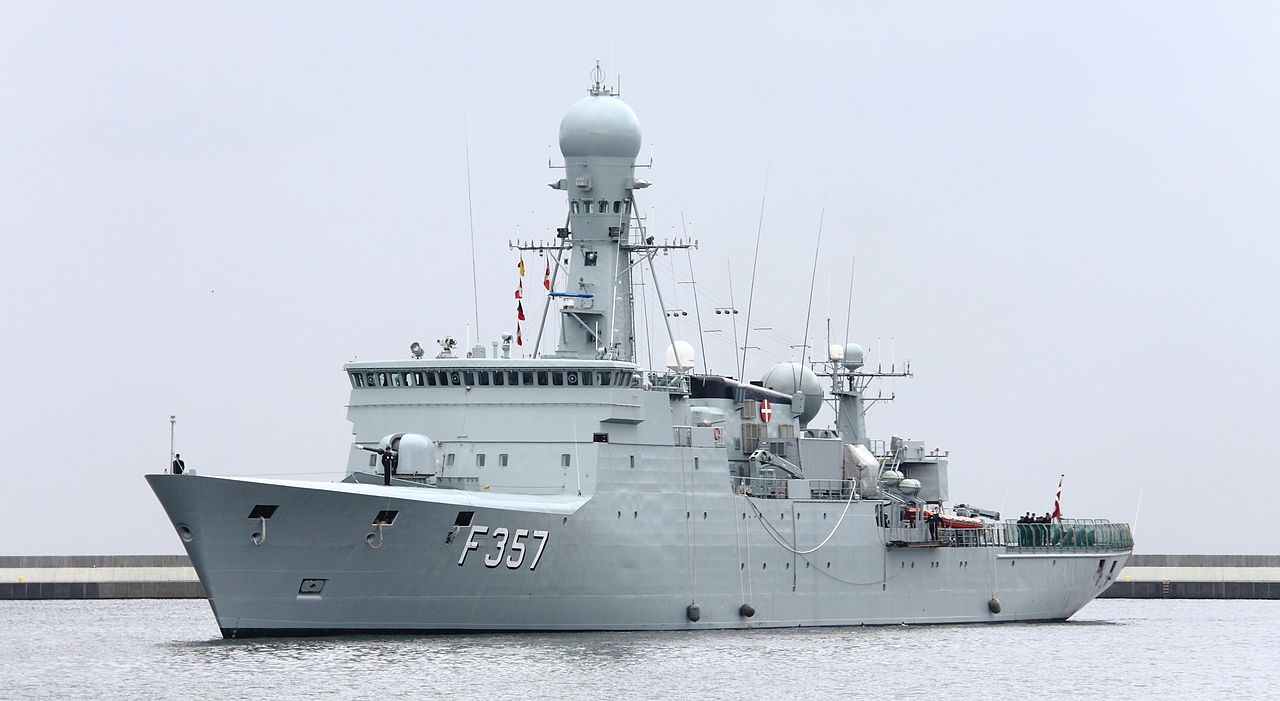
Thetis-class ocean patrol vessel belonging to the Royal Danish Navy. (Similar in size to the OPC.) Source: konflikty.pl, Author: Łukasz Golowanow

The September 2018 issue of the Navy League’s Magazine, Seapower, has an article about ice strengthened Patrol Vessels. The entire issue is available on line. You will find the article on page 32.

P570 Knud Rasmussen. The first of  three Danish navy Knud Rasmussen-class ocean patrol crafts. Commisioned in 2008. Photo from Flemming Sørensen

The article looks at the Danish Knud Rasmussen and Thetis classes, the Norwegian Coast Guard vessel Svalbard, and the Canadian HMCS Harry DeWolf class Arctic Offshore Patrol Ship (AOPS). It talks about why the ships were designed the way they were, and the features that allow them to operate successfully in the Arctic.

These are not icebreakers, they are hybrids, offshore patrol vessels adapted to work in both Arctic and ice free environments. The Danish vessels thanks to the StanFlex mission modules system can fill the role of warships, mounting ASW torpedoes or Evolved Sea Sparrow AAW Missiles.

Norwegian Coast Guard Vessel Svalbard. Photo by Marcusroos