USN Reestablishes 2nd Fleet

Former crest of US 2nd Fleet. US Navy Image.

US Naval Institute News Service is reporting the Navy will be reestablishing the Second Fleet, which will cover the Western Atlantic. In the past it also covered the Caribbean and the Eastern Pacific drug transit zones.

Second Fleet will be the Atlantic counterpart of the Third Fleet in the Pacific.

How it will relate to Forth Fleet that currently handles the drug transit zones is not yet clear.

We are certain to see interaction with the CG Atlantic Area Commander, and probably at least one liaison officer.

Schiebel’s CAMCOPTER S-100 VTOL UAV and the Oceanwatch PT-8 Sensor

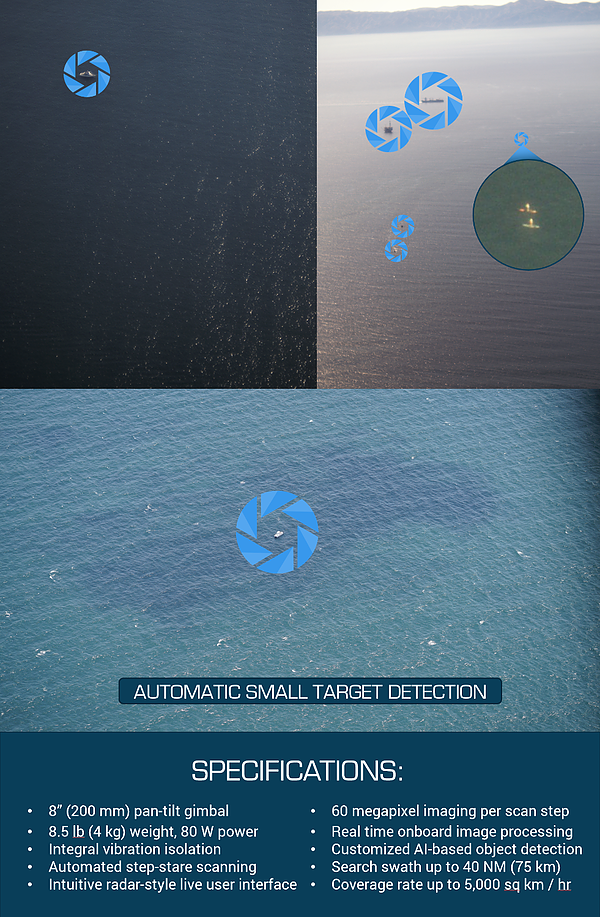
A recent announcement that the PT-8 Oceanwatch image-based wide area maritime search system has been integrated with the Schiebel Camcopter S-100 vertical take-off and landing UAS, prompted me to take another look at this system. (Manufacturer’s brochure here.)

There have been numerous improvement since the introduction of the S-100 over a decade ago. It has been integrated with more sensors including a synthetic aperture radar. A heavy fuel engine compatible with  JP-5, Jet A-1 or JP-8 jet fuels is now optional, as a replacement for the original gasoline engine. Using an auxiliary fuel tank it now possible to extend its normal six hour endurance to up to 10 hours.

This Oceanwatch PT-8 sounds a lot like a “ViDAR” (Visual Detection and Ranging) that has been tested by the Coast Guard.

The S-100 is very widely used. Operators or those who are buying the system include the German Navy, the French Navy, the Italian Navy, the Australian Navy, and the Chinese Navy. The Russian Coast Guard uses a license built version.

They have been testing sense and avoid capability.

The S-100 at 440 pounds max take-off is about nine times greater than that of the 48.5 pound ScanEagle, but less than a seventh that of the MQ-8B Fire Scout (3,150 lb). It doesn’t have the  endurance of the ScanEagle, but with a ten times larger payload (75 lb vice 7.5 lb), given better sensors, it may be able to search a larger area per sortie. With a higher speed (120 knots max vice 80) it can get to a probability area and search it faster.


Perspective: Rejuvenating the Trinidad and Tobago Coast Guard, by Sanjay Badri-Maharaj

Once again Sanjay Badri-Maharaj provides a look inside the Trinidad and Tobago Coast Guard, (TTCG). This time, he relates its often frustrating history and its recent attempts to return to relevancy. The story should make USCG members feel very fortunate. Sanjay’s earlier post related to the TTCG’s most recent major procurement, “How the SPa was Chosen – The Trinidad and Tobago Coast Guard’s Spa 5009 fleet.”

British built OPV that was to have been the Trinidad and Tabago Ship (TTS) Port of Spain, seen here in TTS colors. Now the Brazilian Ship Amazonas.

At the Visakhapatnam International Fleet Review 2016, a ship graced the show with her presence – the Brazilian Navy Offshore Patrol Vessel (OPV) BN Amazonas (P120) commanded by Commander Alessander Felipe Imamura Carneiro. While this ship would have gone largely unnoticed by the naval fraternity so gathered, being as it is, of sound but unspectacular design and performance, the vessel has a peculiar significance for the Trinidad and Tobago Coast Guard (TTCG) as it was originally built for the said formation and was very nearly commissioned as the TTS Port of Spain. However, an abrupt and controversial cancellation of the order in September 2010, following a change in government in May 2010, brought an end to a planned expansion plan that would have allowed the TTCG to regain its place as the premiere naval unit of the Caribbean. The cancellation of the OPV contract combined with poor serviceability of surviving assets led to a scramble for assets between the years 2013 and 2015 which culminated in the procurement of a fleet of vessels that have restored a degree of capability and viability to the TTCG surface ship squadron.

Trinidad and Tobago’s Maritime Domain:

Source: Trinidad and Tobago Coast Guard

As an archipelagic island state, Trinidad and Tobago’s Maritime Domain and the TTCG’s ability to patrol and secure the same are of paramount importance for the security and the economic well-being of the country. The Maritime Domain can be divided into three parts:

Exclusive Economic Zone

Trinidad and Tobago claims an Exclusive Economic Zone (EEZ) of up to two hundred nautical miles (200 n.m.).

Territorial Sea

The territorial sea limits are up to 12 nautical miles from the archipelagic baseline.

Internal Waters

Internal waters, of up to 3 nautical miles from the archipelagic baseline are also part of the responsibility of the Coast Guard.

Activities within the Maritime Domain

Energy Exploration and Exploitation

  • The offshore oil and natural gas sectors are estimated to provide some 48% of the revenue of the Government of Trinidad and Tobago.

Commercial Shipping and Maritime Transport

  • 30 shipping companies – international and regional

Fisheries

  • 2,300 registered vessels including trawlers

Search and Rescue

  • Under the 1979 International Convention on Maritime Search and Rescue Trinidad and Tobago has an area of responsibility 68,500 sq nautical miles.
  • Trinidad and Tobago also has obligations under the ICAO for search and rescue.
  • Trinidad and Tobago also hosts the Regional Maritime Rescue Coordinating Centre

Trafficking in Narcotics, Arms and Ammunition

  1. The connection between drug trafficking and violent crime is obvious. Equally well known are the destabilizing economic and socio-political effects of the corruption and social degeneration that follows in its wake.
  2. Contrary to popular belief, The majority of drugs smuggled into Trinidad are transported, not by small fast boats, but by large, slow transport vessels. They are also transported by aircraft, submersibles, and fishing boats. Until 2016, the ability of the Trinidad and Tobago Coast Guard to intercept this multiplicity of smuggling avenues was severely limited, particularly along the South and East coasts. Furthermore, civilian marinas also provide a largely unpoliced entry route for illegal narcotics.
  3. Thus, acquiring the capability to stop the transshipment of narcotics (primarily from South America to North America and Europe) through local waters and reducing the associated arms and ammunition trade locally, is the key immediate goal of the TTCG.

Natural Resource Poaching

  1. Trinidad and Tobago claims an EEZ consistent with the United Nations Convention on the Law of the Sea. It must therefore carry out surveillance to the extremities of its EEZ (out to 200NM) to prevent unauthorized and illegal activity. Encroachments into the EEZ are always a possibility with Barbadian and Venezuelan illegal exploitation of local fisheries having occurred with regularity.

Human Trafficking and Illegal Immigration

  1. The main routes of ingress and egress in the human trafficking trade are by sea. Illegal immigration from the South American mainland by sea is increasing. An increase in illegal immigration and human trafficking has been observed within local waters.

Maritime Terrorism/ Piracy/ Natural Disasters

  1. Worldwide, the emergence of a widening range of non-state actors, including terror networks and criminal gangs has prompted a major shift in National Security Policy. These threats cannot be ignored and it can be expected that TTCG vessels may be deployed to support Counter Terrorism operations locally and regionally.
  2. Piracy has not happened to any noticeable extent, but there have been incidents within the Caribbean. Maritime crime, however, is not uncommon and needs to be addressed by deployment of Coast Guard assets. Maritime crime has been occurring in the cross border areas of local waters.

Development of the TTCG Surface Fleet

The Trinidad and Tobago Coast Guard began its operational history with two 103ft Vosper Ltd patrol boats – the TTS Trinity (CG-1) and the TTS Courland Bay (CG-2) – commissioned on 20th February 1965, each 31.4m long, displacing 123 tons. These were followed by TTS Chaguaramas (CG-3) and the TTS Buccoo Reef (CG-4), commissioned on 18th March 1972, each 31.5m long, displacing 125 tons. CG-1 and CG-2 were decommissioned in 1986 and CG-3 and CG-4 in 1992.
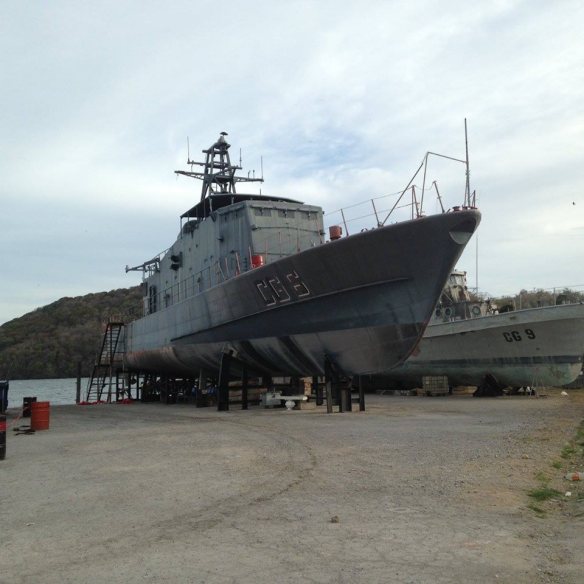
Photo by Sanjay Badri-Maharaj

These Vospers were followed on 15th June  1980 by two modified Spica class vessels – TTS Barracuda (CG-5) and TTS Cascadura (CG-6) – each 40.6m long and displacing 210 tons. After a failed attempt at local repair and refurbishment, these vessels were decommissioned after nearly 15 years of inactivity. CG-5 was scrapped while CG-6 remains at Chaguaramas Heliport completely derelict, bereft of sensors, engines, weapons and accommodation, yet the vessel remains ostensibly in commission.

On 27th August 1982, 4 Souter Wasp 17 metre class (TTS Plymouth CG27, TTS Caroni CG28, TTS Galeota CG29, TTS Moruga CG30) were commissioned. In addition, the Coast Guard was augmented in the mid-to-late 1980s with vessels from the disbanded Police Marine Branch – 1 Sword Class patrol craft (TTS Matelot CG 33) , and 2 Wasp 20 metre class (TTS Kairi CG31 & TTS Moriah CG 32). All of these vessels have now been decommissioned.

The years 1986 to 1995 saw the decommissioning of almost all the TTCG patrol assets and the de facto retirement of CG-5 and CG-6 for lack of serviceability and an inability of the TTCG to undertake routine maintenance due to severe funding shortfalls. This left the formation incapable of performing its assigned tasks on any sort of credible basis. This period, not surprisingly, saw a significant increase in narcotics and illegal weapons shipments being transhipped through Trinidadian waters.
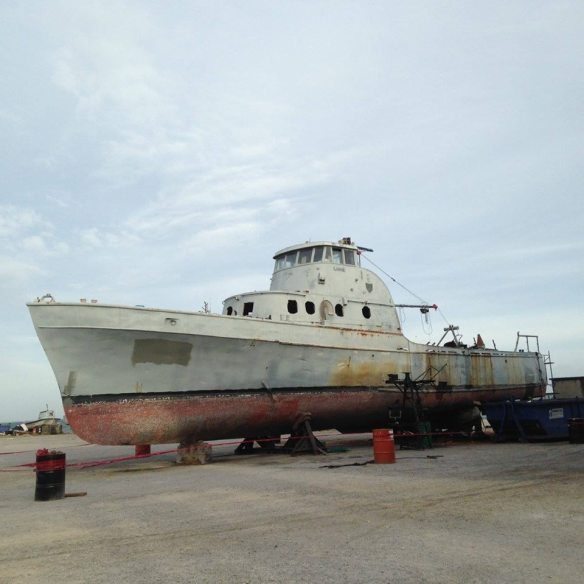
Photo by Sanjay Badri-Maharaj

After a number of years with almost no serviceable vessels, the period 1999-2001 saw the TTCG receive a boost with the acquisition of the ex-Royal Navy Island class OPV, HMS Orkney as the TTS Nelson (CG-20) and four 82ft Point-class cutters, each displacing some 66tons, from the United States (TTS Corozal Point CG7, TTS Crown Point CG8, TTS Galera Point CG9 and TTS Bacolet Point CG10). The Point class cutters were nominally on strength until 2009-10 when they were decommissioned, but in reality, they had been unseaworthy for some years prior. A half-hearted attempt was made to refit CG-7 but was abandoned. It is a depressing fact that these vessels were well over 20 years old when procured. The stark reality was that not a single new-build patrol vessel was acquired between 1980 and 2009.
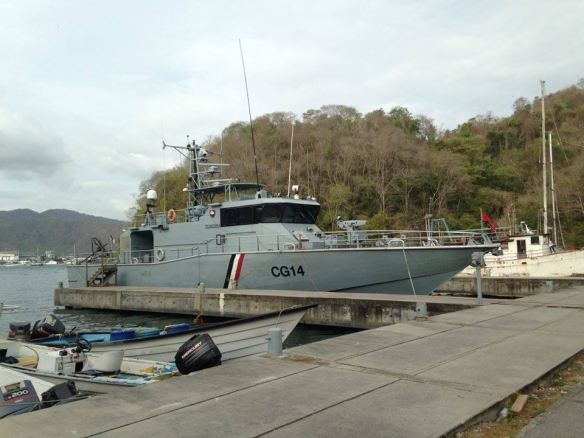
Photo by Sanjay Badri-Maharaj

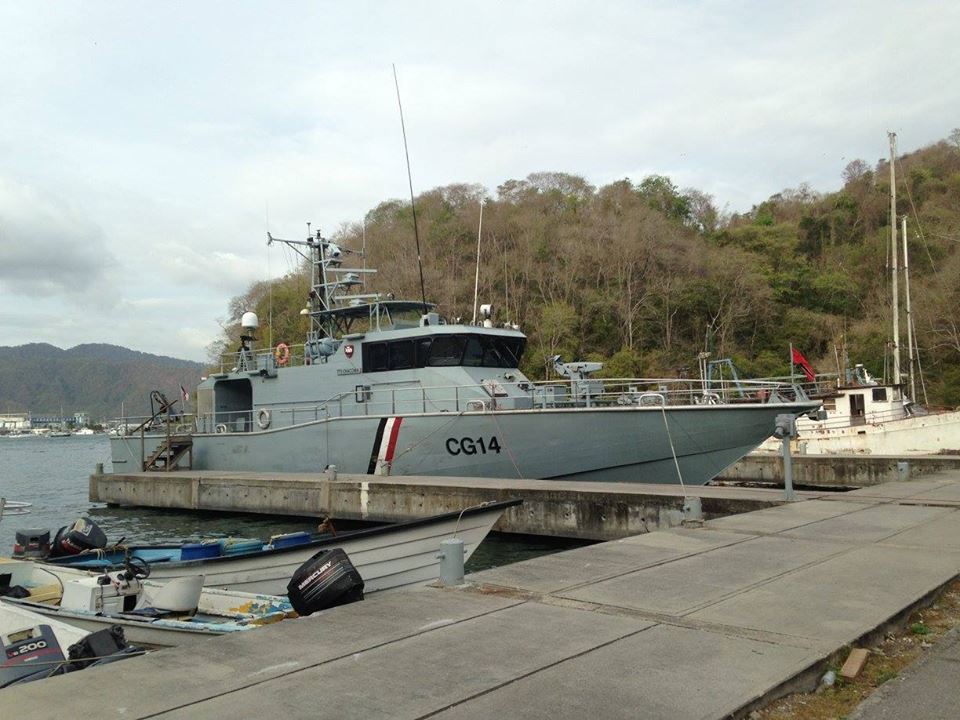
In 2003-2004, the then Government of Patrick Manning, began a phased expansion of the formation  which included the purchase of six new Austal PB30 Fast Patrol Craft (FPC) –CG11 TTS Scarlet Ibis, CG12 TTS Hibiscus, CG13 TTS Humming Bird, CG14 TTS Chaconia, CG 15 TTS Poui and CG16 TTS Teak – commissioned between 2009-2010 and two modified oilrig support vessels – each over 15 years old – armed and re-tasked as Coastal Patrol Vessels (CPVs) – CG-21 TTS Gaspar Grande and CG-22 TTS Chacachare – commissioned on 23rd April 2008. In addition, 4 Midnight Express Interceptors were delivered in 2005 and were extensively deployed in anti-narcotics operations.

The “crown jewels” of this expansion plan were three 90m long OPVs – to be named the Port of Spain, Scarborough and San Fernando – ordered from VT Shipbuilding (later BAE Systems Surface Ships). Easily the most advanced vessels in the Caribbean (after the demise of the Cuban navy), the OPVs were adequately armed with 25mm and 30mm guns and possessed the ability to stage medium-lift helicopters from their flight decks. However, an overly-ambitious integrated fire-control system and some unrealistic expectations from the TTCG in respect of the performance of the 30mm guns led to significant delays and problems during trials. In September 2010, the Government of then Prime Minister Kamla Persad-Bissessar, cancelled the contract in decision that in retrospect may have been ill-advised.

Of interest is the fact that the procurement of new vessels did not lead to a commensurate increase in the TTCG operational budget relative to the larger fleet. In addition, archaic bureaucratic procedures together with shortcomings in the TTCG engineering and maintenance branches combined to cripple efforts to restore serviceability to repairable vessels with contractors going unpaid for work done and vessels being laid-up for extended periods of time. Procurement and payment procedures and policy have also played a significant part handicapping the ability of the TTCG to meet its commitments to suppliers and contractors, largely because of a bureaucratic system that moves slowly and which fails to accord due priority to essential items necessary for the operations of the TTCG. It is a continuing area of concern that there has been no attempt to streamline urgent procurement or even payment of suppliers with basic necessities such as fuel running dangerously low on occasions. The then government attempted to circumvent these problems by entering into comprehensive logistics and support arrangements with VT and Austal. However, the former was stillborn through the cancellation of the OPVs and the latter never worked as planned, in part because of inherent deficiencies in the TTCG maintenance structure and in part because of unreformed bureaucratic processes that ensured that the TTCG was unable to meet its contractual obligations in respect of the Austal support contract.

Thus between 2001 and 2010, the TTCG, while still not improving its serviceability or operational efficacy, did formulate plans, which were accepted which led to the signing of contracts for the purchase of OPVs and FPCs. However, a change in government let to budgetary priorities shifting to the detriment of the TTCG. Despite an impressive strength on paper, the TTCG was, by 2013, in dire straits, leading to an operational audit of the TTCG surface assets which revealed the extremely poor state of repair of the surface fleet:

Type Quantity Age

(years)

Assigned Area of Operation Status
OPV

TTS Nelson


1


37

Offshore – EEZ and beyond  

Unserviceable

CPV 

Chacachacare

Gaspar Grande


2


19

17

Offshore  & Territorial Sea Unserviceable
Austal Built FPCs  

6


4


Territorial Sea &

Inshore

Serviceability is variable.

2 serviceable, 4 unserviceable.

Interceptors 17 2-4 Inshore &  Internal Waters 4 serviceable, 13 unserviceable.

Source: Author’s primary research

Acquiring New Vessels for the TTCG

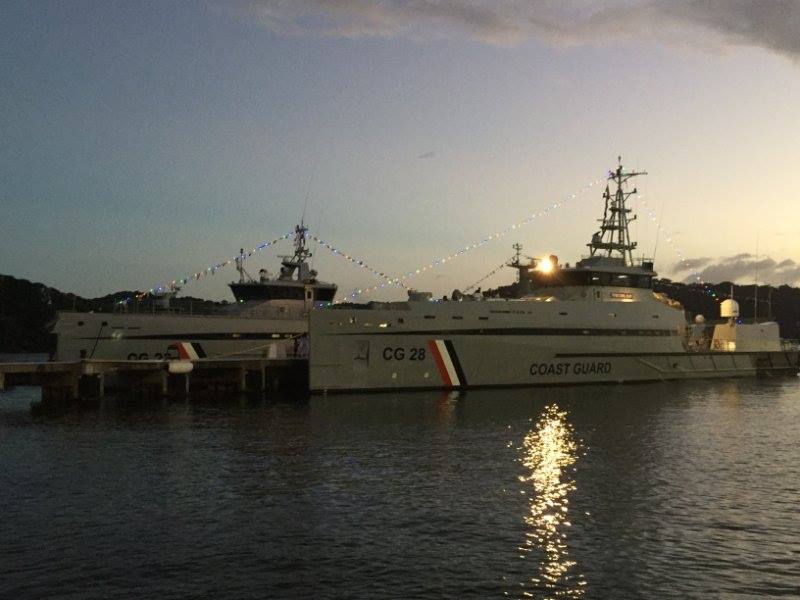
In January 2014, the Government appointed the Naval Assets Acquisition Implementation Team (NAAIT) and tasked them with procuring, inter alia, 7 new CPVs and 2 OPVs (now curiously termed Long-Range Patrol Vessels or LRPVs) within the very short period of two years. For budgetary reasons the figures were reduced to 4 CPVs and 1 LRPV. The new procurement attracted some international attention and shipyards invited the NAAIT to inspect the yards and the products available. Directed by the Government, the NAAIT visited the Hyundai Heavy Industries (HHI) shipyard in Ulsan, Republic of Korea, the China State Shipbuilding Company (CSSC) in Guangzhou, COTECMAR at Cartagena, Colombia and Damen Shipyards Ltd at Gorinchem, Holland. Damen, COTECMAR and HHI offered viable products meeting TTCG requirement but CSSCs products were viewed as not quite meeting TTCG specifications.

After deliberating and assessing the vessels and designs on offer, the NAAIT recommended that the 4 CPVs be acquired from Damen with two additional vessels of a similar design being acquired as “utility vessels” but so armed and equipped that they could augment the 4 dedicated CPVs in the patrol role. The vessels selected were the SPa 5009 CPV and the FCS 5009 utility vessel. The CPVs were fitted with a surveillance system which drew heavily on high-end civilian products. In addition they were fitted with a remotely controlled 20mm gun. The FCS 5009 was delivered in standard configuration but with accommodation increased for a larger crew, a manually operated 20mm gun (from TTCG stocks) and a slightly enhanced surveillance fit.

The bureaucratic procurement process, however, was slower than expected as the bureaucracy initially questioned the NAAIT’s authority, grudgingly acquiescing to the fact that it had Cabinet sanction. Furthermore, unforeseen lethargy among the bureaucrats tasked with enabling procurement, ignorance of systems and a failure to communicate in a timely fashion very nearly stymied the process. In addition, the NAAIT faced a deliberate attempt at sabotage when accusations were made by a highly-connected individual who was representing the interests of another shipyard. These accusations were found to be untrue but the procurement of the vessels was delayed. Eventually, the contract was signed enabling delivery of the vessels

The LRPV procurement was not so fortunate as the NAAIT recommendation for a formal Request for Proposals to be sent out to all the shipyards visited by the team was initially approved and then, to the surprise of the NAAIT, circumvented by the direct intervention of Prime Minister Persad-Bissessar who decided, against advice, to procure a ready-made, unarmed, LRPV from CSSC of China which compared badly with the cancelled OPVs.

Potential Lessons for Procurement

The NAAIT wound down at the end of February 2016 having completed much of its mandate. In the Trinidadian context, the NAAIT was a unique experiment. While its experience may not translate easily for other countries some lessons can be shared:

  1. Technical expertise must be an integral part of the procurement process and operate in conjunction with bureaucratic procedures. The bureaucracy must be willing to learn and understand requirements of military formations. They may not be technical experts but complete ignorance on the part of the bureaucrats involved will inevitably lead to frustrating delays. Bureaucratic lethargy is potentially lethal to any procurement process. It may be necessary to stipulate time frames for tasks and hold officials to account. This will inevitably meet with resistance from the affected parties.
  2. Bypassing the bureaucracy is not an effective option. A bureaucracy that does not feel part of the system can create additional delays by questioning the legality of the procurement being undertaken. Complete synergy of effort has to be sought.
  3. Political interference must be avoided where possible. The NAAIT experienced the effects of this where technical advice was overruled and a questionable purchase of the LRPV from CSSC China was initiated by the then Prime Minister.
  4. Above all, never let military formations decay to the extent where urgent procurement becomes necessary to restore even a veneer of capability. Rushed procurements have the potential to be as detrimental as delayed ones and run the risk of being questioned by successor governments.
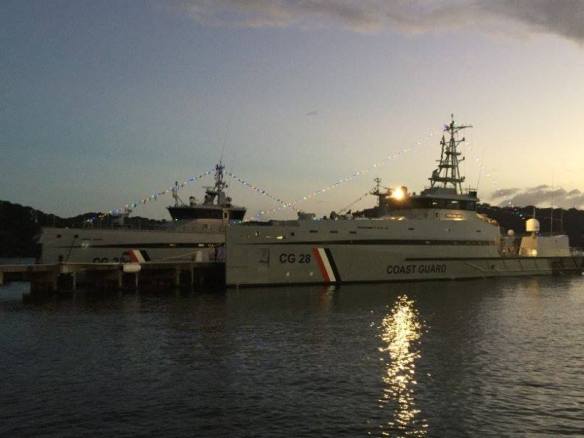
Photo from Damen Shipyards, Netherlands

Conclusion

One of the most intriguing points to note is that the TTCG followed a systematic and rational procurement process until 1980. After that, its recovery from decades of neglect has been slow, painful and littered with the false dawn of the ill-fated OPV contract. Nonetheless, the frantic efforts to rejuvenate the TTCG have finally produced results. It remains to be seen whether the new vessels will meet a better end.

From the LCS Mission Modules, What We Might Want, What We Might Need

The US Naval Institute News Service has provided access to the second “Annual Report to Congress for the Littoral Combat Ship (LCS) Mission Module Program.” Some of these systems should be of interest to the Coast Guard, either as regular equipment for peacetime law enforcement and counterterrorism missions, for temporary use, as in the case of a naval mining incident, or as wartime add-ons if the Coast Guard is mobilized for a major conflict.

Keep in mind, the procurement cost of these systems would presumably come out the Navy budget.

Mine Countermeasures Mission Package

The Mine Countermeasures (MCM) Mission Packages (MP) has already been addressed. 24 are planned including nine to be built for “Vessels of Opportunity.” These nine extra packages probably meet any peacetime augmentation requirement and provide a reserve for mobilization. Testing is expected to continue through FY 2022. Production is expected to continue well into the future as less than half the packages will have been delivered by FY2023.

ASW Mission Packages for NSCs and OPCs

An earlier post discussed the possibility of using mission modules and Navy reservist to augment large cutters. In a protracted conflict against a near peer naval power like Russia or China, our large patrol ships are most probably going to be needed to perform open ocean ASW escort duties.

Only ten ASW Mission Packages are planned. Initial Operational Capability (IOC) is expected in FY 2019, but testing will continue through 2020. The Multi-Function Array is already a fielded system. Deliveries are expected to begin in FY2021 at a rate of two systems per year. If that rate is continued, the ten planned systems will be complete in 2025.

At an estimated cost of less than $20M the ASW Mission Package is the least expensive of the three types of Mission Packages. Adding this system as a mobilization capability or perhaps even as a peacetime capability to 35 or more large cutters would provide a higher return on investment than just about any other Naval program.

It might even help us locate semi-submersibles.

Vertical launch Hellfire

As I have noted before, the Coast Guard has a potential need to be capable of countering terrorist efforts to use a wide spectrum of vessels to make an attack. These craft range between small, fast, highly maneuverable boats on one extreme, to large ocean going vessels at the other. Our ability to counter these threats must be widely available, quickly effective, and have both a probability of success approaching 100% and do so with minimal danger to innocents who may be in the vicinity. Guns do not meet these criteria.

Hellfire missile have the potential to meet these criteria, at least against the lower half of the threat spectrum, and, using more than one round, might have a degree of success even against the largest vessels.

Apparently the SSMM Longbow Hellfire testing is going well, with 20 out of 24 successful engagements, and there’s a software fix for the root cause of the 4 failures.

ATLANTIC OCEAN—A Longbow Hellfire Missile is fired from Littoral Combat Ship USS Detroit (LCS 7) on Feb. 28, 2017 as part of a structural test firing of the Surface to Surface Missile Module (SSMM). The test marked the first vertical missile launched from an LCS and the first launch of a missile from the SSMM from an LCS. (Photo by U.S. Navy)

A recent US Naval Institute News Service report quoted LCS Mission Modules Program Manager Capt. Ted Zobel “all of our mission packages…are finishing up development, proceeding into test, and then from test into production and ultimately deployment.”

“…surface-to-surface missile module (SSMM) will add a Longbow Hellfire missile to increase the lethality of the LCS. Testing begins this month on USS Milwaukee (LCS-5) and will move to USS Detroit (LCS-7) over the summer. Testing should wrap up by December, Zobel said, with Detroit planning to bring the SSMM with it on its maiden deployment about a year from now. Written testimony from the Navy at a March 6 House Armed Services Committee hearing states that IOC is planned for Fiscal Year 2019.”

The Surface to Surface Mission Module (SSMM) planned for the Littoral Combat Ship, seen above, can store and launch up to 24 missiles. 24 missiles would weigh about 2,500 pounds. As a very rough estimate, Its foot print appears to be about 9×12 feet (late note–a little photo analysis suggest the three mission module positions on each LCS are about 15-16′ square), probably not too large for an NSC, OPC, or icebreaker, but probably too large for the Webber class WPCs where I really think we really need the capability. They are after all, much more likely to be in the right place, at the right time. For them we probably need a smaller system.

In the video above, beginning at time 2m58s there is a model of a 12 meter unmanned surface vessel mounting a four tube Hellfire vertical launch system. Knowing that the Hellfire is only 7 inches in diameter and 64 inches long, it appears this installation would have a footprint of no more than 6×8 feet and probably would be no more than seven feet high. It seems likely we could find a place for one or two of these on each Webber class and at least one when we build the replacements for the 87 footers.

I have often seen missiles compared unfavorably to guns, based on the cost of the projectiles, but cost of providing a system like Hellfire pales in comparison to the cost of a medium caliber gun, its ammunition allowance, and the maintenance, training, and technicians required to keep it operational. Compared to the guns we have used in the past:

  • Maximum range of almost 9,000 yards is less than the maximum range of the 5″/38, 76mm, or 57mm, but it is very near the effective range of these medium caliber weapons. This range is likely more than enough to remain outside the effective range of improvised weapons installations that might be used in a terrorist attack.
  • Effective range is more than three times greater than that of the 25mm Mk38 mod2/3
  • Warhead appears to be more effective than even the 5″ rounds.
  • Every round will likely be a hit.
  • Those hits will come very quickly.
  • It may be possible to accurately target specific vulnerable areas on the target.
  • They require only minimal training and maintenance compared to medium caliber guns.
  • If the target is within range, its only real disadvantage is the limited number of rounds.

While I have never seen it claimed official, I have seen reports that Hellfire can be used against slower aircraft such as helicopters and UAVs.

 These small missiles could allow our patrol vessels to hit like much bigger vessels.

30 mm Mk46 Gun Mission Module (GMM)

Gun Mission Module by Northrop Grumman

The “Gun Mission Module” (GMM) could be one way to arm the icebreakers relatively quickly when needed, while allowing the option of removing the weapons before going to Antarctica if desired.

Production of these units is quickly running its course, and if we want to use these on the icebreakers, it may be desirable to have our needs added to the production schedule before the production is shut down. The last two are expected to be delivered in FY2020.

How important this is will depend on the Coast Guard’s intentions and the alternatives.

Setting up the installations in the same format as found on the LCSs means improvements or alternative systems developed to LCS systems could be easily incorporated in the icebreakers as well.

On the other hand, the included 30mm Mk46 gun weapon system is not limited to the LCSs. It is or will be mounted on the three Zumwalt DDG-1000 class destroyers, 13 San Antonio (LPD-17) class, and probably 13 LX(R)/LPD-17 Flight II class still to be built, about 58 mounts in addition to the 20 planned for the LCSs.

It doesn’t look like it would be too difficult to remove or re-install just the gun mount (seen below) if that would meet our needs. It would of course require a dedicated space, permanent installation of supporting equipment, and a way to seal the opening for the mount long term when the mount is removed.

Although it is not as effective as the Mk46 mount, because of the smaller 25 mm gun currently used, the Mk38 Mod2/3 is also an alternative, and has the advantage of already being in the use with the Coast Guard. It is even more widely used, “As of 2016, 307 MK 38 MOD 2 systems have been delivered. There are 50 MK 38 MOD 3s on contract. The total POR (program of record–Chuck) is for 517 systems.”

Still the 25mm gun is markedly inferior to the 30mm in that its effective range is considerably less and the individual projectiles are far less potent. The Mk46 mount also has many more rounds on the mount compared to the Mk38 mod2/3. Upgrading the Mk38s to mount 30mm guns would address much of the current inferiority.

The inferiority of the Mk38 would also be much less of a concern if the Icebreaker had an additional, more powerful anti-surface weapon system, like the Hellfire Surface to Surface Missile Module or Anti-Surface Cruise Missiles. These might be useful if it is ever necessary to provide Naval Surface Fire Support (NSFS) in the Arctic or Antarctic.

“The Pentagon is poised to send the LCS to thwart narcos”–DefenseNews

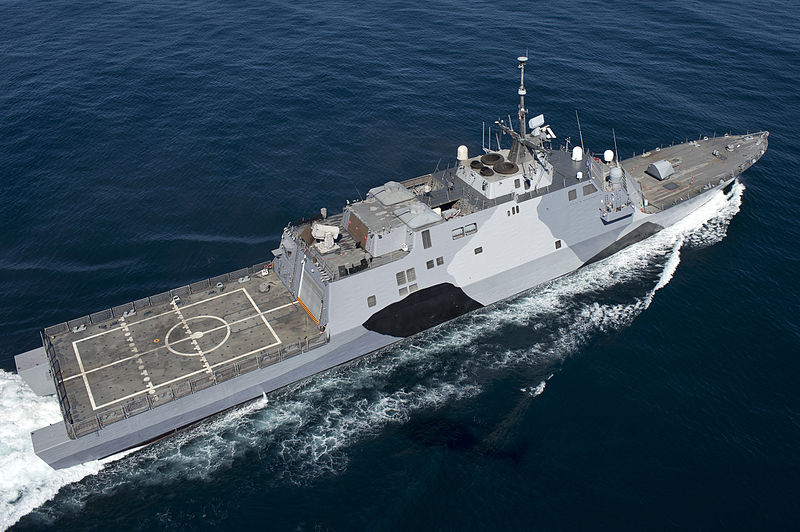
USS Freedom (LCS-1)

DefenseNews is reporting,

“The military is poised to decide whether it will use the littoral combat ship to stop illegal drug shipments from South and Central America to the United States.

“The move, amid pressure from lawmakers and the military command covering the Southern Hemisphere, would signal a new intensity in combating the importing of illegal drugs amid a tidal wave of opioid deaths in the U.S. It would also mean a program that has seen near-constant churn as the Navy has struggled to integrate the ship into the fleet may see more changes ― if it does have to gear up for a new mission.

There are some surprising remarks by a retired Navy Captain, reflecting what many of us believe.

“…Ultimately, if the Congress was serious about combating drugs in SOUTHCOM, he said, it should adequately fund the Coast Guard.

“What they oughta do is take a few billion from the Defense Department’s budget and give it to the Coast Guard,” Hoffman said.

“Operating Navy ships is expensive, and, at that cost, it may not be practical to send gray hulls,” he said, adding that the Coast Guard can do the job cheaper and better.

This may also reflects a desire among many in the Navy to avoid this mission.

As a side note, I would observe that the frequent assertion that the Navy is being run ragged bears some examination as to why. It does not seem to be because the ships are underway that much. The US Naval Institute News service provides a weekly “Fleet and Marine Tracker.” You can see the most recent here. Among other things it provides a number of ships in the fleet and number of ships underway. Generally the number underway is only a little over one quarter of the fleet total, and it almost never exceeds one third.

Note, I am not saying the crews are not overworked, I am just saying, it is not because they are underway too much of the time. As I recall my days afloat, we got a lot done while underway, away from the inport distractions.

Patrol Craft Drug Interdiction in the Eastern Pacific

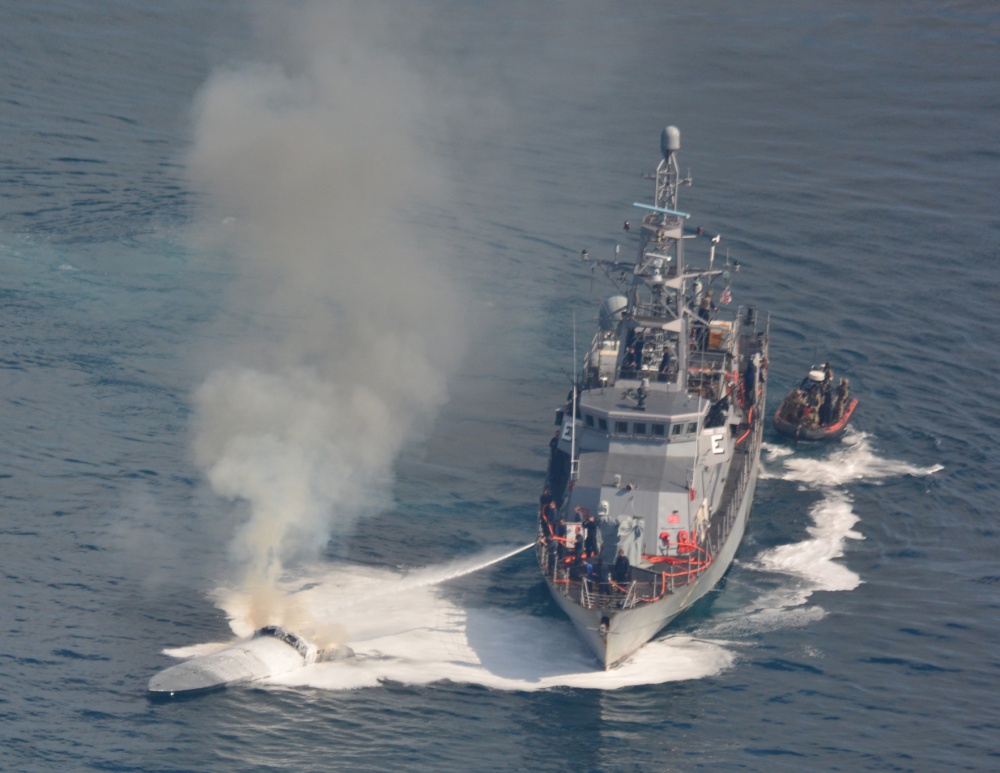
Cyclone-class patrol coastal USS Zephyr (PC 8) crew conducts ship-to-ship firefighting to extinguish a fire aboard a low-profile go-fast vessel suspected of smuggling in international waters of the Eastern Pacific Ocean April 7, 2018. Photo by Petty Officer 1st Class Mark Barney

CoastGuardNews reports a drug interdiction incident that occurred in the Eastern Pacific on April 7. I don’t usually talk about individual drug busts, but this was a bit unusual.

The vessel involved wasn’t a cutter, it was a Navy Cyclone class patrol craft, the USS Zephyr (PC-8). Using Navy vessels for drug interdiction has become rare, but that was not what I think makes this significant, it is that the vessel was essentially the same size as the Webber class WPCs (387 tons full load for the Zephyr, after it was lengthened, and 353 tons for the Webber class).

If the Navy can run a PC from Florida to the Eastern Pacific transit zones, so can the Coast Guard.

We don’t have enough large cutters to exploit all the intel we have on the target rich transit zone. Perhaps we could use Webber class.

We have 18 of the class in 7th District, with six each homeported in Miami, Key West, and San Juan.

This suggest that we could keep at least three Webber class in the Eastern Pacific transit zone by rotating one from each port


“Sailors, Coast Guardsman Remember Firebolt Shipmates”–Navy News Release

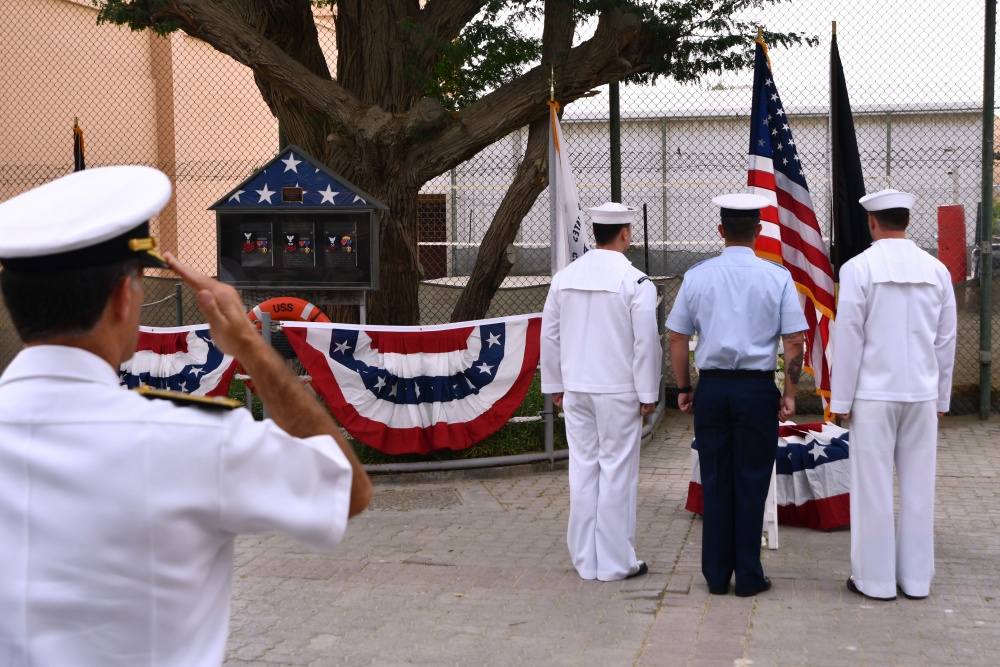
MANAMA, Bahrain (April 24, 2018) Vice Adm. Chris Aquilino, commander of U.S. Naval Forces Central Command, salutes as Sailors and Coast Guardsmen participate in a wreath laying ceremony to honor Coast Guardsman Damage Controlman 3rd Class Nathan B. Bruckenthal, Signalman 2nd Class Christopher E. Watts and Boatswain’s Mate 1st Class Michael J. Pernaselli who perished while conducting maritime security operations in the Northern Arabian Gulf on April 24, 2004. Firebolt is assigned to Commander, Task Force 55, in the U.S. 5th Fleet area of operations in support of maritime security operations to reassure allies and partners and preserve the freedom of navigation and the free flow of commerce in the region. (U.S. Navy photo by Mass Communication Specialist 1st Class Mark Meredith/Released)

The following is a Navy news release. I believe there is an error in that I believe there was a second Coast Guardsman on the RHIB when the incident occurred. 

Story Number: NNS180424-30Release Date: 4/24/2018 4:26:00 PM
By Mass Communication Specialist 1st Class Mark Meredith, U.S. Naval Forces Central Command Public Affairs

MANAMA, Bahrain (NNS) — Sailors and Coast Guardsmen gathered for a wreath laying memorial service and 5k run at Naval Support Activity Bahrain April 24 to remember and honor their fallen shipmates who made the ultimate sacrifice 14 years ago.

The service honored Coast Guardsman Damage Controlman 3rd Class Nathan B. Bruckenthal, Navy Signalman 2nd Class Christopher E. Watts and Navy Boatswain’s Mate 1st Class Michael J. Pernaselli who perished while conducting maritime security operations in the Northern Arabian Gulf April 24, 2004.

Coast Guard Patrol Forces Southwest Asia (PATFORSWA) Commodore, Capt. Clinton Carlson was the guest speaker and spoke to the service and dedication of the men who lost their lives.

“At the time, I was a young lieutenant, assigned to Port Security unit 311 in San Pedro, California,” he said. “For the 311 Sailors, the attack was personal. This was family, and for me it was one of those days that I will always remember where I was because my Coast Guard, and the nature of my service had changed forever.”

On April 24, 2004, Firebolt was in the vicinity of the Khawr Al Amaya Oil Terminal in Iraq, with the mission of defending the terminal against attack. A suspicious dhow was spotted nearby, and Firebolt deployed a rigid-hull inflatable boat (RHIB) manned by six Sailors and a U.S. Coast Guardsman to investigate the vessel. The dhow, realizing the RHIB was in pursuit, sped toward the oil terminal. The RHIB maneuvered into position to intercept the vessel, but the dhow exploded in an apparent suicide attack. Minutes later, two other dhows exploded prematurely in what was an attempted coordinated attack on Iraq’s offshore oil infrastructure. Though the crew of the RHIB had successfully protected the oil platform, the wake created by the explosions capsized the small boat, claiming the lives Pernaselli, Watts and Bruckenthal, who was the first Coast Guardsman to die in action since the Vietnam War.

The commanding officer of Firebolt, Lt. Cmdr. Roger Young, also gave remarks, stressing the sacrifice the service members made for their shipmates.

“I am pleased to report that the memory of our shipmates has not been forgotten and their sacrifice likely spared the lives of countless other Sailors onboard every warship that sailed the Arabian Gulf,” said Young. “Their sacrifice serves as a reminder that the threat we face is real and that no mission is routine.”

The memorial honoring the legacies of these brave service members stands across the courtyard from the PATSFORSWA headquarters, and features the service members’ rating badges, a folded flag and a life ring from Firebolt.

This year’s memorial service holds particular significance for the Coast Guard, as they took delivery of the USCGC Nathan Bruckenthal, a 154-foot patrol craft, in March 2018.

“Their devotion to duty and selfless sacrifice continue to serve as shining examples to all of us who strive to make the world more secure,” said Capt. Carlson. “They remind us that no mission is routine and that true security has been hard-earned through challenging naval operations among U.S. and allied forces through the years.”

U.S. 5th Fleet area of operations encompasses about 2.5 million square miles of water area and includes the Arabian Gulf, Gulf of Oman, Red Sea and parts of the Indian Ocean. The expanse comprises 20 countries and includes three critical choke points at the Strait of Hormuz, the Suez Canal and the Strait of Bab al Mandeb at the southern tip of Yemen.

PATFORSWA’s mission is to command, train, equip and provide mission ready Coast Guard forces to conduct maritime security operations in U.S. Central Command’s (CENTCOM) area of responsibility.

Thanks to Bryant’s Maritime Blog for bringing this to my attention. 

Addendum

Thanks to Bill Wells we can add an addendum. There was a second coastguardsman on the RHIB when the explosion occurred, BM1 Joseph Ruggiero. His story is  here. There is a video here.

“Restructure the Coast Guard Reserves into Support Roles”–USNI

The US Naval Institute Blog has a post recommending a restructuring of the Coast Guard Reserve, written by LCdr. Daniel L. Tavenier, USCG. His opening paragraph,

The time has come to examine and consider restructuring the role of Coast Guard Reserves within the service. Currently, there is not enough time for reservists to adequately serve operational roles unless they were active duty for at least two years following accession. Reservists have brought much to the table as far as their civilian skill sets and experience go, but we cannot pretend they are able to achieve proficiency in certifications to the level of an active duty member. There has been a role for reservists to operate, but history has proven those instances are few and far between. As budgets shrink, the entire reserve program needs to be significantly modernized. This includes expanding the maritime security and safety teams (MSSTs) role to cover overseas missions and decommissioning port security units (PSU) that are staffed with 130 reserves and only six active duty members. PSU staffing models are not set up to meet the high-level, tactical certifications required for outside continental U.S. (OCONUS) operations. MSSTs have undoubtedly filled overseas duties at much less expenditure.”

Along the way he also recommends that we “Ditch the MAW” (Mounted Automatic Weapon), i.e., remove the M-240 machinegun from the small boats that do Ports, Waterways, and Coastal Security (PWCS).

This is way outside my wheelhouse, so I am going to leave evaluation and comments to the readers. If you have strong feelings about this, you might want to comment on the original USNI blog post. Duplicate comments are of course also welcomed here.

The Pentagon Is Making a Ray Gun to Stop Truck Attacks–DefenseOne

Wonder if this might work on boats as well?

DefenseOne reports

The Defense Department’s Joint Non-Lethal Weapons Program, or JNLWD, is pushing ahead with a new direct energy weapon that uses high-powered microwaves to stop cars in their tracks without damaging the vehicle, its driver, or anyone else.

The jammer works by targeting the car’s engine control unit causing it to reboot over and over, stalling the engine. Like an invisible hand, the microwaves hold the car in place. “Anything that has electronics on it, these high-powered microwaves will affect,” David Law, who leads JNLWD’s technology division, said in March. “As long as the [radio] is on, it holds the vehicle stopped.”

I also have to wonder if it would work on old style ignition systems without computers and sophisticated electronics.

Saudis Buying 39 High Speed (45 knot) 106 foot Patrol Boats–WPB Replacement?

NavyRecognition is reporting award of a contract for 39 high speed 32.2 meter vessels that will probably be going to the Saudi Coast Guard.

In view of the need to replace the 87 foot Marine Protector class in the not too distant future, (The oldest, USCGC Barracuda (WPB-87301) was commissioned 20 years ago today, 24 April 1998.) this class might be worth a look. It is an example of the possible.

This is a CMN (French) design. CMN his a long history of building high speed vessels including the Israeli SA’AR 1, 2, and 3 missile boats and the widely used La Combattante series of fast attack craft.

Characteristics are reported as follows:

Length Overall : 32.20 m (105.6 ft)
Beam Overall : 7.00 m (23 ft)
Maximum draught : 1.40 m (4.6 ft)
Maximum speed : 43 Knots
Range at 12 Knots : 800 NM
Range at 33 Knots : 580 NM
Crew : 12
Fuel : 21 m3
Fresh water : 1 m3
Hull & Superstructure : Aluminium
Classification : Bureau Veritas

4.8 m outboard RHIB mounted on stern ramp

Three diesel engines

Three Waterjets : Two steering & one booster

Two main generators

Yes, it is larger than the Marine Protector class 87 foot WPBs by 19 feet, but the Webber class are 44 feet longer than the 110s they replaced, so the gap between new generation vessels would be greater than the previous generation 48 feet vice 23 feet.

Range, endurance, and crew size are similar to that of the Marine Protector class.

If you have been reading this blog for a while, you know I think the Webber class WPCs are, and are being used as, more small cruising cutter than as a “Fast Response Cutter” sitting in port waiting for a SAR call. These could be the real “fast response cutter,” and in many cases, they could beat a helicopter to the scene.