Best wishes to all and to your families.
Thanks for listening to my rants.
Odd that the blog has given me friends I have never met.
Be safe and be happy.

Best wishes to all and to your families.
Thanks for listening to my rants.
Odd that the blog has given me friends I have never met.
Be safe and be happy.
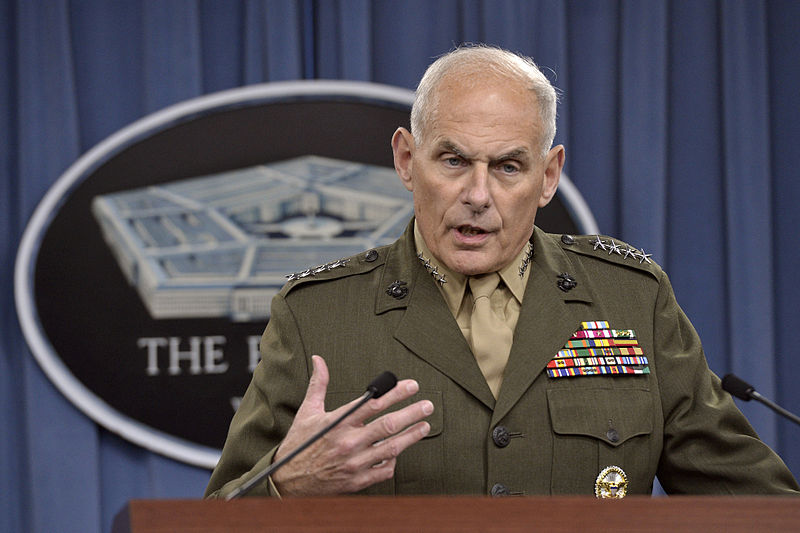
Marine Corps Gen. John F. Kelly, commander of U.S. Southern Command, discusses the latest developments in his command’s efforts to stem the flow of drugs from South and Central America while briefing reporters at the Pentagon, March 13, 2014.
DOD photo by Glenn Fawcett
BreakingDefense has a post on Trump’s pick to head the Department of Homeland Security. If you don’t already know about retired Marine General John Kelly and his tour as SOUTHCOM, its worth the read.
It leads me to believe, the Coast Guard will not be cutting its drug interdiction mission in the Eastern Pacific any time soon.
An earlier post pointed to his history of support for the Coast Guard.

USCGC Polar Sea
The following is copied directly from the CG-9 web site.
“The Coast Guard issued a request for quote (RFQ) on Dec. 22 for industry studies to identify solutions for the heavy polar icebreaker that minimize cost, schedule, production and technology risk. The request can be found here.
“The Coast Guard expects to award multiple industry study contracts early next year. This will be followed by a request for proposal for detail design and construction of heavy polar icebreakers in 2018.
“The deadline to submit responses to the industry studies RFQ is Jan. 20, 2017.
“This request is part of a larger industry engagement strategy supporting the Coast Guard’s effort to expedite the recapitalization of the heavy polar icebreaker fleet. In addition to the industry studies request, the Coast Guard has sponsored industry day events to promote communication on mission and design requirements and solicited input from industry on acquisition approach and schedule.
The new Coast Guard Outlook magazine is available on-line. Click on the turned down corner in the upper right to page through the magazine.
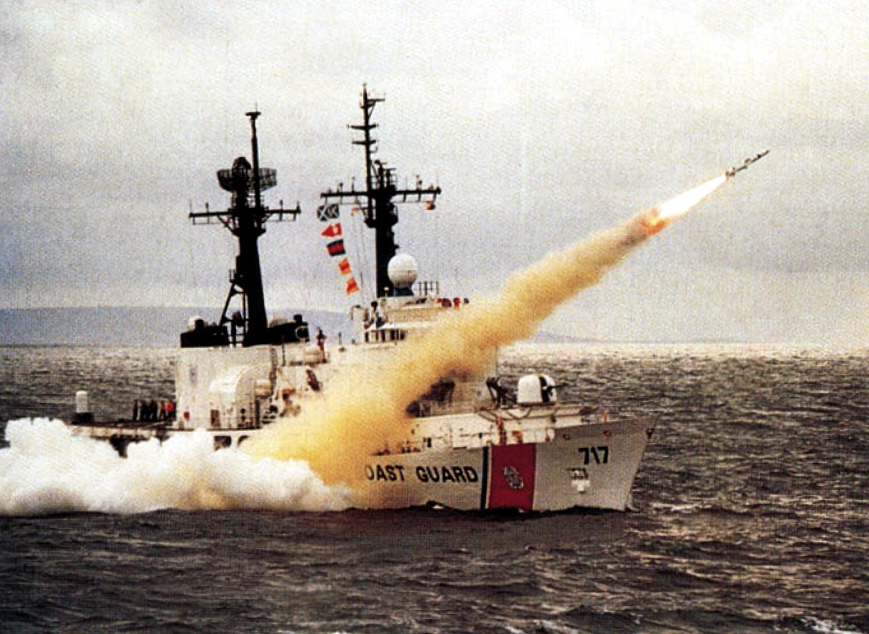
The following is information I recieved concerning registration for the Surface Navy Association (SNA) Symposium. Of course the National Cuttermen Chapter is now part of SNA. In view of the topic I have published a few posts that are on the topic.
Perhaps some of you can help make the case.
29th Annual National Symposium
10-12 January 2017
Hyatt Regency Crystal City, Arlington, Virginia
Distributed Lethality: Enabling Sea Control
Online, Advance Registration is Now Open under the National Symposium Tab on our Home Page at
https://www.navysna.org
There are multiple registration options available and we encourage everyone to take advantage of our online, advance registration. This link will be open until Wednesday, 4 January 2017 at 12 Noon EST.
Complete pricing information can be found at: https://www.navysna.org/2017Symp/Prices17.htm
Please note the Tier levels and the deadlines for each (shown below). The day after each of the deadlines the prices do increase to the next Tier:
For general information about the event and to view the latest schedule of events please visit: https://www.navysna.org/2017Symp/General17.htm
Below you will find a verbatim press release. The US and Canadian Coast Guards are mentioned prominantly, particularly in regard to the formation of Low impact shipping corridors. Certainly the Coast Guard will enforce the fisheries restrictions as well.
THE WHITE HOUSE
Office of the Press Secretary
FOR IMMEDIATE RELEASE
December 20, 2016
In March, President Obama and Prime Minister Trudeau announced a new partnership to embrace opportunities and confront challenges in the changing Arctic, with Indigenous and Northern partnerships, and responsible, science-based leadership. Over the past year, both countries have engaged a range of partners and stakeholders, including Indigenous peoples and Northern communities, state, provincial and territorial governments, nongovernmental organizations and businesses. Those consulted have expressed a strong desire for real and long-term opportunities to build strong families, communities, and robust economies. Today, President Obama and Prime Minister Trudeau are proud to launch actions ensuring a strong, sustainable and viable Arctic economy and ecosystem, with low-impact shipping, science based management of marine resources, and free from the future risks of offshore oil and gas activity. Together, these actions set the stage for deeper partnerships with other Arctic nations, including through the Arctic Council.
Science-based approach to oil and gas:
In March, the United States and Canada committed that commercial activities will occur only if the highest safety and environmental standards are met, and if they are consistent with national and global climate and environmental goals. Today – due to the important, irreplaceable values of its Arctic waters for Indigenous, Alaska Native and local communities’ subsistence and cultures, wildlife and wildlife habitat, and scientific research; the vulnerability of these ecosystems to an oil spill; and the unique logistical, operational, safety, and scientific challenges and risks of oil extraction and spill response in Arctic waters – the United States is designating the vast majority of U.S. waters in the Chukchi and Beaufort Seas as indefinitely off limits to offshore oil and gas leasing, and Canada will designate all Arctic Canadian waters as indefinitely off limits to future offshore Arctic oil and gas licensing, to be reviewed every five years through a climate and marine science-based life-cycle assessment.[i]
Supporting strong Arctic communities:
In March, both countries committed to defining new approaches and exchanging best practices to strengthen the resilience of Arctic communities and continuing to support the well-being of Arctic residents, in particular respecting the rights and territory of Indigenous peoples.
Recently, in direct response to requests from Alaska Native communities, President Obama created the Northern Bering Sea Climate Resilience Area protecting the cultural and subsistence resources of over 80 tribes as well as one of the largest seasonal migrations of marine mammals in the world of bowhead and beluga whales, walrus, ice seals, and sea birds. The United States also launched an interagency Economic Development Assessment Team in the Nome region of Alaska to identify future investment opportunities, with other regions to follow. In addition, the Arctic Funders Collaborative (AFC), a group of 11 U.S., Canadian, and international philanthropic foundations, announced the coordination and mobilization of an estimated $27 million in resources for programs across the Arctic over the next three years.
Today, for its part, Canada is committing to co-develop a new Arctic Policy Framework, with Northerners, Territorial and Provincial governments, and First Nations, Inuit, and Métis People that will replace Canada’s Northern Strategy. The Framework will include priority areas identified by the Minister of Indigenous and Northern Affairs’ Special Representative, such as education, infrastructure, and economic development. The Framework will include an Inuit-specific component, created in partnership with Inuit, as Inuit Nunangat comprises over a third of Canada’s land mass and over half of Canada’s coast line, and as Inuit modern treaties govern this jurisdictional space. In parallel, Canada is reducing the reliance of Northern communities on diesel, by deploying energy efficiency and renewable power. Canada will also, with Indigenous and Northern partners, explore how to support and protect the future of the Arctic Ocean’s “last ice area” where summer ice remains each year.
Low impact shipping corridors:
In March, the United States and Canada committed to working together to establish consistent policies for ships operating in the region. Today, both countries are launching the first processes ever to identify sustainable shipping lanes throughout their connected Arctic waters, in collaboration with Northern and Indigenous partners. The U.S. Coast Guard is launching a Port Access Route Study (PARS) in the Beaufort and Chukchi Seas.[ii] Results from this analysis may be used to establish vessel routing measures including traffic separation schemes, recommended routes, Areas To Be Avoided, or other instruments such as fairways where no structures may be erected. The Canadian Coast Guard and Transport Canada is implementing Northern Marine Transportation Corridors, determining what infrastructure and navigational and emergency response services are needed. Canada is also launching a new program to support training curriculum for Northerners, particularly Indigenous peoples, to join the marine field, as well as programming to support marine infrastructure and safety equipment for communities.
In addition, the U.S. Coast Guard, in consultation with industry, Indigenous communities, and the State of Alaska, has begun a strategy to phase down the use of Heavy Fuel Oil (HFO) in the Arctic. The Canadian Coast Guard is conducting similar outreach and consultations to develop proposals to phase down the use of HFO in 2017. The United States and Canada will each, or jointly, propose a plan for consideration at the International Maritime Organization’s spring 2017 meeting.
Science-based management of Arctic fisheries:
In March, the United States and Canada called for a binding international agreement to prevent the opening of unregulated fisheries in the Central Arctic Ocean and to build on a precautionary, science-based approach to commercial fishing that both countries have put in place in their Arctic waters. Today, the United States commits to supporting and strengthening existing commercial fishing closures in the Beaufort and Chukchi Seas, and to conducting scientific research to improve our understanding of the Arctic. Canada commits to working with Northern and Indigenous communities to build world-leading and abundant Arctic fisheries – based on science – that firstly benefit Northern communities. Together, the United States’ and Canada’s actions will create the largest contiguous area of well-regulated fisheries in the world.
Both countries reaffirm their commitment to a legally binding agreement to prevent unregulated commercial fisheries in the Arctic High Seas until an internationally recognized Regional Fishery Management Organization is in place to provide effective management. Both countries are working towards such an agreement in the coming months.
(Below are apparently footnotes–Chuck)
[i] Taking into account the respective obligations of the United States and Canada under international law to protect and preserve the marine environment, these steps also support the goals of various international frameworks and commitments concerning pollution, including those reflected in the 1990 International Convention on Oil Pollution Preparedness, Response, and Cooperation, the 2013 Agreement on Cooperation on Marine Oil Pollution Preparedness and Response in the Arctic, and the U.S.-Canada Joint Marine Pollution Contingency Plan. Furthermore, with respect to areas of the Beaufort Sea where the U.S.-Canada maritime boundary has not yet been agreed, these practical arrangements are without prejudice to either side’s position and demonstrate self-restraint, taking into account the principle of making every effort not to jeopardize or hamper reaching a final maritime boundary agreement.
[ii] In conducting this study, and consistent with existing authorities, the Coast Guard will consider traditional knowledge from local communities, the effects of shipping and vessel pollution on the marine environment, marine mammal migratory pathways and other biologically important areas, subsistence whaling, hunting, and fishing, and the needs of maritime safety and commerce.
This came to my attention through the Bryant’s Maritime Consulting Blog.
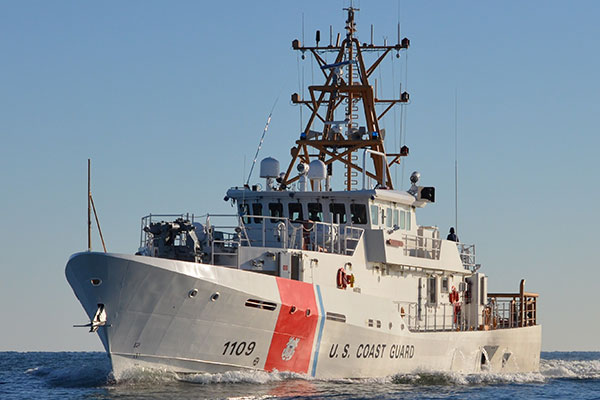
USCGC Kathleen Moore (WPC-1109)
A question, what is the real endurance of the Webber Class WPCs? The figure I see quoted is five days. This was the contract minimum. This is the same as listed for the 87 foot WPBs. Is this correct? This becomes important when the vessel has to make a long transit to and from its patrol area, and if we are understating the endurance, we are selling the class short.
The Webber class vessels are 353 tons full load. Similar sized ships seem to have greater endurance. The Navy’s 387 ton full load Cyclone class PCs have a nominal ten day endurance. The 300 ton Australian Armidale class patrol vessels claim a normal endurance of 21 days and 42 days maximum.
The Webber class’s endurance is not constrained to five days by fuel. The 87 ft WPBs have a nominal endurance of five days but a range of only 900 miles. The Webber class have a range of 2950 nautical miles. Obviously you don’t want to run the ship down to zero fuel, but at ten knots, it would take 295 hours or over 12 days to go 2950 miles. Even at 14 knots, it would take almost nine days to go 2950 miles. Additionally, it is the nature of Coast Guard missions that cutters frequently loiter as low speed which potentially adds patrol time.
A recent news release caught my eye. It reported the results of a 19 day patrol by USCGC Kathleen Moore (WPC-1109). She almost certainly refueled at least once, but did she replenish three times?
We have had these little ships long enough that we should have a revised opinion of their endurance based on experience. Any feedback?
Defense & Aerospace Report Editor Vago Muradian interviews the Commandant, Adm. Paul Zukunft, at the 2016 Reagan National Defense Forum.
The Commandant hit many of themes we have heard him discuss before, but there was also mention of beginning to replace the inland Aids to Navigation fleet. We were supposed to have had a joint program with the Corp of Engineers to develop a common design, but I haven’t heard anything about that for several years now. They are certainly due for replacement. It almost sounds like they just realized they needed to do something about this.
Where is that 30 year shipbuilding plan?
The Coast Guard might learn something from the way the Navy plows the ground ahead of their budget requests. The Navy creates a “Force Structure Assessment” and from this, they derive a 30 year ship building plan. the Coast Guard has neither.
The nearest thing the Coast Guard has had to a “Force Structure Assessment” (FSA) is the now seven year old, one time, Offshore and Aviation Fleet Mix Study.
Rather than a 30 year shipbuilding plan, the Coast Guard has only the now 10 year old, “program of record” that came out of the Deepwater program updated after 9/11 and a five year budget projection which is not statement of future requirements, rather it is a statement of what the administration thinks they will ask for. In short there is no comprehensive spending plan.
The Navy has announced their 2016 Force Structure Assessment only two year after the previous FSA. It adds 47 ships to the 308 that had been included in the 2014 FSA.
The new total adds 16 large surface combatants (cruisers or destroyers), 18 attack submarines and an additional carrier over the 2014 plan. There was no increase in the number of Small Surface Combattants (LCS and frigates), but they did maintain the previous requirement at 52 despite SecDef’s instruction to limit them to 40. Perhaps we will see some of them in the East Pacific transit zone.
Also of potential importance to the Coast Guard is that they want six Expeditionary Support Base (formerly called the Afloat Forward Staging Base). Assuming they will put one in SOUTHCOM’s AOR, it might be used as a mothership. for forward deployed Webber class WPCs.
The 355 ship fleet is not an all inclusive wish list.
According to the summary, the service determined the 355 total was the “minimum force structure to comply with [Pentagon] strategic guidance” and was not “the “desired” force size the Navy would pursue if resources were not a constraint, read the summary.
“Rather, this is the level that balances an acceptable level of warfighting risk to our equipment and personnel against available resources and achieves a force size that can reasonably achieve success,” according to the summary, which notes it would take a 653-ship force to meet all global requirements with minimal risk.
This is has parallels to the results of the Fleet Mix study, in that the optimum Coast Guard fleet is about twice the size of the program of record.
The Coast Guard really needs to do something similar. We should revisit the Offshore and Aviation Fleet Mix Study at least every five years and we need a 30 year ship building plan. Additionally I believe we should parallel the Navy’s documents to the extent of using the same titles with only a “Coast Guard” modifier. Congress is familiar with the Navy’s products and it would ease acceptance and interpretation of the Coast Guard’s products.
Allow me to repeat the purported advantages of the Navy’s system from an earlier post.
- “identifying and evaluating cost growth and schedule delays in the execution of shipbuilding programs;
- “understanding the relationship between annual procurement rates and unit procurement cost;
- “evaluating whether programs are achieving satisfactory production learning curves over time;
- “evaluating whether proposed sequences of annual procurement quantities for programs would be efficient to execute from an industrial standpoint;
- “evaluating stability in Navy shipbuilding planning by tracking year-to-year changes in the five-year shipbuilding plan;
- “identifying potential financial and industrial-base linkages between shipbuilding programs that are being funded in overlapping years;
- “identifying and evaluating Navy assumptions concerning service lives and retirement dates for existing ships;
- “evaluating whether ship procurement needs are being pushed into the future, potentially creating an expensive ship procurement “bow wave” in coming years; and
- “understanding when the Navy will achieve its ship force level goals, and whether the Navy will experience ship inventory shortfalls relative to those goals that could affect the Navy’s ability to perform its missions in coming years.”
We should also dovetail our plan with that of the Navy to remind the Congress we are part of the National Fleet. We need to show how we fit in the National Defense Organization because we are a military service at all times.
NavalDrones reports on the latest demonstration of Office of Naval Research (ONR)’s platform-agnostic system CARACaS (Control Architecture for Robotic Agent Command and Sensing).
Thanks to Mike R. for bringing thi to my attention.
 Chuck Hill's CG Blog