A Trend: the Nexus of Missile Boats, Corvettes, and Patrol Vessels

There seems to be a trend in anti-ship cruise missile (ASCM) armed vessels. This may not look like a topic of interest to the Coast Guard, but it seems the former bright line between vessels designed as missile boats and those designed as patrol vessels may be disappearing. In fact, missile boats, as a class, seem to be disappearing as ASCM equipped vessels seem to be evolving into much larger corvettes which look a lot like offshore patrol vessels.
How it began:
It all started in 1956, when the Soviets replaced the torpedo tubes on their project 183 class torpedo boats (NATO P-6) with a new missile, the (NATO SS-N-2 Styx), and created an entirely new type of combatant that NATO termed the  Komar. (66.5 tons, 83 foot long)

Komar Class Missile Boat, US Navy photo

Suddenly these small vessels could damage or destroy a ship of any size and outrange battleships.

They drew first blood 21 October 1967, when three  Styx missiles fired from Egyptian Komar class missile boats sank the Israeli destroyer Eilat (former HMS Zealous, 1,710 tons).

The Indian Navy again proved the effectiveness of the Styx in 1971, attacking Pakistani shipping and shore facilities, using larger Osa class missile boats.

By 1973 it was the Israeli’s who proved most capable in this new form of warfare, employing helicopters for deception and electronic countermeasures to seduce the Styx which outranged their own ASCM.

The Market: 

Did a bit of a “market survey” comparing the small missile armed combatants of ten nations, built or building, as reported in my 1987 “Combat Fleets of the World” with their current fleet, built or building, mostly from Wikipedia. Checked some of the info against my current edition of “Combat Fleets” but it is already becoming out dated.
1987 to 2017 is a 30 year spread, but 1987 was 20 years after the sinking of the Eilat, and more than thirty years after the first Komars were commissioned. We have had 60 years for the type to evolve and 1987 is roughly the mid-point of that evolution.
It should be recognized that since the collapse of the Soviet Union there has been significant reduction of naval forces for many of these navies, so smaller fleets should not be a surprise.
Notation: Initial in-service dates for the first of class are in parenthesis (In the case of a class that is used by more than one nation I will use the first in-service date. ). In some cases I have included inclusive commissioning dates for the whole class. I have tried to use full load displacement only. There was sometimes conflicting information. I chose what I thought was most credible.
China
1987: 120 Osa 235 tons, 70 Komar 79 tons , plus over 200 torpedo boats

Osa-I class, US Navy photo

Now: 30 of an expected 40 Type 056 corvettes completed (2013) 1500 tons, 83 Type 022 fast attack craft (2004) 220 tons, 26 Type 037 class (1991) 478-520 tons.

Houbei Type 022 class fast attack craft

Type 056 corvette, credit 樱井千一

Denmark
1987: Building StanFlex 300s (1989-1996) 450 tons, 10 Willemoses class (1976) 265 tons. They also had six Soloven class torpedo boats of 114 tons

Danish navy SF300 vessel Støren (P555), photo by Kim Storm Martin

Now: No ASCM equipped combatants of less than 6,600 tons
Finland
1987: Four Helsinki class (1981) 280 tons, four Osa class 235 tons
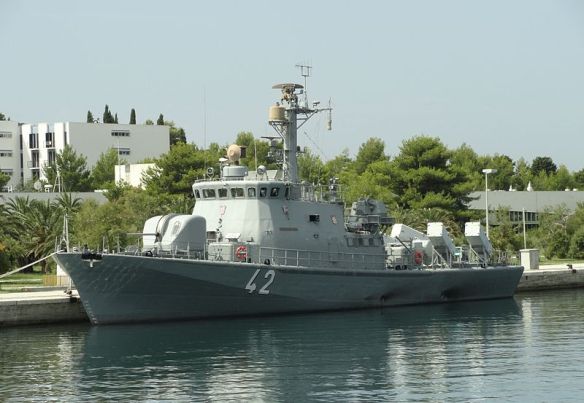
Helsinki Class now Croatian vessel RTOP-42 Dubrovnik. Photo by Saxum
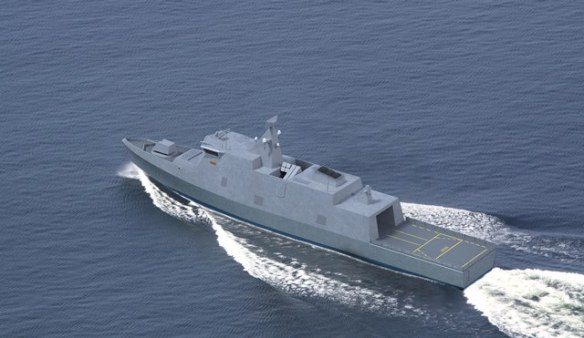
Now: Four ice strengthened corvettes planned to replace Rauma class and others, four Hamina class (1998) 268 tons, four Rauma class (1990) 248 tons. Discussion of new Finnish corvettes here: https://chuckhillscgblog.net/2015/12/23/finland-seeks-unique-warship/

Conceptual illustration, Finland’s squadron 2020 corvette

Germany
1987: 20 type 143 (1976) 390 tons, 20Type 148 (1972) 264 tons
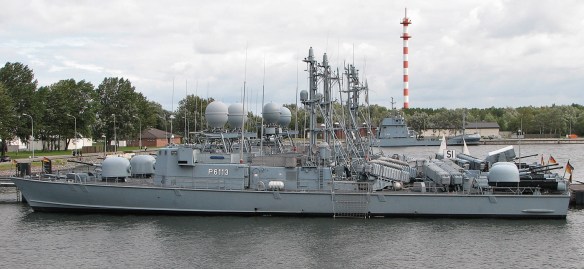
Schnellboote_Albatros-Klasse

Type 143 Albatros-class boats, S63 Geier in the foreground. The third one is a Gepard-class boat. Photo by Darkone

Now: Smallest ASCM armed combatants are 1840 ton K130 class (2008) (Five built and five more planned)
Corvette_Braunschweig_F260

The German navy corvette Braunschweig ( F 260), lead ship of the corvette class K 130. Photo by Torsten Bätge

Greece
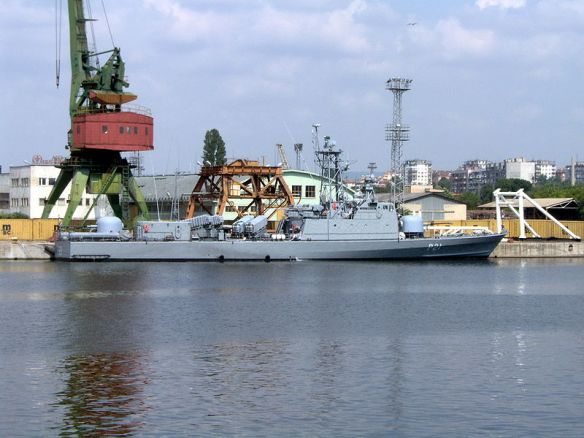
1987: 6 La Combattante IIIB class (1980) 429 tons, 4 La Combattante III class (1977) 425 tons, 4 Combattante II (1973) 265 tons,
LaCombatIII

Antipliarchos Blessas (P-21), LaCombattante III class, photo by Jorge Guerra Moreno

Now 7 Roussen class (2005) 668 tons, 5 La Combattante IIIB class (1980) 429 tons, 4 La Combattante III class (1977) 425 tons, 3 La Combattante IIA class (1973) 265 tons, plus eight 25 knot gunboats (1989) 515-550 tons that could mount four Harpoon (not currently mounted).
P67_Roussen

HS Roussen, P-67 in Piraeus 2009. Photo from K. Krallis, SV1XV

India
1987: Planning the Khukri class (1989) 1,350 tons, Building Turantul class (1984) 493 tons, 3 Nanuchka class (1978) 730 tons, 14 Osa class (1960) 240 tons

Nanuchka II class corvette.

Now: 5 Kora class (1998) 1500 tons, 4 Khukri class (1989) 1,350 tons, 10 Tarantul class (580 tons)
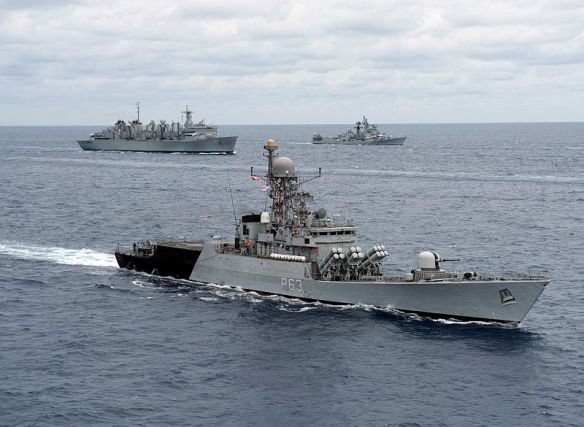
Kora class Corvette, INS Kulish (P63), US Navy Photo

Israel
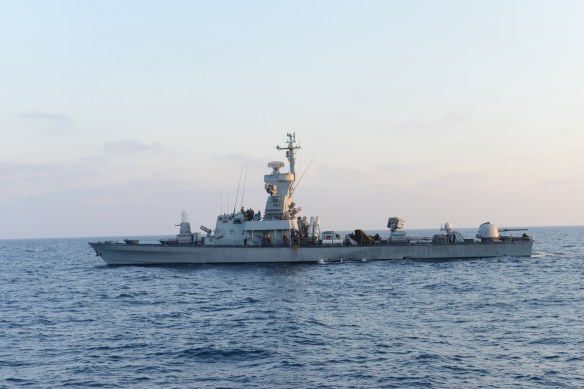
1987: Planning SAAR 5 corvettes (1994) 1,275 tons, Building SAAR 4.5 (1980) 490 tons, 7 SAR IV (1978) 450 tons, 6 SAAR III (1969) 250 tons, 3 Grumman Mk II/M hydrofoils (1982) 103.5 tons
Israel_Navy_Strike_Gaza_from_the_Sea_(14738072664)

SAAR 4.5 missile boat. Israel Defense Force photo

DafHelChochit

INS Aliya in 1985. An aviation equipped unit of the SAAR 4.5 class

Now: Germany is building four ships, the SAAR 6 class, similar to the K130 class for Israel, that are being called OPVs. 3 SAAR 5 corvettes (1994) 1,275 tons, 8 SAAR 4.5 (1980) 488-498 tons
INS_Lahav

INS Lahav, most advanced SA’AR 5 corvette in the Israeli navy. Now equipped with MF-STAR radar and BARAK-8 Surface to Air Missiles. Photo by Ilan Rom

Norway
1987: 14 Hauk class (1977-1980) 155 tons, 6 Snogg class (1970) 140 tons, 19 Storm class (1963) 125 tons
Hauk_MTBer2 (1)

Hauk-class patrol boats at quay in 2001. Photo by Peulle
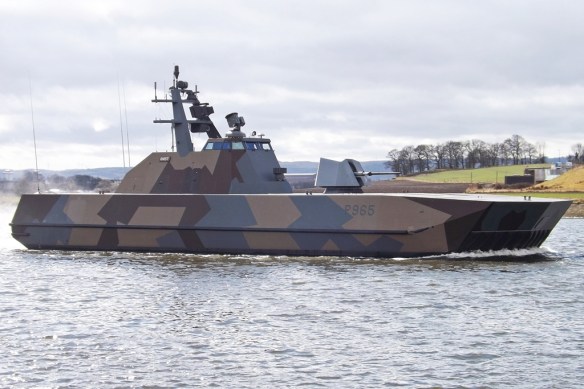
Now: Skjold Class (1999-2012) 274 tons
SkajoldClass

P965 KNM Gnist, a Skjold-class patrol boat of the Royal Norwegian Navy, Photo by Mark Harkin

Sweden
1987: Building Goteborg class (1990) 380 tons, 2 Stockholm class (1986) 320 tons, 17 Hugin class (1972-1981) 150 tons, 12 Spica II class (1972) 230 tons, plus 4 Spica class torpedo boats (1966) 235 tons
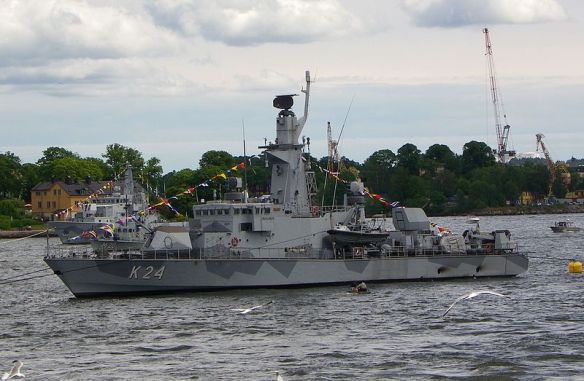
HMS_Sundsvall_2010

Goteborg class corvette HMS Sundsvall (1993), photo by Poxnar

Now: 5 Visby class (2008) 600 tons, 2 Goteborg class (1990) 380 tons, 2 Stockholm class (1986) 320 tons
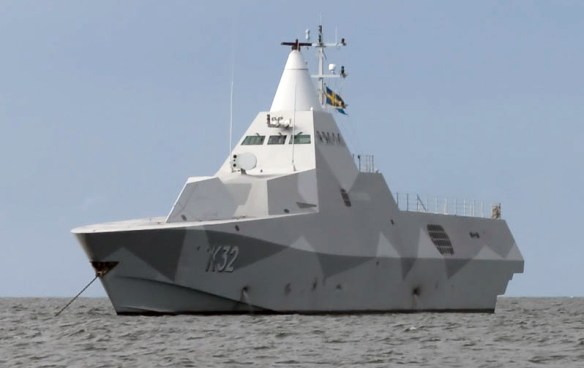
HMS_Helsingborg

Visby class corvette HSwMS Helsingborg (K32), photo by Xiziz

USSR/Russia
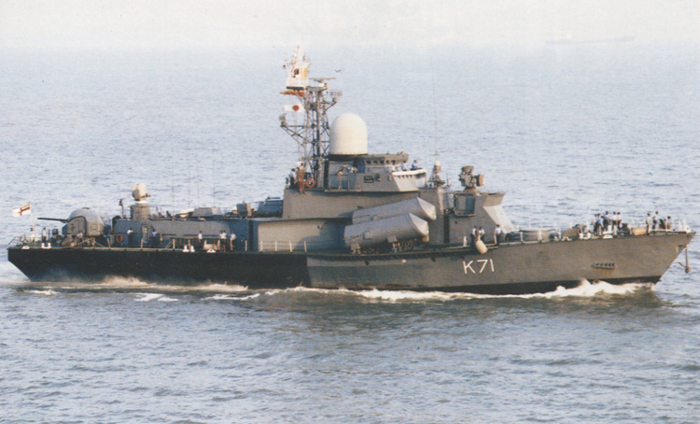
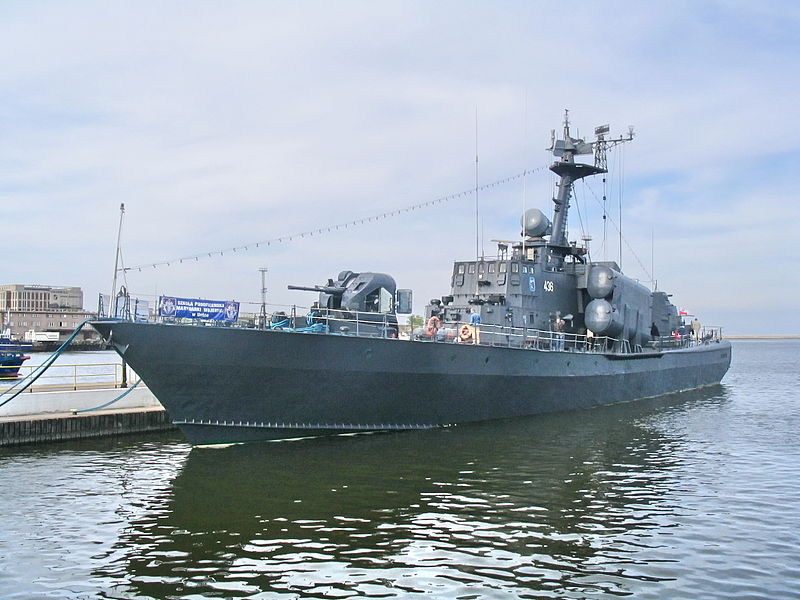
1987: Building Turantul class (1984) 549 tons and Nanuchka class (1978) 730 tons, Still retained 90 OSA (1960) 235 tons and other missile armed small combatants but none under 200 tons. (No Komar class in service.)
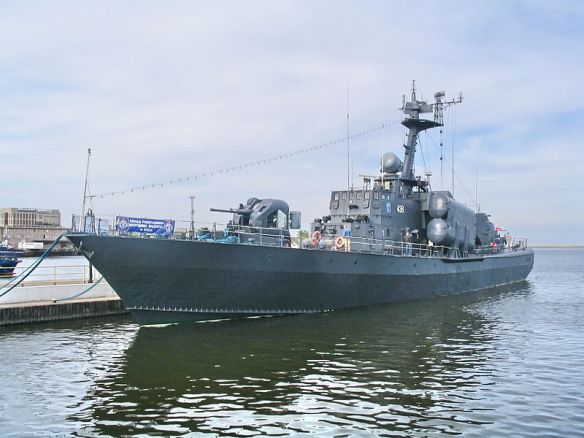
Turantul Class Corvette

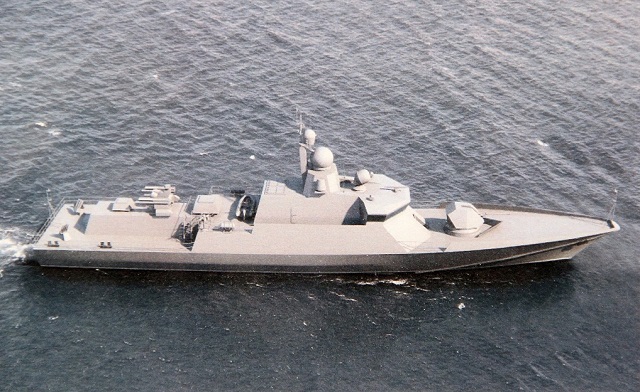
Now: Building Karakurt class (2017) 800 tons, 5 Buyan-M (2014) 949 tons. 26 Tarantul class (1984-2003) 493 tons, 12 Nanuchka class (1978-1991) 730 tons

Karakurt Class Corvette
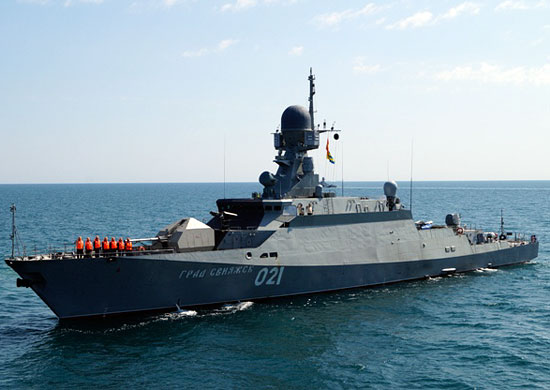
Buyan-M class corvette, Mil.RU photo

In Summary
Notably Denmark and Germany no longer have any ASCM armed combatants under 1800 tons. The latest from China, Germany, India, and Israel are between 1,500 and 2,000 tons. No indication how large Finland’s new corvette will be, but I expect it will be around 1,000 tons. Russia’s latest are 800 tons or larger. Greece and Sweden’s latest are 600 tons or larger. Many of these vessels have speeds of less than 30 knots. Only Norway is making ASCM armed combatants under 300 tons and even theirs are over 200 tons. The original concept of extremely fast, short ranged vessels of less than 100 tons and less than 100 feet in length has completely disappeared from the navies of these experienced missile boat operators. 
Why have these vessels grown in size?
I believe there are several reasons:
  • They want greater endurance and better seakeeping.
  • They want to deploy well beyond their homeports.
  • They want them to be multi-mission.
  • They want air-defense capability after the demonstrated vulnerability of missile boats to helicopters and aircraft during the first Gulf War.
  • The needs of networking, ESM, air-defense, ISR etc overwhelm a small crew.
  • They want to be able to launch a multiple missile attack that allows several missile to arrive on top simultaneously, but they also want a second salvo in reserve. This seems to be moving the norm toward 16 missiles. This is being facilitated by the smaller size of many of the newer missiles.
  • They see a need for organic aviation (either a helicopter or UAV) for over the horizon targeting.
  • Because it is peacetime, the planning horizon is now about 30 years. Operating cost considerations predominate.  In wartime it might make sense to make four cheap manpower intensive vessels rather than one individually more capable vessel, but in peacetime fuel and manning costs trump low initial costs and quick construction. This is part of the reason we have a “gold-plated” fleet now.

2018 Budget Request

The FY 2018 budget request has been published.

There is:

The overview includes “2016 Performance Highlights.” Also included is a page that says what the Coast Guard does on an average day.

On page 12 of the Overview, you can see a comparison of the FY 2018 President’s Budget request compared to the FY 2016 revised enacted and FY 2017 annualized budgets. The FY 2018 request is approximately $440M less than the FY 2017 annualized.  On the other hand this request is $339M more than the FY 2017 Presidential request. I think we can expect some changes before it becomes law.

French Navy Gets New Icebreaker

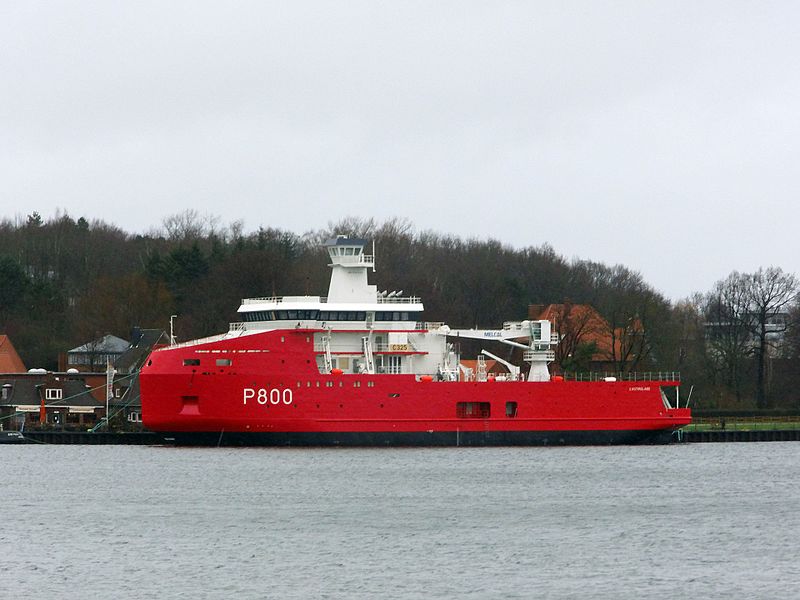
L’Astrolabe (2017) in Kiel, 3 January 2017, photo by HenSti

NavalToday reports that the French Navy will soon accept a light icebreaker/ supply vessel to be named L’Astrolabe. It will replace a smaller vessel of the same name.

It is 72 metres (236 ft) long and 16 metres (52 ft) of beam, somewhat larger than her 66-metre (217 ft) predecessor.

Aker Arctic provided the basic design.

Late addition: Check out NavyRecognition’s report for a better selection of photos.

Coast Guard Cutter Maple begins historic voyage through Northwest Passage

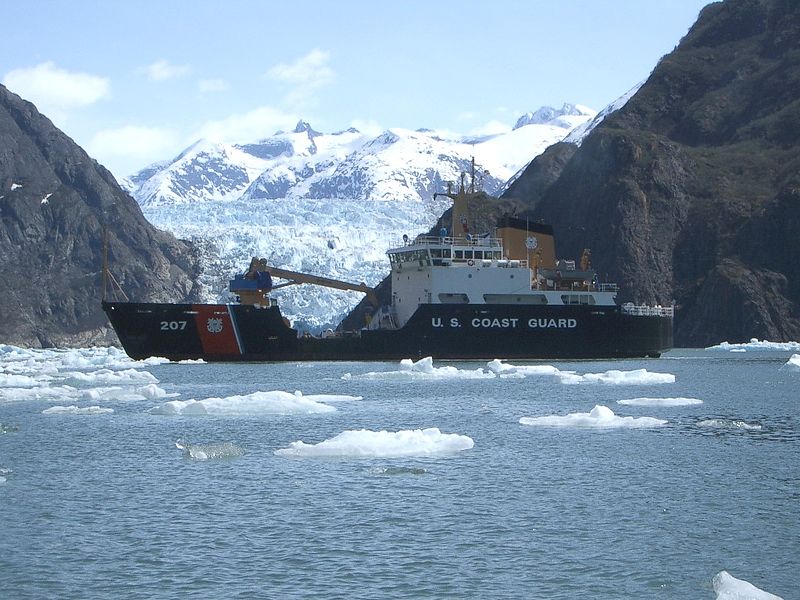
Photo: Maple in front of the LeConte Glacier

The following is a Coast Guard news release. USCGC Maple will be using the NorthWest Passage to transit to the Coast Guard Yard for its In Service Sustainment mid-life renovation, and will be doing some scientific research along the wah

ANCHORAGE, Alaska — The crew of the Coast Guard Cutter Maple, a 225-foot seagoing buoy tender homeported in Sitka, Alaska, departed Wednesday on a historic voyage through the Northwest Passage.

This summer marks the 60th anniversary of the three Coast Guard cutters and one Canadian ship that convoyed through the Northwest Passage. The crews of the U.S. Coast Guard Cutters Storis, SPAR and Bramble, along with the crew of the Canadian ice breaker HMCS Labrador, charted, recorded water depths and installed aids to navigation for future shipping lanes from May to September of 1957. All four crews became the first deep-draft ships to sail through the Northwest Passage, which are several passageways through the complex archipelago of the Canadian Arctic.

The crew of the cutter Maple will make a brief logistics stop in Nome, Alaska, to embark an ice navigator on its way to support marine science and scientific research near the Arctic Circle. The cutter will serve as a ship of opportunity to conduct scientific research in support of the Scripps Institution of Oceanography.

The Maple crew will deploy three sonographic buoys that are used to record acoustic sounds of marine mammals. A principal investigator with the University of San Diego embarked aboard the cutter will analyze the data retrieved from the buoys.

The Canadian Coast Guard Ship Sir Wilfrid Laurier will rendezvous with the Maple later this month to provide icebreaking services as the Maple makes it way toward Victoria Strait, Canada. The Maple has a reinforced hull that provides it with limited ice breaking capabilities similar to Coast Guard 225-foot cutters operating on the Great Lakes.

“We’re very excited to make this voyage through the Northwest Passage and to assist in the Scripps Institute research,” said Lt. Cmdr. Patrick Armstrong, commanding officer of the Maple. “In planning this, we have worked very closely with our Canadian counterparts and we look forward to continuing that cooperation in the Arctic.”

All scientific research, icebreaking and marine science activities that occur during the voyage will be conducted in accordance with the 1988 Canada-US Agreement on Arctic Cooperation.

The Maple crew is expected to conclude their historic voyage in Baltimore, Maryland, during late August. The cutter will undergo scheduled maintenance in dry dock at the Coast Guard Yard in Baltimore for repairs and upgrades. The crew will return to Sitka to take command of the 225-foot Coast Guard Cutter Kukui, which was previously homeported in Honolulu.

Boat Stern Launching Techniques

Looking at this little film, it struck me that the technique that was usable in the heaviest seas was that used by the Canadians (12:45-16:20), claiming a capability to Sea State Six, and they were the only ones that chose to run the ship parallel to the seas during recovery, rather than into the waves. This may be a bit counter intuitive, but it means the ship’s pitching is reduced and consequently there is less vertical displacement of the recovering ship’s stern.

As we saw in an earlier study, “The stern ramp availability is driven by sill depth and pitch motions…” In other words pitching is what limits the ability to recover the boat, and the problem becomes progressively worse as the size of the “host” vessel increases because there is a growing difference between the movement of the ship’s stern and the small boat.

I don’t know what our current doctrine is, but steaming parallel to the seas for recovery might be worth consideration if we are not already doing so.

Thanks to Adroth for bringing this to my attention. 

Hull Speed (Maximum Cruise)

For reference purposes I wanted to publish a table of hull speed versus ship’s water line length. As a rule of thumb, “hull speed” typically establishes the maximum economical cruise speed of a displacement hull as a result of wave making. Hull speed is a speed to length ratio where

Speed in knots / square root of the waterline length in feet = 1.34

I am also including the speed where the ratio equals 2 because this is typically an effective limit on maximum speed.

Like most rules of thumb, there are exceptions, but in most cases, the hull is at least to some degree “planing.”

  • Length     Hull Speed     Speed to Length=2
  • 64                10.72                   16
  • 81                12.06                   18
  • 100              13.4                     20
  • 121              14.74                   22
  • 144              16.08                   24
  • 169              17.42                   26
  • 196              18.76                   28
  • 225              20.1                     30
  • 256              21.44                   32
  • 289              22.78                   34
  • 324              24.12                   36
  • 361              25.46                   38
  • 400              26.8                     40

Not that it matters to the Coast Guard, but when ships get really large, wave making is not much of a problem. For a ship (like an aircraft carrier) that has a waterline length of say 1,000 feet, hull speed is 42.4 knots and they would not reach a Speed to Length ratio of 2 until they are going 63.2 knots.


Collision–Thetis Rammed by Barge/Tug

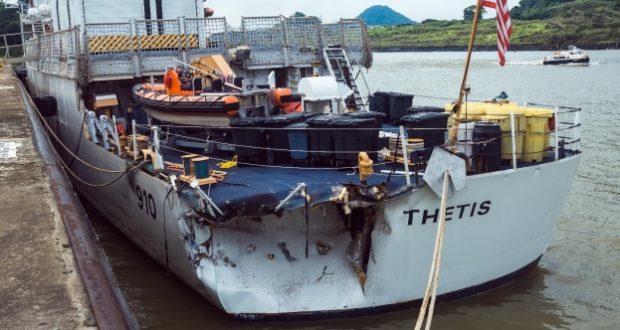
USCGC Thetis damage sustained in a collision in the Panama Canal 0111 local, 2 June 2016

The Cutter Thetis (WMEC-910) was hit in the stern by a barge being pushed by a tug, while transiting the Panama Canal, 2 June 2016. The channel was about 270 yards wide at the site of the collision. Thetis was ahead slow at about 4-4.5 knots. The tug and barge combination was full ahead doing 10.5-11 knots. Its radar was off because “he had clear forward visibility.” The captain of the tug never saw the Thetis until after the collision.

The tug was clearly at fault, but the NTSB also found that “Thetis did not maintain a sufficient and proper lookout.”

Mostly Thetis was doing everything right, but they only had one lookout and he was unable to see traffic over a wide sector astern and to port. A longer sound powered telephone cord that would have allowed the lookout to move to the port side might have made a difference.

Thetis had watches on AIS and on radar on the bridge and CIC, but attempts to mitigate or prevent the collision came to late. There was also no mention of sounding the danger signal.

Some times it is missing the basics that come back to bite you.

USCG Actions Post-accident

Since the accident, the Coast Guard cutter Thetis has implemented the following changes:

  • The shipping officer’s responsibilities, as outlined in the onboard guidance, were amended to require that an individual be qualified as deck watch officer, preferably as an underway deck watch officer, before assuming the role of shipping officer.
  • An additional dedicated lookout position was added to the aft area of the Thetis for long transits in restricted waters.
  • A radar-tuning policy was established that prohibits both the SeaWatch and the radar systems from being offset from the automatic tuning mode when transiting in restricted waters, in order to ensure the optimal traffic image.

I might add you don’t have to be in “long transits in restricted waters” for someone to come up your ass. Check your GQ watch bill as well.

Thanks to Bryant’s Maritime Blog for bringing this to my attention. 

LATIN AMERICAN NAVIES AND ANTARCTICA–CIMSEC

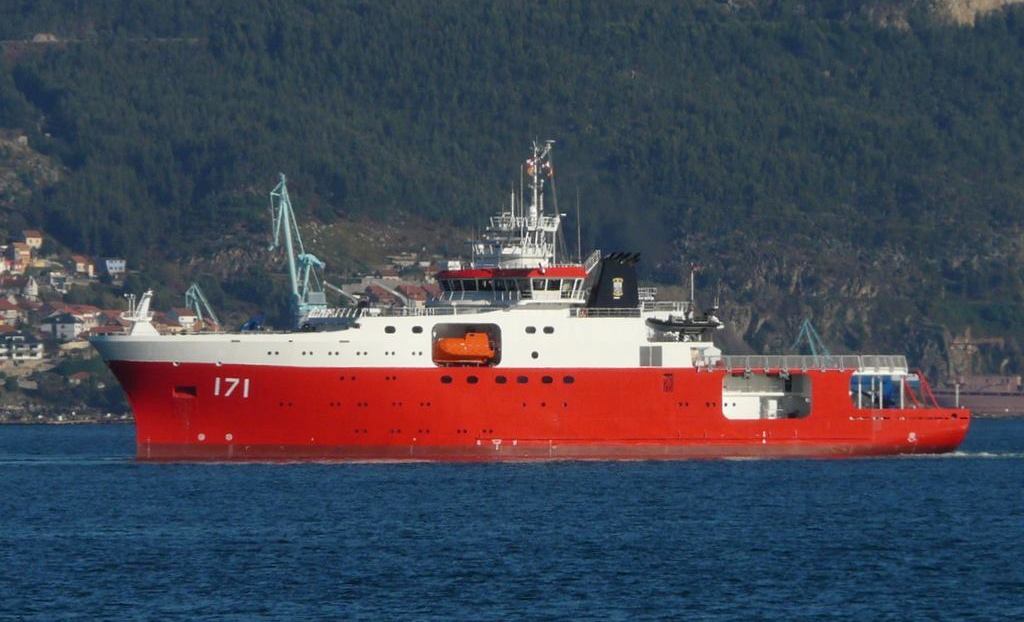
Peru’s BAP Carrasco (BOP-171). Photo by Alejo Marchessini (amarchessini@edefa.acom)

CIMSEC has a review of Latin American efforts in the Antarctic. It refers to the efforts of the Navies of Argentina, Brazil, Chile, Peru, Colombia and Uruguay. The post provides links, (mostly in Spanish) but few photos, so I am providing some photos to illustrate some of the major vessels refered to in the post. There were earlier post about the planned new Chilean icebreaker/supply vessel and Argentina’s newly refurbished icebreaker. Below is a chart of the current claims on Antarctica as reported in Wikipedia.

Chile’s current icebreaker, 6500 ton former Canadian icebreaker, Almirante Oscar Viel

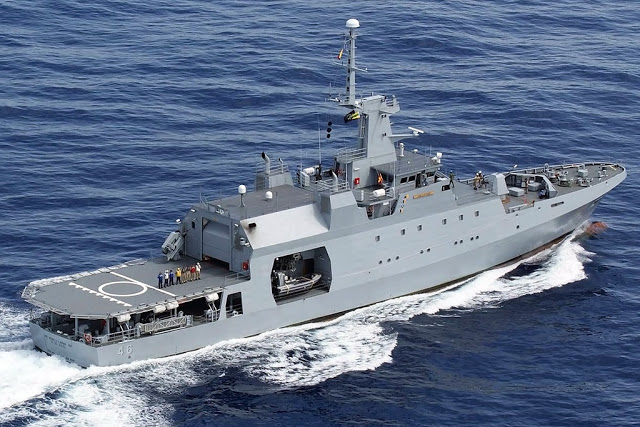
Colombia’s ARC 20 de Julio (PZE-46) which has been modified for operations in the Antarctic. Photo by Juan Nation

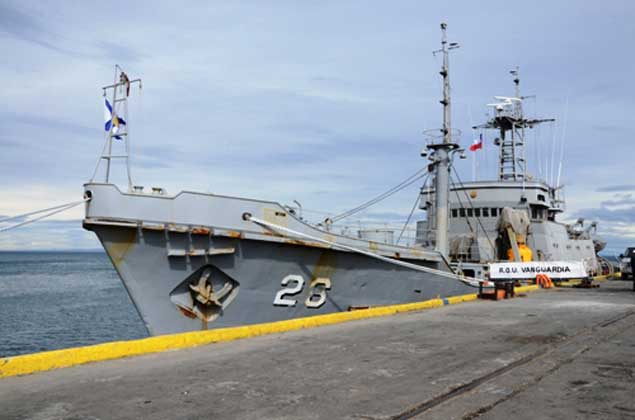
Uruguay’s Vanguardia

Brazil’s Almirante Maximiano (H-41) a 5,450 ton icebreaking supply vessel. Brazilian Navy photo

Brazil’s Ary Rongel, Brazilian Ministry of Defense photo, 06/10/2014, Niterói – RJ
Fotos: Felipe Barra