Former USCGC Acushnet in Another Life

War is Boring brings us a story about an effort to repurpose the former USCGC Acushnet (WMEC-167),

World War II Navy ship might be used to house homeless veterans in California.”

If you are just reading the title, you might think there was a mistake, but Acushnet was originally USS Shackle (ARS-9), a rescue and salvage ship.

I don’t have a lot of optimism about their long-term success, but wish the new owners luck.

Currently the ship is at the marina at Brown Point in Tacoma, Washington.

I also found it interesting that there are still remnants as the four concrete drydocks in Napa. Every time I see something like this, I think it would be a good idea to have a Coast Guard Yard, West.

Thanks to Paul for bringing this to my attention.

Canadian Coast Guard Multi-Purpose Vessel Recapitalization

Canadian CG MPV. Credit Aker Arctic.

Below is a press release from Seaspan Shipyards regarding a contract awarded for the Canadian Coast Guard’s Multi-Purpose Vessel program. We talked about these ships earlier. I am going to repeat some of that earlier post here. Much like USCG Juniper class buoy tenders or the Great Lakes Icebreaker Mackinaw, these Canadian ships are made to both tend buoys and break ice. But these ships will be a lot bigger than the Mackinaw and it appears they can also support a helicopter and probably UAS.

CHARACTERISTICS:

  • Displacement: about 8,500 tons
  • Length, overall: 99.9 meters (328′)
  • Beam: 20.3 meters (66.7′)
  • Draft: 6.2 meters (20’4″)
  • Propulsion: diesel-electric; two azimuthing propulsion units
  • Range 12,000 nautical miles

The relatively shallow draft was a design requirement. 

Canadian CG MPV. Credit Aker Arctic.

ICE CLASS: 

These ships will be Canadian Ice Class 4, meaning they will have the capability to maintain a speed of 3 knots through ice 4 feet thick. The Canadian Coast Guard will consider these heavy icebreakers. We don’t have any figures on horsepower, but they probably will have less than 20,000 HP which, in the USCG system, would classify them as light icebreakers.

Compared to the US Coast Guard’s “heavy” Great Lakes icebreaker, Mackinaw (3,500 tons and 73m), these will be more powerful and more than twice as large. These might be a good design for the planned second USCG Great Lakes icebreaker.

IMPLICATIONS FOR THE USCG:

Aside from possible use of the design for Great Lakes icebreaker, these might be pretty close to what the USCG needs for their planned medium icebreakers. Certainly, consultation with Canadian counterparts will sharpen the focus of the US design effort. We might also have reasons to limit beam and/or draft.

I might add that, ships like these could make good companions (tenders/mother ships) for support of distant FRC operations, carrying fuel, supplies, and air assets.


Seaspan Shipyards Progresses to Next Phase of Designing and Building Multi-Purpose Vessels for the Canadian Coast Guard

 March 26, 2024 – North Vancouver, BC – Seaspan Shipyards (Seaspan) has been awarded the Construction Engineering (CE) and Long Lead Items (LLI) contracts for the pre-construction work of the Canadian Coast Guard’s (CCG) first six Multi-Purpose Vessels (MPV).

Following the successful completion of the vessel’s Basic Design review in late 2023, Seaspan was awarded the CE and LLI contracts to complete the design and engineering work and to procure long lead-time material and equipment to ensure readiness to proceed with the construction of the first six ships of the up to 16 vessel fleet.

“This milestone demonstrates the tremendous capabilities in marine design and engineering that have been developed through the National Shipbuilding Strategy.  Our team, along with our partners from coast to coast, are excited to move to the next phase of this program, and ultimately provide the Canadian Coast Guard with the vessels they need to manage and safeguard Canada’s coastlines. A long run of ships like the MPV program enables Seaspan to continue to drive improvement and generate greater efficiencies, while ensuring we have stability for the next generation of shipbuilders, marine engineers and designers and supply chain in Canada,” said John McCarthy, Chief Executive Officer, Seaspan Shipyards.

“The designers and the ship builders of Seaspan Vancouver Shipyard – are playing key roles in taking the Canadian Coast Guard’s new multi-purpose vessels (MPVs) out of the drawing room and into the open ocean. The contracts announced today are an important milestone to getting these ships completed and represent an important investment in North Vancouver. This will secure good jobs while advancing the delivery of the MPVs to significantly expand the operational capacity of our Coast Guard for years to come.” – The Honourable Jonathan Wilkinson, Minister of Energy & Natural Resources and MP for North Vancouver.

The MPVs will be Polar Class 4 vessels, allowing them to carry out multiple missions including icebreaking in moderate ice conditions and assisting in shipping and flood control, search and rescue, environmental response, as well as maintaining Canada’s marine navigation system composed of approximately 17,000 aids to navigation. The new fleet of MPVs will replace the existing fleet of High Endurance Multi-Tasked Vessels and Medium Endurance Multi-Tasked Vessels.

“The Canadian Coast Guard saves lives at sea, maintains waterways open and safe for the movement of goods and services, protects the marine environment and supports Canadian sovereignty and security. The Multi-Purpose Vessels will be key assets for the Canadian Coast Guard’s future fleet, giving our personnel the modern, reliable tools they need to continue their vital work from coast to coast to coast,” said Mike Kelloway, Parliamentary Secretary to the Minister of Fisheries, Oceans and the Canadian Coast Guard.

Seaspan has already gained significant experience designing and building Polar Class vessels including three Offshore Fisheries Science Vessels which are now in service with the Canadian Coast Guard; an Offshore Oceanographic Science Vessel that is currently under construction; and a heavy Polar Icebreaker, the first of its kind to be designed and constructed in Canada in 60 years. Seaspan is preparing to cut steel on the Polar Icebreaker in late 2024 with the recent completion of a prototype block, ensuring that proper processes, procedures, and equipment are in place to build a vessel of this complexity.

QUICK FACTS ABOUT THE MULTI-PURPOSE VESSELS

  • With a displacement of 8,500 tonnes, the Multi-Purpose Vessels will be 99.9 metres long and 20.3 metres wide, and able to accommodate up to 50 personnel.
  • The area of operation for the MPV will include:
    • Year-round operations in Canada’s eastern and western seaboards, within Canada’s Exclusive Economic Zone (EEZ)
    • Year-round operations in the Gulf of St. Lawrence, the St. Lawrence River, and the Great Lakes
    • Seasonal (summer) operations in the western and lower Arctic
  • Under the NSS, Seaspan has become a major economic and job creation engine. According to an economic analysis conducted by Deloitte, Seaspan has contributed $5.7 billion to Canada’s GDP since 2012, while also creating or sustaining more than 7,000 jobs annually.

SOCIAL MEDIA

Twitter: @Seaspan
LinkedIn: Seaspan ULC
Instagram: @SeaspanULC
Facebook: Seaspan

ABOUT SEASPAN

Seaspan, a division of Seaspan ULC, is a leader in Canada’s ship design, engineering, building and ship repair industry. With modern facilities and a dedicated workforce of approximately 3,900 in North Vancouver and Victoria, the company has proven itself to be a trusted and strategic partner on a range of complex projects for both government and the private sector.

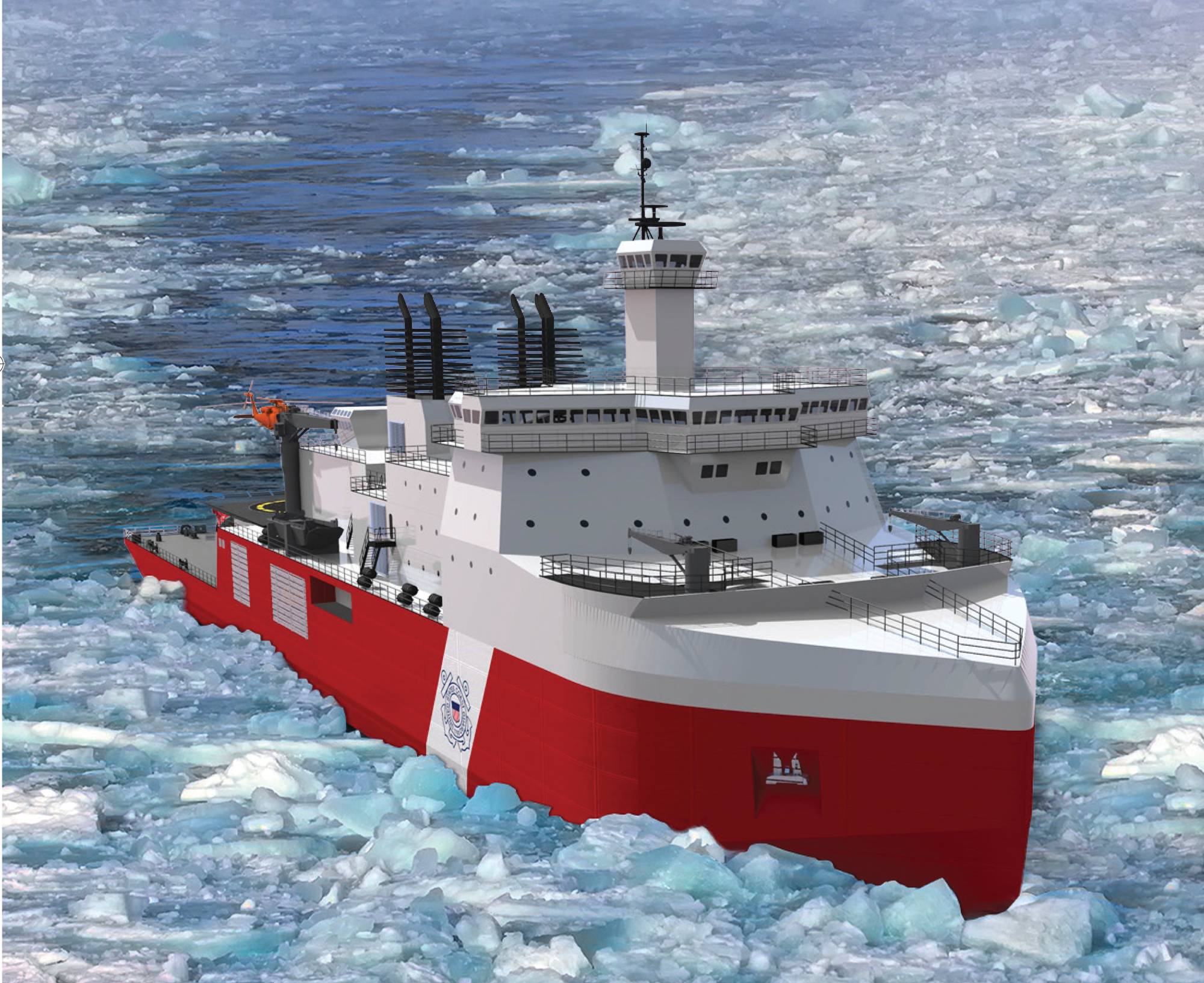
“Coast Guard Polar Security Cutter (Polar Icebreaker) Program: Background and Issues for Congress” Updated March 25, 2024 –CRS

Polar Security Cutter. Image credit VT Halter Marine.

The Congressional Research Service has once again updated their look at the Polar Security Cutter (heavy icebreaker) program. (See the latest version here.)

I have reproduced the one page summary below.

As expected, the FY2024 budget includes $125M to purchase a US built commercially available icebreaker, presumably the Aiviq since it is the only one that meets the criteria.

The budget as enacted includes $20M for procurement of a Great Lakes Icebreaker (GLIB). The request for this item was $55M.

There was nothing in the enacted budget for the Polar Security Cutter program because the first two ship have already been funded but construction has yet to begin on the first ship, so there is no need to fund the third in FY2024.

There is a requirement to report on the possibility of reviving the Polar Sea,

In addition, within 120 days of the date of enactment of this Act, the Coast Guard is directed to provide a report that assesses the viability of reactivating Coast Guard Cutter Polar Sea. The report shall include an analysis of the material condition of the hull and cost and timeline estimates for a full overhaul of the vessel, including the renewal of the cutter’s propulsion, mechanical, electrical, communication, and support systems.


Summary

Required number of polar icebreakers. A 2023 Coast Guard fleet mix analysis concluded that the service will require a total of eight to nine polar icebreakers, including four to five heavy polar icebreakers and four to five medium polar icebreakers, to perform its polar (i.e., Arctic and Antarctic) missions in coming years.

Current operational polar icebreaker fleet. The operational U.S. polar icebreaking fleet currently consists of one heavy polar icebreaker, Polar Star, and one medium polar icebreaker, Healy. A second Coast Guard heavy polar icebreaker, Polar Sea. Polar Sea, suffered an engine casualty in June 2010 and has been nonoperational since then. Polar Star and Polar Sea entered service in 1976 and 1978, respectively, and are now well beyond their originally intended 30-year service lives. The Coast Guard plans to extend Polar Star’s service life until the delivery of at least the second Polar Security Cutter (PSC; see next paragraph).

Polar Security Cutter (PSC). The Coast Guard PSC program aims to acquire four or five new PSCs (i.e., heavy polar icebreakers), to be followed at some later point by the acquisition of new Arctic Security Cutters (ASCs) (i.e., medium polar icebreakers). The Navy and Coast Guard in 2020 estimated the combined total procurement cost of the first three PSCs in then-year dollars as $2,673 million (i.e., about $2.7 billion). The procurement of the first two PSCs is fully funded. The Coast Guard’s proposed FY2024 budget requested $170.0 million in continued procurement funding for the PSC program. The Coast Guard’s proposed FY2025 budget requests no procurement funding for the PSC program. The Coast Guard originally aimed to have the first PSC delivered in 2024, but the ship’s estimated delivery date has been delayed repeatedly and may now occur no earlier than 2028. Another potential issue concerns the accuracy of the PSC’s estimated procurement cost, given the PSC’s size and internal complexity as well as cost growth in other Navy and Coast Guard shipbuilding programs. The PSC’s estimated procurement cost per weight is roughly half that of the Navy’s LPD-17 Flight II and LHA amphibious ships. These amphibious ships are equipped with expensive combat system equipment that is not included in the PSC design, but whether this would account for all of the difference in cost per weight between the PSC design and the two amphibious ship designs is not clear. If substantial cost growth occurs in the PSC program, it could raise a question regarding whether to grant some form of contract relief to the PSC shipbuilder.

Commercially available polar icebreaker (CAPI). The Coast Guard’s proposed FY2024 budget requested $125.0 million in procurement funding for the purchase of an existing commercially available polar icebreaker (CAPI) that would be modified to become a Coast Guard polar icebreaker. The Coast Guard’s proposed FY2025 budget requests no procurement funding for CAPI, but the Coast Guard’s FY2025 Unfunded Priorities List (UPL) includes an item for $25.0 million in procurement funding for the ship.

Great Lakes icebreaker (GLIB). The Coast Guard’s proposed FY2024 budget proposed to initiate a new procurement program for procuring a new Great Lakes icebreaker (GLIB) that would have capabilities similar to those of Mackinaw, the Coast Guard’s existing heavy Great Lakes icebreaker. The Coast Guard’s proposed FY2024 budget requested $55.0 million in initial procurement funding for the ship, and the Coast Guard’s FY2024 UPL included an item for an additional $20.0 million in procurement funding for the ship. The Coast Guard’s proposed FY2025 budget requests no procurement funding for GLIB, but the Coast Guard’s FY2025 UPL includes an item for $25.0 million in procurement funding for the ship.

Canada’s New Icebreaker Fleet

Current Coast Guard Icebreakers:  CCGS Henry Larsen  (medium icebreaker, top photo), CCGS Terry Fox (heavy icebreaker, bottom photo)Current Coast Guard Icebreakers: CCGS Henry Larsen (medium icebreaker, top photo), CCGS Terry Fox (heavy icebreaker, bottom photo)

Below are two news releases, first a release by Chantier Davie Canada Inc. (Davie) and second a statement from the Canadian Coast Guard.

The release from Davie is new (it also has an illustration). The Canadian Coast Guard statement dates from July 2019. I added it because it outlines what is expected of the new icebreakers.

The Davie news release says these will be the “largest and most advanced icebreakers ever built in and for Canada.” Currently the largest Canadian Icebreaker is CCGS Louis S. St-Laurent which is 15,324 tons full load, 119.8 m (393.04 ft) in length, and has three electric motors, 3 × 6,714 kW, or 27,011 HP total. Presumably these will be larger and more powerful, still the new icebreakers may turn out to be medium icebreakers, at least according to the US Coast Guard classification system that is based on horsepower, e.g. 20,000 to 45,000 HP are medium icebreakers.

The Davie release also notes, “Davie is a part of Group Davie, which in November 2023 acquired Finland’s Helsinki Shipyard, the world leader in icebreaker design and construction.” Maybe a good idea to buy the expertise you need.


March 26, 2024

Lévis, Canada – March 26, 2024 – Chantier Davie Canada Inc. (Davie) today announced it has been awarded its first National Shipbuilding Strategy (NSS) contract by the Government of Canada for the design of the six-ship fleet of Canada’s future Program Icebreakers. This major milestone marks the beginning of Davie’s NSS work package to replenish Canada’s Arctic fleet and each initiative under the contract will help advance upcoming design, construction, delivery and support phases for these strategic ships.

The Honourable Jean-Yves Duclos, Canada’s Minister of Public Services and Procurement (PSPC) said: “This first contract awarded to Chantier Davie under the National Shipbuilding Strategy brings us a step closer to providing the Canadian Coast Guard with the next generation Arctic ships. They will be among the most advanced, sustainable and durable vessels tailored to the world’s harshest environments. The new fleet will be symbolic of Canada’s Arctic presence and crucial to keeping our country open for business year-round.”

Davie President and CEO, James Davies, said: “This is a momentous first step in our journey to deliver a fleet of the largest and most advanced icebreakers ever built in and for Canada. My heartfelt thanks go to the dedicated teams at Davie, the Canadian Coast Guard and PSPC. They have spent countless hours preparing for this historic milestone. Now, we can’t wait to get working on renewing Canada’s Arctic fleet.”

Davie will establish a Program Icebreaker project management and design office, providing compelling opportunities for current and future generations of Canadian shipbuilders. Davie is committed to recruiting teams of highly skilled shipbuilding professionals, who will drive all aspects of constructing the world’s largest order book of heavy icebreakers.

Moreover, Davie will engage critical subcontractors to design and certify the vessel to established safety, environmental, and performance standards. Building on Davie’s proven track record of delivering vessels of exceptional quality and performance, this early phase is fundamental in guaranteeing sustained operational readiness and capability to best serve the CCG’s missions.

Julian Kenney, Program Director for the Program Icebreakers at Davie, said: “Embarking on the design and construction of Canada’s new icebreaker fleet is a great source of pride for everyone at Davie. We have a strong partnership with the Canadian Coast Guard and our top priority is to design and build the icebreakers Canada needs to keep our waterways open, protect our environment, and secure the Arctic.”

About Davie

Based in Québec, Canada since 1825, Davie is a world-class designer and builder of specialist, mission-critical ships such as icebreakers, ferries and warships for government and commercial customers. Davie became a partner in the Government of Canada’s National Shipbuilding Strategy on April 4, 2023. This historic agreement is for the design and construction of the largest and most technologically advanced ships ever constructed in and for Canada. The initial $8.5 billion package of work includes seven heavy icebreakers and two large hybrid-powered ferries. Davie is a part of Group Davie, which in November 2023 acquired Finland’s Helsinki Shipyard, the world leader in icebreaker design and construction. Find out more at davie.ca and helsinkishipyard.fi.

For further information, please contact: Marcel Poulin Director, External Affairs and Industrial Participation, Davie marcel.poulin@davie.ca +1 581 992-8564


Canadian Coast Guard’s new Icebreakers

Backgrounder

As part of the Government of Canada’s National Shipbuilding Strategy and in accordance with the Canadian Coast Guard’s fleet renewal planning, six new icebreakers will be built for the Coast Guard. These icebreakers are fundamental to year-round safe and efficient movement of ships and goods in Canadian waters.

The new program icebreakers will replace the Coast Guard’s heavy and medium icebreakers that operate in Atlantic Canada and the St. Lawrence waterways during the winter and in the Arctic during the summer.  In Atlantic Canada, these program icebreakers help ensure year-long ferry service, escort ships through ice-covered waters and the clearance of ice from harbours and wharfs, which is essential to Canada’s commercial fisheries. In the Arctic, they provide icebreaking support to ships with vulnerable cargoes, such as dangerous goods and perishable products, and support vessels transporting cargo that is a vital part of the northern communities’ sealift and resupply.

The new program icebreakers will be built at a third strategic shipyard that will be selected through a competitive process under the National Shipbuilding Strategy.

“Coast Guard to commission new ship in New London, Connecticut”

USCGC MELVIN BELL (WPC-1155) Photo by: Petty Officer 2nd Class Briana Carter VIRIN: 240131-G-HT254-1095.JPG

Below is a Coast Guard news release. This may be the first time many cadets will get an opportunity to see a Webber class WPC. Note the approximately four and a half months between delivery and commissioning. The next two FRCs will go to Astoria, Oregon.


March 25, 2024

MEDIA AVAILABILITY: Coast Guard to commission new ship in New London, Connecticut

WHO: Rear Adm. John W. Mauger, the First Coast Guard District commander, Lt. Patrick Kelly, the Coast Guard Cutter Melvin Bell (WPC-1155) commanding officer, Rita Mayer, the cutter’s sponsor, along with additional Bell family members.
WHAT: Commissioning Ceremony for Coast Guard Cutter Melvin Bell
WHEN: Thursday, March 28, at 10:00 a.m.
WHERE: Coast Guard Academy at 31 Mohegan Ave Pkwy, New London, CT 06320.

Editor’s Note: Media interested in attending must RSVP to D1PublicAffairs@uscg.mil by 8 a.m. Wednesday to gain access to the ceremony.

New London, CT. — The Coast Guard Cutter Melvin Bell (WPC-1155) is scheduled to be commissioned during a ceremony Thursday at 10 a.m. at the Coast Guard Academy in New London.

The Coast Guard’s newest cutter was accepted by the Coast Guard on November 16, 2023, and will be the sixth and final fast response cutter homeported in Boston.

The Sentinel-class fast response cutter (FRC) is designed for multiple missions, including drug and migrant interdiction; ports, waterways and coastal security; fishery patrols; search and rescue; and national defense. The Coast Guard has ordered a total of 65 FRCs to replace the 1980s-era Island-class 110-foot patrol boats. The FRCs feature advanced command, control, communications, computers, intelligence, surveillance and reconnaissance equipment; over-the-horizon cutter boat deployment to reach vessels of interest; and improved habitability and seakeeping.

All Coast Guard fast response cutters are named after an enlisted Coast Guard hero who distinguished themselves in the line of duty. Melvin Kealoha Bell was a master chief electronics technician and served in the Coast Guard from November 1938 to December 1958. ETCM Melvin Bell distinguished himself during World War II by transmitting the first warning messages to military installations in Pearl Harbor on the morning of December 7, 1941, when the Japanese attacked. He continued to prove instrumental throughout the war as he helped break enemy codes leading to numerous victories, including the Battle of Midway and in an operation to break up a Nazi espionage network in New York City. ETCM Bell became the first Pacific Islander to achieve the rank of chief petty officer, the first master chief electronics technician and the first master chief petty officer of color.

“Coast Guard Cutter Procurement: Background and Issues for Congress, Updated March 25, 2024” –CRS

USCGC David Duren is the first of three FRCs to be homeported in Astoria, OR

The Congressional Research Service (CRS) has again updated their “Report to Congress on Coast Guard Cutter Procurement”. (This link will always take you to the most recent edition of the report.) My last post on this evolving document was in reference to the October 19,2023 update. I have reproduced the one-page summary in full below. It gives a good picture of where we are. (The CRS report on icebreakers has also been updated.)

There have been other updates in the interim, but I have been looking forward to this one because it reports the 2024 budget as enacted into law, and (surprise, surprise) it includes two Fast Response Cutters that were not in the 2024 budget request. From page 35,

“Enacted The explanatory statement for Division C of H.R. 2882/P.L. 118-47 of March 23, 2024, provides the funding levels shown in the “Enacted” column of Table 1. The explanatory statement states that the increase of $200.0 million for the FRC program is for “no less than two Fast Response Cutters and the economic price adjustment for Fast Response Cutters funded in prior years”.”

There was a request for four additional FRCs in the Unfunded Priorities List. The House Appropriations Committee had wanted to fund four ($355M) while the Senate Appropriations Committee approved none. Apparently, they compromised. (Nice to see bipartisan support.)

Two Additional FRCs ($216M) are also in the 2025 budget request. (The appropriation amounts include addition funds for FRC program support over and above shipyard construction costs.)

If you do the math, you will see that there has been a departure from the original “Program of Record” (8 NSCs, 25 OPCs, and 58 FRCs for 91 total). The current program will provide 11 NSCs, 25 OPCs, and 67 FRCs (one of which severely damaged in a fire) for a total of 102 operations ships, 104 if we get the two additional FRCs in the FY2025 budget.

While this may look like a large gain, the number of large patrol cutters (36 over 1000 tons) is well below historical norms (=>41), while demands on the cutter fleet have grown substantially, no OPCs have been actually delivered, and the entire WMEC fleet is already well overage.


Summary
The Coast Guard’s program of record (POR), which dates to 2004, calls for procuring 8 National Security Cutters (NSCs), 25 Offshore Patrol Cutters (OPCs), and up to 71 Fast Response Cutters (FRCs) as replacements for 90 aging Coast Guard high-endurance cutters, medium-endurance cutters, and patrol craft.

National Security Cutters are the Coast Guard’s largest and most capable general-purpose cutters; they are replacing the Coast Guard’s 12 Hamilton-class high-endurance cutters. NSCs have an estimated average procurement cost of about $670 million per ship. Congress has fully funded the procurement of 11 NSCs—three more than the 8 in the Coast Guard’s POR. The Coast Guard’s proposed FY2024 budget requested $17.1 million in procurement funding for the NSC program. The Coast Guard’s proposed FY2025 budget requests $7.0 in procurement funding for the NSC program, and the Coast Guard’s FY2025 Unfunded Priorities List (UPL) includes an item for an additional $50.0 million in procurement funding for activities relating to the 11th NSC. Nine NSCs have entered service; the Coast Guard accepted delivery of the 10th on October 13, 2023, and plans to commission it into service in 2024. The 11th is under construction.

Offshore Patrol Cutters are intended to replace the Coast Guard’s 29 aged medium-endurance cutters. Coast Guard officials describe the OPC program and the Polar Security Cutter (PSC) program (which is covered in another CRS report) as the service’s highest acquisition priorities. The first four OPCs are being built by Eastern Shipbuilding Group (ESG) of Panama City, FL. The Coast Guard held a full and open competition for a new contract to build the next 11 OPCs (numbers 5 through 15). On June 30, 2022, the Coast Guard announced that it had awarded a fixed-price incentive (firm target) contract to Austal USA of Mobile, AL, to produce up to 11 offshore patrol cutters (OPCs). The Coast Guard’s proposed FY2024 budget requested $579.0 million in procurement funding for the construction of the sixth OPC and other OPC program costs. The Coast Guard’s proposed FY2025 budget requests $530.0 million in procurement funding for the construction of (once again) the sixth OPC and other OPC program costs, and states that the requested FY2024 procurement funding would now be for the construction of the fifth OPC rather than the sixth.

A June 2023 Government Accountability Office (GAO) report on the OPC program states “The OPC’s total acquisition cost estimate increased from $12.5 billion to $17.6 billion between 2012 and 2022…. In addition, the program incurred a 1.5-year delay in the delivery of the first four OPCs…. GAO also found indicators that the shipbuilder’s significant level of complex, uncompleted work may lead to further delays.”

Fast Response Cutters are considerably smaller and less expensive than OPCs; they are replacing the Coast Guard’s 49 aging Island-class patrol boats. The Coast Guard’s FY2020 budget submission estimated the total acquisition cost of the 58 cutters intended for domestic use at $3.748 billion, or an average of about $65 million each. A total of 65 FRCs have been procured through FY2023. As of March 25, 2024, 54 FRCs have been commissioned into service. The Coast Guard’s proposed FY2024 budget requested $20.0 million in procurement funding for the FRC program, and the Coast Guard’s FY2024 UPL included an item for $400.0 million in procurement funding for procuring four more FRCs at an average cost of $100 million each, to provide increased Coast Guard presence and engagement with allied and partner countries in the Indo-Pacific region. The Coast Guard’s proposed FY2025 budget requests $216.0 million in procurement funding for the FRC program for the procurement of two more FRCs for operations in the Indo-Pacific region, plus additional FRC program costs.

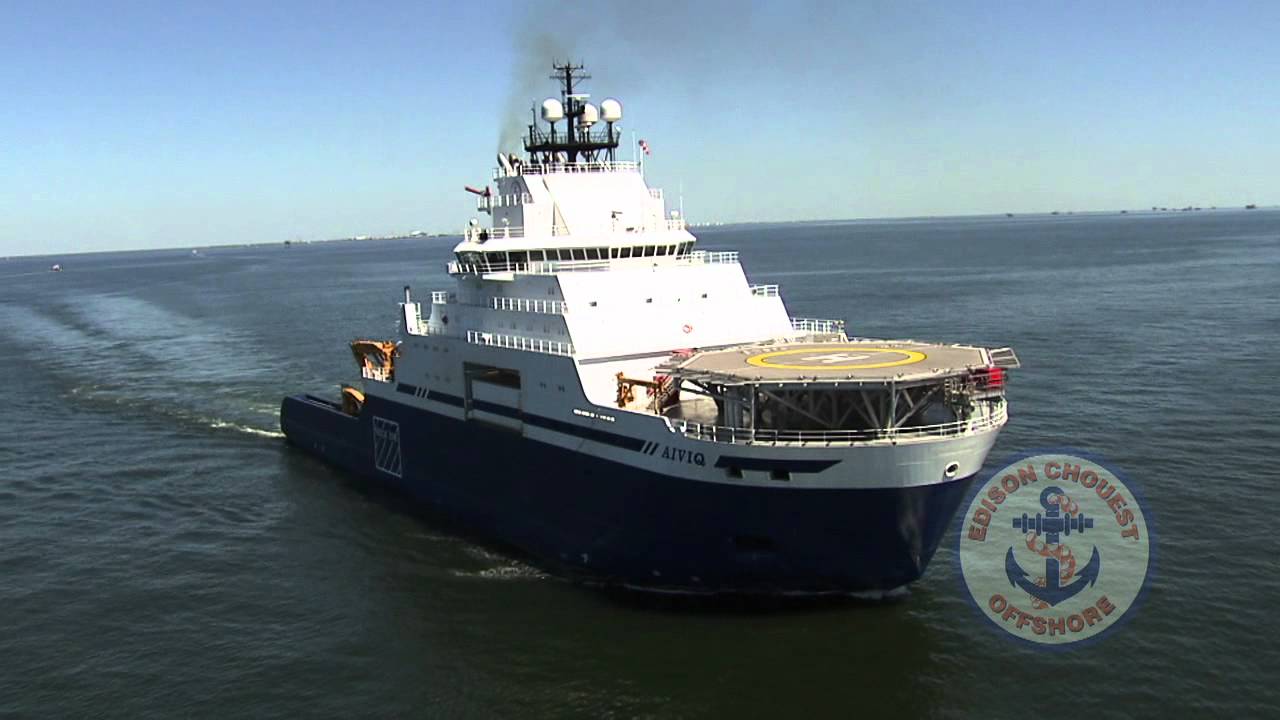
Coast Guard’s Commercial Icebreaker To Be Based In Juneau?

Icebreaking Anchor Handling Vessel Aiviq

There have been several reports like this one, that, if as expected, the Coast Guard buys what is apparently the only US built commercially owned icebreaker, that it will be based in Juneau.

This choice of homeport is something of a surprise. I would have thought Seattle, Kodiak, Anchorage, or even Dutch Harbor before Juneau, but it is the Capital of Alaska. It may have been seen as offering more amenities than Kodiak. It is a cruise destination.

Thanks to David for bringing this to my attention.

Helicopter Door Gunner Takes Down Kamikaze Drone

French Armed Forces via X

The War Zone reports, “A French Navy helicopter used machine gun fire to shoot down a Houthi drone over the Red Sea today.”

This is a potential Coast Guard capability, given its airborne use of force capability includes a door mounted rifle caliber machine gun, though I do not know if every Coast Guard Air Station has qualified gunners. The .50 caliber sniper rifle included in the package might even be more effective than the machine gun.

I am not suggesting the Coast Guard send helicopters to the Red Sea, but when the Coast Guard provides protection for vessels transiting to sea, it has generally been done with small boats with crew served rifle caliber machine guns. Ballistic Missile submarines have been an exception. They may be escorted by 82 foot patrol boats with .50 caliber machine guns in remote weapon stations. Perhaps the Coast Guard should consider providing an armed helicopter overwatch. An armed helicopter could be effective against hostile surface systems as well as air systems.

Petty Officer 2nd Class Anthony Phillips, a precision marksman at Helicopter Interdiction Tactical Squadron, displays the weaponry used by a HITRON during missions, February 23, 2010. US Coast Guard/Petty Officer 1st Class Bobby Nash

Below is a video taken by the French helicopter (an AS565 Panther, similar to the Coast Guard’s H-65s) as it shoots down the drone.

A US Navy helicopter demonstrated this capability over eight years ago. It is certainly less expensive than bringing down a drone with a missile. On the other hand, I would not want to be in a helicopter near a drone if the Navy decides to use a missile to destroy the drone.

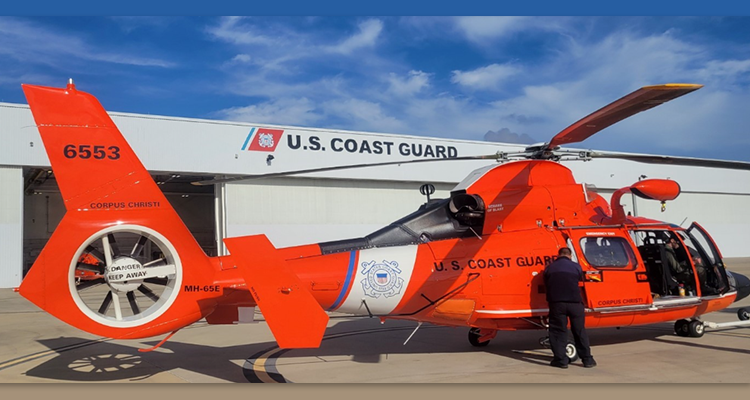
“Coast Guard completes air station transitions to upgraded MH-65E with delivery to Corpus Christi” –CG-9

MH-65E cockpit

Below is news from the Acquisitions Directorate (CG-9).

This is a very large deal. The MH-65E looks very much like the Dolphins that entered service about 40 years ago, but they are very different aircraft with more power, a different radar, air borne use of force, and very different avionics.

Extending their life to 30,000 hours, that is 1,250 x 24 hour days or almost three and a half years airborne. Looks like we are getting our money’s worth out of these aircraft.

Looks like his we will be continuing to use the H-65s for some time. This indicates that we will not see an all H-60 rotary wing fleet until the 2040s. By then, all the WMECs should be out of service.


Upgraded MH-65E Dolphin CGNR 6553 is delivered to Air Station Corpus Christi, Texas, Feb. 7, marking the full transition of Coast Guard air stations to the upgraded Dolphin short range recovery aircraft. U.S Coast Guard photo


The Coast Guard reached an important milestone in its MH-65 Conversion and Sustainment program on Feb. 7 when it delivered CGNR 6553 to Air Station Corpus Christi, Texas. This was the third and final upgraded MH-65E for Corpus Christi, which is the last air station to transition to the upgraded short range recovery helicopter.

“The third and final MH-65E delivery to Air Station Corpus Christi marks a significant accomplishment for the H-65 Conversion/Sustainment Program,” said Cmdr. Jen Ahearn, program manager. “All H-65 operational units have now been fielded with modernized aircraft that have received improvements to address reliability and obsolescence issues as well as increase the service life of the asset from 20,000 to 30,000 flight hours. We have heard from the fleet through operational assessments, transition working groups and post-flight reports that the MH-65E upgrade enhances situational awareness and decreases pilot workload, things that are valued by crews executing high-risk, dynamic missions.”

CGNR 6553 was the 79th Dolphin upgraded to the Echo or “E” configuration. The upgrade includes an improved automatic flight control system; enhanced digital weather/surface search radar; installation of a robust command, control, communications, intelligence, surveillance and reconnaissance and computers suite; and modernization of the digital flight deck.

“Successfully fielding this asset to the fleet is a testament to the years of hard work and dedication of professionals committed to improving the Coast Guard’s readiness and short-range recovery capabilities,” Ahearn said. “We still have work ahead of us, but it’s nice to take a pause and recognize this program milestone, especially as we celebrate the H-65’s 40th anniversary this year.”

Another 11 conversions will be completed, for a total of 90, to allow operational aircraft to rotate into programmed depot maintenance, an intensive maintenance process completed at the Coast Guard Aviation Logistics Center that keeps the fleet in its best condition possible.

Continued operation of the MH-65E fleet is needed to maintain the Coast Guard’s rotary wing capability while preparing for the eventual transition to an all MH-60T medium range helicopter fleet sometime in the 2040s.

The MH-65E Conversion/Sustainment program of record was reduced from 98 aircraft based on the notional MH-60T transition schedule. Stopping the program at 90 conversions will help mitigate shortages of Echo replacement parts, sustaining the existing fleet longer.

The upgraded MH-65E aircraft increases aircrew situational awareness through its standardized “glass cockpit” technology. In addition to improved search and rescue capabilities, the advanced navigation systems allows pilots to safely maneuver through the highly congested, complex air traffic that can be encountered during a disaster response.

Adding a third MH-65E to Air Station Corpus Christi enhances the station’s ability to carry out its missions throughout its 11,250 square-mile jurisdiction. That area covers Texas from the U.S. southern border, north to the Colorado River and westward, including the entire state of New Mexico as well as 200 nautical miles offshore in the Gulf of Mexico.

“Being the last unit in the Coast Guard to transition to the 65E was a unique experience,” said Cmdr. Mary Bender, Air Station Corpus Christi deputy of operations. “We had the advantage of watching each unit transition before us and we tried to use the wisdom gained to create as seamless of a transition as possible. Our maintenance team has been truly amazing as they work to understand and repair this model.”

Bender recalls the first search and rescue case they conducted with the upgraded Echo. “It was a week after we received our second bird, and it was the ‘standard Coast Guard Day,’ low visibility, fog and icing on the way. A man had experienced anaphylactic shock, was intubated and running out of oxygen on a rig 180 nautical miles offshore. Our crews safely transported the patient to land, and he survived.

“We were so thankful to have all the new modes and ADS-B (Automatic Dependent Surveillance-Broadcast) while conducting the very unique mission during less-than-ideal conditions,” Bender said.

For more information: MH-65 Short Range Recovery Helicopter Program page

“Commandant delivers the 2024 State of the Coast Guard Address”

Above is a video of the Commandant’s 2024 State of the Coast Guard address. Below is the MyCG look at the address.

The video does not actually start until about time 1:40 and we don’t see the Master Chief of the Coast Guard until minute 3:00. He notes that the Coast Guard is making “great progress” on addressing workforce shortages.

As the MyCG story notes, “The State of the Coast Guard Address is mainly intended for Congress and external stakeholders” so a lot of this is introductory, but the address has a lot of meat beginning about time 16:00.

The Commandant reports that the maintenance budget will only address about 50% of planned maintenance–that is pretty serious. I have heard rumblings about deferred maintenance but this is both more definitive and worse than anything I had heard before.

Admiral Fagan has talked more about infrastructure than any previous Commandant I have heard, and she talked here about the need for more infrastructure maintenance.

Admiral Fagan has pushed lowering barriers to service. She also reports the Coast Guard is fielding more recruiters.

She addressed the need to stop harmful behaviors such as sexual harassment and measures being taken.

During the presentation, the Commandant talked about how much more the Coast Guard has been doing in the Pacific but considering that 47% of the entire US EEZ is inside the 14th District, it still looks like the Coast Guard is underrepresented in the Pacific. 


March 21, 2024

Commandant delivers the 2024 State of the Coast Guard Address

By AJ Pulkkinen, MyCG writer

The Commandant, Adm. Linda Fagan, focused on operations, the workforce, and the future as she delivered her 2nd State of the Coast Guard address to Congress last night. You can view it on YouTube or Vimeo.

Operations 

Adm. Fagan highlighted the response to Lahaina wildfires on Maui, narcotics interdictions in the Caribbean and Eastern Pacific, and maritime migrant interdictions in the Pacific, Caribbean, and Straits of Florida. She cited the HARRIET LANE’s homeport shift from Portsmouth, Virginia, to Honolulu, Hawaii, as evidence of the importance of the Indo-Pacific region. She also pointed to the HEALY’s Artic transit as an important step to ensuring our national sovereignty in the northern high latitudes.

“Last year, the United States Coast Guard saved nearly five thousand lives, and ensured the safety of thousands more through our work to prevent maritime accidents before they happen,” said Adm. Fagan.

People 

The Talent Management Transformation Task Force “hit the ground running, challenged long-held assumptions, and are writing new personnel policies that make it easier to join and serve in the United States Coast Guard,” said Adm. Fagan.

Adm. Fagan advocated for our families to have access to affordable housing, childcare, and medical facilities. She pointed to the creation of the Talent Acquisition Specialist rating, the opening of new recruiting offices, and broadening the applicant pool as key steps to closing our current workforce shortage. The Commandant celebrated the tailored approach offered by Agile A-Schools that get trained Petty Officers to the field quicker than before. She celebrated the changes to how the Service manages talent and makes it easier to serve.

“The Coast Guard of the future will increasingly rely on data, analytics, and artificial intelligence to inform our missions,” said Adm. Fagan.

Future 

Adm. Fagan expressed her excitement in launching the ARGUS, the first offshore patrol cutter (OPC). She set her top acquisition priority as starting construction of the Polar Security Cutter – the first new heavy icebreaker built in the United States since the 1970s. She cited the Office of Data Analytics and use of unmanned systems as force multipliers. Finally, Adm. Fagan highlighted efforts to strengthen service culture.

The State of the Coast Guard Address is mainly intended for Congress and external stakeholders. The Commandant will hold a Townhall for all members of the Service on April 3. Stay tuned to find out how you can be a part of the Townhall.

-USCG-

Resources: