Chuck Hill's CG Blog

Chuck Hill's CG Blog

“BOLLINGER SHIPYARDS DELIVERS US COAST GUARD CUTTER DAVID DUREN (FRC 1156) TO U.S. COAST GUARD” –Bollinger News Release

USCGC David Duren is the first of three FRCs to be homeported in Astoria, OR

Below is a Bollinger news release.

This delivery is a little more than 16 weeks after the delivery of USCGC Melvin Bell (WPC-1155) on November 16, 2023. There are still nine more on order, and the FY 2025 budget request asks for two more. The Coast Guard has said all 65 on order will be delivered by 2025, but that seems unrealistic. Delivery rates have generally been five per year or less, and it appears there will be only three in 2024. Looks like deliveries will extend into at least 2026.

The next Fast Response Cutter, the future USCGC Florence Finch (WPC-1157) will also go to Astoria and is expected to be delivered June 13, 2024. Sector Columbia River will have to wait a bit for their third FRC since WPC-1158 is expected to go to Kodiak with delivery expected October 24, 2024.

As noted below, deliveries are made at Key West. Typically, it has been about three months from delivery to commissioning of units this class.


LOCKPORT, La., — (March 18, 2024) – Bollinger Shipyards (“Bollinger”) recently delivered the USCGC David Duren to the U.S. Coast Guard in Key West, Florida. This is the 182nd vessel Bollinger has delivered to the U.S. Coast Guard over a 35-year period and the 56th Fast Response Cutter (“FRC”) delivered under the current program.

“We’re incredibly proud to deliver the USCGC David Duren, the first of three Fast Response Cutters to be homeported in Astoria, Oregon,” said Bollinger President & CEO Ben Bordelon. “We’re confident that pound for pound, the quality and capabilities of the FRC platform are unmatched and that this vessel will outperform its mission requirements and expectations in the challenging conditions where it will operate in the Pacific Northwest. Our unique experience building for the Coast Guard is unparalleled and has shown time and time again that we successfully deliver the highest quality vessels on a reliable, aggressive production schedule. We look forward to continuing our historic partnership with the U.S. Coast Guard.”

The USCGC David Duren will be the first of three FRCs to be homeported in Sector Columbia River, which is known as “The Protectors of the Pacific Northwest.” The sector is responsible for coastal safety, security, and environmental protection, as well as protecting and securing vital infrastructure, rescuing mariners in peril at sea, enforcing federal law, maintaining navigable waterways, and responding to all hazards impacting the maritime transportation system along the Oregon coast.

As the U.S. Congress continues to debate Fiscal Year 2024 government funding, the future of the Fast Response Cutter Program remains uncertain. While the House Homeland Security Appropriations Bill included funding for four new FRCs, the Senate bill did not include funding for any new vessels. The prospect for a year-long Continuing Resolution (CR) at last year’s funding level introduces a critical level of uncertainty, as funding levels continue to lag behind the meteoric rise in raw material and input costs. The Coast Guard’s Fiscal Year 2025 Budget to Congress includes procuring two more FRCs to provide increased Coast Guard presence and engagement with allied and partner countries in the Indo-Pacific region. Last year, Adm. Linda Fagan, the Commandant of the U.S. Coast Guard, said, “The Indo-Pacific is clearly a consequential region for America’s future. The United States Indo-Pacific Strategy identifies an expanded role for the U.S. Coast Guard as a top Administration priority as we seek to ensure a region that is free and open. The U.S. Coast Guard will continue its long history of operational presence in the region with additional cutter patrols and deployable specialized forces.”

Each FRC is named for an enlisted Coast Guard hero who distinguished themselves in the line of duty. Boatswain’s Mate Master Chief David N. Duren was one of the most iconic figures in the history of Coast Guard surfmen. Considered perhaps the finest boat driver in the history of the modern Coast Guard, he is remembered by his shipmates and mentees not only for his expertise in seamanship, but also for his leadership and character. Between 1979 and 1983, Duren deployed on search and rescue cases more frequently than any other officer-in-charge and, in one year, executed over 250 cases. During this tour, Duren received two Coast Guard Medals for exceptional heroism, and the Douglas A. Munro Inspirational Leadership Award. Perhaps more remarkable was the fact that the personnel under his watch at Depoe Bay earned a total of 24 medals and awards.

ABOUT THE FAST RESPONSE CUTTER PLATFORM

The FRC is an operational “game changer,” according to senior Coast Guard officials. FRCs are consistently being deployed in support of the full range of missions within the United States Coast Guard and other branches of our Armed Services due to its exceptional performance, expanded operational reach and capabilities, and ability to transform and adapt to the mission. FRCs have conducted operations as far as the Marshall Islands—a 4,400 nautical mile trip from their homeport. Measuring in at 154 feet, FRCs have a flank speed of 28 knots, state of the art C4ISR suite (Command, Control, Communications, Computers, Intelligence, Surveillance, and Reconnaissance), and stern launch and recovery ramp for a 26-foot, over-the-horizon interceptor cutter boat.

ABOUT BOLLINGER SHIPYARDS

Bollinger Shipyards (www.bollingershipyards.com) has a 78-year as a leading designer and builder of high-performance military patrol boats and salvage vessels, research vessels, ocean-going double hull barges, offshore oil field support vessels, tugboats, rigs, lift boats, inland waterways push boats, barges, and other steel and aluminum products from its new construction shipyards as part of the U. S. industrial base. Bollinger has 13 shipyards, all strategically located throughout Louisiana and Mississippi with direct access to the Gulf of Mexico, the Mississippi River and the Intracoastal Waterway. Bollinger is the largest vessel repair company in the Gulf of Mexico region.

“The huge, resource rich territory China will snatch while the West dithers” –The Telegraph

The Telegraph has an opinion piece by retired Royal Navy Commander and former CO of the Ice Patrol Vessel HMS Endurance, Tom Sharpe OBE.

He feels, as I do, that we are headed for conflict over claims to Antarctica. It is after all, the last land area on earth where no nation exercises sovereignty.

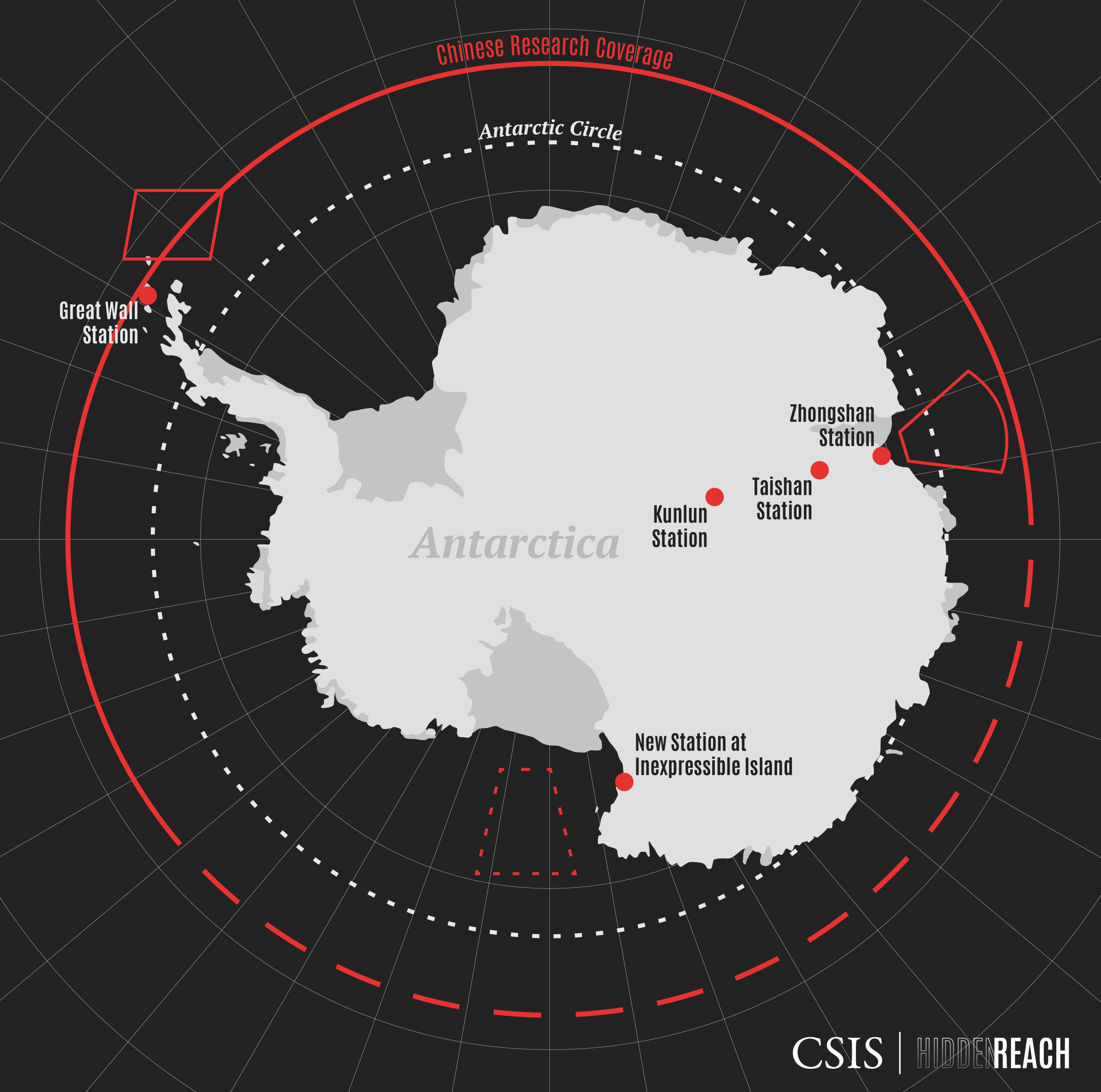
China’s presence in the Antarctic is growing rapidly and, as they have shown in the South China Sea, they may choose not to accept the decisions of international courts.

Adapted from a 2021 Chinese environmental evaluation report submitted to the Secretariat of the Antarctic Treaty. Source CSIS

What this boils down to is that, after courts make their decisions, we may have to fight in Antarctic to make those decisions stick.

We don’t seem to have given much thought to the possibility of combat in and around Antarctica, but I believe it is a real possibility, perhaps not soon, but beginning in 2048 when the Antarctic Treaty comes up for renegotiation. 24 years may seem to be a long way off, but we are building now the assets that will be available in 2048.

By then the rapidly growing Chinese presence in Antarctic, as well as their Navy are likely to be in a very strong position. We are already seeing the Chinese apparently establishing dual use (civilian and military) facilities in Antarctica.

In the interim, we can expect China and perhaps others to try to skirt the rules to strengthen their presence. We need to monitor and challenge any gray zone operations.

Command Structure:

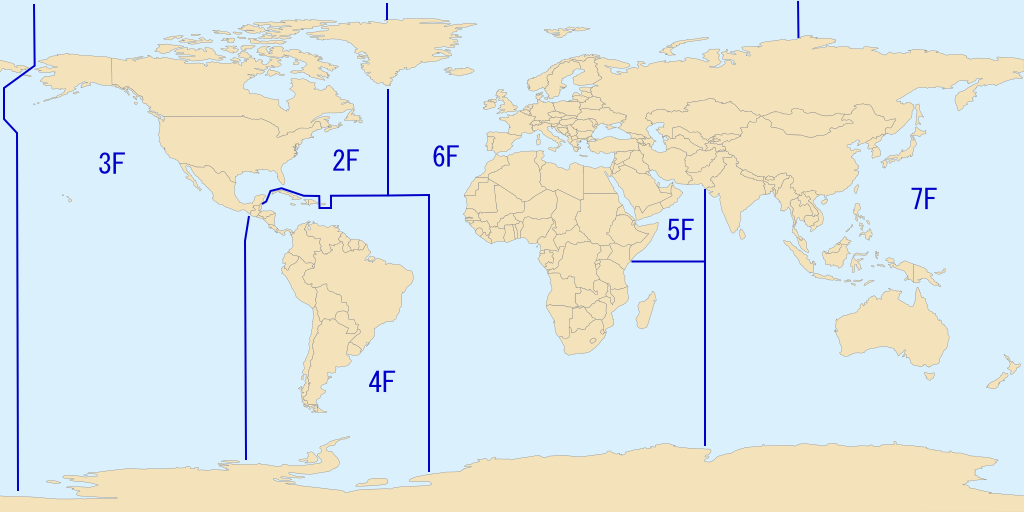
These are the Unified Combatant Commander’s Areas of Responsibility.

There is an obvious reason that Antarctica does not seem to be on anyone’s radar. Looking at who is potentially responsible for operations in the Antarctic, it is a hodgepodge. Various parts of the Continent might fall under SOUTHCOM, AFRICOM, and INDO-PACOM.

US Navy Fleet Organization

3rd Fleet, 4th Fleet, 6th Fleet, and 7th Fleet all have a nominal slice, but none of these commands consider the area their primary concern.

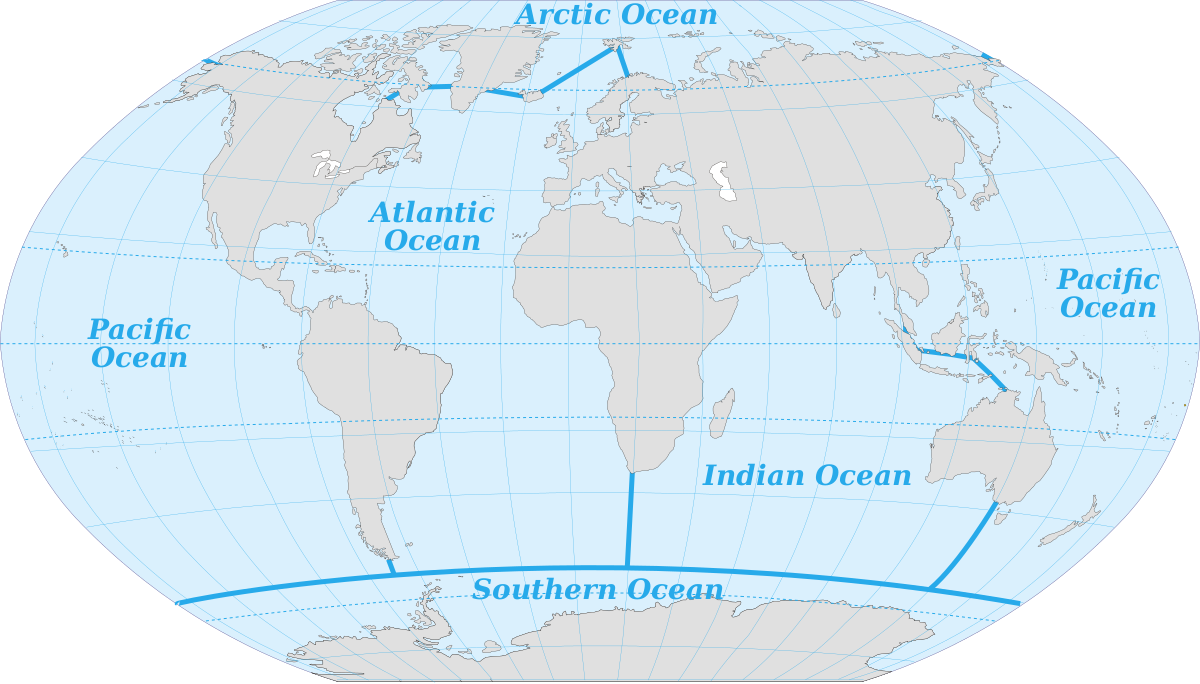
World map of oceans : English version. By Pinpin via Wikipedia.

There is no single national command authority that covers all of Antartica or the Southern Ocean. Really no one is in responsible for the area below 60 degrees South.

It seems likely that in the near term, Southern Ocean fisheries will require some protection. The only nation I have heard of doing fisheries protection in the Southern Ocean outside their own EEZ is New Zealand.

The Coast Guard currently operates the only US polar icebreakers. At some point the Coast Guard may become involved in fisheries protection in the Southern Ocean. If there is conflict in Antarctica, Coast Guard assets will likely be needed to gain access.

Related: 

“DHS Center for Countering Human Trafficking Year-in-Review” –MyCG

A Coast Guard Cutter Campbell law enforcement crew stopped a grossly overloaded, unsafe vessel near Turks and Caicos, May 9, 2022. (U.S. Coast Guard photo by Petty Officer 3rd Class Erik Villa-Rodriguez)

Below is a news release from MyCG regarding a new DHS report. 


March 19, 2024

DHS Center for Countering Human Trafficking Year-in-Review

By DHS Center for Countering Human Trafficking

In FY 2023, the Coast Guard screened 257 unaccompanied children for human trafficking after encountering them during migrant interdictions at sea. The children were then referred to interagency partners as part of our service’s efforts to address human trafficking in collaboration with the U.S. Department of Homeland Security (DHS)

You can learn more about these and similar efforts in the DHS Countering Human Trafficking: Year-in-Review, just released by the DHS Center for Countering Human Trafficking (CCHT). The report is designed to help readers understand DHS’s multifaceted work, and to use the many available resources to support their own counter-trafficking work.

Employees of DHS and its components work every day to end sex trafficking and forced labor through a wide range of efforts, including:

  • Identification and screening for victims of human trafficking
  • Victim protection and assistance
  • Criminal investigations of human trafficking crimes
  • Enforcement of laws related to the importation of goods produced with forced labor and
  • Training, outreach and engagement with law enforcement, government, industry, non-governmental organizations, and the public.

In 2023, approximately 13,000 Coast Guard personnel completed the DHS Blue Campaign Human Trafficking Awareness Training module to ensure they were prepared to identify potential indicators of human trafficking while conducting maritime operations.

Coast Guard Pacific Area went further during its third Forced Labor and Human Trafficking tabletop exercise. During this training, participants honed interagency response to the discovery of forced labor during inspection of a foreign fishing vessel outside of the U.S. Exclusive Economic Zone. The exercise included representatives from the National Oceanic and Atmospheric Administration, Department of State, Department of Justice, and DHS, and DOJ. Lessons learned from this exercise were leveraged to create a curriculum for a first-of-its-kind multinational maritime labor seminar.

Every year, nearly 25 million men, women, and children are trafficked worldwide – including here in the United States. DHS is a global leader in this fight and works with partners at every level to prevent this heinous crime, identify and protect victims, and bring perpetrators to justice.

The DHS Center for Countering Human Trafficking (CCHT) integrates the efforts of 16 Agencies and Offices within DHS that carry out our anti-trafficking mission. These efforts range from criminal investigations, victim assistance, and combating forced labor in exports destined for the United States to external outreach and public education, intelligence, and training.

All Coast Guard members are encouraged to read the report here.

“U.S., Indian Coast Guards Drill Against Drone Attacks In Sea Defenders 2024” –Naval News

USCGC Bertholf and an ICG offshore patrol vessel sail together during Sea Defenders 2024.

Naval News reports,

U.S. and Indian Coast Guards held this year’s Sea Defender with recent events in the Red Sea in mind, training against both drone and piracy threats…Taking place off the Malacca Strait off the Andaman and Nicobar Islands, USCGC Bertholf (WMSL-750) and Indian Coast Guard vessels and aircraft held several maritime security activities in port and at sea over four days. This exercise also marked the first time a U.S. Coast Guard vessel visited New Delhi’s southernmost territory, strategically located at the entrance to the Malacca Strait between the Indian and Pacific oceans. 

The Indian Navy and Coast Guard both operate large numbers of Offshore Patrol Vessels. Established in 1978, the Indian Coast Guard has been growing rapidly and is now one of the largest in the world. Following the 2008 Mumbai Terrorist Attack, which came by sea, the Indian Coast Guard grew even more rapidly.

The Indian Coast Guard now operates 27 Offshore Patrol Vessels (OPV), all commissioned within the last 28 years, 18 within the last ten years. The Indian CG has ordered six more. The Indian Navy also operates ten OPVs, all commissioned in the last 35 years, four commissioned within the last eleven years. The Indian Navy has ordered eleven more OPVs.

The US Coast Guard operates, I believe, 36 OPVs now, soon to be 34. Only six of those have been commissioned in the last ten years. 26 of the USCG OPVs are over 33 years old.

The NSCs are doing things we would have never expected when they were conceived.

As included in this exercise, it appears there is an emerging requirement for the Coast Guard to be prepared to counter unmanned systems of various types, both for self defense and for the defense of maritime assets. Unmanned systems are likely the weapon of choice for future terrorist attacks.

Of all Coast Guard assets, the large cutters are currently the most capable against the various types of one-way attack unmanned systems, but they are unlikely to be involved in the most likely scenarios. Attacks on passenger ships, submarines, or aircraft carriers, during transit from port to open sea seem most probable. Here we are decidedly unprepared, but perhaps PATFORSWA is leading the way.

“U.S. attempts to stop arms smuggling to Yemen with limited resources” –Is the Coast Guard the Answer?

US Coast Guard / CENTCOM released photo of weapons seized aboard an Iranian dhow on February 15 2024. The seizure included UUV and USV components. The annotations, highlighting possible UUV parts, have been added.

The Washington Post reports,

“The Biden administration is expanding efforts to surveil and intercept Iranian weapons being smuggled to Yemen, where Houthi militants have staged a deadly campaign of violence against commercial shipping that has proved resilient to six weeks of military strikes, said U.S. officials familiar with the matter.

The initiative seeks to map seafaring routes used by Tehran and stop the arms shipments while in transit, an acknowledgment that the Houthis are likely to pose a significant security challenge for the foreseeable future. It is part of a broader strategy that also includes sanctions and diplomatic pressure but faces constraint as essential military resources are in short supply.

This sound, to an old Coastie, a lot like what lead to the creation of Coast Guard Squadron One (ultimately 26 Point class 82-foot patrol boats) and Squadron Three (five to seven High Endurance cutters) during the Vietnam War.

At the very least expect more Coast Guard boarding teams to be operating with the Navy.

The Webber class Fast Response Cutters (FRC) are the weapon of choice here. The Navy never bothers to produce small ships suitable for the interdiction of clandestine coastal shipping, while this has always been a type common in the Coast Guard fleet. Six FRCs are already operating with the 5th Fleet out of Bahrain. They are already intercepting arms smugglers, as well as drug smugglers that finance Iranian proxy movements. The Coast Guard already has 55 FRCs and is procuring at least ten more.

Will we see more cutters assigned to 5th Fleet? They are also short of air assets. Will we see Coast Guard fixed wing aircraft searching the Arabian Sea?

USCGC McLane (WPC/WSC/WMEC-146) Museum Ship and Her Class, the “Buck and a Quarters”

The USCGC McLane, docked at the USS Silversides Submarine Museum in Muskegon, Michigan. Photo from JJonahJackalope via Wikipedia.

Just learned there is Coast Guard museum ship I had not been aware of, USCGC McLane (WSC-146) now 97 years old, one of a class of 125 foot long cutters referred to as “Buck and a Quarters.”

She is moored with the former USS Silversides at the USS Silversides Submarine Museum in Muskegon, Michigan. That they are in fresh water is a real benefit compared to salt water.

Somewhere there may be a lightship that has been preserved that is older, but I believe this is the oldest US Coast Guard patrol cutter on display.

The museum repeats the claim that McLane sank a Japanese submarine off the Alaska coast near Dixon Entrance, but later research has been unable to verify this. There is little doubt that she and other units did in fact engage a submarine, but if a submarine was sunk, it has not been identified. (Maybe someone will look for the wreck.) Japan destroyed many of its records at the end of WWII. The engagement and efforts to identify the sub are recounted here.

McLane was one of 33 Active class cutters. All 33 were commissioned in 1927.

These little ships, at about 220 tons full load, were smaller than the new Webber class (WPC) Fast Response Cutters (353 tons). The crew size changed over the life of the ships ranging from as high as 46 at the end of WWII to as few as 20 at the beginning and end of their service life.

A number of different engines were used to power the class, providing 500 to 1600 HP total, driving twin props, giving the little ships a max speed of 10.2 to 13 knots. Range was up to 4000 miles at seven knots or about 2,500 miles at 12 knots.

In the mid-60s the 125s still in commission were redesignated Medium Endurance Cutters (WMEC).

Two of the class USCGC Jackson (WSC-142) and Bedloe (WSC-128) capsized going to the aid of a torpedoed freighter in the Great Atlantic Hurricane of September 1944 which also sank a lightship.

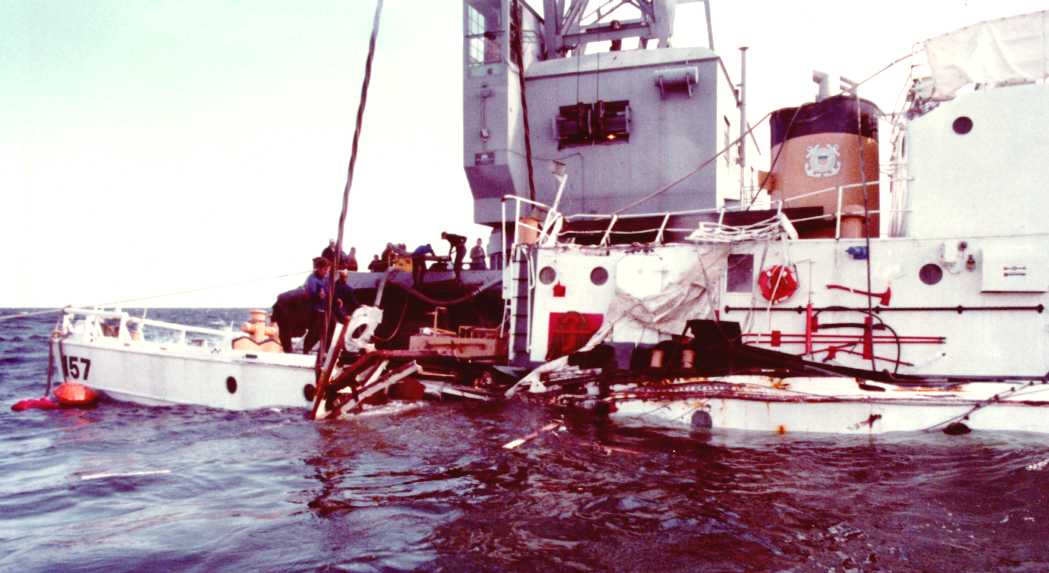
USCGC Cuyahoga (WIX-157) after being raised. USCG photo.

Many of the class remained in commission until the late 60s. The last of the class in Coast Guard service, USCGC Cuyahoga, was sunk in a collision the night of October 20, 1978.

Last I heard, the former USCGC Morris had been acquired by a museum and sailed to Galveston in 2021. It might make a great addition to the planned Coast Guard Museum in New London.

“USCGC Frederick Hatch supports partners in the Federated States of Micronesia and Republic of Palau under Operation Rematau” –U.S. Coast Guard Forces Micronesia/Sector Guam

The crew of the USCGC Frederick Hatch (WPC 1143) stand for a photo with flowers delivered by the people of Ulithi Atoll amid a delivery of 1,500 lbs. of non-perishable food, 1,200 lbs. of water, and essential supplies, including fishing gear and tools, for Ulithi Atoll, FSM, during a state-declared emergency drought on Feb. 21, 2024. The crew completed a significant operational patrol under Operation Rematau from Feb. 15 to March 4, 2024, reinforcing the U.S. Coast Guard’s commitment to maritime safety, security, and environmental stewardship in the Pacific region. (U.S. Coast Guard photo)

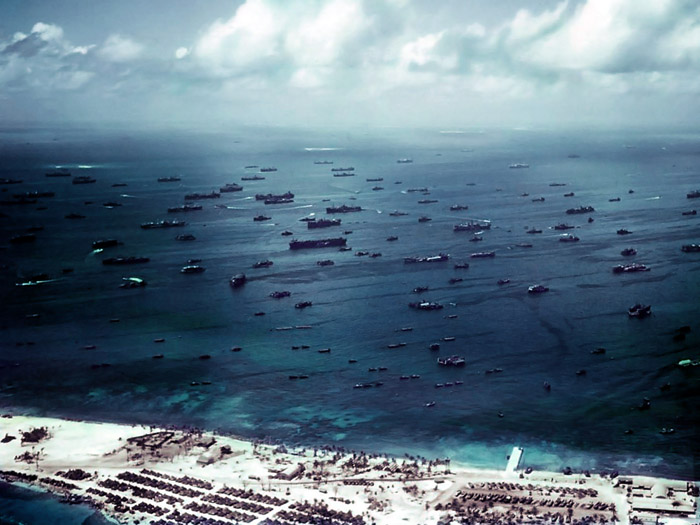
Below is a news release from U.S. Coast Guard Forces Micronesia/Sector Guam. As a reminder of how important these islands can be, I offer the photo below. 

Ulithi Atoll north anchorage and Sorlen Island, late 1944. Naval Base Ulithi was the largest naval base in the world in 1944 and 1945, with over 600 ships at times.


March 14, 2024

USCGC Frederick Hatch supports partners in the Federated States of Micronesia and Republic of Palau under Operation Rematau

SANTA RITA, Guam — The crew of the USCGC Frederick Hatch (WPC 1143) completed a significant operational patrol under Operation Rematau from Feb. 15 to March 4, 2024, reinforcing the U.S. Coast Guard’s commitment to maritime safety, security, and environmental stewardship in the Pacific region.

“Frederick Hatch marked an important milestone in the U.S. Coast Guard’s relationship with our friends in Palau by pioneering the use of the recently signed enhanced bilateral agreement, and we look forward to deepening our ties with Palau’s Marine Law division going forward. The cutter’s first-ever visit to Tinian and participation in Yap Day were both very enjoyable ways to learn about the cultures of our neighboring islands while reflecting our commitment to communities across the Pacific,” said Lt. Patrick Dreiss, commanding officer of USCGC Frederick Hatch.

The Frederick Hatch crew proudly represented the U.S. Coast Guard at the annual Pika Fest Celebration on Tinian, Commonwealth of Northern Mariana Islands, and Yap Day in Colonia, Yap State, the Federated States of Micronesia (FSM).

Supporting local needs, they transported 1,500 lbs. of non-perishable food, 1,200 lbs. of water, and essential supplies, including fishing gear and tools, to Ulithi Atoll, FSM, during a state-declared emergency drought. The crew renewed the meaningful connection with the local community, engaging in direct support and sharing in the generosity and warmth of the island’s residents.

“The opportunity to contribute to the enduring partnership between the Ulithi community and the U.S. Coast Guard, rooted in World War II and grown throughout decades of collaboration, was a special experience for myself and the crew. Thank you to the local non-profit organizations we worked alongside, as the experience of supporting and visiting the people of Ulithi is one of the highlights of my career,” said Dreiss.

Further showcasing the spirit of cooperation and support, the Hatch’s crew organized a donation drive prior to sailing, collecting 40 bags of school supplies and clothing from the U.S. Coast Guard community in Guam and collaborated with the Ayuda Foundation and the Ulithi-based One People One Reef research foundation to facilitate these critical donations to the island.

“Today exemplifies the spirit of teamwork and camaraderie that we hold dear here in Ulithi. It warms our hearts to hear that your short visit to our island was enjoyable, and we’re delighted that you appreciated the coconuts, bananas, and flowers. Knowing that the bananas are adorning your ship’s canopy, and the flowers are being proudly worn by your crew fills us with immense joy,” said Ulithi Mayor John Rulmal.

Yap Day, observed annually on March 1, is a significant cultural and legal holiday in Yap State, one of the four states of the FSM. Established in 1968 and renamed in 1979, it celebrates Yapese culture, highlighting traditional skills and competitions, such as tattooing, fresh produce contests, and traditional games. The U.S. Coast Guard regularly attends, and the 2024 celebration was particularly special as Petty Officer 2nd Class Eugene Halishlius, a native of Yap currently stationed in Guam, returned home aboard Frederick Hatch for the first time in years to participate, further symbolizing the deep connections between the U.S. Coast Guard and the Pacific communities served.

“Returning to Yap, I’m reminded of the values instilled in me: respect, humility, and the identity of being an islander. Coming from a family of navigators, we believe in the power of knowing your waypoints, a principle that guides us to success. Inspired by my brother Ken Raigeluw, who is also serving and driven by our service’s unique opportunities and missions, this journey not only contributes to our collective mission but also my personal growth and family legacy,” said Halishlius.

The Frederick Hatch crew responded to a request from the government of Yap State for a U.S. Coast Guard presence near Ngulu Atoll to deter illegal sea cucumber poaching, demonstrating a commitment to protecting the region’s marine resources and aiding partners. This patrol also marked the first-ever boarding under the Palau enhanced bilateral agreement, signed in August 2023, authorizing U.S. Coast Guard boarding officers to conduct boardings in Palau’s exclusive economic zone (EEZ) on the country’s behalf without a Palauan officer present. While the crew found everything compliant with international and Palauan requirements, the action set a precedent for further regional maritime law enforcement cooperation. It reinforces the trust and confidence of partners in the U.S. Coast Guard’s role to ensure compliance with fishing regulations within partner EEZs.

The patrol also emphasized the need for continued vigilance in the Western Pacific. Not for the first time, the Frederick Hatch crew identified areas of concern for illegal fishing activities and non-compliance with maritime regulations wherein fishing vessels were observed not transmitting on AIS or VMS near the Palau EEZ border with the high seas.

“These efforts not only affirm our dedication to preserving the region’s marine biodiversity but also reinforce the strong and enduring partnerships we have, particularly in support of our Compact of Free Association partners addressing shared security challenges and advancing mutual interests in the Blue Pacific,” said Capt. Nick Simmons, commander of U.S. Coast Guard Forces Micronesia/Sector Guam. “Our partnership with local non-profits and the community in Guam exemplifies a holistic approach to strengthening the fabric of trust and mutual respect we’ve built over decades with Pacific Island communities and beyond as we face future challenges and opportunities together.”

-USCG-

About Operation Rematau
Operation Rematau is how U.S. Coast Guard Forces Micronesia/Sector Guam supports the overarching Coast Guard endeavor Operation Blue Pacific to promote security, safety, sovereignty, and economic prosperity in Oceania. Rematau means people of the deep sea. It reinforces the U.S. commitment to working together to advance Pacific regionalism based on the Blue Pacific narrative. This action supports U.S. national security objectives, bolstering regional maritime good governance and security.

About USCGC Frederick Hatch
The Frederick Hatch is the 43rd 154-foot Sentinel-class fast response cutter named for a surfman and lighthouse keeper who was a two-time Gold Life Saving Medal recipient. Designed for many missions, including search and rescue, national defense, and maritime law enforcement, the Frederick Hatch crew plays a significant role in safeguarding national interests and preserving good maritime governance.

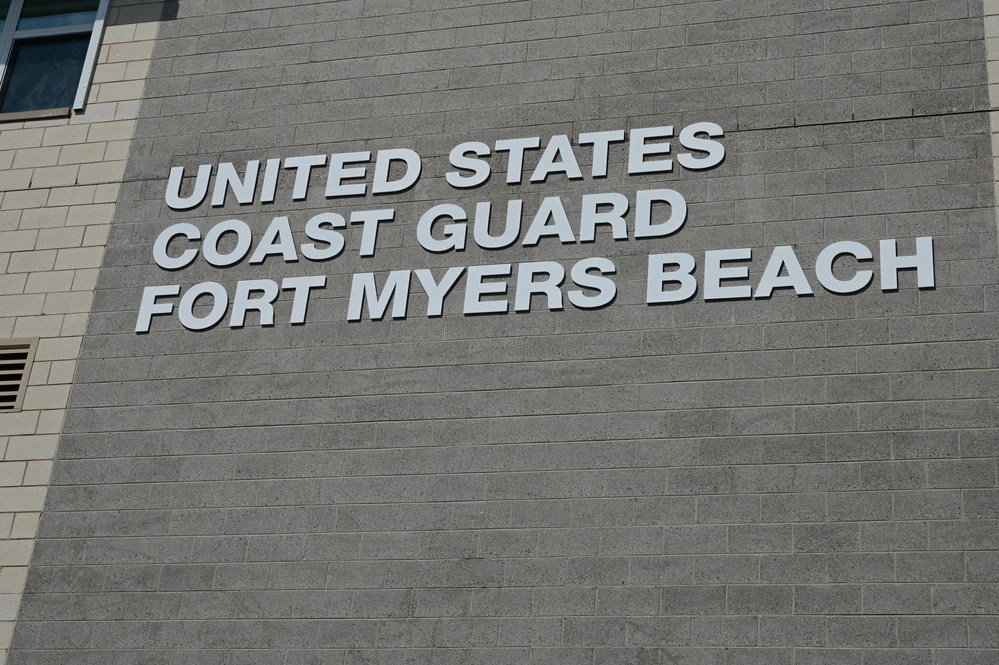
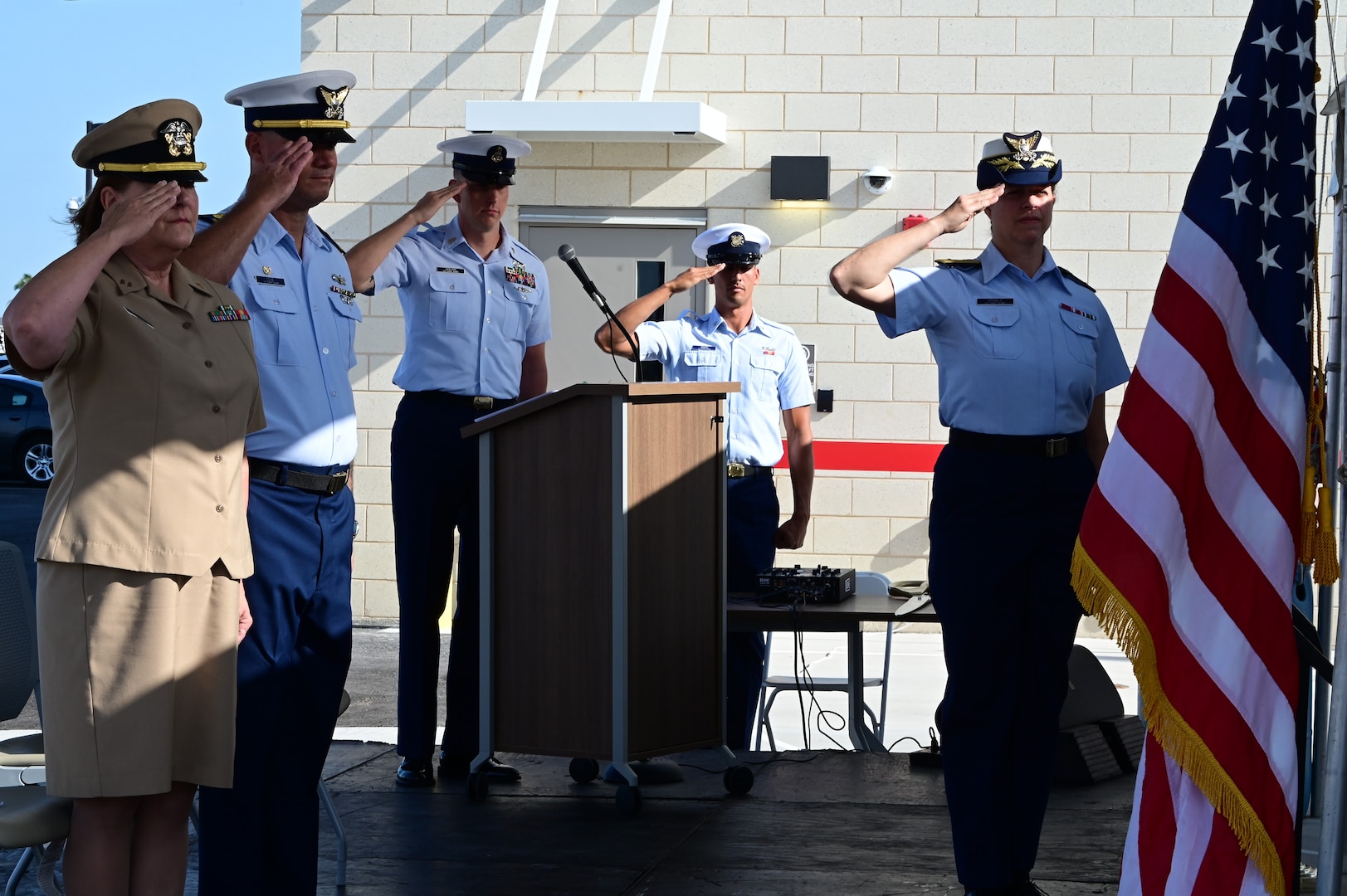
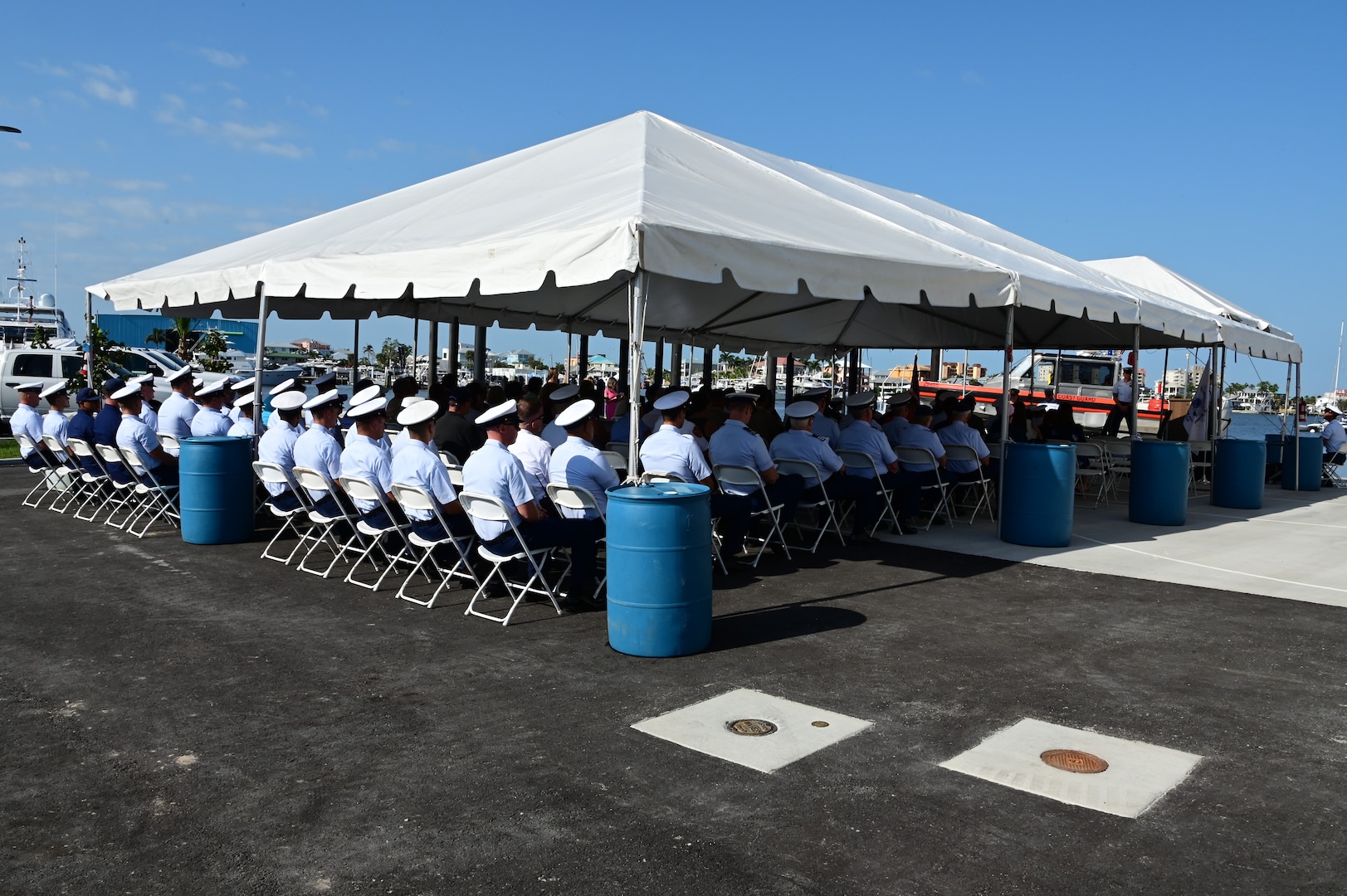
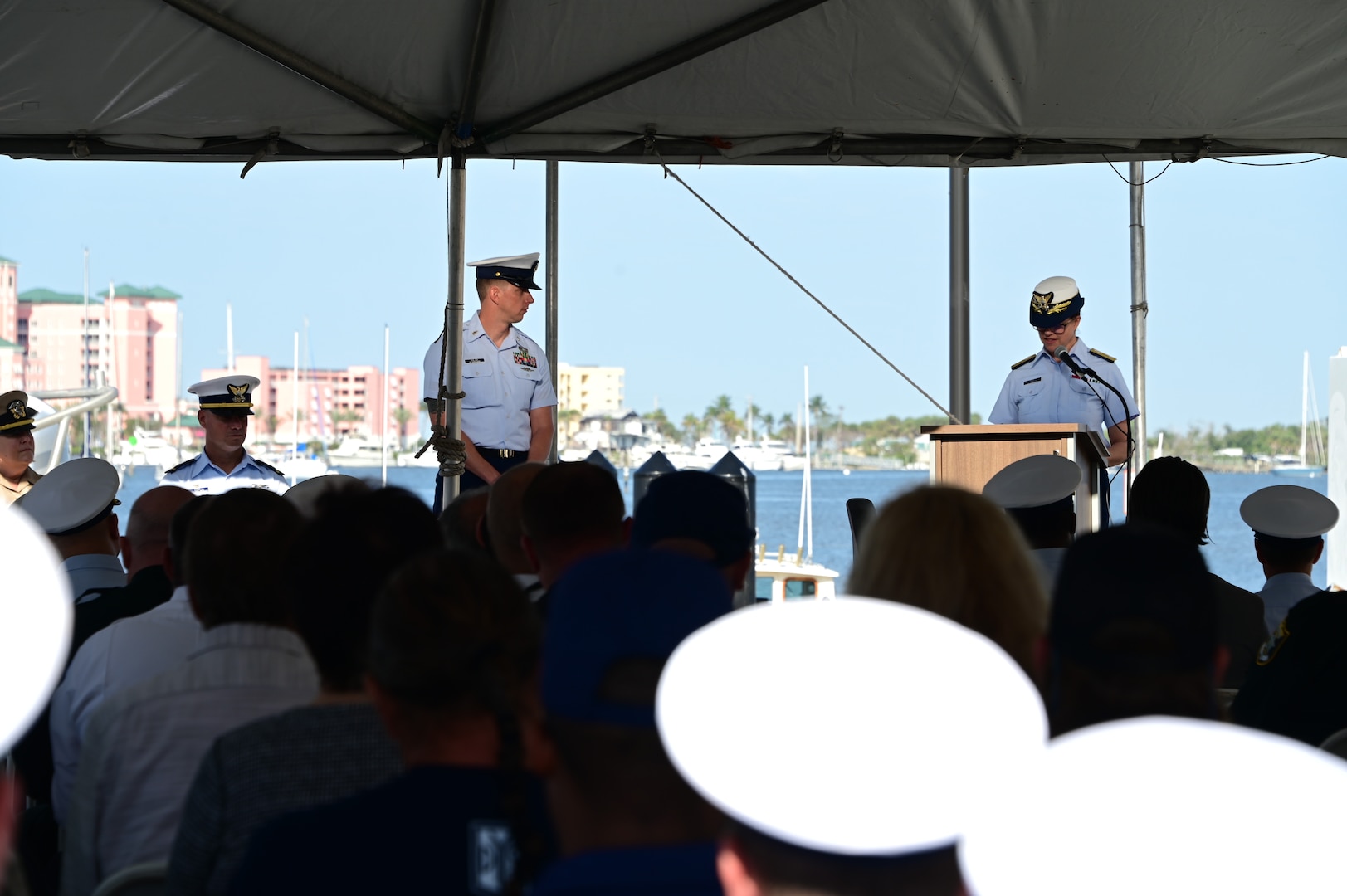
“Coast Guard holds ribbon-cutting ceremony for new station in Fort Myers” –Coast Guard News

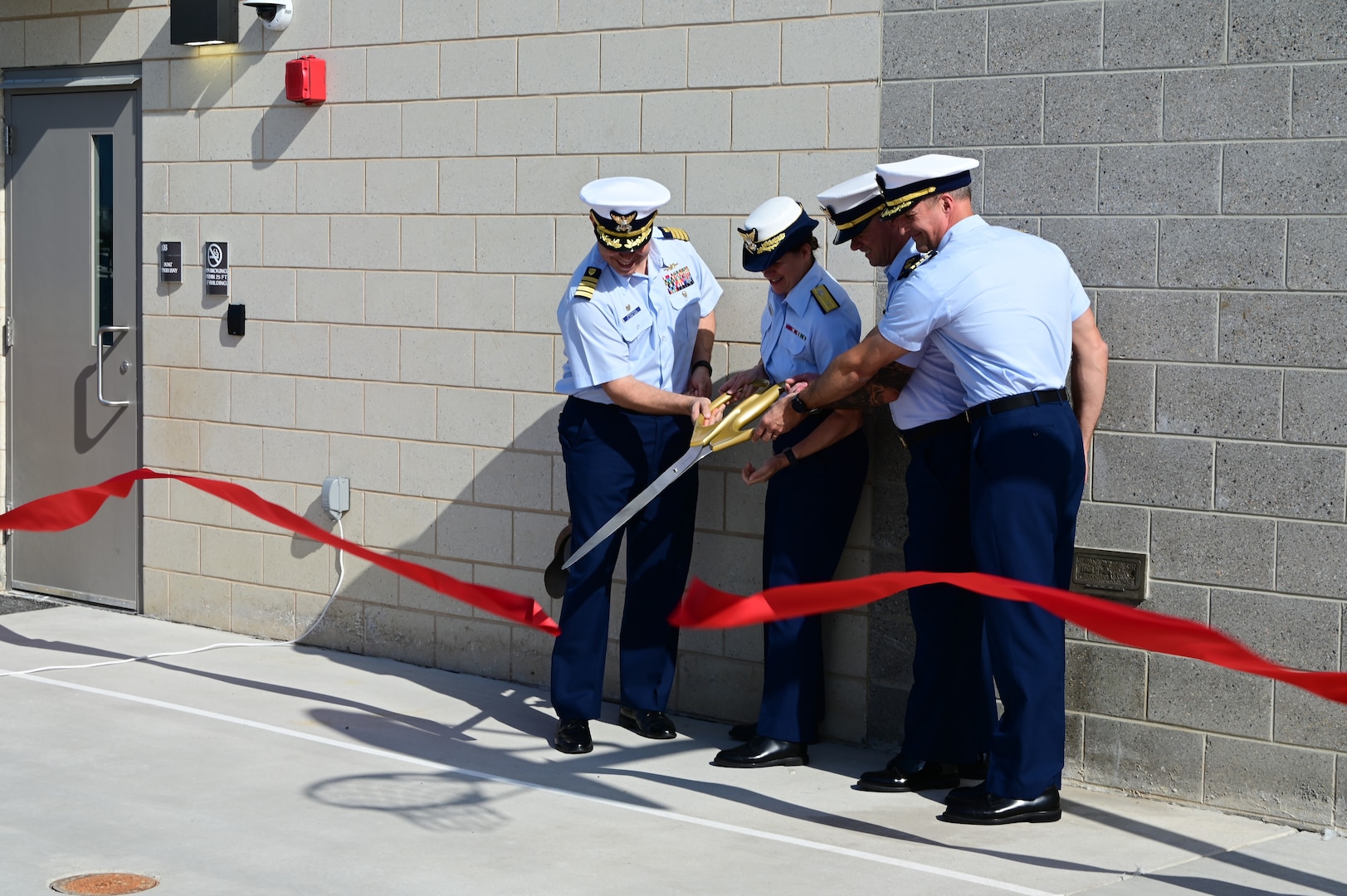
The Coast Guard held a ribbon-cutting ceremony marking the official opening of the new Coast Guard Station Fort Myers Beach facility, March 13, 2024, in Fort Myers. Station Fort Myers Beach and Coast Guard Cutter Crocodile crews will utilize the new three-story building. (U.S. Coast Guard photo by Petty Officer 3rd Class Santiago Gomez)

Below is a press release that appeared on Coast Guard News. Nice to see upgrades to the shoreside infrastructure.


“Stay Tuned! State of the Coast Guard Address 2024” –MyCG

Adm. Linda Fagan in front of the Coast Guard Cutter Eagle in New London, Conn., Aug 19, 2022. US Coast Guard Photo

Information below is from MyCG:


March 13, 2024

Stay Tuned! State of the Coast Guard Address 2024

By MyCG Team

Admiral Linda Fagan will deliver her second State of the Coast Guard Address on Wednesday, March 20th in Washington, DC. The remarks will be livestreamed beginning at 1745 EST. Watch here: https://vimeo.com/event/4143792.

Expect to hear about:

  • The growing demand for Coast Guard operations around the world
  • The Coast Guard’s role in protecting the nation’s Marine Transportation System (MTS) from physical and cybersecurity threats
  • The need for the Service to address personnel gaps, maintenance, and infrastructure challenges to ensure workforce and mission readiness
  • Improvements made to the Coast Guard’s talent management system and recruitment methods
  • The importance of strengthening Service culture

Her remarks will also be uploaded to DVIDS, the U.S. Coast Guard YouTube channel, and https://www.uscg.mil/alwaysready following the event.

Additionally, there will be a follow-on Workforce Townhall on Wednesday, April 3rd both in-person at Coast Guard Headquarters and livestreamed via Microsoft Teams. Stay tuned for more details!

“Sri Lanka Holds Fleet Review in Trincomalee,” Two Former Coast Guard Cutters Participate

SLNS Gajabahu (P626) (the former USCGC Sherman), SLNS Sayurala (P623) and SLNS Sindurala (P624) during 2022 Colombo Naval Exercise. SLNS Samudura (P261) (the former USCGC Courageous) also visible in the distance. Photo defence.lk

SeaWaves Magazine reports,

Hon. Ranil Wickremesinghe, the President and Commander – in – Chief of the Armed Forces of Democratic Socialist Republic of Sri Lanka visited Trincomalee 1st March to review the naval fleet stationed there. Accompanied by Commander of the Navy, Vice Admiral Priyantha Perera, the President inspected the naval fleet, which included a variety of ships. Governor Eastern Province Hon. Senthil Thondaman, State Minister of Defence Premitha Bandara Tennakoon, Chief of Staff to the President and Senior Adviser to the President on National Security Sagala Ratnayaka, Defence Secretary General Kamal Gunaratne (Ret’d) and Chief of Defence Staff General Shavendra Silva and a group of distinguished invitees were also present on this occasion.

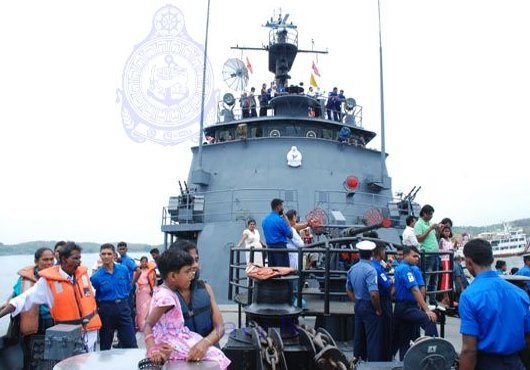
Two of the ships were former US Coast Guard cutters, SLNS Gajabahu (P626) (the former USCGC Sherman, transferred to the Sri Lankan Navy in 2019) and SLNS Samudura (P261) (the former USCGC Courageous, transferred to the Sri Lankan Navy in 2005).

The Sri Lankan Navy includes a third former US Coast Guard cutter, SLNS_Vijayabahu_(P627) (the former USCGC Munro, transferred to the Sri Lankan Navy in 2022).

SLNS-Samudura, the former USCGC Courageous