Sea-Air-Space 2024

National Harbor Restaurants | Gaylord National Resort & Convention Center

Gaylord National Resort & Convention Center

The Navy League will be hosting Sea-Air-Space 2024, April 8-10, 2024, at the Gaylord National Resort & Convention Center, National Harbor, Maryland

There is a list of presentations, many of them by Coast Guard representatives, here.

There will be numerous displays by defense contractors. This video recap of Sea-Air-Space 2023 will give you an idea of the things that might be on display. There is a list of some of the exhibitors here.

“Gaza Pier Announced by the US, How the US Military Builds a Pier, Joint Logistics Over the Sea” –What’s Going on with Shipping

Above is a YouTube video, talking about the pier that is expected to be built to bring supplies into Gaza as announced in the President’s State of the Union address.

Reportedly this will not involve putting US “boots on the ground” in Gaza, but…the Coast Guard may be involved in providing waterside security, states-side load out, and perhaps in the processing of shipments through Cyprus.

The War Zone discusses the risks of the operation here, “This Is How The U.S. Could Set Up a Gaza Beachhead, But Not Without Risks.”

A US Army logistics ship is already on the way.

U.S. Army Vessel General Frank S. Besson (LSV-1) from the 7th Transportation Brigade (Expeditionary), 3rd Expeditionary Sustainment Command, XVIII Airborne Corps, departed Joint Base Langley-Eustis, Va., March 9, 2024, en route to the Eastern Mediterranean carrying the first equipment to establish a temporary pier to deliver vital humanitarian supplies. (U.S. Central Command photo)

Meanwhile, World Central Kitchens is working on its own possible solution. It is not unlikely other non-government organizations will want to bring in supplies as well. Presumably these supplies will also have to be processed through Cyprus where the Israelis have set up a check point.

“USNI News Fleet and Marine Tracker: March 11, 2024”

Taking a look at the latest US Naval Institute Fleet Marine Tracker illustration above. You can see an unusually large number of Coast Guard vessels represented operating outside the US EEZ. They report,

  • USCGC Polar Star (WAGB-10) arrived in Yokosuka on Monday for a regularly scheduled port visit.
  • Coast Guard cutter USCGC Harriet Lane (WMEC-903) is underway on its first deployment since the cutter relocated to Hawaii. The ship last reported in Cairns, Australia, on Thursday.
  • The National Security Cutter USCGC Bertholf (WMSL-750) is operating on the edge of the South China Sea near Singapore.

And they also report on USCGC Glen Harris‘ methamphetamine seizure in the Arabian Sea, and as they do every week, they acknowledged Patrol Forces SW Asia operating out of Bahrain.

“Canadian-led Combined Task Force 150 seizes 770 kg of methamphetamine in the Arabian Sea” (USCGC Glen Harris) –NAVCENT

240305-N-NO146-1001 ARABIAN SEA (March 5, 2024) Bags of illegal narcotics seized from a vessel are stacked on the deck of the U.S. Coast Guard Sentinel-class fast response cutter USCGC Glen Harris (WPC 1144) in the Arabian Sea, March 5.

Below is a news release from US Naval Forces Central Command / Combined Maritime Forces Public Affairs dated March 9, 2024.

USCGC Glen Harris (WPC-1144). Bollinger Shipyards photo.


Canadian-led Combined Task Force 150 seizes 770 kg of methamphetamine in the Arabian Sea

MANAMA, Bahrain —

A U.S. Coast Guard cutter operating under the Canadian-led Combined Task Force(CTF) 150 of Combined Maritime Forces seized 770 kg of methamphetamine from a dhow in the Arabian Sea, March 5.

Based on intelligence provided by CTF 150, the Sentinel-class fast response cutter USCGC Glen Harris (WPC 1144) seized the methamphetamines and, after documenting and weighing the illicit haul, properly disposed of it.

“I am extremely proud of the work of the Combined Task Force 150 team and USCGC Glen Harris in preventing these drugs from reaching their final destination. This interdiction demonstrates the value of multinational efforts within the Combined Maritime Forces to prevent and disrupt criminal and terrorist organizations at sea,” said Canadian Navy Capt. Colin Matthews, Commander CTF 150.

Glen Harris is forward deployed to Bahrain. The fast response cutter is part of a contingent of U.S. Coast Guard ships operating in the region under Patrol Forces Southwest Asia (PATFORSWA). PATFORSWA deploys Coast Guard personnel and ships alongside U.S. and regional naval forces throughout the Middle East.

CTF 150’s mission is to deter and disrupt the ability of non-state actors to move weapons, drugs and other illicit substances in the Indian Ocean, the Arabian Sea and the Gulf of Oman.

CTF 150 is one of five task forces under CMF, the world’s largest multinational naval partnership, and focuses on maritime security operations in the region. CTF 150 supports other CMF Task Forces and their member nations, with support and intelligence further enabling weapons and drug interdictions in the region. The 41-nation naval partnership upholds the international rules-based order by promoting security and stability across 3.2 million square miles of water encompassing some of the world’s most important shipping lanes.

Why the “J-model” C-130s Make Such a Difference

LIMA, PERU, 10.06.2023, Courtesy Photo, USCG District 11
The aircrew of the Coast Guard 2007, an HC-130 based out of U.S. Coast Guard
Air Station Barbers Point, Hawaii, poses for a picture with observers from the Peruvian Navy and Air Force, in Lima Peru, October 2023. During the course of two weeks, Peruvian observers accompanied the USCG aircrew as they conducted overflights of the fishing fleet on the high seas during Operation Southern Shield 2023. (U.S. Coast Guard photo by pilot-in-charge, Lt. Zachary Hunter.) Note the six bladed props that identify the C-130J. 

Below is a news release, “Coast Guard accepts 16th missionized HC-130J into fleet,” from the Acquisitions Directorate (CG-9). There is more here than the announcement of a newly missionized aircraft. The post goes on to talk about the advantages the C-130Js bring to the service, particularly in the Pacific.

The C-130Js provide a 20 percent increase in speed and a 40 percent increase in range over the HC-130H, as well as much improved avionics. The Coast Guard is moving to a fleet of 22 HC-130Js and retiring all their C-130Hs.

The Coast Guard also has 14 HC-27Js and 18 HC-144s all being equipped with Minotaur.

HC-130J Characteristics

  • Length: 97 feet 9 inches
  • Wingspan: 132 feet 7 inches
  • Height: 38 feet 11 inches
  • Maximum Weight: 175,000 pounds
  • Cruise Speed: 320 knots true airspeed
  • Range: 4,900 nautical miles
  • Endurance: 20+ hours

HC-130J Features

  • Standardized Minotaur mission system across all Coast Guard fixed-wing aircraft
  • Real-time tracking and Rescue 21 integration to enhance common operating picture and maritime domain awareness
  • Advanced radar and electro-optical/infrared sensors for search and rescue, law enforcement and intelligence gathering missions; the Coast Guard’s Super Hercules is the first HC-130 aircraft in the world with a 360-degree, belly-mounted, multimode surface search radar
  • Commonality of command, control, communication, computers, cyber, intelligence, surveillance and reconnaissance components and capabilities with those on the Coast Guard’s medium range surveillance aircraft

Minotaur Features

  • Commonality of command, control, communications, computers, cyber, intelligence, surveillance and reconnaissance components and capabilities across all Coast Guard fixed-wing surveillance aircraft
  • Interoperability with multiple Defense and Homeland Security department platforms
  • Real-time tracking and Rescue 21 integration to enhance common operating picture and maritime domain awareness
  • Automatic Dependent Surveillance – Broadcast technology to receive traffic and weather broadcasts and information about other aircraft, including identification, position and altitude
  • Tactical screen replay to review a target’s entire flight in seconds and track the target via its trajectory, even if the target stops broadcasting information or otherwise evades the sensors

The Coast Guard has nine air stations operating fixed wing search aircraft. There are six in the Atlantic Area, which includes the Gulf of Mexico.

  • Cape Cod, MA (C-144)
  • Elizabeth City, NC (C-130, C-27, C-144)
  • Miami, FL (C-144)
  • Clearwater, FL (C-130)
  • Mobile, AL (C-144)
  • Corpus Christi, TX (C-144)

There are only three Coast Guard air stations operating fixed wing search aircraft in the Pacific Area.

  • Sacramento (C-27)
  • Barbers Point, HI (C-130)
  • Kodiak, AK (C-130)

Kodiak and Barbers Point certainly needed the additional range and on-station time that the C-130Js provide.

Barbers Point is the only Coast Guard air station in the 14th District, despite the fact that the 14th District includes 48% of the entire US’s Exclusive Economic Zone (EEZ), and has additional responsibilities to assist the Federated States of Micronesia (FSM), the Republic of the Marshall Islands (RMI), and the Republic of Palau under the Compact of Free Association which together have an EEZ total equal to more than 49% that of the US.


Coast Guard accepts 16th missionized HC-130J into fleet

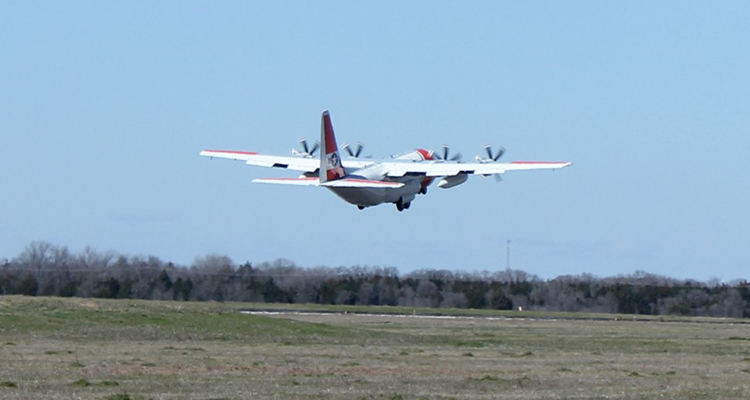
The Coast Guard’s 16th fully missionized HC-130J takes off for its first test flight following the year-long missionization and Block Upgrade 8.1 modification at L3Harris in Waco, Texas. U.S. Coast Guard photo.


The Coast Guard accepted delivery of its 16th fully missionized HC-130J long range surveillance aircraft, CGNR 2016, Feb. 19 following completion of Minotaur mission system integration and Block Upgrade 8.1 installation at L3Harris in Waco, Texas.

The aircraft was delivered to Air Station Elizabeth City in Elizabeth City, North Carolina, returning that air station to its full complement of five HC-130J aircraft. The air station was temporarily operating with four aircraft while an Elizabeth City HC-130J was assigned to Air Station Barbers Point, Hawaii, to complete the transition of that facility to HC-130J operations.

The more advanced engines, six-blade propellors and Minotaur-integrated sensors of the HC-130J enable the Coast Guard to better respond to mariners in peril by improving response times, extending time on scene for search and rescue and law enforcement patrols, and increasing effectiveness and versatility. Regarding the latest air station transition, the improvements are ideally suited for Barbers Point’s vast jurisdiction – 12.2 million square miles of open ocean, atolls and island chains, which make up the Coast Guard’s Fourteenth District.

Three recent natural disasters in Air Station Barbers Point’s area of responsibility have highlighted the value of the improved aircraft, especially the 26% increase in patrol range over the legacy HC-130H.

  • A Barbers Point HC-130J flew 2,300 miles to be the first aircraft on scene after Typhoon Mawar struck Saipan in May 2023, performing overflight assessments and delivering critically needed relief supplies. Over a week, the aircraft flew over 97 flight hours and dispatched 400,000 pounds of cargo and 169 passengers.
  • Barbers Point aircrews responded when wildfires burned thousands of acres in Maui, Hawaii, in August 2023, providing search and rescue and damage assessment along with moving passengers and cargo for disaster relief.
  • Barbers Point HC-130J aircrews answered the call when Tropical Cyclone Lola slammed the island nation of Vanuatu in October 2023, assessing the damage to ports, airports and critical infrastructure. Aircrews also delivered over 80,000 pounds of relief supplies.

The HC-130J and its Minotaur system also play a vital role in identifying and monitoring illegal fishing by providing surveillance and gathering intelligence on suspicious fishing activities. That information is shared with local and national authorities and aids in determining what vessels need to be boarded for inspection.

The service’s Super Hercules aircraft carry out many Coast Guard missions, including search and rescue, drug and migrant interdiction, cargo and personnel transport, and maritime stewardship, as well as providing critical support to Department of Homeland Security partners. The aircraft also can serve as a command and control or surveillance platform capable of identifying and classifying objects and sharing that information with operational forces.

For more information: HC-130J Long Range Surveillance Aircraft Program page and Minotaur Mission System page

“Vanuatu police, aided by US Coast Guard, say Chinese vessels violated fishing laws” Reuters

USCGC Harriet Lane arrives Pearl Harbor. USCG Photo.

Reuters reports,

“Six Chinese fishing boats were found to be violating Vanuatu’s fisheries law after being inspected by local police who were on board the first U.S. Coast Guard boat to patrol the waters of the Pacific Islands nation, Vanuatu police and officials said.”

Nice to see positive results from USCGC Harriet Lane‘s first Pacific law enforcement deployment. (In just over a month, Harriet Lane will turn 40 years old.)

Notably,

“Last year, a Coast Guard vessel on patrol for illegal fishing was refused access to Vanuatu’s port.”

“A Nautical Knife Fight” USCGC Spencer vs U-175 –USNI

US Coast Guard crew of cutter Spencer watched as a depth charge exploded near U-175, North Atlantic, 500 nautical miles WSW of Ireland, 17 Apr 1943. Photo by Jack January

The US Naval Institute’s April 2024 edition of Naval History magazine has an excellent article about USCGC Spencer’s destruction of U-175 on 17 April 1943, A Nautical Knife Fight, written by CPO William A. Bleyer, USCG. I have added the link to my heritage page.

I have read several accounts of this action, and this is the best and most detailed.

USCGC Spencer (WPG-36) in 1942 or 1943. Spencer sank U-175 with assistance of USCGC Duane, on April 17, 1943.

Spencer was the Coast Guard’s most successful ASW ship, sinking at least two U-boats (U-633 on March 1943 and U-175 17 April 1943) and possibly a third.

USCG Cmdr Harold S. Berdine of cutter Spencer talking with US Navy Capt Paul Heineman of the Escort Group A-3 after sinking German submarine U-175, North Atlantic, 500 nautical miles WSW of Ireland, 17 Apr 1943. US Coast Guard photo by Jack January

Spencer was one of seven 327 foot Secretary class cutters. As a class they were extremely successful. Unfortunately, one was lost 29 January 1942, after being torpedoed. Another of the class, USCGC Campbell, famously rammed and sank U-606 on 22 February 1943, after the U-boat was forced to the surface by the Polish destroyer Burza. I had the privilege of being XO on one of the class, USCGC Duane, which assisted Spencer in the sinking of U-175 and rescuing survivors.

Related:

Another one Bites the Dust

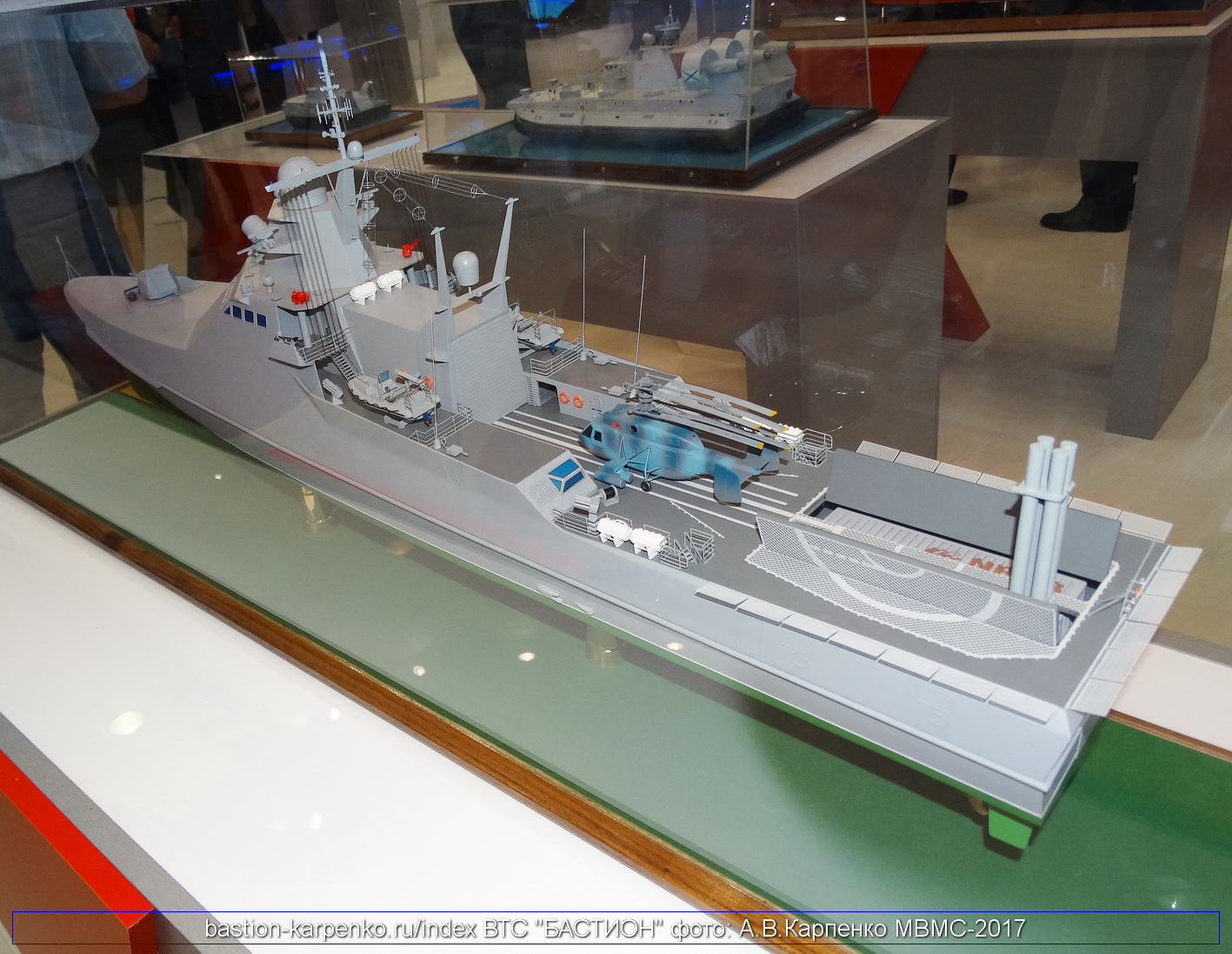
Russian Project 22160 corvette, with optional missile launch system shown elevated. 

The War Zone reports,

“Ukraine continues to strike blows against the Russian Black Sea Fleet, with the latest victim being the Project 22160 patrol ship Sergei Kotov, which was the target of an overnight attack involving uncrewed surface vessels (USVs), or ‘drone boats.’ The same vessel had come under USV attack before, with Russia claiming to have foiled an effort to sink it last July before the warship was reportedly damaged again in September.”

Specs for the Russian patrol ship are as follows:

  • Length: 94 meters (308 ft)
  • Beam: 14 meters (46 ft)
  • Draught: 3.4 meters (11.2 ft)
  • Speed: 30 knots
  • Range: 6,000 nmi
  • Endurance:  60 days
  • Crew: 80

The Project 22160 patrol ships like Sergei Kotov are similar in size and armament to Coast Guard cutters. If Russia had attempted to blockade Ukraine, these would have been the logical ships to enforce the blockade. Looking at what has been happening in the Black Sea makes a strong argument that Coast Guard cutters need a better secondary armament than crew served M2 .50 caliber machine guns.

The attack occurred near the Kerch Strait, East of Crimea, very far from the nearest Ukrainian controlled coast.

Again, the attack was done at night.

Again, the attack involved numerous unmanned surface vessels, at least five in this case.

Again, we see the attacking unmanned craft approaching from the stern, presumably because the target has turned away from the threat in an effort to maximize the time available to counter the threat.

Again, the medium caliber gun is still on the centerline.

Again, we see no supporting units coming to the aid of the target vessel.

Notably the only effective aft facing weapons available were crew served heavy machine guns (presumably 14.5mm). In a video I have seen, it appeared that smoke from the machine guns may have been obscuring their targets. Tracers and muzzle flash probably also adversely effected the gunners’ night vision. (In my 22 years in the CG, including three years at Fleet Training Group San Diego, I don’t think I ever saw a .50 exercise conducted at night against a small moving target.)

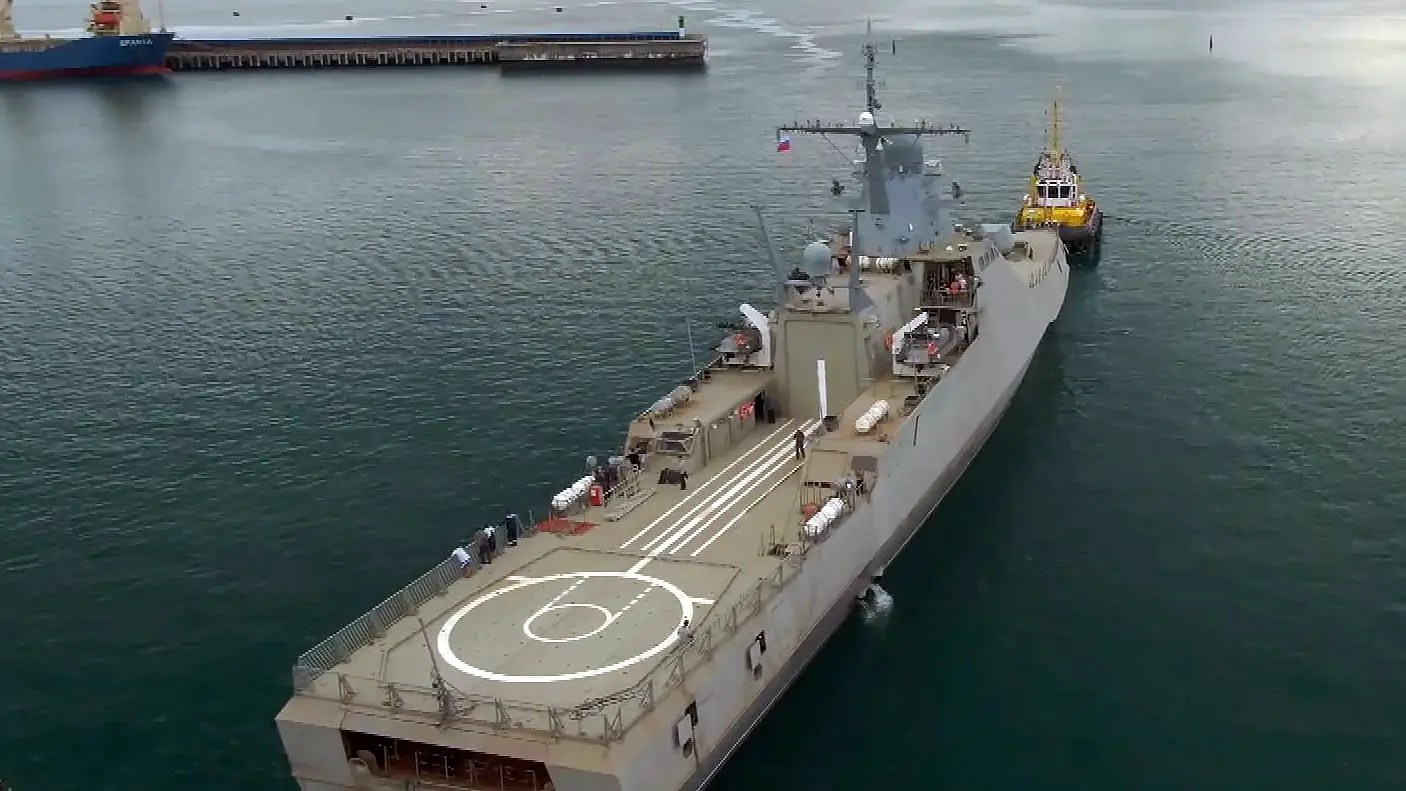
Russian Federation Ship Sergey-Kotov Project 22160 corvette

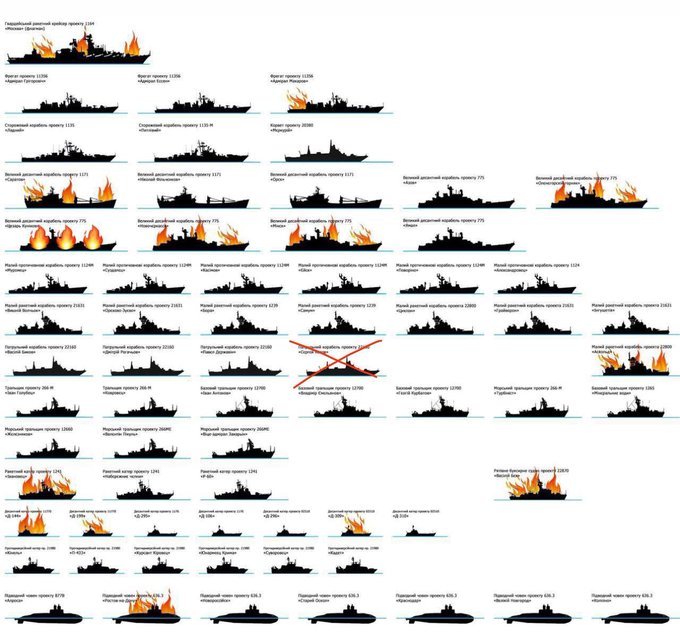
Things have not been going well for the Russian Black Sea Fleet.

The Icebreaker Aiviq Saga

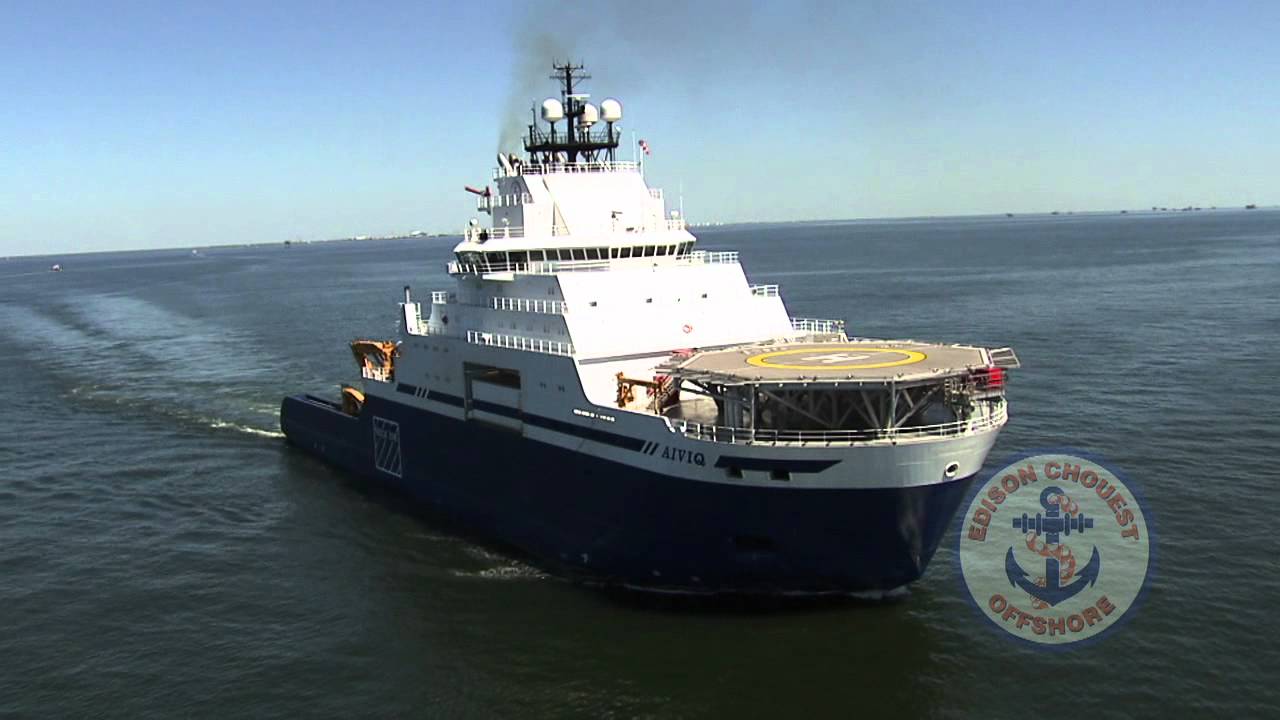
Icebreaking Anchor Handling Vessel Aiviq

It appears the Coast Guard is ready to purchase the privately owned icebreaking Anchor Handling Tug Supply (AHTS) vessel Aiviq.

We first heard about the Aiviq back in 2012.

A New Icebreaker This Year, The US will finish a new icebreaker this year, unfortunately it is not for the Coast Guard.

Aiviq was not the only icebreaker being built in the US. From 2015, Two More New Medium Icebreaker–Not for the Coast Guard

In October 2015 we learned that Shell had abandoned its ambitions to drill in the Arctic and that Aiviq was up for sale and that construction had been suspended on a second icebreaking AHTS, meaning it might also be available. I suggested, “This might be an opportunity for the Coast Guard to obtain one or two reasonably capable medium icebreaker in the near term on favorable terms.” Icebreaker Bargain?

In 2016 there was already consideration of buying or leasing the Aiviq for Coast Guard service. It was still being considered in 2017 (and here).

The ship was evaluated by the Coast Guard and the conclusion was rather lukewarm. There was concern about the use of direct drive diesels as opposed to diesel electric drive. (Sorry I could not find when this was reported.)

Nevertheless, we seem to have accepted that we need more icebreakers. We are willing to take whatever is immediately available, but only if it was made in the US.

In May 2022, Maritime Executive reports,

The U.S. Coast Guard released a formal request for information seeking to identify U.S.-built commercial icebreakers that might be available for purchase. With promises of funding from the Biden Administration and the U.S. Congress, the Department of Homeland Security published on May 3, the request for information as the first step in the possible purchase of a vessel to bridge the gap until the newly built polar security cutters, which are behind schedule, are commissioned and available for service late this decade.

As I recall the purchase was included in the 2022, 2023, and 2024 budgets. I’m not sure why it hasn’t happened already, but Aiviq has been supporting the Australian Antarctic program.

Meanwhile, the Canadian Coast Guard, in a program that began in 2018, purchased three similar but smaller icebreaking anchor handling tug supply vessels and converted them to icebreakers, CCGS Vincent Massey,CCGS Captain Molly Kool, and CCGS Jean GoodwillThese ships are 82 meters (276 ft) in length, 18 m (59 ft) of beam, and 18,300 HP.

“Houthi Attacks Turn Deadly” –gCaptain

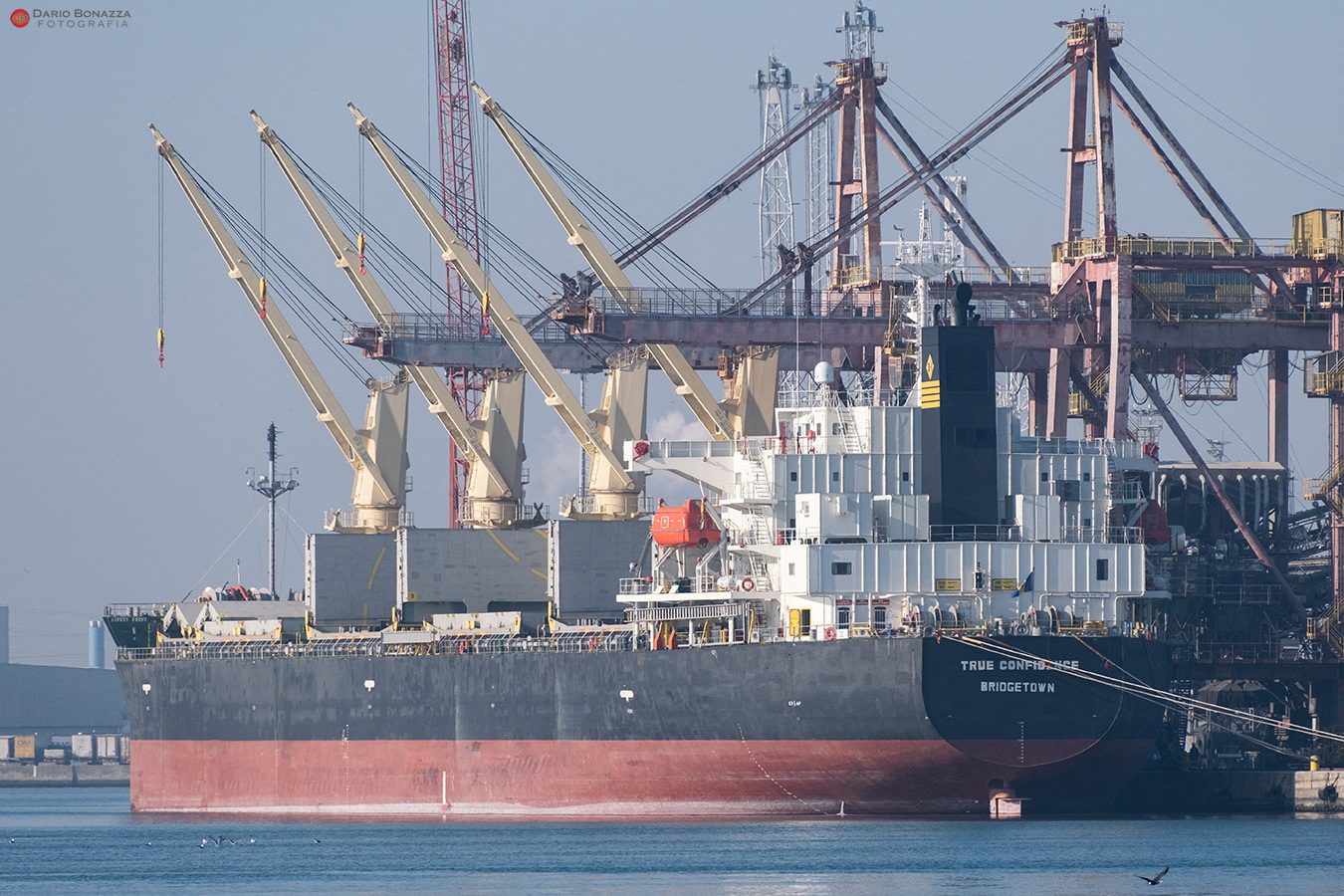
A view shows Barbados-flagged bulk carrier vessel True Confidence, in Ravenna, Italy March 10, 2022. Dario Bonazza/via REUTERS

gCaptain reports,

“British Embassy in Sanaa has confirmed two fatalities from the Houthis’ attack on the MV True Confidence, marking the first fatalities since the Iranian-backed Houthis began attacking merchant ships in November…Four mariners were severely burned and three missing after a missile hit a cargo ship off Yemen on Wednesday, a shipping source said, the first report of serious injuries since Yemen’s Houthi movement began attacking shipping…”

This should not come as a surprise. The only surprise is that it did not happen earlier.

Of the 23 on board, there were “15 Filipinos, four Vietnamese, two Sri Lankans, an Indian and a Nepali national.” All innocent, not an Israeli in the bunch.

Time for those who support the Palestinians, to call out the Houthi leadership. This criminal behavior is not helping. This is distracting from the situation in Palestine, and if anything, is hurting the Palestinian cause.