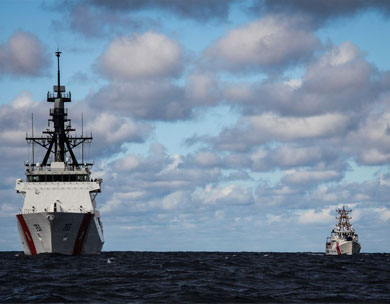
“Action Alert: Tell the House to fund the Icebreaker! ” –Navy League

I am passing this along from the Navy League. The Senate has completed their mark up of the Coast Guard Authorization, and it looks like they have indeed left off funding for the new Polar Icebreaker (Polar Security Cutter). We really should have funded these a decade ago, so any delay is at the very least unwise if not irresponsible. 

Charles–

This is the week to make an impact. Our staff here at Navy League headquarters is busy asking members of Congress to support a vital mission in the Arctic, but we won’t succeed without you. Congressional staff are negotiating the details of a bill to fund the Coast Guard for Fiscal Year 2019 as we write this. The administration requested $750 million for icebreaker procurement in FY19, and the Senate included the money in its funding bill, but the House stripped it out.

Increased activity in the Arctic means we need a strong American presence. Our only operational heavy icebreaker, the Polar Star, is 42 years old, operating 12 years beyond its expected lifespan. The Polar Star reaches the end of its operational life in 2023, just as there is expected to be an increase in activity, including the opening of new shipping lanes, the presence of cruise ships, and an increase in exploring Arctic oil and gas reserves.

Our competitors, including Russia and China, are investing heavily in their own Arctic presence: Russia has over 40 icebreakers, some of which are armed. We must ensure the new Polar Security Cutter heavy icebreaker is delivered by 2023 or we risk being excluded from this important region. A Department of Homeland Security mission needs statement and Coast Guard studies have shown that the right number for secure American presence is three heavy and three medium icebreakers. We must begin building the fleet with this sensible funding request from Congress that provides enough funding for the first Polar Security Cutter and long-lead materials for the second.

Beyond America’s national security needs demanding an Arctic presence, no fewer than seven government agencies depend on the capability of American icebreakers.

The Coast Guard needs your help to secure these funds. There is significant competition within the Department of Homeland Security budget for other projects, and we need to ensure these funds are protected and fully appropriated — or risk falling even further behind our competitors!

One Team – Mission Focused

Alan Kaplan
National President


                                              Navy League of the United States
2300 Wilson Blvd, Suite 200
Arlington, VA 22201
703-312-1571

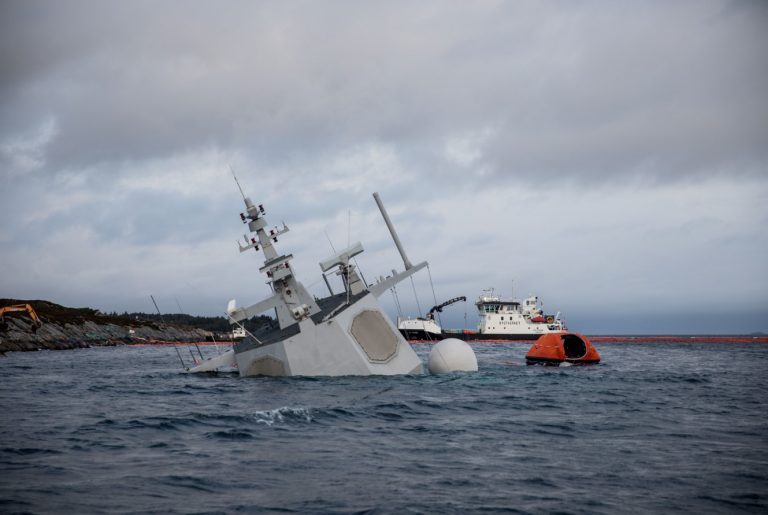
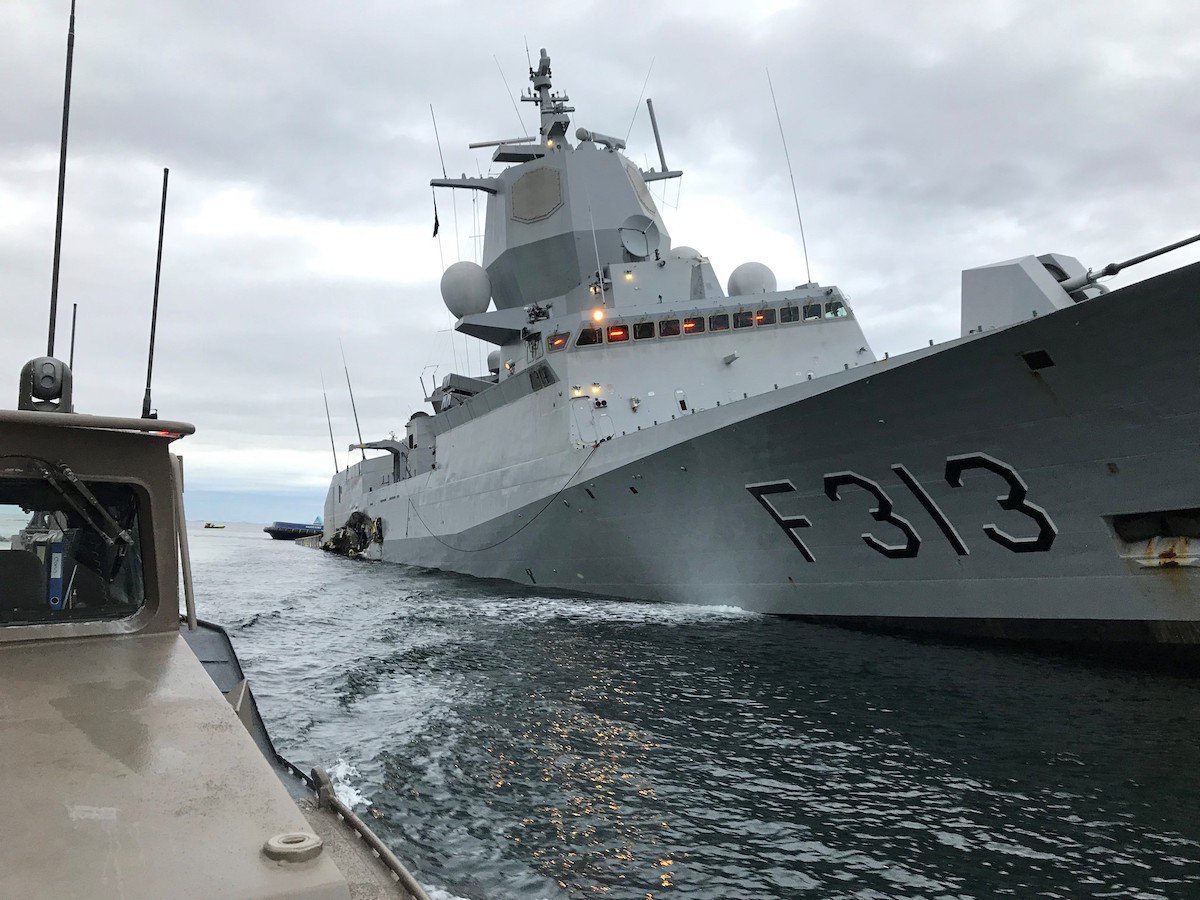
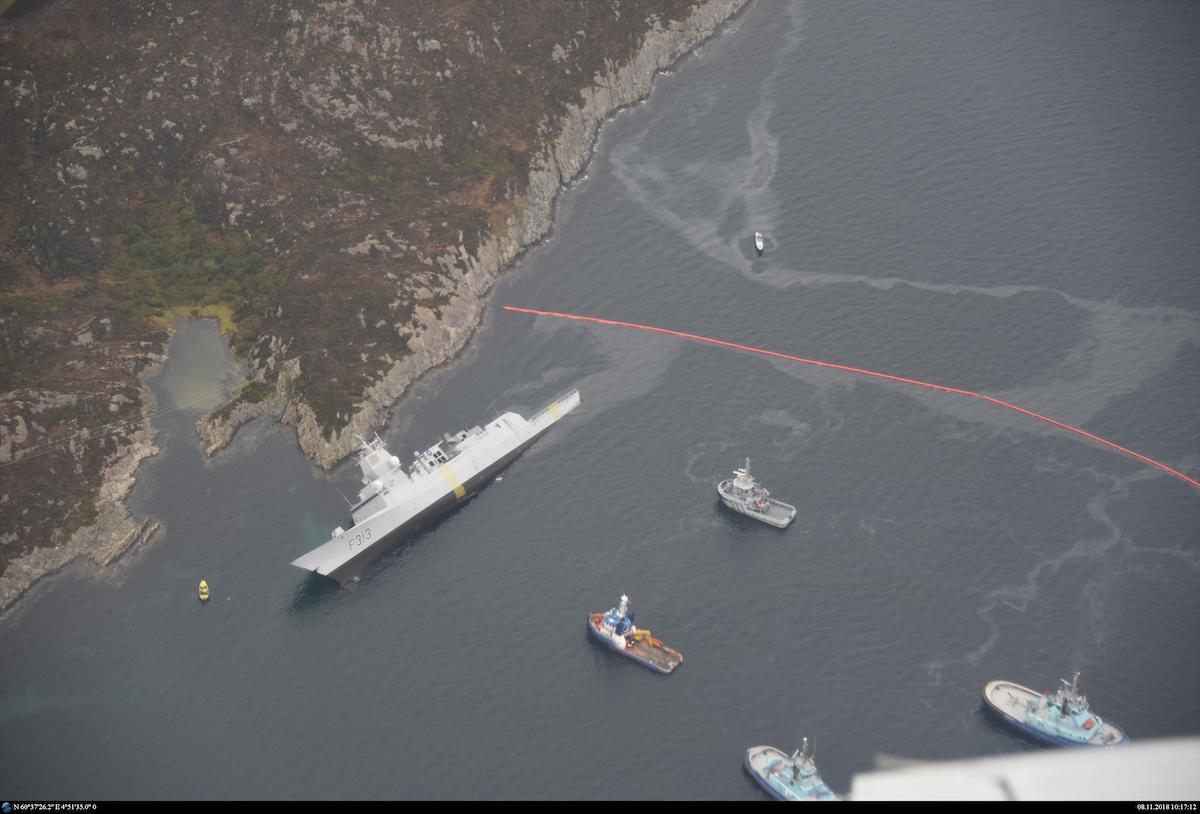
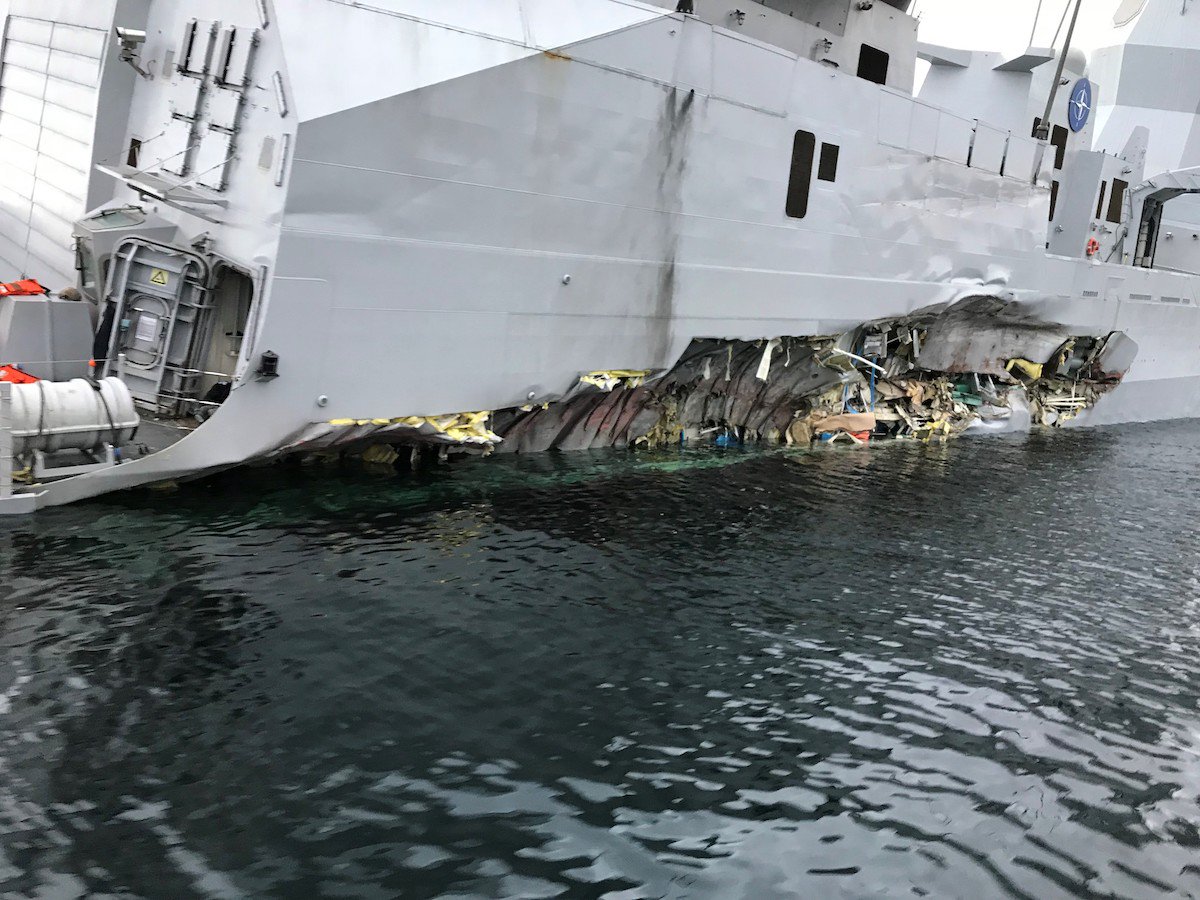
Norweigen Frigate Collides with Tanker, Runs Aground to Avoid Sinking in Deeper Water, Again No AIS

Wrecked Norwegian navy frigate “KNM Helge Ingstad” is seen in this Norwegian Coastal Administration handout picture in Oygarden, Norway, November 13, 2018. Jakob Ostheim/Norwegian Coastal Administration/Handout vis REUTERS

As you probably know by now, a Norwegian frigate was involved in a collision with a much bigger tanker. The Captain chose to run the frigate aground in hopes of preventing it from sinking. Fortunately only eight people were injured and remarkably there were not deaths.
The frigate Helge Ingstad was inbound at 17 knots and  the tanker Solas had gotten underway shortly before and was outbound at 7 knots.
The frigate is a bit smaller than the US Navy destroyers Fitzgerald and John S. McCain, damaged in collisions in 2017, but there was a similarity to these earlier collisions. None of the three ships had its Automatic Identification System (AIS) activated.
As reported by Defense News, in this case, failure to energize the AIS “…seems to have delayed recognition by central control (Vessel Traffic System–Chuck) and the other ships in the area that Ingstad was inbound and heading into danger…”
OK, I can understand turning off your AIS when in open sea, in an attempt to provide a degree of operational security, but if you are in congested waters there is no point. In fact you could use a bogus AIS or some kind of generic AIS, but if you are going to moor within hours in a city or if you have just gotten underway, it buys you nothing.
Turning on the AIS ought to be on every Special Sea Detail checklist. 
Photo: Royal Norwegian Navy

More here, here, here. and here.

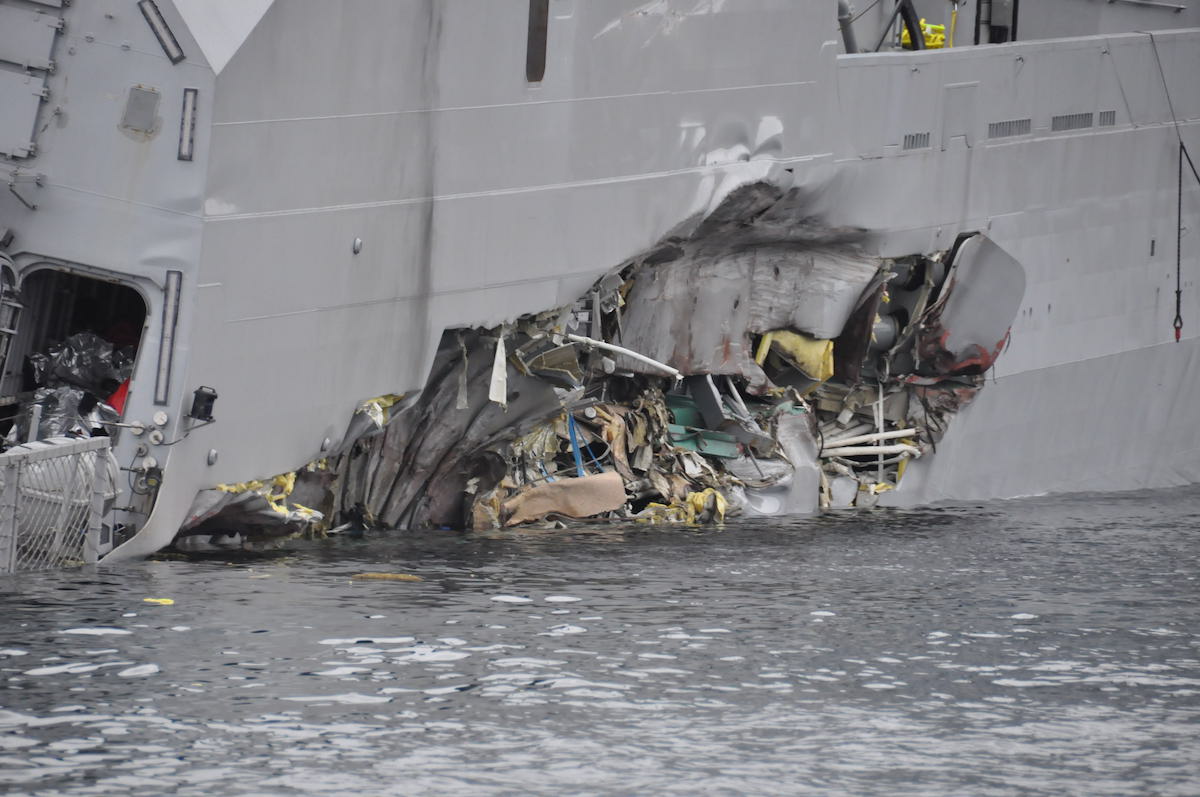
Below: Photos of the damage to the KNM Helge Ingstad after its collision with a tanker in a Norwegian fjord. Credit: @Forsvaret_no


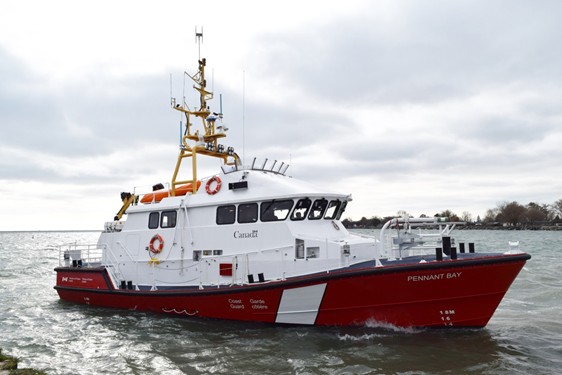
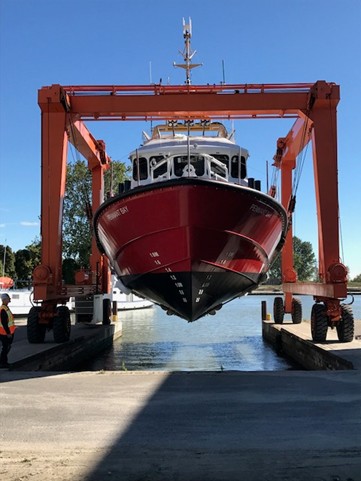
Canada’s New 62 foot Motor Lifeboat

Canada is building twelve large, relatively fast, self-righting Motor Lifeboats. These are the “Bay” class and the first are now making an appearance.

Reportedly they will be “capable of safe operation in extreme weather up to Beaufort Force 12 conditions and are able to survive in 12 meter (40 foot) seas.”

This again brings to mind the fact that at some point we will need to replace the four 52 foot MLBs and we may also want to use the replacement class in other areas where exceptional seakeeping and longer range than the 47 footers is desirable. We did discuss this possibility earlier including some other alternatives and got lots of comments.

Chantier Naval Forillon and Hike Metal were awarded contracts totaling $89.2 million (Candian presumably, about $67.5M USD–Chuck} to build twelve of the new SAR lifeboats.

These self-righting, 20-meter (65.6 ft–Chuck) boats are powered by a pair of MTU 1600 HP marine Diesel engines providing a speed of up to 24 knots in extreme weather conditions. These vessels are primarily a day boat and will be operated by a crew of up to five Coast Guard seamen.

The vessel’s particulars are as follows:

  • Length overall: 19.0 metres
  • Length DWL: 17.5 metres
  • Beam, moulded: 6.3 metres
  • Depth, moulded, at midship: 2.58 metres
  • Hull draft, nominal: 1.67 metres
  • Power: 2,400 kW
  • Speed: 23.5 kts

The Sharrow Propeller


Photo: Sharrow Engineering

MarineLink has a report on a new propeller design claimed to be “9-15 percent more efficient than the industry standard Wageningen B-series design” It is also claimed that new design can be “manufactured to meet a comparable price point to standard propellers.”

“Sharrow’s propeller product provides a wider peak efficiency curve for greater utility over a wide scope of operational ranges, and a 17 percent reduction in torque while accelerating. “

Fuel is a major part of Coast Guard operating costs. That degree of increased efficiency would make a huge difference in fuel economy. .

Looks like each blade consist of two parts connected at root and tip, with a gap in between. Visualizing the fluid flow over the blades is quite intriguing.  I presume the gap allows accelerated flow over the forward face of the following blade half and that the joined tip prevents some loss of efficiency by decreasing span wise flow on the underside of the leading blade half and on the upper surface of the following blade half.

Could these be applied to the same effect to Variable Pitch propellers?

Makes me wonder if a similar design might not work on an airplane as well, both as a propeller and perhaps as a wing.

Vietnam Coast Guard Becoming More Military?

Vietnamese Coast Guard Damen 9014 Offshore Patrol Vessel. Photo: lancercell.com

SeaWaves reports Vietnam is seeking to better define its Coast Guard’s roles and it sounds like it may be moving toward a more military posture.

“Therefore, making the Vietnamese Coast Guard a member of the country’s armed forces is an important and necessary step to protect and manage Việt Nam’s maritime interests and resources,” Linh said.

Deputy Nguyễn Minh Sơn asked for the draft law to clearly define the coast guard’s jurisdiction and chain of command to ensure the force can respond to various situations and demands while on patrol at sea.

The US Coast Guard has been instrumental in formation of Vietnam’s Coast Guard and Vietnam recently added the former USCGC Morgenthau to its Coast Guard. Vietnam is one of the few countries in SE Asia that actively confronts Chinese aggressiveness in the South China Sea.

The Former USCGC Morgenthau, now in Vvietnamese service

“White House Recognizes Superior Drug Interdiction Efforts” –Nov. 1, 2018, Office of National Drug Control Policy

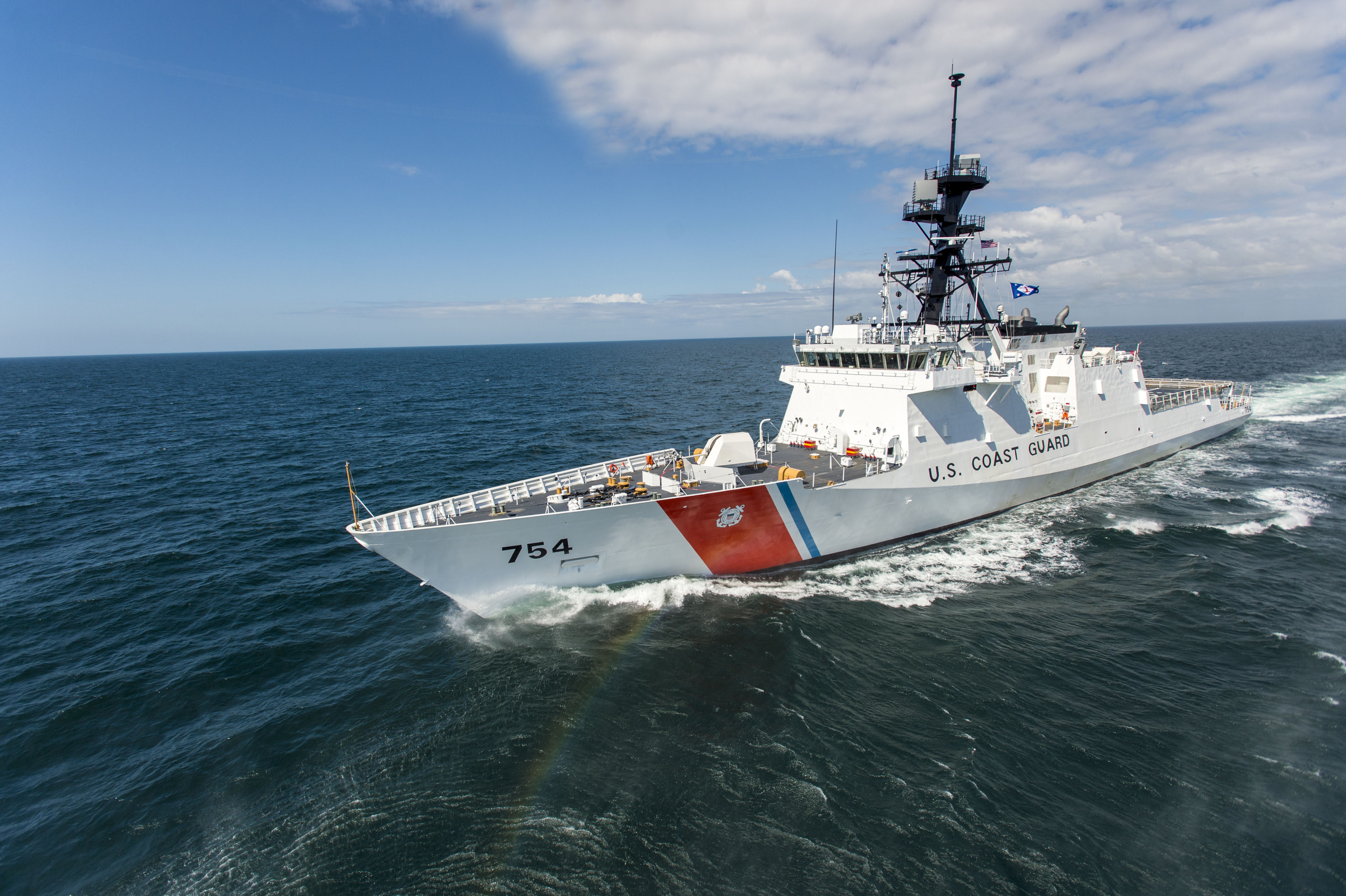
NSC 5 James on builders trials in the Gulf of Mexico March 30, 2015.

Two Coast Guard units were recently recognized by the Office of National Drug Control Policy for exceptional performance

  • US Coast Guard Cutter James (WMSL 754) is receiving the award in the Detection & Monitoring category for their unprecedented 11 days of tactical control while JIATF South was shutdown for Hurricane IRMA.
  • S. Coast Guard Helicopter Interdiction Tactical Squadron Aviation Detachment 17-22 is recognized for their Maritime Interdiction & Apprehension successes during a 79-day shipboard deployment.

That USCGC James could take over tactical control of Join Interagency Task Force South for eleven days is truly remarkable.


Budget Watch, “Focus on defense budgets leaves Coast Guard high and dry” –The Hill

“The Hill” has a plea for passing the Coast Guard’s 2019 budget rather than relying on continuing resolutions.

It makes a good point that time will be short.

“Unfortunately, the Coast Guard budget did not get reported to the House until Sept. 12, 2018.  This is an issue because the House and Senate now are out until Nov. 13. After the election, they will have only 12 workdays before the CR ends on Dec. 7, 2018 (Pearl Harbor Day).”

Considering there is likely to be a lot of churn, particularly in the House, those twelve days are likely to very busy. Hopefully the DHS budget will get passed.

“Coast Guard Cutter Procurement: Background and Issues for Congress” –Congressional Research Service


Mr. O’Rourke has been busy (as usual). Also on 26 Oct. 2018, the Congressional Research Service also Issued an updated version of his study of Coast Guard Cutter procurement programs, specifically for National Security Cutters (NSC), Offshore Patrol Cutters (OPC), and Fast Response Cutters (FRC). Again I have reproduced the summary here. I do think it is strange that we are still talking about initial testing of the NSCs more than ten years after the first of these was commissioned (see page 14).

The Coast Guard’s acquisition program of record (POR) calls for procuring 8 National Security Cutters (NSCs), 25 Offshore Patrol Cutters (OPCs), and 58 Fast Response Cutters (FRCs) as replacements for 90 aging Coast Guard high-endurance cutters, medium-endurance cutters, and patrol craft. The Coast Guard’s proposed FY2019 budget requests a total of $705 million in acquisition funding for the NSC, OPC, and FRC programs.

NSCs are the Coast Guard’s largest and most capable general-purpose cutters; they are intended to replace the Coast Guard’s 12 aged Hamilton-class high-endurance cutters. NSCs have an estimated average procurement cost of about $682 million per ship. Although the Coast Guard’s POR calls for procuring a total of 8 NSCs to replace the 12 Hamilton-class cutters, Congress through FY2018 has funded 11 NSCs, including two (the 10th and 11th) in FY2018. Six NSCs are now in service, and the seventh, eighth, and ninth are scheduled for delivery in 2018, 2019, and 2020, respectively. The Coast Guard’s proposed FY2019 budget requests $65 million in acquisition funding for the NSC program; this request does not include additional funding for a 12th NSC.

OPCs are to be smaller, less expensive, and in some respects less capable than NSCs; they are intended to replace the Coast Guard’s 29 aged medium-endurance cutters. Coast Guard officials describe the OPC program as the service’s top acquisition priority. OPCs have an estimated average procurement cost of about $391 million per ship. On September 15, 2016, the Coast Guard announced that it was awarding a contract with options for building up to nine ships in the class to Eastern Shipbuilding Group of Panama City, FL. The first OPC was funded in FY2018 and is to be delivered in 2021. The Coast Guard’s proposed FY2019 budget requests $400 million in acquisition funding for the OPC program for the construction of the second OPC (which is scheduled for delivery in 2022) and procurement of long leadtime materials (LLTM) for the third OPC (which is scheduled for delivery in 2023).

FRCs are considerably smaller and less expensive than OPCs; they are intended to replace the Coast Guard’s 49 aging Island-class patrol boats. FRCs have an estimated average procurement cost of about $58 million per boat. A total of 50 have been funded through FY2018. The 28th was commissioned into service on July 25, 2018. The Coast Guard’s proposed FY2019 budget requests $240 million in acquisition funding for the procurement of four more FRCs.

The NSC, OPC, and FRC programs pose several issues for Congress, including the following: 

  • whether to fully or partially fund the acquisition of a 12th NSC in FY2019;
  • whether to fund the acquisition of four FRCs in FY2019, as requested, or some other number, such as six, which is the maximum number that has been acquired in some prior fiscal years;
  • whether to use annual or multiyear contracting for procuring OPCs;
  • the procurement rate for the OPC program;
  • the impact of Hurricane Michael on Eastern Shipbuilding of Panama City, FL, the shipyard that is to build the first nine OPCs;
  • planned procurement quantities for NSCs, OPCs, and FRCs; and
  • initial testing of the NSC.

Congress’s decisions on these programs could substantially affect Coast Guard capabilities and funding requirements, and the U.S. shipbuilding industrial base. .

“Coast Guard Polar Security Cutter (Polar Icebreaker) Program: Background and Issues for Congress” –Congressional Research Service

The Coast Guard Cutter Healy breaks ice around the Russian-flagged tanker Renda 250 miles south of Nome Jan. 6, 2012. The Healy is the Coast Guard’s only currently operating polar icebreaker. The vessels are transiting through ice up to five-feet thick in this area. The 370-foot tanker Renda will have to go through more than 300 miles of sea ice to get to Nome, a city of about 3,500 people on the western Alaska coastline that did not get its last pre-winter fuel delivery because of a massive storm. If the delivery of diesel fuel and unleaded gasoline is not made, the city likely will run short of fuel supplies before another barge delivery can be made in spring. (AP Photo/US Coast Guard – Petty Officer 1st Class Sara Francis) NY112

Oct. 26, 2018 The Congressional Research Service issued an update of their research into the Coast Guard’s “Polar Security Cutter” (Polar Icebreaker) program. Summarizing the major relatively recent developments:

  • The likely price of three cutters is expected to be $2.1B meaning the price of the icebreaker is very close to that of the National Security Cutter. 
  • Building a single class of more than three ships, rather than a mix of Heavy and Medium capability ships is being seriously considered. This is now more likely as it appears a ship, smaller cheaper than previously envisioned, can provide the “Heavy Icebreaker” capability.

I have provided the Summary below. 

The Coast Guard Polar Security Cutter (PSC) program, previously known as the polar icebreaker (PIB) program, is a program to acquire three new heavy polar icebreakers, to be followed years from now by the acquisition of up to three new medium polar icebreakers. The Coast Guard wants to begin construction of the first new heavy polar icebreaker in FY2019 and have it enter service in 2023. The PSC program has received about $359.6 million in acquisition funding through FY2018, including $300 million provided through the Navy’s shipbuilding account and $59.6 million provided through the Coast Guard’s acquisition account. The Coast Guard’s proposed FY2019 budget requests $750 million in Coast Guard acquisition funding for the program.

The acquisition cost of a new heavy polar icebreaker had earlier been estimated informally at roughly $1 billion, but the Coast Guard and Navy now believe that three heavy polar icebreakers could be acquired for a total cost of about $2.1 billion, or an average of about $700 million per ship. The first ship will cost more than the other two because it will incorporate design costs for the class and be at the start of the production learning curve for the class. When combined with the program’s $359.6 million in prior-year funding, the $750 million requested for FY2019 would fully fund the procurement of the first new heavy polar icebreaker and partially fund the procurement of the second.

The operational U.S. polar icebreaking fleet currently consists of one heavy polar icebreaker, Polar Star, and one medium polar icebreaker, Healy. In addition to Polar Star, the Coast Guard has a second heavy polar icebreaker, Polar Sea. Polar Sea, however, suffered an engine casualty in June 2010 and has been nonoperational since then. Polar Star and Polar Sea entered service in 1976 and 1978, respectively, and are now well beyond their originally intended 30-year service lives. The Coast Guard has used Polar Sea as a source of spare parts for keeping Polar Star operational.

A Department of Homeland Security (DHS) Mission Need Statement (MNS) approved in June 2013 states that “current requirements and future projections … indicate the Coast Guard will need to expand its icebreaking capacity, potentially requiring a fleet of up to six icebreakers (3 heavy and 3 medium) to adequately meet mission demands in the high latitudes….”

The current condition of the U.S. polar icebreaker fleet, the DHS MNS, and concerns among some observers about whether the United States is adequately investing in capabilities to carry out its responsibilities and defend its interests in the Arctic, have focused policymaker attention on the question of whether and when to acquire one or more new heavy polar icebreakers as replacements for Polar Star and Polar Sea.

On March 2, 2018, the U.S. Navy, in collaboration with the U.S. Coast Guard under the polar icebreaker integrated program office, released a request for proposal (RFP) for the advance procurement and detail design for the Coast Guard’s heavy polar icebreaker, with options for detail design and construction for up to three heavy polar icebreakers.

Issues for Congress for FY2019 for the polar icebreaker program include, inter alia, whether to approve, reject, or modify the Coast Guard’s FY2019 acquisition funding request; whether to use a contract with options or a block buy contract to acquire the ships; whether to continue providing at least some of the acquisition funding for the PSC program through the Navy’s shipbuilding account; and whether to procure heavy and medium polar icebreakers to a common basic design.


“Nobody Asked Me, But . . . Rename the Coast Guard Districts”–USNI

The US Naval Institute has a short article by Cdr. Jim Hotchkiss (USCG Reserve). Unfortunately it is behind the paywall for those of you who are not members, but in short he points out that the current district number designations can be traced back to WWII and a desire to correspond to Naval District designations. Now that that is no longer a consideration, why not use more descriptive geographic designations?

His proposal is captured in the diagram above.

Certainly Cdr. Hotchkiss has a point. I only have a couple of comments. It would ease the transition if we continue to use the term “District” rather than the less specific term, “Command,” which he uses above, e.g., “Coast Guard District Northeast” rather than “Coast Guard Northeast Command.”

The actually choice of names would justify some additional thought, but I will suggest alternatives for three of the Districts.

  • For the current 7th District–CG District Southeast
  • For the current 8th District–CG District Gulf and Inland
  • For the current 11th District–CG District Southwest