
gCaptain publishes a Reuters report that the “US is ‘Deeply Concerned’ About Chinese Tankers Going Dark.”
Chinese tankers are reportly turning off their AIS to avoid US tracking.

gCaptain publishes a Reuters report that the “US is ‘Deeply Concerned’ About Chinese Tankers Going Dark.”
Chinese tankers are reportly turning off their AIS to avoid US tracking.
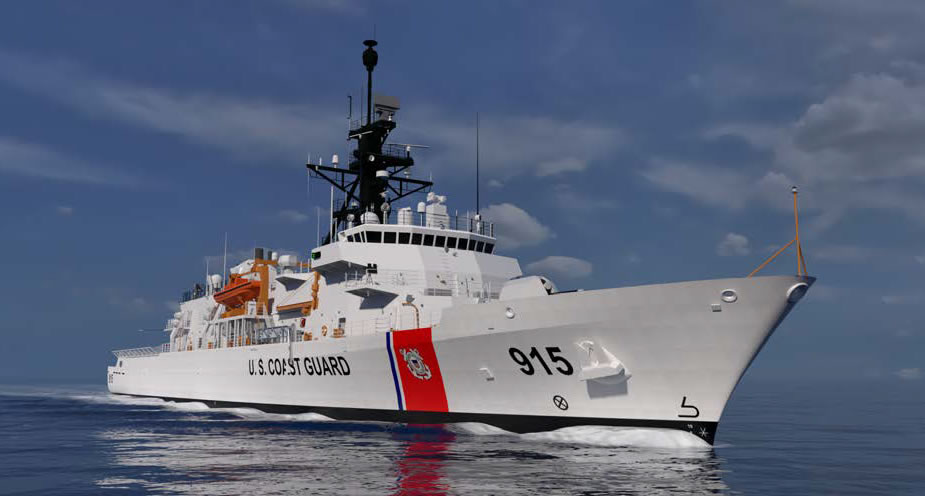
Congressional Research Service has again updated their review of the Coast Guard’s Cutter acquisition programs and the changes are significant. You can see it here.
Again the significant changes begin on page 8, with the section labeled “October 2019 Announcement of Contractual Relief and Follow-on Competition.” It looks at the authority for contract relief. It goes on to discuss the “60-Day Congressional Review Period That Started on October 11” on page 9. This is followed by quotation of various press reports about the decision through page 11. Discussion of the OPC resumes on page 14 in the “Issues for Congress” section under the title, “Contractual Relief and Follow-on Competition for OPC Program.” These include questions that might be asked during the 60 day Congressional Review period. This continues through page 16
It quotes the Commandant as saying, “the first ship now delayed 10 to 12 months and the three subsequent ships about nine to 10 months each from that point,” and that “If DHS decided to reopen the competition immediately, that would probably mean a three year delay before a new vendor delivers the first OPC.” (I expect a minimum of four years.) and “If another vendor is selected through a re-competition, it’s unlikely the new shipbuilder would be tasked with building multiple ships per year immediately, Schultz said.”
The Coast Guard’s rights to Eastern’s OPC design data are discussed. My position would be that relief should be granted only if Eastern conveyed rights to all design data to the Coast Guard upon final grant of contract relief.
The possibility of procuring a twelfth National Security as a means of ameliorating the effects of the delays to the OPCs program was discussed on page 17. (It is not addressed here, but delays in the OPC program also argue strongly for fully funding the FRC fleet to 64 units.)
The form of the follow-on contract, either annual or multi-year, was discussed on page 17 and 18. (A block buy could encourage more competition, offering stable work and to a degree offsetting Eastern’s learning curve edge in a re-compete, possibly resulting savings that might approach $1B.)
OPC procurement rate is addressed on pages 18 and 19. This question was raised in all previous editions of the report, but may gain additional urgency because of the delays associated with contract relief and because the program was supposed to transition from one ship per year to two ships per year with OPC #4 and #5 in FY2021.
If I had my druthers, we would fund NSC#12 in addition to OPC#3 in FY2020, then in FY2021 award two block buy contracts for ten ships each over five years (1, 2, 2, 2, 3) to two different shipyards. Assuming award near the end of FY2021 we might have all 20 plus the four currently planned from Eastern by the end of FY2029, five years earlier than previously planned. That could mean the last 270 would only be 38 years old when decommissioned, and we might not need to do as much work on old ships to keep the operational. That would give us 36 large ships (12 NSCs and 24 OPCs), more than the original Program of Record. That would mean funding three OPCs in FY2021, one to Eastern and one to each of the two new shipyard contracts.
“Appendix E. Impact of Hurricane Michael on OPC Program at Eastern Shipbuilding Group (ESG)” provides additional background on the decision to provide contract relief.
Incidentally, on page 20, the House Appropriations Committee is reported to have recommended funding five FRCs in FY2020 and on page 21 the Senate Appropriations Committee is reported to have recommended funding four FRCs instead of the two requested by the administration.

The Coast Guard Cutter Robert Ward (WPC-1130) is shown shortly after mooring for the first time at its homeport at Coast Guard Base Los Angeles-Long Beach, Oct. 31, 2018. The Robert Ward is the second of four new Fast Response Cutters to be stationed in San Pedro, which will help to protect the people, ports and waterways of the region and maintain security for the global supply chain and critical infrastructure within California. (U.S. Coast Guard photo by Chief Petty Officer Brandyn Hill)
Below is a fairly routine press release. I would not normally reproduce these, because there are other places where the information is already available, but this is a bit unusual, in that one of the busts was made by a Webber class WPC, USCGC Robert Ward (WPC-1130), the first Webber class to make a drug bust in the Eastern Pacific Drug Transit Zone. Apparently they are at it again.
She had seized 3,000 pounds of cocaine in mid-July, that was brought into San Diego by Steadfast (WMEC-623). At the end of August she returned to her homeport, San Pedro, bringing in another 2,800 pounds. Now she has taken another 1,500 pounds.
This is the new norm.
Incidentally, it is well over 3000 miles from San Pedro to the Transit Zone. Seventh District WPCs are actually a lot closer.

| News Release |
U.S. Coast Guard 11th District PA Detachment San Diego |
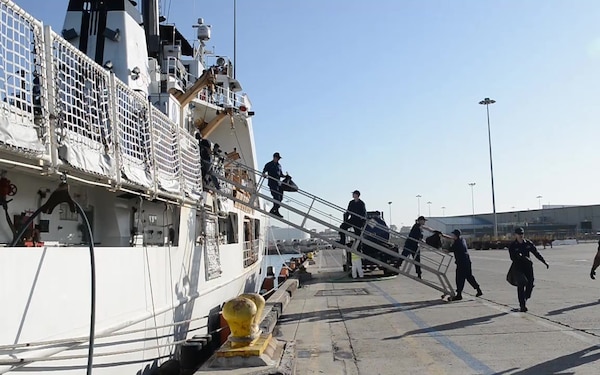
Coast Guard offloads more than $92 million worth of cocaine in San Diego
 |
 |
 |
 |
 |
Editors’ Note: Click on images and video above to download full-resolution version.
SAN DIEGO — The Coast Guard offloaded more than $92 million worth of seized cocaine in San Diego Wednesday.
The cocaine, worth more than $92 million, was seized in international waters of the Eastern Pacific Ocean. The contraband represents four suspected drug smuggling vessel interdictions by the crews of three Coast Guard cutters off the coasts of Mexico, Central and South America between late July and early October by the following Coast Guard cutters:
Numerous U.S. agencies from the Departments of Defense, Justice and Homeland Security are involved in the effort to combat transnational organized crime. The Coast Guard, Navy, Customs and Border Protection, FBI, Drug Enforcement Administration and Immigration and Customs Enforcement along with allied and international partner agencies play a role in counter-drug operations. The fight against transnational organized crime networks in the Eastern Pacific requires unity of effort in all phases from detection, monitoring and interdictions to prosecutions by U.S. Attorneys throughout the country.
“I am extremely proud of this crew for doing their part to keep these dangerous drugs off the streets,” said Cmdr. Tyson Scofield, Alert’s commanding officer. “The Eastern Pacific Ocean is a challenging environment, especially on a ship that is in her 50th year of service, yet this crew persevered to disrupt the illegal flow of narcotics that fuels instability in Central and South America. The counter-drug mission is as important now as it has ever been, and these brave men and women can return home after a 69-day patrol knowing they made a difference.”
The Coast Guard increased the U.S. and allied presence in the Eastern Pacific Ocean and Caribbean Basin, which are known drug transit zones off of Central and South America, as part of its Western Hemisphere Strategy. During at-sea interdictions in international waters, a suspect vessel is initially located and tracked by allied, military or law enforcement personnel. The interdictions, including the actual boarding, are led and conducted by U.S. Coast Guardsmen. The law enforcement phase of counter-smuggling operations in the Eastern Pacific is conducted under the authority of the Coast Guard 11th District headquartered in Alameda.
The Alert is a 210-foot medium-endurance cutter homeported in Astoria, Oregon. The Robert Ward is a 154-foot fast-response cutter homeported in San Pedro. The Seneca is a 270-foot medium-endurance cutter homeported in Boston, Massachusetts.
-USCG-
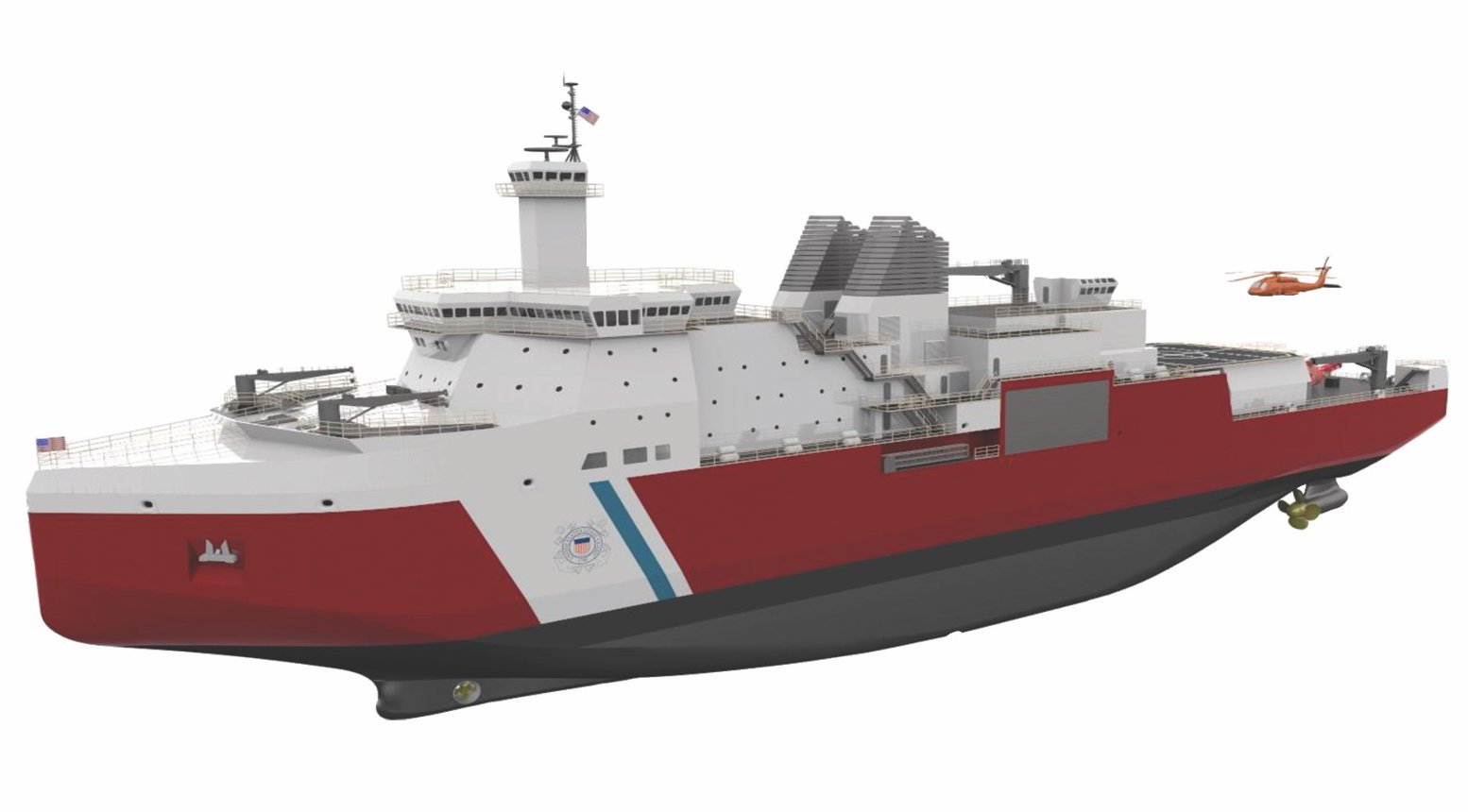
Normally I would have just added this as a comment to our earlier discussion of an Arctic deep water port, but there was one statement that caught my eye.
For the Coast Guard, a proposed fleet of six heavy icebreakers (emphasis applied–Chuck) will provide the service with the resources needed to fulfill its Arctic missions, Adm. Karl Schultz, the commandant of the Coast Guard, told USNI News after an speaking at an event co-hosted by the Center for Strategic and International Studies and the U.S. Naval Institute.
This might be a misquote or a slip of the tongue, but this would be a departure from the previous plan of three heavy icebreakers and three medium icebreaker.
Since the heavy icebreaker cost less than originally expected and price should decrease for subsequent ships a single class might make sense.
The Commandant went on to make it clear that while there may be good reasons to develop a deep water port near the Arctic (neither of the ports being considered is actually above the Arctic circle) the Coast Guard’s primary concern is getting icebreakers built.
So far, while the Navy has started talking about operating surface ships in the Arctic, the Pacific Fleet has not been doing it. Their last “Arctic” exercise was actually in the Gulf of Alaska close to Kodiak. Until they start operating regularly North of the Aleutians, they don’t need a base an “Arctic Base.” The logical first step, if they want to return to the Bering Sea (still not really the Arctic), would be to re-activate NAS Adak.
The army is in the process of selecting a new rifle and light machine gun. This report looks at one of the candidates, but also provides links to information about the other candidates. It is probably going to be a while before the Coast Guard sees a replacement for our existing weapons, with the possible exception of the specialized units.
There is also some information on the new 6,8mm (.277″) round designed to be relatively light while having greater range and better penetration of advanced body armor than the 5.56mm (.222″) round.

USCGC Smilax (WLIC-315)

The Coast Guard released draft specifications for the river buoy tender and inland construction tender variants of the waterways commerce cutter (WCC) in a special notice Oct. 15.
The WCC program also plans to exhibit and present updates at the International WorkBoat Show in New Orleans Dec. 4-6. The program will have a booth and provide information about its mission needs, status, and desired fielding schedule during a presentation Wednesday, Dec. 4 from 11 a.m. to noon CST. Additionally, a team of program members will be available to meet one-on-one with interested ship construction and design teams consisting of shipyards with design capability or ship designers teamed with shipbuilders. The deadline to request a meeting is Nov. 11.
Both the draft specifications and the one-on-one meeting request link are available here.
For more information: Waterways Commerce Cutter program page
Following the link, there is a little information about the conceptual design, and the way the Coast Guard intends to interface with the workboat construction community that I have reproduced below. Distribution of the specs themselves are limited.
This special notice is issued for the U.S. Coast Guard (USCG) Waterways Commerce Cutter (WCC) program office. General questions may be directed to wcc@uscg.mil.
DRAFT SPECIFICATION: In continuance of its plan to replace the capabilities of 13 Inland Construction Tenders (WLIC) and 18 River Buoy Tenders (WLR), the USCG is releasing a draft specification with drawings and project peculiar documents (PPD). All of the above are current versions and subject to change. The draft specification is for two mono-hull ship variants with a common after-body as the materiel solutions to replace the WLIC and WLR. (emphasis applied–Chuck) While the draft specification is unclassified, parties interested in viewing it must request explicit access via the Federal Business Opportunities web site. The USCG Contracting Officer will decide all requests for access.
MEETINGS WITH SHIPBUILDERS AND SHIP DESIGNERS: The WCC Program plans to attend the International WorkBoat Show in New Orleans, LA December 4-6, 2019. USCG representatives will take this opportunity to meet one-on-one with shipbuilder and ship design teams (i.e., shipyards with design capability or ship designers teamed with shipyards). To request a meeting during the International WorkBoat Show, click on the link below or copy and paste it into your internet browser. The deadline to request a meeting is November 11, 2019
https://einvitations.afit.edu/inv/anim.cfm?i=472262&k=0666400B7D55
Shipbuilder and ship design teams not able to meet during the International WorkBoat Show may request a phone conference or meeting in Washington, DC by emailing wcc@uscg.mil. Because of resource constraints, the USCG will meet one-on-one only with shipyards with design capability or ship designers teamed with shipyards.
The WCC program will also staff a booth during the International WorkBoat Show and will provide information about its mission needs, status, and desired fielding schedule during a presentation on Wednesday, December 4, 2019 from 11 a.m. to 12 p.m. CT. The presentation will include time for questions. All information provided in the presentation (including questions and answers) and booth handouts will be made available on the program’s website:

Busy as always, the Congressional Research Service has already updated their examination of the Coast Guard’s cutter procurement program to reflect the results of the contract relief extended to Eastern Shipbuilding Group (ESG) and the intention to re-compete for contracts to construct OPC#5 and later. You can see the new report here.
Significant changes are found on pages 8-10 under the title “October 2019 Announcement of Contractual Relief and Follow-on Competition,” and pages 13-15 under the title “Issues for Congress–Contractual Relief and Follow-on Competition for OPC Program.”
Delays in the execution of the OPC program might be seen as justification for NSC#12 particularly if it is seen as a trade-off for a future OPC.
Not new to this edition, but looking at “Table 1. NSC, OPC, and FRC Funding in FY2013-FY2020 Budget Submissions” on page 13, raises a question about how many Webber class FRCs are to be built. The Program of Record is 58, but this did not include replacements for the six vessels assigned to Patrol Forces SW Asia. Adding six for PATFORSWA should bring the total to 64. So far 56 Webber class have been funded, including four to replace 110 foot patrol boats assigned PATFORSWA. There is $140M in the FY 2020 budget request, which would fund two more, but there are insufficient funds in the out years to fund even a single additional FRC. This appears to mean the program will end with a total of 58 vessels unless Congress steps in.
I am a bit embarrassed to admit, I have been behind on this subject. My post from Saturday, linked the 19 September version of the report, but there was already a more recent version, dated 4 October. You can see it here.
The significant change in this edition is the addition of the new section at the top of page 15. (This new section reflects the questions Tups has raised here earlier.)
“Parent Design and PSC Design
“One potential aspect of the issue of technical, schedule, and cost risk in the PSC program relates to the parent design for the PSC design. As mentioned earlier, a key aim in using the parent design approach is to reduce cost, schedule, and technical risk in the PSC program. As also mentioned earlier, VT Halter states that its winning design for the PSC “is an evolution from the mature ‘Polar Stern II’ [German icebreaker] currently in design and construction; the team has worked rigorously to demonstrate its maturity and reliability.” As also mentioned earlier, VT Halter and ship designer Technology Associates, Inc. reportedly made “a lot of modifications” and went through six design spirals to refine the PSC’s design. Potential oversight questions for Congress include the following:
This vessel was discussed earlier, but now we have video of a model of the ship (done in LEGOs) along with some additional discussion. You can see this segment on the video above from time 6:22 to 7:47.
 Chuck Hill's CG Blog