“White House steps in as Navy, Pentagon feud over amphibious ship study” –Defense News/Analysis Paralysis

US Capital West Side, by Martin Falbisoner

Defense News reports, on the convoluted process that has blocked Congress from getting a report from the Marine Corps regarding how much amphibious lift they think they need.

Apparently, the Congress has taken steps to ensure that they don’t get stonewalled and that they get an answer directly from the source.

This does not look Coast Guard related except that it seems the same thing is happening to Congressionally mandated reports from the Coast Guard.

There have been other mandated reports that seem to have been ignored, but there is one I think particularly important. The original Fleet Mix Study was completed in 2009 but was not made public until 2012 after a revision in 2011. For years the Congress has been asking for an update. Like in the case of the Marines need for amphibious lift, this is a force structure question, and the silence has been deafening.

We have not had a new evaluation of Coast Guard force structure for over eleven years. Considering how Coast Guard operations have changed in the last decade, the emergence of new threats (like unmanned systems), new opportunities (like unmanned systems), and the experience we have gained with the National Security Cutters and the Fast Response Cutter operation, is that wise?

Congress needs to be equally assertive about hearing what the Coast Guard needs to do its missions and insist that the result not be filtered by the Department.

Once the desired level is established, certainly, questions will be raised. Limitations will emerge. Study assumptions will be questioned. Affordability will have to be addressed, but we need to start with an attempt at an honest and comprehensive assessment of requirements. We saw the GAO critique the Coast Guard’s shipbuilding program as unachievable because the required budget was larger than it had been historically. That is certainly a factor, but it needs to be considered in the light of objectives and a history of neglect.

Force study evaluations should be an iterative process repeated at least every four years to inform the actions of succeeding administrations both within the service and within government.

“A third of New Zealand’s Navy ships are docked over lack of crew” –Defense News

Coast Guard Day in the South Pacific. The command from USCGC Walnut (WLB 205) conduct an exchange with peers on HMNZS Otago (P148) discussing mission, challenges and comparing shipboard life in the region while off Samoa Aug. 4, 2019. The Walnut and Otago crews are in the region combating illegal fishing, a part of promoting maritime governance and a rules based international order that is essential to a free and open Indo-Pacific. (Photo courtesy HMNZ Navy Lt. Samuel Murray/Released)

Defense News reports,

“Three of the Royal New Zealand Navy’s nine ships are now docked at the Devonport naval base indefinitely, due to insufficient personnel.”

Recruiting problems for the US have been in the news, but it is not uncommon. US Coast Guardsmen are helping to man Royal Navy frigates. Japan’s Maritime Self Defense Force is having trouble recruiting. US Navy ships are frequently shorthanded.

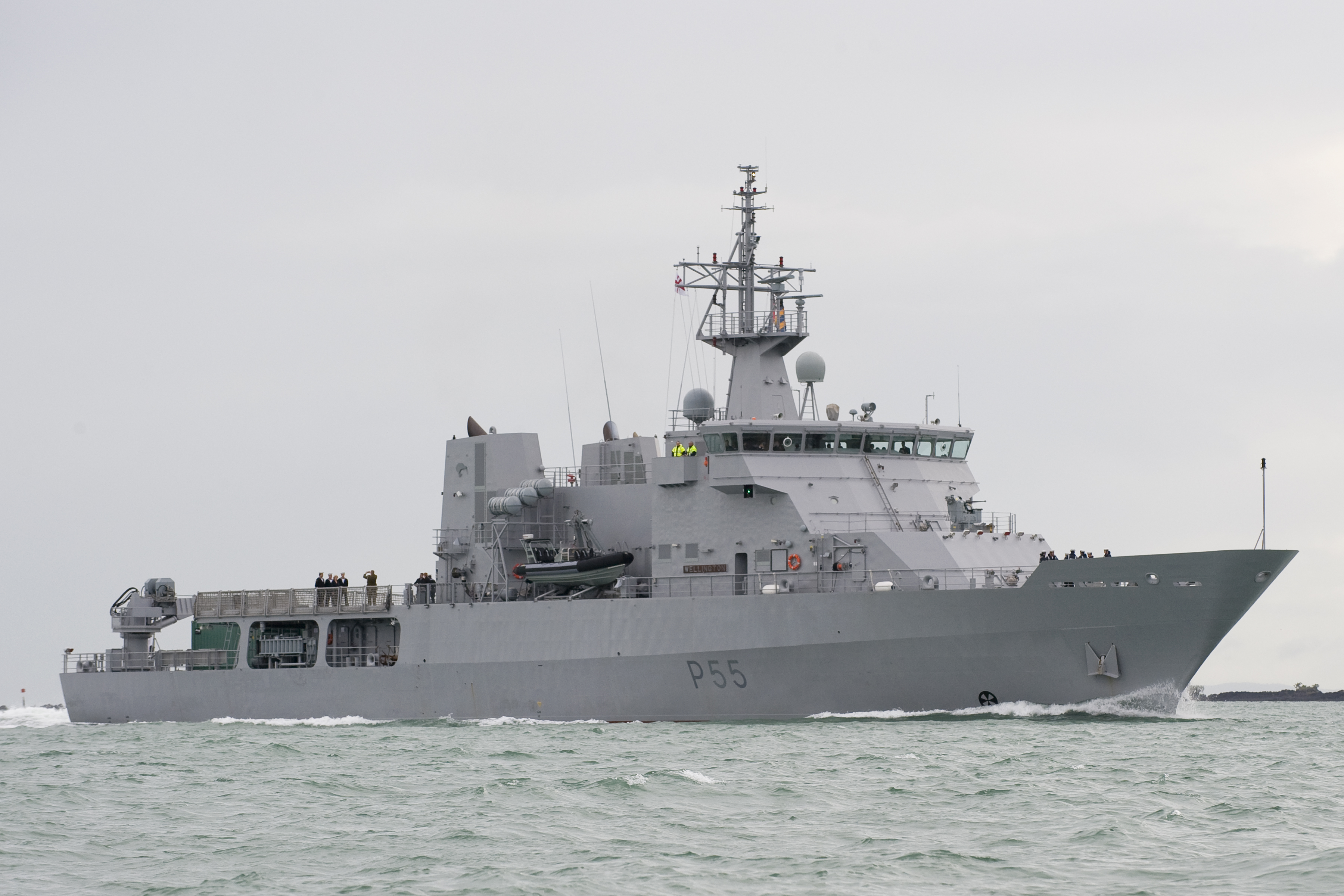
HMNZS Wellington first arrival into Devonport Naval Base

What struck me about the story was the choice of ships laid up. New Zealand has chosen to lay up three of its four patrol vessels, retaining only one of the least capable. The New Zealand Navy is small, and it does coast guard tasks as well as national defense. The entire fleet consist of nine ships:

  • Two 3,600 ton frigates, crew of 178 each
  • Two 1,900 ton Offshore Patrol Vessels, similar to WMECs, crew of 49 each (both Otago and Wellington pictured above are laid up)
  • Two 340 ton Inshore Patrol Vessels, similar to Webber class WPCs, crew of 24 each (HMNZS Hawea pictured below is laid up)
  • One 9,000 ton multirole vessel, a transport, with a crew of 53
  • One 5,741 ton hydrographic and diver support vessel, with a crew of 39
  • One 26,000 ton ice-strengthened underway replenishment ship, with a crew of 75

Inshore patrol boat HMNZS Hawea (P3571) entering Otago Harbour, New Zealand, Aug. 2009. Photo credit: Benchill

New Zealand has been helpful to neighboring Pacific island nations in regard to Illegal, Unreported, and Unregulated fishing and disaster response. Hopefully they will continue in this role, perhaps using their multipurpose vessel and/or their underway replenishment ship which also provide unique capabilities.

“Task Force 59 Launches Aerial Drone from Coast Guard Ship in Middle East” –NAVCENT

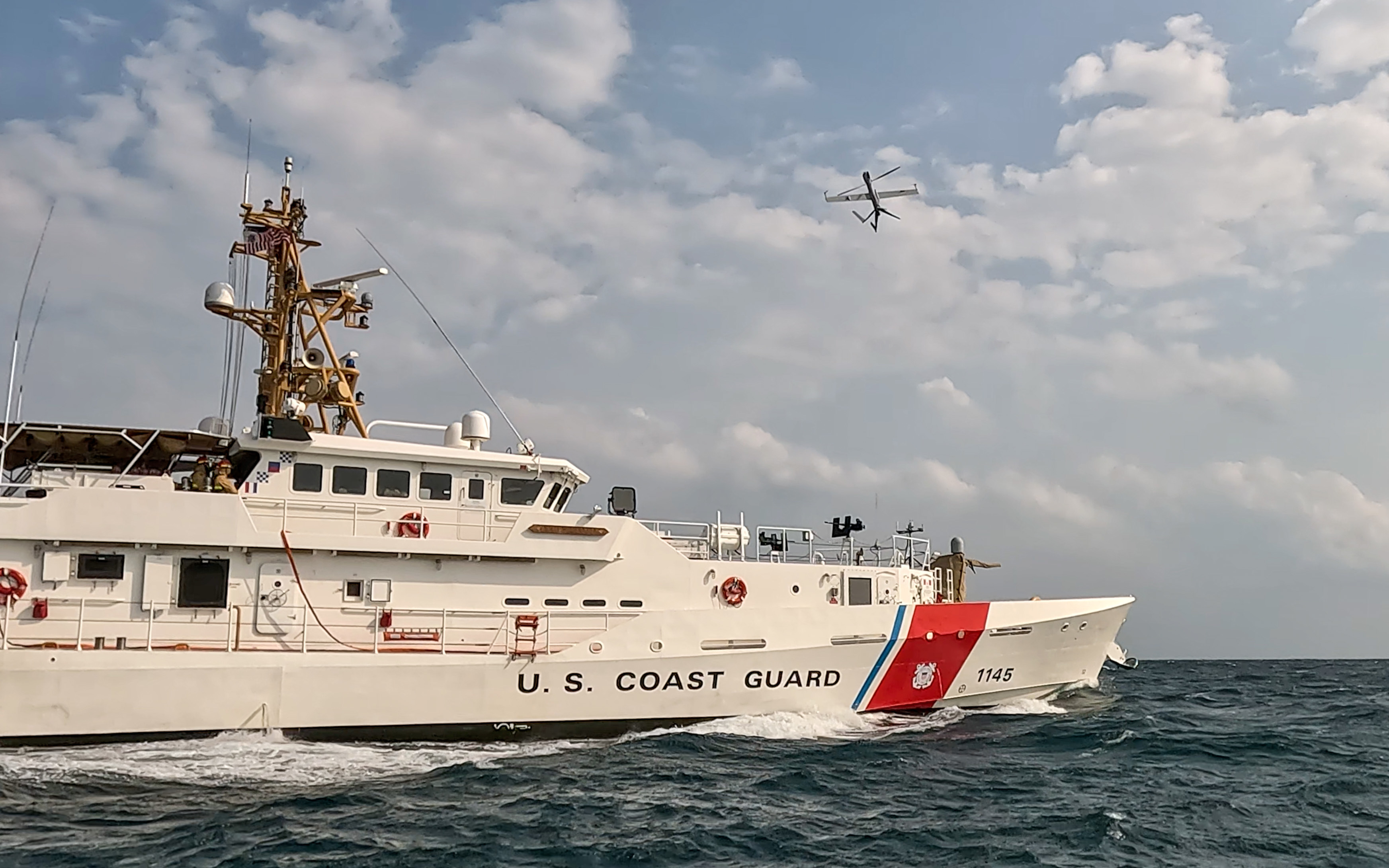
221207-N-NO146-1001 ARABIAN GULF (Dec. 7, 2022) An Aerovel Flexrotor unmanned aerial vehicle (UAV) takes off from U.S. Coast Guard fast response cutter USCGC Emlen Tunnell (WPC 1145) transiting the Arabian Gulf, Dec. 7. U.S. 5th Fleet’s Task Force 59 launched the UAV during Digital Horizon, a three-week event focused on integrating new unmanned and artificial intelligence platforms, including 10 that are in the region for the first time. (U.S. Navy photo)

Below is a December 07, 2022, news release by U.S. Naval Forces Central Command / U.S. 5th Fleet Public Affairs.

To me this is really exciting news. The Webber class has been doing some great work at surprising long distances, performing most of the functions of a medium endurance cutter. Their primary weakness as a patrol ship has been the lack of an organic search aircraft. I assume this UAS is operating from the area on the O-1 deck forward of the bridge that had been designated for vertical replenishment.

This from Aerovel, maker of the Flexrotor (follow the link for dimensions and performance),

Boasting a flight endurance of more than 30 hours and a 120-kilometer communications range, this all-weather aircraft has operated in some of the harshest conditions on earth. Flexrotor is excellent for expeditionary missions. Needing only a 20’ by 20’ area for launch and recovery, it takes off and lands vertically and easily transitions into horizontal wing-borne flight. The STUAS flies completely automatically after takeoff, with no pilot intervention needed. Flexrotor quickly assembles for flight and can be boxed and stowed in minutes by a single person.

The Flexrotor is, in most respects, in the same class as the Scan Eagles that are currently being deployed on National Security Cutters. It is not as fast as Scan Eagle but apparently comparable or greater endurance and requires no launch or recovery equipment. These systems may actually constitute an improvement, compared to searches by manned helicopters, because of their much greater endurance and sensors like the VIDAR used on Coast Guard Scan Eagle UAS..


Task Force 59 Launches Aerial Drone from Coast Guard Ship in Middle East

By By U.S. Naval Forces Central Command / U.S. 5th Fleet Public Affairs | December 07, 2022

MANAMA, Bahrain —

A U.S. Navy unmanned task force in the Middle East launched an aerial drone from a U.S. Coast Guard vessel operating the Arabian Gulf, Dec. 7.

U.S. 5th Fleet’s Task Force 59 launched an unmanned aerial vehicle (UAV) from USCGC Emlen Tunnell (WPC 1145), marking a first for the task force with a U.S. Coast Guard vessel since the task force’s establishment in September 2021.

The launch also demonstrated close collaboration between the U.S. Coast Guard and Task Force 59 as U.S. 5th Fleet rapidly integrates unmanned systems and artificial intelligence to enhance monitoring of regional waters.

Task Force 59 is conducting Digital Horizon, a three-week event focused on integrating new unmanned and artificial intelligence platforms, including 10 that are in the region for the first time.

“Each day during Digital Horizon we have pushed to discover new capabilities, fast,” said Capt. Michael Brasseur, commodore of Task Force 59. “I am so proud of the team for their steadfast commitment to not only imagine new possibilities, but to deliver them.”

An Aerovel Flexrotor successfully took off and landed vertically aboard Emlen Tunnell, showcasing close collaboration between Navy, Coast Guard and industry partners to advance technology integration.

“We are so excited to be part of Digital Horizon and play a critical role by helping integrate new technologies into the fleet,” said Lt. Patrick Kelly, Emlen Tunnell’s commanding officer. “I am so proud of the crew for their dedication, commitment and professionalism, which made today’s success possible.”

The Flexrotor can support intelligence, surveillance and reconnaissance (ISR) missions day and night using a daylight or infrared camera to provide a real-time video feed.

In addition to providing ISR capability, UAVs like the Flexrotor enable Task Force 59 to enhance a resilient communications network used by unmanned systems to relay video footage, pictures and other data to command centers ashore and at sea.

U.S. 5th Fleet established Task Force 59 more than 14 months ago. Since its launch, the task force has deployed a suite of new unmanned systems while integrating artificial intelligence at operational hubs in Jordan and Bahrain.

Emlen Tunnell is one of the Coast Guard’s newest Sentinel-class fast response cutters forward-deployed to Bahrain where U.S. 5th Fleet is headquartered. The ship helps ensure maritime security and stability across the Middle East.

Iran’s Shahid Soleimani Catamaran Missile Corvette and Torpedo Armed RHIB

Iranian torpedo armed RHIB carried by Shahid Soleimani class catamaran corvette.

Covert Shores reported on new Iranian missile armed catamaran corvettes, but the report also included the photo above. What we are seeing is a boat suspended from the stern of the corvette. The boat is equipped with what appears to be a torpedo tube for a lightweight torpedo. Presumably there is a second tube on the other side. Diameter is likely to be the same as the NATO standard, 324mm or 12.75″. Unlike most lightweight torpedoes, this is unlikely to be intended for use against submarines. Almost certainly, it is intended for use against surface ships.

There is not a lot of public source information about Iranian torpedoes but their partners in crime, Russia and China, are both believed to have cloned the US made Mk46 torpedo and both passive and active acoustic and wake homing technology is readily available. Passive acoustic homing in the search phase, and wake homing in the terminal phase, seems likely. Range is probably at least 8,000 yards.

This means, these torpedoes can be launched from well outside the effective range of typical Close In Weapon Systems (CIWS) of 20 to 40mm. 

We can’t take much comfort in the fact that the warhead of these torpedoes would be about 100 pounds. That is way less than the approximately 600 pounds of a heavy weight 21″ torpedo like the Mk48, but the effects of an underwater explosion are not linear. The effect of a 100-pound warhead is about half that of heavy weight torpedoes that we have repeatedly seen break ships in half. So, a lightweight torpedo, exploding under the keel, might not break a ship in half, but it is going to hurt.

I have long felt an anti-surface light weight torpedo like this would provide Coast Guard cutters a relatively low-cost way to forcible stop a medium to large vessel, regardless of size, a capability they do not currently have. Apparently, the Iranians think it will work.

Shahid Soleimani Catamaran Missile Corvette:

This is a significant departure for the Islamic Revolutionary Guard Corps. Apparently, they have recognized that their naval swarm forces are vulnerable to attack from the air, and, I believe, particularly helicopters.

hIran Shahid Solemani class corvette top view

With its array of VLS AAW weapons, these corvettes constitute a serious threat to USN and allied helicopters that might be used to counter Iranian swarm tactics.

When engaged in force protection, if the force protection package includes aircraft, and one of this class shows up, a PATFORSWA Webber cutter class might be doing useful service, if they take station a couple hundred yards behind the corvette and maintain a fire control solution on that probably highly flammable and explosive collection of weapons in the center of the superstructure, behind the bridge–without pointing the gun, of course.

“US Army makes largest helicopter award in 40 years” –Defense News

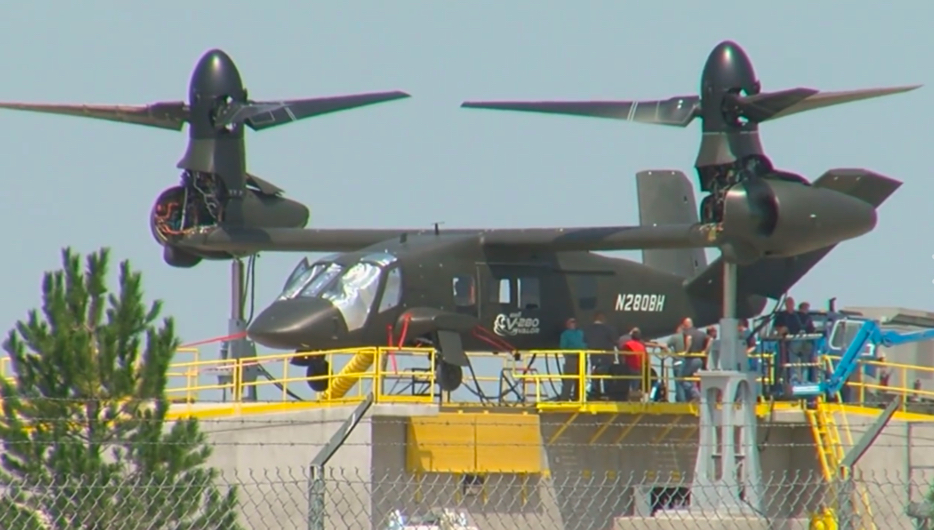
Bell’s V-280 prototype

And the Winner is — The Bell V-280 Valor

Defense News reports the winner of the Army’s “Future Long-Range Assault Aircraft” competion to find a replacement for the H-60.

With a demonstrated cruise speed of 305 knots, if it can do the SAR mission, this has real potential for the Coast Guard.

“The service wants FLRAA to be capable of traveling roughly 2,440 nautical miles (or 2,810 miles) without refueling, but also to be agile enough to maneuver troops into dangerous hot spots.”

1,725 nautical miles one way, was the threshold requirement.

Unless they add folding blades and a stowable wing like on the V-22, it really doesn’t look like it would be easily adaptable for shipboard use, but there is still another aircraft to be selected under the Future Vertical Lift program and it will be smaller. There are currently two competitors, The Bell Invictus and the Sikorsky Rader X. My money is on the Raider X compound helicopter. It also looks like it would require less modification to convert to civilian and Coast Guard use and seems to offer more improvement over existing aircraft.  

I also don’t think we can assume the Sikorsky competitor for FLRAA will completely disappear.

“Navy to establish additional unmanned task forces inspired by Task Force 59” –Defense Scoop

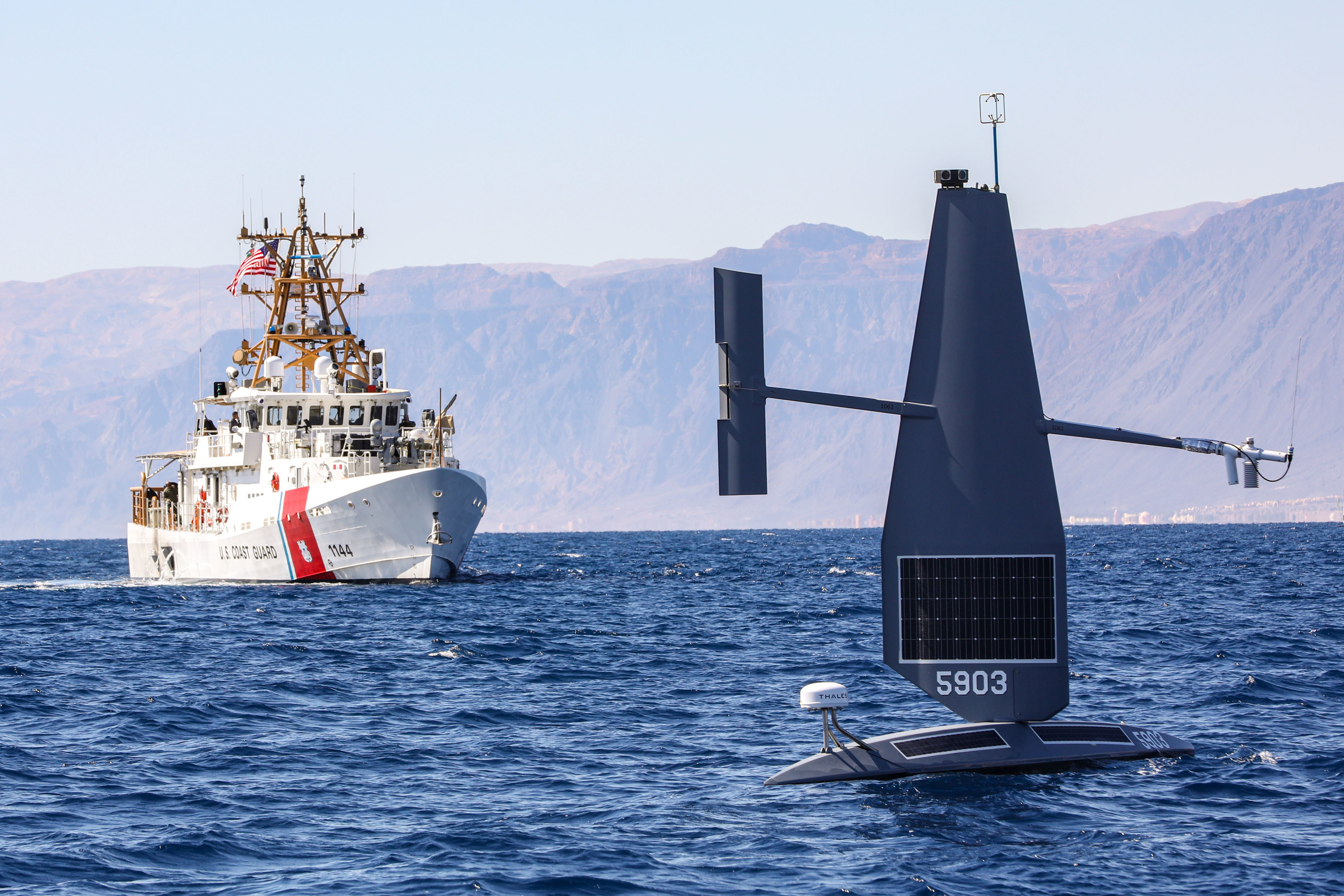
GULF OF AQABA (Feb. 13, 2022) The U.S. Coast Guard Sentinel-class cutter USCGC Glen Harris (WPC 1144) sails near a U.S sail drone explorer during the International Maritime Exercise/Cutlass Express (IMX) 2022, Feb. 13, 2022. IMX/CE 2022 is the largest multinational training event in the Middle East, involving more than 60 nations and international organizations committed to enhancing partnerships and interoperability to strengthen maritime security and stability. (U.S. Army photo by Cpl. DeAndre Dawkins)

Defense Scoop reports:

“The Navy plans to stand up additional unmanned task forces around the globe modeled after Task Force 59 in the Middle East, Navy Secretary Carlos Del Toro told reporters Saturday…“We’ve demonstrated with Task Force 59 how much more we can do with these unmanned vehicles — as long as they’re closely integrated together in a [command and control] node that, you know, connects to our manned surface vehicles. And there’s been a lot of experimentation, it’s going to continue aggressively. And we’re going to start translating that to other regions of the world as well,” Del Toro said during a media roundtable at the Reagan National Defense Forum.”

The report goes on to mention 4th Fleet and Oceana specifically, both regions of intense interest to the Coast Guard in regard to drug interdiction and Illegal, Unregulated, Unreported (IUU) fishing respectively.

This could be a big boost to our Maritime Domain Awareness. In the Eastern Pacific Drug Transit Zone we might need uncrewed surface vessels with passive acoustic sensors since the targets of interest are poor targets for radar and optical sensors. That could lead to practical experience that could improve our ASW capability.

“US Navy seizes massive shipment of ammo, explosive material in Gulf of Oman” –Task and Purpose

The U.S. Navy released photos of a fishing trawler it says carried more than 50 tons of ammunition rounds, fuses and propellants for rockets when it was boarded Dec. 1., 2022 in the Gulf of Oman. (U.S. Navy 5th Fleet via Stars and Stripes)

Task and Purpose reports,

“For the second time in less than a month, the U.S. Navy intercepted a ship passing through the Gulf of Oman and seized a large shipment of illicit weapons bound for Yemen..The Navy made the interception on Thursday, Dec. 1. Sailors with the Navy’s 5th Fleet stopped a fishing trawler in the gulf. During a flag verification boarding, they found a large cargo of munitions and chemical propellant. The sailors seized 1.1 million rounds of 7.62mm ammo, as well as an additional 25,000 12.7mm rounds. The trawler also was carrying almost 7,000 rocket fuses and more than 2,000 kilograms of a propellant used in rocket propelled grenades. The cargo totaled more than 50 tonnes.”

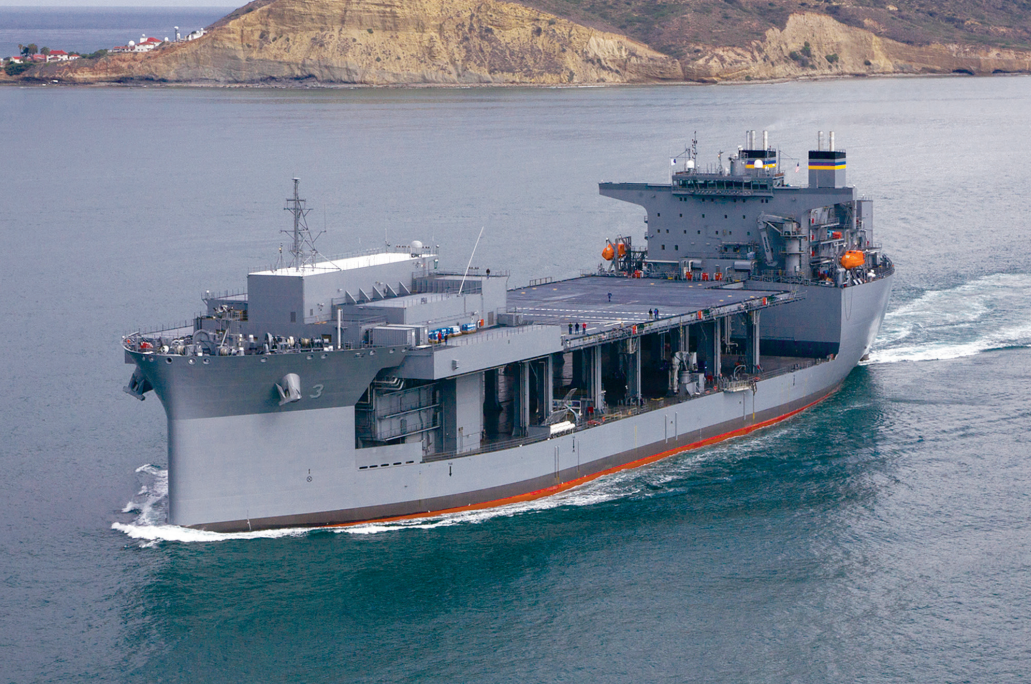
The boarding party came from the expeditionary sea base USS Lewis B. Puller, but I think it is a safe bet Coast Guard personnel were involved in the boarding.

USS Lewis B. Puller (ESB-3)


Fast Response Cutter / Navy MkVI Patrol Boat –Peter Ong

Today we have a guest author, Peter Ong. This is Peter’s sixth post on this blog, and he is now a regular contributor to Naval News. In this post, he reports a conversation with Coast Guard Cutter Forces about why the success of the Coast Guard’s Fast Response Cutter program has allowed  the Navy to cancel their MkVI patrol boat program that at one time was expected to produce 48 patrol boats.

The MkVI had only very austere galley and messing facilities, a Microwave and MREs. They were not expected to be underway more than 24 hours. The FRCs endurance, allowing days, rather than hours, on station to intercept drug and arms smugglers and their abilitiy to support counter UAS systems may be providing capabilities the MkVI simply could not have.
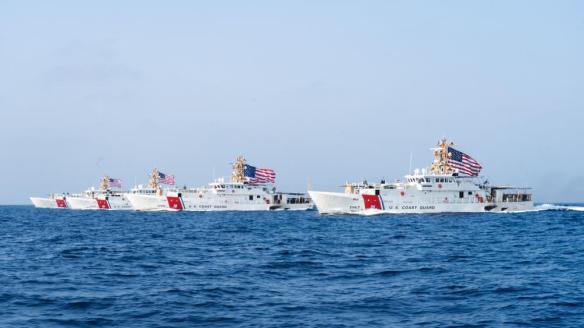
220822-A-KS490-1182 STRAIT OF HORMUZ (Aug. 22, 2022) From the left, U.S. Coast Guard fast response cutters USCGC Glen Harris (WPC 1144), USCGC John Scheuerman (WPC 1146), USCGC Emlen Tunnell (WPC 1145) and USCGC Clarence Sutphin Jr. (WPC 1147) transit the Strait of Hormuz, Aug. 22. The cutters are forward-deployed to U.S. 5th Fleet to help ensure maritime security and stability across the Middle East. (U.S. Army photo by Spc. Noah Martin)

When is a ship a boat and when is a boat a ship? When is an apple an orange and when is an orange an apple? Answer: they are not as these are two different and distinct things when it comes to comparing the warships of the U.S. Coast Guard to the MkVI patrol boats of the U.S. Navy.

A U.S. Navy Mark VI patrol boat with Maritime Expeditionary Security Squadron TWO moves through the water prior to a live fire exercise in the Philippine Sea, Feb. 27, 2021. (U.S. Marine Corps photo by 1st Lt. Stephanie Murphy).

The U.S. Navy is divesting of their 12 in-service Mark VI Patrol Boats, which at the Surface Navy Association 2021, Major General Tracy King, USMC, Director, Expeditionary Warfare (N95) stated that the twelve Mark VIs “Were very expensive to maintain.” However, many critics and pundits of the Mark VIs’ early retirement cite that the Mark VIs still have a lot of life left in them and that their high speeds and heavy armament makes them an asset to special forces, Marines, and Navy SEALs. Mark VIs also perform capital ship escort screenings and contribute to Distributed Lethality and Distributed Maritime Operations by having a smaller vessel signature that might help U.S. Marines move around and slip ashore undetected.

In a phone interview on September 29, 2022 with United States Coast Guard (USCG) Captain John J. Driscoll, Office of Cutter Forces (CG-751), the U.S. Coast Guard captain made a comment about the Sentinel-class Fast Response Cutters (FRC) substituting for the U.S. Navy’s Mark VI Patrol Boats in the Patrol Forces Southwest Asia (PATFORSWA) region and other parts of the globe.

The U.S. Navy plans to replace the Mark VIs and the aging Patrol Coastal boats in the PATFORSWA region with USCG FRCs. When asked how the cutter fleet is integrated with the U.S. Navy and the Department of Defense, the captain replied that the cutter fleet is built into different operational security plans within the U.S. Department of Defense, but these plans are not discussable.

Captain Driscoll said that the Coast Guard’s Fast Response Cutters and the Mark VI are different assets and have different capabilities. The 65 planned FRCs have much greater range and greater endurance (5 days, 2,500 nautical miles (4,600 km; 2,900 mi) and are designed to be on patrol 2,500 hours per year) than the U.S. Navy’s Mark VI Patrol Boats (750 nautical miles (860 mi; 1,390 km) at 25 knots; 690 nautical miles (790 mi; 1,280 km) at 30 knots).

The captain mentioned that the FRC is tremendously capable and different in how it integrates with the Department of Defense and one can’t make comparisons between the Navy’s Mark VI and the USCG’s Fast Response Cutters because the FRC is a commissioned warship of the United States with an assigned crew whereas the Mark VI is just a patrol boat—a ship versus a boat—the ship is larger. The FRC is 154-feet long (46.9 m) with a beam of 25-feet (7.6 m) whereas the Mark VI Patrol Boat is 84.8-feet (25.8 m) long with a beam of 20.5-feet (6.2 m).

Armament is about the same between the two vessels (a Mark 38 MOD 2 25mm autocannon forward with crew-served 12.7mm heavy machine guns and grenade launcher(s) aft) with the Mark VI sporting more armament (another potential Mark 38 25mm autocannon aft and potential crew-served 40mm automatic grenade launchers or 12.7mm heavy machine guns. Some PATFORSWA FRCs will receive the Mark 38 MOD 3 with a 7.62mm coaxial chaingun to the bow 25mm autocannon and a 40mm automatic grenade launcher).

Nonetheless, one can see the huge difference in operational range. Furthermore, the success of the 65 planned Coast Guard FRCs eclipses the 12 Mark VI U.S. Navy Patrol Boats in terms of production numbers. Furthermore, the Mark VI is propelled by waterjets to 45 knots (52 mph; 83 km/h) whereas the FRC has propellers that drive it at 28+ knots. Repeated requests to the U.S. Navy asking for explanation on “[The Mark VIs are] very expensive to maintain” were not answered, but one can assume that it takes a lot of time, labor, and money to clean out the Mark VI’s waterjet intakes and impellers compared to the more easily accessible external shaft and propellers on the Fast Response Cutters when operating in littoral waters potentially teeming with flotsam and seaweed.

FRC range and endurance are important. Captain Driscoll stated that the FRCs are working in the Papua New Guinea and Indonesian region to combat Illegal, Unreported and Unregulated (IUU) fishing and are working with partner nations to address the competition for maritime resources.

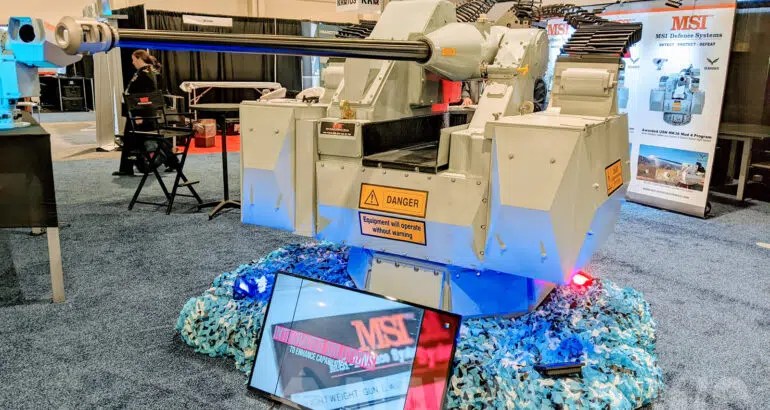
As for possible up-arming of the FRCs with the Mark 38 MOD 4 30mm autocannon, that is a retrofit possibility, noted the captain, although the upcoming Polar Security Cutter (PSC) heavy icebreakers will receive the 30mm autocannons first, two on each PSC. Captain Driscoll mentioned that the 30mm autocannon is in the U.S. Navy acquisition system and that the USCG and U.S. Navy both decide on future cutter armament. Programmable and airbursting 30mm ammunition options are not discussable although if the U.S. Navy has the specialized and advanced 30mm ammunition in its inventory, the USCG can also use it depending on the cutter’s mission parameters.

The new Mark 38 Mod 4 30mm naval gun system on display on MSI Defence stand at Sea Air Space 2022. It can, in theory and with funding, be retrofitted aboard existing USCG cutters if agreed upon between the U.S. Navy and the U.S. Coast Guard. Photo: NavalNews

Antarctic Support Ship “Almirante Saldanha” for Brazil

SeaWaves reports,

After research and studies conducted by the Brazilian Navy (MB), the future Antarctic Support Ship (NApAnt) had its name chosen: “Almirante Saldanha”. TheNApAntwill reduce the refueling time of the Comandante Ferraz Antarctic Station (EACF), due to cranes with greater load and maneuverability, and will be better equipped for the launch of camps and will have greater autonomy to expand support for research.

The new ship will replace the Oceanographic Support Ship “Ary Rongel” and will have more modern technical resources such as the navigation and control system, which will allow closer approach of the ship to the beach for landing personnel and material, safely.

There is no indication that the ship is an icebreaker, but it will certainly be ice strengthened. According to Janes, the ship will be delivered in 2025 and,

“The ship will displace approximately 5,880 tonnes for a length of 93.9 m, a width of 18.5 m, a draught of 6 m, cruising speed of 12 kt, endurance of 70 days, and a crew of 95, including 26 researchers.”

This is the ship being replaced:

Oceanographic support vessel ‘Ary Rongel’. Marinha do Brasil picture


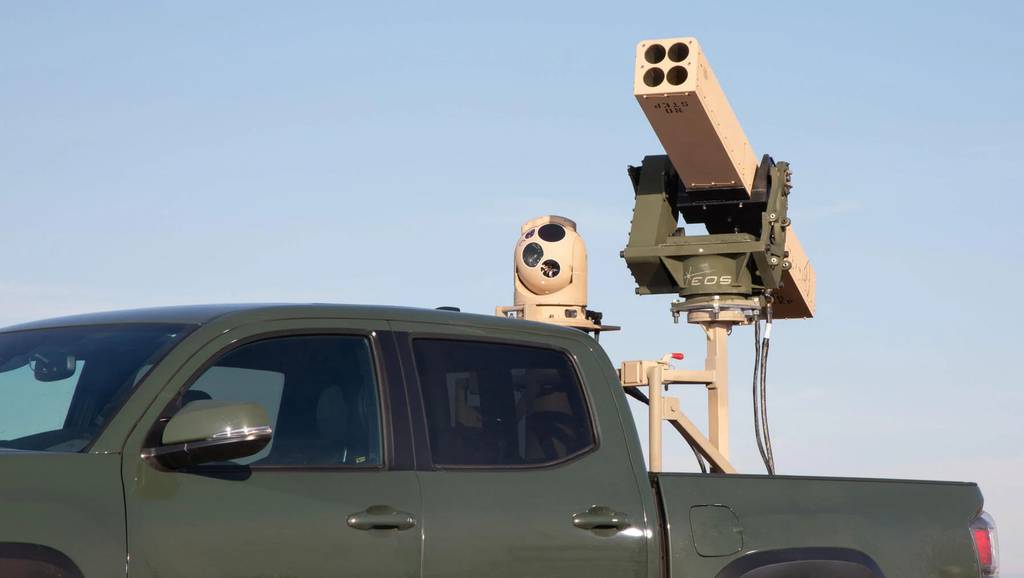
Maybe Another Reason to Look at APKWS

The VAMPIRE system can fit in almost any pickup or vehicle with a cargo bed. (Courtesy of L3Harris)

The Navy League’s on-line magazine, Seapower, reports,

BAE Systems completed additional ground-to-air test firings to prove the effectiveness of 70mm rockets guided by APKWS guidance kits against Class-2 unmanned aerial systems (UAS) that weigh roughly 25-50 pounds and can travel at speeds exceeding 100 miles per hour, the company said in a Nov. 29 release…During the demonstration in Southern Arizona, five APKWS-guided counter-UAS rockets were fired from a containerized weapon system and destroyed all targets, including fast-moving drones.

APKWS  info.