Coast Guard Patrol Forces Southwest Asia, PATFORSWA, Three FRCs, Three Drug Seizures in Four Days

ARABIAN SEA (Dec. 28, 2023) Bags of illegal narcotics seized from a vessel are stacked on the deck of the U.S. Coast Guard Sentinel-class fast response cutter USCGC Robert Goldman (WPC 1142) in the Arabian Sea, Dec. 28. Robert Goldman was operating under Combined Task Force 150, one of five task forces under Combined Maritime Forces, the largest multinational naval partnership in the world. CTF 150 focuses on maritime security operations outside the Arabian Gulf. (Photo by U.S. Coast Guard courtesy photo)

Below is a U.S. Naval Forces Central Command – Combined Maritime Forces – U.S. 5th Fleet news release, followed by a second earlier news release. Something puzzling is that there seems to be a relatively new “catch and release” policy regarding the smugglers and smuggling vessels. 

CMF-assigned Cutter Seizes Hashish and Methamphetamines in North Arabian Sea | January 02, 2024, MANAMA, Bahrain

A U.S. Coast Guard cutter patrolling under the command of Combined Task Force 150 of the Combined Maritime Forces seized hashish and methamphetamines with a total estimated street value of $24.3 million Dec. 28 in the North Arabian Sea.

It was the third seizure by a CMF-assigned cutter in four days, following seizures by USCGC Clarence Sutphin Jr. (WPC 1147) and USCGC John Scheuerman (WPC 1146) of hashish, heroin, methamphetamines and pills with a total estimated street value of $24.5 million Dec. 24 and Dec. 26 in the Gulf of Oman.

A team from USCGC Robert Goldman (WPC 1142), a Sentinel-class cutter, boarded a dhow at approximately 6:30 a.m. local time Dec. 28 after it displayed indicators consistent with illicit drug trafficking.

Aboard, the team discovered over 300 bags of drugs containing 3,514 kilograms of hashish and 417 kilograms of methamphetamines.

The Robert Goldman team released the dhow and disposed of the illicit drugs.

The mission of Combined Task Force 150 is to disrupt the ability of non-state actors to move weapons or drugs, or engage in other illicit activities, in the Gulf of Oman, Arabian Sea and Indian Ocean.

This interdiction marked the twelfth time Combined Task Force 150 assets have seized illegal narcotics at sea since France took command in July 2023.

Combined Maritime Forces is a multinational maritime partnership committed to disrupting criminal and terrorist activities by restricting their freedom of maneuver across approximately 3.2 million square miles of international waters encompassing some of the world’s most important shipping lanes.

Since 2021, units assigned to the Combined Maritime Forces have seized more than $1 billion in illegal drugs while patrolling waters across the Middle East.


CMF Forces Seize Illegal Drugs in Gulf of Oman, January 02, 2024, MANAMA, Bahrain

U.S. Coast Guard cutters assigned to the Combined Maritime Forces seized illegal drugs with a total estimated street value of $24.5 million on Dec. 24 and Dec. 26 from vessels in the Gulf of Oman.

GULF OF OMAN (Dec. 26, 2023) Bags of illegal narcotics seized from a vessel are stacked on the deck of the U.S. Coast Guard Sentinel-class fast response cutter USCGC John Scheuerman (WPC 1146) in the Gulf of Oman, Dec. 26. John Scheuerman was operating under Combined Task Force 150, one of five task forces under Combined Maritime Forces, the largest multinational naval partnership in the world. CTF 150 focuses on maritime security operations outside the Arabian Gulf. (Photo by U.S. Coast Guard courtesy photo)

At approximately 2 p.m. local time (10 a.m. Greenwich Mean Time) on Dec. 24, a team from USCGC Clarence Sutphin Jr. (WPC 1147), a Sentinel-class cutter patrolling under the command of Combined Task Force 150 of the Combined Maritime Forces, boarded a dhow after it displayed several indicators consistent with illicit drug trafficking.

Aboard, the crew discovered 90 kilograms of heroin with an estimated street value of $3.2 million.

After testing and seizing the narcotics, the team disembarked the dhow, allowing it to continue on its journey.
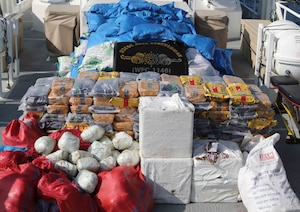
GULF OF OMAN (Dec. 26, 2023) Bags of illegal narcotics seized from a vessel are stacked on the deck of the U.S. Coast Guard Sentinel-class fast response cutter USCGC John Scheuerman (WPC 1146) in the Gulf of Oman, Dec. 26. John Scheuerman was operating under Combined Task Force 150, one of five task forces under Combined Maritime Forces, the largest multinational naval partnership in the world. CTF 150 focuses on maritime security operations outside the Arabian Gulf. (Photo by U.S. Coast Guard courtesy photo)

At approximately 5 a.m. local time (9 a.m. Greenwich Mean Time) on Dec. 26, a team from USCGC John Scheuerman (WPC 1146), a Sentinel-class cutter patrolling under the command of Combined Task Force 150 of the Combined Maritime Forces, boarded a dhow after it also displayed several indicators consistent with illicit drug trafficking.

Aboard, the team discovered 261 kilograms of methamphetamines, 2,936 kilograms of hashish, 142 kilograms of heroin and 75,000 pills with the potential to be abused as opium substitutes, with a total estimated street value of more than $21.3 million.

The John Scheuerman team released the dhow’s crew and disposed of the illicit drugs.

The mission of Combined Task Force 150 is to disrupt the ability of non-state actors to move weapons or drugs, or engage in other illicit activities, in the Gulf of Oman, Arabian Sea and Indian Ocean.

These interdictions marked the tenth and eleventh times Combined Task Force 150 assets have seized illegal narcotics at sea since France took command in July 2023.

Combined Maritime Forces is a multinational maritime partnership committed to disrupting criminal and terrorist activities by restricting their freedom of maneuver across approximately 3.2 million square miles of international waters encompassing some of the world’s most important shipping lanes.

Since 2021, units assigned to the Combined Maritime Forces have seized more than $1 billion in illegal drugs while patrolling waters across the Middle East.

Shaldag Mk. V — What a True “Fast Response Cutter” Might Look Like

Israel Shipyards Shaldag MK V. Israel Shipyards Ltd. picture

For some time, I have thought that the Webber class, “Fast Response Cutter” (FRC), program was misnamed. Webber class cutters don’t generally sit in port waiting for some alarm to call them to rush to the scene. Rather they are used more like small Medium Endurance Cutters. This has proven especially fortuitous in view of the delays in replacing the existing WMECs. It is only because of the versatility of the Webber class that the Coast Guard will be able to maintain its drug and alien migrant interdiction efforts in the 7th District and extend fisheries protection and counter IUU efforts into the Western Pacific while decommissioning WMECs before their replacements are completed.

Still, I do believe there is a need for true Fast Response Cutters for those rapidly developing missions that require more range and capability than a Response Boat, Medium, for protection of high value units, and to respond in the event of a maritime terrorist attack–units for which SAR and particularly Ports, Waterways, and Coastal Security are their primary missions.

The “Marine Protector” 87-foot patrol boats have had this job, but they are approaching the end of their service life (the oldest are now 25 years old). Four of them are particularly tasks with protecting Fleet Ballistic Missile submarines during surface transit from their bases to open sea. They have never been well prepared to deal with terrorist threats and aren’t really particularly fast.

We have discussed characteristics for a WPB replacement, a true Fast Response Cutter, before (here and here) and why nothing we have currently is suitable for the mission. The Shaldag Mk. V looks like a good candidate for the job, but first let’s look at where and why we might need vessels of this type.

The Webber class as Fast Response Cutters:

In some places, the Webber class might take on the functions of a “fast response cutter.” Where there are three or more based in a single location, it should be possible to have one on standby virtually at all times. Though better armed than the 87 footers, they are not particularly well prepared to deal with the terrorist threat, but it is possible to increase their armament to make them more effective in the role.

Even if the Webber class could be used in the FRC role, their basing, concentrated as it is to improve maintenance, would leave many ports with no similar protection.

Where Do We Need Fast Response Cutters:

In an earlier post, “A Reevaluation, Ruminating on Homeports While Playing the Red Cell,” Part 1 and Part 2, I identified 31 critical ports that required protection from unconventional attack.

I will assume that if the Coast Guard recognizes the need for a true Fast Response Cutter, a well-armed interceptor, and does build such a class, that they will also increase the armament of at least some of the Webber class, so that they could also be effective in this role at critical ports where they are based.

Webber class are based in 9 of the 31 critical ports: Moorehead City/Atlantic Beach, NC; Miami; San Juan; Pascagoula; Galveston; LA/Long Beach/San Pedro; Honolulu; and Guam.

That leaves 22 port complexes without resident Fast Response Cutters:

CCGD1:

  • Bath, Me–Major Naval shipbuilder
  • Kittery, ME/Portsmouth, NH –Naval Shipyard
  • Groton, CT–Submarine base
  • Hudson River complex, New York, NY/Elizabeth and Bayonne, NJ–a major cultural target, #3 US Port by tonnage, #3 Container port, #4 Cruise ship port (NYC) and #13 cruise ship port (Cape Liberty, NJ)

CCGD5:

  • Chesapeake Bay Complex, VA–Base for aircraft carriers and submarines, Major naval shipbuilder, Strategic Port, #9 port by tonnage, #5 container port; plus water route to Washington, DC (major cultural target) and Baltimore, MD–#14 port by tonnage, #13 container port, #12 cruise ship port
  • Cape Fear River–Strategic Seaport, Wilmington, NC

CCGD7:

  • Charleston, SC–#7 container port, #15 cruise ship port, Strategic Seaport
  • Savannah, GA–#4 container port, Strategic Seaport
  • Jacksonville complex, FL (including Kings Bay, GA)–SSBNs, Navy Base Mayport, #14 cruise ship port, Strategic Seaport/ Mayport, FL
  • Port Canaveral, FL–#3 Cruise Ship port/ Cape Canaveral, FL:
  • Port Everglades/Fort Lauderdale, FL–#11 container port, #2 Cruise Ship port
  • Tampa, FL–#7 Cruise Ship port/

CCGD8

  • Mobile, AL–major naval shipbuilder, #11 port by tonnage
  • Gulfport, MS–Strategic Seaport
  • Mississippi River Complex, LA–New Orleans #6 port by tonnage, #14 container port, +#10 Cruise Ship port; South Louisiana #1 port by tonnage; Baton Rouge #8 port by tonnage; Port of Plaquemines #13 port by tonnage.
  • Lake Charles, LA–#12 port by tonnage
  • Sabine Pass complex (Beaumont/Port Author/Orange, TX)–#4 port by tonnage (Beaumont), Strategic Seaport (both Beaumont and Port Author), It also has an LNG exporting terminal.
  • Corpus Christi, TX–#7 port by tonnage, Strategic Seaport

CCGD11:

  • San Diego, CA–Base for aircraft carriers and submarines, major naval shipbuilder (NASSCO), Strategic Seaport
  • San Francisco Bay complex,, CA–A major cultural target, #6 container port (Oakland), Strategic Seaport (Oakland and Concord)/Alameda, CA

CCGD13:

  • Puget Sound Complex, Seattle/Tacoma, WA–Base for aircraft carriers (Bremerton), SSBNs (Bangor), and submarines, major naval bases, #8 container port (Seattle), #10 container port (Tacoma), #8 Cruise ship port (Seattle), Strategic Seaport (Indian Island and Tacoma, WA)

CCGD17:

  • Anchorage, AK–Strategic Seaport

Assuming we need two boats to maintain one on standby or underway at all times this suggests we need 44 Fast Response Cutters. Fewer than the 73 patrol boats of the Marine Protector class.

The Shaldag MkV as a Fast Response Cutter:

Navy Recognition reports delivery of a third batch of Israeli built Shaldag Mk. V fast attack craft to the Philippine Navy. In the Philippine Navy, these are referred to as Acero class coastal patrol interdiction craft (CPIC).

The Shaldag Mk. V seems to be a true Fast Response Cutter that checks many (but not all) of the boxes that could make it effective in this role. The Shaldag Mk V shows what can be done on even a modest sized vessel. They are:

  • 95 tons full load displacement
  • 32.65 m (107.1 ft) length overall,
  • with a beam of 6.2 m (20 ft),
  • speed of more than 40 knots,
  • range of 1,000 miles at 15 knots.
  • crew of 12

These craft are armed with:

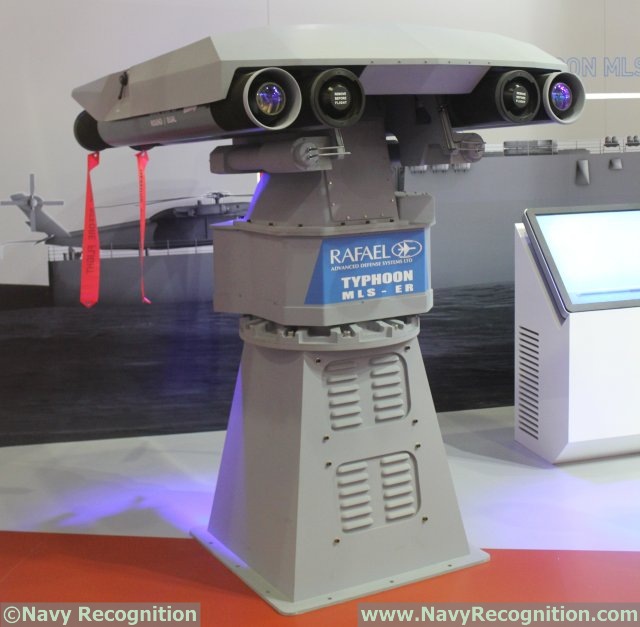
Photo: Typhoon MLS-ER (Missile Launch System–Extended Range)

  • 1 x Rafael Typhoon MLS-ER missile launcher for 4 x Spike ER surface-to-surface missiles, a weapon similar to Hellfire/JAGM (on at least four of the Acero class)
  • 1 × Mk.44 Bushmaster II autocannon mounted on Rafael Typhoon Mk 30-C remote-controlled weapon station (Mk38 Mod 2/3 in US service but with a 30mm gun)
  • 2 × M2HB Browning 12.7 mm/50-cal. heavy machine guns mounted on Rafael Mini Typhoon remote-controlled weapon stations
  • 2 × M60 7.62 mm/30-cal. GP machine guns

What we might do differently:

The Shaldag Mk. V is certainly not the only possible solution for a true Fast Response Cutter, but its speed and equipment does represent some but not all the capabilities that should be incorporated in an FRC.

The Shaldag Mk. V has a capability against Unmanned Air Systems (UAS) and small, fast, highly maneuverable surface threats. As threat vessel increase in size their effectiveness diminishes substantially. They don’t need to sink large ships, but they do at least need to be able to immobilize them to keep terrorists from reaching their objective and to allow time for a DOD response.

The Shaldag’s boat handling facilities appear more difficult to use than those on the 87 foot cutters. We could do better, and it is likely we would need better boat handling equipment for day-to-day SAR missions.

The Missiles used on the Shaldag Mk. V are not used by the US Navy or Marine Corps, but comparable weapons–Hellfire, JAGM, or APKWS–could be used instead.

The 30mm Mk38 Mod4 would replace the Israeli 30mm Typhoon gun mount.

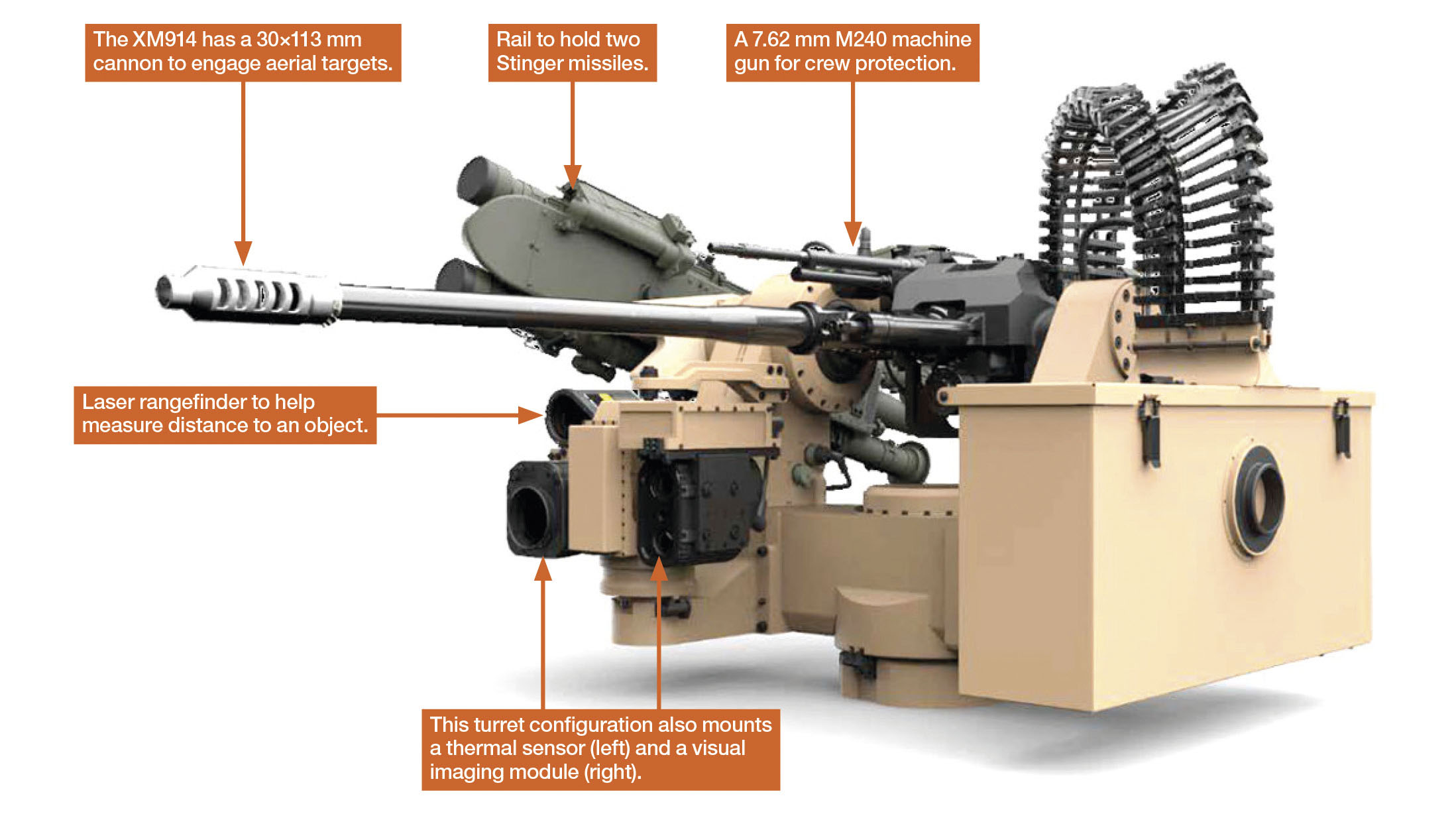
Marine Air Defense Remote Weapon Station

The Marine Air Defense Integrated System Remote Weapon Station, could replace the .50 caliber Mini Typhoon remote weapon stations.

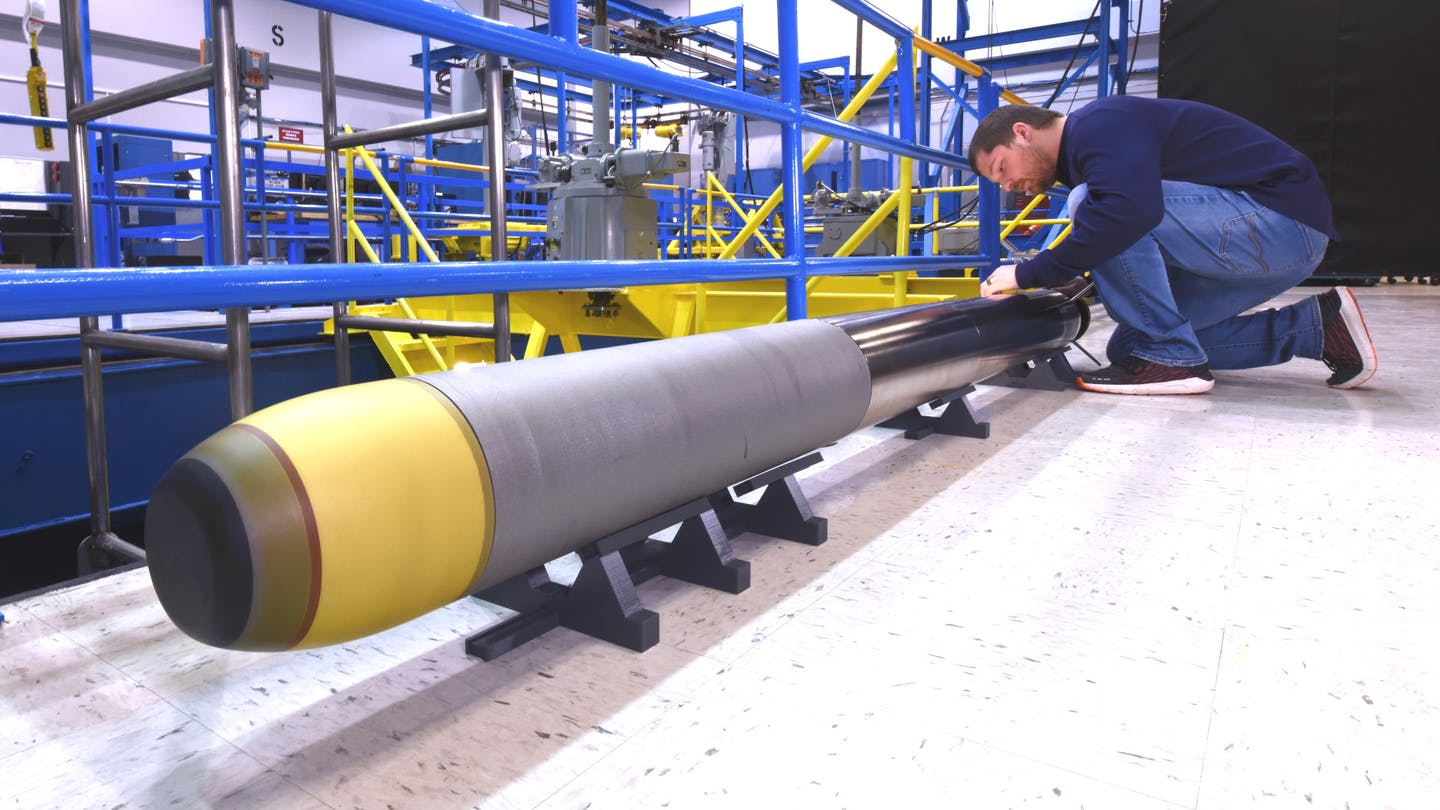
Very Light Weight Torpedo

To be able to immobilize even very large ships, the Very Light Weight Torpedo might be adequate.

“USCGC Frederick Hatch concludes historic patrol with engagements in the Philippines, fisheries enforcement in Republic of Palau, Papua New Guinea” –Forces Micronesia

Below is a U.S. Coast Guard Forces Micronesia/Sector Guam news release. 
This is the first time a Webber class patrol craft has made it to the Philippines. This is all part of a renewed in interest in supporting Western Pacific Island nations, particularly in regard to fisheries and IUU enforcement.
National Security Cutters have been spending time in the Western Pacific, and a Medium Endurance Cutter (WMEC) is being moved to the Pacific to support this effort.
The Office of Expeditionary Logistics (DOL-X), located in Alameda, California, mentioned in the release only reached full operational Aug. 14.

Nov. 30, 2023

USCGC Frederick Hatch concludes historic patrol with engagements in the Philippines, fisheries enforcement in Republic of Palau, Papua New Guinea

SANTA RITA, Guam — The USCGC Frederick Hatch (WPC 1143) successfully concluded a routine 47-day expeditionary patrol covering more than 8,200 nautical miles under Operation Blue Pacific, returning to Guam on Thanksgiving, distinguished by a series of historic and strategic engagements across the Western Pacific and Oceania.

“USCGC Frederick Hatch’s highly successful patrol is a testament to the diligence and expertise of the crew onboard, always remaining positive and overcoming numerous challenges to continually set the standard for Coast Guard operations in the Pacific. Their efforts to keep our equipment functioning properly, go over the rail regularly for boardings, and cook meals in heavy seas is what makes the U.S. Coast Guard’s commitment to the Indo-Pacific region so strong. Our people are the best at what they do and always ready to go above and beyond when asked, which is the basis for being a trusted partner and fostering strong international alliances,” said Lt. Patrick Dreiss, commanding officer of the Frederick Hatch.

Historic First Visit to Tacloban, Philippines
A highlight of the patrol was Frederick Hatch’s historic visit to Tacloban, Philippines, in mid-October, marking a significant milestone in U.S.-Philippines relations. The visit coincided with the 79th anniversary of the Battle of Leyte Gulf. In addition to the commemoration observance, the crew engaged in various activities, including a maritime law enforcement exchange supported by U.S. Coast Guard Maritime Security and Response Team West, community interactions, including a visit with the mayor, and cultural immersion.

Maritime Security and Fisheries Patrol
The second half of the patrol focused on countering illegal fishing and enhancing partnerships in the Republic of Palau and Papua New Guinea. While en route to Palau, the crew conducted critical observation reports highlighting potential threats to maritime governance and fishery management. These reports included observations of four Philippine-flagged fishing vessels at the boundary of Palau’s Exclusive Economic Zone (EEZ) and the high seas, with one vessel within the Palauan EEZ when detected. Notably, these vessels needed permits to operate under the Western and Central Pacific Fisheries Commission (WCPFC) on the high seas or Palau EEZ, and their Philippine permits expired. Their presence and activities represent potential serious violations under the WCPFC regulations.

The following day, the crew reported two additional Philippine-flagged vessels fishing without permits in WCPFC-governed waters again near the Palau EEZ, adding to the count of serious violations. Following a port call in Palau on a subsequent patrol of the Palau EEZ, the crew identified only one vessel actively fishing, recently boarded, and detected no further unauthorized incursions. In response to a request from the Palau Joint Operations Center, the crew also disposed of two fish aggregating devices found within the Palau EEZ, addressing concerns over illegal local fishing practices.

While en route to Papua New Guinea (PNG), Frederick Hatch’s crew conducted one boarding on the high seas under WCPFC authority, reporting three potential violations. The crew then welcomed two PNG boarding officers, one from the Customs Services and one from the National Fisheries Authority, and together, they conducted nine additional PNG-led boardings within their EEZ under the bilateral maritime law enforcement agreement. These boardings undertaken in the eastern EEZ resulted in 16 issued violations and two warnings, addressing a range of issues such as exceeding crew occupancy limits based on available berthing, improper crew compositions due to a lack of required PNG crew expired seafarers’ credentials, and poor vessel markings. The vessels’ flags include the People’s Republic of China, Vanuatu, and the Philippines.

“This proactive enforcement and monitoring underscore the importance of upholding good maritime governance and preserving sustainable fishing practices, critical for the ecological and economic health of the region,” said Capt. Nick Simmons. “The relationships we’re building in Oceania and the Western Pacific are crucial for our continued commitment to our allies. This patrol exemplifies our dedication to maintaining stability and security in these waters.”

Engagement and Cooperation in Papua New Guinea
Frederick Hatch’s visit to Papua New Guinea (PNG) exemplified increased bilateral defense and security cooperation, as highlighted by the recent signing and ratification of the Defense Cooperation Agreement. The crew’s interactions with PNG fisheries, customs officers, and the local community underscore the ongoing effort to strengthen regional relationships.

“This patrol was our crew’s first time working with PNG Customs and Fisheries, and we look forward to working with them again in the future. Thank you to our two shipriders, Mr. Roger Sivlanduo and Mr. Jeremy Nelson, both skilled professionals and great people to have onboard to enrich the relationship between our agencies. It was an important opportunity to learn from each other and develop new tactics to address the IUU-F threat throughout Melanesia in the future while also carrying out several very successful boardings counteracting those threats in the present,” said Dreiss.

Support from DOL-X Team
The U.S. Coast Guard’s newly created DOL-X team was pivotal in supporting the Frederick Hatch’s logistics, including repairs and maintenance, ensuring the cutter’s operational readiness throughout the patrol. The team met the cutter during two port calls, hand-carrying critical parts to address casualties and augmenting the cutter’s engineers to repair the issues.

-USCG-

About the U.S. Coast Guard in the Pacific Region:
The U.S. Coast Guard is vital to ensuring maritime safety, security, and stewardship across a vast Pacific expanse, spanning six continents, 71 countries, and 74 million square miles of ocean. U.S. Coast Guard Pacific Area leads coordination and integration efforts in this vast region, promoting collaboration with partners through the actions of the U.S. Coast Guard 14th District and U.S. Coast Guard Forces Micronesia/Sector Guam teams.

The Frederick Hatch is the 43rd 154-foot Sentinel-class fast response cutter named for a surfman and lighthouse keeper who was a two-time Gold Life Saving Medal recipient. They regularly patrol Oceania, fostering international cooperation and supporting maritime safety, security, and stewardship.

“Combined Maritime Forces, U.S. Coast Guard Make $21 Million Drug Seizure in the Gulf of Oman” –NAVCENT

GULF OF OMAN (Nov. 14, 2023) Illegal narcotics seized from a stateless vessel are stacked on the deck of the U.S. Coast Guard Sentinel-class fast response cutter USCGC Emlen Tunnell (WPC 1145) in the Gulf of Oman, Nov. 14. Emlen Tunnell was operating under Combined Task Force 150, one of five task forces under Combined Maritime Forces, the largest multinational naval partnership in the world. CTF 150 focuses on maritime security operations in the Gulf of Oman, Arabian Sea and Indian Ocean. (Photo by U.S. Coast Guard courtesy photo)

Below is a NAVCENT news release.


Combined Maritime Forces, U.S. Coast Guard Make $21 Million Drug Seizure in the Gulf of Oman

By U.S. Naval Forces Central Command Public Affairs | November 20, 2023

MANAMA, Bahrain —

A U.S. Coast Guard cutter crew seized about $21 million worth of illegal drugs from a stateless vessel while operating in the international waters of the Gulf of Oman, Nov. 14.

Coast Guardsmen from the Sentinel-class fast response cutter USCGC Emlen Tunnell (WPC 1145), working under the command of Combined Maritime Forces’ Combined Task Force (CTF) 150, seized 2,000 kilograms of hashish and 384 kilograms of methamphetamine from the vessel during an interdiction operation.

“This new seizure shows once again the operational effectiveness of Combined Maritime Forces assets and nations,” said French navy Capt. Yannick Bossu, CTF 150 commander. “It illustrates that nations from all around the world are committed to regional maritime security in the Indian Ocean alongside their regional partners.”

This event marks the fifth time in recent months the French-led CTF 150 has interdicted illicit narcotics at sea. In those previous operations, CTF ships seized more than 4,522 kilograms of methamphetamine, heroin, and hashish from stateless vessels during interdiction operations, with a street value of more than $94 million.

CTF 150 is one of five task forces under Combined Maritime Forces, the largest multinational naval partnership in the world. CTF 150 focuses on maritime security operations in the Gulf of Oman, Arabian Sea and Indian Ocean.

Since 2021, Combined Maritime Forces has seized more than $1 billion in illegal drugs while patrolling waters across the Middle East.
The 38-nation naval partnership upholds the international rules-based order by promoting security and stability across 3.2 million square miles of water encompassing some of the world’s most important shipping lanes.

“U.S. Coast Guard Cutter Terrell Horne returns to home port following a 52-day multi-mission patrol in the Eastern Pacific” –CG News

PERU, 10.06.2023, Courtesy Photo, USCG District 11
The crew of the U.S. Coast Guard Cutter Terrell Horne conducts a patrol in the Eastern Pacific Ocean in support of Operation Southern Shield 2023, October 2023. The Coast Guard recently completed the first high-seas boardings and inspections off the coast of Peru under a newly adopted multi-lateral agreement to monitor fishing and transshipment operations within the South Pacific Regional Fisheries Management Organization (SPRFMO) Convention Area. (U.S. Coast Guard photo)

Below is a news release from Coast Guard News. This patrol was unusual enough to draw some special attention. It is not a typical patrol craft mission. It involved the pairing of a buoy tender with a “Fast Response Cutter” (FRC) to put two units far from their homeports. The Pacific Area has done this before in the Western Pacific, but I think this may be the first time it has been done in the Eastern Pacific off the West coast of South America. Pacific Area Webber class FRCs have previously conducted drug enforcement missions in the Eastern Pacific at least as far South as Central America. We talked about portions of this multiunit deployment earlier, “Buoy Tender, FRC, C-130 Used for International Fisheries Enforcement–Operation Southern Shield.” USCGC Alder, homeported in San Franciso, was the buoy tender involved.

The emphasis of the operation was international fisheries enforcement, but USCGC Terrell Horne still managed to do a bit of drug enforcement. I look forward to seeing the report of USCGC Alder’s portion of the operation.

09.25.2023, Courtesy Photo, USCG District 11
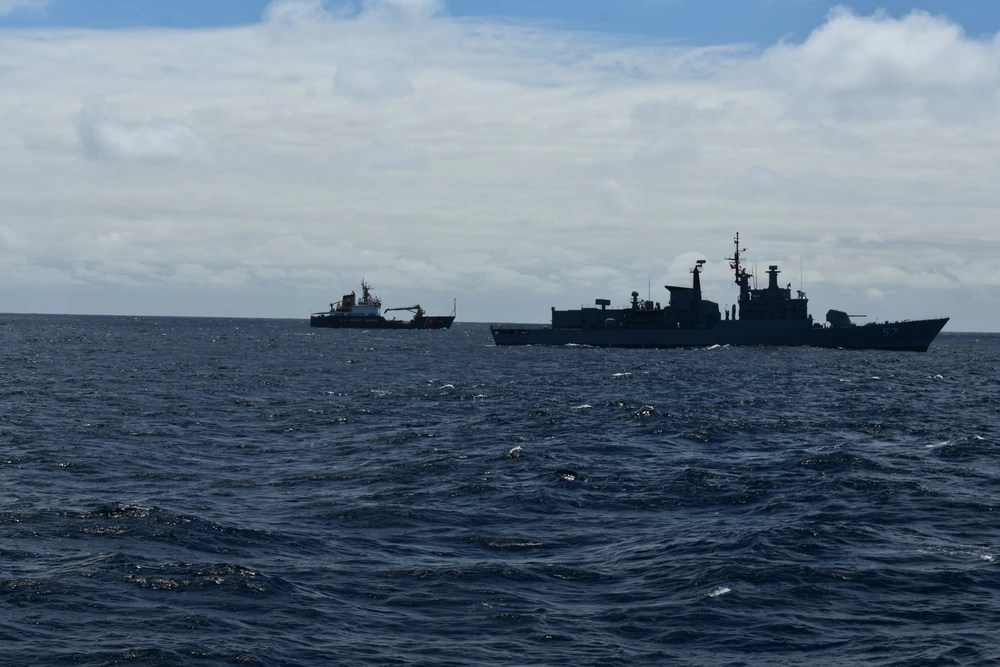
U.S. Coast Guard Cutter Alder (background) transits in formation alongside Peru BAP (Buque Armada Peruana) Bolognesi (FM-57) as it prepares for the next exercise during GALAPEX 2023, Sept.25, 2023. GALAPEX is a recurring multi-national maritime exercise led by Ecuador and included participation of delegates from Argentina, Brazil, Chile, Colombia, Costa Rica, the European Union, France, Italy, Mexico, Panama, Peru, the United Kingdom, and the United
States. (U.S. Coast Guard photo)

Nov. 8, 2023

U.S. Coast Guard Cutter Terrell Horne returns to home port following a 52-day multi-mission patrol in the Eastern Pacific

Coast Guard District Eleven

SAN PEDRO, Calif. — The U.S. Coast Guard Cutter Terrell Horne and crew returned to their home port in Los Angeles/Long Beach Tuesday after a 52-day patrol across the Eastern Pacific.

The crew of the Terrell Horne deployed in support of multiple missions, including Operations Green Flash, Albatross, Martillo, and Southern Shield, within the 11th Coast Guard District’s area of responsibility. During the patrol, Terrell Horne’s crew conducted a range of missions encompassing law enforcement, counter-drug operations, illegal, unreported, and unregulated fishing enforcement, and search and rescue operations.

“The crew of the Terrel Horne lived up to the cutter’s namesake in every way during this patrol. Operation Southern Shield allowed the cutter to showcase the versatility of the Fast Response Cutter. This operation brought a patrol boat and a buoy tender almost 4,000 nautical miles from home, conducting operations and international engagements with Mexico, Ecuador, Peru, and Costa Rica, said Chief Warrant Officer Jason Bussell, the commanding officer of the Coast Guard Cutter Terrell Horne. “The crew excelled in counter-illegal fishing missions, search and rescue, and counter-drug operations. Working alongside other Coast Guard assets, the crew was able to interdict a drug smuggling vessel and assisted in the seizure of nearly 2,000 lbs of contraband.”

The Coast Guard commissioned the Terrell Horne as the 31st Fast Response Cutter on March 22, 2019. Coast The cutter is named for Senior Chief Terrell Horne III, who died from injuries sustained while conducting maritime law enforcement operations off the California coast in December 2012. He was the executive petty officer aboard the Coast Guard Cutter Halibut at the time. For his heroic actions, the Coast Guard posthumously promoted Horne to senior chief petty officer.

For information on how to join the U.S. Coast Guard, visit GoCoastGuard.com to learn about active duty, reserve, officer and enlisted opportunities. Information on how to apply to the U.S. Coast Guard Academy can be found here.

We Need the Ship to Accomplish the Mission, the Gunner Protects the Ship, So We Need to Protect the Gunner

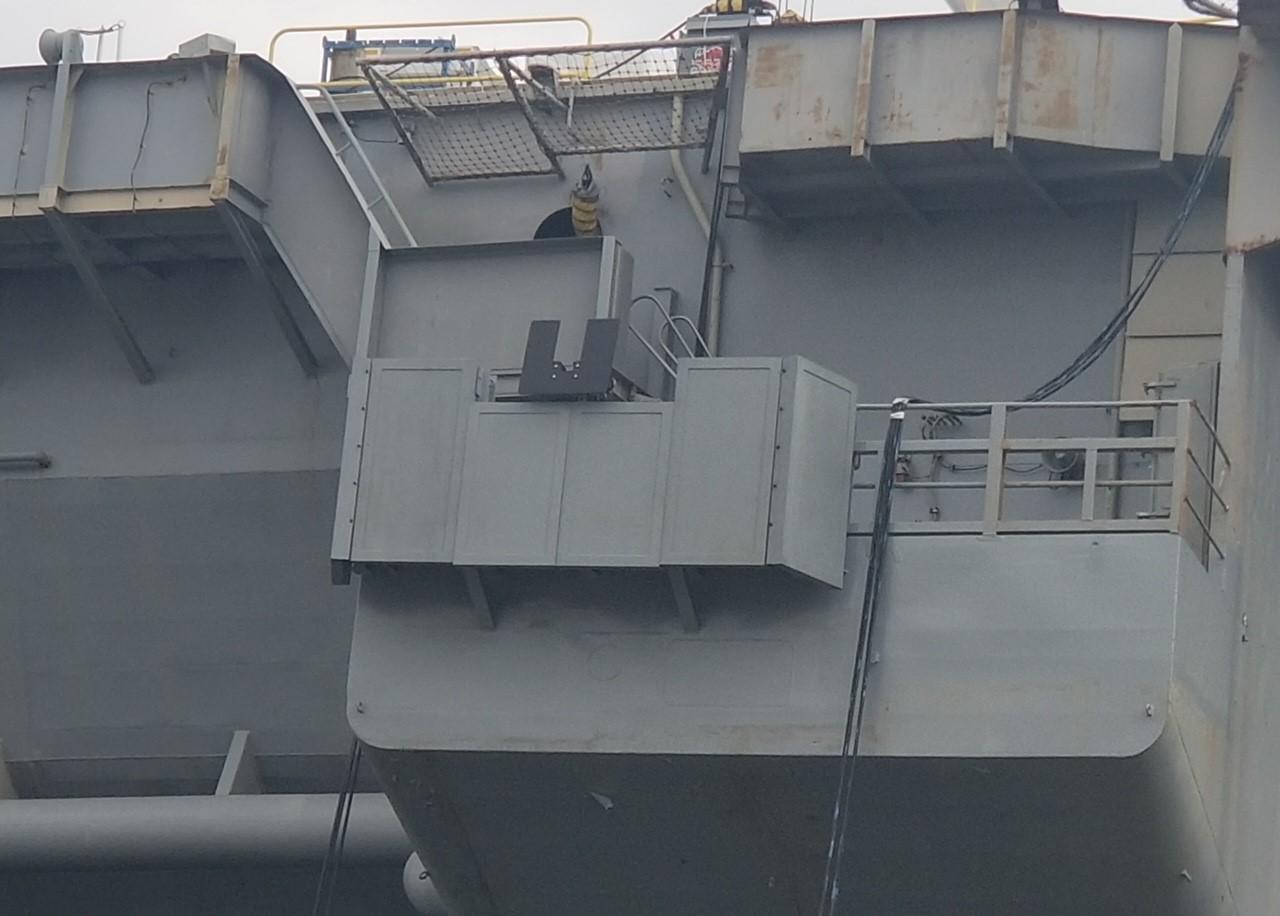
Crew Served Weapons protection by Kinetic Protection LLC on USN CV.

I have been talking about the need to protect the gunners for our crew served gun mounts since 2013. We revised the topic in 2016, in 2019, and in 2021.

With the current Conflict in the Mid-East, there is perhaps more reason than ever to take another look.

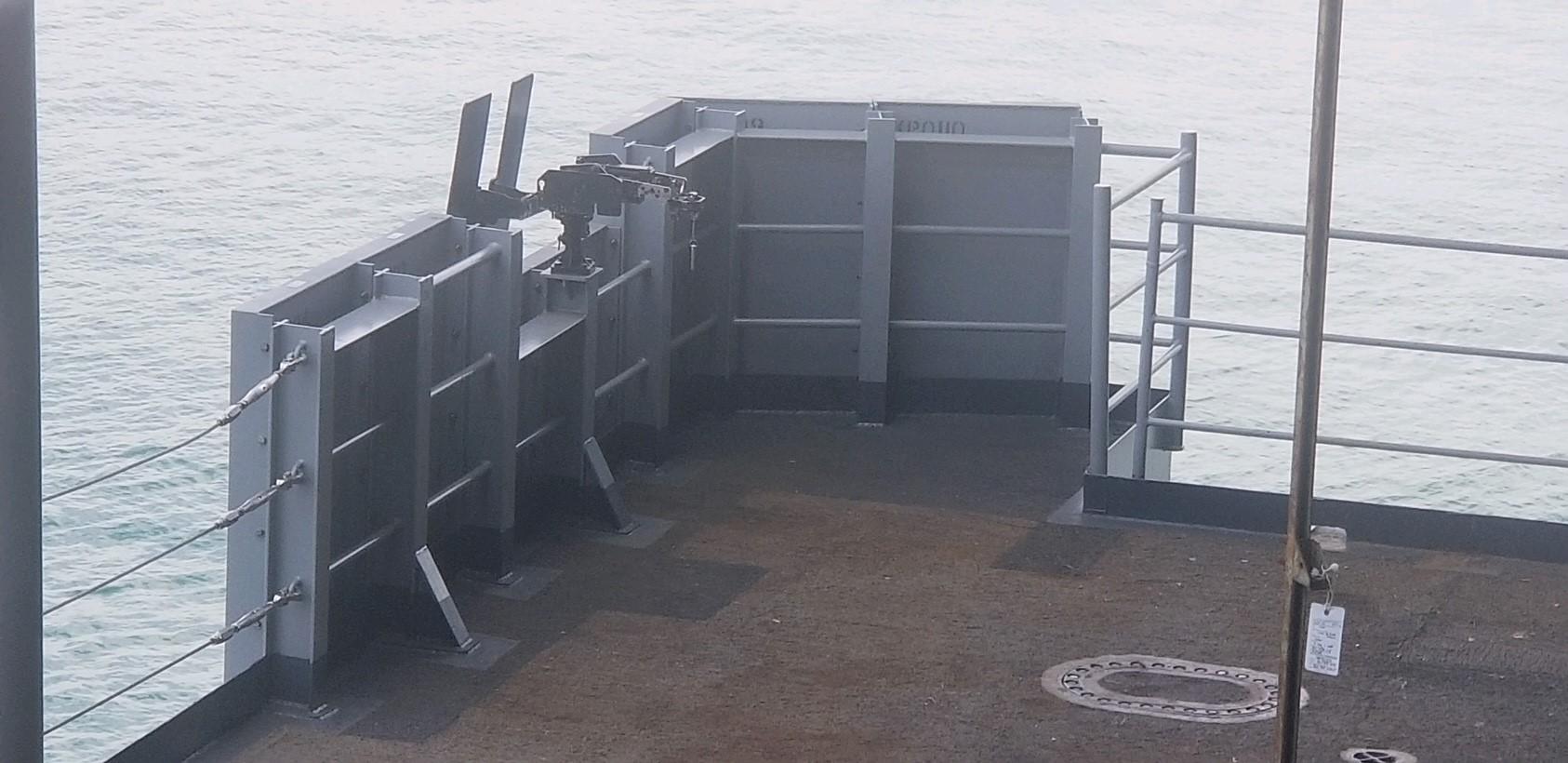
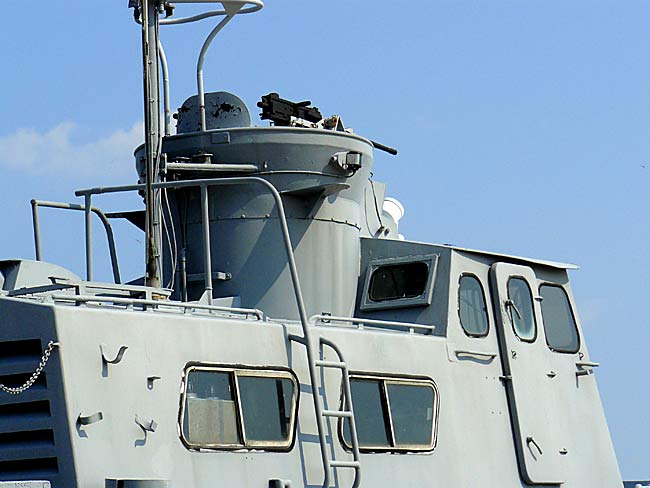
I am particularly concerned about the need to protect gunners at crews served weapon stations (normally .50 caliber machine guns) on the PATFORSWA cutters, against the kinds of 12.7mm and 14.5mm machine guns commonly mounted on the Islamic Revolutionary Guard Corps Navy’s thousands of inshore attack craft. To me the powerful 14.5x114mm round might be regarded as the pacing threat and probably the largest weapon we could provide protection against (MIL-STD-3038 Type XI class B armor).

I would really like to see the crew served weapons replaced by remote weapons stations, but if we are not going to do that, we at least need to protect the gunners.

Crew Served Weapons protection by Kinetic Protection LLC on USN aircraft carrier. Similar protection, with modifications for intended arc of fire for the after .50 caliber gun mounts on the PATFORSWA FRCs which are mounted on the aft corners of O-1 Deck seems appropriate. This mount, on a carrier is relatively low, to allow the gunner to depress the gun, raising the inboard end of the gun, and still aim at targets close aboard to engage targets at very close range. Mounts on cutter might be higher to permit a smaller cutout since the gun would not have to be depressed at as great an angle.

I had an opportunity to talk to the CEO and representatives of Kinetic Protection, LLC who provide the only currently Navy recognized ballistic shielding for crew served weapons that meet DOD requirements (MIL STD 3038 and MIL PRF 32379).

Crew Served Weapons protection by Kinetic Protection LLC on USN aircraft carrier.

I was surprised to learn that their product is metallic rather than a composite. I was told this was because composite armor was found to deteriorate due to environmental exposure while the metallic plates have a 25 year life.

Their armor is customizable by ship class and can be bolt-on or permanently installed. It can be various lengths but currently they have been making sections 30 inches wide and 30, 35 and 60 inches long.

The armor weighs about 20 pounds per square foot so it looks like we could provide 12.5 to 14.6 sq. feet of protection (two panels 30×30 or 30×35 inches) for each of the four crew served weapons positions for a total of about 1200 pounds of additional weight. This should not be a problem, considering how many people are frequently crammed on these small ships when they are used to repatriate aliens.

While considering how to help these ships survive in conflict, there are other things we can do to make the weapons more effective, like stabilizing systems and better sights.

The USCGC Oliver Henry (WPC 1140) in Manus, Papua New Guinea, Aug. 14, 2022 (U.S. Coast Guard photo by SW3 Victor Villanueva, NMCB-FOUR). Enlarging this photo by touching on it provides a view of both the forward and after crew served mounts located on the O-1 deck and the probable location of armor to protect the gunners. It is not clear if the current aft positions would allow the weapons to point directly astern, but every effort should be made to provide maximum arcs of fire. Pipe guards could be installed to prevent guns being depressed far enough to fire into the ship or personnel on the main deck.

This kind of protection used to be common. I have included some examples below.

A 20mm gun tub. The steps allowed the gunner, strapped to the gun, to point the weapon from the horizon to near vertical.

“U.S. Coast Guard strengthens historic relationship with Philippines during landmark visit to Tacloban” –USCG Forces Micronesia/Sector Guam

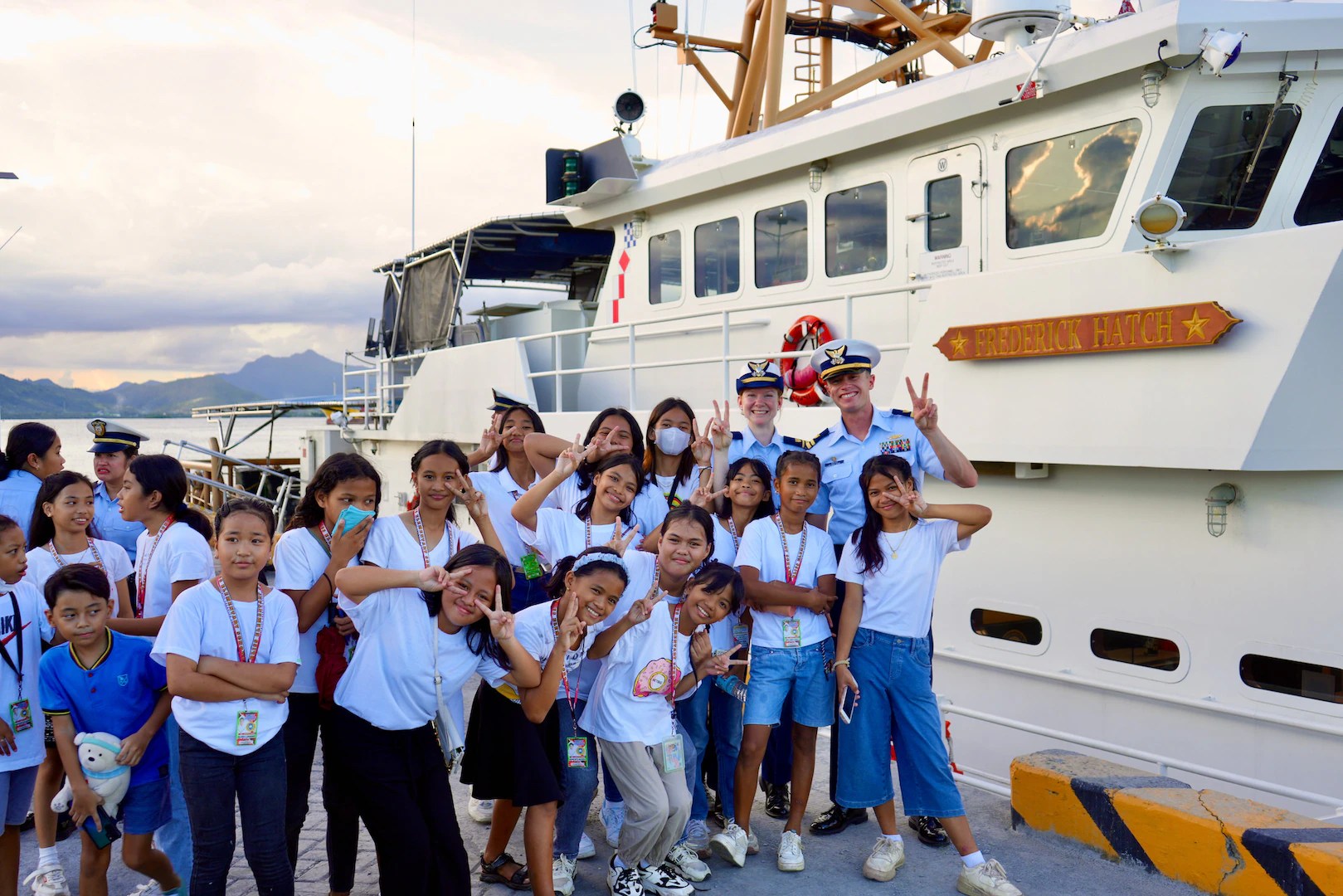
Below is a U.S. Coast Guard Forces Micronesia/Sector Guam news release. We seem to be pushing the little Webber class FRCs further and further. Because they are small, they are effective good will ambassadors. Clearly, they are not there to intimidate. There are more photos at the link. 

Oct. 23, 2023

U.S. Coast Guard strengthens historic relationship with Philippines during landmark visit to Tacloban

TACLOBAN, Philippines — In a historic first, the USCGC Frederick Hatch (WPC 1143) visited partners in Tacloban, Philippines, from Oct. 19 to 23, 2023, and the crew conducted engagements marking a significant milestone in the enduring relationship between the United States and the Philippines.

This visit of several days coincided with the observance of the Battle of Leyte Gulf, a crucial event in World War II history where U.S. Coast Guardsmen were a significant part of the U.S. forces and among the first to hit the beaches as the U.S. sought to retake the Philippines.

“We are deeply honored to be part of this observance and to strengthen the bond between the United States and the Philippines,” said Lt. Patrick Dreiss, commanding officer of the USCGC Frederick Hatch. “It is a privilege to bring a U.S. Coast Guard Fast Response Cutter to the Philippines for the first time and to visit the historic city of Tacloban. My crew was excited to collaborate with the Philippine Coast Guard to deepen our connections with our fellow seagoing Service and explore this unique city and island.”

An advance team from U.S. Coast Guard District 14 and U.S. Coast Guard Forces Micronesia/Sector Guam held planning meetings in collaboration with the U.S. Embassy to prepare for this visit and the Battle of Leyte Gulf observance. Discussions revolved around mutual capabilities, training opportunities, and community engagement, part of the Coast Guard’s Operation Blue Pacific mission.

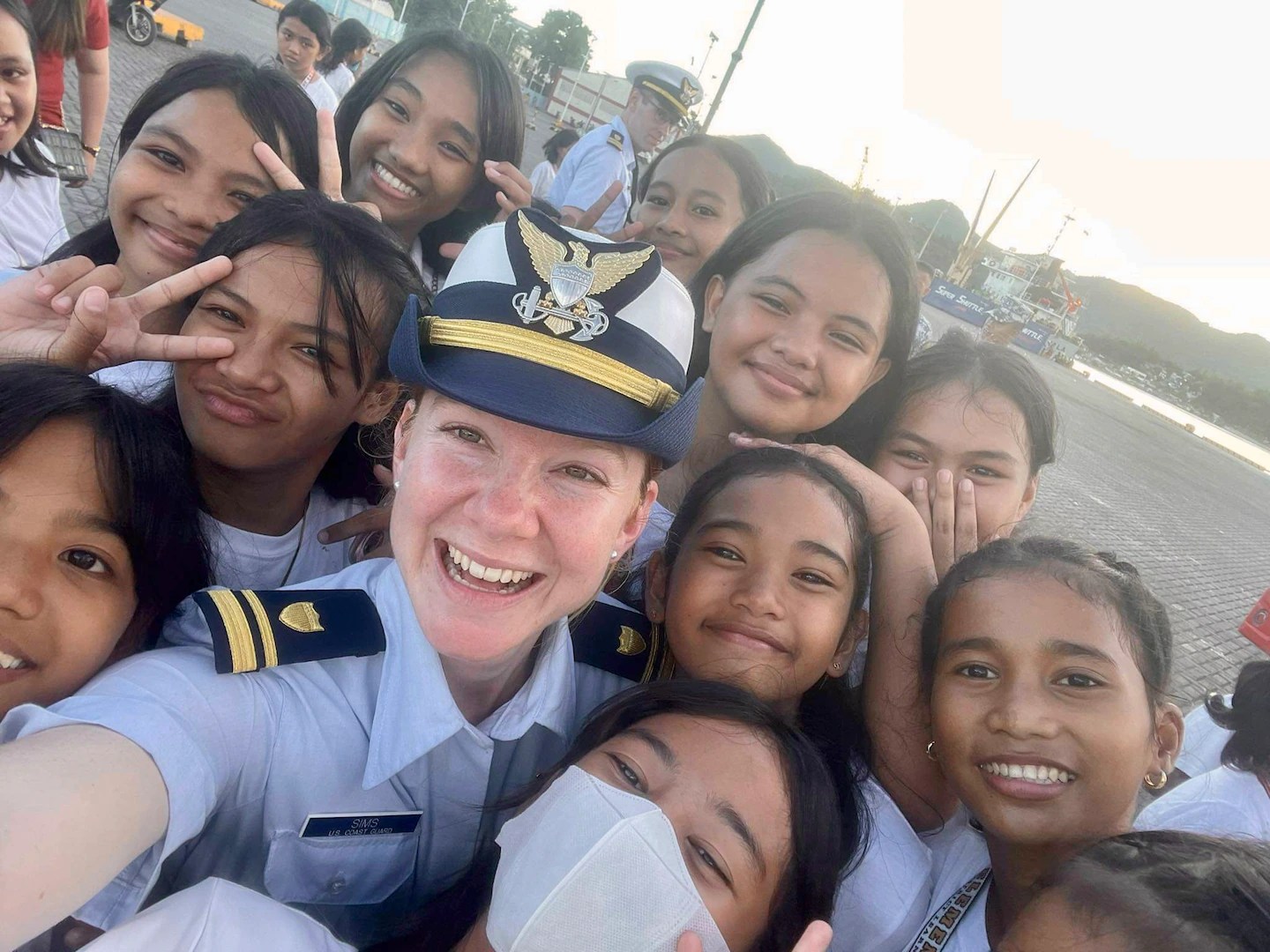
While in Tacloban, the crew, with support from the Maritime Security Response Team West, hosted a subject matter expert exchange on maritime law enforcement with Philippine Coast Guard colleagues, observed the 79th Leyte Gulf Landing Anniversary, hosted local school children and government officials, held working meetings, and experienced the culture of the Eastern Visayas region of the Philippines.

“The expanded capabilities of the Fast Response Cutter represent more than just advanced technology; they symbolize the bridge of cooperation and goodwill between nations. The FRCs and their dedicated crews regularly play a pivotal role in international diplomacy. These vessels, along with their highly trained and professional crews, are ambassadors of peace and collaboration, said Capt. Nick Simmons, commander of U.S. Coast Guard Forces Micronesia/Sector Guam. “They foster understanding and trust across borders, making the seas safer not only for our own nations but for all nations that rely on the freedom of navigation and maritime security.”

This visit is part of the USCGC Frederick Hatch’s regularly scheduled expeditionary patrol as part of the ongoing Operation Blue Pacific. It follows previous interactions between the U.S. Coast Guard and the Philippine Coast Guard, including the recent arrival of the USCGC Stratton (WMSL 752) in Manila for professional exchanges and joint operations.

The visit of Pacific Area commander Vice Adm. Andrew Tiongson in April to discuss shared challenges and opportunities for partnership further exemplifies the U.S. Coast Guard’s commitment to the region. The Service’s role as a federal law enforcement agency and an armed forces branch uniquely positions the agency’s teams to conduct security cooperation operations supporting combatant commanders, upholding governance, and ensuring regional stability. Through Operation Blue Pacific, an overarching multi-mission Coast Guard endeavor, the Service seeks to promote security, safety, sovereignty, and economic prosperity in Oceania while strengthening relationships between partner nations in the Pacific.

The Tacloban visit underscores the shared strategic efforts toward a stable and prosperous Indo-Pacific and aligns with the Pacific Area Commander’s goals to prepare a ready force, generate combined effects, and uphold governance. It also supports U.S. Coast Guard District 14 and U.S. Coast Guard Forces Micronesia/Sector Guam’s commitment to be a trusted partner in Oceania and deliver operational excellence.

-USCG-

About the U.S. Coast Guard in the Pacific Region:

The U.S. Coast Guard is a vital force ensuring maritime safety, security, and stewardship across a vast Pacific expanse, spanning six continents, 71 countries, and 74 million square miles of ocean. U.S. Coast Guard Pacific Area leads coordination and integration efforts in this vast region, promoting collaboration with partners.

Within this framework, U.S. Coast Guard District 14 oversees 14 million square miles in the Central and Western Pacific, serving as the Coast Guard’s largest district with 1,750 personnel operating 25 units. Their mission includes maritime safety, resource protection, security, and national defense, making them indispensable in the Pacific.

Reporting to District 14, the U.S. Coast Guard Forces Micronesia/Sector Guam team focuses on maritime safety, security, and stewardship in Oceania. With a base in Guam and over 300 members across Guam and the Commonwealth of the Northern Mariana Islands, they maintain a strong U.S. presence in the Micronesia sub-region and adjacent areas, closely tied to local communities.

About USCGC Frederick Hatch (WPC 1143)
The Frederick Hatch is the 43rd 154-foot Sentinel-class fast response cutter named for a surfman and lighthouse keeper who was a two-time Gold Life Saving Medal recipient. The Service commissioned the ship along with its sister ships, Myrtle Hazard (WPC 1139) and Oliver Henry (WPC 1140), in Guam in July 2021. They are currently on patrol representing the United States Coast Guard in the Indo-Pacific region, fostering international cooperation and maritime security.

FRC #54, “Fifth New England-based Fast Response Cutter to be commissioned in New Castle” –D1

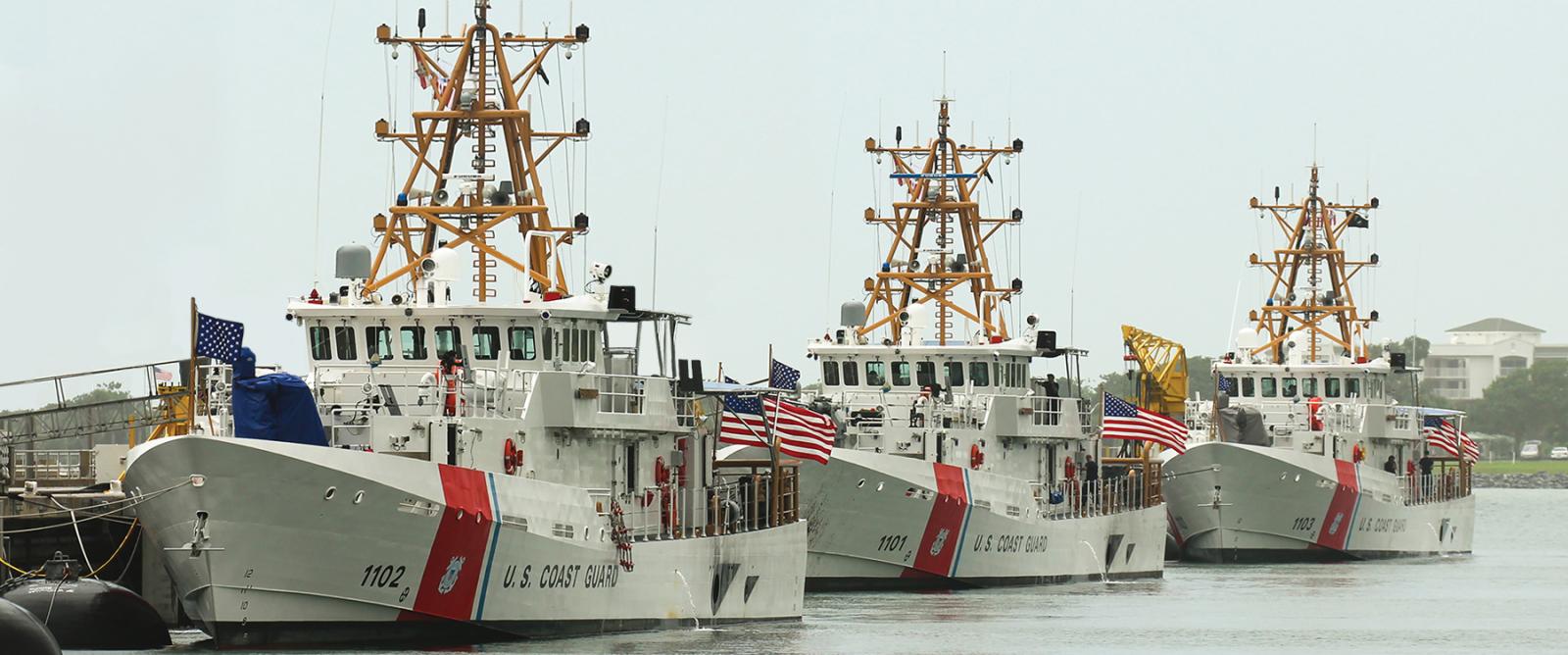
Sister ships. The first three fast response cutters—the USCGC Richard Etheridge (WPC-1102), Bernard C. Webber (WPC-1101), and William Flores (WPC-1103). U.S. COAST GUARD

Below is a news release from District 1. This is #54 with 11 more in the pipeline. The last will probably arrive in 2026 unless more are added.


Oct. 16, 2023

CORRECTED MEDIA AVAILABILITY: Fifth New England-based Fast Response Cutter to be commissioned in New Castle

Editors’ Note: This correction notes updated time for the ceremony and arrival, as well as ship information.
Media interested in attending the ship’s commissioning ceremony are requested to RSVP with d1publicaffairs@uscg.mil no later than 4 p.m. Wednesday, October 18th. Media are requested to arrive by 8:30 a.m. to clear security and be escorted to the event, and must provide media credentials and government-issued photo ID.

WHO: Lt. Jacklyn Kokomoor, commanding officer of Coast Guard Cutter William Sparling (WPC-1154), Caroline S. Sparling, the cutter’s sponsor, along with additional Sparling family members

WHAT: Commissioning ceremony for the Coast Guard Cutter William Sparling

WHEN: Thursday, October 19th, at 9 a.m.

WHERE: 25 Wentworth Rd New Castle, NH 03854

BOSTON — The Coast Guard Cutter William Sparling (WPC-1154) is scheduled to be commissioned during a ceremony Thursday at 9 a.m.

The Coast Guard’s newest cutter was accepted by the Coast Guard on July 20, 2023 and will be the fifth of six Fast Response Cutters homeported in Boston.

The Sentinel-class fast response cutter (FRC) is designed for multiple missions, including drug and migrant interdiction; ports, waterways and coastal security; fishery patrols; search and rescue; and national defense. The Coast Guard has ordered a total of 65 FRCs to replace the 1980s-era Island-class 110-foot patrol boats. The FRCs feature advanced command, control, communications, computers, intelligence, surveillance and reconnaissance equipment; over-the-horizon cutter boat deployment to reach vessels of interest; and improved habitability and seakeeping.

William Sparling was one of the first Coast Guard enlisted members to be awarded the Silver Star Medal, one of the nation’s highest military awards for valor in combat. Sparling served as a landing craft coxswain during the Battle of Tulagi, a strategically important island in the Pacific theater, during World War II. The island was captured by enemy forces in May 1942, and Allied forces were concerned that the occupation of Tulagi would be used to threaten Allied units and supply routes in the region. Allied forces arrived at Tulagi on August 7, 1942, to reestablish control of the island.

The amphibious assault, supported by the landing craft piloted by Sparling and other coxswains, was the first U.S. offensive of World War II and was one of the first in a series of battles that defined the Guadalcanal campaign. During the invasion, Sparling and other coxswains landed the first wave of U.S. Marines from USS McKean on the beaches of Tulagi. Over the next three days of fighting, Sparling and others made repeated trips between the Navy destroyer and Tulagi to deliver equipment, ammunition and other supplies to Marines as they engaged a determined occupying force of 800 troops. On August 9, the remaining enemy forces surrendered, and the Allies successfully secured Tulagi.

“CTF 150, U.S. Coast Guard Seize $25 Million in Illegal Drugs” –NAVCENT

A U.S. Navy L3 Harris Arabian Fox MAST-13 drone boat and the U.S. Coast Guard cutters USCGC John Scheuerman and USCGC Charles Moulthrope transit the Strait of Hormuz on Wednesday, April 19, 2023. (Information Systems Technician 1st Class Vincent Aguirre/U.S. Coast Guard)

Below is a news release by U.S. Naval Forces Central Command Public Affairs, October 11, 2023.


MANAMA, Bahrain —

The U.S. Coast Guard Sentinel-class fast response cutter USCGC John Scheuerman (WPC 1146) seized about $25 million worth of illegal drugs from a stateless vessel while operating in the international waters of the Gulf of Oman, Oct. 3.

The cutter, working under the command of Combined Task Force (CTF) 150, seized 360 kilograms of methamphetamines, 107 kilograms of heroin and 1,961 kilograms of hashish from the vessel during an interdiction operation.

This event marks the second time in a month that CTF 150 has interdicted illicit narcotics at sea. Last month, the Royal Navy frigate HMS Lancaster (F229) seized more than 450 kilograms, or approximately $9.5 million, of illegal drugs including heroin and hashish during a CTF 150 operation in the Arabian Sea.

“This new seizure, the second since the French Navy took command of CTF 150 last July, again shows the commitment of Combined Maritime Forces working together to enhance maritime security in the Arabian Sea and Indian Ocean,” said French Navy Capt. Yannick Bossu, commander of CTF 150.

CTF 150 is one of five task forces under Combined Maritime Forces, the largest multinational naval partnership in the world. CTF 150 focuses on maritime security operations outside the Arabian Gulf.

Since 2021, Combined Maritime Forces has seized more than $1 billion in illegal drugs while patrolling waters across the Middle East.
The 38-nation naval partnership upholds the international rules-based order by promoting security and stability across 3.2 million square miles of water encompassing some of the world’s most important shipping lanes.

A-10 Attack Aircraft Drilled with PATFOSWA Cutters

A-10 Thunderbolt II Canon, McChord AFB, Washington. Photo credit. mrkoww@gmail.com

The US Naval Institute news service published a report on Sept. 25, 2023, “2 A-10 Warthogs Drill with U.S. Destroyer in Middle East Maritime Exercise.” Interestingly the story also recounted previous instances where A-10s were used in the Maritime environment, including the following,

“On April 28, a U.S. Navy P-8A Poseidon patrol aircraft, two Air Force A-10 Warthogs and three U.S. Coast Guard cutters with embarked U.S. Marine Corps joint terminal attack controllers, trained together in the Persian Gulf.”

The three cutters would have been three of the six 154 foot Webber class cutters assigned to Patrol Forces Southwest Asia (PATFORSWA).

USCGC John Scheuerman (WPC-1146) and USCGC Clarence Sutphin Jr. (WPC-1147) enroute PATFORSWA

You can draw your own conclusions about what this means for how the cutters will be used if there are hostilities with Iran, but I will offer my thoughts.

Iranian swarm tactics provide a “target rich environment,” but those targets are not of equal importance. What the A-10s would see on their own would be very confusing. Priority targets could include command ships, drone carriers, and boats armed with cruise missiles and torpedoes, before taking on the much more numerous vessels armed with only machine guns and unguided rockets that provide a screen for the more important vessels.

The cutters could provide reference points, forward observation posts, from which the P-8 and Marine terminal attack controllers could point the A-10s to the highest priority targets.

Hopefully the Marines would also bring along some extra firepower to defend the cutters as well.

Camera drone’s-eye view of IRGC boats on display, March 2023. A) The air defense boat. B) Light missile boat with Bladerunner hull. C) light missile boats on Interceptor hull. D) light missile boats on Interceptor hull (alternative design). E) Missile boat, with type of missile unclear. F) RIB, possibly explosive boat or uncrewed. G) RIB with lightweight anti-ship torpedoes, can be carried aboard a Shahid Soleimani-class missile corvette. H) Interceptor boat. I) Interceptor boat with new type of missile.