“Vanuatu police, aided by US Coast Guard, say Chinese vessels violated fishing laws” Reuters

USCGC Harriet Lane arrives Pearl Harbor. USCG Photo.

Reuters reports,

“Six Chinese fishing boats were found to be violating Vanuatu’s fisheries law after being inspected by local police who were on board the first U.S. Coast Guard boat to patrol the waters of the Pacific Islands nation, Vanuatu police and officials said.”

Nice to see positive results from USCGC Harriet Lane‘s first Pacific law enforcement deployment. (In just over a month, Harriet Lane will turn 40 years old.)

Notably,

“Last year, a Coast Guard vessel on patrol for illegal fishing was refused access to Vanuatu’s port.”

“Report: PRC fishing vessels top abusers of forced labor” –Indo-Pacific Defense Forum

PERU, 10.06.2023, Courtesy Photo
U.S. Coast Guard District 11
U.S. Coast Guard Cutter Alder raises the South Pacific Regional Fisheries Management Organization (SPRFMO) flag while patrolling the Eastern Pacific Ocean during Operation Southern Shield in October 2023. The Coast Guard recently completed the first high-seas boardings and inspections off the coast of Peru under a newly adopted multi-lateral agreement to monitor fishing and transshipment operations within the SPRFMO Convention Area, a region which encompasses nearly a quarter of the Earth’s high seas. (U.S. Coast Guard photo by Petty Officer 2nd Class Kenneth Honore)

The Indo-Pacific Defense Forum reports,

“The People’s Republic of China (PRC) is the leading abuser of forced labor on fishing vessels globally, according to a new study…The United Nations International Labour Organization estimated that 128,000 fishers worldwide were trapped into forced labor aboard vessels, according to the 2022 “Global Estimates of Modern Slavery” report. That figure, however, “likely significantly understates the full extent of the problem. The isolation of the workplace makes it difficult to reach the fishers affected, while the extreme vulnerability that comes with work at sea, as well as the risk of repercussions, can lead to reluctance on the part of fishers to report and discuss abuses,” the report stated.

This practice goes hand in hand with Illegal Unreported and Unregulated (IUU) fishing.

“The PRC’s plundering of coral, clams and fish is “theft on a grand scale, unrestricted warfare on natural resources,” Kevin Edes, a maritime security analyst for SeaLight, a project of Stanford University’s Gordian Knot Center for National Security Innovation, wrote on the SeaLight website in November 2023. Edes noted that Adm. Linda Fagan, commandant of the United States Coast Guard, described the PRC’s IUU fishing as “theft of a nation’s natural resources.”

“Head of Royal Canadian Navy Outlines Ottawa’s Pacific Strategy” –USNI

This is starting to get a little old, but I am trying to catch up.

US Naval Institute reports on a Center for Strategic and International Studies (CSIS) interview with Vice Adm. Angus Topshee, Commander, Royal Canadian Navy, Chief of the Naval Staff, that discusses their Navy’s increased emphasis on the Pacific.

I have included the video of the interview above.

Three AOPSs at pier before the commissioning ceremony for HMCS Margaret Brooke (AOPV-431). Canadian Navy photo

He discusses operating with the Coast Guard for drug interdiction, icebreaking, and fisheries beginning about time 9:00. The new Arctic Offshore Patrol Ships are expected to play important roles in these activities.

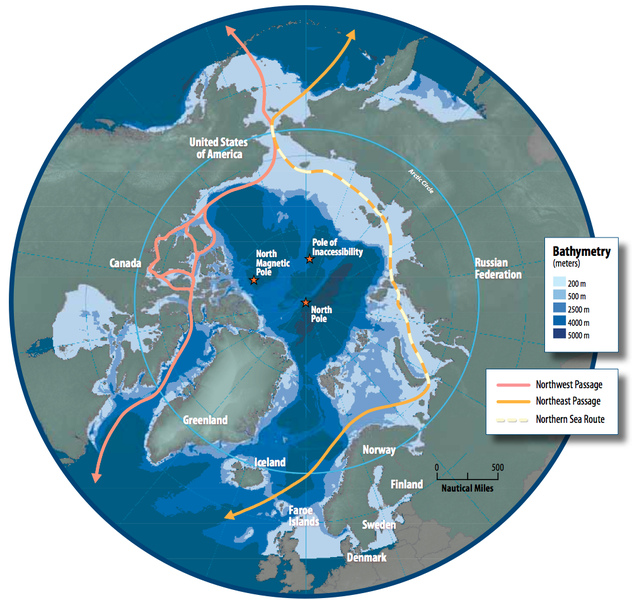
Map of the Arctic region showing shipping routes Northeast Passage, Northern Sea Route, and Northwest Passage, and bathymetry, Arctic Council, by Susie Harder

He explains why he does not see the NW Passage (which includes Alaskan waters) as a future international trade route (12:30).

He anticipates an end to the moratorium on fishing in the Arctic (14:30).

Discusses response to “Gray Zone” threats to undersea infrastructure (15:30).

Discussed war in Ukraine (19:00). Re sinking of Moskva, “Cruise missiles should not sink ships” (20:30). Drones (21:00). AI (24:50).

Where will they concentrate their efforts–Indo-Pacific (27:00). AOPS will be used for Fisheries in the Western Pacific.

Artic is an expeditionary theater, you have to bring everything with you, because there are no port facilities (29:00). Looking to create dual use facilities.

Recruiting (31:30). National Shipbuilding program (35:30), Technology sharing.

“Allies, partners tap into technology to monitor maritime domain” –Indo-Pacific Defense Forum

Winkel Tripel projection, WGS84 datum, central meridian : 150°E. Source Wikipedia Commons, Author: Eric Gaba

The Indo-Pacific Defense Forum reports,

“Maritime domain awareness (MDA) in the Indo-Pacific is moving from an abstract aspiration to a functional collective security approach for managing the region’s dynamic offshore spaces,” noted an April 2023 article in PacNet, a publication of Pacific Forum, a Hawaii-based foreign policy research institute. “Much of the cost-savings in maritime enforcement activities is due to emerging technologies including access to satellites that provide clearer and more accurate images, as well as artificial intelligence and big data platforms dedicated to vessel tracking, prediction, and anomaly detection.”

There are fusion centers in India, Singapore and Vanuatu. These fusion centers would be useful in wartime, but they are essentially a cooperative exchange of information among maritime law enforcement agencies. In addition to its importance in countering IUU and drug smuggling, better maritime domain awareness may give warning of a terrorist attack. Shouldn’t the US Coast Guard have a fusion center in Alameda under Pacific Area? Probably should be one on the West coast of South America too.

“US Coast Guard Seeks Bigger Role to Search, Board Vessels in Pacific” –gCaptain

PERU, 10.07.2023, Courtesy Photo, USCG District 11
A Coast Guard boarding team member catches a view looking aft across the deck of a squid jigger vessel during a boarding inspection, with Coast Guard Cutter Alder in the background, during Operation Southern Shield 2023, October 2023. The Coast Guard recently completed the first high-seas boardings and inspections off the coast of Peru under a newly adopted multi-lateral agreement to monitor fishing and transshipment operations within the South Pacific Regional Fisheries Management Organization (SPRFMO) Convention Area. (U.S. Coast Guard photo)

gCaptain gives us a sort of status report on the Coast Guard’s emerging role in Western Pacific international fisheries enforcement.

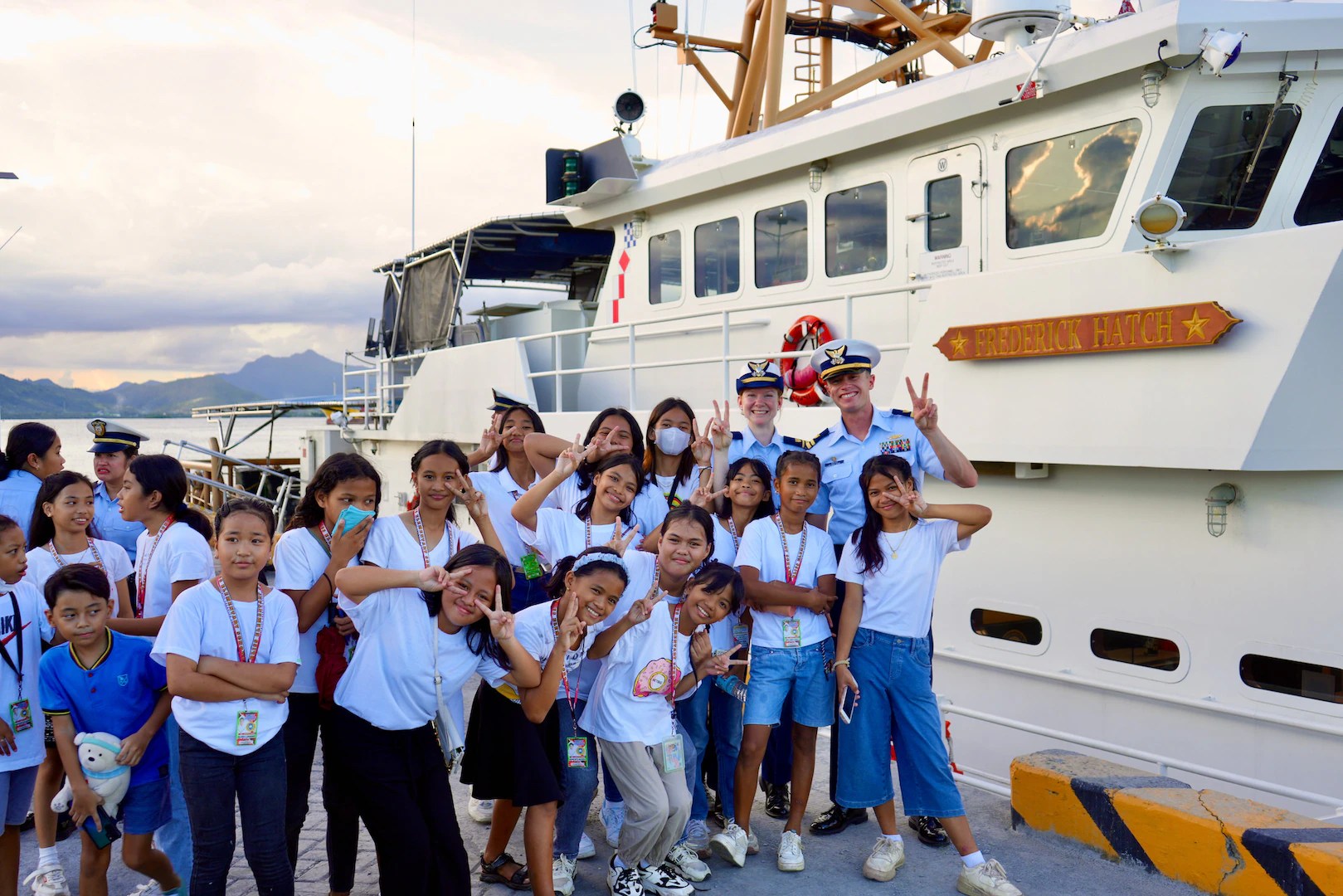
“USCGC Frederick Hatch concludes historic patrol with engagements in the Philippines, fisheries enforcement in Republic of Palau, Papua New Guinea” –Forces Micronesia

Below is a U.S. Coast Guard Forces Micronesia/Sector Guam news release. 
This is the first time a Webber class patrol craft has made it to the Philippines. This is all part of a renewed in interest in supporting Western Pacific Island nations, particularly in regard to fisheries and IUU enforcement.
National Security Cutters have been spending time in the Western Pacific, and a Medium Endurance Cutter (WMEC) is being moved to the Pacific to support this effort.
The Office of Expeditionary Logistics (DOL-X), located in Alameda, California, mentioned in the release only reached full operational Aug. 14.

Nov. 30, 2023

USCGC Frederick Hatch concludes historic patrol with engagements in the Philippines, fisheries enforcement in Republic of Palau, Papua New Guinea

SANTA RITA, Guam — The USCGC Frederick Hatch (WPC 1143) successfully concluded a routine 47-day expeditionary patrol covering more than 8,200 nautical miles under Operation Blue Pacific, returning to Guam on Thanksgiving, distinguished by a series of historic and strategic engagements across the Western Pacific and Oceania.

“USCGC Frederick Hatch’s highly successful patrol is a testament to the diligence and expertise of the crew onboard, always remaining positive and overcoming numerous challenges to continually set the standard for Coast Guard operations in the Pacific. Their efforts to keep our equipment functioning properly, go over the rail regularly for boardings, and cook meals in heavy seas is what makes the U.S. Coast Guard’s commitment to the Indo-Pacific region so strong. Our people are the best at what they do and always ready to go above and beyond when asked, which is the basis for being a trusted partner and fostering strong international alliances,” said Lt. Patrick Dreiss, commanding officer of the Frederick Hatch.

Historic First Visit to Tacloban, Philippines
A highlight of the patrol was Frederick Hatch’s historic visit to Tacloban, Philippines, in mid-October, marking a significant milestone in U.S.-Philippines relations. The visit coincided with the 79th anniversary of the Battle of Leyte Gulf. In addition to the commemoration observance, the crew engaged in various activities, including a maritime law enforcement exchange supported by U.S. Coast Guard Maritime Security and Response Team West, community interactions, including a visit with the mayor, and cultural immersion.

Maritime Security and Fisheries Patrol
The second half of the patrol focused on countering illegal fishing and enhancing partnerships in the Republic of Palau and Papua New Guinea. While en route to Palau, the crew conducted critical observation reports highlighting potential threats to maritime governance and fishery management. These reports included observations of four Philippine-flagged fishing vessels at the boundary of Palau’s Exclusive Economic Zone (EEZ) and the high seas, with one vessel within the Palauan EEZ when detected. Notably, these vessels needed permits to operate under the Western and Central Pacific Fisheries Commission (WCPFC) on the high seas or Palau EEZ, and their Philippine permits expired. Their presence and activities represent potential serious violations under the WCPFC regulations.

The following day, the crew reported two additional Philippine-flagged vessels fishing without permits in WCPFC-governed waters again near the Palau EEZ, adding to the count of serious violations. Following a port call in Palau on a subsequent patrol of the Palau EEZ, the crew identified only one vessel actively fishing, recently boarded, and detected no further unauthorized incursions. In response to a request from the Palau Joint Operations Center, the crew also disposed of two fish aggregating devices found within the Palau EEZ, addressing concerns over illegal local fishing practices.

While en route to Papua New Guinea (PNG), Frederick Hatch’s crew conducted one boarding on the high seas under WCPFC authority, reporting three potential violations. The crew then welcomed two PNG boarding officers, one from the Customs Services and one from the National Fisheries Authority, and together, they conducted nine additional PNG-led boardings within their EEZ under the bilateral maritime law enforcement agreement. These boardings undertaken in the eastern EEZ resulted in 16 issued violations and two warnings, addressing a range of issues such as exceeding crew occupancy limits based on available berthing, improper crew compositions due to a lack of required PNG crew expired seafarers’ credentials, and poor vessel markings. The vessels’ flags include the People’s Republic of China, Vanuatu, and the Philippines.

“This proactive enforcement and monitoring underscore the importance of upholding good maritime governance and preserving sustainable fishing practices, critical for the ecological and economic health of the region,” said Capt. Nick Simmons. “The relationships we’re building in Oceania and the Western Pacific are crucial for our continued commitment to our allies. This patrol exemplifies our dedication to maintaining stability and security in these waters.”

Engagement and Cooperation in Papua New Guinea
Frederick Hatch’s visit to Papua New Guinea (PNG) exemplified increased bilateral defense and security cooperation, as highlighted by the recent signing and ratification of the Defense Cooperation Agreement. The crew’s interactions with PNG fisheries, customs officers, and the local community underscore the ongoing effort to strengthen regional relationships.

“This patrol was our crew’s first time working with PNG Customs and Fisheries, and we look forward to working with them again in the future. Thank you to our two shipriders, Mr. Roger Sivlanduo and Mr. Jeremy Nelson, both skilled professionals and great people to have onboard to enrich the relationship between our agencies. It was an important opportunity to learn from each other and develop new tactics to address the IUU-F threat throughout Melanesia in the future while also carrying out several very successful boardings counteracting those threats in the present,” said Dreiss.

Support from DOL-X Team
The U.S. Coast Guard’s newly created DOL-X team was pivotal in supporting the Frederick Hatch’s logistics, including repairs and maintenance, ensuring the cutter’s operational readiness throughout the patrol. The team met the cutter during two port calls, hand-carrying critical parts to address casualties and augmenting the cutter’s engineers to repair the issues.

-USCG-

About the U.S. Coast Guard in the Pacific Region:
The U.S. Coast Guard is vital to ensuring maritime safety, security, and stewardship across a vast Pacific expanse, spanning six continents, 71 countries, and 74 million square miles of ocean. U.S. Coast Guard Pacific Area leads coordination and integration efforts in this vast region, promoting collaboration with partners through the actions of the U.S. Coast Guard 14th District and U.S. Coast Guard Forces Micronesia/Sector Guam teams.

The Frederick Hatch is the 43rd 154-foot Sentinel-class fast response cutter named for a surfman and lighthouse keeper who was a two-time Gold Life Saving Medal recipient. They regularly patrol Oceania, fostering international cooperation and supporting maritime safety, security, and stewardship.

“Coast Guard completes two-week operation in Pacific region” –D14

Below is a D14 news release. Another step in the formation of an international fisheries enforcement alliance.


Nov. 20, 2023

Coast Guard completes two-week operation in Pacific region

U.S. Coast Guard District 14

HONOLULU – The U.S. Coast Guard has concluded Operation Kuru Kuru, an annually held comprehensive two-week operation in the Pacific region, highlighting the Coast Guard’s commitment to supporting international partners in the region.

Operation Kuru Kuru, executed from 22 Oct. to 3 Nov. 2023, is a collaborative effort with the Regional Fisheries Surveillance Centre, aimed at countering Illegal, Unreported, and Unregulated (IUU) fishing across the region.

The operation encompasses a wide array of objectives, including enhancing cooperative surveillance engagement between participating nations, conducting boarding activities at sea to combat IUU fishing, and utilizing remote sensing information to drive intelligence-led operations. This operation covers a combined area of 15 participating Pacific Island Country exclusive economic zones and the adjacent high seas pockets, approximating 8.2 million square miles, an area more than twice the size of the continental United States.

“The U.S. Coast Guard’s presence and contributions to Operation Kuru Kuru underscore our commitment to regional security and disaster response,” said Cmdr. Andrew Williams, enforcement branch chief for U.S. Coast Guard District 14. “We are honored to stand alongside our international partners as we work together to address challenges that impact the Pacific region.”

While engaged in the region, the Coast Guard offers a host of mission capabilities, including proactively supporting search and rescue operations, humanitarian  aid, and air and vessel surveillance to counter illegal, unreported and unregulated fishing across the region.

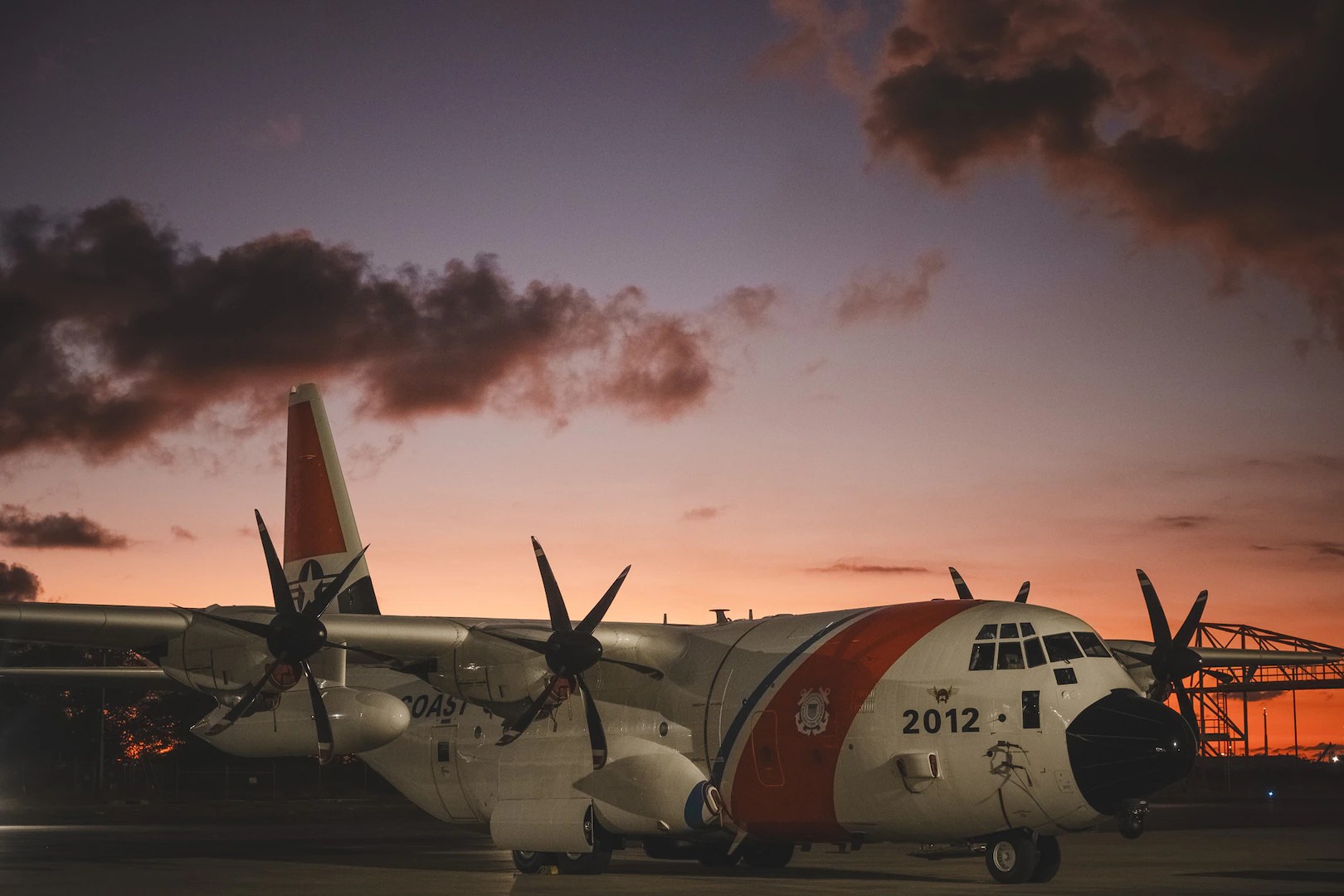
During this operation, a Coast Guard C-130 based out of Coast Guard District 14’s Air Station Barbers Point, responded to a request from the Maritime Rescue Coordination Centre Fiji to perform search and rescue operations in and around the Nonouti Island, Gilbert Islands, Kiribati. The C-130 was then rerouted following Tropical Cyclone Lola’s impact on Vanuatu to conduct post-storm assessments throughout the South Pacific island chain surrounding Vanuatu. These assessments were integral in gauging the extent of damage caused by the cyclone and facilitating the coordination of relief efforts.

Despite the operational challenges posed by Tropical Cyclone Lola, the C-130 was able to conduct aerial surveillance fishery patrols within the EEZs of Fiji, Tonga, American Samoa, and Vanuatu, providing several crucial observation reports to partner nations.

“Operation Kuru Kuru highlights the Coast Guard’s partnership with Pacific Island nations and how these collaborative efforts are vital in our mission to combat Illegal, Unreported and Unregulated fishing.” said Rear Adm. Michael Day, commander of U.S. Coast Guard District 14. “Together, we can protect our oceans, preserve marine resources, and ensure sustainable fisheries for future generations while addressing additional challenges that impact the Pacific region.”

Through operations like Operation Kuru Kuru, the Coast Guard remains dedicated to serving and safeguarding the international community, addressing IUU fishing, and responding to humanitarian crises. It reinforces the importance of multilateral cooperation and regional security to protect the resources and well-being of Pacific nations.

The Coast Guard is responsible for ensuring the safety, security, and environmental protection of the Pacific region. Its core missions encompass search and rescue, law enforcement, fisheries protection, and humanitarian assistance across a vast and diverse area of operations.

“U.S. Coast Guard Cutter Terrell Horne returns to home port following a 52-day multi-mission patrol in the Eastern Pacific” –CG News

PERU, 10.06.2023, Courtesy Photo, USCG District 11
The crew of the U.S. Coast Guard Cutter Terrell Horne conducts a patrol in the Eastern Pacific Ocean in support of Operation Southern Shield 2023, October 2023. The Coast Guard recently completed the first high-seas boardings and inspections off the coast of Peru under a newly adopted multi-lateral agreement to monitor fishing and transshipment operations within the South Pacific Regional Fisheries Management Organization (SPRFMO) Convention Area. (U.S. Coast Guard photo)

Below is a news release from Coast Guard News. This patrol was unusual enough to draw some special attention. It is not a typical patrol craft mission. It involved the pairing of a buoy tender with a “Fast Response Cutter” (FRC) to put two units far from their homeports. The Pacific Area has done this before in the Western Pacific, but I think this may be the first time it has been done in the Eastern Pacific off the West coast of South America. Pacific Area Webber class FRCs have previously conducted drug enforcement missions in the Eastern Pacific at least as far South as Central America. We talked about portions of this multiunit deployment earlier, “Buoy Tender, FRC, C-130 Used for International Fisheries Enforcement–Operation Southern Shield.” USCGC Alder, homeported in San Franciso, was the buoy tender involved.

The emphasis of the operation was international fisheries enforcement, but USCGC Terrell Horne still managed to do a bit of drug enforcement. I look forward to seeing the report of USCGC Alder’s portion of the operation.

09.25.2023, Courtesy Photo, USCG District 11
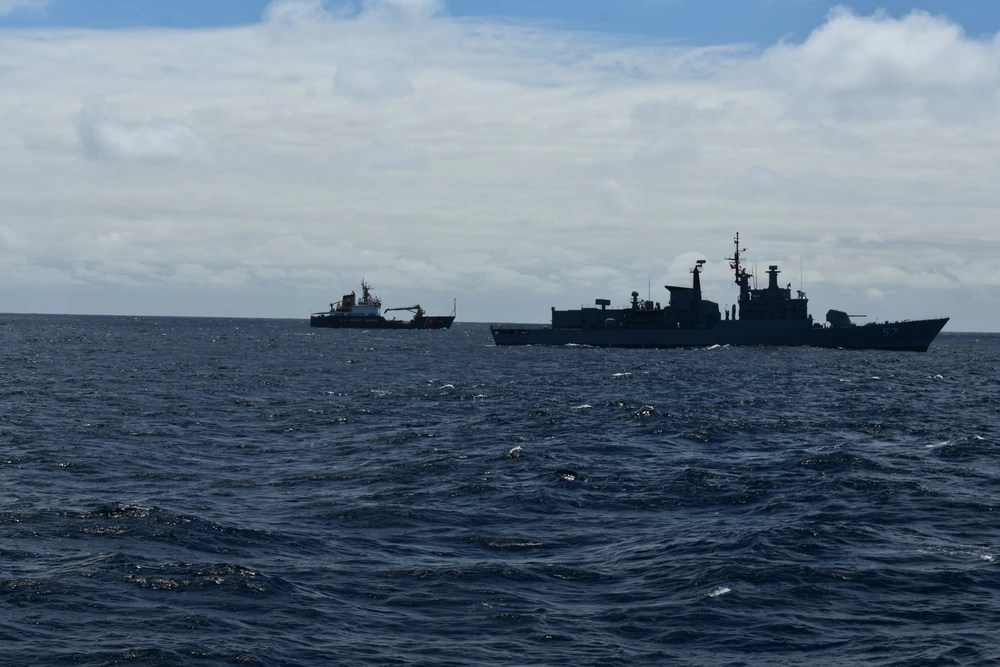
U.S. Coast Guard Cutter Alder (background) transits in formation alongside Peru BAP (Buque Armada Peruana) Bolognesi (FM-57) as it prepares for the next exercise during GALAPEX 2023, Sept.25, 2023. GALAPEX is a recurring multi-national maritime exercise led by Ecuador and included participation of delegates from Argentina, Brazil, Chile, Colombia, Costa Rica, the European Union, France, Italy, Mexico, Panama, Peru, the United Kingdom, and the United
States. (U.S. Coast Guard photo)

Nov. 8, 2023

U.S. Coast Guard Cutter Terrell Horne returns to home port following a 52-day multi-mission patrol in the Eastern Pacific

Coast Guard District Eleven

SAN PEDRO, Calif. — The U.S. Coast Guard Cutter Terrell Horne and crew returned to their home port in Los Angeles/Long Beach Tuesday after a 52-day patrol across the Eastern Pacific.

The crew of the Terrell Horne deployed in support of multiple missions, including Operations Green Flash, Albatross, Martillo, and Southern Shield, within the 11th Coast Guard District’s area of responsibility. During the patrol, Terrell Horne’s crew conducted a range of missions encompassing law enforcement, counter-drug operations, illegal, unreported, and unregulated fishing enforcement, and search and rescue operations.

“The crew of the Terrel Horne lived up to the cutter’s namesake in every way during this patrol. Operation Southern Shield allowed the cutter to showcase the versatility of the Fast Response Cutter. This operation brought a patrol boat and a buoy tender almost 4,000 nautical miles from home, conducting operations and international engagements with Mexico, Ecuador, Peru, and Costa Rica, said Chief Warrant Officer Jason Bussell, the commanding officer of the Coast Guard Cutter Terrell Horne. “The crew excelled in counter-illegal fishing missions, search and rescue, and counter-drug operations. Working alongside other Coast Guard assets, the crew was able to interdict a drug smuggling vessel and assisted in the seizure of nearly 2,000 lbs of contraband.”

The Coast Guard commissioned the Terrell Horne as the 31st Fast Response Cutter on March 22, 2019. Coast The cutter is named for Senior Chief Terrell Horne III, who died from injuries sustained while conducting maritime law enforcement operations off the California coast in December 2012. He was the executive petty officer aboard the Coast Guard Cutter Halibut at the time. For his heroic actions, the Coast Guard posthumously promoted Horne to senior chief petty officer.

For information on how to join the U.S. Coast Guard, visit GoCoastGuard.com to learn about active duty, reserve, officer and enlisted opportunities. Information on how to apply to the U.S. Coast Guard Academy can be found here.

“Coast Guard hosts Pacific Quadrilateral Coordinating Group on Oahu” –CG News

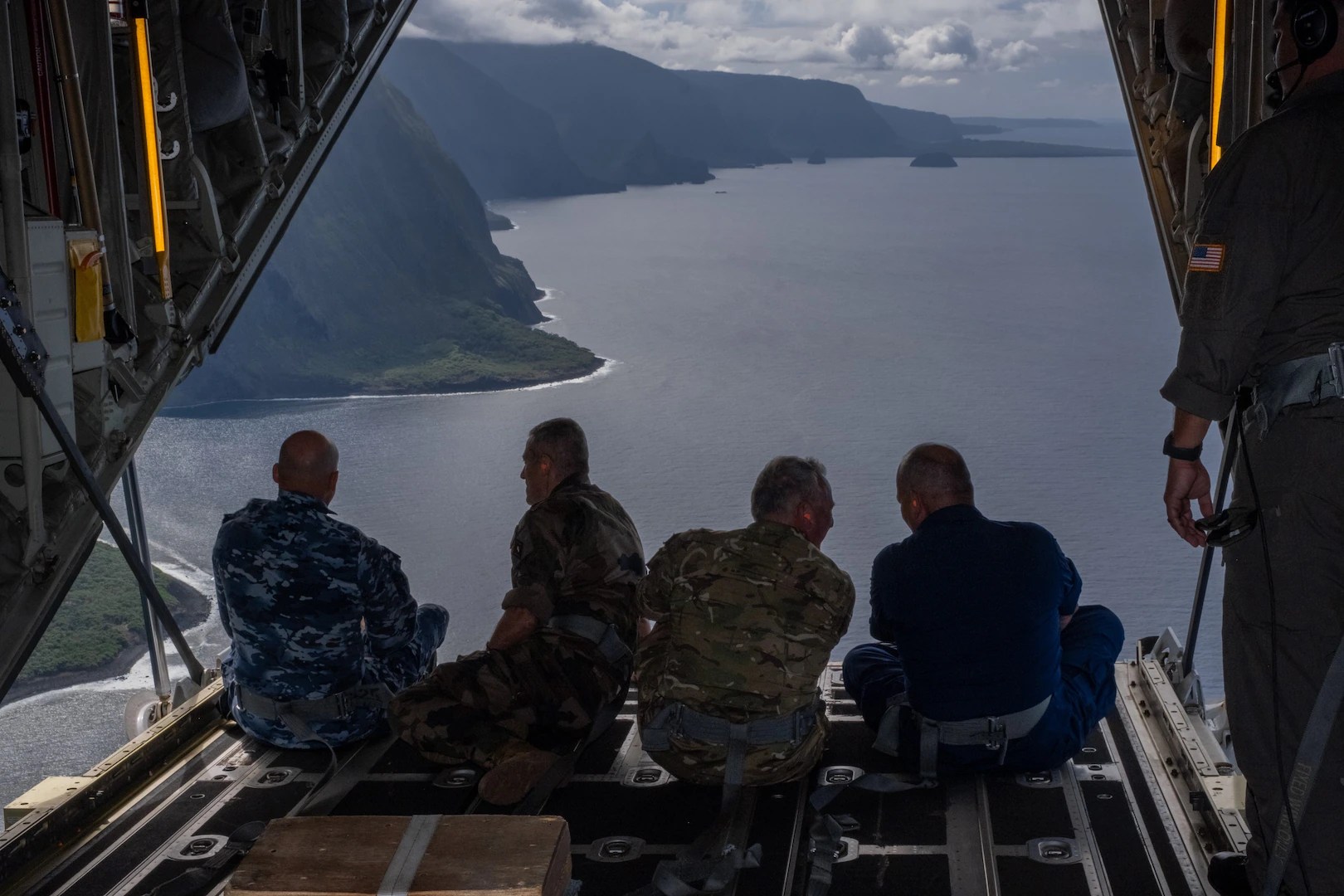
Below is a news release from Coast Guard News. Looks like Western Pacific fisheries is finally getting the attention it has deserved. The “Pacific Quad” mentioned here (Australia, France, New Zealand, and the US) should not be confused with “The Quad” (Australia, India, Japan, and the US) which is an informal military association.

I am still hoping to see my “Combined Maritime Security Task Force, Pacific” formed.

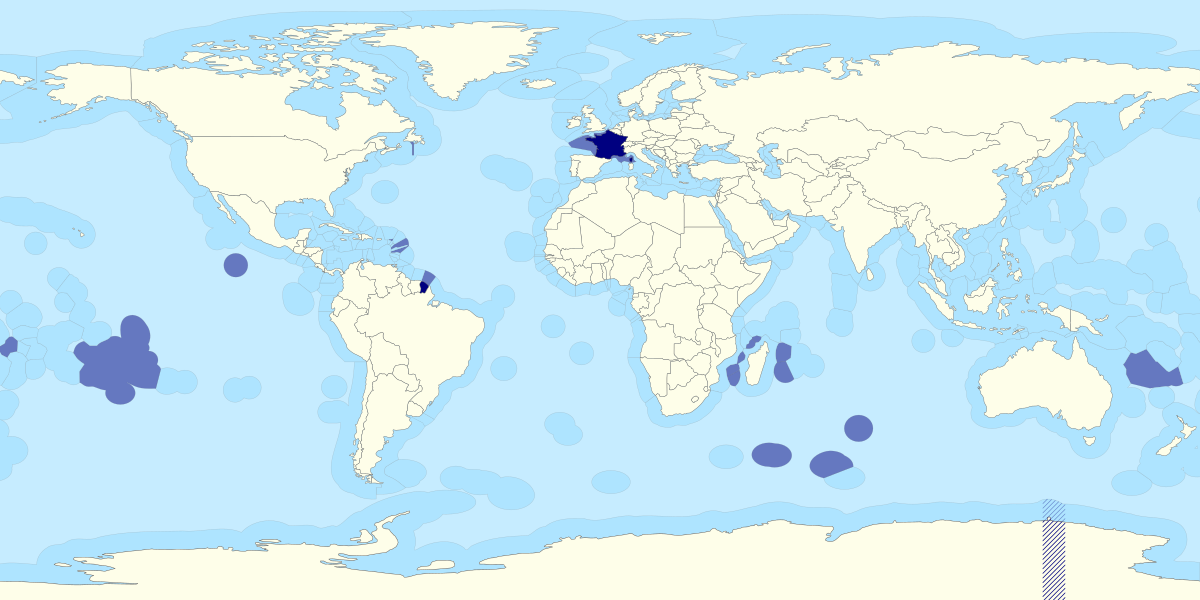
Territory of France and its Exclusive Economic Zone. (Antarctic territorial claims in lighter tone). Credit B1mbo via Wikipedia.

If you are wondering why France is in this group, take a look at their Exclusive Economic Zone, above.


Nov. 3, 2023

Coast Guard hosts Pacific Quadrilateral Coordinating Group on Oahu

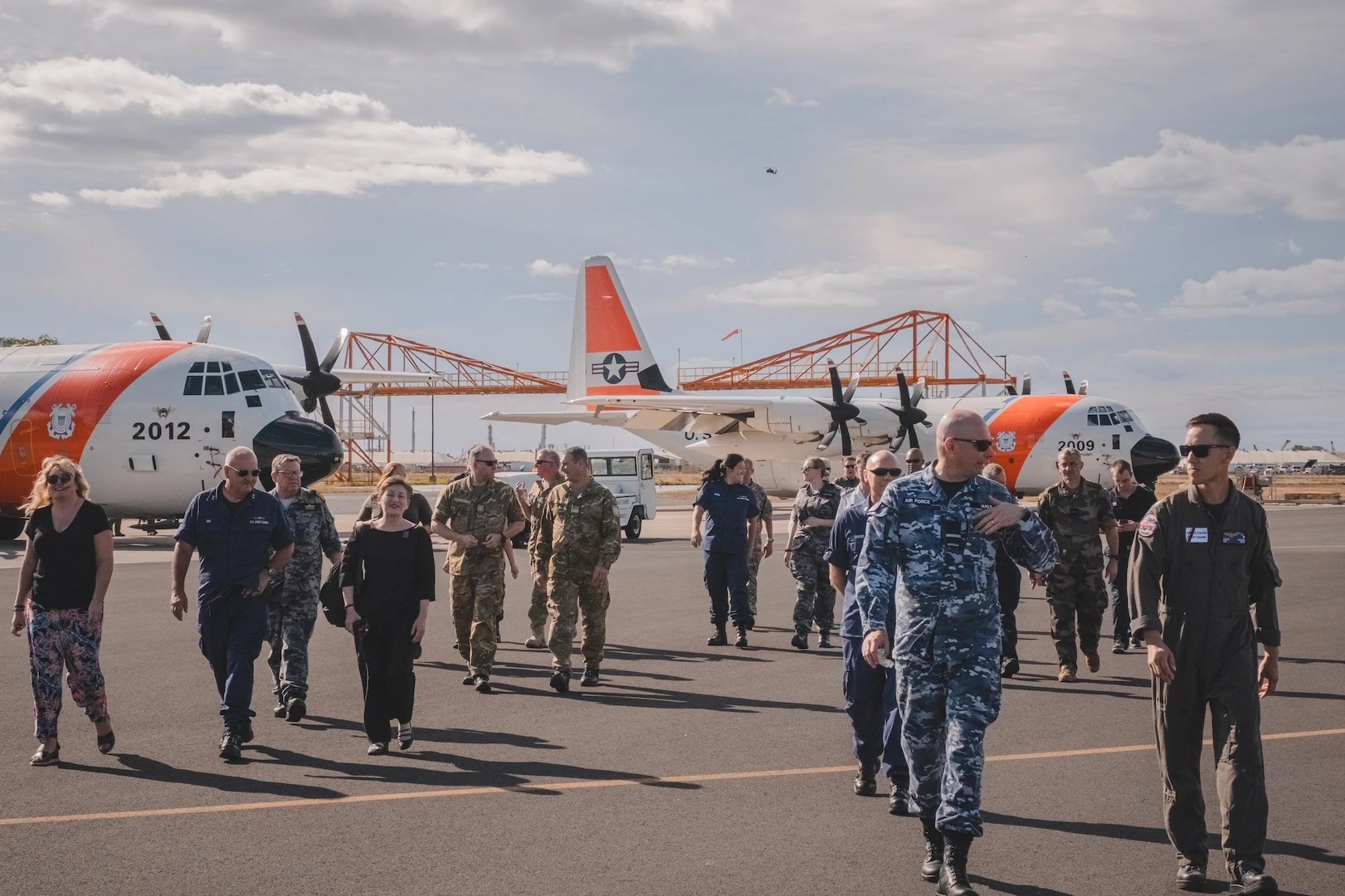
HONOLULU — The U.S. Coast Guard recently hosted the Pacific Quadrilateral Defense Coordinating Group from Oct. 9 to 11, 2023, focusing on enhancing maritime security in the Pacific.

The meeting gathered leaders from Australia, France, New Zealand, the United States, and the Forum Fisheries Agency. Rear Adm. Michael Day, U.S. Coast Guard District 14 commander, emphasized the importance of this collaboration, particularly in the context of regional challenges such as climate change and security.

“These face-to-face meetings and continued cooperation among our nations are not just strategic imperatives; they are lifelines to the people of the Blue Pacific,” said Day.

He further highlighted the impact of this collaboration, emphasizing the human element and recognizing the responsibilities of the larger nations in the Pacific, “We acknowledge the historical context, and while we do not seek to rewrite the past, we are committed to a future where the sovereignty and livelihoods of Pacific Island Countries are safeguarded. Climate change, followed by regional tensions, looms large as challenges we all face, and our shared responsibility is to address these threats. Our commitment to combating illegal fishing and ensuring maritime safety is not just about security; it’s about ensuring a sustainable and secure future for the communities who call the Pacific home.”

The Pacific QUAD was established in 1998, and brings together defense and security agencies from Australia, France, New Zealand and the United States in a mutual commitment to partnering with the Pacific Island countries to collectively enhance regional security.

During the meeting, discussions covered various topics, including their annual report, training programs, tactical calendar, information sharing and support for the Forum Fisheries Agency operations. Additionally, three new principals joined the group. Brig. Gen. Yann Latil (France), Air Comm. John Haly (Australia), and Brig. Gen. Andy Shaw (Aotearoa New Zealand).

The Pacific QUAD’s mission is to combat illegal fishing in the Southwest Pacific and collaborate closely with Pacific Island nations. The group operates at both a strategic and operational level, with annual and biannual meetings, respectively.

This year, examples of their collaboration included: an agreement with New Zealand, joint gatherings and strengthening cooperation with Australian Maritime Security Advisors, a successful search and rescue operation, and an international mass rescue exercise, highlighting the positive impact of their efforts on regional stability and maritime safety.

The Pacific QUAD, consisting of New Zealand, the United States, France, and Australia, annually rotates its principal chairmanship position as part of its collaborative approach. Last year, Air Commodore Darryn Robert Webb of New Zealand handed over the role to Rear Adm. Michael Day, who has now passed it to Brig. Gen. Yann Latil, the commander of French Forces New Caledonia. Latil is expected to transfer the responsibility to Air Commodore John Haly, the Australian Joint Operations Command, Director General Operations and Plans (J3), next year. This rotation underscores the ongoing commitment of the Pacific QUAD nations to regional stability and cooperation.

“After a very successful meeting in Honolulu this year, I am happy to take over the American coordination of the Pacific Quad’s work and I look forward to hosting my fellow principals and their teams in Noumea next year,” said Brig. Gen. Yann Latil, the commander of French Forces New Caledonia.

U.S. Coast Guard District 14, covering a vast area in the Central and Western Pacific, plays a crucial role in maritime safety, resource protection, security and national defense through partnerships and international engagement.

Buoy Tender, FRC, C-130 Used for International Fisheries Enforcement–Operation Southern Shield

PERU, 10.06.2023, Courtesy Photo, USCG District 11
San Francisco based USCGC Alder (WLB-216) raises the South Pacific Regional Fisheries Management Organization (SPRFMO) flag while patrolling the Eastern Pacific Ocean during Operation Southern Shield in October 2023. The Coast Guard recently completed the first high-seas boardings and inspections off the coast of Peru under a newly adopted multi-lateral agreement to monitor fishing and transshipment operations within the SPRFMO Convention Area, a region which encompasses nearly a quarter of the Earth’s high seas. (U.S. Coast Guard photo by Petty Officer 2nd Class Kenneth Honore)

Below is a District 11 news release. It came with 24 photos. I have included a few here. The captions are informative. I have edited some of the captions to include homeports and minimize duplication. I have also added a few links and the schematic below.

SPRFMO CONVENTION AREA
This schematic is available only to illustrate the Area of application of the SPRFMO Convention, which is described in legal terms in Article 5. The schematic is not part of the Convention text and has no legal status; it is not intended to reflect exactly the maritime spaces of adjoining coastal states.
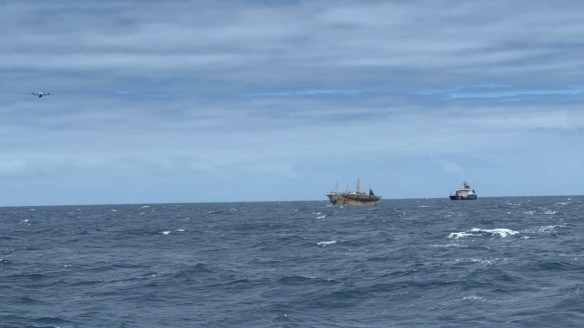
PERU, 10.07.2023, Courtesy Photo, USCG District 11
The Coast Guard Cutter Alder approaches a squid fishing vessel while CG-2007, a C-130 from Air Station Barbers Point in Hawaii, flies over (upper left) during Operation Southern Shield 2023, October 2023. The Coast Guard recently completed the first high-seas boardings and inspections off the coast of Peru under a newly adopted multi-lateral agreement to monitor fishing
and transshipment operations within the South Pacific Regional Fisheries Management Organization (SPRFMO)Convention Area. (U.S. Coast Guard photo)

LIMA, PERU, 10.06.2023, Courtesy Photo, USCG District 11
The aircrew of the Coast Guard 2007, an HC-130 based out of U.S. Coast Guard
Air Station Barbers Point, Hawaii, poses for a picture with observers from the Peruvian Navy and Air Force, in Lima Peru, October 2023. During the course of two weeks, Peruvian observers accompanied the USCG aircrew as they conducted overflights of the fishing fleet on the high seas during Operation Southern Shield 2023. (U.S. Coast Guard photo by pilot-in-charge, Lt. Zachary Hunter)

There was a Webber Class WPC involved as well. This follows the pattern of pairing a WLB with an FRC for distant operations that we have also seen in the Western Pacific.
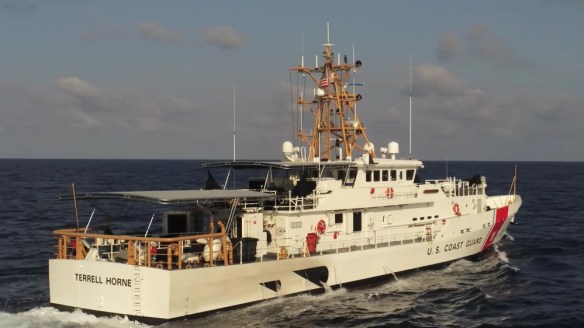
PERU, 10.06.2023, Courtesy Photo, USCG District 11
The crew of San Pedro based USCGC Terrell Horne (WPC-1131) conducts a patrol in the Eastern Pacific Ocean in support of Operation Southern Shield 2023, October 2023. (U.S. Coast Guard photo)

These operations followed an international exercise, GALAPEX 2023.

09.23.2023, Courtesy Photo, USCG District 11
Participants in GALAPEX 2023 pose for a group picture following a law enforcement boarding exercise during GALAPEX 2023, Sept. 23, 2023. Coast Guard Cutters Alder and Terrell Horne conducted a boarding of Ecuador Bae Isla Floreana as the first major exercise and introduction to GALAPEX, a recurring multi-national maritime exercise led by Ecuador and included participation with delegates from Argentina, Brazil, Chile, Colombia, Costa Rica, the European Union, France, Italy, Mexico, Panama, Peru, the United Kingdom, and the United States. (U.S. Coast Guard photo by Lt. j.g. Kimberly Byron)
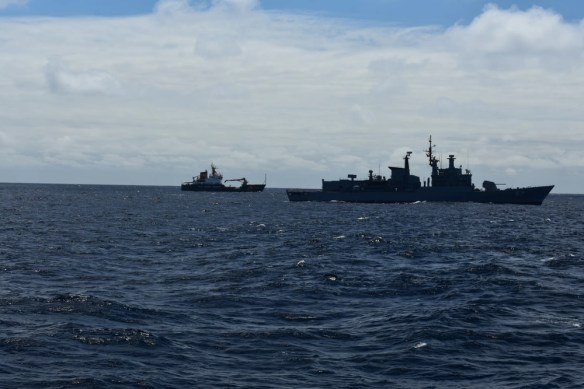
09.25.2023, Courtesy Photo, USCG District 11
U.S. Coast Guard Cutter Alder (background) transits in formation alongside Peru BAP (Buque Armada Peruana) Bolognesi (FM-57) as it prepares for the next exercise during GALAPEX 2023, Sept.25, 2023. (U.S. Coast Guard photo)


 Oct. 16, 2023

Coast Guard Cutter crews conduct first high-seas boardings off the coast of Peru, under new SPRFMO measure

ALAMEDA, Calif. — The crews of the Coast Guard Cutters Alder, Terrell Horne and an HC-130 Hercules aircraft recently completed the first high-seas boardings and inspections, in the Eastern Pacific Ocean, under a newly adopted conservation and management measure to monitor and inspect fishing and transshipment operations at-sea in the South Pacific Regional Fisheries Management Organization (SPRFMO) Convention Area.

As part of Operation Southern Shield, the Coast Guard conducted boardings and overflights within the SPRFMO Convention Area on the high seas off the coast of Peru. For years, the Coast Guard has executed counter-illegal, unreported, or unregulated (IUU) fishing operations and participated in high seas boarding inspections (HSBI) around the globe. This operation was significant as it was timed to implement newly adopted rules in the SPRFMO Convention Area, which comprises nearly a quarter of the Earth’s high seas. The SPRFMO Commission consists of 17 members from Asia, Europe, the Americas, and Oceania, as well as two cooperating non-contracting parties. The primary species targeted in the Convention area are jack mackerel and jumbo flying squid.

Just prior to Operation Southern Shield, the Coast Guard participated in GALAPEX 2023, a recurring joint and multinational exercise hosted by Ecuador and executed in the vicinity of the Galapagos Islands. The Coast Guard conducted communications exercises, practiced counter-narcotics boarding scenarios, and hosted observers from Peru, Ecuador, and Brazil. GALAPEX culminated with full-scale exercises focused on a coordinated multinational response to counter IUU fishing. At the conclusion of the exercise, the Coast Guard patrolled south to focus on high seas boarding inspections off the coast of Peru.

“The U.S. Coast Guard remains committed to conducting combined maritime operations and exercises throughout the Eastern Pacific and will continue to capitalize on every opportunity to work with, learn from, and coordinate through our partners,” said Capt. James O’Mara, Chief of Enforcement for Coast Guard 11th District.  “The relationships our services build while planning and executing these operations are essential. The logistics required to enable these operations are significant, and it only happens with the tremendous support of partners like Ecuador and Peru.”

IUU fishing has replaced piracy as the leading global maritime security threat. Areas out on the high seas, beyond any country’s exclusive economic zone, can be exploited by fishermen engaged in IUU fishing, as they fish beyond the reach of most law enforcement entities. The Coast Guard’s actions provide inspection presence on the high seas among a distant water fishing fleet made up of more than 400 fishing and transshipment vessels. Much of the fishing in the Eastern Pacific is accomplished by these distant water fishing vessels, some which remain at sea for years at a time, and many of which are supported by transshipment vessels. The Coast Guard’s recent operation directly supported Central and South American partners and their desire to monitor and expand maritime domain awareness of fishing activity near their exclusive economic zones.

Each day during the operation a Coast Guard C-130 aircraft flew sorties over the fishing fleet on the high seas with observers from the Peruvian Navy and Air Force. The crew of the Coast Guard Cutter Terrell Horne also diverted to assist the Peruvian Navy in a search and rescue operation. The Terrell Horne located the vessel, then transported an injured fisherman back to shore to receive further medical care from local Peruvian officials.

“The U.S. Coast Guard is committed to working with our allies and partners to strengthen the international fisheries enforcement regime and stop the pervasive IUU fishing threat,” said Rear Adm. Andrew Sugimoto, commander, Coast Guard 11th District. “Operation Southern Shield is just the latest example of that commitment, and we will continue to model and support rules-based order. We applaud the SPRFMO Commission for adopting these latest inspection guidelines and hope to see additional management measures adopted in the future to ensure the sustainability of our ocean resources. Last year we operated off the Galapagos, this year off the coast of Peru, and we will continue to deploy aircraft, cutters, and personnel to support our partners and monitor these distant water fleets wherever they roam. These operations help bring like-minded countries closer together to protect vulnerable fish stocks, support the economic stability of coastal nations, the livelihoods of small-scale and artisanal fishermen, and safeguard ocean resources that fuel global populations and economies.”