“Too Small to Answer the Call”–USNI Proceedings

The May issue of US Naval Institute Proceedings is the Naval Review issue. It includes updates on the Coast Guard as well as the Navy and Marine corps that are behind the membership pay wall, but it also has an article, “Too Small to Answer the Call,” by Capt. David Ramassini, future CO of USCGC Kimball (WMSL-756) that is accessible to all, and I think is worth a read.

Basically he is advocating using the Coast Guard internationally to build capacity and counter threats of lawlessness and poor governance in trouble spots all around the world. Below is his recommended building program.

Build a New Great White Fleet

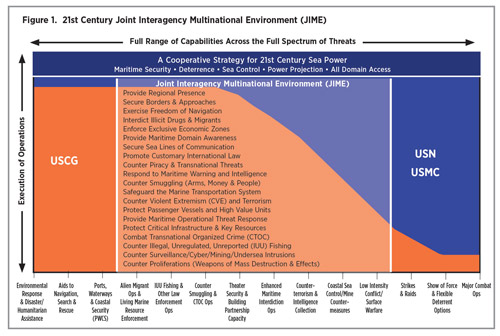
Enhancing regional security in partnership with willing nations requires a 21st-century Great White Fleet of forward deployable (or stationed) national security cutters (NSCs), offshore patrol cutters (OPCs), and fast response cutters (FRC). The mix of platforms and duration of presence would be tailored to the distinct geographies and vary based on the receptiveness of the host nation(s), problem sets to be addressed, and mutual goals of the combatant commands and partner nations. Building on a proven bilateral approach for counterdrug operations and EEZ enforcement, the Great White Fleet would leverage existing agreements—based on the extent to which partner governments are willing—to strengthen CTOC (counter transnational organized crime–chuck) and CT (counter terrorism–Chuck) across the JIME (Joint Interagency Multinational Environment–Chuck).

From an acquisition perspective, doubling the size of both the OPC (from 25 to 50) and FRC (from approximately 50 to 100) programs equates to the projected cost of one Gerald R. Ford (CVN-78)-class aircraft carrier (approximately $13 billion). Furthermore, procuring an additional seven NSCs over the nine planned would cost the equivalent of one Zumwalt (DDG-1000)-class guided-missile destroyer (approximately $4.2 billion). The NSC and OPC both offer more than three times the on-station time between provisioning than is afforded by a littoral combat ship (LCS).

Building more OPCs also could rapidly grow the National Fleet by leveraging commercial shipyards outside the mainstream industrial complex. These shipyards may be able to provide better value to the government during an economic downturn in the oil and offshore supply industry. Further leveraging this acquisition would continue to drive down the cost of the OPCs and provide an additional industrial base to build a 400-ship National Fleet of ships with far lower operating and maintenance costs than the LCS.

Redirecting proposed future LCS/frigate dollars (approximately $14 billion) to a Great White Fleet to modernize the U.S. National Fleet mix would provide a greater return on investment and more staying power abroad. For instance, building international security cutters—NSCs with Navy-typed/Navy-owned enhancements such as the SeaRAM antiship cruise missile—could offer combatant commanders a truly useful “frigate,” leveraging mature production lines that now operate at only 70 percent capacity. These estimates are for relative comparison and do not include the associated aviation, infrastructure, basing support agreements, and personnel plus-ups that are needed to provide a more credible and persistent presence across the JIME. But investing in a larger Coast Guard and the supporting infrastructure would return high dividends.

I’m not sure I agree, but it is worth considering. We should, however, keep in mind a sentiment expressed by friend Bill Wells that white paint is not bullet proof. We should not perpetuate the idea that only white painted ships can enforce laws, that is a uniquiely American concept and perpetuating it plays into the hands of the Chinese, who have more coast guard ships than any other country in the world.

Still I think there is merit to this concept. It seems to be working for PATFORSWA (Patrol Forces South West Asia). There has already been talk about a similar deployment to SE Asia. We might consider similar detachments of various sizes for West Africa, the Eastern Pacific, and the Marshall Islands.

The additional ships, 7 NSCs, and “doubling the size of both the OPC (from 25 to 50) and FRC (from approximately 50 to 100)” Is clearly arbitrary. There is very little the NSCs can do that the OPCs will not also be able to do cheaper, so I don’t see a need for more NSCs.

If we take on additional international roles it probably will not be done in one fell swoop. It will probably be done incrementally. Captain Ramassini is clearly looking at this as a near term possibility. Some movement in this direction is clearly possible, but it will take a radical change in the Administration, the Navy, and the Coast Guard for this to happen on the scale he envisions.

Meanwhile, if you look at the “Offshore and Aviation Fleet Mix Study,” the Coast Guard actually needs 9 NSCs, 57 OPCs, and 91 FRCs just to meet all of our statutory obligations. That is not far from his 16 NSCs, 50 OPCs, and 100 FRCs. The study and the “Great White Fleet” would both probide 66 large ships (NSCs and OPCs).

Actually the only way I see this happening is if there is a realization that keeping the USN constantly cycling through distant deployments may not be the best way to maintain readiness. That it wears out very expensive ships and drives people from the service, and that perhaps cutters can perform at least some of the presence missions.
My Unfunded Priority List

An earlier post reported a plea by Representative Duncan Hunter, Chair of the Transportation Subcommittee on Coast Guard and Maritime Transportation, for the Coast Guard to provide an unfunded priority list to include six icebreakers and unmanned Air System.

Thought perhaps I would list my own “unfunded priorities.” These are not in any particular order.

PLATFORM SHORTFALLS

Icebreakers: We have a documented requirement for three heavy and three medium icebreakers, certainly they should be on the list. Additionally they should be designed with the ability to be upgraded to wartime role. Specifically they should have provision for adding defensive systems similar to those on the LPD–a pair of SeaRAM and a pair of gun systems, either Mk46 mounts or Mk38 mod 2/3s. We might want the guns permanently installed on at least on the medium icebreakers for the law enforcement mission. Additionally they should have provision for supporting containerized mission modules like those developed for the LCS and lab/storage space identified that might be converted to magazine space to support armed helicopters.

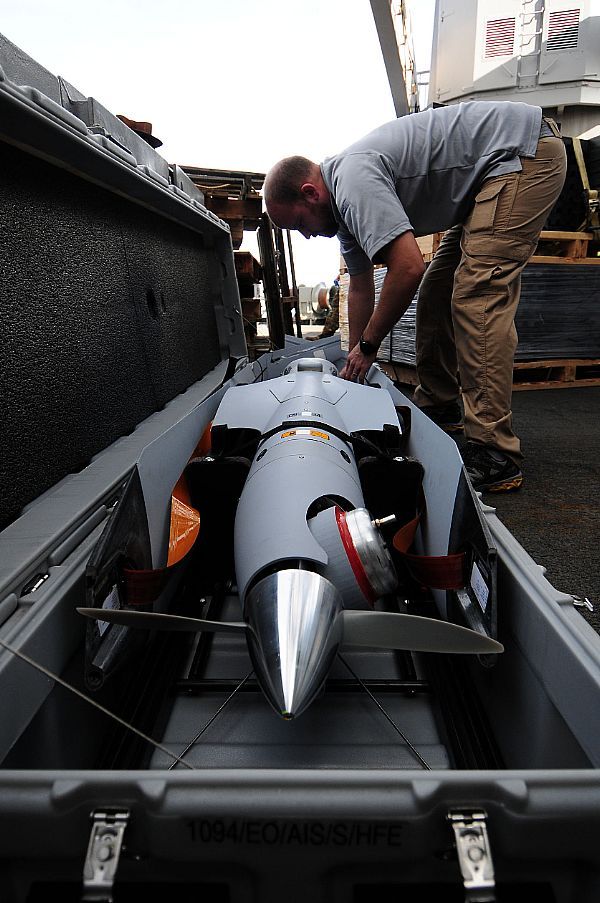
110225-N-RC734-011 PACIFIC OCEAN (Feb. 25, 2011) Guy Mcallister, from Insitu Group, performs maintenance on the Scan Eagle unmanned aerial vehicle (UAV) aboard the amphibious dock landing ship USS Comstock (LSD 45). Scan Eagle is a runway independent, long-endurance, UAV system designed to provide multiple surveillance, reconnaissance data, and battlefield damage assessment missions. Comstock is part of the Boxer Amphibious Ready Group, which is underway in the U.S. 7th Fleet area of responsibility during a western Pacific deployment. (U.S. Navy photo by Mass Communication Specialist 2nd Class Joseph M. Buliavac/Released)

110225-N-RC734-011
PACIFIC OCEAN (Feb. 25, 2011) Guy Mcallister, from Insitu Group, performs maintenance on the Scan Eagle unmanned aerial vehicle (UAV) aboard the amphibious dock landing ship USS Comstock (LSD 45). Scan Eagle is a runway independent, long-endurance, UAV system designed to provide multiple surveillance, reconnaissance data, and battlefield damage assessment missions. Comstock is part of the Boxer Amphibious Ready Group, which is underway in the U.S. 7th Fleet area of responsibility during a western Pacific deployment. (U.S. Navy photo by Mass Communication Specialist 2nd Class Joseph M. Buliavac/Released)

Unmanned Air Systems (UAS): We seem to be making progress on deploying UAS for the Bertholf class NSCs which will logically be extended to the Offshore Patrol Cutters. So far we see very little progress on land based UAS. This may be because use of the Navy’s BAMS system is anticipated. At any rate, we will need a land based UAS or access to the information from one to provide Maritime Domain Awareness. We also need to start looking at putting UAS on the Webber class. They should be capable of handling ScanEagle sized UAS.

File:USCGC Bluebell - 2015 Rose Festival Portland, OR.jpg

Photo: The Coast Guard Cutter Bluebell sits moored along the Willamette River waterfront in Portland, Ore., June 4, 2015. The Bluebell, which celebrated its 70th anniversary this year, is one of many ships participating in the 100th year of the Portland Rose Festival. (U.S. Coast Guard photo by Chief Petty Officer David Mosley.)

Recapitalize the Inland Tender Fleet: This is long overdue. The program was supposed to begin in 2009, but so far, no tangible results. It seems to have been hanging fire for way too long.

Expand the Program of Record to the FMA-1 level: The Fleet Mix Study identified additional assets required to meet the Coast Guard’s statutory obligations identifying four asset levels above those planned in the program of record. Lets move at least to first increment.

Alternative Fleet Mix Asset Quantities

————–POR       FMA-1      FMA-2      FMA-3       FMA-4
NSC                8             9                 9                 9                  9
OPC              25           32               43                50               57
FRC              58           63               75                80               91
HC-130         22            32               35                44               44
HC-144A       36            37               38                40               65
H-60              42            80               86                99             106
H-65             102         140             159              188            223
UAS-LB           4            19                21                21              22
UAS-CB        42            15                19               19               19

At the very least, looks like we need to add some medium range search aircraft (C-27J or HC-144).

Increase Endurance of Webber Class Cutters: The Webber class could be more useful if the endurance were extended beyond five days (currently the same as the 87 cutters, which have only one-third the range). We needed to look into changes that would allow an endurance of ten days to two weeks. They already have the fuel for it.

MISSION EQUIPMENT SHORTFALLS

Seagull_torpedo_trial_1

Ship Stopper (Light Weight Homing Torpedo): Develop a system to forcibly stop even the largest merchant ships by disabling their propulsion, that can be mounted on our patrol boats. A torpedo seems the most likely solution. Without such a system, there is a huge hole in our Ports, Waterways, and Coastal Security mission.

121211-N-HW977-692

Photo: SeaGriffin Launcher

Counter to Small High Speed Craft (Small Guided Weapon): Identify and fit weapons to WPB and larger vessels that are capable of reliably stopping or destroying small fast boats that may be used as fast inshore attack craft and suicide or remote-controlled unmanned explosive motor boats. These weapons must also limit the possibility of collateral damage. Small missiles like SeaGriffin or Hellfire appear likely solutions.

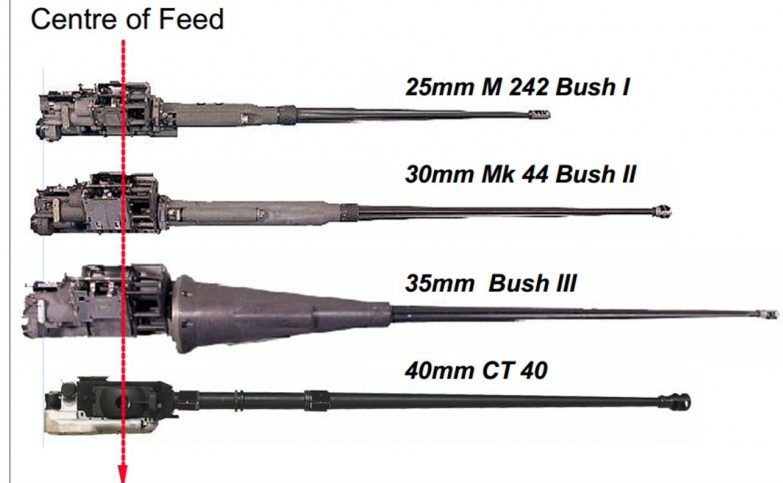
40 mm case telescoped gun (bottom) compared to conventional guns.

40 mm case telescoped gun (bottom) compared to conventional guns.

Improved Gun–Penetration, Range, and Accuracy: The .50 cal. and 25mm guns we have on our WPBs and WPCs have serious limitations in their ability to reach their targets from outside the range of weapons terrorist adversaries might improvise for use against the cutters. They have limited ability to reach the vitals of medium to large merchant vessels, and their accuracy increases the possibility of collateral damage and decreases their probability of success. 30, 35, and 40 mm replacements for the 25 mm in our Mk38 mod2 mounts are readily available.

Laser Designator: Provide each station, WPB, and WPC with a hand-held laser designator to allow them to designate targets for our DOD partners.

CONTINGENCY PLANNING SHORTFALLS

Vessel Wartime Upgrades: Develop plans for a range of options to upgrade Coast Guard assets for an extended conflict against a near peer.


Document Alert: Cutter Procurement–Another Report to Congress

Once again, the Congressional Research Service’s Ronald O’Rourke has revised his “Coast Guard Cutter Procurement: Background and Issues for Congress” with the new edition issued April 15. This has got to be a hot topic because previous revisions were issued March 22, January 27, and December 14, 2015. That is four revisions in four months, on average every six weeks, but the latest is only 24 days after the previous edition. I have begun to sense, we may have turned a corner. The tone of the reports has changed over these four months, from, how long will it take us to reach the “Program of Record” (POR), to consideration of, if we should perhaps go beyond the POR.

The NSC, OPC, and FRC programs pose several issues for Congress, including the following:

“whether to fund the acquisition of a 10th NSC in FY2017;

“whether to fund the acquisition of four FRCs in FY2017, as requested, or some other number, such as six, which was the number projected for FY2017 under the Coast Guard’s FY2016 budget submission;

“whether to use annual or multiyear contracting for procuring FRCs;

“whether to use annual or multiyear contracting for procuring OPCs;

“planned procurement quantities for NSCs, OPCS, and FRCs;

“the cost, design, and acquisition strategy for the OPC;

“initial testing of the NSC; and

“rotational crewing of the NSC.”

The latest revision includes three substantial Appendices:

  • Appendix A. Planned NSC, OPC, and FRC Procurement Quantities (pp 17-22)
  • Appendix B. Funding Levels in AC&I Account (pp 23-26)
  • Appendix C. Additional Information on Status and Execution of NSC, OPC, and FRC Programs from March 2016 GAO Report (pp 27-34)

Appendix C is entirely new and appears to have been the reason for the revision.

Appendix A (p. 17-22) is a fairly detailed discussion of the results of the Fleet Mix Study and asks why we so seldom hear that the program of record is not enough to assure the Coast Guard to successfully accomplish its assigned missions.

The Fleet Mix Study was made public in 2012 long after its completion in 2009. It is due for a reexamination and the Commandant has said another will be done. When that happens, we seriously need to look at more than just more of the same assets. We need to look at additional technology, equipment, and weapons that might allow us to accomplish these missions without a major increase in personnel.

Looking at “Table A-3. Force Mixes and Mission Performance Gaps” (document page 18) I would note that if we get to Fleet Mix Analysis Phase 1 (FMA-1, an increase over the POR including 9 Bertholf class NSCs, 32 OPCs and 63 Webber Class FRCs, for a total of 104 vessels), we will have addressed all the “Very High Risk Gaps” found in the Fleet Mix Study that included SAR capability, “Defense Readiness Capacity,” and “Counter Drug capacity.” What will remain are “High” or lower risks in Ports, Waterways, and Coastal Security (PWCS) and Living Marine Resources (LMR), and a low to very low risk to the Alien Migrant Interdiction Operations (AMIO) mission. This total of more than 40 NSCs and OPCs certainly should not be out of the question, after all the Coast Guard has included over 40 ships larger than a thousand tons for the last several decades.

Still, I would note that, no matter how many ships we have, the Ports, Waterways, and Coastal Security (PWCS) mission will always be at risk, unless weapons are available to quickly and reliably stop terrorists’ exploitation of a larger merchant vessel to make an attack. Guns alone are simply not up to the task. I have identified two weapons that might address this threat, (1) equipping our WPCs and possibly WPBs with light weight torpedoes that target a ships propellers or (2) equipping our larger ships with the Long Range Anti-Ship Missile (LRASM) which might allow our larger cutter to effectively support our smaller cutters and respond to an attack, even if the large cutter 200 miles from the targeted port. Either would also make our ships much more capable of making a meaningful contribution to Defense Readiness.

Why the Coast Guard (also) Needs a 30 Year Shipbuilding Plan

When I first learned that the Navy had a 30 year shipbuilding plan, I thought it was silly, too many unknowns, too many variables. But I have changed my mind. The Coast Guard has made a serious tactical error in not paralleling the Navy planning process and creating a similar annual 30 year plan.

In the federal government budget process, the default allocation is that an agency will get the same proportion of the budget they got last year, in fact the same amount they got last year adjusted for inflation. The Coast Guard has not even been getting that. Increasing that proportion is always difficult.

When you concentrate on only one project at a time (it has been the National Security Cutter, now it is becoming the Offshore Patrol Cutter or OPC) without recognizing all the work that will be required in out years, it is too easy for Congress and the Administration to figure they can stretch out the project at hand without realizing it results in a growing backlog. Current Coast Guard public planning budget documents generally look only five years ahead, but most procurements take at least ten years to realize. The Navy considers ten years “near term” planning. The OPC project, as currently planned, will require funding at least through FY2030 and almost certainly some follow-up beyond that.

But FY2030 is not an end point. Keeping in mind that typically we need to start planning for replacement ten years before it is actually needed, the Coast Guard will not only need Polar Icebreakers, it will also need to begin several more replacement projects:

  • New small harbor tug/icebreakers (WYTL), the oldest of the eleven existing ships is already 54 years old.
  • New Inland Aids to Navigation vessels (WLI, WLIC, WLR), about 40 of them entered service prior to 1970.
  • New Icebreaking Seagoing Tugs (WTGB), The oldest of the nine Katmai class are 36 years old already.
  • New WPBs. The oldest of the 73 Marine Protector Class will be 25 years old in 2023.
  • New Sea Going Buoy Tenders, the oldest of the 16 Juniper class will be 30 years old in 2026.
  • New Coastal Buoy Tenders, the oldest of the 14 Keeper class will be 30 years old in 2027.
  • Even funding for designing the replacements for the Bertolf class which began entering service in 2008 should be included in a 30 year plan. Probably funding for the replacing the older units as well.

We need a plan to replace them all. We need to look at least 30 years into the future which would now mean FY2046. It would be the best argument for a realistic Coast Guard shipbuilding budget.

This is the Navy’s latest 30 year plan in tabular format.

PDF: Read the Navy’s 30-year shipbuilding plan

It is a Theme

FierceHomelandSecurity is reporting on testimony of VAdm. Charles Michel before the House Transportation subcommittee on Coast Guard and maritime transportation. As we have seen so many times recently, the Deputy commandant for Operations is pointing out that we simply do not have enough cutters to act upon all the intelligence we have for counter-drug operations. (If you look at the actual testimony, he also covers much more.)

It seems the Commandant and his staff have been repeating the same story at every opportunity.

I think they are doing the right thing. The Commandant makes a convincing case for why the country should want to do this. The other theme that accompanies it is the need for three heavy and three medium icebreakers, and the fact that the Coast Guard cannot afford to build them without a substantial budget increase.

It seems the Commandant and staff are doing their best to make a case for more money for shipbuilding. They are using the DHS Fleet Mix Study to point to the need for even more cutters than provided in the program of record and the “High Latitude Region Mission Analysis” to justify the Icebreakers.

I could point to additional shortfalls including the dearth of assets in the Western Pacific, but it looks like the Commandant has chosen his battle, and he is fighting it with determination.

The question now is, is anyone really interested in the Polar regions and our neighbors in Latin America and the problems created by the criminals that run the drug trade there.