Document Alert: Coast Guard Cutter Procurement: Background and Issues for Congress

Samsung

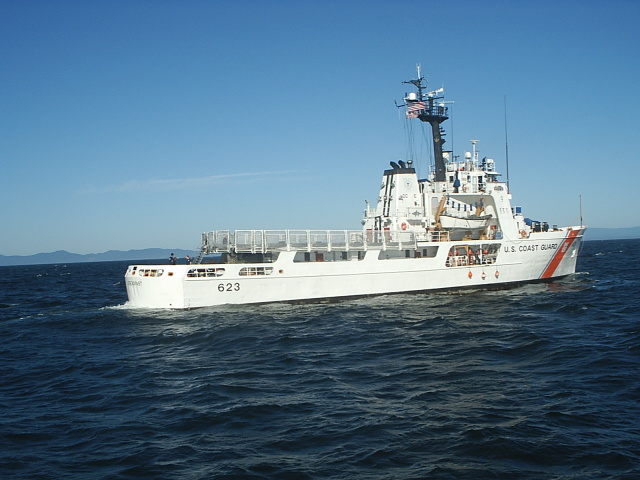
Photo: USCGC Steadfast, one of the newer 210 class, now about 48 years old. We don’t expect her replacement for at least another ten years.

The US Naval Institute has published the Congressional Research Services latest version of Coast Guard Cutter Procurement: Background and Issues for Congress, by their Naval Affairs Specialist, the ever prolific Ronald O’Rourke.

It is not quite up to date, because it does not reflect funding for a ninth National Security Cutter, but otherwise it nicely defines the issues the program has been faced with, most notably inadequate funding.

It also raises the question, should multi-year or block buy funding, with its potential for substantial savings, be pursued? We really should be doing this for the Webber class, which is a proven, mature design, approved for full rate production. In fact, we should have been doing this for a couple of years now.

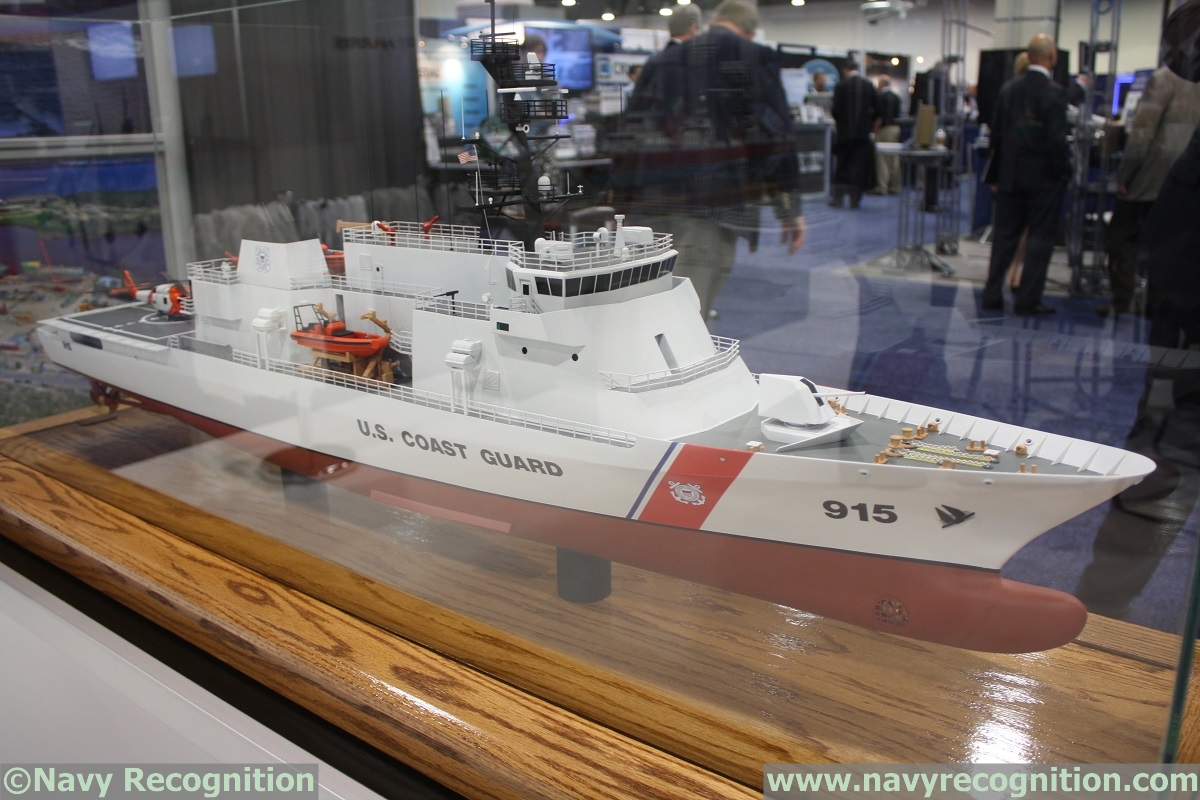
The thing I found most disturbing was that the first Offshore Patrol Cutter (OPC) will not be funded until FY2018, although it looks like the detail design will be funded in FY2017. I am beginning to wonder if we will see the first OPC before 2022.

The FY2016 budget was a pleasant surprise with the addition of funds to build a ninth National Security Cutter. If this near $2B funding level is seen as a new norm (as I would hope) there will be room in the FY2017 budget for another major acquisition. It might be a tenth NSC. That would not be an altogether bad thing, but it would be outside the needs identified in the Fleet Mix Study. Unless another major project is injected into the FY2017 budget, we will loose the momentum for a larger AC&I budget.

If the FY2017 NSC, OPC, and FRC funding is as indicated in the document (see pdf page 14, marked at page 10), most of the shipbuilding funds will go for what looks like five or six more Webber class. There are smaller amounts for the OPC and NSC programs for a total of only $557M. There may, however, be the opportunity to fund a big part of the new polar icebreaker, as the Commandant has suggested, if the AC&I budget remains at least equal to the FY2016 level.

Inflation and the OPC

CIMSEC has just republished a post which is specific to Canada’s shipbuilding program, but it addresses a problem that will effect the Offshore Patrol Cutter (OPC) as well, inflation.

Their point is one that is often missed.

Inflation in the shipbuilding industry is higher than inflation in general. 

The post states ” American warships have historically inflated at an annual rate of 9 to 11 percent based on a pay for view study by Rand Corporation, available here.” Figures I saw earlier suggest the shipbuilding inflation rate outpaces that for the economy in general by two to three percent annually

This difference in inflation rate means that even if well run, a shipbuilding program is almost always destined to go over budget and the longer it is stretched out, the worse it is going to get.

Inflation rates are recognized in the budgeting process, but only the overall rate, not the rate applicable to a particular industry.

Stretching the Offfshore Patrol Cutter program out over more than fourteen years will guarantee unfavorable comparisons between early estimates and actual performance.

This is the largest program in Coast Guard history and the largest in the Department of Homeland Security as well. Acquisition cost of the 25 ships are expected to be $10.523 billion, or an average of about $421 million per ship. The Coast Guard’s Request for Proposal (RFP) for the program, released on September 25, 2012, establishes an affordability requirement for the program of an average shipyard cost of $310M each for ships #4-9 in then year dollars. That does not include government furnished equipment (GFE).The longer the program stretches out, the less likely that becomes.

The Navy’s New Design for Maintaining Maritime Superiority–CNO

Download the pdf here.

Recently the new Chief of Naval Operations has issued a document , “A Design for Maintaining Maritime Superiority” that outlines how, hopefully, the US Navy can maintain a maritime superiority our foes will recognize and avoid confronting.

If you are looking for anything specifically regarding the Coast Guard here, you will not find it (other than the cutter in the formation on the cover). The Coast Guard is not mentioned even once, but it does talk about some things that are Coast Guard related. Perhaps we should not feel bad about this. It only mentions the Marine Corps once.

He talks about three forces that are changing the environment: 

  • The first global force is the traffic on the oceans, seas, and waterways, including the sea floor – the classic maritime system.
  • A second increasingly influential force is the rise of the global information system – the information that rides on the servers, undersea cables, satellites, and wireless networks that increasingly envelop and connect the globe.
  • The third interrelated force is the increasing rate of technological creation and adoption.”

Obviously the Coast Guard facilitates and regulates marine traffic and is tapped into the global information system. In wartime, these contacts will become essential. He also talks about new trade routes opening in the Arctic, that will only be reliable if we have new icebreakers. He also talks about illegal trafficing.

“This maritime traffic also includes mass and uncontrolled migration and illicit shipment of material and people.”

For once, finally, a document explicitly recognizes the competition,

“For the first time in 25 years, the United States is facing a return to great power competition. Russia and China both have advanced their military capabilities to act as global powers. Their goals are backed by a growing arsenal of high-end warfighting capabilities, many of which are focused specifically on our vulnerabilities and are increasingly designed from the ground up to leverage the maritime, technological and information systems. They continue to develop and field information-enabled weapons, both kinetic and non-kinetic, with increasing range, precision and destructive capacity. Both China and Russia are also engaging in coercion and competition below the traditional thresholds of high-end conflict, but nonetheless exploit the weakness of accepted norms in space, cyber and the electromagnetic spectrum. The Russian Navy is operating with a frequency and in areas not seen for almost two decades, and the Chinese PLA(N) is extending its reach around the world.

“…Coupled with a continued dedication to furthering its nuclear weapons and missile programs, North Korea’s provocative actions continue to threaten security in North Asia and beyond.

“…while the recent international agreement with Iran is intended to curb its nuclear ambitions, Tehran’s advanced missiles, proxy forces and other conventional capabilities continue to pose threats to which the Navy must remain prepared to respond.

“…international terrorist groups have proven their resilience and adaptability and now pose a long-term threat to stability and security around the world.”

He recognizes budgetary limitations.

“There is also a fourth ‘force’ that shapes our security environment. Barring an unforeseen change, even as we face new challenges and an increasing pace, the Defense and Navy budgets likely will continue to be under pressure. We will not be able to “buy” our way out of the challenges that we face. The budget environment will force tough choices but must also inspire new thinking.”

Throughout there is an emphasis on understanding history and the strategic concepts of the past. There is also a recognition of the need to work with partners.

“EXPAND AND STRENGTHEN OUR NETWORK OF PARTNERS: Deepen operational relationships with other services, agencies, industry, allies and partners – who operate with the Navy to support our shared interests.

Other than the Marine Corps, the US Navy has no closer partner than the USCG. The partnership has been a long and successful one, but I would like to see the Navy be a better partner to the Coast Guard.

What I want to see:

If we have “run out of money, now we have to think.” One thing we can do, is to try to get the maximum return from the relatively small investment needed to make the Coast Guard an effective naval reserve force.

  • We need explicit support from the Navy at every level, particularly within the Congress and Administration, for Coast Guard recapitalization.
  • We need an explicit statement from the Navy that they expect the Coast Guard to defend ports against unconventional threats, so that they can keep more forces forward deployed.
  • We need the Navy to supply the weapons we need to defend ports against unconventional attack with a probability approaching 100% ,including small missile systems like Hellfire or Griffin to stop small, fast, highly maneuverable threats and light weight anti-ship torpedoes that target propellers to stop larger threats, and we need those systems on at least all cutters of Webber class and larger.
  • We need to reactivate the Coast Guard’s ASW program and insure that all the new large cutters (NSC and OPC) have and ASW capability, if not installed on all of the cutters, at least planned, prototyped, tested, and practiced on a few ships (particularly in the Pacific).

(Note there is another post on this looking at the “design” from a Navy point of view.)

Turkey’s OPC

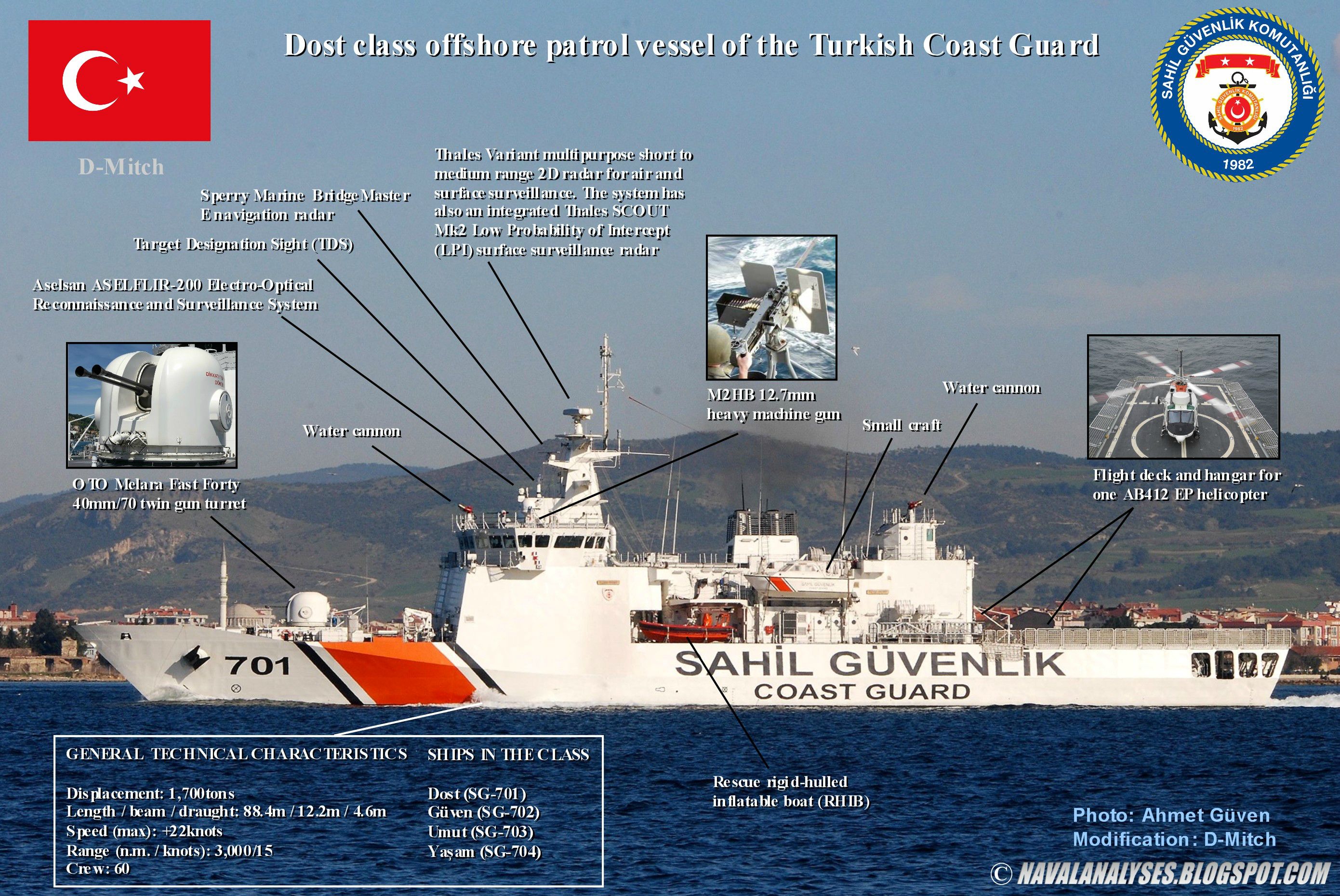
DOST class, Turkish CG

Photo: NavalAnalyses.Blogspot.Com. Click on the photo to enlarge

The German Navy Blog “Marine Forum,”

“5 January, Turkey, Acting on a tip-off / intelligence input, Turkish Coast Guard ships „Yasam“ and „Umut“ intercept Bolivian-flagged freighter „Joudi“ in international waters off Tobruk (Libya) … after receiving Bolivian government permission to board and search ship, boarding team finds 13 tonnes of cannabis.
“(rmks: first such action distant from Turkish waters; made feasible with induction of large DOST class patrol ships–emphasis applied–Chuck)”

So I looked up the class. The four ships of this class are the largest vessels in the Turkish Coast Guard. The next largest are only 210 tons. They are based on the Italian Sirio Class patrol vessels which operate under the Italian Navy but were paid for by the Transport and Navigation Ministry. I suspect the Sirio Class (appropriately modified) may have been the basis of the Marinette Marine’s OPC proposal.

Specs for the Turkish ships from my Combat Fleets of the World, 16th ed. with my translation to English units are:

  • Displacement: 1,700 tons (full load)
  • Overall Length: 88.4m (292 ft)
  • Length at Waterline: 80.3m (265 ft)
  • Beam: 12.2m (40.26 ft)
  • Draught: 4.6m (15.2 ft)
  • Speed: 22 knots
  • Power 4 MTU 16V, diesels, 2CP props, 14,120 BHP

The Gun: The Beda Bofors twin 40mm/70 gun is not a bad choice. It has been around for a while and it has improved over time. Current models are rated at 450 rounds per minute per barrel for 900 rounds per minute for the twin mount. That is faster than a .50 cal. M2 machine gun. The Italian Navy used this as a CIWS before switching to the improved 120 round per minute 76mm. It also has adequate range, 13,675 yards (12,500 m). This is less range than either a 57mm or 76mm, but adequate for most Coast Guard missions. There are at least four different projectiles available. The standard projectiles are about two pounds. There is also a high velocity solid tungsten alloy rod armour-piercing fin-stabilized discarding sabot (APFSDS) projectile that would probably be good for destroying fairly large diesel engines. .

If I read this correctly, the video is 380 rounds in 43 seconds.

Also from “Combat Fleets” this on the Turkish Coast Guard.

“Personnel: Approx. 2,200 total including 800 regulars and 1,400 conscripts, plus 1,050 on loan from the navy.

“Aviation: Coast Guard air assets include one Maule MX-7 light fixed-wing  and three CASA CN-235 maritime patrol aircraft (the basic airframe for the HC-144, Chuck). Three Austa-Bell AB-206B Helicopters and thirteen search and rescue configured Agusta-Bell 412 helicopters. The aircraft are pained white with an orange diagonal stripe.”

Finland Seeks Unique Warship

Hamina-luokka_Hanko

Photo: Hamina class missile boat Hanko (82) by kallerna, 2009

NavyRecognition reports, the Finnish Navy is looking for some small warships with unique characteristics.

Finnish Minister of Defence, Jussi Niinistö, has given the Defence Forces a mandate to start the Finnish Navy project, Squadron 2020. The aim of the Squadron 2020 project is to construct four new corvette-size fighting ships for year-round operation in the special weather and ice conditions at the Baltic Sea (emphasis applied–Chuck).

The Request for Information informs shipyards about the project and inquires know-how and price information from shipbuilders and suppliers to base the Request for Quote on. The RFI was sent out on 18 December 2015 and answers are requested by the end of March next year.

The expected cost for the four is 1.2B Euros or abut $1.31 B. Right now the Offshore Patrol Cutter is probably the closest thing to what they are looking for, but in all probability the final design will be both smaller and much better armed. The Finns have shown an ability to cram a lot of fight into very small packages, but then, they have no need for the long range that is a characteristic of most Coast Guard or US Navy ships.

Their Hamina class patrol craft (wikipedia here) which are smaller than our Webber class (268 tons vs 353 tons fl) are equipped with a 57 mm gun, both a radar and an optronic fire control system, an EADS-TRS-3D multi-mode radar just like the National Security Cutter, an eight cell vertical launch system for anti-aircraft missiles, four anti-ship cruise missiles, ESM, and sonar. They have an aluminum hull, a composite superstructure, and NBC protection. They also have an RHIB ramp in the stern.

Possible New Sonar for Even Small Cutters

NavyRecognition reports the Navy has selected the sonar for their Anti-Submarine Warfare Continuous Trail Unmanned Vessel.(ACTUV). Since this vessel is quite small at 140 tons and 132 feet long, there is a good chance the sonar would fit nicely on cutters as small as the Webber class, and certainly on the Offshore Patrol Cutter.

“MS3 (Modular Scalable Sonar System–Chuck) marks an improvement in the performance and reliability of proven sonar technologies. It performs active and passive search and tracking; incoming torpedo warning; and small-object avoidance for safer navigation.”

Maybe it is time to “Bring Back the Coast Guard ASW Mission.”

Ruminating on Homeports While Playing the Red Cell

Reading the “National Fleet Plan” prompted some thoughts on where we homeport cutters. What started as a look at homeports then morphed into a look at, if there will be enough large cutters (NSCs and OPCs) in the “program of record” to protect our ports from a terrorist attack. That expanded a bit further. Could we also protect our strategic seaports? The Maritime Domain Awareness (MDA) system would after all want to make sure merchant ships were not used to sow mines off our coast.

Warning: This is going to be a rambling post, so let me apologize in advance.

Note, I looked at this from the point of view of making an intercept off shore, so rather than look at specific ports, in some cases, I clustered ports that had a common approach, e.g. Portsmouth, Norfolk, and Newport News all share a common approach so I grouped them together in what I will refer to as the  Chesapeake Bay Complex. Other groups were ports around Puget Sound, San Francisco Bay, Galveston Bay, and Sabine Pass. I also disregarded Inland and Great Lakes ports. 

The National Fleet Plan included these particular stated intentions for the future.

– Fiscal Year 2015: Submit revised Strategic Laydown (SLD) request and OCR to homeport 3 X FRCs at Naval Base Guam to include Lessons Learned from maturing CG-7/OPNAV N51 MOA.

– Fiscal Year 2015: Process Organization Change Request to homeport 3 X Medium Endurance Cutters at Naval Station Pensacola.

– Support feasibility studies to identify potential homeport locations for West Coast Offshore Patrol Cutters

There are a lot of obvious advantages in homeporting at a Navy Base, particularly if Navy surface vessels are also based there. There are likely to be training, logistics, and maintenance support available on base and probably a shipyard will be nearby, meaning the cutter will not have to be away from homeport for their availabilities. But perhaps Coast Guard needs a wider dispersal of its assets than the Navy does.

Although I have my doubts about how the larger cutters are currently armed, I approached this from what I believe to be the Coast Guard’s view, that if there is an attack by terrorists using a medium to large ship, the most likely unit to counter it is a large cutter. This is implicit in the term “National Security Cutter” and the designations, WMSL for the NSC and WMSM for the Offshore Patrol Cutters, e.g. Maritime Security, Large and Medium. (Why is there never a small–WMSS or WSEC?)

I also made the somewhat plausible assumption, that an intercept is more likely to be successful if the cutter is based in or near the port that is being protected. An intercept requires at least one cycle of the OODA Loop, e.g., Observe (detect), Orient (evaluated), Decide (on a course of action), and Act. It is going to take some time to determine that an intercept is needed, and more time to communicated the decision. If the cutter is in or near the port to be protected, we are more likely to be able to make a successful  intercept.

The USN homeports surface combatants in only five distinct geographic areas, the Chesapeake Bay (Norfolk and Little Creek, VA); Mayport, FL, San Diego, CA; Puget Sound (Everett and Bremerton, WA); and Pearl Harbor, HI. The Navy is increasingly concentrated geographically. Navy ships generally are in maintenance, in training, deployed far from the US or are in transit. They no longer routinely patrol US waters. This may not be a problem if you can handle a problem with aircraft, but reaction to a vessel that we suspect may be attempting a terrorist attack will almost certainly require investigation, including, most probably, an attempt to board.

I was actually kind of shocked when I first realized the Navy had no surface combatants in the Atlantic Fleet homeported North of Virginia. We cannot rely on the Navy to do intercepts, with the possible exception of off San Diego and Chesapeake Bay.

The current fleet of approximately 40 NSCs/WHECs/WMECs (it is a moving target) is distributed among 18 homeports in 13 states:

CCGD1:

  • Kittery, ME: 2x270s, 1×210
  • Boston, MA: 3×270

CCGD5:

  • Chesapeake Bay Complex, VA: 6×270 (Portsmouth), 2×210 (Little Creek)
  • Wilmington, NC: 1×210

CCGD7:

  • Charleston, SC: 2xNSC
  • Mayport, FL: 1×210
  • Cape Canaveral, FL: 2×210
  • Key West, FL: 2×270
  • St. Petersburg, FL: 2×210

CCGD8:

  • Pascagoula, MS: 1×210
  • Galveston, TX: 1×210

CCGD11:

  • San Diego, CA: 2xWHEC
  • Alameda, CA: 3xNSC

CCGD13:

  • Warrenton, OR: 2×210
  • Port Angeles, WA: 1×210
  • Seattle, WA: 2xWHEC

CCGD14:

  • Honolulu, HI: 2xWHEC

CCGD17:

  • Kodiak, AK: 1xWHEC, 1×282 WMEC

The Coast Guard fleet is much more geographically distributed than that of the Navy. The Coast Guard’s average of about two ships per homeport is probably not optimal in terms of maintenance. There are good reasons to group at least three ships of the same type together. This almost guarantees that at least one ship will be in port at all times, permitting shore side support to be usefully employed in continuous support of the ships. Three ships in each homeport also almost guarantees that at least one of the ships is fully operational.

There are several  reasons for the choice of homeports.

  1. Proximity to operating areas, e.g. closer to Alaska for ships that do Alaska Patrol, or closer to the Eastern Pacific transit zones for ships primarily assigned drug enforcement.
  2. Proximity to supporting facilities, e.g. shipyards, training facilities, assist teams.
  3. Proximity to potential target ports, if we consider these ships relevant for this mission.
  4. Perhaps cynically, political support may follow homeporting in a Congressional district or state. Maybe ethically we should not consider this, but unless you get political support you can’t do your job.

Terrorist Target List (Playing Red Cell):

Lets look at what ports need to be protected, based on what characteristics make a port a potential target. I looked at it from the terrorists point of view. “How can I hurt the United States and make the biggest impact?”

Since the terrorists targets are more about psychological impact than economic or military significance, attacking certain cities may be more important than the actual damage done. Cities that likely figure large in their psyches are:

  • New York City–symbol of American capitalism
  • Washington, DC–for obvious reasons
  • Los Angeles (Hollywood)–as exporter of American culture
  • San Francisco–as symbol of “alternate lifestyles” that many terrorist groups find abhorrent.

Next, there are symbols of American military power, that terrorist groups would like to show are not invulnerable. Plus, if they could also at least raise the possibility of a spill of radioactive material, so much the better. So nuclear powered ships of any kind are likely targets.

  • Aircraft Carriers are homeported in three ports: Norfolk, VA; San Diego, CA; Bremerton, WA
  • Ballistic Missile Submarines in two: Kings Bay, GA, Bangor, WA
  • SSNs in six: Groton, CT; Norfolk, VA, San Diego, CA; Bremerton, WA; Pearl Harbor; Guam

Attacks on Shipyards that build USN ships might also provide an opportunity to strike at US symbols of power. Notable shipyards are BIW in Bath, Me; Electric Boat in Groton, CT; Newport News in the Chesapeake Bay complex, VA; Austal USA in Mobile, AL; HII in Pascagoula, MS; and NASSCO in San Diego, CA.

Another likely target is a cruise ship. The Top Cruise Ship Ports:

  1. Miami, FL
  2. Fort Lauderdale, FL
  3. Port Canaveral, FL
  4. New York, NY
  5. San Juan, PR
  6. Galveston, TX
  7. Tampa, FL
  8. Seattle, WA
  9. Long Beach, CA
  10. New Orleans, LA
  11. Los Angeles, CA
  12. Baltimore, MD
  13. Cape Liberty, NJ
  14. Jacksonville, FL
  15. Charleston, SC

Large container ports might also be seen as a good way to disrupt the economy. Top Container Ports:

  1. Los Angeles, CA
  2. New York, NY/NJ
  3. Long Beach, CA
  4. Savannah, GA
  5. Houston, TX
  6. Oakland, CA
  7. Norfolk, VA
  8. Seattle, WA
  9. Charleston, SC
  10. Tacoma, WA
  11. Miami, FL
  12. Baltimore, MD
  13. Port Everglades, FL
  14. New Orleans, LA
  15. San Juan, PR

More generally, Top US waterports by tonnage:

  1. Port of South Lousiana
  2. Houston, TX
  3. New York, NY and NJ
  4. Beaumont, TX
  5. Long Beach, CA
  6. New Orleans, LA
  7. Corpus Christi, TX
  8. Baton Rouge, LA
  9. Los Angeles, CA
  10. Port of Plaquemines, LA
  11. Lake Charles, LA
  12. Mobile, AL
  13. Texas City, TX
  14. Norfolk Harbor, VA
  15. Huntington – Tristate

Military Targets:

Aside from the military targets listed above MARAD has designated 23 ports for outload of military equipment. These are referred to as “Strategic Seaports”:

  • Port of Port Elizabeth, NJ;
  • Philadelphia, PA;
  • Norfolk, VA
  • Newport News, VA
  • Morehead City, NC;
  • Wilmington, NC;
  • Sunny Point, NC
  • Charleston, SC
  • Savannah, GA
  • Jasonville, FL
  • Gulfport, MS
  • Beaumont, TX
  • Port Author, TX
  • Corpus Christi, TX
  • San Diego, CA;
  • Long Beach, CA;
  • Hueneme, CA
  • Oakland, CA;
  • Concord, CA
  • Tacoma, WA
  • Indian Island, WA
  • Ports of Anchorage, AK
  • Guam

Consolidated Target Port List:

Obviously there is some overlap from list to list. Putting them all together and grouping them by district we get these 30 ports:

CCGD1:

  • Bath, Me–Major Naval shipbuilder
  • Groton, CT–Submarine base
  • Hudson River complex, New York, NY/Elizabeth and Bayonne, NJ–a major cultural target, #3 US Port by tonnage, #2 Container port, #4 Cruise ship port (NYC) and #13 cruise ship port (Cape Liberty, NJ), Strategic Seaport (Elizabeth)

CCGD5:

  • Delaware Bay–Strategic Seaport (Philadelphia)
  • Chesapeake Bay Complex, VA–Base for aircraft carriers and submarines, Major naval shipbuilder, #14 port by tonnage, #7 container port; plus water route to Washington, DC (major cultural target) and Baltimore, MD–#9 port by tonnage, #10 container port, #12 cruise ship port, Strategic Seaport (Norfolk and Newport News)
  • Morehead City, NC–Strategic Seaport
  • Cape Fear River–Strategic Seaport (Sunny Point and Wilmington, NC)

CCGD7:

  • Charleston, SC–#9 container port, #15 cruise ship port, Strategic Seaport
  • Savannah, GA–#4 container port Strategic Seaport
  • Jacksonville complex, FL (including Kings Bay, GA)–SSBNs, Navy Base Mayport, #14 cruise ship port, Strategic Seaport
  • Port Canaveral, FL–#3 Cruise Ship port
  • Port Everglades/Fort Lauderdale, FL–#13 container port, #2 Cruise Ship port
  • Miami, FL–#11 container port, #1 Cruise Ship port
  • San Juan, PR–#5 Cruise Ship port, #15 container port
  • Tampa, FL–#7 Cruise Ship port

CCGD8:

  • Mobile, AL–major naval shipbuilder, #12 port by tonnage
  • Pascagoula, MS–major naval shipbuilder
  • Gulfport, MS–Strategic Seaport
  • Mississippi River Complex, LA–#14 container port,#10 Cruise Ship port (NOLA), #1 port by tonnage (South Louisiana), #6 port by tonnage (NOLA), #8 port by tonnage (Baton Rouge), #10 port by tonnage (Port of Plaquemines)
  • Lake Charles, LA–#11 port by tonnage
  • Sabine Pass complex (Beaumont/Port Author/Orange, TX)–#4 port by tonnage (Beaumont), Strategic Seaport (both Beaumont and Port Author)
  • Houston/Galveston/Texas City, TX–#2 port by tonnage (Houston),  #13 port by tonnage (Texas City), #5 container port (Houston), #6 Cruise ship port (Galveston)
  • Corpus Christi, TX–#7 port by tonnage, Strategic Seaport

CCGD11:

  • San Diego–Base for aircraft carriers and submarines, major naval shipbuilder (NASSCO), Strategic Seaport
  • Los Angeles/Long Beach/Port Hueneme, CA–A major cultural target, #5 port by tonnage (Long Beach), #9 port by tonnage (Los Angeles), #1 container port (Los Angeles), #3 container port (Long Beach), #9 cruise Ship port (Long Beach), #11 cruise ship port (Los Angeles), Strategic Seaport (Long Beach and Port Hueneme)
  • San Francisco Bay complex–A major cultural target, #6 container port (Oakland), Strategic Seaport (Oakland and Concord)

CCGD13:

  • Puget Sound Complex, Seattle/Tacoma, WA–Base for aircraft carriers (Bremerton), SSBNs (Bangor), and submarines, major naval bases, #8 container port (Seattle), #10 container port (Tacoma), #8 Cruise ship port (Seattle), Strategic Seaport (Indian Island and Tacoma, WA)

CCGD14:

  • Honolulu/Pearl Harbor–Major Naval base, including submarines
  • Apra, Guam–Submarine Base, Strategic Seaport

CCGD17:

  • Anchorage, AK–Strategic Seaport

Homeport:

If we complete the “Program of Record” we will have 33 major cutters, 8 Bertholf class and 25 Offshore Patrol Cutters. The Bertolf class are already planned to go to Charleston, Alameda (San Francisco Bay), and Honolulu, HI, three ports on the target list. The 25 OPCs might best be distributed among eight or nine ports (7 ports with three ships and either one with four or two with two each). That would only cover at most 12 ports.

Looking at it another way, if we assumed that these 33 ships were all successfully using the “crew rotation concept” and were available 225 days a year, that would give us 20.3 ships available on an average day. Certainly, not all of these are going to be available because some will be in Alaska and some will be in the Eastern Pacific. Hopefully the Western Pacific will also be patrolled and some will be in training.

Observations:

The Navy’s Littoral Combat Ships (LCS) will be based in San Diego and Mayport. Since the new cutters will share systems with the LCS, there will be a strong case for homeporting at least some of the OPCs in San Diego and Mayport.

Even though the Gulf of Mexico ports may appear somewhat protected by the relatively narrow entrances, the proximity of Mexican waters also means that it may be only a relatively short run from Mexican waters to a US port. That cuts the reaction time available to detect an anomaly, decide there is a need for an intercept, and sortie a cutter to intercept it. (We could say the same thing about San Diego and LA/Long Beach.)

Looking at the distribution of ports and the current distribution of cutters, it looks like CGD8 (Gulf of Mexico) needs more than the two 210s currently assigned. The proposal to put three MECs in Panama City looks like a good idea even if Panama City itself doesn’t look like a likely target because of the proximity of Mobile, Pascagoula, Gulfport and the Mississippi Delta. Undoubtedly there are support facilities in the area. Still it is on the Eastern extreme of the District and not centrally located relative to these ports. Mobile or Gulfport are more centrally located.

Another place we might want to put assets is Naval Station Ingleside, next to Corpus Christi. Ingleside is currently the home of all the Navy’s US based Mine-Warfare ships. The port was originally intended to support a carrier battlegroup, but with the reduced size of the navy and with Littoral Combat ships (which will be based in San Diego and Mayport) assuming the Mine Warfare role and replacing the Minesweepers and Minehunters, Ingleside is certain to have unused capacity. It would give the Coast Guard a base in the Western half of the Gulf of Mexico.

There are obvious advantages to basing in San Diego. It is not just a Naval Base, it is one of two US ports where Littoral Combat Ships will be based and LCS share systems with the new cutters. Training, Logistical, and technical support should be excellent. Still of all the US ports, San Diego is the least likely to need additional Coast Guard help in defending the port. We might do better to base ships in LA/Long Beach which is still close enough to enjoy some benefit from the proximity to San Diego.

We could probably say something similar about the Chesapeake Bay Complex. A Coast Guard boarding party delivered by a WPB or riding a Destroyer  is probably all the help they will need in defending the port.

Notably, missing from my target ports list are Boston MA; Key West, FL; the Columbia River/Portland, OR, and Kodiak, AK, suggesting, at least from this limited point of view, these may not be the best choices of homeport. These four ports are currently homeport to nine large cutters. Boston surprised me. There are several potential targets of historical significance in Boston that might attract attention, including the USS Constitution.

The Problem:

Only if we stopped doing anything else, could we, perhaps, provide enough large cutters to provide a reasonable assurance of being able to intercept a medium to large ship suspected to having terrorist intentions, on our top 20 ports. Even if we did this, there would still be other targets that would not be protected.

All along, I have been saying our cutter are not adequately armed to have a high probability of being able to stop such a vessel. I think this shows that, in fact, there is a good chance we might not have a major cutter capable of making such an intercept in the first place.

If my arguments are not convincing, it is not necessary to accept my conclusions, test the hypothesis. Form a red cell to conduct a series of random paper exercises against the Maritime Domain Awareness system. For each exercise, have the red cell pick a target and lay out a ship’s track. Note when the track might be detected and the probability of detection, if missed on the first opportunity, when would it have been detected? add how long to evaluate? how long to make a decision? how long to communicate? Note where our potential intercepting vessels are, and how long it would take to assign them the task and how long would it take to intercept. We don’t actually need to move any assets, but after several repetitions, we should have an idea how good our current system actually is.

The WPB/WPC Alternative:

We could solve this problem and obviate the need to even consider maritime security in the basing of large cutters, if we gave the job of intercepting potential terrorist vessel to the WPCs and WPBs and armed them properly for the task.

All the potential target ports have WPBs and/or WPCs either in the port or nearby, and in many cases they have three or more.

The necessary weapons are neither large nor expensive–a couple of light weight torpedoes to stop larger vessels and some Hellfire or Griffin class small anti-surface missiles to deal with small, fast, highly maneuverable threats. There are currently no US made dedicated anti-surface torpedoes, but they would not be hard to make. Meanwhile, it might be possible to use Mk46 or Mk54 torpedoes by selecting the right minimum and maximum search depths, if the right options are available. The smaller cutters might actually have advantages in speed, maneuverability, and shallow draft.

The Aviation Alternative:

There is perhaps an assumption that there are plenty of forces in the US to deal with this problem, so why do we need to beef up the Coast Guard.  But utilizing those forces will require changes to the Air Force, Navy, Marines, and Army and the way they work.

Conceivably we could send a Coast Guard helicopter, supported by a DOD aircraft, off shore to tell a suspicious vessel to heave to until we can send a vessel, most probably a WPC or WPB, to board and inspect  the vessel. If they refuse to stop, even after using the airborne use of force package to fire across the bow, or if they proved hostile to the boarding party, it could be attacked by DOD aircraft.

Unfortunately it seems the other armed forces do not readily embark on missions that have not been approved, exercised, and briefed well in advance. So far, I have seen no evidence we have been doing exercises that would make this alternative feasible. DOD units in the US are here to rest, train and reequip. Nothing could be more alien to most of them than to attack a merchant vessel of the US coast. We saw this lack of preparedness on 9/11 when two F-16s launched with the intention of ramming one of the hijacked aircraft because they had no weapons. Now there are aircraft prepared for Air-to-Air, but I suspect anti-ship preparedness is much as it was pre-9/11.

The Navy Alternative:

This is really a Navy mission that we have somehow accepted responsibility for, allowing the Navy to base their ships in the most efficient manner, while they show the flag everywhere in the world except in our own waters.

If we cannot do this job, we need to make the Department, the Administration, and the Navy understand that we cannot be held responsible for a task we have not been properly equipped to perform and that while the Coast Guard will assist, this is really not our job, its the Navy’s.

I don’t really think we want to do that. It is giving up. It is repudiating the idea that the Coast Guard is a real armed force, with real military missions.

Conclusion:

We really need to start acting like we believe these threats are credible. We need to be brutally honest in appraising the Coast Guard’s current weaknesses, and we need a sense of urgency in addressing those weaknesses.

Giving the Maritime Security job to the WPCs and WPBs and equipping them accordingly is fastest, cheapest route to a credible capability. Otherwise there is a good chance some poor JG, his crew, and his boat, armed with only a couple of .50 cal. may be the only thing standing between a much larger and possibly better armed terrorist controlled ship and its target.


Equipment for the Offshore Patrol Cutter

IMG_4134

The National Fleet Plan had some clues regarding equipment that we can expect on the Offshore Patrol Cutter (OPC). Apparently there will be a lot of commonality between the Navy’s LCS and future generation frigates, the Coast Guard’s Offshore Patrol Cutters (OPC), and the Bertholf Class NSCs. My last discussion of the equipment on the OPC can be found here: “Offshore Patrol Cutters (OPC), the Other LCS” which contains information not addressed here. Generally the information below does not look much different but I will try to point out any significant differences.

Command, Control, and Communications (Ref. Section 5.5):

The recommended NTNO (Navy Type Navy Owned–Chuck)systems to meet C3 commonality and interoperability for the OPC are as follows: MIL UHF LOS 225-400 MHZ (Digital Modular Radio (DMR), ARC-210, PRC-117); MIL UHF SATCOM (DMR, ARC-210, PRC-117); Messaging (DMR SATCOM, ARC-210, PRC-117); Tactical Data Link (LINK 11; Joint Range Extension (JRE) Link-16, forwarded LINK 22); VACM (KY-100M, KY-58M, KYV-5M). (p. 22)

I am very pleased to see LINK 11, 16, and 22 on the list although this is probably a “junior edition” of these systems. These systems are becoming so ubiquitous if you don’t have them, you are more of a burden than an asset. The table on page 24 seems to indicate that the OPCs will not have an airsearch radar, but will have a multi-mode radar that will be common with Navy systems (p.50). Its not clear what that will really mean for the ship’s capabilities. As far as I can tell, the only air search on the NSCs is the EADS 3D TRS-16 which is also a multimode radar combining air search, surface search, and fire control functions. This radar is likely to be replaced by the newer EADS Cassadian TRS-4D multi-function radar.

Sensors (Ref. Section 5.6): The OPC will have a multi-mode radar, Electronic Warfare Systems, Decoy launching system, Sensitive compartmented information Network, TACAN, and CCOP (Cryptologic Carry-On Program).

 The recommended systems to meet Sensor commonality and interoperability for the Offshore Patrol Cutter are as follows: TACAN; Multi-Mode Radar; IFF; SEWIP (SLQ-32/SSX-1 replacement); and MK-160 Gun System. (p. 25, 5.6.b.2)

NSCfires57mm

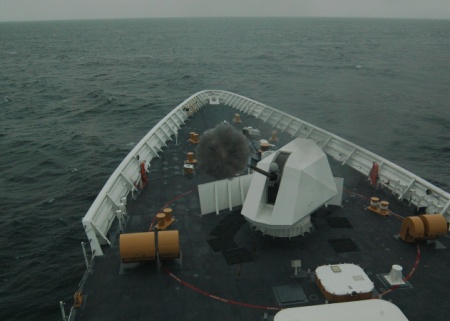
Weapon Systems: The OPC will have a 57mm, 25mm, and .50 cal guns. (It is not addressed in this document, but there have been indications that two of the .50 cal. are to be mounted in stabilized remotely controlled weapon stations. The 25mm will presumably be a Mk38 mod2 or 3) The OPCs will not incorporate either a CIWS or degaussing (p.32). (I do have reason to suspect that the OPC is fitted for upgrade to include CIWS.)

It will also have ADNS (Automated Digital Network System), Sensitive Compartmented Information Network (SCI-Networks), Consolidated Afloat Networks and Enterprise Service (CANES).

Notes on the Ship’s Signals Exploitation Equipment System and Unmanned Aircraft System, “OPC has the same space, weight and power requirements (as the NSC–Chuck) reserved but a system has not been selected.” (p. 24)

It appears the gun firecontrol system, may include only Electro-Optical control cued by the multimode radar, and that it will not include the AN/SPQ-9B which is used on the National Security Cutters (I think this may be a change).  There is a note on the Gun Fire Control System: “OPC will have a fire control radar capability (MMR-presumably multimode radar–Chuck) to provide tracking information and slew of the GWS camera, but slew and fire of the GWS cannon remains under manual control.” (p.24) Hopefully, an integration of the multimode radar with the weapon 57mm and perhaps the 25mm will permit blind firing of these systems, otherwise some visibility conditions may preclude effective fire control and certainly reaction times, particularly against air targets, will not be as good as they might have been.

National Fleet Plan

A friend of the blog, Leesea, recently pointed me to the recent update of the “National Fleet Plan,” which, despite its name, does not really talk about the entire US Fleet. It is really about the Coast Guard, and how it and the Navy will cooperate to “identify additional opportunities for increased commonality and interoperability.”

You can find it in the form of a pdf here.

I have reproduced the table of contents below. Mostly, it is what you would expect and/or hope would be included. There are potential areas of cooperation, current situation, where they hope to progress, and identification of responsible offices.

It really did not get interesting to me until it started talking about the Offshore Patrol Cutter (page 22-24 particularly).

There was one particular section that I thought might be of interest, the “Strategic Laydown” (page 54), which concerns sharing facilities, including ship homeports, with the Navy.

Plan of Action and Milestones
– Fiscal Year 2015: Process Organizational Change Request (OCR) for Coast Guard System Acquisition Integration Laboratory (CGSAIL) relocation to Navy Combat Systems Engineering Development Site (CSEDS).

– Fiscal Year 2015: Submit revised Strategic Laydown (SLD) request and OCR to homeport 3 X FRCs at Naval Base Guam to include Lessons Learned from maturing CG-7/OPNAV N51 MOA.

– Fiscal Year 2015: Process Organization Change Request to homeport 3 X Medium Endurance Cutters at Naval Station Pensacola.

– Continue to develop solutions to permanently station aviation assets at Naval Base Ventura County.

– Support feasibility studies to identify potential homeport locations for West Coast Offshore Patrol Cutters

I am planning on two follow-up posts, one about what they had to say about the OPC and one about the implications of homeporting Coast Guard ships at Navy Bases.

TABLE OF CONTENTS
Section Page No.

1.  Preamble …………………………………………………. 9
2.  Purpose ………………………………………………….. 9
3.  National Fleet Plan Overview ……………………………….. 9
4.  Plan Progression and Oversight……………………………………………………… 10
5.  National Fleet Plan…………………………………………..………………………… 10
5.1.  Current and Evolving Operations……………………………10
5.2.  Integrated Logistics………………………………………….……………..……….. 12
5.3.  Training……………………………………………………………..………………… 15
5.4.  Maritime Security Cooperation…………………….……………………..………… 21
5.5.  Command, Control, Communications (C3) Systems……………….….………… 22
5.6.  Sensors………………………………………………………………………………… 25
5.7.  Weapon Systems…………………………………………………….……….……… 26
5.8.  Engineering Systems……………………………………………………….………… 28
5.9.  Platforms………………………………………………………………….…………… 29
5.10. Intelligence and Information Integration …………………. 34
6.  Programmatic Collaboration…………………………………………………………… 36
7.  Integrated Plan of Action and Milestones…………………………………..…….….. 36
8.  Navy-Coast Guard Memoranda of Understanding/Memoranda of Agreement…… 44
9.  Legal Authorities ……………………………………………….………………… 48
Chartered Commonality Working Groups:  Mission/Plan of Action and Milestones
Appendix A.  Permanent Joint Working Group…………………………………………… 50
Appendix B.  Small Boat Commonality Integrated Process Team …….. 51
Appendix C.  Naval Logistics Integration………………………………………………..… 52
Appendix D.  SSBN Transit Protection Systems…………………………………………. 53
Appendix E.  Strategic Laydown Working Group………………………………………… 54
Appendix F.  Arctic Working Group ……………………………….55
Appendix G.  Maritime Security Cooperation Council ………………… 56
Glossary……………………………………………………………………………………… 57

Navy Chooses Longbow Hellfire

Lockheed Martin animation of Hellfire employment from an LCS

The US Naval Institute Proceedings is reporting that Navy has committed to selection of the Longbow Hellfire as an interim missile to arm the Littoral Combat Ships.

“For the LCS deployment, a single Longbow Hellfire launcher with a 24-missile capacity will be integrated with the LCS SSMM, which will be part of one of three weapon stations. Navy officials point out that Longbow Hellfire integration for the LCS SSMM will require only software modifications; no changes to the missile hardware or to the Army launcher or gas-containment system will be needed.

“In selecting the Longbow Hellfire, the Navy also will be able to draw from an available inventory of thousands of missiles already stockpiled for the Army, avoiding the need to spend money on new production.

“Navy officials emphasize that the Longbow Hellfire meets the requirement of the LCS Capabilities Description Document for a standoff-engagement capability for fast inshore attack craft.  An “increment 3” of the SSMM, while still going through modifications, now is expected to be ready to deploy aboard LCSs with the Longbow Hellfire in 2017.”

As we have discussed before, this weapon system seems like a good one for arming cutters against the possibility of an attack by highly maneuverable, high speed craft. In quantity the missiles might also be effective against larger targets.

It is likely the Coast Guard could add this capability at relatively low cost, if they made a case for it. As noted there are already large stocks of the missile. It seems likely that these weapons will be replaced on the LCSs before all the Offshore Patrol Cutters are complete. There are likely to be large numbers of Hellfire considered semi-obsolescent as they are replaced by the JAGM.