Perspective: Rejuvenating the Trinidad and Tobago Coast Guard, by Sanjay Badri-Maharaj

Once again Sanjay Badri-Maharaj provides a look inside the Trinidad and Tobago Coast Guard, (TTCG). This time, he relates its often frustrating history and its recent attempts to return to relevancy. The story should make USCG members feel very fortunate. Sanjay’s earlier post related to the TTCG’s most recent major procurement, “How the SPa was Chosen – The Trinidad and Tobago Coast Guard’s Spa 5009 fleet.”

British built OPV that was to have been the Trinidad and Tabago Ship (TTS) Port of Spain, seen here in TTS colors. Now the Brazilian Ship Amazonas.

At the Visakhapatnam International Fleet Review 2016, a ship graced the show with her presence – the Brazilian Navy Offshore Patrol Vessel (OPV) BN Amazonas (P120) commanded by Commander Alessander Felipe Imamura Carneiro. While this ship would have gone largely unnoticed by the naval fraternity so gathered, being as it is, of sound but unspectacular design and performance, the vessel has a peculiar significance for the Trinidad and Tobago Coast Guard (TTCG) as it was originally built for the said formation and was very nearly commissioned as the TTS Port of Spain. However, an abrupt and controversial cancellation of the order in September 2010, following a change in government in May 2010, brought an end to a planned expansion plan that would have allowed the TTCG to regain its place as the premiere naval unit of the Caribbean. The cancellation of the OPV contract combined with poor serviceability of surviving assets led to a scramble for assets between the years 2013 and 2015 which culminated in the procurement of a fleet of vessels that have restored a degree of capability and viability to the TTCG surface ship squadron.

Trinidad and Tobago’s Maritime Domain:

Source: Trinidad and Tobago Coast Guard

As an archipelagic island state, Trinidad and Tobago’s Maritime Domain and the TTCG’s ability to patrol and secure the same are of paramount importance for the security and the economic well-being of the country. The Maritime Domain can be divided into three parts:

Exclusive Economic Zone

Trinidad and Tobago claims an Exclusive Economic Zone (EEZ) of up to two hundred nautical miles (200 n.m.).

Territorial Sea

The territorial sea limits are up to 12 nautical miles from the archipelagic baseline.

Internal Waters

Internal waters, of up to 3 nautical miles from the archipelagic baseline are also part of the responsibility of the Coast Guard.

Activities within the Maritime Domain

Energy Exploration and Exploitation

  • The offshore oil and natural gas sectors are estimated to provide some 48% of the revenue of the Government of Trinidad and Tobago.

Commercial Shipping and Maritime Transport

  • 30 shipping companies – international and regional

Fisheries

  • 2,300 registered vessels including trawlers

Search and Rescue

  • Under the 1979 International Convention on Maritime Search and Rescue Trinidad and Tobago has an area of responsibility 68,500 sq nautical miles.
  • Trinidad and Tobago also has obligations under the ICAO for search and rescue.
  • Trinidad and Tobago also hosts the Regional Maritime Rescue Coordinating Centre

Trafficking in Narcotics, Arms and Ammunition

  1. The connection between drug trafficking and violent crime is obvious. Equally well known are the destabilizing economic and socio-political effects of the corruption and social degeneration that follows in its wake.
  2. Contrary to popular belief, The majority of drugs smuggled into Trinidad are transported, not by small fast boats, but by large, slow transport vessels. They are also transported by aircraft, submersibles, and fishing boats. Until 2016, the ability of the Trinidad and Tobago Coast Guard to intercept this multiplicity of smuggling avenues was severely limited, particularly along the South and East coasts. Furthermore, civilian marinas also provide a largely unpoliced entry route for illegal narcotics.
  3. Thus, acquiring the capability to stop the transshipment of narcotics (primarily from South America to North America and Europe) through local waters and reducing the associated arms and ammunition trade locally, is the key immediate goal of the TTCG.

Natural Resource Poaching

  1. Trinidad and Tobago claims an EEZ consistent with the United Nations Convention on the Law of the Sea. It must therefore carry out surveillance to the extremities of its EEZ (out to 200NM) to prevent unauthorized and illegal activity. Encroachments into the EEZ are always a possibility with Barbadian and Venezuelan illegal exploitation of local fisheries having occurred with regularity.

Human Trafficking and Illegal Immigration

  1. The main routes of ingress and egress in the human trafficking trade are by sea. Illegal immigration from the South American mainland by sea is increasing. An increase in illegal immigration and human trafficking has been observed within local waters.

Maritime Terrorism/ Piracy/ Natural Disasters

  1. Worldwide, the emergence of a widening range of non-state actors, including terror networks and criminal gangs has prompted a major shift in National Security Policy. These threats cannot be ignored and it can be expected that TTCG vessels may be deployed to support Counter Terrorism operations locally and regionally.
  2. Piracy has not happened to any noticeable extent, but there have been incidents within the Caribbean. Maritime crime, however, is not uncommon and needs to be addressed by deployment of Coast Guard assets. Maritime crime has been occurring in the cross border areas of local waters.

Development of the TTCG Surface Fleet

The Trinidad and Tobago Coast Guard began its operational history with two 103ft Vosper Ltd patrol boats – the TTS Trinity (CG-1) and the TTS Courland Bay (CG-2) – commissioned on 20th February 1965, each 31.4m long, displacing 123 tons. These were followed by TTS Chaguaramas (CG-3) and the TTS Buccoo Reef (CG-4), commissioned on 18th March 1972, each 31.5m long, displacing 125 tons. CG-1 and CG-2 were decommissioned in 1986 and CG-3 and CG-4 in 1992.
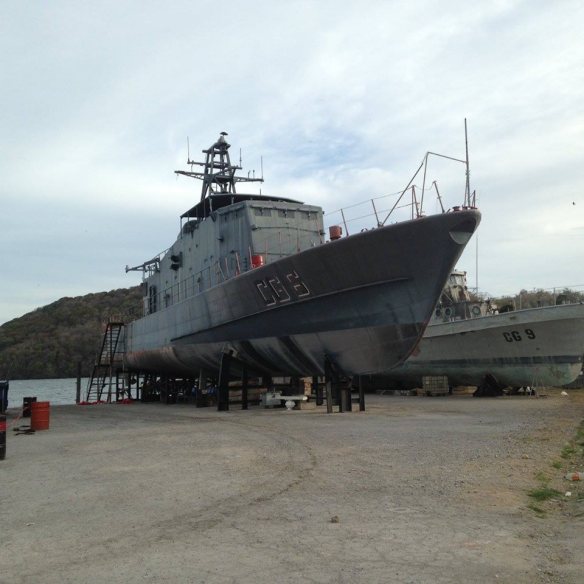
Photo by Sanjay Badri-Maharaj

These Vospers were followed on 15th June  1980 by two modified Spica class vessels – TTS Barracuda (CG-5) and TTS Cascadura (CG-6) – each 40.6m long and displacing 210 tons. After a failed attempt at local repair and refurbishment, these vessels were decommissioned after nearly 15 years of inactivity. CG-5 was scrapped while CG-6 remains at Chaguaramas Heliport completely derelict, bereft of sensors, engines, weapons and accommodation, yet the vessel remains ostensibly in commission.

On 27th August 1982, 4 Souter Wasp 17 metre class (TTS Plymouth CG27, TTS Caroni CG28, TTS Galeota CG29, TTS Moruga CG30) were commissioned. In addition, the Coast Guard was augmented in the mid-to-late 1980s with vessels from the disbanded Police Marine Branch – 1 Sword Class patrol craft (TTS Matelot CG 33) , and 2 Wasp 20 metre class (TTS Kairi CG31 & TTS Moriah CG 32). All of these vessels have now been decommissioned.

The years 1986 to 1995 saw the decommissioning of almost all the TTCG patrol assets and the de facto retirement of CG-5 and CG-6 for lack of serviceability and an inability of the TTCG to undertake routine maintenance due to severe funding shortfalls. This left the formation incapable of performing its assigned tasks on any sort of credible basis. This period, not surprisingly, saw a significant increase in narcotics and illegal weapons shipments being transhipped through Trinidadian waters.
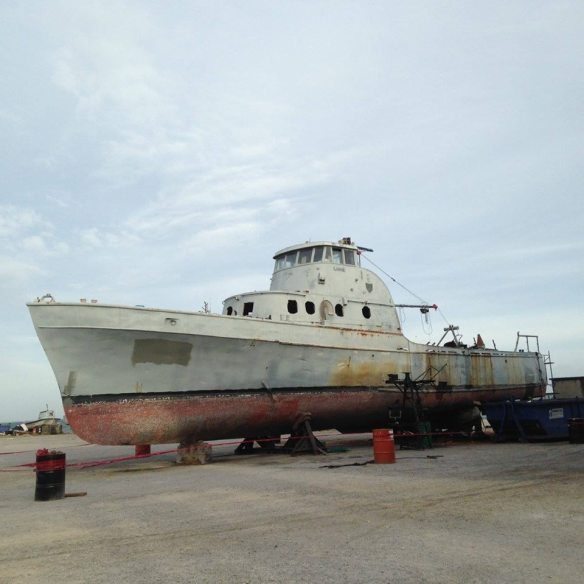
Photo by Sanjay Badri-Maharaj

After a number of years with almost no serviceable vessels, the period 1999-2001 saw the TTCG receive a boost with the acquisition of the ex-Royal Navy Island class OPV, HMS Orkney as the TTS Nelson (CG-20) and four 82ft Point-class cutters, each displacing some 66tons, from the United States (TTS Corozal Point CG7, TTS Crown Point CG8, TTS Galera Point CG9 and TTS Bacolet Point CG10). The Point class cutters were nominally on strength until 2009-10 when they were decommissioned, but in reality, they had been unseaworthy for some years prior. A half-hearted attempt was made to refit CG-7 but was abandoned. It is a depressing fact that these vessels were well over 20 years old when procured. The stark reality was that not a single new-build patrol vessel was acquired between 1980 and 2009.
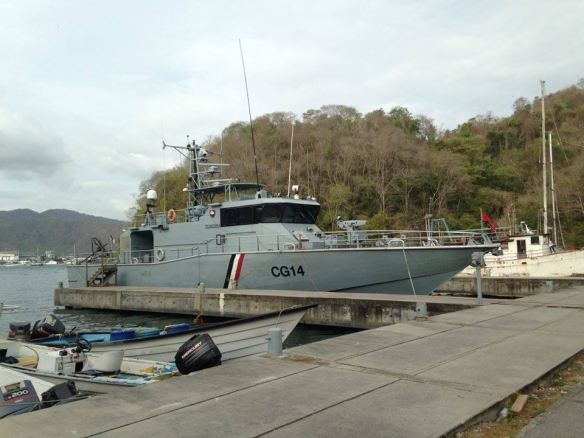
Photo by Sanjay Badri-Maharaj

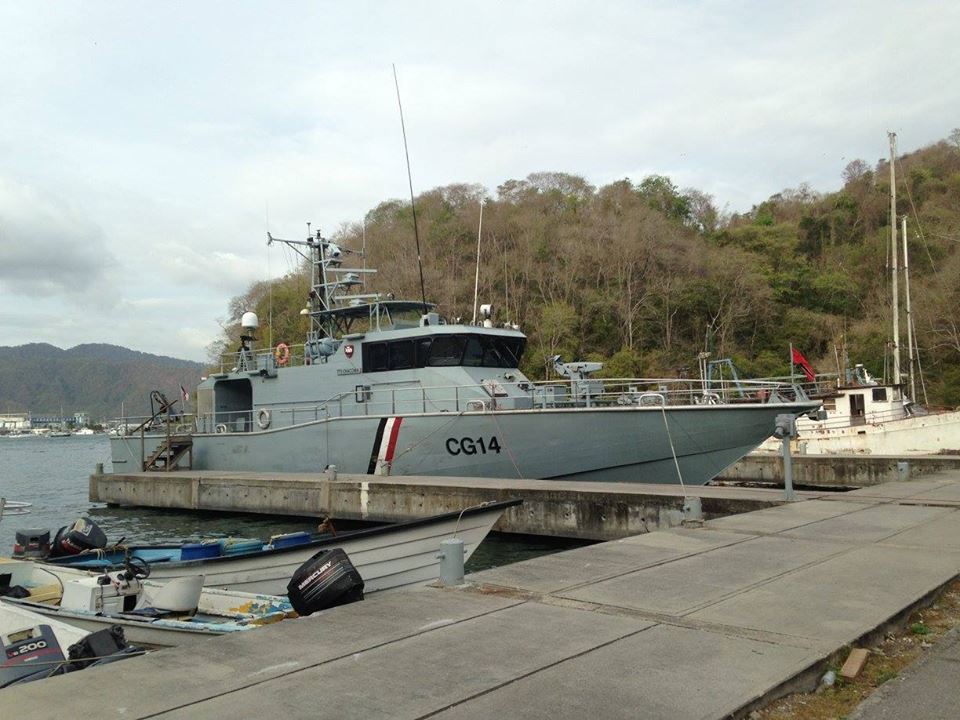
In 2003-2004, the then Government of Patrick Manning, began a phased expansion of the formation  which included the purchase of six new Austal PB30 Fast Patrol Craft (FPC) –CG11 TTS Scarlet Ibis, CG12 TTS Hibiscus, CG13 TTS Humming Bird, CG14 TTS Chaconia, CG 15 TTS Poui and CG16 TTS Teak – commissioned between 2009-2010 and two modified oilrig support vessels – each over 15 years old – armed and re-tasked as Coastal Patrol Vessels (CPVs) – CG-21 TTS Gaspar Grande and CG-22 TTS Chacachare – commissioned on 23rd April 2008. In addition, 4 Midnight Express Interceptors were delivered in 2005 and were extensively deployed in anti-narcotics operations.

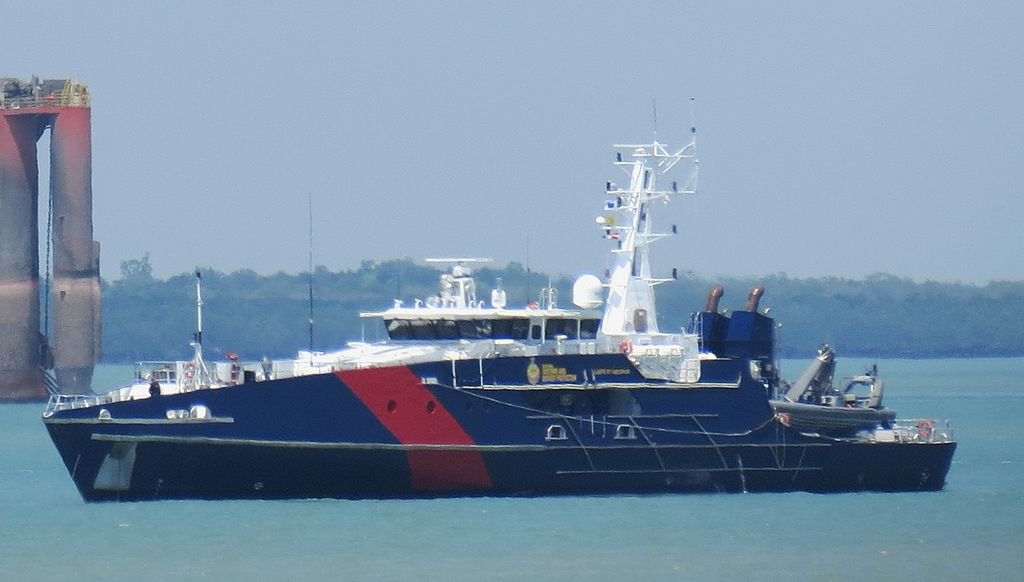
The “crown jewels” of this expansion plan were three 90m long OPVs – to be named the Port of Spain, Scarborough and San Fernando – ordered from VT Shipbuilding (later BAE Systems Surface Ships). Easily the most advanced vessels in the Caribbean (after the demise of the Cuban navy), the OPVs were adequately armed with 25mm and 30mm guns and possessed the ability to stage medium-lift helicopters from their flight decks. However, an overly-ambitious integrated fire-control system and some unrealistic expectations from the TTCG in respect of the performance of the 30mm guns led to significant delays and problems during trials. In September 2010, the Government of then Prime Minister Kamla Persad-Bissessar, cancelled the contract in decision that in retrospect may have been ill-advised.

Of interest is the fact that the procurement of new vessels did not lead to a commensurate increase in the TTCG operational budget relative to the larger fleet. In addition, archaic bureaucratic procedures together with shortcomings in the TTCG engineering and maintenance branches combined to cripple efforts to restore serviceability to repairable vessels with contractors going unpaid for work done and vessels being laid-up for extended periods of time. Procurement and payment procedures and policy have also played a significant part handicapping the ability of the TTCG to meet its commitments to suppliers and contractors, largely because of a bureaucratic system that moves slowly and which fails to accord due priority to essential items necessary for the operations of the TTCG. It is a continuing area of concern that there has been no attempt to streamline urgent procurement or even payment of suppliers with basic necessities such as fuel running dangerously low on occasions. The then government attempted to circumvent these problems by entering into comprehensive logistics and support arrangements with VT and Austal. However, the former was stillborn through the cancellation of the OPVs and the latter never worked as planned, in part because of inherent deficiencies in the TTCG maintenance structure and in part because of unreformed bureaucratic processes that ensured that the TTCG was unable to meet its contractual obligations in respect of the Austal support contract.

Thus between 2001 and 2010, the TTCG, while still not improving its serviceability or operational efficacy, did formulate plans, which were accepted which led to the signing of contracts for the purchase of OPVs and FPCs. However, a change in government let to budgetary priorities shifting to the detriment of the TTCG. Despite an impressive strength on paper, the TTCG was, by 2013, in dire straits, leading to an operational audit of the TTCG surface assets which revealed the extremely poor state of repair of the surface fleet:

Type Quantity Age

(years)

Assigned Area of Operation Status
OPV

TTS Nelson


1


37

Offshore – EEZ and beyond  

Unserviceable

CPV 

Chacachacare

Gaspar Grande


2


19

17

Offshore  & Territorial Sea Unserviceable
Austal Built FPCs  

6


4


Territorial Sea &

Inshore

Serviceability is variable.

2 serviceable, 4 unserviceable.

Interceptors 17 2-4 Inshore &  Internal Waters 4 serviceable, 13 unserviceable.

Source: Author’s primary research

Acquiring New Vessels for the TTCG

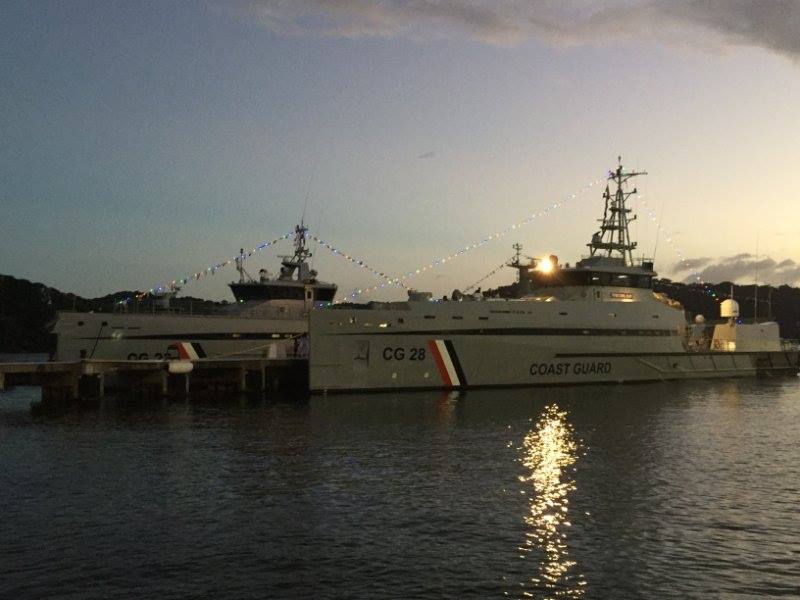
In January 2014, the Government appointed the Naval Assets Acquisition Implementation Team (NAAIT) and tasked them with procuring, inter alia, 7 new CPVs and 2 OPVs (now curiously termed Long-Range Patrol Vessels or LRPVs) within the very short period of two years. For budgetary reasons the figures were reduced to 4 CPVs and 1 LRPV. The new procurement attracted some international attention and shipyards invited the NAAIT to inspect the yards and the products available. Directed by the Government, the NAAIT visited the Hyundai Heavy Industries (HHI) shipyard in Ulsan, Republic of Korea, the China State Shipbuilding Company (CSSC) in Guangzhou, COTECMAR at Cartagena, Colombia and Damen Shipyards Ltd at Gorinchem, Holland. Damen, COTECMAR and HHI offered viable products meeting TTCG requirement but CSSCs products were viewed as not quite meeting TTCG specifications.

After deliberating and assessing the vessels and designs on offer, the NAAIT recommended that the 4 CPVs be acquired from Damen with two additional vessels of a similar design being acquired as “utility vessels” but so armed and equipped that they could augment the 4 dedicated CPVs in the patrol role. The vessels selected were the SPa 5009 CPV and the FCS 5009 utility vessel. The CPVs were fitted with a surveillance system which drew heavily on high-end civilian products. In addition they were fitted with a remotely controlled 20mm gun. The FCS 5009 was delivered in standard configuration but with accommodation increased for a larger crew, a manually operated 20mm gun (from TTCG stocks) and a slightly enhanced surveillance fit.

The bureaucratic procurement process, however, was slower than expected as the bureaucracy initially questioned the NAAIT’s authority, grudgingly acquiescing to the fact that it had Cabinet sanction. Furthermore, unforeseen lethargy among the bureaucrats tasked with enabling procurement, ignorance of systems and a failure to communicate in a timely fashion very nearly stymied the process. In addition, the NAAIT faced a deliberate attempt at sabotage when accusations were made by a highly-connected individual who was representing the interests of another shipyard. These accusations were found to be untrue but the procurement of the vessels was delayed. Eventually, the contract was signed enabling delivery of the vessels

The LRPV procurement was not so fortunate as the NAAIT recommendation for a formal Request for Proposals to be sent out to all the shipyards visited by the team was initially approved and then, to the surprise of the NAAIT, circumvented by the direct intervention of Prime Minister Persad-Bissessar who decided, against advice, to procure a ready-made, unarmed, LRPV from CSSC of China which compared badly with the cancelled OPVs.

Potential Lessons for Procurement

The NAAIT wound down at the end of February 2016 having completed much of its mandate. In the Trinidadian context, the NAAIT was a unique experiment. While its experience may not translate easily for other countries some lessons can be shared:

  1. Technical expertise must be an integral part of the procurement process and operate in conjunction with bureaucratic procedures. The bureaucracy must be willing to learn and understand requirements of military formations. They may not be technical experts but complete ignorance on the part of the bureaucrats involved will inevitably lead to frustrating delays. Bureaucratic lethargy is potentially lethal to any procurement process. It may be necessary to stipulate time frames for tasks and hold officials to account. This will inevitably meet with resistance from the affected parties.
  2. Bypassing the bureaucracy is not an effective option. A bureaucracy that does not feel part of the system can create additional delays by questioning the legality of the procurement being undertaken. Complete synergy of effort has to be sought.
  3. Political interference must be avoided where possible. The NAAIT experienced the effects of this where technical advice was overruled and a questionable purchase of the LRPV from CSSC China was initiated by the then Prime Minister.
  4. Above all, never let military formations decay to the extent where urgent procurement becomes necessary to restore even a veneer of capability. Rushed procurements have the potential to be as detrimental as delayed ones and run the risk of being questioned by successor governments.
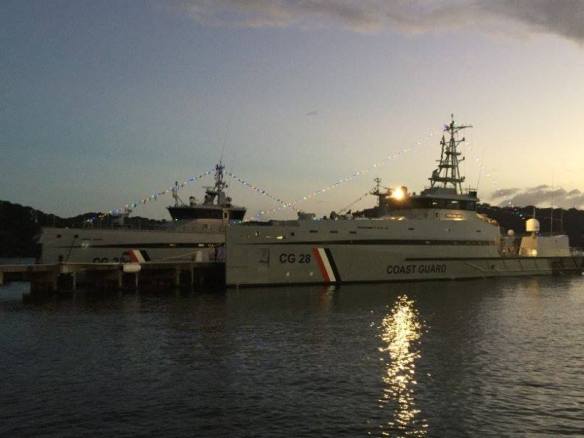
Photo from Damen Shipyards, Netherlands

Conclusion

One of the most intriguing points to note is that the TTCG followed a systematic and rational procurement process until 1980. After that, its recovery from decades of neglect has been slow, painful and littered with the false dawn of the ill-fated OPV contract. Nonetheless, the frantic efforts to rejuvenate the TTCG have finally produced results. It remains to be seen whether the new vessels will meet a better end.

How much would it cost to weaponize a cutter?

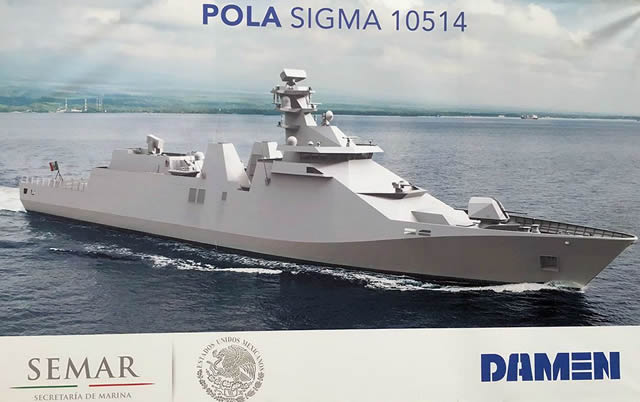
Photo: Sigma 10514 in Mexican Navy configuration, fitted with a BAE Systems Bofors 57Mk3 57mm main guna 12.7mm remote weapon system right behind it. The Mexican Navy opted for the Smart Mk2 radar by Thales. The Mexican “Long Range Patrol Vessel” will not be fitted with VLS cells but a Raytheon RAM launcher will be fitted on top of the helicopter hangar.

How much would it cost to turn one of our new construction cutters into a minimally capable frigate with at least some capability for anti-submarine, anti-surface, and self defense anti-air warfare?

I don’t have a definitive answer but we did get a good indication along with more information about Mexico’s new long range patrol vessel, a Damen 10514 design, that is close enough to our own Offshore Patrol Cutter requirements, that I thought it might have been an OPC contender.

Earlier we had an indication regarding the addition of VLS and  Evolved Sea Sparrow Missiles (ESSM) when Chile ordered $140.1M worth of equipment to arm three ships. Plus we had an earlier post based on a 2009 Congressional Budget Office study (apparently no longer available on line) that suggested costs to replace the Phalanx on NSCs with SeaRAM and to add 12 Mk56 VLS and associated equipment, which could have provided up to 24 ESSM ($68M/ship).

The Defense Security Cooperation Agency has issued a news release concerning the sale of weapons for the new Mexican patrol vessel, and the shopping list is a pretty extensive, including anti-surface, anti-air, and anti-submarine weapons.

Mexico –Harpoon Block II Missiles, RAM Missiles and MK 54 Torpedoes

Media/Public Contact: pm-cpa@state.gov
Transmittal No: 17-63

­­­WASHINGTON, Jan. 5, 2018 – The State Department has made a determination approving a possible Foreign Military Sale to Mexico of RGM-84L Harpoon Block II surface launched missiles, Block II Rolling Airframe Missile (RAM) tactical missiles and MK 54 Mod 0 lightweight torpedoes for an estimated cost of $98.4 million.  The Defense Security Cooperation Agency delivered the required certification notifying Congress of this possible sale today.

The Government of Mexico has requested to buy six (6) RGM-84L Harpoon Block II surface launched missiles, twenty-three (23) Block II Rolling Airframe Missile (RAM) tactical missiles and six (6) MK 54 Mod 0 lightweight torpedoes.  Also included are eight (8) MK 825 Mod 0 RAM Guided Missile Round Packs (GMRP) tri-pack shipping and storage containers; RAM Block 2 MK 44 Mod 4 Guided Missile Round Pack (GMRP); two (2) MK 32 Surface Vessel Torpedo Tubes (SVTT) triple tube launchers; two hundred and fifty (250) rounds of AA98 25 mm high explosive and semi-armor piercing ammunition; seven hundred and fifty (750) rounds A976 25mm target practice and tracer ammunition; four hundred and eighty (480) rounds of BA22 57mm high explosive programmable fuze ammunition; nine hundred and sixty (960) rounds of BA23 57mm practice ammunition; containers; spare and repair parts; support and test equipment; publications and technical documentation; personnel training and training equipment; U.S. Government and contractor representatives’ technical assistance; engineering and logistics support services; installation services; associated electronics and hardware to control the launch of torpedoes; and other related elements of logistics and program support.  The estimated cost is $98.4 million.

This proposed sale will support the foreign policy and national security of the United States by helping to improve the security of a strategic partner.  Mexico has been a strong partner in combating organized crime and drug trafficking organizations.  The sale of these ship-based systems to Mexico will significantly increase and strengthen its maritime capabilities.  Mexico intends to use these defense articles and services to modernize its armed forces and expand its existing naval and maritime support of national security requirements and in its efforts to combat criminal organizations.

Mexico intends to use the weapon systems on its Mexican Navy Sigma 10514 Class ship.  The systems will provide enhanced capabilities in effective defense of critical sea lanes.  The proposed sale of these systems and support will increase the Mexican Navy’s maritime partnership potential and align its capabilities with existing regional navies.  Mexico has not purchased these systems previously.  Mexico will have no difficulty absorbing this equipment into its armed forces.

The proposed sale of this equipment will not alter the basic military balance in the region.

The equipment will be provided from U.S. stocks.  There are no known offset agreements proposed in connection with this potential sale.

Implementation of this proposed sale will require annual trips to Mexico involving U.S. Government personnel and contractor representatives for technical reviews, support, and oversight for approximately two years.

There will be no adverse impact on U.S. defense readiness as a result of this proposed sale.

This notice of a potential sale is required by law and does not mean the sale has been concluded.

All questions regarding this proposed Foreign Military Sale should be directed to the State Department’s Bureau of Political Military Affairs, Office of Congressional and Public Affairs, pm-cpa@state.gov.

The big ticket items certainly made the head lines, but the ammunition for the 57mm is not cheap.

Fortunately for the Coast Guard, the Navy generally pays for our ammunition and weapon systems. The cost to the Coast Guard is installation and integration, plus primarily long term personnel and training costs.

New Photos of Chile’s Fassmer-80 OPV

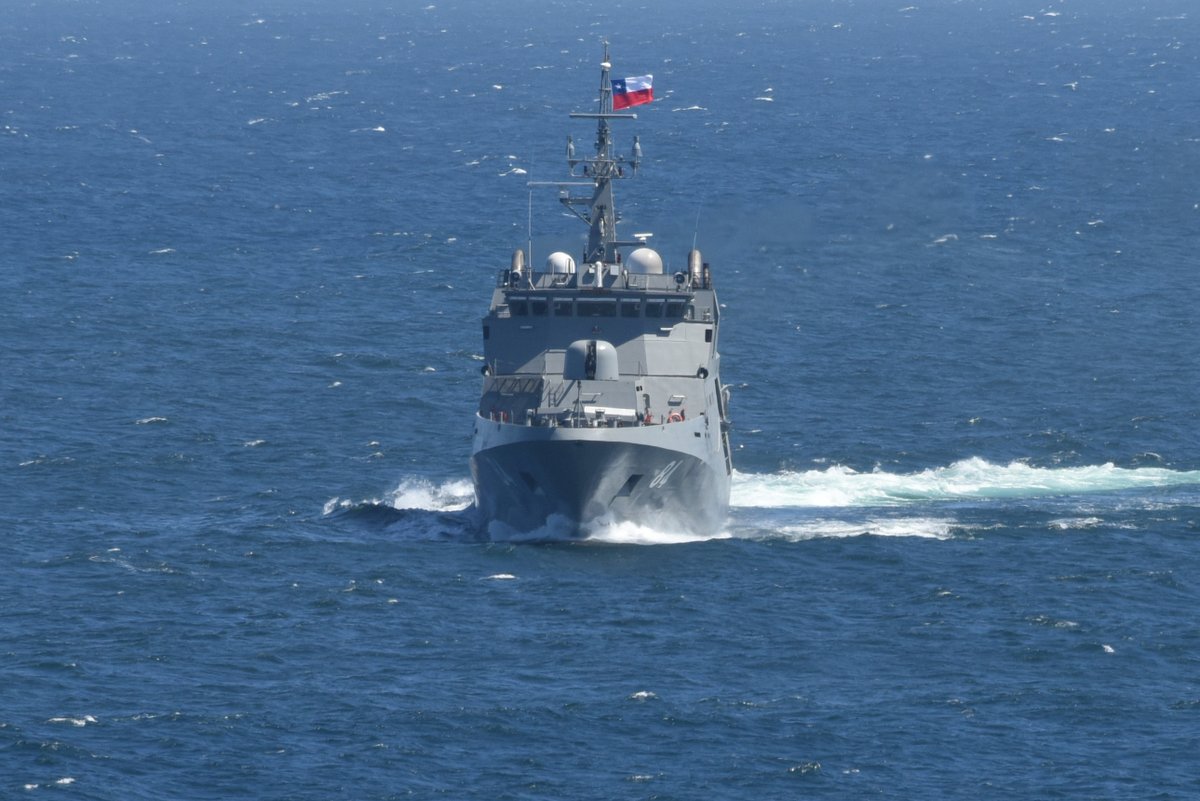
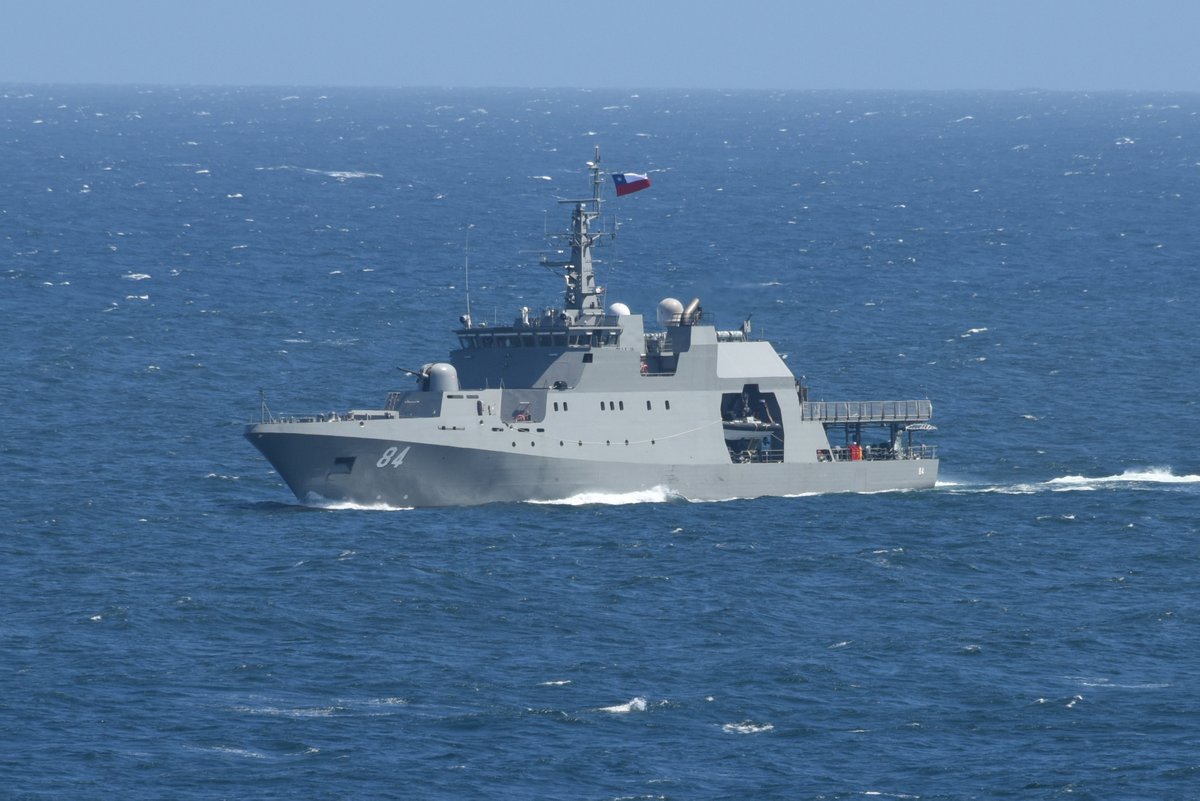
, Andres In April 2014 a guest author, Andres Tavolari, provided one of our most popular posts, about a multi-national program to build OPVs to a German design, the 264 foot Fassmer-80. Andres has provided pictures of the latest Chilean vessel of this class, OPV-84 “Cabo Odger” which is to be the forth of a projected six. It is slightly larger than the first ships of the class at 1771.6 tons. She is also ice strengthened and is equipped a recycled 76mm and different radar and communications systems.

This class is one of three contenders for Australia’s OPV program.

India Launches First Two of Five OPVs

The Indian Navy has announced the launching of the first two of a new class of five Offshore Patrol Vessels (OPVs). Three more of the class are expected by the end of the year.

Within the Indian Navy, these are unique in that they are being built by a private, rather than a government, shipyard.

Wikipedia reports that these vessels are 110 meters in length (Same as the Offshore Patrol Cutter) with a displacement of 2000 tons (this appears to be light displacement). They are armed with  an OTO Melara 76mm super rapid gun mount (SRGM) and two 30mm AK-630M six barrel Gatling guns. It is powered by twin diesels 18,200 kW (24,400 HP) for a maximum speed of 25 knots.

India has both a Coast Guard and a Navy, and both operated Offshore Patrol Vessels. The Coast Guard was established in 1978 and operates under the Ministry of Defense. Indian CG OPVs tend to be more lightly armed than their Navy counterparts.

The Indian Navy currently operates ten Offshore Patrol Vessels.

The Indian Coast Guard currently operates 16 Offshore Patrol Vessels and three larger “Pollution Control Vessels” which also function as OPVs.

The oldest of the Indian Coast Guard OPV was commissioned in 1983. The oldest Indian Navy OPV was commissioned in 1989.

Fish and the Brexit

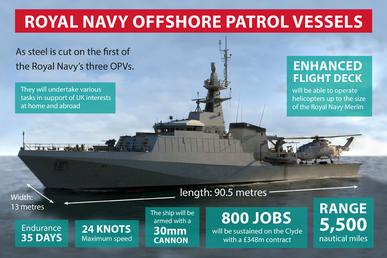
Royal Navy Offshore Patrol Vessels

Looks like fisheries has become a new sticking point in the BEXIT negotiation. A lot of bluster over EU fisheries chief’s interview on BBC. The Brits take it as an insult. He may have just been saying the fishermen are an unruly bunch and will go where the fish are. The reaction seems to indicate the Brits are taking this as a planned EU invasion of their waters.

There was a lot of criticism of the building of more River class Offshore Patrol Vessels (Infographic above) for the Royal Navy as a means of keeping the shipbuilding industry alive until the Mk26 frigates were ready to be built. It was said they were not needed and the Navy did not want them. Now they may now have a use for them. Contrary to what you see on the graphic (now out of date), they are building five of these, which will bring their total OPV fleet to nine vessels.

UAE’s New, and very well Armed OPV

UAE offshore patrol vessel Arialah

UAE offshore patrol vessel Arialah (note the concept above is incorrect in that the gun is a BAE 57mm rather than the 76mm illustrated).

DefenseNews reports first impressions of a new Offshore Patrol Vessel (OPV) built for UAE’s Critical Infrastructure and Coastal Protection Agency (CICPA) shown at the NAVDEX (naval) portion of the IDEX international Defense Exposition in Abu Dhabi.

The ships are 67 meters (220 feet) in length, 11 meters (36 feet) of beam, and 5.4 meters (18 feet) of draft, with a speed of 20+ knots provided by four MTU engines driving four propellers.

Most of the armament is typical OPV, a 57 mm gun and two 30mm auto-cannon in remote weapon stations. What really sets it apart, is the Mk49 Rolling Airframe Missile launcher.

On the other hand, the UAE is just across the Straits of Hormuz from Iran and their shore based anti-ship cruise missiles.

https://i0.wp.com/upload.wikimedia.org/wikipedia/commons/2/2c/RIM-116_Rolling_Airframe_Missile_Launcher_3.jpg

Photo: Mk49 guided missile launch system for Rolling Airframe Missile

An earlier post provides a bit more detail on the program but it appears to have a couple of errors regarding the weapon systems (indicates a 76mm as seen in the first illustration vice 57mm and says the Mk49 launcher has 11 cells rather than the actual 21). There are to be two of this class, both to be delivered this year.

“The ships themselves will be delivered from Damen’s Galati shipyard in Romania in 2017; they will then go to ADSB’s facility in Abu Dhabi’s Mussafah industrial area for combat systems installation and integration prior to delivery to the CICPA.”

This looks like a straight forward adaptation of one of Damen’s designs for Offshore Industry Support Vessels with boats, helo deck, ESM/ECM, weapons and sensors added.

According to this older source, the Coast Guard was involved in the development of the SEA AXE Bow.

“Damen … has developed the sea axe bow design in partnership with the University of Delft, Royal Netherlands Navy, US Coast Guard and the Maritime Research Institute Netherlands.”

How Does the Program of Record Compare to Historic Fleets

 The U.S. Coast Guard cutter USCGC Morgenthau (WHEC-722) heads out to sea from its home port in Alameda, California (USA), passing under the Golden Gate Bridge.


The U.S. Coast Guard cutter USCGC Morgenthau (WHEC-722) heads out to sea from its home port in Alameda, California (USA), passing under the Golden Gate Bridge.

A question from a reader prompted me to look at how the “Program of Record” (POR) compares with Coast Guard patrol fleets of the past.

The program of record is
8 NSCs
25 OPCs
58 FRCs
—————

91 vessels total

1990: Looking back at the “Combat Fleets of the World 1990/1991” the Fleet was:
12 WHEC 378′
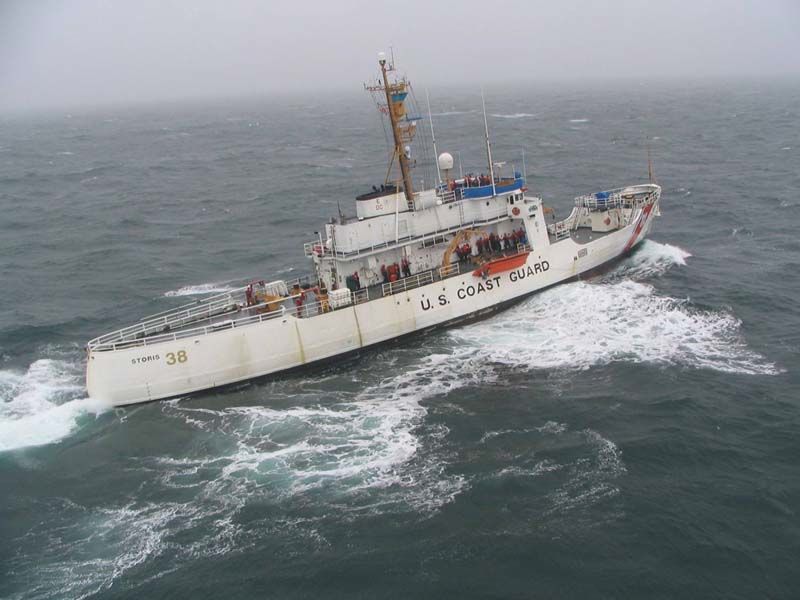
32 WMECs (16×210′, 10×270′ (three building), Storis, 3×213′, 3×205′)
34 WPB 110′ (plus 15 building)
3 WSES 110′ surface effects ships
4 WPB 95′
——————-
85 vessels total
(There were also five Aerostat Radar Balloon tenders.)
 –
2000: “The Combat Fleets of the World 2000-2001” showed
 –
12 WHEC 378′
32 WMEC (13×270′, 16×210′, Alex Haley, Storis, Acushnet)
49 WPB 110′
——————-
93 vessels total.
 –
2013: “The Combat Fleets of the World, 16th Edition,” copyright 2013 listed:
 –
3 NSCs
8 WHEC 378′
28 WMEC (13×270′, 14×210′, Alex Haley)
4 FRCs
41 WPB 110′
——————–
84 vessels total
 –
Comparing the Program of Record (plus NSC #9) to the fleet of 2000: You can look at it this way,
  • 9 NSCs and 3 OPCs is more than adequate replacement for the 12 WHEC 378s
  • 49 of the FRCs is more than adequate replacement for 49 WPB 110s (and we have only had 41 anyway since the WPB 123 screw up)
  • That leaves 22 OPCs and 9 FRCs to cover for the 32 WMECs.
Conclusion: 
I think we would all be pretty happy, if we had the Program of Record fleet in place right now. It really would be a substantial improvement, but while the NSCs and the FRCs are well on the way, the first of the long-delayed OPCs will not be delivered until 2021, and, if everything goes according to plan, the last probably not before 2034, at which time even the newest 270 will be 44 years old. A lot can happen between now and then.
The 2000 fleet was, I believe, the benchmark against which the program of record was measured in the Fleet Mix Study. By 2013 we were already down nine vessels. By my estimate, by the time the last 210 is replaced it will probably be 60 years old. That is expecting a lot. Can we possibly expect that none of these ships will become unserviceable before they are replaced? Building no more than two OPCs a year is really too slow. Once the first ship is built, tested, and approved for full rate production, we should accelerate construction to the maximum. That can’t happen until at least FY2022, probably FY 2023.
By the end of FY2022 we should have already funded 7 ships. The remaining 18 would take nine years, if we buy them at the currently projected schedule. Instead we could fund the entire remaining program from FY2023-2027 by doing a single Multi-Year Procurement of 18 ships. If Eastern alone could not do it, Marinette, which like the designer VARD, is also a Fincantieri company, would probably be more than willing to build an additional couple a year, particularly if the Navy stops building Freedom class LCS/frigates.
 –
We could have the program complete by FY2030, four years early.
 –
Thanks to Peter for initiating this line of thought. 
uscgc_citrus_1984

USCGC Citrus (WMEC-300), USCG photo

storisfoam

USCGC Storis WMEC-38)

USCGC Acushnet

USCGC Acushnet (WMEC-167), USCG photo


China Acknowledges Building Cutter to be Upgraded to Frigate in Crisis

type818ccgc

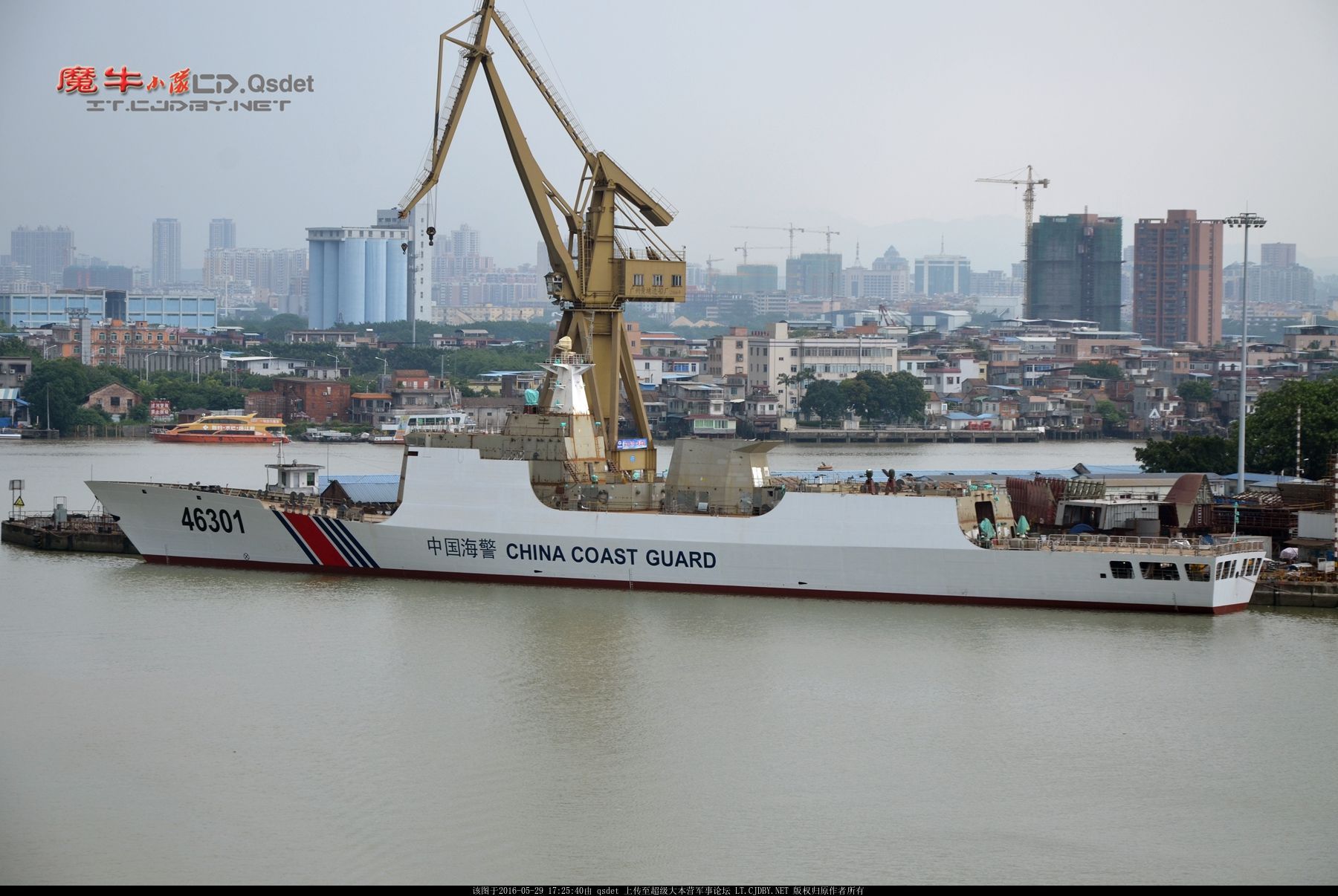
The National Interest reports that the Chinese have openly acknowledged that their newest Coast Guard cutter is being built with provision for upgrading to frigate status should a need arise.

Moreover they were apparently influenced by the example of the USCG during WWII.

In the same issue of this magazine, published by the major Chinese shipbuilding conglomerate China State Shipbuilding Corporation (CSSC), builder of the Type 818, there is not coincidentally a very detailed article about U.S. Coast Guard cutters in combat during the Second World War. That article explains that both USCGC Campbell and also USCGC Spencer were able to sink German U-boats (U-606 and U-175 respectively) during the pivotal Battle of the Atlantic. Most of the article examines the operations of 10 American USCG cutters that were 76.2 meters in length and built between 1928 and 1932. These ships were transferred to the hard pressed Royal Navy (RN) during 1941-42 and achieved an enviable war record in RN service, sinking both U-522 and U-954 – the latter with Germany Navy Commander Karl Donitz’s son aboard. The analysis notes that, according to UK naval records, the American cutters were viewed so favorably as to be rated as “surpassing each kind of comparable British designed frigate.” These ships are labeled as an “ideal anti-submarine escort ship” [理想的反潜护航舰] and the implications for the CCG going forward are obvious.

They actually sold the cutters a bit short. The 327s actually sank at least three and probably four U-boats and the ten 76.2 meter cutters, the 250 foot Lake Class, sank three submarines (two U-boats and an Italian). Six subs sunk by 17 ships may not sound particularly impressive, but in fact by comparison, it was spectacular.

The new Type 818 cutters are based on the Type 054 frigates. Its not too much of a stretch to expect them to be upgunned with the same weapons found on the “parent craft,” but if the time ever comes, there may be better systems available for upgrading the cutters or they might be given different capabilities to support emerging missions. That can be an advantage of having ships with unused upgadability.

The Type 054 are only slightly smaller than the Bertholf class, displacement 4,053 tons full load, length 134.1 m (440 ft), beam 16 m (52 ft), 30,400 HP, 27 knots, compared to the Bertholf’s 4,500 tons, 127.4 m (418 ft), 16.46 m (54 ft), 49,875 HP, and 28 knots. They actually appear to be the same size as the Offshore Patrol Cutters, but their design leans more toward higher speed. Their range is not as great as the OPC at about 8,000 miles compared to the OPCs’ 10,200, but it is a greater range than USN frigates enjoyed.

The Chinese have learned a lesson from USCG experience in World War II. I wonder if it is a lesson we may have forgotten.

Thanks to Luke for bringing this to my attention. 

Mexican Navy OPVs

MexNavyOPV

NavalToday reports the Launch of the sixth and last Offshore Patrol Vessel of the Oaxaca Class, the ARM (Armada Republica Mexicana) Hidalgo, for the Mexican Navy. These ships were designed and built by and for the Mexican Navy, but they would look quite at home painted white with USCG stripes and WMEC hulll numbers. Statistically they are very close to Coast Guard 270s.

Mexican-Navy-launches-final-Oaxaca-class-patrol-vessel-Hidalgo-1-768x491

  • ___________________Oaxaca Class_______________WMEC 270
  • Displacement (full load)  1,680 tons_________________1829 tons
  • Length                    282.2 feet (86.0 m)_______________270 feet (82 m)
  • Beam:                      34.4 feet (10.5 m)_______________38 feet (12 m)
  • Draft                         11.8 feet (3.6 m)________________14.5 feet (4.4 m)
  • Speed:                      20+ knots_____________________19.5 knots

The occasion prompted me to take a look at the Mexican Navy. While the Mexican Navy does have six former USN frigates, most of their missions are closer to what we do in the USCG, and most of their ships are offshore patrol vessels. They have 21 ships (soon to be 22 with Hidalgo) in five classes that look an awful lot like WMECs. These ships have evolved over time, with each class an incremental improvement over the previous ships. Only the oldest of these, the Uribe class ships were built in Spain by Navantia, the remaining 17 were built in Mexican Navy shipyards in Tampico and Salina Cruz with the first of the Mexican built ships being commissioned in 1991.

Photo: Uribe class OPV ARM Jose  Aueta (P-122)

The Uribe class were very similar in size and concept to the 210s, with a similar configuration of the foc’sle and flight deck on the O-1 deck. They did include a hangar, were 10 feet longer (67 m overall), and had more than twice the horsepower at 13,320 allowing a maximum speed of 21 knots. Its main gun was a single 40mm/7

The Holzinger or Aquila class were the first class built in Mexico. They stretched the design 24 feet to 244 feet (74.4 m), provided two main machinery spaces vice one, and retaining the same horsepower, achieved 22 knots. Originally they were to have had a 57mm, but because of stability consideration a twin 40mm/60 was used instead.

Holzinger-class patrol vessel

Sierra Class OPVs of the Mexican Navy


The Sierra, Mendz, or Holzinger 2000 class retained essentially the same dimensions as the preceding class, but introduced a number changes. The hull aft was extended upward to create a flush main deck at what had been the O-1 deck. A stern ramp was incorporated in the transom for launching a “chase boat.” The superstructure was given a more “stealthy” form with the RHIBs placed in enclosed pockets.  A Vosper fin stabilization system was also provided, and a 57 mm main gun was included. A max speed of 18 knots is claimed, but it is likely to be more than 22.

ARM_Durango

ARM Durango, Mexican Navy, 8 October 2008, photo by Apodemia.

The four ships of the Durango class were originally intended as units of the preceding Sierra class but the design was modified and is now considered a separate class although statistically they appear little different.

The Oaxaca are a bit larger. They seem to have decided that the “stealthy” superstructure is not worth doing. The 57 mm gun of the preceding class has been replaced by a 76 mm gun, but it is not the newest type so this may have been a case of the guns being available on favorable terms rather than a reflection of dissatisfaction with the 57 mm. There is also a auto-cannon aft (variously reported as 25 or 30 mm) and two remote weapon stations with .50 cal. Like US WMECs the range is substantial at 8,500 nautical miles. They have a crew of 77 and accommodations for 39 special forces and/or marines.

Given that the USCG is now responsible for maintenance of all US 76 mm guns and also operates the 57mm, the Mexican Navy’s choice of weapons suggests this may be an area of potential cooperation.

Auk class minesweeper

Auk class minesweeper now used as an Offshore Patrol Vessel by the Mexican Navy

Unfortunately not all of Mexico’s OPVs are relatively modern. They still have ten Auk  class 1,250 ton (fl), 221 foot, WWII vintage, steel hulled minesweepers that continue to function as patrol vessels. The ships are referred to as the Valle class in Mexican service. They are the same class as USCGC Tanager (WTR-885) that served as a CG Reserve training ship 1964 to 1972. They will certainly need to be replaced soon. Obviously their building program is not complete.

I find it interesting that Mexico with an EEZ of 3,144,295 km2,, with less than a third of the EEZ of the US (11,351,000 km2) has a fleet of OPVs that approaches that of the USCG.

“Latin American Navies Combat Illegal Fishing”–CIMSEC

CIMSEC has a short background article on the scope of, and reaction to, illegal fishing in Latin America.

You might recognize the ship pictured at the head of the CIMSEC post. It is one of a class we talked about earlier.

The post also talks about the sinking of a Chinese Fishing Vessel by an Argentine patrol vessel, an incident we also discussed here.

The two Peruvian patrol vessels seen launched in the post and in the YouTube video above, BAP Rio Cañete (PM-205) and BAP Rio Pativilca (PM-204), are according to a Google translation of this post,  55.3 meters (181 feet) long, 8.5 meters (28 feet) of beam, and a draft of 2.3 meters (7’7″). They have two diesels totaling 6690 HP for a 22 knot max speed, a range of 3600 miles at 14 knots. The crew is 25 with additional space for up to 14 additional boarding party members to man the two RHIBs carried in davits. They are expected to be armed with a Typhoon weapon system, similar to the Mk38 mod2 but with a 30mm gun plus two .50 cal. Their design is based on the South Korean Taegeuk class cutters.