“AUSTAL USA EXPANDS MANUFACTURING CAPACITY WITH DESIGN FOR NEW FACILITY AND SHIPLIFT” –News Release

Austal’s planned new assembly building and ship lift. Ships featured in the illustration, Constellation class FFG, 496 ft (151.18 m) loa, and an Offshore Patrol Cutter, 360 ft (110 m), provide scale.

Below is a Austal USA news release.

June 2022 Austal was awarded a contract with options for up to eleven Offshore Patrol Cutters (OPCs #5 to #15). OPC #5 was in the FY2023 budget. It appears OPC #6 will be in the FY2024 budget. I expect we may see OPC #5 delivered in 2027, #6 in 2028, #7 in 2029 and both #8 and #9 in FY2030.

Eastern launched the future USCGC Argus, OPC #1, in Oct. 2023. Even so, it is not expected to be commissioned until 2025. Eastern has said they will deliver OPC#4 in 2026. I have a hard time being that optimistic. It might be more reasonable to expect delivery of one per year, #2 in 2025, #3 in 2026, and #4 in 2027.

If Eastern turns out a good product at a competitive price, a renegotiation of their contract options for five more cutters included in the original contract could accelerate procurement of these long-delayed ships, and reduce the resource shortfall that now seems inevitable.


FEBRUARY 6, 2024

MOBILE, Ala. – Austal USA announced the start of design for a new manufacturing facility signifying a major expansion of the company’s Mobile, Ala. shipyard capability.  The infrastructure expansion, which will be to the south of Austal USA’s current waterfront facility, will include a new assembly building, waterfront improvements, and a new shiplift system.  Start of construction on the project is planned for summer 2024.

The construction of this new building and waterfront support area, which includes a Pearlson-designed shiplift, continues the expansion Austal USA began in March 2021 with the groundbreaking of the steel panel line. In addition to the manufacturing capacity of the new buildings, the shiplift will provide a safe and reliable system to launch ships as they are completed in the assembly buildings. The system will also enable retrieving ships and bringing them back on the land-side facility.

“With the steel panel line in full production our expansion focus has shifted to the erection and launch facilities required to support our growing backlog,” commented Austal USA acting President Michelle Kruger.  “This new facility is continuing evidence of the close relationship we have with our local community including our community leaders; local, state and federal political leaders; and, regional organizations such as the Mobile Area Chamber of Commerce.”

Austal USA has partnered with Pearlson & Pearlson Inc, program manager and owner’s representative; Kiewit Infrastructure South Co., lead for design and construction; and, Pearlson Shiplift Corporation, designer and builder of the shiplift system, to execute the project.  The new assembly building will consist of three bays and enable erection of recently awarded steel ship contracts as well as provide the flexibility to manufacture modules for submarine and other surface ship programs.  The assembly building will be approximately 400 feet long by 480 feet wide providing over 192,000 square feet of covered manufacturing space occupying four and a half acres.

The Pearlson-designed shiplift system will feature an articulated lifting platform approximately 450 feet long by 125 feet wide, capable of lifting and launching vessels in excess of 18,000 long tons. This capacity will facilitate the launch and docking of the U.S. Navy Constellation-class Frigates, TAGOS-25 class Ocean Surveillance Ships, Independence-variant Littoral Combat Ships, and the U.S. Coast Guard Heritage-class Offshore Patrol Cutters.

When complete Austal USA’ s Mobile, Ala. facility will include a 117,000 square foot steel panel line, two module manufacturing facilities totaling over one million square feet of covered manufacturing space optimized for serial production, and seven assembly bays providing over 400,000 square feet of indoor erection space.  In all, the Mobile facility covers 180 acres and, when this project is complete, over 1.5 million square feet of indoor manufacturing space.

“Indian Navy Repels 3 Somali Pirate Hijackings” –USNI

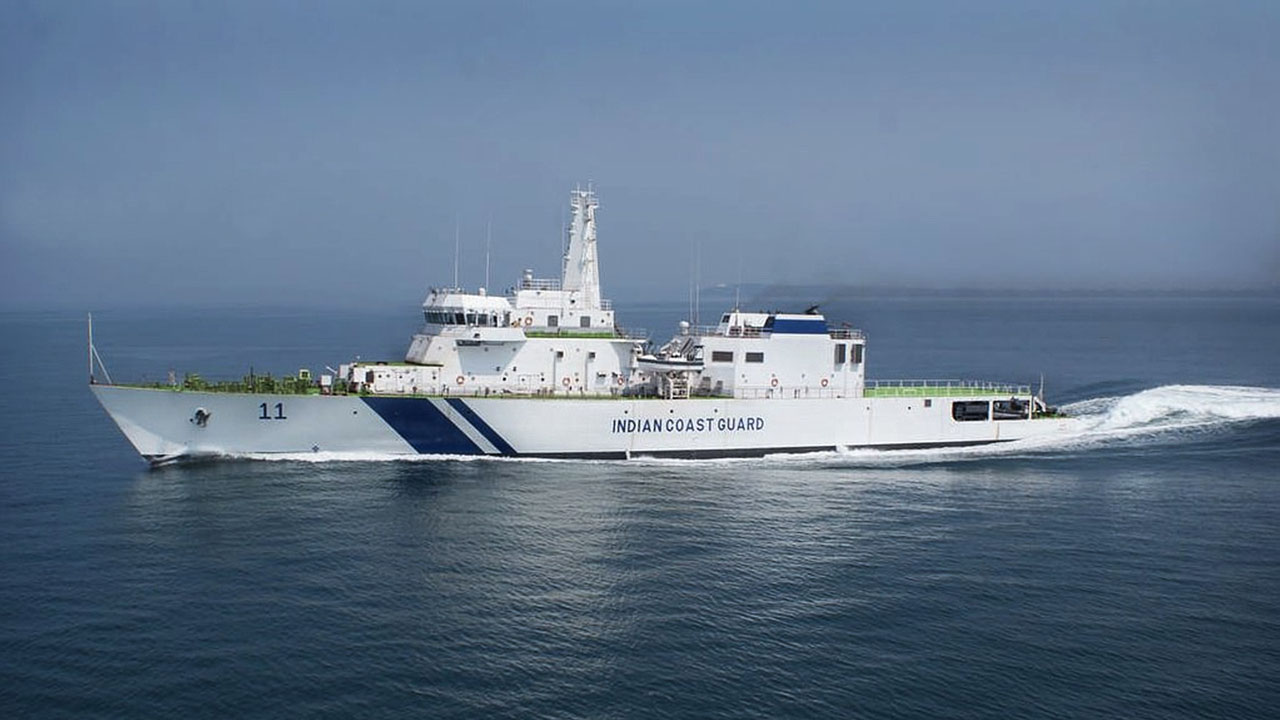
INS Sumitra during her trials, 27 August 2014, Indian Navy photo.

The US Naval Institute News Service reports.

The Indian Navy thwarted three hijackings by Somalian pirates in a two-day period from Sunday to Monday, with one warship rescuing separately two hijacked ships off the east coast of Somalia, while a second ship participated in a multinational operation with Sri Lanka and the Seychelles to rescue a hijacked ship, according to releases by the service.

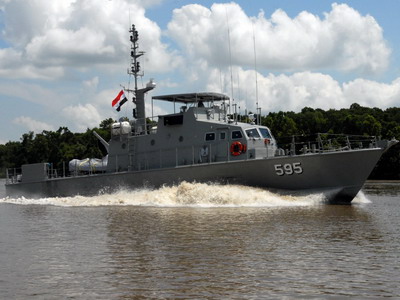
So, what was this hero warship? — An Indian Navy counterpart of a USCG medium endurance cutter, like a WMEC 270 but a little larger, faster. and a lot newer.

INS Sumitra (P-60) is one of six Saryu class offshore patrol vessel, four for the Indian Navy and two for the Sri Lanka Navy.

(It is not the Indian Navy OPV pictured in the X report included in the USNI report. That is INS Sharda (P-55) commissioned in 1991, which participated in the third rescue. Also much like a WMEC270, only slightly larger, faster, and newer.)

Ships of the Saryu class displace 2,230 tons full load, are 344′ (105 m) in length, with a beam of 42′ (12.9 m), a draft of 16′ (4.9 m). They have two engines producing 21,428 HP (15,979 kW) (1,908 HP more than the OPC) for a speed of 25 knots. They have an endurance of 6,000 nmi at 16 knots, with a crew of 118. They are armed with a 76mm gun and two 30mm guns.

We seem to be seeing a reemergence of Somali pirates. When Somali piracy was at its height, the US Navy was using Burke class destroyers, about four times larger, to do the same sort of thing INS Sumitra did. Even the National Security Cutters and OPCs are twice as large.

I suspect that the new Fleet Mix Study, which has not been made public (why?) would show that the Coast Guard needs more patrol cutters with aviation facilities and more endurance than the FRCs. Currently, we have 38 large patrol cutters, 1000 tons and larger. The program of record will leave the Coast Guard with 36, all 4,500 tons or larger.

This is, I believe, the smallest number of large patrol cutters the Coast Guard has had since at least 1948. Yes, we might build more than 25 OPCs, but we might do well to trade off some of the out year OPC construction for more numerous smaller vessels about the size of INS Sumitra. It would be especially useful if we could start getting them ASAP, at least before 2038 when the last OPC is due. We might be able to build one OPC and two MECs annually for about the same cost as two OPCs. Of course, total operating costs would probably be higher.

“US approves possible sale of Swiftships patrol boats to Egypt” –Defense Web

Defense Web reports,

“A DSCA statement on 10 January reported the proposed sale of an undisclosed number of 28 metre patrol craft kits and related equipment was approved, at an estimated cost of $129 million.”

This would be the latest in an ongoing program of coproduction of Swiftship patrol boats assembled in Egypt.

I would question the claim that 49 vessels would make this “The World’s Most Serial Produced Vessel” since there are already 54 Webber class FRCs and there were 73 Coast Guard 87 footers.

Presumably these are going to the Egyptian Coast Guard which is a branch of the Egyptian Army.

A previous contract for 6 of these cost $22.1M or about $4M each. That would suggest that this $129M contract would buy 32 boats. The contract may include some additional equipment to backfit boats already completed or under contract, but still, this should at least bring their entire fleet up to about the 50 boats which is their reported requirement.

“Egypt and Swiftships have started co-market the 28-meter CPC to North African allied partners to the US.”

So, it is possible some of these vessels may go to other North African nations.

Technical specifications are here.

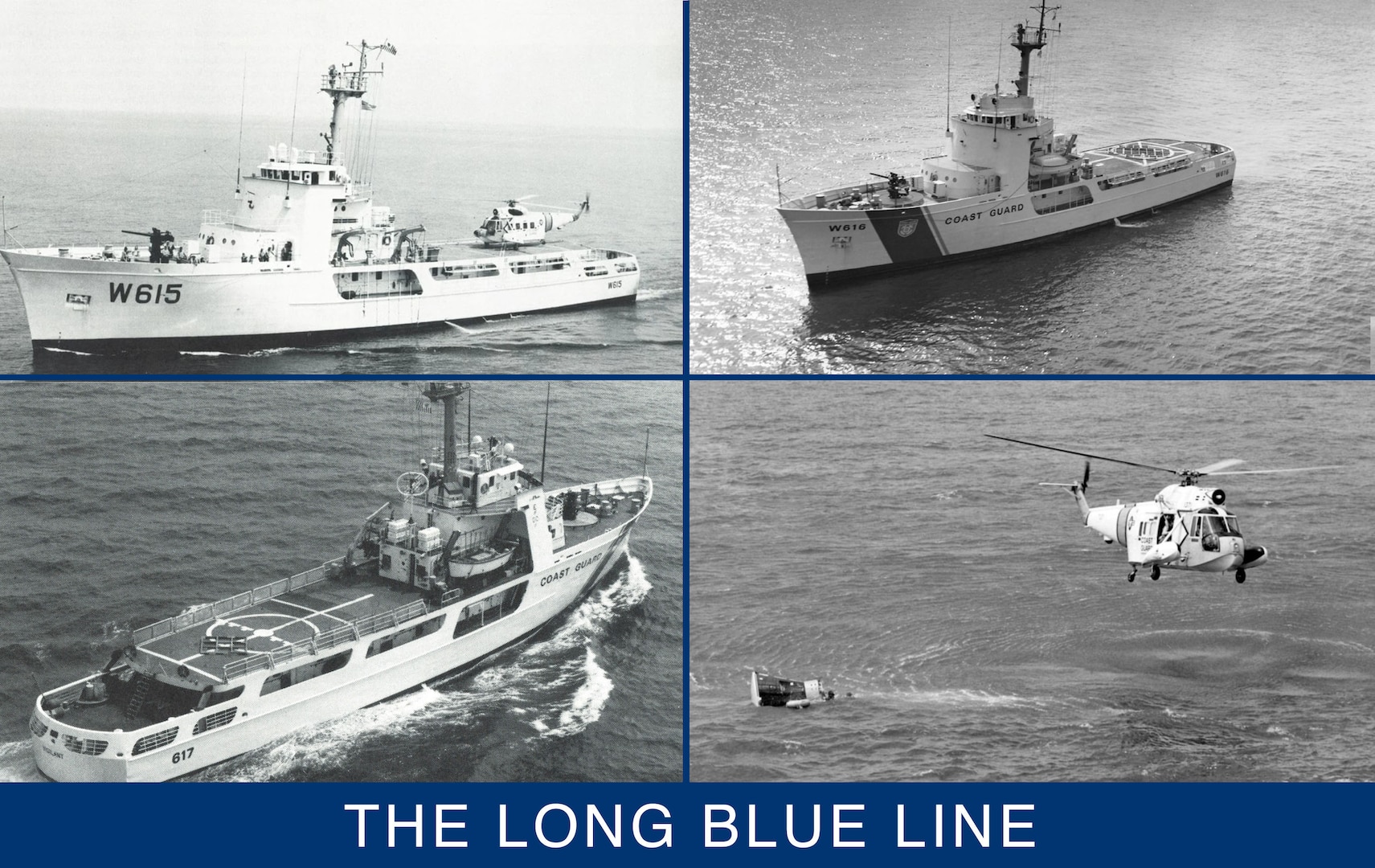
WMEC 210s in Retrospect

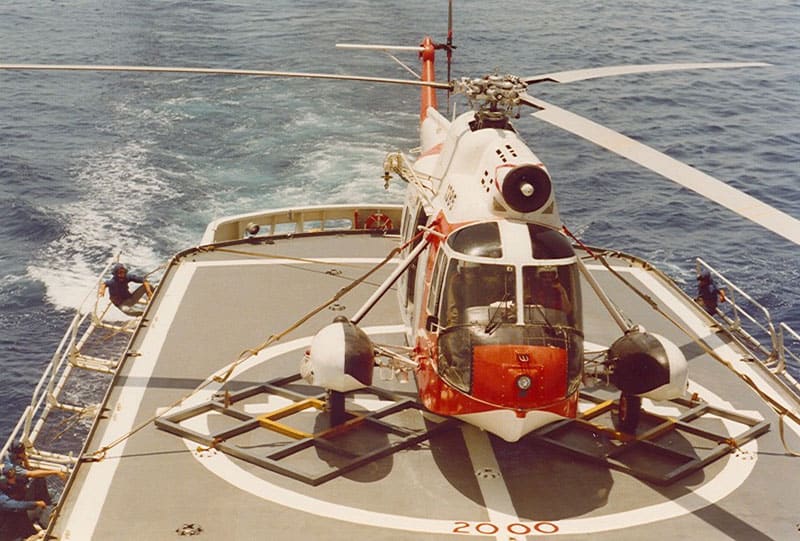
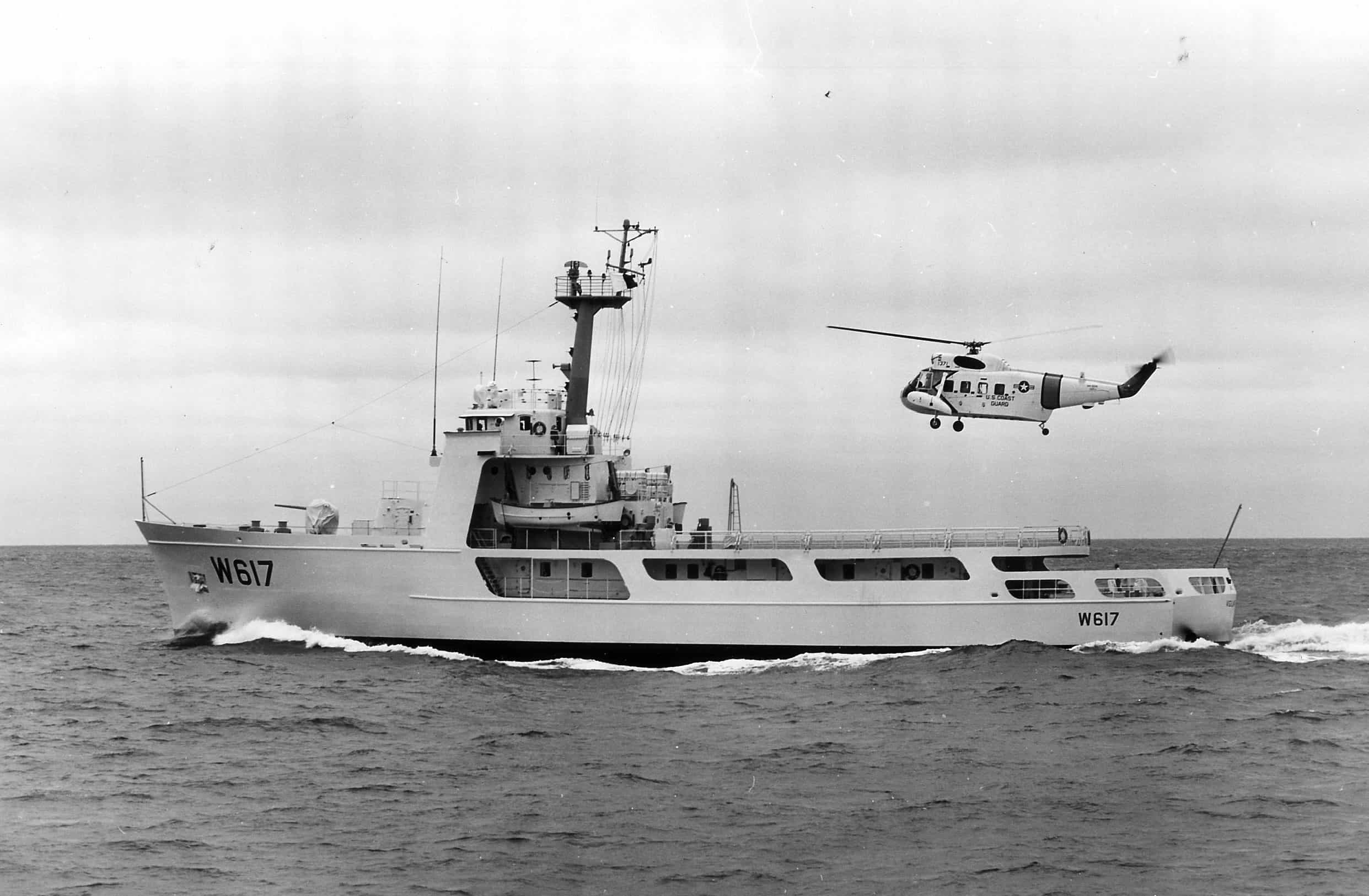
Coast Guard cutter Reliance conducting helicopter operations circa 1964. (U.S. Coast Guard photo).

Coast Guard cutter Diligence shown with the prototype “racing stripe” painted on the bow in December 1966. (Coast Guard Historian’s Archive).

The extensive accommodation for helicopter operations is shown by this photo of third-in-class 210 cutter Vigilant. (U.S. Coast Guard photo)

A Coast Guard HH-52A launched from Diligence hovers over the Gemini III space capsule in 1965. (U.S. Navy National Museum of Naval Aviation photo)

“Fast Response Cutter Laydown, Report to Congress, November 15, 2023” –USCG

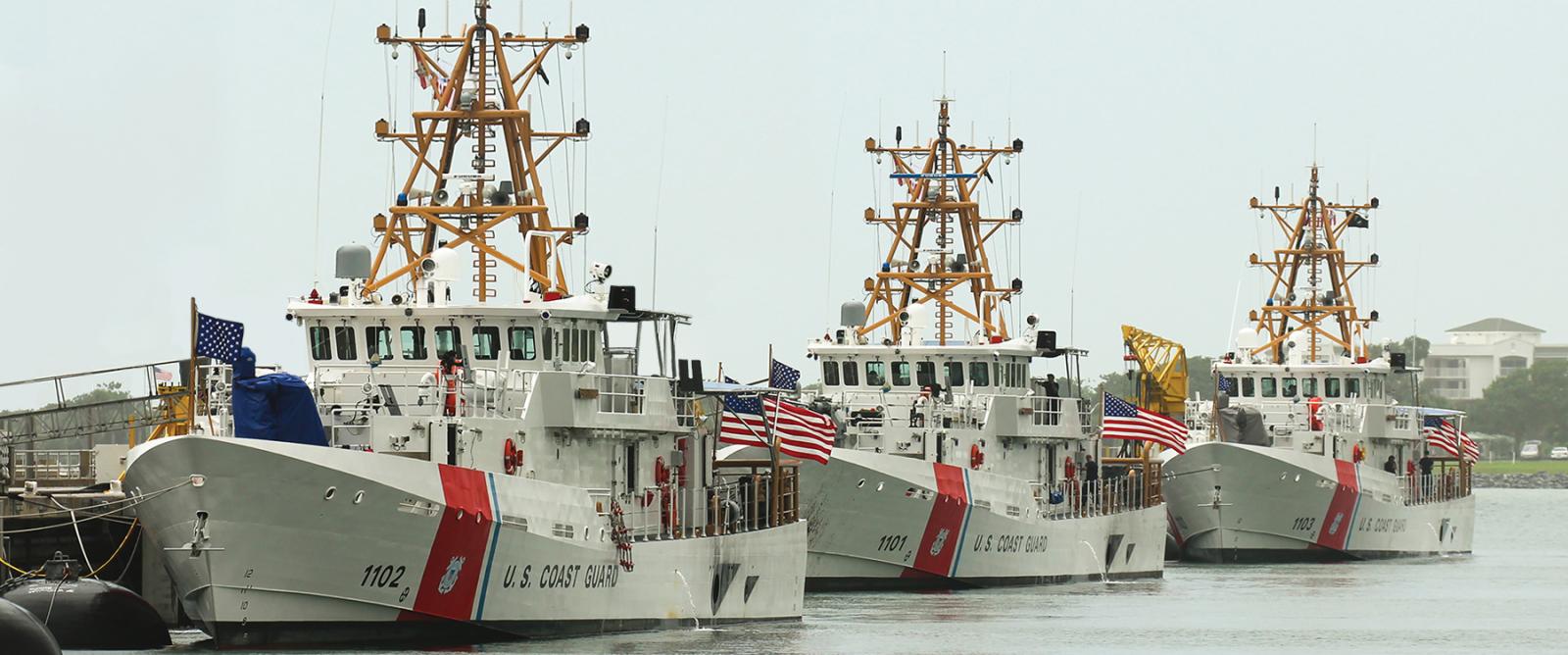
The first three fast response cutters—the USCGC Richard Etheridge (WPC-1102), Bernard C. Webber (WPC-1101), and William Flores (WPC-1103).
U.S. COAST GUARD

Just wanted to alert anyone interested to the existence of this document.

Don’t think there are any real surprises here, but homeports are a bit more complete than the Wikipedia information.

It does further clarify the fate of USCGC Benjamin Dailey (WPC-1123) that suffered a fire while in dry dock. The ship was found beyond economical repair, decommissioned, and is stored awaiting ultimate disposition. That means that the current plan is for 64 operational FRCs with a request outstanding for four more. It may mean at least one of the future FRCs will be based in Pascagoula, as a replacement.

“Top Ten Navies by Aggregate Displacement, 1 January 2024” –Analysis and diagram by Phoenix_jz

Two years ago, I did a post with a similar title from the same source. Somehow, I missed the 2023 edition. As I said in the earlier post, I don’t know , but the data appears to be credible, and it looks like readers are checking his figures. 

It is very difficult to read the tonnages at the bottom of the graph unless you are using a computer and click on the graph to see it in a larger size. 

The creator’s notes and some additional comments are below. 


Hello all!

Well, 2024 is upon us, and as such so is the third edition of my top ten navy list. For those unfamiliar, here are links to 2022 and 2023, with a general explainer of the whole concept in the 2022 version.

The long and short of it is that this graph reflects a personal tracker I keep of almost every large and moderately sized navy, and calculates the aggregate displacement of these navies. It’s not a perfect way to display the size of navies – far from it in fact – but it is at least more representative than counting numbers of hulls alone, in my opinion.

To break down what each of these categories mean;

  • Surface Warships is an aggregate of all above-water warships and major aviation and amphibious assault platforms. This category includes CVNs, CVs, CVLs, LHDs, LHAs, LPDs, CGs, DDGs, FFGs, corvettes, OPVs, CPVs, lighter patrol craft, and MCM vessels.
  • Submarines is what it says on the tin – SSBNs, SSGNs, SSNs, SSKs, and for select nations where applicable (and where information is available), special purpose submarines. Please note dedicated training submarines are counted separately.
  • AORs includes all major fleet replenishment vessels (coastal vessels do not count, however).
  • Other Auxiliaries is a very wide net that essentially captures everything else. Special mission ships, support vessels, minor amphibious assault vessels (LSDs, LSTs, LCAC’s, LCM’s, LCU’s), training vessels, tugs, coastal support vessels, hydrography ships – all essential parts of navies, but generally often paid less attention to as they’re not as flashy as the warships proper.

Interesting trends in data that I thought I would share for various navies, and thoughts and observations otherwise;

The USN is, unsurprisingly, still top dog by a huge margin. In spite a net decommissioning of five ships this year, the USN has grown overall by about 32,000 tons – four ‘cruisers’, two SSNs, four LCS, and five patrol craft decommissioned against the introduction of three destroyers, an SSN, five LCS, and a replenishment ship. It is worth noting that 2023 is the first year since 2010 that the USN has commissioned three destroyers in a year, though a repeat performance in the next couple years is unlikely – these ships were launched in 2020 and 2021, and only one destroyer per year was launched in 2022 and 2023.

No one will be surprised to hear that the PLAN has grown for the nth consecutive year, adding the final Type 055 batch I and the remaining Type 054A Batch V, for almost 50,000 tons of new surface combatants. Much of the remaining increase in displacement for this year (which totaled nearly 90,000 tons) reflected a steady pace of modernization in mine warfare, landing forces, and logistical support/other auxiliaries. As with last year, the number of minor patrol craft continue to plummet as the PLAN continues to divest many of its obsolescent brown-water combatants, or relegates them to training duties.

Moving on to ongoing construction, progress on the new destroyer batches continues at pace. At least two Type 055 Batch II appear to be under construction, and the overall number of Type 052D Batch IV appears to be at least ten. The first ship actually launched at the very end of 2022 (at Jiangnan), and two further have been launched by the same yard as well as three at Dalian. Two more remain under construction at each yard. The first of these ships to be launched appears to be on trials and will likely commission this coming year. The Type 054A program of the navy appears to have finally wrapped up (construction of the hull for the China Coast Guard continues), and the Type 054B program has continued at pace if not scale – two ships were launched this year, but modules of further units have been scarce. Rounding things out for major surface vessels, a new Type 075 LHD was launched this past December. Conspicuously absent has been sightings of any modules for new carriers. Considering Fujian (Type 003) began construction at some point from 2015 to 2017, one has to wonder if we will see China launch another carrier before the end of the decade.

Perhaps most consequential of all, however, has been the completion of new production facilities at Bohai and a resumption of Type 093 SSN launches. The first of the new Type 093B launched in 2022, and has been followed up by two more launches this year (possibly up to three). A sustained pace of two submarines a year, or even just three submarines every two years, would quickly add up could see anywhere from nine to eleven new SSNs launched by the end of 2027, and in service by early 2030s. Only time will tell what the actual drumbeat of production will be.

Russia’s VMF woes in the Black Sea have continued unabated, except less at sea and largely fueled by the Franco-British SCALP cruise missile. The most dramatic loss by far was the destruction of the Project 636.3 ‘Improved’ Kilo Rostov-on-Don in drydock at Sevastopol, but similar attacks claimed the destruction or constructive loss of a Karakurt-class corvette (under construction, not in service) and two Ropucha-class LSTs. The infamous TB-2 made a brief return to destroy a Serna-class LCU, and two other LCU’s may have finally become the first victims of Kamikaze USVs this past November, for a total of 11,407 tonnes lost.

In regards to the more regular cycle of commissioning and decommissioning, one frigate, one MCM vessel, and three corvettes were brought into service, as well as a new SSGN, SSBN, and SSK each. Against this a corvette, SSGN, SSBN, and SSK were decommissioned. Overall, in spite of losses the VMF managed a net gain of 6,324 tonnes of surface warships and submarines. Anyone who checks against my figures from last year will note that the increase in the VMF’s overall tonnage this year is far more substantial, due to the auxiliary category. Though some of this was from new vessels, this was mostly down to a badly needed overhaul and reorganization of that part of my tracker, particularly for the tug fleet. Did you know the Russian navy tug fleet displaces more than either the Argentine or Canadian navies? Now you do! Seriously – it would be the 20th largest navy in the world by itself.

As a final note on the VMF – it is worth remembering that ships commissioned in the Russian navy are not always actually in service, as ships can often languish in near-terminal refits or simply be left inactive without a formal decommissioning. Almost half the remaining Projekt 877 Kilo’s, for example, appear to be inactive at this point (5 of 10).

(In comments the author noted the following, “Russian naval losses during the war have totalled 13 vessels for 29,870 tonnes. Quite a bit – but also only about 1.4% of their current overall tonnage.” –Chuck)

The British Royal Navy observes a second year of marginal reduction in overall tonnage (-2,640t, or -0.3%), losing another Type 23 frigate as well as the last Echo-class survey ship. Against this the RFA brought into service the first MROSS, ProteusProteus represents a considerable increase in subsurface capability, though the loss of a frigate with no replacement ship to replace it for another thee to four years is painful, especially given how many of the remaining eleven ships are deep in LIFEX/Post-LIFEX refits. With that said, their new frigate programs are moving on steadily. Steel was cut on two new frigates this year – the future HMS Birmingham (4th Type 26) and HMS Active (2nd Type 31), bringing the total construction volume to five frigates building and one fitting out.

The JMSDF continues to grow, albeit at a more moderate pace this year (+6,530t, or +0.9%), inducting a new Mogami-class frigate and Taigei-class attack submarine, while shifting another Oyashio-class from the active fleet to a training role. Two more FFM were launched this year, though surprisingly they have not started construction on the next pair. This past November, it was announced that the Mogami-class FFM would be curtailed at 12 units (of 22 planned), and followed on by an evolution of the design known as FMF-AAW. The FMF-AAW will feature greater air and surface warfare capabilities. Twelve such ships are planned.

The Indian Navy’s growth in 2023 was far less dramatic than in 2022, but still noteworthy (+9,200t, or +1.5%), as adding a new conventional attack submarine and destroyer to the fleet has finally pushed them over the 600,000-tonne line.

The Marine Nationale grew by almost 9,000 tonnes (2.1%) this year, largely down to the retirement and replacement of a patrol ship, nuclear attack submarine, and tugs with an equal number of replacements. Though it is worth noting that the new attack submarine is not fully operational yet – that will happen in 2024 – so technically the MN’s attack submarine fleet is really four boats at this point in time.

The saga of eight and ninth place swapping around continues, as the ROKN has managed to move back to the position of eighth largest navy in the world. In 2023 they added a net 15,374t (+4.3%), commissioning four Daegu-class frigates, a second KSS-III class attack submarine, an MCM vessel and a pair of LCACs, against the decommissioning of two corvettes and five PKM’s.

In contrast, the Marina Militare continues to feel the bite from the two FREMM sold to Egypt, as well as delays in brining the LHD Trieste into service – intended for 2023 but again pushed back, now to the spring of 2024. The first PPA ‘Light+’, Raimondo Montecuccoli, was brought into service in 2023 – an OPV on paper, but light frigate in practice. Against this one of the elderly Maestrale-class frigates, Zeffiro, was retired, as was one of the fleet’s AORs (Vesuvio) and a water tanker (Bormida), resulting in a real drop of 7,073 tonnes (-1.9%). The drop seen versus the chart versus last year is more dramatic (totals 16,632 tonnes), which reflects both cleaning up data on old auxiliary platforms for which information is scarce, and correcting some minor sheet errors, which totaled 9,559 tonnes.

The outlook should be looking up in the future – as previously mentioned, the LHD Trieste should enter service this year, as should the fourth and fifth PPA. The first of two replacement FREMM (GPe) was launched in late 2023 and a second will follow this spring, with both being slated to enter service in 2025 alongside the sixth PPA and second Vulcano-class replenishment ship – barring any delays.

Finally, the Indonesian Navy saw another year of growth, adding a net 9,930 tonnes (+3.1%), with another hospital ship commissioned, a new survey ship, corvette, and two new MCM vessels and FACs each, as well as several patrol boats. The TNIAL continues a steady program of domestic construction of patrol craft, and construction is ongoing on two Iver Huitfelt derivative frigates, with the keel of the first vessel laid down this past August. They have also cut steel on a new hydrography ship, which will launch in Indonesia and complete fitting out in Germany.

What comes next in terms of major platforms for the TNIAL is somewhat up in the air. As with the year prior, there has been no progress made on the procurement of six FREMM from Italy, despite a contract being signed two and a half years ago (June 2021). In spite of this, they have expressed interest in procuring two PPA to bolster their patrol fleet. In the interest of expediting procurement, they are looking at two ‘Light+’ configuration vessels currently fitting out at Muggiano – Marcantonio Colonna (due for delivery to the MMI in the latter half of 2024) and Ruggiero di Lauria (due for delivery to the MMI in mid-2025). According to the General Manager of Fincantieri’s Naval Vessels Division, Dario Deste, a contract for the two vessels could be signed in the first half of 2024.

(In answer to a question the author added this in the comments–Chuck)

No.11 to 20 are as follows for 1 January 2024;

  • 11: Turkey – 297,298t
  • 12: Taiwan – 268,958t
  • 13 Egypt – 232,046t
  • 14: Spain- 229,373t
  • 15: Germany – 226,655t
  • 16: Australia – 224,074t (decided to add the National Support Squadron, which added about 30kt)
  • 17: Greece – 189,184t
  • 18: Brazil – 162,29t
  • 19: Chile – 161,404t
  • 20: Argentina – 138,620t
(A reader, , added this–Chuck)

Listed by ranking for this year:

Nation Change from 2023 (tonnes) 2023 Ranking Change from 2022 (tonnes) 2022 Ranking
United States +55,658 1st +250,308 1st
China +93,567 2nd +99,299 2nd
Russia + 211,333 3rd +166,682 3rd
United Kingdom -2,640 4th -5,815 4th
Japan +6,530 5th +23,790 5th
India +9,200 6th +62,349 6th
France +8,925 7th +12,145 7th
South Korea +15,374 9th +7,153 8th
Italy -16,632 8th -3,452 9th
Indonesia -70 10th +17,709 10th

Probably not surprising given all these nations are competing more or less with each other, but the rankings have basically remained the same except for Italy and South Korea trading places in 2023, then reverting to their 2022 places again this year. Nobody previous top 10 navy has left the club either.

However, do note that not all of the year-to-year tonnage differences are due to actual changes in fleet size/composition. As Phoenix mentioned in his post, the Russians in particular got a huge tonnage jump this year because he changed the way he counts auxiliaries, and given the discrepancy between his reported +32k figure for the USN and the numbers, there’s probably some math correction involved there too.


Navy Plans Surface Combatants Smaller Than FFG, an Opportunity?

200430-N-NO101-150
WASHINGTON (April 30, 2020) An artist rendering of the guided-missile frigate FFG(X). The new small surface combatant will have multi-mission capability to conduct air warfare, anti-submarine warfare, surface warfare, electronic warfare, and information operations. (U.S. Navy graphic/Released)

Defense News has a short post, “Surface navy emphasizes frigates in its latest modernization plans.”

It includes a couple of statements by the Navy’s director of surface warfare that I think might be significant.

“We want to build a lot of frigates and [have] somewhat smaller, very capable ships being proliferated out through the fleet,” Rear Adm. Fred Pyle told Defense News on Dec. 7. (emphasis applied–Chuck)

and

But also of importance, he added, will be the ability to remain on station longer and require less help from fleet tankers and other logistics ships.

Ships, somewhat smaller than the 7,291 ton FFG but with long endurance. Bet it will have space for unmanned systems. Sounds like might make a decent cutter. Perhaps a dual service ship. Build the cutters with fewer weapon systems, but with the option to add them on if needed.

I may be a bit prejudiced in favor of dual service ships, because of my experience on Duane, a Treasury class cutter, a ship based on a Navy gunboat design. Because of its origin, it was better than it had to be, and outlived ships completed ten years after the 327s.

Very curious what they will come up with.


“India orders six next-gen offshore patrol vessels from Mazagon Dockyard” –Naval Today

105 meter, Off Shore Patrol Vessel (OPV) ICGS Samarth, 10 November 2015, lead ship of a class of 11, photo Indian Coast Guard

Naval Today reports, “The Indian Ministry of Defence has signed a contract with Mazagon Dockyard Shipbuilders (MDL) for the construction of six next-generation offshore patrol vessels (OPVs).”

The six new ships are to be 115 meters (377′) in length, about the size of the Hamilton class cutters. I have not been able to find any additional information on their characteristics, but historically, Indian CG OPVs evolve from preceding designs, so I expect they will share many characteristics with the preceding 105 meter class pictured above and the 97 meter Vikram class; e.g. speed 23 to 26 knots; powered by two diesel engines; armed with a 30mm gun; hangar and flight deck for at least a five ton helicopter.

As for what they change, “Along with several high-tech advanced features and equipment, these 115m OPVS would be equipped with multipurpose drones, AI capability, and wirelessly controlled remote water rescue craft lifebuoy.”

The six ships are to be designed and delivered in 66 months. From contract to completion of six ships in five and a half years may sound like a tight schedule considering the US Coast Guard’s recent experience. Looking back on the previous class of eleven ships, procured in two batches, it looks possible. A $400M contract to build six vessels was awarded to GSL on 9 May 2012. All six were commissioned by 21 December 2017, less than 68 months after contract award. A follow-on contract for five ships was awarded in August 2016. The fifth ship was commissioned 16 March 2022, about 67 months from award to completion of five ships.

India benefits from the near continuous construction of Offshore Patrol Vessels (OPVs). Over the last ten years, 22 Indian built OPVs were commissioned, 18 for the Indian Coast Guard, two for the Indian Navy, and two for export.

In addition to these six OPVs, the Indian Navy is also building eleven similarly named but different 105 to 110 meter “Next Generation Offshore Patrol Vessels.

“Struggling Austal USA Can Only Be Fixed By Big Changes…In Australia” –Forbes

Future USCGC Pickering (Image: Austal USA)

Forbes reports on, Offshore Patrol Cutter builder, Austal’s continuing difficulties.

The author, Craig Hooper, whom I regard as a friend of the Coast Guard, was at one time an Austal executive, departing in 2013. I would have to believe; he knows what he is talking about.

Thanks to Nick for bringing this to my attention.

“New court doc sheds light on Austal’s 2022 Offshore Patrol Cutter win” –Defense News

Future USCGC Pickering (Image: Austal USA)

Defense News reports,

“The court last month ruled against Eastern Shipbuilding, which had appealed the Coast Guard’s decision. The court unsealed the case documents Dec. 14, though with some redactions.”

There is a link to the 42-page court document, but really there is a lot more here than just the decision.

Eastern’s offer was judged better in several respects, but Austal’s price and indoor assembly facility were deciding factors.

“Ultimately, Austal’s proposal came to $3.22 billion, or about $292 million per hull, according to the unsealed documents.

“Eastern’s price is redacted in the documents but is characterized as a “very large price differential.””

It was noted,

“…only one OPC could be built in the indoor facility at a time, meaning the heel-to-toe production cadence could lend itself to “notable disruptions” to schedule.”

This suggests to me, that Austal might have trouble building more than two OPCs a year if the Coast Guard wanted to accelerate OPC production.

The paragraph below may refer to the same presentation by RAdm Jacoby discussed earlier, where he expressed a sense of urgency regarding the OPC program, but there is also an admission that maintaining the Medium Endurance Cutters has become problematic.

Coast Guard acquisition chief Rear Adm. Chad Jacoby said at a recent conference there’s no current plan to have both yards build concurrently into the future but that he’d be open to it if lawmakers increased annual OPC spending, since it’s “urgent” to get OPCs into the fleet to replace “the medium endurance cutters, which are struggling to maintain operational capability right now.”